
Showing 80 items matching "seafarers welfare"
-
 Mission to Seafarers Victoria
Document - Report, Printed copy, Louise Reyner & Stuart Baulk, Fatigue in Ferry Crews, 1998
... seafarers welfare...seafarers welfare fatigue Fatigue in Ferry Crews Document Report, Printed copy Louise Reyner & Stuart Baulk ...non-fictionseafarers welfare, fatigue -
 Mission to Seafarers Victoria
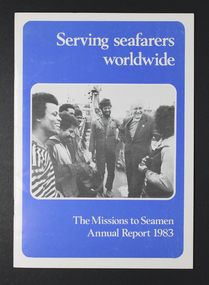
Booklet - Report, Serving Seafarers Worldwide
... seafarers...welfare...seafarers welfare 1983 Serving Seafarers Worldwide Booklet Report ...seafarers, welfare, 1983 -
 Mission to Seafarers Victoria
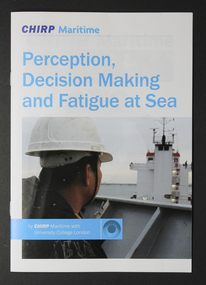
Magazine, Perception, Decision Making and Fatigue at Sea - Chirp Maritime
... ...seafarers welfare...The CHIRP (Confidential Human Factors Incident Reporting Programme) Charitable Trust chirp seafarers welfare Perception, Decision Making and Fatigue at Sea - Chirp Maritime Magazine Magazine ...The CHIRP (Confidential Human Factors Incident Reporting Programme) Charitable Trust chirp, seafarers welfare -
 Mission to Seafarers Victoria
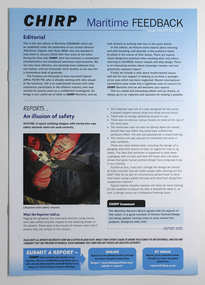
Magazine, Feedback - Chirp Maritime
... ...seafarers welfare...The CHIRP (Confidential Human Factors Incident Reporting Programme) Charitable Trust chirp seafarers welfare Feedback - Chirp Maritime Magazine Magazine ...The CHIRP (Confidential Human Factors Incident Reporting Programme) Charitable Trust chirp, seafarers welfare -
 Mission to Seafarers Victoria
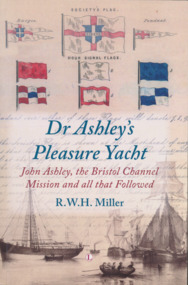
Book, Dr Ashley's Pleasure Yacht: John Ashley, the Bristol Channel Mission and all that Followed, 2017
... ...seafarers welfare...It also indicates that other missionaries in addition to Ashley in Britain also played key roles leading to the establishment of the British Mission in London. cutter eirene shipping r.w.h. miller mission to seamen seafarers welfare reverend john ashley (1801-1886) Institutional foundation stories have a tendency to change and develop with the passage of time and much repetition. ...Institutional foundation stories have a tendency to change and develop with the passage of time and much repetition. Maritime social historian R.W.H. Miller here explores the life of The Rev. John Ashley and his association with the foundation storyof the Mission to Seafarers, the work of which society is much admired by its present Patron, HRH the Princess Royal. The traditional story is that Ashley's son, out walking by the Bristol Channel with his father, in the early 1830s, asked how the islanders could go to church. Ashley went to see, and from the islands of Flat Holm and Steep Holm seeing large fleets of wind bound ships, asked himself the same question. He used his own money (deriving mainly from the trade of sugar and slaves) to build a schooner, which he sailed in all weathers to provide an answer, in the process creating for himself a place in the ancestry of several Anglican and Catholic societies, of which the Mission to Seafarers, the Royal National Mission to Deep Sea Fishermen, and the Apostleship of the Sea, continue to provide seafarers with a valued and often heroic service.A 123-page book by R.W.H. Miller with a monochrome coloured cover featuring the British Channel Mission's signal flags and the Bristol Channel Mission Cutter Eirene. non-fictionInstitutional foundation stories have a tendency to change and develop with the passage of time and much repetition. Maritime social historian R.W.H. Miller here explores the life of The Rev. John Ashley and his association with the foundation storyof the Mission to Seafarers, the work of which society is much admired by its present Patron, HRH the Princess Royal. The traditional story is that Ashley's son, out walking by the Bristol Channel with his father, in the early 1830s, asked how the islanders could go to church. Ashley went to see, and from the islands of Flat Holm and Steep Holm seeing large fleets of wind bound ships, asked himself the same question. He used his own money (deriving mainly from the trade of sugar and slaves) to build a schooner, which he sailed in all weathers to provide an answer, in the process creating for himself a place in the ancestry of several Anglican and Catholic societies, of which the Mission to Seafarers, the Royal National Mission to Deep Sea Fishermen, and the Apostleship of the Sea, continue to provide seafarers with a valued and often heroic service.cutter, eirene, shipping, r.w.h. miller, mission to seamen, seafarers welfare, reverend john ashley (1801-1886) -
 Mission to Seafarers Victoria
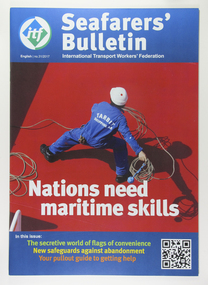
Magazine - Annual, The International Transport Workers’ Federation (ITF), Seafarer's Bulletin, 2017
... ...seafarers welfare...The International Transport Workers’ Federation (ITF) International Transport Workers’ Federation ITF seafarers welfare Seafarer's Bulletin Magazine Annual The International Transport Workers’ Federation (ITF) ...international transport workers’ federation, itf, seafarers welfare -
 Mission to Seafarers Victoria
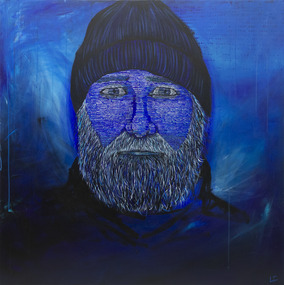
Painting, Lisa Carman, S.O.S, 2019
... ...seafarers welfare...Lisa Carman entered this painting to the Maritime Art Prize 2019 and donated the artwork after the exhibition. sos seafarers welfare maritime art prize 2019 lisa carman morse code seafarers sailors beanie blue Squared shape painting depicting a portrait in blue and dark tones of a sailor with a beard wearing a beanie. ...The painting explores the mental health issues often faced by those who work at sea as a result of loneliness, isolation and illness, amongst other things. This seafarer’s face is made up of thousands of SOS Morse code symbols: dot,dot,dot dash,dash,dash dot,dot,dot. Morse code was used to signal to land that a ship or crew was in trouble. This seafarer is in trouble- his face says it all and speaks volumes. Mental health issues are often hidden when we look from afar but when we take the time to look closer and listen, the signs are often there.Lisa Carman entered this painting to the Maritime Art Prize 2019 and donated the artwork after the exhibition.Naive, Marine artLisa Carman, MTSV Collection Squared shape painting depicting a portrait in blue and dark tones of a sailor with a beard wearing a beanie. His face is made of dots using the SOS Morse code.sos, seafarers welfare, maritime art prize, 2019, lisa carman, morse code, seafarers, sailors, beanie, blue -
 Mission to Seafarers Victoria
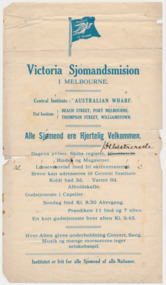
Flyer, The Victoria Missions to Seamen, Victoria Sjodmandsmision [sic:sjødmandsmission], 1907-1917
... ...seafarers welfare...The Mission adapted by translating its flyers in different languages and ladies from the Harbour Lights Guild would even learn langages to be able to talk to seamen. social events norwegian thompson street williamstown port melbourne seafarers welfare australian wharf Written in black ink: corrections of mistakes made Printed in blue program of events in Norwegian on cream colour paper. ...In the late 1800s and early 1900s, a large number of seamen were from Scandinavia. The Mission adapted by translating its flyers in different languages and ladies from the Harbour Lights Guild would even learn langages to be able to talk to seamen.Printed in blue program of events in Norwegian on cream colour paper.Written in black ink: corrections of mistakes made social events, norwegian, thompson street, williamstown, port melbourne, seafarers welfare, australian wharf -
 Mission to Seafarers Victoria
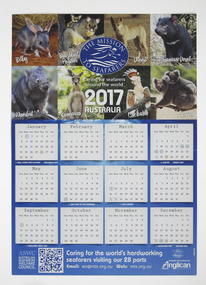
Print (item) - Calendar, Mission to Seafarers Australia 2017, 2017
... A joint organisational generated calendar by the Australian Seafarers' Welfare Council, the Mission to Seafarers and the Anglican Church. ...A joint organisational generated calendar by the Australian Seafarers' Welfare Council, the Mission to Seafarers and the Anglican Church. ...co-produced publication serves as a record of 21st C. collaboration of the MTSV with associated organisations such as The Anglican Church and Australian Seafarers Welfare Centre.'Caring for the world's hardworking seafarers visiting our 28 ports' is printed in two rows along the bottom of the calendar with a Q logo in the left hand corner and the Mission to Seafarer's logo in the right hand corner.mts, aswc, anglican church, calendar, 2017 -
 Mission to Seafarers Victoria
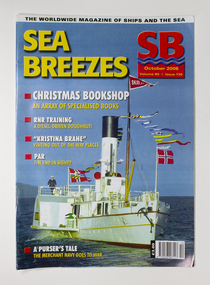
Magazine, Sea Breezes Publications Ltd, Sea Breezes, 2006
... Keith established the Mission to Seafarers in Hastings which eventually became autonomous and was a strong advocate for seafarer's welfare and an avid supporter of the work of the Mission to Seafarers...Keith established the Mission to Seafarers in Hastings which eventually became autonomous and was a strong advocate for seafarer's welfare and an avid supporter of the work of the Mission to Seafarers Sea Breezes started life in 1919 as the in-house organ of the Liverpool shipping firm, Pacific Steam Navigation Company (PSNC), but soon expanded its focus to include news about commercial shipping in general. ...Colour magazinenon-fictionmaritime journals, maritime magazines, ships -
 Mission to Seafarers Victoria
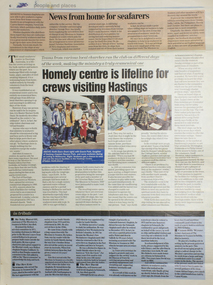
article - Double Spread Page
... Keith established the Mission to Seafarers in Hastings which eventually became autonomous and was a strong advocate for seafarer's welfare and an avid supporter of the work of the Mission to Seafarers....Keith established the Mission to Seafarers in Hastings which eventually became autonomous and was a strong advocate for seafarer's welfare and an avid supporter of the work of the Mission to Seafarers. clippings mission to seafarers Hastings two page colour print local newspaper? ...Collected by Captain Keith Dann was a member of the MtSV State Council and subsequently the Board of Management for over 25 years. Keith established the Mission to Seafarers in Hastings which eventually became autonomous and was a strong advocate for seafarer's welfare and an avid supporter of the work of the Mission to Seafarers.two page colour print local newspaper? clippingclippings, mission to seafarers hastings -
 Mission to Seafarers Victoria
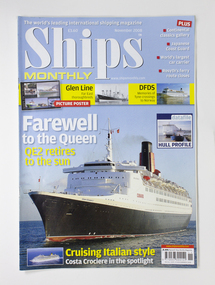
Magazine - Monthly, Ships Monthly Magazine, Ships Monthly, November 2008, November 2008
... Keith established the Mission to Seafarers in Hastings which eventually became autonomous and was a strong advocate for seafarer's welfare and an avid supporter of the work of the Mission to Seafarers...Keith established the Mission to Seafarers in Hastings which eventually became autonomous and was a strong advocate for seafarer's welfare and an avid supporter of the work of the Mission to Seafarers This magazine is the type of literature seafarers love reading can be found in Missions. ships captain keith dann cargo naval cruise Ships Monthly, November 2008 Magazine Monthly Ships Monthly Magazine ...Collected by Captain Keith Dann who was a member of the MtSV State Council and subsequently the Board of Management for over 25 years. Keith established the Mission to Seafarers in Hastings which eventually became autonomous and was a strong advocate for seafarer's welfare and an avid supporter of the work of the Mission to SeafarersThis magazine is the type of literature seafarers love reading can be found in Missions.ships, captain keith dann, cargo, naval, cruise -
 Mission to Seafarers Victoria
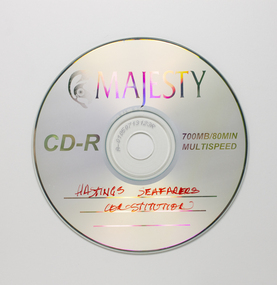
Document - CD, Hastings Seafarers constitution
... Keith established the Mission to Seafarers in Hastings which eventually became autonomous and was a strong advocate for seafarer's welfare and an avid supporter of the work of the Mission to Seafarers....Keith established the Mission to Seafarers in Hastings which eventually became autonomous and was a strong advocate for seafarer's welfare and an avid supporter of the work of the Mission to Seafarers. see image CD disk in pocket Hastings Seafarers constitution Document CD ...Constitution of Mission to Seafarers - Hastings Captain Keith Dann was a member of the MtSV State Council and subsequently the Board of Management for over 25 years. Keith established the Mission to Seafarers in Hastings which eventually became autonomous and was a strong advocate for seafarer's welfare and an avid supporter of the work of the Mission to Seafarers.CD disk in pocket see image -
 Flagstaff Hill Maritime Museum and Village
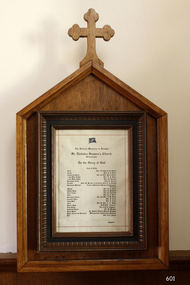
Document - Commemorative, The Victorian Missions to Seamen, St Nicholas Seamen's Church Williamstown, circa 1944
... They show that people of the 1800s and 1900s cared about the seafarers’ religious, moral, and social welfare, no matter what the religion, social status or nationality. ...This framed document titled "The Victorian Missions to Seamen, St Nicholas Seamen's Church Williamstown" shows a list of donors of significant items to the St Nicholas Missions to Seamen's Church in Williamstown when the new building opened in 1944. The organisation ceased in 1966, and the furnishings were later donated to Flagstaff Hill Maritime Village in Warrnambool by the Missions to Seamen Victoria. The transcription of the document is as follows: The Victoria Missions to Seamen, St Nicholas Seamen's Church, Williamstown To the Glory of God List of Gifts Altar - Mrs. and Miss J.R. Schutt Cross - Mrs. R.J. Ewart Chalice and Paten - Mr. and Mrs. Percy Taylor 1 Pair Altar Lights - Mrs. R.J. Ewart 1 Pair Altar Lights - Mrs. M. Jackson Sanctuary Lamp - Miss C. Roberts Rerebos - Miss. M. Breaks, in memoriam Miss. L.A. Breaks Sanctuary Window - Victoria Missions to Seamen Lightkeepers' Auxiliary Missal - Mrs. R.J. Ewart Missal Desk - Mrs. R. Hodgkiss Altar Vases - Mrs. R. Kaybould Bible - Mrs. R.J. Ewart Sanctuary Chairs - Mr. and Mrs. F.H. Twist Credence Table - Mrs. F. Clark Altar Dish – Mrs L. Clark Font - Mr. and Mrs. C.V. Dyble Prayer Desk - H.M.H.S. "Centaur" Reed Organ - "Joy Club for Fighters" Collection Plates - Mr. D. MacKae Hymn Board - St. David's Musical Society, Brighton Pews, Carpet and Hangings - Williamstown Lightkeepers' Auxiliary Bell - Mrs. A.L. Feenes THE MISSIONS TO SEAMEN (Brief History: for more, see our Reg. No. 611, Set of Pews) The Missions to Seamen, an Anglican charity, has served seafarers of the world since 1856 in Great Britain. It symbol is a Flying Angel, inspired by a Bible verse. Today there are centr4es in over 200 ports world-wide where seamen of all backgrounds are offered a warm welcome and provided with a wide range of facilities. In Victoria the orgainsation began in Williamstown in 1857. It was as a Sailors’ Church, also known as ‘Bethel’ or the ‘Floating Church’. Its location was an old hulk floating in Hobson’s Bay, Port of Melbourne. It soon became part of the Missions to Seamen, Victoria. In the year 2000 the organisation, now named Mission to Seafarers, still operated locally in Melbourne, Portland, Geelong and Hastings. The Ladies’ Harbour Lights Guild was formed in 1906 to support the Missions to Seamen in Melbourne and other centres such as Williamstown. Two of the most significant ladies of the Guild were founder Ethel Augusta Godfrey and foundation member Alice Sibthorpe Tracy (who established a branch of the Guild in Warrnambool in 1920). The Guild continued its work until the 1960s. In 1943 a former Williamstown bank was purchased for the Missions to Seaman Club. The chapel was named St Nicholas’ Seamen’s Church and was supported by the Ladies’ Harbour Lights Guild, the Williamstown Lightkeepers’ Auxiliary and the League of Soldiers’ and Sailors’ Friends. It ceased operation in 1966. A Missions to Seamen Chapel and Recreation Room was a significant feature of ports during the late 1800s and into the 1900s. It seemed appropriate for Flagstaff Hill to include such a representation within the new Maritime Village, so the Melbourne Board of Management of Missions to Seamen Victoria gave its permission on 21st May 1979 for the entire furnishings of the Williamstown chapel to be transferred to Flagstaff Hill. The St Nicholas Seamen’s Church was officially opened on October 11, 1981 and closely resembles the Williamstown chapel. This document is significant through its association with the St Nicholas' Mission to Seamen Church in Williamstown, Melbourne, established in 1857. The document is socially significant as it connects the community of Williamstown with the St Nicholas' Missions to Seamen and represents the importance of the church to the community. The items in our collection from the Missions to Seamen in Williamstown, Victoria, have historical and social significance. They show that people of the 1800s and 1900s cared about the seafarers’ religious, moral, and social welfare, no matter what the religion, social status or nationality. It had its origins in Bristol, England when a Seamen's Mission was formed in 1837. The first Australian branch was started in 1856 by the Rev. Kerr Johnston, a Church of England clergyman, and operated from a hulk moored in Hobson's Bay; later the Mission occupied buildings in Williamstown and Port Melbourne. Document titled "The Victorian Missions to Seamen, St Nicholas Seamen's Church Williamstown". The document is a list of gifts originally given to the St Nicholas Seaman's Church in Williamstown, Victoria. The document is mounted in a decorative wooden frame with glass cover. This is one of the original items in our ‘St Nicholas Seamen's Church Williamstown Collection’.flagstaff hill, warrnambool, shipwrecked-coast, flagstaff-hill, flagstaff-hill-maritime-museum, maritime-museum, shipwreck-coast, flagstaff-hill-maritime-village, framed document, donations to st nicholas seamen's church williamstown, 139 nelson place williamstown, religion, religious service, sailors rest, bethel sailors’ church, bethel floating church, ladies harbour light guild, mission to seafarers, st nicholas seaman’s church williamstown, mission to seamen williamstown, st nicholas seamen’s church flagstaff hill, flying angel club, mrs. and miss j.r. schutt, mrs. r.j. ewart, mr. and mrs. percy taylor, mrs. m. jackson, miss c. roberts, miss. l.a. breaks, miss. m. breaks, victoria missions to seamen lightkeepers' auxiliary, mrs. r. hodgkiss, mrs. r. kaybould, mr. and mrs. f.h. twist, mrs. f. clark, mrs l. clark, mr. and mrs. c.v. dyble, h.m.h.s. "centaur", "joy club for fighters", mr. d. mackae, williamstown lightkeepers' auxiliary, mrs. a.l. feenes, st. david's musical society brighton -
 Flagstaff Hill Maritime Museum and Village
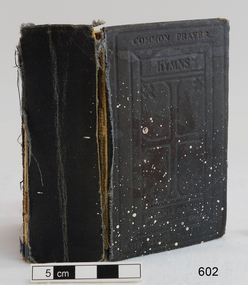
Book - Religious Book, The Book of Common Prayer, 20th century
... They show that people of the 1800s and 1900s cared about the seafarers’ religious, moral, and social welfare, no matter what the religion, social status or nationality. ...The Book of Common Prayer is the foundational liturgical text of the Church of England and the broader Anglican Communion. The subject book as a standard 730-page UK edition often printed in the late 19th or early 20th century by major privilege presses like Cambridge University Press, Oxford University Press, or William Clowes & Sons contains the complete 1662 standard text. The volume is structured into distinct sections designed for daily worship, sacramental rites, and personal devotion. There is introductory matter within the text that includes the original prefaces regarding the service of the Church and how the Psalter and Holy Scriptures are ordered to be read. Lectionary and calendar tables are also included as well as lessons for daily Bible readings, rules for determining the date of Easter, and the calendar of Holy Days and saints' days.The Book of Common Prayer. Small book, dark fabric hardcovers, both embossed design on cover incorporating a cross. Owner's name written in black ink inside the cover, also four brown stamps of a cross inside cover. Titled "The Book of Common Prayer and Administration of the Sacraments and other Rules and Ceremonies of the CHURCH according to the use of The Church of England". Printed in Great Britain. Book has 730 numbered pages. Inscribed with a signature inside the front cover as well as brown stamps of images of a cross.. This is one of the original items in our St Nicholas Seamen's Church Williamstown Collection.non-fictionThe Book of Common Prayer is the foundational liturgical text of the Church of England and the broader Anglican Communion. The subject book as a standard 730-page UK edition often printed in the late 19th or early 20th century by major privilege presses like Cambridge University Press, Oxford University Press, or William Clowes & Sons contains the complete 1662 standard text. The volume is structured into distinct sections designed for daily worship, sacramental rites, and personal devotion. There is introductory matter within the text that includes the original prefaces regarding the service of the Church and how the Psalter and Holy Scriptures are ordered to be read. Lectionary and calendar tables are also included as well as lessons for daily Bible readings, rules for determining the date of Easter, and the calendar of Holy Days and saints' days.flagstaff hill, warrnambool, shipwrecked-coast, flagstaff-hill, flagstaff-hill-maritime-museum, maritime-museum, shipwreck-coast, flagstaff-hill-maritime-village, book, prayer book, the book of common prayer, church of england prayer book, anne ambrose, religion, religious service, sailors rest, bethel sailors’ church, bethel floating church, ladies harbour light guild, missions to seamen victoria, mission to seafarers, st nicholas seaman’s church williamstown, st nicholas mission to seamen church williamstown, mission to seamen williamstown, st nicholas seamen’s church flagstaff hill, 139 nelson place williamstown, flying angel club -
 Flagstaff Hill Maritime Museum and Village
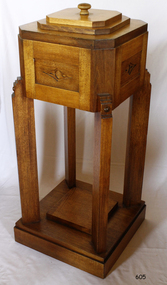
Ceremonial object - Font, 1940s
... They show that people of the 1800s and 1900s cared about the seafarers’ religious, moral, and social welfare, no matter what their religion, social status or nationality. ...This font is a piece of church furniture used in a baptism or christening service. It was originally installed in the St Nicholas Seamen's Church at 139 Nelson Place, Williamstown, Victoria. The church was a branch of the Victoria Missions to Seamen. THE MISSIONS TO SEAMEN (Brief History): - The Missions to Seamen was an Anglican charity that has served seafarers of the world since 1856 in Great Britain. Its symbol is a Flying Angel, inspired by a Bible verse. Today, there are centres in over 200 ports worldwide where seamen of all backgrounds are offered a warm welcome and provided with a wide range of facilities. In Victoria, the organisation began in Williamstown in 1857 as a Sailors’ Church, also known as ‘Bethel’ or the ‘Floating Church’ in an old hulk floating in Hobson’s Bay, Port of Melbourne. It soon became part of the Missions to Seamen, Victoria. In the year 2000, the organisation, now named Mission to Seafarers, still operated locally in Melbourne, Portland, Geelong and Hastings. The Ladies’ Harbour Lights Guild was formed in 1906 to support the Missions to Seamen in Melbourne and other centres, such as Williamstown. Two of the most significant ladies of the Guild were founder Ethel Augusta Godfrey and foundation member Alice Sibthorpe Tracy (who established a branch of the Guild in Warrnambool in 1920). The Guild continued its work until the 1960s. In 1943, a former Williamstown bank was purchased for the Missions to Seaman Club. The chapel was named St Nicholas’ Seamen’s Church and was supported by the Ladies’ Harbour Lights Guild, the Williamstown Lightkeepers’ Auxiliary and the League of Soldiers’ and Sailors’ Friends. It ceased operation in 1966. A Missions to Seamen Chapel and Recreation Room was a significant feature of ports during the late 1800s and into the 1900s. It seemed appropriate for Flagstaff Hill to include such a representation within the new Maritime Village, so the Melbourne Board of Management of Missions to Seamen Victoria gave its permission on 21st May 1979 for the entire furnishings of the Williamstown chapel to be transferred to Flagstaff Hill. The St Nicholas Seamen’s Church was officially opened on October 11, 1981, and closely resembles the Williamstown chapel. This font is significant through its association with the St Nicholas' Mission to Seamen Church in Williamstown, Melbourne, established in 1857. The collection of items from the Missions to Seamen in Williamstown, Victoria, has historical and social significance. They show that people of the 1800s and 1900s cared about the seafarers’ religious, moral, and social welfare, no matter what their religion, social status or nationality. It had its origins in Bristol, England, when a Seamen's Mission was formed in 1837. The first Australian branch was started in 1856 by the Rev. Kerr Johnston, a Church of England clergyman, and operated from a hulk moored in Hobson’s Bay; later, the Mission occupied buildings in Williamstown and Port Melbourne. Baptismal font: four-legged, varnished oak wood pedestal supporting a wooden box with a hand-beaten, rolled edge, copper ewer, bowl or basin insert. The box has a removable cover that has a round wooden knob. The sides of the box section have a decorative, diamond-shaped motif. The box and lid are octagonal, with four short sides and four long sides. The tops of the legs have an ornamental design. This is one of the original items in our St Nicholas Seamen's Church Williamstown Collection.flagstaff hill, warrnambool, shipwrecked-coast, flagstaff-hill, flagstaff-hill-maritime-museum, maritime-museum, shipwreck-coast, flagstaff-hill-maritime-village, font, baptisimal font, church furniture, religious ceremony, copper ewet, religious furniture, christening font, religion, religious service, sailors rest, bethel sailors’ church, bethel floating church, ladies harbour light guild, missions to seamen victoria, mission to seafarers, st nicholas seaman’s church williamstown, st nicholas mission to seamen church williamstown, mission to seamen williamstown, st nicholas seamen’s church flagstaff hill, 139 nelson place williamstown, anglican church, flying angel club, copper ewer, copper bowl, flagstaff hill maritime museum and village, maritime museum, maritime village, shipwreck coast, great ocean road, religious worship, worship service, st nicholas seamen’s church, williamstown, st nicholas missions to seamen’s church williamstown, missions to seamen, st nicholas missions to seamen’s church flagstaff hill, baptism, christening, ceremony, tradition, hand-beaten copper ewer -
 Flagstaff Hill Maritime Museum and Village
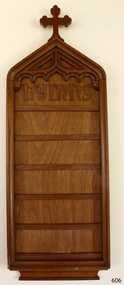
Furniture - Hymn Board, 1944-1966
... They show that people of the 1800s and 1900s cared about the seafarers’ religious, moral, and social welfare, no matter what the religion, social status or nationality. ...This hymn board is attached to the wall. Numbers referring to the hymn or hymns for the current religious service would have been placed onto the rails and would be visible to the congregation. It is used for showing the hymn number or numbers that will be sung during the service. This hymn board was part of the original furnishings of the St Nicholas' Mission to Seamen's Church at 139 Nelson Place, Williamstown, Victoria. THE MISSIONS TO SEAMEN (Brief History: for more, see our Reg. No. 611, Set of Pews) The Missions to Seamen, an Anglican charity, has served seafarers of the world since 1856 in Great Britain. It symbol is a Flying Angel, inspired by a Bible verse. Today there are centr4es in over 200 ports world-wide where seamen of all backgrounds are offered a warm welcome and provided with a wide range of facilities. In Victoria the orgainsation began in Williamstown in 1857. It was as a Sailors’ Church, also known as ‘Bethel’ or the ‘Floating Church’. Its location was an old hulk floating in Hobson’s Bay, Port of Melbourne. It soon became part of the Missions to Seamen, Victoria. In the year 2000 the organisation, now named Mission to Seafarers, still operated locally in Melbourne, Portland, Geelong and Hastings. The Ladies’ Harbour Lights Guild was formed in 1906 to support the Missions to Seamen in Melbourne and other centres such as Williamstown. Two of the most significant ladies of the Guild were founder Ethel Augusta Godfrey and foundation member Alice Sibthorpe Tracy (who established a branch of the Guild in Warrnambool in 1920). The Guild continued its work until the 1960s. In 1943 a former Williamstown bank was purchased for the Missions to Seaman Club. The chapel was named St Nicholas’ Seamen’s Church and was supported by the Ladies’ Harbour Lights Guild, the Williamstown Lightkeepers’ Auxiliary and the League of Soldiers’ and Sailors’ Friends. It ceased operation in 1966. A Missions to Seamen Chapel and Recreation Room was a significant feature of ports during the late 1800s and into the 1900s. It seemed appropriate for Flagstaff Hill to include such a representation within the new Maritime Village, so the Melbourne Board of Management of Missions to Seamen Victoria gave its permission on 21st May 1979 for the entire furnishings of the Williamstown chapel to be transferred to Flagstaff Hill. The St Nicholas Seamen’s Church was officially opened on October 11, 1981 and closely resembles the Williamstown chapel. This hymn board is significant through its association with the St Nicholas' Mission to Seamen Church in Williamstown, Melbourne, established in 1857. The items in our collection from the Missions to Seamen in Williamstown, Victoria, have historical and social significance. They show that people of the 1800s and 1900s cared about the seafarers’ religious, moral, and social welfare, no matter what the religion, social status or nationality. It had its origins in Bristol, England when a Seamen's Mission was formed in 1837. The first Australian branch was started in 1856 by the Rev. Kerr Johnston, a Church of England clergyman, and operated from a hulk moored in Hobson’s Bay; later the Mission occupied buildings in Williamstown and Port Melbourne. Hymn board; arch-shaped wooden board with relief decorative wood and decorative cross on top of the peak. The word 'hymns' is raised in decorative wood on the top. The board has six rails. This is one of the original items in our ‘St Nicholas Seamen's Church Williamstown Collection’.Carved into the wood "hymns"flagstaff hill, warrnambool, shipwrecked-coast, flagstaff-hill, flagstaff-hill-maritime-museum, maritime-museum, shipwreck-coast, flagstaff-hill-maritime-village, religion, religious service, sailors rest, bethel sailors’ church, bethel floating church, ladies harbour light guild, missions to seamen victoria, mission to seafarers, st nicholas seaman’s church williamstown, st nicholas mission to seamen church williamstown, mission to seamen williamstown, st nicholas seamen’s church flagstaff hill, 139 nelson place williamstown, church furniture, religious furniture, anglican church, flying angel club, hymn board, song board, religious worship, worship service, worship music -
 Flagstaff Hill Maritime Museum and Village
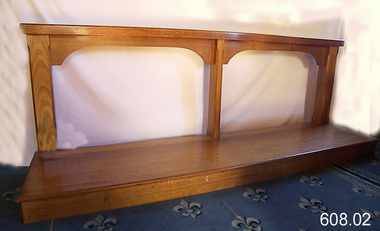
Furniture - Rail and Base, circa 1944
... They show that people of the 1800s and 1900s cared about the seafarers’ religious, moral, and social welfare, no matter what the religion, social status or nationality. ...This is one of a pair of kneeling rails that were part of the original furnishings of the St Nicholas Mission to Seamen's Church at 139 Nelson Place, Williamstown, Victoria. A kneeling rail is a part of the church's furniture and is used during religious prayer to assist the person in assuming the kneeling position. A padded kneeling mat or cushion would also be provided for comfort. THE MISSIONS TO SEAMEN (Brief History): - The Missions to Seamen was an Anglican charity in Great Britain that has served the world's seafarers since 1856. Its symbol is a Flying Angel, inspired by a Bible verse. Today, there are centres in over 200 ports worldwide where seamen of all backgrounds are offered a warm welcome and provided with a wide range of facilities. In Victoria, the organisation began in Williamstown in 1857 as a Sailors’ Church, also known as ‘Bethel’ or the ‘Floating Church’ in an old hulk floating in Hobson’s Bay, Port of Melbourne. It soon became part of the Missions to Seamen, Victoria. In 2000, the organisation, now named Mission to Seafarers, still operated locally in Melbourne, Portland, Geelong and Hastings. The Ladies’ Harbour Lights Guild was formed in 1906 to support the Missions to Seamen in Melbourne and other centres, such as Williamstown. Two of the most significant ladies of the Guild were founder Ethel Augusta Godfrey and foundation member Alice Sibthorpe Tracy (who established a branch of the Guild in Warrnambool in 1920). The Guild continued its work until the 1960s. In 1943, a former Williamstown bank was purchased for the Missions to Seamen Club. The chapel was named St Nicholas’ Seamen’s Church and was supported by the Ladies’ Harbour Lights Guild, the Williamstown Lightkeepers’ Auxiliary and the League of Soldiers’ and Sailors’ Friends. It ceased operation in 1966. A Missions to Seamen Chapel and Recreation Room was a significant feature of ports during the late 1800s and 1900s. It seemed appropriate for Flagstaff Hill to include such a representation within the new Maritime Village, and the Melbourne Board of Management of Missions to Seamen Victoria gave its permission on 21st May 1979 for the entire furnishings of the Williamstown chapel to be transferred to Flagstaff Hill. The St Nicholas Seamen’s Church was officially opened on October 11, 1981, and resembles the Williamstown chapel. This pair of kneeling rails is significant through its association with the St Nicholas' Mission to Seamen Church in Williamstown, Melbourne, established in 1857. The items in our collection from the Missions to Seamen in Williamstown, Victoria, have historical and social significance. They show that people of the 1800s and 1900s cared about the seafarers’ religious, moral, and social welfare, no matter what the religion, social status or nationality. It had its origins in Bristol, England when a Seamen's Mission was formed in 1837. The first Australian branch was started in 1856 by the Rev. Kerr Johnston, a Church of England clergyman, and operated from a hulk moored in Hobson’s Bay; later the Mission occupied buildings in Williamstown and Port Melbourne. Rail and base, one of a pair of two kneeling rails. Three varnished wood pillars and cap rail, mounted on a rectangular box-shaped base: a kneeling rail is used in religious worship. These kneeling rails are part of the St Nicholas Seamen's Church Williamstown Collection.flagstaff hill, warrnambool, shipwrecked-coast, flagstaff-hill, flagstaff-hill-maritime-museum, maritime-museum, shipwreck-coast, flagstaff-hill-maritime-village, rail for kneeling, rail, kneeling rail, religion, religious service, sailors rest, bethel sailors’ church, bethel floating church, ladies harbour light guild, missions to seamen victoria, mission to seafarers, st nicholas seaman’s church williamstown, st nicholas mission to seamen church williamstown, mission to seamen williamstown, st nicholas seamen’s church flagstaff hill, 139 nelson place williamstown, church furniture, religious furniture, religious worship, flying angel club, altar rail, kneeler, prayer, ceremonial furniture -
 Flagstaff Hill Maritime Museum and Village
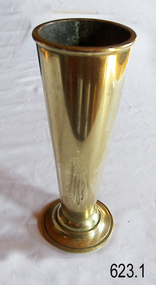
Functional object - Vase, circa 1944
... They show that people of the 1800s and 1900s cared about the seafarers’ religious, moral, and social welfare, no matter what the religion, social status or nationality. ...This vase, one of a part of a pair of organ vases, was part of the original furnishings of the St Nicholas' Mission to Seamen's Church at 139 Nelson Place, Williamstown, Victoria. THE MISSIONS TO SEAMEN (Brief History: for more, see our Reg. No. 611, Set of Pews) The Missions to Seamen, an Anglican charity, has served seafarers of the world since 1856 in Great Britain. It symbol is a Flying Angel, inspired by a Bible verse. Today there are centr4es in over 200 ports world-wide where seamen of all backgrounds are offered a warm welcome and provided with a wide range of facilities. In Victoria the orgainsation began in Williamstown in 1857. It was as a Sailors’ Church, also known as ‘Bethel’ or the ‘Floating Church’. Its location was an old hulk floating in Hobson’s Bay, Port of Melbourne. It soon became part of the Missions to Seamen, Victoria. In the year 2000 the organisation, now named Mission to Seafarers, still operated locally in Melbourne, Portland, Geelong and Hastings. The Ladies’ Harbour Lights Guild was formed in 1906 to support the Missions to Seamen in Melbourne and other centres such as Williamstown. Two of the most significant ladies of the Guild were founder Ethel Augusta Godfrey and foundation member Alice Sibthorpe Tracy (who established a branch of the Guild in Warrnambool in 1920). The Guild continued its work until the 1960s. In 1943 a former Williamstown bank was purchased for the Missions to Seaman Club. The chapel was named St Nicholas’ Seamen’s Church and was supported by the Ladies’ Harbour Lights Guild, the Williamstown Lightkeepers’ Auxiliary and the League of Soldiers’ and Sailors’ Friends. It ceased operation in 1966. A Missions to Seamen Chapel and Recreation Room was a significant feature of ports during the late 1800s and into the 1900s. It seemed appropriate for Flagstaff Hill to include such a representation within the new Maritime Village, so the Melbourne Board of Management of Missions to Seamen Victoria gave its permission on 21st May 1979 for the entire furnishings of the Williamstown chapel to be transferred to Flagstaff Hill. The St Nicholas Seamen’s Church was officially opened on October 11, 1981 and closely resembles the Williamstown chapel. This vase, and its pair, is significant through its association with the St Nicholas' Mission to Seamen Church in Williamstown, Melbourne, established in 1857. The items in our collection from the Missions to Seamen in Williamstown, Victoria, have historical and social significance. They show that people of the 1800s and 1900s cared about the seafarers’ religious, moral, and social welfare, no matter what the religion, social status or nationality. It had its origins in Bristol, England when a Seamen's Mission was formed in 1837. The first Australian branch was started in 1856 by the Rev. Kerr Johnston, a Church of England clergyman, and operated from a hulk moored in Hobson’s Bay; later the Mission occupied buildings in Williamstown and Port Melbourne. Vase, one of a pair, of organ vases, polished brass church vases with truncated conical shapes. White sticker under vase with hand written number "136" This is one of the original items in our ‘St Nicholas Seamen's Church Williamstown Collection’.White sticker under vase with hand written number "136" flagstaff hill, warrnambool, shipwrecked-coast, flagstaff-hill, flagstaff-hill-maritime-museum, maritime-museum, shipwreck-coast, flagstaff-hill-maritime-village, vase, church vase, brass vase, conical vase, religion, religious service, sailors rest, bethel sailors’ church, bethel floating church, ladies harbour light guild, missions to seamen victoria, mission to seafarers, st nicholas seaman’s church williamstown, st nicholas mission to seamen church williamstown, mission to seamen williamstown, st nicholas seamen’s church flagstaff hill, 139 nelson place williamstown, flying angel club, organ vase -
 Mission to Seafarers Victoria
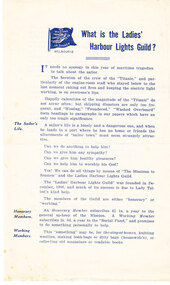
Flyer, What is the Ladies' Harbour Lights Guild?, c. 1912
... welfare projects. This paper flyer holds historical significance at a local level because it illustrates the Ladies' Harbour Lights Guild involvement in the Mission to Seafarers.The Ladies' Harbour Lights Guild formally named in 1907 grew to become a significant charity in Melbourne raising large amounts of money which helped to establish the current MTSV building, supporting seafarers. ...Charity organisation, Ladies' Harbour Lights Guild,was formed within The Missions to Seamen Institute to provide a home away from home, for visiting seamen. The flyer was to recruit members. The flyer mentions the sinking of the Titanic in 1912 and the bravery of the seamen staying in the engine room. The flyer mentions also Lady Talbot Margaret Jane nee Stuart-Wortley (1855-1937), wife of Governor Reginald Taldot, actively promoted advanced social welfare projects.This paper flyer holds historical significance at a local level because it illustrates the Ladies' Harbour Lights Guild involvement in the Mission to Seafarers.The Ladies' Harbour Lights Guild formally named in 1907 grew to become a significant charity in Melbourne raising large amounts of money which helped to establish the current MTSV building, supporting seafarers. In 1960s the LHLG merged with the Flying Angels Club of the MTSV.A cream colour paper flyer describing in blue ink the work and value of membership of The Ladies' Harbour Lights Guild, in order to recruit new members. Also includes a photocopy of the flyer. (2 copies)The photocopy of the original has written in blue "1912". ladies' harbour lights guild, australian wharf, chapel, ephemera, titanic, 1912, lhlg, mission to seamen, seamens' mission, mission to seafarers, alice sibthorpe tracy, reverend alfred gurney goldsmith, philanthropy, charity, welfare, sailors, tragedy, heroism, honorary members, working members, norwegian, foreign language, pit, card game, animal grab, le jeu des animaux, margaret jane (née stuart-wortley), lady talbot, lady margaret jane talbot (nee stuart-wortley), ethel augusta godfrey 1861-1935, knitting, woolies -
 Mission to Seafarers Victoria
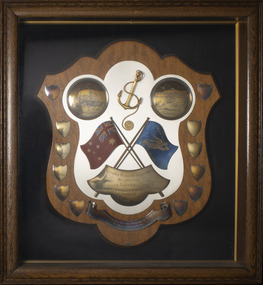
Award - Shield, Soccer Football Shield For Annual Competition by Crews of Merchant Ships, c. 1936
... Sports and games were an essential part of the welfare services offered by the Mission when seamen had long shore leave. shield soccer football anchor brass silver wally nancarrow mission to seafarers victoria Walter James Nancarrow (1885 - 1961) engraved on brass banner: For annual competition by crew of merchant ships presented by Wally Nancarrow, Sydney Wooden shield featuring two circular disk silver plaques one on each side at the top. ...Football matches were a popular onshore activity and Annual reports note Reverend Weller in the 1920s managed to establish a temporary pitch and a change room facility near Port Melbourne. The donor, Wally Nancarrow, was a tailor in the Queen Victoria Building in Sydney (from Nov. 1927- Aug. 1935 on Trove) so the relation with the Melbourne Mission is unclear. The shield can be seen hanging above the canteen on item 1713 (dated c. 1950) and in the Celia Little Room. The Annual Report 1936 mentions a shield (p11) seen on page 15: "Football: The competition has been extended this year, and in the future is to include all matches played in Australian ports. The Victorian Missions to Seamen Shield is the present trophy, and the Assistant-Chaplain has been appointed Organiser and Honorary Secretary." The shield may have been done after the one mentioned in the annual report and we can only speculate nothing was ever engraved because of WW2.The collection holds many historic and later contemporary colour photos of crew football teams posed onshore and on decks. Sports and games were an essential part of the welfare services offered by the Mission when seamen had long shore leave.Wooden shield featuring two circular disk silver plaques one on each side at the top. One with the engraving of a ship and the other with the engraving of a footballer. At the top in the centre is an anchor in relief gilded with a rope attached, falling across the front of it and coiling at the bottom of the anchor. Two flags crossing over in the middle of the shield; one the Australian Navy flag and the other the Mission to Seamen flag. Laying over the top of the poles of the flags is a brass banner with the competition description engraved on it. At the bottom is a brass scroll with an inscription about who presented it and where. The shield has 12 smaller, blank silver shields along the sides. The shield is kept inside a wooden display cabinet with a glass front and navy material back ground.engraved on brass banner: For annual competition by crew of merchant ships presented by Wally Nancarrow, Sydneyshield, soccer, football, anchor, brass, silver, wally nancarrow, mission to seafarers victoria, walter james nancarrow (1885 - 1961) -
 Mission to Seafarers Victoria
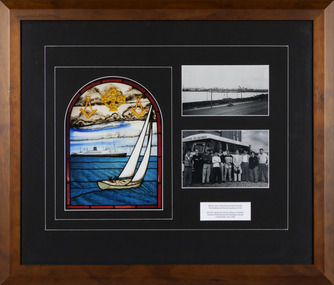
Photograph - Framed montage, Arthouse - Picture Framing & Gallery, On the Seas, 2013
... For over 150 years the Mission to Seafarers in Victoria has continued to meet the welfare needs of seafarers who arrive on Australian shores from around the world. ...HUMBLE BEGINNINGS The Mission to Seafarers, which was originally known as the ‘Bethel Union’, was established in London in 1835, a recognition of the spiritual needs of seafarers who live a lonely life at sea. In 1857, the Bethel Union began a mission in Victoria aboard the Emily, a large hulk vessel donated by the government, with the object of establishing a floating church for sailors moored in Hobson’s Bay. The first chaplain, his wife and their eight children, three servants and livestock called the Emily home for two and a half years. Each week, sailors were taken to the Emily via a longboat to join in the Sunday services. Today following the same custom, seafarers are transported by bus to and from the docks by a volunteer bus service run from the Mission building at 717 Flinders Street. This window, named ‘On the Seas’, was installed in 1980 and represents the origins and history of the Mission to Seafarers through the symbols of a cross, maritime and Masonic imagery.Reflections of the Sea was an exhibition of 10 framed montage of photographs from the mission's archive collection showcasing 10 stained glass windows from the St Peter chapel. This exhibition curated by Georgia Melville and Catherine McLay, and funded by PROV and Creative Victoria, was displayed in the World Trade Centre Wharf Gallery in June July 2013 and toured to Queenscliff Maritime Museum. The photographs of the windows were taken by scientific photographer Justine M. Philip. This frame is showcasing the window by Greg Cummins with a photograph of seamen in front of a van and a view of Port Melbourne.Framed and mounted on black cardboard of black and white and colour reproductions from the MTSV collection for the exhibition Reflections of the Sea with brief label signageon label: ABOVE: View of the Princes Pier from the Port Melbourne Mission windows in 1928. BELOW: A group of visiting seafarers standing in front of the Mission bus during an outing to the beach, circa 1950s.reflections of the sea, georgia melville, exhibition, 2013, world trade centre, wtc, creative victoria, prov, mission to seafarers, stained glass windows, justine m. philip, greg cummins, flinders street, catherine mclay, arthouse -
 Mission to Seafarers Victoria
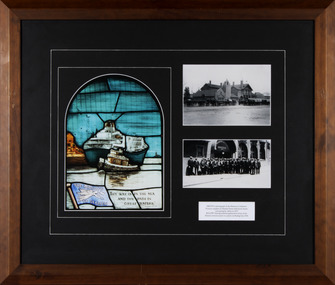
Photograph - Framed montage, Arthouse - Picture Framing & Gallery, Missions to Seafarers, 2013
... For over 150 years the Mission to Seafarers in Victoria has continued to meet the welfare needs of seafarers who arrive on Australian shores from around the world. ...THE HOME OF THE MISSION TO SEAFARERS By 1907 the Mission to Seafarers Victoria had moved from providing its services aboard a floating vessel, the Emily, to three different bases in Melbourne locations: Williamstown, Port Melbourne and the North Bank of the Yarra - opening a central home in 1907, and finally at 717 Flinders Street in 1917. The Mission to Seafarers Victoria complex, includes the landmark domed gymnasium, which opened in 1920. The State heritage listed buildings of the Mission are considered architecturally significant urban examples of two distinct architectural styles: the external Spanish Mission Revival and the Arts and Crafts influence of the interior. This window, titled ‘Missions to Seamen’, was installed in 1980 and depicts a cargo ship, tug and lighthouse representing the working seaman, and is further supported by the Flying Angel emblem of the Mission to Seafarers ministry.Reflections of the Sea was an exhibition of 10 framed montage of photographs from the mission's archive collection showcasing 10 stained glass windows from the St Peter chapel. This exhibition curated by Georgia Melville and Catherine McLay, and funded by PROV and Creative Victoria, was displayed in the World Trade Centre Wharf Gallery in June-July 2013 and toured to Queenscliff Maritime Museum. The photographs of the windows were taken by scientific photographer Justine M. Philip. This frame is showcasing the window depicting a ship and tugboat, two photographs of the Flinders Street building and seamen departing for a picnic.Framed and mounted on black cardboard of black and white and colour reproductions from the MTSV collection for the exhibition Reflections of the Sea with brief label signageon label: ABOVE: A photograph of the Mission to Seafarers complex on Flinders Street with horse drawn carts going by, taken in 1927 BELOW: Visiting seafarers gathered in front of the Mission entrance prior to a picnic on Boxing Day 1926reflections of the sea, georgia melville, exhibition, 2013, world trade centre, wtc, justine m. philip, flying angel flag, tugboat, mission to seafarers, flinders street, creative victoria, prov, stained glass windows, catherine mclay, arthouse -
 Mission to Seafarers Victoria
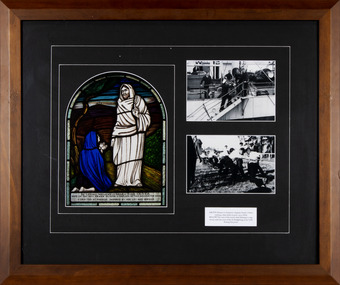
Photograph - Framed montage, Arthouse - Picture Framing & Gallery, Noli Me Tangere, 2013
... For over 150 years the Mission to Seafarers in Victoria has continued to meet the welfare needs of seafarers who arrive on Australian shores from around the world. ...A GLOBAL PERSPECTIVE Before the increase of air transport, everything that arrived or departed from Australia did so via the ports and wharves. The Mission to Seafarersis not a Victorian initiative, but rather a global network that currently operates in over 260 ports worldwide, assisting over 1.3 million seafaring men and women each year. The importance of the Mission’s role is demonstrated in the Chaplain’s Report 1947, which notes that ships and their crews are: “...inextricably linked with the well-being of Australian industrial and economic life... This, in turn, means that you cannot escape some share in responsibility for their welfare.” This window, titled ‘Noli Me Tangere’, was installed in memoriam of Moira Oliver, the wife of the Reverend Frank Oliver, chaplain at the Mission 1930-60, and whose dedication in life and service to the welfare of seafarers was inspirational to many.Reflections of the Sea was an exhibition of 10 framed montage of photographs from the mission's archive collection showcasing 10 stained glass windows from the St Peter chapel. This exhibition curated by Georgia Melville and Catherine McLay, and funded by PROV and Creative Victoria, was displayed in the World Trade Centre Wharf Gallery in June July 2013 and toured to Queenscliff Maritime Museum. The photographs of the windows were taken by scientific photographer Justine M. Philip. This frame is showcasing the memorial window to Moira Bird Oliver, wife of Padre Oliver , a photograph of Padre Oliver listing a ship and a photograph of sailors playing tug-of-war during a picnic.Framed and mounted on black cardboard of black and white and colour reproductions from the MTSV collection for the exhibition Reflections of the Sea with brief label signageon label: ABOVE: Mission to Seafarers' chaplain Frank L Oliver, visiting a ship whilst in port, c1950s BELOW: The crew of the motor ship Nyhaugin a tug-of-war with the crew of the SS Madgeburg at the 1926 Boxing Day picnicreflections of the sea, georgia melville, exhibition, 2013, world trade centre, wtc, creative victoria, prov, mission to seafarers, stained glass windows, justine m. philip, moira bird oliver, moira bird oliver (nee good), padre frank leslie oliver, picnic, tug-of-war, flinders street, catherine mclay, arthouse -
 Mission to Seafarers Victoria
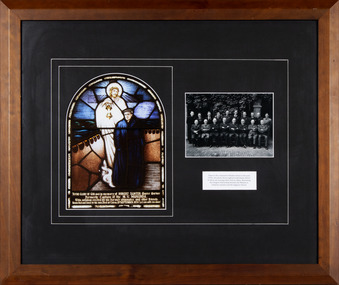
Photograph - Framed montage, Arthouse - Picture Framing & Gallery, Light of the World, 2013
... For over 150 years the Mission to Seafarers in Victoria has continued to meet the welfare needs of seafarers who arrive on Australian shores from around the world. ...THE CHAPLAINCY Although fostered by the Anglican Church since 1906, the work of the Mission to Seafarers’ is inter- denominational and is not limited by the physical space of its buildings. When the old Melbourne wharves and their moorings were still in use, chaplains would also visit ships to look after the welfare of those who could not visit the Mission. Today, the Mission’s ‘Ship Visitors’ provide a similar service. The Flinders Street central complex was purpose built to meet with seafarers’ needs: “...the first thing a sailor would see before the traps and temptations of the city would be the Institute and its comfortable rooms.” (The Argus, ND). Today, the Mission continues to offer its comfortable, safe spaces and a friendly ear to seafarers, alongside other services that extend well beyond those traditionally offered - including TV, phone cards, and access to the internet. This window, titled ‘Light of the World’, was installed in 1935 in memory of a former ‘M.V. Manunda’ captain and represents chaplaincy support to the seafaring community.Reflections of the Sea was an exhibition of 10 framed montage of photographs from the mission's archive collection showcasing 10 stained glass windows from the St Peter chapel. This exhibition curated by Georgia Melville and Catherine McLay, and funded by PROV and Creative Victoria, was displayed in the World Trade Centre Wharf Gallery in June July 2013 and toured to Queenscliff Maritime Museum. The photographs of the windows were taken by scientific photographer Justine M. Philip. his frame is showcasing the memorial window to Captain Robert Sunter and a photograph of a chaplains conférence in the 1950s.Framed and mounted on black cardboard of black and white and colour reproductions from the MTSV collection for the exhibition Reflections of the Sea with brief label signageon label: Taken in the courtyard at Flinders Street in the early 1950s, this photo shows eighteen individuals, fifteen of whom are wearing white clerical collars, illutsrating the integral relationship between the Mission to Seafarers ministry and the Anglican Churchreflections of the sea, georgia melville, exhibition, 2013, world trade centre, wtc, captain robert sunter, chaplaincy, conference, mv manunda, creative victoria, prov, mission to seafarers, stained glass windows, justine m. philip, flinders street, catherine mclay, arthouse -
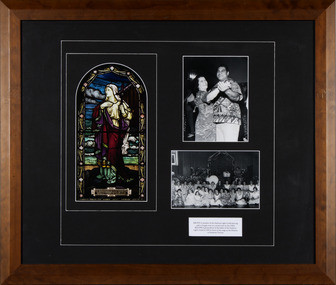 Mission to Seafarers Victoria
Photograph - Framed montage, Arthouse - Picture Framing & Gallery, Faith, 2013
... For over 150 years the Mission to Seafarers in Victoria has continued to meet the welfare needs of seafarers who arrive on Australian shores from around the world. ...THE HARBOUR LIGHTS GUILD The ‘Ladies Committee’ was formalised in 1906 to assist the chaplain with the social demands of the Mission, and was renamed the ‘Ladies Harbour Lights Guild’ the following year. According to former members, it operated with all proper decorum and with precise guidelines that restricted women from coming into contact with seafarers outside of Mission activities. With some 1,600 Victorian members during its early years, these volunteers gave their prayers, money, handiwork time and considerable energy in order to assist in providing for the welfare needs of visiting seafarers. The heritage chapel of St Peter, often referred to as the Mariners’ Chapel, features many examples of stained glass. Commemorating the service of Mercantile mariners, the funds to build the chapel were raised by the ladies of the Harbour Lights Guild. This window, titled ‘Faith’, was installed in 1933 to commemorate the devoted service of Miss Ethel Godfrey, a founding key member of the Ladies Harbour Lights Guild.Reflections of the Sea was an exhibition of 10 framed montage of photographs from the mission's archive collection showcasing 10 stained glass windows from the St Peter chapel. This exhibition curated by Georgia Melville and Catherine McLay, and funded by PROV and Creative Victoria, was displayed in the World Trade Centre Wharf Gallery in June July 2013 and toured to Queenscliff Maritime Museum. The photographs of the windows were taken by scientific photographer Justine M. Philip. This frame is showcasing the memorial window to Ethel Godfrey, and two photographs of ladies from the Harbour Lights Guild.Framed and mounted on black cardboard of black and white and colour reproductions from the MTSV collection for the exhibition Reflections of the Sea with brief label signageon label: ABOVE: a member of the Harbour Lights Guild dancing with a Tongan man at a social event during the 1960s. BELOW: A group photo of the ladies of the Harbour Lights Guild in front of the stage at the Mission to Seafarers Victoriareflections of the sea, georgia melville, exhibition, 2013, world trade centre, wtc, ethel augusta godfrey 1861-1935, lhlg, harbour lights guild, ladies harbour lights guild, dance, creative victoria, prov, mission to seafarers, stained glass windows, justine m. philip, catherine mclay, arthouse -
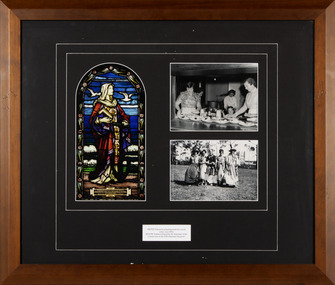 Mission to Seafarers Victoria
Photograph - Framed montage, Arthouse - Picture Framing & Gallery, Hope, 2013
... For over 150 years the Mission to Seafarers in Victoria has continued to meet the welfare needs of seafarers who arrive on Australian shores from around the world. ...ENTERTAINMENT AND SOCIAL EVENTS The Ladies of the Harbour Lights Guild played a central role in everyday functions of the Mission to Seafarers. Concerts and social events were held nightly all the year round, as were special events on Cup Day, the King and Queen’s Birthdays, Christmas Day, Boxing Day and New Years Eve. Ladies of the Guild and other friends of the Mission contributed greatly to the organisation of such occasions, which provided great comfort to seafarers so far removed from home and their loved ones. As one seafarer remarked: “Ah miss, it is not so much the concerts and picnics that does us men so good, but that you ladies will come and talk to us”. This window, titled ‘Hope’, was installed in 1933 in memoriam of one of the founders and long- standing members of the Guild, Miss Alice Tracey, who passed away in 1932. She is remembered as a much- loved leader and key member of LHLG.Reflections of the Sea was an exhibition of 10 framed montage of photographs from the mission's archive collection showcasing 10 stained glass windows from the St Peter chapel. This exhibition curated by Georgia Melville and Catherine McLay, and funded by PROV and Creative Victoria, was displayed in the World Trade Centre Wharf Gallery in June July 2013 and toured to Queenscliff Maritime Museum. The photographs of the windows were taken by scientific photographer Justine M. Philip. This frame is showcasing the memorial window to Alice Sibthorpe Tracy, a photograph of ladies pin the kitchen in the Flinders Street building, and seamen dressed up during a picnic.Framed and mounted on black cardboard of black and white and colour reproductions from the MTSV collection for the exhibition Reflections of the Sea with brief label signageon label: ABOVE: Volunteers preparing meals for a social event, circa 1950s BELOW: Seafarers dressed for the "final heat"of the costume race at the 1926 Christmas Day picnicreflections of the sea, georgia melville, exhibition, 2013, world trade centre, wtc, creative victoria, prov, mission to seafarers, stained glass windows, justine m. philip, alice sibthorpe tracy, social events, kitchen, lhlg, picnic, fancy dress, seamen, sailors, catherine mclay, arthouse -
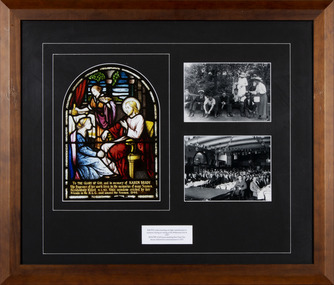 Mission to Seafarers Victoria
Photograph - Framed montage, Arthouse - Picture Framing & Gallery, Jesus in the House of Martha and Mary, 2013
... For over 150 years the Mission to Seafarers in Victoria has continued to meet the welfare needs of seafarers who arrive on Australian shores from around the world. ...FRIENDS OF THE MISSION The Mission has always relied heavily on the patronage of its volunteers and sponsors who are kind enough to donate much-needed funds, time and expertise. In its first year, the Mission had only 99 pounds to its name, 90 pounds of which was taken up by the chaplain’s salary! Today the Mission is overseen by a Board of Directors and is run by a dedicated team of employees and volunteers. Even though developments such as containerisation in the shipping industry have meant that the number of seafarers on each vessel and their time spent in port has been drastically reduced, the needs of seafarers are just as pressing today as they were when the Mission first began. This window, titled ‘Jesus in the House of Martha and Mary’, was installed in 1947 in memory of Karen Brady, a volunteer and friend of the Mission, dedicated to providing for the needs of seafarers. This window is symbolic of the continuation of such needs in modern times.ontextual or historic information Reflections of the Sea was an exhibition of 10 framed montage of photographs from the mission's archive collection showcasing 10 stained glass windows from the St Peter chapel. This exhibition curated by Georgia Melville and Catherine McLay, and funded by PROV and Creative Victoria, was displayed in the World Trade Centre Wharf Gallery in June July 2013 and toured to Queenscliff Maritime Museum. The photographs of the windows were taken by scientific photographer Justine M. Philip. This frame is showcasing the memorial window to member of the Guild, Karen Brady, who died during a black out hit by a car while she was on her way back home from the Mission, and two photographs of social activities organised for seafarers.Framed and mounted on black cardboard of black and white and colour reproductions from the MTSV collection for the exhibition Reflections of the Sea with brief label signageon label: ABOVE: Ladies handing out light refreshments to seafarers during an outang at the Melbourne Zoo in 1907 BELOW: A full house awaiting New Years Eve dinner followed by entertainment in 1927reflections of the sea, georgia melville, exhibition, 2013, world trade centre, wtc, creative victoria, prov, mission to seafarers, stained glass windows, justine m. philip, flinders street, karen brady, lhlg, picnic, social events, catherine mclay, arthouse -
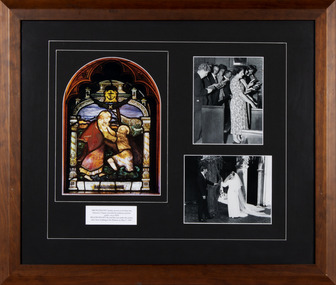 Mission to Seafarers Victoria
Photograph - Framed montage, Arthouse - Picture Framing & Gallery, Thou of Little Faith, 2013
... For over 150 years the Mission to Seafarers in Victoria has continued to meet the welfare needs of seafarers who arrive on Australian shores from around the world. ...A KEY MELBOURNE LANDMARK Although primarily dedicated to providing for the welfare of visitors from abroad, the Mission has always been a community-based organisation, and its doors are always open to the general public. Today, the Flinders Street complex lends its ample space to a variety of community pursuits – including yoga classes, religious sermons and gallery exhibitions. The Mission also continues as a popular venue for weddings and other social events, mainly due to the endearing historical connections and unique architecture and ambience. It is a distinctive and significant feature of Melbourne’s riverside streetscape. This window, titled ‘Thou of Little Faith’ is part of a pair that were installed at around the time the Mission was built in 1917. It is dedicated to a prominent family member of the ‘Forges of Footscray’ store fame, who were great supporters of the Mission’s work.Reflections of the Sea was an exhibition of 10 framed montage of photographs from the mission's archive collection showcasing 10 stained glass windows from the St Peter chapel. This exhibition curated by Georgia Melville and Catherine McLay, and funded by PROV and Creative Victoria, was displayed in the World Trade Centre Wharf Gallery in June July 2013 and toured to Queenscliff Maritime Museum. The photographs of the windows were taken by scientific photographer Justine M. Philip. This frame is showcasing the window in memry of James Leslie Forge, a photograph during a service in the chapel and a wedding photograph.Framed and mounted on black cardboard of black and white and colour reproductions from the MTSV collection for the exhibition Reflections of the Sea with brief label signageon label: ABOVE RIGHT: Sunday services in St Peter the Mariner's chapel, attended by seafarers and the public, circa 1950s BELOW RIGHT: Mr and Mrs Lee under the arches after their wedding at the Mission on May 1st, 1967reflections of the sea, georgia melville, exhibition, 2013, world trade centre, wtc, creative victoria, prov, mission to seafarers, stained glass windows, justine m. philip, flinders street, james leslie forge, weddings, service, chapel of saint peter, catherine mclay, arthouse -
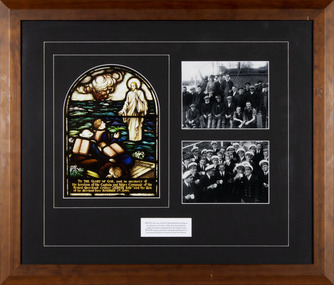 Mission to Seafarers Victoria
Photograph - Framed montage, Arthouse - Picture Framing & Gallery, Jervis Bay, 2013
... This frame is showcasing the memorial window to the Jervis Bay crew, a group photograph of the seamen from the SS Siltonhall and a group photograph of seamen For over 150 years the Mission to Seafarers in Victoria has continued to meet the welfare needs of seafarers who arrive on Australian shores from around the world. ...THE SEAS IN WARTIME During WWII, as many as 27,000 men of the merchant and the King’s navy perished during active service. Dedicated to seafarers’ wellbeing, the Mission’s spiritual roots also make it a place for reflection on the loss of human life at sea. The Mission to Seafarers’ ministry offers its support in hundreds of seaports around the world, and has played an important role in supporting those who have lost friends and family at sea during wartime. Many of the stained glass windows in the chapel are dedicated to these people, and represent many close maritime community relationships. This window was installed in 1947 in recognition of the heroism and courage of those who have served in the Merchant Navy, and in particular to those who lost their lives aboard the armed merchant cruiser, ‘Jervis Bay’. This vessel was attacked by an enemy packet battleship whilst leading an escort from Nova Scotia to the UK in 1940.Reflections of the Sea was an exhibition of 10 framed montage of photographs from the mission's archive collection showcasing 10 stained glass windows from the St Peter chapel. This exhibition curated by Georgia Melville and Catherine McLay, and funded by PROV and Creative Victoria, was displayed in the World Trade Centre Wharf Gallery in June July 2013 and toured to Queenscliff Maritime Museum. The photographs of the windows were taken by scientific photographer Justine M. Philip. This frame is showcasing the memorial window to the Jervis Bay crew, a group photograph of the seamen from the SS Siltonhall and a group photograph of seamenFramed and mounted on black cardboard of black and white and colour reproductions from the MTSV collection for the exhibition Reflections of the Sea with brief label signageon label: ABOVE: VThe crew of the SS Siltonhall found refuge at the Mission in October, 1929, after their ship had caught fire and was abandoned in the Indian Ocean BELOW: A group of seafarers enjoying refreshments at the docks provided by volunteers from the Missionreflections of the sea, georgia melville, exhibition, 2013, world trade centre, wtc, hms jervis bay, ss siltonhall, siltonhall, ww2, creative victoria, prov, mission to seafarers, stained glass windows, justine m. philip, flinders street, catherine mclay, arthouse
