
Showing 26 items matching "second boer war 1899"
-
 Bendigo Military Museum
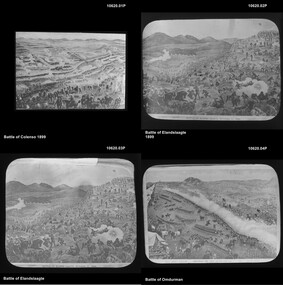
Photograph - MAGIC LANTERN SLIDES, Popular views of the Second Boer War 1899
... Popular views of the Second Boer War 1899...second boer war 1899...A collection of 36 magic lantern slides featuring scenes from the Second Boer War, 1899. Examples of “magic lantern”projectors can be found on Victorian Collections....Popular views of the Second Boer War 1899 Photograph MAGIC LANTERN SLIDES ...These slides are positive images imprinted on glass plates designed to be projected onto a screen using a magic lantern, a forerunner of the modern projector. Many of the slides are photographs of items in publications such as the London Illustrated News and other popular sources. Magic lantern shows were entertainments held in halls and mechanics institutes as a form of community entertainment. A slide projector would display the images onto a stage curtain accompanied by a commentary from the presenter. The subjects shown were topical and patriotic, illustrating current events. The Australian colonies sent sizable contingents to South Africa, so the show would have been of great interest. A collection of 36 magic lantern slides featuring scenes from the Second Boer War, 1899. Examples of “magic lantern”projectors can be found on Victorian Collections.Some slides have text from newspapers attached, probably acting as a prompt to the presenter.second boer war 1899, magic lantern shows -
 Orbost & District Historical Society
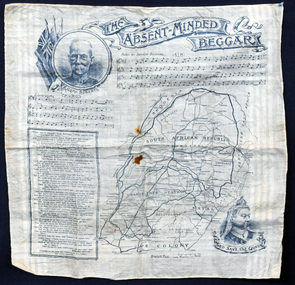
handkerchief, c. 1899
... The Daily Mail printed this handkerchief to raise funds for the "Soldiers' Families Fund" after the outbreak of the Second Boer War (1899-1902. (The Daily Mail, devised by Alfred Harmsworth (later Lord Northcliffe) and his brother Harold (later Lord Rothermere), was first published on 4 May 1896 and was an immediate success.) ...The Daily Mail printed this handkerchief to raise funds for the "Soldiers' Families Fund" after the outbreak of the Second Boer War (1899-1902. (The Daily Mail, devised by Alfred Harmsworth (later Lord Northcliffe) and his brother Harold (later Lord Rothermere), was first published on 4 May 1896 and was an immediate success.) ...The Daily Mail printed this handkerchief to raise funds for the "Soldiers' Families Fund" after the outbreak of the Second Boer War (1899-1902. (The Daily Mail, devised by Alfred Harmsworth (later Lord Northcliffe) and his brother Harold (later Lord Rothermere), was first published on 4 May 1896 and was an immediate success.) Patriotic handkerchiefs were popular during the Victorian era and this one featuring a popular song and well-known people was probably the most popular.This handkerchief was produced to raise funds for the families of soldiers involved in the Second Boer War. This fund, The Soldiers' Families Fund was the first such charitable effort for a war. The handkerchief and other related items raised more than 250,000 pounds.A white linen man's handkerchief. It is printed in blue. It has a map of the South African Republic and the music and words of The Absent Minded Beggar - music by Arthur Sullivan, words by Rudyard Kipling. There is a picture of Lord Roberts, the British Commander in Chief, in the top left corner with the British flag and a picture of Queen Victoria in the bottom right corner.handkerchief souvenir boer-war -
 Federation University Historical Collection
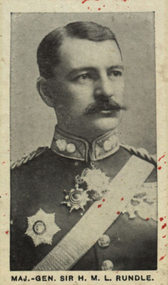
Photograph (black & White), Major General Sir Henry Macleod Lesley Rundle - South Africa
... The Second Boer War started late 1899. Rundle was appointed to be commander of the 8th Division of the South African Field Force and served until 1902. ...The Second Boer War started late 1899. Rundle was appointed to be commander of the 8th Division of the South African Field Force and served until 1902. ...The Second Boer War started late 1899. Rundle was appointed to be commander of the 8th Division of the South African Field Force and served until 1902. His army record and achievements meant he was mentioned in dispatches and therefore awarded with King Grand Cross of the Order of the Bath; Knight Grand Cross of the Order of St Michael and St George; Knight Grand Cross of the Royal Victorian Order; Distinguished Service Order.Individual image from photographed poster of tobacco and cigarette cards.second boer war, major general, sir h m l rundle, commander, 8th division, south african field force, knight grand cross of the order of st michael and st george, knight grand cross of the order of the bath, knight grand cross of the royal victorian order, distinguished service order -
 Federation University Historical Collection
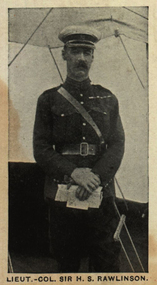
Photograph (black & White), Lieutenant-Colonel Sir Henry Seymour Rawlinson, 1st Baron Rawlinson - South Africa
... Rawlinson served with distinction in a field command in the Second Boer War from 1899 to 1902. He was in Western Transvaal during early 1902 and led a column taking part in the Battle of Rooiwai, the last battle of the war. ...Rawlinson served with distinction in a field command in the Second Boer War from 1899 to 1902. He was in Western Transvaal during early 1902 and led a column taking part in the Battle of Rooiwai, the last battle of the war. ...Rawlinson served with distinction in a field command in the Second Boer War from 1899 to 1902. He was in Western Transvaal during early 1902 and led a column taking part in the Battle of Rooiwai, the last battle of the war. Following the end of hostilities he returned to England. Rawlinson, for his commands and the battles and wars he was engaged in during his career was awarded many times. Knight Grand Cross of the Royal Victorian Order, 1917; Knight Commander of the Order of St Michael and St George, 1918; Knight Grand Cross of the Order of the Bath, 1919; Baron Rawlinson, of Trent in the County of Dorset, 1919. Grand Officer of the Legion of Honour of France, 1916; Order of Danilo, 1st Class of the Kingdom of Montenegro, 1916; Obilitch Medal in Gold of the Kingdom of Montenegro, 1917; Order of St George, 4th Class of the Empire of Russia, 1917; Grand Officer of the Order of Leopold of Belgium, 1917; Croix de Guerre of Belgium, 1918; Croix de Guerre of France, 1919; American Army Distinguished Service Medal, 1919; Knight Grand Commander of the Order of the Star of India, 1924. Individual image from photographed poster of tobacco and cigarette cards.rawlinson, second boer war, western transvaal, battle of rooiwai, 1st baron of trent, dorset, knight grand cross of the royal victorian order, knight commander of the order of st michael and st george, knight grand cross of the order of the bath, grand officer of the legion of honour france, order of danilo 1st class of the kingdom of montenegro, obilitch medal in gold of the kingdom of montenegro, order fo st george 4th class of theempire of russia, grand officer of the order of leopold of belgium, croix de guerra of belgium, croix de guerra of france, american army distinguished service medal, knight grand commander of the order of the star of india -
 4th/19th Prince of Wales's Light Horse Regiment Unit History Room
Decorative object - Gift Tin, c.1900
... In 1899, British soldiers and sailors were in South Africa fighting the second Boer War which lasted from 1899 to 1902. ...In 1899, British soldiers and sailors were in South Africa fighting the second Boer War which lasted from 1899 to 1902. ...In 1899, British soldiers and sailors were in South Africa fighting the second Boer War which lasted from 1899 to 1902. Queen Victoria was concerned about the morale of her army and navy and wanted to do something to lift their spirits. She would send chocolate to all of her army and navy serving in South Africa (including Australian contingents) as a Christmas/New Year gift in 1899/1900. The chocolate manufacturer, Cadbury, which since around 1854 had a Royal Warrant to supply Queen Victoria with cocoa and chocolate, was contacted and requested to produce the royal bars of chocolate, each with its own individual tin. This put Richard and George Cadbury in a dilemma because, as Quakers, they were pacifists and did not agree with the war. However they did not want to refuse a request from the Queen. To prevent their confectionery rivals from accusing them of going against their principles, their solution was to invite fellow Quakers, Joseph Fry and Joseph Rowntree to form a temporary three-way partnership to complete the order. Forty thousand tins, designed and made by Fry, were produced in two different sizes. The larger of the tins (15 x 9 cm) has a gold coloured rim around the edge of the lid and contained two layers of chocolate. The slightly smaller or rather thinner tin (16 x 8 cm) has a blue rim around the edge of the lid and contained one layer of chocolate. The design of the lid of both sizes is the same. It was decided by all three companies, that the tins would carry no brand name. However Queen Victoria was not amused by this decision; she wanted her army and navy to know that she was sending them quality British chocolate. As a compromise, the Cadbury name appeared on interior packaging of the chocolate. The tins remained unbranded. The empty tins had a more sombre use for for men killed in action. The tins, containing their few personal belongings, were sent home to the next of kin. The tins were not large and may have contained items such as medals, talismans, coins, jewellery, photos, letters and dog tags.Sheet metal tin with hinged lid. In the middle of the red lid of the tin is a gold-coloured embossed picture of Queen Victoria's head. To the left is Queen Victoria's insignia, and to the right are the words "South Africa 1900" and is inscribed "I wish you a happy New Year" and signed Victoria running along the bottom.gift to defence personnel from queen victoria. gift sent at christmas / new year in 1899/1900, gift sent at christmas / new year 1899/1900 -
 Federation University Historical Collection
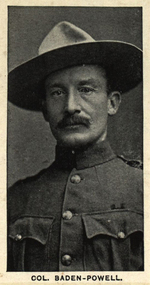
Photograph (black & White), Colonel Baden-Powell - South Africa, c1900
... In 1896 he returned to Africa and served in the Second Matabele War in the expedition to relieve British South Africa Company personnel under siege in Bulawayo. From 1899 to 1900, Baden-Powell commanded the garrison at Mafeking during the Second Boer War. ...In 1896 he returned to Africa and served in the Second Matabele War in the expedition to relieve British South Africa Company personnel under siege in Bulawayo. From 1899 to 1900, Baden-Powell commanded the garrison at Mafeking during the Second Boer War. ...Robert Baden-Powell was born in 1857. After school he joined the British Army as an officer and was posted to India. In the early 1880s he served in the Natal province of South Africa amidst the Zulu He learnt advanced scouting skills during his time in South Africa where knowledge of countryside was vital for gaining information. In 1896 he returned to Africa and served in the Second Matabele War in the expedition to relieve British South Africa Company personnel under siege in Bulawayo. From 1899 to 1900, Baden-Powell commanded the garrison at Mafeking during the Second Boer War. The siege of Mafeking lasted 217 days and the successful defence of the town raised his national profile. In 1900 Baden-Powell was promoted to Major General. In 1901 he was invested as Companion of the Order of Bath by King Edward VII. After some controversies he retired from the Army in 1910. At the beginning of the First World War he put himself at the disposal of the War Office but no command was given to him. Awards obtained include Ashanti Star (1895), British South Africa Company Medal (1896), Queen's South Africa Medal (1899), King's South Africa Medal (1902), Knight Grand Cross of the Order of St Michael and St George, Knight Grand Cross of the Royal Victorian Order, Knight Commander of the Order of the Bath, plus numerous Scouting Medals. Baden-Powell married in 1912 at the age of 55. He and Olave had three children. Baden-Powell died in 1941 and buried in St Peter's Cemetery, Nyeri, Kenya. Olave died in 1977 and her ashes were sent to Kenya to be interred beside her husband.Individual image from photographed poster of tobacco and cigarette cards. See 09350.baden-powell, british army, natal, south africa, zulu, india, officer, scouting, second matabele war, british south africa company, bulawayo, mafeking, second boer war, major general, companion of the order of bath, ashant star, british south africa company medal, queen's south africa medal, king's south africa medal, knight grand cross of the order of st michael and st george, knight grand cross of the royal victorian order, knight commander of the order of the bath -
 Federation University Historical Collection
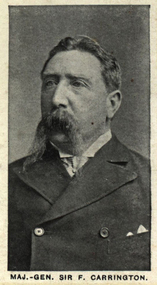
Photograph (black & White), Major-General Sir Frederick Carrington - South Africa
... War and commanded the British Force in the Matabele Rebellion in 1896. During 1899-1900 he was back in Ireland but returned to South Africa in 1900 following the outbreak of the Second Boer War and was appointed on the staff of the South Africa Field Force with the rank of lieutenant-general. he was in command of the Rhodesian Field Force during the war. ...War and commanded the British Force in the Matabele Rebellion in 1896. During 1899-1900 he was back in Ireland but returned to South Africa in 1900 following the outbreak of the Second Boer War and was appointed on the staff of the South Africa Field Force with the rank of lieutenant-general. he was in command of the Rhodesian Field Force during the war. ...After completing his education, Sir Frederick Carrington joined the 24th Regiment of Foot in 1864. In 1875 he went to South Africa and formed and commanded the Mounted Infantry in the Griqualand West expedition and the Frontier Light Horse in the Ninth Frontier War in 1877. In 1878-1879 he commanded the Transvaal Volunteer Force against Sekhukhune and the Cape Mounted Riflemen in the Basuto Gun War of 1881. In 1885 he was in command of the 2nd Mounted Infantry when he accompanied Sir Charles Warren expedition to Bechuanaland. The Infantry soon became known as "Carrington's Horse". He became military adviser to the High Commissioner in the First Matabele War and commanded the British Force in the Matabele Rebellion in 1896. During 1899-1900 he was back in Ireland but returned to South Africa in 1900 following the outbreak of the Second Boer War and was appointed on the staff of the South Africa Field Force with the rank of lieutenant-general. he was in command of the Rhodesian Field Force during the war. He was awarded the Knight Commander of the Order of St Michael and St George in 1887 and Knight Commander of the Order of the Bath in 1897.Individual image from photographed poster of tobacco and cigarette cards.sir frederick carrington, south africa, transvaal volunteer force, mounted infantry, frontier light horse, griqualand west, ninth frontier war, cape mounted riflemen, basuto gun war, carrington's horse, high commissioner, second boer war, lieutenant-general, knight commander of the order of the bath, knight commander of the order of st michael and st george, rhodesian field force -
 Federation University Historical Collection
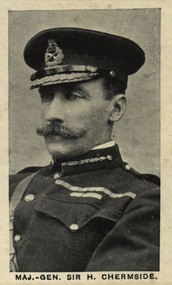
Photograph (black & White), Major-General Sir Herbert Charles Chermside - South Africa
... Second Boer War. Late 1901 he returned to his position in Ireland and in 1902 he was appointed the first Post-Federation Governor of Queensland, Australia. He announced his retirement in 1904 and returned to Britain. He retired from the Army in 1907. Chermside was awarded the Companion of the Order of the Bath in 1886, Companion of the Order of St Michael and St George in 1880, upgraded to Knight Commander of the Order of St Michael and St George in 1897 and Knight Grand Cross of the Order of St Michael and St George in 1899. ...Second Boer War. Late 1901 he returned to his position in Ireland and in 1902 he was appointed the first Post-Federation Governor of Queensland, Australia. He announced his retirement in 1904 and returned to Britain. He retired from the Army in 1907. Chermside was awarded the Companion of the Order of the Bath in 1886, Companion of the Order of St Michael and St George in 1880, upgraded to Knight Commander of the Order of St Michael and St George in 1897 and Knight Grand Cross of the Order of St Michael and St George in 1899. herbert chermside royal military academy commissioned royal engineers arctic egypt british army intelligence staff curragh camp ireland south africa second boer war governor of queensland companion of the order of the bath companion of the order of st michael and st george knight commander of the order of st michael and st george knight grand cross of the order of st michael and st george Individual image from photographed poster of tobacco and cigarette cards. ...After attending Eton College, Herbert Chermside attended the Royal Military Academy where he graduated at the top of his year and was commissioned in the Royal Engineers in 1870. After several postings and expeditions, including the Arctic in 1873, he was promoted to captain in 1882 and appointed to the British Army's intelligence staff in Egypt and given command of the Egyptian Army's 1st Battalion. He spent four years in Egypt. Promotions and consular appointments followed and eventually he returned to Britain. He was appointed in command of the Curragh Camp in Ireland, 1900. However, he was sent to South Africa to command the 14th brigade and the 3rd division during the Second Boer War. Late 1901 he returned to his position in Ireland and in 1902 he was appointed the first Post-Federation Governor of Queensland, Australia. He announced his retirement in 1904 and returned to Britain. He retired from the Army in 1907. Chermside was awarded the Companion of the Order of the Bath in 1886, Companion of the Order of St Michael and St George in 1880, upgraded to Knight Commander of the Order of St Michael and St George in 1897 and Knight Grand Cross of the Order of St Michael and St George in 1899. Individual image from photographed poster of tobacco and cigarette cards.herbert chermside, royal military academy, commissioned, royal engineers, arctic, egypt, british army intelligence staff, curragh camp, ireland, south africa, second boer war, governor of queensland, companion of the order of the bath, companion of the order of st michael and st george, knight commander of the order of st michael and st george, knight grand cross of the order of st michael and st george -
 Federation University Historical Collection
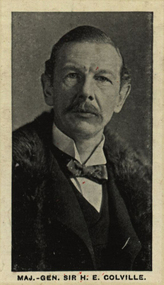
Photograph (black & White), Major-General Sir Henry Edward Colville - South Africa
... He served in the Second Boer War and during the early part he commanded the Guards Brigade, including during the Battle of Modder River in 1899....He served in the Second Boer War and during the early part he commanded the Guards Brigade, including during the Battle of Modder River in 1899. henry colville eton greadier guards aide-de-camp south africa commissioner for uganda central africa medal knight commander of the order of st michael and st george order of the brilliant star of zanzibar battle of modder river second boer war Individual image from photographed poster of tobacco and cigarette cards. ...Henry Colville was educated at Eton and then entered the Grenadier Guards in 1870. He was appointed Aide-de-Camp to General the Honorable Sir Leicester Smyth, commanding the forces in South Africa in 1880. Colville had expeditions and was mentioned in despatches on numerous occasions. In 1893 he succeeded Sir Gerald Portal as Commissioner for Uganda, received the Central Africa Medal, made Knight Commander of the Order of St Micael and St George and received the second class Order of the Brilliant Star of Zanzibar. He served in the Second Boer War and during the early part he commanded the Guards Brigade, including during the Battle of Modder River in 1899.Individual image from photographed poster of tobacco and cigarette cards.henry colville, eton, greadier guards, aide-de-camp, south africa, commissioner for uganda, central africa medal, knight commander of the order of st michael and st george, order of the brilliant star of zanzibar, battle of modder river, second boer war -
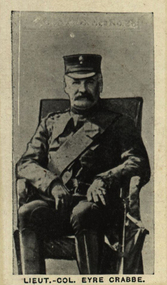 Federation University Historical Collection
Photograph (black & White), Lieutenant-Colonel Eyre Crabbe - South Africa
... In 1899 he led the Battalion to South Africa following the outbreak of the Second Boer War. ...In 1899 he led the Battalion to South Africa following the outbreak of the Second Boer War. ...In 1898 Eyre Macdonnell Stewart Crabbe had been promoted to Lieutenant-Colonel and became commanding officer of the 3rd Battalion, Grenadier Guards. In 1899 he led the Battalion to South Africa following the outbreak of the Second Boer War. At the battle of Belmont he was wounded but able to continue and attend the battle of Magersfontein. He was wounded again in 1900 when ambushed at Karee Siding but a month later was back in action. In 1901 he fought against Fouche and Kritzinger, and defeated Van der Merwe and Hildebrand. After the war he held staff posts at Aldershot but died suddenly in 1905 aged 52.Individual image from photographed poster of tobacco and cigarette cards. eyre crabbe, lieutenant-colonel, 3rd battalion, grenadier guards, south africa, second boer war, battle of belmont, battle of magersfontein, karee siding, fouche, kritzinger, van der merwe, hildebrand -
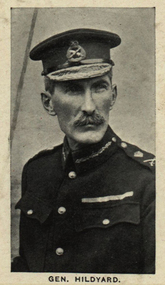 Federation University Historical Collection
Photograph (black & White), General Sir Henry John Thoroton Hildyard - South Africa
... During the Second Boer War Hildyard was posted to South Africa and commanded 2nd Brigade from 1899 to 1900. ...During the Second Boer War Hildyard was posted to South Africa and commanded 2nd Brigade from 1899 to 1900. ...During the Second Boer War Hildyard was posted to South Africa and commanded 2nd Brigade from 1899 to 1900. He saw active service at the Battle of Colenso. Hidyard remained in South Africa to command the 5th Division from 1900 to 1901 and took part in the Battle of the Tugela Heights. He was appointed as Director-General of Military Education from 1903 to 1904 and lieutenant general on the Imperial General Staff commanding the troops in South Africa from 1904 to 1905. He was General Officer Commanding-in-Chief, South Africa from 1905 to 1908. He retired in 1911. Awarded Companion of the Order of the Bath 1897, (Diamond Jubilee Honours); Knight Commander of the Order of the Bath 1900; Knight Grand Cross of the Order of the Bath 1911, (Coronation Honours)Individual image from photographed poster of tobacco and cigarette cards.sir henry hildyard, south africa, second boer war, battle of tugela heights, battle of colenso, military education, knight commander of the order of the bath, knight grand cross of the order of the bath -
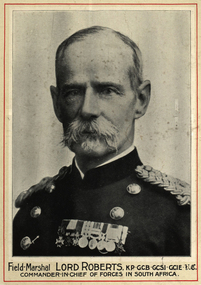 Federation University Historical Collection
Photograph (black & White), Field-Marshall Lord Roberts, Commander-in-Chief - South Africa
... In 1899 he returned to South Africa to take overall command of British Forces in the Second Boer War. ...In 1899 he returned to South Africa to take overall command of British Forces in the Second Boer War. ...Frederick Sleigh Roberts, 1st Earl Roberts was a British Soldier who served in India, Abyssinia and Afghanistan before leading the British Forces to success in the Second Boer War. He became the last Commander-in-Chief of the Forces before the post was abolished in 1904. While in South Africa he was at the Siege of Kimberley, the Battle of Paardeberg, the Battle of Poplar Grove, the Battle of Diamond Hill and the Battle of Bergendal. Roberts received many awards: Victoria Cross (1858-India); Companion of the Order of the Bath (1872-Afghanistan); Knight Commander of the Order of the Bath (1878-Afghanistan);Knight Grand Cross of the Order of the Bath (1880-Afghanistan) and Companion of the Order of the Indian Empire in the same year. He was Commander-in Chief, India in 1885 was advanced to Knight Commander of the Order of India (1887) and then Knight Grand Commander of the Order of the Indian Empire later that year. He became Knight Grand Commander of the Order of the Star of India. The same year he relinquished his Indian command and became Commander-in-Chief of British Forces in 1895 made a Knight of the Order of St Patrick. In 1899 he returned to South Africa to take overall command of British Forces in the Second Boer War. December 1900 Roberts handed over command to Lord Kitchener and returned to England where more honours were awarded. He was made a Knight of the Order of the Garter; created Earl Roberts of Kandahar, Pretoria and Waterford and Viscount St Pierre. He became a Knight of Grace of the Order of St John (1901) and then Knight of Justice of the Order of St John. The Kaiser awarded him the German Order of the Black Eagle and was among the original recipients of the Order of Merit in the 1902 Coronation Honours. Roberts died in 1914. He was given and State Funeral and buried in St Paul's Cathedral.Individual image taken from photographed poster of tobacco and cigarette cards.frederick sleigh roberts, earl roberts, india, abyssinia, afghanistan, british forces, second boer war, commander-in-chief, south africa, siege of kimberley, battle of paardeberg, battle of poplar grove, battle of diamond hill, battle of bergendal, victoria cross, companion of the order of the bath, knight commander of the order of the bath, knight grand cross of the order of the bath, companion of the order of the indian empire, knight commander of the order of india, knight grand commander of the order of the indian empire, knight grand commander of the order of the star of india, knight of the order of st patrick, knight of the order of the garter, viscount st pierre, knight of grace of the order of st john, knight of justice of the order of st john, order of the black eagle, order of merit, st paul's cathedral, london -
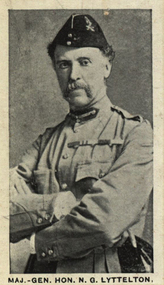 Federation University Historical Collection
Photograph (black & White), Major-General, Honorable Neville Gerald Lyttelton - South Africa
... Lyttelton served in the Second Boer War as Commander of the 4th Brigade from 1899. He temporarily became General Officer Commanding the 2nd Division and the commanded the 4th Division. ...Lyttelton served in the Second Boer War as Commander of the 4th Brigade from 1899. He temporarily became General Officer Commanding the 2nd Division and the commanded the 4th Division. ...Lyttelton served in the Second Boer War as Commander of the 4th Brigade from 1899. He temporarily became General Officer Commanding the 2nd Division and the commanded the 4th Division. The Division was involved in the Battle of Spion Kop and the Battle of Vaal Krantz, leading to the Relief of Ladysmith 1900. Lord Roberts referred to Lyttelton as an officer "with great coolness under fire, and considerable tactical knowledge and resource........an excellent commander in the field." Following the end of the Boer War in 1902, Lyttelton became Commander-in-Chief of the whole of South Africa. He and his wife sought to repair relations with the Boer community. In the South Africa honours of 1902 Lyttelton was knighted as Knight Commander of the Order of the Bath. He retired in 1912 and under insistence by the King was appointed as Governor of the Royal Hospital Chelsea from that time until his death there in 1931. Other awards received were Knight Grand Cross of the Order of the Bath; Knight Grand Cross of the Royal Victorian Order; Order of Osmanieh (Ottoman Empire)Individual image taken from photographed poster of tobacco and cigarette cards.neville gerald lyttelton, second boer war, commander, 4th brigade, battle of spion kop, battle of vaal krantz, relief of ladysmith, lord roberts, commander-in-chief, south africa, knight commander of the order of the bath, royal hospital chelsea, order of osmanieh (ottoman empire), knight grand cross of the royal victorian order -
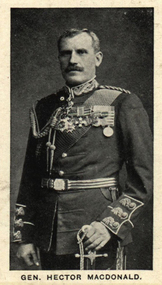 Federation University Historical Collection
Photograph (black & White), Major General, Sir Hector Archibald MacDonald - South Africa
... Second Afghan War led to him being offered either a Victoria Cross or a commission with his regiment. He chose the latter. He served in the First Boer War and at the Battle of Majuba Hill made prisoner. At the Battle of Omdurman (1898), the British commander Lord Kitchener was assisted by the skillful manoeuvring of MacDonald and his men in overcoming the Dervishes. Due to this MacDonald was promoted to colonel, appointed an aide-de-camp to Queen Victoria and received a cash reward. In Scotland MacDonald was regarded the true hero of Omdurman, not Kitchener. In 1899...Second Afghan War led to him being offered either a Victoria Cross or a commission with his regiment. He chose the latter. He served in the First Boer War and at the Battle of Majuba Hill made prisoner. At the Battle of Omdurman (1898), the British commander Lord Kitchener was assisted by the skillful manoeuvring of MacDonald and his men in overcoming the Dervishes. Due to this MacDonald was promoted to colonel, appointed an aide-de-camp to Queen Victoria and received a cash reward. In Scotland MacDonald was regarded the true hero of Omdurman, not Kitchener. In 1899 ...In 1870 MacDonald joined the Inverness-shire Highland Rifle Volunteers and in 1871 enlisted in the 92nd Gordon Highlanders. He rose rapidly through the noncommissioned ranks. His distinguished conduct in the presence of the enemy during the Second Afghan War led to him being offered either a Victoria Cross or a commission with his regiment. He chose the latter. He served in the First Boer War and at the Battle of Majuba Hill made prisoner. At the Battle of Omdurman (1898), the British commander Lord Kitchener was assisted by the skillful manoeuvring of MacDonald and his men in overcoming the Dervishes. Due to this MacDonald was promoted to colonel, appointed an aide-de-camp to Queen Victoria and received a cash reward. In Scotland MacDonald was regarded the true hero of Omdurman, not Kitchener. In 1899 he was seconded to command a military district in India but with the outbreak of war in South Africa, he was ordered to command the Highland Brigade, under Lord Roberts and his Chief of Staff, Lord Kitchener. MacDonald arrived in Cape Town and assumed command of the Highland Brigade stationed at Modder River with rank of Major-general. He took part in the Battle of Paardeberg and later operations in Bloemfontein and Pretoria. In 1901 he was knighted as Knight Commander of the Order of the Bath In1902 he was appointed Commander-in-Chief of British Troops in Ceylon with the temporary rank of major-generalIndividual image taken from photographed poster of tobacco and cigarette cards.hector macdonald, highland rifle volunteers, gordon highlanders, noncommissioned, second afghan war, victoria cross, first boer war, battle of majuba hill, battle of omdurman, lord kitchener, lord roberts, aide-de-camp, queen victoria, dervishes, cape town, highland brigade, modder river, battle of paardeburg, bloemfontein, pretoria, knight commander of the order of the bath, commander-in-chief, ceylon -
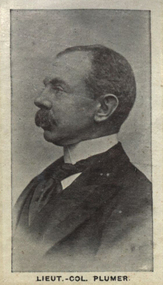 Federation University Historical Collection
Photograph (black & White), Lieutenant-Colonel Herbert Charles Onslow Plumer - South Africa
... Second Matabele War. In 1899 he returned to Southern Rhodesia as Lieutenant-Colonel where he led the Siege of Mafeking during the Second Boer War. ...Second Matabele War. In 1899 he returned to Southern Rhodesia as Lieutenant-Colonel where he led the Siege of Mafeking during the Second Boer War. ...His military career led him to become appointed as assistant military secretary to the General Officer Commanding Cape Colony in 1895. He went to Southern Rhodesia in 1896 to disarm the local police force following the Jameson Raid and then later to command the Matabele Relief Force during the Second Matabele War. In 1899 he returned to Southern Rhodesia as Lieutenant-Colonel where he led the Siege of Mafeking during the Second Boer War. Plumer returned to the United kingdom in 1904 and received an audience with King Edward VI. Lord Kitchener, Commander-in-Chief in South Africa stated "invariable displayed military qualifications of a very high order.Few officers have rendered better service." Plumer received many honours - British and foreign. Knight Grand Cross of the Order of the Bath (1918; Knight Grand Cross of the Order of St Michael and St George (1916); Knight Grand Cross of the Royal Victorian Order (1917); Knight Grand Cross of the Order of the British Empire (1924); Knight of Grace of the Venerable Order Of St John (1925); Legion of Honour (France-!917); Croix de Guerre (Belgium-1918); Croix de Guerre with Palm ( France-1919); Distinguished Service Medal (United States-1919); Grand Cordon, Order of the Rising Sun (1921) Individual image from photographed poster of tobacco and cigarette cards.cape colony, southern rhodesia, jameson raid, matabele rrelief force, second matabele war, siege of mafeking, second boer war, lord kitchener, knight grand cross of the order of st michael and st george, knight grand cross of the order of the bath, knight grand crossof the royal victorian order, knight grand cross of the order of the british empire, knight of grace of the venerable order of st john, legion of honour, croix de guerra, croix de guerra with palm, distinguished service medal, grand cordon, order of the rising sun -
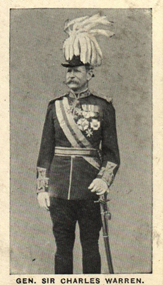 Federation University Historical Collection
Photograph (black & White), General Sir Charles Warren - South Africa
... On the outbreak of the Boer War in 1899 he returned to service and commanded the 5th Division of the South African Field Force. In January 1990, Warren bungled the second attempted relief of Ladysmith at Tugela River. ...On the outbreak of the Boer War in 1899 he returned to service and commanded the 5th Division of the South African Field Force. In January 1990, Warren bungled the second attempted relief of Ladysmith at Tugela River. ...General Sir Charles Warren was an officer in the British Royal Engineers. He was one of the earliest European archaeologists ofthe Holy Land. Much of his military service was spene in British South Africa. Previously he was police chief, the Head of the London Metropolitan Police during the Jack the Ripper murders. In 1876, the Colonial Office appointed him special commissioner to survey the boundary between Griqualand West and the Orange Free State. For this work he was made a Companion of the Order of St Michael and St George in 1877. He was appointed special commissioner to investigate "native questions" in Bechuanaland and commanded the Northern Border Expedition troops in quelling the rebellion there. In 1879 he became Administrator of Griqualand West. The town Warranton in the Northern Cape Province of South Africa is named after him. In 1882 the Admiralty sent him to Sinai to discover what had happened to Professor Edward Palmer's archaeological expedition. He discovered the members had been robbed and murdered, located their remains and brought their killers to justice. For this he was created a Knight Commander of the Order of St Michael and St George in 1883 , also Knight of Justice of the Order of St John of Jerusalem and in 1884 elected a Fellow of the Royal Society. In 1884 Warren was sent as HM Special Commissioner to command a military expedition to Bechuanaland, to assert British sovereignty in the face of encroachments from Germany and the Transvaal and to suppress the Boer freebooter states of Stellaland and Goshen, which were backed by the Transvaal and were stealing land and cattle from the local Tswana tribes. This became known as the Warren Expedition and achieved its aims without bloodshed. Warren was recalled and in 1885 was made Knight Grand Cross ofthe Order of St Michael and St George. In 1885 Warren stood for election for Parliament but lost the vote. In 1886 he was appointed Commissioner of Police of the Metropolis following Sir Edmund Henderson's resignation. Criticised continually for his decisions and actions he resigned in November 1888. Prior to this time he was appointed Knight Commander of the Order of the Bath, January 1888. On the outbreak of the Boer War in 1899 he returned to service and commanded the 5th Division of the South African Field Force. In January 1990, Warren bungled the second attempted relief of Ladysmith at Tugela River. At the Battle of Spion Kop, January 1990 he had operational command and his failure of judgement, delay and indecision despite his superior forces culminated in the disaster. It has been said that Warren was "perhaps the worst" of the British generals in the Boer War and certainly the most "preposterous". Redvers Buller in a letter to his wife described him as "a duffer", responsible for him losing him "a great chance". Warren was recalled to Britain in August 1900 and never again commanded troops in the field. Individual image from photographed poster of tobacco and cigarette cards.holy land, sir charles warren, british royal engineers, archaeologist, british south africa, london metropolitan police, jack the ripper, colonial office, commissioner, griqualand west, orange free state, companion of the order of st michael and st george, bechuanaland, northern border expedition, warrenton, sinai, professor edward palmer, knight commander of the order of st michael and st george, knight of justice of the order of st johnof jerusalem, fellow of the royal society, knight grand cross of the order of st michael and st george, boer war, redvers buller, knight commander of the order of the bath -
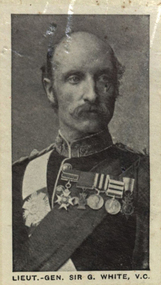 Federation University Historical Collection
Photograph (black & White), Lieutenant-General, Sir George Stuart White, V.C. - South Africa
... Second Anglo-Afghan War. For his actions he was awarded the Victoria Cross in 1879. White became commander of the forces in Natal in 1899 at the opening of the Second Boer War and fought at the Battle of Elandslaagte. ...Second Anglo-Afghan War. For his actions he was awarded the Victoria Cross in 1879. White became commander of the forces in Natal in 1899 at the opening of the Second Boer War and fought at the Battle of Elandslaagte. ...White fought at the Battle of Charasiab and at the Battle of Kandahar in the Second Anglo-Afghan War. For his actions he was awarded the Victoria Cross in 1879. White became commander of the forces in Natal in 1899 at the opening of the Second Boer War and fought at the Battle of Elandslaagte. He withdrew to Ladysmith where he took command of the garrison during the Siege of Ladysmith. When his position there became untenable he was instructed by General Sir Redvers Buller to destroy the guns and surrender the garrison on the best terms he could. White insisted on staying and held out for another four months before being relieved in February 1900. For this he was appointed a Knight Grand Cross of the Order of St Michael and St George. Earlier he had been made Knight Grand Cross of the Royal Victorian Order. In 1903 he was promoted to Field Marshall. White received many awards for his service to his country. They include the Victoria Cross (1879); Knight Grand Commander of the Order of the Indian Empire (1893); Knight Grand Cross of the Order of the Bath (1897); Knight Grand Commander of the Order of the Star of India (1898); Knight Grand Cross of the Order of St Michael and St George (1900); Knight Grand Cross of the Royal Victorian Order (1900); Order of Merit (1905). He also received the Indian Mutiny Medal; Afghanistan Medal; Kabul to Kandahar Star; Egypt Medal (1885); India General Service Medal (1885-87); Queen's South Africa Medal - Defence of Ladysmith; Queen Victoria Diamond Jubilee Medal; King Edward VII Coronation Medal; King George V Coronation Medal; Khedive's Star. Sir George Stuart White's medal and honours are displayed at the Gordon Highlanders Museum. Individual image from photographed poster of tobacco and cigarette cards.george stuart white, battle of charasiab, battle of kandahar, second anglo-afghan war, victoria cross, natal, second boer war, battle of elandslaagte, kadysmith, siege of ladysmith, general sir redvers buller, knight grand cross of the order of st michael and st george, knight grand cross of the royal victorian order, field marshall, knight grand commander of the order of the indian empire, order of merit, indian mutiny medal, afghanistan medal, kabul to kandahar star, egypt medal, indian general service medal, queen's south africa medal, queen victoria diamond jubilee medal, king edward vii coronation medal, king george v coronation medal, khedive star, gordon highlanders museum -
 Kiewa Valley Historical Society
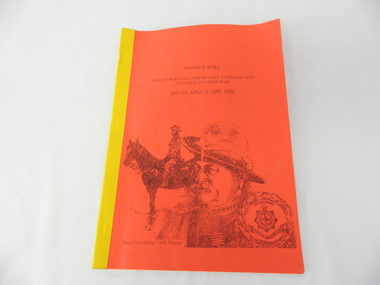
Book - Non Fiction History, Honour Roll - South Africa 1899 - 1902 Albury-Wodonga and District Residents Who Served In The Boer War, reprinted 03/2008
... Boer War in South Africa 1899 - 1902. In 1996 the then curator for the 8/13 VMR Museum, the Hon Colonel John Neale, commissioned the author to research a group of returned servicemen and women from the Boer War and had lived within 100 km radius of the Albury/Wodonga townships.The Boer War was the second war in South Africa and was the result of heavy taxes and non voting rights of the local white Boer population. ...Boer War in South Africa 1899 - 1902. In 1996 the then curator for the 8/13 VMR Museum, the Hon Colonel John Neale, commissioned the author to research a group of returned servicemen and women from the Boer War and had lived within 100 km radius of the Albury/Wodonga townships.The Boer War was the second war in South Africa and was the result of heavy taxes and non voting rights of the local white Boer population. ...Historical information of soldiers from the Albury-Wodonga district who fought in the Boer War in South Africa 1899 - 1902. In 1996 the then curator for the 8/13 VMR Museum, the Hon Colonel John Neale, commissioned the author to research a group of returned servicemen and women from the Boer War and had lived within 100 km radius of the Albury/Wodonga townships.The Boer War was the second war in South Africa and was the result of heavy taxes and non voting rights of the local white Boer population. Colonial forces including the Australian Light Horse contingent where called upon by England to overthrow the rebellion. This War was the first engagement of Australian troops fighting on foreign soil.This Honour Roll details the pay rates, the battle highlights, weapons used and maps covering the first Australian contingent of soldiers who fought in the Transvaal (Boer War).. Listed are the names of those soldiers who lived within 100klms of Albury and Wodonga.The soldiers are listed by Location, Rank, Initial,Name and Unit. The significance of both the War and those who served in it is two fold. Firstly it demonstrates that the tie between the Colonial outreaches of England's Empire to "the Motherland" were extremely strong at this point in time. This union remained strong up until the middle of World War II when England could not help Australia to defend itself against possible invasion by Japan. The alliance between Australia and the United States of America replaced the British/Australian pact. Secondly the attitude of, and the high degree of horsemanship of those from the Albury and Wodonga area. The degree of adaptability, by these servicemen, to suit the environment in which they fought provided the first real insight into the Australian psyche "of those living and surviving on the harsh Australian outback"This book has a bright red soft cover and is bound with bright yellow tape. There is a drawing of two Australian soldiers on the front, one on horsebackAuthor's complimentary inscription "To Mount Beauty Museum with compliments" signed Ian R Docking history, boer war, ex-servicemen and women, albury and wodonga -
 Monbulk RSL Sub Branch
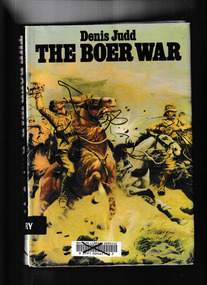
Book, Hart-Davis, MacGibbon, The Boer war, 1977
... South African war 1899-1901...Second Boer...South African war 1899-1901 Second Boer war The Boer War was an epic both of heroism and of barbarism. ...The Boer War was an epic both of heroism and of barbarism. Fought by the British against the Dutch inhabitants of South Aftrica, the Boer War had an extraordinary cast of characters including Commanders-in chief buller, Roberts and Kitchener, Winston Churchill, Arthur Conan Doyle, Emily Hobhouse, Rudyard Kipling, and Gandhi. The war revealed the ineptitude of the British military, and exposed the corrupt underside of British imperialism . For the first time, Judd and Surridge debunk several myths. There was not, for instance, a straightforward divide between the Boers and British. In fact, the overriding aim of both sides was to maintain European supremacy and to keep Africans and Indians "in their place." Giving us a sense of how the Apartheid era was born.Index, bibliography, ill, maps, p.190.non-fictionThe Boer War was an epic both of heroism and of barbarism. Fought by the British against the Dutch inhabitants of South Aftrica, the Boer War had an extraordinary cast of characters including Commanders-in chief buller, Roberts and Kitchener, Winston Churchill, Arthur Conan Doyle, Emily Hobhouse, Rudyard Kipling, and Gandhi. The war revealed the ineptitude of the British military, and exposed the corrupt underside of British imperialism . For the first time, Judd and Surridge debunk several myths. There was not, for instance, a straightforward divide between the Boers and British. In fact, the overriding aim of both sides was to maintain European supremacy and to keep Africans and Indians "in their place." Giving us a sense of how the Apartheid era was born.south african war 1899-1901, second boer war -
 Sunshine and District Historical Society Incorporated
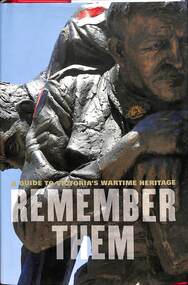
Book - Remember Them. A Guide to Victoria's War Time Heritage, Hardie Grant Books, 2009
... Boer War 1899 - 1902... First World War 1914 - 1918... Second...Boer War 1899 - 1902 First World War 1914 - 1918 Second World War 1939 - 1945 Vietnam War 1955 - 1975 War memorial Shrine of Remembrance Jacka Monash Blamey Truscott Pompey Elliot Dunlop Higgins Sandy War Horse Randall Street Maribyrnong This book shares personal stories of individuals honoured in 250 of Victoria's key war memorials in Melbourne and regional Victoria. ...This book shares personal stories of individuals honoured in 250 of Victoria's key war memorials in Melbourne and regional Victoria.A well-illustrated hard cover book. Striking picture of a soldier on dust jacket.non-fictionThis book shares personal stories of individuals honoured in 250 of Victoria's key war memorials in Melbourne and regional Victoria.boer war 1899 - 1902, first world war 1914 - 1918, second world war 1939 - 1945, vietnam war 1955 - 1975, war memorial, shrine of remembrance, jacka, monash, blamey, truscott, pompey, elliot, dunlop, higgins, sandy war horse, randall street, maribyrnong -
 Brighton Historical Society
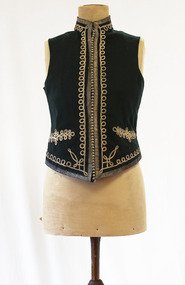
Uniform, NSW Mounted Rifles waistcoat, circa 1899
... Second Boer War. Born in Campbelltown, NSW, William began working in the colonial public service at the age of eighteen. In 1899...Second Boer War. Born in Campbelltown, NSW, William began working in the colonial public service at the age of eighteen. In 1899 ...NSW Mounted Rifles officer's mess dress waistcoat worn by Lieutenant William Augustine Newman (1873-1955) during the Second Boer War. Born in Campbelltown, NSW, William began working in the colonial public service at the age of eighteen. In 1899 he travelled to South Africa to fight in the Second Boer War as an officer of the 1st NSW Mounted Rifles. Returning to Australia in time for Federation on 1 January 1901, William rejoined the public service and was appointed to the original staff of Prime Minister Sir Edmund Barton, attending the first opening of Federal Parliament in Melbourne as Barton's private secretary. He went on to serve as the chief clerk of the Home Affairs Department, Commonwealth Electoral Officer for Victoria and official secretary to the Governor-General. In 1927 he was appointed Administrator of Nauru, a position he occupied until his retirement at the end of 1932. He retired to Brighton, where he lived with his family at 43 Martin Street until his death in 1955.Black NSW Mounted Rifles officer's mess dress waistcoat. Black superfine wool front, with black cotton back and cream cotton lining. The neck, front and bottom front edge are edged with gold metal lace and gold cording in an Austrian knot style. Two front pockets are edged in the same looped cording. The left front opening is edged with a row of decorative gold metal studs, with hook and eye fastenings underneath.Handwritten in pen on lining: "MESS WAISTCOAT / BOER WAR / LIEUT. NEWMAN / Gift of Mrs. D. Kelly, daughter".military uniform, nsw mounted rifles, boer war, william augustine newman -
 8th/13th Victorian Mounted Rifles Regimental Collection
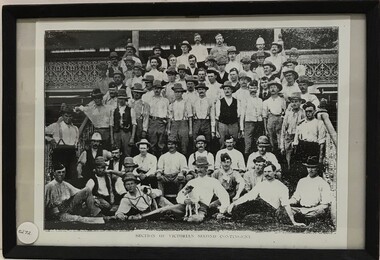
Print - VMR 2nd Contingent
... Second Contingent Victorian Mounted Rifles commanded by Colonel Tom Price sailed for South Africa 13 January 1900. military vmr south africa boer war recruits victoria price Framed print showing a section of the Victorian Second Contingent to the South African War 1899-1902. ...Second Contingent Victorian Mounted Rifles commanded by Colonel Tom Price sailed for South Africa 13 January 1900.Framed print showing a section of the Victorian Second Contingent to the South African War 1899-1902.military, vmr, south africa, boer war, recruits, victoria, price -
 City of Moorabbin Historical Society (Operating the Box Cottage Museum)
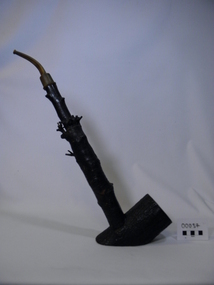
Leisure object - Pipe, South African smoking, Circa 1900
... Boer War by Private W.F. Daff of South Brighton [Later Moorabbin] Private Daff served in the Second Contingent sent to the Boer War 1899 - 1902 South Africa....Boer War by Private W.F. Daff of South Brighton [Later Moorabbin] Private Daff served in the Second Contingent sent to the Boer War 1899 - 1902 South Africa. ...This item was donated to the Moorabbin Historical Society in the 1980's by Mr John Herron of Bentleigh. It was brought back from the Boer War by Private W.F. Daff of South Brighton [Later Moorabbin] Private Daff served in the Second Contingent sent to the Boer War 1899 - 1902 South Africa.This item is of Historical Significance because it is linked to the Boer War [1899- 1902] and is of native South African origin.Mr John Herron is a descendant of James Jones an early settler in Moorabbin Shire and the Daff family were early settlers in South Brighton ( Moorabbin).A large natual wood pipe in three pieces with carved bone mouth piece.The bottom piece is on an angle so it stands upright. A hole is bored through the middle of the pipe at different sizes so the smoke is drawn up through the pipe slowly by the smoker.The carvings around the join for the top section of the pipe are very fine and delicate and extend up an over the join to camouflage it.boer war, daff w.f., pipe, native, moorabbin, brighton, south africa, bentleigh, herron john -
 Flagstaff Hill Maritime Museum and Village
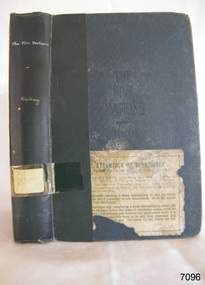
Book - Collection of Poetry, Rudyard Kipling, The Five Nations, 1903
... The book is dominated by the Second Anglo-Boer War (1899–1902). Kipling had immersed himself in South African affairs after the conflict erupted in October 1899, and "The Old Issue", later collected here, was issued as a political warning. ...The Five Nations is a collection of poems by Rudyard Kipling, first published in late 1903 in both the United Kingdom and the United States. Some poems were new; others had appeared before most notably "Recessional" of 1897 sometimes in different versions. The volume is in two parts: an untitled first section covering a wide range of subjects, and a second titled "Service Songs", mostly concerning the real or imagined experiences of common British soldiers around the turn of the twentieth century. The book is dominated by the Second Anglo-Boer War (1899–1902). Kipling had immersed himself in South African affairs after the conflict erupted in October 1899, and "The Old Issue", later collected here, was issued as a political warning. Well-known pieces include "Boots", "The Islanders", "The Lesson", "Stellenbosch", "The Broken Men", "The Sea and the Hills" and "The White Man's Burden". Kipling placed "Recessional" as the very last poem in the book, following the "Service Songs" suite about how combatants had been changed by the war. The title itself has been debated. In 1903 the United Kingdom consisted of four nations England, Ireland, Scotland and Wales and it was soon suggested that Kipling's "five nations" were Canada, Australia, New Zealand, South Africa (Cape Colony) and "the islands of the sea", meaning the British Isles. Interestingly, no commentator seems to have suggested that India was among them.Hard cover book. The Five Nations Author: Rudyard Kipling Publisher: Methuen & Co Date: 1903 Further Information:Dark Blue Cloth hardcover with lettering and patterning to spine in white texter. The spine has a Library label with an inscription.fictionThe Five Nations is a collection of poems by Rudyard Kipling, first published in late 1903 in both the United Kingdom and the United States. Some poems were new; others had appeared before most notably "Recessional" of 1897 sometimes in different versions. The volume is in two parts: an untitled first section covering a wide range of subjects, and a second titled "Service Songs", mostly concerning the real or imagined experiences of common British soldiers around the turn of the twentieth century. The book is dominated by the Second Anglo-Boer War (1899–1902). Kipling had immersed himself in South African affairs after the conflict erupted in October 1899, and "The Old Issue", later collected here, was issued as a political warning. Well-known pieces include "Boots", "The Islanders", "The Lesson", "Stellenbosch", "The Broken Men", "The Sea and the Hills" and "The White Man's Burden". Kipling placed "Recessional" as the very last poem in the book, following the "Service Songs" suite about how combatants had been changed by the war. The title itself has been debated. In 1903 the United Kingdom consisted of four nations England, Ireland, Scotland and Wales and it was soon suggested that Kipling's "five nations" were Canada, Australia, New Zealand, South Africa (Cape Colony) and "the islands of the sea", meaning the British Isles. Interestingly, no commentator seems to have suggested that India was among them.warrnambool, shipwrecked-coast, flagstaff-hill, flagstaff-hill-maritime-museum, maritime-museum, shipwreck-coast, flagstaff-hill-maritime-village, shipwrecked-artefact, book, the five nations, rudyard kipling -
 Returned Nurses RSL Sub-branch
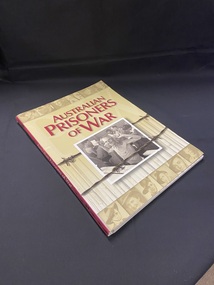
Book - Illustrated paperback book, Department of Veterans' Affairs, Canberra, Australian Prisoners of War, 2009
... Covers the following wars: Boer War, 1899-1901; First World War, 1914-1918; Second World War, 1939-1945; Korea, 1950-1954. ...This resource primarily investigates the experiences of Australian POWs from World War Two and the Korean War. It provides students with resources for studying the major themes of these experiences through on-screen memories and words of former POWs, framed by accompanying narration and images which place those memories in an historical perspective. Covers the following wars: Boer War, 1899-1901; First World War, 1914-1918; Second World War, 1939-1945; Korea, 1950-1954. Includes teachers' information; guided activities; the stories; worksheets; review and reflection. - from Trove. .Maroon spine with title printed in cream and barbed wire either side. The cover shows a strip of sepia toned portraits of soldiers across the top and bottom of the page. The title is in large maroon lettering and a photo of an emaciated prisoner in a mess hall, is below, with barbed wire running across and behond the photograpnon-fictionThis resource primarily investigates the experiences of Australian POWs from World War Two and the Korean War. It provides students with resources for studying the major themes of these experiences through on-screen memories and words of former POWs, framed by accompanying narration and images which place those memories in an historical perspective. Covers the following wars: Boer War, 1899-1901; First World War, 1914-1918; Second World War, 1939-1945; Korea, 1950-1954. Includes teachers' information; guided activities; the stories; worksheets; review and reflection. - from Trove. .australian military history - 20th century, australian armed forces, prisoners of war, nurses -
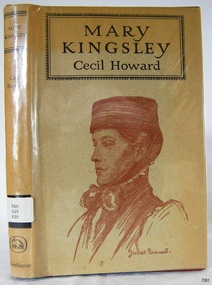 Flagstaff Hill Maritime Museum and Village
Book - Biography, Cecil Howard, Mary Kingsley, 1957
... 1899). She died of typhoid while nursing Boer prisoners during the Second Boer War in 1900. ...Mary Kingsley is a popular biography of Mary Henrietta Kingsley (1862–1900), the English explorer, travel writer, and self-taught ethnographer known for her solo travels through West Africa (Sierra Leone, Angola, Gabon, Cameroon) in 1893–95. She collected zoological specimens for the British Museum, wrote sympathetically about African religions, law, and customs that challenged many contemporary European prejudices of the time, and published two influential books of her own: Travels in West Africa (1897) and West African Studies (1899). She died of typhoid while nursing Boer prisoners during the Second Boer War in 1900. Howard's book retells her life and travels for a general readership, and descriptions call it a lively account drawn from "the raciest and most exciting passages" of her own travel writing, tracing her journeys along the Ogowe River and through West African swamps.Hard cover book. Author: Cecil Howard Publisher: Hutchinson & Co Date: 1957 Further Information: Hardcover bound with dust cover intact with portrait frontispiece lettering in black. The spine has a Library label with an inscription.non-fictionMary Kingsley is a popular biography of Mary Henrietta Kingsley (1862–1900), the English explorer, travel writer, and self-taught ethnographer known for her solo travels through West Africa (Sierra Leone, Angola, Gabon, Cameroon) in 1893–95. She collected zoological specimens for the British Museum, wrote sympathetically about African religions, law, and customs that challenged many contemporary European prejudices of the time, and published two influential books of her own: Travels in West Africa (1897) and West African Studies (1899). She died of typhoid while nursing Boer prisoners during the Second Boer War in 1900. Howard's book retells her life and travels for a general readership, and descriptions call it a lively account drawn from "the raciest and most exciting passages" of her own travel writing, tracing her journeys along the Ogowe River and through West African swamps.shipwrecked-coast, flagstaff-hill, flagstaff-hill-maritime-museum, warrnambool, maritime-museum, shipwreck-coast, flagstaff-hill-maritime-village, shipwrecked-artefact, book, pattison collection, warrnambool library, warrnambool mechanics’ institute, ralph eric pattison, corangamite regional library service, warrnambool city librarian, mechanics’ institute library, victorian library board, warrnambool books and records, warrnambool children’s library, mary kingsley, cecil howard
