
Showing 317 items matching "sheep hills"
-
 Ballarat Heritage Services
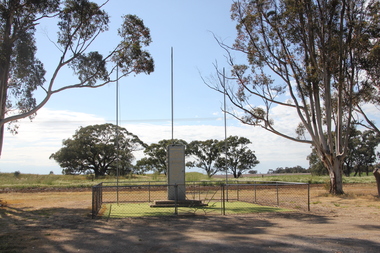
Photograph, Clare Gervasoni, Sheep Hills War Memorial, 2017, 08/10/2017
... Sheep Hills War Memorial, 2017...Sheep Hills...Sheep Hills is located Sheep Hills in the northern Wimmera region, north-west Victoria between Warracknabeal and Minyip.The Sheep Hills cenataph is opposite the Mechanics' Institute. ...Sheep Hills War Memorial...Sheep Hills is located Sheep Hills in the northern Wimmera region, north-west Victoria between Warracknabeal and Minyip.The Sheep Hills cenataph is opposite the Mechanics' Institute. ...Sheep Hills is located Sheep Hills in the northern Wimmera region, north-west Victoria between Warracknabeal and Minyip.The Sheep Hills cenataph is opposite the Mechanics' Institute. The cenotaph commemorates those from the district who served in World Wars One and Two and lists the names of those who died in the conflict. Sheep Hills War Memorialsheep hills, sheep hills cenataph, sheep hills war memorial, allan albert, walter robert childs, joseph william darling, william pleass gove, george laing, herman percy robert schultz -
 Ballarat Heritage Services
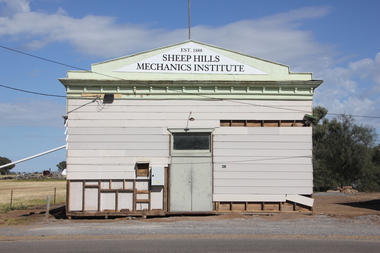
Photograph, Clare Gervasoni, Sheep Hills Mechanics' Institute, 08/10/2017
... Sheep Hills Mechanics' Institute...Sheep Hills...Sheep Hills is located Sheep Hills in the northern Wimmera region, north-west Victoria between Warracknabeal and Minyip.The Sheep Hills Mechanics' Institute was established in 1888....Weatherboard Mechanics' Institute at Sheep Hills Victoria...Sheep Hills Sheep Hills Mechanics' Institute Weatherboard Mechanics' Institute at Sheep Hills Victoria Sheep Hills Mechanics' Institute Photograph Clare Gervasoni ...Sheep Hills is located Sheep Hills in the northern Wimmera region, north-west Victoria between Warracknabeal and Minyip.The Sheep Hills Mechanics' Institute was established in 1888.Weatherboard Mechanics' Institute at Sheep Hills Victoriasheep hills, sheep hills mechanics' institute -
 Ballarat Heritage Services
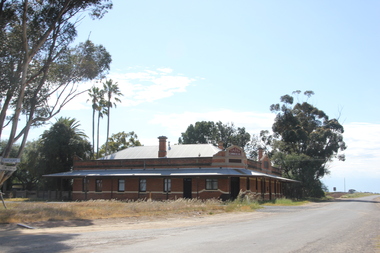
Photograph - Hotel, Clare Gervasoni, Commercial Hotel, Sheep Hills, 2017, 08/10/2017
... Commercial Hotel, Sheep Hills, 2017...Sheep Hills...Sheep Hills is located Sheep Hills in the northern Wimmera region, north-west Victoria between Warracknabeal and Minyip. ...A brick hotel at Sheep Hills, Victoria...Sheep Hills is located Sheep Hills in the northern Wimmera region, north-west Victoria between Warracknabeal and Minyip. ...Sheep Hills is located Sheep Hills in the northern Wimmera region, north-west Victoria between Warracknabeal and Minyip. The hotel was built in 1884 and was originally known as Jenkins Hotel. In 1903 it was called the Railway Hotel. The name Commercial Hotel was used from 1915, and Mr Cain bought the hotel in 1950. in 2017 it was a private residence.A brick hotel at Sheep Hills, Victoriasheep hills, commercial hotel, wimmera -
 Allan Doney Collection, Bendigo Historical Society Inc.
Negative - Farm - Sheep - Hills - Trees, Allan Doney, 1950 -1970
... Farm - Sheep - Hills - Trees...Negative Farm - Sheep - Hills - Trees Allan Doney ...In the years of Allan Doney’s photography, landmark buildings succumbed to fire, neglect and redevelopment. He photographed the grey sand hills from Bendigo’s mining past, the streetscapes, poppet heads, miners’ cottages, gracious homes with ornate verandahs, trams and much more. Above all, his photographs show how much of the city has survived from the 19th century – and how much has not. Through two decades of great change, Allan Doney was there to capture ways people interacted with it. Although he travelled to many other places in Northern Victoria and beyond in search of subjects for his art, he seemed to always return to Bendigo for inspiration. -
Allan Doney Collection, Bendigo Historical Society Inc.
Negative - Farm - Sheep - Hills - Trees, Allan Doney, 1950 -1970
... Farm - Sheep - Hills - Trees...Negative Farm - Sheep - Hills - Trees Allan Doney ...In the years of Allan Doney’s photography, landmark buildings succumbed to fire, neglect and redevelopment. He photographed the grey sand hills from Bendigo’s mining past, the streetscapes, poppet heads, miners’ cottages, gracious homes with ornate verandahs, trams and much more. Above all, his photographs show how much of the city has survived from the 19th century – and how much has not. Through two decades of great change, Allan Doney was there to capture ways people interacted with it. Although he travelled to many other places in Northern Victoria and beyond in search of subjects for his art, he seemed to always return to Bendigo for inspiration. -
Allan Doney Collection, Bendigo Historical Society Inc.
Negative - Farm - Sheep - Hills, Allan Doney, 1950 -1970
... Farm - Sheep - Hills...Negative Farm - Sheep - Hills Allan Doney ...In the years of Allan Doney’s photography, landmark buildings succumbed to fire, neglect and redevelopment. He photographed the grey sand hills from Bendigo’s mining past, the streetscapes, poppet heads, miners’ cottages, gracious homes with ornate verandahs, trams and much more. Above all, his photographs show how much of the city has survived from the 19th century – and how much has not. Through two decades of great change, Allan Doney was there to capture ways people interacted with it. Although he travelled to many other places in Northern Victoria and beyond in search of subjects for his art, he seemed to always return to Bendigo for inspiration. -
Allan Doney Collection, Bendigo Historical Society Inc.
Negative - Farm - Sheep - Hills, Allan Doney, 1950 -1970
... Farm - Sheep - Hills...Negative Farm - Sheep - Hills Allan Doney ...In the years of Allan Doney’s photography, landmark buildings succumbed to fire, neglect and redevelopment. He photographed the grey sand hills from Bendigo’s mining past, the streetscapes, poppet heads, miners’ cottages, gracious homes with ornate verandahs, trams and much more. Above all, his photographs show how much of the city has survived from the 19th century – and how much has not. Through two decades of great change, Allan Doney was there to capture ways people interacted with it. Although he travelled to many other places in Northern Victoria and beyond in search of subjects for his art, he seemed to always return to Bendigo for inspiration. -
Allan Doney Collection, Bendigo Historical Society Inc.
Negative - Farm - Sheep - Hills, Allan Doney, 1950 -1970
... Farm - Sheep - Hills...Negative Farm - Sheep - Hills Allan Doney ...In the years of Allan Doney’s photography, landmark buildings succumbed to fire, neglect and redevelopment. He photographed the grey sand hills from Bendigo’s mining past, the streetscapes, poppet heads, miners’ cottages, gracious homes with ornate verandahs, trams and much more. Above all, his photographs show how much of the city has survived from the 19th century – and how much has not. Through two decades of great change, Allan Doney was there to capture ways people interacted with it. Although he travelled to many other places in Northern Victoria and beyond in search of subjects for his art, he seemed to always return to Bendigo for inspiration. -
Allan Doney Collection, Bendigo Historical Society Inc.
Negative - Farm - Sheep - Rocky Hills, Allan Doney, 1950 -1970
... Farm - Sheep - Rocky Hills...hills from Bendigo’s mining past, the streetscapes, poppet heads, miners’ cottages, gracious homes with ornate verandahs, trams and much more. Above all, his photographs show how much of the city has survived from the 19th century – and how much has not. Through two decades of great change, Allan Doney was there to capture ways people interacted with it. Although he travelled to many other places in Northern Victoria and beyond in search of subjects for his art, he seemed to always return to Bendigo for inspiration. Negative Farm - Sheep ...In the years of Allan Doney’s photography, landmark buildings succumbed to fire, neglect and redevelopment. He photographed the grey sand hills from Bendigo’s mining past, the streetscapes, poppet heads, miners’ cottages, gracious homes with ornate verandahs, trams and much more. Above all, his photographs show how much of the city has survived from the 19th century – and how much has not. Through two decades of great change, Allan Doney was there to capture ways people interacted with it. Although he travelled to many other places in Northern Victoria and beyond in search of subjects for his art, he seemed to always return to Bendigo for inspiration. -
Allan Doney Collection, Bendigo Historical Society Inc.
Negative - Farm - Sheep - Rocky Hills, Allan Doney, 1950 -1970
... Farm - Sheep - Rocky Hills...hills from Bendigo’s mining past, the streetscapes, poppet heads, miners’ cottages, gracious homes with ornate verandahs, trams and much more. Above all, his photographs show how much of the city has survived from the 19th century – and how much has not. Through two decades of great change, Allan Doney was there to capture ways people interacted with it. Although he travelled to many other places in Northern Victoria and beyond in search of subjects for his art, he seemed to always return to Bendigo for inspiration. Negative Farm - Sheep ...In the years of Allan Doney’s photography, landmark buildings succumbed to fire, neglect and redevelopment. He photographed the grey sand hills from Bendigo’s mining past, the streetscapes, poppet heads, miners’ cottages, gracious homes with ornate verandahs, trams and much more. Above all, his photographs show how much of the city has survived from the 19th century – and how much has not. Through two decades of great change, Allan Doney was there to capture ways people interacted with it. Although he travelled to many other places in Northern Victoria and beyond in search of subjects for his art, he seemed to always return to Bendigo for inspiration. -
Allan Doney Collection, Bendigo Historical Society Inc.
Negative - Farm - Sheep - Rocky Hills, Allan Doney, 1950 -1970
... Farm - Sheep - Rocky Hills...hills from Bendigo’s mining past, the streetscapes, poppet heads, miners’ cottages, gracious homes with ornate verandahs, trams and much more. Above all, his photographs show how much of the city has survived from the 19th century – and how much has not. Through two decades of great change, Allan Doney was there to capture ways people interacted with it. Although he travelled to many other places in Northern Victoria and beyond in search of subjects for his art, he seemed to always return to Bendigo for inspiration. Negative Farm - Sheep ...In the years of Allan Doney’s photography, landmark buildings succumbed to fire, neglect and redevelopment. He photographed the grey sand hills from Bendigo’s mining past, the streetscapes, poppet heads, miners’ cottages, gracious homes with ornate verandahs, trams and much more. Above all, his photographs show how much of the city has survived from the 19th century – and how much has not. Through two decades of great change, Allan Doney was there to capture ways people interacted with it. Although he travelled to many other places in Northern Victoria and beyond in search of subjects for his art, he seemed to always return to Bendigo for inspiration. -
 Allan Doney Collection, Bendigo Historical Society Inc.
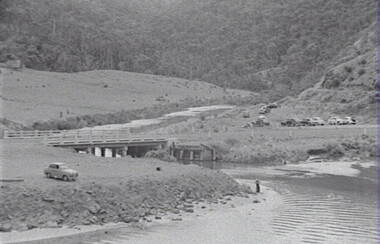
Negative - Sheep - River - Rocky Hills - Forest, Allan Doney, 1950 -1970
... Sheep - River - Rocky Hills - Forest...hills from Bendigo’s mining past, the streetscapes, poppet heads, miners’ cottages, gracious homes with ornate verandahs, trams and much more. Above all, his photographs show how much of the city has survived from the 19th century – and how much has not. Through two decades of great change, Allan Doney was there to capture ways people interacted with it. Although he travelled to many other places in Northern Victoria and beyond in search of subjects for his art, he seemed to always return to Bendigo for inspiration. Negative Sheep ...In the years of Allan Doney’s photography, landmark buildings succumbed to fire, neglect and redevelopment. He photographed the grey sand hills from Bendigo’s mining past, the streetscapes, poppet heads, miners’ cottages, gracious homes with ornate verandahs, trams and much more. Above all, his photographs show how much of the city has survived from the 19th century – and how much has not. Through two decades of great change, Allan Doney was there to capture ways people interacted with it. Although he travelled to many other places in Northern Victoria and beyond in search of subjects for his art, he seemed to always return to Bendigo for inspiration. -
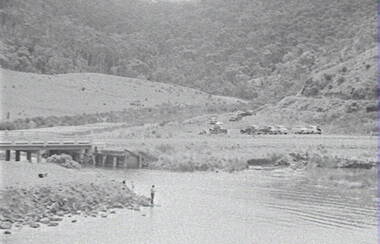 Allan Doney Collection, Bendigo Historical Society Inc.
Negative - Sheep - River - Rocky Hills - Forest, Allan Doney, 1950 -1970
... Sheep - River - Rocky Hills - Forest...hills from Bendigo’s mining past, the streetscapes, poppet heads, miners’ cottages, gracious homes with ornate verandahs, trams and much more. Above all, his photographs show how much of the city has survived from the 19th century – and how much has not. Through two decades of great change, Allan Doney was there to capture ways people interacted with it. Although he travelled to many other places in Northern Victoria and beyond in search of subjects for his art, he seemed to always return to Bendigo for inspiration. Negative Sheep ...In the years of Allan Doney’s photography, landmark buildings succumbed to fire, neglect and redevelopment. He photographed the grey sand hills from Bendigo’s mining past, the streetscapes, poppet heads, miners’ cottages, gracious homes with ornate verandahs, trams and much more. Above all, his photographs show how much of the city has survived from the 19th century – and how much has not. Through two decades of great change, Allan Doney was there to capture ways people interacted with it. Although he travelled to many other places in Northern Victoria and beyond in search of subjects for his art, he seemed to always return to Bendigo for inspiration. -
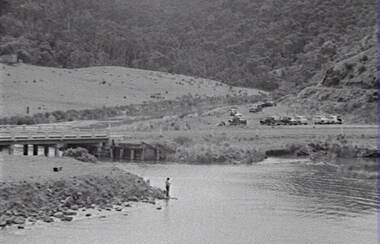 Allan Doney Collection, Bendigo Historical Society Inc.
Negative - Sheep - River - Rocky Hills - Forest, Allan Doney, 1950 -1970
... Sheep - River - Rocky Hills - Forest...hills from Bendigo’s mining past, the streetscapes, poppet heads, miners’ cottages, gracious homes with ornate verandahs, trams and much more. Above all, his photographs show how much of the city has survived from the 19th century – and how much has not. Through two decades of great change, Allan Doney was there to capture ways people interacted with it. Although he travelled to many other places in Northern Victoria and beyond in search of subjects for his art, he seemed to always return to Bendigo for inspiration. Negative Sheep ...In the years of Allan Doney’s photography, landmark buildings succumbed to fire, neglect and redevelopment. He photographed the grey sand hills from Bendigo’s mining past, the streetscapes, poppet heads, miners’ cottages, gracious homes with ornate verandahs, trams and much more. Above all, his photographs show how much of the city has survived from the 19th century – and how much has not. Through two decades of great change, Allan Doney was there to capture ways people interacted with it. Although he travelled to many other places in Northern Victoria and beyond in search of subjects for his art, he seemed to always return to Bendigo for inspiration. -
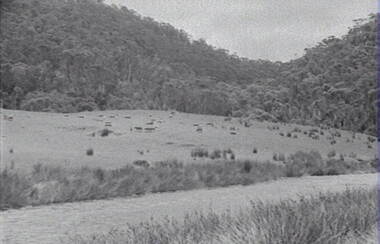 Allan Doney Collection, Bendigo Historical Society Inc.
Negative - Sheep - River - Rocky Hills - Forest, Allan Doney, 1950 -1970
... Sheep - River - Rocky Hills - Forest...hills from Bendigo’s mining past, the streetscapes, poppet heads, miners’ cottages, gracious homes with ornate verandahs, trams and much more. Above all, his photographs show how much of the city has survived from the 19th century – and how much has not. Through two decades of great change, Allan Doney was there to capture ways people interacted with it. Although he travelled to many other places in Northern Victoria and beyond in search of subjects for his art, he seemed to always return to Bendigo for inspiration. Negative Sheep ...In the years of Allan Doney’s photography, landmark buildings succumbed to fire, neglect and redevelopment. He photographed the grey sand hills from Bendigo’s mining past, the streetscapes, poppet heads, miners’ cottages, gracious homes with ornate verandahs, trams and much more. Above all, his photographs show how much of the city has survived from the 19th century – and how much has not. Through two decades of great change, Allan Doney was there to capture ways people interacted with it. Although he travelled to many other places in Northern Victoria and beyond in search of subjects for his art, he seemed to always return to Bendigo for inspiration. -
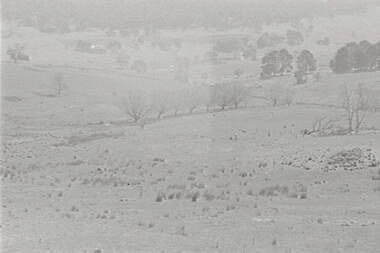 Allan Doney Collection, Bendigo Historical Society Inc.
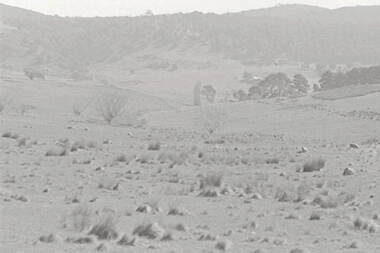
Negative - Tooborac - Rocky Hills - Sheep, Allan Doney, 1950 -1970
... Tooborac - Rocky Hills - Sheep...Negative Tooborac - Rocky Hills - Sheep Allan Doney ...In the years of Allan Doney’s photography, landmark buildings succumbed to fire, neglect and redevelopment. He photographed the grey sand hills from Bendigo’s mining past, the streetscapes, poppet heads, miners’ cottages, gracious homes with ornate verandahs, trams and much more. Above all, his photographs show how much of the city has survived from the 19th century – and how much has not. Through two decades of great change, Allan Doney was there to capture ways people interacted with it. Although he travelled to many other places in Northern Victoria and beyond in search of subjects for his art, he seemed to always return to Bendigo for inspiration. -
 Allan Doney Collection, Bendigo Historical Society Inc.
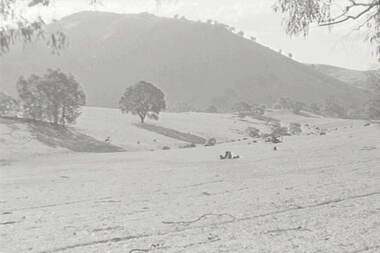
Negative - Tooborac - Rocky Hills - Sheep, Allan Doney, 1950 -1970
... Tooborac - Rocky Hills - Sheep...Negative Tooborac - Rocky Hills - Sheep Allan Doney ...In the years of Allan Doney’s photography, landmark buildings succumbed to fire, neglect and redevelopment. He photographed the grey sand hills from Bendigo’s mining past, the streetscapes, poppet heads, miners’ cottages, gracious homes with ornate verandahs, trams and much more. Above all, his photographs show how much of the city has survived from the 19th century – and how much has not. Through two decades of great change, Allan Doney was there to capture ways people interacted with it. Although he travelled to many other places in Northern Victoria and beyond in search of subjects for his art, he seemed to always return to Bendigo for inspiration. -
 Allan Doney Collection, Bendigo Historical Society Inc.
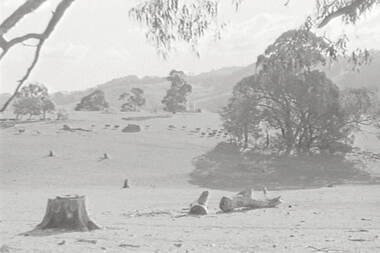
Negative - Lancefield - Rocky Hills - Sheep, Allan Doney, 1950 -1970
... Lancefield - Rocky Hills - Sheep...Negative Lancefield - Rocky Hills - Sheep Allan Doney ...In the years of Allan Doney’s photography, landmark buildings succumbed to fire, neglect and redevelopment. He photographed the grey sand hills from Bendigo’s mining past, the streetscapes, poppet heads, miners’ cottages, gracious homes with ornate verandahs, trams and much more. Above all, his photographs show how much of the city has survived from the 19th century – and how much has not. Through two decades of great change, Allan Doney was there to capture ways people interacted with it. Although he travelled to many other places in Northern Victoria and beyond in search of subjects for his art, he seemed to always return to Bendigo for inspiration. -
 Allan Doney Collection, Bendigo Historical Society Inc.
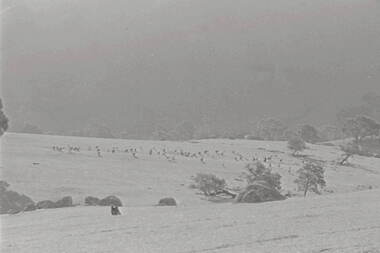
Negative - Lancefield - Rocky Hills - Sheep, Allan Doney, 1950 -1970
... Lancefield - Rocky Hills - Sheep...Negative Lancefield - Rocky Hills - Sheep Allan Doney ...In the years of Allan Doney’s photography, landmark buildings succumbed to fire, neglect and redevelopment. He photographed the grey sand hills from Bendigo’s mining past, the streetscapes, poppet heads, miners’ cottages, gracious homes with ornate verandahs, trams and much more. Above all, his photographs show how much of the city has survived from the 19th century – and how much has not. Through two decades of great change, Allan Doney was there to capture ways people interacted with it. Although he travelled to many other places in Northern Victoria and beyond in search of subjects for his art, he seemed to always return to Bendigo for inspiration. -
 Allan Doney Collection, Bendigo Historical Society Inc.
Negative - Lancefield - Rocky Hills - Sheep, Allan Doney, 1950 -1970
... Lancefield - Rocky Hills - Sheep...Negative Lancefield - Rocky Hills - Sheep Allan Doney ...In the years of Allan Doney’s photography, landmark buildings succumbed to fire, neglect and redevelopment. He photographed the grey sand hills from Bendigo’s mining past, the streetscapes, poppet heads, miners’ cottages, gracious homes with ornate verandahs, trams and much more. Above all, his photographs show how much of the city has survived from the 19th century – and how much has not. Through two decades of great change, Allan Doney was there to capture ways people interacted with it. Although he travelled to many other places in Northern Victoria and beyond in search of subjects for his art, he seemed to always return to Bendigo for inspiration. -
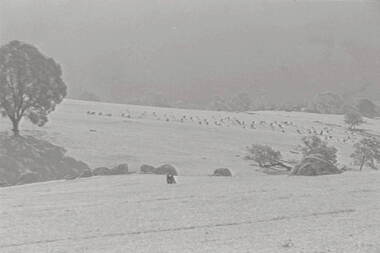 Allan Doney Collection, Bendigo Historical Society Inc.
Negative - Lancefield - Rocky Hills - Sheep, Allan Doney, 1950 -1970
... Lancefield - Rocky Hills - Sheep...Negative Lancefield - Rocky Hills - Sheep Allan Doney ...In the years of Allan Doney’s photography, landmark buildings succumbed to fire, neglect and redevelopment. He photographed the grey sand hills from Bendigo’s mining past, the streetscapes, poppet heads, miners’ cottages, gracious homes with ornate verandahs, trams and much more. Above all, his photographs show how much of the city has survived from the 19th century – and how much has not. Through two decades of great change, Allan Doney was there to capture ways people interacted with it. Although he travelled to many other places in Northern Victoria and beyond in search of subjects for his art, he seemed to always return to Bendigo for inspiration. -
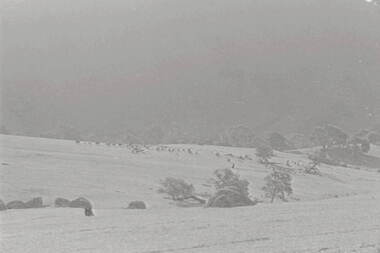 Allan Doney Collection, Bendigo Historical Society Inc.
Negative - Lancefield - Rocky Hills - Sheep, Allan Doney, 1950 -1970
... Lancefield - Rocky Hills - Sheep...Negative Lancefield - Rocky Hills - Sheep Allan Doney ...In the years of Allan Doney’s photography, landmark buildings succumbed to fire, neglect and redevelopment. He photographed the grey sand hills from Bendigo’s mining past, the streetscapes, poppet heads, miners’ cottages, gracious homes with ornate verandahs, trams and much more. Above all, his photographs show how much of the city has survived from the 19th century – and how much has not. Through two decades of great change, Allan Doney was there to capture ways people interacted with it. Although he travelled to many other places in Northern Victoria and beyond in search of subjects for his art, he seemed to always return to Bendigo for inspiration. -
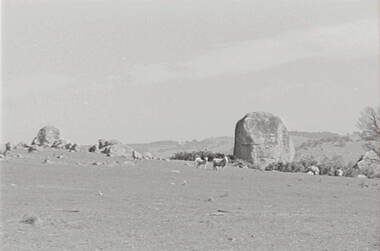 Allan Doney Collection, Bendigo Historical Society Inc.
Negative - Lancefield - Rocky Hills - Sheep, Allan Doney, 1950 -1970
... Lancefield - Rocky Hills - Sheep...Negative Lancefield - Rocky Hills - Sheep Allan Doney ...In the years of Allan Doney’s photography, landmark buildings succumbed to fire, neglect and redevelopment. He photographed the grey sand hills from Bendigo’s mining past, the streetscapes, poppet heads, miners’ cottages, gracious homes with ornate verandahs, trams and much more. Above all, his photographs show how much of the city has survived from the 19th century – and how much has not. Through two decades of great change, Allan Doney was there to capture ways people interacted with it. Although he travelled to many other places in Northern Victoria and beyond in search of subjects for his art, he seemed to always return to Bendigo for inspiration. -
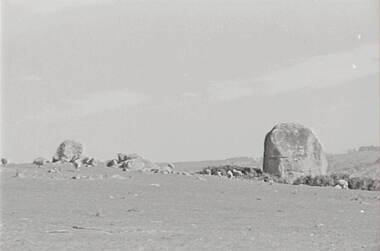 Allan Doney Collection, Bendigo Historical Society Inc.
Negative - Lancefield - Rocky Hills - Sheep, Allan Doney, 1950 -1970
... Lancefield - Rocky Hills - Sheep...Negative Lancefield - Rocky Hills - Sheep Allan Doney ...In the years of Allan Doney’s photography, landmark buildings succumbed to fire, neglect and redevelopment. He photographed the grey sand hills from Bendigo’s mining past, the streetscapes, poppet heads, miners’ cottages, gracious homes with ornate verandahs, trams and much more. Above all, his photographs show how much of the city has survived from the 19th century – and how much has not. Through two decades of great change, Allan Doney was there to capture ways people interacted with it. Although he travelled to many other places in Northern Victoria and beyond in search of subjects for his art, he seemed to always return to Bendigo for inspiration. -
 National Wool Museum
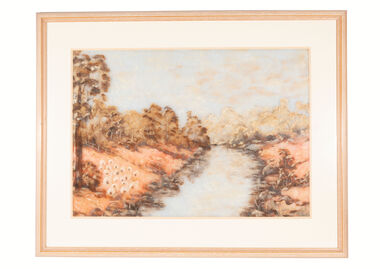
Collage, Jimba on Manooka
... Titled "Jimba on Manooka" (Sheep on Hill). Work specially made for the National Wool Museum after a visit by the artist in 1991....Wool collage of pastoral scene entitled "Jimba on Manooka" (English translation - Sheep on Hill). Framed and glazed....Titled "Jimba on Manooka" (Sheep on Hill). Work specially made for the National Wool Museum after a visit by the artist in 1991. handicrafts Wool collage of pastoral scene entitled "Jimba on Manooka" (English translation - Sheep on Hill). ...Framed collage of Australian raw wool by wool artist Pauline Osborn. Titled "Jimba on Manooka" (Sheep on Hill). Work specially made for the National Wool Museum after a visit by the artist in 1991.Wool collage of pastoral scene entitled "Jimba on Manooka" (English translation - Sheep on Hill). Framed and glazed.handicrafts -
 National Wool Museum
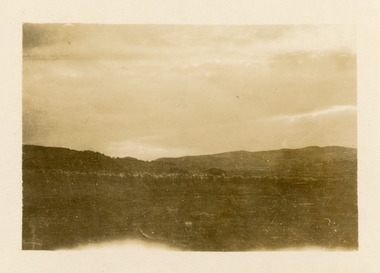
Photograph - Havilah Station, Mudgee, New South Wales, J W Allen, 1928-1929
... Black and white photograph showing a landscape with sheep and hills in the background. ...(Erambie) / [printed] KODAK PRINT / B 057 / VELOX Black and white photograph showing a landscape with sheep and hills in the background. Photograph Havilah Station, Mudgee, New South Wales J W Allen ...This photograph was found loose in the first of three albums compiled and owned by J W Allen, Secretary of New South Wales Grazier's, and is associated with the New South Wales Graziers Association world tour of sheep 1928-1929. The album contains photographs of travel, sheep, farms, stations, people and landscapes from around the world. Locations include Naples, Port Said, Suez, Birregurra (Vic), Alexandra (Vic), Ballangeich (Vic), Keith (SA), Mt Gambier (SA), Buckland Park (SA), Tasmania, Winton (QLD), Sydney Harbour, Canberra (ACT), Toowoomba (QLD), Rockhampton (QLD), Tocal (NSW), Deepwater (NSW), Glen Innes (NSW), Longreach (QLD), Moree (NSW), Barraba (NSW) and Mudgee (NSW). Properties depicted include Mooleric, Turkeith, Woolongoon, Minadale, Crower Station, Merrindie, Koomooloo Station, Cappeedee, Koonoona, Rathmore, Ellenthorpe, Camden Park Station, Glenlegh, Strathmore Station, Ilparran Station, Binneguy, Midkin, Terlings, Ashley, Bereen, Plumthorpe, Mayvale and Havilah. The album was found in a clean out at the Great Southern Agricultural Research Institute and donated to the National Wool Museum, along with other related material such as photographs, glass lantern slides and ephemera.Black and white photograph showing a landscape with sheep and hills in the background. back: [handwritten] Havilah(?)[?] (Erambie) / [printed] KODAK PRINT / B 057 / VELOXagriculture, sheep, farming, stations, research, breeding, photography, travel -
 Bayside Gallery - Bayside City Council Art & Heritage Collection
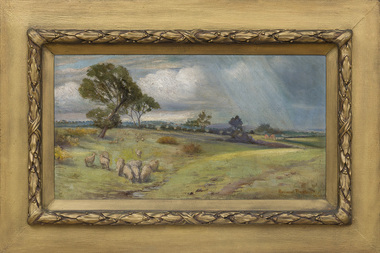
Painting - oil on board, Margaret Baskerville, Winter pastures, 1910
... sheep...grazing...hills...margaret baskerville painting landscape winter rain clouds sheep grazing hills farm trees oil on board Winter pastures Painting oil on board Margaret Baskerville ...oil on boardmargaret baskerville, painting, landscape, winter, rain, clouds, sheep, grazing, hills, farm, trees -
 Minyip & District Historical Society
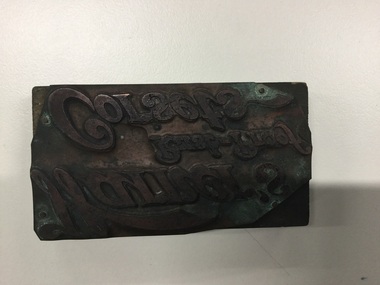
Print block, Unknown
... Advertising printing block that was used in "The Minyip Guardian and Sheep Hills Advocate". Office located at 49 Main Street, Minyip. ...Advertising printing block that was used in "The Minyip Guardian and Sheep Hills Advocate". Office located at 49 Main Street, Minyip. ...Advertising printing block that was used in "The Minyip Guardian and Sheep Hills Advocate". Office located at 49 Main Street, Minyip. Victoria 3392Stamp on wooden printers blockWarner's Rust-Proof Corsetsminyip, minyip guardian, printing block -
 Stawell Historical Society Inc
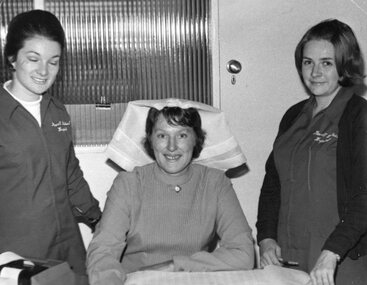
Photograph, Stawell Hospital Staff
... Meryl Bowers, Matron Hoare, Pam Rudolph. b Entrance to Stawell Hospital, Sister Shirley Payne from Sheep Hills....Meryl Bowers, Matron Hoare, Pam Rudolph. b Entrance to Stawell Hospital, Sister Shirley Payne from Sheep Hills. Medical 2 B/W photographs of Stawell Hospital 3 women staff with one in centre in Matrons uniform. ...a Stawell Hospital. Meryl Bowers, Matron Hoare, Pam Rudolph. b Entrance to Stawell Hospital, Sister Shirley Payne from Sheep Hills.2 B/W photographs of Stawell Hospital 3 women staff with one in centre in Matrons uniform. Nurse in Stawell Hospital entrance.medical -
 Minyip & District Historical Society
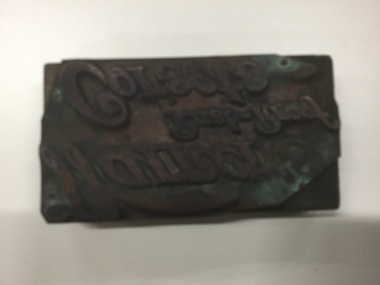
Print Block, Unknown
... Advertising printing block which was used in 'The Minyip Guardian and Sheep Hills Advocate. Office located at 49 Main Street Minyip, Victoria 3392. ...Advertising printing block which was used in 'The Minyip Guardian and Sheep Hills Advocate. Office located at 49 Main Street Minyip, Victoria 3392. ...Advertising printing block which was used in 'The Minyip Guardian and Sheep Hills Advocate. Office located at 49 Main Street Minyip, Victoria 3392. Stamp on printer's block. Warner's Rust Proof Corsetsprinting block, minyip guardian, minyip
