
Showing 75 items matching "shell company"
-
![Publication, Shell Chemical Company, Farm weeds: an aid to their recognition (Shell Chemical Company), London, [nd]](/media/collectors/52ae888f2162ef0b08d63076/items/530bd1c42162ef1bc060f674/item-media/530bdbfa2162ef1bc00597a1/item-fit-380x285.jpg?cb=6) Wheen Bee Foundation
Wheen Bee FoundationPublication, Shell Chemical Company, Farm weeds: an aid to their recognition (Shell Chemical Company), London, [nd]
... Farm weeds: an aid to their recognition (Shell Chemical Company), London, [nd]...Shell Chemical Company...London, Shell Chemical Company Ltd....Farm weeds: an aid to their recognition (Shell Chemical Company), London, [nd] Publication Shell Chemical Company ... -
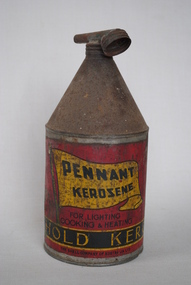 Anglesea and District Historical Society
Can - Pennant Kerosene, The Shell Company of Australia Ltd, Probably 1948-1955 (when logo changed)
... ...the shell company of australia...PENNANT KEROSENE / FOR LIGHTING, COOKING & HEATING Black band: HOUSEHOLD KEROSENE A SHELL PRODUCT (Shell logo) / THE SHELL COMPANY OF AUSTRALIA LTD....The Shell Company of Australia Ltd....household kerosene pennant the shell company of australia PENNANT KEROSENE / FOR LIGHTING, COOKING & HEATING Black band: HOUSEHOLD KEROSENE A SHELL PRODUCT (Shell logo) / THE SHELL COMPANY OF AUSTRALIA LTD. ...Pennant kerosene tin with large tapering top and screw on pouring spout. Cylindrical part of can painted red with yellow Pennant flag on pole.PENNANT KEROSENE / FOR LIGHTING, COOKING & HEATING Black band: HOUSEHOLD KEROSENE A SHELL PRODUCT (Shell logo) / THE SHELL COMPANY OF AUSTRALIA LTD.household kerosene, pennant, the shell company of australia -
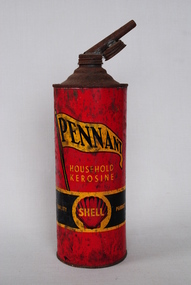 Anglesea and District Historical Society
Can - Household Kerosine, Shell Company of Australia, Probably 1948 to 1955 (when logo changed)
... ...the shell company of australia...Front: FILL THIS CONTAINER WITH PENNANT KEROSINE ONLY / PENNANT - HOUSEHOLD KEROSINE FOR LIGHTING, HEATING, COOKING , REFRIGERATORS AND ALL HOUSHOLD PURPOSES / 1 IMPERIAL QUART - THE SHELL COMPANY OF AUSTRALIA LIMITED / INCORPORATED IN GREAT BRITAIN. ...Shell Company of Australia...Can - Household Kerosine Shell Company of Australia ...Kerosine can with pourer painted red with yellow lettering and black band around bottom of can. Shell logo and yellow Pennant flag on pole. Includes pouring spout.Front: FILL THIS CONTAINER WITH PENNANT KEROSINE ONLY / PENNANT - HOUSEHOLD KEROSINE FOR LIGHTING, HEATING, COOKING , REFRIGERATORS AND ALL HOUSHOLD PURPOSES / 1 IMPERIAL QUART - THE SHELL COMPANY OF AUSTRALIA LIMITED / INCORPORATED IN GREAT BRITAIN. Back: PENNANT HOUSHOLD KEROSINE / QUALITY SHELL PRODUCT (in Shell logo). Red tin with yellow flag (black writing). Yellow writing and black band around bottom of tin. Includes cap with spout.household kerosine, pennant, the shell company of australia -
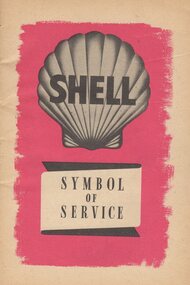 Greensborough Historical Society
Book - Book - Digital Image, Shell Company of Australia, Here's how for householders: Sample pages, 1948_
... ...shell company of australia...Inside front and back covers are advertisements for Shell products, the company publishing this book.. There is also an advertisement for Pennant Kerosine (kerosene)...Shell Company of Australia...Inside front and back covers are advertisements for Shell products, the company publishing this book.. There is also an advertisement for Pennant Kerosine (kerosene) An example of mid 20th century advertising through 'how-to' books. historic advertisements domestic science shell company of australia household hints pennant kerosine kerosene Digital copy of sample pages of a book Here's how for householders: Sample pages Book Book - Digital Image Shell Company of Australia ...Sample pages from "Here's how for householders". An example of 1940s advertising through sewing and homemaker books. In this book, instructions are given for many aspects of household management, interspersed with advertisements for useful items. Inside front and back covers are advertisements for Shell products, the company publishing this book.. There is also an advertisement for Pennant Kerosine (kerosene)An example of mid 20th century advertising through 'how-to' books.Digital copy of sample pages of a bookhistoric advertisements, domestic science, shell company of australia, household hints, pennant kerosine, kerosene -
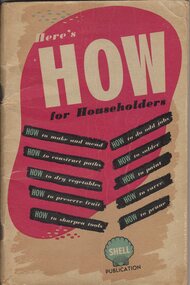 Greensborough Historical Society
Book - Book - Digital Image, Shell Company of Australia, Here's how for householders, 1948_
... ...shell company of australia...Shell Company of Australia...An example of mid 20th century advertising through 'how-to' books. historic advertisements domestic science shell company of australia household hints Digital copy of front cover of a book Here's how for householders Book Book - Digital Image Shell Company of Australia ...Front cover of "Here's how for householders". An example of 1940s advertising through sewing and homemaker books. In this book, instructions are given for many aspects of household management, interspersed with advertisements for useful items. An example of mid 20th century advertising through 'how-to' books.Digital copy of front cover of a bookhistoric advertisements, domestic science, shell company of australia, household hints -
 Port Melbourne Historical & Preservation Society
Document - MMBW re proposed canopy, Bay Garage, Bay Street, Port Melbourne, The Shell Company of Australia Limited, 1964 - 1965
... ...the shell company of australia ltd...The Shell Company of Australia Limited...built environment - commercial transport - motor vehicles mmbw the shell company of australia ltd melbourne and metropolitan board of works Melbourne and Metropolitan Board of Works (MMBW) documents referring to the Bay Garage, Bay St, Port Melbourne and a proposed new canopy. .01- letter dated 25 March 1965 .02 - plans dated 6 November 1964 Document MMBW re proposed canopy, Bay Garage, Bay Street, Port Melbourne The Shell Company of Australia Limited ...Melbourne and Metropolitan Board of Works (MMBW) documents referring to the Bay Garage, Bay St, Port Melbourne and a proposed new canopy. .01- letter dated 25 March 1965 .02 - plans dated 6 November 1964built environment - commercial, transport - motor vehicles, mmbw, the shell company of australia ltd, melbourne and metropolitan board of works -
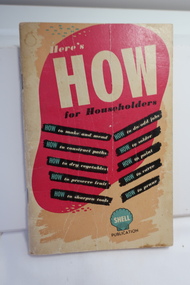 Kiewa Valley Historical Society
Book - Householders, Here's How for Householders - a Shell Publication
... ...Shell Petrol Company...Small book with a cardboard cover of cream and pink and 10 black signs of "How to ....". The Shell (petroleum company) logo is at the bottom righthand corner. ...The Shell (petroleum company) logo is at the bottom righthand corner. ...A book including advertisements for 'Shell' products. It has 3 parts: 1. Around the home 2. Inside the home. 3 First Aid A Do it Yourself bookHistorical insight into households in the 1940s with hints on 'Doing if Yourself'Small book with a cardboard cover of cream and pink and 10 black signs of "How to ....". The Shell (petroleum company) logo is at the bottom righthand corner. It has 96 pages"L. Best" written on the first pagehouseholds in the 1940s, shell petrol company -
Whitehorse Historical Society Inc.
Newspaper - Article, Leading Lion has big plans, 16/11/1994
... ...Shell Company...Service Clubs Lions International Angus Geoff Lions Club of Nunawading Frazer Kevin Freeman Ray Morgan Brian Shell Company Environmental Management Apex Club Nunawading Article in Nunawading Gazette about new Lions International District Governor for District 201 which covers from Melbourne to Bendigo and Wedderburn and comprises 59 Lions Clubs. ...Article in Nunawading Gazette about new Lions International District Governor for District 201 which covers from Melbourne to Bendigo and Wedderburn and comprises 59 Lions Clubs.service clubs, lions international, angus, geoff, lions club of nunawading, frazer, kevin, freeman, ray, morgan, brian, shell company, environmental management, apex club nunawading -
Glenelg Shire Council Cultural Collection
Photograph - Photograph - Early Shipping: Ocean/Railway Pier, n.d
... Front: Back- The Shell company of Australia Ltd. Opening of Portland installation. ...Port of Portland Authority Port of Portland Archives Portland Harbour Ship Berthed Ocean Pier Front: Back- The Shell company of Australia Ltd. Opening of Portland installation. ...Port of Portland AuthorityFront: Back- The Shell company of Australia Ltd. Opening of Portland installation. July 20 1929. M.S Andrews Portlandport of portland archives, portland harbour, ship berthed, ocean pier -
Lakes Entrance Historical Society
Book, Shell Print Folio
... Portfolio of Australian Wildflower prints, printed for Shell Oil Company...Wire spiral bound, cardboard cover, heavy duty paper pages to house 16 loose leaf prints, each print has title Discover Australia with /shell, each page has index of Floral identification, set of 12 prints and three duplicates, and one Shells of QLD Albums Portfolio of Australian Wildflower prints, printed for Shell Oil Company Shell Print Folio Book ...Wire spiral bound, cardboard cover, heavy duty paper pages to house 16 loose leaf prints, each print has title Discover Australia with /shell, each page has index of Floral identification, set of 12 prints and three duplicates, and one Shells of QLDPortfolio of Australian Wildflower prints, printed for Shell Oil Companyalbums -
Glenelg Shire Council Cultural Collection
Photograph - Photograph - Early shipping: Ocean/Railway Pier, n.d
... Front: Back- The shell company of Australia Ltd. Opening of Portland Installation. ...Port of Portland Authority Port of Portland Archives Portland Harbour Ship Berthed Front: Back- The shell company of Australia Ltd. Opening of Portland Installation. ...Port of Portland AuthorityFront: Back- The shell company of Australia Ltd. Opening of Portland Installation. July 20, 1929. M.E Andrews Portland 'S.S Solen'- blue biroport of portland archives, portland harbour, ship berthed -
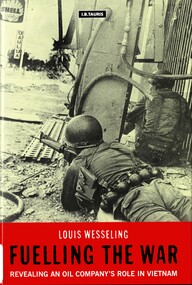 National Vietnam Veterans Museum (NVVM)
Book, Wesseling, Louis, Fuelling the War: Revealing an Oil Company's Role in Vietnam, 2000
... Shell Oil Company...Shell Oil Company Vietnam War 1961-1975 Petroleum industry and trade -- Vietnam US Helicopters Saigon South Vietnamese Vietcong American Embassy Military Officers Senior Officials April 1975, Saigon, US helicopters cumbersomely lift off from the roof of the American Embassy, heavily laden with fleeing diplomats, military officers and senior officials. ...April 1975, Saigon, US helicopters cumbersomely lift off from the roof of the American Embassy, heavily laden with fleeing diplomats, military officers and senior officials.April 1975, Saigon, US helicopters cumbersomely lift off from the roof of the American Embassy, heavily laden with fleeing diplomats, military officers and senior officials.shell oil company, vietnam war, 1961-1975, petroleum industry and trade -- vietnam, us helicopters, saigon, south vietnamese, vietcong, american embassy, military officers, senior officials -
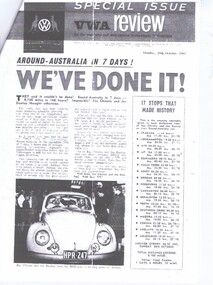 Greensborough Historical Society
Article, VWA Review, Around - Australia in 7 days! We've done it!, 29/10/1962
... Story of a Volkswagen and Shell Oil Company round Australia publicity drive. ...Story of a Volkswagen and Shell Oil Company round Australia publicity drive. ...Story of a Volkswagen and Shell Oil Company round Australia publicity drive. Drivers: Ray Christie and Joe Dunlop (Greensborough policeman). Copies from from VWA Review, 29th October 1962Greensborough policeman, Joe Dunlop was co-driver of the Volkswagen beetle that completed 8,100 miles in seven days in 19625 pages, 2 photocopied pages of an article, with 3 page typed transcriptionmotor reliability trials, joe dunlop, car trials -
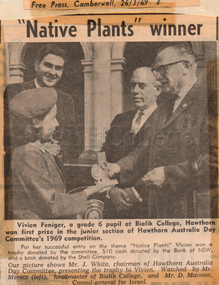 Bialik College
Article (item) - "'Native Plants' Winner", Free Press Camberwell, 26 March 1969, 1969
... For her successful entry on the theme "Native Plants" Vivien won a trophy donated by the committee, $10 cash donated by the bank of NSW, and a book donated by the Shell Company. Our picture shows Mr. J. White chairman of Hawthorn Australia Day Committee, presenting the trophy to Vivien, watched by Mr. ...For her successful entry on the theme "Native Plants" Vivien won a trophy donated by the committee, $10 cash donated by the bank of NSW, and a book donated by the Shell Company. Our picture shows Mr. J. White chairman of Hawthorn Australia Day Committee, presenting the trophy to Vivien, watched by Mr. ..."'Native Plants' Winner", Free Press Camberwell, 26 March 1969 "'Native Plants' Winner Vivien Feniger, a grade 6 pupil at Bialik College, Hawthorn won first prize in the junior section of Hawthorn Australia Day Committee's 1969 competition. For her successful entry on the theme "Native Plants" Vivien won a trophy donated by the committee, $10 cash donated by the bank of NSW, and a book donated by the Shell Company. Our picture shows Mr. J. White chairman of Hawthorn Australia Day Committee, presenting the trophy to Vivien, watched by Mr. Meretz (left) headmaster of Bialik College, and Mr. D. Marmor, Consul General for Israel."shakespeare grove, year 6, award, presentation -
 Harcourt Valley Heritage & Tourist Centre
book, Orchard Pest Control, circa 1954
... Book published by Shell Oil Company advocating use of spray to control all orchard pests & diseases. ...Book published by Shell Oil Company advocating use of spray to control all orchard pests & diseases. ...Book published by Shell Oil Company advocating use of spray to control all orchard pests & diseases. Shell Oil Co was very active in promotion of its products in Harcourt during the 1950s. The book was regarded as a good handbook guide to diseases of apples and pears.The orchardists of Harcourt, sole traders and hardy pioneers, took more notice of the spray retailers than they did of the Dept of Agriculture, with field days and film nights organized by the Shell Oil Co being a primary source of knowledge about the prevention of orchard pests and diseases. Of course Shell advocated the use of che,mical spray to control all orchard pests and diseases. After the publication of the book ‘Silent Spring’ by Rachel Carson the orchardists turned to different methods, e.g. orchard hygiene, resistant rootstocks, biological control and quarantine and followed a minimal spray regime. .brown cardboard-covered book of 144 pages with coloured illustrationsShell Corporation Melbourne -
 Surrey Hills Historical Society Collection
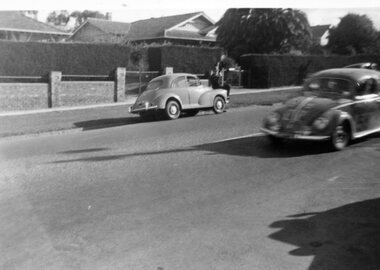
Digital photo, George L Coop, Redex trial on Whitehorse Road, Mont Albert, 1953, 1953
... In many parts of the country there simply wasn’t adequate accommodation or suitably located refuelling stops. The Shell Company facilitated the race by placing petrol dumps along the 5000 km route between Townsville and Adelaide. ...In many parts of the country there simply wasn’t adequate accommodation or suitably located refuelling stops. The Shell Company facilitated the race by placing petrol dumps along the 5000 km route between Townsville and Adelaide. ...The Redex Reliability Trial 1953 -The first Redex round-Australia reliability trial covered of 6,500 miles (10,500 km), and had a first prize of £1,000. It attracted both amateur and professional drivers in a variety of cars. The route passed through Brisbane, Rockhampton, Townsville, Darwin, Alice Springs, Adelaide and Melbourne before returning to Sydney and attracted much public interest. At the time the idea of driving huge distances around the country in ordinary cars was novel and the logistics were challenging. In many parts of the country there simply wasn’t adequate accommodation or suitably located refuelling stops. The Shell Company facilitated the race by placing petrol dumps along the 5000 km route between Townsville and Adelaide. The race began at the Sydney Showground on 30 August when 192 cars left at three-minute intervals. Of the twenty top finalists, two thirds were sponsored. Ken Tubman and John Marshall won the trial in a Peugeot 203. A black & white photo taken in Whitehorse Road, Mont Albert during the 1953 Redex Trial as a Volkswagen is passing 688 Whitehorse Road on the extreme left. The VW appears to have advertising on its panels indicating it was a competitor in the trial. On the far side of the road is a Morris Minor with a hatted man sitting on the bonnet. The houses in the background are partly obcsured by large hedges.george coop, mont albert, volkswagen, morris minor, redex trial, whitehorse road -
 Greensborough Historical Society
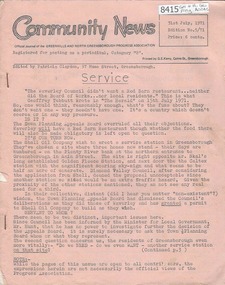
Newsletter, Greenhills and North Greensborough Progress Association, Community News: official journal of the Greenhills and North Greensborough Progress Association. 31st July, 1971. Edition No. 5/71, 31/07/1971
... This edition includes a report on the Progress Association's July 1971 meeting, Councillors' report, Service [Shell Oil Company], School and kinder news, Diamond Valley Repertory, Diamond Valley Choral Society, Electric blankets, Letters to the Editor, Personal news. ...This edition includes a report on the Progress Association's July 1971 meeting, Councillors' report, Service [Shell Oil Company], School and kinder news, Diamond Valley Repertory, Diamond Valley Choral Society, Electric blankets, Letters to the Editor, Personal news. ...This edition includes a report on the Progress Association's July 1971 meeting, Councillors' report, Service [Shell Oil Company], School and kinder news, Diamond Valley Repertory, Diamond Valley Choral Society, Electric blankets, Letters to the Editor, Personal news. Supplement to "Community News" No. 5/71. Petrol filling stations in the Greensborough - Watsonia - Bundoora area. A digital copy of the Newsletter is available from Greensborough Historical Society.Newsletter, 13 p., illus. greenhills and north greensborough progress association, greenhills -
 Greensborough Historical Society
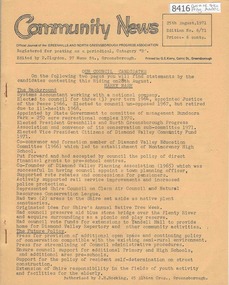
Newsletter, Greenhills and North Greensborough Progress Association, Community News: official journal of the Greenhills and North Greensborough Progress Association. 25 August, 1971. Edition No. 6/71, 25/08/1971
... This edition includes a report on the Progress Association's August 1971 meeting, Councillors' report, Our Council candidates - Harry Nash, Ian Cochrane, Tribunal - tribulation without explanation: a continuing story [Shell Oil Company], School and kinder news, Diamond Valley Repertory,, Diamond Valley Choral Society, Electric blankets, Letters to the Editor, Personal news. ...This edition includes a report on the Progress Association's August 1971 meeting, Councillors' report, Our Council candidates - Harry Nash, Ian Cochrane, Tribunal - tribulation without explanation: a continuing story [Shell Oil Company], School and kinder news, Diamond Valley Repertory,, Diamond Valley Choral Society, Electric blankets, Letters to the Editor, Personal news. ...This edition includes a report on the Progress Association's August 1971 meeting, Councillors' report, Our Council candidates - Harry Nash, Ian Cochrane, Tribunal - tribulation without explanation: a continuing story [Shell Oil Company], School and kinder news, Diamond Valley Repertory,, Diamond Valley Choral Society, Electric blankets, Letters to the Editor, Personal news. A digital copy of the Newsletter is available from Greensborough Historical Society.Newsletter, 16 p., illus. greenhills and north greensborough progress association, greenhills -
 Surrey Hills Historical Society Collection
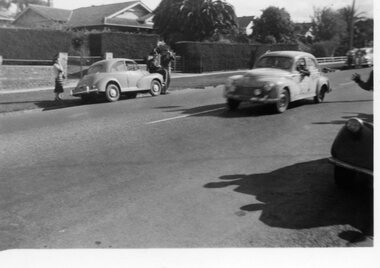
Digital photo, George L Coop, Redex trial on Whitehorse Road, Mont Albert, 1953, 1953
... In many parts of the country there simply wasn’t adequate accommodation or suitably located refuelling stops. The Shell Company facilitated the race by placing petrol dumps along the 5000 km route between Townsville and Adelaide. ...In many parts of the country there simply wasn’t adequate accommodation or suitably located refuelling stops. The Shell Company facilitated the race by placing petrol dumps along the 5000 km route between Townsville and Adelaide. ...The Redex Reliability Trial 1953 -The first Redex round-Australia reliability trial covered of 6,500 miles (10,500 km), and had a first prize of £1,000. It attracted both amateur and professional drivers in a variety of cars. The route passed through Brisbane, Rockhampton, Townsville, Darwin, Alice Springs, Adelaide and Melbourne before returning to Sydney and attracted much public interest. At the time the idea of driving huge distances around the country in ordinary cars was novel and the logistics were challenging. In many parts of the country there simply wasn’t adequate accommodation or suitably located refuelling stops. The Shell Company facilitated the race by placing petrol dumps along the 5000 km route between Townsville and Adelaide. The race began at the Sydney Showground on 30 August when 192 cars left at three-minute intervals. Of the twenty top finalists, two thirds were sponsored. Ken Tubman and John Marshall won the trial in a Peugeot 203. However the Peugeot in this photo does not appear to be their car, judging by official photos of them with their vehicle, taken at the end of the trial. The Peugeot 203 was a popular car at the time and its reputation was enhanced after winning the trial. A black & white photo taken in Whitehorse Road, Mont Albert during the 1953 Redex Trial as a Peugeot 203 is passing 688 Whitehorse Road on the extreme left. The Peugeot 203 appears to have advertising on its panels indicating it was a competitor in the trial. On the far side of the road is a Morris Minor with a hatted man sitting on the bonnet, a woman standing close by and another man taking a photo of the passing cars. The houses in the background are partly obcsured by large hedges.george coop, mont albert, morris minor, redex trail, whitehorse road, peugeot 203 -
 Surrey Hills Historical Society Collection
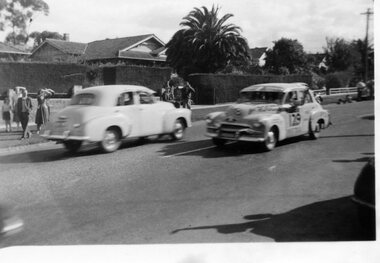
Digital photo, George L Coop, Redex trial on Whitehorse Road, Mont Albert, 1953, 1953
... In many parts of the country there simply wasn’t adequate accommodation or suitably located refuelling stops. The Shell Company facilitated the race by placing petrol dumps along the 5000 km route between Townsville and Adelaide. ...In many parts of the country there simply wasn’t adequate accommodation or suitably located refuelling stops. The Shell Company facilitated the race by placing petrol dumps along the 5000 km route between Townsville and Adelaide. ...The FJ Holden is iconic in Australian motoring history. It was made in Australia by Holden from 1953 to 1956. During the 1950s, Holden dominated the Australian car market and by 1958 sales accounted for over 40 per cent of total car sales in Australia. The Redex Reliability Trial 1953 -The first Redex round-Australia reliability trial covered of 6,500 miles (10,500 km), and had a first prize of £1,000. It attracted both amateur and professional drivers in a variety of cars. The route passed through Brisbane, Rockhampton, Townsville, Darwin, Alice Springs, Adelaide and Melbourne before returning to Sydney and attracted much public interest. At the time the idea of driving huge distances around the country in ordinary cars was novel and the logistics were challenging. In many parts of the country there simply wasn’t adequate accommodation or suitably located refuelling stops. The Shell Company facilitated the race by placing petrol dumps along the 5000 km route between Townsville and Adelaide. The race began at the Sydney Showground on 30 August when 192 cars left at three-minute intervals. Of the twenty top finalists, two thirds were sponsored. Ken Tubman and John Marshall won the trial in a Peugeot 203. A black & white photo taken from near 688 Whitehorse Road. It includes 2 FJ Holdens - one is probably a passing car; the other is covered with labels and can assume to be competing in the trial. On the far side of the road are onlookers of men, women and one child standing on a wide nature strip. One man is taking photos. The houses behind are obscured by high hedges, but appear to be Californian bungalows, one with a large palm tree in its front garden.redex reliability trial, 1953, fj holden, whitehorse road, mont albert -
Whitehorse Historical Society Inc.
Audio - Oral History, Johanna van Hoek, 21/04/2006
... Johanna van Hoek, who was born in Borneo, where her father was stationed for his work with the Dutch oil company, Shell. The family returned to Netherlands after being interned during the Second World War. ...Johanna van Hoek, who was born in Borneo, where her father was stationed for his work with the Dutch oil company, Shell. The family returned to Netherlands after being interned during the Second World War. ...Johanna van Hoek, who was born in Borneo, where her father was stationed for his work with the Dutch oil company, Shell. The family returned to Netherlands after being interned during the Second World War. Johanna trained as a medical analyst and in 1954 migrated to Australia with her husband. The family settled near Blackburn Lake. Cassette recording of an interview with Johanna van Hoek, who was born in Borneo, returned to Netherlands after the Second World War, trained as a medical analyst and in 1954 migrated to Australia with her husband. The family settled near Blackburn Lake. The interview was conducted by Melanie Farrow on 21 April 2006. emigration, oral history migration program, dutch in australia, van hoek, johanna, migrant skills -
Ballarat Tramway Museum
Photograph - Miscellaneous Images, Set of 15 Images. . There are 12 photos listed as 1901 in AS Box 72 (6" x 4" photos). Three photos in archive, 1901A, in AS Box 75(.5, .6 and .7 - 5" x 8" photos.)), 1960s
... Full details on rear of card - produced by Shell Oil Company? 1901.8 - Photo of four H class trams at Victoria Sq. ...Full details on rear of card - produced by Shell Oil Company? 1901.8 - Photo of four H class trams at Victoria Sq. ...Set of 15 items personally collected or given to Les Denmead by visiting Tramway enthusiasts or other interested people to Ballarat. Retained as a sample of images or other mementoes given by people though not directly of Ballarat. The following items are a summary only: 1901.1 - Postcard from South Pacific Electric Railway of L/P class tram No. 154 on SPER track , SPER-1 - Nucolorvue. 1901.2 - Photograph of Brisbane FM 440? and drop centre behind - CBD area Brisbane. Has 'Brisbane' written on back. 1901.3 - Photograph of Brisbane FM 473, showing Grange, as for 1901.2. 1901.4 - Photograph of Brisbane FM 422, showing Chermside, Brisbane CBD area, has "Brisbane May 1955' written on front of photo. 1901.5 - Illustration of Christchurch Horse Tram, Tramway Historical Society / Shell Oil company produced card, full details on rear. 1901.6 - Illustration of Wellington 'Fiducia' tram No. 238, operating on Wellington Tramway Museum track. Produced by Museum, with full details on rear. 1901.7 - Colour illustration of Wellington tram No. 257, central or downtown Wellington, outside the Parliament grounds. Full details on rear of card - produced by Shell Oil Company? 1901.8 - Photo of four H class trams at Victoria Sq. Adelaide, 25/3/1967. Taken by Douglas A. Colquhoun. On left hand side is a single car 378 and on the other track a three car set 366, 367 and 368. 1901.9 - Photo of Adelaide E1 111, crossing the Holland St. Bridge, 24.10.1953. Photo by Douglas A. Colquhoun. 1901.10 - Photo of Adelaide A 82, Wayville Junction, Feb. 1952. Photo by Douglas A. Colquhoun. 1901.11 - Photo of Adelaide A 10, later SEC Ballarat 21, in Adelaide CBD, with Ferors Gresham Hotel alongside. Has written note on background re tram. 1901.12 - Two prints of the front vestibule of a Toronto PCC tram, with operator (driver) seated. 1901.13 - Two prints of Toronto PCC 4400 and 4404, coupled together, 9/8/1949 with a depot? or carbarn building in the background. Has caption on the base of the photograph - copy photograph. 1901.14 - Two prints of a close up photograph of the coupling between the two cars in 1901.13. 1901.15 - Photograph of a Fare Box on a Toronto Streetcar. (1901.13 to .14) have "Canada" written on the back. 1trams, tramways, sydney, brisbane, adelaide, wellington, christchurch, toronto, pcc, victoria sq., tram 21 -
 Ballarat Tramway Museum
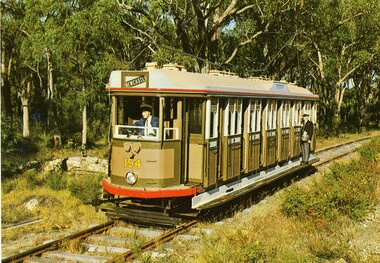
Photograph - Miscellaneous Images, Set of 15 (Only three photos in archive, .5, .6 and .7. Location of remaining 12 photos under investigation), 1960s
... Full details on rear of card - produced by Shell Oil Company? 1901.8 - Photo of four H class trams at Victoria Sq. ...Full details on rear of card - produced by Shell Oil Company? 1901.8 - Photo of four H class trams at Victoria Sq. ...Set of 15 items personally collected or given to Les Denmead by visiting Tramway enthusiasts or other interested people to Ballarat. Retained as a sample of images or other mementoes given by people though not directly of Ballarat. The following items are a summary only: 1901.1 - Postcard from South Pacific Electric Railway of L/P class tram No. 154 on SPER track , SPER-1 - Nucolorvue. 1901.2 - Photograph of Brisbane FM 440? and drop centre behind - CBD area Brisbane. Has 'Brisbane' written on back. 1901.3 - Photograph of Brisbane FM 473, showing Grange, as for 1901.2. 1901.4 - Photograph of Brisbane FM 422, showing Chermside, Brisbane CBD area, has "Brisbane May 1955' written on front of photo. 1901.5 - Illustration of Christchurch Horse Tram, Tramway Historical Society / Shell Oil company produced card, full details on rear. 1901.6 - Illustration of Wellington 'Fiducia' tram No. 238, operating on Wellington Tramway Museum track. Produced by Museum, with full details on rear. 1901.7 - Colour illustration of Wellington tram No. 257, central or downtown Wellington, outside the Parliament grounds. Full details on rear of card - produced by Shell Oil Company? 1901.8 - Photo of four H class trams at Victoria Sq. Adelaide, 25/3/1967. Taken by Douglas A. Colquhoun. On left hand side is a single car 378 and on the other track a three car set 366, 367 and 368. 1901.9 - Photo of Adelaide E1 111, crossing the Holland St. Bridge, 24.10.1953. Photo by Douglas A. Colquhoun. 1901.10 - Photo of Adelaide A 82, Wayville Junction, Feb. 1952. Photo by Douglas A. Colquhoun. 1901.11 - Photo of Adelaide A 10, later SEC Ballarat 21, in Adelaide CBD, with Ferors Gresham Hotel alongside. Has written note on background re tram. 1901.12 - Two prints of the front vestibule of a Toronto PCC tram, with operator (driver) seated. 1901.13 - Two prints of Toronto PCC 4400 and 4404, coupled together, 9/8/1949 with a depot? or carbarn building in the background. Has caption on the base of the photograph - copy photograph. 1901.14 - Two prints of a close up photograph of the coupling between the two cars in 1901.13. 1901.15 - Photograph of a Fare Box on a Toronto Streetcar. (1901.13 to .14) have "Canada" written on the back. 1trams, tramways, sydney, brisbane, adelaide, wellington, christchurch, toronto, pcc, victoria sq., tram 21 -
 Department of Energy, Environment and Climate Action
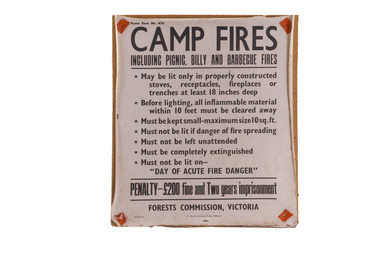
Bushfire awareness sign, Camp Fires, 1962
... The slogan for the ground-breaking campaign was… Prevent Bush Fires – It Pays… The Shell Petrol Company of Australia supplied 15000 windshield stickers, the British Australasian Tobacco Company donated a large supply of stamp stickers, while many other companies drew attention to the campaign in their newspaper advertisements. ...The slogan for the ground-breaking campaign was… Prevent Bush Fires – It Pays… The Shell Petrol Company of Australia supplied 15000 windshield stickers, the British Australasian Tobacco Company donated a large supply of stamp stickers, while many other companies drew attention to the campaign in their newspaper advertisements. ...Bushfire Prevention Week was initiated by the Forests Commission in 1930. Victoria’s State Governor, Lord Somers, the Lord Mayor of Melbourne, Sir Harold Luxton and the newly appointed Minister for Forests, William Beckett launched the innovative campaign with great flourish to 250 invited guests at Melbourne’s opulent Town Hall on Monday 13 January 1930. Special church sermons had been held previously on Sunday. The packed program of gala events included lavish luncheon talks at city clubs, scholarly lectures broadcast on the wireless, together with daily articles in the Melbourne and country press about the pressing need for fire prevention. The slogan for the ground-breaking campaign was… Prevent Bush Fires – It Pays… The Shell Petrol Company of Australia supplied 15000 windshield stickers, the British Australasian Tobacco Company donated a large supply of stamp stickers, while many other companies drew attention to the campaign in their newspaper advertisements. The Victorian Railways and many city firms displayed special fire posters, while Bryant and May posted messages on their limited-edition matchbox covers which are now highly prized by phillumenists (i.e. matchbox collectors). The Postmaster General's Department franked postage stamps and letters with special bushfire slogans. While plainclothes police were secretly deployed to the bush to arrest potential arsonists. Canvas and enamel fire prevention signs were erected on most roads leading to forest areas. Letters to the Editor later appeared in many city and country newspapers extolling the virtues of Bushfire Prevention Week and urging for its continuation as an annual event. Although a new idea for Australia, the Canadian Forest Service had been running a similar program for a few years. The Forests Commission in its 1929-30 Annual Report, under the title of "Propaganda", noted with some glee… "One of the most gratifying features of the ''Week" was its low cost to the Government, the major part of the publicity material being donated by private firms." And so for the next 50 years until the 1980s, Bushfire Prevention Week continued unabated with the Forests Commission producing a series of coloured “Magic Lantern” slides which were manufactured by Alex Gunn and Sons in Collins Street Melbourne for screening at Val Morgan cinemas. The slides famously introduced the menacing character, Willy Wildfire, warning motorists to be careful with matches. Now known as Fire Action Week, it remains a key event in the annual calendar for both DEECA and the CFA and is still going strong... These canvas fire awareness signs were used right throughout the period of the Forests Commission until the mid 1980sBushfire awareness signbushfire, forests commission victoria (fcv), forest signs -
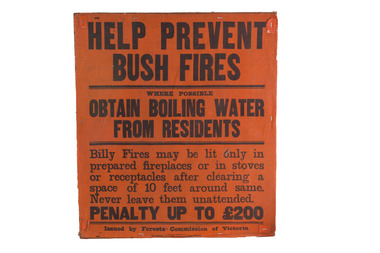 Department of Energy, Environment and Climate Action
Bushfire awareness sign, Help Prevent Bushfires, Pre 1966
... The slogan for the ground-breaking campaign was… Prevent Bush Fires – It Pays… The Shell Petrol Company of Australia supplied 15000 windshield stickers, the British Australasian Tobacco Company donated a large supply of stamp stickers, while many other companies drew attention to the campaign in their newspaper advertisements. ...The slogan for the ground-breaking campaign was… Prevent Bush Fires – It Pays… The Shell Petrol Company of Australia supplied 15000 windshield stickers, the British Australasian Tobacco Company donated a large supply of stamp stickers, while many other companies drew attention to the campaign in their newspaper advertisements. ...Bushfire Prevention Week was initiated by the Forests Commission in 1930. Victoria’s State Governor, Lord Somers, the Lord Mayor of Melbourne, Sir Harold Luxton and the newly appointed Minister for Forests, William Beckett launched the innovative campaign with great flourish to 250 invited guests at Melbourne’s opulent Town Hall on Monday 13 January 1930. Special church sermons had been held previously on Sunday. The packed program of gala events included lavish luncheon talks at city clubs, scholarly lectures broadcast on the wireless, together with daily articles in the Melbourne and country press about the pressing need for fire prevention. The slogan for the ground-breaking campaign was… Prevent Bush Fires – It Pays… The Shell Petrol Company of Australia supplied 15000 windshield stickers, the British Australasian Tobacco Company donated a large supply of stamp stickers, while many other companies drew attention to the campaign in their newspaper advertisements. The Victorian Railways and many city firms displayed special fire posters, while Bryant and May posted messages on their limited-edition matchbox covers which are now highly prized by phillumenists (i.e. matchbox collectors). The Postmaster General's Department franked postage stamps and letters with special bushfire slogans. While plainclothes police were secretly deployed to the bush to arrest potential arsonists. Canvas and enamel fire prevention signs were erected on most roads leading to forest areas. Letters to the Editor later appeared in many city and country newspapers extolling the virtues of Bushfire Prevention Week and urging for its continuation as an annual event. Although a new idea for Australia, the Canadian Forest Service had been running a similar program for a few years. The Forests Commission in its 1929-30 Annual Report, under the title of "Propaganda", noted with some glee… "One of the most gratifying features of the ''Week" was its low cost to the Government, the major part of the publicity material being donated by private firms." And so for the next 50 years until the 1980s, Bushfire Prevention Week continued unabated with the Forests Commission producing a series of coloured “Magic Lantern” slides which were manufactured by Alex Gunn and Sons in Collins Street Melbourne for screening at Val Morgan cinemas. The slides famously introduced the menacing character, Willy Wildfire, warning motorists to be careful with matches. Now known as Fire Action Week, it remains a key event in the annual calendar for both DEECA and the CFA and is still going strong... These canvas fire awareness signs were used right throughout the period of the Forests Commission until the mid 1980sBushfire awareness signHelp Prevent Bushfiresbushfire, forest signs, forests commission victoria (fcv) -
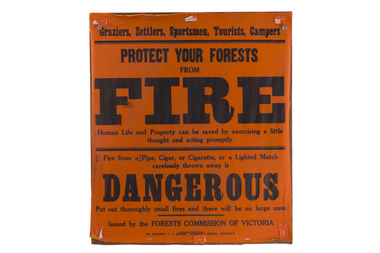 Department of Energy, Environment and Climate Action
Bushfire awareness sign, Protect your forests from fire, 1953
... The slogan for the ground-breaking campaign was… Prevent Bush Fires – It Pays… The Shell Petrol Company of Australia supplied 15000 windshield stickers, the British Australasian Tobacco Company donated a large supply of stamp stickers, while many other companies drew attention to the campaign in their newspaper advertisements. ...The slogan for the ground-breaking campaign was… Prevent Bush Fires – It Pays… The Shell Petrol Company of Australia supplied 15000 windshield stickers, the British Australasian Tobacco Company donated a large supply of stamp stickers, while many other companies drew attention to the campaign in their newspaper advertisements. ...Bushfire Prevention Week was initiated by the Forests Commission in 1930. Victoria’s State Governor, Lord Somers, the Lord Mayor of Melbourne, Sir Harold Luxton and the newly appointed Minister for Forests, William Beckett launched the innovative campaign with great flourish to 250 invited guests at Melbourne’s opulent Town Hall on Monday 13 January 1930. Special church sermons had been held previously on Sunday. The packed program of gala events included lavish luncheon talks at city clubs, scholarly lectures broadcast on the wireless, together with daily articles in the Melbourne and country press about the pressing need for fire prevention. The slogan for the ground-breaking campaign was… Prevent Bush Fires – It Pays… The Shell Petrol Company of Australia supplied 15000 windshield stickers, the British Australasian Tobacco Company donated a large supply of stamp stickers, while many other companies drew attention to the campaign in their newspaper advertisements. The Victorian Railways and many city firms displayed special fire posters, while Bryant and May posted messages on their limited-edition matchbox covers which are now highly prized by phillumenists (i.e. matchbox collectors). The Postmaster General's Department franked postage stamps and letters with special bushfire slogans. While plainclothes police were secretly deployed to the bush to arrest potential arsonists. Canvas and enamel fire prevention signs were erected on most roads leading to forest areas. Letters to the Editor later appeared in many city and country newspapers extolling the virtues of Bushfire Prevention Week and urging for its continuation as an annual event. Although a new idea for Australia, the Canadian Forest Service had been running a similar program for a few years. The Forests Commission in its 1929-30 Annual Report, under the title of "Propaganda", noted with some glee… "One of the most gratifying features of the ''Week" was its low cost to the Government, the major part of the publicity material being donated by private firms." And so for the next 50 years until the 1980s, Bushfire Prevention Week continued unabated with the Forests Commission producing a series of coloured “Magic Lantern” slides which were manufactured by Alex Gunn and Sons in Collins Street Melbourne for screening at Val Morgan cinemas. The slides famously introduced the menacing character, Willy Wildfire, warning motorists to be careful with matches. Now known as Fire Action Week, it remains a key event in the annual calendar for both DEECA and the CFA and is still going strong... These canvas fire awareness signs were used right throughout the period of the Forests Commission until the mid 1980sBushfire awareness signProtect your forests from firebushfire, forests commission victoria (fcv), forest signs -
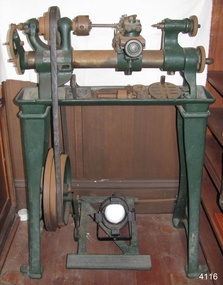 Flagstaff Hill Maritime Museum and Village
Machine - Treadle Lathe, 1920-1923
... Others, ordered by the Ministry of Supply were employed in turning shells, and many other specific needs of vehicle and aircraft manufacture were catered for by new types of Drummond lathes. Production of the small centre lathes ceased during the war when the company needed to concentrate on building multi-tool lathes and gear shapers. ...Others, ordered by the Ministry of Supply were employed in turning shells, and many other specific needs of vehicle and aircraft manufacture were catered for by new types of Drummond lathes. Production of the small centre lathes ceased during the war when the company needed to concentrate on building multi-tool lathes and gear shapers. ...The lathe-making business incorporated in 1902 as Drummond Bros Ltd originated in the fertile mind of Mr Arthur Drummond, said to have been living at that time at Pinks Hill, on the southern edge of Broad Street Common, west of Guildford. Mr Drummond, whose accomplishments included several pictures hung in the Royal Academy, was unable to find a lathe suitable for use in model engineering. In 1896 he designed for himself a ‘small centre lathe … which had a compound slide rest with feed-screws and adjustable slides’. He also designed and built ‘lathes of 4.5 inch and 5 inch centre height, which had beds of a special form whereby the use of a gap piece was eliminated but the advantages of a gap-bed lathe were retained’. Assisted by his brother, Mr Frank Drummond, who had served an apprenticeship to an engineering firm at Tunbridge Wells, the first lathes were made in a workshop adjoining Arthur Drummond’s house. The demand that speedily built up led to the decision to form a company and manufacture the lathes for sale commercially. Land was acquired nearby, at Rydes Hill, and the first factory built. The enterprise was a success, and the company quickly established ‘a high reputation in this country and abroad for multi-tool and copying lathes, and gear-cutting machines’. Other lathes were added to the range, including the first of the ’round bed’ machines for which the firm became widely known. A Drummond 3.5 inch lathe was among the equipment of Captain Scott’s 1912 expedition to the South Pole, and large numbers of 3.5 inch and 4 inch designs were exported to Australia, Canada and India. By the outbreak of war in 1914, 5 inch, 6 inch and 7 inch screw cutting lathes, arranged for power drive, were on sale. Large orders were received from the government for 3.5 inch lathes, for use in destroyers and submarines, and 5 inch lathes for the mechanised section of the Army Service Corps. The latter were used in mobile workshops. The factory worked night and day to supply the forces’ needs, until production was disrupted by a fire which destroyed a large part of the works in May 1915. As soon as rebuilding was complete work restarted. At the end of the war the entire production was being taken by the Government departments, a special feature being a precision screw lathe, bought by the Ministry of Munitions in 1918. Between the wars Drummond Bros Ltd introduced new machines for the motor vehicle, and later the aircraft industry, and the works were extended on many occasions to fulfill the increasing orders. The Maxicut multi-tool lathe (1925), designed for high-production turning operations, was one of the first machines of this type to be built in England. It was followed (1928) by an hydraulic version for turning gear blanks, and similar work. Further developments provided machines which, during the Second World War, turned all the crankshafts and propeller shafts for Bristol engines. Others, ordered by the Ministry of Supply were employed in turning shells, and many other specific needs of vehicle and aircraft manufacture were catered for by new types of Drummond lathes. Production of the small centre lathes ceased during the war when the company needed to concentrate on building multi-tool lathes and gear shapers. After the war a completely new Maxicut range was introduced, replacing the older versions, and fully automatic. The types were continually developed, and new versions manufactured until the end of the company’s life in 1980. The disappearance from the scene of Mr Arthur Drummond in 1946, and the end of the company’s autonomous existence in 1953 when the company was acquired by William Asquith Ltd, which was in turn bought by Staveley in 1966, meant that the factory at Rydes Hill became one – albeit very effective – part of a large national engineering company. Achievements at the Guildford works during its last years included the development of automated Maxicut gear-shapers in what was ‘probably the most fully automated gear shop in the country’, while a machine from Guildford was sent to the Osaka Fair in 1962. In 1963 an agreement was signed with Hindustan Machine Tools for the manufacture of Maxicut gear-shapers in state owned factories in Bangalore and Chandigarh. During 1963 the two largest multi-tool lathes ever made in the UK were installed in Ambrose Shardlow’s works in Sheffield for handling cranks up to 14 foot long. In 1976 Drummond lathes were included in Staveley’s £14,000,000 installation in Moscow of an automated production line for Zil motor cars. Up to the end invention continued at Guildford: a new Drummond Multi-turn memory-controlled machine was shown at the International Machine Tool Exhibition in 1977. This could not save the works from the pressures of the late 1970s, and Staveley Industries closed its Guildford site in 1980.An early example of a lathe that was designed primarily for the hobbyist model maker. It is in good condition and sought today by collectors as many of it's attributes were innovative at the time and lead to further development and incorporation of some of its features into more industrial models of production machinery. Lathe, round bed, treadle powered lathe, Drummond Type A, Serial number and maker's inscription. 1920-1923, Made by Drummond Brothers in Guildford, Surrey, England. Lathe is complete with Chuck, Tool post and Tail Stock in situ (30 extra parts)"MADE BY DRUMMOND BROTHERS LIMITED - PATENT TEES - RYDE'S HILL n GUILDFORD SURREY", "Serial Number 01470," "L44" or "L45 " flagstaff hill, warrnambool, shipwrecked coast, flagstaff hill maritime museum, maritime museum, shipwreck coast, flagstaff hill maritime village, great ocean road, lathe 1920-1923, round bed lathe, treadle lathe, drummond type a, guildford surrey, drummond brothers guildford surrey england, tread'e -
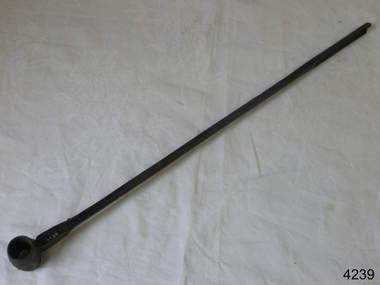 Flagstaff Hill Maritime Museum and Village
Tool - Auger, Stanley Rule & Level Co, 1922-1935
... The subject items trademark shows the item was produced between 1922-1935 at a time when the company had just merged and was transitioning into Stanley Tools Ltd. flagstaff hill warrnambool shipwrecked-coast flagstaff-hill flagstaff-hill-maritime-museum maritime-museum shipwreck-coast flagstaff-hill-maritime-village Stamped on shank "AA" trade mark (Stanley Tools) Nose bit auger. Similar to shell ...The Stanley Works was founded by Frederick Trent Stanley in 1843, originally a bolt and door hardware manufacturing company located in New Britain, Connecticut, USA. The Stanley Rule and Level Company was founded in 1857 by Henry Stanley in New Britain, Connecticut. In 1920, this company was independent from Trent Stanley's works but they merged with the separate but related Stanley Works, that was founded by Henry Stanley's cousin Frederick Trent Stanley, and continued operating as its hand tools division. At this time after the merger the “Sweetheart” Trademark was adopted for tools made between 1922 to 1935 with augers manufactured during this time having the “AA” trademark and this is when the Stanley company we know today came into being. Around 1937, Stanley acquired the British J. A. Chapman company, a British manufacturer of carpentry tools and other items (including bayonets during World War I) formerly located in Sheffield, from Norman Neill. This helped Stanley to enter the British market.A early tool manufactured by an emerging company that today produces tools for sale in just about every country in the world. The subject items trademark shows the item was produced between 1922-1935 at a time when the company had just merged and was transitioning into Stanley Tools Ltd.Nose bit auger. Similar to shell bit except the nose turned inwards to form a cutting lip. Stamped on shank "AA" trade mark (Stanley Tools)flagstaff hill, warrnambool, shipwrecked-coast, flagstaff-hill, flagstaff-hill-maritime-museum, maritime-museum, shipwreck-coast, flagstaff-hill-maritime-village -
 Flagstaff Hill Maritime Museum and Village
Equipment - Lifebuoy, John Murch, 1922
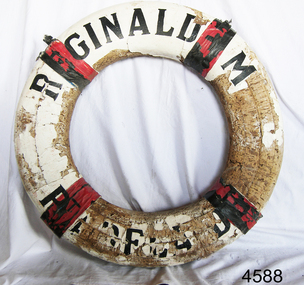
... Shell Grit and Gypsum. At one time the vessel was used as a customs boat, renamed 'HMC No. 3, Pt Adelaide'. In 1969 she was used by a mining and railway company as a barge to carry explosives. ...Shell Grit and Gypsum. At one time the vessel was used as a customs boat, renamed 'HMC No. 3, Pt Adelaide'. In 1969 she was used by a mining and railway company as a barge to carry explosives. ...Lifebuoy is from the ketch Reginald M, built in Port Adelaide by John Murch in 1922. Lifebuoys were part of the emergency lifesaving equipment carried on vessels in the late 19th and early 20th century. The ring was made of strips of cork wood joined together to make the ring shape then covered in canvas and sealed usually with white paint. Four evenly spaced canvas reinforcing bands would be added for strength and for a place to thread a rope or line. A lifebuoy, or life-preserver, is used as a buoyancy device often thrown to an endangered or distressed person in the water to keep them afloat while they receive help. It is usually connected by a rope to a person in a safe area such a nearby vessel or on shore. Lifebuoys is a made from a buoyant materials such as cork or foam and ae usually covered with canvas for protection and to make it easy to grip. The first use of life saving devices in recent centuries was by the Nordic people, who used light weight wood or cork blocks to keep afloat. Cork lifebuoys were used from the late 19th to early 20th century. Kapok fibre was then used as a filling for buoys but wasn’t entirely successful. Light weight balsa wood was used as a filler after WW1. In 1928 Peter Markus invented and patented the first inflatable life-preserver. By WW2 foam was combined with Kapok. Laws were passed over time that has required aeroplanes and water going-vessels to carry life-preservers on board. The Reginald M 1922- The two-masted coastal trading ketch Reginald M was built by John (Jack) Murch in Port Adelaide, South Australia, in 1922 and it was launched there in Largs Bay in the same year. It is thought that the keel was hewn from two telegraph poles - its owner was a regular visitor to salvage yards. Its cargo at times included Guano, Barley, Wool, Horses, Cattle, Timber, Explosives, Potatoes, Shell Grit and Gypsum. At one time the vessel was used as a customs boat, renamed 'HMC No. 3, Pt Adelaide'. In 1969 she was used by a mining and railway company as a barge to carry explosives. In 1972 the vessel was renamed 'T.S. Macquarie' and planned to be used for sea cadet training.; this did not eventuate. It was sold again and went to Melbourne to be used for pleasure sailing, and again sold for use as a ferry. Late in 1975 Flagstaff Hill purchased the vessel to be used as an exhibit at the Maritime Village where many visitors enjoyed being able to board and explore a real ship with a long history. Sadly, in late 2016, the decision was made to 'decommission' the vessel due to the continuing high cost of maintenance and the risk to public safety. Many of the components of the vessel are held as part of Flagstaff Hill's collection.The lifebuoy is an example of equipment carried on vessels in the late 19th and early 20th century to help preserve life. There were many lives lost in Australia’s colonial period, particularly along the coast of South West Victoria. The lifebuoy is significant for its connection with the Australian built, 1922 coastal trader, Reginald M. Lifebuoy, round , cork, filled, white canvas cover with four red tabs. Text is printed in black on quarters 1 and 3. This lifebuoy once belonged to the vessel 'Reginald M' , Pt Adelaide. "REGINALD M / Pt ADELAIDE".flagstaff hill, warrnambool, shipwrecked-coast, flagstaff-hill, flagstaff-hill-maritime-museum, maritime-museum, shipwreck-coast, flagstaff-hill-maritime-village, lifebuoy, lifesaving, ship equipment, reginald m, life rings, safety ring, life-saving buoy, ring buoy, life preserver, personal floating device, floatation device, safety equipment, coastal trader, john murch, reg webb -
 Federation University Historical Collection
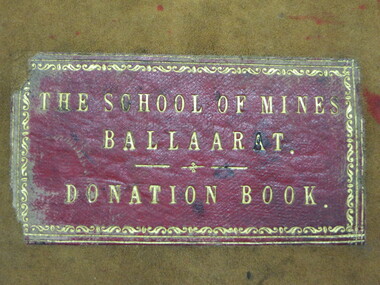
Book - Ledger, Ballarat School of Mines Donation Book, 1878 - 1895, 1878-1895
... Rivett Henry Bland, Clunes - Specimen of water pipe from the Port Phillip Company's mine encrusted with carbonites of lime and magnesium (Note: This item is not in the present Federation University Historical Collection)
299. D.J. Williams, Queenscliff - 1 case shells...Rivett Henry Bland, Clunes - Specimen of water pipe from the Port Phillip Company's mine encrusted with carbonites of lime and magnesium (Note: This item is not in the present Federation University Historical Collection)
299. D.J. Williams, Queenscliff - 1 case shells ...The Donation Book relates to the Ballarat School of Mines Museum which opened in 1872. Very few of these items are still held by Federation University. The Museum was emptied in the 1960s with items being distrubuted to the Ballarat Historical Society, returned to original lenders (ie Pern Collection), of disposed of. Donations to the Ballarat School of Mines include: 34. M. Hamburger, Ballarat - bunsen burner 41. W.H. Shaw, Phoenix Foundry - 81 nos of 'Engineer' 89. Juvenile Industrial Exhibition Association Committee per Joseph Flude - dies used for striking medals awarded to successful exhibits. 165. Ferdinand Von Mueller 172 Ferdinand Von Mueller o hortus siccus 6 197. James Stoddart 203. Edward Gazzard, North Creswick - Model of safety Cage invented and made by donor 218. E. Morey 222. Alfred Lestor 228. J.J. Sleep, Ballarat, patent Lever escarpment Clock (displayed in laboratories) 237. Bernard Smith (Warden) per favor of James M. Bickett - Bust of Mr John Lynch, Smythesdale. (Note: This item is not in the present Federation University Historical Collection) 241. James Oddie, J.P., Ballarat, Copy of 'the Chemist and Druggist' 267. John Lynch Junior, Smythesdale - Cast of "Golden Age" nugget, found at Browns by Co-operative party, 12 men. Weight 75 oz, 12 dwts, 12 grs.(Note: This item is not in the present Federation University Historical Collection) 270. Isaac Davis, Main Road, Ballarat 294. W. H. Shaw, Ballarat - 94 nos of 'The Engineer' 295. Rivett Henry Bland, Clunes - Specimen of water pipe from the Port Phillip Company's mine encrusted with carbonites of lime and magnesium (Note: This item is not in the present Federation University Historical Collection) 299. D.J. Williams, Queenscliff - 1 case shells from Fiji 305. C. Retallack, Ballarat 314. William Henry Shaw, Ballarat - glass case 323. W. Longley, Ballarat - Botanical Specimen (Note: This item is not in the present Federation University Historical Collection) 327. W. H. Angove, Perth 337. J. Cosmo Newbery, B Sc, Melbourne 343. James Hector, M.D., New Zealand 353. R.S. Mitchell, Ballarat - 8 specimens live plants (medicinal) (for the Ballarat School of Mines Garden) 355. W. Magee, Ballarat - Sugar cane plants and seeds (for the Ballarat School of Mines Garden) 363. James Hector, Wellington, new Zealand 371. William Wesley, 28 Essex St, Strand, London - Scientific book circular 380. Jacob Upfold (deceased) per favor of the trustees - bequest of steam engine indicator and belongings (boothe and case) 381. Joseph Mitchell, 22 Macarthur Street, Ballarat - sod of turf cut from Warboy's High Few, County Huntingdon, England, 1872. 394. W.H. Barnard 401. James Orr 418. F. Ratte, Sydney 440. Alfred Mica Smith, Sandhurst (Bendigo), Inaugural Address, delivered to the Bendigo School of Mines Science Society, June 20. 1881 by P.H. Macgillivray, MA, MRCS, FLS, President. (Note: This item is not in the present Federation University Historical Collection) (Note: This item is not in the present Federation University Historical Collection) 446. C. C. Shoppee, Ballarat 462. Dr Bunce, Ballarat 468. James Black, Mining Manager "Kerrit Bureet' 479. J.S. North, Mining Manager No. 2 Queen Co, Black Hill Ballarat. 505. Smith Tibbitts - A block of ancient leaves from the Nigtingbool Estate near Haddon on the Ballarat district from shaft 80 feet deep. (Note: This item is not in the present Federation University Historical Collection) 512. F.W. Niven, Ballarat - "A Handy Book to Tasmania" 522. James Hector, Wellington, New Zealand 549. C.E. Grainger, Manager Ballarat Woollen Mills - samples of dyed and raw wools 600. (4 July 1882) Henry Sutton, Ballarat - 13th annual report of the Aeronautical Society of Great Britain; 2 papers from the Proceedings of the Royal Society, nos 217 and 218- 1882, "One a new electrical storage battery by Henry Sutton, Ballarat, Victoria. 608. H. Glenny J.P., Ballarat - Specimen of Asbestos from Tasmania 610. M.H. Edelmann, Munich, Germany 674. W.H. Shaw, Phoenix Foundry - Steel boring 95 feet long taken from bed-plate of locomotive engine. 675 - H.R. Hancock J.P. pre favour Mr James Pryor, Moonta Mines 676. Baron Ferdinand Von Mueller KCMG, etc, Melbourne 678. E.F.A. Gaunt, Royal Navy, H.M.S. Nelson, per favour Lyde Gaunt - Specimen of manganese ore from the mines - Russell - New Zealand 728. Dr Pinnock, Ballarat 760. Simon Morrison, Ballarat 784. James Shugg, Hamilton - 1 case fossils from Muddy Creek, near Hamilton. (Note: This item is not in the present Federation University Historical Collection) 786. W. Bolam (inspector of Schools), Melbourne - 2 spears and 1 fishing prong Fijian 806. James Oddie, Ballarat 708. Henry G. Hanks, San Francisco 786. W. Bolam (Inspector of Government Schools Melbourne) - 2 spears and one fishing prong Fijian 824. Henrique Gorceixm Onro Preto, Brazil 840. W. Laplau, Ballarat - Gas furnace with a large assortment of fittings, also large gas holder and oil-heating apparatus 854. Robert Borch, Main Road, Ballarat - Improved safety chain (Note: This item is not in the present Federation University Historical Collection) 928. James Oddie 944. James P. Munroe, Registrar, Massachusetts 952. L.E. Cutter per favour of Mr F.J. Martell - Unexploded bomb shell from the Eureka Stockade 957. H. Glenny, Hobart 962. George Hart, Ballarat - eagle 976. Henry Sutton, Ballarat - 1 volume "Plattner on the Blowpipe" 978. J.W. Flatow, 45 Madeline Street, Carlton, Melbourne 984. Charles C Shoppee Ballarat - Copies of ancient coins 989-95 - Specimens from Moonta, South Australia 985. W.H. Wooster BOlwarra - books microscope related 1179. James Oddie - Live hedgehog 1181 C. Crisp, Bacchus Marsh, Portugal Copper Coin, 1785 1248 James Oddie, Solomon Islands - Bow and arrows & Spears 1285. C. Colyer, Smythesdale 1327. John L. McKenna, Smeaton - Fragment of Stone Axe. 1395. Mrs O. Skoglund, Nerrina 1428. Daniel Brophy, Ballarat - Collection of mineral specimen form Silverton (Collected by Mrs James Murray) 1442. Henry Sutton, Ballarat - Specimens of fossil fruits collected at Haddon by Charles Brown. 1444. Mining Department - Underground Mine Workings from Band of Hope and others. 1517. W.H. Wooster, Ballarat 1592. Bishop of Ballarat - Stone Axe and other native items 1669. H. McHaffier, Napoleons - 1 Spanish silver coin 1681. James Oddie, Dunedin 1688. W. Burbridge, Ballarat - Native Tomahawk from Metung 1708. A. Doepel, Ballarat 1712. Marty Guerin, Ballarat 1735. Bella Guerin. M.A., Ballarat - Copy Wide Awake Vol 1 No 7 May 28th 1887 and The Bulletin, March 19th 1887. 1747. Bella Geurin M.A., Ballarat - Copy Wide Awake Vol 1 No 8 June 4 1887 1751. Bella Geurin M.A., Ballarat - Copy Wide Awake Vol 1 No 9 June 11th 1887 1842. Linnean Society, London England - Charter, By Laws, Proceedings, Transactions, Journals 1853. W.J. Corbould, Silverton, NSW - chloride of silver from Pinnacles, Broken Hill, Silverton 1888. W. J. Corbould, Sample of metallic silver from Silverton, NSW 1928. E. Morey, Ballarat - Steam Engine 1937. Henry Sutton A.S.I.E., Ballarat - Plate Electric Machine, chimes and Sportman (number crossed out) 1951. Henry Sutton A.S.I.E., Ballarat - Plate Electric Machine, chimes and Sportman 1981. Harrie Wood (per W.H.B.[Barnard?), Ballarat 1996. W.H. Shaw, Phoenix Foundry - Papers "The Vict Engineer July 1887, May June July August 1888 and others 2014. Harrie Wood, Sydney - Report Department of Mines, 18872027. W.J. Bechervaise - Copy of Book by Baldwin Spencer 2034. A.G. Randall - Native Hatchet 2045. W.H. Corbould, Silverton, Collection of silver ores 2051. Fowler, Tarnagulla - Native Tomahawk 2123-2131. James Oddie, London 2163. Roff. F. Taplier, Sturt Street - Native Tomahawk 2178. Syd. Johnson, Meredith - Native Tomahawk, Greenstone 2184. Mr Tupp for Hall - Native Spear and Club 2292. Emmanuel Steinfeld, Melbourne 2313. A. Atwood, Rowlands Factory, Dana Street 2361. Dr Pinnock, Ballarat - Collection of Living Sponges 2363. P. Curnow, Ballarat - Piece of wood with stone naturally embedded 2364. R. Dowling, Waubra 2875. Mrs C, Flude, Ballarat - Collection of (5) mineral specimens 3460. Joseph Weir, Ballarat - Sample of rolled Annibar 3466. J. Hart, Ballarat - Native Shield - supposed to have been made by King Billy 4784. Mr. O. Woolnaugh, Pleasant Street - Four Native Tomahawks 6469. L. Balhausen, Ballarat 3472. John English, Smeaton - three samples of auriferous wash dirt 3607. Columbia College, New York - Handbook of Information of the Columbia College in the Ciry of New York 1892-3. 3672. L.A. Samuels, Bendigo 3724. P. Paperhagen 3736. The Late Rivett Henry Bland per John Noble Wilson - Collection of mineral specimens and fossils 3752. G.A. Denny, South Africa 3755. J. Carroll, Ballarat - Specimen of Native bread found in Ballarat East. 4765. J. Donnelly, Springs, Bungaree I. Fowler, Coolgardie, Specimen of Gold Bearing Quartz ballarat school of mines, doantions, museum, ballarat school of mines museum, safety cage, botanical garden, materia medica garden, library, bella guerin, james oddie, phoenix foundry, w.h. shaw, john lynch, henry sutton, aboriginal, stone axe, tomahawk, geological specimens, moonta, fedinand krause, oddie collection of minerals, thomas bath, spears, solomon islands, king billy, bows and arrows, ancient coins, birds eggs, snakes
