
Showing 10567 items matching "ship's-wheel"
-
 Narre Warren and District Family History Group
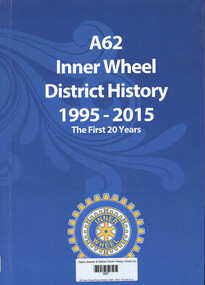
Book, Sue Blenkhorn et al, A62 Inner Wheel District History 1995 - 2015: The first 20 years, 2015
... A62 Inner Wheel District History 1995 - 2015: The first 20 years......Inner Wheel Club of Pakenham...Inner Wheel Club of Pakenham Pakenham (Vic.) A62 Inner Wheel District History 1995 - 2015 A62 Inner Wheel District History 1995 - 2015: The first 20 years Book Sue Blenkhorn Yvonne Romp Inner Wheel Club of Pakenham ...A62 Inner Wheel District History 1995 - 2015non-fictionA62 Inner Wheel District History 1995 - 2015inner wheel club of pakenham, pakenham (vic.) -
 Seaworks Maritime Museum
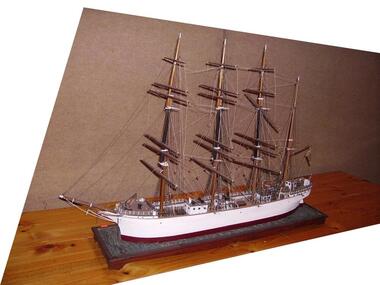
Model ship, The model was built by the ship's carpenter on board the Archibald Russell, Archibald Russell, 1905
... An example of end-era sailing ship trade with Australia. Reference: http://www.bruzelius.info/Nautica/Ships/Fourmast_ships/Archibald_Russell%281905%29.html She was launched at Greenock in 1905 for John Hardie & Sons...."Archibald Russell" painted on ship...The model was built by the ship's carpenter on board the Archibald Russell. ...Archibald Russell Model ship The model was built by the ship's carpenter on board the Archibald Russell. ...ARCHIBALD RUSSELL (1905-1949) Until 1922 completed numerous cargo voyages to Sydney, Newcastle, Fremantle, Geelong, and especially Melbourne. In 1923 she was bought by Gustaf Erikson, the famous Finnish ship-owner, and carried timber to Melbourne in 1926, 1927 and 1928, and carried grain from Geelong in 1927 and Williamstown in 1929 - and that was the year she won the Grain Race (93 days). She then carried grain from South Australia until the war and was then was taken over by the British and used as a food storehouse through the war. She was broken up in 1949 on Tyneside. An example of end-era sailing ship trade with Australia. Reference: http://www.bruzelius.info/Nautica/Ships/Fourmast_ships/Archibald_Russell%281905%29.html She was launched at Greenock in 1905 for John Hardie & Sons.Has significant links with Australian and Victorian commerce. An example of end of era sailing ship trade with Australia. A detailed static model with carved and laminated hull painted in white and maroon, the varnished deck with detailed fittings and rigging, raised on wooden base with simulated waves. Model of 4-masted barque launched at Greenock in 1905 for John Hardie & Sons. Steel barque built by Scott Shipbuilding and Engineering Co., Greenock, at a cost of £20.750. Her dimensions were: 291'3 × 42'9 × 24'0 (88.77 x 13.03 x 7.32m) and tonnage: 2354 GRT, 2048 NRT and 3950 DWT. Equipped with two 120' long bilgekeels. Rigged with royal sails over double top-gallant sails. "Archibald Russell" painted on ship -
 City of Melbourne Libraries
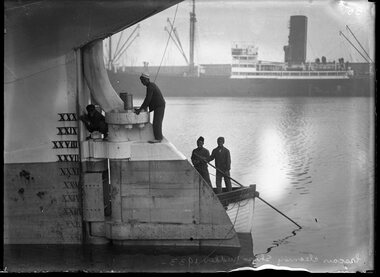
Photograph, Bull, Hugh Jones, 1897-1993, Lascars cleaning ship's rudder
... Lascars cleaning ship's rudder...Across a very calm dock area is a single funnel ship with on-deck derricks. The rudder of the ship being cleaned is white, with large black roman numbering denoting the depth at which the ship is sitting, depending on whether it is loaded or empty. ... Photographer notations on slide: "Lascars cleaning ships rudder 1933"....Across a very calm dock area is a single funnel ship with on-deck derricks. The rudder of the ship being cleaned is white, with large black roman numbering denoting the depth at which the ship is sitting, depending on whether it is loaded or empty. ...Published: unknown, however, on 26 June 1935 a similar, but not the exact photo in the McKenzie Collection, was published in The Age: Published title: Shipping Victorian Flour to the East Published Caption: Flour and wheat figure prominently in all cargoes carried by ships trading to Chinese, Japanese and Eastern ports. Victorian millers are eager to extend lids outlet for their produce, and every opportunity is grasped. The pictures show Australian labourers unloading from railway trucks some of the 2300 tons of flour which will go into the hold of the Burns, Philp motor ship Neptuna for shipment to Hong Kong, while Chinese seamen are busy cleaning and painting the rudder post of the ship. Hard by the Neptuna, other ships are taking on flour for the East. Research by Project Volunteer, Louise McKenzie: The image was described by Hugh Bull on the rear of the glass plate as – “Lascars cleaning ships rudder 1933”. Basically, a “lascar” is a seaman. Image No. 032 in the McKenzie Collection shows two lascars perched on the rudder of a ship, with two others standing in a rowboat along side. They are dressed in baggy trousers and jackets and wearing caps. Across a very calm dock area is a single funnel ship with on-deck derricks. The rudder of the ship being cleaned is white, with large black roman numbering denoting the depth at which the ship is sitting, depending on whether it is loaded or empty. Whilst the exact photo in the McKenzie Collection has yet to be located in The Age in 1933, the date when it was taken, there is a photo published in The Age on 25 June 1935 which appears to be one of a series of photos taken on the same day, featuring lascars cleaning a ship’s rudder. It bears a striking resemblance to MCK 032, but it is taken from a slightly different angle. The 1935 published photo is a close up of a ship’s rudder being cleaned, with same style of roman numerals in black on the white of the rudder. One lascar is standing on the rudder, one is standing in a small clinker style rowboat, with its characteristic wooden overlapping hull planks, holding a broom; two more lascars are sitting in the bow and stern of the rowboat. The ship being cleaned is in a dock, as a wharf and warehouses can be seen in the background, the water is very calm, and there are two other ships moored nearby – one across the other side of the dock with a black and white hull and derricks on its deck, and one adjacent, with its mooring lines clearly visible. The lascars are wearing caps, baggy trousers and jackets. Compelling similarities therefore exist between the two images. Whilst it is difficult to positively identify the cultural background of these particular lascars in either photo, the newspaper article dated June 1935 advises they are “Chinese”. This is possibly because the ship they are associated with, the Neptuna, is reported to have sailed from Melbourne on this date, bound for Hong Kong. However, the men are probably from South East Asia. Wikipedia describes the term “Southeast Asia” as covering ” … the people of Southeast Asia from prehistory to the present in two distinct sub-regions: Mainland Southeast Asia (or Indochina) and Maritime Southeast Asia (or Insular Southeast Asia). Mainland Southeast Asia comprises Cambodia, Laos, Myanmar (or Burma), Peninsular Malaysia, Thailand and Vietnam whereas Maritime Southeast Asia comprises Brunei, Cocos (Keeling) Islands, Christmas Island, East Malaysia, East Timor, Indonesia, Philippines and Singapore. Additionally, Wikipedia “Lascars” states that “Lascars were sailors from the Indian subcontinent, South East Asia, the Arab world, British Somaliland and lands east of the Cape of Good Hope, who were employed to work on colonial merchant ships. The practice ran from the 16th century to the mid 20th century”. Indian seamen were used as early as the 16th century by Portuguese explorer Vasgo da Gama in his successful voyage to India, and subsequently by Portuguese ships in the 16th and 17th centuries. “Through the Portuguese and Spanish maritime world empires, some Indian lascars found their way onto English merchant ships, and were among the sailors on the first English East India Company (EIC) ships to sail to India.” In the 17th Century “When the English adopted the term "lascar", they initially used it for all Asian sailors on English-flagged ships, but after 1661 and the Portuguese ceded Bombay to England, the term was used mainly to describe Indian sailors specifically. The term "topaze" was used to describe Indo-Portuguese personnel, especially those from Bombay, Thana, Diu, Dammam and Cochin. The term "sepoy" was used to describe Indian soldiers in European service. The number of lascars employed on EIC East Indiamen was so great that the Parliament of England restricted their employment via the Navigation Acts (in force from 1660 onwards) which required that 75% of the crew onboard English-flagged ships importing goods from Asia be English subjects. The restriction arose due to the high rates of illnesses and death among European sailors on East Indiamen, and their frequent desertions in Asia, which left such ships short of crew for the return voyage. Another reason was the frequent impressment of European sailors from EIC East Indiamen by the Royal Navy in times of war“. The term “impressment” colloquially refers to “the “press gang” …”a type of conscription of people into a military force, especially a naval force, via intimidation and physical coercion, conducted by an organized group (hence “gang”). .. The large size of the British Royal Navy in the Age of Sail meant impressment was most commonly associated with Great Britain.”. (Wikipedia – Impressment). By the 20th century these sailors served on British ships under "lascar agreements", which allowed shipowners more control than was the case in ordinary articles of agreement. The sailors could be transferred from one ship to another and retained in service for up to three years at one time. “Lascars served all over the world in the period leading up to the First World War. Lascars were barred from landing at some ports, such as in British Columbia. At the beginning of World War I, there were 51,616 lascars working on British merchant ships in and around the British Empire. In World War II thousands of lascars served in the war and died on vessels throughout the world, especially those of the British India Steam Navigation Company, P&O and other British shipping companies. The lack of Canadian naval manpower led to the employment of a total of 121 Catholic Goans and 530 Muslim British Indians on the Empress vessels of the Canadian Pacific Railway, such as the Empress of Asia and Empress of Japan. These ships served in the Indian Ocean both as ANZAC convoy ships and in actions at Aden. The ships were placed under the British Admiralty as part of Canada's contribution to the war effort and all of the Indian men were awarded medals by the Admiralty, though none of them were delivered. In the 1950s the use of the term "lascar" declined with the ending of the British Empire. The Indian “Lascar Act” of 1832 was finally repealed in 1963. However, "traditional" Indian deck and Pakistani engine crews continued to be used in Australia until 1986 when the last crew was discharged from the P&O and replaced by a general-purpose crew of Pakistanis. The term lascar has been widely used to engender an element of exoticism in literature eg “Sir Arthur Conan Doyle created a Lascar foil to Sherlock Holmes in "The Man with the Twisted Lip" in 1891. Lascars aboard the ship Patna figure prominently in the early chapters of Joseph Conrad's novel Lord Jim. Frances Hodgson Burnett's novel A Little Princess features a lascar named Ram Dass. Also, Caleb Carr portrays two lascars as bodyguards for a Spanish diplomat near the end of The Angel of Darkness. In Wuthering Heights, it is speculated that Heathcliff, the main character, may be of lascar origin." (Wikipedia – Lascar) And what has become of these “forgotten heroes of the World Wars”? The South Asian Heritage Trust, which seeks to commemorate, mark and celebrate South Asian cultures, stories, and communities, published an article in July 2025 entitled – The Lascars: Seafaring Roots of Modern Britain. It particularly honours the role of the 80,000 lascars who served Britain in WWI, and the over 100,000 who served in the British Merchant Navy in WWII, and concludes: “The hardships faced by Lascars were profound. They were often assigned the most dangerous tasks, lived in substandard conditions aboard ships and, even after their immense contributions to the war efforts, many veterans found it difficult to secure the recognition, pensions and rights afforded to other veterans. Many were employed under ‘Asiatic Articles’, which offered less protection and lower pay than their European counterparts. Yet, their legacy endures. The multicultural fabric of areas like East London owes much to these early seafarers and settlers. The East London Mosque, established in 1910, became an important spiritual and community hub. Today, efforts to bring their stories out of the shadows are growing. The Museum of London Docklands features exhibits on their history. Memorials, such as the P&O headstone in Dover for the 22 Lascar crew members of the SS Maloja sunk in 1916 and the careful restoration of the Lascar War Memorial in Kolkata, serve as important reminders of the sacrifices. The journey of the Lascars – from their homelands, along dangerous wartime shipping routes, to the docklands of Britain – is a story of personal courage and of a rich contribution to Britain’s history and identity.” The ship MV Neptuna, mentioned in the 1935 article, had that year been purchased from a German company by Australian-owned Burns Philp, with Australian Government assistance, and it was instrumental in ensuring the shipment of rice from Vietnam to Papua New Guinea. Rice is still a household staple in PNG. Despite it being introduced into PNG more than 100 years ago, the crop has not been sufficiently integrated into the country’s traditional agricultural production system, and today PNG imports still account for nearly 98% of rice. (Spotlight Magazine Sept. 2016) The 1935 newspaper article states that the Neptuna is involved in moving flour for the East. Australian wheat exports began in 1845, but were not regular until the 1870s. New land clearing methods in Australia allowed large tracts of land to be cleared more efficiently – this included the invention of the iconic ‘stump jump’ plough. With the success of the wheat harvests, flour mills began to spring up around the country. By the 1870s, many large country towns had their own mills, with around 500 mills producing flour across the country. Flour exports were an important part of the wheat industry until around the 1930s. After the Second World War, many of Australia’s export partners (which were mainly in the developing nations of Asia) began setting up their own flour industries and the Australian product was no longer in demand. In 1942 MV Neptuna was being utilised for the war effort, and carrying depth charges and other armaments for Australia, when on 19 February it was sunk in a bombing raid on Darwin, and where part of her hull still lies. References: SHIPPING VICTORIAN FLOUR TO THE EAST. (1935, June 25). The Age (Melbourne, Vic. : 1854 - 1954), p. 11. Retrieved July 23, 2025, from http://nla.gov.au/nla.news-article204357218 Age (Melbourne, Vic. : 1854 - 1954), Tuesday 25 June 1935, page 11 Wikipedia, Clinker (boat building), https://en.wikipedia.org/wiki/Clinker_(boat_building) Wikipedia, Lascar, https://en.wikipedia.org/wiki/Lascar Wikipedia, History of Southeast Asia, https://en.wikipedia.org/wiki/History_of_Southeast_Asia Wikipedia, Impressment, https://en.wikipedia.org/wiki/Impressment NEPTUNA LEAVES FOR CHINA WITH TOURISTS (1935, June 25). The Herald (Melbourne, Vic. : 1861 - 1954), p. 5. Retrieved July 23, 2025, from http://nla.gov.au/nla.news-article244841163 National Research Institute SPOTLIGHT paper Vol 9, Issue 7, https://pngnri.org/images/Publications/Spotlight_No_9_Vol_7_-_201609_-_Sofe__Odhuno_-_Rice_Import_Quota1.pdf South Asian Heritage Trust, The Lascars: Seafaring Roots of Modern Britain, July 11,2025 : Royal British Legion. https://southasianheritage.org.uk/royal-british-legion/the-lascars-seafaring-roots-of-modern-britain/ Photographer notations on slide: "Lascars cleaning ships rudder 1933".lascars, ships, 1930-1939, employment, ethnic communities -
 Royal Melbourne Yacht Squadron
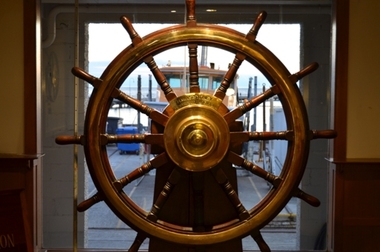
Memorabilia - Wheel of HMAS Sydney, Early 20th Century
... ...wheel...THE WHEEL OF HMAS SYDNEY COMMEMORATING AUSTRALIA’S FIRST NAVAL ENGAGEMENT The historic wheel of HMAS Sydney commemorates the Royal Australian Navy’s first ship- to- ship naval engagement. ...Ships wheel, timber, mounted on a timber plinth, wheel of ship first HMAS Sydney....Plaque notifying that wheel donated by Commodore Joe White 1930...THE WHEEL OF HMAS SYDNEY COMMEMORATING AUSTRALIA’S FIRST NAVAL ENGAGEMENT The historic wheel of HMAS Sydney commemorates the Royal Australian Navy’s first ship- to- ship naval engagement. ...THE WHEEL OF HMAS SYDNEY COMMEMORATING AUSTRALIA’S FIRST NAVAL ENGAGEMENT The historic wheel of HMAS Sydney commemorates the Royal Australian Navy’s first ship- to- ship naval engagement. It was purchased early in 1930 and later presented to the Royal St Kilda Yacht Club (now Royal Melbourne Yacht Squadron) by then Commodore Joe White, following HMAS Sydney being broken up at Cockatoo Dock, Sydney. On 1 November 1914, led by the flagship SS Orvieto, a large convoy of 28 Australian and 10 New Zealand transports escorted by the Light Cruisers HMAS Melbourne, HMAS Sydney, HMS Minotaur and the Japanese ship Ibuki, departed King George Sound, Albany Western Australia with a large contingent of Australian and New Zealand troops bound for Egypt, to become the original Anzac’s. As the convoy steamed northwest across the Indian Ocean, leaving Cocos-Keeling Islands well to the westward, Captain Karl von Muller in the German Light Cruiser Emden of 3,600 tons, after having wrought much havoc to allied shipping in the Indian Ocean, ignorant of the convoys presence, had in mind to destroy the Cocos Island Cable Station on Direction Island. In the early hours of the morning of Monday the 9 November, he anchored “Emden” off Direction Island to send a landing party ashore, In the meantime the Cable Station had sent out a Morse Code message ‘Strange ship approaching’, this was followed soon after by a ‘S.O.S.’ These messages were picked up by ships in the convoy and at 7.00 a.m., Captain J.C. Glossop of the 5,400 ton HMAS Sydney was directed to leave the convoy and proceed at full speed for Cocos Islands. Two hours later Cocos Island was on the horizon. Captain von Muller, with the boarding party ashore to destroy the Cable station, steamed out to intercept the intruder. Captain Glossop decided to close in to 9,500 yards ( 8686.8m) before delivering his first salvo. Emden on the other hand, opened fire at 10,500 yards (9601m), its ten, 4.1 inch (104mm) guns firing 38 pound (17.24 kg ) shells, some of which scored near misses. Emden was hit repeatedly by HMAS Sydney’s eight, 6 inch (152.4mm) guns firing 100 pound (45.36kg ) shells. Within two hours Captain von Muller had decided to run the badly damaged Emden aground on North Keeling Island. Captain Glossop then broke off the engagement to speed off to intercept Emden’s collier, “Buresk”, seen lurking in the distance, soon to overtake her. A boarding party from HMAS Sydney was too late to prevent Buresk from being scuttled but able to rescue her crew. Returning to finish off Emden, HMAS Sydney was again met by heavy gunfire. Sydney scored a number of direct hits to Emden and only after having suffered 134 killed and 65 wounded, did Captain von Muller finally decide to lower his Naval Ensign. He was among those captured and was allowed to retain his Naval sword. In the engagements HMAS Sydney only suffered four direct hits, 4 killed and 12 wounded. J.H.(Bert) Ferris Extremely significant as part of Australia's Naval and Military history.Ships wheel, timber, mounted on a timber plinth, wheel of ship first HMAS Sydney.Plaque notifying that wheel donated by Commodore Joe White 1930ww1, sydney, german, hmas, raider, emden, cocos keeling, islands, hmas sydney, wheel -
 National Wool Museum
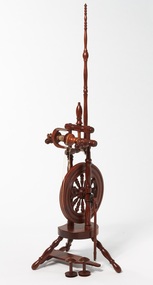
Spinning Wheel, Carrington wheel
... Carrington wheel...For many years, Mr Zakrzewski collected, researched and repaired spinning wheels from all over the world. This wheel is known as a Carrington wheel. It was designed and built by Mr Zakrzewski who made 400 similar wheels of three different designs over a 30 year period. ...Part of the Zakrzewski Spinning Wheel collection....Carrington wheel Spinning Wheel ...Part of the Zakrzewski Collection of spinning wheels donated to the National Wool Museum by Mr Wlodzimierz Zakrzewski. For many years, Mr Zakrzewski collected, researched and repaired spinning wheels from all over the world. This wheel is known as a Carrington wheel. It was designed and built by Mr Zakrzewski who made 400 similar wheels of three different designs over a 30 year period. The design was named for his wife, Sonya Carrington who was a Polish artist and teacher who became a well known tapestry weaver. She married Mr Zakrzewski in 1956 and continued to exhibit under her own name. As it was difficult in the 1950s to obtain tapestry wools she decided to spin and dye her own. She didn't have a spinning wheel, so Mr Zakrzewski, whose training was in engineering, offered to make her one. They became very popular and he continued to make and sell them.Part of the Zakrzewski Spinning Wheel collection.handicrafts - history, spinning wheels, carrington wheel, highlights of the national wool museum: the zakrzewski spinning wheel collection - exhibition (28/07/2001 - 02/12/2001), zakrzewski, mr wlodzimierz carrington-zakrzewska, mrs sonya -
 Marysville & District Historical Society
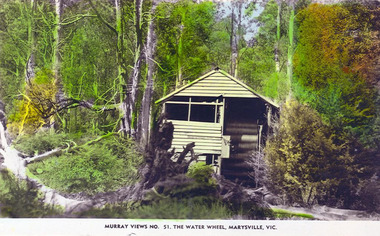
Postcard (Item) - Colour tinted postcard, Murray Views, Murray Views No. 51. The Water Wheel, Marysville, Vic, 1950
... Murray Views No. 51. The Water Wheel, Marysville, Vic....A digital copy of a colour tinted postcard of the water wheel that powered the Barton's Store in Marysville in Victoria....A colour tinted postcard of the water wheel that powered the Barton's Store in Marysville in Victoria....This water wheel was located on the Steavenson River in Marysville. ...A digital copy of a colour tinted postcard of the water wheel that powered the Barton's Store in Marysville in Victoria.A digital copy of a colour tinted postcard of the water wheel that powered the Barton's Store in Marysville in Victoria. This water wheel was located on the Steavenson River in Marysville. Barton's Store was established by Thomas John Barton in 1864. Thomas John Barton was born in 1836 in Gloucestershire and after his father died in 1850 arrived in Melbourne in 1852 along with his mother, adult sisters, younger brothers, his uncle, his uncle's wife Suzanna and their family. Thomas tried gold mining at Woods Point but found it too difficult. He then partnered with Ewen Hugh Cameron to provide the miners with meat. In 1864 they purchased a plot of land in Marysville and set up a butchers/abattoirs and from there began their business of taking supplies to the miners at the nearby Woods Point and Jamieson goldfields. In 1865 the business was firmly established and Thomas married Selina Croker at Heidelberg and brought her back to Marysville. Their first home was 'The Chestnuts', which included the store, and was situated on the town side next to the Steavenson River. Sadly, in 1876 Selina died of complications after giving birth to their sixth child. Thomas was in need of a nanny to care for his six children, including the newborn baby, and so he employed Emily Ada Sparke, who is the eldest daughter of the local school teacher. Thomas and Emily subsequently marry in 1878 and they go on to have a further 10 children over the next several years. Thomas assisted in the establishment of the first school in Marysville in 1870 and remained a very active member of the community including as a Councillor for the Shire of Healesville, Shire President and he was also appointed as a Justice of the Peace. Thomas died in Carlton in 1911. After their father's death, his sons Fred and Frank took over the family business, which was then known as Barton Bros Store which continued to operate until sometime in the 1970's. This postcard was produced by Murray Views in 1950 as a souvenir of Marysville.marysville, victoria, barton's store, thomas john barton, ewen hugh cameron, woods point, jamieson, gold mining, goldfields, selina croker, the chestnuts, emily ada sparke, shire of healesville, fred barton, frank barton, barton bros store, francis adam barton, frederick john barton, water wheel, steavenson river, murray views, murray views no. 51, postcard, souvenir -
 Federation University Historical Collection
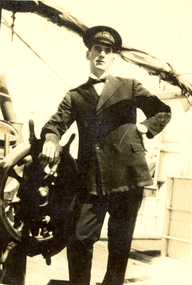
Photograph - Black and White, Frank Wright stands beside a ships wheel
... Frank Wright stands beside a ships wheel...A black and white photo of a man in a suit, cap and bow tie leaning on a ship's wheel. The man is Frank Wright....The Frank Wright Medal at the Royal South Street competition is awarded to an individual recognized as making an outstanding contribution to brass music in Australia. frank wright A black and white photo of a man in a suit, cap and bow tie leaning on a ship's wheel. The man is Frank Wright. Frank Wright stands beside a ships wheel Photograph - Black and White ...Frank Wright was a renown resident of Smeaton, where he was born. He lived at Laura Villa, and attended Smeaton State School. His father William was a gold miner and his mother's name was Sarah. Their family won many singing and instrumental awards. Frank was tutored by Percy Code and was awarded a gold medal for the highest marks in the ALCM examinations in the British Colonies at the age of seventeen years. He became the Australian Open Cornet Champion by the age of eighteen. A year later, Frank conducted the City of Ballarat Band, and later the Ballarat Soldiers’ Memorial Band. He formed the Frank Wright Frisco Band and Frank Wright and his Coliseum Orchestra. These bands won many South Street awards, and Frank as conductor won many awards in the Australian Band Championship contest. In 1933 Frank Wright sailed to England to conduct the famous St Hilda’s Band and was later appointed Musical Director of the London County Council, where he organized many amazing concerts in parks, in and around the London district. He was made Professor of Brass and Military Band Scoring and conducted at the Guildhall of Music and Drama. Frank was often invited to adjudicate Brass Band Championships around Europe, in Australia, including South Street and in New Zealand. The Frank Wright Medal at the Royal South Street competition is awarded to an individual recognized as making an outstanding contribution to brass music in Australia.A black and white photo of a man in a suit, cap and bow tie leaning on a ship's wheel. The man is Frank Wright.frank wright -
 National Wool Museum
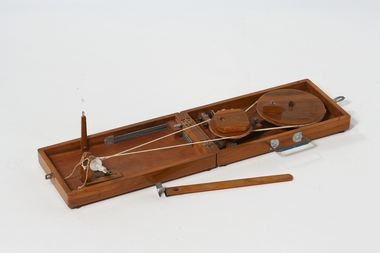
Spinning Wheel, Charka spinning wheel
... Charka spinning wheel...For many years, Mr Zakrzewski collected, researched and repaired spinning wheels from all over the world. This spinning wheel is known a Charka spinning wheel and is from India. ...Charka or Gandhi spinning wheel. Part of the Zakrzewski Collection of hand spinning wheels from around the world. ...For many years, Mr Zakrzewski collected, researched and repaired spinning wheels from all over the world. This spinning wheel is known a Charka spinning wheel and is from India. ...Part of the Zakrzewski Collection of spinning wheels donated to the National Wool Museum by Mr Wlodzimierz Zakrzewski. For many years, Mr Zakrzewski collected, researched and repaired spinning wheels from all over the world. This spinning wheel is known a Charka spinning wheel and is from India. Spinning wheels like this became widely known through their connection with Mahatma Gandhi and are often referred to as Gandhi wheels. Gandhi encouraged people to spin whenever they had the opportunity. He especially advocated their use to India's poor as a means to achieve self-sufficiency and thus combat the growing poverty rate in India after the departure of the British.Charka or Gandhi spinning wheel. Part of the Zakrzewski Collection of hand spinning wheels from around the world. handicrafts - history, spinning wheels, highlights of the national wool museum: the zakrzewski spinning wheel collection - exhibition (28/07/2001 - 02/12/2001), zakrzewski, mr wlodzimierz -
 Melbourne Tram Museum
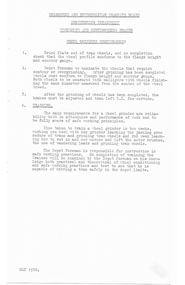
Document - Instruction, Melbourne & Metropolitan Tramways Board (MMTB), "Wheel Grinders Runningsheds and Wheel Grinder Procedure", May. 1970
... "Wheel Grinders Runningsheds and Wheel Grinder Procedure"...Instruction - 4 pages - duplicated foolscap sheets - headed "MMTB Engineering Department - Workshops and Running Shed Branch" - titled "Wheel Grinders Runningsheds and Wheel Grinder Procedure" Details duties of workmen who undertook wheel grinding, training, procedures, preparation, procedure, cutting out of motors, wheel gauges, flanges and notes procedures for trams 750, 751 and 980. ...Trams tramways Depot Safety Workshops Pitmen Instructions Procedures Wheels Instruction - 4 pages - duplicated foolscap sheets - headed "MMTB Engineering Department - Workshops and Running Shed Branch" - titled "Wheel Grinders Runningsheds and Wheel Grinder Procedure" Details duties of workmen who undertook wheel grinding, training, procedures, preparation, procedure, cutting out of motors, wheel gauges, flanges and notes procedures for trams 750, 751 and 980. ...Instruction - 4 pages - duplicated foolscap sheets - headed "MMTB Engineering Department - Workshops and Running Shed Branch" - titled "Wheel Grinders Runningsheds and Wheel Grinder Procedure" Details duties of workmen who undertook wheel grinding, training, procedures, preparation, procedure, cutting out of motors, wheel gauges, flanges and notes procedures for trams 750, 751 and 980. Dated May 1970.trams, tramways, depot, safety, workshops, pitmen, instructions, procedures, wheels -
 Buninyong & District Historical Society
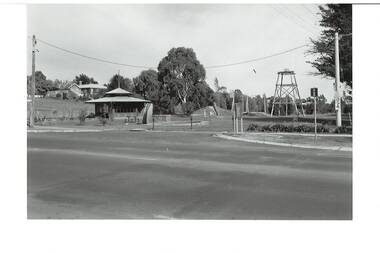
Photograph - Original B/W Photograph, De Soza park, Warrenheip St., Buninyong, with poppet head, rotunda and Chilean Wheel sculpture
... De Soza park, Warrenheip St., Buninyong, with poppet head, rotunda and Chilean Wheel sculpture...The poppet head and Chilean wheel sculpture are representative of the gold mining origins of the town....Original B/W photograph of streetscape of De Soza park frontage to Warrenheip St., Buninyong, with poppet head, rotunda and Chilean Wheel sculpture, former post office in background. ...The poppet head and Chilean wheel sculpture are representative of the gold mining origins of the town. ...De Soza park was developed as a public amenity from the early 1980s. The poppet head and Chilean wheel sculpture are representative of the gold mining origins of the town.The park, located centrally in Buninyong is of social and historic significance.Original B/W photograph of streetscape of De Soza park frontage to Warrenheip St., Buninyong, with poppet head, rotunda and Chilean Wheel sculpture, former post office in background. Large eucalypt tree present behind rotunda, large cypress tree to north of park.buninyong, de soza, park, rotunda, poppet head, sculpture, chilean wheel, post office, warrenheip st, streetscape -
 Slovenian Association Melbourne
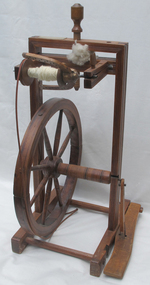
Spinning wheel from 1896, Slovenian Spinning wheel dated 1896, 1896
... Slovenian Spinning wheel dated 1896...Spinning wheel...Slovenian spinning wheel 1896 Gold coloured metal plaque with the inscription Spinning wheel Slovenian Spinning wheel dated 1896 Spinning wheel from 1896 ...Spinning wheelGold coloured metal plaque with the inscriptionslovenian, spinning wheel, 1896 -
 Flagstaff Hill Maritime Museum and Village
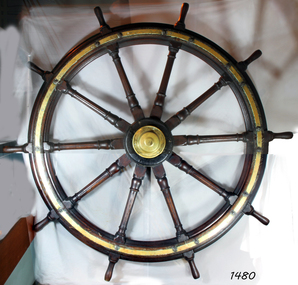
Equipment - Ship's Wheel, 1880s
... This large, ten-spoked wheel is an example of a ca. 1880s ship's wheel used to steer a large sailing ship. ...Ship's wheel: a large ship's wheel made of oak wood and brass. ...This large, ten-spoked wheel is an example of a ca. 1880s ship's wheel used to steer a large sailing ship. ...This large, ten-spoked wheel is an example of a ca. 1880s ship's wheel used to steer a large sailing ship. It was made in England from oak wood and brass by a shipwright.This large, heavy wooden ship's wheel is an example of a late 19th-century, handcrafted wheel used at the helm to steer large sailing ships. The design continues to be used on sailing vessels today. This wheel has been on display for decades to demonstrate the perspective of the size of equipment on a sailing ship.Ship's wheel: a large ship's wheel made of oak wood and brass. It has ten turned, grooved spokes with rounded handles; some are bolted through the centre to the wheel. The hub and inlaid outer reinforcing ring are made of brass. The heavy hub has a metal backing and shaft. The ship's wheel was made in England ca. 1880s.flagstaff hill maritime museum and village, maritime museum, maritime village, great ocean road, shipwreck coast, ship's wheel, 10-spoked ship's wheel, wooden ship's wheel, navigation, ship's steering, ship's steering wheel, maring technology, ship's fitting, navigational equipment, sailing ship's wheel, handcraft, shipwright, large ship's wheel, 19th century, 1880s, oak -
 Buninyong & District Historical Society
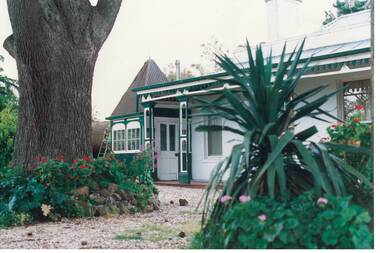
Photograph - Original Photograph, Netherby, front verandah, cedar trees, gazebo and glimpse of ship's boiler, 1991
... Netherby, front verandah, cedar trees, gazebo and glimpse of ship's boiler...Colour photograph, Netherby verandah, cedar trunk, gazebo and glimpse of ship's boiler....historic building Netherby Sparling Verandah Colour photograph, Netherby verandah, cedar trunk, gazebo and glimpse of ship's boiler. Netherby, front verandah, cedar trees, gazebo and glimpse of ship's boiler Photograph Original Photograph ...historic buildingColour photograph, Netherby verandah, cedar trunk, gazebo and glimpse of ship's boiler.netherby, sparling, verandah -
 Mission to Seafarers Victoria
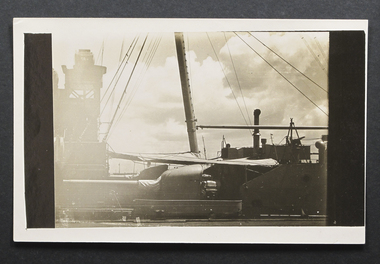
Photograph - Photograph, Sepia, Ship's Deck with Gun
... Ship's Deck with Gun...Small monochrome (sepia) photograph depicting a partial shot of a ship's deck with large gun emplacement ...Found loose in the fan album so likely to have been photographed in 1928. fan album gun warships Small monochrome (sepia) photograph depicting a partial shot of a ship's deck with large gun emplacement Ship's Deck with Gun Photograph Photograph, Sepia ...Found loose in the fan album so likely to have been photographed in 1928.Small monochrome (sepia) photograph depicting a partial shot of a ship's deck with large gun emplacement fan album, gun, warships -
 Federation University Historical Collection
Photograph - Colour Photograph, Neville French at the Potter's Wheel, 14/08/2001
... Neville French at the Potter's Wheel...Neville French at the Potter's Wheel...Neville french pottery ceramics Neville French at the Potter's Wheel Neville French at the Potter's Wheel Photograph Colour Photograph ...Neville French at the Potter's Wheelneville french, pottery, ceramics -
 Lakes Entrance Historical Society
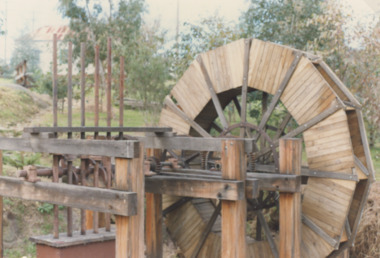
Photograph - Information Centre Orbost Victoria, Water wheel and stamper installed near the Slab Hut, 1989 c
... Water wheel and stamper installed near the Slab Hut ...Also nother photo of water wheel...Also nother photo of water wheel Water wheel and stamper installed near the Slab Hut Photograph Information Centre Orbost Victoria ...Colour photograph of the water wheel installed near the Slab Hut at Information Centre Orbost Victoria. Also nother photo of water wheelcelebrations, people -
 Lakes Entrance Historical Society
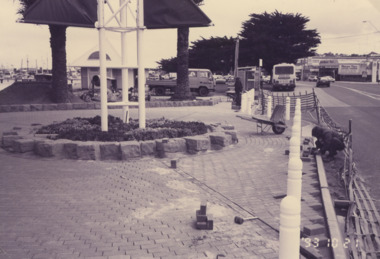
Photograph - Clock Tower and Rotary Wheel Lakes Entrance, Lakes Post Newspaper, 1/11/1993 12:00:00 AM
... Clock Tower and Rotary Wheel Lakes Entrance...Work being completed on the tiling and kerb at the Clock Tower and Rotary Wheel garden showing workmen tiling, view looking towards newly installed palm trees, car park and boat harbour.1993. ...Black and white photograph showing work being completed on the tiling and kerb at the Clock Tower and Rotary Wheel garden with workmen tiling. View looking towards newly installed palm trees, car park and boat harbour, Lakes Entrance Victoria. ...Also another black and white photograph of same area looking towards Post Office and IGA Supermarket 04259.1 size 9 x 12.5 Clock Tower and Rotary Wheel Lakes Entrance Photograph Clock Tower and Rotary Wheel Lakes Entrance Lakes Post Newspaper ...Work being completed on the tiling and kerb at the Clock Tower and Rotary Wheel garden showing workmen tiling, view looking towards newly installed palm trees, car park and boat harbour.1993. Lakes Entrance Victoria. Black and white photograph showing work being completed on the tiling and kerb at the Clock Tower and Rotary Wheel garden with workmen tiling. View looking towards newly installed palm trees, car park and boat harbour, Lakes Entrance Victoria. Also another black and white photograph of same area looking towards Post Office and IGA Supermarket 04259.1 size 9 x 12.5boats and boating, jetties, waterways, civil engineering -
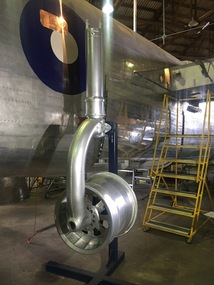 B-24 Liberator Memorial Restoration Australia Inc
Wheel Hub and Leg, Circa 1940s
... Wheel Hub and Leg...Metal wheel hub and leg minus tyre....These wheels were fitted to the B-24 Liberator Metal wheel hub and leg minus tyre. Wheel Hub and Leg Wheel Hub and Leg ...These wheels were fitted to the B-24 LiberatorMetal wheel hub and leg minus tyre. -
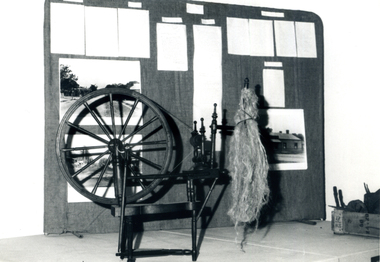 Whitehorse Historical Society Inc.
Photograph, Spinning Wheel in Museum
... Spinning Wheel in Museum...Black and white photo of Spinning Wheel in Museum...museum Black and white photo of Spinning Wheel in Museum Spinning Wheel in Museum Photograph Photograph ...Black and white photo of Spinning Wheel in Museummuseum -
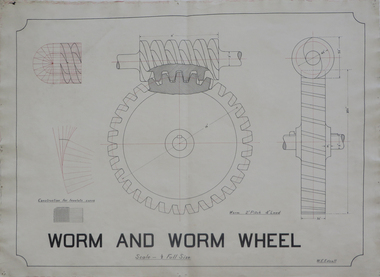 Federation University Historical Collection
Technical drawing, Technical drawing, Worm and Worm Wheel, undated
... Technical drawing, Worm and Worm Wheel...Ink on paper technical drawing: Worn and Worm Wheel ...technical drawing w e edsall worm and worm wheel Ink on paper technical drawing: Worn and Worm Wheel Technical drawing, Worm and Worm Wheel Technical drawing ...Ink on paper technical drawing: Worn and Worm Wheel technical drawing, w e edsall, worm and worm wheel -
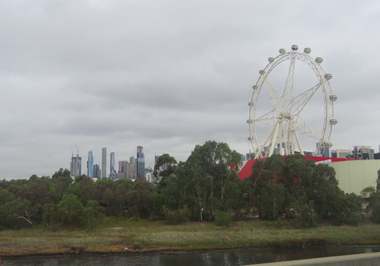 Ballarat Heritage Services
Photorgraphs - Colour, Clare Gervasoni, Melbourne Star Ferris Wheel, 2019, 31/03/2019
... Melbourne Star Ferris Wheel, 2019...Colour photograph of the ferris wheel known as Melbourne Star....melbourne star ferris wheel melbourne Colour photograph of the ferris wheel known as Melbourne Star. ...Colour photograph of the ferris wheel known as Melbourne Star.melbourne star, ferris wheel, melbourne -
 Ballarat Heritage Services
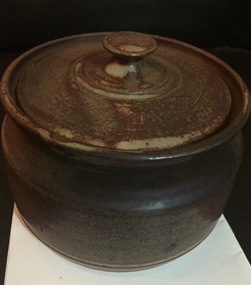
Ceramic - Image, Belltower Pottery, Lidded Wheel Thrown Bowl, c1995
... Lidded Wheel Thrown Bowl...Wheel thrown stoneware bowl with the word 'Nuts' on one side. ...Lidded Wheel Thrown Bowl Ceramic Image Belltower Pottery ...Belltower Pottery was set up by Rudolf Dybka in Kyabram, Victoria, in around 1977 with the help of John Stroomer. Stroomer later took over the pottery, employing as many as 23 workers and apprentices. After a fire in 1988 destroyed the building, Stroomer moved the pottery to the old Kyabram butter factory, where it operated until the late 1990s. Works may be marked with an impressed 'Belltower Pottery' or, after the move to Kyabram, 'Belltower Pottery, Handmade, Kyabram, Vic.'Wheel thrown stoneware bowl with the word 'Nuts' on one side. pottery, belltower pottery, rudolf dybka, john stroomer -
 Ballarat Tramway Museum
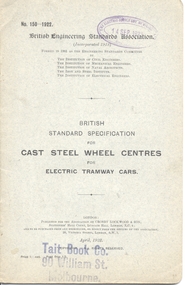
Book, British Engineering Standards Association, "Cast Steel Wheel Centres for Electric Tramcars", "Wrought Iron Wheel Centres for Electric Tramcars", 1922
... "Cast Steel Wheel Centres for Electric Tramcars", "Wrought Iron Wheel Centres for Electric Tramcars"....1 - Book - 20 pages + light grey cover, issued by the British Engineering Standards Association, British Standard Specification for "Cast Steel Wheel Centres for Electric Tramcars". Dated April 1922. ...Provides materials specification, testing and an index. "Cast Steel Wheel Centres for Electric Tramcars", "Wrought Iron Wheel Centres for Electric Tramcars" Book British Engineering Standards Association ....1 - Book - 20 pages + light grey cover, issued by the British Engineering Standards Association, British Standard Specification for "Cast Steel Wheel Centres for Electric Tramcars". Dated April 1922. Has standard Number 150-1922. Provides materials specification, testing and an index. .2 - Book - 16 pages + light grey cover, issued by the British Engineering Standards Association, British Standard Specification for "Wrought Iron Wheel Centres for Electric Tramcars". Dated April 1922. Has standard Number 149-1922. Provides materials specification, testing and an index. Both copies has the stamp of the "Tait Book Co. 90 William St. Melbourne" on the lower edge and in the top right corner, the ESCo Ballarat company stamp and the date "14 September 1923". trams, tramways, tramways, electrical equipment, wheels -
 Mission to Seafarers Victoria
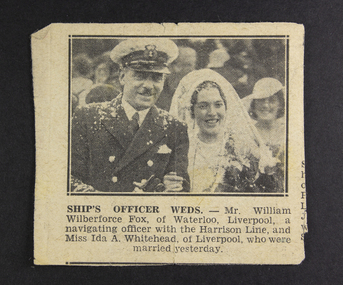
Article - Newspape clipping, Ship's Officer Weds
... Ship's Officer Weds...Newspaper clipping, slightly faded paper. Photo of Ship's officer William Wilberforce Fox and his bride Ida A. ...Name and date of newspaper unknown. Ship's Officer Weds Article Newspape clipping ...Newspaper clipping, slightly faded paper. Photo of Ship's officer William Wilberforce Fox and his bride Ida A. Whitehead. Brief text beneath photo. Name and date of newspaper unknown.charles page, seaman -
 Federation University Historical Collection
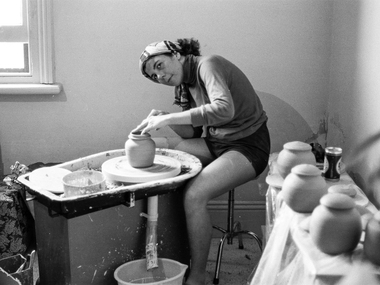
Photograph - Portrait, Jan Feder at a Pottery Wheel
... Jan Feder at a Pottery Wheel...Black and white photographic portrait of Jan sitting at a pottery wheel throwing a pot....After her untimely death the staff and students created a memorial ceramics collection in her honour. jan feder jan feder memorial ceramics collection jan lorraine feder alumni Black and white photographic portrait of Jan sitting at a pottery wheel throwing a pot. Jan Feder at a Pottery Wheel Photograph Portrait ...Jan Feder studied Ceramics at the Gippsland Centre for Art and Design. After her untimely death the staff and students created a memorial ceramics collection in her honour. Black and white photographic portrait of Jan sitting at a pottery wheel throwing a pot.jan feder, jan feder memorial ceramics collection, jan lorraine feder, alumni -
 Department of Energy, Environment and Climate Action
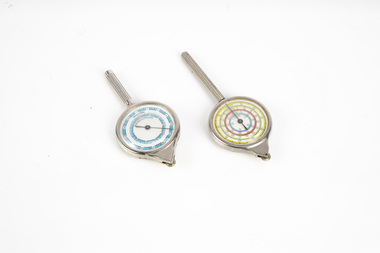
map measuring wheels
... The map wheel is a simple, fast and accurate way to measure distances on maps, whether in straight lines or along curves. ...Two metal map measuring wheel s...Map scales on each side of wheel...Forests Commission Victoria (FCV) Surveying mapping Map scales on each side of wheel Two metal map measuring wheel s map measuring wheels ...The map wheel is a simple, fast and accurate way to measure distances on maps, whether in straight lines or along curves. Hold the device from the tip and trace with the small wheel at the bottom along the line to be measured Measures distances in miles, kilometres or nautical miles depending on the scale on the side.Two metal map measuring wheel sMap scales on each side of wheelforests commission victoria (fcv), surveying, mapping -
 Stawell Historical Society Inc
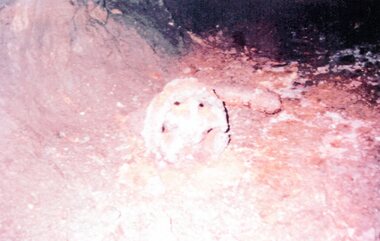
Photograph, Trolly Wheel found underground when mine reopened
... Trolly Wheel found underground when mine reopened...Trolly wheel found underground when mine workings re-opened 1982-1983. ...Trolly wheel found underground when mine workings re-opened 1982-1983. ...Trolly wheel found underground when mine workings re-opened 1982-1983. There is a trolly wheel in the Stawell historical collection.Colour Photograph of underground mine shaft containing relics used in miningstawell -
 Falls Creek Historical Society
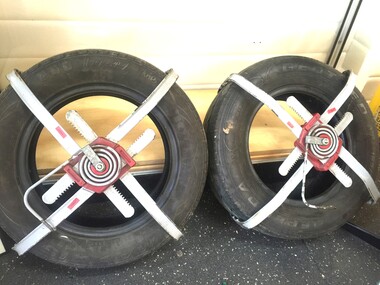
Functional object - Early Knipetak Snow Wheel Clamps, 1970s
... Early Knipetak Snow Wheel Clamps...A set of Norwegian manufactured wheel clamps for safe driving in snow and icy conditions. ...Early Knipetak Snow Wheel Clamps Functional object Early Knipetak Snow Wheel Clamps ...These clamps were invented by Egil E Hyggen in 1968, for which he was awarded a major design prize in Norway. According to the company which manufactured them, Christiana Spigerverk, they ended production in the mid 1980s but were available in many countries for much longer.This item is significant because it shows how snow driving safety has evolved over time.A set of Norwegian manufactured wheel clamps for safe driving in snow and icy conditions. They are displayed with a poster explaining application.wheel clamps, snow driving safety, snow grips, snow chains and safety 1970s -
 Ballarat Heritage Services
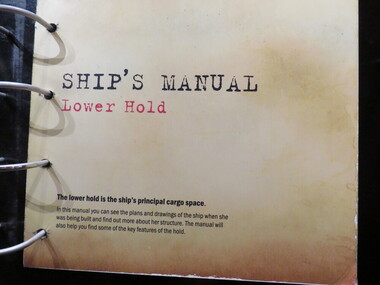
Photograph - Colour, Cutty Sark Vessel and Exhibition (Ship's Manual), Greenwich, England, 6 November 2016
... Cutty Sark Vessel and Exhibition (Ship's Manual), Greenwich, England...The Cutty Sark was the first ship to reach London with a tea cargo in 1877. ...The Cutty Sark was the first ship to reach London with a tea cargo in 1877. ...The Cutty Sark was launched on 22 November 1869. She was named by the wife of George Moodie, the ship's first master who had also supervised her construction. Cutty Sark left the Clyde on 13 January 1870. A month and two days later, she set sail from London for China. Cutty sark was designed and built by Scott & Linton of Dumbarton for 16,150 pounds. But much of the money was to be paid by Willis when the ship was launched. Just before they finished her, Scott & Linton ran out of money and went bankrupt. She was completed by William Denny & Brothers. The Cutty Sark was the first ship to reach London with a tea cargo in 1877. But she was one of only nine sailing ships that returned that year - in 1870 there had been 59. Steamships were now dominating the tea trade. In 1883 the Cutty Sark joined the booming trade in transporting Australian wool. Every year until 1895 she set out in the summer for Australia, to load a cargo of wool bales and return to England in time for the wool sales ini the first three months of the new year. Cutty Sark soon established herself as the fastest of the wool clippers. Under her last master, Richard Woodget she set record times of 70 days or less for the voyage which no other sailing ships could match.cutty sar, exhibition, wool, australia, china, sailing, woodget, moodie, london, willis, dumbarton, scott & linton, william denny, tea, cargo, immigration, trade -
 Ballarat Heritage Services
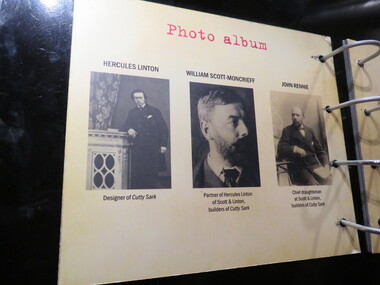
Photograph - Colour, Cutty Sark vessel and exhibition (Ship's Manual), Greenwich, England, 6 November 2016
... Cutty Sark vessel and exhibition (Ship's Manual), Greenwich, England...The Cutty Sark was the first ship to reach London with a tea cargo in 1877. ...The Cutty Sark was the first ship to reach London with a tea cargo in 1877. ...The Cutty Sark was launched on 22 November 1869. She was named by the wife of George Moodie, the ship's first master who had also supervised her construction. Cutty Sark left the Clyde on 13 January 1870. A month and two days later, she set sail from London for China. Cutty sark was designed and built by Scott & Linton of Dumbarton for 16,150 pounds. But much of the money was to be paid by Willis when the ship was launched. Just before they finished her, Scott & Linton ran out of money and went bankrupt. She was completed by William Denny & Brothers. The Cutty Sark was the first ship to reach London with a tea cargo in 1877. But she was one of only nine sailing ships that returned that year - in 1870 there had been 59. Steamships were now dominating the tea trade. In 1883 the Cutty Sark joined the booming trade in transporting Australian wool. Every year until 1895 she set out in the summer for Australia, to load a cargo of wool bales and return to England in time for the wool sales ini the first three months of the new year. Cutty Sark soon established herself as the fastest of the wool clippers. Under her last master, Richard Woodget she set record times of 70 days or less for the voyage which no other sailing ships could match.cutty sark, exhibition, wool, australia, china, sailing, woodget, moodie, london, willis, dumbarton, scott & linton, william denny, tea, cargo, immigration, trade
