
Showing 60 items matching "sport - hockey"
-
 Orbost & District Historical Society
black and white photographs, Brown , G, first half 20th century
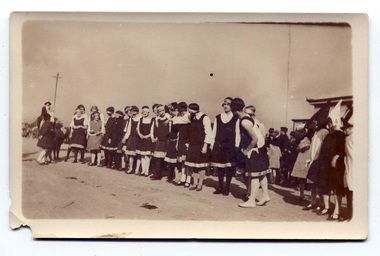
... sport-hockey-Orbost recreation...This is a pictorial record reflecting the importance of sport in Orbost society. sport-hockey-Orbost recreation 3155.2 - on back - "Girls Hockey Team Orbost V Newmerella Newmerella won" Two black / white photograph / postcards of a group of girls dressed in sports uniforms. ...This photograph is probably of school teams.This is a pictorial record reflecting the importance of sport in Orbost society.Two black / white photograph / postcards of a group of girls dressed in sports uniforms. In photograph 3155.2 a man is holding a drum stick and another a drum. There are two other men on the left. All men are wearing suits.3155.2 - on back - "Girls Hockey Team Orbost V Newmerella Newmerella won"sport-hockey-orbost recreation -
 Port Melbourne Historical & Preservation Society
Article - Newspaper cutting, Mr J Mathews of Esk Street and his corella
... ...Sport - Hockey...The Mathews family have been in continuous ownership of 395 Howe Parade (was 8 Howe Parade until 1964 when addresses re-assigned), Port Melbourne from 1938 to the present (Sept 2019) Domestic life Sport - Hockey Alan Mathews J Mathews Six folders of assorted documents relating to the life of Alan Mathews and his family. ...The Mathews family have been in continuous ownership of 395 Howe Parade (was 8 Howe Parade until 1964 when addresses re-assigned), Port Melbourne from 1938 to the present (Sept 2019)Six folders of assorted documents relating to the life of Alan Mathews and his family. Newspaper cutting of article and photo of Mr J Mathews of Esk St (??) and his corella bird. Hand written notice above articledomestic life, sport - hockey, alan mathews, j mathews -
Camberwell Historical Society
Book, Mike Craig, A History of the Camberwell Hockey Club 1932-1982, 1982
... sport...hockey...camberwell sport hockey Published in 1982 presenting a history of the Hockey club over the past 50 years A History of the Camberwell Hockey Club 1932-1982 Book Book Mike Craig ...Published in 1982 presenting a history of the Hockey club over the past 50 yearscamberwell, sport, hockey -
 Ruyton Girls' School
Photograph, Ruyton Girls' School, 1951
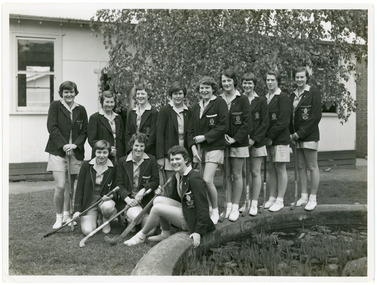
... ...Hockey...Sport...Ruyton Girls' School Ruyton Hockey Sport School Sport Field Hockey Kew Melbourne Girls School Students School Uniform Reverse: Felicity Jacobs / Ann Dickinson / RGS011/1951/0002 / Black and white rectangular photograph printed on matte photographic paper. ...The photograph depicts 12 young women students who were part of the 1951 Ruyton Girls' School hockey team. The students are all dressed in light coloured shorts with a collared, buttoned blouse, wool blazers, white socks and white sneakers. Three girls are kneeling in the front row, and nine are standing up in the back row. All of the students are holding their own hockey stick. The photograph was taken on School grounds, next to a pond which is no longer in existence at Ruyton. The idea of field hockey for female players was brought to Victoria by two sisters, Lillian and Margaret Irving, who had first seen girls playing it during their travels in England in 1902. By 1903, the Irving sisters were joint headmistresses of Lauriston, a school they had founded two years earlier. Both had deep connections to Ruyton Girls' School through their time as teachers at the older school during the 1880s-1890s. For Lilian Irving, this had included seven years as Ruyton's co-Principal with Miss Eliza Bromby from 1888-1895. With these links it was only natural that Ruyton students would join Lauriston to try out the new game. On a vacant block on the corner of Mercer and Malvern Roads, students from Ruyton and Lauriston Girls' Schools had assembled to play Victoria’s first ever inter-school hockey match for girls. Some students from Melbourne Girls' Grammar School came along to watch the spectacle and assess the new game's potential. Hockey quickly caught on, and friendly games were soon being played amongst a number of Melbourne's girls' schools. An Association was formed in 1905, and the rules formalised. These included arrangements around the competition fixture and the length of games (35 minutes for each half). In celebration of their joint role in bringing field hockey to Victorian school girls, Ruyton and Lauriston have met for friendly re-enactment matches in 2003 and 2018. The photograph also illustrates the shift in hockey uniform and apparatus. In the early 1920s, Ruyton established instructions for playing attire: "skirts must be eight inches off the ground. No white petticoats...", and importantly, least any team get an unfair advantage, "hard-rimmed hats and hatpins must not be worn during play." Ruyton appears to have taken the latter instruction to heart, and adopted the soft tam o’shanter hat as seen in surviving photographs of early teams. The tam o’shanter may have been removed for play, but the blouse and long skirt had to be put up with. According to Lilian Irving they had "a horrid habit of parting company", and she was delighted to see the transition to a more comfortable tunic in later years. Another change she observed was the hockey stick itself, which originally were all of "uniform thickness from handle to head, about the thickness of a stout walking stick" and so very different from the hockey sticks that are used today.The record has strong historic significance as it depicts a former notable student, Helen Gordon (maiden name Cole), pictured third from the right in the front row. Helen started at Little Ruyton in Prep 1940 and finished Year 12 in 1952 as School Captain, Bromby Captain, Form Captain for Matric, Tennis Captain, Hockey Captain, Swimming Vice Captain, and an award for Best All-Round Girl. She also played baseball for Victoria. After finishing school, Helen went on to graduate from the University of Melbourne as a physiotherapist in 1956. Her first position at age 19 involved setting up clinics with the Victorian Health Department Poliomyelitis Rural division. Helen’s strong ties to Ruyton continued when she held the position of President of the Old Ruytonians’ Association from the start of 1966 to the end of 1967. In 2019, Helen received an Order of Australia Medal for service to community health as a physiotherapist. She was also the recipient of the 2022 Victorian Senior Achiever Award at Parliament House. Helen passed away in July 2023 at age 88. The record's significance is further enhanced by its strong provenance, having been produced by Ruyton Girls' School and donated to the Archives by a familial connection.Black and white rectangular photograph printed on matte photographic paper.Reverse: Felicity Jacobs / Ann Dickinson / RGS011/1951/0002 /ruyton girls' school, ruyton, hockey, sport, school sport, field hockey, kew, melbourne, girls school, students, school uniform -
 Orbost & District Historical Society
book, Orbost Women's Hockey 1963-1993
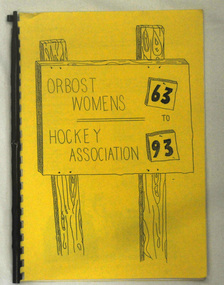
... sport recreation hockey-women's-orbost...This is a local history book produced by a local sporting club. sport recreation hockey-women's-orbost A spiral bound book of 18 pp with a yellow cover. ...This is a local history book produced by a local sporting club.A spiral bound book of 18 pp with a yellow cover. It is titled Orbost Women's Hockey Association 63 to 93. There are hand drawings on the front cover.sport recreation hockey-women's-orbost -
Glen Eira Historical Society
Book - Cromarty School For Girls
... Sport... Archery... Hockey...Mayor’s Gardiner Family Home Tennis Sport Archery Hockey Basketball Swimming St. Clement’s Elsternwick School Rooms School Plays Book Cromarty School For Girls ...Cromarty School for Girls 1897-1923. An 83 page book giving the beginnings of the school and detailed history on its founders, the Misses Day. Includes various locations of school premises, where sporting activities took place. Details on most former students attainments. The involvement of past students over fifty years in the Cromarty Old Girls Association, reminiscences and achievement of students’ children and great grandchildren. Also included is an alphabetical history if names extracted from the history by Andrew Frederick.cromarty school for girls, schools, milne barbara w., mckellar doris w., day louisa, mcclure jennifer, sandham street, elsternwick congregational church, cromarty old girls association, orrong road, elsternwick, day jane, day annie, union church caulfield, carton maurice m., teachers, carinya, house names, groves john rev., m.l.c. hawthorn, gladstone parade, elsternwick, maysbury, glenhuntly road, beauchamp horatio, chistlehurst, staniland grove, mansions, king street, congregational hall, halls, deasey miss, allen richard, kooyong, m.l.c. elsternwick, elsternwick croquet club, tait ethel m., lilley florence, evans maud, mccowan jeannie, hall v. mrs., mayor’s, gardiner family home, tennis, sport, archery, hockey, basketball, swimming, st. clement’s elsternwick, school rooms, school plays -
 Federation University Historical Collection
Photograph - Black and White, Ballarat SChool of Mines Hockey - Boys versus Girls
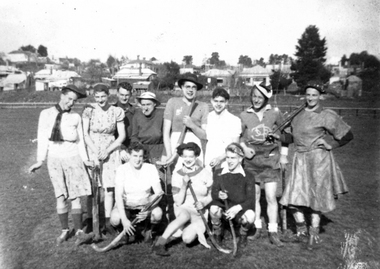
... ...hockey...sport...ballarat school of mines White flat hockey sport Black and white photograph of hockey players on White Flat Oval. ...Black and white photograph of hockey players on White Flat Oval. Some boys are dressed as girls. ballarat school of mines, white flat, hockey, sport -
 Orbost & District Historical Society
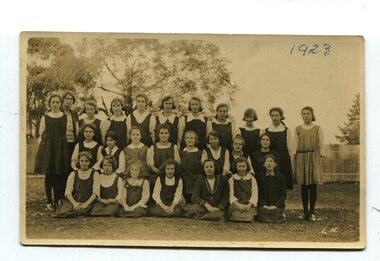
black and white photographs, 1923
... sport-orbost recreation-hockey orbost-elementary-high...These photographs are representative of its history.They are also associated with sport in Orbost in the first half of the 20th century. sport-orbost recreation-hockey orbost-elementary-high 3160.3 - on back - Pen 6 Mary 4 Marion Gilberts 4 14 @ 5/- day Four black / white photographs. 3160.1 is of three rows of young girls in uniforms - possibly sports uniforms. ...3160.1 - front row right - Bet Gilbert P. Richardson. 3160.4 - back - Alice Hammill; Marion Nixon; Bel Kerr; ?; Annie Malcolm; E Gall front - Marion Gilbert; Pen Gilbert; Elsie Pardew; Jean Frewin 1923 These photographs are of students of Orbost Elementary High School. . During 1910-11 the first approaches were made to the Department for the establishment of a HES in Orbost and this became a reality in 1912. Orbost HES supplied post-primary education in the district until a high school was built in 1948. Orbost High School / Orbost Secondary College has played a significant part in the education of senior students in the Orbost district . It is the sole senior educational institution. These photographs are representative of its history.They are also associated with sport in Orbost in the first half of the 20th century.Four black / white photographs. 3160.1 is of three rows of young girls in uniforms - possibly sports uniforms. In the back row standing second left is an older woman - a teacher. 3160.2 is of two rows of girls in uniforms. Each girl in the front row is holding a hockey stick. A small square has been cut out - the head of the girl in the middle of front row. 3160.3 and 3160.4 show two rows of girls - the front row sitting and the back standing. There is a trophy on the ground middle front. all photographs have been taken outside.3160.3 - on back - Pen 6 Mary 4 Marion Gilberts 4 14 @ 5/- day sport-orbost recreation-hockey orbost-elementary-high -
 Galen Catholic College
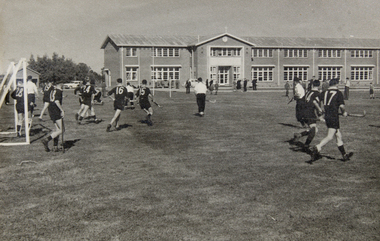
Champagnat College Hockey Match, 1955
... ...Hockey...Sport...Champagnat College Galen Catholic College Galen College Hockey Sport Inaugural Year 1955 Champagnat College Hockey Match, 1955 Champagnat College Hockey Match, 1955 ...champagnat college, galen catholic college, galen college, hockey, sport, inaugural year, 1955 -
 St Kilda Historical Society
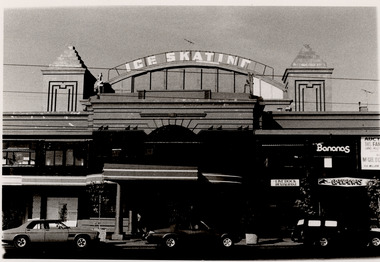
Photograph - Building, St Moritz Ice Skating Rink, c1970s
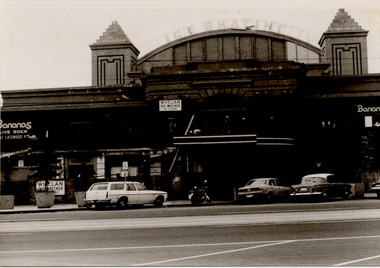
... As one of only two ice rinks in Melbourne in the 1940s and 1950s, it played a central role to the sport of ice hockey in Australia. Closed in 1982, it soon suffered a major fire and was then demolished, an event later seen as a major blow to the heritage of St Kilda. ...As one of only two ice rinks in Melbourne in the 1940s and 1950s, it played a central role to the sport of ice hockey in Australia. Closed in 1982, it soon suffered a major fire and was then demolished, an event later seen as a major blow to the heritage of St Kilda. ...The St. Moritz Ice Rink was a popular ice skating rink on The Esplanade, St. Kilda, Victoria. It operated between 1939–1981. As one of only two ice rinks in Melbourne in the 1940s and 1950s, it played a central role to the sport of ice hockey in Australia. Closed in 1982, it soon suffered a major fire and was then demolished, an event later seen as a major blow to the heritage of St Kilda. It was first built as the Wattle Path Palais de Danse in 1922, a very large dance hall, designed by architects Beaver & Purnell, The Wattle Path was the venue for the first all-Australian dance championship, and featured some of the best dance bands of Australia, as well as from America. Popular throughout the 1920s, it suffered due to the Great Depression, and closed in the early 1930s. From 1933-1936 the building became a film studio, Efftee Studios, for Frank W. Thring. In 1938, businessman Henry Hans "Harry" Kleiner announced that the Wattle Path would become an ice rink. He was sole proprietor until 1953, when he sold the business to J. Gordon and T. Molony, both champion skaters. Trade declined during the 1970s. The building was sold in 1980 to developers Hudson Conway and trucking magnate Lindsay Fox and was closed in early 1982. It was nominated to the Historic Buildings Preservation Council, but a majority of City of St Kilda councillors voted to oppose this action and uphold a demolition permit already issued. The building infamously suffered a fire later that year, leaving only the facades, which were demolished soon after. The site remained vacant until about 1991, when a mid-price hotel called the St Moritz was constructed. By 1993 it was simply called the Novotel St Kilda. The hotel closed in 2019 and was replaced by an apartment complex.Black and white photograph, unmounteddavid rae collection, st kilda, st moritz -
 St Kilda Historical Society
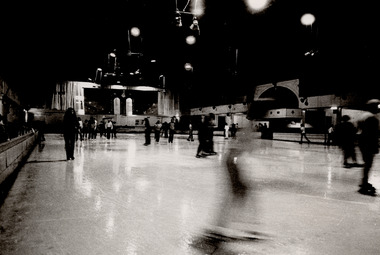
Photograph - Leisure activity, St Kilda Shout Collective, St Moritz Ice Skating Rink, 1980
... As one of only two ice rinks in Melbourne in the 1940s and 1950s, it played a central role to the sport of ice hockey in Australia. Closed in 1982, it soon suffered a major fire and was then demolished, an event later seen as a major blow to the heritage of St Kilda. ...As one of only two ice rinks in Melbourne in the 1940s and 1950s, it played a central role to the sport of ice hockey in Australia. Closed in 1982, it soon suffered a major fire and was then demolished, an event later seen as a major blow to the heritage of St Kilda. ...The St. Moritz Ice Rink was a popular ice skating rink on The Esplanade, St. Kilda, Victoria. It operated between 1939–1981. As one of only two ice rinks in Melbourne in the 1940s and 1950s, it played a central role to the sport of ice hockey in Australia. Closed in 1982, it soon suffered a major fire and was then demolished, an event later seen as a major blow to the heritage of St Kilda. It was first built as the Wattle Path Palais de Danse in 1922, a very large dance hall, designed by architects Beaver & Purnell, The Wattle Path was the venue for the first all-Australian dance championship, and featured some of the best dance bands of Australia, as well as from America. Popular throughout the 1920s, it suffered due to the Great Depression, and closed in the early 1930s. From 1933-1936 the building became a film studio, Efftee Studios, for Frank W. Thring. In 1938, businessman Henry Hans "Harry" Kleiner announced that the Wattle Path would become an ice rink. He was sole proprietor until 1953, when he sold the business to J. Gordon and T. Molony, both champion skaters. Trade declined during the 1970s. The building was sold in 1980 to developers Hudson Conway and trucking magnate Lindsay Fox and was closed in early 1982. It was nominated to the Historic Buildings Preservation Council, but a majority of City of St Kilda councillors voted to oppose this action and uphold a demolition permit already issued. The building infamously suffered a fire later that year, leaving only the facades, which were demolished soon after. The site remained vacant until about 1991, when a mid-price hotel called the St Moritz was constructed. By 1993 it was simply called the Novotel St Kilda. The hotel closed in 2019 and was replaced by an apartment complex.Black and white photograph, unmounteddavid rae collection, st kilda, st moritz -
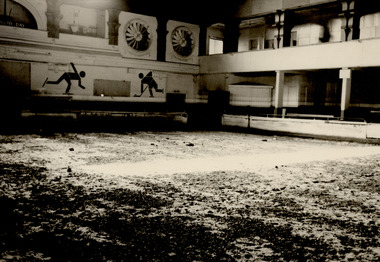 St Kilda Historical Society
Photograph - Leisure activity, St Moritz Ice Skating Rink, c1980s
... As one of only two ice rinks in Melbourne in the 1940s and 1950s, it played a central role to the sport of ice hockey in Australia. Closed in 1982, it soon suffered a major fire and was then demolished, an event later seen as a major blow to the heritage of St Kilda. ...As one of only two ice rinks in Melbourne in the 1940s and 1950s, it played a central role to the sport of ice hockey in Australia. Closed in 1982, it soon suffered a major fire and was then demolished, an event later seen as a major blow to the heritage of St Kilda. ...The St. Moritz Ice Rink was a popular ice skating rink on The Esplanade, St. Kilda, Victoria. It operated between 1939–1981. As one of only two ice rinks in Melbourne in the 1940s and 1950s, it played a central role to the sport of ice hockey in Australia. Closed in 1982, it soon suffered a major fire and was then demolished, an event later seen as a major blow to the heritage of St Kilda. It was first built as the Wattle Path Palais de Danse in 1922, a very large dance hall, designed by architects Beaver & Purnell, The Wattle Path was the venue for the first all-Australian dance championship, and featured some of the best dance bands of Australia, as well as from America. Popular throughout the 1920s, it suffered due to the Great Depression, and closed in the early 1930s. From 1933-1936 the building became a film studio, Efftee Studios, for Frank W. Thring. In 1938, businessman Henry Hans "Harry" Kleiner announced that the Wattle Path would become an ice rink. He was sole proprietor until 1953, when he sold the business to J. Gordon and T. Molony, both champion skaters. Trade declined during the 1970s. The building was sold in 1980 to developers Hudson Conway and trucking magnate Lindsay Fox and was closed in early 1982. It was nominated to the Historic Buildings Preservation Council, but a majority of City of St Kilda councillors voted to oppose this action and uphold a demolition permit already issued. The building infamously suffered a fire later that year, leaving only the facades, which were demolished soon after. The site remained vacant until about 1991, when a mid-price hotel called the St Moritz was constructed. By 1993 it was simply called the Novotel St Kilda. The hotel closed in 2019 and was replaced by an apartment complex.Black and white photograph, unmounteddavid rae collection, st kilda, st moritz -
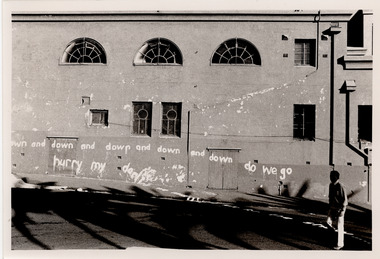 St Kilda Historical Society
Photograph - Building, St Moritz Ice Skating Rink, c1980s
... As one of only two ice rinks in Melbourne in the 1940s and 1950s, it played a central role to the sport of ice hockey in Australia. Closed in 1982, it soon suffered a major fire and was then demolished, an event later seen as a major blow to the heritage of St Kilda. ...As one of only two ice rinks in Melbourne in the 1940s and 1950s, it played a central role to the sport of ice hockey in Australia. Closed in 1982, it soon suffered a major fire and was then demolished, an event later seen as a major blow to the heritage of St Kilda. ...The St. Moritz Ice Rink was a popular ice skating rink on The Esplanade, St. Kilda, Victoria. It operated between 1939–1981. As one of only two ice rinks in Melbourne in the 1940s and 1950s, it played a central role to the sport of ice hockey in Australia. Closed in 1982, it soon suffered a major fire and was then demolished, an event later seen as a major blow to the heritage of St Kilda. It was first built as the Wattle Path Palais de Danse in 1922, a very large dance hall, designed by architects Beaver & Purnell, The Wattle Path was the venue for the first all-Australian dance championship, and featured some of the best dance bands of Australia, as well as from America. Popular throughout the 1920s, it suffered due to the Great Depression, and closed in the early 1930s. From 1933-1936 the building became a film studio, Efftee Studios, for Frank W. Thring. In 1938, businessman Henry Hans "Harry" Kleiner announced that the Wattle Path would become an ice rink. He was sole proprietor until 1953, when he sold the business to J. Gordon and T. Molony, both champion skaters. Trade declined during the 1970s. The building was sold in 1980 to developers Hudson Conway and trucking magnate Lindsay Fox and was closed in early 1982. It was nominated to the Historic Buildings Preservation Council, but a majority of City of St Kilda councillors voted to oppose this action and uphold a demolition permit already issued. The building infamously suffered a fire later that year, leaving only the facades, which were demolished soon after. The site remained vacant until about 1991, when a mid-price hotel called the St Moritz was constructed. By 1993 it was simply called the Novotel St Kilda. The hotel closed in 2019 and was replaced by an apartment complex.Black and white photograph, unmounteddavid rae collection, st kilda, st moritz -
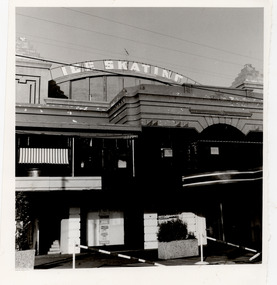 St Kilda Historical Society
Photograph - Building, St Moritz Ice Skating Rink, c1980s
... As one of only two ice rinks in Melbourne in the 1940s and 1950s, it played a central role to the sport of ice hockey in Australia. Closed in 1982, it soon suffered a major fire and was then demolished, an event later seen as a major blow to the heritage of St Kilda. ...As one of only two ice rinks in Melbourne in the 1940s and 1950s, it played a central role to the sport of ice hockey in Australia. Closed in 1982, it soon suffered a major fire and was then demolished, an event later seen as a major blow to the heritage of St Kilda. ...The St. Moritz Ice Rink was a popular ice skating rink on The Esplanade, St. Kilda, Victoria. It operated between 1939–1981. As one of only two ice rinks in Melbourne in the 1940s and 1950s, it played a central role to the sport of ice hockey in Australia. Closed in 1982, it soon suffered a major fire and was then demolished, an event later seen as a major blow to the heritage of St Kilda. It was first built as the Wattle Path Palais de Danse in 1922, a very large dance hall, designed by architects Beaver & Purnell, The Wattle Path was the venue for the first all-Australian dance championship, and featured some of the best dance bands of Australia, as well as from America. Popular throughout the 1920s, it suffered due to the Great Depression, and closed in the early 1930s. From 1933-1936 the building became a film studio, Efftee Studios, for Frank W. Thring. In 1938, businessman Henry Hans "Harry" Kleiner announced that the Wattle Path would become an ice rink. He was sole proprietor until 1953, when he sold the business to J. Gordon and T. Molony, both champion skaters. Trade declined during the 1970s. The building was sold in 1980 to developers Hudson Conway and trucking magnate Lindsay Fox and was closed in early 1982. It was nominated to the Historic Buildings Preservation Council, but a majority of City of St Kilda councillors voted to oppose this action and uphold a demolition permit already issued. The building infamously suffered a fire later that year, leaving only the facades, which were demolished soon after. The site remained vacant until about 1991, when a mid-price hotel called the St Moritz was constructed. By 1993 it was simply called the Novotel St Kilda. The hotel closed in 2019 and was replaced by an apartment complex.Black and white photograph, unmounteddavid rae collection, st kilda, st moritz -
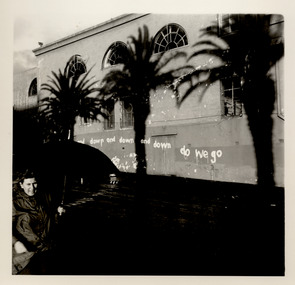 St Kilda Historical Society
Photograph - Photograph Building, St Moritz Ice Skating Rink, c1980s
... As one of only two ice rinks in Melbourne in the 1940s and 1950s, it played a central role to the sport of ice hockey in Australia. Closed in 1982, it soon suffered a major fire and was then demolished, an event later seen as a major blow to the heritage of St Kilda. ...As one of only two ice rinks in Melbourne in the 1940s and 1950s, it played a central role to the sport of ice hockey in Australia. Closed in 1982, it soon suffered a major fire and was then demolished, an event later seen as a major blow to the heritage of St Kilda. ...The St. Moritz Ice Rink was a popular ice skating rink on The Esplanade, St. Kilda, Victoria. It operated between 1939–1981. As one of only two ice rinks in Melbourne in the 1940s and 1950s, it played a central role to the sport of ice hockey in Australia. Closed in 1982, it soon suffered a major fire and was then demolished, an event later seen as a major blow to the heritage of St Kilda. It was first built as the Wattle Path Palais de Danse in 1922, a very large dance hall, designed by architects Beaver & Purnell, The Wattle Path was the venue for the first all-Australian dance championship, and featured some of the best dance bands of Australia, as well as from America. Popular throughout the 1920s, it suffered due to the Great Depression, and closed in the early 1930s. From 1933-1936 the building became a film studio, Efftee Studios, for Frank W. Thring. In 1938, businessman Henry Hans "Harry" Kleiner announced that the Wattle Path would become an ice rink. He was sole proprietor until 1953, when he sold the business to J. Gordon and T. Molony, both champion skaters. Trade declined during the 1970s. The building was sold in 1980 to developers Hudson Conway and trucking magnate Lindsay Fox and was closed in early 1982. It was nominated to the Historic Buildings Preservation Council, but a majority of City of St Kilda councillors voted to oppose this action and uphold a demolition permit already issued. The building infamously suffered a fire later that year, leaving only the facades, which were demolished soon after. The site remained vacant until about 1991, when a mid-price hotel called the St Moritz was constructed. By 1993 it was simply called the Novotel St Kilda. The hotel closed in 2019 and was replaced by an apartment complex.Black and white photograph, unmounteddavid rae collection, st kilda, st moritz -
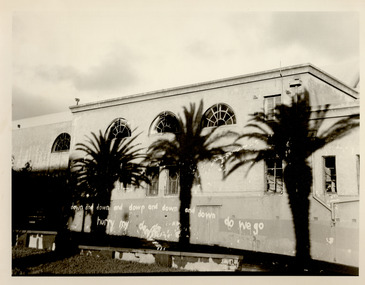 St Kilda Historical Society
Photograph - Building, St Moritz Ice Skating Rink, c1980s
... As one of only two ice rinks in Melbourne in the 1940s and 1950s, it played a central role to the sport of ice hockey in Australia. Closed in 1982, it soon suffered a major fire and was then demolished, an event later seen as a major blow to the heritage of St Kilda. ...As one of only two ice rinks in Melbourne in the 1940s and 1950s, it played a central role to the sport of ice hockey in Australia. Closed in 1982, it soon suffered a major fire and was then demolished, an event later seen as a major blow to the heritage of St Kilda. ...The St. Moritz Ice Rink was a popular ice skating rink on The Esplanade, St. Kilda, Victoria. It operated between 1939–1981. As one of only two ice rinks in Melbourne in the 1940s and 1950s, it played a central role to the sport of ice hockey in Australia. Closed in 1982, it soon suffered a major fire and was then demolished, an event later seen as a major blow to the heritage of St Kilda. It was first built as the Wattle Path Palais de Danse in 1922, a very large dance hall, designed by architects Beaver & Purnell, The Wattle Path was the venue for the first all-Australian dance championship, and featured some of the best dance bands of Australia, as well as from America. Popular throughout the 1920s, it suffered due to the Great Depression, and closed in the early 1930s. From 1933-1936 the building became a film studio, Efftee Studios, for Frank W. Thring. In 1938, businessman Henry Hans "Harry" Kleiner announced that the Wattle Path would become an ice rink. He was sole proprietor until 1953, when he sold the business to J. Gordon and T. Molony, both champion skaters. Trade declined during the 1970s. The building was sold in 1980 to developers Hudson Conway and trucking magnate Lindsay Fox and was closed in early 1982. It was nominated to the Historic Buildings Preservation Council, but a majority of City of St Kilda councillors voted to oppose this action and uphold a demolition permit already issued. The building infamously suffered a fire later that year, leaving only the facades, which were demolished soon after. The site remained vacant until about 1991, when a mid-price hotel called the St Moritz was constructed. By 1993 it was simply called the Novotel St Kilda. The hotel closed in 2019 and was replaced by an apartment complex.Black and white photograph, unmounteddavid rae collection, st kilda, st moritz -
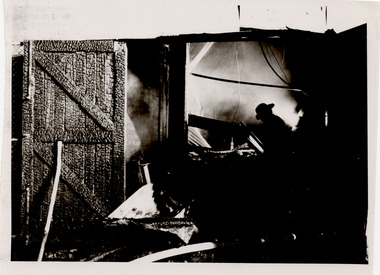 St Kilda Historical Society
Photograph - Building, St Moritz Ice Skating Rink, 1982
... As one of only two ice rinks in Melbourne in the 1940s and 1950s, it played a central role to the sport of ice hockey in Australia. Closed in 1982, it soon suffered a major fire and was then demolished, an event later seen as a major blow to the heritage of St Kilda. ...As one of only two ice rinks in Melbourne in the 1940s and 1950s, it played a central role to the sport of ice hockey in Australia. Closed in 1982, it soon suffered a major fire and was then demolished, an event later seen as a major blow to the heritage of St Kilda. ...The St. Moritz Ice Rink was a popular ice skating rink on The Esplanade, St. Kilda, Victoria. It operated between 1939–1981. As one of only two ice rinks in Melbourne in the 1940s and 1950s, it played a central role to the sport of ice hockey in Australia. Closed in 1982, it soon suffered a major fire and was then demolished, an event later seen as a major blow to the heritage of St Kilda. It was first built as the Wattle Path Palais de Danse in 1922, a very large dance hall, designed by architects Beaver & Purnell, The Wattle Path was the venue for the first all-Australian dance championship, and featured some of the best dance bands of Australia, as well as from America. Popular throughout the 1920s, it suffered due to the Great Depression, and closed in the early 1930s. From 1933-1936 the building became a film studio, Efftee Studios, for Frank W. Thring. In 1938, businessman Henry Hans "Harry" Kleiner announced that the Wattle Path would become an ice rink. He was sole proprietor until 1953, when he sold the business to J. Gordon and T. Molony, both champion skaters. Trade declined during the 1970s. The building was sold in 1980 to developers Hudson Conway and trucking magnate Lindsay Fox and was closed in early 1982. It was nominated to the Historic Buildings Preservation Council, but a majority of City of St Kilda councillors voted to oppose this action and uphold a demolition permit already issued. The building infamously suffered a fire later that year, leaving only the facades, which were demolished soon after. The site remained vacant until about 1991, when a mid-price hotel called the St Moritz was constructed. By 1993 it was simply called the Novotel St Kilda. The hotel closed in 2019 and was replaced by an apartment complex.This photo was taken during the fire in 1982.Black and white photograph, unmounteddavid rae collection, st kilda, st moritz -
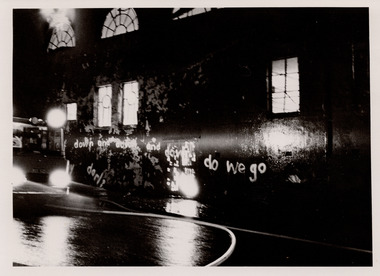 St Kilda Historical Society
Photograph - Building, St Moritz Ice Skating Rink, 1982
... As one of only two ice rinks in Melbourne in the 1940s and 1950s, it played a central role to the sport of ice hockey in Australia. Closed in 1982, it soon suffered a major fire and was then demolished, an event later seen as a major blow to the heritage of St Kilda. ...As one of only two ice rinks in Melbourne in the 1940s and 1950s, it played a central role to the sport of ice hockey in Australia. Closed in 1982, it soon suffered a major fire and was then demolished, an event later seen as a major blow to the heritage of St Kilda. ...The St. Moritz Ice Rink was a popular ice skating rink on The Esplanade, St. Kilda, Victoria. It operated between 1939–1981. As one of only two ice rinks in Melbourne in the 1940s and 1950s, it played a central role to the sport of ice hockey in Australia. Closed in 1982, it soon suffered a major fire and was then demolished, an event later seen as a major blow to the heritage of St Kilda. It was first built as the Wattle Path Palais de Danse in 1922, a very large dance hall, designed by architects Beaver & Purnell, The Wattle Path was the venue for the first all-Australian dance championship, and featured some of the best dance bands of Australia, as well as from America. Popular throughout the 1920s, it suffered due to the Great Depression, and closed in the early 1930s. From 1933-1936 the building became a film studio, Efftee Studios, for Frank W. Thring. In 1938, businessman Henry Hans "Harry" Kleiner announced that the Wattle Path would become an ice rink. He was sole proprietor until 1953, when he sold the business to J. Gordon and T. Molony, both champion skaters. Trade declined during the 1970s. The building was sold in 1980 to developers Hudson Conway and trucking magnate Lindsay Fox and was closed in early 1982. It was nominated to the Historic Buildings Preservation Council, but a majority of City of St Kilda councillors voted to oppose this action and uphold a demolition permit already issued. The building infamously suffered a fire later that year, leaving only the facades, which were demolished soon after. The site remained vacant until about 1991, when a mid-price hotel called the St Moritz was constructed. By 1993 it was simply called the Novotel St Kilda. The hotel closed in 2019 and was replaced by an apartment complex.This photo was taken during the fire in 1982.Black and white photograph, unmounteddavid rae collection, st kilda, st moritz -
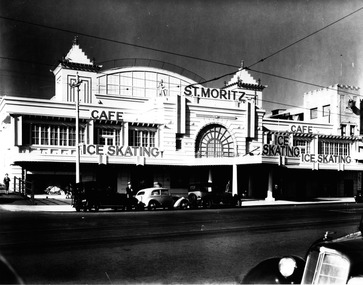 St Kilda Historical Society
Photograph, St Moritz St Kilda - images collection #1, c1940s
... As one of only two ice rinks in Melbourne in the 1940s and 1950s, it played a central role to the sport of ice hockey in Australia. Closed in 1982, it soon suffered a major fire and was then demolished, an event later seen as a major blow to the heritage of St Kilda. ...As one of only two ice rinks in Melbourne in the 1940s and 1950s, it played a central role to the sport of ice hockey in Australia. Closed in 1982, it soon suffered a major fire and was then demolished, an event later seen as a major blow to the heritage of St Kilda. ...The St. Moritz Ice Rink was a popular ice skating rink on The Esplanade, St. Kilda, Victoria. It operated between 1939–1981. As one of only two ice rinks in Melbourne in the 1940s and 1950s, it played a central role to the sport of ice hockey in Australia. Closed in 1982, it soon suffered a major fire and was then demolished, an event later seen as a major blow to the heritage of St Kilda. It was first built as the Wattle Path Palais de Danse in 1922, a very large dance hall, designed by architects Beaver & Purnell, The Wattle Path was the venue for the first all-Australian dance championship, and featured some of the best dance bands of Australia, as well as from America. Popular throughout the 1920s, it suffered due to the Great Depression, and closed in the early 1930s. From 1933-1936 the building became a film studio, Efftee Studios, for Frank W. Thring. In 1938, businessman Henry Hans "Harry" Kleiner announced that the Wattle Path would become an ice rink. He was sole proprietor until 1953, when he sold the business to J. Gordon and T. Molony, both champion skaters. Trade declined during the 1970s. The building was sold in 1980 to developers Hudson Conway and trucking magnate Lindsay Fox and was closed in early 1982. It was nominated to the Historic Buildings Preservation Council, but a majority of City of St Kilda councillors voted to oppose this action and uphold a demolition permit already issued. The building infamously suffered a fire later that year, leaving only the facades, which were demolished soon after. The site remained vacant until about 1991, when a mid-price hotel called the St Moritz was constructed. By 1993 it was simply called the Novotel St Kilda. The hotel closed in 2019 and was replaced by an apartment complex.black and white photographSt Moritz, St Kilda. Ice Skating. Caf�st moritz, st kilda, the esplanade, ice skating -
 St Kilda Historical Society
Photograph - Building, St Moritz Ice Skating Rink, 1982
... As one of only two ice rinks in Melbourne in the 1940s and 1950s, it played a central role to the sport of ice hockey in Australia. Closed in 1982, it soon suffered a major fire and was then demolished, an event later seen as a major blow to the heritage of St Kilda. ...As one of only two ice rinks in Melbourne in the 1940s and 1950s, it played a central role to the sport of ice hockey in Australia. Closed in 1982, it soon suffered a major fire and was then demolished, an event later seen as a major blow to the heritage of St Kilda. ...The St. Moritz Ice Rink was a popular ice skating rink on The Esplanade, St. Kilda, Victoria. It operated between 1939–1981. As one of only two ice rinks in Melbourne in the 1940s and 1950s, it played a central role to the sport of ice hockey in Australia. Closed in 1982, it soon suffered a major fire and was then demolished, an event later seen as a major blow to the heritage of St Kilda. It was first built as the Wattle Path Palais de Danse in 1922, a very large dance hall, designed by architects Beaver & Purnell, The Wattle Path was the venue for the first all-Australian dance championship, and featured some of the best dance bands of Australia, as well as from America. Popular throughout the 1920s, it suffered due to the Great Depression, and closed in the early 1930s. From 1933-1936 the building became a film studio, Efftee Studios, for Frank W. Thring. In 1938, businessman Henry Hans "Harry" Kleiner announced that the Wattle Path would become an ice rink. He was sole proprietor until 1953, when he sold the business to J. Gordon and T. Molony, both champion skaters. Trade declined during the 1970s. The building was sold in 1980 to developers Hudson Conway and trucking magnate Lindsay Fox and was closed in early 1982. It was nominated to the Historic Buildings Preservation Council, but a majority of City of St Kilda councillors voted to oppose this action and uphold a demolition permit already issued. The building infamously suffered a fire later that year, leaving only the facades, which were demolished soon after. The site remained vacant until about 1991, when a mid-price hotel called the St Moritz was constructed. By 1993 it was simply called the Novotel St Kilda. The hotel closed in 2019 and was replaced by an apartment complex. The photograph shows signs and workers of Whelan the Wrecker team, a well-known demolition company in Melbourne.Black and white photograph, unmounteddavid rae collection, st kilda, st moritz -
 St Kilda Historical Society
Photograph - Building, St Kilda Shout Collective, St Moritz Ice Skating Rink, 1983
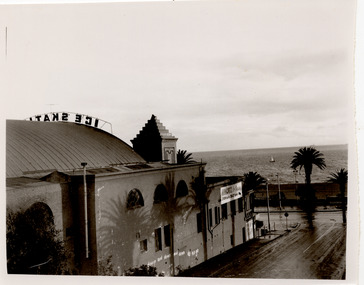
... As one of only two ice rinks in Melbourne in the 1940s and 1950s, it played a central role to the sport of ice hockey in Australia. Closed in 1982, it soon suffered a major fire and was then demolished, an event later seen as a major blow to the heritage of St Kilda. ...As one of only two ice rinks in Melbourne in the 1940s and 1950s, it played a central role to the sport of ice hockey in Australia. Closed in 1982, it soon suffered a major fire and was then demolished, an event later seen as a major blow to the heritage of St Kilda. ...The St. Moritz Ice Rink was a popular ice skating rink on The Esplanade, St. Kilda, Victoria. It operated between 1939–1981. As one of only two ice rinks in Melbourne in the 1940s and 1950s, it played a central role to the sport of ice hockey in Australia. Closed in 1982, it soon suffered a major fire and was then demolished, an event later seen as a major blow to the heritage of St Kilda. It was first built as the Wattle Path Palais de Danse in 1922, a very large dance hall, designed by architects Beaver & Purnell, The Wattle Path was the venue for the first all-Australian dance championship, and featured some of the best dance bands of Australia, as well as from America. Popular throughout the 1920s, it suffered due to the Great Depression, and closed in the early 1930s. From 1933-1936 the building became a film studio, Efftee Studios, for Frank W. Thring. In 1938, businessman Henry Hans "Harry" Kleiner announced that the Wattle Path would become an ice rink. He was sole proprietor until 1953, when he sold the business to J. Gordon and T. Molony, both champion skaters. Trade declined during the 1970s. The building was sold in 1980 to developers Hudson Conway and trucking magnate Lindsay Fox and was closed in early 1982. It was nominated to the Historic Buildings Preservation Council, but a majority of City of St Kilda councillors voted to oppose this action and uphold a demolition permit already issued. The building infamously suffered a fire later that year, leaving only the facades, which were demolished soon after. The site remained vacant until about 1991, when a mid-price hotel called the St Moritz was constructed. By 1993 it was simply called the Novotel St Kilda. The hotel closed in 2019 and was replaced by an apartment complex. The image was published with an article about the fire and demolition of the rink in the Mar/Apr 1983 edition of community newspaper Shout.Black and white photograph, unmounteddavid rae collection, st kilda, st moritz -
 St Kilda Historical Society
Photograph - Building, St Kilda Shout Collective, St Moritz Ice Skating Rink, 1983
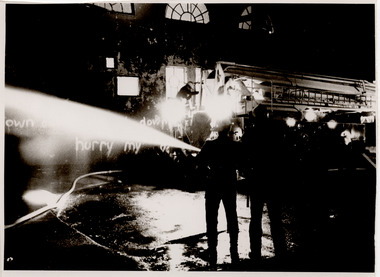
... As one of only two ice rinks in Melbourne in the 1940s and 1950s, it played a central role to the sport of ice hockey in Australia. Closed in 1982, it soon suffered a major fire and was then demolished, an event later seen as a major blow to the heritage of St Kilda. ...As one of only two ice rinks in Melbourne in the 1940s and 1950s, it played a central role to the sport of ice hockey in Australia. Closed in 1982, it soon suffered a major fire and was then demolished, an event later seen as a major blow to the heritage of St Kilda. ...The St. Moritz Ice Rink was a popular ice skating rink on The Esplanade, St. Kilda, Victoria. It operated between 1939–1981. As one of only two ice rinks in Melbourne in the 1940s and 1950s, it played a central role to the sport of ice hockey in Australia. Closed in 1982, it soon suffered a major fire and was then demolished, an event later seen as a major blow to the heritage of St Kilda. It was first built as the Wattle Path Palais de Danse in 1922, a very large dance hall, designed by architects Beaver & Purnell, The Wattle Path was the venue for the first all-Australian dance championship, and featured some of the best dance bands of Australia, as well as from America. Popular throughout the 1920s, it suffered due to the Great Depression, and closed in the early 1930s. From 1933-1936 the building became a film studio, Efftee Studios, for Frank W. Thring. In 1938, businessman Henry Hans "Harry" Kleiner announced that the Wattle Path would become an ice rink. He was sole proprietor until 1953, when he sold the business to J. Gordon and T. Molony, both champion skaters. Trade declined during the 1970s. The building was sold in 1980 to developers Hudson Conway and trucking magnate Lindsay Fox and was closed in early 1982. It was nominated to the Historic Buildings Preservation Council, but a majority of City of St Kilda councillors voted to oppose this action and uphold a demolition permit already issued. The building infamously suffered a fire later that year, leaving only the facades, which were demolished soon after. The site remained vacant until about 1991, when a mid-price hotel called the St Moritz was constructed. By 1993 it was simply called the Novotel St Kilda. The hotel closed in 2019 and was replaced by an apartment complex. The image was published with an article about the fire and demolition of the rink in the Mar/Apr 1983 edition of community newspaper Shout.This photo was taken during the fire in 1982.Black and white photograph, unmounteddavid rae collection, st kilda, st moritz -
 Federation University Historical Collection
Book, Extra Muros, 1950, 1950
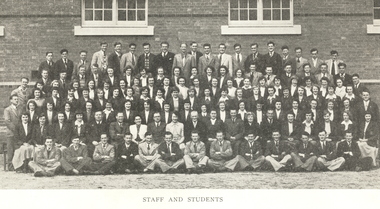
... The magazine includes the events of the year and advertisements, Principa Frank Lord's Foreword " A good way to relieve the monotony of any job is to think of ways of improving it"; Sport; The Australian Soldier; Hockey Team, Basketball Team; Football Team The magazine included many photographs, including a whole College photograph; Student Representative Council and Group Leaders; Sport Committee Names reading from right to left. ...The magazine includes the events of the year and advertisements, Principa Frank Lord's Foreword " A good way to relieve the monotony of any job is to think of ways of improving it"; Sport; The Australian Soldier; Hockey Team, Basketball Team; Football Team The magazine included many photographs, including a whole College photograph; Student Representative Council and Group Leaders; Sport Committee Names reading from right to left. ...1946 Ballarat Teachers’ College reopened at Dana Street State School (no. 33) offering a one year course. The principal was W.F. Lord, and the staff consisted of Miss E.B. Hughes, Mr C.B. Bryan, Miss Monica H. Millar (music), Miss G. Kentish (physical education) Charcoal blue cover with gold titles. Magazine of the Ballarat Teachers' College. The magazine includes the events of the year and advertisements, Principa Frank Lord's Foreword " A good way to relieve the monotony of any job is to think of ways of improving it"; Sport; The Australian Soldier; Hockey Team, Basketball Team; Football Team The magazine included many photographs, including a whole College photograph; Student Representative Council and Group Leaders; Sport Committee Names reading from right to left. Back Row: J.R. Stuchberry, M.F. Ross, L.H.T. Melgaard, G.J.A. Walker, R.J. Lane, T.P. Newton, J.I. Fielding, I.T. Bicknell, R.W. Bayly, J.W. Allan, J.D.J. Rochford, D.A. Farquhar, M.J. Binder, J.G. Segrave, A.T.G. Jennings. David van Leeuwen, E.J. Campbell, J. Woods, N.J. Walker. Second row: V.G. Telushkin, Noel G. Tresize, A.V. Ainge, K.R.B. Skeen, R.G. Hucker, W.A> Poole, M.I. McKenzie, M.M. Molan, P.A. Davey, M.D. Oppy, B.F. Collins, Y.M. Mittchell, A.W. Frith, M.T. O'Brien, P.M. Hanrahan, B.J. Dunsmore, C. Judd, Val G. Pyers, B.L. Shirley. Third row: G.M. Wise, E.M. Rowe, M.M. Napier, A.C. Swanton, B.J. Young, F.M. Stacpoole, P.M. Kelly, S.F. Gardenr, G.M. McCarthy, D. Flanagan, M.J. [Joyce] Murphy, P.M. McIntyre, M.M. green, N.Y. Chappell, J. Kemp, N.B. Forrest, L.J. Scholfield, M.M. Cross, M.J. Burchell, M.A. Leask, A.P. Cunningham, R. Hodgens Fourth Row: S.T. Downs, E.R. Quick, M.J. Krick, D.F. Nicholson, L.O. Quick, C.E. Douglass, F.E. Miller, G. McKenzie, J.N. Lindsay, J.J. Powling, M.V. Langdon, S.R. Wimdmill, G.M. Walton, J.A. Walker, P. Jaensch, G.M. Hoare, B.M. Sweeney, G.J. Monk, D. Keiller, D.M. Ross, B.S. Alderson, O.M. Ball, B.K. Macdonald. Fifth Row: E.W. Munn, H.E. Oxley, M.T. Ryan, M.M. Magee, V.O. Dick, F.K. Curtain, E.A. O'Brien, M.D. MacDonald, M.R. Rafferty, E.V. Bowles, W.D. Batten, E.M. Lawlor, A.Y. Callaway, L.B. Flanders, D.M. McLean, M.J. Whitelock, C.A. Tonzing, B. Nolan. Sixth Row: N.M. Young, W.E. Ramsey, A.P. Maloney, R.E. Botsman, B.M. Barr, Mr McEwin, Miss Aldred, Mr Turner, Miss Hughes, Mr Lord, Monica Miller, Mr Bryan, Miss Hayes, Mr Cumming, Alan Sonsee, V.D. Trainor, M.P. Dwyer, M.D. Chisholm, E. Hodge. Seated: B.S. Murphy, N.G. Schulz, A.W. Gunn, A.W. Thompson, K.J. Tobin, R.W. Chalmers, D.C. Halladay, C.J. R Fellows, J.L. Sheehan, G.E. Mann, L.A. Erdman, G.F. Brown, H.D. Graham. Absent: Y. McLeod, T.G. Philpottbtc, ballarat teachers college, g walker, n walker, e hughes, l erdman, l melgaard, b young, s winmill, v pyers, f stacpoole, r botsman, r fellows, b macdonald, b thompson, i bicknell, j sheehan, r hodgens, m cross, b sweeny, p jaensch, d keiller, s windmill, d flanagan, van leeuwed, joyce murphy, monica miller, v. pyers, val pyers, frank lord, graham turner, norman schulz, richard bayly, mardi chisholm, ron lane, george telushkin, betty roberts, bob newman, jack hickson, nancy lees -
 Federation University Historical Collection
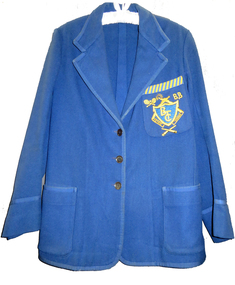
Costume, Ballarat Teachers' College Blazer, c1950
... hockey sticks, the BB for basketball, as netball was then called, all mine. The tennis racquet is David's [van Leeuwen], as is the braid topping the pocket denoting the College colours. College colours were authorised for excellence in a chosen sport...hockey sticks, the BB for basketball, as netball was then called, all mine. The tennis racquet is David's [van Leeuwen], as is the braid topping the pocket denoting the College colours. College colours were authorised for excellence in a chosen sport ...This blazer was worn by Joyce Murphy at the Ballarat Teacher's College. David van Leeuwen decided not to have a blazer as he was older, and thought it too much like school days. He attended the Ballarat Teachers' College when 27 years, after serving in the army. Because he didn’t have a blazer he didn’t have anywhere to put the colours so he offered them to Joyce Murphy as they were going out together. There should have been a football embroidery as well, but Joyce Murphy didn’t want that on her blazer because it was too boyish. Gift of Joyce van Leeuwen nee Joyce Murphy, 2014A blue woollen blazer with pocket featuring the Ballarat Teachers' College logo, sports colours, and representation in tennis, basketball and hockey. The pocket is a dual one. Joyce van Leeuwen remembers: 'Towards the end of our College year, were were given written authorisation denoting our sporting teams, to take to Paterson & Powell for embroidery on our blazer pockets. On my pocket, the hockey sticks, the BB for basketball, as netball was then called, all mine. The tennis racquet is David's [van Leeuwen], as is the braid topping the pocket denoting the College colours. College colours were authorised for excellence in a chosen sport, and in our year, 1950, only two men's colours were awarded - David's for basketball and Neil Trezise's for football. Neil went on to play for the Geelong Cats [AFL football] and later was Victorian minister for Sport for some time.'ballarat teachers' college, blazer, joyce murphy, joyce van leeuwen, paterson powell, colours, embroidery, david van leeuwen, van leeuwen, costume, uniform, textiles -
 Federation University Historical Collection
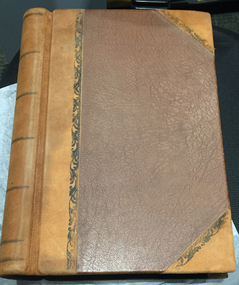
Book, Ballarat Teachers' College Intercollege Sport Record, 1963-1976, 1963-1976
... ballarat teachers' college sports softball football tennis basketball table tennis squash badminton hockey ten pin bowls golf swimming inter colege sports Large leather bound book listing members of the Ballarat Teachers' College intercollege Sports Teams, and the winners of each event. Ballarat Teachers' College Intercollege Sport ...Large leather bound book listing members of the Ballarat Teachers' College intercollege Sports Teams, and the winners of each event.ballarat teachers' college, sports, softball, football, tennis, basketball, table tennis, squash, badminton, hockey, ten pin bowls, golf, swimming, inter colege sports -
 Federation University Historical Collection
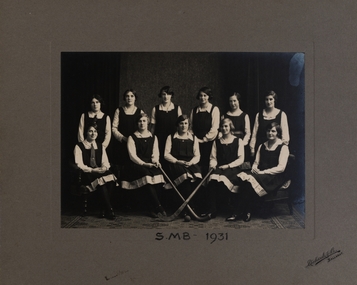
Photograph - Photograph - Black and White, Ballarat School of Mines Hockey Team, 1931, 1931
... The Ballarat School of Mines Hockey team played in the Ballarat Hockey Association competition. effie george jean maude edith curnow glad dunstan al duggan mary fogarty mavis whitehead olga dulfer kath windsor alice bosher olga lyons hockey ballarat school of mines ballarat hockey association Verso " Ballarat Hockey Association SMB 1931 Back Row: Effie George, Jean Maude, Edith Curnow, Glad Dunstan, Al Duggan, Mary Fogarty Front Row: Mavis Whitehead, Olga Dulfer, Kath Windsor, Alice Bosher, Olga Lyons" Mounted black and white photo of the 11 women dressed in the Ballarat School of Mines Sport uniform. ...The Ballarat School of Mines Hockey team played in the Ballarat Hockey Association competition. Mounted black and white photo of the 11 women dressed in the Ballarat School of Mines Sport uniform. Verso " Ballarat Hockey Association SMB 1931 Back Row: Effie George, Jean Maude, Edith Curnow, Glad Dunstan, Al Duggan, Mary Fogarty Front Row: Mavis Whitehead, Olga Dulfer, Kath Windsor, Alice Bosher, Olga Lyons"effie george, jean maude, edith curnow, glad dunstan, al duggan, mary fogarty, mavis whitehead, olga dulfer, kath windsor, alice bosher, olga lyons, hockey, ballarat school of mines, ballarat hockey association -
 Ballarat Clarendon College
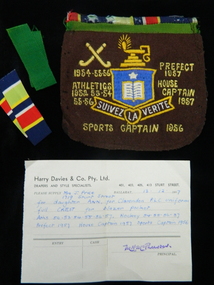
Blazer pocket
... sport, house and academic pursuits. Ann's pocket, and the accompanying authorisation receipt reflect her receipt of the following awards: Athletics Colours (1952 - 1957), Hockey Colours (1954 - 1957) , Cairns House colours, school colours (1957) as well as leadership roles as Prefect (1957), House Captain (1957) and Sports Captain (1956). ...sport, house and academic pursuits. Ann's pocket, and the accompanying authorisation receipt reflect her receipt of the following awards: Athletics Colours (1952 - 1957), Hockey Colours (1954 - 1957) , Cairns House colours, school colours (1957) as well as leadership roles as Prefect (1957), House Captain (1957) and Sports Captain (1956). ...This blazer pocket is from Ann (Price) Royal's Clarendon Presbyterian Ladies College blazer. Ann attended CPLC 1947 - 1957. Blazer pockets were embroidered with the school crest and additional embroidery was added during a student's years at College to reflect school colours and leadership roles. School colours were awarded for participation and leadership in various sport, house and academic pursuits. Ann's pocket, and the accompanying authorisation receipt reflect her receipt of the following awards: Athletics Colours (1952 - 1957), Hockey Colours (1954 - 1957) , Cairns House colours, school colours (1957) as well as leadership roles as Prefect (1957), House Captain (1957) and Sports Captain (1956). Students removed their pockets after graduation to keep as a momento of their school years. The authorisation receipt indicates that Ann's family chose not to have the final embroidery for Aths 1957, Hockey 1957 added to the pocket - probably because these awards would have been identified at the end of Ann's final school year. Significant reflection of school focus and individual attainmentBrown felt blazer pocket with braid across opening and embroidered crest and achievements; bottle green braid piece, multi-coloured braid piece; completed authorisation receipt for pocket embroidery made out to Harry Davies and Co Pty Ltd. Authorisation receipt: Harry Davies & Co Pty. Ltd / Drapers and style specialists 401, 403, 405, 413 STURT STREET 1719 Sturt Street Ballarat 13.12.1957 / Please supply Mrs J Price / for daughter ANN, for Clarendon P.L.C. uniform / full CREST for blazer pocket, Aths 52.53.54.55.56.57, Hockey 54,55,56,57 / Prefect 1957, House Captain 1957, Sports Captain 1956. / M H McPhersonann-price, ann-royal, 1950s, clarendon-presbyterian-ladies-college, prefect, house-captain, sports-captain -
 Federation University Historical Collection
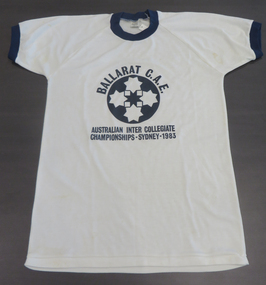
Clothing - Costume, Ballarat College of Advanced Education T-Shirt, 1983
... John was a keen sportsman particularly enjoying hockey and sailing. ballarat college of advanced education t-shirt john barker e j barker australian inter collegiate championships sport costume uniform textiles Printed on front - Ballarat C.A.E. ...This T-shirt was worn by John Barker who was the son of E J Barker who from 1949-1960 was a Lecturer in Mechanical Engineering at the Ballarat School of Mines (SMB). Then from 1960-1964 was Vice Principal at SMB and was Principal of SMB from 1964-76. Then from 1976-1987 was Foundation Director of the Ballarat College of Advanced Education (BCAE) until his retirement. The Library at Federation University was named in honour of E J Barker. John completed a Diploma of Mechanical Engineering at the Ballarat College of Advanced Education and a few years later a Bachelor of Engineering. John was a keen sportsman particularly enjoying hockey and sailing.White t-shirt with blue coloured ribbed neck and cuff bands and stencil of logoPrinted on front - Ballarat C.A.E. Australian Inter Collegiate Championships - Sydney - 1983 ballarat college of advanced education, t-shirt, john barker, e j barker, australian inter collegiate championships, sport, costume, uniform, textiles -
 Bendigo Historical Society Inc.
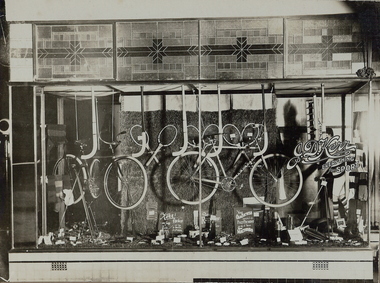
Photograph - JD KERR CYCLES, HARGREAVES STREET, BENDIGO
... Window contains sporting goods including two bicycles, tennis racquets, hockey sticks, golf clubs, pedals, lamps etc, & rifle. Inscriptions: in image - painted on window 'JD Kerr, Everything for Sport', On signs in window 'Your old bicycle accepted at part payment on any of these new machines', 'Kerr I cycles are easy to ride and easy to pay for---' 'Dunlop', Ten--- rep----s' History: James Lerk 'JD Kerr's Bicycle and Sports Store, Hargreaves St., Bendigo....sport shop Black and white mounted on brown board. Shop window with geometric leadlight above. Tiles at bottom with two ventilators. Window contains sporting goods including two bicycles, tennis racquets, hockey sticks, golf clubs, pedals, lamps etc, & rifle. ...Black and white mounted on brown board. Shop window with geometric leadlight above. Tiles at bottom with two ventilators. Window contains sporting goods including two bicycles, tennis racquets, hockey sticks, golf clubs, pedals, lamps etc, & rifle. Inscriptions: in image - painted on window 'JD Kerr, Everything for Sport', On signs in window 'Your old bicycle accepted at part payment on any of these new machines', 'Kerr I cycles are easy to ride and easy to pay for---' 'Dunlop', Ten--- rep----s' History: James Lerk 'JD Kerr's Bicycle and Sports Store, Hargreaves St., Bendigo.buildings, commercial, kerr's cycle & sport shop -
 Galen Catholic College
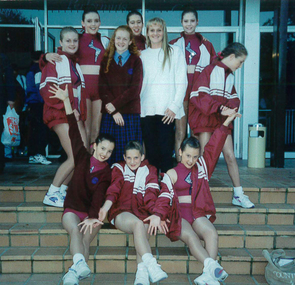
Galen Catholic College Sports, 1995
... Hockey...Baseball...Sport...Aerobics Shooting Netball Skiing Softball Hockey Baseball Sport Galen Catholic College Galen College Galen Catholic College Sports, 1995 Galen Catholic College Sports, 1995 ...In the 1990s, Galen Catholic College continued to offer its students a range of sporting experiences, ranging from aerobics to shooting. This series of photos from 1995 highlights this.aerobics, shooting, netball, skiing, softball, hockey, baseball, sport, galen catholic college, galen college
