
Showing 52 items matching "st kilda centenary"
-
 St Kilda Historical Society
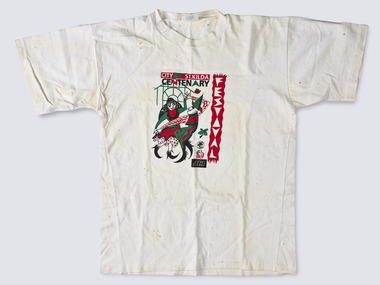
Souvenir - T-Shirt, City of St Kilda Centenary Festival, 1990
... City of St Kilda Centenary Festival...St Kilda Festival...City of St Kilda centenary...The City of St Kilda Centenary Festival was held at St Kilda Botanical Gardens and St Kilda Town Hall on December 2 1990...City of St Kilda Centenary Festival On the tag: Tee Shirt Promotions Pty Ltd 03/699 4373 100% Cotton Made in Australia...The City of St Kilda Centenary Festival was held at St Kilda Botanical Gardens and St Kilda Town Hall on December 2 1990 St Kilda Festival City of St Kilda centenary City of St Kilda Centenary Festival On the tag: Tee Shirt Promotions Pty Ltd 03/699 4373 100% Cotton Made in Australia White coloured short sleeved T-Shirt printed in red, green and black City of St Kilda Centenary Festival Souvenir T-Shirt ...The City of St Kilda Centenary Festival was held at St Kilda Botanical Gardens and St Kilda Town Hall on December 2 1990White coloured short sleeved T-Shirt printed in red, green and blackCity of St Kilda Centenary Festival On the tag: Tee Shirt Promotions Pty Ltd 03/699 4373 100% Cotton Made in Australiast kilda festival, city of st kilda centenary -
 St Kilda Historical Society
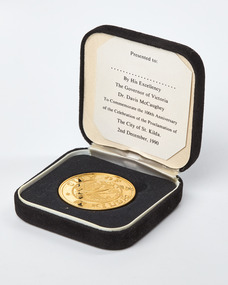
Souvenir - Medallion, City of St Kilda Centenary medallion in presentation case, 1990
... City of St Kilda Centenary medallion in presentation case...City of St Kilda centenary...On face: coat of arms surrounded by 'City of St Kilda' On reverse: 'St Kilda Centenary 1890-1990'...Medallion commemorating the proclamation of St Kilda as a city on 2 December 1890. City of St Kilda centenary City of St Kilda City of St Kilda - 100 year celebrations On face: coat of arms surrounded by 'City of St Kilda' On reverse: 'St Kilda Centenary 1890-1990' Gold coloured medallion with the coat of arms of the City of St Kilda on the face, and the City logo on the reverse. ...Medallion commemorating the proclamation of St Kilda as a city on 2 December 1890.Gold coloured medallion with the coat of arms of the City of St Kilda on the face, and the City logo on the reverse. On face: coat of arms surrounded by 'City of St Kilda' On reverse: 'St Kilda Centenary 1890-1990'city of st kilda centenary, city of st kilda, city of st kilda - 100 year celebrations -
 St Kilda Historical Society
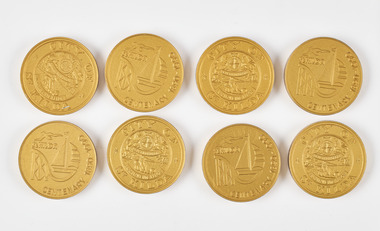
Souvenir - Medallions, City of St Kilda Centenary medallions, 1990
... City of St Kilda Centenary medallions...City of St Kilda centenary...On face: coat of arms surrounded by 'City of St Kilda' On reverse: 'St Kilda Centenary 1890-1990'...City of St Kilda Centenary medallions Souvenir Medallions ...Medallion commemorating the proclamation of St Kilda as a city on 2 December 1890.Eight gold coloured medallions with the coat of arms of the City of St Kilda on the face, and the City logo on the reverse.On face: coat of arms surrounded by 'City of St Kilda' On reverse: 'St Kilda Centenary 1890-1990'city of st kilda centenary, city of st kilda, city of st kilda - 100 year celebrations -
 St Kilda Historical Society
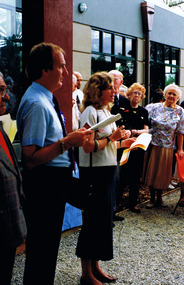
Photograph, City of St Kilda Centenary 1990 - images collection #3, 2/12/1990
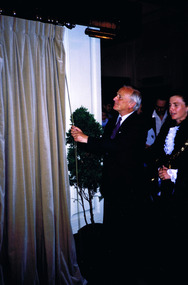
... City of St Kilda Centenary 1990 - images collection #3...St Kilda...St Kilda Botanical Gardens...St Kilda centenary...St Kilda was declared a city on 2/12/1890. In commemoration of the centenary, a conservatory in the St Kilda Botanical Gardens was opened on 2/12/1990 by the Mayor, Cr. ...Four years later, in 1994, the City of St Kilda was amalgamated with the cities of South Melbourne and Port Melbourne to form the City of Port Phillip. St Kilda St Kilda Botanical Gardens St Kilda centenary St Kilda Botanical Gardens conservatory St Kilda Botanical Gardens glass house St Kilda Garden Festival Garden Festival 1990 Malaysian Women's Group St Kilda Greek Senior Citizens Social Group Mayor Melanie Eagle Cr Melanie Eagle Glasshouse 1990 John Charlton Colour photograph City of St Kilda Centenary 1990 - images collection #3 Photograph ...St Kilda was declared a city on 2/12/1890. In commemoration of the centenary, a conservatory in the St Kilda Botanical Gardens was opened on 2/12/1990 by the Mayor, Cr. Melanie Eagle, at a Garden Festival. Four years later, in 1994, the City of St Kilda was amalgamated with the cities of South Melbourne and Port Melbourne to form the City of Port Phillip.Colour photographst kilda, st kilda botanical gardens, st kilda centenary, st kilda botanical gardens conservatory, st kilda botanical gardens glass house, st kilda garden festival, garden festival 1990, malaysian women's group, st kilda greek senior citizens social group, mayor melanie eagle, cr melanie eagle, glasshouse, 1990, john charlton -
 St Kilda Historical Society
Photograph, City of St Kilda Centenary 1990 - images collection #2, 02/12/1990
... City of St Kilda Centenary 1990 - images collection #2...St Kilda...St Kilda Town Hall...Governor Davis McCaughey...St Kilda City centenary...St Kilda was declared a city on 2/12/1890 by the Governor of Victoria The Right Hon. John Adrian Louis Hope, the Earl of Hopetoun, GCMG (28/11/1889 - 12/07/1895). This event was commemorated 100 years later, on 2/12/1990, by the unveiling of a plaque by the current Governor Dr J. Davis McCaughey AC (18/02/1986 - 22/04/1992). Also in commemoration of the centenary... 1990 John Callanan J Davis McCaughey Melanie Eagle Colour photograph City of St Kilda Centenary 1990 - images collection #2 Photograph ...St Kilda was declared a city on 2/12/1890 by the Governor of Victoria The Right Hon. John Adrian Louis Hope, the Earl of Hopetoun, GCMG (28/11/1889 - 12/07/1895). This event was commemorated 100 years later, on 2/12/1990, by the unveiling of a plaque by the current Governor Dr J. Davis McCaughey AC (18/02/1986 - 22/04/1992). Also in commemoration of the centenary, a conservatory in the St Kilda Botanical Gardens was opened that day by the Mayor, Cr. Melanie Eagle. Four years later, in 1994, the City of St Kilda was amalgamated with the cities of South Melbourne and Port Melbourne to form the City of Port Phillip.Colour photographst kilda, st kilda town hall, governor davis mccaughey, st kilda city centenary, 1990, john callanan, j davis mccaughey, melanie eagle -
 St Kilda Historical Society
Photograph, City of St Kilda Centenary 1990 - images collection #1, 2/12/1990
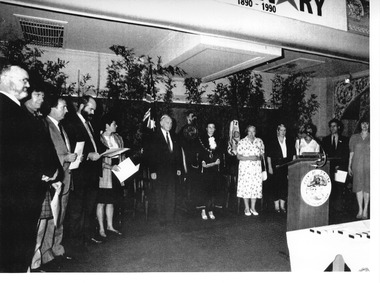
... City of St Kilda Centenary 1990 - images collection #1...St Kilda...St Kilda Town Hall...Governor Davis McCaughey...St Kilda City centenary...Four years later, in 1994, the City of St Kilda was amalgamated with the cities of South Melbourne and Port Melbourne to form the City of Port Phillip. St Kilda St Kilda Town Hall Governor Davis McCaughey St Kilda City centenary 1990 Cr Brian Slattery Mayor Melanie Eagle Cr Melanie Eagle Vera Horne Centenary 1890-1990 Black and white photograph City of St Kilda Centenary 1990 - images collection #1 Photograph ...St Kilda was declared a city on 2/12/1890 by the Governor of Victoria The Right Hon. John Adrian Louis Hope, the Earl of Hopetoun, GCMG (28/11/1889 - 12/07/1895). This event was commemorated 100 years later, on 2/12/1990, by the unveiling of a plaque by the current Governor Dr J. Davis McCaughey AC (18/02/1986 - 22/04/1992). Four years later, in 1994, the City of St Kilda was amalgamated with the cities of South Melbourne and Port Melbourne to form the City of Port Phillip.Black and white photographCentenary 1890-1990st kilda, st kilda town hall, governor davis mccaughey, st kilda city centenary, 1990, cr brian slattery, mayor melanie eagle, cr melanie eagle, vera horne -
 St Kilda Historical Society
Artwork, other - Poster, Amanda Narille, City of St Kilda Centenary Festival, 1990
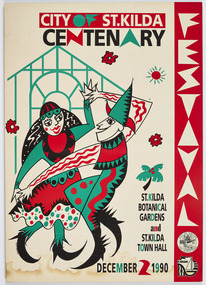
... City of St Kilda Centenary Festival...St Kilda was declared a city on 2/12/1890. In commemoration of the centenary, a conservatory in the St Kilda Botanical Gardens was opened on 2/12/1990 by the Mayor, Cr. ...City of St Kilda Centenary Festival St Kilda Botanical Gardens and St Kilda Town Hall December 2 1990 Stamped on back: Paramount Posters Mounting and Picture Framing Service (03) 531 9252 (03) 532 8339 19 Albion Street East St Kilda 3183...Four years later, in 1994, the City of St Kilda was amalgamated with the cities of South Melbourne and Port Melbourne to form the City of Port Phillip. City of St Kilda St Kilda Botanical Gardens St Kilda Garden Festival St Kilda Botanical Gardens conservatory City of St Kilda Centenary Festival St Kilda Botanical Gardens and St Kilda Town Hall December 2 1990 Stamped on back: Paramount Posters Mounting and Picture Framing Service (03) 531 9252 (03) 532 8339 19 Albion Street East St Kilda 3183 Laminated poster mounted on board depicting images of dancers, the St Kilda Botanical Gardens and the St Kilda crest and logo City of St Kilda Centenary Festival Artwork, other Poster Amanda Narille Paramount Posters ...St Kilda was declared a city on 2/12/1890. In commemoration of the centenary, a conservatory in the St Kilda Botanical Gardens was opened on 2/12/1990 by the Mayor, Cr. Melanie Eagle, at a Garden Festival. Four years later, in 1994, the City of St Kilda was amalgamated with the cities of South Melbourne and Port Melbourne to form the City of Port Phillip.Laminated poster mounted on board depicting images of dancers, the St Kilda Botanical Gardens and the St Kilda crest and logoCity of St Kilda Centenary Festival St Kilda Botanical Gardens and St Kilda Town Hall December 2 1990 Stamped on back: Paramount Posters Mounting and Picture Framing Service (03) 531 9252 (03) 532 8339 19 Albion Street East St Kilda 3183city of st kilda, st kilda botanical gardens, st kilda garden festival, st kilda botanical gardens conservatory -
 St Kilda Historical Society
Document - Annual report, The St Kilda Cricket Club Centenary Report 1856 - 1956, 1956
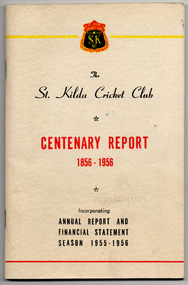
... The St Kilda Cricket Club Centenary Report 1856 - 1956...Centenary report of the St Kilda Cricket Club incorporating the annual report and financial statement for 1955 - 1956. ...St Kilda Cricket Club Booklet covered in white card, printed in red, black and yellow and containing multiple pages printed in black and white The St Kilda Cricket Club Centenary Report 1856 - 1956 Document Annual report ...Centenary report of the St Kilda Cricket Club incorporating the annual report and financial statement for 1955 - 1956. Contains account of the club's 100 year history covering the early days; the establishment of the club site; application for royal patronage; complaints and disputes with authorities and local residents; famous members etc.Booklet covered in white card, printed in red, black and yellow and containing multiple pages printed in black and whitest kilda cricket club -
![Photograph, Bull, Hugh Jones, 1897-1993, View looking along St Kilda Road [completed Centenary pylons on Princes Bridge]](/media/collectors/68524623ad73480cc6fce59f/items/68f089892b74709eaf6d30e8/item-media/68f089af2b74709eaf6d372a/item-fit-380x285.jpg?cb=6) City of Melbourne Libraries
City of Melbourne LibrariesPhotograph, Bull, Hugh Jones, 1897-1993, View looking along St Kilda Road [completed Centenary pylons on Princes Bridge]
... View looking along St Kilda Road [completed Centenary pylons on Princes Bridge]...Princes Bridge Centenary pylons complete Even though this is a street scene, it feels very intimate; we are instantly immersed in the activity of a Melbourne afternoon, looking down St Kilda Road from a viewpoint near today’s Federation Square. ...Glass plate negative View looking along St Kilda Road [completed Centenary pylons on Princes Bridge] Photograph Bull, Hugh Jones, 1897-1993 ...Princes Bridge Centenary pylons complete Even though this is a street scene, it feels very intimate; we are instantly immersed in the activity of a Melbourne afternoon, looking down St Kilda Road from a viewpoint near today’s Federation Square. The focus is on the Centenary Pylons, erected on Princes Bridge to mark Melbourne’s Centenary in 1934. The sixteen plastered pylons were designed by Roy Prentice, the second person to qualify as an architect at the University of Melbourne in 1933, and aged just 27. The State Electricity Commission sponsored the work and The Argus reported that the pylons were “illuminated from within to give the effect of soft radiance”. Australia Home Beautiful reported that the taller pylons were 48 feet high. Timber-framed and faced with fibrous plaster and galvanised sheet iron, each structure was bolted to a concrete foundation three feet in depth. Panels of glass were indirectly lit by forty 100 watt lamps, and the upper bank of lamps were dyed so as to flood them with a deep red light. The shields and flagpoles were illuminated by three 200 watt concealed projectors, part of an electric night light decoration scheme involving 28 miles of wire to supply more than 20,000 lights. Melbourne was converted into “a coloured fairyland by night”. Featured in "Newsworthy: Melbourne in photographs 1933-1936" exhibition at East Melbourne Library, October to December 2023. Exhibition caption by project volunteer, Louise McKenzie Photographer notations on slide: "View looking along St Kilda Road C57" Published: (1934, September 5). The Age (Melbourne, Vic. : 1854 - 1954), p. 11. Published title: DECORATIONS -- THEN AND NOW. Published caption: "The second picture shows one of the Princes-bridge pylons completed..." Trove article identifier: http://nla.gov.au/nla.news-article205880269 Research by project volunteer, Louise McKenzie: Even though this is a street scene, it feels very intimate; we are instantly immersed in the activity of a Melbourne afternoon, looking down St Kilda Road from a viewpoint near today’s Federation Square. The focus is on the Centenary Pylons, erected on Princes Bridge to mark Melbourne’s Centenary in 1934. The sixteen plastered pylons were designed by Roy Prentice, the second person to qualify as an architect at the University of Melbourne in 1933, and aged just 27. The State Electricity Commission sponsored the work and The Argus reported that the pylons were “illuminated from within to give the effect of soft radiance”. Australia Home Beautiful reported that the taller pylons were 48 feet high. Timber-framed and faced with fibrous plaster and galvanised sheet iron, each structure was bolted to a concrete foundation three feet in depth. Panels of glass were indirectly lit by forty 100 watt lamps, and the upper bank of lamps were dyed so as to flood them with a deep red light. The shields and flagpoles were illuminated by three 200 watt concealed projectors, part of an electric night light decoration scheme involving 28 miles of wire to supply more than 20,000 lights. Melbourne was converted into “a coloured fairyland by night”. References: DECORATIONS -- THEN AND NOW. (1934, September 5). The Age (Melbourne, Vic. : 1854 - 1954), p. 11. Retrieved September 21, 2023, from http://nla.gov.au/nla.news-article205880269 'Dressing Melbourne for the Duke', The Australian home beautiful: a journal for the home builder. Vol 12 No. 10 (1 October 1934), page 21, 58. Retrieved September 14, 2023, from http://nla.gov.au/nla.obj-2950922209 28 Miles of Wire (1934, October 18). The Argus (Melbourne, Vic. : 1848 - 1957), p. 1 (The Junior Argus). Retrieved September 21, 2023, from http://nla.gov.au/nla.news-article10977836Photographer notations on slide: "View looking along St Kilda Road C57".centenaries, 1930-1939, bridges -
 St Kilda Historical Society
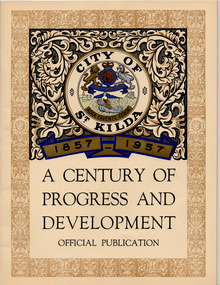
Document - Booklet, City of St Kilda 1857-1957 : a century of progress and development, 1957
... St Kilda...City of St Kilda centenary...Contains lists of councillors, mayors, financial information, a brief summary of the creation and growth of the Municipal District of St Kilda, a list of 98 milestones and council decisions ('Did You Know?') City of St Kilda City of St Kilda centenary Booklet covered in yellow card printed in colour, with multi-coloured crest of the City of St Kilda. ...Contains lists of councillors, mayors, financial information, a brief summary of the creation and growth of the Municipal District of St Kilda, a list of 98 milestones and council decisions ('Did You Know?')Booklet covered in yellow card printed in colour, with multi-coloured crest of the City of St Kilda. Text printed in black on cream coloured glossy paper and containing black and white photographs. Stapled.city of st kilda, city of st kilda centenary -
 St Kilda Historical Society
Document - Booklet, City of St Kilda 1857-1957, 1957
... St Kilda...City of St Kilda centenary...Contains a brief history and black and white photographs of the first Mayor (Benjamin Cowderoy), the minutes of the first meeting in 1857, St Kilda Junction in 1857, and the City Hall at the time of publication. City of St Kilda City of St Kilda centenary Multi-paged booklet of yellow paper printed in black. ...Produced to commemorate 100 years of council meetings. Contains a brief history and black and white photographs of the first Mayor (Benjamin Cowderoy), the minutes of the first meeting in 1857, St Kilda Junction in 1857, and the City Hall at the time of publication. Multi-paged booklet of yellow paper printed in black. Stapled.,city of st kilda, city of st kilda centenary -
 St Kilda Historical Society
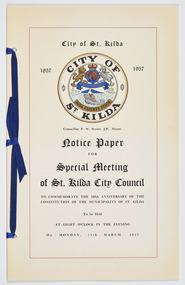
Administrative record - Council notice papers, Notice Paper for Special Meeting of St Kilda City Council, 1957
... City of St Kilda centenary...The publication comprises both the notice paper for and minutes of a special meeting of St Kilda City Council to commemorate the 100th Anniversary of the constitution of the municipality of St Kilda, on 11 March 1957. City of St Kilda centenary ...The publication comprises both the notice paper for and minutes of a special meeting of St Kilda City Council to commemorate the 100th Anniversary of the constitution of the municipality of St Kilda, on 11 March 1957. Foolscap size booklet of glossy white card bound with blue ribbon. Printed in black with coloured highlights.City of St Kilda crestcity of st kilda centenary, city of st kilda, wh greaves collection -
 St Kilda Historical Society
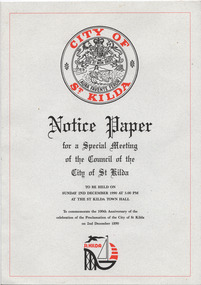
Administrative record - Council notice papers, Notice Paper for Special Meeting of the Council of the City of St Kilda, 1990
... City of St Kilda centenary...Notice paper for a special meeting of St Kilda City Council on 2 December 1990 to commemorate the 100th Anniversary of the celebration of the Proclamation of the City of St Kilda on 2 December 1890. City of St Kilda centenary ...Notice paper for a special meeting of St Kilda City Council on 2 December 1990 to commemorate the 100th Anniversary of the celebration of the Proclamation of the City of St Kilda on 2 December 1890.Stiff cream-coloured card, folded in half, and printed in red and blackcity of st kilda centenary, city of st kilda -
 St Kilda Historical Society
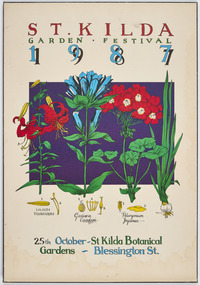
Artwork, other - Poster, St Kilda Garden Festival 1987
... St Kilda was declared a city on 2/12/1890. In commemoration of the centenary, a conservatory in the St Kilda Botanical Gardens was opened on 2/12/1990 by the Mayor, Cr. ...City of St Kilda Centenary Festival St Kilda Botanical Gardens and St Kilda Town Hall December 2 1990 Sticker on back: Paramount Posters Mounting and Laminating Service (03) 531 9252 (03) 532 8339 19 Albion Street East St Kilda 3183...Four years later, in 1994, the City of St Kilda was amalgamated with the cities of South Melbourne and Port Melbourne to form the City of Port Phillip. City of St Kilda St Kilda Botanical Gardens St Kilda Garden Festival St Kilda Botanical Gardens conservatory City of St Kilda Centenary Festival St Kilda Botanical Gardens and St Kilda Town Hall December 2 1990 Sticker on back: Paramount Posters Mounting and Laminating Service (03) 531 9252 (03) 532 8339 19 Albion Street East St Kilda 3183 Laminated poster mounted on board depicting images of flowers St Kilda Garden Festival 1987 Artwork, other Poster ...St Kilda was declared a city on 2/12/1890. In commemoration of the centenary, a conservatory in the St Kilda Botanical Gardens was opened on 2/12/1990 by the Mayor, Cr. Melanie Eagle, at a Garden Festival. Four years later, in 1994, the City of St Kilda was amalgamated with the cities of South Melbourne and Port Melbourne to form the City of Port Phillip.Laminated poster mounted on board depicting images of flowersCity of St Kilda Centenary Festival St Kilda Botanical Gardens and St Kilda Town Hall December 2 1990 Sticker on back: Paramount Posters Mounting and Laminating Service (03) 531 9252 (03) 532 8339 19 Albion Street East St Kilda 3183city of st kilda, st kilda botanical gardens, st kilda garden festival, st kilda botanical gardens conservatory -
 St Kilda Historical Society
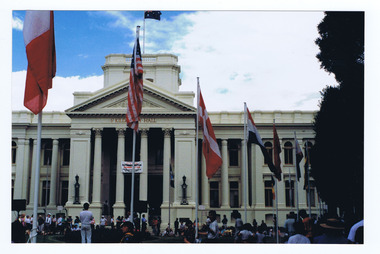
Photograph, St Kilda Town Hall, 1990
... St Kilda Town Hall, Centenary Celebrations in 1990...St Kilda Town Hall, Centenary Celebrations in 1990 1990 City Centennary colour photograph, original, unmounted, good condition St Kilda Town Hall Photograph ...St Kilda Town Hall, Centenary Celebrations in 1990colour photograph, original, unmounted, good condition1990 City Centennary -
 Melbourne Tram Museum
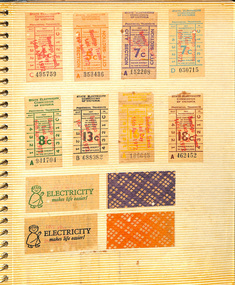
Document - Photo Album, Graeme Breydon, "Tickets and Postal Covers", c1970 to 1990
... Page 20 – three different St Kilda Centenary – Adelaide. Contained within the album was loose tickets - see Reg Item 3970 and a pamphlet for the opening of the Transport Mural at Spencer St Station on 30 Jan. 1978....Page 20 – three different St Kilda Centenary – Adelaide. Contained within the album was loose tickets - see Reg Item 3970 and a pamphlet for the opening of the Transport Mural at Spencer St Station on 30 Jan. 1978. ...Photo Album - dark blue plastic covers with the letters "photo album" in raised letters, stippled finish containing 10 leaves ring bound with an adhesive surface with clear plastic sheet on each cover. Page 1 – set of 8 Last day tram tickets – 16/4/1972 and four SEC tickets rear. Page 2 – set of 10 SEC tickets and 2 backs Page 3 – 2 BTPS 10c tickets, MMTB 25c, 3 Brisbane City Council tickets, two Trittons furnishings, one WCC (Wellington?) cable car and two MMTB City Concession tickets Page 4 – Set of 9 MMTB tickets 4d, 7d city, 7d, 8d, 1/-, 1/ 4, 2/- or 20c, 2/6 and one Pensioner’s check ticket. Page 5 – Set of 9 MMTB tickets, 4c, 8c, 9c, 10c, 30c, Pensioner’s concession, two $1 City concession cards, city concession check ticket and two machine issued tickets 1c and 15c. Page 6 – set of 16 MMTB tickets that have been recovered from within trams, very dirty, check tickets, value tickets and advertising on the rear. Page 7 – various special train tickets – Stainless steel train, ARHS tours, TMSV, ARHS Farewell, ARHS SA Mile End, Ballarat trams x 2, Crich exhibition ticket and one MTT (Tas?) 30c. Page 8 – VR Windsor to Melbourne Quarterly 1940, 7 VR various country and suburban tickets and two VR Motor coach services tickets. Page 9 – two interstate reserved seat tickets, Brisbane suburban ticket and 8 various values QR Parcel tickets – very dirty. Page 10 – Two Puffing Billy guest passes, 10th anniversary ticket, 10 various card tickets for Puffing Billy and tours. Page 11 – 6 + others MTT Adelaide value tickets with adverts on rear and four AETM St Kilda Museum tickets. Page 12 – four Red Bus Rover London tickets, four Peak Tramways tickets, one toll bridge, 6 London machine issued tickets. Page 13 – One San Francisco Municipal Railway ticket, one LlafrairPG platform ticket and two MMTB Machine tickets. Page 14 – One $1 MMTB city concession card and one Parramatta Park tramway ticket issued for COTMA during 1976. Page 15 – One Emerald Park vehicle entry ticket and one PBPS opening day of the extension to Lakeside in 1975 with certificate. Page 16 – One PBPS Notice. Page 17 – not used. Page 18 – three commemorative envelopes – WA Railway Centenary, Standard Gauge to Melbourne, and Sydney to Perth. Page 19 – Brisbane tramways last day, two Last day envelopes for Ballarat and Bendigo. Page 20 – three different St Kilda Centenary – Adelaide. Contained within the album was loose tickets - see Reg Item 3970 and a pamphlet for the opening of the Transport Mural at Spencer St Station on 30 Jan. 1978.has a label on the side in punched letters on a green tape "Tickets and Postal Covers"trams, tramways, tickets, secv, mmtb, adelaide, brisbane, arhs, aetm, aeta, pbps, cotma, tmsv, victorian railways, vr, post office, envelopes, post office -
 City of Moorabbin Historical Society (Operating the Box Cottage Museum)
Newsletter - CMHS April 2014 pdf, April 2014
... Centenary involving significant Street names in the area eg Monash, Chauvel, Birdwood etc. Jim has compiled a story about Thomas Calcutt 1809 - 45, a shepherd who emigrated from Oxford, England to Brighton Victoria 1842. He was part of the Henry Dendy 's assignment of settlers. Thomas obtained employment with Public Works and lived in Brighton with his family. Sadly he died during the 6km walk home from his work in St Kilda...Centenary involving significant Street names in the area eg Monash, Chauvel, Birdwood etc. Jim has compiled a story about Thomas Calcutt 1809 - 45, a shepherd who emigrated from Oxford, England to Brighton Victoria 1842. He was part of the Henry Dendy 's assignment of settlers. Thomas obtained employment with Public Works and lived in Brighton with his family. Sadly he died during the 6km walk home from his work in St Kilda ...The City of Moorabbin Historical Society was formed c 1960 by a group of Moorabbin area residents who were concerned that the history of the area should be preserved. A good response to a call for items related to the historical area of Moorabbin Shire brought donations of a wide variety of artefacts that are now preserved by the current members of CMHS at Box Cottage Museum. Helen Stanley, Secretary of CMHS, began producing a Newsletter for members in April 2007 to provide current information and well researched items of historical interest. Jim Dale continued to produce the Newsletter in 2013 after Helen resigned. 3 x A4 paper pages printed on one side with colour photographs, Jim Dale, President, welcomes members to the April 27th Meeting at Box Cottage. There were many visitors on the February Open Day including Jeff Marriot. In March some guests from a Wedding at the Rotunda in Joyce Park visited. Chris and Judy Hawker, relatives of early aviator Harry Hawker were presented to Her Excellency, the Governor General of Australia, Quentin Bryce during the Centenary of Military Aviation Air Show, held at Point Cook on March1st & 2nd. Jim representing CMHS attended this memorable occasion. Jim also attended Moorabbin Primary School March 3rd where he told the pupils about Harry Hawker. March 22nd Jim, Valma and Anne attended the Moorabbin Primary School Fete handing out leaflets and talking about Box Cottage Museum. City of Glen Eira is conducting a project for WW1 Centenary involving significant Street names in the area eg Monash, Chauvel, Birdwood etc. Jim has compiled a story about Thomas Calcutt 1809 - 45, a shepherd who emigrated from Oxford, England to Brighton Victoria 1842. He was part of the Henry Dendy 's assignment of settlers. Thomas obtained employment with Public Works and lived in Brighton with his family. Sadly he died during the 6km walk home from his work in St Kilda to Brighton 1845. After a 2 day search his body was found. He was the first immigrant to die in this area and subject to an Inquest.City of Moorabbin Historical Society Newsletter APRIL 2014city of moorabbin historical society, stanley helen, dale jim, melbourne, moorabbin, brighton, cheltenham, ormond, bentleigh, market gardeners, pioneers, early settlers, east bentleigh, city of kingston, marriott jeff, hawker harry, aviators, moorabbin primary school, peulich paul, point cook airforce base, bryce dame quentin, hawker judy, hawker christopher, city of glen eira, world war 1 1914-18, monash sir john, calcutt thomas, calcutt eleanor, calcutt george, calcutt rosanna, calcutt henry, dendy henry, henry dendy's special survey 1841, wilmot w b md jp, st andrew's church of england brighton victoria -
 Glenelg Shire Council Cultural Collection
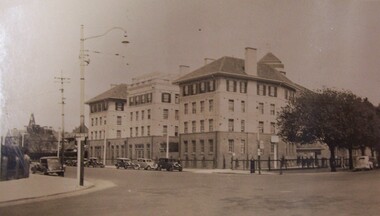
Photograph - Photograph - St Kilda Road, Melbourne, Esther Winifred Hall, 1934
... Centenary Celebrations in Portland. Esther Winifred Hall Henty 1934 Front: (no inscriptions) Back: Chevron corner St. Kilda ...Photographs taken by Esther Winifred Hall (nee Smallpage) - great grand-daughter of Stephen George Henty. Taken in 1934 Centenary Celebrations in Portland.Black and white sepia photograph of four-storey building at street intersection. Street sign on left "St. Kilda Rd".Front: (no inscriptions) Back: Chevron corner St. Kilda and Commercial Roads Nov: 1934 V. Hursthouse (?)esther winifred hall, henty, 1934 -
Glen Eira Historical Society
Pamphlet - Melbourne Aerodrome, Grange Road, Glen Huntly
... St Kilda Commemorative Plaque At 31 Gourlay Street East St Kilda, The Hawker Family Home. The Pamphlet Gives Biographical Information Based on Hawker’s Entry In The Australian Dictionary of Biography. Double- (CMHS) Newsletter of March 2015 on brothers Harry and Herbert Hawker. 3/Pamphlett "Harry Hawkder In Austrlaia 1914" announcing 2014 as the year to commemorate the centenary of his return to Austrlai in 1914. ...St Kilda Commemorative Plaque At 31 Gourlay Street East St Kilda, The Hawker Family Home. The Pamphlet Gives Biographical Information Based on Hawker’s Entry In The Australian Dictionary of Biography. Double- (CMHS) Newsletter of March 2015 on brothers Harry and Herbert Hawker. 3/Pamphlett "Harry Hawkder In Austrlaia 1914" announcing 2014 as the year to commemorate the centenary of his return to Austrlai in 1914. ...Three documents about the history of Harry G. Hawker who flew from this and other places: 1/A Pamphlet On Harry George Hawker 1889 – 1921 Published on 12 February 1989 For The Unveiling By Weston Bate of St Kilda Commemorative Plaque At 31 Gourlay Street East St Kilda, The Hawker Family Home. The Pamphlet Gives Biographical Information Based on Hawker’s Entry In The Australian Dictionary of Biography. Double- (CMHS) Newsletter of March 2015 on brothers Harry and Herbert Hawker. 3/Pamphlett "Harry Hawkder In Austrlaia 1914" announcing 2014 as the year to commemorate the centenary of his return to Austrlai in 1914. This includes a short history of Harry Hawker, records he set and 3 black and white photographs plus 1 sepia. Contact details included for Chris Hawker plus a Facebook page still current at 13/11/2017. Double-sided.hawker harry george, aviators, aviation, pilots, aircraft, sopwith aviation company, hawker stanley herbert, hawker george, hawker mary, hawker maude, hawker ruby, st john's caulfield north, engineer, caulfield army and navy club (rsl), caulfield repatriation hospital, duke street, caulfield south, new street, elsternwick, caulfield racecourse, millen senator minister for defence, world war 1914-1918, "death spin", sopwith aircraft co. -
 Bendigo Historical Society Inc.
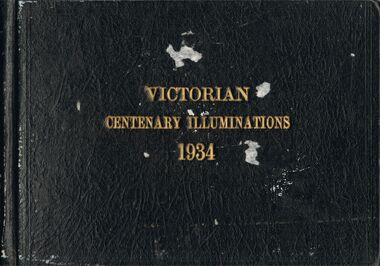
Photograph - VICTORIAN CENTENARY ILLUMINATIONS 1934
... Photo album, brown hard cover, writing in gold leaf ' Victorian Centenary Illuminations 1934' Contains black and white images of Melbourne, taken at night. Includes, south bank of Yarra, Princes Bridge, Collins Street, Flinders Street, Elizabeth Street, Shrine of Remembrance, St. Kilda...COTTAGE Miners melbourne Melbourne centenary Photo album, brown hard cover, writing in gold leaf ' Victorian Centenary Illuminations 1934' Contains black and white images of Melbourne, taken at night. Includes, south bank of Yarra, Princes Bridge, Collins Street, Flinders Street, Elizabeth Street, Shrine of Remembrance, St. Kilda ...Photo album, brown hard cover, writing in gold leaf ' Victorian Centenary Illuminations 1934' Contains black and white images of Melbourne, taken at night. Includes, south bank of Yarra, Princes Bridge, Collins Street, Flinders Street, Elizabeth Street, Shrine of Remembrance, St. Kilda, Swanston Street, Hawthorn War Memorial, State Electricity Commission Head Office, Electricity supply Building, Electricity Commission and Port Authority buildings, South Melbourne Town hall, Hotel Windsor, Parliament House, Town hall, Fire Brigade building, State Savings Bank, National Bank, Melbourne town hall, Bank of Australia, Port Authority Building, Steam Tower. All the photographs in this album pertain to the City of Melbourne, and have NOT been scanned.cottage, miners, melbourne, melbourne, centenary -
 Bendigo Historical Society Inc.
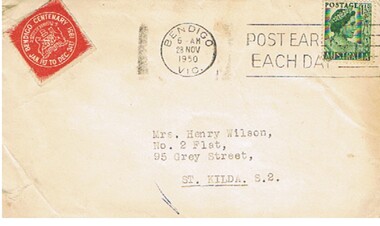
Document - FOSTER AND WILSON COLLECTION: BENDIGO CENTENARY PROGRAM & INVITATION, 1950
... St. Kilda. S.2. And postmarked 28 Nov 1950. Envelope contains a light green invitation with blue printing inviting Mrs Henry Wilson to the 100th Birthday Celebrations of Bendigo January to December, 1951 and has a red stamp in the top left corner with Bendigo Centenary Jan 1st to Dec 31st 1951. ...DOCUMENT Invitations official celebrations Foster & Wilson Collection Mrs Henry Wilson Bendigo Centenary Festival Year 1951 Cambridge Press White envelope addressed to Mrs. Henry Wilson, No 2 Flat, 95 Grey Street, St. Kilda ...White envelope addressed to Mrs. Henry Wilson, No 2 Flat, 95 Grey Street, St. Kilda. S.2. And postmarked 28 Nov 1950. Envelope contains a light green invitation with blue printing inviting Mrs Henry Wilson to the 100th Birthday Celebrations of Bendigo January to December, 1951 and has a red stamp in the top left corner with Bendigo Centenary Jan 1st to Dec 31st 1951. Also contains a programme of events in Bendigo for the Festival Year 1951. Front of programme has picture of a miner holding a pick and a lady with an umbrella and a basket on her arm. Programme printed 30/9/50.Cambridge Pressdocument, invitations, official celebrations, foster & wilson collection, mrs henry wilson, bendigo centenary festival year 1951 -
 Alfred Hospital Nurses League - Nursing History Collection
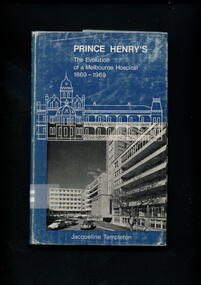
Book - Illustrated book, Jacqueline Templeton et al, Prince Henry's: the evolution of a Melbourne Hospital 1869-1969, 1969
... centenary of Prince Henry's Hospital in 1969. Of significance to the AHNL as it is the history of another Victorian hospital, and includes references to the Alfred Hospital, and details of nursing training. Prince Henry's Hospital-Melbourne Hospitals-Vivtoria -History Homeopathy-History A history of Prince Henry's Hospital from its beginnings as the Melbourne Homeopathic Dispensary in Collins St in 1869 A move in 1876 to Spring St allowed for enlargement and transformation into the Melbourne Homeopathic Hospital Relocation to St Kilda Rd site in 1885 and name change to Prince Henry's Hospital in 1934. ...A history of Prince Henry's Hospital from its beginnings as the Melbourne Homeopathic Dispensary in Collins St in 1869 A move in 1876 to Spring St allowed for enlargement and transformation into the Melbourne Homeopathic Hospital Relocation to St Kilda Rd site in 1885 and name change to Prince Henry's Hospital in 1934. The book continues to relate the development of a modern teaching hospital up to 1969.Illustrated book with dustjacket. Book is bound in dark blue cloth, with tile, authors name and publishers mark printed in gilt on spine. Dust jacket has mid blue background with title and authors name in white print on front and spine. Also on front is a sketch in white of the hospital [ca.1885], and a black and white photograph of the hospital [ca.1969].non-fictionA history of Prince Henry's Hospital from its beginnings as the Melbourne Homeopathic Dispensary in Collins St in 1869 A move in 1876 to Spring St allowed for enlargement and transformation into the Melbourne Homeopathic Hospital Relocation to St Kilda Rd site in 1885 and name change to Prince Henry's Hospital in 1934. The book continues to relate the development of a modern teaching hospital up to 1969.prince henry's hospital-melbourne, hospitals-vivtoria -history, homeopathy-history -
 Port Melbourne Historical & Preservation Society
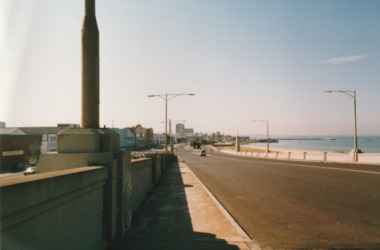
Photograph - Centenary Bridge, Port Melbourne, c.1991
... From Centenary Bridge looking towards St Kilda ...Built Environment - Civic Centenary Bridge From Centenary Bridge looking towards St Kilda Photograph Centenary Bridge, Port Melbourne ...Centenary Bridge prior to demolition in 1991.From Centenary Bridge looking towards St Kilda built environment - civic, centenary bridge -
Port Melbourne Historical & Preservation Society
Book - Nation Builders - Great Lives etc, Meyer Eidelson, Nov 2001
... This was a Centenary of Federation funded project launched 16.12.2001 at the cemetery deaths and funerals meyer eidelson alfred deakin sir ferdinand von mueller federation Signed by author, "For the Port Melbourne Historical and Preservation Society and their wonderful work. Meyer Eidelson Nation Builders - Great Lives etc.' by Meyer Eidelson. Soft cover, 120page book detailing principals of the Federation period who are buried at the St Kilda ...This was a Centenary of Federation funded project launched 16.12.2001 at the cemeteryNation Builders - Great Lives etc.' by Meyer Eidelson. Soft cover, 120page book detailing principals of the Federation period who are buried at the St Kilda Cemetery. Fold out back cover has map of cemetery; illustrated.Signed by author, "For the Port Melbourne Historical and Preservation Society and their wonderful work. Meyer Eidelsondeaths and funerals, meyer eidelson, alfred deakin, sir ferdinand von mueller, federation -
Port Melbourne Historical & Preservation Society
Document - Exhibition Catalogue, Joan Winter, Dredging, Draining, Dipping & Shipping: A History of the Foreshore & Low-lying Lands of the City of Port Phillip, Apr 1996
... Centenary Bridge...Beacons...Fishermans Bend...Transport - Aviation and Aerodrome...Sport - Swimming...Flood...Local Government - City of Port Phillip...Kulin Nation...Caroline Frederica LIARDET...Swallow & Ariell Ltd...Mission to Seafarers...Emerald Hill...St Kilda...Sandridge Lagoon Engineering - Canals and Drainage Melbourne Harbor Trust - Port of Melbourne Authority Piers and Wharves Piers and Wharves - Waterside Workers Arts and Entertainment Transport - Shipping Centenary Bridge Beacons Fishermans Bend Transport - Aviation and Aerodrome Sport - Swimming Flood Local Government - City of Port Phillip Kulin Nation Caroline Frederica LIARDET Swallow & Ariell Ltd Mission to Seafarers Emerald Hill St Kilda First major exhibition from the Council of Port Phillip was held in 1995. ...First major exhibition from the Council of Port Phillip was held in 1995. The catalogue material on Port Melbourne was written by PMH&PS members. It toured the city and then a reduced version was sent to sister city, Devonport. Black text and picture of Sandridge from the Esplanade, St Kilda on cover. sandridge lagoon, engineering - canals and drainage, melbourne harbor trust - port of melbourne authority, piers and wharves, piers and wharves - waterside workers, arts and entertainment, transport - shipping, centenary bridge, beacons, fishermans bend, transport - aviation and aerodrome, sport - swimming, flood, local government - city of port phillip, kulin nation, caroline frederica liardet, swallow & ariell ltd, mission to seafarers, emerald hill, st kilda -
 Port Melbourne Historical & Preservation Society
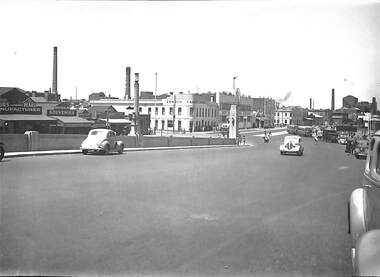
Photograph - Black and white photo of Centenary Bridge, c1946-47
... St Kilda Historical Society. Notations in pencil on the back along the left had edge indicate they came from "C W Ward photo, 355 High St, Prahran, Melbourne". Each photo bears the date 9-12-1947 in the top left corner. It is not known what this date refers to. Possibly it is when the photo was printed. Another notation on each photo says "Port Melbourne, taken in 1920". This is definitely incorrect and "NOT" has been written underneath this comment.] Natural Environment - Beaches and Foreshore Centenary ...(From Glen STUART). Photos taken from Centenary Bridge c1947. HMS Glory (inner East). HMS Implacable (outer East). HMS Indefatigable (outer West). Unknown freighter at Inner West. Ships still in wartime grey and used to transport personnel and equipment back to Australia after the war, before returning to England. PMHPS assume that these five photos (3354.01 - .05) were taken on the same day. See Glen STUART's comment above. HMS Glory, Implacable and Indefatigable with attendant destroyers Tuscan and Armada arrived in Port Melbourne on 23 January 1946 and returned to England in 1947. [This series of photos 3354.01 - .05 as well as 3361 and 3362 came to PMHPS from the Moe Historical Society via the St Kilda Historical Society. Notations in pencil on the back along the left had edge indicate they came from "C W Ward photo, 355 High St, Prahran, Melbourne". Each photo bears the date 9-12-1947 in the top left corner. It is not known what this date refers to. Possibly it is when the photo was printed. Another notation on each photo says "Port Melbourne, taken in 1920". This is definitely incorrect and "NOT" has been written underneath this comment.]Black and white photo looking down Centenary Bridge towards the London Family Hotel and Swallow and Ariell. Also commercial businesses to left of bridge C W Ward photo, 355 High St, Prahran, Melbournenatural environment - beaches and foreshore, centenary bridge, built environment - commercial, london family hotel, swallow & ariell ltd, built environment - industrial, business and traders - hotels -
 Port Melbourne Historical & Preservation Society
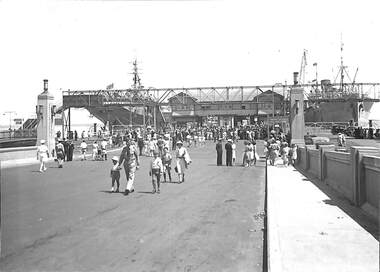
Photograph - Station Pier from Centenary Bridge, c1946 - 47
... St Kilda Historical Society. Notations in pencil on the back along the left had edge indicate they came from "C W Ward photo, 355 High St, Prahran, Melbourne". Each photo bears the date 9-12-1947 in the top left corner. It is not known what this date refers to. Possibly it is when the photo was printed. Another notation on each photo says "Port Melbourne, taken in 1920". This is definitely incorrect and "NOT" has been written underneath this comment.] Transport - Shipping Piers and Wharves - Station Pier War - World War II Centenary ...(From Glen Stuart). Photos taken from Centenary Bridge c1947. HMS Glory (inner East). HMS Implacable (outer East). HMS Indefatigable (outer West). Unknown freighter at Inner West. Ships still in wartime grey and used to transport personnel and equipment back to Australia after the war, before returning to England. PMHPS assume that these five photos (3354.01 - .05) were taken on the same day. See Glen Stuart's comment above. HMS Glory, Implacable and Indefatigable with attendant destroyers Tuscan and Armada arrived in Port Melbourne on 23 January 1946 and returned to England in 1947. [This series of photos 3354.01 - .05 as well as 3361 and 3362 came to PMHPS from the Moe Historical Society via the St Kilda Historical Society. Notations in pencil on the back along the left had edge indicate they came from "C W Ward photo, 355 High St, Prahran, Melbourne". Each photo bears the date 9-12-1947 in the top left corner. It is not known what this date refers to. Possibly it is when the photo was printed. Another notation on each photo says "Port Melbourne, taken in 1920". This is definitely incorrect and "NOT" has been written underneath this comment.]British aircraft carrier, HMS Glory (inner east) and unknown freighter (inner west) at Station Pier. Military personnel and civilians on Centenary Bridge ramp with Gatehouse in centre view. c 1946-47 C W Ward photo, 355 High St, Prahran, Melbournetransport - shipping, piers and wharves - station pier, war - world war ii, centenary bridge, hms glory -
 Port Melbourne Historical & Preservation Society
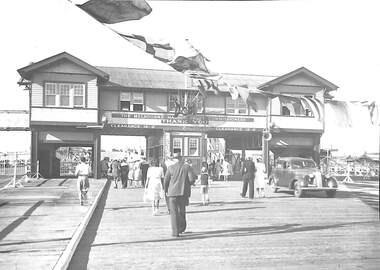
Photograph - Station Pier Gatehouse, c1946 - 47
... Centenary Bridge. HMS Glory, Implacable and Indefatigable with attendant destroyers Tuscan and Armada arrived in Port Melbourne on 23 January 1946 and returned to England in 1947. [This series of photos 3354.01 - .05 as well as 3361 and 3362 came to PMHPS from the Moe Historical Society via the St Kilda Historical Society. ...Centenary Bridge. HMS Glory, Implacable and Indefatigable with attendant destroyers Tuscan and Armada arrived in Port Melbourne on 23 January 1946 and returned to England in 1947. [This series of photos 3354.01 - .05 as well as 3361 and 3362 came to PMHPS from the Moe Historical Society via the St Kilda Historical Society. ...(From Glen Stuart). Photos taken from Centenary Bridge c1947. HMS Glory (inner East). HMS Implacable (outer East). HMS Indefatigable (outer West). Unknown freighter at Inner West. Ships still in wartime grey and used to transport personnel and equipment back to Australia after the war, before returning to England. PMHPS assume that these five photos (3354.01 - .05) were taken on the same day. See Glen Stuart's comment above although this photo has been taken on the pier looking back through the gatehouse towards Centenary Bridge. HMS Glory, Implacable and Indefatigable with attendant destroyers Tuscan and Armada arrived in Port Melbourne on 23 January 1946 and returned to England in 1947. [This series of photos 3354.01 - .05 as well as 3361 and 3362 came to PMHPS from the Moe Historical Society via the St Kilda Historical Society. Notations in pencil on the back along the left had edge indicate they came from "C W Ward photo, 355 High St, Prahran, Melbourne". Each photo bears the date 9-12-1947 in the top left corner. It is not known what this date refers to. Possibly it is when the photo was printed. Another notation on each photo says "Port Melbourne, taken in 1920". This is definitely incorrect and "NOT" has been written underneath this comment.]Station Pier Gatehouse from waterside with bunting and a "Thank You" sign attached. Pedestrians walking towards Centenary Bridge. c1946 - 47C W Ward photo, 355 High St, Prahran, Melbournepiers and wharves - station pier, war - world war ii, centenary bridge -
 Port Melbourne Historical & Preservation Society
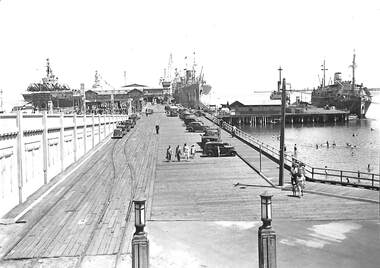
Photograph - Station Pier from Centenary Bridge c1946-47, c1946-47
... St Kilda Historical Society. Notations in pencil on the back along the left had edge indicate they came from "C W Ward photo, 355 High St, Prahran, Melbourne". Each photo bears the date 9-12-1947 in the top left corner. It is not known what this date refers to. Possibly it is when the photo was printed. Another notation on each photo says "Port Melbourne, taken in 1920". This is definitely incorrect and "NOT" has been written underneath this comment.] transport - shipping piers and wharves - station pier war - world war ii centenary ...(From Glen Stuart). Photos taken from Centenary Bridge c1947. HMS Glory (inner East). HMS Implacable (outer East). HMS Indefatigable (outer West). Unknown freighter at Inner West. Ships still in wartime grey and used to transport personnel and equipment back to Australia after the war, before returning to England. PMHPS assume that these five photos (3354.01 - .05) were taken on the same day. See Glen Stuart's comment above. HMS Glory, Implacable and Indefatigable with attendant destroyers Tuscan and Armada arrived in Port Melbourne on 23 January 1946 and returned to England in 1947. [This series of photos 3354.01 - .05 as well as 3361 and 3362 came to PMHPS from the Moe Historical Society via the St Kilda Historical Society. Notations in pencil on the back along the left had edge indicate they came from "C W Ward photo, 355 High St, Prahran, Melbourne". Each photo bears the date 9-12-1947 in the top left corner. It is not known what this date refers to. Possibly it is when the photo was printed. Another notation on each photo says "Port Melbourne, taken in 1920". This is definitely incorrect and "NOT" has been written underneath this comment.]Image taken from Centenary Bridge showing HMS Glory at Station Pier (inner east), an unidentified freighter at (inner west) and another unidentified ship berthed at the west finger pier. C W Ward photo, 355 High St, Prahran, Melbournetransport - shipping, piers and wharves - station pier, war - world war ii, centenary bridge, hms glory, hms implacable, hms indefaticable -
 Glen Eira Historical Society
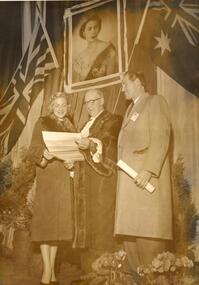
Photograph - CAULFIELD CENTENARY 1957
... The photographs are stamped with Herme’s Studios, 356 Neerim Road, Carnegie UM 3436 Photographer and exact dates are unknown. 2/Six black and white photos of various Caulfield Centenary celebrations 1957 including a carnival and fireworks. The photographs are stamped with S.T. Deans Photographer 33 Alma Road St Kilda....The photographs are stamped with Herme’s Studios, 356 Neerim Road, Carnegie UM 3436 Photographer and exact dates are unknown. 2/Six black and white photos of various Caulfield Centenary celebrations 1957 including a carnival and fireworks. The photographs are stamped with S.T. Deans Photographer 33 Alma Road St Kilda. ...This file contains two items 1/Forty-three black and while photos of various Caulfield Centenary celebrations 1957 including the naturalisation ceremony, a council meeting, centenary queens, fireworks, bands and parades and processions. The photographs are stamped with Herme’s Studios, 356 Neerim Road, Carnegie UM 3436 Photographer and exact dates are unknown. 2/Six black and white photos of various Caulfield Centenary celebrations 1957 including a carnival and fireworks. The photographs are stamped with S.T. Deans Photographer 33 Alma Road St Kilda.naturalisation ceremony, caulfield centenary, herme’s studios, s.t. deans photographer, sinclair a. george, neerim road, alma road, city hall, council meetings, parades and processions, centenary queen crowning ceremony, fireworks displays, cycling, festivals and celebrations, ferris wheel, bands, parade of decorated floats, marching girls, chinese dragon, special centenary council meeting, caulfield centenary carnival
