
Showing 73 items matching "staff conduct"
-
 University of Melbourne, Burnley Campus Archives
Administration, Department of Agriculture, Conduct Returns R7, 1972-1975
... staff conduct...staff conduct staff administration Manila folder with a sholace tie. ...staff conduct, staff, administration -
 Melbourne Tram Museum
Pamphlet, Yarra Trams, "Customer Service Charter", c2000
... Notes the franchise date of Yarra Trams and that the aims were for service levels to 2001. 1104.2 - 28 page DL size booklet, centre staples, full colour titled "Customer Service Charter" - similar contents to above, with notes on safety and security, accessibility, staff conduct etc. Dated June 2005. 1104.3 - 36 page DL size booklet, centre staples, full colour titled "Customer Service Charter" - similar contents to above, with notes on safety and security, accessibility, staff conduct etc. ...Notes the franchise date of Yarra Trams and that the aims were for service levels to 2001. 1104.2 - 28 page DL size booklet, centre staples, full colour titled "Customer Service Charter" - similar contents to above, with notes on safety and security, accessibility, staff conduct etc. Dated June 2005. 1104.3 - 36 page DL size booklet, centre staples, full colour titled "Customer Service Charter" - similar contents to above, with notes on safety and security, accessibility, staff conduct etc. ...1104.1 - pamphlet - DL size five fold, full colour titled "Customer Service Charter", looking at Yarra Trams vision, performance standards, statistics, fares, ticket checking, compensation code, safety and security, planning, carriage of items, customer service and with a network map, showing the Yarra Trams (excluding M.Tram) lines. Notes the franchise date of Yarra Trams and that the aims were for service levels to 2001. 1104.2 - 28 page DL size booklet, centre staples, full colour titled "Customer Service Charter" - similar contents to above, with notes on safety and security, accessibility, staff conduct etc. Dated June 2005. 1104.3 - 36 page DL size booklet, centre staples, full colour titled "Customer Service Charter" - similar contents to above, with notes on safety and security, accessibility, staff conduct etc. Dated May 2007. Includes a table of contents - see image i2. 1104.4 - as for .3, dated Feb. 2008 Two copies of each held except 1104.4.trams, tramways, yarra trams, public transport, customer charter -
 National Vietnam Veterans Museum (NVVM)
Photograph, Gibbons, Denis, Catholic Orphanage
... The hospital staff conducted regular medcaps and provided food and clothing sent from relatives and friends back home in Australia. ...The hospital staff conducted regular medcaps and provided food and clothing sent from relatives and friends back home in Australia. ...Denis Gibbons (1937 – 2011) Trained with the Australian Army, before travelling to Vietnam in January 1966, Denis stayed with the 1st Australian Task Force in Nui Dat working as a photographer. For almost five years Gibbons toured with nine Australian infantry battalions, posting compelling war images from within many combat zones before being flown out in late November 1970 after sustaining injuries. The images held within the National Vietnam Veterans Museum make up the Gibbons Collection A black and white photograph of Children at the Catholic Orphanage, Vung Tau which was supported by the Medical Staff of the 1st Australian Field Hospital (1AFH), vung Tau. The Diggers and the nurses, in particular, did an outstanding job of maintaining the health and well being of the orphans. The hospital staff conducted regular medcaps and provided food and clothing sent from relatives and friends back home in Australia. From time to time the orphaned children were taken for a day at Back Beach behind the 1AFH area. The children ranged in age from new born babes to teenagers. Quite a number, who were fathered by "round eyed" servicemen, were abandoned at birth, by Vietnames Bar girsl, particularly those with "dark" skin.photograph, 1st australian field hospital, vung tau, orphanage, gibbons collection catalogue, catholic orphanage, back beach, vietnamese children, vietnames bar girls, diggers, nurses, denis gibbons -
 Musculoskeletal Health Australia (now held by the Glen Eira Historical Society)
Photograph - Group photo, Circa 1990s
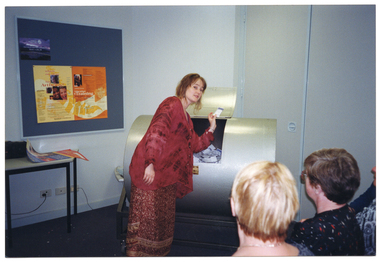
... In this photo, an AFV staff member conducts a raffle draw, with a few AFV members in attendance....In this photo, an AFV staff member conducts a raffle draw, with a few AFV members in attendance. arthritis foundation of victoria afv fundraising raffles tickets barrel staff volunteers members COL photo of a woman, standing. ...From car raffles to occasional competitions, the Arthritis Foundation of Victoria (AFV) often ran raffles as part of its fundraising efforts. In this photo, an AFV staff member conducts a raffle draw, with a few AFV members in attendance.COL photo of a woman, standing. She is leaning towards a large open barrel affixed horizontally to a stand. She is holding a raffle ticket in one hand, and the barrel is full of raffle tickets. In the background, there is a display board on the wall with posters on it, and a small table against the wall, with a loose poster on top. In the foreground, there are a few people watching the woman.arthritis foundation of victoria, afv, fundraising, raffles, tickets, barrel, staff, volunteers, members -
 Glen Eira City Council History and Heritage Collection
Employee Handbook
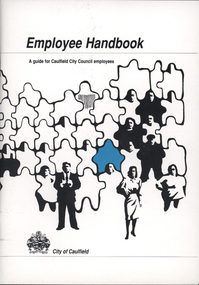
... It contains a wide range of information pertaining to council staff, including a section to fill in an employees name, personal details, and emergency contacts, as well as insights into staff expectations, conduct, salaries, council organisation, general welfare and safe work practices. ...It contains a wide range of information pertaining to council staff, including a section to fill in an employees name, personal details, and emergency contacts, as well as insights into staff expectations, conduct, salaries, council organisation, general welfare and safe work practices. ...This Employee Handbook booklet from September 1992 contains information relevant for employees of the Caulfield City Council at the time. It contains a wide range of information pertaining to council staff, including a section to fill in an employees name, personal details, and emergency contacts, as well as insights into staff expectations, conduct, salaries, council organisation, general welfare and safe work practices. City of Caulfield Employee Handbook, dated September 1992. -
 Musculoskeletal Health Australia (now held by the Glen Eira Historical Society)
Photograph - Group photo, 2003
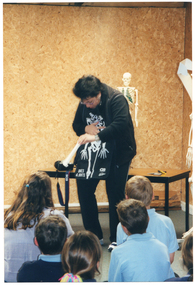
... They also attended an education session conducted by AV staff. This photo depicts an unidentified AV staff member conducting an educational presentation on bone and joint health to a group of school children....They also attended an education session conducted by AV staff. This photo depicts an unidentified AV staff member conducting an educational presentation on bone and joint health to a group of school children. arthritis foundation of victoria afv osteoporosis victoria ov arthritis victoria av rural and regional education rare outreach education bone strength bone health joint health school visit school program 2003 Colour photo of an instructor teaching a group of school children about bone and joint health. ...In 2003, Arthritis Victoria (AV) held an outreach event at a school in Stawell as part of its Rural And Regional Education (RARE) Program. Students were taken through a range of exercises on a sporting field or through a martial arts class indoors. They also attended an education session conducted by AV staff. This photo depicts an unidentified AV staff member conducting an educational presentation on bone and joint health to a group of school children.Colour photo of an instructor teaching a group of school children about bone and joint health.arthritis foundation of victoria, afv, osteoporosis victoria, ov, arthritis victoria, av, rural and regional education, rare, outreach, education, bone strength, bone health, joint health, school visit, school program, 2003 -
 Sunbury Family History and Heritage Society Inc.
Photograph, Bulla Primary School, School working bee, 1993
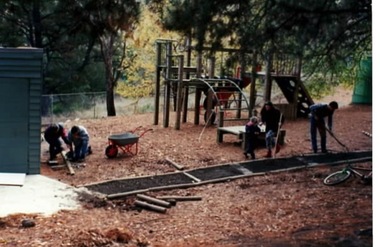
... While the school was in operation the local community along with the staff and children conducted many working bees at the school....While the school was in operation the local community along with the staff and children conducted many working bees at the school. ...The children and adults were at a working bee at Bulla Primary School and this group were concentrating on repairing some of the school's playground equipment. While the school was in operation the local community along with the staff and children conducted many working bees at the school.The Bulla Primary School throughout its existence enjoyed strong community support.A non-digital coloured photograph of three children and two adults working on some playground equipment.bulla primary school, working bees, playground equipment -
 Eltham District Historical Society Inc
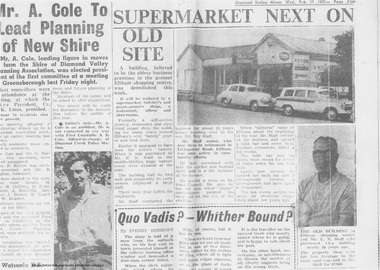
Newspaper clipping, Supermarket next on old site, Diamond Valley Mirror, Wed. Feb 17, 1965, p5, 1965
... Further extensions re-established the tea rooms of days gone by. Mr E.N. Staff conducted business for about 15 years before handing over the reins to his son, Ray Staff. ...Further extensions re-established the tea rooms of days gone by. Mr E.N. Staff conducted business for about 15 years before handing over the reins to his son, Ray Staff. ...In February 1965, Staffs Railway Store, the oldest business premises in the Eltham shopping district was demolished. Formerly a self-service grocery, restaurant and electrical repair shop, the building for many years housed Eltham’s only ‘family’ grocer and feed store. Earlier it had appeared to have been the town’s bakery. The building had been purchased in late March 1939 by Mr Eric N. Staff. At the time of E.N. Staff’s purchase there were huge bakers’ ovens located at the rear and the building also had a well and four toilets for employees. When the ‘pictures’ came to Eltham with the opening of the Eltham Public Hall across the road in 1941, Mr E.N. Staff extended the business and opened a milk bar and sweet shop. Further extensions re-established the tea rooms of days gone by. Mr E.N. Staff conducted business for about 15 years before handing over the reins to his son, Ray Staff. When his son Ray took over, the milk bar and tea rooms were closed for several years but the milk bar and was later re-opened and subsequently became a greengrocers and later again, a restaurant. The tea rooms section was converted to an electrical repair shop about 1955. Electoral Roll records for 1967 record Raymond Charles Staff at 929 Main Road, Eltham, grocer, and in 1968 at Lot 4, Hillcrest Avenue, Eltham, taxi truck operator. So it would appear that Ray continued to run the business for approximately two years after the original store was demolished and a new supermarket was built. Today, 929 Main Road is the Nongkhai Thai Restaurant and is precisely where the original Staffs store stood. Even though the facade has been modified at eye level with new larger windows, the upper facade is identical to that of the new Eltham Big Star Food Centre of 1965/66. But how did the original building, the oldest premises in the 1965 era shopping centre come about? On August 12th, 1902 at the Eltham Courthouse, appearing before T. Smallman, Esq,. Police Magistrate, and Messrs. W. Duncan and W.J. Taylor, Justices of the Peace is Luther Haley, baker. Wilfred Henry Johnston, by his agent Stanley Ernest Elder had applied for a warrant of ejectment under the Landlord and Tenant Act 1890 against Luther Haley from the bakery premises at the corner of Main Road and York Street. From the evidence presented we learn that Mrs Burgoyne of Eltham had purchased the property some months earlier from Mr Johnston, which consisted of a store and bakery establishment at Eltham occupied by Mr. Luther Haley, and whose lease expired some little time back, and up to the present time, Mr. Haley was not prepared to leave. He informed the court that he is unable to secure at Eltham a suitable house in which to carry on his business, but was building a place near the railway station which he expected to be done in about three weeks time, and he is then prepared to give up possession of the premises he now occupies. Mr Smallman informed the defendant, Luther Haley, that he will have to quit the premises in three weeks from the present date, and that a warrant of ejectment would be issued. However he also informed Mr Haley that he would order the warrant to lie in the office for three weeks from that date. The premises under construction referred to by Luther Haley in court were situated on the western side of Main Road, near the railway station slightly opposite present-day Arthur Street. It was opened around September 1902 as a General Store, Bakery and Tea Rooms. This was the original building in the present-day shopping precinct. At the time the only thing nearby was the railway station. Luther Haley’s business appeared to prosper and he would have catered to not only the locals abut also day visitors by train on Sundays coming up from Melbourne, offering fresh baked produce, tea rooms and summer drinks. The fields across Main Road running between present day Arthur Street and Luck Street were known as Haley’s Paddock and at times were used for community festivities and picnics. A newspaper report on the annual State schools picnic held at Haley’s Paddock on March 11, 1904 described it as “quite close to the railway station, and is quite capable of holding comfortably 10,000 people. With its ample shade and hilly surroundings, it is an ideal place for any gathering.” Luther Haley successfully ran his general store, bakery and tea rooms until 1917 when he and his family departed the district and moved to Westgarth Street in Northcote where he changed careers and became a publisher. It was then taken over by Hannah Lloyd and became known as Lloyd’s Railway General Store from 1917 to 1920. From then it had a succession of owners, one as short as two months until March 31, 1939 when the Grocery Business formerly carried on by Mr. T.K. White of Eltham for the previous eight years was purchased by Mr Eric N. Staff of Research and became known as E.N. Staff’s Railway Store. The ownership timeline for the store is as follows: Luther Haley Sep 1902-1917 Hannah Lloyd 1917-c.Feb 1920 Messrs J.R. & N.E. Lee 1920-Sep 1922 A. & E. Copeland Sep 1922-Sep 1925 Mr Price Sep 1925-Nov 1925 Mr Warren Nov 1925?-Nov 1926 A.W.J. Edwards Nov 1926-1931 T.K. White 1931-Mar 1939 Eric Staff Apr 1939-c.1954 Ray Staff c.1954-Feb 1965 then demolished Ray Staff Eltham Big Star Food Centre c.1965-1967 Digital file only from scan of copy on loan to EDHSa. copeland, a.w.j. edwards, big star food centre, e. copeland, eltham, eric staff, general store, hannah lloyd, j.r. lee, lloyd's general store, luther haley, main road, n.e. lee, price, ray staff, staffs general store, supermarket, t.k. white -
 Eltham District Historical Society Inc
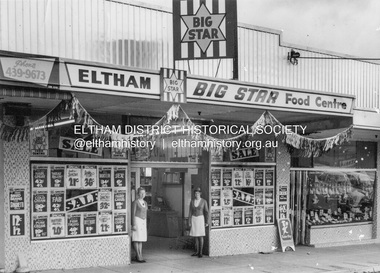
Photograph, Eltham Big Star Food Centre, Main Road, Eltham, c.1966
... Further extensions re-established the tea rooms of days gone by. Mr E.N. Staff conducted business for about 15 years before handing over the reins to his son, Ray Staff. ...Further extensions re-established the tea rooms of days gone by. Mr E.N. Staff conducted business for about 15 years before handing over the reins to his son, Ray Staff. ...In February 1965, Staffs Railway Store, the oldest business premises in the Eltham shopping district was demolished. Formerly a self-service grocery, restaurant and electrical repair shop, the building for many years housed Eltham’s only ‘family’ grocer and feed store. Earlier it had appeared to have been the town’s bakery. The building had been purchased in late March 1939 by Mr Eric N. Staff. At the time of E.N. Staff’s purchase there were huge bakers’ ovens located at the rear and the building also had a well and four toilets for employees. When the ‘pictures’ came to Eltham with the opening of the Eltham Public Hall across the road in 1941, Mr E.N. Staff extended the business and opened a milk bar and sweet shop. Further extensions re-established the tea rooms of days gone by. Mr E.N. Staff conducted business for about 15 years before handing over the reins to his son, Ray Staff. When his son Ray took over, the milk bar and tea rooms were closed for several years but the milk bar and was later re-opened and subsequently became a greengrocers and later again, a restaurant. The tea rooms section was converted to an electrical repair shop about 1955. Electoral Roll records for 1967 record Raymond Charles Staff at 929 Main Road, Eltham, grocer, and in 1968 at Lot 4, Hillcrest Avenue, Eltham, taxi truck operator. So it would appear that Ray continued to run the business for approximately two years after the original store was demolished and a new supermarket was built. Today, 929 Main Road is the Nongkhai Thai Restaurant and is precisely where the original Staffs store stood. Even though the facade has been modified at eye level with new larger windows, the upper facade is identical to that of the new Eltham Big Star Food Centre of 1965/66. But how did the original building, the oldest premises in the 1965 era shopping centre come about? On August 12th, 1902 at the Eltham Courthouse, appearing before T. Smallman, Esq,. Police Magistrate, and Messrs. W. Duncan and W.J. Taylor, Justices of the Peace is Luther Haley, baker. Wilfred Henry Johnston, by his agent Stanley Ernest Elder had applied for a warrant of ejectment under the Landlord and Tenant Act 1890 against Luther Haley from the bakery premises at the corner of Main Road and York Street. From the evidence presented we learn that Mrs Burgoyne of Eltham had purchased the property some months earlier from Mr Johnston, which consisted of a store and bakery establishment at Eltham occupied by Mr. Luther Haley, and whose lease expired some little time back, and up to the present time, Mr. Haley was not prepared to leave. He informed the court that he is unable to secure at Eltham a suitable house in which to carry on his business, but was building a place near the railway station which he expected to be done in about three weeks time, and he is then prepared to give up possession of the premises he now occupies. Mr Smallman informed the defendant, Luther Haley, that he will have to quit the premises in three weeks from the present date, and that a warrant of ejectment would be issued. However he also informed Mr Haley that he would order the warrant to lie in the office for three weeks from that date. The premises under construction referred to by Luther Haley in court were situated on the western side of Main Road, near the railway station slightly opposite present-day Arthur Street. It was opened around September 1902 as a General Store, Bakery and Tea Rooms. This was the original building in the present-day shopping precinct. At the time the only thing nearby was the railway station. Luther Haley’s business appeared to prosper and he would have catered to not only the locals abut also day visitors by train on Sundays coming up from Melbourne, offering fresh baked produce, tea rooms and summer drinks. The fields across Main Road running between present day Arthur Street and Luck Street were known as Haley’s Paddock and at times were used for community festivities and picnics. A newspaper report on the annual State schools picnic held at Haley’s Paddock on March 11, 1904 described it as “quite close to the railway station, and is quite capable of holding comfortably 10,000 people. With its ample shade and hilly surroundings, it is an ideal place for any gathering.” Luther Haley successfully ran his general store, bakery and tea rooms until 1917 when he and his family departed the district and moved to Westgarth Street in Northcote where he changed careers and became a publisher. It was then taken over by Hannah Lloyd and became known as Lloyd’s Railway General Store from 1917 to 1920. From then it had a succession of owners, one as short as two months until March 31, 1939 when the Grocery Business formerly carried on by Mr. T.K. White of Eltham for the previous eight years was purchased by Mr Eric N. Staff of Research and became known as E.N. Staff’s Railway Store. The ownership timeline for the store is as follows: Luther Haley Sep 1902-1917 Hannah Lloyd 1917-c.Feb 1920 Messrs J.R. & N.E. Lee 1920-Sep 1922 A. & E. Copeland Sep 1922-Sep 1925 Mr Price Sep 1925-Nov 1925 Mr Warren Nov 1925?-Nov 1926 A.W.J. Edwards Nov 1926-1931 T.K. White 1931-Mar 1939 Eric Staff Apr 1939-c.1954 Ray Staff c.1954-Feb 1965 then demolished Ray Staff Eltham Big Star Food Centre c.1965-1967 Research and copy: Peter Pidgeon (EDHS) Digital file only from scan of copy on loan to EDHSa. copeland, a.w.j. edwards, big star food centre, e. copeland, eltham, eric staff, general store, hannah lloyd, j.r. lee, lloyd's general store, luther haley, main road, n.e. lee, price, ray staff, staffs general store, supermarket, t.k. white -
 Waverley RSL Sub Branch
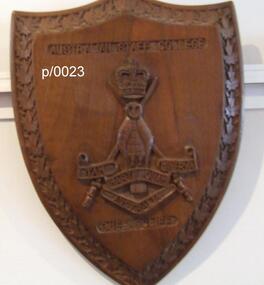
Plaque Australian Staff College Queenscliffe, Australian Staff College Queenscliffe
... On 26 October 1946, the advance party of the College arrived at Fort Queenscliff and the first staff course to be conducted at the new College began in January 1947. ...On 26 October 1946, the advance party of the College arrived at Fort Queenscliff and the first staff course to be conducted at the new College began in January 1947. ...At the end of World War II, the Federal Government decided to increase the strength of the post-war Regular Army and Cabinet gave approval for the establishment of a Staff College in Australia. On 27 February 1946, the Staff School (Australia) was re-named the Australian Staff College. Authority was given to raise the College and to locate it at Fort Queenscliff. Because the Fort was not ready for immediate occupation, a temporary home was found for the College, in June 1946, at the School of Infantry, Seymour Victoria. On 26 October 1946, the advance party of the College arrived at Fort Queenscliff and the first staff course to be conducted at the new College began in January 1947. Only in November 1979, after much thought and discussion, was it decided that the Australian Army Staff College would have a permanent home at Fort Queenscliff. On 1 January 1982, the College was renamed the Command and Staff College. This reflected the new aim of the Course which included both command and staff aspects. New support facilities were opened at Crow’s Nest Barracks in 1985 and work began in 1986 on the new instruction block at Fort Queenscliff. On 29 January 1988, the new Military Instructional Facility (MIF) was officially opened by the then Chief of the General Staff (CGS). The MIF features a lecture hall, a model room, syndicate rooms, computer centre, and library. Major rebuilding of the Officers Mess and Mess Accommodation was completed in mid-1990. By December 1996, 1224 officers had graduated from the Command and Staff College. The last course conducted under single service auspices, graduated in December 2000, thus bringing to a close a successful 62 years of Command and Staff College operation. http://www.fortqueenscliff.com.au/page11.htmWooden Plaque 15cm x 13cmAustralian Staff College Queenscliffe -
 Eltham District Historical Society Inc
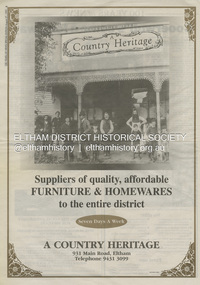
Document - Property Binder, 931 Main Road, Eltham
... Further extensions re-established the tea rooms of days gone by. Mr E.N. Staff conducted business for about 15 years before handing over the reins to his son, Ray Staff. ...Further extensions re-established the tea rooms of days gone by. Mr E.N. Staff conducted business for about 15 years before handing over the reins to his son, Ray Staff. ...Present day location of Nongkhai Thai Eltham restaurant Formerly the location of: Luther Haleys Bakery and General Store (Sep 1902-1917) - Hayley built this store, which was the first store erected in the present-day Eltham shopping district Hannah Lloyd's General Store (1917-c.Feb 1920) Various owners Staff's General Store (c.1939-Feb 1965) then demolished Ray Staff Eltham Big Star Food Centre (c.1965-1967) Eltham Big Star Food Centre (Staffs new building c.1965-1967) A Country Heritage Furniture and Homewares (?-2006) Newspaper advertisement: Leader Associated Newspapers, 100 Years of News Special Edition, August 27, 1997, p6; A Country Heritage Newspaper advertisement: Diamond Valley Leader, 4 September 2006, Closing Down Sale, A Country Heritage In February 1965, Staffs Railway Store, the oldest business premises in the Eltham shopping district was demolished. Formerly a self-service grocery, restaurant and electrical repair shop, the building for many years housed Eltham’s only ‘family’ grocer and feed store. Earlier it had appeared to have been the town’s bakery. The building had been purchased in late March 1939 by Mr Eric N. Staff. At the time of E.N. Staff’s purchase there were huge bakers’ ovens located at the rear and the building also had a well and four toilets for employees. When the ‘pictures’ came to Eltham with the opening of the Eltham Public Hall across the road in 1941, Mr E.N. Staff extended the business and opened a milk bar and sweet shop. Further extensions re-established the tea rooms of days gone by. Mr E.N. Staff conducted business for about 15 years before handing over the reins to his son, Ray Staff. When his son Ray took over, the milk bar and tea rooms were closed for several years but the milk bar and was later re-opened and subsequently became a greengrocers and later again, a restaurant. The tea rooms section was converted to an electrical repair shop about 1955. Electoral Roll records for 1967 record Raymond Charles Staff at 929 Main Road, Eltham, grocer, and in 1968 at Lot 4, Hillcrest Avenue, Eltham, taxi truck operator. Staff’s store appears to have occupied 929-933 Main Road and the Eltham Big Star Food Centre was centred around 931 Main Road. It would appear that Ray continued to run the business for approximately two years after the original store was demolished and a new supermarket was built. Today, 931 Main Road is the Nongkhai Thai Restaurant and is precisely where the original Staffs store stood. Even though the facade has been modified at eye level with new larger windows, the upper facade is identical to that of the new Eltham Big Star Food Centre of 1965/66. But how did the original building, the oldest premises in the 1965 era shopping centre come about? On August 12th, 1902 at the Eltham Courthouse, appearing before T. Smallman, Esq,. Police Magistrate, and Messrs. W. Duncan and W.J. Taylor, Justices of the Peace is Luther Haley, baker. Wilfred Henry Johnston, by his agent Stanley Ernest Elder had applied for a warrant of ejectment under the Landlord and Tenant Act 1890 against Luther Haley from the bakery premises at the corner of Main Road and York Street. From the evidence presented we learn that Mrs Burgoyne of Eltham had purchased the property some months earlier from Mr Johnston, which consisted of a store and bakery establishment at Eltham occupied by Mr. Luther Haley, and whose lease expired some little time back, and up to the present time, Mr. Haley was not prepared to leave. He informed the court that he is unable to secure at Eltham a suitable house in which to carry on his business, but was building a place near the railway station which he expected to be done in about three weeks time, and he is then prepared to give up possession of the premises he now occupies. Mr Smallman informed the defendant, Luther Haley, that he will have to quit the premises in three weeks from the present date, and that a warrant of ejectment would be issued. However he also informed Mr Haley that he would order the warrant to lie in the office for three weeks from that date. The premises under construction referred to by Luther Haley in court were situated on the western side of Main Road, near the railway station slightly opposite present-day Arthur Street. It was opened around September 1902 as a General Store, Bakery and Tea Rooms. This was the original building in the present-day shopping precinct. At the time the only thing nearby was the railway station. Luther Haley’s business appeared to prosper and he would have catered to not only the locals abut also day visitors by train on Sundays coming up from Melbourne, offering fresh baked produce, tea rooms and summer drinks. The fields across Main Road running between present day Arthur Street and Luck Street were known as Haley’s Paddock and at times were used for community festivities and picnics. A newspaper report on the annual State schools picnic held at Haley’s Paddock on March 11, 1904 described it as “quite close to the railway station, and is quite capable of holding comfortably 10,000 people. With its ample shade and hilly surroundings, it is an ideal place for any gathering.” Luther Haley successfully ran his general store, bakery and tea rooms until 1917 when he and his family departed the district and moved to Westgarth Street in Northcote where he changed careers and became a publisher. It was then taken over by Hannah Lloyd and became known as Lloyd’s Railway General Store from 1917 to 1920. From then it had a succession of owners, one as short as two months until March 31, 1939 when the Grocery Business formerly carried on by Mr. T.K. White of Eltham for the previous eight years was purchased by Mr Eric N. Staff of Research and became known as E.N. Staff’s Railway Store. The ownership timeline for the store is as follows: Luther Haley Sep 1902-1917 Hannah Lloyd 1917-c.Feb 1920 Messrs J.R. & N.E. Lee 1920-Sep 1922 A. & E. Copeland Sep 1922-Sep 1925 Mr Price Sep 1925-Nov 1925 Mr Warren Nov 1925?-Nov 1926 A.W.J. Edwards Nov 1926-1931 T.K. White 1931-Mar 1939 Eric Staff Apr 1939-c.1954 Ray Staff c.1954-Feb 1965 then demolished Ray Staff Eltham Big Star Food Centre c.1965-1967 THROWBACKTHURSDAY: ELTHAM BIG STAR FOOD CENTRE, MAIN ROAD, 1966 https://elthamhistory.wordpress.com/2020/04/16/throwbackthursday-eltham-big-star-food-centre-main-road-1966/eltham, businesses, a country heritage, property, shops, main road eltham, a. copeland, a.w.j. edwards, big star food centre, e. copeland, eric staff, general store, hannah lloyd, j.r. lee, lloyd's general store, luther haley, n.e. lee, price, ray staff, staffs general store, supermarket, t.k. white -
 Federation University Historical Collection
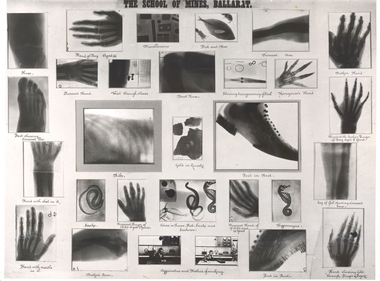
Photograph - Original x-rays, X-rays from pioneering Ballarat Demonstrations, 1896, 1896
... staff of The School of Mines, Ballarat, and particularly to Messers F.J. Martell and D. McDougall, the assistance of Rontgen X-rays will soon be available, for the relief of suffering humanity, at this institution." Martell was an ardent amateur photographer, and Duncan McDougall's experience as an electrician has enabled the two gentlemen to carry their experiments on to a perfectly successful issue. At first these gentlemen, together with Professor Purdie and Mr W. Huey Steele, conducted...staff of The School of Mines, Ballarat, and particularly to Messers F.J. Martell and D. McDougall, the assistance of Rontgen X-rays will soon be available, for the relief of suffering humanity, at this institution." Martell was an ardent amateur photographer, and Duncan McDougall's experience as an electrician has enabled the two gentlemen to carry their experiments on to a perfectly successful issue. At first these gentlemen, together with Professor Purdie and Mr W. Huey Steele, conducted ...X-Rays were first discovered on 08 November 1895. By 18 July 1896 staff members of the Ballarat School of Mines (SMB), were experimenting with the exciting new discovery. The history of x-rays began on 08 November 1895 at the University of Wurzburg in Bavaria. The discovery was officially announced on 25 December 1895. The first radiographs in Ballarat were taken at the School of Mines in July 1896 according to the Ballarat School of Mines (SMB) Annual Report. Frederick J. Martell, the Registrar of SMB arranged for the importation of tubes, while John M. Sutherland, an electrician, conducted most of the experiments giving 6 inch, 12 inch and 16 inch sparks respectively. In a short time brilliantly successful results were obtained, with some SMB Roentgen negatives taken at this time still in existence today. Samuel Ernest Figgis, H. R. W. Murphy, D. McDougall, and Frederick J. Martell carried out experiments at the SMB on Saturday evening 18 July 1896, producing 'perfect' negatives of a hand and wrist. A Roentgen Tube and an induction coil giving a two inch spark, the coil being sparked by the SMB's dynamo, were used to obtain these results. The Courier reported that 'the exposure of five minutes was ample' but concluded that 'the length of the exposure will be shortened as experiments proceed.' The Ballarat Courier reported on 20 July 1896 that: "Thanks to the energy of the staff of The School of Mines, Ballarat, and particularly to Messers F.J. Martell and D. McDougall, the assistance of Rontgen X-rays will soon be available, for the relief of suffering humanity, at this institution." Martell was an ardent amateur photographer, and Duncan McDougall's experience as an electrician has enabled the two gentlemen to carry their experiments on to a perfectly successful issue. At first these gentlemen, together with Professor Purdie and Mr W. Huey Steele, conducted a series of experiments by the aid of a Bonetti glass-plate induction machine which had been constructed by Mr McDougall. The results were very good, the various bones of the hand being distinctly visible. The following people were among those who witnessed the first X-ray experiments to be carried out in Ballarat. Andrew Anderson, President of the School of Mines, a large number of ladies and gentlemen, the medical profession Dr Edward Champion (1867-1929) Dr Gerald Eugene Cussen (1888-1943) Dr William Edward Davies (1868-1928) Dr Charles William Henry hardy (1861-1941) Dr Edward Kenneth Herring(1864-1922) Dr Joseph Lalor (1859-1907) Dr James Thomas Mitchell (1856-1945) Dr Edward Graham Ochiltree (1857-1896) Dr Robert Denham Pinnock (1849-1902) Dr Joseph Francis Usher (c1832-1909) Dr Grace Vale (nk-1933). The staff of SMB Professor Alfred Mica Smith Professor D. J. Dawbarn Mr. F. J. Martell. (http://guerin.ballarat.edu.au/aasp/is/library/collections/art_history/honour-roll/honourroll_X-Ray_pioneers.shtml) "Seven patients of the doctors who were present were treated. In each case the patient was suffering from the effects of an old wound or some other injury to other a hand or foot. One patient, a boy had a finger broken some years earlier and when xray plate of the injury was developed it indicated plainly the fracture on one of the joints of the third finger. In another case a woman had a foot had a foot X-rayed and the photograph revealed the seat of an earlier imjury to it. Likewise an injury to the bones of a hand of an elderly man was revealed by an x-ray photograph. Every X-ray photograph that evening showed the importance of this new development in electrical science and the doctors present agreed the "the results of the experiments on their patients, by showing the exact seat of the injury and its present condittion, would materially assist them iin supporting cures." (Warren Perry, The Ballarat School of Mines and Industries Ballarat, p 146.)A number of photographic xrays as taken by the Ballarat School of Mines in 1896. The xrays include bones, hands, feet, shoes and more. ballarat school of mines, scientific equipment, x-ray, xray, photography, foto, roentgen tube -
 Federation University Historical Collection
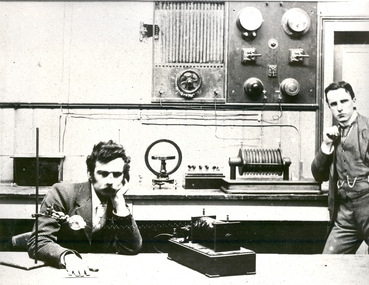
Photograph - Photograph - Black and White, X-Ray demonstration at the Ballarat School of Mines, 1896, 1896
... staff of The School of Mines, Ballarat, and particularly to Messers F.J. Martell and D. McDougall, the assistance of Rontgen X-rays will soon be available, for the relief of suffering humanity, at this institution." Martell was an ardent amateur photographer, and Duncan McDougall's experience as an electrician has enabled the two gentlemen to carry their experiments on to a perfectly successful issue. At first these gentlemen, together with Professor Purdie and Mr W. Huey Steele, conducted...staff of SMB Professor Alfred Mica Smith Professor D. J. Dawbarn Mr. F. J. Martell. (http://guerin.ballarat.edu.au/aasp/is/library/collections/art_history/honour-roll/honourroll_X-Ray_pioneers.shtml) ballarat school of mines x-ray xray john sutherland sutherland electricity photography foto Roentgen tube medical A bromide of this images states "Experimenting with X-rays, 1896" Two men, one seated, one standing standing in a room with early electrical equipment. They are conducting ...X-Rays were first discovered on 8 November 1895. By 18 July 1896 staff members of the Ballarat School of Mines (SMB), were experimenting with the exciting new discovery. The history of x-rays began on 8 November 1895 at the University of Wurzburg in Bavaria. The discovery was officially announced on 25 December 1895. The first radiographs in Ballarat were taken at the School of Mines in July 1896 according to the Ballarat School of Mines (SMB) Annual Report. Frederick J. Martell, the Registrar of SMB arranged for the importation of tubes, while John M. Sutherland, an electrician, conducted most of the experiments giving 6 inch, 12 inch and 16 inch sparks respectively. In a short time brilliantly successful results were obtained, with some SMB Roentgen negatives taken at this time still in existence today. Samuel Ernest Figgis, H. R. W. Murphy, D. McDougall, and Frederick J. Martell carried out experiments at the SMB on Saturday evening 18 July 1896, producing 'perfect' negatives of a hand and wrist. A Roentgen Tube and an induction coil giving a two inch spark, the coil being sparked by the SMB's dynamo, were used to obtain these results. The Courier reported that 'the exposure of five minutes was ample' but concluded that 'the length of the exposure will be shortened as experiments proceed.' The Ballarat Courier reported on 20 July 1896 that: "Thanks to the energy of the staff of The School of Mines, Ballarat, and particularly to Messers F.J. Martell and D. McDougall, the assistance of Rontgen X-rays will soon be available, for the relief of suffering humanity, at this institution." Martell was an ardent amateur photographer, and Duncan McDougall's experience as an electrician has enabled the two gentlemen to carry their experiments on to a perfectly successful issue. At first these gentlemen, together with Professor Purdie and Mr W. Huey Steele, conducted a series of experiments by the aid of a Bonetti glass-plate induction machine which had been constructed by Mr McDougall. The results were very good, the various bones of the hand being distinctly visible. The following people were among those who witnessed the first X-ray experiments to be carried out in Ballarat. Andrew Anderson, President of the School of Mines, a large number of ladies and gentlemen, the medical profession Dr Edward Champion (1867-1929) Dr Gerald Eugene Cussen (1888-1943) Dr William Edward Davies (1868-1928) Dr Charles William Henry hardy (1861-1941) Dr Edward Kenneth Herring(1864-1922) Dr Joseph Lalor (1859-1907) Dr James Thomas Mitchell (1856-1945) Dr Edward Graham Ochiltree (1857-1896) Dr Robert Denham Pinnock (1849-1902) Dr Joseph Francis Usher (c1832-1909) Dr Grace Vale (nk-1933). The staff of SMB Professor Alfred Mica Smith Professor D. J. Dawbarn Mr. F. J. Martell. (http://guerin.ballarat.edu.au/aasp/is/library/collections/art_history/honour-roll/honourroll_X-Ray_pioneers.shtml)Two men, one seated, one standing standing in a room with early electrical equipment. They are conducting pioneer X-rays at the Ballarat School of Mines in 1896. Seated on the left is John Waters Sutherland.A bromide of this images states "Experimenting with X-rays, 1896"ballarat school of mines, x-ray, xray, john sutherland, sutherland, electricity, photography, foto, roentgen tube, medical -
 Federation University Historical Collection
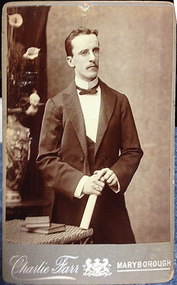
Photograph - Black and White, Charlie Farr, Duncan McDougall
... conducted by the Ballarat School of Mines in 1896. He was in the Mendelssohn Choir, and was associated with Professor Ross from University of Western Australia. The Ballarat Courier reported on 20 July 1896:"The Ballarat Courier reported on 20 July 1896 Thanks to the energy of the staff of the School of Mines Ballarat and particularly to Messers F J Martell and Duncan McDougall the assistance of Roentgen xrays will soon be available, for the relief of suffering at this institution. ...conducted by the Ballarat School of Mines in 1896. He was in the Mendelssohn Choir, and was associated with Professor Ross from University of Western Australia. The Ballarat Courier reported on 20 July 1896:"The Ballarat Courier reported on 20 July 1896 Thanks to the energy of the staff of the School of Mines Ballarat and particularly to Messers F J Martell and Duncan McDougall the assistance of Roentgen xrays will soon be available, for the relief of suffering at this institution. ...Duncan McDougall was associated with the pioneering X-rays conducted by the Ballarat School of Mines in 1896. He was in the Mendelssohn Choir, and was associated with Professor Ross from University of Western Australia. The Ballarat Courier reported on 20 July 1896:"The Ballarat Courier reported on 20 July 1896 Thanks to the energy of the staff of the School of Mines Ballarat and particularly to Messers F J Martell and Duncan McDougall the assistance of Roentgen xrays will soon be available, for the relief of suffering at this institution. On Wednesday evening 22 July 1896 a number of ladies and gentlemen witnessed a series of experiments with the Roentgen x rays." Duncan McDougall later worked at the Kalgoorlie School of Mines as a lecturer in physics and mathematics. on 19 February 1905 the 'West australian' newspaper announced: " Mr Duncan McDougall, formerly of the Ballarat, and later of the Maryborough Schools of Mines, was appointed to succeed Mr. Hart. Mr. McDougall had also charge of the branch class at Midland Junction. In both cases his work proved thoroughly good. The alterations in the trades class regulations will cause all the students in these classes to take up the study of this subject. I have every confidence that Mr. McDou gall will handle these large classes as successfully as the classes he had last year." By 1925 McDougall is being reported in the Perth Daily News: "Duncan McDougall, lecturer on electrical engineering and physics at the W.A. School of Mines, put forward a scheme for reducing the cost of mining in Kalgoorlie. He contended it was the duty of the State and Federal Governments to establish a central electricity generation plant in Kalgoorlie and supply power to the mines at not more than 1/2d a unit, at 3/4d per unit for winding only, and at 2d per unit for lighting. He suggested, the transmission of this power over a radius of 25 miles from Kalgoorlie." (06 May 1925)Photograph of a man in a shirt, bow tie and jacket, holding a scroll and wearing glasses. He has two books beside him on a table. The man is Duncan McDougall, and is portrait was taken in the Charlie Farr studio at Maryborough, Victoriaduncan mcdougall, mcdougall, x-ray, xray, xray, ballarat school of mines, choir, mendelssohn, kalgoorlie -
 Federation University Historical Collection
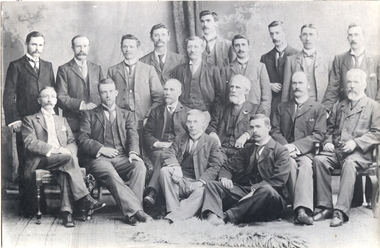
Book, Ballarat School of Mines Calendar, 1902-3, 1901
... Associateship and Final Certificates, Calendar for 1903, Discipline, Discipline Board, Fees, Full Certificates Issued, General Regulations, Honorary Correspondents, Office Bearers, President's Annual Report, Professors and Lecturers, Results of Examinations Conducted by Education Department 1901, Statistics - Students Attending Lectures, Subscriptions and Donations, Subjects Included in Regulations Technical Schools, Subjects of Instruction - Department of Chemistry and Metallurgy, Geological Department, Engineering Department, Electrical Department, Department of Mathematics and Physics, Practical, Plane and Solid Geometry, Photography, Syllabus for Assaying and Metallurgy, Time Table. Includes several photographs. ballarat school of mines senior members of staff ...The Ballarat School of Mines Calendar and Annual Report 1901. Associateship and Final Certificates, Calendar for 1903, Discipline, Discipline Board, Fees, Full Certificates Issued, General Regulations, Honorary Correspondents, Office Bearers, President's Annual Report, Professors and Lecturers, Results of Examinations Conducted by Education Department 1901, Statistics - Students Attending Lectures, Subscriptions and Donations, Subjects Included in Regulations Technical Schools, Subjects of Instruction - Department of Chemistry and Metallurgy, Geological Department, Engineering Department, Electrical Department, Department of Mathematics and Physics, Practical, Plane and Solid Geometry, Photography, Syllabus for Assaying and Metallurgy, Time Table. Includes several photographs.Green soft covered book of 96 pages, it includes the 1901 Annual Report of the Ballarat School of Mines. Images include: Senior Members of Staff and the Linkenbach Tableballarat school of mines, senior members of staff, linkenbach table, linkenbach, mica smith, dawson, hart, usher, annual report, andrew anderson, james m. bickett, r. t. vale, john warrington rogers, james millhinch bickett, james oddie, henry cuthbert, r. g. middleton, charles kent, robert lambert, andrew berry, fred j. martell, thomas s. hart, g. stephen hart, g. j. dawbarn, engineering department, a. e. c. kerr, lewis a. westcott, edgar a. mcconnon, laboratory assistant, john m. sutherland, electrical department, kerr grant, mathematics and physics, henry j. hall, charles e. campbell, photography -
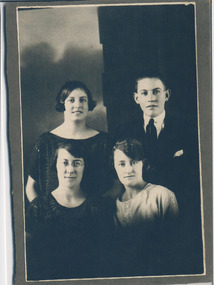 The Beechworth Burke Museum
Audio - Oral History, Jennifer Williams, Mr Alfred Spencer, 17th February 2000
... staff, as well as his time constructing roads and the pipe network of Beechworth. He discusses the dynamics of other workplaces around Beechworth, describing issues with how the local tannery treated its workers as well as how post-war migrants integrated across the town. He briefly discusses racial tensions between Chinese migrants and other miners on the goldfields. He also discusses the experience of health care in a rural area during his childhood. This oral history recording was part of a project conducted...staff, and how the resources of the town interacted. He explores themes that are important to Victorian history, such as migration. This oral history account is socially and historically significant as it is a part of a broader collection of interviews conducted by Jennifer Williams which were published in the book 'Listen to what they say: voices of twentieth-century Beechworth.' ...Alfred 'Alf' Spencer grew up on a dairy farm run by his mother, west south west of Beechworth 'down Robertson Road', and was very well connected to the wider Beechworth area. In this oral history, he recalls his time driving the milk cart around Beechworth as well as the time he spent buying lollies and seeing the pictures. He talks extensively about working as a butcher at his brother's store, including how the butchers interacted with the rest of the town and the staff, as well as his time constructing roads and the pipe network of Beechworth. He discusses the dynamics of other workplaces around Beechworth, describing issues with how the local tannery treated its workers as well as how post-war migrants integrated across the town. He briefly discusses racial tensions between Chinese migrants and other miners on the goldfields. He also discusses the experience of health care in a rural area during his childhood. This oral history recording was part of a project conducted by Jennifer Williams in the year 2000 to capture the everyday life and struggles in Beechworth during the twentieth century. This project involved recording seventy oral histories on cassette tapes of local Beechworth residents which were then published in a book titled: Listen to what they say: voices of twentieth century Beechworth. These cassette tapes were digitised in July 2021 with funds made available by the Friends of the Burke.Alfred Spencer's oral history of his life around Beechworth during the 20th century is historically and socially significant to the cultural history of the region and Victoria. There is a lot of detail about workplaces, their staff, and how the resources of the town interacted. He explores themes that are important to Victorian history, such as migration. This oral history account is socially and historically significant as it is a part of a broader collection of interviews conducted by Jennifer Williams which were published in the book 'Listen to what they say: voices of twentieth-century Beechworth.' While the township of Beechworth is known for its history as a gold rush town, these accounts provide a unique insight into the day-to-day life of the town's residents during the 20th century, many of which will have now been lost if they had not been preserved.This is a digital copy of a recording that was originally captured on a cassette tape. The cassette tape is black with a horizontal white strip and is currently stored in a clear flat plastic rectangular container. It holds up to 40 minutes of recordings on each side.Mr Alfred Spencer /listen to what they say, beechworth, oral history, burke museum, spencer, alfred spencer, migration, post-war migration, goldfields, health care, farm, farming, dairy farm, black springs, butchers, meat processing, butcher, road, road network, labour relations -
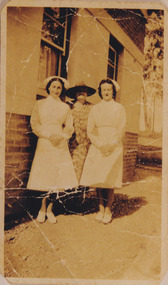 The Beechworth Burke Museum
Audio - Oral History, Jennifer Williams, Mrs Sheila Parkinson, 3 January 2000
... staff. The hospital officially closed in 1998. Today, the decommissioned two-storey Italianate style main building stands on eleven hectares of botanical gardens under National Trust protection. The site remains a popular cultural heritage destination for visitors. This oral history recording was part of a project conducted...staff. The hospital officially closed in 1998. Today, the decommissioned two-storey Italianate style main building stands on eleven hectares of botanical gardens under National Trust protection. The site remains a popular cultural heritage destination for visitors. This oral history recording was part of a project conducted ...Mrs Sheila Parkinson was born in Wagga in 1916 and came to Beechworth as a young woman around 1938. Sheila trained as a psychiatric nurse at Mayday Hills hospital prior to the second World War. At that time, unmarried women were accommodated and received nursing training on-site. Shiela was obliged to cease professional training and employment when she married in 1941, which disrupted completion of her final nursing examinations. Following post-war changes to the law that allowed married women to work, Sheila returned to Mayday Hills. Sheila's husband, Don, returned to Beechworth after four years abroad as a serviceman in the Australian Air Force. Beechworth's institutions were a major source of local employment throughout the twentieth century. As well as providing limited employment opportunities to young women like Shiela, post-war European migrants from Bonegilla Migrant camp found at Mayday Hills, encouraging European migrant settlement in the district. Mayday Hills was renamed several times since its establishment in 1867. At the peak of operations, it comprised sixty-seven buildings housing over twelve hundred patients patients and five hundred staff. The hospital officially closed in 1998. Today, the decommissioned two-storey Italianate style main building stands on eleven hectares of botanical gardens under National Trust protection. The site remains a popular cultural heritage destination for visitors. This oral history recording was part of a project conducted by Jennifer Williams in the year 2000 to capture the everyday life and struggles in Beechworth during the twentieth century. This project involved recording seventy oral histories on cassette tapes of local Beechworth residents which were then published in a book titled: Listen to what they say: voices of twentieth century Beechworth. The cassette tapes were digitised in July 2021 with funds made available by the Friends of the Burke.Employed as a psychiatric nurse at one of Beechworth's large welfare institutions, Mayday Hills, Mrs Sheila Parkinson recalls the conditions faced by staff and patients at the hospital, which cared for chronically ill people from the Ovens region and patients from the Yarra Bend Asylum, Melbourne, which closed in 1925. When Sheila first began her nurse training, Mayday Hills suffered from a lack of resources and rudimentary facilities and patients frequently suffered from the cold due to poor heating and inadequate clothing and bedding. However, as the twentieth century progressed, Sheila recalls how conditions and treatments improved as a result of increased government funding of services and advances in psychiatry and pharmaceutical medicine. Mrs Sheila Parkinson's oral history recording is historically and socially significant for its witness to life in Beechworth in the pre- and post-WWII period. Sheila's story enriches our understanding of processes of modernisation with regard to psychiatric and welfare services, while the course of Sheila's professional training and employment brings attention to systemic and socio-economic barriers faced by women, as well as the valuable contribution women and migrants make in the delivery of care and ancillary services. This oral history account is socially and historically significant as it is a part of a broader collection of interviews conducted by Jennifer Williams which were published in the book 'Listen to what they say: voices of twentieth-century Beechworth.' While the township of Beechworth is known for its history as a gold rush town, these accounts provide a unique insight into the day-to-day life of the town's residents during the twentieth century, many of which would have been lost if they had not been preserved.This is a digital copy of a recording that was originally captured on a cassette tape. The cassette tape is black with a horizontal white strip and is currently stored in a clear flat plastic rectangular container. It holds up 40 minutes of recordings on each side.Mrs Sheila Parkinson /twentieth century beechworth, mayday hills, psychiatric care, benevolent asylums, nursing, wwii, psychiatric treatment, country women, psychiatric hostpital, beechworth's institutions, local employment, government institutions, listen to what they say, oral history, burke museum, sheila parkinson, beechworth lunatic asylum, beechworth mental hospital, beechworth hospital for the insane, the kerferd clinic, bonegilla migrant camp, working women, white australia policy -
The Beechworth Burke Museum
Audio - Oral History, Jennifer Williams, Mr Bill Gerrard, 10 August 2000
... staff and patients at Mayday Hills Hospital where his wife worked during that period. His story also provides insights into economic hardhsip and the role of voluntary fundraising in the Beechworth community. This oral history recording was part of a project conducted ...Bill Gerrard was born in Albury in 1934 and moved to Beechworth in 1960 when his wife was employed as a nurse at Mayday Hills Hospital, later becoming nurse-in-charge. Gerrard first worked for the local railway and then as a taxi driver in Beechworth, and was involved in volunteer fund-raising activities such as raffles for charitable causes. This oral history recording was part of a project conducted by Jennifer Williams in the year 2000 to capture the everyday life and struggles in Beechworth during the twentieth century. This project involved recording seventy oral histories on cassette tapes of local Beechworth residents which were then published in a book titled: Listen to what they say: voices of twentieth century Beechworth. These cassette tapes were digitised in July 2021 with funds made available by the Friends of the Burke.Mr Bill Gerrard's account of his life in Beechworth and the local area during the mid-to-late 20th century is historically and socially significant to the cultural heritage of the region. He recounts aspects of community life and working conditions in Beechworth, particularly during the 1960s and 1970s, as well as conditions for staff and patients at Mayday Hills Hospital where his wife worked during that period. His story also provides insights into economic hardhsip and the role of voluntary fundraising in the Beechworth community. This oral history recording was part of a project conducted by Jennifer Williams in the year 2000 to capture the everyday life and struggles in Beechworth during the twentieth century. This project involved recording seventy oral histories on cassette tapes of local Beechworth residents which were then published in a book titled: Listen to what they say: voices of twentieth century Beechworth. These cassette tapes were digitised in July 2021 with funds made available by the Friends of the Burke.This is a digital copy of a recording that was originally captured on a cassette tape. The cassette tape is black with a horizontal white strip and is currently stored in a clear flat plastic rectangular container. It holds up 40 minutes of recordings on each side.Mr Bill Gerrard /listen to what they say, beechworth, oral history, burke museum, bill gerrard, mayday hills hospital, taxi driver, beechworth railway, religion, beechworth 1960s, beechworth 1970s, social welfare, community cohesion, twentieth-century working conditions, twentieth-century regional victoria, hibernian hotel, fund-raising -
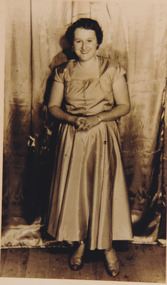 The Beechworth Burke Museum
Audio - Oral History, Jennifer Williams, Nola (Nettie) Maher, 27 April 2000
... She fondly recalls the camaraderie amongst the staff and certain managers, and details the factory processes, union activities and the work she continued to do once she was married and had children. This oral history recording was part of a project conducted...She fondly recalls the camaraderie amongst the staff and certain managers, and details the factory processes, union activities and the work she continued to do once she was married and had children. This oral history recording was part of a project conducted ...Nola (Nettie) Maher was born in Beechworth on 31st December, 1935. Her father returned from World War One and purchased a miner’s cottage in 1919 where Nettie lived in for the majority of her life. Nettie worked for ten years at the Pittman’s Shoe Factory, once located on Ford Street, which was in operation from 1 July 1947 to 28 August 1961. She fondly recalls the camaraderie amongst the staff and certain managers, and details the factory processes, union activities and the work she continued to do once she was married and had children. This oral history recording was part of a project conducted by Jennifer Williams in the year 2000 to capture the everyday life and struggles in Beechworth during the twentieth century. This project involved recording seventy oral histories on cassette tapes of local Beechworth residents which were then published in a book titled: Listen to what they say: voices of twentieth century Beechworth. These cassette tapes were digitised in July 2021 with funds made available by the Friends of the Burke. Nola Nettie Maher’s account of her personal and working life in Beechworth and the local area during the 20th century is historically and socially significant to the cultural heritage of the region. She details important details about life and working in the region post World War Two, including insights into women’s working roles, as well as the social aspects of town life. This oral history account is socially and historically significant as it is part of a broader collection of interviews conducted by Jennifer Williams which were published in the book ‘Listen to what they say: voices of twentieth-century Beechworth.’ While the township of Beechworth is known for its history as a gold rush town, these accounts provide a unique insight into the day-to-day life of the town’s residents during the 20th century, many of which would have been lost had they not been preserved. This is a digital copy of a recording that was originally captured on a cassette tape. The cassette tape is black with a horizontal white strip and is currently stored in a clear flat plastic rectangular container. It holds up 40 minutes of recordings on each side.Nola Maher /beechworth, nola maher, nettie maher, listen to what they say, jennifer williams, oral history, hospital, private hospital, birth, miner’s cottage, kerosine, eucalyptus, rabbit, laundry, dressmaking, dressing certificate, dry cleaners, hotel, shoe, leather, shoe factory, uppers, pittman, ford street, charlie king, union, wages, new years eve, dance, memorial hall, married women, flexible hours, ice cream, milk bar -
 Federation University Historical Collection
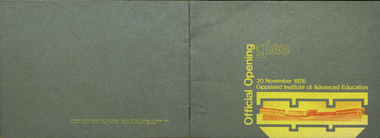
Booklet, Gippsland Printers, GIAE Official Opening, 1976, 1976
... staff, students, and graduates. On its establishment, the institute assumed responsibility for the diploma courses previously offered by the Yallourn Technical College which had commenced diploma teaching in 1929. Initially, all the Institute's teaching was conducted...staff, students, and graduates. On its establishment, the institute assumed responsibility for the diploma courses previously offered by the Yallourn Technical College which had commenced diploma teaching in 1929. Initially, all the Institute's teaching was conducted ...The Gippsland Institute of Advanced Education was established by an Order-in-Council in September 1968. The Council of the Institute included members of the Gippsland community who are prominent in local government, industry, commerce, education and the professions, the Director of the Institute, and representatives of the academic staff, students, and graduates. On its establishment, the institute assumed responsibility for the diploma courses previously offered by the Yallourn Technical College which had commenced diploma teaching in 1929. Initially, all the Institute's teaching was conducted in the diploma building of the Yallourn Technical College. In 1972 the Institute transferred part of its operations to the first of its permanent buildings on a large campus in rural surrounds near the township of Churchill, ten kilometres south of Morwell and one hundred and sixty kilometres east of Melbourne. The Gippsland Institute of Advanced Education was opened on 20 November 1976 by the Honourable Lindsay Thompson, Deputy Premier of Victoria and Minister of Education; and Senator J.L. Carrick, Minister for Education in the Commonwealth Government. Silver and yellow soft covered booklet celebrating the opening of the Gippsland Institute of Advanced Education at Churchill, Victoria. An introduction is written by C.H. Ford, President of Council. The book was designed and produced by the design Centre, G.I.A.E. SChool of Visual Arts.gippsland institute of advanced education, m.w. hopper, c.h. ford, lindsay thompson, j.l. carrick, r.w. muncey, churchill, yallourn, morwell, yallourn technical school, yuncken freeman architects, f.a. gray, f.r. goddard, j. milton-smith, j.r. lawry, b.r. groves, c.p.a. hos, c.w. tolley, k.f. smith, j. dowsley, robert charles bigelow, charles hartley ford, daniel eric kent, barbara lapin, john charles mcgauran, neville thompson, john charles vinall, leslie alfred galvin, maxwell francis gray, john alfred forster oram, donald robert hannington, john perrin kellaway, john james robertson, leslie lawrence shipp, valerie lorraine willington, leonard allan falk, kwong chiu lee dow, brenton robert groves, glen william drover, kenneth francis gibson, maxwell wallace hopper, teunis jan geerit korevaar, j.j. robertson, d.f. kretlow, chancellor and patrick, churchill campus, gippsland campus collection -
 Federation University Historical Collection
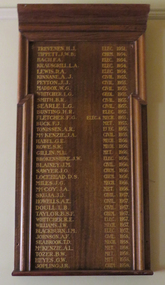
Photograph, Ballarat School of Mines Associates Board 1951-1957, c1984
... staff had drawn up a curriculum leading to an Associateship of the Ballarat School of Mines. The first two years work was to be common to all courses, but in the third and subsequent years the student wold be devoted to a specialised branch of study. The Associateship was to be conferred in one of another of the following Courses: Agriculture, Civil Engineering, Electrical Engineering, [Geology], Metallurgy and Mining Engineering. All were three year courses except for Agriculture which was two years. Each course was conducted...staff had drawn up a curriculum leading to an Associateship of the Ballarat School of Mines. The first two years work was to be common to all courses, but in the third and subsequent years the student wold be devoted to a specialised branch of study. The Associateship was to be conferred in one of another of the following Courses: Agriculture, Civil Engineering, Electrical Engineering, [Geology], Metallurgy and Mining Engineering. All were three year courses except for Agriculture which was two years. Each course was conducted ...In the early 1880s the Ballarat School of Mines Council introduced a three year course of training under the professors to qualify students in the following professions: 1. Mining Engineering 2. Metallurgy 3. Geology 4. Electricity [45] Each of these courses had an additional, but optional, fourth year of study. The prescribed subjects of study for an Associateship was set out in the Calendar of the Ballarat School of Mines in each year. Any student who passed the prescribed examinations in any of the above courses was issued with a Certificate of Competency, and conferred with the distinction of Associate. By the 1890s the professorial staff had drawn up a curriculum leading to an Associateship of the Ballarat School of Mines. The first two years work was to be common to all courses, but in the third and subsequent years the student wold be devoted to a specialised branch of study. The Associateship was to be conferred in one of another of the following Courses: Agriculture, Civil Engineering, Electrical Engineering, [Geology], Metallurgy and Mining Engineering. All were three year courses except for Agriculture which was two years. Each course was conducted in accordance with a prescribed curriculum and syllabus. During the 1910s there was an expectation that candidates for the Associate course should have attained the age of sixteen, and have received preparatory training equivalent to University Matriculation at least in the subjects of Elementary Mathematics, English Grammar and Composition, or have passed through Junior Technical School. In 1960 an new procedure for admission to graduate status as Associates was introduced to the Ballarat School of Mines where Associateship would be conferred at a public ceremony. After 01 July 1976 graduates of Ballarat College of Advanced Education and Ballarat College of Advanced Education were admitted in major studies relating to mining for Australian accreditation and overseas purposes. Ballarat School of Mines Associates could ascribe ASMB after their name.Black and white photograph of Associatedsof the Ballarat School of Mines from 1951-1957.Associates of the Ballarat School of Mines :Lists names 1989-1964ballarat school of mines, smb campus, electrical engineering 1958, brian w. schreenan civil engineering 1958, clifford j. restarick metallurgy 1958, john t h. clelland metallurgy 1958, donald c. stevens mining engineering 1958, john g. wolfe civil engineering 1959, james e. mcneil electrical engineering 1959, patrick h. nally civil engineering 1959, graham j. willey metallurgy 1959, stanley p. kisler civil engineering 1959, donald j. overall electrical engineering 1959, brian j. mclennan civil engineering 1959, philip j. davis art 1959, bruce v. mcdougall mining engineering 1959, lancelot j. matthews mechanical engineering 1959, alan w. wilson mechanical engineering 1959, alan w. wilson electrical engineering 1959, george a r. lewis art 1959, noel e. meagher electrical engineering 1960, john l. collier mining engineering 1960, john l. collier civil engineering 1960, frank andrewartha mechanical engineering 1960, norman leckie art 1960, lansell j. groat civil engineering 1960, boon thiam lu mining engineering 1960, oswyn n. hails civil engineering 1960, john a. watts applied chemistry 1960, thomas b. gallagher civil engineering 1960, brian a. bellingham civil engineering 1961, alan c leviston applied chemistry 1961, walter j wynd civil engineering 1961, francis d benjamin civil engineering 1961, leonard e fox mechanical engineering 1961, yan kai chung applied chemistry 1961, george d mcgrath mechanical engineering 1961, john r sawyer mechanical engineering 1961, ronald horgan applied chemistry 1961, douglas j vendy civil engineering 1961, john a barnes electrical engineering 1961, brian w smith metallurgy 1961, william r carlyon metallurgy 1961, chris p livitsanos metallurgy 1961, lawrence g trevan civil engineering 1961, richard g dunlop mechanical engineering 1961, ronald m ingleton mechanical engineering 1961, peter m robinson mechanical engineering 1961, david j jelbart mechanical engineering 1961, john g hollway mechanical engineering 1961, george m hetherington civil engineering 1961, david w brown mechanical engineering 1961, john r gowan civil engineering 1961, geoffrey a christian civil engineering 1961, arthur c burrow mechanical engineering 1961, john n mcarthur applied chemistry 1961, graeme r bromley mechanical engineering 1961, william davison civil engineering 1961, ben a johnson electrical engineering 1961, ben a johnson civil engineering 1961, allan j tinney civil engineering 1961, thomas h j coad applied chemistry 1961, brian h duthie civil engineering 1961, basil c bautovich mechanical engineering 1961, reece pullen electrical engineering 1961, john d carmichael electrical engineering 1961, william j spencer civil engineering 1961, neil a brogden civil engineering 1961, michael villani civil engineering 1961, ralph j hepburn mechanical engineering 1961, peter w linaker mechanical engineering 1961, peter j matthews mechanical engineering 1961, edgar mca bartrop mining engineering 1961, donald j stewart, brian schreenan -
 Federation University Historical Collection
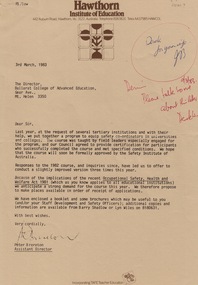
Document - Document - Short Course Program, VIOSH: Hawthorn Institute of Education, Short Course - Occupational Safety and Health in Educational Institutions, March 1983
... The course outlines the role of safety officers, course dimensions and focus, general aims, course format, staffing, certification and assessment, course fees, course outline, seminar outline and contacts. An application form provides the dates the sessions will be conducted and costs applicable....The course outlines the role of safety officers, course dimensions and focus, general aims, course format, staffing, certification and assessment, course fees, course outline, seminar outline and contacts. An application form provides the dates the sessions will be conducted and costs applicable. viosh victorian institute of occupational safety and health hawthorn institute of education departmental safety co-ordinators area safety co-ordinators school safety officers peter brereton assistant director jack barker director derek woolley dennis else short course Letterhead for Hawthorn Institute of Education. ...Victorian Institute of Occupational Safety and Health (VIOSH) Australia is the Asia-Pacific centre for teaching and research in occupational health and safety (OHS) and is known as one of Australia's leaders on the field. VIOSH has a global reputation for its innovative approach within the field of OHS management. VIOSH had its first intake of students in 1979. At that time the Institution was known as the Ballarat College of Advanced Education. In 1990 it became known as Ballarat University College, then in 1994 as University of Ballarat. It was 2014 that it became Federation University. VIOSH Australia students are safety managers, senior advisors and experienced OHS professionals. They come from all over Australia and industry. Students are taught active research and enquiry; rather than textbook learning and a one-size fits all approach. VIOSH accepts people into the Graduate Diploma of Occupational Hazard Management who have no undergraduate degree - on the basis of extensive work experience and knowledge. Details of the short course to be offered through Hawthorn Institute of Education. designed for Departmental and Area Safety Co-ordinators and School Safety Officers. The course outlines the role of safety officers, course dimensions and focus, general aims, course format, staffing, certification and assessment, course fees, course outline, seminar outline and contacts. An application form provides the dates the sessions will be conducted and costs applicable. Seven A4 sheets, typed. Comments in pen on introductory letter. Letterhead for Hawthorn Institute of Education. Signature of Peter Brereton, Assistant Director. Note from J B (Jack Barker). Note from Derek Woolley to Dennis (Else)viosh, victorian institute of occupational safety and health, hawthorn institute of education, departmental safety co-ordinators, area safety co-ordinators, school safety officers, peter brereton, assistant director, jack barker, director, derek woolley, dennis else, short course -
 Federation University Historical Collection
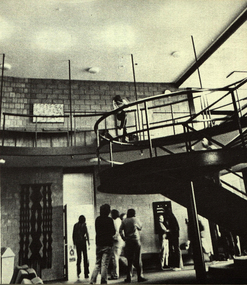
Photograph, The Knuckle at Gippsland Institute of Advanced Education, c1976
... staff, students, and graduates. On its establishment, the institute assumed responsibility for the diploma courses previously offered by the Yallourn Technical College which had commenced diploma teaching in 1929. Initially, all the Institute's teaching was conducted...staff, students, and graduates. On its establishment, the institute assumed responsibility for the diploma courses previously offered by the Yallourn Technical College which had commenced diploma teaching in 1929. Initially, all the Institute's teaching was conducted ...The Gippsland Institute of Advanced Education was established by an Order-in-Council in September 1968. The Council of the Institute included members of the Gippsland community who are prominent in local government, industry, commerce, education and the professions, the Director of the Institute, and representatives of the academic staff, students, and graduates. On its establishment, the institute assumed responsibility for the diploma courses previously offered by the Yallourn Technical College which had commenced diploma teaching in 1929. Initially, all the Institute's teaching was conducted in the diploma building of the Yallourn Technical College. In 1972 the Institute transferred part of its operations to the first of its permanent buildings on a large campus in rural surrounds near the township of Churchill, ten kilometres south of MOrwell and one hundred and sixty kilometres east of Melbourne. The Gippsland Institute of Advanced Education was opened on 20 November 1976 by the Honourable Lindsay Thompson, Deputy Premier of Victoria and Minister of Education; and Senator J.L. Carrick, Minister for Education in the Commonwealth Government. Image of an area in the Gippsland Institute of Advanced Education known as The Knuckle.gippsland institute of advanced education, gippsland campus collection, the knuckle, churchill -
 Federation University Historical Collection
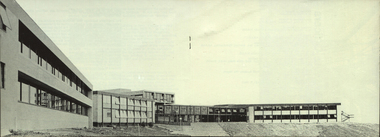
Photograph, Gippsland Institute of Advanced Education Ampitheatre, c1976
... staff, students, and graduates. On its establishment, the institute assumed responsibility for the diploma courses previously offered by the Yallourn Technical College which had commenced diploma teaching in 1929. Initially, all the Institute's teaching was conducted...staff, students, and graduates. On its establishment, the institute assumed responsibility for the diploma courses previously offered by the Yallourn Technical College which had commenced diploma teaching in 1929. Initially, all the Institute's teaching was conducted ...The Gippsland Institute of Advanced Education was established by an Order-in-Council in September 1968. The Council of the Institute included members of the Gippsland community who are prominent in local government, industry, commerce, education and the professions, the Director of the Institute, and representatives of the academic staff, students, and graduates. On its establishment, the institute assumed responsibility for the diploma courses previously offered by the Yallourn Technical College which had commenced diploma teaching in 1929. Initially, all the Institute's teaching was conducted in the diploma building of the Yallourn Technical College. In 1972 the Institute transferred part of its operations to the first of its permanent buildings on a large campus in rural surrounds near the township of Churchill, ten kilometres south of MOrwell and one hundred and sixty kilometres east of Melbourne. The Gippsland Institute of Advanced Education was opened on 20 November 1976 by the Honourable Lindsay Thompson, Deputy Premier of Victoria and Minister of Education; and Senator J.L. Carrick, Minister for Education in the Commonwealth Government. The Gippsland Institute of Advanced Education ampitheatregippsland institute of advanced education, gippsland campus collection, churchill, ampitheatre, buildings -
 Ballarat Fire Brigade
Personal Guideline
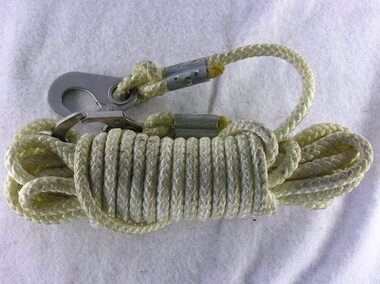
... conducting search & rescue of burning buildings. Makes up part of the firemans belt that was owned by Senior Firefighter (S/F) W.G. Jamieson who was stationed at Ballarat Fire Station as part of the permanent staff....conducting search & rescue of burning buildings. Makes up part of the firemans belt that was owned by Senior Firefighter (S/F) W.G. Jamieson who was stationed at Ballarat Fire Station as part of the permanent staff. w g jamieson ballarat fire station personal guideline 6 metre Long by 6mm diameter personal guideline made from woven nylon rope with stainless steel single action gated hooks attached on both ends Personal Guideline ...6 metre Long by 6mm diameter personal guideline used for attaching a firefighter to another firefighter or a main guideline while conducting search & rescue of burning buildings. Makes up part of the firemans belt that was owned by Senior Firefighter (S/F) W.G. Jamieson who was stationed at Ballarat Fire Station as part of the permanent staff.6 metre Long by 6mm diameter personal guideline made from woven nylon rope with stainless steel single action gated hooks attached on both endsw g jamieson, ballarat fire station, personal guideline -
 Red Cliffs Military Museum
Replica Medals, WW1 & WW11 Medals Awarded to Nathaniel Barclay, (estimated); between 1914 & 1945
... Staff Sergeant 24th August 1940. To 2/14th Training Battalion Wangaratta 11th October 1940. To 2/23rd Training Battalion, Wangaratta 18th October, 1940.To Southern Command Training School 26th May 1941.to Camp Bonegilla 15th May 1942. To Camp Caulfield 11th November 1942. Discharged to Reserve Occupation 19th November 1942. Remarks. Awarded 1915-15 Star, British War Medal, and Victory Medal 1914-1919 Awarded Distinguished Conduct...Staff Sergeant 24th August 1940. To 2/14th Training Battalion Wangaratta 11th October 1940. To 2/23rd Training Battalion, Wangaratta 18th October, 1940.To Southern Command Training School 26th May 1941.to Camp Bonegilla 15th May 1942. To Camp Caulfield 11th November 1942. Discharged to Reserve Occupation 19th November 1942. Remarks. Awarded 1915-15 Star, British War Medal, and Victory Medal 1914-1919 Awarded Distinguished Conduct ...Born 5th October 1895 in Adavoyle, United Kindom Occupation Grocer and later horticulturalist Married after WW1- Wife - Daisy Florence Barclay World War One Staff Sergeant Regimental Number 2139 Enlisted AIF in Melbourne 29th December 1914, having previously served 3 months with the Ulster Volunteers and to camp Broadmeadows, to depot Battalion 29th December 1914. Embarked from Melbourne for the middle East with 3rd reinforcement group for the 5th Battalion, 2nd Brigade, 1st Division, 25th February 1915 per transport 'Runic'. Disembarked Alexandria and to camp Heliopolis, Egypt. Operation Gallipoli from 5th May 1915 with 5th Battalion. Sick with dental problems 2nd Field Ambulance 17th September 1915. To hospital Lemnos 20th December 1915. To Alexandria hospital with pluerisy 12th January 1916. Returned to Australia with enteric per 'Nestor' 9th February 1916.To duty Broadmeadows 4th April 1916. Wmbarked with 4th reinforcements group for the 58th Battalion, 15th Brigade per transport 'Themistocles' 1st August 1916 Returned to England 14th September 1916. Operations France and Flanders from 6th December 1916. To 59th Battalion 29th December 1916. To 5th Division Infantry School 18th February to 28th March 1917 as Lance Corporal. Corporal 7th April 1917. Sergeant 2nd May 1917. To 3rd Southern General Hospital Oxford 4th October 1917. Returned to Melbourne per Transport 'Persic' 12th February 1918. Discharged 14th March 1918. Second World War. Regimental Number V5571 Emlisted in the Australian Military Forces in Royal Park, Melbourne 22nd August 1940 and to 2nd Infantry Training Battalion, Fyansford. Staff Sergeant 24th August 1940. To 2/14th Training Battalion Wangaratta 11th October 1940. To 2/23rd Training Battalion, Wangaratta 18th October, 1940.To Southern Command Training School 26th May 1941.to Camp Bonegilla 15th May 1942. To Camp Caulfield 11th November 1942. Discharged to Reserve Occupation 19th November 1942. Remarks. Awarded 1915-15 Star, British War Medal, and Victory Medal 1914-1919 Awarded Distinguished Conduct Medal as Lance Corporal vide London Gazette 30111 of 31st July 1918. Citation for action on 9th July 1917 during the third Battle of Ypres reads- " For conspicous gallantry and devotion to duty. He rendered invaluable service during operation in carrying important messsages through heavy fire" Awarded War Medal and Australian Service Medal 1939-45 in 1951. Described as 71.5inches tall, medium complexion, blue eyes and brown hair. He died 11th September 1962.WW1 - Distinguished Conduct Medal 1914/15 Star 1914/18 British War Medal Victory Medal WW11 - 1939/45 British War Medal Australian Service Medal 1939/45 All medals with associated coloured ribbons. These are replica medals made in the exact metals as the originals. Also in display is a record of War Service which can be found in the narrative. Noneservice, medal, 1918, citation, ww1, military, gazette, london, ww11, medals, 30111, 31st, july, ypres, distinguished -
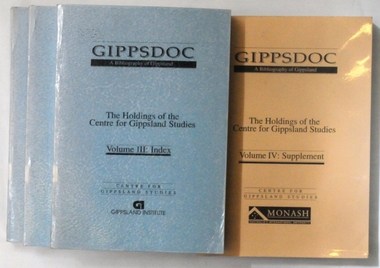 Orbost & District Historical Society
books, Gippsland Institute of Advanced Education, Gippsdoc A Bibliography of Gippsland, 2292.`1; 2292.2; 2292.3 in 1989 and 2292.4 in 1993
... staff, students, and graduates. The institute assumed responsibility for the diploma courses previously offered by the Yallourn Technical College. Initially, all the Institute's teaching was conducted...staff, students, and graduates. The institute assumed responsibility for the diploma courses previously offered by the Yallourn Technical College. Initially, all the Institute's teaching was conducted ...The Gippsland Institute of Advanced Education was opened on 20 November 1976. The Council of the Institute included members of the Gippsland community who are prominent in local government, industry, commerce, education and the professions, the Director of the Institute, and representatives of the academic staff, students, and graduates. The institute assumed responsibility for the diploma courses previously offered by the Yallourn Technical College. Initially, all the Institute's teaching was conducted in the diploma building of the Yallourn Technical College. In 1972 the Institute transferred part of its operations to the first of its permanent buildings on a large campus in rural surrounds near the township of Churchill.These books are useful reference tools.Four thick volumes of "Gippsdoc A Bibliography of Gippsland". Volumes 1, 2 and 3 have blue covers and Volume 4, the Supplement, has a beige cover. Volume 3 has 1072 pp and is an index. These books list published books which are about Gippsland.books-a-bibliography-of-gippsland gippsland-institute-of-advance-education -
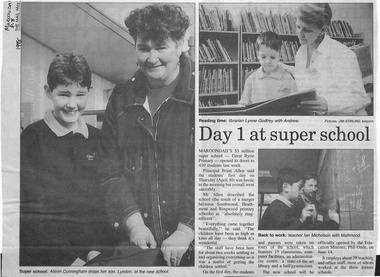 Ringwood and District Historical Society
Newspaper, Great Ryrie Primary School, Heathmont - Newspaper Clipping - 5 May 1998 - "Day 1 at super school'"
... The school employs about 28 staff, most from the former schools. The official opening will be conducted by Education Minister Phil Gude on June 14. ...The school employs about 28 staff, most from the former schools. The official opening will be conducted by Education Minister Phil Gude on June 14. ...Summary - The article covers the opening day of Great Ryrie Primary School, Maroondah’s new $3 million “super school,” created from the merger of Southwood, Heathmont, and Ringwood Primary Schools. 410 students began classes on Thursday, April 30, with Principal Brian Allen reporting a busy but smooth first day. He described the new school as “absolutely magnificent,” praising both staff preparation and the excitement of the children. Families were given tours of the new facilities, which include 15 classrooms, computer labs, an administrative centre, a state‑of‑the‑art library, and a hall/gymnasium. The school employs about 28 staff, most from the former schools. The official opening will be conducted by Education Minister Phil Gude on June 14. (Co-Pilot 11/7/2026)Photo Captions: "Alison Cunningham drops her son Lyndon at the new school" "Reading time: Librarian Lynne Godfrey with Andrew" "Back to work: Teacher Ian Michelson with Mahmood" Images by Jim Stirling. -
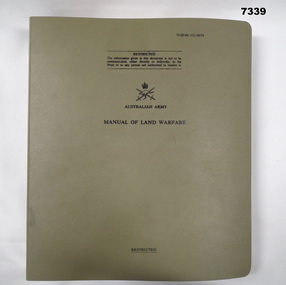 Bendigo Military Museum
Manual - LAND WARFARE, ARMY, Department of Defence (Army Office), 25 June 1981
... Manual contains restricted information covering the following; Part One - Conduct of Operations. Volume 6 - Operational Staff Work. Pamphlet No. 2 - AIDE-DIEMOIRE Part of the collection of KEVIN JOHN HERDMAN, No 397661. ...Manual contains restricted information covering the following; Part One - Conduct of Operations. Volume 6 - Operational Staff Work. Pamphlet No. 2 - AIDE-DIEMOIRE Part of the collection of KEVIN JOHN HERDMAN, No 397661. ...Manual contains restricted information covering the following; Part One - Conduct of Operations. Volume 6 - Operational Staff Work. Pamphlet No. 2 - AIDE-DIEMOIRE Part of the collection of KEVIN JOHN HERDMAN, No 397661. See Cat No. 5942P for details of his service recod.Khaki coloured plastic four ring folder. White coloured pages have cut edges. Eash has four holes punched for filing into folder. Title on front in black type. Army logo in black. Text on pages in black type. Black tabs to match chapter. Abbreviated title in black type on spine.australian army, land warfare, manual, kevin john herdman -
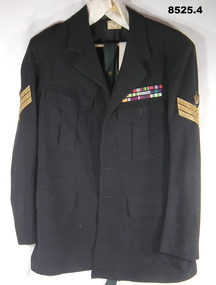 Bendigo Military Museum
Uniform - JACKET, MESS DRESS, Quinter & Sons, 1951
... Conduct Medal. Meritorious Service Medal. Sth. Vietnam Campaign Medal. Mess dress Uniform Post WW2 Passchendaele Barracks Trust 1. Jacket, black woollen, four front pockets. There are no buttons or corps badges. On the arms are the metallic gold badges of a Staff ...The Medal ribbons are:- Top row - OBE Military Division 1939-45 Star, Pacific Star, War medal 1939-45. Middle row - Aust Service Medal. Korea Medal, Korea U.N. Medal, General Service Medal (Malaya). Bottom Row - Vietnam Medal. Long Service & Good Conduct Medal. Meritorious Service Medal. Sth. Vietnam Campaign Medal.1. Jacket, black woollen, four front pockets. There are no buttons or corps badges. On the arms are the metallic gold badges of a Staff Sgt. On the chest are 12 ribbons. 2. Braces, trouser. Elastic white, gold plated steel clips. 3. Necktie, Green. On the tie are repetitive patterns of the RA Inf badge. 4. Necktie.mess dress, uniform, post ww2, passchendaele barracks trust
