
Showing 360 items matching "staff positions"
-
 Whitehorse Historical Society Inc.
Article, Council staff positions
... Council staff positions...Whitehorse Historical Society Inc. 2-10 Deep Creek Road Mitcham melbourne Local government Council staff Descriptions of local government jobs - clerk and Town Clerk / Shire Secretary Descriptions of local government jobs - clerk and Town Clerk / Shire Secretary Council staff positions Article Article ...Descriptions of local government jobs - clerk and Town Clerk / Shire SecretaryDescriptions of local government jobs - clerk and Town Clerk / Shire SecretaryDescriptions of local government jobs - clerk and Town Clerk / Shire Secretarylocal government, council staff -
University of Melbourne, Burnley Campus Archives
Administration, Department of Agriculture, Reclassifications S8, 1970-1975
... ...staff positions...Memorandsa re reclassification of staff positions 1970-1975....staff reclassification of staff positions staff positions administration Manila folder with a shoelace tie. ...staff, reclassification of staff positions, staff positions, administration -
University of Melbourne, Burnley Campus Archives
Administration, Department of Agriculture, New Positions S7, 1970-1977
... ...staff positions...Memoranda re new staff positions 06.10.1970-28.09.1977....staff staff positions administration Manila folder with shoelace tie. ...staff, staff positions, administration -
 Melbourne Tram Museum
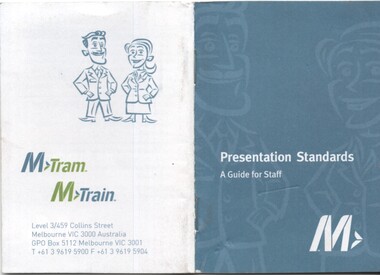
Book, National Express, M> Presentation Standards - A guide for staff", c2000
... Has some illustrations and photographs of the uniforms for various staff positions....Has some illustrations and photographs of the uniforms for various staff positions. M> Presentation Standards - A guide for staff" Book National Express ...Book or booklet - pocket size - 20 pages - centre stapled titled M> Presentation Standards - A guide for staff" for use by M>Train or M>tram staff - giving details of the uniforms, rules for wearing, garment details for staff. Has some illustrations and photographs of the uniforms for various staff positions.trams, tramways, uniforms, m>train, m>tram -
 Ballarat Tramway Museum
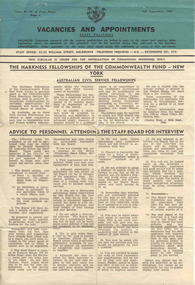
document - Circular, State Electricity Commission of Victoria (SECV), "Vacancies and Appointments", Sep. 1960
... Part of the SEC system for advising staff positions etc to their personnel. Issue 60/35 and records that it was four pages. ...Part of the SEC system for advising staff positions etc to their personnel. Issue 60/35 and records that it was four pages. ...Yields information about the method that the State Electricity Commission of Vic undertook interviews for staff appointments. Gave advice of the era for such interviews and objectives of the interview.First page of SEC printed Circular titled "Vacancies and Appointments", for 9 Sept. 1960. Part of the SEC system for advising staff positions etc to their personnel. Issue 60/35 and records that it was four pages. The first page advises of the "The Harkness Fellowships" and "Advice to personnel attending the Staff Board for Interview" - gives 19 points of advice, hints, what to do and what not to do.tram, trams, sec, staff, personnel -
 Melbourne Tram Museum
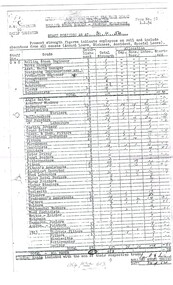
Document - Photocopy, Yarra Trams, "Rolling Stock Branch - Preston Workshops Staff Position as at 30-4-54", undated
... "Rolling Stock Branch - Preston Workshops Staff Position as at 30-4-54"...Photocopy on A3 paper of a MMTB report titled "Rolling Stock Branch - Preston Workshops Staff Position as at 30-4-54". Showing the staff both officers and tradesmen, apprentices, establishment numbers and actual numbers of employees at Preston Workshops. ..."Rolling Stock Branch - Preston Workshops Staff Position as at 30-4-54" Document Photocopy Yarra Trams ...Photocopy on A3 paper of a MMTB report titled "Rolling Stock Branch - Preston Workshops Staff Position as at 30-4-54". Showing the staff both officers and tradesmen, apprentices, establishment numbers and actual numbers of employees at Preston Workshops. Establishment was 683, actual number 613. Signed by the Rolling stock Engineer - report to the Chief Engineer. Not known when copy made.trams, tramways, mmtb, preston workshops, personnel -
University of Melbourne, Burnley Campus Archives
Administrative record, Andrew Smith et al, University of Melbourne Institute of Land and Food Resources Burnley Campus Gardens Staffing 2003-04, 2003-2005
... Draft Specifications for the maintenance of Burnley Gardens. 3. Staff position descriptions. Note attached: "This is a record of what was happening for Garden Management transition to Prop & Campus Services A. ...Draft Specifications for the maintenance of Burnley Gardens. 3. Staff position descriptions. Note attached: "This is a record of what was happening for Garden Management transition to Prop & Campus Services A. ...mainrenance, garden maintenance, property & buildings, staff descriptions, transition -
 Sunshine and District Historical Society Incorporated
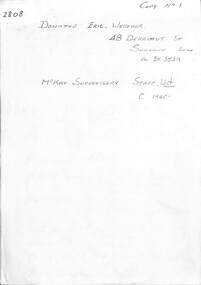
Document - McKay Supervistory Staff List C1945
... Name written notes McKay Supervistory Staff List C1945 with position and department details...Handwritten notes McKay Supervistory Staff List C1945 with position and department details...McKays Massey Harris Sunshine Harvester Factory Employee Handwritten notes McKay Supervistory Staff List C1945 with position and department details Name written notes McKay Supervistory Staff List C1945 with position and department details Document McKay Supervistory Staff List C1945 ...Handwritten notes McKay Supervistory Staff List C1945 with position and department detailsh.v. mckays massey harris, sunshine harvester factory, employee -
Box Hill Historical Society
Photograph - Box Hill Primary School Staff 1983, Jim Maynard & staff, 26/05/1983
... List of staff and their positions included....List of staff and their positions included. Schools Box Hill Primary School Distan> David Teachers Langton> Julie Nelson> John Kolbe> Eleanor Tracey> Lesley Greig> Isabel Thomson> Dorothy Plozza> Terry Tan> Shahan Hancock> Julia Kelly> Noel Lahey> Frank Readhead> Margaret McNaught> Peg Colour photograph Photograph Box Hill Primary School Staff 1983 Jim Maynard & staff ...Box Hill Primary School staff, taken on May 26, 1983. List of staff and their positions included.Colour photographschools, box hill primary school, distan> david, teachers, langton> julie, nelson> john, kolbe> eleanor, tracey> lesley, greig> isabel, thomson> dorothy, plozza> terry, tan> shahan, hancock> julia, kelly> noel, lahey> frank, readhead> margaret, mcnaught> peg -
 Warrnambool and District Historical Society Inc.
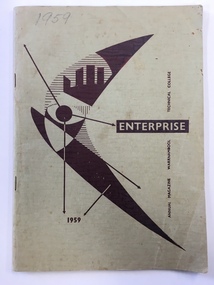
Booklet, Modern Print, W’Bool, Victoria, Enterprise Warrnambool Technical School 1959, 1959
... Approximately 40 pages which contain a number of black and white photographs and lists of student groups and sports teams as well as staff and the positions held....Approximately 40 pages which contain a number of black and white photographs and lists of student groups and sports teams as well as staff and the positions held. Enterprise Warrnambool Technical School 1959 Booklet Modern Print, W’Bool, Victoria. ...This is a typical school magazine which documents the activities and people who were associated as either studens of staff during 1959. It records through photographs sporting teams such as football, basketball, softball, hockey and baseball. There are also staff photographs and lists of staff and their duties. The articles have been written by staff and students around topics such as sporting successes and events and excursions and notes written about the different students. The technical school taught trade orientated subjects such as dressmaking, plumbing, woodwork, turning and fitting, motor mechanics, commercial and cookery as well as some academic subjects such as English and mathematics.This magazine provides a photographic record of students and staff at one of Warrnambool's largest schools in 1959. It also reflects the types of subjects taught at that time and the many articles written by the students reflect the standard of education and topics which were relevant around the school at that time. It provides a worthwhile historical and social snapshot of 1959.Pale green cover in soft card with brown text and diagram in shape of a boomerang on front cover. Approximately 40 pages which contain a number of black and white photographs and lists of student groups and sports teams as well as staff and the positions held.Annual magazine Warrnambool Technical School.1959. Among the acknowledgements are Mr K Shepherd, Mr P Clarke, Mrs Laidler, Mr Reid and Mr Conry, Warrnambool Standard and Modern Print. C Crawford , business manager and G Brown, editor. J & L Bristol written inside front cover.warrnambool, warrnambool technical school, warrnambool tech school, tech school timor street, warrnambool technical school 1959,, enterprise magazine warrnambool -
 Federation University Historical Collection
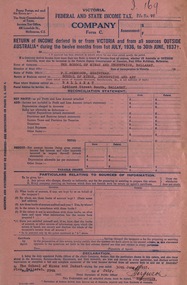
Document, Income Tax Return for School of Mines, 1937
... It is prepared and signed by The Registrar F Ferguson. Names of staff and position listed....It is prepared and signed by The Registrar F Ferguson. Names of staff and position listed. school of mines ballarat f ferguson tax return registrar sidney chambers hester darby thomas gordon harry goldsmith augustus heseltine principal donald johnston daniel mullins hubert murphy gertrude mcilvens edgar mcconnon mavis mctaggart james pound richard richards herbert smith john sutherland thomas trengrove james lochhead harold yates albert williams f g procter loyal finch mabel grigg william coates victor greenhalgh h brew frank ponsonby thomas gardiner george cornell a a jones ruby lonie fergus ferguson h e hewitt h l coburn eleanor wright angus henderson hubert cochrane james chandler e g quilliam Annie Jones Annie A. ...The School of Mines Ballarat began in 1870. It's location was the south end of Lydiard Street. Ballarat Junior Technical School began in 1913 and was boys only until 1951 when girls were included. They were under the control of the School of Mines Council. In 1967 the were three divisions. Each was internally distinguished. Ballarat School of Industries, Ballarat Technical School and Ballarat Institute of Advanced Education. In 1976 B.I.A.E. merged with State College of Victoria Ballarat - formerly Ballarat Teachers' College to become Ballarat College of Advanced Education, later to become Federation University. Income Tax Return for the Ballarat School of Mines and Industries for 1937. It is prepared and signed by The Registrar F Ferguson. Names of staff and position listed.Pink coloured form with blue printSignature of F Ferguson - Registrarschool of mines, ballarat, f ferguson, tax return, registrar, sidney chambers, hester darby, thomas gordon, harry goldsmith, augustus heseltine, principal, donald johnston, daniel mullins, hubert murphy, gertrude mcilvens, edgar mcconnon, mavis mctaggart, james pound, richard richards, herbert smith, john sutherland, thomas trengrove, james lochhead, harold yates, albert williams, f g procter, loyal finch, mabel grigg, william coates, victor greenhalgh, h brew, frank ponsonby, thomas gardiner, george cornell, a a jones, ruby lonie, fergus ferguson, h e hewitt, h l coburn, eleanor wright, angus henderson, hubert cochrane, james chandler, e g quilliam, annie jones, annie a. jones, gladstone procter, university women -
 Ballarat Tramway Museum
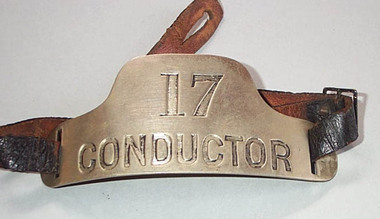
Functional Object - Cap Badge, Stokes & Sons Melbourne, "17 Conductor", 1905?
... Cap or arm Badge for the Electric Supply Co. of Victoria (ESCo) "Conductor" with conductor staff number "17" Made from a manufactured and steel plate, nickel plated to indicate the staff number position held by the wearer as part of their uniform. ...Ballarat Tramway Museum South Gardens Reserve Wendouree Parade Ballarat Ballarat goldfields Tramways trams Cap Badge Hat Badge Uniforms Badges ESCo Cap or arm Badge for the Electric Supply Co. of Victoria (ESCo) "Conductor" with conductor staff number "17" Made from a manufactured and steel plate, nickel plated to indicate the staff number position held by the wearer as part of their uniform. ...Cap or arm Badge for the Electric Supply Co. of Victoria (ESCo) "Conductor" with conductor staff number "17" Made from a manufactured and steel plate, nickel plated to indicate the staff number position held by the wearer as part of their uniform. Letters and number stamped, with horizontal lines. At each side of the badge are vertical holes through which light leather straps have been fixed with button holes to enable securing the badge on an arm. Leather straps black on one side and tan on the other. On the rear, silver soldered on are two loops at each end of the badge to enable badge to be sewn or fitted with clips onto the cap or the uniform. Badge appears in some photos of ESCo staff in the 1900's. On the back of the back of the badge in letters is the name of the manufacturer - "Stokes & Sons". Stored within tissue paper, within a heavy cardboard, Kodak Photo paper box.tramways, trams, cap badge, hat badge, uniforms, badges, esco -
 Federation University Historical Collection
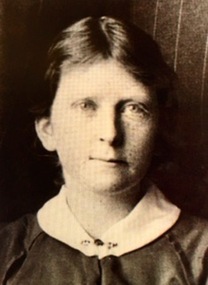
Article - Article - Women, Ballarat School of Mines: Women of Note; Ruby Helen Lonie, Staff Member and Acting Registrar, (1895-1979)
... position became a matter of urgency. The temporary answer was Miss Lonie, who was the senior clerk on the Registrar's staff. ...position became a matter of urgency. The temporary answer was Miss Lonie, who was the senior clerk on the Registrar's staff. ...Ruby Lonie was Senior Clerk of the Ballarat School of Mines (SMB) Administrative Staff. Always known as Miss Lonie, her sole position was at SMB where she worked between May 1914 and May 1960. When the SMB Registrar, John Robinson, died in 1935 the question of who would fill the position became a matter of urgency. The temporary answer was Miss Lonie, who was the senior clerk on the Registrar's staff. The permanent position was looked upon as an exclusively male preserve. Twenty Four years after having acted as Registrar the current SMB Registrar, F.F.Ferguson recognised Miss Lonie's assistance and her extensive knowledge of the history and the administrative procedures of the School. At Miss Lonie's retirement function SMB President, M.B. John, noted that Miss Lonie had joined the staff in 1914 and had 'done a tremendous job since that time, and for many years had been the Registrar's "Right Hand Man"women of note, ruby helen lonie, ballarat school of mines, senior clerk, administrative staff, acting registrar, recognition at retirement, f ferguson, smb president, m b john, 1914-1960 -
Federation University Historical Collection
Document - Staff Resources, VIOSH: List of Staff - VIOSH Australia, University of Ballarat, 1997
... Document lists the staff at the University of Ballarat who are on the VIOSH Australia Staff. The position within VIOSH and their qualifications are listed. ...Document lists the staff at the University of Ballarat who are on the VIOSH Australia Staff. The position within VIOSH and their qualifications are listed. ...Victorian Institute of Occupational Safety and Health (VIOSH) Australia is the Asia-Pacific centre for teaching and research in occupational health and safety (OHS) and is known as one of Australia's leaders on the field. VIOSH has a global reputation for its innovative approach within the field of OHS management. VIOSH had its first intake of students in 1979. At that time the Institution was known as the Ballarat College of Advanced Education. In 1990 it became known as Ballarat University College, then in 1994 as University of Ballarat. It was 2014 that it became Federation University. VIOSH Australia students are safety managers, senior advisors and experienced OHS professionals. They come from all over Australia and industry. Students are taught active research and enquiry; rather than textbook learning and a one-size fits all approach. VIOSH accepts people into the Graduate Diploma of Occupational Hazard Management who have no undergraduate degree - on the basis of extensive work experience and knowledge. Document lists the staff at the University of Ballarat who are on the VIOSH Australia Staff. The position within VIOSH and their qualifications are listed. Steve Cowley - Director and Courses Administrator; John Knowles - Lecturer and Course Co-ordinator; Thomas Mitchell - Lecturer and Research Officer; David Borys - Lecturer and Course Co-ordinator, Graduate Diploma OHM; Yvonne Ross - Liaison Officer and Health and Safety Officer; Dianne Elshaug - Administration Officer, Information and Student Liaison Officer; John Culver - Lecturer and Research Officer; Philip Royce - University Health and Safety Advisor.Three printed sheets - A4. Profiles of eight people with photographs.Names, qualifications, teaching position.viosh, victorian institute of occupational safety and health, university of ballarat, visor staff, steve cowley, john knowles, thomas mitchell, david borys, yvonne ross, dianne elshaug, john culver, philip royce, director, course administrator, lecturer, research officer, course co-ordinator, administration officer, liaison officer, university health and safety advisor, student liaison officer -
 Vision Australia
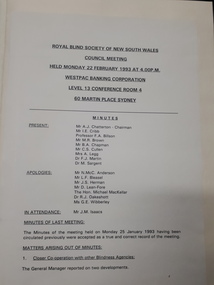
Administrative record - Text, Royal Blind Society of NSW Council meeting minutes: 22/2/1993 - 30/6/1997, 1993-1997
... RBS reduce its staff by 38 positions. 25/11/1996 Council members agreed that the Library Services Department be merged into the Information Technology Services Department. 28/1/1997 The CEO stated an opportunity for RBS to become a member of an international consortium known as DAISY (Digital Accessible Information SYtem). ...RBS reduce its staff by 38 positions. 25/11/1996 Council members agreed that the Library Services Department be merged into the Information Technology Services Department. 28/1/1997 The CEO stated an opportunity for RBS to become a member of an international consortium known as DAISY (Digital Accessible Information SYtem). ...These minutes contain information on attendees, meeting chairs, apologies, matters arising out of minutes, correspondence, subscriptions, donations and general business. Reports are also included from Honorary Treasurer, Finance, Corporate Services, Accommodation Services, Rehabilitation, Library Services, Marketing, Mitchell Manufacturing, Administration Support, Information Technology and Personnel. 6/9/1993 The General Manager reported on the Strategic Overview and Implementation Plan. The core services would be Library Services, Rehabilitation Services and Technology Services. RBS would withdraw from providing Mobility Services and Talking Magazines unless by contract. In both cases there was existing services of a comparable standard and hence clients would not be adversely affected. RBS reduce its staff by 38 positions. 25/11/1996 Council members agreed that the Library Services Department be merged into the Information Technology Services Department. 28/1/1997 The CEO stated an opportunity for RBS to become a member of an international consortium known as DAISY (Digital Accessible Information SYtem). Whose main goal is establish a World Standard Digital Talking Book System for people who are blind and vision impaired. 1/4/1997 it was reported there are now 6 agencies including RBS comprising the Australia & New Zealand Group, as member of the DAISY consortium. Council approved that the CEO attend the first meeting of the Consortium on April 18-20. 1 volume of printed sheets glued to pagesroyal blind society of nsw, audio books -
 Federation University Historical Collection
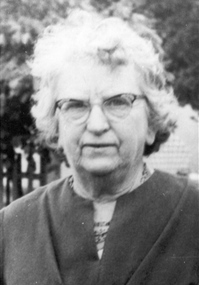
Photograph - Photograph - black and white, Rubie Lonie
... position became a matter of urgency. The temporary answer was Miss Lonie, who was the senior clerk on the Registrar's staff. ...position became a matter of urgency. The temporary answer was Miss Lonie, who was the senior clerk on the Registrar's staff. ...Ruby Lonie was Senior Clerk of the Ballarat School of Mines (SMB) Administrative Staff. Always known as Miss Lonie, her sole position was at SMB where she worked between May 1914 and May 1960. When the SMB Registrar, John Robinson, died in 1935 the question of who would fill the position became a matter of urgency. The temporary answer was Miss Lonie, who was the senior clerk on the Registrar's staff. The permanent position was looked upon as an exclusively male preserve. At Miss Lonie's retirement function SMB President, M.B. John, noted that Miss Lonie had joined the staff in 1914 and had 'done a tremendous job since that time, and for many years had been the Registrar's "Right Hand Man". Twenty Four years after having acted as Registrar the current SMB Registrar, F.F.Ferguson recognised Miss Lonie's assistance and her extensive knowledge of the history and the administrative procedures of the School. He added 'I have noted on many occasions Miss Lonie's kindly interest in people in times of sickness or difficulty and her willingness to help.' Current and former staff members were keen to acknowledge Miss Lonie. Former Principal Dick Richards said 'That Miss Lonie had been in this one job all her life is a great tribute to the school, and the Council is conscious of her devoted service.' The Principal, Mr Arblaster, on behalf of himself and the staff presented Miss Lonie with a gold watch and wished her well in her retirement. The next day Miss Lonie, along with Hestor Darby, the SMB Typewriting teacher who was on long service leave, sailed from Melbourne for London, mainly to visit Scotland.A black and white photo of a woman, Ruby Lonieruby lonie, ballarat school of mines, women, university women -
 Federation University Historical Collection
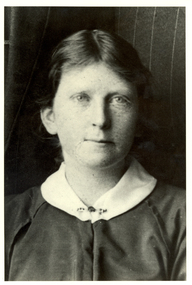
Photograph - Photograph - black and white, Rubie Lonie
... position became a matter of urgency. The temporary answer was Miss Lonie, who was the senior clerk on the Registrar's staff. ...position became a matter of urgency. The temporary answer was Miss Lonie, who was the senior clerk on the Registrar's staff. ...Ruby Lonie was Senior Clerk of the Ballarat School of Mines (SMB) Administrative Staff. Always known as Miss Lonie, her sole position was at SMB where she worked between May 1914 and May 1960. When the SMB Registrar, John Robinson, died in 1935 the question of who would fill the position became a matter of urgency. The temporary answer was Miss Lonie, who was the senior clerk on the Registrar's staff. The permanent position was looked upon as an exclusively male preserve. At Miss Lonie's retirement function SMB President, M.B. John, noted that Miss Lonie had joined the staff in 1914 and had 'done a tremendous job since that time, and for many years had been the Registrar's "Right Hand Man". Twenty Four years after having acted as Registrar the current SMB Registrar, F.F.Ferguson recognised Miss Lonie's assistance and her extensive knowledge of the history and the administrative procedures of the School. He added 'I have noted on many occasions Miss Lonie's kindly interest in people in times of sickness or difficulty and her willingness to help.' Current and former staff members were keen to acknowledge Miss Lonie. Former Principal Dick Richards said 'That Miss Lonie had been in this one job all her life is a great tribute to the school, and the Council is conscious of her devoted service.' The Principal, Mr Arblaster, on behalf of himself and the staff presented Miss Lonie with a gold watch and wished her well in her retirement. The next day Miss Lonie, along with Hestor Darby, the SMB Typewriting teacher who was on long service leave, sailed from Melbourne for London, mainly to visit Scotland.A black and white photo of a woman, Ruby Lonieruby lonie, ballarat school of mines, women, university women -
 Bendigo Military Museum
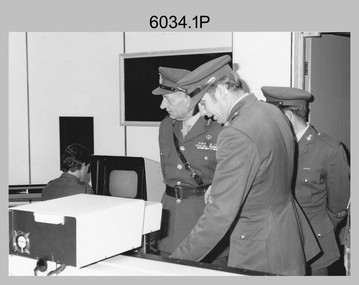
Photograph - Visit by the Chief of the General Staff to the Army Survey Regiment, Fortuna, Bendigo, 1979
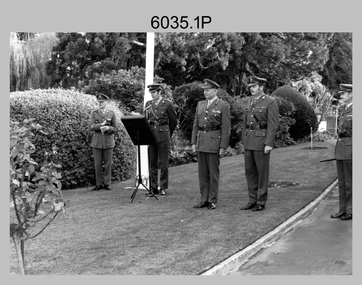
... Staff (CGS) Lieutenant General Sir Donald Dunstan AC, KBE, CB. He was accompanied by his wife. They were escorted through the production areas of the Army Survey Regiment by the CO LTCOL Bob Skitch. Lieutenant General Sir Donald Dunstan AC, KBE, CB was an esteemed Australian Army officer, who was CGS from 1977 to 1982. Upon retirement from the Army in 1982, he was appointed to the position...Staff (CGS) Lieutenant General Sir Donald Dunstan AC, KBE, CB. He was accompanied by his wife. They were escorted through the production areas of the Army Survey Regiment by the CO LTCOL Bob Skitch. Lieutenant General Sir Donald Dunstan AC, KBE, CB was an esteemed Australian Army officer, who was CGS from 1977 to 1982. Upon retirement from the Army in 1982, he was appointed to the position ...This is a set of 14 photographs of a visit to the Army Survey Regiment, Fortuna, Bendigo on the 5th of June 1979 by the Chief of the General Staff (CGS) Lieutenant General Sir Donald Dunstan AC, KBE, CB. He was accompanied by his wife. They were escorted through the production areas of the Army Survey Regiment by the CO LTCOL Bob Skitch. Lieutenant General Sir Donald Dunstan AC, KBE, CB was an esteemed Australian Army officer, who was CGS from 1977 to 1982. Upon retirement from the Army in 1982, he was appointed to the position of Governor of South Australia from 1982 to 1991. LTCOL Bob Skitch was the CO of the Army Svy Rgt from 1976 to 1980. Also featuring in these photos is MAJ Peter Eddy, who was the OC of Air Survey Squadron. He was later promoted to LTCOL and was CO of the Army Svy Rgt from 1981 to 1982. See item 6035.9P for photos of the CGS’s presentation of the Defence Force Service Medal to four recipients.This is a set of 14 photographs of a visit by the Chief of the General Staff to the Army Survey Regiment Fortuna, Bendigo on the 5th of June 1979. The photographs were printed on photographic paper and are part of the Army Survey Regiment’s Collection. They were scanned at 300 dpi. .1) - Photo, black and white, 1979. Tour of Air Survey Squadron. L to R: unidentified, LTGEN General Sir Donald Dunstan AC, KBE, CB; OC MAJ Peter Eddy, unidentified. .2) - Photo, black and white, 1979. Tour of Air Survey Squadron. LTGEN General Sir Donald Dunstan AC, KBE, CB; views 3D stereoscopic aerial photography on a Zeiss (Jena) Stecometer. OC MAJ Peter Eddy is on his right. .3) - Photo, black and white, 1979. Tour of Air Survey Squadron. L to R: unidentified, CO LTCOL Bob Skitch, OC MAJ Peter Eddy, LTGEN General Sir Donald Dunstan AC, KBE CB viewing an aerial photograph. WO1 Brian Mead and others are operating a Wild PUG4 point transfer device. .4) - Photo, black and white, 1979. Enlargement of photo .3). Tour of Air Survey Squadron. L to R: unidentified, CO LTCOL Bob Skitch, OC MAJ Peter Eddy, LTGEN General Sir Donald Dunstan AC, KBE CB viewing an aerial photograph. .5) - Photo, black and white, 1979. Tour of Air Survey Squadron. LTGEN General Sir Donald Dunstan AC, KBE, CB; and unidentified technician view 3D stereoscopic aerial photography on a Wild B8 stereo plotter. .6) - Photo, black and white, 1979. Tour of Air Survey Squadron. L to R: OC MAJ Peter Eddy LTGEN General Sir Donald Dunstan AC, KBE CB; CO LTCOL Bob Skitch, view the output of a verification plot on an AUTOMAP 1 Gerber 1442 drum plotter. .7) - Photo, black and white, 1979. Tour of Air Survey Squadron. L to R: CO LTCOL Bob Skitch, unidentified aide de camp officer, LTGEN General Sir Donald Dunstan AC, KBE CB; OC MAJ Peter Eddy discuss aero triangulation planning documents. CAPT Don Maskew in background. .8) - Photo, black and white, 1979. Tour of Cartographic Squadron. L to R: CPL Dennis Learmonth, acting OC CAPT Bob Roche, CAPT Eddy Schulze, LTGEN General Sir Donald Dunstan AC, KBE CB; SSGT John ‘JB’ Barrie discuss cartographic map compilation procedures .9) - Photo, black and white, 1979. Tour of Cartographic Squadron. L to R: Tech WO WO1 Roger Rix, acting OC CAPT Bob Roche, CAPT Eddy Schulze, unidentified visitor, Mrs Dunstan with examples of map products. .10) - Photo, black and white, 1979. Tour of Cartographic Squadron. L to R: CPL Terry Danger, CO LTCOL Bob Skitch, LTGEN General Sir Donald Dunstan AC, KBE CB; discuss terrain embossing (hill shading) procedures. .11) - Photo, black and white, 1979. Tour of Cartographic Squadron. L to R: CO LTCOL Bob Skitch, LTGEN General Sir Donald Dunstan AC, KBE CB; acting OC CAPT Bob Roche, SSGT Dick Manley, CAPT Don Maskew and CAPT Steve Cooper in background. SPR Cheryl Lofthouse is retouching blemishes on a map separation film negative. .12) - Photo, black and white, 1979. Tour of Lithographic Squadron. L to R: CAPT Stan Vote, unidentified aide de camp officer, CO LTCOL Bob Skitch, LTGEN General Sir Donald Dunstan AC, KBE CB; MAJ Sam Schwartz EXCH-US, LT John Harrison discuss bulk map printing processes with an Ultra-MAN-III Printing Press. .13) - Photo, black and white, 1979. Officers Mess L to R: LTGEN General Sir Donald Dunstan AC, KBE CB; with CO LTCOL Bob Skitch. .14) - Photo, black and white, 1979. Officers Mess L to R: MAJ Peter Eddy, LTGEN General Sir Donald Dunstan AC, KBE CB..1P to .14P – no annotationsroyal australian survey corps, rasvy, army survey regiment, army svy regt, fortuna, asr -
 Bendigo Military Museum
Photograph - Army Survey Regiment - Defence Force Service Medal Presentations, Fortuna Villa, Bendigo, 1979
... Staff (CGS) Lieutenant General Sir Donald Dunstan AC, KBE, CB; at the Army Survey Regiment, Fortuna, Bendigo on the 5th of June 1979. The photos were taken next to the flagpole in Fortuna Villa’s front garden. Upon retirement from the Army in 1982, Lieutenant General Sir Donald Dunstan AC, KBE, CB; was appointed to the position...Staff (CGS) Lieutenant General Sir Donald Dunstan AC, KBE, CB; at the Army Survey Regiment, Fortuna, Bendigo on the 5th of June 1979. The photos were taken next to the flagpole in Fortuna Villa’s front garden. Upon retirement from the Army in 1982, Lieutenant General Sir Donald Dunstan AC, KBE, CB; was appointed to the position ...This is a set of nine photographs of Defence Force Service Medal presentations by the Chief of the General Staff (CGS) Lieutenant General Sir Donald Dunstan AC, KBE, CB; at the Army Survey Regiment, Fortuna, Bendigo on the 5th of June 1979. The photos were taken next to the flagpole in Fortuna Villa’s front garden. Upon retirement from the Army in 1982, Lieutenant General Sir Donald Dunstan AC, KBE, CB; was appointed to the position of Governor of South Australia from 1982 to 1991. On this occasion the CGS presented the Defence Force Service Medal to WO2 Alex Cairney, WO1 Bob Mason and WO2 Ken Slater for 15 years of efficient remunerated service in the Australian Army. It is likely the unidentified UK Exchange senior NCO was the recipient of the UK Army’s equivalent service medal. Other key staff appearing in these photos are LTCOL Bob Skitch was the CO of the Army Svy Rgt from 1976 to 1980 and WO1 Aub Harvey, who was RSM from 1976 to 1982. MAJ Don Swiney MBE was later promoted to LTCOL and was CO of the Army Svy Rgt from 1985 to 1987. He was subsequently promoted to Colonel and was Director of the Royal Australian Survey Corp from November 1988 to January 1991, and the honorary position as Colonel Commandant from January 1993 to January 1996. See item 6034.14P for photos of the CGS’s tour through the production areas of the Army Svy Rgt.This is a set of nine photographs of Defence Force Service Medal presentations by the Chief of the General Staff (CGS) at the Army Survey Regiment, Fortuna, Bendigo on the 5th of June 1979. The photographs were printed on photographic paper and are part of the Army Survey Regiment’s Collection. They were scanned at 300 dpi. .1) - Photo, black and white, 1979. L to R: RSM WO1 Aub Harvey, CAPT Don Maskew, CGS LTGEN General Sir Donald Dunstan AC, KBE, CB; MAJ Don Swiney MBE, CO LTCOL Bob Skitch. .2) - Photo, black and white, 1979. Foreground L to R: CO LTCOL Bob Skitch, MAJ Don Swiney MBE, CGS LTGEN General Sir Donald Dunstan AC, KBE, CB; CAPT Don Maskew. Background L to R: WO2 Ken Slater, WO2 Alex Cairney, WO1 Bob Mason, unidentified UK Exchange senior NCO. .3) - Photo, black and white, 1979. L to R: WO2 Ken Slater, WO2 Alex Cairney, WO1 Bob Mason, unidentified UK Exchange senior NCO. .4) & .5) - Photo, black and white, 1979. L to R: WO2 Ken Slater, CGS LTGEN General Sir Donald Dunstan AC, KBE, CB; CAPT Don Maskew, MAJ Don Swiney MBE, CO LTCOL Bob Skitch. .6) - Photo, black and white, 1979. L to R: RSM WO1 Aub Harvey, unidentified UK Exchange senior NCO, , CGS LTGEN General Sir Donald Dunstan AC, KBE, CB; MAJ Don Swiney MBE, CO LTCOL Bob Skitch, unidentified aide de camp officer. .7) - Photo, black and white, 1979. L to R: RSM WO1 Aub Harvey, WO2 Alex Cairney, CAPT Don Maskew, LTGEN General Sir Donald Dunstan AC, KBE, CB; MAJ Don Swiney MBE, CO LTCOL Bob Skitch, unidentified aide de camp officer, unidentified photographer. .8) - Photo, black and white, 1979. L to R: RSM WO1 Aub Harvey, CAPT Don Maskew, WO1 Bob Mason, LTGEN General Sir Donald Dunstan AC, KBE, CB; MAJ Don Swiney MBE, CO LTCOL Bob Skitch, unidentified aide de camp officer, unidentified RAAF officer, MAJ Peter Eddy. .9) - Photo, black and white, 1979. L to R: WO1 Bob Mason, WO2 Ken Slater, RSM WO1 Aub Harvey, WO2 Alex Cairney, unidentified UK Exchange senior NCO..1P to .14P – no annotationsroyal australian survey corps, rasvy, army survey regiment, army svy regt, fortuna, asr -
 Kiewa Valley Historical Society
Photo - Bogong Township, March 1944
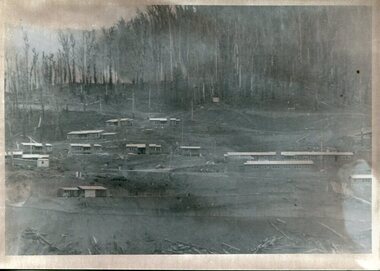
... staff hostel was known as Kiewa House and is now occupied by the Education Department. Lake Guy was named after Mr. L.T. Guy who was the Resident Engineer in charge of construction work and associated activities on the Kiewa area. He held this position...staff hostel was known as Kiewa House and is now occupied by the Education Department. Lake Guy was named after Mr. L.T. Guy who was the Resident Engineer in charge of construction work and associated activities on the Kiewa area. He held this position ...In 1940 Field Headquarters for the Kiewa Scheme were established at Bogong with office, workshop facilities and accommodation for workmen, staff and some families constructed. (There had been a 'tent camp' on this site in 1939 but was destroyed by bushfires) Construction of accommodation continued until 1947. A total of 40 houses plus a hostel for single staff, post office, police station, medical centre and primary school all with water and sewerage and electricity supply. The staff hostel was known as Kiewa House and is now occupied by the Education Department. Lake Guy was named after Mr. L.T. Guy who was the Resident Engineer in charge of construction work and associated activities on the Kiewa area. He held this position from 1939 to November 1946 when he was transferred to Head Office. The Bogong Township was developed firstly as an accommodation centre (base camp) for construction workers employed under the Kiewa Hydroelectric Scheme. Due to the influx of European workers into the Township the beautification of the immediate surrounds (gardens etc.) had a distinct European flavour. This environment has been very beneficial for tourism in later years. At the completion of the scheme, in the 1960's, the village was opened to public/tourism use. Strict environmental control has not allowed for any extensive redevelopment in tourist accommodation and basically restricted it to the accommodation initially built for the construction workers. Activities such a bike riding, snow skiing, restricted horse riding and bush walking on the Alpine plains and mountains are now a viable part of the Kiewa Valley Tourist Industry. The lake is one of the many water storage reservoirs used to supply the power stations their main power to run the huge turbines generating the final product, electricityBlack and white photograph of Bogong Township taken March 1944Handwritten on the back of photo - Township March '44bogong village, secv -
 Kiewa Valley Historical Society
Photograph - Bogong Village (7 copies), Approx 1940
... staff hostel was known as Kiewa House and is now occupied by the Education Department. Lake Guy was named after Mr. L.T. Guy who was the Resident Engineer in charge of construction work and associated activities on the Kiewa area. He held this position...staff hostel was known as Kiewa House and is now occupied by the Education Department. Lake Guy was named after Mr. L.T. Guy who was the Resident Engineer in charge of construction work and associated activities on the Kiewa area. He held this position ...In 1940 Field Headquarters for the Kiewa Scheme were established at Bogong with office, workshop facilities and accommodation for workmen, staff and some families constructed. (There had been a 'tent camp' on this site in 1939 but was destroyed by bushfires) Construction of accommodation continued until 1947. A total of 40 houses plus a hostel for single staff, post office, police station, medical centre and primary school all with water and sewerage and electricity supply. The staff hostel was known as Kiewa House and is now occupied by the Education Department. Lake Guy was named after Mr. L.T. Guy who was the Resident Engineer in charge of construction work and associated activities on the Kiewa area. He held this position from 1939 to November 1946 when he was transferred to Head Office. The Bogong Township was developed firstly as an accommodation centre (base camp) for construction workers employed under the Kiewa Hydroelectric Scheme. Due to the influx of European workers into the Township the beautification of the immediate surrounds (gardens etc.) had a distinct European flavour. This environment has been very beneficial for tourism in later years. At the completion of the scheme, in the 1960's, the village was opened to public/tourism use. Strict environmental control has not allowed for any extensive redevelopment in tourist accommodation and basically restricted it to the accommodation initially built for the construction workers. Activities such a bike riding, snow skiing, restricted horse riding and bush walking on the Alpine plains and mountains are now a viable part of the Kiewa Valley Tourist Industry. The lake is one of the many water storage reservoirs used to supply the power stations their main power to run the huge turbines generating the final product, electricity. Evidence can be seen of the 1939 bushfires.Set of 7 identical black and white photographs of Bogong Village after 1939 bush firesHandwritten on the back of one photo - Bogong Village approx. 1940, after 1939 bush fires. Staff residences to left. Kiewa House, General offices and test lab to the right. Hand drawn map on the back of one photo.bogong village, secv -
 Kiewa Valley Historical Society
Photo - Bogong Village Township, October 8, 1946
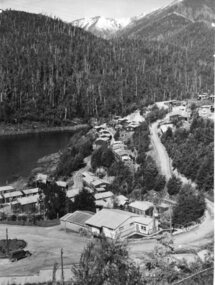
... staff hostel was known as Kiewa House and is now occupied by the Education Department. Lake Guy was named after Mr. L.T. Guy who was the Resident Engineer in charge of construction work and associated activities on the Kiewa area. He held this position...staff hostel was known as Kiewa House and is now occupied by the Education Department. Lake Guy was named after Mr. L.T. Guy who was the Resident Engineer in charge of construction work and associated activities on the Kiewa area. He held this position ...In 1940 Field Headquarters for the Kiewa Scheme were established at Bogong with office, workshop facilities and accommodation for workmen, staff and some families constructed. (There had been a 'tent camp' on this site in 1939 but was destroyed by bushfires) Construction of accommodation continued until 1947. A total of 40 houses plus a hostel for single staff, post office, police station, medical centre and primary school all with water and sewerage and electricity supply. The staff hostel was known as Kiewa House and is now occupied by the Education Department. Lake Guy was named after Mr. L.T. Guy who was the Resident Engineer in charge of construction work and associated activities on the Kiewa area. He held this position from 1939 to November 1946 when he was transferred to Head Office. The Bogong Township was developed firstly as an accommodation centre (base camp) for construction workers employed under the Kiewa Hydroelectric Scheme. Due to the influx of European workers into the Township the beautification of the immediate surrounds (gardens etc.) had a distinct European flavour. This environment has been very beneficial for tourism in later years. At the completion of the scheme, in the 1960's, the village was opened to public/tourism use. Strict environmental control has not allowed for any extensive redevelopment in tourist accommodation and basically restricted it to the accommodation initially built for the construction workers. Activities such a bike riding, snow skiing, restricted horse riding and bush walking on the Alpine plains and mountains are now a viable part of the Kiewa Valley Tourist Industry. The lake is one of the many water storage reservoirs used to supply the power stations their main power to run the huge turbines generating the final product, electricityBlack and white photograph of Bogong Village which appeared in the Herald Sun newspaper on October 8, 1946. Page 13Handwritten on the back - Town of Bogong on a rugged mountain slope above Lake Guy. State Electricity Committee workers on the Kiewa Hydro Electric scheme live here in all electric homes. Stamped on the back - Copyright Not for reproduction Herald Sun Feature Service Melbourne Australiabogong village; lake guy; kiewa hydro electric scheme -
 Kiewa Valley Historical Society
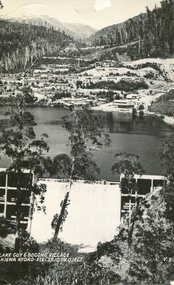
Postcard - Lake Guy and Bogong Village
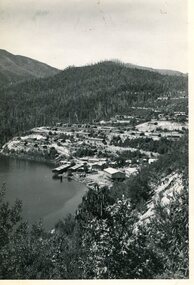
... staff hostel was known as Kiewa House and is now occupied by the Education Department. Lake Guy was named after Mr. L.T. Guy who was the Resident Engineer in charge of construction work and associated activities on the Kiewa area. He held this position...staff hostel was known as Kiewa House and is now occupied by the Education Department. Lake Guy was named after Mr. L.T. Guy who was the Resident Engineer in charge of construction work and associated activities on the Kiewa area. He held this position ...In 1940 Field Headquarters for the Kiewa Scheme were established at Bogong with office, workshop facilities and accommodation for workmen, staff and some families constructed. (There had been a 'tent camp' on this site in 1939 but was destroyed by bushfires) Construction of accommodation continued until 1947. A total of 40 houses plus a hostel for single staff, post office, police station, medical centre and primary school all with water and sewerage and electricity supply. The staff hostel was known as Kiewa House and is now occupied by the Education Department. Lake Guy was named after Mr. L.T. Guy who was the Resident Engineer in charge of construction work and associated activities on the Kiewa area. He held this position from 1939 to November 1946 when he was transferred to Head Office. The Bogong Township was developed firstly as an accommodation centre (base camp) for construction workers employed under the Kiewa Hydroelectric Scheme. Due to the influx of European workers into the Township the beautification of the immediate surrounds (gardens etc.) had a distinct European flavour. This environment has been very beneficial for tourism in later years. At the completion of the scheme, in the 1960's, the village was opened to public/tourism use. Strict environmental control has not allowed for any extensive redevelopment in tourist accommodation and basically restricted it to the accommodation initially built for the construction workers. Activities such a bike riding, snow skiing, restricted horse riding and bush walking on the Alpine plains and mountains are now a viable part of the Kiewa Valley Tourist Industry. The lake is one of the many water storage reservoirs used to supply the power stations their main power to run the huge turbines generating the final product, electricityBlack and white photographic postcard of Lake Guy and Bogong Village. Kiewa Hydro electric Project (showing Junction Dam in front)Handwritten on the back of postcard ' Like most of our camps, this looks like something from the Canadian Rockies' Stamped on the back - Valentine's Post Card A genuine photographlake guy, bogong village, secv -
 Kiewa Valley Historical Society
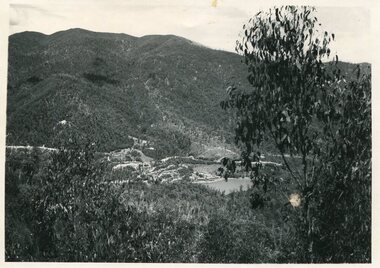
Photo - Bogong Township, September 1953
... staff hostel was known as Kiewa House and is now occupied by the Education Department. Lake Guy was named after Mr. L.T. Guy who was the Resident Engineer in charge of construction work and associated activities on the Kiewa area. He held this position...staff hostel was known as Kiewa House and is now occupied by the Education Department. Lake Guy was named after Mr. L.T. Guy who was the Resident Engineer in charge of construction work and associated activities on the Kiewa area. He held this position ...In 1940 Field Headquarters for the Kiewa Scheme were established at Bogong with office, workshop facilities and accommodation for workmen, staff and some families constructed. (There had been a 'tent camp' on this site in 1939 but was destroyed by bushfires) Construction of accommodation continued until 1947. A total of 40 houses plus a hostel for single staff, post office, police station, medical centre and primary school all with water and sewerage and electricity supply. The staff hostel was known as Kiewa House and is now occupied by the Education Department. Lake Guy was named after Mr. L.T. Guy who was the Resident Engineer in charge of construction work and associated activities on the Kiewa area. He held this position from 1939 to November 1946 when he was transferred to Head Office. The Bogong Township was developed firstly as an accommodation centre (base camp) for construction workers employed under the Kiewa Hydroelectric Scheme. Due to the influx of European workers into the Township the beautification of the immediate surrounds (gardens etc.) had a distinct European flavour. This environment has been very beneficial for tourism in later years. At the completion of the scheme, in the 1960's, the village was opened to public/tourism use. Strict environmental control has not allowed for any extensive redevelopment in tourist accommodation and basically restricted it to the accommodation initially built for the construction workers. Activities such a bike riding, snow skiing, restricted horse riding and bush walking on the Alpine plains and mountains are now a viable part of the Kiewa Valley Tourist Industry. The lake is one of the many water storage reservoirs used to supply the power stations their main power to run the huge turbines generating the final product, electricityBlack and white photograph of Bogong Township taken from Little Arthur fire track. September 1953Faded handwritten inscription on back - Bogong Township taken from Little Arthur fire track. Sept 1953bogong village, secv -
 Kiewa Valley Historical Society
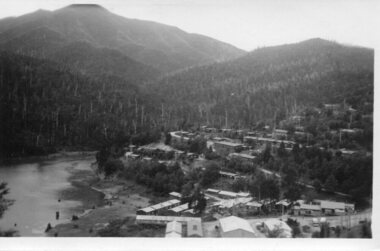
Photo - First Bogong Camp, September 1950
... staff hostel was known as Kiewa House and is now occupied by the Education Department. Lake Guy was named after Mr. L.T. Guy who was the Resident Engineer in charge of construction work and associated activities on the Kiewa area. He held this position...staff hostel was known as Kiewa House and is now occupied by the Education Department. Lake Guy was named after Mr. L.T. Guy who was the Resident Engineer in charge of construction work and associated activities on the Kiewa area. He held this position ...In 1940 Field Headquarters for the Kiewa Scheme were established at Bogong with office, workshop facilities and accommodation for workmen, staff and some families constructed. (There had been a 'tent camp' on this site in 1939 but was destroyed by bushfires) Construction of accommodation continued until 1947. A total of 40 houses plus a hostel for single staff, post office, police station, medical centre and primary school all with water and sewerage and electricity supply. The staff hostel was known as Kiewa House and is now occupied by the Education Department. Lake Guy was named after Mr. L.T. Guy who was the Resident Engineer in charge of construction work and associated activities on the Kiewa area. He held this position from 1939 to November 1946 when he was transferred to Head Office. The Bogong Township was developed firstly as an accommodation centre (base camp) for construction workers employed under the Kiewa Hydroelectric Scheme. Due to the influx of European workers into the Township the beautification of the immediate surrounds (gardens etc.) had a distinct European flavour. This environment has been very beneficial for tourism in later years. At the completion of the scheme, in the 1960's, the village was opened to public/tourism use. Strict environmental control has not allowed for any extensive redevelopment in tourist accommodation and basically restricted it to the accommodation initially built for the construction workers. Activities such a bike riding, snow skiing, restricted horse riding and bush walking on the Alpine plains and mountains are now a viable part of the Kiewa Valley Tourist Industry. The lake is one of the many water storage reservoirs used to supply the power stations their main power to run the huge turbines generating the final product, electricityBlack and white photo of Bogong Village. September 1950Handwritten on the back - 1st Bogong Camp. SEC Kiewa Scheme Sept 1950bogong camp, bogong village, secv -
 Kiewa Valley Historical Society
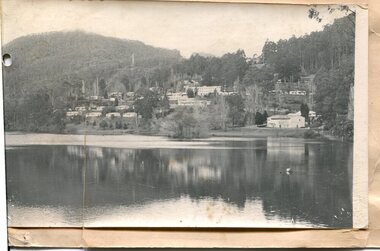
Photo - Bogong Village Township
... staff hostel was known as Kiewa House and is now occupied by the Education Department. Lake Guy was named after Mr. L.T. Guy who was the Resident Engineer in charge of construction work and associated activities on the Kiewa area. He held this position...staff hostel was known as Kiewa House and is now occupied by the Education Department. Lake Guy was named after Mr. L.T. Guy who was the Resident Engineer in charge of construction work and associated activities on the Kiewa area. He held this position ...In 1940 Field Headquarters for the Kiewa Scheme were established at Bogong with office, workshop facilities and accommodation for workmen, staff and some families constructed. (There had been a 'tent camp' on this site in 1939 but was destroyed by bushfires) Construction of accommodation continued until 1947. A total of 40 houses plus a hostel for single staff, post office, police station, medical centre and primary school all with water and sewerage and electricity supply. The staff hostel was known as Kiewa House and is now occupied by the Education Department. Lake Guy was named after Mr. L.T. Guy who was the Resident Engineer in charge of construction work and associated activities on the Kiewa area. He held this position from 1939 to November 1946 when he was transferred to Head Office. The Bogong Township was developed firstly as an accommodation centre (base camp) for construction workers employed under the Kiewa Hydroelectric Scheme. Due to the influx of European workers into the Township the beautification of the immediate surrounds (gardens etc.) had a distinct European flavour. This environment has been very beneficial for tourism in later years. At the completion of the scheme, in the 1960's, the village was opened to public/tourism use. Strict environmental control has not allowed for any extensive redevelopment in tourist accommodation and basically restricted it to the accommodation initially built for the construction workers. Activities such a bike riding, snow skiing, restricted horse riding and bush walking on the Alpine plains and mountains are now a viable part of the Kiewa Valley Tourist Industry. The lake is one of the many water storage reservoirs used to supply the power stations their main power to run the huge turbines generating the final product, electricityBlack and white photograph of Bogong Village from across Lake Guy. Photo mounted on buff cardbogong village, secv -
 Kiewa Valley Historical Society
Photographs x 2 - 1. Mt Beauty Camp 2. Bogong Camp, Photo 1 - September 1950
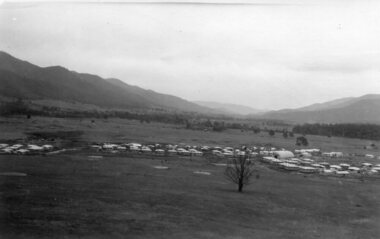
... staff hostel was known as Kiewa House and is now occupied by the Education Department. Lake Guy was named after Mr. L.T. Guy who was the Resident Engineer in charge of construction work and associated activities on the Kiewa area. He held this position...staff hostel was known as Kiewa House and is now occupied by the Education Department. Lake Guy was named after Mr. L.T. Guy who was the Resident Engineer in charge of construction work and associated activities on the Kiewa area. He held this position ...Mt Beauty Camp- The new State Electricity Commission construction camp at the head of the Kiewa Valley was for workmen on the second power station in the project expected to be the most modern and best equipped in Australia… In contrast to the early Kiewa days of horses and canvas tents, the new camp, with its modern amenities, compared favourably with any country town. Administration of the Kiewa Scheme was moved from Tawonga to Mount Beauty in 1946. The first house in Mount Beauty, in Hollonds Street, was occupied by the co-op store manager from November 1946. The new Mess Hall at Mt Beauty was opened with much ceremony in early November 1946. The houses up to Nelse street were erected from 1946 onward and then the township was extended beyond Nelse Street in 1950. The workmen's camp was enlarged in 1950 to the extent of providing accommodation for a total of 1,200. Bogong Camp - In 1940 Field Headquarters for the Kiewa Scheme were established at Bogong with office, workshop facilities and accommodation for workmen, staff and some families constructed. (There had been a 'tent camp' on this site in 1939 but was destroyed by bushfires) Construction of accommodation continued until 1947. A total of 40 houses plus a hostel for single staff, post office, police station, medical centre and primary school all with water and sewerage and electricity supply. The staff hostel was known as Kiewa House and is now occupied by the Education Department. Lake Guy was named after Mr. L.T. Guy who was the Resident Engineer in charge of construction work and associated activities on the Kiewa area. He held this position from 1939 to November 1946 when he was transferred to Head Office. Both Bogong Village and Mt Beauty were developed to accommodate workmen on the Kiewa Hydro Electric Scheme but have since become centres for tourism and a range of outdoor activities.1. Black and white photograph of Mount Beauty Camp taken in September 1950 2. Black and white photograph of Bogong Village Camp1. Written on the back in grey lead - Sept 1950. Mt Beauty Camp. HT Cooper own taking 2. Stamped on back of photograph - Copyright. Not for reproduction. Herald Sun feature Service. Melbourne Australiamt beauty camp, bogong camp, secv -
 Kiewa Valley Historical Society
Photograph of Leonard Guy resident engineer for SECV
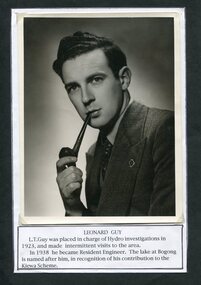
... staff and some families constructed. (There had been a 'tent camp' on this site in 1939 but was destroyed by bushfires) Construction of accommodation continued until 1947. Lake Guy was named after Mr. L.T. Guy Mr L.T. Guy was placed in charge of Hydro investigations in 1923 and became the resident engineer for the Kiewa Valley Hydro Scheme in 1938. He was the Resident Engineer in charge of construction work and associated activities on the Kiewa area. He held this position ...In 1940 Field Headquarters for the Kiewa Scheme were established at Bogong with office, workshop facilities and accommodation for workmen, staff and some families constructed. (There had been a 'tent camp' on this site in 1939 but was destroyed by bushfires) Construction of accommodation continued until 1947. Lake Guy was named after Mr. L.T. Guy Mr L.T. Guy was placed in charge of Hydro investigations in 1923 and became the resident engineer for the Kiewa Valley Hydro Scheme in 1938. He was the Resident Engineer in charge of construction work and associated activities on the Kiewa area. He held this position from 1939 to November 1946 when he was transferred to Head Office. Black and white photograph of Mr Leonard Guy. Photo mounted on black background with typed information regarding Mr Guy underneath, Printed in black ink, on white paper underneath photograph – LEONARD GUY L.T. Guy was placed in charge of Hydro Investigations in 1923 and made intermittent visits to the area. In 1938 he became Resident Engineer. The lake at Bogong is named after him in recognition of his contribution on the Kiewa Scheme. leonard guy, secv, bogong -
 Kiewa Valley Historical Society
Photographs x 2 1. Lake Guy & Bogong Village 2. Bulldozer moving rocks
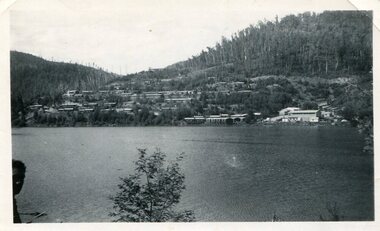
... staff hostel was known as Kiewa House and is now occupied by the Education Department. Lake Guy was named after Mr. L.T. Guy who was the Resident Engineer in charge of construction work and associated activities on the Kiewa area. He held this position...staff hostel was known as Kiewa House and is now occupied by the Education Department. Lake Guy was named after Mr. L.T. Guy who was the Resident Engineer in charge of construction work and associated activities on the Kiewa area. He held this position ...1. In 1940 Field Headquarters for the Kiewa Scheme were established at Bogong with office, workshop facilities and accommodation for workmen, staff and some families constructed. (There had been a 'tent camp' on this site in 1939 but was destroyed by bushfires) Construction of accommodation continued until 1947. A total of 40 houses plus a hostel for single staff, post office, police station, medical centre and primary school all with water and sewerage and electricity supply. The staff hostel was known as Kiewa House and is now occupied by the Education Department. Lake Guy was named after Mr. L.T. Guy who was the Resident Engineer in charge of construction work and associated activities on the Kiewa area. He held this position from 1939 to November 1946 when he was transferred to Head Office. 2. Example of the type of heavy machinery used in clearing and building of Lake Guy, Bogong Village and Clover Dam 1. The Bogong Township was developed firstly as an accommodation centre (base camp) for construction workers employed under the Kiewa Hydroelectric Scheme. At the completion of the scheme, in the 1960's, the village was opened to public/tourism use. Strict environmental control has not allowed for any extensive redevelopment in tourist accommodation and basically restricted it to the accommodation initially built for the construction workers. Lake Guy is one of the many water storage reservoirs used to supply the power stations their main power to run the huge turbines generating the final product, electricity 2. Pictorial record of the types of machinery used in the development of Bogong Village and the Hydro-electricity scheme including the Clover Dam. Note the lack of safety equipment worn by construction workers of the period. 2 black and white photographs taken at Bogong 1. Lake Guy with Bogong Village in the background 2. Workman in bulldozer clearing rocks, possibly for construction at Bogong1. Handwritten in blue ink on back of photo 'Lake Guy showing Bogong Village' 2. No markingslake guy, bogong village, secv -
 Kiewa Valley Historical Society
Photographs - Tawonga District General Hospital - Set of 21
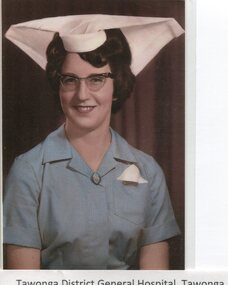
... staff employed in the old Tawonga District General Hospital 1949-1961; 14. The official opening ceremony of the Tawonga District General Hospital, 1949. The official ceremony was attended by a large number of residents and Tawonga District General Hospital was open for public inspection; 15. Original Tawonga District General Hospital transported form Bonegilla began operations in 1949; 16. In 1961, the Tawonga District General Hospital relocated to take a central position...staff employed in the old Tawonga District General Hospital 1949-1961; 14. The official opening ceremony of the Tawonga District General Hospital, 1949. The official ceremony was attended by a large number of residents and Tawonga District General Hospital was open for public inspection; 15. Original Tawonga District General Hospital transported form Bonegilla began operations in 1949; 16. In 1961, the Tawonga District General Hospital relocated to take a central position ...In the early stages of the Kiewa Hydro-Electric Scheme the State Electricity Commission took over the financial and construction responsibility of the Tawonga District General Hospital building at a cost of 27,000 pounds. This included the removal and re-erection of the ex-military Bonegilla ward from Wodonga while in addition they carried out all the necessary building works that allowed the hospital to operate as a functional unit. The work was completed and handed over to the Hospital Committee of Management on September 1, 1949. Local residents raised 3,400 pounds through fund raising. The balance was met by the SEC and the Hospital and Charities Commission. The initial project was to provide for a basic temporary hospital which was later to include an Operating Theatre, Offices, Store, Mortuary and a Nurse’s Home, until the establishment of a permanent medical premises. Following the opening, 455 patients were admitted to the Tawonga District General Hospital and 254 operations were performed in the first year. The hospital relocated to Mount Beauty in the former SEC administration offices located in the town centre. Official opening of the 18 bed Tawonga District General Hospital on April 29 in 1961. Alpine Health CEO Mr Lyndon Seys oversaw the opening of the new Mount Beauty Hospital in November 2001 alongside Board of Management President Mr Andrew Randell, other board members and politicians. The Kiewa Hydro-Electric Scheme the State Electricity Commission played a pivotal part in the planning and initial funding of the Tawonga District General Hospital, with a view to providing medical support for its many workers on the Hydro scheme. Later, spouse and family members of workers were also able to access medical assistance The hospital was originally located in Tawonga away from the majority of the patients as the Hospital and Charities Board was not prepared to have it within the SEC controlled area. It was not until the gate at Tawonga South was taken down that the hospital was moved to the main centre of population at Mount Beauty. 1. Early nurses uniform; 2. Hospital Opening Ceremony; 3-7. Nursing Staff; 8. Delivery Room; 9. Mens Ward; 10.Enclosed Veranda; 11. Main Ward; 12-13. Kitchen; 14. Opening Ceremony 1949; 15.Original Hospital at Tawonga; 16-18. Relocated Hospital at Mt Beauty; 19. Rear of hospital and Matron’s quarters; 20. Hospital and Kiewa Valley House; 21. Renovated Hospital in 20001.Tawonga District General Hospital Tawonga; 2. Kiewa construction engineer Mr HHC Williams speaking at the opening of the hospital. Health Minister the Hon CP Gartside performed the official opening. L to R: TH Mitchell MLA; Manager of the hospital Mr RH Kronberg (obscured) Hon CP Gartside; CL McVilley; LT Knevitt; Matron AI Tarnish & W Sealey: 4. Dedicated Nursing Staff; 5. Nurse Campbell (nee Reid); 6. Sister Seager 1955 (nee Janice Burnett. First District Nurse; 7. L to R: Sister F Rosengrove; Sister J Griffiths; Matron AI Tarnish; Nurse D Satori; Nurse D Tregonning; Sister E Hill & Sister S O’Shannessy; 8. In the early years Tawonga District General Hospital had the second highest birth rate in Australia; 9. The men’s ward catered for men only in the early years of the hospitals operation; 10. The enclosed verandah at the original Tawonga District General Hospital allowed for an additional 10 beds; 11. Tawonga District General Hospital, Tawonga Main Ward. Ward ready and waiting for patients at Tawonga Hospital. Complete with lovely vases of flowers for every bed. Nice touch by the nurses; 12. Kitchen of Tawonga District General Hospital, Mt Beauty. The hospital kitchen provided meals for patients and a 3 course dinner for Meals on Wheels. In 1977, 11,795 meals were produced at an average cost of $2.60 per meal; 13. Tawonga District General Hospital, Tawonga. Kitchen. Kitchen staff employed in the old Tawonga District General Hospital 1949-1961; 14. The official opening ceremony of the Tawonga District General Hospital, 1949. The official ceremony was attended by a large number of residents and Tawonga District General Hospital was open for public inspection; 15. Original Tawonga District General Hospital transported form Bonegilla began operations in 1949; 16. In 1961, the Tawonga District General Hospital relocated to take a central position in the town of Mt Beauty in the former SEC Administration building; 19. The rear of the Tawonga District General Hospital and Matron’s house seen from Holland St, Mt Beauty during a snow storm in the mid 1960’s; 21. Tawonga District General Hospital & Kiewa Valley House, 2000. tawonga district hospital, mt beauty hospital, medical, health care, s.e.c.
