
Showing 63 items matching "tea making"
-
 Stawell Historical Society Inc
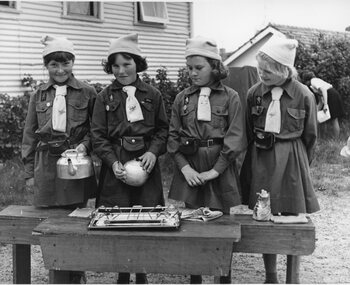
Photograph, Stawell Brownies making tea
... Stawell Brownies making tea...Four Brownies making tea with wooden bench and gas burner ...At guide hall on corner of Layzell and Patrick Streets Pam Smith Guides A Marshall Studios Quality Prints Four Brownies making tea with wooden bench and gas burner Stawell Brownies making tea Photograph ...At guide hall on corner of Layzell and Patrick Streets Pam SmithFour Brownies making tea with wooden bench and gas burner A Marshall Studios Quality Prints guides -
 Federation University Historical Collection
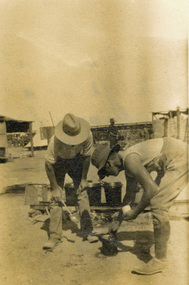
Photograph - black and white, Cam Williamson, AIF Soldiers Making Afternoon Tea, c1916
... AIF Soldiers Making Afternoon Tea....1) Verso: Harry [Holmes] and Gordon [Spittle] make afternoon tea for Cam, who snaps them in tea-making operation. (Ferry Post, Ismailia, Egypt). .2) S.G.S. ...Chatham family Archive Chatham Holmes World War World War 1 world War I World war One France Suez Ferry Post billy tea .1) Verso: Harry [Holmes] and Gordon [Spittle] make afternoon tea for Cam, who snaps them in tea-making operation. (Ferry Post, Ismailia, Egypt). .2) S.G.S. ...This photo was taken at Ferry Post, Suez Canal. .2) Two Australian Soldiers around a camp fire at Ferry Post boil a billy for tea..1) Verso: Harry [Holmes] and Gordon [Spittle] make afternoon tea for Cam, who snaps them in tea-making operation. (Ferry Post, Ismailia, Egypt). .2) S.G.S. [S. Gordon Spittle] and Harry [Holmes] making coffee to entertain Cam Williamson on his first visit to our camp. The hat hides Harry's face. These snaps are taken by Cam's Kodak."chatham family archive, chatham, holmes, world war, world war 1, world war i, world war one, france, suez, ferry post, billy tea -
![Cover page of 'Case history of tea services at the Alfred Hospital Melbourne' [ca.1950] , The tea bureau](/media/collectors/50187a8f023fd7201471f198/items/69d4a39f40348e1414e3d4e3/item-media/69d5c2177219387d705efe35/item-fit-380x285.jpg?cb=6) Alfred Hospital Nurses League - Nursing History Collection
Alfred Hospital Nurses League - Nursing History CollectionDocument - Report, The Tea Bureau, Case history of tea services at the Alfred Hospital Melbourne, [ca.1950]
... ...tea making...Report was made to advise the Alfred Hospital of the most appropriate equipment to purchase for tea making. Also provides information about numbers of staff, patients (in, out and casualty) and capacity of dining rooms....Report was made to advise the Alfred Hospital of the most appropriate equipment to purchase for tea making. Also provides information about numbers of staff, patients (in, out and casualty) and capacity of dining rooms. ...Report was made to advise the Alfred Hospital of the most appropriate equipment to purchase for tea making. Also provides information about numbers of staff, patients (in, out and casualty) and capacity of dining rooms.Gives insight into catering at the Alfred Hospital in 1950Unbound, photocopied, illustrated document. Cover page has black print detailing title and publisher, Their is also an illustration of a proposed redenelopment of the Alfred HospitalPrevious catalogue number at top right of cover pagealred hospital, hospital catering, tea making -
 Mission to Seafarers Victoria
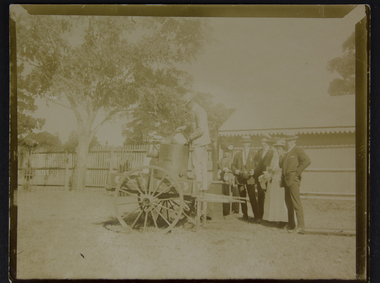
Photograph, Anne Treverton Goldsmith (nee Lobb), At the Zoo, Jan. 1sr 1908, 1st Mate of the Loch Etive "making the tea", 1 January 1908
... At the Zoo, Jan. 1sr 1908, 1st Mate of the Loch Etive "making the tea"...tea picnics loch etive lhlg zoo Small monochrome photograph (faded) depicting seamen and ladies standing next to a cart At the Zoo, Jan. 1sr 1908, 1st Mate of the Loch Etive "making the tea" Photograph Photograph Anne Treverton Goldsmith (nee Lobb) ...Small monochrome photograph (faded) depicting seamen and ladies standing next to a carttea, picnics, loch etive, lhlg, zoo -
 Eltham District Historical Society Inc
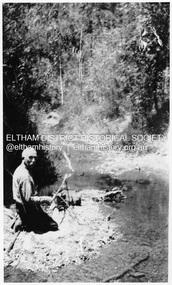
Photograph, Kinglake National Park; Shelley Harris, Ranger, making billy tea
... Kinglake National Park; Shelley Harris, Ranger, making billy tea....It is significant in being the first community sourced collection representing the places and people of the Shire's first one hundred years. sepp shire of eltham pioneers photograph collection kinglake kinglake national park ranger shelley harris Digital image Kinglake National Park; Shelley Harris, Ranger, making billy tea. Photograph Photograph ...Source: Mrs. McMinn, KinglakeThis photo forms part of a collection of photographs gathered by the Shire of Eltham for their centenary project book,"Pioneers and Painters: 100 years of the Shire of Eltham" by Alan Marshall (1971). The collection of over 500 images is held in partnership between Eltham District Historical Society and Yarra Plenty Regional Library (Eltham Library) and is now formally known as the 'The Shire of Eltham Pioneers Photograph Collection.' It is significant in being the first community sourced collection representing the places and people of the Shire's first one hundred years.Digital imagesepp, shire of eltham pioneers photograph collection, kinglake, kinglake national park, ranger, shelley harris -
 Glenelg Shire Council Cultural Collection
Photograph - Photograph - Portland Library, Victoria, n.d
... View of sink and tea making facilities, staff room....View of sink and tea making facilities, staff room. Photograph Photograph - Portland Library, Victoria ...Coloured photo. Portland Library. View of sink and tea making facilities, staff room. -
 Glenelg Shire Council Cultural Collection
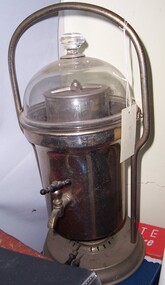
Functional object - Samovar, 1800s
... ... tea making...Birmingham collection samovar teapot Russian container tea making Nickle-plate smovar/perculator with glass domed lid with hand. ...Part of Birmingham Collection, donated by the Family of Misses Mary and Edith Maude Graham of 4 Blair Street, Portland.Nickle-plate smovar/perculator with glass domed lid with hand. Tap in front. Sits on metholated spirits burner. Metal handle.birmingham collection, samovar, teapot, russian, container, tea making -
 Warrnambool and District Historical Society Inc.
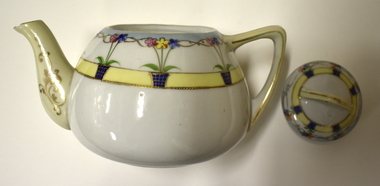
Domestic object - Teapot, Mid 20th Century
... ...Tea making in Australia...Tea pot Vintage domestic item Tea making in Australia Made in Japan This is a white china teapot with a lid which contains a steam hole and a handle. ...Tea has always been a common drink in Australia and before the introduction of tea bags a teapot such as this was used to infuse the tea leaves. This item is a decorative piece and would have been used for special occasions. The use of tea bags in both teapots and cups became widespread in the 1960s in Australia. Tea bags are the popular choice today for tea drinkers.This item has no known local provenance but is retained as a fine example of a vintage tea pot. This is a white china teapot with a lid which contains a steam hole and a handle. The spout has gold patterning. The handle is painted yellow with a gold strip. The lid has a yellow and blue decorative band and is decorated with flowers and gold pattern. The body of the teapot has the same decoration as the lid. The name of the country of origin and a number are on the base. Made in Japan tea pot, vintage domestic item, tea making in australia -
Hume City Civic Collection
Functional object - Electric Jug
... Although electric jugs were initially developed in England for quick tea-making, the fear of electrocution delayed their production in that country. ...Although electric jugs were initially developed in England for quick tea-making, the fear of electrocution delayed their production in that country. ...Although electric jugs were initially developed in England for quick tea-making, the fear of electrocution delayed their production in that country. Australia during the 1930s Depression went ahead and produced fancy ceramic electric jugs, which became status symbol in Australian homes. This jug is one of the earliest designs manufactured in the 1930sThe design of this jug is in contrast to later electric jugs which either gradually sloped up from the base to the neck and/or had curved sidesA dark cream ceramic electric jug with a black bakelite lid. The lower part of the jug is cylindrical with the upper part sloping to the spout. The bakelite lid opens with a hinge. household containers, electric jug, domestic food and drink -
 Glenelg Shire Council Cultural Collection
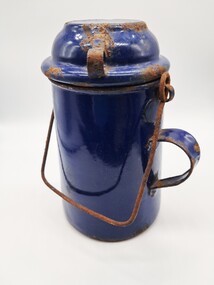
Domestic object - Enamel pot and lid
... May be used for making tea or coffee outdoors under a campfire...May be used for making tea or coffee outdoors under a campfire Although the direct provenance of this object is unknown, it helps to build a story about outdoor living, camping and life in the bush Camping Coffee coffee cup Coffee pot pot Hot drink early settlers Billy tea Blue metal enamel pot with lid in the shape of a cup. ...May be used for making tea or coffee outdoors under a campfireAlthough the direct provenance of this object is unknown, it helps to build a story about outdoor living, camping and life in the bushBlue metal enamel pot with lid in the shape of a cup. Both pot and lid have a handle to hold on the side. There is a carry handle that is a long thin metal piece shaped into a rectangle and bent around two metal rings on each side of the pot.camping, coffee, coffee cup, coffee pot, pot, hot drink, early settlers, billy tea -
Mission to Seafarers Victoria
Booklet, Mission to Seamen, Object of the Mission: moral and spiritual well-being of our Sailors, 1920?
... The booklet reviews the object of the mission and in particular the role of the Ladies Harbour Light Guild which is to ensure the moral and spiritual well-being of sailors through social events, arranging and attending picnics for the men on public holidays, presiding at the Sunday teas, making gloves, woollies and other comforts and helping to collect and distribute literature (books, papers, etc) . ...The booklet reviews the object of the mission and in particular the role of the Ladies Harbour Light Guild which is to ensure the moral and spiritual well-being of sailors through social events, arranging and attending picnics for the men on public holidays, presiding at the Sunday teas, making gloves, woollies and other comforts and helping to collect and distribute literature (books, papers, etc) . ...Charity organisation, Ladies' Harbour Lights Guild, was formed within The Missions to Seamen Institute to provide a home away from home, for visiting seamen. The booklet reviews the object of the mission and in particular the role of the Ladies Harbour Light Guild which is to ensure the moral and spiritual well-being of sailors through social events, arranging and attending picnics for the men on public holidays, presiding at the Sunday teas, making gloves, woollies and other comforts and helping to collect and distribute literature (books, papers, etc) . This paper flyer holds historical significance at a local level because it illustrates the Ladies' Harbour Lights Guild involvement in the Mission to Seafarers.The Ladies' Harbour Lights Guild grew to become a significant charity in Melbourne raising large amounts of money which helped to establish the current MTS building, supporting seafarers as well as organizing and attending social events for the seafarers. Small booklet, Written in Blue 8 pages, back to front. The cover has a photo of the MtSV building next to the words " The Victorian Missions to Seamen" and at the bottom the title reads "OBJECT OF THE MISSION: moral and spiritual well-being of our Sailors."missions to seamen institute, ladies' harbour lights guild, purpose, social events, lhlg, australian wharf -
 Mission to Seafarers Victoria
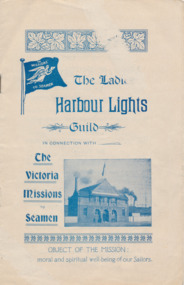
Booklet - Object, Missions to Seamen Institute, The Ladies' Harbour Lights Guild in connection with the Victoria Missions to Seamen-Object of the Mission: moral and spiritual well-being of our Sailors, 1909-1911
... The booklet reviews the object of the mission and in particular the role of the Ladies Harbour Light Guild which is to ensure the moral and spiritual well-being of sailors through social events, arranging and attending picnics for the men on public holidays, presiding at the Sunday teas, making gloves, woollies and other comforts and helping to collect and distribute literature (books, papers, etc) ....The booklet reviews the object of the mission and in particular the role of the Ladies Harbour Light Guild which is to ensure the moral and spiritual well-being of sailors through social events, arranging and attending picnics for the men on public holidays, presiding at the Sunday teas, making gloves, woollies and other comforts and helping to collect and distribute literature (books, papers, etc) . ...Charity organisation, Ladies' Harbour Lights Guild, was formed within The Missions to Seamen Institute to provide a home away from home, for visiting seamen. The booklet reviews the object of the mission and in particular the role of the Ladies Harbour Light Guild which is to ensure the moral and spiritual well-being of sailors through social events, arranging and attending picnics for the men on public holidays, presiding at the Sunday teas, making gloves, woollies and other comforts and helping to collect and distribute literature (books, papers, etc) .This paper flyer holds historical significance at a local level because it illustrates the Ladies' Harbour Lights Guild involvement in the Mission to Seafarers. The Ladies' Harbour Lights Guild grew to become a significant charity in Melbourne raising large amounts of money which helped to establish the current MTS building, supporting seafarers. Small booklet, Written in Blue 8 pages, back to front. The cover has a photo of the MtSV building next to the words " The Victorian Missions to Seamen" and at the bottom the title reads "OBJECT OF THE MISSION: moral and spiritual well-being of our Sailors."missions to seamen institute, ladies' harbour lights guild, mission to seafarers, seamen's mission, lhlg, chapel, flinders street, sir thomas david gibson carmichael (1859–1926) -
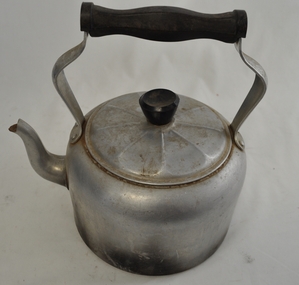 Kiewa Valley Historical Society
Kettle Aluminium, mid to late 1900's
... It was part of the evolution in "tea" making kettles. These were the only method of making hot beverages before introduction of electric kettles. ...It was part of the evolution in "tea" making kettles. These were the only method of making hot beverages before introduction of electric kettles. ...This aluminium kettle was manufactured between 1940 to 1960's and replaced the heavier caste iron "open fire" stove ones (in doors or in the bush). A cast iron flat base between the open fires and the kettle was required. This kettle was used extensively with indoor open fire places. It was part of the evolution in "tea" making kettles. These were the only method of making hot beverages before introduction of electric kettles. For the Kiewa Valley the connection to the major electricity grid was post 1950's.This kettle is significant demonstrating the type of kitchen utensils required before electrical home connections became a reality. The aluminium structure of the kettle was an advancement over the heavier caste iron kettles. This type of kettle is still in use for bush and mountain hikers/climbers due to the light weight. This kettle was used by the Tawonga C.W.A. Branch. The C.W.A. motto "Honour our God, Loyalty to the throne, Service to the country, Through country women, For country women, By country women."This 99% aluminium hot plate kettle with lid (bakelite handle) is Australian made for flat stoves (cooking or room heating). It has a "tea style" spout and a bakelite hand grip(knob) on the top of the lid. The lid has nine ridges (for strength) radiating from the central hand grip. The two handle prongs are bop riveted onto the the body of the kettle. The bakelite hand grip has been fashioned to fit the natural contours of a clutching hand.On both sides of the aluminium handle "HOT PLATE WARE" and covering an oblique shaped triangle "99% PURE ALUMINIUM" and below that "MADE IN AUSTRALIA".Within the triangle "DURALIFE"cwa, homeware aluminium kitchen utensils, made in australia cook ware -
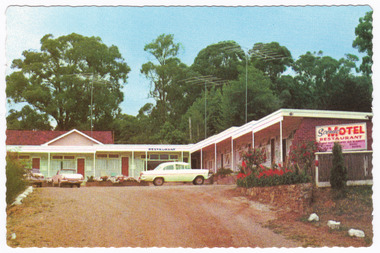 Marysville & District Historical Society
Postcard (item) - Colour postcard, John Sands Pty. Ltd, Unknown
... ./ Tiled shower recess and toilet,/ bedside lamps, T.V., radio, refrigerator. Tea-making facilities./ Breakfast served to units. ..../ Tiled shower recess and toilet,/ bedside lamps, T.V., radio, refrigerator. Tea-making facilities./ Breakfast served to units. ...A colour postcard of the Scenic Motel in Marysville. The postcard was produced by John Sands Pty. Ltd. as a souvenir of Marysville.A colour postcard of the Scenic Motel in Marysville. The postcard was produced by John Sands Pty. Ltd. as a souvenir of Marysville.Sandscene/International PLACE/STAMP/HERE PRINTED IN/ AUSTRALIA Post Card POST OFFICE/PREFERRED John Sands Pty. Ltd., Printers, Australia SPVI-SCENIC MOTEL, 5 DARWIN STREET, MARYSVILLE,/ Phone 92 "Modern luxuriously appointed sound proof bedsitting rooms./ all units wall-to-wall carpets./ Tiled shower recess and toilet,/ bedside lamps, T.V., radio, refrigerator. Tea-making facilities./ Breakfast served to units. Parking at door. Magnificent Scenic/ Views. Restaurant open 6 p.m. A La Carte Meals."marysville, victoria, australia, scenic motel, accommodation, postcard, john sands pty. ltd., souvenir -
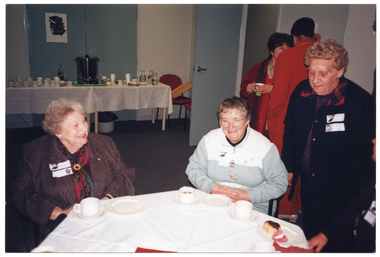 Musculoskeletal Health Australia (now held by the Glen Eira Historical Society)
Photograph - Group photo
... In the background, there is a long rectangular table with tea and coffee making facilities, carafes of water and glasses....In the background, there is a long rectangular table with tea and coffee making facilities, carafes of water and glasses. ...A few volunteer members from Arthritis Victoria's various op shops gathered at AV's headquaters in Elsternwick for morning tea. Pictured in this photo are (from left to right): Noreen Mansell, Norma Oldfield, and Irene Ellery - all from the Moonee Ponds op shop.Colour photo of three women at a table (two sitting, one standing). There are a few people standing nearby, to the right of the frame. In the background, there is a long rectangular table with tea and coffee making facilities, carafes of water and glasses.[Handwritten in pencil] BE [On a yellow sticky note, handwritten in black ink] LEFT - NOREEN MANSELL CENTRE NORMA OLDFIELD RIGHT IRENE ELLERY MOONEE PONDSarthritis victoria, av, morning tea, op shops, moonee ponds, members, volunteers, noreen mansell, norma oldfield, irene ellery -
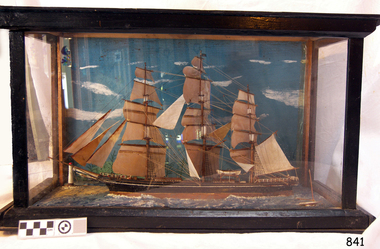 Flagstaff Hill Maritime Museum and Village
Craft - Ship Model, Cutty Sark
... tea...wool export...Australian export...Australian wool export...Cornwall...training ship...Greenwich...British Museum...ship model...craft...hobby...ship model Cutty Sark...model making...Flagstaff Hill Warrnambool Flagstaff Hill Maritime Museum Shipwreck Coast Flagstaff Hill Maritime Village Maritime Museum Great Ocean Road Cutty sark historic sailing ship tea clipper sail training vessel cadet training ship commercial trading vessel cargo sail vessel Ferreria 1869 tea cargo tea trade China tea wool export Australian export Australian wool export Cornwall training ship Greenwich British Museum ship model craft hobby ship model Cutty Sark model making "Cutty Sark" Ship model: the clipper ship Cutty Sark in full ship rig with raised poop deck, deck house, three boats on deck (one has fallen). ...THE CUTTY SARK: - The Cutty Sark was built in Britain in 1869 and was one of the last great sailing ships. At first, it carried tea from China. Later, it was used to transport wool from Australia. It became famous for its speed and held the record for the fastest voyage from Australia to Britain for ten years. Later, a Portuguese company bought the ship and renamed it Ferreira. After that, a retired sea captain purchased it to use as a training ship in Cornwall. When the captain died, the ship was given to a training college in Greenwich in 1938. In 1954, it was placed in dry dock at Greenwich, where it remains on display. The Cutty Sark is a special ship because it carried wool from Australia to other parts of the world. Models like this one help us imagine what sea travel was like before steam-powered ships were common, and they show us how trade, travel and migration changed over time. The Cutty Sark is also famous for being very fast. It set a record for the journey from Australia to Britain and kept that title for ten years. Today, people still recognise its importance because it has been carefully preserved and is on display at the British Maritime Museum in Greenwich. Its story has also made it a favorite subject for people who enjoy building ship models. Ship model: the clipper ship Cutty Sark in full ship rig with raised poop deck, deck house, three boats on deck (one has fallen). It has a two-toned black and tan hull and three jibs. The model is set in a diorama of a blue sea, a lighthouse and another small yacht. It is housed in a glass-sided case with a dark grey painted structure. The bow has an inscription."Cutty Sark"flagstaff hill, warrnambool, flagstaff hill maritime museum, shipwreck coast, flagstaff hill maritime village, maritime museum, great ocean road, cutty sark, historic sailing ship, tea clipper, sail training vessel, cadet training ship, commercial trading vessel, cargo sail vessel, ferreria, 1869, tea cargo, tea trade, china tea, wool export, australian export, australian wool export, cornwall, training ship, greenwich, british museum, ship model, craft, hobby, ship model cutty sark, model making -
 Flagstaff Hill Maritime Museum and Village
Domestic object - Teapot, Unknown
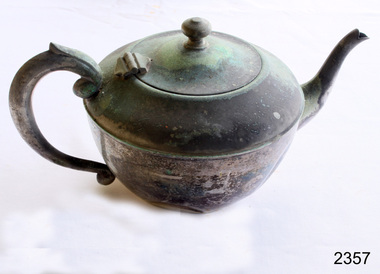
... https://www.marklittler.com/silver-teapots-history/ This item shows that silver and silver plated teapots were used for tea making. flagstaff hill warrnambool shipwrecked-coast flagstaff-hill flagstaff-hill-maritime-museum maritime-museum shipwreck-coast flagstaff-hill-maritime-village Teapot Silver Siver Plate Tea None. ...In the 1650s, the newest exciting development had arrived on Britain’s shores, this time it was tea from China. As it was brought back from overseas, tea was incredibly scarce and as such its price was very high; in 1664, the cost of tea was already 40s per pound, although this is not as high as what it would become when taxed in the 18th century. This resulted in only the social elite enjoying a cup of tea, and most commonly tea was enjoyed in coffee houses, and teapots were therefore not yet a household item. As the East India Company imported larger quantities of tea, it became more widely available and a larger section of the British population were able to enjoy it meaning that, by 1669, tea was available nearly everywhere. Likely due to the fact that tea was first enjoyed in coffee houses, the first known teapot resembles a coffee pot, with a tapering cylindrical shape and standing much taller than what we now know as a teapot at 13.5 inches tall. Into the 1680s, these teapots were given a conical cover for the spout that was fixed to the pot via a chain. As Queen Anne took the throne in 1702, teapots had become much more widely used and had formed two common groups. The first style of teapot was the pear shaped style which began to appear in 1705. The pear shaped pot usually had a domed lid and sometimes featured a finial. This form was generally supplied with a heater and stand as well as having a baluster shaped handle on one side. This iteration would disappear by 1725 but does make a reappearance in the 1740s, only this time as an inverted pear shape. The second group was the more spherical, or globular, shape which appeared in 1710. The globular teapot had a flush, hinged lid as well as a narrow moulded rim foot and a straight sided, tapering spout. Both generalised groups of teapots have polygonal examples – that is, teapots that are made up of straight sided segments – but six or seven sided teapots are incredibly rare. There is one known example of a seven sided globular teapot, made by Isaac Ribouleau in 1724. This is so unique because polygonal teapots are much more technically difficult and time consuming to make. Other than the occasional band of engraving round the shoulder of the teapot, they remain quite plain until c.1740 when scrollwork and chased shells begin to be applied for decoration. ‘Chasing’ is the process of decorating the front of a piece of metal by indenting the back, without cutting or engraving. From 1755 until 1770, silver teapots became incredibly uncommon and it is likely that this either reflects a change in drinking habits or changing trends producing a favour for porcelain. This dip in popularity could also be in response to the outrageous taxes placed on tea, up to 119%! In 1765, the Leeds creamware globular teapot seemed to kickstart a resurgence and this, combined with the Commutation Act of 1784 – which reduced tax on tea from 119% to 12.5% – saw teapots return in all their forms. It’s around this time, in 1780, that a form of teapot with a detachable, openwork stand appeared; however, the plain, oval teapot remained the most popular in the 1780s and 90s. In the later years of George III’s tenure on the throne, during the last decade of the 18th century, there was a revival of chasing and embossing teapots with flower and foliage designs. At the turn of the century, the spherical, partly fluted teapot with classical decoration was superseded by a more oblong shaped pot that sat on four spherical feet. This was then changed again when teapots became more melon shaped. It was at this time that the capacity of a teapot greatly increased and the previously wooden or ivory handles were replaced by silver handles with ivory washers for insulation. As Britain entered into the Victorian era, the design quality often suffered as there was a tendency to over-decorate the silver. In the early 19th century, the last major addition to the shape of the teapot, a raised collar was added between the cover and body. Whilst this seems to just be for decoration, there is some speculation that it could also be to prevent overspills. https://www.marklittler.com/silver-teapots-history/ This item shows that silver and silver plated teapots were used for tea making.Plain sliver teapot. Heavy oxidation. Dented.None.flagstaff hill, warrnambool, shipwrecked-coast, flagstaff-hill, flagstaff-hill-maritime-museum, maritime-museum, shipwreck-coast, flagstaff-hill-maritime-village, teapot, silver, siver plate, tea -
 Flagstaff Hill Maritime Museum and Village
Domestic object - Food Safe, Willow Ware Pty Ltd, 1920-1950
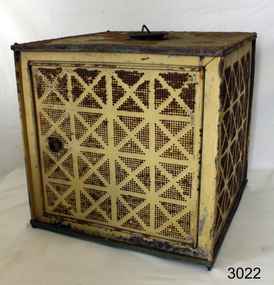
... Willow started business in 1887 as a metal working company based in Melbourne Australia, making tinned biscuit and tea canisters. The outbreak of the First World War saw their manufacturing change to making armaments and essential packaging for the war effort. ...Willow started business in 1887 as a metal working company based in Melbourne Australia, making tinned biscuit and tea canisters. The outbreak of the First World War saw their manufacturing change to making armaments and essential packaging for the war effort. ...Willow started business in 1887 as a metal working company based in Melbourne Australia, making tinned biscuit and tea canisters. The outbreak of the First World War saw their manufacturing change to making armaments and essential packaging for the war effort. In the early 1920’s, the Willow brand was established. Making tin plated canisters and baking pans with the well-known Willow pattern, imprinted on them. Some other items in production at this time include billies, boilers, basins and Coolgardie safes. In the late 1950’s, the company ventured into plastics production. Stepping away from its very successful tin plating industry of more than 50 years. In 1965, the company name changed to Willow Ware Pty Ltd, to be more closely linked to its Willow brand. Willow Ware is still in business today. A food safe known as a “Coolgardie” meat storage made by an emerging Australian company no longer in bushiness. This item gives a snapshot into early Australian manufacturing specifically aimed at the Australian market. Safe metal kitchen safe with two shelves, a hinged door and latch and a small swivel wire handle at the top. cream colour . "Made in Australia" "Willow" warrnambool, shipwrecked-coast, flagstaff-hill, flagstaff-hill-maritime-museum, shipwreck-coast, flagstaff-hill-maritime-village, willow ware, domestic item, coolgardie meat safe, meat safe, food safe, food preservation -
 Flagstaff Hill Maritime Museum and Village
Postcard - Vessel, Sailing Ship, B Matthews (photo printer), Cutty Sark, 20t century
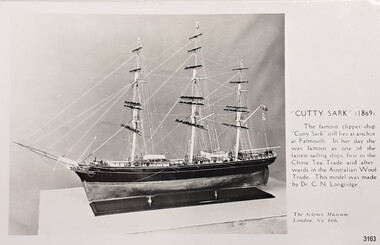
... tea trade...Cornwall...training ship...Greenwich...British Museum...ship model...craft...hobby...ship model Cutty Sark...model making...This postcard features a photograph of a model of the sailing ship Cutty Sark, making it significant because of its connection to this well-known vessel. The famous tea clipper transported wool from Australia to markets around the world. ...The maker of the ship model on the postcard was Dr C Nelson Longridge (1876–1952), an English surgeon, maritime author, and builder of detailed ship models. Other models include the SS Marioness and the steam yacht Asia. He also wrote the books 'Cutty Sark' and 'The Anatomy of Nelson's Ships'. The postcard was printed by B Matthews, Bradford, England, incorporated in 1970 as B. Matthews (Photo Printers) Limited. Collections of B Matthews' photo prints of famous painted portraits are held at The National Portrait Gallery of London. Copies of B Matthews postcards are today sought after by collectors. THE CUTTY SARK: - The Cutty Sark was built in Britain in 1869 and was one of the last great sailing ships. At first, it carried tea from China. Later, it was used to transport wool from Australia. It became famous for its speed and held the record for the fastest voyage from Australia to Britain for ten years. Later, a Portuguese company bought the ship and renamed it Ferreira. After that, a retired sea captain purchased it to use as a training ship in Cornwall. When the captain died, the ship was given to a training college in Greenwich in 1938. In 1954, it was placed in dry dock at Greenwich, where it remains on display. This postcard features a photograph of a model of the sailing ship Cutty Sark, making it significant because of its connection to this well-known vessel. The famous tea clipper transported wool from Australia to markets around the world. Models such as this one help us understand what sea travel was like before steam-powered ships became widespread, while also illustrating how trade, travel and migration developed over time. Cutty Sark was also celebrated for its speed. It broke records on the voyage from Australia to Britain and held this distinction for ten years. Its importance is still recognised today, as the ship has been carefully preserved and is now displayed at the British Maritime Museum in Greenwich. Its remarkable history has also made it a popular subject for model ship enthusiasts. The postcard is also valuable because it shows a model of Cutty Sark built by the renowned C. N. Longridge, who was not only a respected surgeon but also a skilled model maker and author of detailed maritime works. A further connection is found in the printer, B Matthews, who photographed and printed collections featuring famous people, model ships and maritime scenes, adding another layer of historical interest to the postcard. Postcard, black and white, showing a model of the sailing ship Cutty Sark. Printed details are provided on both the front and back of the postcard. Inscriptions include a brief description of the Cutty Sark, the location and maker of the model, and the printer's contact information. The postcard was printed in Great Britain.FRONT: " "CUTTY SARK" (1869) The famous clipper ship "Cutty Sark" still lies at anchor at Falmouth. In her day, she was famous as one of the fastest sailing ships, first in the China Tea Trade, and afterwards in the Australian Wool Trade. This model was made by Dr C.N. Longridge." "The Science Museum, London. No. 166." REVERSE: "POSTCARD" "COMMUNICATION" "ADDRESS" "Printed by B Matthews, Bradford, England"flagstaff hill, warrnambool, flagstaff hill maritime museum, shipwreck coast, flagstaff hill maritime village, maritime museum, great ocean road, cutty sark, historic sailing ship, tea clipper, sail training vessel, cadet training ship, commercial trading vessel, cargo sail vessel, clipper races, scott and linton of dunbarton scottland, race record, ferreria, 1869, tea cargo, tea trade, china tea, wool export, australian export, australian wool export, china tea trade, cornwall, training ship, greenwich, british museum, ship model, craft, hobby, ship model cutty sark, model making, postcard, c nelson longridge, charles nelson longridge, b matthews, photo printer, b matthews bradford england, b matthews (photo printer ) ltd. -
 Flagstaff Hill Maritime Museum and Village
Wood Samples, 1891
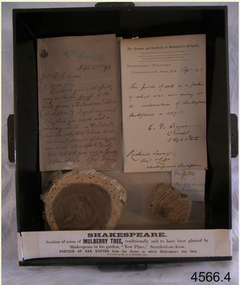
... making souvenirs from the wood. These became early tourist souvenirs and subsequently developed into a profitable sideline for various other makers, including George Cooper and John Marshall. These objects range from relatively small domestic wooden objects, such as snuff boxes and weight scales to large tea caddies and even tables. ...making souvenirs from the wood. These became early tourist souvenirs and subsequently developed into a profitable sideline for various other makers, including George Cooper and John Marshall. These objects range from relatively small domestic wooden objects, such as snuff boxes and weight scales to large tea caddies and even tables. ...The timber display case was presented to Mr Richard Standcombe Harris of Warrnambool (1831-1923). He was a councillor (1875-1891) and predominant businessman. Mr C F Loggin had met Mr Harris while on a trip to Stratford upon Avon in the United Kingdom. Upon his return to Warrnambool, Mr Harris donated the item to the Warrnambool Museum and Art Gallery, (established 1886) where Joseph Archibald was Curator: he catalogued the case in 1894. THE LETTERS IN THE CASE The two letters contained within the display case confirm the authenticity of the oak wood sample. The first letter in the case includes the text; "[Stamped Header on banner] High Street, Stratford on Avon [Hand written] Sept. 22nd / 91. Mr. R. S. Harris, Dear Sir, Enclosed you will find [underlined next 3 words] every authentic proof of the Oak from Shakespeare's House (Birth place). I regret very much Sir, that you made a short-day at S. on A. I should have been delighted to have had the honour, & pleasure, of showing you around our Beautiful Country. You did not give [next 3 words underlined] me or yourself a fair chance. But however I hope that we may again some day have more time to go quietly around. With kind regards, and wishing you, Sir, a pleasant voyage, I remain, Dear Sir, Yours very truly, C.F. Loggin. P.S. A paper will be always acceptable to be as how you Jolly Warrnamboolites are desporting yourselves. “ The second letter includes text; “[Printed Letterhead with stamped impression] The Trustees and Guardians of Shakespeare’s Birthplace Incorporated by Act of 54 and 55, Vict. 1891 Secretary and Librarian - Richard Savage Shakespeare’s Birthplace Stratford-upon-Avon [handwritten] 22 Sept 1891 This piece of oak is a portion of what was cut away at at the restoration of Shakespeare’s Birthplace in 1857-58. C. F. Loggins Chemist 3 High Street Richard Savage Sec. – Shakespeare’s Birthplace Mr C F Loggin was connected with the Shakespeare Trust as the person who had originally donated a scion of Shakespeare's mulberry tree to the "Shakespearean Birthday Committee" in 1842. (The scion that was given to the Shakespearean Birthday Committee, from which the Mulberry sample is derived, still grows today in "New Place" garden.) Mr Richard Savage was the Secretary and Liberian of the then renamed “Trustees and Guardians of Shakespeare’s Birthplace when the display case was given to Mr Harris in 1891 by Mr Loggin. WILLIAM SHAKESPEARE Shakespeare was born in 1564 in Stratford-upon-Avon, where he also grew up. He married at 18 years and he and his wife, Anne Hathaway, had three children: They moved to London where he became successful as an actor, writer, and part-owner of a playing company. He later returned to Stratford and purchased his last home, which he called "New Place" in 1602 where he later died in 1616. For the next 150 years, it was known that there existed a black mulberry tree in the garden. At the time there was a fashion for planting mulberry trees. It was the early 17th century after King James had come to the throne, and he imported tens of thousands of saplings in an attempt to get landowners to start a silk industry in England. Unfortunately for posterity, Shakespeare's mulberry was felled around 1756, by the then owner of “New Place" the Reverend Francis Gastrell, who was apparently tired of continual visits by pilgrims asking to see the tree, so he chopped it down. Gastrell had applied for local permission to extend the garden but the application was rejected and his tax was increased. Gastrell retaliated by demolishing the house in 1759, this greatly outraged the local inhabitants. Gastrell was eventually forced to leave town having provoked the wrath of Stratford residents for committing such an act. Today only the garden remains where “New House" used to stand with a scion from the original mulberry tree still growing there. The wood from the felled mulberry tree at “New House" was purchased by an enterprising local clock-maker Thomas Sharp and he spent the next 40 years or so years making souvenirs from the wood. These became early tourist souvenirs and subsequently developed into a profitable sideline for various other makers, including George Cooper and John Marshall. These objects range from relatively small domestic wooden objects, such as snuff boxes and weight scales to large tea caddies and even tables. C. F. Loggin donated a scion or cutting from Shakespeare's mulberry tree to the Shakespeare Birthplace Trust in 1862, he was a chemist who lived and worked in Stratford. There is a note on the frame of the donation that the mulberry sample is from this scion, research shows that from Richard Savage's diary notes that there must have been a lot of wood taken from that scion over the years which was planted in the garden of “New Place” and is still growing there today. The "Trustees and Guardians of Shakespeare’s Birthplace" (1847 -1964) was formed after the house where Shakespeare is believed to have been born fell into disrepair. Subsequently in 1846 after the death of Thomas Court's widow the last owner. Interest in the house was revived when PT Barnum, the American showman, wanted to buy it and ship the house back to America. In response to this, the Shakespeare Birthday Committee was established (by a private Act of Parliament) with the help of such luminaries as Charles Dickens, the Committee of Trustees raised the necessary £3,000 and purchased the house the following year. Once the Committee had acquired the building, restoration work began. Originally the Birthplace formed part of a terrace with later houses built either side. The first stage in its conservation was their destruction. At the time it was thought necessary to avoid the risk of fire spreading to Shakespeare's birthplace. Reconstruction was carried out by the Shakespeare Trust between 1857 and 1864 that restored the outside of the building to its original 16th-century state. It is from this restoration that the donated piece of oak is derived, originally from a beam that was in the house. Communication from The Shakespeare Birthplace Trust, dated April 11th, 2019, confirms that the pieces displayed in this case have good provenance. The wood samples are significant for their association with the history of William Shakespeare. The display case and its content is significant to Warrnambool local history for its association with the establishment in 1886 of the Warrnambool Museum and Art Gallery. However, it should be noted that the letters of authentication that accompany the wood samples are only applicable to the oak sample. None the less, all the pieces have very good provenance, with Richard Savage's certificate of authenticity for the oak, and the mulberry sample with the letter to Mr Harris from Mr CF Loggin having also been the donor of the scion of mulberry in 1862 to the Shakespeare Birthplace Trust. This scion was then established at Shakespeare's garden at "New Home" that had been demolished by Rev Francis Gastrell in 1759. Two wood samples associated with William Shakespeare, presented in a hanging, timber and glass display case with metal trim around the frame. The case also contains two letters and a label printed on a card that refers to the contents, their origins and the donor. A card label with a printed number and a round adhesive label are attached on the back of the case. The left round section of wood is from a donated scion (or shoot) derived from the original mulberry tree planted by William Shakespeare at his last home "New Place", Stratford-upon-Avon. The outer section is light brown coloured while the centre is dark grain. The right wood sample in the case is a section of oak rafter from the house where Shakespeare was born in 1564. The wood is mid brown with a distinct grain. The included letters, each dated 22/9/1891, refer to only the oak sample. - The letter on the left comprises two handwritten pages from Mr CF Loggin to Mr Richard Standcombe Harris. The paper has the printed letterhead address of High Street, Stratford on Avon. - The letter on the right is a handwritten certificate of authenticity signed by Mr CF Loggin and counter signed by Mr Richard Savage, Secretary and Liberian of the Shakespeare Trust. It is on the printed letterhead of The Trustees and Guardians of Shakespeare’s Birthplace Cardboard label inside the glass case “Shakespeare Section of Mulberry Tree, traditionally said to have been planted by Shakespeare in his garden, “New Place,” Stratford-on-Avon. PORTION OF OAK RAFTER from the house in which Shakespeare was born. (Presented by R S Harris 1891.) Printed label on the back of the case “3 2 “ The handwritten adhesive label “0566” flagstaff hill, warrnambool, shipwrecked coast, flagstaff hill maritime museum, maritime museum, shipwreck coast, flagstaff hill maritime village, great ocean road, shakespeare display case, wood samples, oak from shakespeare's birthplace, mulberry from shakespeare's home "new place", stratford-upon-avon, shakespeare's birthplace, the trustees and guardians of shakespeare's birthplace &c., shakespeare trust, shakespeare birthday committee, r.s. harris, brunswick, victoria, richard s harris, brunswick, victoria, c.f. loggins, chemist, 3 high street stratford-on-avon, richard savage, warrnambool museum and art gallery, thomas court, pt barnum, charles dickins, anne hathaway, black mulberry tree, reverend francis gastrell -
 Federation University Historical Collection
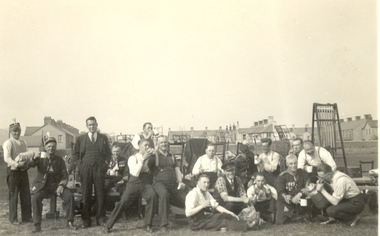
Photograph - Black and White, St Hilda's Band having tea at Neath, Wales, 1934, 4/6/1934
... The Frank Wright Medal at the Royal South Street competition is awarded to an individual recognized as making an outstanding contribution to brass music in Australia. frank wright st hilda's band neath brass band conductor Written in pencil on the back - St. Hilda's band having tea ...Frank Wright was a renown resident of Smeaton, where he was born on 2 August 1901. He lived at Laura Villa, and attended Smeaton State School. His father William was a gold miner and his mother's name was Sarah. Their family won many singing and instrumental awards. Frank was tutored by Percy Code and was awarded a gold medal for the highest marks in the ALCM examinations in the British Colonies at the age of seventeen years. He became the Australian Open Cornet Champion by the age of eighteen. A year later, Frank conducted the City of Ballarat Band, and later the Ballarat Soldiers’ Memorial Band. He formed the Frank Wright Frisco Band and Frank Wright and his Coliseum Orchestra. These bands won many South Street awards, and Frank as conductor won many awards in the Australian Band Championship contest. In 1933 Frank Wright sailed to England to conduct the famous St Hilda’s Band and was later appointed Musical Director of the London County Council, where he organized many amazing concerts in parks, in and around the London district. He was made Professor of Brass and Military Band Scoring and conducted at the Guildhall of Music and Drama. Frank was often invited to adjudicate Brass Band Championships around Europe, in Australia, including South Street and in New Zealand. The Frank Wright Medal at the Royal South Street competition is awarded to an individual recognized as making an outstanding contribution to brass music in Australia.Black and white photograph of a group of men relaxing with a cup of tea. Some are dressed in a band uniform whilst others have removed their jackets. They are sitting and standing on a grassed area, perhaps a village green. Behind them are a group of houses. The men are the St. Hilda's Band with Frank Wright, the conductor standing, dressed in a suit with his hands in his pockets.Written in pencil on the back - St. Hilda's band having tea at Neath, Wales, 4-6-34frank wright, st hilda's band, neath, brass band, conductor -
 Flagstaff Hill Maritime Museum and Village
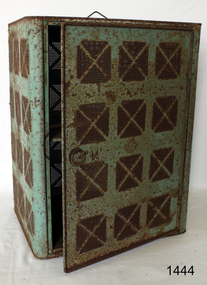
Domestic object - Food Safe, Willow Ware Pty Ltd, 1920s -1950
... Willow started business in 1887 as a metal working company based in Melbourne Australia, making tinned biscuit and tea canisters. The outbreak of the First World War saw their manufacturing change to making armaments and essential packaging for the war effort. ...Willow started business in 1887 as a metal working company based in Melbourne Australia, making tinned biscuit and tea canisters. The outbreak of the First World War saw their manufacturing change to making armaments and essential packaging for the war effort. ...Willow started business in 1887 as a metal working company based in Melbourne Australia, making tinned biscuit and tea canisters. The outbreak of the First World War saw their manufacturing change to making armaments and essential packaging for the war effort. In the early 1920’s, the Willow brand was established. Making tin plated canisters and baking pans with the well-known Willow pattern, imprinted on them. Some other items in production at this time include billies, boilers, basins and Coolgardie safes. In the late 1950’s, the company ventured into plastics production. Stepping away from its very successful tin plating industry of more than 50 years. In 1965, the company name changed to Willow Ware Pty Ltd, to be more closely linked to its Willow brand. Willow Ware is still in business today. A food safe known as a “Coolgardie” meat storage made by an emerging Australian company no longer in bushiness. This item gives a snapshot into early Australian manufacturing specifically aimed at the Australian market.Safe metal kitchen food safe with 2 shelves, a hinged door and latch and a small swivel wire handle at the top. Painted light green, rusting.Willowwarrnambool, shipwrecked-coast, flagstaff-hill, flagstaff-hill-maritime-museum, maritime-museum, shipwreck-coast, flagstaff-hill-maritime-village, safe, food safe, meat safe, coolgardie safe, domestic object, kitchen object, willow ware, food preservation, kitchen safe -
 Flagstaff Hill Maritime Museum and Village
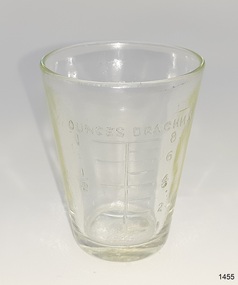
Container - Medicine Glass, ca. 1887 to early 20th century
... It is significant also for having the embossing inside the glass, which was likely produced by the turn-mould method of bottle (and container) making. flagstaff hill warrnambool shipwrecked coast flagstaff hill maritime museum maritime museum shipwreck coast flagstaff hill maritime village great ocean road medicine glass measuring glass dose cup medicine dispensing medicine measurement sambell pharmacy warrnambool sambell chemist and dentist internal embossing glass embossed inside 20th century chemist blown glass two-piece mould turn-moulded glass turned bottles "OUNCES DRACHMS" "TABLE TEA" Medicine glass or dose cup; clear glass with small imperfections and ripples in the glass, no side seams and a slightly concave base. ...This small medicine glass has ho manufacturer's or owner's marks. It has no side seams, the base is slightly concave, the embossed inscriptions are inside the glass, the clear glass has slight imperfections and ripples, and the glass is slightly opaque below the lip; these features point to the glass being blown into a mould, partially set, and spun between that mould and an internal mould that had the embossing on it, called a turn-mould process. The lip was then ground to be smooth. The process was patented in 1887 with the title of "Mold for blowing turned bottles".This medicine glass is significant as an example of medical equipment that has a design still used today. It is significant also for having the embossing inside the glass, which was likely produced by the turn-mould method of bottle (and container) making.Medicine glass or dose cup; clear glass with small imperfections and ripples in the glass, no side seams and a slightly concave base. All embossed marks are inside the glass. The imperial measurements are in graduated scales for tablespoons, teaspoons, and ounces and drachmas. "OUNCES DRACHMS" "TABLE TEA"flagstaff hill, warrnambool, shipwrecked coast, flagstaff hill maritime museum, maritime museum, shipwreck coast, flagstaff hill maritime village, great ocean road, medicine glass, measuring glass, dose cup, medicine dispensing, medicine measurement, sambell pharmacy warrnambool, sambell chemist and dentist, internal embossing, glass embossed inside, 20th century chemist, blown glass, two-piece mould, turn-moulded glass, turned bottles -
 Federation University Historical Collection
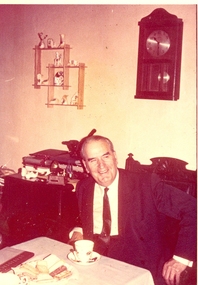
Photograph, Frank Wright at Tea, mid 1900s
... The Frank Wright Medal at the Royal South Street competition is awarded to an individual recognized as making an outstanding contribution to brass music in Australia. frank wright composer conductor brass bands Faded colour photograph of a man sitting at a table with a tea cup and saucer and plate of biscuits. ...Frank Wright was a renown resident of Smeaton, where he was born in 1901. He lived at Laura Villa, and attended Smeaton State School. His father William was a gold miner and his mother's name was Sarah. Their family won many singing and instrumental awards. Frank was tutored by Percy Code and was awarded a gold medal for the highest marks in the ALCM examinations in the British Colonies at the age of seventeen years. He became the Australian Open Cornet Champion by the age of eighteen. A year later, Frank conducted the City of Ballarat Band, and later the Ballarat Soldiers’ Memorial Band. He formed the Frank Wright Frisco Band and Frank Wright and his Coliseum Orchestra. These bands won many South Street awards, and Frank as conductor won many awards in the Australian Band Championship contest. In 1933 Frank Wright sailed to England to conduct the famous St Hilda’s Band and was later appointed Musical Director of the London County Council, where he organized many amazing concerts in parks, in and around the London district. He was made Professor of Brass and Military Band Scoring and conducted at the Guildhall of Music and Drama. Frank was often invited to adjudicate Brass Band Championships around Europe, in Australia, including South Street and in New Zealand. The Frank Wright Medal at the Royal South Street competition is awarded to an individual recognized as making an outstanding contribution to brass music in Australia.Faded colour photograph of a man sitting at a table with a tea cup and saucer and plate of biscuits. On the wall behind is a shadow box with ornaments and a clock. The man is Frank Wright.frank wright, composer, conductor, brass bands -
 Flagstaff Hill Maritime Museum and Village
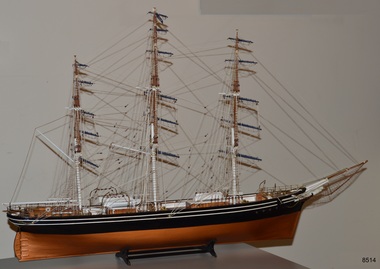
Craft - Ship Model, Billings Boats Denmark Aps, Cutty Sark, 1980s
... Williams found the making of the model a very demanding but also pleasurable exercise. The model is significant for showing a visual representation of one of the most famous tea clippers, the vessel Cutty Sark. ...This ship model of the Cutty Sark was hand-built in the 1980s from a model kit produced by Billings, Denmark. It was on display in the Olde Maritime Motor Inn in Warrnambool until it was refurbished around 2015. The Cutty Sark was a famous clipper ship, launched in 1869 for the tea trade from China to London. The ship was designed for speed, with the ambition to be the fastest ship. In the late 1800s, it competed in the tea clipper races. It was eventually sold to a Portuguese company, Ferreria, and took on the company's name. It was sold again and renamed Maria do Amparo. Finally, the ship's name was returned to the original 'Cutty Sark' when it was purchased by Captain Dowman for use as a cadet training ship. The ship continued trading and in 1922 it became the last operating clipper ship in the world. The ship is now a museum, preserved in a dry dock at Greenwich, England, as part of the British National Historic Fleet. About Barry Williams: - The maker, Barry Williams, worked for the Australian Shipping Line, Huddart Packard Ltd., until it closed down in 1960. Williams then worked for Shaw Savill & Albion Co. Ltd., a substantial British passenger and liner company. and subsequently Furness Withy Ltd. (SS&A's parent company). In the late 1970s Williams and two friends established their own ship chartering company in Melbourne, the Harwood Shipping Co. During the early 1970s Williams and his wife lived in London, near Greenwich, and often walked along the river where the Cutty Sark Maritime Museum is located. The fascination of the Cutty Sark led Williams to build model ships of the same era. At one stage Williams lost the rigging plan for the Cutty Sark but one of his partners, on a visit to London, photographed the Cutty Sark on the river, and Williams used these to complete the rigging on the model. Williams found the making of the model a very demanding but also pleasurable exercise.The model is significant for showing a visual representation of one of the most famous tea clippers, the vessel Cutty Sark. The three-masted ship was built for speed and traded tea between England and China. In 1922 the Cutty Sark became the last operating tea clipper in the world. The craft of ship model building has been popular for centuries, especially with people associated with the sea, such as this model builder, whose career was based around the shipping industry.Ship model; clipper ship, the 'Cutty Sark', a three-masted clipper ship, bare rigging, netting below the bowspit, and fine chains hanging from the bowspit. Black hull with two parallel horizontal stripes below the rail. Lifeboats on board. The white figurehead is below the bowsprit. The model comes with a cradle stand. The ship's name is not visible on the model.flagstaff hill, warrnambool, shipwrecked coast, flagstaff hill maritime museum, maritime museum, shipwreck coast, flagstaff hill maritime village, great ocean road, cunysark, historic sailing ship, tea clipper, sail training vessel, cadet training ship, commercial trading vessel, cargo sail vessel, ship model cutty sark -
 Flagstaff Hill Maritime Museum and Village
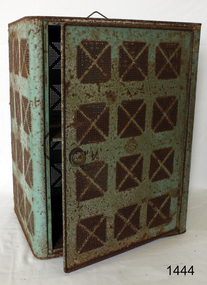
Domestic object - Food Safe, Willow Ware Pty Ltd, 1950s to 70s
... Willow started a business in 1887 as a metalworking company based in Melbourne Australia, making tinned biscuit and tea canisters. In the First World War, the company began manufacturing armaments and essential packaging for the war effort. ...Willow started a business in 1887 as a metalworking company based in Melbourne Australia, making tinned biscuit and tea canisters. In the First World War, the company began manufacturing armaments and essential packaging for the war effort. ...This food safe is a mass-produced item made for domestic use by Willow Manufacturing in Australia fin the mid-20th century. Willow started a business in 1887 as a metalworking company based in Melbourne Australia, making tinned biscuit and tea canisters. In the First World War, the company began manufacturing armaments and essential packaging for the war effort. In the early 1920s, Willow produced domestic kitchen bakeware such as tin-plated canisters and baking pans labelled with the well-known Willow brand. Other items at this time include billies, boilers, basins and Coolgardie safes. In the late 1950s, the company ventured into plastics production. and in 1965, the name changed to Willow Ware Pty Ltd, to be more closely linked to its Willow brand. Willow Ware is still in business today.The Australian food safe is an example of domestic food storage and preservation in Australian homes from the mid-19th century and early 20th centuries. It is part of the evolution of food preservation methods leading up to our modern electric appliances. The maker, Willow, has a name associated with practical and reliable domestic products.Metal kitchen safe with two shelves, a hinged door and latch and a small swivel wire handle at the top. Painted light green. Airflow holes have been formed in each side panel. Made by Willow, Australia.Marked "Made in Australia" "Willow"flagstaff hill, warrnambool, flagstaff hill maritime museum, shipwreck coast, flagstaff hill maritime village, great ocean road, food storage, food preservation, willow, willow manufacturing, willow australia, kitchen storage, food care, 19th century, 20th century, willow ware, domestic item, coolgardie meat safe, meat safe, food safe, coolgardie -
 Flagstaff Hill Maritime Museum and Village
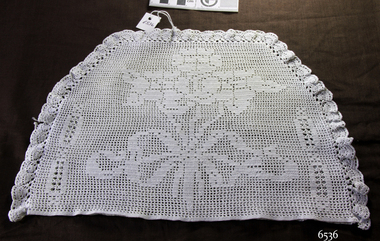
Textile - Tea Cosy, ca 1910
... making and collecting a range of linen and other domestic items in preparation for their future marriage. The item is a fine example of early 20th-century needlework and handmade domestic items. Flagstaff Hill Warrnambool Flagstaff Hill Maritime Museum and Village Great Ocean Road Chamberlain family Dale family Lees Family Betty Stone Warrnambool Pioneer Warrnambool genealogy Wangoom Chamberlain Dale Lees collection glory box handmade craft manchester linen haberdashery needlework crochet teapot cover tea cosy tea service Tea cosy, white, crocheted cover with an incorporated flower design. ...This decorative crocheted tea cosy or teapot cover is handmade and used to help keep the tea hot and ready to serve. In the Words of donor, Betty Stone, … “These crocheted and embroidered articles cover a period of three generations- ie. Sarah (nee Chamberlain) Lees, Ann (nee Lees) Dale, and Daisy Elvena (nee Dale) Welsh. All three were accomplished needlewomen; also, both Sarah Lees (born 1844) and her daughter, Ann (b 1865) crocheted a wide variety of articles for use in their homes. A few examples of these items have survived the years.” It was a tradition for brides to have a 'glory box' containing linen and embroidered articles to take to their new home. Many of the items were made by Daisy, a skilled dressmaker. Daisy began her apprenticeship at two shillings and sixpence per week at Miss A. E. Emery's dressmaking establishment at 150-152 Liebig Street, Warrnambool. Considered to be the leading house of fashion in Warrnambool, Miss Emery employed about eight young women who worked long hours to sew elaborate gowns for clients, including wives of graziers who would attend the race carnivals and social functions in Warrnambool. (NOTE: For additional information please refer to my book Pioneer and Places- A History of Three Warrnambool Pioneering Families ie. Chamberlain, Dale and Lees families)This item is associated with the Warrnambool pioneer families of Chamberlain, Dale and Lees. These families are listed in the Pioneers' Register for Warrnambool Township and Shire, 1835-1900, published by A.I.G.S. Warrnambool Branch. The item is significant for its association with a ‘glory box’ or hope chest’, a tradition of single ladies making and collecting a range of linen and other domestic items in preparation for their future marriage. The item is a fine example of early 20th-century needlework and handmade domestic items.Tea cosy, white, crocheted cover with an incorporated flower design. Half circle in shape. Part of the Chamberlain Dale Lees Collection.flagstaff hill, warrnambool, flagstaff hill maritime museum and village, great ocean road, chamberlain family, dale family, lees family, betty stone, warrnambool pioneer, warrnambool genealogy, wangoom, chamberlain dale lees collection, glory box, handmade, craft, manchester, linen, haberdashery, needlework, crochet, teapot cover, tea cosy, tea service -
 Flagstaff Hill Maritime Museum and Village
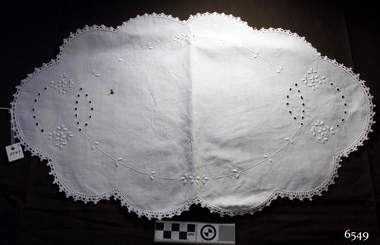
Textile - Tray Cover, Sarah Lees or daughter Ann Dale (nee Lees), ca 1910
... making and collecting a range of linen and other domestic items in preparation for their future marriage. The item is a fine example of early 20th-century needlework and handmade domestic items. Flagstaff Hill Warrnambool Flagstaff Hill Maritime Museum and Village Great Ocean Road Chamberlain family Dale family Lees Family Betty Stone Warrnambool Pioneer Warrnambool genealogy Wangoom Chamberlain Dale Lees collection glory box handmade craft manchester linen haberdashery needlework crochet tray cover tray cloth tea service eyelet embroidery Sarah Lees Ann Dale (nee Lees) Tray cover, white fabric, elliptical in shape with a scalloped crochet edge, eyelet and white floral embroidery, Part of the Chamberlain Dale Lees Collection. ...This decorative embroidered tray cover or tray cloth is beautifully handmade and includes eyelet or Broderie Anglaise embroidery. It was made by either Sarah Lees or her daughter Anne Dale (nee Lees). In the Words of donor, Betty Stone, … “These crocheted and embroidered articles cover a period of three generations- ie. Sarah (nee Chamberlain) Lees, Ann (nee Lees) Dale, and Daisy Elvena (nee Dale) Welsh. All three were accomplished needlewomen; also, both Sarah Lees (born 1844) and her daughter, Ann (b 1865) crocheted a wide variety of articles for use in their homes. A few examples of these items have survived the years.” It was a tradition for brides to have a 'glory box' containing linen and embroidered articles to take to their new home. Many of the items were made by Daisy, a skilled dressmaker. Daisy began her apprenticeship at two shillings and sixpence per week at Miss A. E. Emery's dressmaking establishment at 150-152 Liebig Street, Warrnambool. Considered to be the leading house of fashion in Warrnambool, Miss Emery employed about eight young women who worked long hours to sew elaborate gowns for clients, including wives of graziers who would attend the race carnivals and social functions in Warrnambool. (NOTE: For additional information please refer to my book Pioneer and Places- A History of Three Warrnambool Pioneering Families ie. Chamberlain, Dale and Lees families)This item is associated with the Warrnambool pioneer families of Chamberlain, Dale and Lees. These families are listed in the Pioneers' Register for Warrnambool Township and Shire, 1835-1900, published by A.I.G.S. Warrnambool Branch. The item is significant for its association with a ‘glory box’ or hope chest’, a tradition of single ladies making and collecting a range of linen and other domestic items in preparation for their future marriage. The item is a fine example of early 20th-century needlework and handmade domestic items.Tray cover, white fabric, elliptical in shape with a scalloped crochet edge, eyelet and white floral embroidery, Part of the Chamberlain Dale Lees Collection.flagstaff hill, warrnambool, flagstaff hill maritime museum and village, great ocean road, chamberlain family, dale family, lees family, betty stone, warrnambool pioneer, warrnambool genealogy, wangoom, chamberlain dale lees collection, glory box, handmade, craft, manchester, linen, haberdashery, needlework, crochet, tray cover, tray cloth, tea service, eyelet embroidery, sarah lees, ann dale (nee lees) -
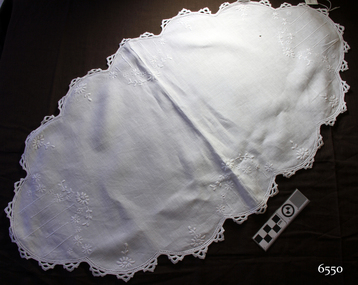 Flagstaff Hill Maritime Museum and Village
Textile - Tray Cover, Sarah Lees or daughter Ann Dale (nee Lees), ca 1910
... making and collecting a range of linen and other domestic items in preparation for their future marriage. The item is a fine example of early 20th-century needlework and handmade domestic items. Flagstaff Hill Warrnambool Flagstaff Hill Maritime Museum and Village Great Ocean Road Chamberlain family Dale family Lees Family Betty Stone Warrnambool Pioneer Warrnambool genealogy Wangoom Chamberlain Dale Lees collection glory box handmade craft manchester linen haberdashery needlework crochet tray cover tray cloth tea service embroidered Sarah Lees Ann Dale (nee Lees) Tray Cover, white embroidered cloth, elliptical shape with a scalloped, crocheted edge, Part of the Chamberlain Dale Lees Collection. ...This decorative embroidered tray cover or tray cloth is beautifully handmade by either Sarah Lees or her daughter Ann Dale (nee Lees). In the Words of donor, Betty Stone, … “These crocheted and embroidered articles cover a period of three generations- ie. Sarah (nee Chamberlain) Lees, Ann (nee Lees) Dale, and Daisy Elvena (nee Dale) Welsh. All three were accomplished needlewomen; also, both Sarah Lees (born 1844) and her daughter, Ann (b 1865) crocheted a wide variety of articles for use in their homes. A few examples of these items have survived the years.” It was a tradition for brides to have a 'glory box' containing linen and embroidered articles to take to their new home. Many of the items were made by Daisy, a skilled dressmaker. Daisy began her apprenticeship at two shillings and sixpence per week at Miss A. E. Emery's dressmaking establishment at 150-152 Liebig Street, Warrnambool. Considered to be the leading house of fashion in Warrnambool, Miss Emery employed about eight young women who worked long hours to sew elaborate gowns for clients, including wives of graziers who would attend the race carnivals and social functions in Warrnambool. (NOTE: For additional information please refer to my book Pioneer and Places- A History of Three Warrnambool Pioneering Families ie. Chamberlain, Dale and Lees families)This item is associated with the Warrnambool pioneer families of Chamberlain, Dale and Lees. These families are listed in the Pioneers' Register for Warrnambool Township and Shire, 1835-1900, published by A.I.G.S. Warrnambool Branch. The item is significant for its association with a ‘glory box’ or hope chest’, a tradition of single ladies making and collecting a range of linen and other domestic items in preparation for their future marriage. The item is a fine example of early 20th-century needlework and handmade domestic items.Tray Cover, white embroidered cloth, elliptical shape with a scalloped, crocheted edge, Part of the Chamberlain Dale Lees Collection.flagstaff hill, warrnambool, flagstaff hill maritime museum and village, great ocean road, chamberlain family, dale family, lees family, betty stone, warrnambool pioneer, warrnambool genealogy, wangoom, chamberlain dale lees collection, glory box, handmade, craft, manchester, linen, haberdashery, needlework, crochet, tray cover, tray cloth, tea service, embroidered, sarah lees, ann dale (nee lees) -
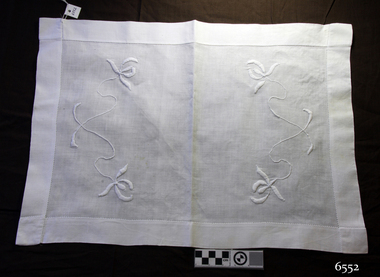 Flagstaff Hill Maritime Museum and Village
Textile - Tray Cover, Sarah Lees or daughter Ann Dale (nee Lees), ca 1910
... making and collecting a range of linen and other domestic items in preparation for their future marriage. The item is a fine example of early 20th-century needlework and handmade domestic items. Flagstaff Hill Warrnambool Flagstaff Hill Maritime Museum and Village Great Ocean Road Chamberlain family Dale family Lees Family Betty Stone Warrnambool Pioneer Warrnambool genealogy Wangoom Chamberlain Dale Lees collection glory box handmade craft manchester linen haberdashery needlework tray cover tray cloth tea service Sarah Lees Ann Dale (nee Lees) Tray cover, rectangle in shape, white with white floral embroidery. ...This decorative embroidered tray cover or tray cloth is beautifully handmade by either Sarah Lees or her daughter Ann Dale (nee Lees). In the Words of donor, Betty Stone, … “These crocheted and embroidered articles cover a period of three generations- ie. Sarah (nee Chamberlain) Lees, Ann (nee Lees) Dale, and Daisy Elvena (nee Dale) Welsh. All three were accomplished needlewomen; also, both Sarah Lees (born 1844) and her daughter, Ann (b 1865) crocheted a wide variety of articles for use in their homes. A few examples of these items have survived the years.” It was a tradition for brides to have a 'glory box' containing linen and embroidered articles to take to their new home. Many of the items were made by Daisy, a skilled dressmaker. Daisy began her apprenticeship at two shillings and sixpence per week at Miss A. E. Emery's dressmaking establishment at 150-152 Liebig Street, Warrnambool. Considered to be the leading house of fashion in Warrnambool, Miss Emery employed about eight young women who worked long hours to sew elaborate gowns for clients, including wives of graziers who would attend the race carnivals and social functions in Warrnambool. (NOTE: For additional information please refer to my book Pioneer and Places- A History of Three Warrnambool Pioneering Families ie. Chamberlain, Dale and Lees families) This item is associated with the Warrnambool pioneer families of Chamberlain, Dale and Lees. These families are listed in the Pioneers' Register for Warrnambool Township and Shire, 1835-1900, published by A.I.G.S. Warrnambool Branch. The item is significant for its association with a ‘glory box’ or hope chest’, a tradition of single ladies making and collecting a range of linen and other domestic items in preparation for their future marriage. The item is a fine example of early 20th-century needlework and handmade domestic items.Tray cover, rectangle in shape, white with white floral embroidery. Part of the Chamberlain Dale Lees Collection.flagstaff hill, warrnambool, flagstaff hill maritime museum and village, great ocean road, chamberlain family, dale family, lees family, betty stone, warrnambool pioneer, warrnambool genealogy, wangoom, chamberlain dale lees collection, glory box, handmade, craft, manchester, linen, haberdashery, needlework, tray cover, tray cloth, tea service, sarah lees, ann dale (nee lees)
