
Showing 90 items matching "the engineer's view"
-
 Moorabbin Air Museum
Book - DOUGLAS DC-3 DAKOTA, Douglas DC-3 Dakota Owners Workshop Manual
... ...The crew's view...The engineer's...Douglas DC-3 Dakota The Dakota story Anatomy of the Dakota The Pratt & Whitney R-1830-90D The owner's view The crew's view The engineer's view Overview on history & maintenance of DC3 Dakota, circa 2011 Douglas DC-3 Dakota Owners Workshop Manual Book DOUGLAS DC-3 DAKOTA ...Overview on history & maintenance of DC3 Dakota, circa 2011non-fictionOverview on history & maintenance of DC3 Dakota, circa 2011the dakota story, anatomy of the dakota, the pratt & whitney r-1830-90d, the owner's view, the crew's view, the engineer's view -
 Glenelg Shire Council Cultural Collection
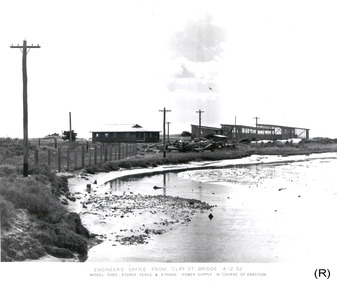
Photograph - Photograph - Portland Harbour Trust - Engineer's office from Cliff St Bridge, 1952
... View of Engineer's office from Cliff St Bridge...Front: ENGINEER'S OFFICE FROM CLIFF ST. BRIDGE 5.11.52/ View showing Model Shed, Storage fence & 3 phase power supply/ in course of erection. ...No 34/ Date taken 5-11-52/ SUBJECT./ % (Ink stamp with blue pen and pencil additions, centre) View of Engineer's office from Cliff St Bridge Photograph Photograph - Portland Harbour Trust - Engineer's office from Cliff St Bridge Portland Harbour Trust ...Port of Portland Authority archivesFront: ENGINEER'S OFFICE FROM CLIFF ST. BRIDGE 5.11.52/ View showing Model Shed, Storage fence & 3 phase power supply/ in course of erection. (lower centre) Back: P.H.T./ Print No. 3/11 Neg. No 34/ Date taken 5-11-52/ SUBJECT./ % (Ink stamp with blue pen and pencil additions, centre)port of portland archives -
 Glenelg Shire Council Cultural Collection
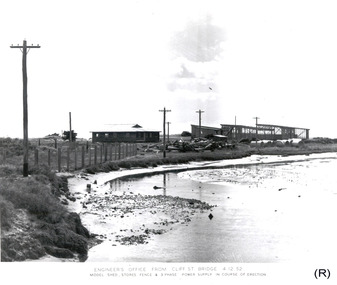
Photograph - Photograph - Portland Harbour Trust - View of Engineer's Office from Cliff St Bridge, 1952
... View of Engineer's Office from Cliff St Bridge...ENGINEER'S OFFICE FROM CLIFF ST. BRIDGE 4.12.52/MODEL SHED, STORES FENCE & 3 PHASE POWER SUPPLY IN COURSE OF ERECTION (lower centre) Back: P.H.T./ Print No. 3/12 Neg. No 83/ Date taken 4-12-52/ SUBJECT./ % (Ink stamp with blue pen and pencil additions, centre) View of Engineer's Office from Cliff St Bridge Photograph Photograph - Portland Harbour Trust - View of Engineer's Office from Cliff St Bridge Portland Harbour Trust ...Port of Portland Authority archivesFront: ENGINEER'S OFFICE FROM CLIFF ST. BRIDGE 4.12.52/MODEL SHED, STORES FENCE & 3 PHASE POWER SUPPLY IN COURSE OF ERECTION (lower centre) Back: P.H.T./ Print No. 3/12 Neg. No 83/ Date taken 4-12-52/ SUBJECT./ % (Ink stamp with blue pen and pencil additions, centre)port of portland archives -
 Sunshine and District Historical Society Incorporated
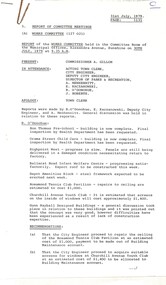
Administrative record - City of Sunshine - Commissioner Mr Alexander Alex George Gillon Collection 1976 - 1982 - Reports of committee meetings 31st July 1979, City of Sunshine, 31st July 1979
... . & Other Stony Creek Concrete Open Drain Furlong Road South to Cary Street Diamond Avenue Pre-School Centre Landscaping Progressing Bon Thomas Reserve Pre-School Centre Agricultural Drains Completed Tree Planting Southern & Central Wards Completed Tree Pruning 40% Complete Northumberland Road Playground Graded and Top Soil Completed General Reserve Maintenance Grass Growth is Slow Dobson Reserve & Kinder Smith Reserve Quotations are being sourced Maidstone Area Gang of Two Clearing Laneways Killeen Street Child Care Centre Landscaping Works Completed Report of the Finance Committee Report of the Town Clerk Financial Reports for the Period Ended 2nd July 1979 Report of the City Engineer & Planner Contract Cornhill Street Right of Way South Road Reconstruction Refund from Department of Housing and Construction Report of the Agenda and Forward Planning Committee Report of the Acting Town Clerk Open Space Lease for Lots 23, 24, 25 & 26 Chifley Drive Maribyrnong be Sealed Open Space Lease for Lot 28 Newstead Street Maribyrnong be Sealed Report of the Chief Health Surveyor Council Owned Properties (Food Selling Facilities) to be upgraded to meet the minimum requirements Report of the Chief By-Laws Officer House Number Lions Club of Deer Park Report of the Municipal Recreation Officer Ground Rentals Westside Glenettes Marching Girls Club Tallintyre Reserve Report of the City Engineer Planning Permit Application Seven Villa units Salmond Street Deer Park Kinder Smith Reserve Pavilion Sunshine Marching Girls Club Hall Kinder Smith Reserve Report of the City Engineer & Planner Sunshine View Estate Stage 2.... & Other Stony Creek Concrete Open Drain Furlong Road South to Cary Street Diamond Avenue Pre-School Centre Landscaping Progressing Bon Thomas Reserve Pre-School Centre Agricultural Drains Completed Tree Planting Southern & Central Wards Completed Tree Pruning 40% Complete Northumberland Road Playground Graded and Top Soil Completed General Reserve Maintenance Grass Growth is Slow Dobson Reserve & Kinder Smith Reserve Quotations are being sourced Maidstone Area Gang of Two Clearing Laneways Killeen Street Child Care Centre Landscaping Works Completed Report of the Finance Committee Report of the Town Clerk Financial Reports for the Period Ended 2nd July 1979 Report of the City Engineer & Planner Contract Cornhill Street Right of Way South Road Reconstruction Refund from Department of Housing and Construction Report of the Agenda and Forward Planning Committee Report of the Acting Town Clerk Open Space Lease for Lots 23, 24, 25 & 26 Chifley Drive Maribyrnong be Sealed Open Space Lease for Lot 28 Newstead Street Maribyrnong be Sealed Report of the Chief Health Surveyor Council Owned Properties (Food Selling Facilities) to be upgraded to meet the minimum requirements Report of the Chief By-Laws Officer House Number Lions Club of Deer Park Report of the Municipal Recreation Officer Ground Rentals Westside Glenettes Marching Girls Club Tallintyre Reserve Report of the City Engineer Planning Permit Application Seven Villa units Salmond Street Deer Park Kinder Smith Reserve Pavilion Sunshine Marching Girls Club Hall Kinder Smith Reserve Report of the City Engineer & Planner Sunshine View Estate Stage 2 Foolscap sized document. ...Reports of Committee Meetings 31st July 1979 Report of the Works Committee Bon Thomas Pre-School Building Completed Orama Street Child Care Centre Building Completed Highpoint West Child Care Centre Building Progress is Slow Ballarat Road Infant Welfare Centre Progressing Satisfactorily Depot Amenities Block Street Frame to be Erected Next Week Rosamond Tennis Club Pavilion Ceiling Repairs Costs Church avenue Youth Club Window Screen Costs Gunn Hayball Designed Buildings Discussion Kerb & Channel Melon Street Completed Kerb & Channel Ballarat Road Service Road Near Verdant Avenue Completed Kerb & Channel Burns Street Commenced Kerb & Channel Brisbane Street Commenced Footpath Ashley Street Completed Footpath Lynch Street Completed Footpath Joy Street Area Progressing Roadworks Melon Street Area Completed Roadworks Municipal Sunshine Tip Surrounding Gatehouse has been sealed Roadworks Ballarat Road Service Road Near Verdant Avenue Near Completion Roadworks Parsons Reserve Maintenance Works to Car Park Entrance and Car Park Completed Drainage Ballarat Road Service Road Near Verdant Avenue Progress is slow due to Rock Drainage Mernda Street Completed Drainage Burns Street Completed Drainage Robert Barrett Reserve Commenced Garbage Skips Within One Week the Whole of the City Would have been serviced by a skip. This has taken approximately 18 months C.R.B. & Other Works Duke Street Hotmix Completed C.R.B. & Other Works Market Road Hotmix Completed C.R.B. & Other Works South Road All Excavations Completed C.R.B. & Other Works Sydney Street Naturestrip and Top Soil C.R.B. & Other Works Hulett Street Final Hotmix to be poured C.R.B. & Other Works Mechanical Wheel Washing Repairs Fixed C.R.B. & Other Works Cornhill Street Right of Way Kerb & Channel Completed C.R.B. & Other Works Neale Road Construction (Northen Carriage Way) Progressing C.R.B. & Other Works Gillon Court Water & Gas Supply Laid C.R.B. & Other Works Forrest Street (Bridge to Adelaide Street) Asphalting Completed C.R.B. & Other Works Ballarat Road Near Verdant Avenue Asphalting Completed C.R.B. & Other Works Churchill Avenue Car Park Asphalting Completed C.R.B. & Other Works Simmie Street Asphalting C.R.B. & Other Works Station Road (Dumfries Street to Mawson Street) Asphalting C.R.B. & Other Works King Edward Avenue (Stages 1 & 2) Asphalting C.R.B. & Other Billingham Road Drain C.R.B. & Other Stony Creek Concrete Open Drain Furlong Road South to Cary Street Diamond Avenue Pre-School Centre Landscaping Progressing Bon Thomas Reserve Pre-School Centre Agricultural Drains Completed Tree Planting Southern & Central Wards Completed Tree Pruning 40% Complete Northumberland Road Playground Graded and Top Soil Completed General Reserve Maintenance Grass Growth is Slow Dobson Reserve & Kinder Smith Reserve Quotations are being sourced Maidstone Area Gang of Two Clearing Laneways Killeen Street Child Care Centre Landscaping Works Completed Report of the Finance Committee Report of the Town Clerk Financial Reports for the Period Ended 2nd July 1979 Report of the City Engineer & Planner Contract Cornhill Street Right of Way South Road Reconstruction Refund from Department of Housing and Construction Report of the Agenda and Forward Planning Committee Report of the Acting Town Clerk Open Space Lease for Lots 23, 24, 25 & 26 Chifley Drive Maribyrnong be Sealed Open Space Lease for Lot 28 Newstead Street Maribyrnong be Sealed Report of the Chief Health Surveyor Council Owned Properties (Food Selling Facilities) to be upgraded to meet the minimum requirements Report of the Chief By-Laws Officer House Number Lions Club of Deer Park Report of the Municipal Recreation Officer Ground Rentals Westside Glenettes Marching Girls Club Tallintyre Reserve Report of the City Engineer Planning Permit Application Seven Villa units Salmond Street Deer Park Kinder Smith Reserve Pavilion Sunshine Marching Girls Club Hall Kinder Smith Reserve Report of the City Engineer & Planner Sunshine View Estate Stage 2bon thomas pre-school, bon thomas reserve, quinn street, deer park, orama street child care centre, orama street, highpoint west child care centr, rosamond road, maribyrnong, ballarat road infant welfare centre, ballarat road, rosamond tennis club, melon street, braybrook, verdant avenue, ardeer, burns street, maidstone, brisbane street, albion, ashley street, lynch street, sunshine, joy street, sunshine tip, parsons reserve, stafford street, mernda street, sunshine west, robert barrett reserve, duke street, market road, south road, sydney street, hulett street, cornhill street, st. albans, neale road, gillon court, forrest street, adelaide street, forrest street bridge, churchill avenue, simmie street, station road, dumfries street, mawson street, king edward avenue, billingham road, stony creek, furlong road, cary street, sunshine north, diamond avenue pre-school centre, daimond avenue, albanvale, northumberland road, dobson reserve, kinder smith reserve, killeen street child care centre, killeen street, chifley drive, newstead street, lions club of deer park, deer park lions club, westside glenettes marching girls club, tallintyre reserve, kermeen street, salmond street, sunshine marching girls club -
 Sunshine and District Historical Society Incorporated
Administrative record - City of Sunshine - Commissioner Mr Alexander Alex George Gillon Collection 1976 - 1982 - Minutes of the ordinary meeting of council held on 31st July 1979, City of Sunshine, 31st July 1979
... Albans Sitting of Building Lot 68 Beech Court Sunshine West Building on Flood Prone Land 11 Newstead Street Maribyrnong Building on Flood Prone Land Lot 4 Plantation Street Maribyrnong Orders of the Day Accounts for Payment as at 15th July 1979 Extraordinary Business Report of the City Engineer & Planner Sunshine View Estate Stage 2...Albans Sitting of Building Lot 68 Beech Court Sunshine West Building on Flood Prone Land 11 Newstead Street Maribyrnong Building on Flood Prone Land Lot 4 Plantation Street Maribyrnong Orders of the Day Accounts for Payment as at 15th July 1979 Extraordinary Business Report of the City Engineer & Planner Sunshine View Estate Stage 2 Foolscap sized document. ...Minutes of the Ordinary Meeting of Council held on 31st July 1979 Report of the Town Clerk's Department Report of the Acting Town Clerk Abandonment of Rates Roberts Crescent Sunshne West Acquisition of Open Space Lots 25 & 26 Block F and Subdivision 29 Chifley Drive Maribyrnong Loan Borrowing 1979/80 Melbourne and Metropolitan Board of Works Proposes Increase in Rates Commonwealth Government Offices Devonshire Road Corner Martin Street Sunshine Municipal Association of Victoria Special Meeting Meat Inspection Fees Council Property Enquiry About the Possible Sale of 1 Corio Street (Library Site) to the Nazarene Christian Community Rent of Land Adjoining (East Side) of the Municipal Offices Melbourne and Metropolitan Board of Works Act 1958 Amendment Representative School Councils Additional Lease Former G.U.D. Premises Burton Crescent Maribyrnong Report of the Co-Ordinator of Welfare Services Albion North Kindergarten Thomas Hall Furlong Road Sunshine North Deer Park Hall to Continue as Kindergarten even after the Opening of the New Deer Park West Kindergarten Telephone Services to Pensioners Braybrook Youth Club St. Albans Community Youth Club Support Scheme Community Education Officer Sunshine High School Volunteer Training Children's Services Development Officer Report of the Senior Health Surveyor Health Act Registrations for 1979 General Specifications and Approvals for Food Premises and Easting Houses Pediculosis (Head Lice) Diamond Avenue Infant Welfare Centre Deer Park Infant Welfare Centre Glengala Road Infant Welfare Centre W. Pridham (Australia) Pty Ltd Lots 12 - 16 Merino Street Laverton North Pest Control Fluoridation of Water Supplies Immunisation Midway Hostel Maribyrnong Council Owned Properties (Food Selling Facilities) Offensive Trades Werribee Offensive Trades Laverton North Map Septic Tanks Report of the Chief By-Laws Officer Proposed Limited Parking Berkshire Road Between Prince Street and Doyle Street Increased Parking Infringements City of Essendon Dog Act House Numbering Lions Club of Deer Park Court Proceedings Parking and Traffic Infringements School Crossing Seminar 11th July 1979 Report of the City Librarian Bookmobile Sites Report of the Municipal Recreation Officer Gound Rentals Westside Glenettes Marching Girls Club Tallintyre Reserve Request for Financial Assistance for Victorian Sports Representatives Report of the City Engineer & Planner Regional Shopping Centres Neale Road Centre Planning Permit Application Bowling Greens and Associated Club House and Commercial Vehicle Park Lot 2 Devonshire Road for Sunshine R.S.L. Planning Permit Caravan Park Sunshine Road Planning Permit Application Extension to Existing Establishment Involving Agriculture and Animal Husbandry Mt. Derrimut Field Station Corner Station Road and Middle Road Deer Park Planning Permit Application Six Stage Evaporators Facility Addition to Industrial Complex S.C.I. Meat & Paper Pty Ltd Somerville Road South Side and Bounded by Railway Line to the North West and Generally Opposite Alick Street Tottenham Planning Permit Application Extension to Existing Fruit and Vegetable Wholesale and Retail Premises North East Corner Mitchell Street and Hampstead Road Maidstone Planning Permit Application Dressmaking Lot 9 Northumberland Road Sunshine North Planning Permit Application Amusement Machines 47 - 49 Wright Street Planning Permit Application Flats 15 Bardsley Street Sunshine West Planning Permit Application Seven Villa Units Lots 54, 55 & 56 Salmond Street Deer Park Planning Permit Application Flood Lighting Car Sales Lot 2 Ballarat Road South West Corner Hampshire Road Sunshine Planning Permit Application Minor Sports Ground Robinsons Road Planning Permit Application Flats 37 Phoenix Street Sunshine North Planning Permit Factory and Office Western Avenue Sunshine Planning Permit Application Internally Illuminated Signs Lot 19 Geelong Road North East Corner Francis Street Brooklyn Planning Permit Application Internally Illuminated Sign 152 McIntyre Road Sunshine North Melbourne Metropolitan Planning Scheme Amendment No 88 Part 1A Planning Permit Application Amusement Parlour (Place of Assembly) 67 Dumfries Street Deer Park Planning Permit Application Canopy Extension 79 Wright Street Sunshine Planning Permit Application Noviciate Lot 86 Glengala Road Sunshine West Planning Permit Application Warehouse Lot 25 McIntyre Road Sunshine North Planning Permit Application Pylon Sign Lots 13, 14, 15 & 16 Ballarat Road North West Corner Glencairn Avenue Strata Subdivision 101 Ballarat Road Maidstone Strata Subdivision 11 Chifley Drive Maribyrnong Plans of Transfer Stages 25 & 26 Albanvale Estate Main Road West Albanvale Strata Subdivision Phoenix Street, Alford Street & Albert Street Sunshine North Strata Subdivision 2 & 4 Lincoln Street Sunshine North Request for Vegetable Patch on Council Property Rear of Winslow Crescent in S.E.C. Easement Garbage Collection Sunshine Shopping Centre Outdoor Staff Working Environment Exposure to Asphalt Fumes Sewerage Facilities Deer Park Deneys Pty Ltd Letter of Appreciation of Thanks to Council Staff after the fire gutted their property on the 30th May 1979 Declaration of Sewerage Area 3826 All Lots Livingston Street, Warrington Street, Craigavon Court & Antrim Court, Lots 824, 823 & 854 Peterborough Crescent and Lots 853 to 842 Tamar Drive Deer Park Proposed Traffic Signals Market Road / Wright Street Pedestrian Facilities McIntyre Road Near Cranbourne Avenue Proposed School Crossing Forrest Street Between Adelaide Street and Sydney Street Albion Deer Park West Bus Terminus Melbourne & Metropolitan Tramways Board Christmas Breakup Outside Employees Tenders for Annual Supply Contracts Health (Hearing Conservation) Regulations 1978 Ballarat Road / Churchill Avenue Remodel of Existing Signals Princess Highway (McDonald Road) International Harvester Australia Ltd Replacement of Bus Shelter Forrest Street West of Tower Street Ardeer Replacement of Bus Shelter Forrest Street East of Yallourn Street Ardeer Replacement of Bus Shelter Forrest Street East of Holmes Street Ardeer Kinder Smith Reserve Pavilion Fairbairn Road Pre School Centre Sunshine Marching Girls Hall Kinder Smith Reserve Report of the Building Surveyor Building Over Easement 15 Firbank Terrance Albanvale Building Over Easement Lot 61 Pottenger Way St. Albans Building Over Easement 10 Glenrobe Street Deer Park Building Over Easement 13 Gumtree Close St. Albans Sitting of Building Lot 68 Beech Court Sunshine West Building on Flood Prone Land 11 Newstead Street Maribyrnong Building on Flood Prone Land Lot 4 Plantation Street Maribyrnong Orders of the Day Accounts for Payment as at 15th July 1979 Extraordinary Business Report of the City Engineer & Planner Sunshine View Estate Stage 2roberts crescent, sunshine west, burton crescent, maribyrnong, chifley drive, devonshire road, martin street, sunshine, corio street, nazarene christian community, g.u.d., albion north kindergarten, thomas hall, furlong road, sunshine north, deer park hall, station road, deer park, deer park west kindergarten, braybrook youth club, st. albans community youth club, sunshine high school, ballarat road, diamond avenue infant welfare centre, diamond avenue, albanvale, deer park infant welfare centre, glengala road infant welfare centre, glengala road, pridham, merino street, laverton north, midway hostel, williamson road, berkshire road, prince street, doyle street, lions club of deer park, dear park lions club, westside glenettes marching girls club, tallintyre reserve, kermeen street, neale road, sunshine r.s.l., sunshine road, mt. derrimut field station, middle road, s.c.i. meat & paper pty ltd, somerville road, alick street, tottenham, mitchell street, hampstead road, maidstone, northumberland road, wright street, bardsley street, salmond street, hampshire road, robinsons road, phoenix street, western avenue, geelong road, francis street, brooklyn, mcintyre road, dumfries street, glencairn avenue, main road west, alford street, albert street, lincoln street, winslow crescent, deneys, sun crescent, city place, livingston street, warrington street, craigavon court, antrim court, tamar drive, market road, cranbourne avenue, forrest street, adelaide street, sydney street, albion, churchill avenue, braybrook, princess highway, mcdonald road, international harvester australia ltd, tower street, yallourn street, holmes street, ardeer, kinder smith reserve pavilion, lily street, fairbairn road pre school centre, fairbairn road, sunshine marching girls club, firbank terrance, pottenger way, glenrobe street, gumtree close, beech court, newstead street, plantation street -
 Flagstaff Hill Maritime Museum and Village
Photograph - Vessel, Steam Ship, Between 1890 - 19-12-1937
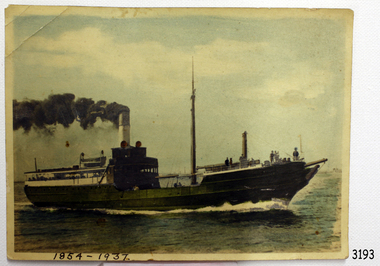
... Nancy Mason, Bay View. Owned by Mac Fordham, Chief Engineer, 'Edina', then given to Mrs. ...Nancy Mason, Bay View. Owned by Mac Fordham, Chief Engineer, 'Edina', then given to Mrs. ...This photographic postcard of the SS Edina was taken after the 1890’s due to the style and configuration of the vessel. There is a black and white photograph of the same image also in our Collection (RN 3192). It is most likely that both of the photographs were donated by the same person because the people mentioned in the inscription on the black and white photograph’s reverse side connect with two of the people mentioned in the letter on the reverse of the coloured photograph. * RN 3192; Black & White photograph - inscription: - "Donated by Mrs. Nancy Mason, Bay View. Owned by Mac Fordham, Chief Engineer, 'Edina', then given to Mrs. Mason's father-in-law Arnold Mason (both Engineers W.W. I)" The “Arnie” to whom the letter was addressed is likely to be Arnold Mason, Engineer. The author of the letter, “Mac”, is likely to be Mac Fordham, Chief Engineer of SS Edina. The transcribed letter tells of two men who know each other well and have an interest in the Edina. “Mac” mentions that he may be “too old” to be at sea again; this would also support the idea that the older writer would give his photographs to the perhaps younger “Arnie”. * RN 3193 (this photograph) - Transcription of pen and ink script handwriting = = = = = = = = = = = = 19-12-37 No. 1 Flat, “Goodwood Lodge” 196 Lennox Street, Richmond [Victoria] Dear Arnie , Been meaning to write for long time but you know, it’s just the usual routine of the seamen within Bay trades. Had a good trip back from Sydney. Took our time, spent almost a week coming back, rather monotonous in parts in the hill country, too many darn curves, still was a good trip. How are you all keeping? Suppose you’ve moved back to Drummoyne [erettris?], expect you can let the house in Manly easily enough. Noticed they had a strike at Cockatoo [Cockatoo Island NSW]. don’t suppose they pulled the boys out. How is Jack doing? Has [Willie?] commenced training yet, or no! too young, isn’t she? Been a lot of “paper” talk about the “Edina” finishing but nothing official that I’m aware of, but it’s always on the cards I suppose, then I suppose it will be to sea again if I’m not too old. Easy Winter only 3 trips per week, running every day from today until further notice. Trust [Mary?] Is well & all’s well with you too. Best wishes from us both for Xmas & New Year. Cheerio Mac = = = = = = = = = = = = ABOUT THE SS EDINA The three masted iron screw steamer SS Edina was built in Glasgow, Scotland, in 1854 by Barclay and Curle. She was adorned with the figurehead of ‘fair maid of Judea’. The many years of service made SS Edina famous world-wide as the longest serving screw steamer. (The term screw steamer comes from being driven by a single propeller, sometimes called a screw, driven by a steam engine.) SS Edina’s interesting history includes English Chanel runs, serving in the Crimean Ware carrying ammunition, horses and stores to the Black Sea, and further service in the American Civil War and later, serving in the western district of Victoria as well as in Queensland and carried gold, currency and gold prospectors Australia to New Zealand. SS Edina had the privilege of being an escort vessel to H.R.H. the Duke of Edinburgh during his visit to Australia in 1867. In March 1863 SS Edina arrived in Port Phillip Bay, Melbourne and was bought by Stephen Henty, of Portland fame, to work the cargo and passenger run from Melbourne – Warrnambool – Port Fairy - Portland. After a short time of working the run from Australia to New Zealand, with passengers and cargo that included gold and currency, she returned to her Melbourne - Warrnambool – Port Fairy run, with cargo including bales of wool produced in the western district of Victoria. The Warrnambool Steam Packet Company purchased SS Edina in 1867; she was now commanded by Captain John Thompson and Chief Engineer John Davies. She survived several mishaps at sea, had a complete service and overhaul and several changes of commanders. In 1870 SS Edina was in Lady Bay, Warrnambool, when a gale sprung up and caused a collision with the iron screw steamer SS Dandenong. SS Edina’s figurehead was broken into pieces and it was not ever replaced. SS Edina was re-fitted in 1870 then was used as a coastal trader in Queensland for a period. She was then brought to Melbourne to carry cargo and passengers between Melbourne and Geelong and performed this service 1880-1938. During this time (1917) she was again refitted with a new mast, funnel, bridge and promenade deck, altering her appearance. In 1938, after more collisions, SS Edina was taken out of service. However she was later renamed Dinah and used as a ‘lighter’ (a vessel without engine or superstructure) to be towed and carry wool and general cargo between Melbourne and Geelong. In 1957, after 104 years, the SS Edina was broken up at Footscray, Melbourne. Remains of SS Edina’s hull can be found in the Maribyrnong River, Port Phillip Bay. This photographic postcard with the letter on the revers tell about the SS Edina and are significant for its association with the screw steamer SS Edina. The SS Edina is heritage listed on the Victorian Heritage Database VHR S199. She had endeared herself to the people of Port Phillip Bay as a passenger ferry, part of their history and culture. She played a significant role in the Crimean War, the American Civil War and the gold rush in New Zealand. She also served western Victoria for many years in her cargo and passenger runs. The SS Edina is famous for being the longest serving screw steamer in the world. After spending her first nine years overseas she arrived in Melbourne and her work included running the essential service of transporting cargo and passengers between Melbourne and the western Victoria ports of Warrnambool, Port Fairy and Portland. The SS Edina was purchased in the late 1860’s by local Warrnambool business, the Warrnambool Steam Packet Co. and continued trading from there as part of the local business community. The SS Edina’s original ‘fair maid of Judea’ figurehead was broken to pieces in a collision with another vessel (the SS Dandenong) in a gale off Warrnambool, Victoria, in 1870.Coloured (hand coloured) photographic postcard of SS Edina. Letter on reverse, hand written in pen and ink, from Mac to Arnie, dated 19-12-37 [1937]. The photograph shows the SS Edina moving under steam power, many people on both the bow and stern and a few people in the centre of the vessel. There are buildings on the shore in the background. The ship's configuration is dated post 1890.Hand written in pen on base of front “1854-1957” Hand written on back in blue pen and crossed out “REC 409” Hand written on back in pen ‘EDINA,’ “3173,” “086.2” Hand written letter dated 19-12-37, from Mac to Arnie. Script writing in pen and ink letter on reverse of photograph – see “Context” section for transcription. warrnambool, shipwrecked coast, flagstaff hill, flagstaff hill maritime museum, maritime museum, shipwreck coast, flagstaff hill maritime village, shipwrecked artefact, barclay & curle, figurehead 'fair maid of judea', centenary maritime exhibition 1934, a brief review of steam navigation in victoria, pleasure steamer edina, trade and travel late 19th and early 20th century, trade melbourne to geelong, screw steamer edina, coastal trader edina, lighter dinah, cargo carrying for cremean war, cargo carrying for american civil war, passenger and trade in western district of victoria, export gold and currency and gold diggers to new zealand, export vessel to h r h the duke of edinburgh, melbourne - warrnambool - port fairy - portland cargo run, warrnambool steam packet company, stephen henty, captain john thompson, chief engineer john davies, lady bay warrnambool, lighter edina, shipping victoria, port phillip bay steamers, steamship great britain, edina, vhr s199 victorian heritage database, photographic postcard of ss edina 1854-1957, letter by mac fordham chief engineer ss edina, letter to arnold mason, engineer -
 Federation University Historical Collection
Letter - Correspondence, James Oddie, Statement from James Oddie, 09/06/1886
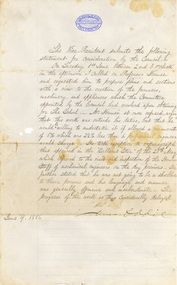
... view to the erection of furnaces, machinery, and appliances which the committee appointed by Council had resolved upon obtained for the School. Mr Krause at once refused, urging that this work was outside his duties, but that he would be willing to undertake it if allowed a remuneration of 5% which was 2 1/2 % less than a professional engineer would charge. ...view to the erection of furnaces, machinery, and appliances which the committee appointed by Council had resolved upon obtained for the School. Mr Krause at once refused, urging that this work was outside his duties, but that he would be willing to undertake it if allowed a remuneration of 5% which was 2 1/2 % less than a professional engineer would charge. ...James Oddie was Vice-President of the Ballarat School of Mines in 1886.Blue, lined, foolscap paper from Ballarat School of Mines Logo. It is handwritten by James Oddie for the Ballarat School of Mine Council and is in regards to the duties of Professor Ferdinand Krause."The Vice-President submits the following statement for consideration by the Council: - On Tuesday 1st June between 2 and 3 o'clock in the afternoon I called on Professor Krause and requested him to prepare plans and sections with a view to the erection of furnaces, machinery, and appliances which the committee appointed by Council had resolved upon obtained for the School. Mr Krause at once refused, urging that this work was outside his duties, but that he would be willing to undertake it if allowed a remuneration of 5% which was 2 1/2 % less than a professional engineer would charge. He took exception to a paragraph that appeared in the "Ballarat Star" of the 28th May which referred to the visit and inspection of the Honorary Staff or mechanical engineers on the day previous. He further stated that he was not going to be a shoeblack to these persons and his language and manner was generally offensive and insubordinate. The progress of the work is thus considerably delayed. James Oddie"ballarat school of mines, oddie, krause, mining, furnace, james oddie, ferdinand krause -
 Federation University Historical Collection
Book, Ballarat Illustrated : Under the Seals of the City & Town Councils, c1920
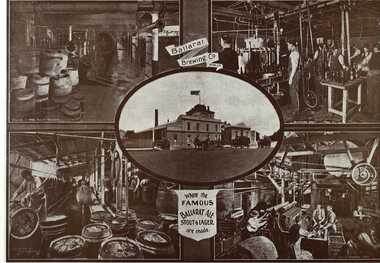
... Views in Eureka Reserve . Loveland & Haslem, Moter Engineers . Public Institutions Ballarat . ...Views in Eureka Reserve . Loveland & Haslem, Moter Engineers . Public Institutions Ballarat . ...This book was a donation to Federation University Australia's Professor David Battersby from Vice-Chancellor Professor Scott Bowman of Central Queensland University.Soft cover. Front cover with some red. 80 pages. Back cover Plan of Ballarat Map. Photographic plates. Brief history of Ballarat and the topics photographed. . Ballarat City Municipal Chambers . The Ballarat Banking Company Limited . Art Gallery Ballarat . The Ballarat Trustees, Executors & Agency Company Limited . John MacLeod & Coy Pty Ltd . The Ballaarat Gas Coy . Ballarat's Homes . J. J. Goller & Co. . Ballarat East Views . Star Office . The Ballarat Courier . Morshead's . M. B. John Ballarat - The largest Inland Brass Foundry in Australia . Rowlands Koomah Spa . Huttons the Jewellers . Botanical Gardens Ballarat . Millers the Clothiers . Jas Smith Agricultural Machinery . Views of Lakes Learmonth & Burrumbeet . Coles & Pullum Stock & Station Agents . Harry Davies & Co. . Views about the City . Benoit's Sun Foundry . Ballarat College (for Boys) . Wm Paterson's . Lydiard Street Views . Eureka Terra-cotta & Tile Co. of Australia Limited . Churches of Ballarat . The Ballarat Woollen & Worsted Co. Ltd Sunnyside Mills . Red Shop Tea Rooms . Tyler's - Bridge Street, Ballarat . Allchin Bros Ballarat . Loreto Abbey Mary's Mount Ballarat . Brinds - Dunnstown . Ballarat Brewing Co. . Turnbridge's Arcade . Zoological Gardens Ballarat . A. Cant Plumber & Gasfitter . Interiors of some Ballarat Churches . Hugh Jones & B . W. F. Coltman . Views in Eureka Reserve . Loveland & Haslem, Moter Engineers . Public Institutions Ballarat . G. Warner & Co. Prop. Ltd . The Electric Supply Company of Victoria Limited . Ballarat East Views . Longhurst's Specialities . P. C. Thornton Proprietor Sturt St Ballarat . Cowley's Eureka Ironworks Pty Ltd . W. Owen Sports Depot & Tobacconist . Clarendon Ladies' College . Crocker's . Evening Echo Office . London Bank Chambers . Proprietors of Business . Broadbent Bros & Co. Gifted by Vice-Chancellor Professor Scott Bowman Central Queensland University, 2014.ballarat, school of mines, evening echo, john scullin -
 Flagstaff Hill Maritime Museum and Village
Drawing - Vessel, Sail and Steam Ship, c 1890's
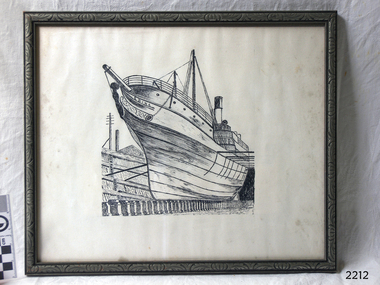
... The SS Edina’s original ‘fair maid of Judea’ figurehead was broken to pieces in a collision with another vessel (the SS Dandenong) in a gale off Warrnambool, Victoria, in 1870. warrnambool shipwrecked coast flagstaff hill flagstaff hill maritime museum maritime museum shipwreck coast flagstaff hill maritime village shipwrecked artefact barclay & curle figurehead 'fair maid of judea' centenary maritime exhibition 1934 a brief review of steam navigation in victoria pleasure steamer edina trade and travel late 19th and early 20th century trade melbourne to geelong screw steamer edina coastal trader edina lighter dinah cargo carrying for cremean war cargo carrying for american civil war passenger and trade in western district of victoria export gold and currency and gold diggers to new zealand export vessel to h r h the duke of edinburgh melbourne - warrnambool - port fairy - portland cargo run warrnambool steam packet company stephen henty captain john thompson chief engineer john davies lady bay warrnambool lighter edina shipping victoria port phillip bay steamers steamship great britain edina, vhr s199 victorian heritage database drawing of ss edina pen and ink drawing of ss edina pen and ink drawing 1870's - 1938 maritime drawing of screw steamer Drawn on bow "EDINA" Drawing in pen and ink, of screw steamer vessel SS Edina, framed in decorative timber and glass. View ...This drawing of the screw steamer SS Edina depicts the vessel in the period of service in Australia from the 1870's onward until the time when she was cut down to use as a 'lighter' to carry cargo in 1938. The artist is unknown. ABOUT THE S S EDINA The three masted iron screw steamer SS Edina was built in Glasgow, Scotland, in 1854 by Barclay and Curle. She was adorned with the figurehead of ‘fair maid of Judea’. The many years of service made SS Edina famous world-wide as the longest serving screw steamer. (The term screw steamer comes from being driven by a single propeller, sometimes called a screw, driven by a steam engine.) SS Edina’s interesting history includes English Chanel runs, serving in the Crimean Ware carrying ammunition, horses and stores to the Black Sea, and further service in the American Civil War and later, serving in the western district of Victoria as well as in Queensland and carried gold, currency and gold prospectors Australia to New Zealand. SS Edina had the privilege of being an escort vessel to H.R.H. the Duke of Edinburgh during his visit to Australia in 1867. In March 1863 SS Edina arrived in Port Phillip Bay, Melbourne and was bought by Stephen Henty, of Portland fame, to work the cargo and passenger run from Melbourne – Warrnambool – Port Fairy - Portland. After a short time of working the run from Australia to New Zealand, with passengers and cargo that included gold and currency, she returned to her Melbourne - Warrnambool – Port Fairy run, with cargo including bales of wool produced in the western district of Victoria. The Warrnambool Steam Packet Company purchased SS Edina in 1867; she was now commanded by Captain John Thompson and Chief Engineer John Davies. She survived several mishaps at sea, had a complete service and overhaul and several changes of commanders. In 1870 SS Edina was in Lady Bay, Warrnambool, when a gale sprung up and caused a collision with the iron screw steamer SS Dandenong. SS Edina’s figurehead was broken into pieces and it was not ever replaced. SS Edina was re-fitted in 1870 then was used as a coastal trader in Queensland for a period. She was then brought to Melbourne to carry cargo and passengers between Melbourne and Geelong and performed this service 1880-1938. During this time (1917) she was again refitted with a new mast, funnel, bridge and promenade deck, altering her appearance. In 1938, after more collisions, SS Edina was taken out of service. However she was later renamed Dinah and used as a ‘lighter’ (a vessel without engine or superstructure) to be towed and carry wool and general cargo between Melbourne and Geelong. In 1957, after 104 years, the SS Edina was broken up at Footscray, Melbourne. Remains of SS Edina’s hull can be found in the Maribyrnong River, Port Phillip Bay. This drawing of the SS Edina is significant for its association with the screw steamer SS Edina. The SS Edina is heritage listed on the Victorian Heritage Database VHR S199. She had endeared herself to the people of Port Phillip Bay as a passenger ferry, part of their history and culture. She played a significant role in the Crimean War, the American Civil War and the gold rush in New Zealand. She also served western Victoria for many years in her cargo and passenger runs. The SS Edina is famous for being the longest serving screw steamer in the world. After spending her first nine years overseas she arrived in Melbourne and her work included running the essential service of transporting cargo and passengers between Melbourne and the western Victoria ports of Warrnambool, Port Fairy and Portland. The SS Edina was purchased in the late 1860’s by local Warrnambool business, the Warrnambool Steam Packet Co. and continued trading from there as part of the local business community. The SS Edina’s original ‘fair maid of Judea’ figurehead was broken to pieces in a collision with another vessel (the SS Dandenong) in a gale off Warrnambool, Victoria, in 1870.Drawing in pen and ink, of screw steamer vessel SS Edina, framed in decorative timber and glass. View of bow of SS Edina with vessel's name on bow. SS Edina is in dry dock, background shows a power pole and roof. Ship configuration in the drawing was 1870's - 1938. Drawing dated c. 1890's.Drawn on bow "EDINA"warrnambool, shipwrecked coast, flagstaff hill, flagstaff hill maritime museum, maritime museum, shipwreck coast, flagstaff hill maritime village, shipwrecked artefact, barclay & curle, figurehead 'fair maid of judea', centenary maritime exhibition 1934, a brief review of steam navigation in victoria, pleasure steamer edina, trade and travel late 19th and early 20th century, trade melbourne to geelong, screw steamer edina, coastal trader edina, lighter dinah, cargo carrying for cremean war, cargo carrying for american civil war, passenger and trade in western district of victoria, export gold and currency and gold diggers to new zealand, export vessel to h r h the duke of edinburgh, melbourne - warrnambool - port fairy - portland cargo run, warrnambool steam packet company, stephen henty, captain john thompson, chief engineer john davies, lady bay warrnambool, lighter edina, shipping victoria, port phillip bay steamers, steamship great britain, edina, vhr s199 victorian heritage database, drawing of ss edina, pen and ink drawing of ss edina, pen and ink drawing 1870's - 1938, maritime drawing of screw steamer -
 Mission to Seafarers Victoria
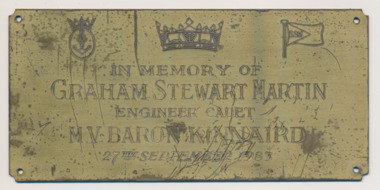
Plaque - Memorial plaque, Graham Stewart Martin, 1983
... view the plaque. The Mission is a place of memorial for seafarers. graham stewart martin engineer cadet m.v. baron kinnaird scottish ship management ssm 1983 america's cup bench Engraved: In Memory of / Graham Stewart Martin / Engineer Cadet / MV Baron Kinnaird / 27th September 1983 Rectangular brass plaque, on top 3 logos: Merchant Navy, Merchant Navy crown and flag of the SSM (Scottish Ship Management) Graham Stewart Martin Plaque Memorial plaque ...Graham was born in 1962 in Glasgow, Scotland. He grew up in the south side of Glasgow and became an active member of the Boys Brigade, progressing through the different sections to eventually gain the organisation's highest award, the Queens Badge. During these years Graham became a proficient bugler and trumpeter, taking part in many nationwide competitions as part of the company band. After completion of his school education, Graham was accepted as an apprentice engineering officer by the Scottish Ship Management who ran a fleet of bulk carriers. After training at the Glasgow Nautical College he then went to sea, firstly on the MV Baron Napier and subsequently the MV Baron Kinnaird, the ship he was on when he travelled to Australia. On the 27th November 1983, there were parties throughout Australia to celebrate the winning of The Americas Cup yacht race, Melbourne was no exception and Graham and several colleagues went ashore to join in. During the celebrations, Graham climbed up some scaffolding to get a better view but a girder became disloged and he fell to the ground and was struck by the falling girder. He died shortly after despite the best efforts of the ambulance crews. Graham's body was returned home to Glasgow and a cremation service took place in the Linn Crematorium near where he lived and grew up. Money was donated by the ship's crew and officer and sent to the Mission (Reverend Chin) to purchase an engraved plaque in his memory. The plaque was mounted on a bench used as coffee table. In January 2025, Alain, his former girlfriend visited the Mission to view the plaque.The Mission is a place of memorial for seafarers.Rectangular brass plaque, on top 3 logos: Merchant Navy, Merchant Navy crown and flag of the SSM (Scottish Ship Management)Engraved: In Memory of / Graham Stewart Martin / Engineer Cadet / MV Baron Kinnaird / 27th September 1983graham stewart martin, engineer cadet, m.v. baron kinnaird, scottish ship management, ssm, 1983, america's cup, bench -
 Mission to Seafarers Victoria
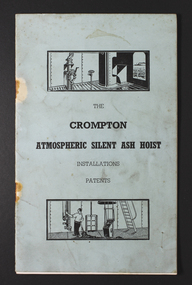
Manual, Crompton Atmospheric Silent Ash Hoist Installation Patents
... The memorabilia relates to his career at sea and in particular the role of an engineer, including a handwritten manual of notes and references relating to the mechanical and engineering aspects and areas of responsibility for maintenance. ship engines ship maintenance ash hoists coal clinker george winfield duncan (1922-2017) ship engineer s.s. athenic see attached image Pale blue soft cover commercially printed manual or handbook relating to patents for Crompton Atmospheric Silent Ash Hoists. Features small diagram of figure pulling on a chain and view ...Relates to management by engine room firemen of Ash and soot and clinker in the engine room of a steam ship. Hoists were used to discharge accumulated ash at the end of shifts. Mariner Duncan had a particular regard for the Mission to Seafarers. This plate for display on a commissioned new table at the MTSV chapel acknowledges his bequest and the material donated. Collectively the G W Duncan material includes: photographs, professional data memorabilia and written and commercially printed resources. The memorabilia relates to his career at sea and in particular the role of an engineer, including a handwritten manual of notes and references relating to the mechanical and engineering aspects and areas of responsibility for maintenance. Pale blue soft cover commercially printed manual or handbook relating to patents for Crompton Atmospheric Silent Ash Hoists. Features small diagram of figure pulling on a chain and view of ship silhouette on horizon seen through a porthole.see attached imageship engines, ship maintenance, ash hoists, coal, clinker, george winfield duncan (1922-2017), ship engineer, s.s. athenic -
 Federation University Historical Collection
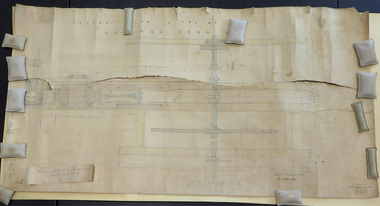
Plan, Lal Lal Iron Company Steam Engine Plan, 1880s, 1880s
... Watson Prectical Mechanical Engineer Draughtsman Windermere St Ballarat Large original plan of an engine of the Lal Lal Iron Company. Note, this item is in fragile condition and can only be viewed exceptional circumstance. ...Large original plan of an engine of the Lal Lal Iron Company. Note, this item is in fragile condition and can only be viewed exceptional circumstance. Digital image details are available "W. Watson Prectical Mechanical Engineer Draughtsman Windermere St Ballaratw. watson, lal lal, lal lal blast furnace, lal lal iron company, steam engine, lal lal iron company steam engine, plan, engineering drawing -
 The Beechworth Burke Museum
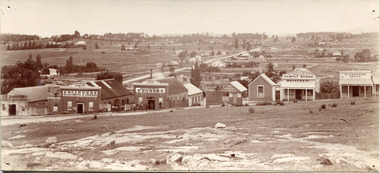
Photograph, c1900
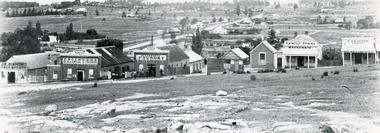
... view across to residences and open land. Businesses included, Joseph E. Bishop, Coach Builders; Straughair Duncan, Engineers, Blacksmiths & Farriers; Straughair Duncan, Beechworth Foundry; Wholesale & Retail Est. 1855, Mackenzie Family Store ; and T. ...view across to residences and open land. Businesses included, Joseph E. Bishop, Coach Builders; Straughair Duncan, Engineers, Blacksmiths & Farriers; Straughair Duncan, Beechworth Foundry; Wholesale & Retail Est. 1855, Mackenzie Family Store ; and T. ...Taken around 1858, depicting a row of five business buildings on a rocky, sloping hillside at New Town, with a view across to residences and open land. Businesses included, Joseph E. Bishop, Coach Builders; Straughair Duncan, Engineers, Blacksmiths & Farriers; Straughair Duncan, Beechworth Foundry; Wholesale & Retail Est. 1855, Mackenzie Family Store ; and T. Pratten, Grocer. The Mental Hospital can be seen in the background. Mark Straughair and John Duncan, established the Beechworth Foundry, Newtown in 1858 and went on to build an important industry, employing around sixteen men, after acquiring Alexander Roger's New Ford Street Foundry in the late 1860s. Making and repairing mostly mining and agricultural machinery for the Ovens District and a Beechworth brewery, the business continued to function after Straughair's death in 1882, up until the death of Duncan in 1896, when the business folded. This photograph is historically significant because it shows the development of the businesses in Beechworth from the early establishment of the town.Sepia rectangular photograph printed on photographic paper mounted on boardObverse: [Pin holes from circular tacks in all four corners] Reverse: 84.216-1/ Newtown/ 1997.2650/ 21/ BMM3056/new town, newtown, newtown beechworth, local business, 1858, 1850s beechworth, joseph e. bishop, coach builder, coach, mark straughair, m. straughair, straughair and duncan, john duncan, j. duncan, beechworth foundry, mackenzie family store, t. pratten, grocer, beechworth grocers, beechworth mental asylum, beechworth mental hospital, mayday hills mental asylum, mental hospital, alexander rogers, new ford street foundry, 1860s beechworth, 1860s, mining machinery, agricultural machinery, manufacturing, bridge road -
 The Beechworth Burke Museum
Photograph, Circa 1858
... view across to residences and open land. Businesses included, Joseph E. Bishop, Coach Builders; Straughair Duncan, Engineers, Blacksmiths & Farriers; Straughair Duncan, Beechworth Foundry; Wholesale & Retail Est. 1855, Mackenzie Family Store ; and T. ...view across to residences and open land. Businesses included, Joseph E. Bishop, Coach Builders; Straughair Duncan, Engineers, Blacksmiths & Farriers; Straughair Duncan, Beechworth Foundry; Wholesale & Retail Est. 1855, Mackenzie Family Store ; and T. ...Taken around 1858, depicting a row of five business buildings on a rocky, sloping hillside at New Town, with a view across to residences and open land. Businesses included, Joseph E. Bishop, Coach Builders; Straughair Duncan, Engineers, Blacksmiths & Farriers; Straughair Duncan, Beechworth Foundry; Wholesale & Retail Est. 1855, Mackenzie Family Store ; and T. Pratten, Grocer. Eleven men may be seen outside the Foundry building. The Mental Hospital can be seen in the background. Mark Straughair and John Duncan, established the Beechworth Foundry, Newtown in 1858 and went on to build an important industry, employing around sixteen men, after acquiring Alexander Roger's New Ford Street Foundry in the late 1860s. Making and repairing mostly mining and agricultural machinery for the Ovens District and a Beechworth brewery, the business continued to function after Straughair's death in 1882, up until the death of Duncan in 1896, when the business folded. This photograph is historically significant because it shows the development of the businesses in Beechworth from the early establishment of the town.Black and white rectangular photograph printed on photographic paperReverse: [Agfa wordmarks: diamond-shaped watermarks for Agfa photographic paper] 1997.2642/ refer to/ 1997 2650/ 3056joseph e. bishop, mark straughair, john duncan, mackenzie family store, beechworth foundry, coach, coach builder, engineer, blacksmith, farrier, t. pratten, beechworth grocers, grocer, new town, newtown beechworth, newtown, foundry, 1858, local business, new ford street foundry, alexander rogers, victorian agricultural history, mining machinery, beechworth brewery, ovens district, mayday hills mental asylum, beechworth mental hospital, beechworth mental asylum, mental hospital, mental -
 Lara RSL Sub Branch
Photograph, Set 4 photographs. and others for Torquay Light Horse camp, 1940
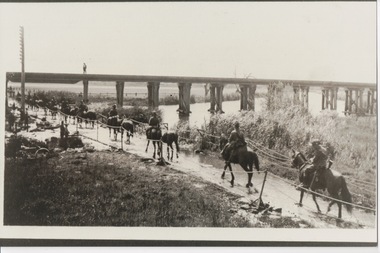
... view plaque) The plaque identifies a significant event in Torquay’s history and the sentiments of ‘change’ for the Light Horse Brigade – from horses to machines. In 1940 the four Light Horse Regiments (4th, 8th, 13th and 20th), some 5000 Light Horse and 2000 horses camped and trained at Torquay. Three other regiments, formerly mounted on horses, were also at Torquay ‘mounted’ on privately owned trucks and cars. Division troops included Artillery, Engineers...view plaque) The plaque identifies a significant event in Torquay’s history and the sentiments of ‘change’ for the Light Horse Brigade – from horses to machines. In 1940 the four Light Horse Regiments (4th, 8th, 13th and 20th), some 5000 Light Horse and 2000 horses camped and trained at Torquay. Three other regiments, formerly mounted on horses, were also at Torquay ‘mounted’ on privately owned trucks and cars. Division troops included Artillery, Engineers ...These images capture for all time Light Horsemen travelling through Geelong on their way to camp at Torquay for the last Group meeting in Australia . information following - details obtained from .........https://torquayhistory.com/light-horse-brigade/ On Australia Day, 1997, Sir John Young unveiled this plaque on Point Danger, Torquay. Torquay history, Light Horse Training Camp, WW2 Plaque at Pt. Danger Note----- (See images to view plaque) The plaque identifies a significant event in Torquay’s history and the sentiments of ‘change’ for the Light Horse Brigade – from horses to machines. In 1940 the four Light Horse Regiments (4th, 8th, 13th and 20th), some 5000 Light Horse and 2000 horses camped and trained at Torquay. Three other regiments, formerly mounted on horses, were also at Torquay ‘mounted’ on privately owned trucks and cars. Division troops included Artillery, Engineers, Signals, Field Ambulance and other branches of the Army necessary to enable a Division to function. It wasn’t just the sheer numbers of men coming to this little town that made the event significant, it was also the fact that the men of the Light Horse were dramatic, almost glamorous figures and it is easy to see their exploits as some splendid adventure. Horses have played a special role in the story of Australia. They were the only means of transport across this huge country, so it was necessary for everyone to have the ability to ride a horse. When war broke out in 1899 between Britain and the Boers of South Africa (“Boer” was Dutch for “farmer”) Australia sent troops to fight. At first Britain was wary of using untried, unprofessional colonial cavalrymen but soon saw that the slouch-hatted Australian “bushmen” were a match for the fast-moving and unconventional mounted commandos of the Boers. The Australians proved themselves to be expert rough-riding horsemen and good shots. Bush life had hardened them to go for long periods with little food and water. They also showed remarkable ability to find their way in a strange country and use its features for cover, in both attack and defence. By 1914, when Australia joined the war against Germany, there were 23 Light Horse regiments of militia volunteers. Many men from these units joined the Light Horse regiments of the Australian Imperial Force (AIF). Men were given remounts (if not using their own horses) – army horses bought by Commonwealth purchasing officers from graziers and breeders. These were called “walers” because they were a New South Wales stockhorse type – strong, great-hearted animals with the strains of the thoroughbred and semi-draught to give them speed, strength and stamina. On 1st November, 1914, Australia’s First Infantry Division and the first four Light Horse regiments sailed for England in a fleet of transport ships. The first of the Light Horse arrived at Gallipoli in May without their horses. Back with their horses after Gallipoli, they were formidable combatants across the Sinai and Palestine. Some British commanders observed that the light horseman moved with a “lazy, slouching gait, like that of a sleepy tiger” but described how the promise of battle “changes that careless gait, into a live athletic swing that takes him over the ground much quicker than other troops”. They had Light Horse, Torquay, training campdeveloped a reputation as formidable infantrymen. The Turks called them “the White Ghurkas” – a reference to their deadly skill with the bayonet. The Arabs called them “The Kings of the Feathers”. The plume had originally been a battle honour of the Queensland Mounted Infantry for their work in the shearer’s strike of 1891. During WW1 it was adopted by almost all the Light Horse Regiments. It was the proud badge of the light horseman. The most famous of their battles was the attack on Beersheba- the charge of the 4th Light Horse Brigade. Mounted infantrymen and their superb walers had carried out one of the most successful cavalry charges in history – against what seemed impossible odds. They surprised the Turks by charging cavalry-style, when they would normally have ridden close to an objective then dismounted to fight. The fall of Beersheba swung the battle tide against the Turks in Palestine; and changed the history of the Middle East. While 19 men from the Surf Coast Shire served with the 4th Light Horse over the course of WW1, only four were involved in the charge of Beersheba- John GAYLARD, Philip QUINN.(Winchelsea); Wallace FINDLAY (Anglesea); Harry TRIGG (Bambra). After the war, Light Horse units played a key role in the Australian Government’s compulsory military training programme. The Citizen Military Forces (C.M.F.) thrived on the glamour of the wartime Light Horse tradition, ignoring the possibility that motor vehicles would soon replace the horses. When training was no longer compulsory, the C.M.F. regiments declined and horses became more of a luxury during the 1930s depression years of poverty and unemployment. Some regiments were motorised. Then, in 1939, Australia joined Britain in another world war. Training was increased for the militia at both home bases and regional training camps. The camp at Torquay in 1940, commanded by Major General Rankin, was at Divisional strength. By the end of the camp some felt that the Division was ready for active service. Gradually, over the next four years, the Australian Light Horse units were mounted on wheels and tracks and the horses were retired. Six men enlisted at the Torquay camp and another 57 men and women enlisted at Torquay for service in WW2. Those who served in the Militia provided valuable Officers and NCOs and men for the armed services during the war. Each infantry division of the 2nd AIF had a Light Horse regiment attached to it. But the day of the Australian mounted soldier hadn’t quite passed. During World War II, Australia’s 6th Cavalry Regiment formed a mounted unit they called “The Kelly Gang” which did valuable scouting work. In New Guinea, a mounted Light Horse Troop did patrol duty and helped carry supplies. Some fully equipped walers were flown into Borneo for reconnaissance in rugged mountain country. But by the end of the war, in 1945, the horse had disappeared from the Australian Army. References: Australian Light Horse Association www.lighthorse.org.au National Australia Archives Australian War Memorial Surf Coast Shire WW1 memorials www.togethertheyserved.com The Light horse- a Cavalry under Canvas Light Horse, Training Camp, Torquay, WW2 Late in 1939 it was decided to set up a Lighthorse training camp in Torquay to train both men and horses for the battles of the Second World War. Horses, men and equipment came on special trains from all over Victoria and NSW, and as you would expect horseman came from areas such as Omeo and Sale, the Wimmera and the Western District. They arrived at the Geelong racecourse for watering in the Barwon River and then were ridden across the ford at the breakwater and began their 11 mile trek to Torquay. Light Horse, Training Camp, Torquay, WW2 Tent city By the end of January 1940 the camp at Torquay accommodated some 5000 men and 2500 horses of the Second Cavalry Division. The rows of horses, tents and huts near Blackgate Road were quite a sight. While the cavalrymen engaged in exercises on the land and on the beaches, many of the troops took over the Torquay School for special training of men and officers. Mr Bob Pettit local farmer and Councillor for the Barrabool Shire, wrote about the Light horse in the Surf Coast Community News in 1985 saying “They used to travel about the district riding four abreast in one long convoy. To my annoyance they went through my property and shut all the gates behind them. I had certain gates open to let stock in to the water holes and it would take me three -quarters of an hour to follow the horsemen up and put all the gates right again” he continued “the men from the Light Horse were here when the fire went through in March 1940. He recalled an incident when early one morning, as some one blew the bugle, a soldier putting a white sheet on the line frightened the horses. They panicked and ran off in all directions. Six went over the cliff near Bird Rock, five were never found, and the rest were gathered up after nearly a fortnight in the bush around Addiscott and Anglesea" Light Horse, Training Camp, Torquay, WW2, Geelong Parade Geelong parade The training camp culminated in a parade through the streets of Geelong on March 12th 1940. The salute was given at the Town Hall and the troops continued on a route to the You Yang’s for a training exercise. Note-----(see media section for photograph) The Camp was abandoned in mid 1940 as it was deemed unsuitable for training during winter and the cost of a permanent camp could not be justified if it could not be used all year. Historic.......Rare,,,Interpretive.Sepia photographs.set of four ....post card size ....Horses &LighthorsemenNo 1, Lighthorsemen Regiment Geelong 1940......No 2 Light Horse at Breakwater Geelong 1938 to 1940....No 3 Light Horse at Breakwater Geelong 1938 to 1940.....No 4 Light Horse crossing Breakwater camped at Geelong Showgrounds. These markings are on reverse of photographs.light horsemengeelong 1940., world war 2 -
 Federation University Historical Collection
Photograph, Yallourn Power Station
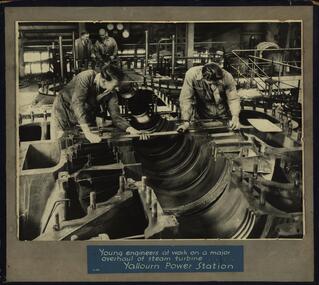
... yallourn yallourn power station turbines steam turbines engineers Rubiocon Hydro Electric Scheme Geelong Power Station 1) Young men work on steam turbines at the Yallourn Power Station .2) View of the Turbine Floor at Yallourn Power Station Yallourn Power Station Photograph ...1) Young men work on steam turbines at the Yallourn Power Station .2) View of the Turbine Floor at Yallourn Power Stationyallourn, yallourn power station, turbines, steam turbines, engineers, rubiocon hydro electric scheme, geelong power station -
 Flagstaff Hill Maritime Museum and Village
Book - Reference Book/History, Albert Frederick Calvert, The Discovery of Australia, 1893
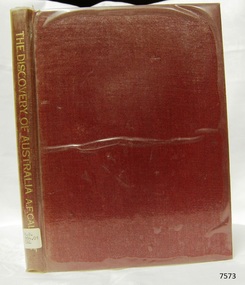
... view. (For more information on the Pattison Collection see item 3678 Flagstaff Hill collections) https://victoriancollections.net.au/items/5580c7e72162f114d8b758db Warrnambool Shipwrecked-coast Flagstaff-Hill Flagstaff-Hill-Maritime-Museum Maritime-Museum Flagstaff-Hill-Maritime-Village Shipwrecked-artefact Book The Discovery of Australia Albert F Calvert Albert Frederick Calvert was an English author, traveler, mining engineer, and entrepreneur who became a prominent booster of Western Australia in the 1890s before shifting focus to Spain and Africa. ...Albert Frederick Calvert was an English author, traveler, mining engineer, and entrepreneur who became a prominent booster of Western Australia in the 1890s before shifting focus to Spain and Africa. He was born in London in 1872 and died there in 1946, his life blended exploration, promotion, and prolific, sometimes slapdash writing. His Australian Dictionary of Biography entry notes that he circumnavigated Australia while gathering material for “The Discovery of Australia” in 1893. The book was published in London by George Philip & Son in 1893, and a library record shows a 2nd edition issued in 1902 by Dean, so the work had at least two editions.The Discovery of Australia Author: Albert F Calvert Publisher: George Phillip & Son Date: 1893non-fictionAlbert Frederick Calvert was an English author, traveler, mining engineer, and entrepreneur who became a prominent booster of Western Australia in the 1890s before shifting focus to Spain and Africa. He was born in London in 1872 and died there in 1946, his life blended exploration, promotion, and prolific, sometimes slapdash writing. His Australian Dictionary of Biography entry notes that he circumnavigated Australia while gathering material for “The Discovery of Australia” in 1893. The book was published in London by George Philip & Son in 1893, and a library record shows a 2nd edition issued in 1902 by Dean, so the work had at least two editions. warrnambool, shipwrecked-coast, flagstaff-hill, flagstaff-hill-maritime-museum, maritime-museum, flagstaff-hill-maritime-village, shipwrecked-artefact, book, the discovery of australia, albert f calvert -
Glenelg Shire Council Cultural Collection
Photograph - Photograph - Portland Harbour Trust - Engineer's office from Cliff St Bridge 23/2/53, 1953
... ENGINEER'S OFFICE FROM CLIFF ST. BRIDGE 23/2/53 (lower centre) Back: P.H.T./ Print No. 3/15 Neg. No 141/ Date taken 23.2.53./ SUBJECT./ % (Ink stamp with blue pen and pencil additions, centre) View of store area and buildings under construction Photograph Photograph - Portland Harbour Trust - Engineer's office from Cliff St Bridge 23/2/53 Portland Harbour Trust ...Port of Portland Authority archivesFront: ENGINEER'S OFFICE FROM CLIFF ST. BRIDGE 23/2/53 (lower centre) Back: P.H.T./ Print No. 3/15 Neg. No 141/ Date taken 23.2.53./ SUBJECT./ % (Ink stamp with blue pen and pencil additions, centre)port of portland archives -
Glenelg Shire Council Cultural Collection
Photograph - Photograph - Portland Harbour Trust - Engineer's office from Cliff St Bridge 22/1/53, 1953
... ENGINEER'S OFFICE FROM CLIFF ST. BRIDGE 22/1/53/ MODEL SHED, STORES FENCE & 3 PHASE POWER SUPPLY IN COURSE OF ERECTION (lower centre) Back: P.H.T./ Print No. 3/14 Neg. No 109/ Date taken 22.1.53./ SUBJECT./ % (Ink stamp with blue pen and pencil additions, centre) View of store area and buildings under construction Photograph Photograph - Portland Harbour Trust - Engineer's office from Cliff St Bridge 22/1/53 Portland Harbour Trust ...Port of Portland Authority archivesFront: ENGINEER'S OFFICE FROM CLIFF ST. BRIDGE 22/1/53/ MODEL SHED, STORES FENCE & 3 PHASE POWER SUPPLY IN COURSE OF ERECTION (lower centre) Back: P.H.T./ Print No. 3/14 Neg. No 109/ Date taken 22.1.53./ SUBJECT./ % (Ink stamp with blue pen and pencil additions, centre)port of portland archives -
Glenelg Shire Council Cultural Collection
Photograph - Photograph - Portland Harbour Trust - Engineer's office from Cliff St Bridge 23/12/52, 1952
... ENGINEER'S OFFICE FROM CLIFF ST. BRIDGE 23/12/52/ MODEL SHED, STORES FENCE & 3 PHASE POWER SUPPLY IN COURSE OF ERECTION (lower centre) Back: P.H.T./ Print No. 3/13 Neg. No 96/ Date taken 23.12.52./ SUBJECT./ % (Ink stamp with blue pen and pencil additions, centre) View of store area and buildings under construction Photograph Photograph - Portland Harbour Trust - Engineer's office from Cliff St Bridge 23/12/52 Portland Harbour Trust ...Port of Portland Authority archivesFront: ENGINEER'S OFFICE FROM CLIFF ST. BRIDGE 23/12/52/ MODEL SHED, STORES FENCE & 3 PHASE POWER SUPPLY IN COURSE OF ERECTION (lower centre) Back: P.H.T./ Print No. 3/13 Neg. No 96/ Date taken 23.12.52./ SUBJECT./ % (Ink stamp with blue pen and pencil additions, centre)port of portland archives -
Glenelg Shire Council Cultural Collection
Equipment - Divers Helmut, n.d
... Port of Portland Collection Front: SIEBE GORMAN & CO LTD SUBMARINE ENGINEERS LONDON Siebe Gorman & Co Divers Helmet with fitting harness. Part of a six stud patent admiralty diving dress. Bronze and brass, glass viewing ...Port of Portland CollectionSiebe Gorman & Co Divers Helmet with fitting harness. Part of a six stud patent admiralty diving dress. Bronze and brass, glass viewing ports.Front: SIEBE GORMAN & CO LTD SUBMARINE ENGINEERS LONDON -
Glenelg Shire Council Cultural Collection
Headwear - Diver's Helmet, 1930-1960
... Port of Portland Collection - Exhibited Front: Siebe Gorman & Co Ltd / Submarine Engineers, London (PATENT) 18714 (front window) Siebe Gorman & Co Ltd diver's helmet with fitting harness. Part of a six stud pattern admiralty diving dress. Bronze and brass, glass viewing ...Port of Portland Collection - ExhibitedFront: Siebe Gorman & Co Ltd / Submarine Engineers, London (PATENT) 18714 (front window) -
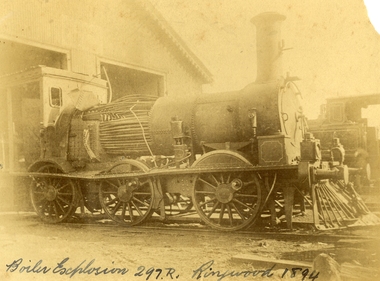 Ringwood and District Historical Society
Photograph, Boiler explosion at Ringwood station 20th June 1894 for engine 297R. "Heard in Box Hill"
... engineer, for the purpose of inspecting the shattered boiler. It has been stated that the explosion is known to have been caused by a flaw in a plate which was put on the boiler about four years ago, but enquiries have tailed to elicit anything in support of that view. ...engineer, for the purpose of inspecting the shattered boiler. It has been stated that the explosion is known to have been caused by a flaw in a plate which was put on the boiler about four years ago, but enquiries have tailed to elicit anything in support of that view. ...Black and white photographs - 2 copiesTyped below photograph, "Boiler explosion at Ringwood station 20/6/1894. Heard in Box Hill". Article from newspapers:- Weekly Times (Melbourne, Vic. : 1869 - 1954), Saturday 27 January 1894, page 21 Official enquiry. The Board of Enquiry appointed by the Railway Commissioners to enquire into the causes of the boiler explosion which shattered the locomotive at Ringwood on Saturday night, assembled at the Railway department on Wednesday to commence its deliberations, The board consisted of Mr R. Fulton, engineer, C. W. McLean; engineer to the Marine Board, and Mr Mephan Ferguson, iron-founder. There is some difficulty at the outset about the constitution of the board; It was suggested that the Apt of Parliament contemplated that boards of experts, after the manner of the present one, needed, to have their appointments confirmed by the Governor-in-Council. The point, however, was not considered sufficiently important to prevent the board from proceeding with evidence. Robert Greyford, stationmaster at Ringwood, was the first witness. He said he saw the explosion on Saturday night at about twenty minutes to 8. There was a rush to the engine to see what had happened, and the driver and fireman were both found on the platform of the engine. The driver seemed badly hurt, but the fireman, to all appearances, was not so badly injured. They were both attended to and sent up to Melbourne by the last suburban train. Witness had a look at the engine and found the dome and all the plates round the boiler blown clean, away. The springs were also blown clean away. The Chairman (Mr Fulton) : Did you measure the distance ? Witness: Yes; one of the plates was 209 yards away. A piece from the top of the boiler 15 pounds in weight he found driven into the hard beaten track 410 yards away. Several pieces of boiler plate were found scattered at various distances. The buildings roundabout were injured. The Chairman; Did you notice anything peculiar about either of the driver or the fireman ? — No ; nothing wrong, with either of them. If the engine was blowing off at all, it must have been very light. In your opinion, were they perfectly sober ? — Perfectly. In approaching the station, is there a down or an up grade? — A very slight down grade. How is the road from Healesville ? — Up and down all the way. It is down, grade for about 200 yards coming into Ringwood station. They shut off ; steam about a quarter of a mile away, and come in at a good pace. They generally put on 15 pounds of steam while they are in the station. Mr Ferguson : Had the driver the usual load on ? — Yes ; about the usual load. Witness added that he had known the driver personally for about 10 years, and he had always been a careful, steady, sober man. He did not know the fireman so well. John Palmer, porter at Ringwood station, also saw the explosion. He was attending to the train on its arrival. He was knocked down by the force of the explosion. When he got up he saw the engine driver being carried into the office covered in blood. He noticed nothing peculiar about the driver and fireman, nor about the engine. Mr McLean : How far were you from the engine when you were knocked down ? — From ten to fifteen yards. William Paul, the guard of the train to which the injured locomotive Was attached, said he was looking at the engine at the very moment the explosion occurred. It seemed to come from exactly under the dome. The force of it took him off his feet. He was about 15 yards from the tender. When he rose he tried to reach the engine, but could not do so on account of the steam and coal dust. He called out to know whether any of the passengers were injured, and got no response, so that he concluded they were all right. All the lamps but about half dozen were extinguished by the force of the explosion, although the glass was not broken. He could testify most distinctly that the driver and fireman were both sober. The driver was a man who never drank. The steam started to blow off about a minute and a half before the explosion took place. The last place at which the engine took water was Healesville. The Chairman : Do yon know anything of the quality of the water there ? Is it creek water ? — Yes ; it comes from the Graceburn River. You never heard of its quality ?— No. How long have you known this engine on the road— About 13 months. Hew long have you known the driver on this line ? — About six weeks. I have known the fireman several years. The driver was a strict teetotaller, and I never saw the fireman take anything to drink in his life. Mr T. H, Woodroffe, chief mechanical engineer of the Victorian Railways, produced a report he had written to the secretary, about this explosion. The document gave facts concerning the engine and the explosion. It stated that the rapture seemed to have occurred at the rim of the plates adjoining the fire box. The engine was built at the Phoenix Foundry, Ballarat, in 1883. It was repaired at various times, the last time being in July of last year when it was sent to the Port Melbourne shops, and was then tested to a cold water pressure of 195 and found all right. It was the custom to overhaul all locomotives about every five years. The Chairman : There were no very heavy repairs in July, 1893; were there? — Not to the boilers. The shop manager's report says that the plug and safety tap holes were repaired, five new copper studs put in firebox, ash-pan door repaired, tender cleaned and overhauled, and studs re-rivetted, and boiler tested to pressure of 195, cold water. Mr Woodroffe read the report of the repairs effected to the boiler in December, 1888. That would be the time the plate was put in the boiler. On that occasion three new plates were put in the bottom and the boiler tested up to 195. The Chairman: Do you keep a record of the water used ?— Yes, the water in this case, I think, came from the Maroondah scheme. Mr Woodroffe said boilers were examined front time to time in the running sheds. In his opinion every possible care had been taken to keep the engine in proper care. There might, however, be lessons learnt from this. The Chairman: No doubt. From his examination of the plates [the] witness did not think the state of them could have been detected from the outside. There were no signs of leakage or sweating or anything of that sort. The next witness- was Walter Stinton, workshop manager at Newport and he said that the injured engine had been repeatedly repaired under his charge. He gave a technical account of the repairs effected on various occasions. The testing of locomotives was under his special notice. They had a high pressure pipe running; round the works, and a pump set at 2001b. When the boiler was pumped full of water the pressure when applied up to 1951b. The board appointed by the department to inquire into the Ringwood locomotive boiler explosion sat again at Spencer street on 25th inst. Mr R. Fulton presided and the other members of the board were. Mr Mephan Ferguson and Mr C. W. McLean. Charles Grubb, foreman of the boiler-makers at the Newport workshops, said he had inspected the pieces of plate that had been blown out of the engine, and after examining them, pointed out to the Chief Mechanical Engineer the portion where the plate had started to burst. It was under the lap, on the right hand side of the boiler. The grooving might be accounted for by bad water. During the past twenty years he had examined all the boilers that came into the Williamstown workshops, and while some were hardly marked at all, others were very badly eaten away. The practice was to cut out the defective portions. In this case the boiler was repaired in a similar manner. The Chairman : Can you suggest any other way of repairing so as to prevent accident ? — No, unless by taking out a plate on one side from the joint, and carrying it further up so as to avoid the joints meeting, or by taking out the plate altogether. What would.be the cost .of putting in a new " plate I—Perhaps about double the price; but I wouldn't recommend that course. It would be putting a new plate against plates that have been in use ten years or so and that would not be advisable. I think the present system better. I consider the present system of repairing the best. This is the first we have had so bad like that, to my knowledge. You attributed this to bad water. Is there no other probable cause ? — Well; unless the iron be bad. This was Lowmoor iron. I think this accident was caused by the eating away of plates. This one was the worst I have seen, for the short time it had been running. We use three classes of iron — Lowmoor, Monkbridge and Bowling. By Mr Woodroffe (Chief Mechanical Engineer) ; There are engines still running that were repaired at the same time as this one, in 1888, and. in the same way. These are engines 339 and 333. They have been recently examined and are in splendid order. What in your experience, is the age of a boiler on the Victorian railways? — From 17 to 20 years our earlier boilers stood. The later boilers don't stand so well. How is that? — There is difference in construction, and the material is lighter. The old boilers had thicker plates. Have you been asked in any way to curtail boiler affairs? — No, sir; nor in any way. You have never hesitated to carry out any necessary repairs? — Never. Our orders have been to exercise every care in examining, repairing and renewing boilers. Witness said that his practice was when an engine came into the workshop to find out how long she had been running. If over five years, he informed the workshop manager, and they thought it necessary the tubes were taken nut. If everything was in good order witness reported to the manager. The cost of taking out the tubes and putting them in again was about L20. Mr Woodroffe : Have you ever hesitated to repair a boiler on the score of expense ? — No, never. Mr McLean : Hew do yon ascertain whether a boiler requires repairs?— I keep a record of every boiler examined. From every boiler that comes in I have the dome covers taken off, and when it is practical I get inside. l can almost tell from the top of a boiler what the bottom is like. If there is any doubt about it I have the tubes taken out. If I have suspicion of defective plate I cause to have bored a triangle in the plate at the point where there is the most wear. There is a travelling inspector who visits all the running sheds of the colony except Port Melbourne and tests the boilers. He reports to us and we note what he points out. Alfred Thompson, locomotive inspector of the eastern section, said he knew this engine, 297R. He read a list of her repairs. He heard of the accident on Saturday night and went up to Ringwood. The Chairman : Did you ever notice anything peculiar about the engine? — No, I considered her A1 and would not have hesitated to have put on 140lb pressure owing to the repairs she had undergone. Witness considered that the explosion was caused by the expansion and contraction of the plates ; and, no doubt, the plate had been eaten away through bad water. The other side of the boiler showed: signs of corrosion: By Mr Woodroffe ; Is every care taken with the boilers ? — Yes, every possible care is taken for the safety of boilers, Weekly Times (Melbourne, Vic. : 1869 - 1954), Saturday 27 January 1894, page 7 EXPLOSION OF A LOCOMOTIVE BOILER, NARROW ESACPE FROM FATALITIES. THE DAMAGED ENGINE. [See drawing of loco – saved in “Railways” folder] The explosion of a locomotive boiler at Ringwood on Saturday evening, formed the subject of much discussion in railway circles on Monday. The Minister arrived at the office at an unusually early hour and immediately entered into a consultation with the acting chairman, Mr Kibble, and Mr Commissioner Murray. As the result of the interview it was resolved to ask three gentlemen of acknowledged engineering experience to sib as a board with the . object of inquiring into the cause of the accident and furnishing a report. Mr Richardson and the Commissioners are tally seized of the importance of having a searching investigation into the accident, and, with Mr Murray, the former went to Ringwood to inspect the scene of the disaster. They will he accompanied by Mr Woodroffe. During the morning no official report had come to hand from the driver or fireman of the engine in reference to the accident, but that is thought to be due to the circumstance that they have not sufficiently recovered to be able to give a circumstantial account of what occurred. The engine was one of the old R's, and, Mr Kibble pronounced them to be about the best class of engines used. So far nothing can be said as to the probable cause of the accident, as the broken plating of the engine has not been submitted to the inspection of experts. Weekly Times (Melbourne, Vic. : 1869 - 1954), Saturday 27 January 1894, page 7 STATEMENT BY THE FIREMAN. This morning Thomas Miles, fireman on the engine the boiler of which exploded on Saturday night, is suffering from an injury to the spine, as well as a very severe shaking to the system. He states that he was fireman on the engine attached to the train which left Healesville on Saturday evening, at ten minutes to 8. Everything went all right until Ringwood was reached, when, .just as the train was about to continue its journey, a load explosion took place and Miles remembers nothing more until he was picked np on the platform ; and found himself suffering from a pain in the back, and an injury to his arm. He cannot think of any reason which could have caused the explosion, as there was plenty of water in the boiler, and everything seemed working all right. Mr R. Fulton, consulting engineer, of Queen street; Mr McLean, a member of the Marine Board ; and Mr Mephan Ferguson, engineer, have consented to act as a board to inquire into the cause of the engine boiler explosion at Ringwood on Saturday evening. The board has been appointed under section 117 of Act 1135, which provides that the Governor-in-Council may direct the taking of a such a step. Mr1 Fulton will act as chairman of the board, which met for the first time at the railway offices, Spencer street, this forenoon. Before separating the members of the Board paid a visit to the Prince's Bridge locomotive sheds in company with Mr Woodroffe, the chief mechanical engineer, for the purpose of inspecting the shattered boiler. It has been stated that the explosion is known to have been caused by a flaw in a plate which was put on the boiler about four years ago, but enquiries have tailed to elicit anything in support of that view. The engineers connected with the department are not inclined to say anything on the subject. Weekly Times (Melbourne, Vic. : 1869 - 1954), Saturday 14 April 1894, page 20 The Ringwood Boiler Explosion, The Minister of Railways has received the supplementary report of the board appointed by him to investigate the circumstances connected with the explosion of a locomotive boiler at Ringwood. In their first report the board did not attach blame to anyone. Mr Richardson felt satisfied that the responsibility of having the engines properly inspected and overhauled periodically could be fixed if the inquiry were extended. He therefore referred the matter again to the Board, who took further evidence. In the report now furnished, the Board hold Loco. Inspector Thompson blameable, but point out as a mitigating circumstance that he had not received "written instructions" respecting inspections and overhauls. Weekly Times (Melbourne, Vic. : 1869 - 1954), Saturday 7 July 1894, page 32 The Ringwood Boiler Explosion. The Minister of Railways takes exception to the tone of a paragraph appearing in a morning contemporary respecting the Ringwood boiler explosion. It makes it appear that Mr Richardson has referred the report of the board which considered the facts connected with the explosion to the Crown solicitor simply because he differed from the finding of the board. The Minister explains that when he received the report he found that the responsibility for having boilers properly inspected and overhauled had not been clearly fixed. He personally obtained farther evidence on that point, and arrived at a conclusion, from which the commissioners differed. As he did not like to take upon himself the responsibility of deciding upon the effect of the evidence, he submitted the matter to the Crown Solicitor, but that officer did not furnish him with the information sought. He has, therefore, referred the question to the Attorney-General, together with the draft of a regulation respecting boiler inspections and overhauls in the future. Mr Richardson says that his whole aim is to have the responsibility positively fixed. Weekly Times (Melbourne, Vic. : 1869 - 1954), Saturday 28 April 1894, page 23 The Minister of Railways has completed his consideration of the supplementary report received by him from the Ringwood Boiler Explosion Board. The report, it will be remembered, held Loco-Inspector Thompson blameable for the non-inspection of the boiler, but considered there was extenuating circumstances. There was a certain amount of doubt as to the absolute instructions given for overhauling engines periodically. Mr. Richardson is sending the report on to the Commissioners with instructions that the responsibility respecting inspection of boilers shall be made clear for the future. -
 Ringwood and District Historical Society
Mixed media - Video, RDHS Guest Speaker Presentation - Royal Children's Hospital and the Development of Paediatrics in Australia - Dr Peter Yule
... Peter is also grandson of Ringwood’s own:- Sir Lewis Ronald East (1899–1994), engineer and water commissioner, was born on 17 June 1899 at Auburn, Melbourne, second of three children of Lewis Findlay East, civil servant and later secretary of the Commonwealth Marine Branch, and his wife Annie Eleanor, née Burchett, both Victorian born. Ronald was educated at Ringwood State School. Digitised Powerpoint presentation video (3.66GB) Duration: 60 minutes. Recorded May, 2026 (Video is available for viewing ...Digitised Powerpoint presentation video (3.66GB) Duration: 60 minutes. Recorded May, 2026 (Video is available for viewing at Ringwood & District Historical Society Archives by appointment)Dr Peter Yule is a freelance historian and a fellow of the School of History at the University of Melbourne. He has written a wide range of histories, including The Royal Children's Hospital: A History of Faith, Science and Love (1999), In the Public Interest: 150 Years of the Victorian Auditor-General's Office (2002), Carlton: A History (ed., 2004), and Steel Spies and Spin: The Collins Class Submarine Story (2008). He has also written VIC BAR: A history of the Victorian Bar. More recently he has written biographies of two prominent Melbourne-based financiers: W. L. Baillieu (1859-1936), who founded the prominent family dynasty; and Sir Ian Potter (1902-1994), a major figure in Australia's post-war industrial expansion. Peter will speak about his research on these two remarkable figures, and on the challenges of biography more generally. Peter is also grandson of Ringwood’s own:- Sir Lewis Ronald East (1899–1994), engineer and water commissioner, was born on 17 June 1899 at Auburn, Melbourne, second of three children of Lewis Findlay East, civil servant and later secretary of the Commonwealth Marine Branch, and his wife Annie Eleanor, née Burchett, both Victorian born. Ronald was educated at Ringwood State School. -
 Ringwood and District Historical Society
Mixed media - Video, RDHS Guest Speaker Presentation - Ringwood Army Engineers - "A Short Military History of Ringwood and District" - Michael Potts
... RDHS Member Mike Potts has had a long aassociation with Ringwood Army Engineers and is extremely knowledgeable of its history and militaria covered in his presentation at our April General Meeting. Digitised Powerpoint presentation video (3.48GB) Duration: 80 minutes. Recorded April, 2026 (Video is available for viewing ...Digitised Powerpoint presentation video (3.48GB) Duration: 80 minutes. Recorded April, 2026 (Video is available for viewing at Ringwood & District Historical Society Archives by appointment)The 22nd Engineer Regiment is an Australian Army engineer unit based in Dublin Road, East Ringwood. It was raised in 1950 and has been part of Ringwood's community for many years. The regiment gained Freedom of the City. RDHS Member Mike Potts has had a long aassociation with Ringwood Army Engineers and is extremely knowledgeable of its history and militaria covered in his presentation at our April General Meeting. -
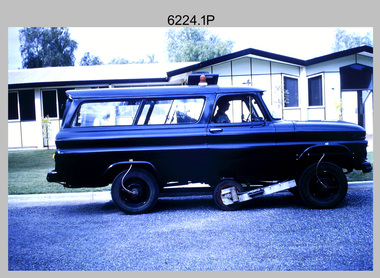 Bendigo Military Museum
Photograph - Johnson Ground Elevation Meter (JGEM) Survey Vehicle - Army Survey Regiment, Fortuna, Bendigo, c1960s
... Engineers in 1996, the JGEM vehicle with the Survey Corps collection was donated to its museum. It is believed to be the last of the original manufactured fleet in existence. The JGEM has undergone extensive refurbishment to achieve roadworthiness and is currently housed at The Australian Army Museum of Military Engineering, Hoslworthy Barracks, NSW. It can be viewed...Engineers in 1996, the JGEM vehicle with the Survey Corps collection was donated to its museum. It is believed to be the last of the original manufactured fleet in existence. The JGEM has undergone extensive refurbishment to achieve roadworthiness and is currently housed at The Australian Army Museum of Military Engineering, Hoslworthy Barracks, NSW. It can be viewed ...This is a set of 16 photograph of the Royal Australian Survey Corps’ Johnson Ground Elevation Meter (JGEM) Survey Vehicle taken at the Army Survey Regiment, Fortuna, Bendigo. The JGEM vehicle was extensively used by RA Svy within Australia from the late 1960s. A limited number of Ground Elevation Meter (GEM) station wagon type vehicles were manufactured by General Motors Corporation (GMC) in the USA for the United States Geological Survey, Canada’s mapping agencies, RA Svy and National Mapping (Natmap). The GEM was a four-wheel drive, four-wheel steer vehicle. Four-wheel steering was necessary to avoid systematic errors caused by non-tracking of front and rear wheels on conventionally steered vehicles. The manufacturer substituted the rear axle with a front axle and connected them to form the four-wheel steering mechanism. The two Australian GEM vehicles, referred to as Johnson GEMs (JGEMs) were converted into right-hand drive. After delivery in 1964, acceptance Natmap and RA Svy testing and operator training was undertaken at the Army's School of Military Survey located at Balcombe, Victoria. A small fifth wheel was mounted on a cantilever arm suspension midway between the front and rear wheels on the right side of the vehicle. It was lowered to and raised from its operating position by use of a constant pressure air cylinder. A telescopic bar, suspended between the front and rear axles, provided the reference datum for the angle measurement. The wheel provided the velocity or distance signal through a pulse generator system. A sensitive pendulum mounted on this bar provided the angle measurement for each minute distance traversed. The JGEM contained electromechanical instruments used to determine relative elevations, by trigonometric principles, along a traversed path. These relative elevations were obtained through apparatus which measures the instantaneous angle of inclination of the road and the instantaneous velocity of the meter along such a path. Road routes over which the JGEM operated were planned so that each started and ended as near as practicable to an existing point of known elevation (formally referred to as a level traverse bench mark). The difference in height from the bench mark and the road surface alongside the JGEM’s fifth wheel was measured with a level and staff. Along each route, mapping control photo reference points where new elevation values were required were identified on aerial photographs. Under favourable conditions it was possible to survey as much as 160km in an ordinary working day. The first of RA Svy’s JGEM operations was undertaken in 1:250,000 scale map areas of Queensland. CPL John Hook was the JGEM’s main operator in the early 1970s undertaking operations covering 1:250,000 scale map blocks over northern Victoria and central NSW, each requiring 36 points (9 runs of photography and 4 points across. SPR Lyn Thompson and SPR Bob McDonagh teamed with CPL Hook on some of these JGEM operations. When RA Svy was integrated into the Royal Australian Engineers in 1996, the JGEM vehicle with the Survey Corps collection was donated to its museum. It is believed to be the last of the original manufactured fleet in existence. The JGEM has undergone extensive refurbishment to achieve roadworthiness and is currently housed at The Australian Army Museum of Military Engineering, Hoslworthy Barracks, NSW. It can be viewed by making an appointment with the museum’s curator.This is a set of 16 photograph of the Royal Australian Survey Corps’ Johnson Ground Elevation Meter (JGEM) Survey Vehicle taken at the Army Survey Regiment, Fortuna, Bendigo. The photographs were on 35mm slide film and were scanned at 96 dpi. They are part of the Army Survey Regiment’s Collection. .1) - Photo, colour, c1960s, Johnson Ground Elevation Meter (JGEM) Survey Vehicle .2) - Photo, colour, c1960s, JGEM instrumentation, on-board computer. .3) - Photo, colour, c1960s, JGEM instrumentation. .4) - Photo, colour, c1960s, JGEM instrumentation, on-board computer. .5) - Photo, colour, c1960s, JGEM tyre pressure controller .6) - Photo, colour, c1960s, JGEM rear doors, SGT Geoff Briggs. .7) - Photo, colour, c1960s, JGEM 5th wheel distance/angle measurement device in lowered position, SGT Geoff Briggs. .8) - Photo, colour, c1960s, JGEM 5th wheel distance/angle measurement device in lowered position. .9) & .10) - Photo, colour, c1960s, JGEM tyre pressure system, SGT Geoff Briggs. .11) - Photo, colour, c1960s, JGEM tyre pressure system. SGT Geoff Briggs. .12) - Photo, colour, c1960s, JGEM levelling scope, levelling staff, unidentified technicians. .13) & .14) - Photo, colour, c1960s, JGEM levelling scope, unidentified technician. .15) & .16) - Photo, colour, c1960s, probably survey operation adjusted height plotted on block base sheet. .1P to .16P - Some of the equipment is annotated on the frame of the 35mm slides.royal australian survey corps, rasvy, army survey regiment, army svy regt, fortuna, asr, surveying -
 Eltham District Historical Society Inc
Album - Photograph, J.A. McDonald, Dixons Creek Bridge, c. 1962
... View looking upstream ? east Record of various Shire of Eltham infrastructure works undertaken during the period of 1952-1962 involving bridge and road reconstruction projects, sometimes with Eltham Shire Council Project Reference numbers quoted. It was during this period that a number of significant improvements were made to roads and new bridges constructed within the shire that remain in place as of present day (2022). In many situations, the photos provide a tangible visible record of infrastructure that existed throughout the early days of the Shire. The album was put together by or under the direction of the Shire Engineer ...Dixons Creel Bridge Broken head of pile View looking upstream ? eastRecord of various Shire of Eltham infrastructure works undertaken during the period of 1952-1962 involving bridge and road reconstruction projects, sometimes with Eltham Shire Council Project Reference numbers quoted. It was during this period that a number of significant improvements were made to roads and new bridges constructed within the shire that remain in place as of present day (2022). In many situations, the photos provide a tangible visible record of infrastructure that existed throughout the early days of the Shire. The album was put together by or under the direction of the Shire Engineer, J.A. McDonald.'66' written in pencil1962, bridge construction, dixons creek bridge, dixon's creek road, infrastructure, road construction, shire of eltham -
 Eltham District Historical Society Inc
Negative - Photograph, J.A. McDonald, Eltham, Susan Street, Jan. 1961
... view) Record of various Shire of Eltham infrastructure works undertaken during the period of 1952-1962 involving bridge and road reconstruction projects, sometimes with Eltham Shire Council Project Reference numbers quoted. It was during this period that a number of significant improvements were made to roads and new bridges constructed within the shire that remain in place as of present day (2022). In many situations, the photos provide a tangible visible record of infrastructure that existed throughout the early days of the Shire. The album was put together by or under the direction of the Shire Engineer ...January 1961 Looking towards Dalton Street (present-day Withers Way) Just south of Brougham Street. To the immediate left is the present-day car park for the Elham Leisure Centre. The house on the left is immediately opposite Cromwell street and adjacent to the southwest corner of the Leisure Centre buiding (where the Williams house sits hidden from view)Record of various Shire of Eltham infrastructure works undertaken during the period of 1952-1962 involving bridge and road reconstruction projects, sometimes with Eltham Shire Council Project Reference numbers quoted. It was during this period that a number of significant improvements were made to roads and new bridges constructed within the shire that remain in place as of present day (2022). In many situations, the photos provide a tangible visible record of infrastructure that existed throughout the early days of the Shire. The album was put together by or under the direction of the Shire Engineer, J.A. McDonald.shire of eltham, infrastructure, 1961-01, cromwell street, eltham leisure centre, road construction, susan street -
 Eltham District Historical Society Inc
Negative - Photograph, J.A. McDonald, Eltham, Susan Street, Jan. 1961
... view) Record of various Shire of Eltham infrastructure works undertaken during the period of 1952-1962 involving bridge and road reconstruction projects, sometimes with Eltham Shire Council Project Reference numbers quoted. It was during this period that a number of significant improvements were made to roads and new bridges constructed within the shire that remain in place as of present day (2022). In many situations, the photos provide a tangible visible record of infrastructure that existed throughout the early days of the Shire. The album was put together by or under the direction of the Shire Engineer ...January 1961 Looking south Brown excavating Brougham to Dalton (present-day Withers Way) F. Woods Consolidating showing soft fill over culvert after 9 months Just south of Brougham Street. To the immediate left is the present-day car park for the Elham Leisure Centre. The house on the left is immediately opposite Cromwell street and adjacent to the southwest corner of the Leisure Centre buiding (where the Williams house sits hidden from view)Record of various Shire of Eltham infrastructure works undertaken during the period of 1952-1962 involving bridge and road reconstruction projects, sometimes with Eltham Shire Council Project Reference numbers quoted. It was during this period that a number of significant improvements were made to roads and new bridges constructed within the shire that remain in place as of present day (2022). In many situations, the photos provide a tangible visible record of infrastructure that existed throughout the early days of the Shire. The album was put together by or under the direction of the Shire Engineer, J.A. McDonald.shire of eltham, infrastructure, 1961-01, cromwell street, eltham leisure centre, road construction, susan street -
 Eltham District Historical Society Inc
Photograph - Digital Photograph, Marguerite Marshall, Smith Dam, Karingal Drive, Eltham, 19 September 2006
... engineer, D. B. (Bernie) Smith to water the 24 acre (9.75 ha) hobby farm owned by himself and new wife, Isa Smith. Upon completion of the dam a pump-house was constructed beside the creek but before the water could be pumped up the hill they had to dig a trench and lay 500m of 100mm water main to an elevated holding tank. The Smiths made the pump-house their home for several years until they constructed their home at the top of the hill overlooking Eltham and views...engineer, D. B. (Bernie) Smith to water the 24 acre (9.75 ha) hobby farm owned by himself and new wife, Isa Smith. Upon completion of the dam a pump-house was constructed beside the creek but before the water could be pumped up the hill they had to dig a trench and lay 500m of 100mm water main to an elevated holding tank. The Smiths made the pump-house their home for several years until they constructed their home at the top of the hill overlooking Eltham and views ...The dam at the entrance to the Nerreman Gateway in Eltham was built according to an internationally acclaimed theory developed by the builder's father. In 1920, Victorian engineer B.A. Smith was awarded the American Society of Civil Engineers J. James R. Cross Gold Medal for his Technical Paper titled 'Arched Dams'. It was the first time this medal had been awarded outside the United States. The concrete arched dam across the Eltham West Drain was built in 1940 by B.A. Smith's son and engineer, D. B. (Bernie) Smith to water the 24 acre (9.75 ha) hobby farm owned by himself and new wife, Isa Smith. Upon completion of the dam a pump-house was constructed beside the creek but before the water could be pumped up the hill they had to dig a trench and lay 500m of 100mm water main to an elevated holding tank. The Smiths made the pump-house their home for several years until they constructed their home at the top of the hill overlooking Eltham and views extending to Kinglake. Following Bernie's death in 1983, Nerreman Park was subdivided between 1993 and 1995. Gordon Ford designed the landscaping and the pump-house was demolished. Covered under Heritage Overlay, Nillumbik Planning Scheme. Published: Nillumbik Now and Then / Marguerite Marshall 2008; photographs Alan King with Marguerite Marshall.; p137 The dam at the entrance to the Nerreman Gateway in Eltham, was built according to an internationally acclaimed theory developed by the builder’s father. In 1920, Victorian engineer B A Smith was awarded the American Society of Civil Engineers J. James R. Croes Gold Medal, for his Technical Paper titled Arched Dams. It was the first time this medal had been awarded outside America. An international example of the application of Smith’s work can be found in the design of the Hoover Dam on the Colorado River, Nevada, USA. Built between 1930 and 1936, it is recognised by the ASCE as one of ‘America’s Seven Modern Civil Engineering Wonders’.1 The concrete arched dam across the Eltham West Drain was built by B A Smith’s son and engineer, D B (Bernie) Smith. Bernie’s dam followed his father’s theory, having a curvature that takes maximum advantage of concrete’s great strength in compression. The water load is carried into the abutments because of this curvature, which permits a wall thickness of only 225 millimetres thick at its crest, despite the dam’s capacity of more than 4.5 megalitres. The Eltham dam was designed to water the 24 acre (9.75 ha) hobby farm belonging to newly married couple Bernie and Isa Smith. Bernie, from Armadale, and Isa, from a farm at Tyntynder near Swan Hill, were attracted to the hilly topography and the creek running through the property. It extended from Ryans Road, Eltham, to Karingal Drive, Montmorency and was adjacent to Meruka Park. The Smiths named it Nerreman Park using the Aboriginal word Nerreman meaning ‘River Bend’ as their creek had a pronounced bend.2 In 1940 the first thing Bernie did was to build a dam, and with Isa’s help, a pump-house, to secure a water supply for their cattle, pigs, chickens, orchard and vegetable gardens. It was also available for the fire-plugs, which they placed all over the property in case of bushfire. The couple built the pump-house beside the creek and installed a Tange three-plunger pump, which had originally supplied the City of Wodonga with water. But before the Smiths could pump water up the hill from the dam they had to dig a trench and lay about 550 yards (500m) of a four-inch (100mm) water main up to an elevated holding tank. The trench was dug with a single furrow plough drawn by an old draught horse. Living in rough conditions did not deter the Smiths, who made the pump-house their home, where they still lived when their first child was born in 1944. They later built their home at the top of their property overlooking Eltham, with magnificent views to Kinglake, the Dandenong Ranges and Melbourne. From 1946 it took them almost 20 years to complete the 36-square house with its 12-foot (3.6m) high ceilings. Material for the concrete roof and walls faced with sandstone, was ripped out of the ground on their property by plough pulled by tandem Clydesdale horses. Isa was a strong woman – two days before their second child was born – she set three huge sandstone boulders in place in the bottom wall of the garage. She also mixed all the cement for the house. A collapsed kitchen wall did not discourage her from rebuilding it in a week, while her husband was away working in the country. She later recalled: ‘We stood back to admire this beautiful wall we’d built and while we were looking at it, it came tumbling down’.3 Following Bernie’s death in 1983, Nerreman Park was subdivided, between 1993 and 1995. Local Gordon Ford designed the landscaping and the pump-house was pulled down. But the dam remains as a reminder of exceptional engineering4 – and of a remarkable couple.This collection of almost 130 photos about places and people within the Shire of Nillumbik, an urban and rural municipality in Melbourne's north, contributes to an understanding of the history of the Shire. Published in 2008 immediately prior to the Black Saturday bushfires of February 7, 2009, it documents sites that were impacted, and in some cases destroyed by the fires. It includes photographs taken especially for the publication, creating a unique time capsule representing the Shire in the early 21st century. It remains the most recent comprehenesive publication devoted to the Shire's history connecting local residents to the past. nillumbik now and then (marshall-king) collection, eltham, karingal drive, smiths dam, bernie smith, gordon ford, isa smith, nerreman gateway, nerreman park estate, dams
