
Showing 102 items matching "training aif"
-
 Bendigo Military Museum
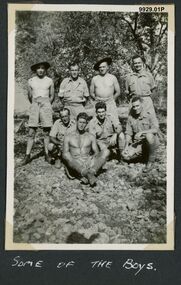
Album - PHOTOGRAPHIC ALBUM WW2, AIF Training in Palestine : 2nd/8th Battalion at Biet Jirja
... AIF Training in Palestine : 2nd/8th Battalion at Biet Jirja ...These images feature various personnel from 2/8th while training at Biet Jirja, the large AIF training camp in Palestine in 1940-41. ...These images feature various personnel from 2/8th while training at Biet Jirja, the large AIF training camp in Palestine in 1940-41. ...These images feature various personnel from 2/8th while training at Biet Jirja, the large AIF training camp in Palestine in 1940-41. They are part of the collection of Bill Thomason, a Bendigo collector of militaria. The collection includes two albums put together by a Lieutenant Brown in 1940-41, possibly attached to the 19th Training Battalion at Biet Jirja in Palestine. The albums record events and personalities from units passing through the camp, including many friends of the author in a range of units. The images include those taken by Brown, along with images seemingly supplied by friends from different units. Refer to record number 9928P and 10106P for details on physical albums.Contains unique images of AIF life in Palestine and Syria.Photographs of various 2/8th identities while at Biet Jirja training campsyria, palestine, egypt, thomason collection, 2/8th battalion aif -
 Bendigo Military Museum
Album - PHOTOTOGRAPHIC ALBUM WW2, AIF Training in Palestine : D Company 2/31st Battalion, Syria and Palestine, 1940
... AIF Training in Palestine : D Company 2/31st Battalion, Syria and Palestine... life in Palestine and Syria. 2/31st Battalion Syria Palestine Egypt Thomason collection Photographs of D Company 2/31st Battalion during training and deployment in the Middle East 1940-41 AIF Training in Palestine : D Company 2/31st Battalion, Syria and Palestine Album PHOTOTOGRAPHIC ALBUM WW2 ...This album was part of the collection of Bill Thomason, a Bendigo collector of militaria. The collection includes two albums put together by a Lieutenant Brown in 1940-41, possibly attached to the 19th Training Battalion at Biet Jirja in Palestine. They record events and personalities from units passing through the camp, including many friends of the author in a range of units. The images include those taken by Brown, along with images seemingly supplied by friends from different units. This particular set features the 2nd/31st Battalion. Refer to record number 9928P and 10106P for details on physical albums.Contains unique images of AIF life in Palestine and Syria.Photographs of D Company 2/31st Battalion during training and deployment in the Middle East 1940-412/31st battalion, syria, palestine, egypt, thomason collection -
 Bendigo Military Museum
Album - PHOTOTOGRAPHIC ALBUM WW2, AIF Training in Palestine : D Company 2/31st Battalion, Syria and Palestine Part 2
... AIF Training in Palestine : D Company 2/31st Battalion, Syria and Palestine Part 2... life in Palestine and Syria. 2/31st Battalion Syria Palestine Egypt Thomason collection Photographs of D Company 2/31st Battalion during training and deployment in the Middle East 1940-41 AIF Training in Palestine : D Company 2/31st Battalion, Syria and Palestine Part 2 Album PHOTOTOGRAPHIC ALBUM WW2 ...This album was part of the collection of Bill Thomason, a Bendigo collector of militaria. The collection includes two albums put together by a Lieutenant Brown in 1940-41, possibly attached to the 19th Training Battalion at Biet Jirja in Palestine. The albums record events and personalities from units passing through the camp, including many friends of the author in a range of units. The images include those taken by Brown, along with images seemingly supplied by friends from different units. This particular set is the second one featuring D Company, 2nd/31st Battalion. Refer to record number 9928P and 10106P for details on physical albums.Contains unique images of AIF life in Palestine and Syria.Photographs of D Company 2/31st Battalion during training and deployment in the Middle East 1940-412/31st battalion, syria, palestine, egypt, thomason collection -
 Bendigo Military Museum
Album - PHOTOTOGRAPHIC ALBUM WW2, AIF Training in Palestine : Biet Jirja reinforcements and training camp
... AIF Training in Palestine : Biet Jirja reinforcements and training camp...These images feature various personnel from 2/4th Battalion, featuring Christmas lunch, while training at Biet Jirja, the large AIF reinforcement depot and training camp in Palestine in 1940-41. ...Syria Palestine Egypt Thomason collection 2/4th Battalion AIF Photographs of various 2/4th identities while at Biet Jirja training camp and reinforcement depot AIF Training in Palestine : Biet Jirja reinforcements and training camp Album PHOTOTOGRAPHIC ALBUM WW2 ...These images feature various personnel from 2/4th Battalion, featuring Christmas lunch, while training at Biet Jirja, the large AIF reinforcement depot and training camp in Palestine in 1940-41. Also featured are a number of images of Lieutenant Brown, who put together the albums. They are part of the collection of Bill Thomason, a Bendigo collector of militaria. The collection includes two albums put together by a Lieutenant Brown in 1940-41, possibly attached to the 19th Training Battalion at Biet Jirja in Palestine. The albums record events and personalities from units passing through the camp, including many friends of the author in a range of units. The images include those taken by Brown, along with images seemingly supplied by friends from different units. Refer to record number 9928P and 10106P for details on physical albums.Contains unique images of AIF life in Palestine and Syria.Photographs of various 2/4th identities while at Biet Jirja training camp and reinforcement depotsyria, palestine, egypt, thomason collection, 2/4th battalion aif -
 Bendigo Military Museum
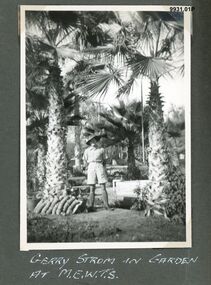
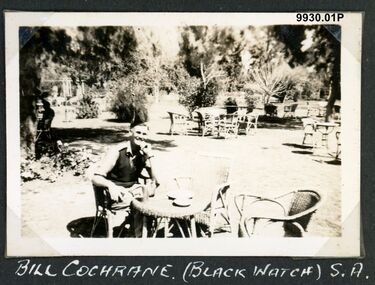
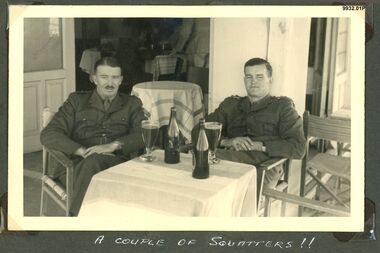
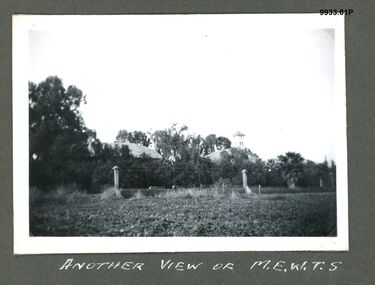
Album - PHOTOGRAPHIC ALBUM WW2, AIF Training in Palestine : Middle East Tactical School and MEWTS officer training
... AIF Training in Palestine : Middle East Tactical School and MEWTS officer training...training schools for officers. These schools were credited with providing an extra degree of professionalism to Australian and Commonwealth officers AIF Training in Palestine : Middle East Tactical School and MEWTS officer training Album PHOTOGRAPHIC ALBUM WW2 ...These images feature various personnel attending courses and the Middle East Tactical School. This school honed the leadership and command skills of officers. The images are part of the collection of Bill Thomason, a Bendigo collector of militaria. The collection includes two albums put together by a Lieutenant Brown in 1940-41, possibly attached to the 19th Training Battalion at Biet Jirja in Palestine. The albums record events and personalities from units passing through the camp, including many friends of the author in a range of units. The images include those taken by Brown, along with images seemingly supplied by friends from different units. Refer to record number 9928P and 10106P for details on physical albums.Contains unique images of AIF life in Palestine and Syria.Photographs of participants and environment of the METS and MEWTS training schools for officers. These schools were credited with providing an extra degree of professionalism to Australian and Commonwealth officerssyria, palestine, egypt, thomason collection, mets middle east tactical school -
 Bendigo Military Museum
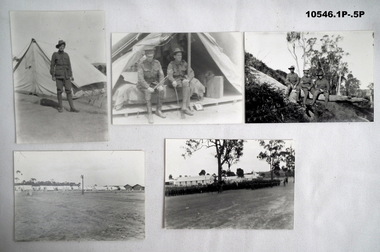
Photograph - AIF SOLDIERS IN AUSTRALIA, WW1, Unknown
... ...Training AIF...WW1 Training AIF Photographs 1. WW1 Soldier, full portrait in front of "A" frame tent. ...1. WW1 Soldier, full portrait in front of "A" frame tent. He has three stripes, slouch hat and ........... 2. WW1 2 soldiers seated on bed in "A" frame tent. Left one is a Cpl with leather leggings, peaked cap and holding a horse whip. Right soldier is a Cpl. Slouch hat and puttees. He is holding a small cane. 3. (3) Three soldiers on a fallen tree in Aust. Left soldier is a Cpl with a slouch hat. Middle soldier is a Sgt. with a peaked cap. Right soldiers has a slouch hat and is a NCO of some park. He is wearing a slouch hat. All are wearing puttees. 4. Army tent camp, large quantity of white tents "A" frame. On right of picture is two wooden huts. In centre is an old fashioned lamp of some sort. There appears to be of gates in the centre (or hurdles). 5. Large parade of soldiers in Aust. One officer mounted on a large horse in centre. Some soldiers have leather leggings and some have puttee. Wooden huts are in the background. 6. Soldiers marching from parade ground onto a dirt road. One on right have leather leggings. Rear soldiers have puttees. One drum and one banner can be seen in centre. Wooden huts in background. The large hut in centre has a sign - "Church of England Institute'. Further away can be seen a 'YMCA' hut. 7. Group of 6 soldiers washing clothes under a roofed structure. They are using tubs for hand washing. There are 4 slouch hats and 2 peaked caps. 8. Group of 8 soldiers in front of a tin hut. The sign on the hat states "Headquarters Technical Battalion". There is an officer in the centre. Some men have armbands marked "BD". One soldier has a diamond shape colour patch. All are wearing slouch hats except one. 9. Group of four soldiers in front of a tin hut. One Officer, 2 Cpls, 1 Pte. There are 2 slouch hats and 2 peak caps. The Corporal in front centre is wearing leather leggings and is seated on a box stamped "Cockatoo Jams". 10. Full length portrait of a Staff Sergeant. Slouch hat with leather leggings. He is standing in front of a tin hut, the sign on it has a diamond shape with letters F.E. on it. 11. Troop train. Soldiers on board the old train. Soldiers and civilians on platform. A couple of rifles can be seen on platform. Soldiers on platform have a mixture of puttees and/or leather leggings. ww1, training aif, photographs -
 Warrnambool RSL Sub Branch
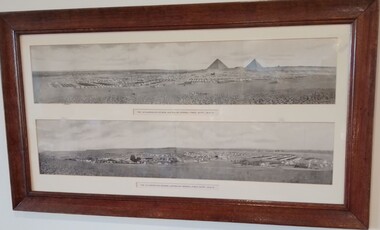
Photograph - Photograph of Australian Servicemen training in Egypt in WW1, 1st Australian Division, Australian Imperial Force EGYPT 1914-1915, unknown
... AIF Training...WW1 AIF Training Camp in Egypt prior to deploying to Gallipoli The photograph shows the living conditions (Tents). ...WW1 AIF Training Camp in Egypt prior to deploying to Gallipoli The photograph shows the living conditions (Tents). ...WW1 AIF Training Camp in Egypt prior to deploying to Gallipoli The photograph shows the living conditions (Tents). It also shows the vastness of the site and suggests large numbers of servicemen. These two photographs are historically significant. They demonstrate the conditions that the soldiers in training experienced before they arrived at the front-line. They give the modern viewer some understanding of what it was like in Egypt. It is also very significant because it keeps the memories alive. Professionally framed work, two pictures one above the other. Shows AIF Camp with pyramids in background.Brown frameaif training, gallipoli, 1st australian division, egypt, ww1, australian imperial force -
 Magnet Galleries Melbourne Inc
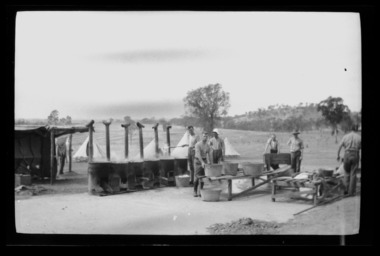
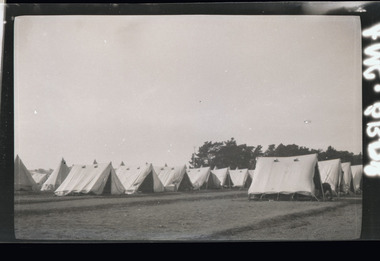
washing in camp, les chandler_a00027.tif
... ...training camp...aif...Seymour Army Camp training camp aif washing A.I.F ww1 world war 1 les chandler_a00027.tif washing in camp ...At Seymour training camp.seymour army camp, training camp, aif, washing, a.i.f, ww1, world war 1 -
 Magnet Galleries Melbourne Inc
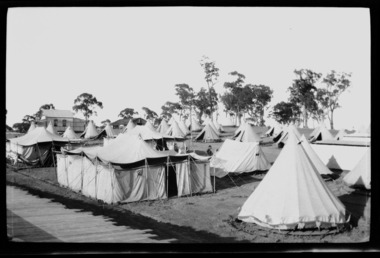
seymour training camp, les chandler_a00031.tif
... ...training camp...aif...Seymour Army Camp seymour training camp aif A.I.F ww1 world war 1 les chandler_a00031.tif seymour training camp ...Seymour training camp.seymour army camp, seymour, training camp, aif, a.i.f, ww1, world war 1 -
 Magnet Galleries Melbourne Inc
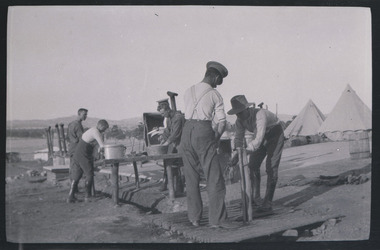
seymour training camp, les chandler_a00032.tif
... ...training camp...aif...Seymour Army Camp seymour training camp aif A.I.F ww1 world war 1 les chandler_a00032.tif seymour training camp ...Seymour training camp.seymour army camp, seymour, training camp, aif, a.i.f, ww1, world war 1 -
 Magnet Galleries Melbourne Inc
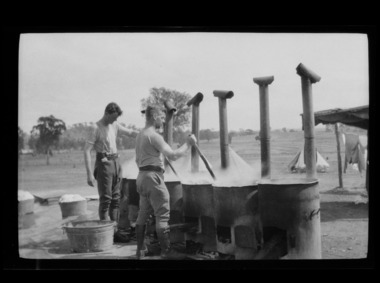
training camp seymour, les chandler_a00059.tif
... ...training camp...aif...At training camp in Seymour. seymour army camp seymour training camp aif A.I.F ww1 world war 1 photo les chandler_a00059.tif training camp seymour ...At training camp in Seymour.photoseymour army camp, seymour, training camp, aif, a.i.f, ww1, world war 1 -
 Magnet Galleries Melbourne Inc
at seymour training camp, les chandler_a00060.tif
... ...training camp...aif...Seymour Army Camp training camp aif A.I.F seymour ww1 world war 1 photo les chandler_a00060.tif at seymour training camp ...At the training camp in Seymour. Photo by Les Chandler.photoseymour army camp, training camp, aif, a.i.f, seymour, ww1, world war 1 -
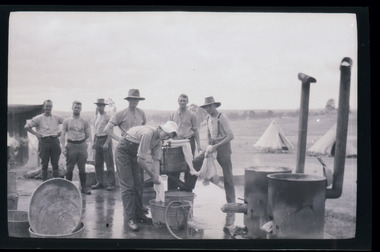 Magnet Galleries Melbourne Inc
washing in camp, les chandler_a00044.tif
... ...training camp...ww1...aif...Seymour Army Camp seymour training camp ww1 aif A.I.F washing les chandler_a00044.tif washing in camp ...At training camp in Seymour. seymour army camp, seymour, training camp, ww1, aif, a.i.f, washing -
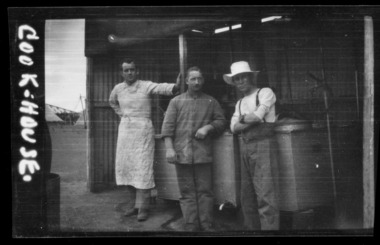 Magnet Galleries Melbourne Inc
Cooking house at training camp in Seymour, les chandler_a00107d.tif
... ...training camp...seymour...aif...Cooking house at training camp in Seymour. kitchen cooking ww1 world war 1 Seymour Army Camp training camp seymour aif a.i.f les chandler_a00107d.tif Cooking house at training camp in Seymour. ...Cooking house at training camp in Seymour.kitchen, cooking, ww1, world war 1, seymour army camp, training camp, seymour, aif, a.i.f -
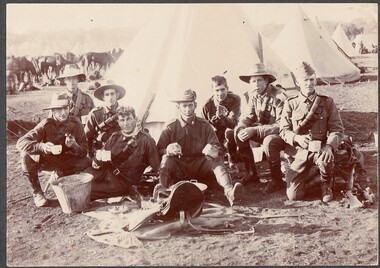 8th/13th Victorian Mounted Rifles Regimental Collection
Photograph
... Possibly reinforcements to 8th Light Horse Regiment AIF training at Broadmeadows prior to proceeding ovrtseas....Possibly reinforcements to 8th Light Horse Regiment AIF training at Broadmeadows prior to proceeding ovrtseas. ...Possibly reinforcements to 8th Light Horse Regiment AIF training at Broadmeadows prior to proceeding ovrtseas.Good image of " soldiers at rest " during training WW1Black and white photograph mounted on card of eight soldiers enjoying a cup of tea. There are Bell tents and horses in the background.Imprinted across lower edge of card " J. Colquhoun Photo - Broadmeadows Camp 1915 - 1 Donald Street, Prahran ." -
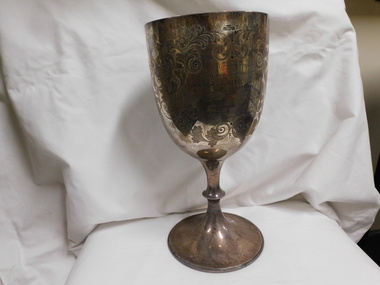 The 5th/6th Battalion Royal Victoria Regiment Historical Collection
Award - Trophy, March and Attack, 1918
... 2nd Training Brigade Australian Imperial Force March and Attack Cup Presented by the Officers 9th Training Battalion AIF For Completion by Platoons in Smartness Route Marching Anti-Gas Training and Musketry Fovant 1918 1918 October competion won by 5th TB *Halmarks* 4 pint 53823 Walker and Hall Shefield England...Award issued in the last month of WW1 Trophy awarded for best taining battalion October 1918, last month of World War 1 Victorian Scottish Regiment WW1 5/6 RVR TROPHY 2ND TRAINING BRIGADE 1918 2nd Training Brigade Australian Imperial Force March and Attack Cup Presented by the Officers 9th Training Battalion AIF For Completion by Platoons in Smartness Route Marching Anti-Gas Training and Musketry Fovant 1918 1918 October competion won by 5th TB *Halmarks* 4 pint 53823 Walker and Hall Shefield England Silver, Chalis shaped cup, no handles, ridged stem and ornate engraving. ...Award issued in the last month of WW1Trophy awarded for best taining battalion October 1918, last month of World War 1Silver, Chalis shaped cup, no handles, ridged stem and ornate engraving.2nd Training Brigade Australian Imperial Force March and Attack Cup Presented by the Officers 9th Training Battalion AIF For Completion by Platoons in Smartness Route Marching Anti-Gas Training and Musketry Fovant 1918 1918 October competion won by 5th TB *Halmarks* 4 pint 53823 Walker and Hall Shefield Englandvictorian scottish regiment, ww1, 5/6 rvr, trophy, 2nd training brigade, 1918 -
 Bendigo Military Museum
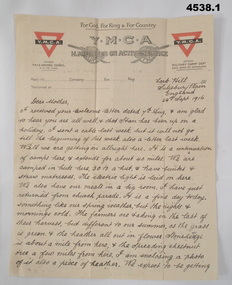
Letter - LETTER AND ENVELOPE 1916, C. 1916
... Letters written by Alfred G Ferris No 2156 AIF from Training camps in England. refer cat No 4183.3P for his service details....Letters written by Alfred G Ferris No 2156 AIF from Training camps in England. refer cat No 4183.3P for his service details. ...Letters written by Alfred G Ferris No 2156 AIF from Training camps in England. refer cat No 4183.3P for his service details..1) letter, “ “YMCA, H.M.Forces On Active Service” letterhead, print in red and black, ruled lines, hand written in black pen, dated. .2) Envelope, yellowish colour, green postage stamp, hand writing in black pen. .3) .4) letter, same as .1) different date and Camp..1) Main points, “Lark Hill Salisbury Plain England, 24th sept 1916”, “Dear Mother”. .2) addressed, “Mrs A.E.Ferris Terrick Terrick Via Pyramid” .3) Main points, “Hurdcott camp 23 Nov 1916”, “Dear Mother & ones at home”.letters, ymca, envelopes, ww1 -
 Wangaratta RSL Sub Branch
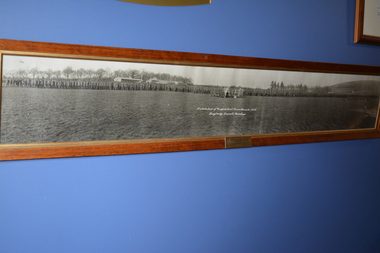
Photograph - Framed Photograph, c1918
... This black and white image taken of Australian soldiers at the Headquarters of the AIF Overseas Training Brigade based at Longbridge Deverell in Wiltshire England prior to distribution of Comfort Funds Xmas Boxes in 1918. ...This black and white image taken of Australian soldiers at the Headquarters of the AIF Overseas Training Brigade based at Longbridge Deverell in Wiltshire England prior to distribution of Comfort Funds Xmas Boxes in 1918. ...This black and white image taken of Australian soldiers at the Headquarters of the AIF Overseas Training Brigade based at Longbridge Deverell in Wiltshire England prior to distribution of Comfort Funds Xmas Boxes in 1918. One of the soldiers in the image is Private Llewellyn EVANS 5335 of the 24th Battalion. EVANS was born on the 9/8/1879 at Moyhu in Victoria. He was a farmer and enlisted on the 8/2/1916 at the age of 36 years. He embarked on the 1/8/1916 and was wounded twice, first in 1917 receiving a gunshot wound to the right leg and again in 1918 receiving a gunshot wound to the right arm and leg. He returned to Australia and was discharged on 30/4/1919.Sand Hill (Longbridge Deverill)- Sand Hill camp was built in 1914 to accommodate infantry units. Australian troops arrived at Longbridge Deverill in October 1917, when their Overseas Training Brigade was moved from Perham Down and established there to train soldiers who had recovered from illness and wounds for a return to active service. Brown timber frame containing photograph of large group of soldiers and band members in an open field.Distribution of "Comfort Fund" Xmas Boxes to A.I.F. Longbridge Deverall, March 1918 comfort fund, ww1, llewellyn evans, 24th battalion, longbridge deverill -
 Bendigo Military Museum
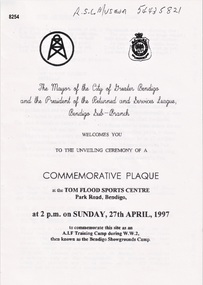
Pamphlet - COMMEMORATIVE PLAQUE 1997, C.1997
... The wording: "Commemorating this site as an Australian Imperial Force Training Camp during WW2. "To the following Corps we pay Tribute" "10th AIF Training Depot" "Australian Army Medical Corps" "Australian Army Ordnance Corps" "Australian Army Service Corp". ...The wording: "Commemorating this site as an Australian Imperial Force Training Camp during WW2. "To the following Corps we pay Tribute" "10th AIF Training Depot" "Australian Army Medical Corps" "Australian Army Ordnance Corps" "Australian Army Service Corp". ...The Tom Flood Sports Centre was originally called The Bendigo Show Grounds. This plaque was unveiled by the City of Greater Bendigo & the Bendigo RSL Sub Branch to Commemorated the venue as a "Training Camp" during WW2. Order of Service was, Welcome, Mr Alan Holmes (President Bendigo RSL) Introduction of Recruits & Others associated with the Camp. A brief history of the Camp and Anecdotes was read by Mr Alan Holmes. Presentation and unveiling of the Plaque by Cr Barry Ackerman, Mayor City of Greater Bendigo. The wording: "Commemorating this site as an Australian Imperial Force Training Camp during WW2. "To the following Corps we pay Tribute" "10th AIF Training Depot" "Australian Army Medical Corps" "Australian Army Ordnance Corps" "Australian Army Service Corp". "Australian Electrical and Mechanical Engineers" Prayer of Thanksgiving & Commemoration by; Rev J. South. This was followed the "ODE, Last Post, One minutes Silence, Reveille and The National Anthem. As far as records available the Camp was first set up on 17.6.1940 with an Advance Party. The last Troops left there on 30.4.1943 for Ingleburn NSW, the Camp was vacated in May 1943. Pamphlet white paper, A4 folded making 4 pages, all print in black.On the front, "This Commemorative Plaque was unveiled at the Tom Flood Sports Centre Park Road Bendigo Sunday 27th April 1997"brsl, smirsl, plaque, tom flood, training camp -
 8th/13th Victorian Mounted Rifles Regimental Collection
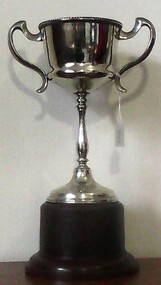
Trophy, McClure Cup
... When the Second World War erupted in 1939, the Battery was at full strength and a rich source of officers and trained men for the second AIF. Militia training of the few remaining officers and Albury adopted the 2/23rd Infantry Battalion which had been raised at the Showground. ...When the Second World War erupted in 1939, the Battery was at full strength and a rich source of officers and trained men for the second AIF. Militia training of the few remaining officers and Albury adopted the 2/23rd Infantry Battalion which had been raised at the Showground. ...Battery Quartermaster Sergeant Harold Bauerle served with the Albury Battery in the 1920s and 1030s. Shortly following Federation the military unit in Albury was redesignated No 4 New South Wales Battery Australian Field Artillery (AFA). It was under the command of Major John Wilkinson, an Albury solicitor and comprised about 100 citizen soldiers, 4 guns and about 40 horses. Training centred on the Albury Drill Hall located in Victoria Street. A reorganisation in 1912 resulted in the Battery being named No 17 Battery AFA. When war broke out in 1914 the Battery then under the command of Major Joseph Shellshear, and Albury doctor, offered its services as a trained artillery battery to the Australian Imperial Force (AIF). The Battery cooled its heels and continued to train till July 1915 when a second division was raised in the AIF and trained artillery was needed. When the call came 150 officers and men of the 17th Battery went into the AIF, many to the 13th Battery with Major Shellshear in command and others to other AIF batteries of the 4th and 5th Artillery Brigades. The 13th Battery was adopted immediately by the townsfolk of Albury as the Albury Battery. The Battery served in France and Belgium and was involved in all the major battles fought by the Australians perhaps most notably at Noreuil where the Battery found itself surrounded but continued to fight till eventually the enemy was driven back. Following the war members of the Battery nominated this battle as their most significant achievement and consequently a newly developed recreational reserve on the Murray River foreshore was named Noreuil Park. In 1919 the Battery resumed training as part of the Citizen Military Forces or Militia. Changes of title were frequent, first 27th Battery, then 60th Battery and finally 40th Battery AFA. Battery commanders included Captain Leslie Colquhoun, an Albury real estate agent, Captain Roy Collings, Albury town clerk and Captain Clifton Mott a newspaper editor. The Depression of the early 1930s almost brought about the closure of the Albury Battery but it survived through the intervention of the mayor, Alderman Alfred Waugh, who made direct representation to the Minister for Defence. When the Second World War erupted in 1939, the Battery was at full strength and a rich source of officers and trained men for the second AIF. Militia training of the few remaining officers and Albury adopted the 2/23rd Infantry Battalion which had been raised at the Showground. Following WWII, CMF soldiering recommenced in the form of an armoured regiment, the 8th/13th Victorian Mounted Rifles. After nearly a half a century of service in war and peace the Albury Battery has faded and exists now in this collection of objects and images. This trophy is representative of community support for a Citizen Military Forces unit drawn from a regional NSW Town in the period between the World Wars.Silver cup with two handles mounted on Bakelite base being the McClure Cup for most efficient NCO in Albury Battery 1935-36 . inscription on side of cup."McClure Cup / for / Most efficient NCO / 1935-36 / won by / BQMS H.C. Bauerle"bauerle h c bqms, albury battery, mcclure cup -
 Federation University Historical Collection
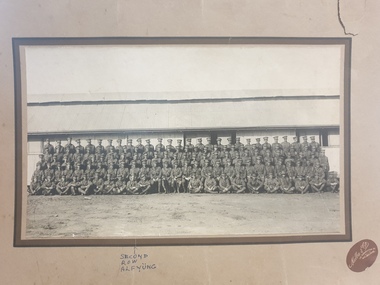
Photograph, Melba & Co, 7th Australian Infantry Training Battalion WW1
... AIF began to return to Australia for demobilisation and discharge. In March, the battalion was so reduced that it and the 6th Battalion were amalgamated to form a composite battalion. In turn, this battalion was merged with another, formed from the 5th and 8th Battalions, to form the 2nd Brigade Battalion. https://www.awm.gov.au/collection/U51447 Army soldier Alf Yung 7th Australian Infantry Battalion 7th Australian Infantry Training ...George Alfred Yung, known as Alf, pictured in the second row, 10th from the left, enlisted on 25/02/1916; embarked on 19/02/1917; was killed during the battle of Menin Gate at Yrpres, Belgium on 20/09/1917. https://www.awm.gov.au/collection/U51447 The 7th Battalion was among the first infantry units raised for the AIF during the First World War. Like the 5th, 6th and 8th Battalions, it was recruited from Victoria and, together with these battalions, formed the 2nd Brigade. The battalion was raised by Lieutenant Colonel H. E. "Pompey" Elliott within a fortnight of the declaration of war in August 1914 and embarked just two months later. After a brief stop in Albany, Western Australia, the battalion proceeded to Egypt, arriving on 2 December. It later took part in the ANZAC landing on 25 April 1915, as part of the second wave. Ten days after the landing, the 2nd Brigade was transferred from ANZAC to Cape Helles to help in the attack on the village of Krithia. The attack captured little ground but cost the brigade almost a third of its strength. The Victorian battalions returned to ANZAC to help defend the beachhead, and in August the 2nd Brigade fought at the battle of Lone Pine. While holding positions captured by the 1st Brigade, four members of the 7th Battalion, Corporal A. S. Burton, Acting Corporal W. Dunstan, Lieutenant W. Symons and Captain F. H. Tubb, earned the Victoria Cross - Burton posthumously. The battalion served at ANZAC until the evacuation in December. After the withdrawal from Gallipoli in December 1915, the battalion returned to Egypt. In March 1916, it sailed for France and the Western Front and entered the front line trenches for the first time on 3 May. The battalion's first major action in France was at Pozieres in the Somme valley where it fought between 23-27 July and 15-21 August. After Pozieres the battalion manned trenches in the Ypres salient in Belgium, before returning to the Somme valley. It saw out the horrendous winter of 1916-1917 rotating between training, working parties and duty in the trenches. In early 1917, the Germans withdrew to the Hindenburg Line and the 7th Battalion participated in the brief advance that followed and then came to a grinding halt before Bullecourt. The battalion was withdrawn from the front line for training on 9 May 1917 and did not return to action until the Ypres offensive of September and October. It fought major battles at Menin Road on 20 September and Broodseinde on 4 October, and then spent much of ensuing winter in the Ypres mud. In March and April 1918 the 7th helped stop the German spring offensive in northern France and later participated in the Allies' own great offensive of 1918, that began with the battle of Amiens on 8 August. The advance by British and empire troops on 8 August was the greatest success in a single day on the Western Front, one that German General Erich Ludendorff described as, "the black day of the German Army in this war". The battalion continued operations until late September 1918. At 11 am on 11 November 1918, the guns fell silent. The November armistice was followed by the peace treaty of Versailles signed on 28 June 1919. In November 1918 members of the AIF began to return to Australia for demobilisation and discharge. In March, the battalion was so reduced that it and the 6th Battalion were amalgamated to form a composite battalion. In turn, this battalion was merged with another, formed from the 5th and 8th Battalions, to form the 2nd Brigade Battalion. https://www.awm.gov.au/collection/U51447army, soldier, alf yung, 7th australian infantry battalion -
 Lara RSL Sub Branch
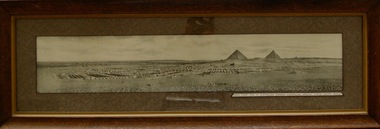
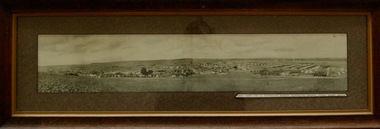
Photograph, Mena Camp Egypt 1914-15
... The Mena Camp, Egypt, was the training camp for the 1st Australian Imperial Forces(AIF) before the Landing at Gallipoli. ...The Mena Camp, Egypt, was the training camp for the 1st Australian Imperial Forces(AIF) before the Landing at Gallipoli. ...The Mena Camp, Egypt, was the training camp for the 1st Australian Imperial Forces(AIF) before the Landing at Gallipoli. The camp was located 16Kms from Cairo.Built around Mena House, it was a luxury hotel built next to the Pyramids of Giza (originally spelt Gizeh) supplied with its own purpose built tram-line to Cairo. The centre road up the middle of the camp was known as Artillery Road. The initial force consisted of 20,000 men.The Camp was a major training facility for the 1st Australian Imperial Force in 1014-15.Rectangular shaped glass covered picture frame showing a photo of Mena Camp-1914/15.Mena Camp-1st Australian Division. Australian Imperial Force-Egypt. 1914-15.mena camp, egypt, gallipoli, cairo, lara r.s.l. training camps, australian imperial force. -
 Lara RSL Sub Branch
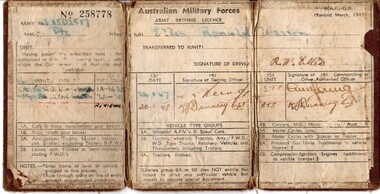
Drivers Licence, Australian Military Forces Army Driving Licence
... Ron was enlisted in the second AIF at Melbourne, and posted to the 3rd Recruit Training Battalion at Greta west of Newcastle, NSW. ...Ron was enlisted in the second AIF at Melbourne, and posted to the 3rd Recruit Training Battalion at Greta west of Newcastle, NSW. ...Cpl. Ronald Warren Ellis, EM (VX502517) was born in Brunswick in 1927. His family moved to Lara when he was young, and his schooling took place at the Lara State School. After finishing his education, Ron took up employment at Sims Coopers in Corio. Ron was enlisted in the second AIF at Melbourne, and posted to the 3rd Recruit Training Battalion at Greta west of Newcastle, NSW. After 3 months training, he was sent to the Service Corps Training Centre for driver and maintenance training in Ingleburn, south of Sydney. When this course was completed, Ron was posted to the Australian Army Service Corps as a driver motor vehicle with the 2nd AIF. Rons service with the AIF lasted 425 days, when he was then transferred to the Interim Army for a further 309 days. The duration of his service was in NSW. Ron was discharged from the Army in Melbourne on the 4th of May 1948. In 1957, Ron enlisted in the CMF and served with 22nd Construction Squadron for 17 years with the last 5 as a Corporal, and was awarded the Efficiency Medal for long service and good conduct.Brown canvas booklet that is folded into three. Licence gives details of Army number, name, rank and type of vehicle that is able to be driven. Licence has been issued to Private Ronald Warren Ellis on 24/01/1948. No. 258778 Army No. V?SOL517 Rank: Private Name in full: Ellis, Ronald Warren Unit: Transferred to (unit): Having passed the prescribed tests ... authorised to drive... types of ... vehicles within the Commonwealth of Australia and Territories. Signature of Driver: drivers licence, australian military forces, army, private, ellis, ww2, wwii, world war two, second world war -
 Lara RSL Sub Branch
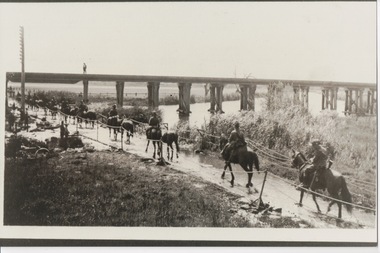
Photograph, Set 4 photographs. and others for Torquay Light Horse camp, 1940
... training camps. The camp at Torquay in 1940, commanded by Major General Rankin, was at Divisional strength. By the end of the camp some felt that the Division was ready for active service. Gradually, over the next four years, the Australian Light Horse units were mounted on wheels and tracks and the horses were retired. Six men enlisted at the Torquay camp and another 57 men and women enlisted at Torquay for service in WW2. Those who served in the Militia provided valuable Officers and NCOs and men for the armed services during the war. Each infantry division of the 2nd AIF...training camps. The camp at Torquay in 1940, commanded by Major General Rankin, was at Divisional strength. By the end of the camp some felt that the Division was ready for active service. Gradually, over the next four years, the Australian Light Horse units were mounted on wheels and tracks and the horses were retired. Six men enlisted at the Torquay camp and another 57 men and women enlisted at Torquay for service in WW2. Those who served in the Militia provided valuable Officers and NCOs and men for the armed services during the war. Each infantry division of the 2nd AIF ...These images capture for all time Light Horsemen travelling through Geelong on their way to camp at Torquay for the last Group meeting in Australia . information following - details obtained from .........https://torquayhistory.com/light-horse-brigade/ On Australia Day, 1997, Sir John Young unveiled this plaque on Point Danger, Torquay. Torquay history, Light Horse Training Camp, WW2 Plaque at Pt. Danger Note----- (See images to view plaque) The plaque identifies a significant event in Torquay’s history and the sentiments of ‘change’ for the Light Horse Brigade – from horses to machines. In 1940 the four Light Horse Regiments (4th, 8th, 13th and 20th), some 5000 Light Horse and 2000 horses camped and trained at Torquay. Three other regiments, formerly mounted on horses, were also at Torquay ‘mounted’ on privately owned trucks and cars. Division troops included Artillery, Engineers, Signals, Field Ambulance and other branches of the Army necessary to enable a Division to function. It wasn’t just the sheer numbers of men coming to this little town that made the event significant, it was also the fact that the men of the Light Horse were dramatic, almost glamorous figures and it is easy to see their exploits as some splendid adventure. Horses have played a special role in the story of Australia. They were the only means of transport across this huge country, so it was necessary for everyone to have the ability to ride a horse. When war broke out in 1899 between Britain and the Boers of South Africa (“Boer” was Dutch for “farmer”) Australia sent troops to fight. At first Britain was wary of using untried, unprofessional colonial cavalrymen but soon saw that the slouch-hatted Australian “bushmen” were a match for the fast-moving and unconventional mounted commandos of the Boers. The Australians proved themselves to be expert rough-riding horsemen and good shots. Bush life had hardened them to go for long periods with little food and water. They also showed remarkable ability to find their way in a strange country and use its features for cover, in both attack and defence. By 1914, when Australia joined the war against Germany, there were 23 Light Horse regiments of militia volunteers. Many men from these units joined the Light Horse regiments of the Australian Imperial Force (AIF). Men were given remounts (if not using their own horses) – army horses bought by Commonwealth purchasing officers from graziers and breeders. These were called “walers” because they were a New South Wales stockhorse type – strong, great-hearted animals with the strains of the thoroughbred and semi-draught to give them speed, strength and stamina. On 1st November, 1914, Australia’s First Infantry Division and the first four Light Horse regiments sailed for England in a fleet of transport ships. The first of the Light Horse arrived at Gallipoli in May without their horses. Back with their horses after Gallipoli, they were formidable combatants across the Sinai and Palestine. Some British commanders observed that the light horseman moved with a “lazy, slouching gait, like that of a sleepy tiger” but described how the promise of battle “changes that careless gait, into a live athletic swing that takes him over the ground much quicker than other troops”. They had Light Horse, Torquay, training campdeveloped a reputation as formidable infantrymen. The Turks called them “the White Ghurkas” – a reference to their deadly skill with the bayonet. The Arabs called them “The Kings of the Feathers”. The plume had originally been a battle honour of the Queensland Mounted Infantry for their work in the shearer’s strike of 1891. During WW1 it was adopted by almost all the Light Horse Regiments. It was the proud badge of the light horseman. The most famous of their battles was the attack on Beersheba- the charge of the 4th Light Horse Brigade. Mounted infantrymen and their superb walers had carried out one of the most successful cavalry charges in history – against what seemed impossible odds. They surprised the Turks by charging cavalry-style, when they would normally have ridden close to an objective then dismounted to fight. The fall of Beersheba swung the battle tide against the Turks in Palestine; and changed the history of the Middle East. While 19 men from the Surf Coast Shire served with the 4th Light Horse over the course of WW1, only four were involved in the charge of Beersheba- John GAYLARD, Philip QUINN.(Winchelsea); Wallace FINDLAY (Anglesea); Harry TRIGG (Bambra). After the war, Light Horse units played a key role in the Australian Government’s compulsory military training programme. The Citizen Military Forces (C.M.F.) thrived on the glamour of the wartime Light Horse tradition, ignoring the possibility that motor vehicles would soon replace the horses. When training was no longer compulsory, the C.M.F. regiments declined and horses became more of a luxury during the 1930s depression years of poverty and unemployment. Some regiments were motorised. Then, in 1939, Australia joined Britain in another world war. Training was increased for the militia at both home bases and regional training camps. The camp at Torquay in 1940, commanded by Major General Rankin, was at Divisional strength. By the end of the camp some felt that the Division was ready for active service. Gradually, over the next four years, the Australian Light Horse units were mounted on wheels and tracks and the horses were retired. Six men enlisted at the Torquay camp and another 57 men and women enlisted at Torquay for service in WW2. Those who served in the Militia provided valuable Officers and NCOs and men for the armed services during the war. Each infantry division of the 2nd AIF had a Light Horse regiment attached to it. But the day of the Australian mounted soldier hadn’t quite passed. During World War II, Australia’s 6th Cavalry Regiment formed a mounted unit they called “The Kelly Gang” which did valuable scouting work. In New Guinea, a mounted Light Horse Troop did patrol duty and helped carry supplies. Some fully equipped walers were flown into Borneo for reconnaissance in rugged mountain country. But by the end of the war, in 1945, the horse had disappeared from the Australian Army. References: Australian Light Horse Association www.lighthorse.org.au National Australia Archives Australian War Memorial Surf Coast Shire WW1 memorials www.togethertheyserved.com The Light horse- a Cavalry under Canvas Light Horse, Training Camp, Torquay, WW2 Late in 1939 it was decided to set up a Lighthorse training camp in Torquay to train both men and horses for the battles of the Second World War. Horses, men and equipment came on special trains from all over Victoria and NSW, and as you would expect horseman came from areas such as Omeo and Sale, the Wimmera and the Western District. They arrived at the Geelong racecourse for watering in the Barwon River and then were ridden across the ford at the breakwater and began their 11 mile trek to Torquay. Light Horse, Training Camp, Torquay, WW2 Tent city By the end of January 1940 the camp at Torquay accommodated some 5000 men and 2500 horses of the Second Cavalry Division. The rows of horses, tents and huts near Blackgate Road were quite a sight. While the cavalrymen engaged in exercises on the land and on the beaches, many of the troops took over the Torquay School for special training of men and officers. Mr Bob Pettit local farmer and Councillor for the Barrabool Shire, wrote about the Light horse in the Surf Coast Community News in 1985 saying “They used to travel about the district riding four abreast in one long convoy. To my annoyance they went through my property and shut all the gates behind them. I had certain gates open to let stock in to the water holes and it would take me three -quarters of an hour to follow the horsemen up and put all the gates right again” he continued “the men from the Light Horse were here when the fire went through in March 1940. He recalled an incident when early one morning, as some one blew the bugle, a soldier putting a white sheet on the line frightened the horses. They panicked and ran off in all directions. Six went over the cliff near Bird Rock, five were never found, and the rest were gathered up after nearly a fortnight in the bush around Addiscott and Anglesea" Light Horse, Training Camp, Torquay, WW2, Geelong Parade Geelong parade The training camp culminated in a parade through the streets of Geelong on March 12th 1940. The salute was given at the Town Hall and the troops continued on a route to the You Yang’s for a training exercise. Note-----(see media section for photograph) The Camp was abandoned in mid 1940 as it was deemed unsuitable for training during winter and the cost of a permanent camp could not be justified if it could not be used all year. Historic.......Rare,,,Interpretive.Sepia photographs.set of four ....post card size ....Horses &LighthorsemenNo 1, Lighthorsemen Regiment Geelong 1940......No 2 Light Horse at Breakwater Geelong 1938 to 1940....No 3 Light Horse at Breakwater Geelong 1938 to 1940.....No 4 Light Horse crossing Breakwater camped at Geelong Showgrounds. These markings are on reverse of photographs.light horsemengeelong 1940., world war 2 -
 Lara RSL Sub Branch
Photograph, Mena Camp Egypt 1914-15
... The Mena Camp, Egypt, was the training camp for the 1st Australian Imperial Forces(AIF) before the Landing at Gallipoli. ...The Mena Camp, Egypt, was the training camp for the 1st Australian Imperial Forces(AIF) before the Landing at Gallipoli. ...The Mena Camp, Egypt, was the training camp for the 1st Australian Imperial Forces(AIF) before the Landing at Gallipoli. The camp was located 16Kms from Cairo.Built around Mena House, it was a luxury hotel built next to the Pyramids of Giza (originally spelt Gizeh) supplied with its own purpose built tram-line to Cairo. The centre road up the middle of the camp was known as Artillery Road. The initial force consisted of 20,000 men.The Camp was a major training facility for the 1st Australian Imperial Force in 1014-15.Rectangular shaped glass covered picture frame showing a photo of Mena Camp-1914/15.Mena Camp-1st Australian Division. Australian Imperial Force-Egypt. 1914-15.mena camp, egypt, gallipoli, cairo, lara r.s.l. training camps, australian imperial force. -
 Lara RSL Sub Branch
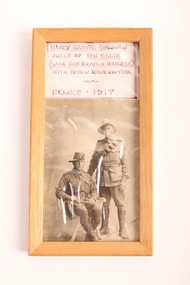
Photo, Harry Grove
... Ron was enlisted in the second AIF at Melbourne, and posted to the 3rd Recruit Training Battalion at Greta west of Newcastle, NSW. ...Ron was enlisted in the second AIF at Melbourne, and posted to the 3rd Recruit Training Battalion at Greta west of Newcastle, NSW. ...This photo is from 1917 and is of Private Harry Groves (standing) with his cousin Arthur Whitter (seated). Private Groves was the Uncle of Ron Ellis, who was a Lara Sub-Branch member. Cpl. Ronald Warren Ellis, EM (VX502517) was born in Brunswick in 1927. His family moved to Lara when he was young, and his schooling took place at the Lara State School. After finishing his education, Ron took up employment at Sims Coopers in Corio. Ron was enlisted in the second AIF at Melbourne, and posted to the 3rd Recruit Training Battalion at Greta west of Newcastle, NSW. After 3 months training, he was sent to the Service Corps Training Centre for driver and maintenance training in Ingleburn, south of Sydney. When this course was completed, Ron was posted to the Australian Army Service Corps as a driver motor vehicle with the 2nd AIF. Rons service with the AIF lasted 425 days, when he was then transferred to the Interim Army for a further 309 days. The duration of his service was in NSW. Ron was discharged from the Army in Melbourne on the 4th of May 1948. In 1957, Ron enlisted in the CMF and served with 22nd Construction Squadron for 17 years with the last 5 as a Corporal, and was awarded the Efficiency Medal for long service and good conduct. This photo represents the connection that Lara RSL members and their family members have to the conflicts that Australia has been involved in over time. Photograph of Harry Grove (standing) with his cousin Arthur Witter (seated) - France 1917. The black and white photo is framed within a wooden frame, and above it is a piece of paper with details about the photo written in red texta. The photo is black and white, and in the bottom right corner in pencil is written: Sincerely Yours, Arthur. The remainder of the text extends under the frame, but looks as though it says: Arthur, France. world war 1, ww1, wwi, photo, family, private, corporal -
 Geelong RSL Sub Branch
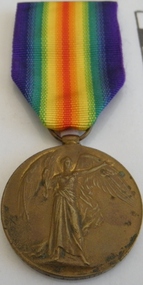
Decoration - 3163 W J Smith, ?1919
... 3163 Pte W J Smith enlisted in to the AIF on 29 September 1915 and embarked from Fremantle on the Argylishire. On arrival Pte Smith was take on strength to Pioneer Training Battalion and was then transferred to 5 Pioneer Battalion. ...3163 Pte W J Smith enlisted in to the AIF on 29 September 1915 and embarked from Fremantle on the Argylishire. On arrival Pte Smith was take on strength to Pioneer Training Battalion and was then transferred to 5 Pioneer Battalion. ...3163 Pte W J Smith enlisted in to the AIF on 29 September 1915 and embarked from Fremantle on the Argylishire. On arrival Pte Smith was take on strength to Pioneer Training Battalion and was then transferred to 5 Pioneer Battalion. Pt Smith returned to Australia on the Berrima and arrived on 02 January 1919, was discharged on 22 March 1919.This Victory Medal is the original that was issued to 3163 Pte W J Smith.Victory Medal. Round bronze Medal , with ribbon.3163 Pte W J Smith. 5 Pnr Bn. A I F On the reverse of the Medal - The Great War for Civilisaztion 1914-1919.3163 w j smith, 5 pn bn, ww1 -
 Geelong RSL Sub Branch
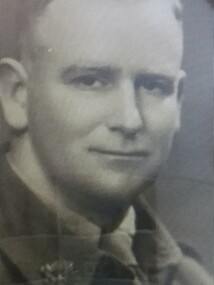
Ross Family Collection, circa 1939
... VX39077 Neil Ross enlisted in to the AIF on 21 November 1940 at Royal Park and was posted to 2/29 Battalion, The Battalion completed training at Bonegilla and Bathurst and then went to Malaya as part of the 27th Brigade, assigned to 8th Division. ...VX39077 Neil Ross enlisted in to the AIF on 21 November 1940 at Royal Park and was posted to 2/29 Battalion, The Battalion completed training at Bonegilla and Bathurst and then went to Malaya as part of the 27th Brigade, assigned to 8th Division. ...VX39077 Neil Ross enlisted in to the AIF on 21 November 1940 at Royal Park and was posted to 2/29 Battalion, The Battalion completed training at Bonegilla and Bathurst and then went to Malaya as part of the 27th Brigade, assigned to 8th Division. This Battalion fought in several actions prior to being captured on 15 February 1942 in Singapore. On return to Australia SSgt spent time in Military Hospital prior to Discharge October 1946.All of the items in this collection are originals as issued to SSgt Ross.A collection of items belonging to the Ross Family. The items belong to VX39077 SSgt Neil Rossross, 2/29th battalion, 27th brigade, 8th division -
 Red Cliffs Military Museum
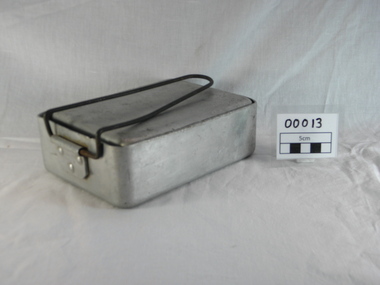
Mess kit, 1939 (exact)
... aif...8th battalion...vx52576...pte...mckenzie...c mckenzie...1939...c b ltd...1941 1945...19th australian infantry training...Other items include a postcard sent home in August 1941 and a photo of Australian troops on parade at Wewak in August 1945 darwin world war two pan set messing mess tins aluminium 2nd aif 8th battalion vx52576 pte mckenzie c mckenzie 1939 c b ltd 1941 1945 19th australian infantry training battalion b company 21st august 1941 finchaven wandecla cairns brisbane "Inscription on base of mess tin large. ...This is part of a collection donated by Mrs Margaret McKenzie that belonged to her husband and was issued to him during the Second World War, the mess tins were marked with names of places, ships and battle locations. Other items include a postcard sent home in August 1941 and a photo of Australian troops on parade at Wewak in August 1945Aluminium Mess tin set, 2 rectangular tins one smaller to fit into larger. Inscriptions engraved on 4 sides containing locations of training, ships and battle areas. Additional markings include year of manufacture and company along with Department of Defence broad arrow. Item is stamped metal with wire handle on the large tin. Wire carry handle missing on smaller tin. "Inscription on base of mess tin large. 'DARLEY ALBANY/ SYDNEY/ PERTH/ TRINCOMALEE:CEYLON/ PORT TUFIC/ SUEZ CANAL/ EL CANTARA/ GAZA/ JERUSALEM/ HIFA TELAVIV/ BETHALEM/ BAYROUTA/ JUDEDES FIAKE/darwin, world war two, pan set messing, mess tins, aluminium, 2nd aif, 8th battalion, vx52576, pte, mckenzie, c mckenzie, 1939, c b ltd, 1941 1945, 19th australian infantry training battalion, b company, 21st august 1941, finchaven, wandecla, cairns, brisbane -
 Bendigo Military Museum
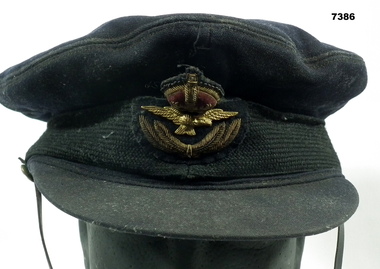
Headwear - CAP, PEAKED WW2, C.WW2
... He first enlisted in the 2nd AIF on 11.3.1942 age 22 years 8 months No VX75447, during his time he rose to Acting Cpl, attached to No 4 Chemical Warfare Coy RAE and A.A.O.C in Bendigo, he was hospitalised with a Peptic Ulcer, discharged from the Army on 3.9.1943 to join the RAAF. Enlisted in the RAAF on 4.9.1943 No 431933 as a Aircraftsman, after initial training...He first enlisted in the 2nd AIF on 11.3.1942 age 22 years 8 months No VX75447, during his time he rose to Acting Cpl, attached to No 4 Chemical Warfare Coy RAE and A.A.O.C in Bendigo, he was hospitalised with a Peptic Ulcer, discharged from the Army on 3.9.1943 to join the RAAF. Enlisted in the RAAF on 4.9.1943 No 431933 as a Aircraftsman, after initial training ...Peaked cap worn by “Vivian Donald BULLEN". He first enlisted in the 2nd AIF on 11.3.1942 age 22 years 8 months No VX75447, during his time he rose to Acting Cpl, attached to No 4 Chemical Warfare Coy RAE and A.A.O.C in Bendigo, he was hospitalised with a Peptic Ulcer, discharged from the Army on 3.9.1943 to join the RAAF. Enlisted in the RAAF on 4.9.1943 No 431933 as a Aircraftsman, after initial training he was posted to “Air Gunnery School” on 4.2.1944, embarked for England 28.4.1944, went through 3 training units in Bomber Command, posted to 466 Sqd Driffield 19.1.1945. He rose through the ranks from Aircraftsman - LAC - Sgt - Flt Sgt - Fly Officer by 7.10.1945. He flew 13 sorties and was eligible for the France & Germany Star. Embarked for Australia 29.6.1945, discharged from RAAF 9.10.1945. Cap - peaked, navy blue cotton twill, black leather hat band with brass button keepers. RAAF badge in gold and red crown above eagle wings and laurel wreath. Inside cap, leather sweatband and cotton lining. Makers label imprint on sweatband.Sweatband - makers label imprint "Sam Brown Leather". headwear, uniform, ww2, raaf, vivian donald bullen
