
Showing 87 items matching "travel accessory"
-
 Emerald Museum & Nobelius Heritage Park
Functional object - Compass
... ...Travel accessory...Emerald Victoria Australia Travel accessory Little Small brass compass, with fold-out magnifying glassBrass|Glass Functional object Compass ...Small brass compass, with fold-out magnifying glassBrass|Glassemerald, victoria, australia, travel accessory, little -
 Port Melbourne Historical & Preservation Society
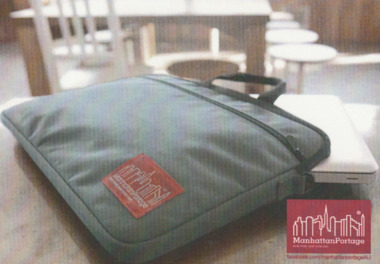
Postcard - Manhattan Portage at Salford Lad's Club café, Port Melbourne, Steve Gourlay, 2000s
... Manhattan Portage is a Travel accessories company. Salford Lads Club was a cafe since closed....Manhattan Portage is a Travel accessories company. Salford Lads Club was a cafe since closed. ...One of four postcards for Manhattan Portage. Photographed at Salford Lad's Club Cafe, Port Melbourne. Card shows a blue computer bag with Manhattan Portage logo. Manhattan Portage is a Travel accessories company. Salford Lads Club was a cafe since closed.business and traders, manhattan portage, steve gourlay, salford lad's club -
 Port Melbourne Historical & Preservation Society
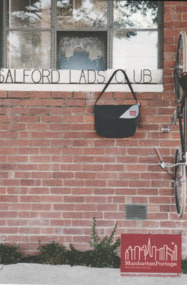
Postcard - Manhattan Portage at Salford Lad's Club café, Port Melbourne, Steve Gourlay, 2000s
... Manhattan Portage is a travel accessories company. Salford Lads Club was a cafe now closed....Manhattan Portage is a travel accessories company. Salford Lads Club was a cafe now closed. ...One of four postcards for Manhattan Portage. Photographed at Salford Lad's Club Cafe, Port Melbourne. Card shows a blue rucksack and Salford Lads Club sign. Manhattan Portage is a travel accessories company. Salford Lads Club was a cafe now closed.business and traders, manhattan portage, steve gourlay, salford lad's club -
 Port Melbourne Historical & Preservation Society
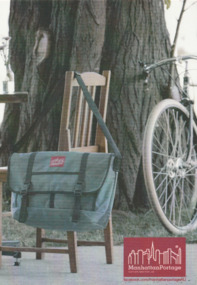
Postcard - Manhattan Portage at Salford Lad's Club café, Port Melbourne, Steve Gourlay, 2000s
... Manhattan Portage is a travel accessory company & Salford Lads Club a cafe now closed....Manhattan Portage is a travel accessory company & Salford Lads Club a cafe now closed. ...One of four postcards for Manhattan Portage. Photographed at Salford Lad's Club Cafe, Port Melbourne. Card shows a blue computer bag hanging on a chair and the front wheel of a bicycle. Manhattan Portage is a travel accessory company & Salford Lads Club a cafe now closed.business and traders, manhattan portage, steve gourlay, salford lad's club -
 Embroiderers Guild, Victoria
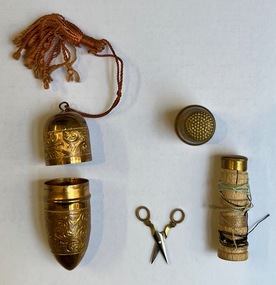
Container - Gilt sewing etui, ?1940's
... Compact metal sewing compendiums such as this were often sold as travel accessories ...Compact metal sewing compendiums such as this were often sold as travel accessories Compact portable container for 'emergency' sewing repairs Etui Pocket sewing set Chased pattern over middle areas of etui Gilt bullet shaped metal etui with orange silk tassel Container Gilt sewing etui ...Compact metal sewing compendiums such as this were often sold as travel accessories Compact portable container for 'emergency' sewing repairsGilt bullet shaped metal etui with orange silk tasselChased pattern over middle areas of etuietui, pocket sewing set -
 Port Melbourne Historical & Preservation Society
Postcard - Manhattan Portage at Salford Lad's Club café, Port Melbourne, Steve Gourlay, 2000s
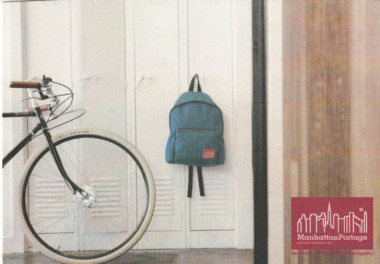
... Manhattan Portage is a travel accessory company. Salford Lads Club was a cafe in an industrial building now closed....Manhattan Portage is a travel accessory company. Salford Lads Club was a cafe in an industrial building now closed. business and traders manhattan portage steve gourlay salford lad's club One of four postcards for Manhattan Portage. ...Manhattan Portage is a travel accessory company. Salford Lads Club was a cafe in an industrial building now closed.One of four postcards for Manhattan Portage. Photographed at Salford Lad's Club Cafe, Port Melbourne. Card shows the front wheel of a bicycle and a blue rucksack.business and traders, manhattan portage, steve gourlay, salford lad's club -
 Flagstaff Hill Maritime Museum and Village
Functional object - Hat Box, John Brush, Son & Co, 1920s
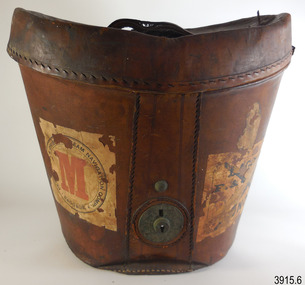
... Travel goods...Clothing accessory...The traveller was able to depart from firstly the Port of Sydney and later the Port of Melbourne. flagstaff hil Warrnambool flagstaff hill maritime museum maritime museum shipwreck coast flagstaff hill maritime village great ocean road Hat box Leather hat box Vintage hat box Top hat Homburg hat Derby hat Travel ware Luggage Leather goods Travel goods Clothing accessory Men’s clothing John Brush Son & Co Saddler Sydney firm Peninsular & Orient Steam Navigation Company P & O G.M. ...This sturdy, deep hat box has been carefully constructed to give the contents utmost protection in the roughest of travel conditions. At the same time, attention to detail and quality of materials makes the box an attractive, desirable and useful piece of luggage. The supports inside the hat box show that the hat’s brim dipped at the front and back in the popular 1920s Homburg or Derby style. The hat box was likely to have been purchased, complete with its fashionable hat and personalised with the initials ‘G.M.’. The five shipping labels on the hat box tell that the owner traveller overseas with it on more than one occasion. The owner had first travelled with the shipping line Peninsular & Orient Steam Navigation Company, and may have been one the first Australian passengers in 1932, as the remnant of label on the base reads Sydney. The owner later voyaged under the company’s new name of P & O. and travelled from at least one of the voyages from Melbourne to London The square label, with “P & O” and red printed “M” in centre of circle, refers to alphabetical organisation of baggage by surname, connecting the owner ‘G.M.’ to the owner’s voyage with P & O. The P & O shipping line’s early beginnings started with the partnership of London ship broker Brodie McGhie Willcox and Scottish sailor Arthur Anderson in 1822. The partnership was joined by Irish shipowner Captain Richard Bourne in 1835 and they began operation as the Peninsular & Orient Steam Navigation Company with a service between London- Spain - Portugal. In 1932 the company expanded to include Australia with its passenger services departing from Sydney; in 1840 the company was incorporated. After various take-overs of other shipping lines and businesses, it operated under the name P & O. JOHN BRUSH The hat box was made by Australian saddle designer and maker, John Brush, Sons & Co. Brush began his saddlery trade in Roma, Queensland, His designing process included consulting with the men who rode and worked the horses. He was described in the Sydney Morning Herald of December 15, 1897, as a leading Sydney saddler, well known and reliable, with every kind of English and Australian saddle on view. John Brush established his business in 1840, operating from 371 George Street Sydney. A catalogue from that era jointly advertises John Brush (371 George Sty Sydney) and Butlers & Brush (432-4 Queen Street Sydney), both under the name of Edward Butler & Co. Pty. Ltd. The catalogue included saddlery, harness equipment, riding wear and travel goods, and strongly promoted the Wienkek made saddles, which he distributed Australia wide. John Brush, So & co. advertised its ‘new’ address in 1887, as 403 George Street Sydney. In 1898 Brush made a side-saddle for a customer, a design popular with gentlewomen of the era. The business was still operating over 100 years later, producing a catalogue in the 1950s.This early 20th century hat box is significant for being one of a kind in our Collection. Its fitted design shows the shape of the hat, dating it from the 1920s men’s fashions. The hat box is significant for being a high quality hat box made in Sydney, Australia by prominent and successful early colonial saddler and leather goods business, John Brush, Son & Co. The labels on the outside of the hat box are also significant, representing the prosperous lifestyle of an Australian traveller who purchased quality goods and cared for them. The traveller was able to depart from firstly the Port of Sydney and later the Port of Melbourne. Hatbox, oval shape, brown leather, strong, sturdy construction, six pieces, and metal lock on base. Wide lid, then tapers to a narrower base that has a red leather trim. Brown velvet fabric lining inside and covers some accessories. Other internal accessories are trimmed with plain red paper and blue and white striped paper. The lid has two attached leather tabs and a leather handle and underneath it has a drawstring liner and oval, gold-lettered maker’s label. The internal oval box has a leather retention strap and brim support. Separate moulded brim support is included. A detached leather strap with catch is inside the base. Inscriptions are stamped on the lid, printed on the maker’s label, attached as printed paper labels to the lid, sides, and under the base. Maker is John Brush, Son & Co. of Sydney. The owner’s initials “G.M” are embossed on the lid.Stamped on lid “G. M.” Label, oval, inside lid “JOHN BRUSH, SON & CO. / MANUFACTURERS & IMPORTERS / of / SADDLERY AND HARNESS / 403, GEORGE ST. / SYDNEY” Label, paper: “BAGGAGE, MELBOURNE TO LONDON’, part of word ‘CABIN’ and “P & O” Label, square, white background, black print, circular emblem: ‘PE - - - - - & ORIEN-’, ‘STEAM NAVIATION COMPY.’ BAGGAGE’ and a red printed “M” in centre of circle. Label, rectangular, white background, black print; narrow line border, text in rows and an ‘X’ overprinted, from corner to corner of the border: “BAGGAGE / P. & O. S. N. Co. / MELBOURNE / To / LONDON” Label, paper, rectangular, white background, black print, an “X” across the label: “CABIN / P & O / “ Label, paper, on base, “– aid” [Paid], “SYDNEY” flagstaff hil, warrnambool, flagstaff hill maritime museum, maritime museum, shipwreck coast, flagstaff hill maritime village, great ocean road, hat box, leather hat box, vintage hat box, top hat, homburg hat, derby hat, travel ware, luggage, leather goods, travel goods, clothing accessory, men’s clothing, john brush, son & co, saddler, sydney firm, peninsular & orient steam navigation company, p & o, g.m., melbourne to london, sydney port, melbourne port, hat case -
 Flagstaff Hill Maritime Museum and Village
Functional object - Bonnet Box
... accessory...hand luggage...travel...flagstaff hill warrnambool shipwrecked-coast flagstaff-hill flagstaff-hill-maritime-museum maritime-museum shipwreck-coast flagstaff-hill-maritime-village bonnet box hat box metal hat box Legges accessory hand luggage travel goods personal effects Marked "Legges" "(symbol of a crown)" "Patent Secure Staples and Joints" Bonnet box or hat box, metal, oval, with a brass swivel handle on lid and a brass lock. ...Bonnet box or hat box, metal, oval, with a brass swivel handle on lid and a brass lock. Manufactured by Legges. The outside has been painted tan or brown, the inside is bright bluw.Marked "Legges" "(symbol of a crown)" "Patent Secure Staples and Joints"flagstaff hill, warrnambool, shipwrecked-coast, flagstaff-hill, flagstaff-hill-maritime-museum, maritime-museum, shipwreck-coast, flagstaff-hill-maritime-village, bonnet box, hat box, metal hat box, legges, accessory, hand luggage, travel goods, personal effects -
 Flagstaff Hill Maritime Museum and Village
Accessory - Traveller's Pouch, Lyall Robertson Pty Ltd, ca 1946
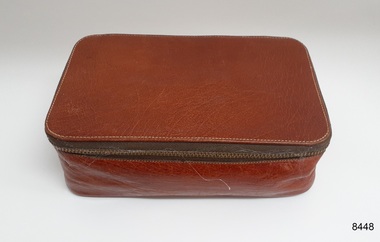
... accessory...Robex...buffalo calf leather...Lyall Robertson Pty. Ltd...SS Banffshire...T.S.S. Largs Bay...leather goods...travel...Angus Collection Australian Army World War 2 Second World War WW 2 Army issue WWII traveller's pouch personal grooming accessory Robex buffalo calf leather Lyall Robertson Pty. Ltd SS Banffshire T.S.S. Largs Bay leather goods travel goods Stamped inside the base “ROBEX / WATER BUFFALO” and a silver logo [shield] Traveller's pouch; tan water buffalo calf leather with brass zipper closure, cream-coloured fabric lining, and leather straps inside the lid for securing items. ...The Robex traveller’s pouch may have originally contained men’s grooming set or toiletries such as shaving accessors and soap. The leather strap inside the lid was designed to hold items like a toothbrush, comb or razor. The owner, Dr W.R. Angus, had used the pouch to store his personal memorabilia including epaulettes and various Australian Army-issued items from WWII. It seems likely that he wore the epaulettes on a uniform when he worked his passage to or from the UK as a young Ship’s Surgeon, with the purpose of furthering his studies overseas in 1927-1928. He travelled outward on the SS Banffshire and homeward on the Commonwealth Line’s T.S.S. Largs Bay. The pouch dates from 1946 at the earliest. The Robex leather accessories brand was made by Lyall Robertson Pty. Ltd., Sandringham, Victoria. Robertson established his home business in the 1940s and went on to be a leading firm with over 200 staff. The Robex trademark was registered on July 5th, 1946. The leather pouch is now part of Flagstaff Hill’s comprehensive W.R. Angus Collection, donated by the family of Dr W R Angus (1901-1970), surgeon and oculist. The W.R. Angus Collection: - The W.R. Angus Collection includes historical medical equipment, surgical instruments and material belonging to Dr Edward Ryan and Dr Thomas Francis Ryan, (both of Nhill, Victoria) and Dr Angus’ own belongings. The Collection’s history spans the medical practices of the two Doctors Ryan, from 1885-1926 plus that of Dr Angus, up until 1969. It includes historical medical and surgical equipment and instruments from the doctors Edward and Thomas Ryan of Nhill, Victoria. Dr Angus married Gladys in 1927 at Ballarat, the nearest big city to Nhill where he began as a Medical Assistant. He was also Acting House surgeon at the Nhill hospital where their two daughters were born. During World War II Dr Angus served as a Military Doctor. He was a Surgeon Captain for the Australian Defence Forces, Army Medical Corps, stationed in Ballarat, Victoria, and in Bonegilla, N.S.W. He completed his service just before the end of the war due to suffering from a heart attack. Dr Angus and his family moved to Warrnambool in 1939, where Dr Angus operated his own medical practice. He later added the part-time Port Medical Officer responsibility and was the last person appointed to that position. Both Dr Angus and his wife were very involved in the local community, including the planning stages of the new Flagstaff Hill and the layout of the gardens there. Dr Angus passed away in March 1970.This traveller's pouch is significant for its connection with the firm Lyall Robertson Pty Ltd of Victoria, a home-based enterprise of the 1940s with quickly grew to employ much staff to make its good quality goods. It is also connected with the local doctor, W.R. Angus and Warrnambool's Medical History. Dr W R Angus (1901-1970), surgeon and oculist, collected a range of military objects including those he personally used during his time as Surgeon Captain in the Australian Defence Forces in World War II. The W.R. Angus Collection is significant for still being located at the site it is connected with, Doctor Angus being the last Port Medical Officer in Warrnambool. The Collection includes historical medical objects that date back to the late 1800s.Traveller's pouch; tan water buffalo calf leather with brass zipper closure, cream-coloured fabric lining, and leather straps inside the lid for securing items. A silver embossed logo is on the lining of the base of the pouch. The Robex brand was made by Lyall Robertson Pty. Ltd in Victoria. The pouch belonged to Dr W R Angus and is now part of the W. R. Angus Collection.Stamped inside the base “ROBEX / WATER BUFFALO” and a silver logo [shield] flagstaff hill, warrnambool, maritime village, maritime museum, shipwreck coast, great ocean road, flagstaff hill maritime museum and village, dr w r angus, w.r. angus collection, australian army, world war 2, second world war, ww 2, army issue, wwii, traveller's pouch, personal grooming accessory, robex, buffalo calf leather, lyall robertson pty. ltd, ss banffshire, t.s.s. largs bay, leather goods, travel goods -
Glenelg Shire Council Cultural Collection
Accessory - Sash belonging to Syd Cuffe, Portland Town Crier, n.d
... travel badges sash Syd Cuffe Portland Blue velvet sash, gold fringe, lined with blue fabric. Approx 250 badges collected by Syd Cuffe on trips around Australia and overseas to participate in competition as a Town Crier. Earliest date on a badge 1985. The badges cover 50 % of the sash Accessory ...Blue velvet sash, gold fringe, lined with blue fabric. Approx 250 badges collected by Syd Cuffe on trips around Australia and overseas to participate in competition as a Town Crier. Earliest date on a badge 1985. The badges cover 50 % of the sashtown crier, championships, world travel, badges, sash, syd cuffe, portland -
 Flagstaff Hill Maritime Museum and Village
Functional object - Bonnet Box, Late 19th to early 20th century
... accessory box...Cramond & Dickson...department store...Warrnambool business...ladies fashion...headwear...travel...The strong, sturdy hat box indicates its purpose was for travel luggage, providing protection for the fashionable women's headwear of the era. flagstaff hill warrnambool shipwrecked-coast flagstaff-hill flagstaff-hill-maritime-museum maritime-museum shipwreck-coast flagstaff-hill-maritime-village bonnet box hat box fashion accessory box Cramond & Dickson department store Warrnambool business ladies fashion headwear travel luggage "LEGGS patent and secure joint and padlock staple" Metal bonnet box or hat box, round shape, coloured brown. ...Box is from Cramond & Dickson store in Warrnambool. Cramond and Dickson migrated from Scotland to Melbourne where they opened a Cramond and Dickson store in St Kilda in 1852. They were inspired by the growth in Warrnambool after a visit and established their second store there as Cramond and Dickson, direct importers and drapers, in 1855. In 1856 they opened a store on the corner of Liebig and Timor Streets, Warrnambool. They extended their premises in Liebig Street in 1859, and then in Timor Street in 1859. There were further additions and improvements in 1889 and they continued to trade until 1973 (now the site of a Mexican restaurant). An advertisement placed by Cramond and Dickson in The Camperdown Chronicle, Saturday 6th April 1895, states them “showing the latest novelties for the coming winter season” … “import directly from English and Continental manufacturers” … “representatives in London … always in touch with the Newest Continental Fashions” ... “having been established for so many years we know the requirements of the Western District”… “allow 5 per cent discount on goods paid for at the time of purchase”.The hat box is important for is connection with the local business store, Cramond and Dickson. The store traded for over 100 years; 1856-1973. The strong, sturdy hat box indicates its purpose was for travel luggage, providing protection for the fashionable women's headwear of the era.Metal bonnet box or hat box, round shape, coloured brown. There is a metal carry handle on both the lid and the side of the box. The box is from the Cramond and Dickson store in Warrnambool. The lid is detached from the base. The lock was mad by LEGGS."LEGGS patent and secure joint and padlock staple"flagstaff hill, warrnambool, shipwrecked-coast, flagstaff-hill, flagstaff-hill-maritime-museum, maritime-museum, shipwreck-coast, flagstaff-hill-maritime-village, bonnet box, hat box, fashion accessory box, cramond & dickson, department store, warrnambool business, ladies fashion, headwear, travel luggage -
 Flagstaff Hill Maritime Museum and Village
Container - Ink Bottle & Case, 1934 – Mid 1950’s
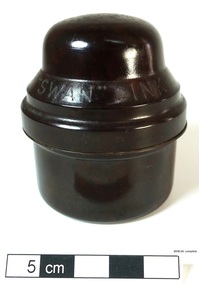
... Ink bottle cases, or travelling cases, have been made as an accessory for nib pen writers. ...Ink bottle cases, or travelling cases, have been made as an accessory for nib pen writers. ...Pens, nib pens and later fountain pens, with suitable inks, were commonly used for writing communications from the 18th century to the mod 20th century. Fountain pens continue to be used and enjoyed. Dip pens with a wide variety of nibs are used for calligraphy writing, a hobby enjoyed by many people. The quality of the pen handle, the nib and the ink all work together to produce fine handwriting that expresses the character and mood of the writer. This Bakelite ink case has been specifically moulded to snugly contain an ink bottle, with just enough room to wrap the bottle with a padding or card or blotting paper. The screw top lid fits the case well and this container would be a good way to travel with ink because any spillage would be kept within the waterproof case. The Bakelite material is lightweight and strong. Ink bottle cases, or travelling cases, have been made as an accessory for nib pen writers. The first patent for a “pocket-case for bottles”, a wooden case, was applied for in the US in 1891. Other materials such as steel, pewter and aluminum as well as Bakelite have also been used. The British Museum has an elaborately decorated bronze ink pot holder that is inlaid with turquoise. Today ink bottle cases are even available in fabric with loops to attach to a belt. Bakelite, the material used for this ink bottle case, is made from synthetic materials and is an early form of plastic, developed in 1907 and used extensively until the 1940’s. It is still in used today for specific applications but has been largely replaced by more modern forms of plastics. This ink bottle case carries the imprint of Mabie, Todd & Co. (Aust.) Pty. Ltd. This form of company name was used from 1938 to the mid 1950’s. The Swan ink bottle’s information says it was made by Mabie, Todd & Co. Ltd., London and Sydney, so dates the ink bottle from about 1908 until 1934. (Australian newspapers display advertisements dated 1908 until 1934 for Sydney wholesalers and agents for Mabie, Todd & Co. Ltd.) ABOUT PERSONAL FOUNTAIN PENS (FOUNT PENS) A 1917 newspaper advertisement recommends that the owner of a “Swan” doesn’t lend it to anyone else to use due to its qualities of it personalised to the owner. It reads “Don’t lend your “Swan” fountpen, recommend it, but don’t let other people use it. You see, a good pen doesn’t wear, but its “tamper” (or spring) works into the writer’s pressure and manner of holding. Another person with a dashing style of writing may strain it do that it will no longer feel just like your own.” This personalisation of nib pens may be the reason that legal documents in the past being acceptable only if they were signed using a ‘wet ink’ pen. Forgeries of signatures could be easily detected as the nib takes on the character of the pen’s owner. A ballpoint pen was not acceptable. This is a strong contrast to modern times when a digital signature is widely accepted. ABOUT MABIE TODD Pty Ltd. The American company Mabie Todd began by making pencil cases in New York in the 1860’s. The Bard Brothers, makers of Gold nibs, joined Mabie Todd and the company was established in the 1870’s as Mabie Todd and Bard. In 1878 the company filed a patent for the design of a fountain pen and in 1884 the first Swan fountain pen was released. In 1884 a Mabie Todd and Bard office and showroom was established in London. In 1906 the company’s name changed to Mabie Todd & Co, New York. The UK offices also used this new name and in 1907 the UK began producing their own Swan pens. Manufacturing was going so well in England that New York sold their rights to European and Colonial business to the new Mabie Todd & Company Ltd of England. By the end of the 1930’s all components for the pens were being made in the UK; the pens in the London factory, the gold nibs in Birmingham and the ink in Liverpool. Newspaper articles from 1934 stated that Mabie Todd were large buyers of Tasmanian iridium, which had been welded with gold and used since 1834 for the tips of nib and fountain pens. Fountain pen points were the largest market buyers for Tasmanian iridium, which was classed as “the best in the world”. Production growth continued up until WWII times, when the headquarters and main factory were destroyed. Mabie Todd & Company Ltd of England rebuilt out of the inner city and by 1946 pen production began again. The market for nib and fountain pens was diminishing by this time, with people beginning to use the new ballpoint ‘Biro’ pens. The Mabie Todd bought shares in Biro Pens and in 1952 became Biro Swan. They went on to make more ballpoint pens than any other manufacturer in Britain. The ink refills that Biro-Swan produced came in five different viscosity or thickness xhoices, depending on the season and location of where the pen would be used . Along with the ballpoint pens, Biro-Swan also introduced a range of Calligraph pens to attract those following the new trend for italic writing. In 1948 Mr. T. Burke, a director for Mabie Todd & Co. (Aust.) Pty Ltd., announced that there would be a £40,000 factory built in Sydney in 1949 for the manufacture of ink. The plant for the factory would be imported from overseas. Sadly the company struggled against competition and in 1956 Mabie Todd closed business and no more Swan pens were produced. The ink bottle and container was donated to Flagstaff Hill Maritime Village by the family of Doctor William Roy Angus, Surgeon and Oculist. It is part of the “W.R. Angus Collection” includes historical medical equipment, surgical instruments and material once belonging to Dr Edward Ryan and Dr Thomas Francis Ryan, (both of Nhill, Victoria) as well as Dr Angus’ own belongings. The Collection’s history spans the medical practices of the two Doctors Ryan, from 1885-1926 plus that of Dr Angus, up until 1969. ABOUT THE “W.R.ANGUS COLLECTION” Doctor William Roy Angus M.B., B.S., Adel., 1923, F.R.C.S. Edin.,1928 (also known as Dr Roy Angus) was born in Murrumbeena, Victoria in 1901 and lived until 1970. He qualified as a doctor in 1923 at University of Adelaide, was Resident Medical Officer at the Royal Adelaide Hospital in 1924 and for a period was house surgeon to Sir (then Mr.) Henry Simpson Newland. Dr Angus was briefly an Assistant to Dr Riddell of Kapunda, then commenced private practice at Curramulka, Yorke Peninsula, SA, where he was physician, surgeon and chemist. In 1926, he was appointed as new Medical Assistant to Dr Thomas Francis Ryan (T.F. Ryan, or Tom), in Nhill, Victoria, where his experiences included radiology and pharmacy. In 1927 he was Acting House Surgeon in Dr Tom Ryan’s absence. Dr Angus had become engaged to Gladys Forsyth and they decided he further his studies overseas in the UK in 1927. He studied at London University College Hospital and at Edinburgh Royal Infirmary and in 1928, was awarded FRCS (Fellow from the Royal College of Surgeons), Edinburgh. He worked his passage back to Australia as a Ship’s Surgeon on the on the Australian Commonwealth Line’s T.S.S. Largs Bay. Dr Angus married Gladys in 1929, in Ballarat. (They went on to have one son (Graham 1932, born in SA) and two daughters (Helen (died 12/07/1996) and Berenice (Berry), both born at Mira, Nhill ) According to Berry, her mother Gladys made a lot of their clothes. She was very talented and did some lovely embroidery including lingerie for her trousseau and beautifully handmade baby clothes. Dr Angus was a ‘flying doctor’ for the A.I.M. (Australian Inland Ministry) Aerial Medical Service in 1928 . Its first station was in the remote town of Oodnadatta, where Dr Angus was stationed. He was locum tenens there on North-South Railway at 21 Mile Camp. He took up this ‘flying doctor’ position in response to a call from Dr John Flynn; the organisation was later known as the Flying Doctor Service, then the Royal Flying Doctor Service. A lot of his work during this time involved dental surgery also. Between 1928-1932 he was surgeon at the Curramulka Hospital, Yorke Peninsula, South Australia. In 1933 Dr Angus returned to Nhill and purchased a share of the Nelson Street practice and Mira hospital (a 2 bed ward at the Nelson Street Practice) from Dr Les Middleton one of the Middleton Brothers, the current owners of what previously once Dr Tom Ryan’s practice. Dr Tom and his brother had worked as surgeons included eye surgery. Dr Tom Ryan performed many of his operations in the Mira private hospital on his premises. He had been House Surgeon at the Nhill Hospital 1902-1926. Dr Tom Ryan had one of the only two pieces of radiology equipment in Victoria during his practicing years – The Royal Melbourne Hospital had the other one. Over the years Dr Tom Ryan had gradually set up what was effectively a training school for country general-practitioner-surgeons. Each patient was carefully examined, including using the X-ray machine, and any surgery was discussed and planned with Dr Ryan’s assistants several days in advance. Dr Angus gained experience in using the X-ray machine there during his time as assistant to Dr Ryan. When Dr Angus bought into the Nelson Street premises in Nhill he was also appointed as the Nhill Hospital’s Honorary House Surgeon 1933-1938. His practitioner’s plate from his Nhill surgery is now mounted on the doorway to the Port Medical Office at Flagstaff Hill Maritime Village, Warrnambool. When Dr Angus took up practice in the Dr Edward and Dr Tom Ryan’s old premises he obtained their extensive collection of historical medical equipment and materials spanning 1884-1926. A large part of this collection is now on display at the Port Medical Office at Flagstaff Hill Maritime Village in Warrnambool. In 1939 Dr Angus and his family moved to Warrnambool where he purchased “Birchwood,” the 1852 home and medical practice of Dr John Hunter Henderson, at 214 Koroit Street. (This property was sold in1965 to the State Government and is now the site of the Warrnambool Police Station. and an ALDI sore is on the land that was once their tennis court). The Angus family was able to afford gardeners, cooks and maids; their home was a popular place for visiting dignitaries to stay whilst visiting Warrnambool. Dr Angus had his own silk worm farm at home in a Mulberry tree. His young daughter used his centrifuge for spinning the silk. Dr Angus was appointed on a part-time basis as Port Medical Officer (Health Officer) in Warrnambool and held this position until the 1940’s when the government no longer required the service of a Port Medical Officer in Warrnambool; he was thus Warrnambool’s last serving Port Medical Officer. (Masters of immigrant ships arriving in port reported incidents of diseases, illness and death and the Port Medical Officer made a decision on whether the ship required Quarantine and for how long, in this way preventing contagious illness from spreading from new immigrants to the residents already in the colony.) Dr Angus was a member of the Australian Medical Association, for 35 years and surgeon at the Warrnambool Base Hospital 1939-1942, He served with the Australian Department of Defence as a Surgeon Captain during WWII 1942-45, in Ballarat, Victoria, and in Bonegilla, N.S.W., completing his service just before the end of the war due to suffering from a heart attack. During his convalescence he carved an intricate and ‘most artistic’ chess set from the material that dentures were made from. He then studied ophthalmology at the Royal Melbourne Eye and Ear Hospital and created cosmetically superior artificial eyes by pioneering using the intrascleral cartilage. Angus received accolades from the Ophthalmological Society of Australasia for this work. He returned to Warrnambool to commence practice as an ophthalmologist, pioneering in artificial eye improvements. He was Honorary Consultant Ophthalmologist to Warrnambool Base Hospital for 31 years. He made monthly visits to Portland as a visiting surgeon, to perform eye surgery. He represented the Victorian South-West subdivision of the Australian Medical Association as its secretary between 1949 and 1956 and as chairman from 1956 to 1958. In 1968 Dr Angus was elected member of Spain’s Barraquer Institute of Barcelona after his research work in Intrasclearal cartilage grafting, becoming one of the few Australian ophthalmologists to receive this honour, and in the following year presented his final paper on Living Intrasclearal Cartilage Implants at the Inaugural Meeting of the Australian College of Ophthalmologists in Melbourne In his personal life Dr Angus was a Presbyterian and treated Sunday as a Sabbath, a day of rest. He would visit 3 or 4 country patients on a Sunday, taking his children along ‘for the ride’ and to visit with him. Sunday evenings he would play the pianola and sing Scottish songs to his family. One of Dr Angus’ patients was Margaret MacKenzie, author of a book on local shipwrecks that she’d seen as an eye witness from the late 1880’s in Peterborough, Victoria. In the early 1950’s Dr Angus, painted a picture of a shipwreck for the cover jacket of Margaret’s book, Shipwrecks and More Shipwrecks. She was blind in later life and her daughter wrote the actual book for her. Dr Angus and his wife Gladys were very involved in Warrnambool’s society with a strong interest in civic affairs. He had an interest in people and the community They were both involved in the creation of Flagstaff Hill, including the layout of the gardens. After his death (28th March 1970) his family requested his practitioner’s plate, medical instruments and some personal belongings be displayed in the Port Medical Office surgery at Flagstaff Hill Maritime Village, and be called the “W. R. Angus Collection”. The ink bottle case is significant for its association with writing methods commonly used during the colonisation of Australia until the mid-20th century. The protective Bakelite case demonstrates the value placed on caring for the user’s supply of ink and protecting other belongings of the user, enabling writers to easily carry and safely transport their ink without the concern of spilling it. The case’s design is a good example of the use of new technology. The properties of Bakelite have enabled its moulded design and make it waterproof and lightweight, easily cleaned, closely fitted to the shape of the ink bottle within and lid and base join together using a smooth screwing action. The maker’s marks have also been moulded into the Bakelite, therefore not distracting from the simple but elegant design. This ink bottle case also represents the period of early to mid-20th century when handwriting materials for writers using ink and nib pens were imported into Australia and developed for the Australian market and sold by wholesalers on behalf of overseas companies. Vintage brown Bakelite travelling ink bottle case (or holder, pot, well) containing glass ink bottle and original textured cardboard liner, made by Swan Ink, Mabie, Todd & Co. (Aust) Pty.. Ltd. The Bakelite container is shaped to fit snugly around the ink bottle. It still retains its original shiny finish, the lid screws on and off perfectly. The maker’s name is embossed on lid and base of the Bakelite container. The inkwell contains a glass Ink bottle with a tiny amount of dried up ink Swan triple filtered ink inside. The bottle is cylindrical with curved shoulders tapering to a neck of around 2cm. The white metal screw-on lid and the white and red paper label on the side of the bottle both have a printed description of the ink and maker. Circa 1934-1950’sBAKELITE INK CASE - embossed on either side of the lid “ “SWAN” INK / ”SWAN” INK “ - embossed into base, written in a circle “MABIE TODD & Co (Aust.) PTY. LTD.” GLASS BOTTLE – printed on lid “SWAN”/ [corporate logo combining letters ‘M, T, co’]/TRIPLE FILTERED/ INK.” - printed on label “SWAN” INK /FOR FOUNTAIN & / STEEL PENS / A BLUE BLACK INK OF/ THE FINEST QUALITY/ MADE IN ENGLAND/ MABIE. TODD & CO LTD …….. LONDON. SYDNEY/ Makers of “SWAN” Pens, Gold Pens & Ink“ - moulded into the base of the ink bottle and written around the bottom outside edge of the bottle are the words “THIS BOTTLE ALWAYS REMAINS THE PROPERTY OF/ MABIE TODD/AUST”flagstaff hill, warrnambool, shipwrecked coast, flagstaff hill maritime museum, maritime museum, shipwreck coast, flagstaff hill maritime village, great ocean road, ink bottle holder, ink bottle case, ink bottle pot, travelling inkwell, portable inkwell, travelling ink pot, travelling ink bottle case, ink bottle, inkwell, ink well, swan ink, bakelite, dip pen ink, nib pen ink, fountain pen, fontpen, writing methods, stationery, mabie todd & co, swan fountain pens, biro-swan -
 Flagstaff Hill Maritime Museum and Village
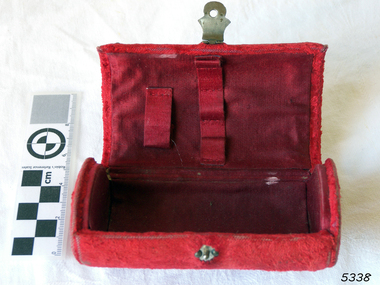
Equipment - Sewing Compendium
... accessory...sewing kit...travel...travelling items for quick repairs to garments. They would easily tuck into a suitcase or carry bag. This is an example of a sewing case that is still useful in modern times. flagstaff hill warrnambool shipwrecked-coast flagstaff-hill flagstaff-hill-maritime-museum maritime-museum shipwreck-coast flagstaff-hill-maritime-village sewing compendium sewing sewing case sewing accessory sewing kit travel sewing kit mending kit personal sewing kit Small sewing compendium or sewing case, covered and lined with red fabric, elliptical in shape. ...Sewing kits of this nature were useful travelling items for quick repairs to garments. They would easily tuck into a suitcase or carry bag.This is an example of a sewing case that is still useful in modern times.Small sewing compendium or sewing case, covered and lined with red fabric, elliptical in shape. Lid has loops inside for holding scissors and other accessories. Metal catch attaches lid to base. flagstaff hill, warrnambool, shipwrecked-coast, flagstaff-hill, flagstaff-hill-maritime-museum, maritime-museum, shipwreck-coast, flagstaff-hill-maritime-village, sewing compendium, sewing, sewing case, sewing accessory, sewing kit, travel sewing kit, mending kit, personal sewing kit -
 Flagstaff Hill Maritime Museum and Village
Ink pot
... flagstaff hill warrnambool shipwrecked coast flagstaff hill maritime museum maritime museum shipwreck coast flagstaff hill maritime village great ocean road traveler's ink pot ink nib pen writing ink well writing accessory Traveler's Ink pot, glass cylindrical, small, inside metal container with spring in lid to stop movement when travelling. ...Traveler's Ink pot, glass cylindrical, small, inside metal container with spring in lid to stop movement when travelling.flagstaff hill, warrnambool, shipwrecked coast, flagstaff hill maritime museum, maritime museum, shipwreck coast, flagstaff hill maritime village, great ocean road, traveler's ink pot, ink, nib pen, writing, ink well, writing accessory -
 Bendigo Military Museum
Accessory - VALISE, RAAF, c.1930
... Unit at discharge was stated as ACAC, this is possibly Aircrew Allocation Centre. personal effects - travel goods military history - airforce raaf On leather top: "F/O LONG RAAF AUS 18793" Brown canvas valise with metal zips all around to open out fully, separate compartments inside. The outside has one compartment opened via a zip. The top & carry handle are made of leather. Accessory ...Alan Gillespie LONG No 18793 enlisted in the RAAF on 27.9.1940 aged 26 years. He was discharged with the Rank of Flying Officer on 23.8.1945. Unit at discharge was stated as ACAC, this is possibly Aircrew Allocation Centre.Brown canvas valise with metal zips all around to open out fully, separate compartments inside. The outside has one compartment opened via a zip. The top & carry handle are made of leather.On leather top: "F/O LONG RAAF AUS 18793"personal effects - travel goods, military history - airforce, raaf -
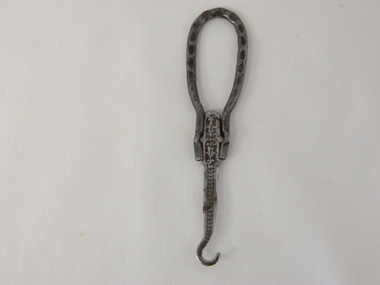 Kiewa Valley Historical Society
Hook Button, late 1800's to mid 1900's
... travel abilities were "exploded" in the latter 1900's. This shift towards "the smaller" globe scenario has overcome the physical distances that were so apparent in the previous century. costume accessories footwear shoes and boots with buttons gloves costume This silver button/glove hook was based on late 1800's designs when buttons became more integrated and fashionable than "tie up" laces. ...This item and its use and design spans the 1800's to early 1900's both in its fashion and application requirements. The genteel factor must be made when applying it to the Kiewa Valley. The evolution of general clothing and apparel has moved from solid(long lasting) and sometimes expensive material and fasteners to a cheaper and more "throw away" fashion of sometimes monthly change in the later 1900's to 2000's.The significance of this item to a rural setting such as the Kiewa Valley not only points to an integration of "modern" fashion in semi remote rural Australian environments but also the limited connections to "high" fashion through magazines and audible (radio) and visual (cinema) advertising. It also "spotlights" the differences between the European and British social networking and lack of interaction between towns and counties to the "Australian" levels of interactions between rural and city environments. Although physical distances in Australia, during this period (1800's to early 1900's) was a retarding factor in the diffusion of the latest fashion apparel it was not as noticeable as when the global communication and the physical travel abilities were "exploded" in the latter 1900's. This shift towards "the smaller" globe scenario has overcome the physical distances that were so apparent in the previous century.This silver button/glove hook was based on late 1800's designs when buttons became more integrated and fashionable than "tie up" laces. This was more so in genteel fashion. The main hook extension from the "pronged" hand piece has been constructed in a way that allows for easy replacement by either longer or shorter hooks.costume accessories, footwear, shoes and boots with buttons, gloves, costume -
 Bendigo Historical Society Inc.
Accessory - FAVALORO COLLECTION: MENS TRAVEL SET
... PERSONAL EFFECTS Travel goods mens set Mens travel set in black case, contains 2 brushes, mirror, silver plate box and 3 glass jars of various sizes with silver plate screw tops. Accessory ...Mens travel set in black case, contains 2 brushes, mirror, silver plate box and 3 glass jars of various sizes with silver plate screw tops.personal effects, travel goods, mens set -
 Bendigo Historical Society Inc.
Accessory - CLOTHES BRUSH
... PERSONAL EFFECTS Travel goods brushes Bristle & Fibre Made in USA Bristle and fibre clothes brush gold plated with Tortoise shell back. Accessory ...Bristle and fibre clothes brush gold plated with Tortoise shell back.Bristle & Fibre Made in USApersonal effects, travel goods, brushes -
 Bendigo Historical Society Inc.
Accessory - LEATHER DOCUMENT WALLET
... PERSONAL EFFECTS Travel goods wallet Brown leather document wallet with handle and two buckles. Accessory LEATHER DOCUMENT WALLET ...Brown leather document wallet with handle and two buckles.personal effects, travel goods, wallet -
 Bendigo Historical Society Inc.
Accessory - FOSTER AND WILSON COLLECTION: SUITCASE
... Travel goods suitcase Foster & Wilson Collection Suitcase E. W. Medium brown leather suitcase with initials 'E. W.' on the front behind the handle. Five metal studs on the base. Accessory ...Medium brown leather suitcase with initials 'E. W.' on the front behind the handle. Five metal studs on the base.E. W.personal effects, travel goods, suitcase, foster & wilson collection, suitcase -
 Bendigo Historical Society Inc.
Accessory - LEATHER CASE WITH HAIR BRUSHES
... Travel goods brushes Stitched heavy leather case with two hair brushes (oval shaped). Case has leather strap and leather-covered metal buckle. Brushes are ebony wood with natural bristles (animal - pig??) Accessory ...Stitched heavy leather case with two hair brushes (oval shaped). Case has leather strap and leather-covered metal buckle. Brushes are ebony wood with natural bristles (animal - pig??)personal effects, travel goods, brushes -
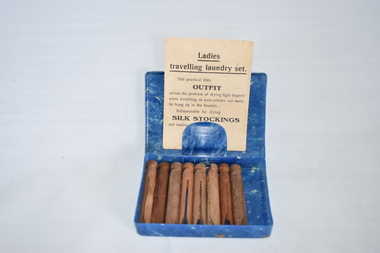 Warrnambool and District Historical Society Inc.
Household, Travelling Peg Set, 1930-1940
... travelling to hang up in a bedroom small items of clothing that had been laundered. Different types of laundry sets have been available for travellers for many years and sets of a more modern nature are in use today. This laundry set is retained as an example of a woman’s laundry set from the past. women’s accessories ...This laundry box would have been used by a woman who was travelling to hang up in a bedroom small items of clothing that had been laundered. Different types of laundry sets have been available for travellers for many years and sets of a more modern nature are in use today. This laundry set is retained as an example of a woman’s laundry set from the past. This is a mottled blue container made of Bakelite. The box contains eight small wooden pegs. This set is incomplete as originally there would have been ten pegs and some string to use as a small clothesline. The box also has a slip of paper with printed material indicating the use and value of the laundry set. The top of the container has had some cloth material pasted on but this is largely worn off. ‘Ladies travelling laundry set. This practical little outfit solves the problem of drying light lingerie when travelling, as such articles can easily be hung up in the boudoir. Indispensable for drying silk stockings and similar articles.’ women’s accessories, history of warrnambool -
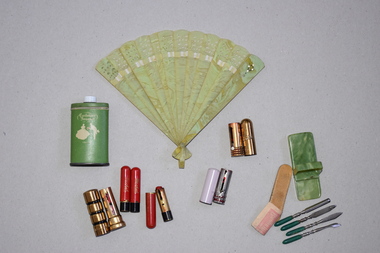 Warrnambool and District Historical Society Inc.
Women's Accessories, 1930s
... travelling. All of the items have their modern-day equivalents though hand fans are not widely used today. These items are retained as examples of women’s accessories as used in past years. ...These items do not necessarily form a set. Several of the items are of miniature size and may have been samples for commercial travellers or shop displays or possibly used by women travelling. All of the items have their modern-day equivalents though hand fans are not widely used today.These items are retained as examples of women’s accessories as used in past years. The sample-size items have a particular appeal to us today.This is a collection of women’s accessories and make-up items with most of the items being of miniature or sample size. .1 Green bakelite fan with a white ribbon insert and fretwork at the top curved end of the fan. .2 Three lipsticks with red lids and black and gold metal inserts. .3 One lipstick with a pink lid and a silver and red metal insert. .4 Two lipsticks with gold lids and gold metal inserts. .5 Green tin of talcum powder with a white lid .6 Manicure set in a green bakelite container with four metal manicure items with green handles and an emery board. This set holder also contains a 5d. tramway ticket from Melbourne. These items above are in an old metal chocolate tin but this is not the container that would have housed the items originally. ‘Michel’ ‘Anne Page’ ‘Starlet’ ‘Judith Aden’ ‘Cashmere Bouquet Colgate’ ‘Pascall Claremont Tasmania’ vintage women’s accessories, history of warrnambool -
 Warrnambool and District Historical Society Inc.
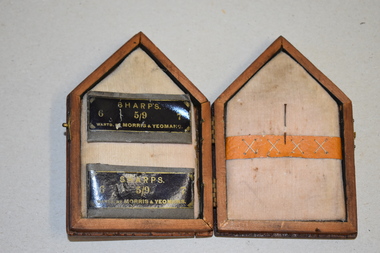
Needle case, Morris & Yeomans Ltd, 1920s
... travelling and to carry in their handbags for emergency repairs. Today needle cases are still used but less frequently as in past times, depending on the craft skills of the person and the hobbies pursued. This item has no known local significance but it is an interesting example of an early 20th century needle case and is retained for display purposes. Household Accessories ...This is a needle case produced in a novelty form. Sewing kits and needle cases were essential items for women to have in their houses, to take with them when travelling and to carry in their handbags for emergency repairs. Today needle cases are still used but less frequently as in past times, depending on the craft skills of the person and the hobbies pursued.This item has no known local significance but it is an interesting example of an early 20th century needle case and is retained for display purposes.This is a needle case in a wooden container made in a rectangular shape with a pointed top. The shape is in the form of a church with an affixed metal or paint shape of a church on the front of the container. The front of the container has been polished. The two sides of the container are affixed with two metal hinges and there is a metal clasp on one side. Part of the metal clasp is missing. Inside the container is padded with white/grey cotton material. On one side are two paper grey and black folders which once contained needles and on the other side there is a middle band to hold other needles or pins. This side has one rusty pin.‘Sharps 5/9 6, 7, Wartd. By Morris & Yeomans’household accessories, history of warrnambool -
 Embroiderers Guild, Victoria
Accessory - Bag/Pouch, Debi Marshall, Sept-2003
... travelling. Pink linen, lined in dark green cotton, light pink drawstrings with bobble each end. Flap at base is a needlebook. Wessex embroidery, in pinks and greens. Inscription on reverse. Accessory ...Made in a class conducted by Gaye Eaton from New Zealand.Pink linen, lined in dark green cotton, light pink drawstrings with bobble each end. Flap at base is a needlebook. Wessex embroidery, in pinks and greens. Inscription on reverse.Happiness is not a state to arrive at, But a manner of travelling.embroidery -
Stawell Historical Society Inc
Accessory - Costume and Accessories, c1920
... travelling. Lace insertion. Draw thread Lace. Handmade by June Mortyn. Accessory Costume and Accessories ...White Linen Travelling Bag for brush and comb. Used for travelling. Lace insertion. Draw thread Lace. Handmade by June Mortyn. stawell clothing material -
Stawell Historical Society Inc
Accessory - Costume and Accessories
... Stawell Clothing Material Green Plastic Case (Travelling) case containing miniature clothes line and 6 pegs. McClure family. Accessory Costume and Accessories ...Green Plastic Case (Travelling) case containing miniature clothes line and 6 pegs. McClure family.stawell clothing material -
Tatura Irrigation & Wartime Camps Museum
Accessory - Backpack, 1940's
... Owned and used by Anna Sawatsky, Mother of Helene Hoefer in Camp 3 sawatsky a glenk t camp 3 tatura ww2 camp 3 personal effects travel goods Anna Sawatsky Cotton backpack, lightish brown in colour with 2 (outside) pockets Accessory Backpack ...Owned and used by Anna Sawatsky, Mother of Helene Hoefer in Camp 3Cotton backpack, lightish brown in colour with 2 (outside) pocketsAnna Sawatskysawatsky a, glenk t, camp 3, tatura, ww2 camp 3, personal, effects, travel, goods -
 Brighton Historical Society
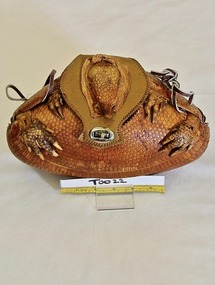
Accessory - Bag, 1960s-1970s
... travel. Di purchased this bag from Tyabb Packing House Antiques in Tyabb, Victoria. handbag armadillo 1960s fashion 1970s fashion di reidie vintage clothing Oval shaped bag made from armadillo leather with head and feet attached. Leather straps may be a recent addition. Metal clasp. Mirror on inside of lid. Interior lined with blue silk. Accessory ...This item is part of the Di Reidie collection. Diane Reidie was a much loved volunteer and President of Brighton Historical Society from 1999 until 2016. Originally from New Zealand, Di and her family lived in Male Street, Brighton for many years. A vibrant and energetic person with a zest for life and a gift for bringing people together, Di was a friend to many in the Bayside community and active in local community organisations. Her tireless work as President of BHS saw her named Bayside Citizen of the Year in 2008. As a seller and collector of vintage clothing, she was passionate about fashion history; one of her many enduring contributions to BHS was her extensive work in preserving, developing and promoting the Society's costume collection. In 2018-19, Di donated more than one hundred items from her personal vintage clothing collection to the Society. The collection, which includes clothing, hats, handbags and shoes from local and international designers, is representative of Di's wide-ranging interests, colourful personality, creativity, humour and love of fashion and travel. Di purchased this bag from Tyabb Packing House Antiques in Tyabb, Victoria.Oval shaped bag made from armadillo leather with head and feet attached. Leather straps may be a recent addition. Metal clasp. Mirror on inside of lid. Interior lined with blue silk.handbag, armadillo, 1960s fashion, 1970s fashion, di reidie, vintage clothing -
 Moorabbin Air Museum
Accessory (item) - Vintage Air India Travel Cabin Bag
... Vintage Air India Travel Cabin Bag Accessory Vintage Air India Travel Cabin Bag ...
