
Showing 35 items matching "trials -- australia -- victoria"
-
 RMIT GSBL Justice Smith Collection
Book, Fricke, Graham L, Tales from the courts, 1999
... ...trials -- australia -- victoria...trials -- victoria judges -- victoria judicial process -- victoria -- popular works judges -- australia -- victoria judicial process -- australia -- victoria -- popular works trials -- australia -- victoria ISBN: 0734400063 Tales from the courts Book Fricke, Graham L. ...ISBN: 0734400063trials -- victoria, judges -- victoria, judicial process -- victoria -- popular works, judges -- australia -- victoria, judicial process -- australia -- victoria -- popular works, trials -- australia -- victoria -
 Flagstaff Hill Maritime Museum and Village
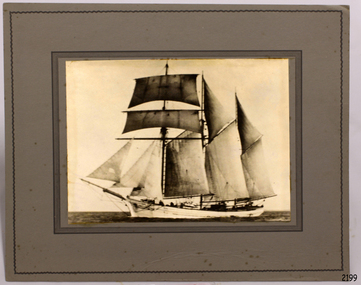
Photograph - Ship, Alma Doepel, 1931-1934
... trials headed off to Victoria Harbour, Docklands, in Melbourne, where she is currently being restored with the help of The Supporters. This phot graph is significant for its connection with the Bass Strait trade, being the last top-sail schooner to brade across the strait. The photograph is also significant in its representation of the the sailing ships that traded around Australia ...This photograph is of the square-rigged schooner "Alma Doepel". Details added to the back of the photograph incorrectly describe the vessel as "Amy Doepel / ketch / Amy Doepel". The rigging on the vessel dates the photograph to sometime between 1931-1933. The location is yet to be determined. Frederick Doepel was a shipping agent in Bellinger Valley, NSW. He employed an experienced shipwright to build Alma Doepel, which was made from local timber. He named the ship “Alma Doepel” after his baby daughter Alma. The ship was registered in Sydney and launched 19th October 1903, and her first sea voyage was in December. She traded in timber Port Macquarie/Bellinger River and New Zealand. “Alma Doepel” was purchased by Henry Jones & Co., Hobart jam makers, in partnership with Harry Heather, her new captain, in 1916. The ship was then registered in Hobart. She carried jam and timber to the mainland, particularly Melbourne, and brought back cargo for Tasmania. She even carried the piles for the building of Portland Harbour. When Harry Heather passed away in 1937 he was succeeded by Eric Droscoll. Before the square-rigged "Alma Doepel" left for Tasmania on March 8th 1937 she was fitted with a new set of sails, becoming a fore-and-aft rigged schooner. She had been the last 'top sail' schooner in Bass Strait trade! "Alma Doepel" continued her coastal trading until 1942, when she was requisitioned by the Army. In January 1943 she was left in Melbourne by her crew and the Army took her over, taking her to Sydney in February, 1943. She was relaunched by the Army in 1944 minus two of her masts and her small 1936 engine, and was fitted with three large bus engines. In March 1945 she headed for the war zone, delivering cargo up and down the coast of New Guinea, at one time carrying over 400 troops. In 1946 she returned to Hobart where the Army re-converted her back for Bass Strait trading and returned her. In January 1947 Eric Driscoll took “Alma Doepel” to the eastern Tasmanian coastal port of St. Helens, trading cargo of local mountain ash timber to Melbourne on the mainland until 1959. She was then stripped down to her hull with only a single mast and two engines, and fitted with wooden bins on rails in her hold. From 1961 to 1975 she carried limestone to a factory to make carbide. Michael Wood and David Boykett, two of the governors of "Sail and Adventure", then bought her for the price of her two Gardiner engines and in 1976 they brought her to Melbourne. An Alma Doepel Supporters Club was formed to support the ship’s major restoration to a topsail schooner. In 1987 she was overhauled in Adelaide, with the support of Elders IXL and she returned to Sydney to lead the Parade of Sail on Bicentenary Day, 25th January 1988. She returned to Melbourne in February and began sail training voyages in Port Phillip Bay, operating from an office on Station Pier. The Alma Doepel Voyagers Club was started. Trainees joined the crew in sailing the ship over nine or ten days of instruction in sailing and seamanship. These trips plus chartered trips and fund raisers continued until early 1999, when she was no longer in a condition to operate; she needed a lot of attention. She lay idle in Victoria Dock for quite some time. In April 2001 “Alma Doepel” was taken to Port Macquarie’s Lady Nelson Wharf where she became a museum ship maintained by volunteers. In 2008 she had time in dry-dock and after sea-trials headed off to Victoria Harbour, Docklands, in Melbourne, where she is currently being restored with the help of The Supporters.This phot graph is significant for its connection with the Bass Strait trade, being the last top-sail schooner to brade across the strait. The photograph is also significant in its representation of the the sailing ships that traded around Australia in the 1930s.Photograph of "Alma Doepel " a wooden, 3 masted, square rigged sailing schooner built in Sydney, launched in 10/10/1903. Photograph is sepia coloured, mounted on card, inscription on the back. Information also provided with photograph. Photograph (marked incorrectly on back) "Amy Doepel / ketch / Amy Doepel". Sticker with "91" in pencil. Information provided (dated incorrectly) "1943, Sydney, New South Wales"flagstaff hill, warrnambool, shipwreck coast, maritime museum, maritime village, photograph, alma doepel, frederick doepel, henry jones and co, harry heather, eric droscoll, alma doepel supporters club, elders ixl, parade of sail, bicentenary day, alma doepel voyagers club, last top sail schooner in bass strait trade, square-rigged, fore-and-aft rigged -
 Mission to Seafarers Victoria
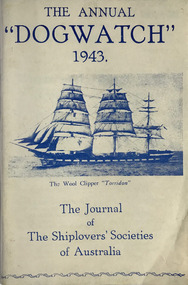
Journal (item) - Periodicals-Annual, Shiplovers' Society of Victoria, The Annual Dog Watch, 1943
... Australia? - From the notes of H. O’May - 40 Our Cover Plate. - H. R. Watson - 42 Sea Shanties. - Arthur C. Morgan - 43 Where the Glamour Ends. - - 45 The “Nelson” Gold Robbery. - George R. Leggett - 48 Viking Ships. - S. A. E. Strom - 52 A Trial of Speed in Hobsons Bay. - John Merriman - 55 Honour the Brave. - N. V. Wade - 56 An Antartic Christmas - Gerald S. Doorly - 61 The “Madamozelle.” H. R. Watson - 63 Once Bitten. - H. O’May - 64 The Annual Dog Watch Journal Periodicals-Annual Shiplovers' Society of Victoria ...This journal provides the reader with glimpses of the adventures and hardships of a seaman's life. Many of the stories are of sailing ships.First issue of the magazine published during the war Contributes to our knowledge of the importance of shipping and places on record those stories of the sea which would otherwise be lost.sailing ships, steamships, shipping, seafaring life, shiplovers' society of victoria, dog watch, ww2, hms jervis bay -
Marysville & District Historical Society
THE TRIANGLE NEWS-VOL 41 NO 24-JUNE 27 2014
... victoria...australia...only vice presidents changed at lions club...what's on when in june/july...2014 seasonal influenza vaccine available...the committee of management of the gallipoli park precinct...marysville community market...creative triangle...buxton history group questionnaire...triangle community dinner...el kanah village...church notices...marysville golf report...mayor's chair by cr margaret rae...councillor comment by cr john walsh koriella ward...advertisements...public comment draft rural roadside management plan...residential & rural real estate...marysville triangle real estate...gallipoli park marysville...new committee members needed...working together on rural roadside...marysville midweek netball...trial...marysville victoria australia only vice presidents changed at lions club what's on when in june/july 2014 seasonal influenza vaccine available the committee of management of the gallipoli park precinct marysville community market creative triangle buxton history group questionnaire triangle community dinner el kanah village church notices marysville golf report mayor's chair by cr margaret rae councillor comment by cr john walsh koriella ward advertisements public comment draft rural roadside management plan residential & rural real estate marysville triangle real estate gallipoli park marysville new committee members needed working together on rural roadside marysville midweek netball trial arrangements for community bus service el kanah eat in eat out menu marysville preschool centre long day care & kindergarten statistical data for murrindindi shire now a click away murrindindi shire council marysville & district lions club presents the magic flute opera marysville primary school parent's club movie night opening of new marysville community golf & bowls clubrooms bendigo bank relocation pool life guard positions on the couch marysville at the community centre marysville library service welcome dr asghar bhatti to marysville buxton hotel roast night lake mountain ski patrol draft waste and resource recovery strategy THE TRIANGLE NEWS-VOL 41 NO 24-JUNE 27 2014 ...marysville, victoria, australia, only vice presidents changed at lions club, what's on when in june/july, 2014 seasonal influenza vaccine available, the committee of management of the gallipoli park precinct, marysville community market, creative triangle, buxton history group questionnaire, triangle community dinner, el kanah village, church notices, marysville golf report, mayor's chair by cr margaret rae, councillor comment by cr john walsh koriella ward, advertisements, public comment draft rural roadside management plan, residential & rural real estate, marysville triangle real estate, gallipoli park marysville, new committee members needed, working together on rural roadside, marysville midweek netball, trial arrangements for community bus service, el kanah eat in eat out menu, marysville preschool centre, long day care & kindergarten, statistical data for murrindindi shire now a click away, murrindindi shire council, marysville & district lions club presents the magic flute opera, marysville primary school, parent's club movie night, opening of new marysville community golf & bowls clubrooms, bendigo bank relocation, pool life guard positions, on the couch marysville at the community centre, marysville library service, welcome dr asghar bhatti to marysville, buxton hotel roast night, lake mountain ski patrol, draft waste and resource recovery strategy -
Marysville & District Historical Society
THE TRIANGLE NEWS-VOL 41 NO 50-DECEMBER 19 2014
... marysville victoria australia council's fire preparation works underway what's on when in december triangle news christmas break the committee of management of the gallipoli park precinct creative triangle ugfm radio christmas show temporary closure of alexandra swimming pool buxton post office trading hours marysville golf report church notices mayor's chair by councillor margaret rae christmas holiday closures marysville & triangle community men's shed advertisements marysville sub branch rsl marysville patisserie looking for casual employees real estate marysville cultural community sessions 2015 emotions anonymous international jer's tradies golf day 2014 planning & environmental act 1987 murrindindi planning scheme campfire safety a top priority in hume region intrepid triangle bushwalkers marysville triangle real estate nye at the bunker marysville community golf & bowls club sponsor a post trevor harrow oval racv energy breakthrough challenge australia day street stall buxton bootcamp australia day celebrations the upper goulburn landcare network ugln council to trial reuse of disposed materials council looking forward to working with new cabinet media release festive video wraps up victoria's climate outlook 2014 notice of application for planning permit murrindindi shire council THE TRIANGLE NEWS-VOL 41 NO 50-DECEMBER 19 2014 ...marysville, victoria, australia, council's fire preparation works underway, what's on when in december, triangle news christmas break, the committee of management of the gallipoli park precinct, creative triangle, ugfm radio christmas show, temporary closure of alexandra swimming pool, buxton post office trading hours, marysville golf report, church notices, mayor's chair by councillor margaret rae, christmas holiday closures, marysville & triangle community men's shed, advertisements, marysville sub branch rsl, marysville patisserie looking for casual employees, real estate, marysville cultural community sessions 2015, emotions anonymous international, jer's tradies golf day 2014, planning & environmental act 1987, murrindindi planning scheme, campfire safety a top priority in hume region, intrepid triangle bushwalkers, marysville triangle real estate, nye at the bunker, marysville community golf & bowls club, sponsor a post trevor harrow oval, racv energy breakthrough challenge, australia day street stall, buxton bootcamp, australia day celebrations, the upper goulburn landcare network, ugln, council to trial reuse of disposed materials, council looking forward to working with new cabinet, media release, festive video wraps up victoria's climate outlook 2014, notice of application for planning permit, murrindindi shire council -
 The Beechworth Burke Museum
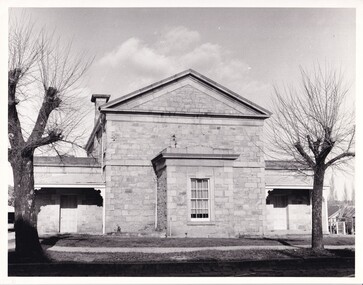
Photograph, c1970
... The Courthouse is a significant site in Australia’s legal history because it was the location of more than 40 trials and hearings for the Kelly Gang and their sympathisers. 1850s Beechworth Beechworth Courthouse Ned Kelly 1800s Beechworth Kelly gang Beechworth Historic Courthouse 1858 kelly trials Daniel Kelly Dan Kelly Edward Kelly Ellen Kelly Elizabeth Scott the first woman hanged in Victoria Colony of Victoria 1863 domestic violence related murder Reverse Ministry of Tourism, Melbourne This a rectangular, black and white photograph, unmounted. ...The Beechworth Historic Courthouse is a living history museum in Victoria, Australia. Built in 1858, it has been in continuous service for 131 years and is currently home to a unique collection of artifacts, including its original furniture and fittings. The Courthouse Law Library is also recognised as being of outstanding national significance with many rare books held in the collection. The courthouse was built in 1858 and is located in the centre of the Beechworth Historic Precinct. It was built from granite with a double height gabled courtroom with the entrance via a central projecting porch. The building was classified in 1959 as part of Group Classification (B2615)with Forests Office, Lands Office, Police Lock-up & Police Station. The Courthouse is a significant site in Australia’s legal history because it was the location of more than 40 trials and hearings for the Kelly Gang and their sympathisers.This a rectangular, black and white photograph, unmounted.Reverse Ministry of Tourism, Melbourne1850s beechworth, beechworth courthouse, ned kelly, 1800s beechworth, kelly gang, beechworth historic courthouse, 1858, kelly trials, daniel kelly, dan kelly, edward kelly, ellen kelly, elizabeth scott, the first woman hanged in victoria, colony of victoria, 1863, domestic violence related murder -
 Bendigo Historical Society Inc.
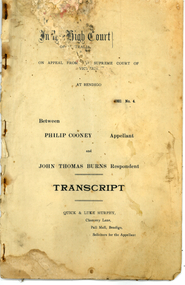
Legal record - Transcript of High Court Appeal Philip Cooney v John Thomas Burns, 1921
... Victoria at Bendigo to the High Court of Australia. 1921 No. 4 between Phillip Cooney (Appellant) and John Thomas Burns (Respondent). Quick and Luke Murphy, Chancery Lane, Solicitors for the Appellant. The Document contains seven sections: 1. Statement of Claim 2. Defenant's request for further particulars under the statement of claim 3. Plaintiff's further particulars 4. Defence 5. Reply 6. Judge's notes of evidence taken at the trial...Victoria at Bendigo to the High Court of Australia. 1921 No. 4 between Phillip Cooney (Appellant) and John Thomas Burns (Respondent). Quick and Luke Murphy, Chancery Lane, Solicitors for the Appellant. The Document contains seven sections: 1. Statement of Claim 2. Defenant's request for further particulars under the statement of claim 3. Plaintiff's further particulars 4. Defence 5. Reply 6. Judge's notes of evidence taken at the trial ...The hearing of the case of John T. Burns, retired railway employee, of Buckley Street, Essendon v. Philip Cooney, licensed victualler, was concluded in the Supreme Court of Victoria (Bendigo) in June 1921. John sued the defendant for a specific performance of contract regarding the sale of ingoing furniture, etc., of the Limerick Castle Hotel, in Williamson Street, Bendigo. He also claimed the profits of the business from 21 February last to the date of possession. Burns also applied for an injunction restraining the defendant from disposing of the lease, licence and furniture of the hotel and premises to anybody else. The defence was that no agreement had been made between defendant and plaintiff for the sale of the hotel lease, although several attempts had been made to bring them to an agreement. Mr Cooney had authorized Mr. J. F. Kelly to sell the ingoing for £750. Burns had offered £650, but the defendant refused to accept that sum. The jury returned a verdict in favour of plaintiff. Judgment was deferred, pending an appeal, it was again heard by the High Court (Melbourne) and the onto the High Court of Australia (Sydney) on a point of law. The legal principle determined by this appeal is of great importance to buyers and sellers of landed property establishing the rule of law: that a house and land agent cannot, safely sell such property without the authority of the owner in writing, signed by such owner. It appears that the hotel-owner's agents had organised a sale to of the hotel along with furniture etc. to John Burns. The owner of the hotel Philip Cooney then objected to the sale of the furniture, although at some stage John Burns offered him 650 pounds to cover the items. The appeal came up for argument before the High Court at its Melbourne sittings on February 20 1922 the hearing extending over four days. Mr. Charles Gavan Duffy (instructed by Messrs. Quick and Luke Murphy) appeared for the appellant, and Messrs; Cohen and Robertson (instructed by Messrs. Macoboy and Taylor); for the respondent. The last court of appeal, the High Court in Sydney reserved its decision, as follows: The Appeal was allowed, with, costs. Judgment to he entered for the defendant Philip Clooney. The Deposit of £50 to be returned to the defendant.48 Pages - A Court Case involving the Limerick Castle Hotel in Williamson Street, Bendigo - Transcript "on appeal from the Supreme Court of Victoria at Bendigo to the High Court of Australia. 1921 No. 4 between Phillip Cooney (Appellant) and John Thomas Burns (Respondent). Quick and Luke Murphy, Chancery Lane, Solicitors for the Appellant. The Document contains seven sections: 1. Statement of Claim 2. Defenant's request for further particulars under the statement of claim 3. Plaintiff's further particulars 4. Defence 5. Reply 6. Judge's notes of evidence taken at the trial 7. Plaintiff's Exhibits - "A" lease, the Trustees, Executors and Agency Company Limited to Appelant "B" Notice of Application to Transfer Licence of Hotel to Responent, testimonials by Messrs. H. Donovan and J. K. Byrne "C" Assignment of Lease, Appelant to Responentbendigo, limerick castle hotel, john burns, philip cooney -
Bendigo Historical Society Inc.
Document - The Victorian Country Volleyball Council (VCVC) Correspondence and Country Championship Reports, 1981
... In 2023, the Commission handed the organisation of the Championships back to VVI, who with paid staff, were better equipped to manage the event. victorian country volleyball council vcvc victorian amateur volleyball association volleyball victoria This item contains Correspondence of the Council in 1981 and reports on the Country Championships for that year; it include. the following documents: 11171.11a Victorian Country Championships 1981 Entry Forms and Draws 11171.11b Report on Regionalisation by VCVC 11171.11c List of reports to each association 11171.11d VCVC Financial report June to Oct 1981 11171.11e Australian Volleyball Federation Vacancy for a National Coaching Director 11171.11f VCVC List of office bearers 11171.11g VAVA Appointment of Bob Rowe as Executive Director 11171.11h Tracksuit Flashes for Representative teams 11171.11i VAVA re State U15 Girls Trials 11171.11j VAVA re Open Womens Team Selection 11171.11k VAVA re new magazine "Victorian Volleyball" 11171.11l Victorian High Schools' Sports Association re U20 Team selection trials 11171.11m VAVA to Associations re new scale of fees 11171.11n VCVC re Australian Women's Club Championships 11171.11o Mount Gambier Volleyball Association list of office bearers 11171.11p Victorian Country Volleyball Championships 1981 Report 11171.11q Mt Gambier Volleyball Association letters 11171.11r VCVC re Selection of U17 Girls team 11171.11s Letters re U20 Country Championships 11171.11t Report from the VCVC Annual two day Conference 11171.11u Mildura Volleyball association affiliation acceptance letters 11171.11v VAVA re sending out minutes of meetings 11171.11w VAVA re unaffiliated associations 11171.11x VAVA re new scale of registration fees 11171.11y VAVA re State Team Coaching Positions 11171.11z VAVA Minutes of Meeting Dec 1981 11171.11aa VCVC Secretary re affiliate fees and entries for Country Championships 11171.11ab From Mildura and Wangaratta Associations 11171.11ac To Ken Brooks Warrnambool re U20 Country Championship entries 11171.11ad Tracksuit flashes for Moe Country Championships 11171.11ae Draws for Wangaratta U17 Country Championships 11171.11af VAVA Executive Meeting Minutes July 1981 11171.11ag VAVA Executive Meeting Minutes July 1981 11171.11ah VAVA Executive Meeting Minutes August 1981 11171.11ai VAVA Executive Meeting Minutes Sept 1981 11171.11aj VAVA Executive Meeting Minutes Oct 1981 11171.11ak VAVA Executive Meeting Minutes Feb 1981 11171.11al VAVA Executive Meeting Minutes March 1981 11171.11am VAVA Executive Meeting Minutes April 1981 11171.11an VAVA Executive Meeting Minutes May 1981 Document The Victorian Country Volleyball Council (VCVC) Correspondence and Country Championship Reports. ...Volleyball has been played in regional Victoria since the early-1960’s. During those early days, most competitions, like the founders of our great sport, were run by, or in conjunction with, the YMCA. Competitions were running at the Ballarat School of Mines and the YMCA’s of Bendigo, Geelong and Warrnambool. In August 1966, an invitation was extended by the Victorian Amateur Volleyball Association to play in the first State-wide event at Monash University. Geelong and Bendigo accepted the invitation with Melbourne represented by Sisu. For Bendigo players at least, this was the first exposure to ‘international rules’, which prevented upward scoops with open hands, introduced an action called a ‘dig’ and seemed to penalise most overhead actions using the fingers as ‘double hits’! Over the next few years, the sport expanded through the YMCA movement with weekly competitions starting up in Ararat, Warrnambool and Latrobe Valley. The Victorian Regional Council of YMCA’s proposed the first Victorian YMCA Championship in Warrnambool on 30th March 1968 with an entry fee of $4.00 per team. The sport continued to grow with additional regional associations affiliating with the Victorian Amateur Volleyball Association (now VVI) who provided the coaching and refereeing assistance needed to raise the standard of play. In 1970, the YMCA Championships started to give way to the Victorian Country Championships with the first ever event held in Bendigo. In 1973, a re-organisation of the VAVA saw the proposal to create separate Victorian Country and Metropolitan Volleyball Councils. The VCVC was established in 1974 and took over the organisation of the Victorian Country Championships. For the next 10-12 years, the Country Championships grew in stature with the inclusion of two divisions for open men and women and junior divisions for boys and girls. Representative teams successfully contested Australian Country Championships between Victoria, South Australia and New South Wales on several occasions. In October 1985, the VCVC voluntarily wound up the Council and handed the responsibility for the Country Championships back to Volleyball Victoria, who by that time had full-time State Executive and Coaching Directors. Since that time, the Long Weekend in June has continued to be the date of the major annual volleyball event for most regional associations, even though in 1986 the Junior Country Championships were wound up in favour of state and national schools events. A number of regional associations have ceased to exist, as have a number of regional tournaments. Regional leagues were created in both the Gippsland and Central, North-West regions, with Gippsland the only one to survive. Some associations have successfully competed in the State League competitions at various times. Following the experience gained by a number of regional administrators working on the Sydney Olympic Games, a proposal to revamp the Victorian Country Championship was put to VVI in early 2002. Later that year, the Volleyball Victoria Country Championships Commission was formed to implement the recommendations of the review and take control of the event into the future. These championships now provide regional players and officials an opportunity to participate in a consistently well-managed event, using many international protocols and a high standard of presentation. Without doubt, this event now ranks as one of the best volleyball events in Australia. Source: 2022 Country Championship regulations The management of the Country Championships by the Victorian Country Championship Commission certainly achieved the objective of raising the standard of presentation, and delivering a consistently high quality event. However, the demands on Host Associations began to take their toll, with several Associations declining the opportunity to host the event due to the high workload. Similarly, the workload of the volunteer Commissioners also took its toll, with the Commission unable to fill casual vacancies. In 2023, the Commission handed the organisation of the Championships back to VVI, who with paid staff, were better equipped to manage the event.This item contains Correspondence of the Council in 1981 and reports on the Country Championships for that year; it include. the following documents: 11171.11a Victorian Country Championships 1981 Entry Forms and Draws 11171.11b Report on Regionalisation by VCVC 11171.11c List of reports to each association 11171.11d VCVC Financial report June to Oct 1981 11171.11e Australian Volleyball Federation Vacancy for a National Coaching Director 11171.11f VCVC List of office bearers 11171.11g VAVA Appointment of Bob Rowe as Executive Director 11171.11h Tracksuit Flashes for Representative teams 11171.11i VAVA re State U15 Girls Trials 11171.11j VAVA re Open Womens Team Selection 11171.11k VAVA re new magazine "Victorian Volleyball" 11171.11l Victorian High Schools' Sports Association re U20 Team selection trials 11171.11m VAVA to Associations re new scale of fees 11171.11n VCVC re Australian Women's Club Championships 11171.11o Mount Gambier Volleyball Association list of office bearers 11171.11p Victorian Country Volleyball Championships 1981 Report 11171.11q Mt Gambier Volleyball Association letters 11171.11r VCVC re Selection of U17 Girls team 11171.11s Letters re U20 Country Championships 11171.11t Report from the VCVC Annual two day Conference 11171.11u Mildura Volleyball association affiliation acceptance letters 11171.11v VAVA re sending out minutes of meetings 11171.11w VAVA re unaffiliated associations 11171.11x VAVA re new scale of registration fees 11171.11y VAVA re State Team Coaching Positions 11171.11z VAVA Minutes of Meeting Dec 1981 11171.11aa VCVC Secretary re affiliate fees and entries for Country Championships 11171.11ab From Mildura and Wangaratta Associations 11171.11ac To Ken Brooks Warrnambool re U20 Country Championship entries 11171.11ad Tracksuit flashes for Moe Country Championships 11171.11ae Draws for Wangaratta U17 Country Championships 11171.11af VAVA Executive Meeting Minutes July 1981 11171.11ag VAVA Executive Meeting Minutes July 1981 11171.11ah VAVA Executive Meeting Minutes August 1981 11171.11ai VAVA Executive Meeting Minutes Sept 1981 11171.11aj VAVA Executive Meeting Minutes Oct 1981 11171.11ak VAVA Executive Meeting Minutes Feb 1981 11171.11al VAVA Executive Meeting Minutes March 1981 11171.11am VAVA Executive Meeting Minutes April 1981 11171.11an VAVA Executive Meeting Minutes May 1981victorian country volleyball council, vcvc, victorian amateur volleyball association, volleyball victoria -
Bendigo Historical Society Inc.
Document - The Victorian Country Volleyball Council (VCVC) Correspondence and Country Championship Reports, 1984
... In 2023, the Commission handed the organisation of the Championships back to VVI, who with paid staff, were better equipped to manage the event. victorian country volleyball council vcvc victorian amateur volleyball association volleyball victoria This item contains Correspondence of the Council in 1984 and reports on the Country Championships for that year; it include. the following documents: 11171.17a Attendance forms for the VCVC two day conference 11171.17b U20 Country Championships Draw and entry information 11171.17c U20 Country Championships Draw and entry information (Contact BHS for Information) 11171.17d State U17 Women's trials 11171.17e VCVC Representative Country Sides 11171.17f VCVC Record Secretary Report 1984 11171.17g VCVC Country Representative U20s side 11171.17h U15 Australian Volleyball Championships Sept 1984 Report 11171.17i A guide to state team management by John Barker VAVA 11171.17j VAVA Financial statements and records 11171.17k Tribunal section of the By-laws 11171.17l VAVA u17 Women's State team selection trials 11171.17m VAVA Red Wine Promotion 11171.17n VAVA Victorian U15 Girls selection trials 11171.17o VAVA National Volleyball League womens draw 11171.17p Australian Volleyball Federation Country Championship Entry Form 11171.17q Executive Director's 1984 Annual report 11171.17r VAVA Notices of Meetings and Financials Jan 1984 11171.17s VAVA Executive Meeting Minutes Feb 1984 11171.17t VAVA Executive Meeting and AGM Minutes March 1984 11171.17u VAVA Executive Meeting April 1984 11171.17v VAVA Executive Meeting May 1984 11171.17w VAVA Executive Meeting June 1984 11171.17x Notice of VAVA Executive Meeting May1984 11171.17y VAVA Executive Officer Bob Rowe report - "planning for the future" 11171.17z VAVA Executive Meeting July 1984 11171.17aa VAVA Executive Meeting Aug 1984 11171.17ab VAVA Executive Meeting Financial Statement Sept 1984 11171.17ac VAVA Executive Meeting Sept 1984 11171.17ad VAVA Executive Meeting Notice Oct 1984 11171.17ae VAVA Special General Meeting Notice Oct 1984 11171.17af VAVA Suspension of a player Sept 1984 - contact BHS for details 11171.17ag VAVA Coaching Commission Appointment of Regional Coaches Document The Victorian Country Volleyball Council (VCVC) Correspondence and Country Championship Reports. ...Volleyball has been played in regional Victoria since the early-1960’s. During those early days, most competitions, like the founders of our great sport, were run by, or in conjunction with, the YMCA. Competitions were running at the Ballarat School of Mines and the YMCA’s of Bendigo, Geelong and Warrnambool. In August 1966, an invitation was extended by the Victorian Amateur Volleyball Association to play in the first State-wide event at Monash University. Geelong and Bendigo accepted the invitation with Melbourne represented by Sisu. For Bendigo players at least, this was the first exposure to ‘international rules’, which prevented upward scoops with open hands, introduced an action called a ‘dig’ and seemed to penalise most overhead actions using the fingers as ‘double hits’! Over the next few years, the sport expanded through the YMCA movement with weekly competitions starting up in Ararat, Warrnambool and Latrobe Valley. The Victorian Regional Council of YMCA’s proposed the first Victorian YMCA Championship in Warrnambool on 30th March 1968 with an entry fee of $4.00 per team. The sport continued to grow with additional regional associations affiliating with the Victorian Amateur Volleyball Association (now VVI) who provided the coaching and refereeing assistance needed to raise the standard of play. In 1970, the YMCA Championships started to give way to the Victorian Country Championships with the first ever event held in Bendigo. In 1973, a re-organisation of the VAVA saw the proposal to create separate Victorian Country and Metropolitan Volleyball Councils. The VCVC was established in 1974 and took over the organisation of the Victorian Country Championships. For the next 10-12 years, the Country Championships grew in stature with the inclusion of two divisions for open men and women and junior divisions for boys and girls. Representative teams successfully contested Australian Country Championships between Victoria, South Australia and New South Wales on several occasions. In October 1985, the VCVC voluntarily wound up the Council and handed the responsibility for the Country Championships back to Volleyball Victoria, who by that time had full-time State Executive and Coaching Directors. Since that time, the Long Weekend in June has continued to be the date of the major annual volleyball event for most regional associations, even though in 1986 the Junior Country Championships were wound up in favour of state and national schools events. A number of regional associations have ceased to exist, as have a number of regional tournaments. Regional leagues were created in both the Gippsland and Central, North-West regions, with Gippsland the only one to survive. Some associations have successfully competed in the State League competitions at various times. Following the experience gained by a number of regional administrators working on the Sydney Olympic Games, a proposal to revamp the Victorian Country Championship was put to VVI in early 2002. Later that year, the Volleyball Victoria Country Championships Commission was formed to implement the recommendations of the review and take control of the event into the future. These championships now provide regional players and officials an opportunity to participate in a consistently well-managed event, using many international protocols and a high standard of presentation. Without doubt, this event now ranks as one of the best volleyball events in Australia. Source: 2022 Country Championship regulations The management of the Country Championships by the Victorian Country Championship Commission certainly achieved the objective of raising the standard of presentation, and delivering a consistently high quality event. However, the demands on Host Associations began to take their toll, with several Associations declining the opportunity to host the event due to the high workload. Similarly, the workload of the volunteer Commissioners also took its toll, with the Commission unable to fill casual vacancies. In 2023, the Commission handed the organisation of the Championships back to VVI, who with paid staff, were better equipped to manage the event.This item contains Correspondence of the Council in 1984 and reports on the Country Championships for that year; it include. the following documents: 11171.17a Attendance forms for the VCVC two day conference 11171.17b U20 Country Championships Draw and entry information 11171.17c U20 Country Championships Draw and entry information (Contact BHS for Information) 11171.17d State U17 Women's trials 11171.17e VCVC Representative Country Sides 11171.17f VCVC Record Secretary Report 1984 11171.17g VCVC Country Representative U20s side 11171.17h U15 Australian Volleyball Championships Sept 1984 Report 11171.17i A guide to state team management by John Barker VAVA 11171.17j VAVA Financial statements and records 11171.17k Tribunal section of the By-laws 11171.17l VAVA u17 Women's State team selection trials 11171.17m VAVA Red Wine Promotion 11171.17n VAVA Victorian U15 Girls selection trials 11171.17o VAVA National Volleyball League womens draw 11171.17p Australian Volleyball Federation Country Championship Entry Form 11171.17q Executive Director's 1984 Annual report 11171.17r VAVA Notices of Meetings and Financials Jan 1984 11171.17s VAVA Executive Meeting Minutes Feb 1984 11171.17t VAVA Executive Meeting and AGM Minutes March 1984 11171.17u VAVA Executive Meeting April 1984 11171.17v VAVA Executive Meeting May 1984 11171.17w VAVA Executive Meeting June 1984 11171.17x Notice of VAVA Executive Meeting May1984 11171.17y VAVA Executive Officer Bob Rowe report - "planning for the future" 11171.17z VAVA Executive Meeting July 1984 11171.17aa VAVA Executive Meeting Aug 1984 11171.17ab VAVA Executive Meeting Financial Statement Sept 1984 11171.17ac VAVA Executive Meeting Sept 1984 11171.17ad VAVA Executive Meeting Notice Oct 1984 11171.17ae VAVA Special General Meeting Notice Oct 1984 11171.17af VAVA Suspension of a player Sept 1984 - contact BHS for details 11171.17ag VAVA Coaching Commission Appointment of Regional Coachesvictorian country volleyball council, vcvc, victorian amateur volleyball association, volleyball victoria -
Bendigo Historical Society Inc.
Document - The Victorian Country Volleyball Council (VCVC) Correspondence and Country Championship Reports, 1980
... This item contains Correspondence of the Council in 1980 and reports on the Country Chamionships for that year; it include. the following documents: 11171.19a VAVA Special Executive Meeting Minutes Feb 1980 11171.19b VAVA Special Executive Meeting Minutes Feb 1980 11171.19c VAVA Executive Meeting Minutes Feb 1980 11171.19d VAVA Statement of Account Feb 1980 11171.19e VCVC Meeting Minutes April 1980 11171.19f VAVA Executive Meeting Minutes March 1980 11171.19g VAVA Planning Meeting April 1980 11171.19h VCVC AGM June 1980 11171.19i VAVA Executive Council Meeting May 1980 11171.19j VAVA Executive Council Planning Meeting May 1980 11171.19k VAVA Executive Council Meeting June 1980 11171.19l VAVA Executive Council Meeting May 1980 11171.19m VAVA Executive Council Meeting July 1980 11171.19n VAVA Committee Listings Aug 1980 11171.19o VAVA Financial Statement Oct 1980 11171.19p VCVC two day conference minutes Oct 1980 11171.19q VAVA Executive meeting minutes Nov 1980 11171.19r Colour Map of South Australia showing where Volleyball is played 11171.19s VCVC Meeting minutes Dec 1980 at Moe 11171.19t VAVA Meeting minutes Dec 1980 11171.19u VCVC Letter from Secretary re petty cash 11171.19v Victorian Olympic Council re applicants for Promotions Officer 11171.19w VCVC Letter to the Phillip Island District Amateur Volleyball Association 11171.19x VAVA Victorian U15 Boys Selection Trials 11171.19y VCVC Executive Listings 11171.19z VAVA Volleypak Insurance fundraising scheme 11171.19aa VAVA Victorian U15 girls selection trials 11171.19ab Australia Post Box details 11171.19ac Sports Federation of Victoria Newsletter Feb 1980 11171.19ad VAVA 1980 Calendar 11171.19ae Letter to VCVC President Malcolm Darby re meetings 11171.19af Victorian High Schools' Sports Association selection trials 11171.19ag Sports Federation of Victoria Newsletter for March 11171.19ah Thank you letter from World sports Expo 11171.19ai Rebound Marketing proposal 11171.19aj Kyneton Amateur Volleyball Association Rule Book Request 11171.19ak VAVA to President Malcolm Darby re U17 Country Championships 11171.19al Greater Melbourne Volleyball Council re Veteran Championship 1980 11171.19am Bendigo YMCA Volleyball association registration of team colours 11171.19an Seymour Amateur Volleyball Association re monies owed 11171.19ao VCVC Balance Sheet 1980 11171.19ap VCVC to Secretary from Treasurer re monies outstanding 11171.19aq VCVC Record Secretary's annual report June 1980 11171.19ar VAVA re Personal Accident Cover 11171.19as VAVA Constitution revision Sept 1979 11171.19at U20 Men's Match Report 11171.19au The Sports Adminiastrtion Newsletter April 1980 11171.19av The Sports Adminiastrtion Newsletter May 1980...In 2023, the Commission handed the organisation of the Championships back to VVI, who with paid staff, were better equipped to manage the event. victorian country volleyball council vcvc victorian amateur volleyball association volleyball victoria This item contains Correspondence of the Council in 1980 and reports on the Country Chamionships for that year; it include. the following documents: 11171.19a VAVA Special Executive Meeting Minutes Feb 1980 11171.19b VAVA Special Executive Meeting Minutes Feb 1980 11171.19c VAVA Executive Meeting Minutes Feb 1980 11171.19d VAVA Statement of Account Feb 1980 11171.19e VCVC Meeting Minutes April 1980 11171.19f VAVA Executive Meeting Minutes March 1980 11171.19g VAVA Planning Meeting April 1980 11171.19h VCVC AGM June 1980 11171.19i VAVA Executive Council Meeting May 1980 11171.19j VAVA Executive Council Planning Meeting May 1980 11171.19k VAVA Executive Council Meeting June 1980 11171.19l VAVA Executive Council Meeting May 1980 11171.19m VAVA Executive Council Meeting July 1980 11171.19n VAVA Committee Listings Aug 1980 11171.19o VAVA Financial Statement Oct 1980 11171.19p VCVC two day conference minutes Oct 1980 11171.19q VAVA Executive meeting minutes Nov 1980 11171.19r Colour Map of South Australia showing where Volleyball is played 11171.19s VCVC Meeting minutes Dec 1980 at Moe 11171.19t VAVA Meeting minutes Dec 1980 11171.19u VCVC Letter from Secretary re petty cash 11171.19v Victorian Olympic Council re applicants for Promotions Officer 11171.19w VCVC Letter to the Phillip Island District Amateur Volleyball Association 11171.19x VAVA Victorian U15 Boys Selection Trials 11171.19y VCVC Executive Listings 11171.19z VAVA Volleypak Insurance fundraising scheme 11171.19aa VAVA Victorian U15 girls selection trials 11171.19ab Australia Post Box details 11171.19ac Sports Federation of Victoria Newsletter Feb 1980 11171.19ad VAVA 1980 Calendar 11171.19ae Letter to VCVC President Malcolm Darby re meetings 11171.19af Victorian High Schools' Sports Association selection trials 11171.19ag Sports Federation of Victoria Newsletter for March 11171.19ah Thank you letter from World sports Expo 11171.19ai Rebound Marketing proposal 11171.19aj Kyneton Amateur Volleyball Association Rule Book Request 11171.19ak VAVA to President Malcolm Darby re U17 Country Championships 11171.19al Greater Melbourne Volleyball Council re Veteran Championship 1980 11171.19am Bendigo YMCA Volleyball association registration of team colours 11171.19an Seymour Amateur Volleyball Association re monies owed 11171.19ao VCVC Balance Sheet 1980 11171.19ap VCVC to Secretary from Treasurer re monies outstanding 11171.19aq VCVC Record Secretary's annual report June 1980 11171.19ar VAVA re Personal Accident Cover 11171.19as VAVA Constitution revision Sept 1979 11171.19at U20 Men's Match Report 11171.19au The Sports Adminiastrtion Newsletter April 1980 11171.19av The Sports Adminiastrtion Newsletter May 1980 Document The Victorian Country Volleyball Council (VCVC) Correspondence and Country Championship Reports. ...Volleyball has been played in regional Victoria since the early-1960’s. During those early days, most competitions, like the founders of our great sport, were run by, or in conjunction with, the YMCA. Competitions were running at the Ballarat School of Mines and the YMCA’s of Bendigo, Geelong and Warrnambool. In August 1966, an invitation was extended by the Victorian Amateur Volleyball Association to play in the first State-wide event at Monash University. Geelong and Bendigo accepted the invitation with Melbourne represented by Sisu. For Bendigo players at least, this was the first exposure to ‘international rules’, which prevented upward scoops with open hands, introduced an action called a ‘dig’ and seemed to penalise most overhead actions using the fingers as ‘double hits’! Over the next few years, the sport expanded through the YMCA movement with weekly competitions starting up in Ararat, Warrnambool and Latrobe Valley. The Victorian Regional Council of YMCA’s proposed the first Victorian YMCA Championship in Warrnambool on 30th March 1968 with an entry fee of $4.00 per team. The sport continued to grow with additional regional associations affiliating with the Victorian Amateur Volleyball Association (now VVI) who provided the coaching and refereeing assistance needed to raise the standard of play. In 1970, the YMCA Championships started to give way to the Victorian Country Championships with the first ever event held in Bendigo. In 1973, a re-organisation of the VAVA saw the proposal to create separate Victorian Country and Metropolitan Volleyball Councils. The VCVC was established in 1974 and took over the organisation of the Victorian Country Championships. For the next 10-12 years, the Country Championships grew in stature with the inclusion of two divisions for open men and women and junior divisions for boys and girls. Representative teams successfully contested Australian Country Championships between Victoria, South Australia and New South Wales on several occasions. In October 1985, the VCVC voluntarily wound up the Council and handed the responsibility for the Country Championships back to Volleyball Victoria, who by that time had full-time State Executive and Coaching Directors. Since that time, the Long Weekend in June has continued to be the date of the major annual volleyball event for most regional associations, even though in 1986 the Junior Country Championships were wound up in favour of state and national schools events. A number of regional associations have ceased to exist, as have a number of regional tournaments. Regional leagues were created in both the Gippsland and Central, North-West regions, with Gippsland the only one to survive. Some associations have successfully competed in the State League competitions at various times. Following the experience gained by a number of regional administrators working on the Sydney Olympic Games, a proposal to revamp the Victorian Country Championship was put to VVI in early 2002. Later that year, the Volleyball Victoria Country Championships Commission was formed to implement the recommendations of the review and take control of the event into the future. These championships now provide regional players and officials an opportunity to participate in a consistently well-managed event, using many international protocols and a high standard of presentation. Without doubt, this event now ranks as one of the best volleyball events in Australia. Source: 2022 Country Championship regulations The management of the Country Championships by the Victorian Country Championship Commission certainly achieved the objective of raising the standard of presentation, and delivering a consistently high quality event. However, the demands on Host Associations began to take their toll, with several Associations declining the opportunity to host the event due to the high workload. Similarly, the workload of the volunteer Commissioners also took its toll, with the Commission unable to fill casual vacancies. In 2023, the Commission handed the organisation of the Championships back to VVI, who with paid staff, were better equipped to manage the event.This item contains Correspondence of the Council in 1980 and reports on the Country Chamionships for that year; it include. the following documents: 11171.19a VAVA Special Executive Meeting Minutes Feb 1980 11171.19b VAVA Special Executive Meeting Minutes Feb 1980 11171.19c VAVA Executive Meeting Minutes Feb 1980 11171.19d VAVA Statement of Account Feb 1980 11171.19e VCVC Meeting Minutes April 1980 11171.19f VAVA Executive Meeting Minutes March 1980 11171.19g VAVA Planning Meeting April 1980 11171.19h VCVC AGM June 1980 11171.19i VAVA Executive Council Meeting May 1980 11171.19j VAVA Executive Council Planning Meeting May 1980 11171.19k VAVA Executive Council Meeting June 1980 11171.19l VAVA Executive Council Meeting May 1980 11171.19m VAVA Executive Council Meeting July 1980 11171.19n VAVA Committee Listings Aug 1980 11171.19o VAVA Financial Statement Oct 1980 11171.19p VCVC two day conference minutes Oct 1980 11171.19q VAVA Executive meeting minutes Nov 1980 11171.19r Colour Map of South Australia showing where Volleyball is played 11171.19s VCVC Meeting minutes Dec 1980 at Moe 11171.19t VAVA Meeting minutes Dec 1980 11171.19u VCVC Letter from Secretary re petty cash 11171.19v Victorian Olympic Council re applicants for Promotions Officer 11171.19w VCVC Letter to the Phillip Island District Amateur Volleyball Association 11171.19x VAVA Victorian U15 Boys Selection Trials 11171.19y VCVC Executive Listings 11171.19z VAVA Volleypak Insurance fundraising scheme 11171.19aa VAVA Victorian U15 girls selection trials 11171.19ab Australia Post Box details 11171.19ac Sports Federation of Victoria Newsletter Feb 1980 11171.19ad VAVA 1980 Calendar 11171.19ae Letter to VCVC President Malcolm Darby re meetings 11171.19af Victorian High Schools' Sports Association selection trials 11171.19ag Sports Federation of Victoria Newsletter for March 11171.19ah Thank you letter from World sports Expo 11171.19ai Rebound Marketing proposal 11171.19aj Kyneton Amateur Volleyball Association Rule Book Request 11171.19ak VAVA to President Malcolm Darby re U17 Country Championships 11171.19al Greater Melbourne Volleyball Council re Veteran Championship 1980 11171.19am Bendigo YMCA Volleyball association registration of team colours 11171.19an Seymour Amateur Volleyball Association re monies owed 11171.19ao VCVC Balance Sheet 1980 11171.19ap VCVC to Secretary from Treasurer re monies outstanding 11171.19aq VCVC Record Secretary's annual report June 1980 11171.19ar VAVA re Personal Accident Cover 11171.19as VAVA Constitution revision Sept 1979 11171.19at U20 Men's Match Report 11171.19au The Sports Adminiastrtion Newsletter April 1980 11171.19av The Sports Adminiastrtion Newsletter May 1980victorian country volleyball council, vcvc, victorian amateur volleyball association, volleyball victoria -
 Bendigo Historical Society Inc.
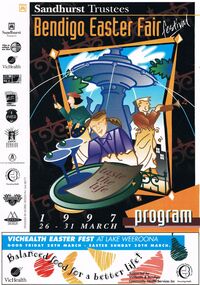
Document - BENDIGO EASTER FAIR FESTIVAL PROGRAM 1997, 26 March 1997
... Trial. Bendigo Bank Dragon Mile. Volkswagen Car Show, a part of the 28th National Bug-In. Repco Cycles, Australian Veteran Cycling Council Inc. Championships. Under 17 Australian Badminton Championships. Palm Sunday, Bendigo Symphony Orchestra. Way of the Cross, Bendigo's Combined Churches. The Easter Story, Kangfluca Music. Sunrise Church Service, Bendigo Ministers' Fellowship. Map of CBD Advertisements: Bendigo Easter Antique Fair. Austar. Bendigo Art Gallery. Bendigo Visitor Information Centre. Prime. Golden Dragon Museum Inc. Bendigo Heritage Tours. Discovery Science & Technology Centre Bendigo. Sponsors: Sandhurst Trustees, Prime, Vic Health, ABC Radio, Arts Victoria...Trial. Dragon Mile. Volkswagen Car Show National Bug-In. Repco Cycles Australian Veteran Cycling Council Inc. Championships. Under 17 Australian Badminton Championships. Palm Sunday Bendigo Symphony Orchestra. Way of the Cross Bendigo's Combined Churches. The Easter Story Kangfluca Music. Sunrise Church Service Bendigo Ministers' Fellowship. Map of CBD Advertisements: Antique Fair. Golden Dragon Museum Inc. Bendigo Heritage Tours. Discovery Science & Technology Centre Bendigo. Sponsors: Sandhurst Trustees Vic Health ABC Radio Arts Victoria ...Bendigo Easter Fair Festival Program, 26-31 March, 1997. Festival Features, Evening of Art & Classical Music, Rotary Club of Bendigo. VicHealth Easter Fest, Victorian Health Promotion Foundation & Bendigo Community Health Services. Fine Food Fest. Free Stage. Free Evening Concert & Fireworks, Zaire. Torchlight Procession, sponsored by Prime TV & Coca Cola, Bendigo Market Place. Fireworks Spectacular, Sponsored by Bendigo Market Place & Prime TV. Street Fiesta, sponsored by Arts Victoria. Street Extravaganza, Coca Cola Carnival, Sponsored by Coca Cola. Star for a Day, Power Audio Visual & Prime Television. Handcraft Bazaar, Rotary Club of Bendigo Sandhurst Art & Craft Market. Cosmopolitan Street Café, Arts Victoria. Awakening of the Dragon, Bendigo Chinese Association. Gala Parade, Prime Television & Coca Cola. Firewalking by the Australian Skeptics, Discovery Science & Technology Centre. Up In Flames, Discovery Science & Technology Centre. Barry Kenny's Country Roundup, Nadort Promotions. School's Day. Teddy Bear's Picnic, Dragon City Marshals. Fire Brigades Children's Carnival. Family Event, Bendigo Minister's Fellowship. Bendigo Easter Antique Fair. Historic Photographic Exhibition, Burt Sargent Circa 1900. Open Garden at Nanga Gnulle (''nanga nully''). A parade of Quilts, Strathdale Bendigo Quilters Inc. Tasting the Life, Gail Tavener Studio. Snakes Alive Dangerous Australians, BRIT. Y's Men's Club of Bendigo Book Fair, YMCA. Bendigo Camera Club, BRIT. Bendigo Woodcraft Exhibition, Woodturners Bendigo Inc. Autumn Bonsai, Bendigo Bonsai Club. Convocation, National Trust Bendigo. Arms & Collectables, Golden City Collectors Assoc. In. Rotary Art Show. Rotary Pottery Exhibition. Women's Vision For The Church, Provincial Council of Mothers Union. Historic Toorak House, Lioness Club of Golden City Bendigo. White Hills Cemetery. Bendigo Cemetery. Festival of Flowers, Craft & Garden, Bendigo Jockey Club. Shannons Corporation Motorfest, City Drive Through, Static Display, Motorkhana, Time Trial. Bendigo Bank Dragon Mile. Volkswagen Car Show, a part of the 28th National Bug-In. Repco Cycles, Australian Veteran Cycling Council Inc. Championships. Under 17 Australian Badminton Championships. Palm Sunday, Bendigo Symphony Orchestra. Way of the Cross, Bendigo's Combined Churches. The Easter Story, Kangfluca Music. Sunrise Church Service, Bendigo Ministers' Fellowship. Map of CBD Advertisements: Bendigo Easter Antique Fair. Austar. Bendigo Art Gallery. Bendigo Visitor Information Centre. Prime. Golden Dragon Museum Inc. Bendigo Heritage Tours. Discovery Science & Technology Centre Bendigo. Sponsors: Sandhurst Trustees, Prime, Vic Health, ABC Radio, Arts Victoria, Coca Cola, Events Bendigo, City Of Greater Bendigo, Bendigo Community Health Services, Shannons., Morris Design PH 5448 8777Morris Designevent, easter fair, bendigo easter fair, bendigo easter fair festival program, 26-31 march, 1997. festival features, evening of art & classical music, easter fest, . fine food fest. free stage. free evening concert & fireworks. torchlight procession. fireworks spectacular, street fiesta, street extravaganza, coca cola carnival, star for a day, handcraft bazaar, art & craft market. cosmopolitan street café, awakening of the dragon. gala parade, firewalking australian skeptics, discovery science & technology centre. up in flames, barry kenny's country roundup, nadort promotions. school's day. teddy bear's picnic, fire brigades children's carnival. family event, bendigo minister's fellowship. antique fair. photographic exhibition, burt sargent circa 1900. open garden nanga gnulle a parade of quilts, strathdale bendigo quilters inc. tasting the life, gail tavener studio. snakes alive dangerous australians, brit. book fair, ymca. bendigo camera club, brit. bendigo woodcraft exhibition, woodturners bendigo inc. autumn bonsai, bendigo bonsai club. convocation, national trust bendigo. arms & collectables, golden city collectors assoc. art show. pottery exhibition. women's vision for the church, provincial council of mothers union. historic toorak house, lioness club. white hills cemetery. bendigo cemetery. festival of flowers, craft & garden, bendigo jockey club. motorfest, drive through, static display, motorkhana, time trial. dragon mile. volkswagen car show, national bug-in. repco cycles, australian veteran cycling council inc. championships. under 17 australian badminton championships. palm sunday, bendigo symphony orchestra. way of the cross, bendigo's combined churches. the easter story, kangfluca music. sunrise church service, bendigo ministers' fellowship. map of cbd advertisements: antique fair. golden dragon museum inc. bendigo heritage tours. discovery science & technology centre bendigo. sponsors: sandhurst trustees, vic health, abc radio, arts victoria, coca cola, events bendigo, city of greater bendigo, bendigo community health services, shannons., morris design. prime tv. austar. bendigo art gallery. bendigo visitor information centre. prime, victorian health promotion foundation, zaire, sponsored by bendigo market place & prime tv, sponsored by arts victoria, sponsored coca cola, power audio visual, rotary club of bendigo sandhurst, bendigo chinese association, y's men's club of bendigo -
 Bendigo Historical Society Inc.
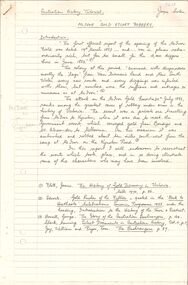
Document - ''MCIVOR GOLD ESCORT ROBBERY'': JOYCE COLES (TUTORIAL PAPER)
... ''McIvor Gold Escort Robbery'' - Joyce Coles (Australian History tutorial paper); no date. 14 pages handwritten paper to the July 1853 robbery - ''the first mass raid against armed gold escorts in Victoria''. Detailed account of the robbery and subsequent search for perpetrators and trial...McIvor Gold Escort Robbery Victoria Mt Alexander Kyneton Road Joyce Coles ''McIvor Gold Escort Robbery'' - Joyce Coles (Australian History tutorial paper); no date. 14 pages handwritten paper to the July 1853 robbery - ''the first mass raid against armed gold escorts in Victoria''. Detailed account of the robbery and subsequent search for perpetrators and trial ...''McIvor Gold Escort Robbery'' - Joyce Coles (Australian History tutorial paper); no date. 14 pages handwritten paper to the July 1853 robbery - ''the first mass raid against armed gold escorts in Victoria''. Detailed account of the robbery and subsequent search for perpetrators and trial. Reference to possibility of gold still being buried in the area of the robbery. Bibliography, newspaper references and illustrations from a variety of specified sources.Joyce Colesbendigo, mining, early history., mcivor gold escort robbery, victoria, mt alexander, kyneton road -
 Victorian Aboriginal Corporation for Languages
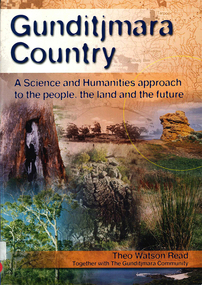
Book, Theo Watson Read et al, Gunditjmara country : a science and humanities approach to the people, the land and the future, 2007
... Victoria. Developed as part of the Kormilda Science Project and targeted at all Australian students, this work recognises the need for Western and Indigenous cultures to contribute to the comprehensive education of Australia's youth. The introduction provides a guide to implementing this program of study in schools and includes feedback from teachers involved in trialling...Victoria. Developed as part of the Kormilda Science Project and targeted at all Australian students, this work recognises the need for Western and Indigenous cultures to contribute to the comprehensive education of Australia's youth. The introduction provides a guide to implementing this program of study in schools and includes feedback from teachers involved in trialling ...Gunditjmara Country is an integrated unit which looks at the lives, traditions and culture of the Gunditjmara People of Western Victoria. Developed as part of the Kormilda Science Project and targeted at all Australian students, this work recognises the need for Western and Indigenous cultures to contribute to the comprehensive education of Australia's youth. The introduction provides a guide to implementing this program of study in schools and includes feedback from teachers involved in trialling the material.gunditjmara, western victoria, education, curriculum development, geography, science, history, secondary school education -
Koorie Heritage Trust
Book, Roberts, Janine P, Jack of Cape Grim : a Victorian adventure, 1986
... Australians -- Victoria -- Government relations. | Victoria -- History -- 1834-1851. Contents: The Tasmanians; Move the Tasmanians to Port Phillip; The Squatters; Melbourne Protected; Melbourne Aborigines Take Up the Gun; The Tasmanians Fight; The Trial; The Execution; The Sequel.Blurb: Jack of Cape Grim is a true story, set in Tasmania and Victoria in the mid1800s. ...Contents: The Tasmanians; Move the Tasmanians to Port Phillip; The Squatters; Melbourne Protected; Melbourne Aborigines Take Up the Gun; The Tasmanians Fight; The Trial; The Execution; The Sequel. Blurb: Jack of Cape Grim is a true story, set in Tasmania and Victoria in the mid1800s. Jack, an Aboriginal, and his friends, the famous Truganini (said, incorrectly, to be the 'last' Tasmanian Aborigine), Bob, Matilda and Fanny brought to Victoria from Tasmania to help'tame' the Victorian Aborigines. The group breaks away from Robinson, the Aboriginal Protector, to seek revenge for their fate, stranded far from homeland. The early white settlers of the Port Phillip District get more than they expected as the Aborigines rampage on the Peninsula, chased by trooper. The outcome is the horrific first public execution in the bustling town of Melbourne.123 p., [24] p. of plates : ill., facsims., maps, ports. ; 22 cm.Contents: The Tasmanians; Move the Tasmanians to Port Phillip; The Squatters; Melbourne Protected; Melbourne Aborigines Take Up the Gun; The Tasmanians Fight; The Trial; The Execution; The Sequel. Blurb: Jack of Cape Grim is a true story, set in Tasmania and Victoria in the mid1800s. Jack, an Aboriginal, and his friends, the famous Truganini (said, incorrectly, to be the 'last' Tasmanian Aborigine), Bob, Matilda and Fanny brought to Victoria from Tasmania to help'tame' the Victorian Aborigines. The group breaks away from Robinson, the Aboriginal Protector, to seek revenge for their fate, stranded far from homeland. The early white settlers of the Port Phillip District get more than they expected as the Aborigines rampage on the Peninsula, chased by trooper. The outcome is the horrific first public execution in the bustling town of Melbourne.truganini, 1812-1876. | aboriginal tasmanians -- treatment. | aboriginal tasmanians -- victoria -- treatment. | aboriginal tasmanians -- government relations. | aboriginal australians -- victoria -- government relations. | victoria -- history -- 1834-1851. -
Lakes Entrance Historical Society
Book, Hopkins Andrew, The Journal of Occupational Health and Safety Australia and New Zealand Special Issue: Lessons from Longford the trial, 2002
... Industrial Public Utilities Account of the Royal Commission findings from the Esso gas plant explosion in 1998 at Longford Victoria and the OHS trial held in Supreme Court Melbourne, where various legal aspects were examined. Indexed The Journal of Occupational Health and Safety Australia and New Zealand Special Issue: Lessons from Longford the trial Book Hopkins Andrew ...Account of the Royal Commission findings from the Esso gas plant explosion in 1998 at Longford Victoria and the OHS trial held in Supreme Court Melbourne, where various legal aspects were examined. Indexedindustrial, public utilities -
RMIT GSBL Justice Smith Collection
Report, Review of the Bail Act 1977 : discussion paper no. 25, 1991
... bail -- australia -- victoria...pre-trial...victoria. bail act 1977 bail -- australia -- victoria pre-trial release -- australia -- victoria comparisons ISBN: 0730623203 Discussion paper no. 25 Review of the Bail Act 1977 : discussion paper no. 25 Report Law Reform Commission of Victoria ...Discussion paper no. 25ISBN: 0730623203victoria. bail act 1977, bail -- australia -- victoria, pre-trial release -- australia -- victoria, comparisons -
RMIT GSBL Justice Smith Collection
Report, Sallmann, Peter, Report on criminal trials, [1985]
... trials -- victoria trial practice -- victoria criminal procedure -- victoria ISBN: 0958905509 Shorter trials committee Written for the Committee by Peter A. Sallmann Report on criminal trials Report Sallmann, Peter Australian ...Shorter trials committee Written for the Committee by Peter A. SallmannISBN: 0958905509trials -- victoria, trial practice -- victoria, criminal procedure -- victoria -
 8th/13th Victorian Mounted Rifles Regimental Collection
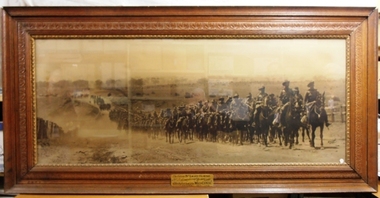
Photograph - 8 LH, The Famous 8th Light Horse, 1920 circa
... Victoria in September 1914 and sailed for overseas in December 1914 so this trial must have taken place during that period. The Wiles mobile cooker was developed by a Ballarat engineer, James Fletcher Wiles, on the advice of Sir Stanton Hicks, first Director of Catering for the Australian Army. ...Australia. They could be operational in 20 minutes, and cooking could take place while being towed up to 50 kph.. The first trial of this major innovation in military cooking together with this fine study of a light horse regiment on the march makes this object a significant one to the Australian Army and Victoria. wiles cooker greensborough world war one wwi light horse "The famous 8th Light Horse / returning from Greensborough Camp / After the first trial of the Wiles Cooker / Victoria 1914-1918" Large framed photograph of a regiment of mounted horsemen on the march. ...The 8th Light Horse was raised at Broadmeadows Victoria in September 1914 and sailed for overseas in December 1914 so this trial must have taken place during that period. The Wiles mobile cooker was developed by a Ballarat engineer, James Fletcher Wiles, on the advice of Sir Stanton Hicks, first Director of Catering for the Australian Army. The horse drawn cooker was operated by steam, raised by burning oil, to cook food and heat a baking oven. About 300 units were produced during WW1 (1914-18) and were in service in Egypt, France, and Australia. They could be operational in 20 minutes, and cooking could take place while being towed up to 50 kph..The first trial of this major innovation in military cooking together with this fine study of a light horse regiment on the march makes this object a significant one to the Australian Army and Victoria.Large framed photograph of a regiment of mounted horsemen on the march. Frame is of stained molded wood with glass front. Name panel at lower centre."The famous 8th Light Horse / returning from Greensborough Camp / After the first trial of the Wiles Cooker / Victoria 1914-1918"wiles cooker, greensborough, world war one, wwi, light horse -
 8th/13th Victorian Mounted Rifles Regimental Collection
Photograph - Major H J Archer 2/8 AR
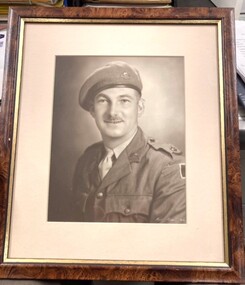
... Australia on 6th February 1944. Following the end of the War, on 8th May 1946, Henri was appointed as a member of the War Crimes Courts with HQ 8MD, and embarked for duty with the War Crimes Trials in Rabaul two days later. Henri returned to Australia on 15th August 1946, and was subsequently transferred to the Reserve of Officers (Armoured Corps) list for the 3rd Military District (Victoria) on 27th November 1946. ...Australia on 6th February 1944. Following the end of the War, on 8th May 1946, Henri was appointed as a member of the War Crimes Courts with HQ 8MD, and embarked for duty with the War Crimes Trials in Rabaul two days later. Henri returned to Australia on 15th August 1946, and was subsequently transferred to the Reserve of Officers (Armoured Corps) list for the 3rd Military District (Victoria) on 27th November 1946. ...Henri John ARCHER was born in Brunswick Victoria, Australia, on 27th May 1907, to parents William Thomas and Hetta (née LAWSON) ARCHER. In 1934, Henri married Stella Florence COLLER, and they had 3 children. Living in Balwyn, Victoria, and employed as an Insurance Superintendent, Henri commenced full-time duty as an officer in the Citizen Military Forces from 7th July 1940, until 20th February 1941 (number V7097). His appointment in the rank of Major with the 7th Infantry Battalion was due to him having served part time as an officer in the CMF since 1927. On 21st February 1941, Henri joined the Australian Imperial Force and was appointed as a Major, with the number VX39872. Following the completion of various armoured corps training courses at Puckapunyal, he was taken on strength with the 2nd/8th Armoured Regiment. On 17th April 1943, Henri embarked for service in New Guinea, for a period of 2 months. He again embarked on 3rd September 1943, for service in Rabaul, returning to Australia on 6th February 1944. Following the end of the War, on 8th May 1946, Henri was appointed as a member of the War Crimes Courts with HQ 8MD, and embarked for duty with the War Crimes Trials in Rabaul two days later. Henri returned to Australia on 15th August 1946, and was subsequently transferred to the Reserve of Officers (Armoured Corps) list for the 3rd Military District (Victoria) on 27th November 1946. He was awarded the Efficiency Decoration, as well as the 1939-45 Star, Pacific Star, 1939-45 War Medal and the Australia Service Medal. He was also issued Returned from Active Service Badge number A343705. Henri died in Melbourne on 27th July 1971, aged 64, and his ashes are interred in the Springvale Botanical Cemetery, Banksia Wall ZJ, Niche 01. (Compiled by Karan CAMPBELL-DAVIS from historical records kept by Births, Deaths and Marriages Victoria, the National Archives of Australia, and Find A Grave website. )Photograph mounted with timber frame. Some manuscript inscriptions of reverse.HENRI JOHN ARCHER / VX39872 / B 27 MAY 1907 / ENL 7 JULY 1940 / DISCH 26 NOV 1946 / OC A SQN 2/8 AAR [and] PURCHASED FROM EBAY / MAY 2024 [followed by signature undecipherable]wwii, armour, 2/8 armourned regiment, war crimes, rabaul, cmf -
 Vision Australia
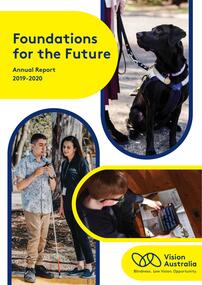
Administrative record - Text, Vision Australia 2019-2020 Annual Report : Foundations for the Future, 2020
... trialing a 1 year audio description service, and the introduction of Australia's first tactile bank notes. Vision Australia Corporation records Nicole Migani-Roberts Ron Hooton Andrew Moffat Paul Kapeleris Hannah Sutherland Gordon Gray David Hodgson Nadia Mattiazzo Tim Boyle Gareth Ward Kim Rulach Jane Bradley Caitlin Jung Tony Wu Matthew Layton Ian Edwards Karen Wolffe Nemoy Malcolm Jenny Abela Sybil Smith Alimata Karimu June Smith Joy Nuske Liz Chen Mary Delahunty Stella Glorie Victoria Pymm Lindsay Boulton Chris Edwards Marion Dickinson Max Schroder Susan Diver Ian Finlayson Nastasia Campanella Tanya Savva 1 volume with illustrations providing overview of organisational achievements Vision Australia 2019-2020 Annual Report : Foundations for the Future Administrative record Text ...Annual report providing overview of activities and achievements including: the launch of educational tool Code Jumper, use of Zoom to complete training with people with new Seeing Eye dogs, successful trial of Check In and Chat webinars, successful lobbying with ABC and SBS trialing a 1 year audio description service, and the introduction of Australia's first tactile bank notes. 1 volume with illustrations providing overview of organisational achievementsvision australia, corporation records, nicole migani-roberts, ron hooton, andrew moffat, paul kapeleris, hannah sutherland, gordon gray, david hodgson, nadia mattiazzo, tim boyle, gareth ward, kim rulach, jane bradley, caitlin jung, tony wu, matthew layton, ian edwards, karen wolffe, nemoy malcolm, jenny abela, sybil smith, alimata karimu, june smith, joy nuske, liz chen, mary delahunty, stella glorie, victoria pymm, lindsay boulton, chris edwards, marion dickinson, max schroder, susan diver, ian finlayson, nastasia campanella, tanya savva -
 Ballarat Heritage Services
Photograph - Colour, Boscaswell Row, St Just, Cornwall
... Victoria, Australia. They were caught up in the Eureka affair with some of their party charged with High Treason. Peter Ellis gave evidence at the Treason Trials in 1855 in Melbourne....Victoria, Australia. They were caught up in the Eureka affair with some of their party charged with High Treason. Peter Ellis gave evidence at the Treason Trials in 1855 in Melbourne. eureka, st just, ellis, wearne, davey, penrose, cornwall, cornish Boscaswell Row, St Just, Cornwall Photograph - Colour ...Peter Ellis and his party lived at Boscaswell Row, near St Just, Cornwall before they emigrated to Ballarat, Victoria, Australia. They were caught up in the Eureka affair with some of their party charged with High Treason. Peter Ellis gave evidence at the Treason Trials in 1855 in Melbourne.eureka, st just, ellis, wearne, davey, penrose, cornwall, cornish -
 Unions Ballarat
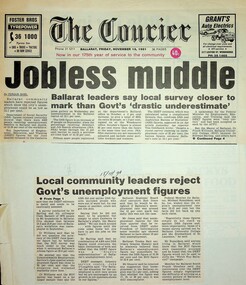
Scrapbook: Ballarat Trades Hall newspaper clippings 1988-1996, The Courier
... trials a trap: Shearer Paper: The Courier Date: 9 November 1996 94. CES union action 'minor' Paper: The Courier Date: 9 November 1996 95. Sawmill row looks likely to escalate Paper: The Courier Date: 9 November 1996 Significant collection of press articles that include comment from Unions Ballarat Secretary, Graeme Shearer, around the period when Jeff Kennett (Liberal Party Victoria) was premier of Victoria. Focus upon a variety of social and industrial issues impacting the Ballarat region. btlc ballarat trades and labour council industrial relations industrial action - strikes kennett jeff liberal party victoria victorian railways australian ...1a. Jobless muddle: Ballarat leaders say local survey closer to mark than Govt's 'drastic underestimate' 1b. Local community leaders reject Govt's unemployment figures Paper: The Courier Date: 15 November 1991 2. Ballarat must change industry base: Shearer - Reliance on wool and wheat now redundant Paper: n.a. Date: 14 November 1991 3.Lay-offs plan sparks strike [Ballarat] Paper: The Courier Date: 13 November 1991 4a. Ballarat makes pleas to Hawke: Help us beat jobless problem 4b. Help us create jobs plea to Canberra Paper: The Courier Date: 8 November 1991 5. Ballarat to plead for its life Paper: The Courier Date: 8 November 1991 6. Disunity blasted: Council bickering 'sabotaging local economy' [Ballarat] Paper: The Courier Date: 9 May 1992 7. Hand cuts migrant intake: Ballarat Trades Hall welcomes cut Paper: n.a. Date: 13 May 1992 8. School leavers 'missing out' Paper: The Courier Date: 18 May 1992 9. 10,000 in rally over government assets sale Paper: n.a. Date: 8 July 1992 10. Unions seek views on amalgamation [Ballarat] Paper: The Courier Date: 30 May 1992 11. Jobs plan hailed: Local leaders say it'll help young jobless [Ballarat] Paper: The Courier? Date: 26 June 1992 12. Youth wage gets mixed reaction [Ballarat] Paper: The Courier Date: 7 July 1992 13. Plans to axe tariffs are 'frightening': Shearer [Ballarat] Paper: The Courier? Date: 11 July 1992 14. Asbestos scare at primary school [Ballarat] Paper: The Courier Date: 11 July 1992 15. Ballarat protest: 5000 rally against the Kennett Govt Paper: n.d. Date: 11 November 1992 16. The Ballarat strike (pictures) Paper: The Courier Date: 11 November 1992 17. Train services under threat, warns union [Ballarat] Paper: n.a. Date: n.d. 18. Shearer slams new WorkCare Paper: n.a. Date: 5 November 1992 19. Ballarat unions back strike against Govt Paper: The Courier Date: 7 November 1992 20. Youth late night lolly selling may be both risky and illegal [Ballarat] Paper: The Courier Date: 5 December 1990 21a. 500 Ballarat jobs 'at risk' 21b. Tariff cuts will hit Ballarat jobs Paper: The Courier Date: 5 December 1990 22. Govt blueprint to hit local industries [Ballarat] Paper: The Courier Date: n.d. 23. AHA wage move rejected: Pay rise offer in place of penalty rates [Ballarat] Paper: The Courier Date: 9 July 1991 24. City shops leave Sunday to big stores [Ballarat] Paper: n.a. Date: 18 July 1991 25. Union dispute threat to Base [Ballarat] Paper: n.a. Date: 23 July 1991 26. Metalworkers agree on wages: Unions call on IRC to accept agreement Paper: The Courier Date: 19 July 1991 27. Ballarat bakery fears price war Paper: n.a. Date: 28 June 1991 28. Ballarat CES in Newstart bans Paper: n.a. Date: 29 June 1991 29. No Sunday trading: rally seeks support Paper: The Courier Date: 29 June 1991 30. The re-emerging Trades Hall belong to all workers [Ballarat] Paper: The News Date: 15 September 1988 31. Work safety better: TLC [Ballarat] Paper: n.a. Date: 15 September 1998 32. Black ban on bank [Ballarat] Paper: n.a. Date: 28 February 1989 33. BTLC slams Stockdale Workcare 'rort' claims Paper: n.a. Date: 11 May 1989 34. BTLC backs luxury surcharge plan [Ballarat] Paper: n.a. Date: 24 June 1989 35. Strike ends at John Valves [Ballarat] Paper: n.a. Date: 21 June 1989 36. Unions need a better image: 'Future is linked to intensive education process' [Ballarat] Paper: n.a. Date: n.d. 37. Ballarat protest against Govt: Teachers vow to fight Govt Paper: The Courier Date: 3 December 1992 38. Cleaners vote not to take industrial action [Ballarat] Paper: The Courier Date: 3 December 1992 39. Nurses stop work [Ballarat] Paper: The Courier Date: 3 December 1992 40. Amcast to close: Up to 140 will be made redundant [Ballarat] Paper: n.a. Date: 5 December 1992 41. Ronaldson hits out at union's 'fear campaign' [Ballarat] Paper: n.a. Date: 5 December 1992 42. Reprieve for Amcast workers [Ballarat] Paper: n.a. Date: n.d. 43. Workers take levy protest to Traynor [Ballarat] Paper: n.a. Date: 10 December 1992 44. Unions claim 2000 jobs lost in 12 months [Ballarat] Paper: The Courier Date: 6 October 1993 45. Unions plan on strong show [Ballarat] Paper: n.a. Date: 28 November 1992 46. Union rally to blast WorkCover [Ballarat] Paper: n.a. Date: 17 July ? 47. 1800 unionists in action day [Ballarat] Paper: n.a. Date: 1 December 1992 48. Protest at Lakeside stops work [Ballarat] Paper: n.a. Date: 1 December 1992 49. Ballarat urged to fight Amcast closure Paper: n.a. Date: 7 December 1992 50. Big crowd expected at deficit tax rally [Ballarat] Paper: n.a. Date: 12 December 1992 51. Trade unions: Recruit drive in Ballarat Paper: The Courier Date: 14 September 1995 52. Church and union unite for protest [Ballarat] Paper: n.a. Date: 14 September 1995 53. Ballarat strike tomorrow Paper: n.a. Date: 15 December 1992 54. Govt accuses striking unions of 'thuggery' Paper: n.a. Date: 15 December 1992 55. Hundreds support rally [Ballarat] Paper: n.a. Date: 14 December 1992 56. Disagreement on new Fightback package Paper: n.a. Date: 19 December 1992 57. Unions boycott public rally [Ballarat] Paper: n.a. Date: 19 December 1992 58. Group aims to fight deficit levy [Ballarat] Paper: n.a. Date: 21 December 1992 59.42 jobs go at workshops, more cut backs feared Paper: The Courier Date: 24 December 1992 60. ALP against levy: Devereaux Paper: The Courier Date: 3 February 1993 61. Rail workers fight for jobs [Ballarat] Paper: n.a. Date: 6 January 1993 62. Trams and buses to be disrupted [Ballarat] Paper: n.a. Date: 6 January 1993 63. Brown snubs rail talks [Ballarat] Paper: n.a. Date: 6 February 1993 64. Deficit levy is causing hardship: Trades Hall [Ballarat] Paper: n.a. Date: 5 February 1993 65. Ballarat unions to rally on March 1 Paper: n.a. Date: 5 February 1993 66. Angry rail workers plan to see Brown [Ballarat] Paper: n.a. Date: 8 January 1991 67. Sharing the secrets of the camera Paper: The Courier Date: 6 February 1993 68. Councils must unite: Shearer [Ballarat] Paper: The Courier Date: 9 February 1993 69. Shearer hits Lib health policies Paper: n.a. Date: 11 February 1993 70. Worker injury costs 'shifted' to taxpayers [Ballarat] Paper: n.a. Date: ? June 1993 71. Shearer warns on contracts Paper: n.a. Date: 5 February 1993 72. Ballarat hurting, says union chief Paper: n.a. Date: 22 February 1992 73. Workers will back protest, says Shearer [Ballarat] Paper: n.a. Date: 22 February 1992 74. Shearer gives Govt a blast on 'sacrifice' Paper: The Courier Date: 17 February 1993 75. Shearer supports strike [Ballarat] Paper: The Courier Date: 1 March 1993 (?) 76. Workers may be 'scared off" rally [Ballarat] Paper: n.a. Date: 1 March 1993 77. Workers at risk: Shearer Paper: n.a. Date: 25 February 1993 78a. 3000 marchers in protest against Kennett policies 78b. Marchers in street protest [Ballarat] Paper: The Courier Date: 2 March 1993 79. 'Jobs threat from Libs tariff plan' [Ballarat] Paper: The Courier Date: 2 March 1993 80. Students, staff rally in protest at govt cuts Paper: The Courier Date: 6 October 1993 81. Hurt workers live on $50 a week: union [Ballarat] Paper: n.a. Date: ? July 1994 82. Workers in protest at injury benefits [Ballarat] Paper: The Courier Date: 24 July 1994 83. Contracts need an 'even hand' [Ballarat] Paper: n.a. Date: ? July 1993 84. 2000 rally against public service cuts [Ballarat] Paper: n.a. Date: 6 May 1993 85. Telstra cuts threatening 100 Ballarat jobs: union Paper: n.a. Date: ? ? 1996 86. Workers to fare worse under Libs - Hubbard [Ballarat] Paper: n.a. Date: ? ? 1996 87. Ballarat workers to protest against industrial changes Paper: The Courier Date: n.d. 88. Meet Telstra, unions urge development body [Ballarat] Paper: n.a. Date: ? July 1996 89. Threat seen to part-time job security [Ballarat] Paper: n.a. Date: 6 July 1996 90. Trades Hall gears up for big battle [Ballarat] Paper: n.a. Date: ? July 1996 91a. Workers in city protest 91b. Workers in city protest Paper: n.a. Date: 31 August 1996 92. Unionists urged to fight hard for rights Paper: n.a. Date: 31 August 1996 93. Unpaid work trials a trap: Shearer Paper: The Courier Date: 9 November 1996 94. CES union action 'minor' Paper: The Courier Date: 9 November 1996 95. Sawmill row looks likely to escalate Paper: The Courier Date: 9 November 1996Significant collection of press articles that include comment from Unions Ballarat Secretary, Graeme Shearer, around the period when Jeff Kennett (Liberal Party Victoria) was premier of Victoria. Focus upon a variety of social and industrial issues impacting the Ballarat region.Scrapbook - news clippings.btlc, ballarat trades and labour council, industrial relations, industrial action - strikes, kennett jeff, liberal party victoria, victorian railways, australian labour party - alp, oh&s, unemployment - ballarat -
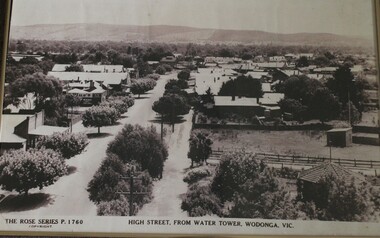 Wodonga & District Historical Society Inc
Photograph - High Street Wodonga, Rose Series, c1930-1940
... Australia and some international ones as well. They were produced by the Rose Stereograph Company, which was the business of Victorian photographer George Rose (1861-1942). In 1880, George, aged 19, founded his business in Victoria, and soon became famous for producing stereographs, or stereo views. His early images included the landing at Anzac Cove, Ned and Dan Kelly’s Armour (taken at trial...Australia and some international ones as well. They were produced by the Rose Stereograph Company, which was the business of Victorian photographer George Rose (1861-1942). In 1880, George, aged 19, founded his business in Victoria, and soon became famous for producing stereographs, or stereo views. His early images included the landing at Anzac Cove, Ned and Dan Kelly’s Armour (taken at trial ...This photograph, enlarged from a post card from the Rose Series, is representative of many images representing High Street, Wodonga as it developed over time. The Rose Series of postcards is a series of postcards of scenes from around Australia and some international ones as well. They were produced by the Rose Stereograph Company, which was the business of Victorian photographer George Rose (1861-1942). In 1880, George, aged 19, founded his business in Victoria, and soon became famous for producing stereographs, or stereo views. His early images included the landing at Anzac Cove, Ned and Dan Kelly’s Armour (taken at trial in 1880), The Duke & Duchess of York and their daughter Princess Elizabeth and Phar Lap winning the Melbourne Cup. When stereographs lost popularity during the 1920s, Rose switched to the production of postcards and decorative cards. He and his team of photographers took thousands of photos of scenery around Victoria and beyond, and the postcards became iconic images of Australian life. The Rose Stereograph Company Collection comprising more than 100,000 items was auctioned by Lloyds in June 2021.This is an image from an important collection of postcards which were representative of towns in Victoria taken c1920 - 1940sThis is an enlarged black and white photo of a postcard of High Street Wodonga from the Rose Series Across bottom of photo "THE ROSE SERIES P.1760 HIGH STREET, WATER TOWER, WODONGA, VIC."rose series p.1760, wodonga post cards, high street wodonga -
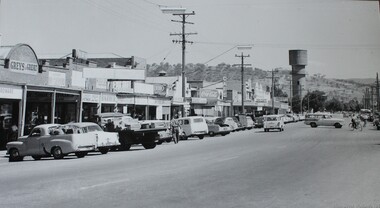 Wodonga & District Historical Society Inc
Photograph - High Street Wodonga in the 1950s
... Australia and some international ones as well. They were produced by the Rose Stereograph Company, which was the business of Victorian photographer George Rose (1861-1942). In 1880, George, aged 19, founded his business in Victoria, and soon became famous for producing stereographs, or stereo views. His early images included the landing at Anzac Cove, Ned and Dan Kelly’s Armour (taken at trial...Australia and some international ones as well. They were produced by the Rose Stereograph Company, which was the business of Victorian photographer George Rose (1861-1942). In 1880, George, aged 19, founded his business in Victoria, and soon became famous for producing stereographs, or stereo views. His early images included the landing at Anzac Cove, Ned and Dan Kelly’s Armour (taken at trial ...This image shows High Street, Wodonga in the late 1950s to early 1960s. The view is taken looking southwards towards the Water Tower at the end of the street. Businesses visible in the image include Currans Shoe Store, Greens Shoe Repair, a barber store, Pat's Ladies Hairdresser and Beauty Parlour, Albury Drycleaners, Jim Costello's, Bye's Butchery, Cafe, Astor Electrical goods and Victorian Producers. It is an enlargement of a Rose Series postcard. This photograph is representative of many images representing High Street, Wodonga as it developed over time. The Rose Series of postcards is a series of postcards of scenes from around Australia and some international ones as well. They were produced by the Rose Stereograph Company, which was the business of Victorian photographer George Rose (1861-1942). In 1880, George, aged 19, founded his business in Victoria, and soon became famous for producing stereographs, or stereo views. His early images included the landing at Anzac Cove, Ned and Dan Kelly’s Armour (taken at trial in 1880), The Duke & Duchess of York and their daughter Princess Elizabeth and Phar Lap winning the Melbourne Cup. When stereographs lost popularity during the 1920s, Rose switched to the production of postcards and decorative cards. He and his team of photographers took thousands of photos of scenery around Victoria and beyond, and the postcards became iconic images of Australian life. The Rose Stereograph Company Collection comprising more than 100,000 items was auctioned by Lloyds in June 2021. This image shows the main street of Wodonga and allows us to trace its development over time.A large photo printed on canvas. It shows High Street Wodonga in the late 1950s, looking southwards towards the water tower.high street wodonga, wodonga businesses, wodonga 1950s -
 Melbourne Tram Museum
Document - Folder with papers, Transport Ticketing Authority, "it's smart - it's the future", Jul, 2005
... trials. (2 pages) .8 - Q&A sheet - what it means for you and your business? - about timing, fares and zones, staff training, Metcard, use and further information. (2 pages) Note: From Wikipedia accessed 1/1/2016 "The Transport Ticketing Authority (TTA) was a statutory authority within the Department of Transport in the State Government of Victoria, Australia. ...trials. (2 pages) .8 - Q&A sheet - what it means for you and your business? - about timing, fares and zones, staff training, Metcard, use and further information. (2 pages) Note: From Wikipedia accessed 1/1/2016 "The Transport Ticketing Authority (TTA) was a statutory authority within the Department of Transport in the State Government of Victoria, Australia. ...Set of 8 documents in a white card folder July 2004 about the introduction of Victorian "Smartcard" ticketing system, published by the Victorian Transport Ticketing Authority. Used for a press handout. .1 - Printed card sheet folder to provide a folder with the title "it's smart - it's the future", published by the Authority. .2 - Press or Media Release - Premier of Victoria - 12 July 2005, issued by Steve Bracks, about the new ticketing system, and the companies involved and the basis of the proposed system. (two pages) .3 - News Release from Kamco - Keane Australia micropayment consortium - about the company and their proposals for the new system. ( 3 pages) .4 - Printed company information sheet about the companies involved - Keane Australia, Ascom AG, ERG Group and Giesecke & Devrient (G&D) (2 pages) .5 - Fact Sheet 01 - about the system, issued by the Authority about the proposals, tender period and the planned date for introduction. (1 page) .6 - Fact Sheet 03 - about the selection of KAMCO (1 page) .7 - Q&A sheet for use by operator staff in answering customer enquiries - about the system, KAMCO, costs, notes the end of Metcards and trials. (2 pages) .8 - Q&A sheet - what it means for you and your business? - about timing, fares and zones, staff training, Metcard, use and further information. (2 pages) Note: From Wikipedia accessed 1/1/2016 "The Transport Ticketing Authority (TTA) was a statutory authority within the Department of Transport in the State Government of Victoria, Australia. It was established in June 2003 to manage Victoria's interest in the OneLink Metcard public transport ticketing system contract, and to procure and manage the new ticketing system for Victoria, eventually known as myki. On 10 February 2010, the Minister for Public Transport replaced Gary Thwaites, chief executive of the Transport Ticketing Authority (TTA), with Bernie Carolan, the then head of Metlink.[1][2] On 1 January 2013, as the third stage of the implementation of the Public Transport Development Authority Act 2011, Public Transport Victoria assumed the responsibilities of the TTA,[3] which was formally abolished on 1 July 2013."trams, tramways, minister for transport, transport ticketing authority, myki, tickets, metcard -
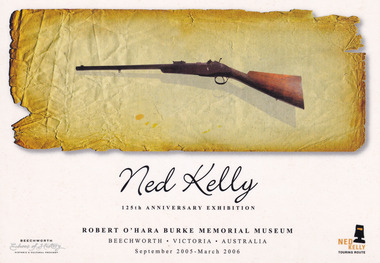 The Beechworth Burke Museum
Postcard, 2005
... trial, which took place in Beechworth's historic courthouse. The selection and interpretation of items like the gun called 'Betty' are significant for understanding the changing nature of Kelly scholarship, treatment and curation, in particular, the popular and iconic myth of the Australian bushranger. The item can be compared with other Kelly photographs in Burke Museum's collection. kelly album ned kelly exhibition ned kelly's rifle betty snider-enfield .557 caliber rifle revolver exhibition beechworth burke museum 125th anniversary firearm Obverse: Ned Kelly / 125th ANNIVERSARY EXHIBITION / ROBERT O'HARA BURKE MEMORIAL MUSEUM BEECHWORTH . VICTORIA ...To commemorate the 125th anniversary of Edward “Ned” Kelly’s committal trial in the Beechworth Historic Courthouse, the Robert O’Hara Burke Memorial Museum (henceforth Burke Museum) commissioned this postcard to coincide with their exhibition dating September 2005 to March 2006 and titled the Ned Kelly 125th Anniversary Exhibition. The postcard depicts a Snider-Enfield of .577 calibre which was reputedly favoured by the Bushranger. The firearm is of typical 1870s hunting design and was displayed as a focal point within this exhibition. The firearm, which was named “Betty” was reportedly taken by Kelly from Henry Dudley. The weapon has the letter ‘K’ engraved into the wood of the fore end. Other items also displayed in this exhibition include the Burke’s Kelly death mask, a replica of the Kelly Gang armour and photographs from the Burke Museum’s Kelly album. This postcard advertises an exhibition held at the Beechworth Burke Museum to commemorate the 125th anniversary of Kelly’s committal trial, which took place in Beechworth's historic courthouse. The selection and interpretation of items like the gun called 'Betty' are significant for understanding the changing nature of Kelly scholarship, treatment and curation, in particular, the popular and iconic myth of the Australian bushranger. The item can be compared with other Kelly photographs in Burke Museum's collection.Rectangular colour printed postcard celebrating Ned Kelly 125th Anniversary Exhibition at Burke Museum, Beechworth. Inset image of Ned Kelly's rifle. Obverse: Ned Kelly / 125th ANNIVERSARY EXHIBITION / ROBERT O'HARA BURKE MEMORIAL MUSEUM BEECHWORTH . VICTORIA . AUSTRALIA / September 2005-2006 / BEECHWORTH / Echoes of History / HISTORIC & CULTURAL PRECINCT / NED / KELLY / TOURING ROUTE / REVERSE: Ned Kelly / 125th ANNIVERSARY EXHIBITION / ROBERT O'HARA BURKE MEMORIAL MUSEUM BEECHWORTH . VICTORIA . AUSTRALIA / September 2005-2006 / AFFIX STAMP HERE / 7250 / This is the rifle that was taken from Henry Dudley by Ned Kelly. It became Ned's favourite / rifle, which he called 'Betty'. Note the 'K' carved into the wood of the fore-end. / Interestingly, there is at least one other rifle owned by Ned Kelly that also has a 'K' engraved / into it by Ned- the Colt revolving carbine used by Ned at Glenrowan /kelly album, ned kelly exhibition, ned kelly's rifle, betty, snider-enfield, .557 caliber, rifle, revolver, exhibition, beechworth, burke museum, 125th anniversary, firearm -
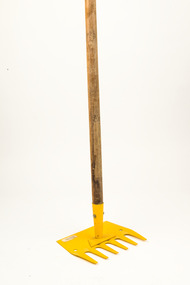 Department of Energy, Environment and Climate Action
Rakehoe, McLeod Tool (American)
... The American Pulaski had been trialled, but never found favour with Australian firefighters. First used in 1955 Bushfire Forests Commission Victoria (FCV) Rakehoe Combination of a heavy-duty six-toothed (each 9cm long) rake with a large, sturdy (25cm) hoe. ...Bushfire perimeter rather than bushfire area is the main control problem for firefighters on the ground. A conundrum rapidly compounded by spot fires. A small 5 ha fire can be nearly 1 km around the perimeter. That's a long way to build a control line by hand in rough bush. Dry firefighting techniques by hand were mostly confined to “knocking down” or “beating out” the flames, as well as "digging out". Digging or raking a “mineral earth” trail down to bare dirt proved most effective in forest fuels which, unlike grass, tend to retain heat and smoulder. Early tools were whatever happened to be close at hand. They were simple and primitive and included shovels, slashers, axes, hoes, beaters and rakes. A cut branch to beat the flames was often the only thing available. Farming and logging tools, developed over centuries of manual labour, and readily available at local hardware stores came into use, but little thought was given to size, weight, and balance. For years foresters experimented with combination tools. In about 1952 fire beaters and other implements were being replaced with Rakuts. However, its believed the now common Rakehoe is an Australian variation of the American McLeod Tool which was developed in 1905 by forest ranger Malcolm McLeod of the Sierra National Forest. The late Athol Hodgson advised that predecessors, Reg Torbet who had been the Chief Fire Officer for the Forests Commission from 1948-1956, along with his QLD counterpart Clive Price, went in late 1951 as Australian delegates on a 10 week fire study tour of Nth America organised by the United Nations. They came back with a couple of McLeod tools from Canada. Cam MacLeod (different spelling) had been the Head of Fire Research for the Canadian Forest Service at the time and had supplied them. The tools were ideal for deciduous forests in the eastern provinces and Clive arranged to have them manufactured in QLD. The Rakho, as it was then spelled, was first issued to FCV crews 65 years ago in 1955-56. The American Pulaski had been trialled, but never found favour with Australian firefighters.First used in 1955Rakehoe Combination of a heavy-duty six-toothed (each 9cm long) rake with a large, sturdy (25cm) hoe.bushfire, forests commission victoria (fcv) -
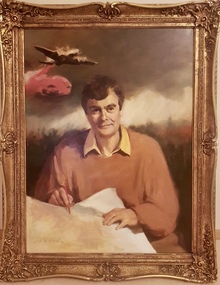 Department of Energy, Environment and Climate Action
Painting - Conrad Wood
... Victoria in the 1960s. An early recipient of a prestigious Churchill Fellowship, Woody travelled extensively throughout 1969 in North America and Europe studying aviation in forestry and firefighting. Afterwards he was very active amongst the Churchill alumni. Woody had a passion for innovation and new technology and was instrumental in introducing new aircraft types and new approaches for forest firefighting and forest management. Amongst many other things, he played a major role in organising the trial of a RAAF C130 equipped with MAFFS for firebombing in south-eastern Australia...Victoria in the 1960s. An early recipient of a prestigious Churchill Fellowship, Woody travelled extensively throughout 1969 in North America and Europe studying aviation in forestry and firefighting. Afterwards he was very active amongst the Churchill alumni. Woody had a passion for innovation and new technology and was instrumental in introducing new aircraft types and new approaches for forest firefighting and forest management. Amongst many other things, he played a major role in organising the trial of a RAAF C130 equipped with MAFFS for firebombing in south-eastern Australia ...Conrad Wood (Woody) graduated from the Victorian School of Forestry in 1957, and after postings with the Forests Commission Victoria (FCV) at Swifts Creek and Sirex surveys, he gravitated into the Forest Protection Division in Head Office in the early 1960s. He championed the setting up of proper contractual arrangements for aviation and was involved in implementing the first ongoing, organised contracts for firebombing in eastern Victoria in the 1960s. An early recipient of a prestigious Churchill Fellowship, Woody travelled extensively throughout 1969 in North America and Europe studying aviation in forestry and firefighting. Afterwards he was very active amongst the Churchill alumni. Woody had a passion for innovation and new technology and was instrumental in introducing new aircraft types and new approaches for forest firefighting and forest management. Amongst many other things, he played a major role in organising the trial of a RAAF C130 equipped with MAFFS for firebombing in south-eastern Australia in 1982-84, even piloting the lead plane. His inimitable style was crucial in successfully bringing together the cultures of the myriad organisations involved. Con advocated for the introduction of helicopters. He developed aerial fertilising and seeding techniques for forest management. He even managed to get involved in cloud seeding experiments for forest fire suppression and for improving water yield. Along with aviation, Conrad was passionate about literature, football, politics, food, drink, motorbikes, gardening and Glen Iris, to name a few. He was a committed campaigner on social justice issues and for many years read for vision-impaired people on public radio. He died in 2014. This painting of Woody by notable Australian artist Joyce McGrath OAM (also a Churchill Fellow) was done in the 1980s. Joyce asked Conrad to sit for this portrait which she planned to enter the Doug Moran National Portrait Prize. The portrait hung in Churchill House in Canberra, but when a new building was erected, it was returned to the artist/owner. The painting is now owned by Clare Harwood and is on permanent loan to the Forests Commission Retired Personnel Association (FCRPA) and is displayed at DEECA's Altona Museum.Painting of Conrad Wood by Australian artist Joyce McGrath OAMbushfire, bushfire aviation -
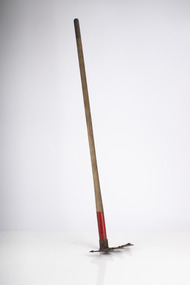 Department of Energy, Environment and Climate Action
Rakehoe (McLeod Tool)
... The American Pulaski had been trialled, but never found favour with Australian firefighters. Forests Commission Victoria (FCV) Hand tools Forest Harvesting Bushfire Rakhoe Rakehoe (McLeod Tool) ...Bushfire perimeter rather than bushfire area is the main control problem for firefighters on the ground. A conundrum rapidly compounded by spot fires. A small 5 ha fire can be nearly 1 km around the perimeter. That's a long way to build a control line by hand in rough bush. Dry firefighting techniques by hand were mostly confined to “knocking down” or “beating out” the flames, as well as "digging out". Digging or raking a “mineral earth” trail down to bare dirt proved most effective in forest fuels which, unlike grass, tend to retain heat and smoulder. Early tools were whatever happened to be close at hand. They were simple and primitive and included shovels, slashers, axes, hoes, beaters and rakes. A cut branch to beat the flames was often the only thing available. Farming and logging tools, developed over centuries of manual labour, and readily available at local hardware stores came into use, but little thought was given to size, weight, and balance. For years foresters experimented with combination tools. In about 1952 fire beaters and other implements were being replaced with Rakuts. However, its believed the now common Rakehoe is an Australian variation of the American McLeod Tool which was developed in 1905 by forest ranger Malcolm McLeod of the Sierra National Forest. The late Athol Hodgson advised that predecessors, Reg Torbet who had been the Chief Fire Officer for the Forests Commission from 1948-1956, along with his QLD counterpart Clive Price, went in late 1951 as Australian delegates on a 10 week fire study tour of Nth America organised by the United Nations. They came back with a couple of McLeod tools from Canada. Cam MacLeod (different spelling) had been the Head of Fire Research for the Canadian Forest Service at the time and had supplied them. The tools were ideal for deciduous forests in the eastern provinces and Clive arranged to have them manufactured in QLD. The Rakho, as it was then spelled, was first issued to FCV crews 65 years ago in 1955-56. The American Pulaski had been trialled, but never found favour with Australian firefighters.Rakhoeforests commission victoria (fcv), hand tools, forest harvesting, bushfire -
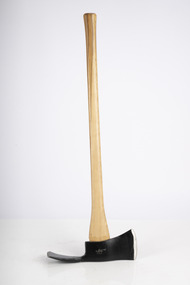 Department of Energy, Environment and Climate Action
Pulaski
... The American Pulaski had been trialled, but never found favour with Australian firefighters. Forests Commission Victoria (FCV) Hand tools Forest Harvesting Bushfire Pulaski Fire Tool Combines an axe and a grubbing hoe. ...Bushfire perimeter rather than bushfire area is the main control problem for firefighters on the ground. A conundrum rapidly compounded by spot fires. A small 5 ha fire can be nearly 1 km around the perimeter. That's a long way to build a control line by hand in rough bush. Dry firefighting techniques by hand were mostly confined to “knocking down” or “beating out” the flames, as well as "digging out". Digging or raking a “mineral earth” trail down to bare dirt proved most effective in forest fuels which, unlike grass, tend to retain heat and smoulder. Early tools were whatever happened to be close at hand. They were simple and primitive and included shovels, slashers, axes, hoes, beaters and rakes. A cut branch to beat the flames was often the only thing available. Farming and logging tools, developed over centuries of manual labour, and readily available at local hardware stores came into use, but little thought was given to size, weight, and balance. For years foresters experimented with combination tools. In about 1952 fire beaters and other implements were being replaced with Rakuts. However, its believed the now common Rakehoe is an Australian variation of the American McLeod Tool which was developed in 1905 by forest ranger Malcolm McLeod of the Sierra National Forest. The late Athol Hodgson advised that predecessors, Reg Torbet who had been the Chief Fire Officer for the Forests Commission from 1948-1956, along with his QLD counterpart Clive Price, went in late 1951 as Australian delegates on a 10 week fire study tour of Nth America organised by the United Nations. They came back with a couple of McLeod tools from Canada. Cam MacLeod (different spelling) had been the Head of Fire Research for the Canadian Forest Service at the time and had supplied them. The tools were ideal for deciduous forests in the eastern provinces and Clive arranged to have them manufactured in QLD. The Rakho, as it was then spelled, was first issued to FCV crews 65 years ago in 1955-56. The American Pulaski had been trialled, but never found favour with Australian firefighters.Pulaski Fire Tool Combines an axe and a grubbing hoe. Digging end and cutting end with short wooden handleforests commission victoria (fcv), hand tools, forest harvesting, bushfire
