
Showing 144 items matching "various orders"
-
 Moorabbin Air Museum
Manual - Aerial navigation, Air Navigation Orders Part 100 Notice to Ground Engineers
... Various orders...Aerial navigation Various orders Collection of air navigation orders issued to civil aviation ground engineers, circa 1947 Air Navigation Orders Part 100 Notice to Ground Engineers Manual Aerial navigation ...Collection of air navigation orders issued to civil aviation ground engineers, circa 1947non-fictionCollection of air navigation orders issued to civil aviation ground engineers, circa 1947various orders -
 Bendigo Historical Society Inc.
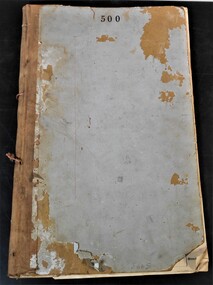
Administrative record - Dividend payments ledger
... Used and unused receipts for dividend and other various money orders. Filled with names of clients and reasons for payments. ...Used and unused receipts for dividend and other various money orders. Filled with names of clients and reasons for payments. ...Foolscap ledger. Used and unused receipts for dividend and other various money orders. Filled with names of clients and reasons for payments. Board front and back cover, cloth spine, paper inside, printed and handwritten. Dates: 1888- 1890. Only location mentioned is Melbourne. money order, ledger, the bank of victoria -
 Embroiderers Guild, Victoria
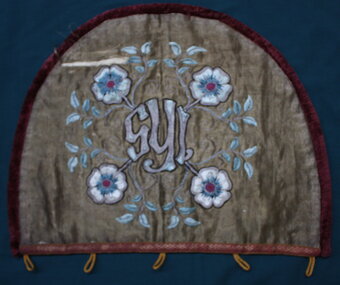
Accessory - Ecclesiastical Hood
... Originating from medieval cloaks, it has evolved into a symbolic accessory (like a cope hood) or functional gear (like a monk’s capuce) for various religious orders....Originating from medieval cloaks, it has evolved into a symbolic accessory (like a cope hood) or functional gear (like a monk’s capuce) for various religious orders. Embroidery Metal thread Silk Ecclesiastical Hood Hat IHS Semi circular hood of gold organza with silver metal thread and aqua silk embroidery. ...The cope is one of the most striking vestments in the Church. An ecclesiastical hood is a liturgical or monastic head covering, often part of a cope or habit, used for warmth, distinction, or decoration. Originating from medieval cloaks, it has evolved into a symbolic accessory (like a cope hood) or functional gear (like a monk’s capuce) for various religious orders.Semi circular hood of gold organza with silver metal thread and aqua silk embroidery. Dark red short full silk fringe on curved edge, and 5 loops on straight edge to attach to garment. Has been backed with apricot satin, Front of 4 flowers (5 petalled), leaves and initials.IHSembroidery, metal thread, silk, ecclesiastical, hood, hat -
 Melbourne Tram Museum
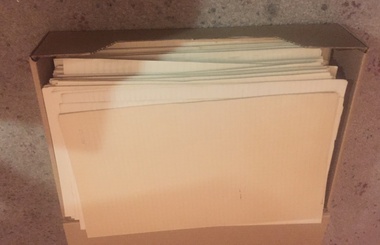
Document - Research Notes, H. S. McComb, Acts, Regulations, Orders in Council, 1930's to 1954
... Box of hand written double foolscap folio ruled sheets which detail the various Acts, Regulations, Orders in Council and other parliamentary documents that affect the MMTB from 1883 to 1954. ...Trams tramways MTO Co Cable Trams Parliament ACTs of Parliament Order In Council Regulations MMTB Tramways Box of hand written double foolscap folio ruled sheets which detail the various Acts, Regulations, Orders in Council and other parliamentary documents that affect the MMTB from 1883 to 1954. ...Box of hand written double foolscap folio ruled sheets which detail the various Acts, Regulations, Orders in Council and other parliamentary documents that affect the MMTB from 1883 to 1954. Prepared by H. S. McComb. All - Loose in box 73.3 - first two and last two sheets scanned.trams, tramways, mto co, cable trams, parliament, acts of parliament, order in council, regulations, mmtb, tramways -
 The Beechworth Burke Museum
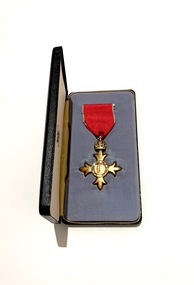
Medal - Order of the British Empire Medal, 01/01/1976
... Together, they were a formidable asset to the Beechworth community over many years The British honours system has various orders, usually relating to the monarchy, military and colonial officials. ...Together, they were a formidable asset to the Beechworth community over many years The British honours system has various orders, usually relating to the monarchy, military and colonial officials. ...David Aloysius Patrick McKenzie-McHarg, L.I.B, O.B.E was born on 20th June 1918 in Albury, NSW to Hugh Patrick McKenzie-McHarg and Laura May (Dunne) McKenzie-McHarg. McKenzie-McHarg served on the Council of the United Shire of Beechworth for more than a decade during the 1960s-70s, including seven years as president. He was renowned as a public speaker and played a significant role in the community. In recognition for his outstanding achievements and services rendered to the Beechworth community he was awarded an Order of the British Empire (OBE) in 1976. David McKenzie-McHarg died on 6th June 1992 and is buried in Beechworth Cemetery. David McKenzie-McHarg’s wife, Marjorie Jean McKenzie McHarg, was well known to the Beechworth community as a brilliant pianist and played at all the balls and house parties. Apparently, she could play without sheet-music and would only have to hear a tune once to play it to near perfection. Together, they were a formidable asset to the Beechworth community over many years The British honours system has various orders, usually relating to the monarchy, military and colonial officials. An OBE (or order of the British Empire) is given for an outstanding achievement or service to the community. This will have had a long-term, significant impact and stand out as an example to others. This Order was established by George V in 1917 in response to recognising the thousands of men and women who served in a variety of non-combatant roles during the First world war who didn’t otherwise receive any formal recognition but were certainly worthy of acknowledgement. Recommendations for appointments to this Order were originally made on the nomination of the United Kingdom, however this soon became available to Commonwealth countries as well. However, Australia officially ceased to recommend the Order of the British Empire in 1989 with the establishment of the Order of Australia. Silver badge suspended from red ribbon with pearl-grey edges. The badge is in the form of a cross patonce (having the arms growing broader and floriated toward the end), the obverse of which bears the same field as the star pictures George V and Queen Mary. The reverse bears George V's Royal and Imperial Cypher. Both are within a ring bearing the motto of the Order: FOR GOD AND THE EMPIRE. The presentation case in which the medal is housed is of a black outer boarder edge leatherette finishing, block letters in gold OBE. The inside has a cream velvet base with a silk padded liner to the roof with the full set of Royal Mint Crest Mark. Obverse: FOR GOD AND THE EMPIRE / burke museum, obe, obe medal, beechworth, david mckenzie-mcharg, british honours system, george v, beechworth community, order of australia., order of the british empire, marjorie jean mckenzie mcharg -
Kew Historical Society Inc
Archive (Sub-series) - Subject File, Kew Historical Society, Holy Trinity Church, 1899
... The file also includes various leaflets and orders of service. ...The file also includes various leaflets and orders of service. Holy Trinity Church Archive Subject File Kew Historical Society ...Various partiesReference, Research, InformationSecondary valuesA large subject file containing original primary sources and a range of secondary sources including published and unpublished histories of the church or its parts. The earliest item is a Sunday School Association Certificate issued to Amy Grigg in 1899. Publications by the Church include ‘Holy Trinity Church Kew Jubilee Souvenir 1863-1913’ (1913) [which includes a chronicle of events], ‘Holy Trinity Church Kew 70 Years 1863-1933), ‘Holy Trinity Church Kew Restoration and Continuity of Worship - Stewardship Review’ (1974), ‘Centenary Holy Trinity Church of England Kew’ (1963), ‘150th Anniversary of the First Service in this Building March 5, 1863’ (2013). Other published histories include two copies of: McFarlane, G., Memories in Glass: Holy Trinity Anglican Church, Kew. The file also includes unpublished monographs about the church (Mavis Rolley, 1980). The file also includes various leaflets and orders of service.holy trinity church - kew (vic), high street - kew (vic), rev rowland hayward, very rev dean vance dd, archdeacon hindley bd, rev canon sutton bd, sir william stawell, charles barrett, rev f a townshend, trinity grammar school, ruyton girls school, rev gordon brown, most rev philip freier, ferguson & urie, stained glass - kew (vic), amy griggholy trinity church - kew (vic), high street - kew (vic), rev rowland hayward, very rev dean vance dd, archdeacon hindley bd, rev canon sutton bd, sir william stawell, charles barrett, rev f a townshend, trinity grammar school, ruyton girls school, rev gordon brown, most rev philip freier, ferguson & urie, stained glass - kew (vic), amy grigg -
 Flagstaff Hill Maritime Museum and Village
Gramophone, 1911
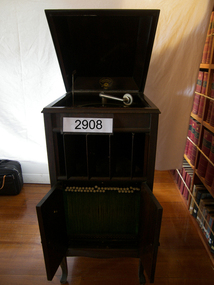
... Various period Grafonolas were introduced in 1917 to cater to an increasingly prosperous clientele. Columbia Phonograph Company began to manufacture a series of ornate, limited edition period machines. These were highly priced (some as high as US$2,100 ) special orders...Various period Grafonolas were introduced in 1917 to cater to an increasingly prosperous clientele. Columbia Phonograph Company began to manufacture a series of ornate, limited edition period machines. These were highly priced (some as high as US$2,100 ) special orders ...Until late 1925, all record players reproduced sound by purely mechanical means and relied on a so-called "amplifying" horn to efficiently couple the vibrations of the stylus and diaphragm to the space occupied by the listeners. In 1906, the Victor Talking Machine Company, Columbia's arch competitor, introduced a line of models in which the horn and other hardware were concealed within a cabinet, made to look like fine furniture rather than a mechanical device. They named the new style a "Victrola". It quickly proved to be very popular and successful. Other makers, adopting the distinctive suffix, introduced their own "-ola" internal horn machines, such as Edison's Amberolas and Columbia's Grafonolas. They were soon outselling the external horn models. At first, like nearly all other early record players, all Grafonolas were driven by a spring motor that the user had to wind up with a crank before playing a record. In 1915, Columbia began to introduce electric-motor-driven models, as a majority of urban areas had been wired to electrical grids. The electrified Grafonolas supported both alternating and direct currents from 110 to 220 volts. Electrified Grafonolas never gained the popularity enjoyed by the spring motor-driven versions due to substantially higher prices and a lack of electrical service in rural areas. Grafonolas were manufactured under the 1886 United States Letters Patent No. 341,214 which Columbia Graphophone company acquired through its predecessor American Graphophone Company. Two models were available; a portable table model and bigger stationary floor model, offering limited mobility through the application of casters. The most notable table models included Grafonola Favorite introduced in 1911 and Grafonola Savoy introduced in 1915. The most notable floor models included Grafonola Symphony Grand introduced in 1907, Grafonola Regent introduced in 1909, Columbia Mignon introduced in 1910, Grafonola Princess introduced in 1911, Columbia Colonial introduced in 1913. Various period Grafonolas were introduced in 1917 to cater to an increasingly prosperous clientele. Columbia Phonograph Company began to manufacture a series of ornate, limited edition period machines. These were highly priced (some as high as US$2,100 ) special orders that provided consumers with options to choose styles which matched their interior décor. Although the Gramophone does not have a large monetary value, it is of social significance as it demonstrates the progress made in audio reproduction from the first Edison cylinder machines to improvements that allowed ordinary people to be able to buy music discs and enjoy music in their own homes. Gramophone with internal horn, floor model, mechanically operated by a crank handle. Colombian Grafonola Princess (Type F2) brand. Gramophone is in a wooden display cabinet with room for record storage underneath and is complete with handle. Manufactured in 1911 by Columbia, USA."Columbia Grafonola Type 2 Made in USA"flagstaff hill, warrnambool, shipwrecked-coast, flagstaff-hill, flagstaff-hill-maritime-museum, maritime-museum, shipwreck-coast, flagstaff-hill-maritime-village, record player, gramophone, mechanical gramophone, floor model gramophone, gramophone record, columbia graphophone company, american graphophone company, columbia, grafonola, grafonola princess, music, playing music, audio reproduction, sound equipment, domestic entertainment, 1911 gramophone -
 Flagstaff Hill Maritime Museum and Village
Book - Reference/Colonial Government Notification Gazette, Robert Smith Brain, The Victoria Government Gazette 1897 Vol 2 /102, 1897
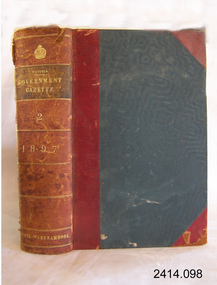
... Proclamations and Orders in Council; appointments, promotions, and resignations of public officials; land sales, transfers, and Crown land notices; company registrations, and insolvency and bankruptcy notices; regulations under various colonial Acts; and notices from local councils and government departments as well as all manner of colonial documents from all government departments. ...Proclamations and Orders in Council; appointments, promotions, and resignations of public officials; land sales, transfers, and Crown land notices; company registrations, and insolvency and bankruptcy notices; regulations under various colonial Acts; and notices from local councils and government departments as well as all manner of colonial documents from all government departments. ...The Victoria Government Gazette and other government documents from 1887 were printed and published by Robert S. Brain, Government Printer, Melbourne. Brain held the position of Victorian Government Printer through the 1890s and into the early 1900s. The same imprint appears on other official Victorian publications from that era, such as the annual reports of the Board for the Protection of the Aborigines and the colony's Statistical Register. There wasn't really an editor in the modern sense the Gazette was compiled and issued under the authority of the colonial government, via the Chief Secretary's Department, with Brain's printing office producing and publishing it.Hard cover book. The Victorian Government Gazette 1897 Vol 2 /102 Printer: Robert Smith, Brain Publisher: Robert Smith, Brain Publisher: Authority of The Colonial Government Date: 1897 Further Information: Textured hard cover bound book leather burgundy colour spine with gilt lettering, covers embossed blue cloth & reinforced corners to front and back cover. non-fictionThe Victoria Government Gazette and other government documents from 1887 were printed and published by Robert S. Brain, Government Printer, Melbourne. Brain held the position of Victorian Government Printer through the 1890s and into the early 1900s. The same imprint appears on other official Victorian publications from that era, such as the annual reports of the Board for the Protection of the Aborigines and the colony's Statistical Register. There wasn't really an editor in the modern sense the Gazette was compiled and issued under the authority of the colonial government, via the Chief Secretary's Department, with Brain's printing office producing and publishing it.flagstaff hill, warrnambool, shipwrecked-coast, flagstaff-hill, flagstaff-hill-maritime-museum, maritime-museum, shipwreck-coast, flagstaff-hill-maritime-village, book, the victoria government gazette 1897, the victoria government gazette 1897 2 vol 102, the victoria government gazette -
 Flagstaff Hill Maritime Museum and Village
Book - Reference/Colonial Government Notification Gazette, James Kemp, The Victorian Government Gazette 1906 Vol 2 /129, 1906
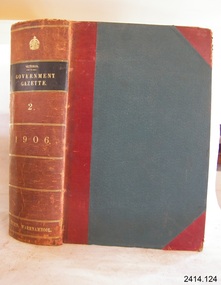
... Proclamations and Orders in Council; appointments, promotions, and resignations of public officials; land sales, transfers, and Crown land notices; company registrations, and insolvency and bankruptcy notices; regulations under various colonial Acts; and notices from local councils and government departments as well as all manner of colonial documents from all government departments. ...Proclamations and Orders in Council; appointments, promotions, and resignations of public officials; land sales, transfers, and Crown land notices; company registrations, and insolvency and bankruptcy notices; regulations under various colonial Acts; and notices from local councils and government departments as well as all manner of colonial documents from all government departments. ...The Victoria Government Gazette and other government documents from 1887 were printed and published by Robert S. Brain, Government Printer, Melbourne. Brain held the position of Victorian Government Printer through the 1890s and into the early 1900s. The same imprint appears on other official Victorian publications from that era, such as the annual reports of the Board for the Protection of the Aborigines and the colony's Statistical Register. There wasn't really an editor in the modern sense the Gazette was compiled and issued under the authority of the colonial government, via the Chief Secretary's Department, with Brain's printing office producing and publishing it. In May 1906, James Kemp succeeded him, serving as Government Printer from May 1906 to August 1912, with the title of Acting Government Printer right at the very start of his tenure he was stepping into the role Brain had just vacated, and by later in December 1906 he was signing gazettes in that capacity, apparently before his appointment was made permanent. Then in 1913 Albert James Mullett took over the role starting from January 1913.Hard cover book. The Victorian Government Gazette 1906 Vol 2 /129 Printer: James Kemp Publisher: James Kemp Publisher: Authority of The Colonial Government Date: 1906 Further Information: Textured hard cover bound book leather burgundy colour spine with gilt lettering, covers embossed blue cloth & reinforced corners to front and back cover. non-fictionThe Victoria Government Gazette and other government documents from 1887 were printed and published by Robert S. Brain, Government Printer, Melbourne. Brain held the position of Victorian Government Printer through the 1890s and into the early 1900s. The same imprint appears on other official Victorian publications from that era, such as the annual reports of the Board for the Protection of the Aborigines and the colony's Statistical Register. There wasn't really an editor in the modern sense the Gazette was compiled and issued under the authority of the colonial government, via the Chief Secretary's Department, with Brain's printing office producing and publishing it. In May 1906, James Kemp succeeded him, serving as Government Printer from May 1906 to August 1912, with the title of Acting Government Printer right at the very start of his tenure he was stepping into the role Brain had just vacated, and by later in December 1906 he was signing gazettes in that capacity, apparently before his appointment was made permanent. Then in 1913 Albert James Mullett took over the role starting from January 1913. flagstaff hill, warrnambool, shipwrecked-coast, flagstaff-hill, flagstaff-hill-maritime-museum, maritime-museum, shipwreck-coast, flagstaff-hill-maritime-village, book, the victoria government gazette 1906 2 vol 129, the victoria government gazette 1906, the victoria government gazette -
 Flagstaff Hill Maritime Museum and Village
Book - Reference/State Government Notification Gazette, Albert John Mullett, The Victorian Government Gazette 1912 Vol 1 /146, 1912
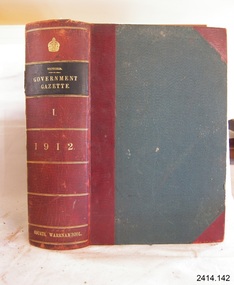
... Proclamations and Orders in Council; appointments, promotions, and resignations of public officials; land sales, transfers, and Crown land notices; company registrations, and insolvency and bankruptcy notices; regulations under various colonial Acts; and notices from local councils and government departments as well as all manner of colonial documents from all government departments. ...Proclamations and Orders in Council; appointments, promotions, and resignations of public officials; land sales, transfers, and Crown land notices; company registrations, and insolvency and bankruptcy notices; regulations under various colonial Acts; and notices from local councils and government departments as well as all manner of colonial documents from all government departments. ...The Victoria Government Gazette and other government documents from 1887 were printed and published by Robert S. Brain, Government Printer, Melbourne. Brain held the position of Victorian Government Printer through the 1890s and into the early 1900s. The same imprint appears on other official Victorian publications from that era, such as the annual reports of the Board for the Protection of the Aborigines and the colony's Statistical Register. There wasn't really an editor in the modern sense the Gazette was compiled and issued under the authority of the colonial government, via the Chief Secretary's Department, with Brain's printing office producing and publishing it. In May 1906, James Kemp succeeded him, serving as Government Printer from May 1906 to August 1912, with the title of Acting Government Printer right at the very start of his tenure he was stepping into the role Brain had just vacated, and by later in December 1906 he was signing gazettes in that capacity, apparently before his appointment was made permanent. Then in 1912 Albert John Mullett took over the role starting from January 1912 the same way Kemp had as Acting Government Printer with his appointment made permanent in 1913 where he served all through the 1920s.Hard cover book. The Victorian Government Gazette 1912 Vol 1 /146 Printer: Albert John Mullett Publisher: Albert John Mullett Publisher: Authority of The Colonial Government Date: 1912 Further Information: Textured hard cover bound book leather burgundy colour spine with gilt lettering, covers embossed blue cloth & reinforced corners to front and back cover. non-fictionThe Victoria Government Gazette and other government documents from 1887 were printed and published by Robert S. Brain, Government Printer, Melbourne. Brain held the position of Victorian Government Printer through the 1890s and into the early 1900s. The same imprint appears on other official Victorian publications from that era, such as the annual reports of the Board for the Protection of the Aborigines and the colony's Statistical Register. There wasn't really an editor in the modern sense the Gazette was compiled and issued under the authority of the colonial government, via the Chief Secretary's Department, with Brain's printing office producing and publishing it. In May 1906, James Kemp succeeded him, serving as Government Printer from May 1906 to August 1912, with the title of Acting Government Printer right at the very start of his tenure he was stepping into the role Brain had just vacated, and by later in December 1906 he was signing gazettes in that capacity, apparently before his appointment was made permanent. Then in 1912 Albert John Mullett took over the role starting from January 1912 the same way Kemp had as Acting Government Printer with his appointment made permanent in 1913 where he served all through the 1920s. flagstaff hill, warrnambool, shipwrecked-coast, flagstaff-hill, flagstaff-hill-maritime-museum, maritime-museum, shipwreck-coast, flagstaff-hill-maritime-village, book, the victoria government gazette 1912 1 vol 146, the victoria government gazette 1912, the victoria government gazette -
 Flagstaff Hill Maritime Museum and Village
Instrument - Chronometer
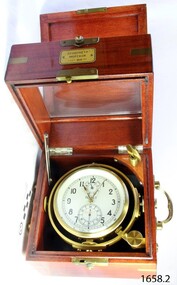
... orders from Joseph Stalin, the "First State Watch Factory" was the first large-scale Soviet watch and mechanical movement manufacturer in the USSR. Via its USA-based trading company (Amtorg), the Soviet government bought the defunct Ansonia Clock Company of Brooklyn, New York in 1929, and the "Dueber-Hampden Watch Company of Canton", based in Ohio. The soviets moved twenty-eight freight cars full of machinery and parts from the USA to Moscow in order to establish the factory. Twenty-one former "Dueber-Hampden" watchmakers, engravers and various...orders from Joseph Stalin, the "First State Watch Factory" was the first large-scale Soviet watch and mechanical movement manufacturer in the USSR. Via its USA-based trading company (Amtorg), the Soviet government bought the defunct Ansonia Clock Company of Brooklyn, New York in 1929, and the "Dueber-Hampden Watch Company of Canton", based in Ohio. The soviets moved twenty-eight freight cars full of machinery and parts from the USA to Moscow in order to establish the factory. Twenty-one former "Dueber-Hampden" watchmakers, engravers and various ...First State Watch Factory: This factory was founded in 1930 under orders from Joseph Stalin, the "First State Watch Factory" was the first large-scale Soviet watch and mechanical movement manufacturer in the USSR. Via its USA-based trading company (Amtorg), the Soviet government bought the defunct Ansonia Clock Company of Brooklyn, New York in 1929, and the "Dueber-Hampden Watch Company of Canton", based in Ohio. The soviets moved twenty-eight freight cars full of machinery and parts from the USA to Moscow in order to establish the factory. Twenty-one former "Dueber-Hampden" watchmakers, engravers and various other technicians helped to train the Russian workers in the art of watchmaking as part of the Soviet's first five-year plan. The movements of very-early products were still stamped "Dueber-Hampden, Canton, Ohio, USA" (examples of these watches are very collectible today). In 1935 the factory was named after the murdered Soviet official Sergei Kirov. During the second world war, as the Germans closed in on Moscow in 1941, the factory was hurriedly evacuated to (Zlatoust USSR). By 1943 the Germans were in retreat, and the factory was moved back to Moscow, adopting the "First Moscow Watch Factory" name. In 1947 the first wristwatches under the brand name "Pobeda" and the first Marine Chronometers and Deck watches were produced. By 1951 the production of wristwatches had increased to 1.1 million. In 1975 new machinery and equipment for manufacturing complex watches were imported from Switzerland. The first chronograph called "Okean" (3133) was produced for the space station "Soyuz-23."The Chronometer is of recent manufacture and an excellent example of the type of instrument used to navigate the seas in the 19th century. It is of good quality and of a type regarded as very accurate and well made. The maker, First Watch Factory, has a dept that is still producing the "8916" standard Chronometer for horologists and collectors. Marine chronometer of Russian make in wooden case, metal handles on sides, inscription on a metal plaque on the front of the case. Polished square wooden outer case with green felt lining and, a leather carrying strap and buckle. Outer case is hinged and has a metal latch on the front. Outer case has a red velvet covering with a button and loop closure. Inscription on box are in Russian & translate as follows: ХРОНОМЕТР, = CHRONOMETER МОРСКОЙ, = NAUTICAL ГОСТ, 8916-77 = Gost ЛОЛ ЕТ, on dial face = LOL ETflagstaff hill, warrnambool, shipwrecked-coast, flagstaff-hill, flagstaff-hill-maritime-museum, maritime-museum, shipwreck-coast, flagstaff-hill-maritime-village, chonometer, russian, watch factory, marine, navigational instrument -
 Flagstaff Hill Maritime Museum and Village
Book - Reference/Colonial Government Notification Gazette, Robert Smith Brain, The Victoria Government Gazette 1904 Vol 3 /124, 1904
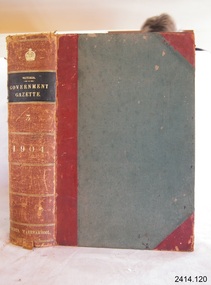
... Proclamations and Orders in Council; appointments, promotions, and resignations of public officials; land sales, transfers, and Crown land notices; company registrations, and insolvency and bankruptcy notices; regulations under various colonial Acts; and notices from local councils and government departments as well as all manner of colonial documents from all government departments. ...Proclamations and Orders in Council; appointments, promotions, and resignations of public officials; land sales, transfers, and Crown land notices; company registrations, and insolvency and bankruptcy notices; regulations under various colonial Acts; and notices from local councils and government departments as well as all manner of colonial documents from all government departments. ...The Victoria Government Gazette and other government documents from 1887 were printed and published by Robert S. Brain, Government Printer, Melbourne. Brain held the position of Victorian Government Printer through the 1890s and into the early 1900s. The same imprint appears on other official Victorian publications from that era, such as the annual reports of the Board for the Protection of the Aborigines and the colony's Statistical Register. There wasn't really an editor in the modern sense the Gazette was compiled and issued under the authority of the colonial government, via the Chief Secretary's Department, with Brain's printing office producing and publishing it.Hard cover book. The Victorian Government Gazette 1904Vol 3 /124 Printer: Robert Smith, Brain Publisher: Robert Smith, Brain Publisher: Authority of The Colonial Government Date: 1904 Further Information: Textured hard cover bound book leather burgundy colour spine with gilt lettering, covers embossed blue cloth & reinforced corners to front and back cover. non-fictionThe Victoria Government Gazette and other government documents from 1887 were printed and published by Robert S. Brain, Government Printer, Melbourne. Brain held the position of Victorian Government Printer through the 1890s and into the early 1900s. The same imprint appears on other official Victorian publications from that era, such as the annual reports of the Board for the Protection of the Aborigines and the colony's Statistical Register. There wasn't really an editor in the modern sense the Gazette was compiled and issued under the authority of the colonial government, via the Chief Secretary's Department, with Brain's printing office producing and publishing it.flagstaff hill, warrnambool, shipwrecked-coast, flagstaff-hill, flagstaff-hill-maritime-museum, maritime-museum, shipwreck-coast, flagstaff-hill-maritime-village, book, the victoria government gazette 1897, the victoria government gazette 1897 2 vol 102, the victoria government gazette -
 Flagstaff Hill Maritime Museum and Village
Book - Reference/Colonial Government Notification Gazette, Robert Smith Brain, The Victoria Government Gazette 1905 Vol 3 /127, 1905
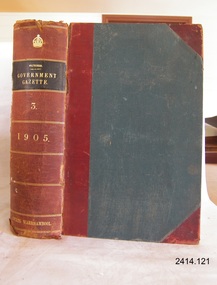
... Proclamations and Orders in Council; appointments, promotions, and resignations of public officials; land sales, transfers, and Crown land notices; company registrations, and insolvency and bankruptcy notices; regulations under various colonial Acts; and notices from local councils and government departments as well as all manner of colonial documents from all government departments. ...Proclamations and Orders in Council; appointments, promotions, and resignations of public officials; land sales, transfers, and Crown land notices; company registrations, and insolvency and bankruptcy notices; regulations under various colonial Acts; and notices from local councils and government departments as well as all manner of colonial documents from all government departments. ...The Victoria Government Gazette and other government documents from 1887 were printed and published by Robert S. Brain, Government Printer, Melbourne. Brain held the position of Victorian Government Printer through the 1890s and into the early 1900s. The same imprint appears on other official Victorian publications from that era, such as the annual reports of the Board for the Protection of the Aborigines and the colony's Statistical Register. There wasn't really an editor in the modern sense the Gazette was compiled and issued under the authority of the colonial government, via the Chief Secretary's Department, with Brain's printing office producing and publishing it.Hard cover book. The Victorian Government Gazette 1905 Vol 3 /127 Printer: Robert Smith, Brain Publisher: Robert Smith, Brain Publisher: Authority of The Colonial Government Date: 1905 Further Information: Textured hard cover bound book leather burgundy colour spine with gilt lettering, covers embossed blue cloth & reinforced corners to front and back cover. non-fictionThe Victoria Government Gazette and other government documents from 1887 were printed and published by Robert S. Brain, Government Printer, Melbourne. Brain held the position of Victorian Government Printer through the 1890s and into the early 1900s. The same imprint appears on other official Victorian publications from that era, such as the annual reports of the Board for the Protection of the Aborigines and the colony's Statistical Register. There wasn't really an editor in the modern sense the Gazette was compiled and issued under the authority of the colonial government, via the Chief Secretary's Department, with Brain's printing office producing and publishing it.flagstaff hill, warrnambool, shipwrecked-coast, flagstaff-hill, flagstaff-hill-maritime-museum, maritime-museum, shipwreck-coast, flagstaff-hill-maritime-village, book, the victoria government gazette 1897, the victoria government gazette 1897 2 vol 102, the victoria government gazette -
 Flagstaff Hill Maritime Museum and Village
Book - Reference/Colonial Government Notification Gazette, James Kemp, The Victorian Government Gazette 1906 Vol 1 /128, 1906
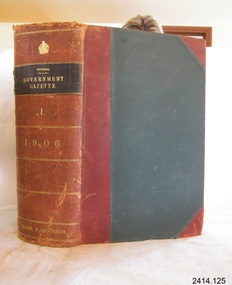
... Proclamations and Orders in Council; appointments, promotions, and resignations of public officials; land sales, transfers, and Crown land notices; company registrations, and insolvency and bankruptcy notices; regulations under various colonial Acts; and notices from local councils and government departments as well as all manner of colonial documents from all government departments. ...Proclamations and Orders in Council; appointments, promotions, and resignations of public officials; land sales, transfers, and Crown land notices; company registrations, and insolvency and bankruptcy notices; regulations under various colonial Acts; and notices from local councils and government departments as well as all manner of colonial documents from all government departments. ...The Victoria Government Gazette and other government documents from 1887 were printed and published by Robert S. Brain, Government Printer, Melbourne. Brain held the position of Victorian Government Printer through the 1890s and into the early 1900s. The same imprint appears on other official Victorian publications from that era, such as the annual reports of the Board for the Protection of the Aborigines and the colony's Statistical Register. There wasn't really an editor in the modern sense the Gazette was compiled and issued under the authority of the colonial government, via the Chief Secretary's Department, with Brain's printing office producing and publishing it. In May 1906, James Kemp succeeded him, serving as Government Printer from May 1906 to August 1912, with the title of Acting Government Printer right at the very start of his tenure he was stepping into the role Brain had just vacated, and by later in December 1906 he was signing gazettes in that capacity, apparently before his appointment was made permanent. Then in 1913 Albert James Mullett took over the role starting from January 1913.Hard cover book. The Victorian Government Gazette 1906 Vol 1 /128 Printer: James Kemp Publisher: James Kemp Publisher: Authority of The Colonial Government Date: 1906 Further Information: Textured hard cover bound book leather burgundy colour spine with gilt lettering, covers embossed blue cloth & reinforced corners to front and back cover. non-fictionThe Victoria Government Gazette and other government documents from 1887 were printed and published by Robert S. Brain, Government Printer, Melbourne. Brain held the position of Victorian Government Printer through the 1890s and into the early 1900s. The same imprint appears on other official Victorian publications from that era, such as the annual reports of the Board for the Protection of the Aborigines and the colony's Statistical Register. There wasn't really an editor in the modern sense the Gazette was compiled and issued under the authority of the colonial government, via the Chief Secretary's Department, with Brain's printing office producing and publishing it. In May 1906, James Kemp succeeded him, serving as Government Printer from May 1906 to August 1912, with the title of Acting Government Printer right at the very start of his tenure he was stepping into the role Brain had just vacated, and by later in December 1906 he was signing gazettes in that capacity, apparently before his appointment was made permanent. Then in 1913 Albert James Mullett took over the role starting from January 1913. flagstaff hill, warrnambool, shipwrecked-coast, flagstaff-hill, flagstaff-hill-maritime-museum, maritime-museum, shipwreck-coast, flagstaff-hill-maritime-village, book, the victoria government gazette 1906 2 vol 129, the victoria government gazette 1906, the victoria government gazette -
 Flagstaff Hill Maritime Museum and Village
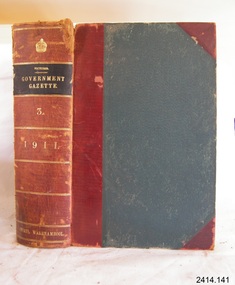
Book - Reference/Colonial Government Notification Gazette, James Kemp, The Victorian Government Gazette 1911 Vol 3 /145, 1911
... Proclamations and Orders in Council; appointments, promotions, and resignations of public officials; land sales, transfers, and Crown land notices; company registrations, and insolvency and bankruptcy notices; regulations under various colonial Acts; and notices from local councils and government departments as well as all manner of colonial documents from all government departments. ...Proclamations and Orders in Council; appointments, promotions, and resignations of public officials; land sales, transfers, and Crown land notices; company registrations, and insolvency and bankruptcy notices; regulations under various colonial Acts; and notices from local councils and government departments as well as all manner of colonial documents from all government departments. ...The Victoria Government Gazette and other government documents from 1887 were printed and published by Robert S. Brain, Government Printer, Melbourne. Brain held the position of Victorian Government Printer through the 1890s and into the early 1900s. The same imprint appears on other official Victorian publications from that era, such as the annual reports of the Board for the Protection of the Aborigines and the colony's Statistical Register. There wasn't really an editor in the modern sense the Gazette was compiled and issued under the authority of the colonial government, via the Chief Secretary's Department, with Brain's printing office producing and publishing it. In May 1906, James Kemp succeeded him, serving as Government Printer from May 1906 to August 1912, with the title of Acting Government Printer right at the very start of his tenure he was stepping into the role Brain had just vacated, and by later in December 1906 he was signing gazettes in that capacity, apparently before his appointment was made permanent. Then in 1913 Albert James Mullett took over the role starting from January 1913.Hard cover book. The Victorian Government Gazette 1911 Vol 3 /145 Printer: James Kemp Publisher: James Kemp Publisher: Authority of The Colonial Government Date: 1911 Further Information: Textured hard cover bound book leather burgundy colour spine with gilt lettering, covers embossed blue cloth & reinforced corners to front and back cover. non-fictionThe Victoria Government Gazette and other government documents from 1887 were printed and published by Robert S. Brain, Government Printer, Melbourne. Brain held the position of Victorian Government Printer through the 1890s and into the early 1900s. The same imprint appears on other official Victorian publications from that era, such as the annual reports of the Board for the Protection of the Aborigines and the colony's Statistical Register. There wasn't really an editor in the modern sense the Gazette was compiled and issued under the authority of the colonial government, via the Chief Secretary's Department, with Brain's printing office producing and publishing it. In May 1906, James Kemp succeeded him, serving as Government Printer from May 1906 to August 1912, with the title of Acting Government Printer right at the very start of his tenure he was stepping into the role Brain had just vacated, and by later in December 1906 he was signing gazettes in that capacity, apparently before his appointment was made permanent. Then in 1913 Albert James Mullett took over the role starting from January 1913. flagstaff hill, warrnambool, shipwrecked-coast, flagstaff-hill, flagstaff-hill-maritime-museum, maritime-museum, shipwreck-coast, flagstaff-hill-maritime-village, book, the victoria government gazette 1906 2 vol 129, the victoria government gazette 1906, the victoria government gazette -
 Flagstaff Hill Maritime Museum and Village
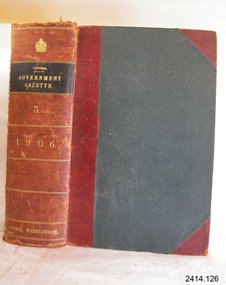
Book - Reference/Colonial Government Notification Gazette, James Kemp, The Victorian Government Gazette 1906 Vol 3 /130, 1906
... Proclamations and Orders in Council; appointments, promotions, and resignations of public officials; land sales, transfers, and Crown land notices; company registrations, and insolvency and bankruptcy notices; regulations under various colonial Acts; and notices from local councils and government departments as well as all manner of colonial documents from all government departments. ...Proclamations and Orders in Council; appointments, promotions, and resignations of public officials; land sales, transfers, and Crown land notices; company registrations, and insolvency and bankruptcy notices; regulations under various colonial Acts; and notices from local councils and government departments as well as all manner of colonial documents from all government departments. ...The Victoria Government Gazette and other government documents from 1887 were printed and published by Robert S. Brain, Government Printer, Melbourne. Brain held the position of Victorian Government Printer through the 1890s and into the early 1900s. The same imprint appears on other official Victorian publications from that era, such as the annual reports of the Board for the Protection of the Aborigines and the colony's Statistical Register. There wasn't really an editor in the modern sense the Gazette was compiled and issued under the authority of the colonial government, via the Chief Secretary's Department, with Brain's printing office producing and publishing it. In May 1906, James Kemp succeeded him, serving as Government Printer from May 1906 to August 1912, with the title of Acting Government Printer right at the very start of his tenure he was stepping into the role Brain had just vacated, and by later in December 1906 he was signing gazettes in that capacity, apparently before his appointment was made permanent. Then in 1913 Albert James Mullett took over the role starting from January 1913.Hard cover book. The Victorian Government Gazette 1906 Vol 3 /130 Printer: James Kemp Publisher: James Kemp Publisher: Authority of The Colonial Government Date: 1906 Further Information: Textured hard cover bound book leather burgundy colour spine with gilt lettering, covers embossed blue cloth & reinforced corners to front and back cover. non-fictionThe Victoria Government Gazette and other government documents from 1887 were printed and published by Robert S. Brain, Government Printer, Melbourne. Brain held the position of Victorian Government Printer through the 1890s and into the early 1900s. The same imprint appears on other official Victorian publications from that era, such as the annual reports of the Board for the Protection of the Aborigines and the colony's Statistical Register. There wasn't really an editor in the modern sense the Gazette was compiled and issued under the authority of the colonial government, via the Chief Secretary's Department, with Brain's printing office producing and publishing it. In May 1906, James Kemp succeeded him, serving as Government Printer from May 1906 to August 1912, with the title of Acting Government Printer right at the very start of his tenure he was stepping into the role Brain had just vacated, and by later in December 1906 he was signing gazettes in that capacity, apparently before his appointment was made permanent. Then in 1913 Albert James Mullett took over the role starting from January 1913. flagstaff hill, warrnambool, shipwrecked-coast, flagstaff-hill, flagstaff-hill-maritime-museum, maritime-museum, shipwreck-coast, flagstaff-hill-maritime-village, book, the victoria government gazette 1906 2 vol 129, the victoria government gazette 1906, the victoria government gazette -
 Flagstaff Hill Maritime Museum and Village
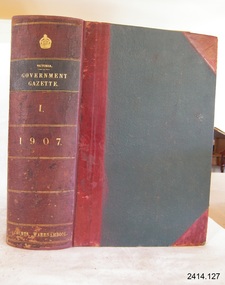
Book - Reference/Colonial Government Notification Gazette, James Kemp, The Victorian Government Gazette 1907 Vol 1 /131, 1907
... Proclamations and Orders in Council; appointments, promotions, and resignations of public officials; land sales, transfers, and Crown land notices; company registrations, and insolvency and bankruptcy notices; regulations under various colonial Acts; and notices from local councils and government departments as well as all manner of colonial documents from all government departments. ...Proclamations and Orders in Council; appointments, promotions, and resignations of public officials; land sales, transfers, and Crown land notices; company registrations, and insolvency and bankruptcy notices; regulations under various colonial Acts; and notices from local councils and government departments as well as all manner of colonial documents from all government departments. ...The Victoria Government Gazette and other government documents from 1887 were printed and published by Robert S. Brain, Government Printer, Melbourne. Brain held the position of Victorian Government Printer through the 1890s and into the early 1900s. The same imprint appears on other official Victorian publications from that era, such as the annual reports of the Board for the Protection of the Aborigines and the colony's Statistical Register. There wasn't really an editor in the modern sense the Gazette was compiled and issued under the authority of the colonial government, via the Chief Secretary's Department, with Brain's printing office producing and publishing it. In May 1906, James Kemp succeeded him, serving as Government Printer from May 1906 to August 1912, with the title of Acting Government Printer right at the very start of his tenure he was stepping into the role Brain had just vacated, and by later in December 1906 he was signing gazettes in that capacity, apparently before his appointment was made permanent. Then in 1913 Albert James Mullett took over the role starting from January 1913.Hard cover book. The Victorian Government Gazette 1907 Vol 1 /131 Printer: James Kemp Publisher: James Kemp Publisher: Authority of The Colonial Government Date: 1907 Further Information: Textured hard cover bound book leather burgundy colour spine with gilt lettering, covers embossed blue cloth & reinforced corners to front and back cover. non-fictionThe Victoria Government Gazette and other government documents from 1887 were printed and published by Robert S. Brain, Government Printer, Melbourne. Brain held the position of Victorian Government Printer through the 1890s and into the early 1900s. The same imprint appears on other official Victorian publications from that era, such as the annual reports of the Board for the Protection of the Aborigines and the colony's Statistical Register. There wasn't really an editor in the modern sense the Gazette was compiled and issued under the authority of the colonial government, via the Chief Secretary's Department, with Brain's printing office producing and publishing it. In May 1906, James Kemp succeeded him, serving as Government Printer from May 1906 to August 1912, with the title of Acting Government Printer right at the very start of his tenure he was stepping into the role Brain had just vacated, and by later in December 1906 he was signing gazettes in that capacity, apparently before his appointment was made permanent. Then in 1913 Albert James Mullett took over the role starting from January 1913. flagstaff hill, warrnambool, shipwrecked-coast, flagstaff-hill, flagstaff-hill-maritime-museum, maritime-museum, shipwreck-coast, flagstaff-hill-maritime-village, book, the victoria government gazette 1906 2 vol 129, the victoria government gazette 1906, the victoria government gazette -
 Flagstaff Hill Maritime Museum and Village
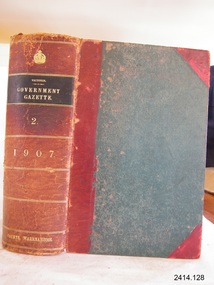
Book - Reference/Colonial Government Notification Gazette, James Kemp, The Victorian Government Gazette 1907 Vol 2 /132, 1907
... Proclamations and Orders in Council; appointments, promotions, and resignations of public officials; land sales, transfers, and Crown land notices; company registrations, and insolvency and bankruptcy notices; regulations under various colonial Acts; and notices from local councils and government departments as well as all manner of colonial documents from all government departments. ...Proclamations and Orders in Council; appointments, promotions, and resignations of public officials; land sales, transfers, and Crown land notices; company registrations, and insolvency and bankruptcy notices; regulations under various colonial Acts; and notices from local councils and government departments as well as all manner of colonial documents from all government departments. ...The Victoria Government Gazette and other government documents from 1887 were printed and published by Robert S. Brain, Government Printer, Melbourne. Brain held the position of Victorian Government Printer through the 1890s and into the early 1900s. The same imprint appears on other official Victorian publications from that era, such as the annual reports of the Board for the Protection of the Aborigines and the colony's Statistical Register. There wasn't really an editor in the modern sense the Gazette was compiled and issued under the authority of the colonial government, via the Chief Secretary's Department, with Brain's printing office producing and publishing it. In May 1906, James Kemp succeeded him, serving as Government Printer from May 1906 to August 1912, with the title of Acting Government Printer right at the very start of his tenure he was stepping into the role Brain had just vacated, and by later in December 1906 he was signing gazettes in that capacity, apparently before his appointment was made permanent. Then in 1913 Albert James Mullett took over the role starting from January 1913.Hard cover book. The Victorian Government Gazette 1907 Vol 2 /132 Printer: James Kemp Publisher: James Kemp Publisher: Authority of The Colonial Government Date: 1907 Further Information: Textured hard cover bound book leather burgundy colour spine with gilt lettering, covers embossed blue cloth & reinforced corners to front and back cover. non-fictionThe Victoria Government Gazette and other government documents from 1887 were printed and published by Robert S. Brain, Government Printer, Melbourne. Brain held the position of Victorian Government Printer through the 1890s and into the early 1900s. The same imprint appears on other official Victorian publications from that era, such as the annual reports of the Board for the Protection of the Aborigines and the colony's Statistical Register. There wasn't really an editor in the modern sense the Gazette was compiled and issued under the authority of the colonial government, via the Chief Secretary's Department, with Brain's printing office producing and publishing it. In May 1906, James Kemp succeeded him, serving as Government Printer from May 1906 to August 1912, with the title of Acting Government Printer right at the very start of his tenure he was stepping into the role Brain had just vacated, and by later in December 1906 he was signing gazettes in that capacity, apparently before his appointment was made permanent. Then in 1913 Albert James Mullett took over the role starting from January 1913. flagstaff hill, warrnambool, shipwrecked-coast, flagstaff-hill, flagstaff-hill-maritime-museum, maritime-museum, shipwreck-coast, flagstaff-hill-maritime-village, book, the victoria government gazette 1906 2 vol 129, the victoria government gazette 1906, the victoria government gazette -
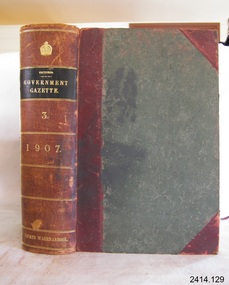 Flagstaff Hill Maritime Museum and Village
Book - Reference/Colonial Government Notification Gazette, James Kemp, The Victorian Government Gazette 1907 Vol 3 /133, 1907
... Proclamations and Orders in Council; appointments, promotions, and resignations of public officials; land sales, transfers, and Crown land notices; company registrations, and insolvency and bankruptcy notices; regulations under various colonial Acts; and notices from local councils and government departments as well as all manner of colonial documents from all government departments. ...Proclamations and Orders in Council; appointments, promotions, and resignations of public officials; land sales, transfers, and Crown land notices; company registrations, and insolvency and bankruptcy notices; regulations under various colonial Acts; and notices from local councils and government departments as well as all manner of colonial documents from all government departments. ...The Victoria Government Gazette and other government documents from 1887 were printed and published by Robert S. Brain, Government Printer, Melbourne. Brain held the position of Victorian Government Printer through the 1890s and into the early 1900s. The same imprint appears on other official Victorian publications from that era, such as the annual reports of the Board for the Protection of the Aborigines and the colony's Statistical Register. There wasn't really an editor in the modern sense the Gazette was compiled and issued under the authority of the colonial government, via the Chief Secretary's Department, with Brain's printing office producing and publishing it. In May 1906, James Kemp succeeded him, serving as Government Printer from May 1906 to August 1912, with the title of Acting Government Printer right at the very start of his tenure he was stepping into the role Brain had just vacated, and by later in December 1906 he was signing gazettes in that capacity, apparently before his appointment was made permanent. Then in 1913 Albert James Mullett took over the role starting from January 1913.Hard cover book. The Victorian Government Gazette 1907 Vol 3 /133 Printer: James Kemp Publisher: James Kemp Publisher: Authority of The Colonial Government Date: 1907 Further Information: Textured hard cover bound book leather burgundy colour spine with gilt lettering, covers embossed blue cloth & reinforced corners to front and back cover. non-fictionThe Victoria Government Gazette and other government documents from 1887 were printed and published by Robert S. Brain, Government Printer, Melbourne. Brain held the position of Victorian Government Printer through the 1890s and into the early 1900s. The same imprint appears on other official Victorian publications from that era, such as the annual reports of the Board for the Protection of the Aborigines and the colony's Statistical Register. There wasn't really an editor in the modern sense the Gazette was compiled and issued under the authority of the colonial government, via the Chief Secretary's Department, with Brain's printing office producing and publishing it. In May 1906, James Kemp succeeded him, serving as Government Printer from May 1906 to August 1912, with the title of Acting Government Printer right at the very start of his tenure he was stepping into the role Brain had just vacated, and by later in December 1906 he was signing gazettes in that capacity, apparently before his appointment was made permanent. Then in 1913 Albert James Mullett took over the role starting from January 1913. flagstaff hill, warrnambool, shipwrecked-coast, flagstaff-hill, flagstaff-hill-maritime-museum, maritime-museum, shipwreck-coast, flagstaff-hill-maritime-village, book, the victoria government gazette 1906 2 vol 129, the victoria government gazette 1906, the victoria government gazette -
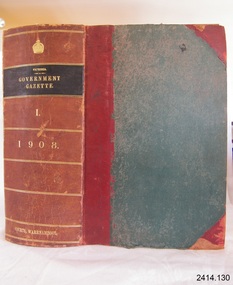 Flagstaff Hill Maritime Museum and Village
Book - Reference/Colonial Government Notification Gazette, James Kemp, The Victorian Government Gazette 1908 Vol 1 /134, 1908
... Proclamations and Orders in Council; appointments, promotions, and resignations of public officials; land sales, transfers, and Crown land notices; company registrations, and insolvency and bankruptcy notices; regulations under various colonial Acts; and notices from local councils and government departments as well as all manner of colonial documents from all government departments. ...Proclamations and Orders in Council; appointments, promotions, and resignations of public officials; land sales, transfers, and Crown land notices; company registrations, and insolvency and bankruptcy notices; regulations under various colonial Acts; and notices from local councils and government departments as well as all manner of colonial documents from all government departments. ...The Victoria Government Gazette and other government documents from 1887 were printed and published by Robert S. Brain, Government Printer, Melbourne. Brain held the position of Victorian Government Printer through the 1890s and into the early 1900s. The same imprint appears on other official Victorian publications from that era, such as the annual reports of the Board for the Protection of the Aborigines and the colony's Statistical Register. There wasn't really an editor in the modern sense the Gazette was compiled and issued under the authority of the colonial government, via the Chief Secretary's Department, with Brain's printing office producing and publishing it. In May 1906, James Kemp succeeded him, serving as Government Printer from May 1906 to August 1912, with the title of Acting Government Printer right at the very start of his tenure he was stepping into the role Brain had just vacated, and by later in December 1906 he was signing gazettes in that capacity, apparently before his appointment was made permanent. Then in 1913 Albert James Mullett took over the role starting from January 1913.Hard cover book. The Victorian Government Gazette 1908 Vol 1 /134 Printer: James Kemp Publisher: James Kemp Publisher: Authority of The Colonial Government Date: 1908 Further Information: Textured hard cover bound book leather burgundy colour spine with gilt lettering, covers embossed blue cloth & reinforced corners to front and back cover. non-fictionThe Victoria Government Gazette and other government documents from 1887 were printed and published by Robert S. Brain, Government Printer, Melbourne. Brain held the position of Victorian Government Printer through the 1890s and into the early 1900s. The same imprint appears on other official Victorian publications from that era, such as the annual reports of the Board for the Protection of the Aborigines and the colony's Statistical Register. There wasn't really an editor in the modern sense the Gazette was compiled and issued under the authority of the colonial government, via the Chief Secretary's Department, with Brain's printing office producing and publishing it. In May 1906, James Kemp succeeded him, serving as Government Printer from May 1906 to August 1912, with the title of Acting Government Printer right at the very start of his tenure he was stepping into the role Brain had just vacated, and by later in December 1906 he was signing gazettes in that capacity, apparently before his appointment was made permanent. Then in 1913 Albert James Mullett took over the role starting from January 1913. flagstaff hill, warrnambool, shipwrecked-coast, flagstaff-hill, flagstaff-hill-maritime-museum, maritime-museum, shipwreck-coast, flagstaff-hill-maritime-village, book, the victoria government gazette 1906 2 vol 129, the victoria government gazette 1906, the victoria government gazette -
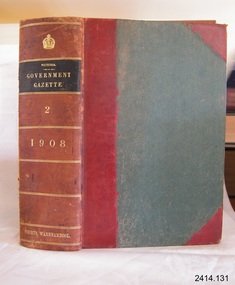 Flagstaff Hill Maritime Museum and Village
Book - Reference/Colonial Government Notification Gazette, James Kemp, The Victorian Government Gazette 1908 Vol 2 /135, 1908
... Proclamations and Orders in Council; appointments, promotions, and resignations of public officials; land sales, transfers, and Crown land notices; company registrations, and insolvency and bankruptcy notices; regulations under various colonial Acts; and notices from local councils and government departments as well as all manner of colonial documents from all government departments. ...Proclamations and Orders in Council; appointments, promotions, and resignations of public officials; land sales, transfers, and Crown land notices; company registrations, and insolvency and bankruptcy notices; regulations under various colonial Acts; and notices from local councils and government departments as well as all manner of colonial documents from all government departments. ...The Victoria Government Gazette and other government documents from 1887 were printed and published by Robert S. Brain, Government Printer, Melbourne. Brain held the position of Victorian Government Printer through the 1890s and into the early 1900s. The same imprint appears on other official Victorian publications from that era, such as the annual reports of the Board for the Protection of the Aborigines and the colony's Statistical Register. There wasn't really an editor in the modern sense the Gazette was compiled and issued under the authority of the colonial government, via the Chief Secretary's Department, with Brain's printing office producing and publishing it. In May 1906, James Kemp succeeded him, serving as Government Printer from May 1906 to August 1912, with the title of Acting Government Printer right at the very start of his tenure he was stepping into the role Brain had just vacated, and by later in December 1906 he was signing gazettes in that capacity, apparently before his appointment was made permanent. Then in 1913 Albert James Mullett took over the role starting from January 1913.Hard cover book. The Victorian Government Gazette 1908 Vol 2 /135 Printer: James Kemp Publisher: James Kemp Publisher: Authority of The Colonial Government Date: 1908 Further Information: Textured hard cover bound book leather burgundy colour spine with gilt lettering, covers embossed blue cloth & reinforced corners to front and back cover. non-fictionThe Victoria Government Gazette and other government documents from 1887 were printed and published by Robert S. Brain, Government Printer, Melbourne. Brain held the position of Victorian Government Printer through the 1890s and into the early 1900s. The same imprint appears on other official Victorian publications from that era, such as the annual reports of the Board for the Protection of the Aborigines and the colony's Statistical Register. There wasn't really an editor in the modern sense the Gazette was compiled and issued under the authority of the colonial government, via the Chief Secretary's Department, with Brain's printing office producing and publishing it. In May 1906, James Kemp succeeded him, serving as Government Printer from May 1906 to August 1912, with the title of Acting Government Printer right at the very start of his tenure he was stepping into the role Brain had just vacated, and by later in December 1906 he was signing gazettes in that capacity, apparently before his appointment was made permanent. Then in 1913 Albert James Mullett took over the role starting from January 1913. flagstaff hill, warrnambool, shipwrecked-coast, flagstaff-hill, flagstaff-hill-maritime-museum, maritime-museum, shipwreck-coast, flagstaff-hill-maritime-village, book, the victoria government gazette 1906 2 vol 129, the victoria government gazette 1906, the victoria government gazette -
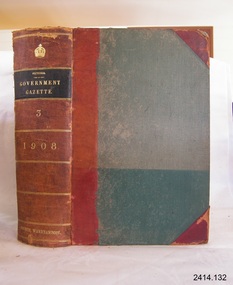 Flagstaff Hill Maritime Museum and Village
Book - Reference/Colonial Government Notification Gazette, James Kemp, The Victorian Government Gazette 1908 Vol 3 /136, 1908
... Proclamations and Orders in Council; appointments, promotions, and resignations of public officials; land sales, transfers, and Crown land notices; company registrations, and insolvency and bankruptcy notices; regulations under various colonial Acts; and notices from local councils and government departments as well as all manner of colonial documents from all government departments. ...Proclamations and Orders in Council; appointments, promotions, and resignations of public officials; land sales, transfers, and Crown land notices; company registrations, and insolvency and bankruptcy notices; regulations under various colonial Acts; and notices from local councils and government departments as well as all manner of colonial documents from all government departments. ...The Victoria Government Gazette and other government documents from 1887 were printed and published by Robert S. Brain, Government Printer, Melbourne. Brain held the position of Victorian Government Printer through the 1890s and into the early 1900s. The same imprint appears on other official Victorian publications from that era, such as the annual reports of the Board for the Protection of the Aborigines and the colony's Statistical Register. There wasn't really an editor in the modern sense the Gazette was compiled and issued under the authority of the colonial government, via the Chief Secretary's Department, with Brain's printing office producing and publishing it. In May 1906, James Kemp succeeded him, serving as Government Printer from May 1906 to August 1912, with the title of Acting Government Printer right at the very start of his tenure he was stepping into the role Brain had just vacated, and by later in December 1906 he was signing gazettes in that capacity, apparently before his appointment was made permanent. Then in 1913 Albert James Mullett took over the role starting from January 1913.Hard cover book. The Victorian Government Gazette 1908 Vol 3 /136 Printer: James Kemp Publisher: James Kemp Publisher: Authority of The Colonial Government Date: 1908 Further Information: Textured hard cover bound book leather burgundy colour spine with gilt lettering, covers embossed blue cloth & reinforced corners to front and back cover. non-fictionThe Victoria Government Gazette and other government documents from 1887 were printed and published by Robert S. Brain, Government Printer, Melbourne. Brain held the position of Victorian Government Printer through the 1890s and into the early 1900s. The same imprint appears on other official Victorian publications from that era, such as the annual reports of the Board for the Protection of the Aborigines and the colony's Statistical Register. There wasn't really an editor in the modern sense the Gazette was compiled and issued under the authority of the colonial government, via the Chief Secretary's Department, with Brain's printing office producing and publishing it. In May 1906, James Kemp succeeded him, serving as Government Printer from May 1906 to August 1912, with the title of Acting Government Printer right at the very start of his tenure he was stepping into the role Brain had just vacated, and by later in December 1906 he was signing gazettes in that capacity, apparently before his appointment was made permanent. Then in 1913 Albert James Mullett took over the role starting from January 1913. flagstaff hill, warrnambool, shipwrecked-coast, flagstaff-hill, flagstaff-hill-maritime-museum, maritime-museum, shipwreck-coast, flagstaff-hill-maritime-village, book, the victoria government gazette 1906 2 vol 129, the victoria government gazette 1906, the victoria government gazette -
 Flagstaff Hill Maritime Museum and Village
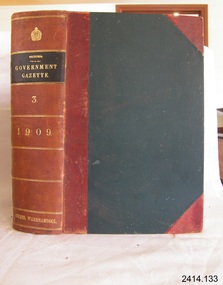
Book - Reference/Colonial Government Notification Gazette, James Kemp, The Victorian Government Gazette 1909 Vol 3 /139, 1909
... Proclamations and Orders in Council; appointments, promotions, and resignations of public officials; land sales, transfers, and Crown land notices; company registrations, and insolvency and bankruptcy notices; regulations under various colonial Acts; and notices from local councils and government departments as well as all manner of colonial documents from all government departments. ...Proclamations and Orders in Council; appointments, promotions, and resignations of public officials; land sales, transfers, and Crown land notices; company registrations, and insolvency and bankruptcy notices; regulations under various colonial Acts; and notices from local councils and government departments as well as all manner of colonial documents from all government departments. ...The Victoria Government Gazette and other government documents from 1887 were printed and published by Robert S. Brain, Government Printer, Melbourne. Brain held the position of Victorian Government Printer through the 1890s and into the early 1900s. The same imprint appears on other official Victorian publications from that era, such as the annual reports of the Board for the Protection of the Aborigines and the colony's Statistical Register. There wasn't really an editor in the modern sense the Gazette was compiled and issued under the authority of the colonial government, via the Chief Secretary's Department, with Brain's printing office producing and publishing it. In May 1906, James Kemp succeeded him, serving as Government Printer from May 1906 to August 1912, with the title of Acting Government Printer right at the very start of his tenure he was stepping into the role Brain had just vacated, and by later in December 1906 he was signing gazettes in that capacity, apparently before his appointment was made permanent. Then in 1913 Albert James Mullett took over the role starting from January 1913.Hard cover book. The Victorian Government Gazette 1909 Vol 3 /139 Printer: James Kemp Publisher: James Kemp Publisher: Authority of The Colonial Government Date: 1909 Further Information: Textured hard cover bound book leather burgundy colour spine with gilt lettering, covers embossed blue cloth & reinforced corners to front and back cover. non-fictionThe Victoria Government Gazette and other government documents from 1887 were printed and published by Robert S. Brain, Government Printer, Melbourne. Brain held the position of Victorian Government Printer through the 1890s and into the early 1900s. The same imprint appears on other official Victorian publications from that era, such as the annual reports of the Board for the Protection of the Aborigines and the colony's Statistical Register. There wasn't really an editor in the modern sense the Gazette was compiled and issued under the authority of the colonial government, via the Chief Secretary's Department, with Brain's printing office producing and publishing it. In May 1906, James Kemp succeeded him, serving as Government Printer from May 1906 to August 1912, with the title of Acting Government Printer right at the very start of his tenure he was stepping into the role Brain had just vacated, and by later in December 1906 he was signing gazettes in that capacity, apparently before his appointment was made permanent. Then in 1913 Albert James Mullett took over the role starting from January 1913. flagstaff hill, warrnambool, shipwrecked-coast, flagstaff-hill, flagstaff-hill-maritime-museum, maritime-museum, shipwreck-coast, flagstaff-hill-maritime-village, book, the victoria government gazette 1906 2 vol 129, the victoria government gazette 1906, the victoria government gazette -
 Flagstaff Hill Maritime Museum and Village
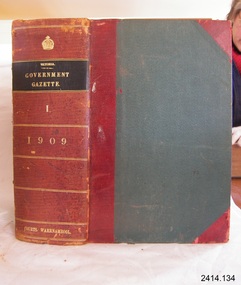
Book - Reference/Colonial Government Notification Gazette, James Kemp, The Victorian Government Gazette 1909 Vol 1 /137, 1909
... Proclamations and Orders in Council; appointments, promotions, and resignations of public officials; land sales, transfers, and Crown land notices; company registrations, and insolvency and bankruptcy notices; regulations under various colonial Acts; and notices from local councils and government departments as well as all manner of colonial documents from all government departments. ...Proclamations and Orders in Council; appointments, promotions, and resignations of public officials; land sales, transfers, and Crown land notices; company registrations, and insolvency and bankruptcy notices; regulations under various colonial Acts; and notices from local councils and government departments as well as all manner of colonial documents from all government departments. ...The Victoria Government Gazette and other government documents from 1887 were printed and published by Robert S. Brain, Government Printer, Melbourne. Brain held the position of Victorian Government Printer through the 1890s and into the early 1900s. The same imprint appears on other official Victorian publications from that era, such as the annual reports of the Board for the Protection of the Aborigines and the colony's Statistical Register. There wasn't really an editor in the modern sense the Gazette was compiled and issued under the authority of the colonial government, via the Chief Secretary's Department, with Brain's printing office producing and publishing it. In May 1906, James Kemp succeeded him, serving as Government Printer from May 1906 to August 1912, with the title of Acting Government Printer right at the very start of his tenure he was stepping into the role Brain had just vacated, and by later in December 1906 he was signing gazettes in that capacity, apparently before his appointment was made permanent. Then in 1913 Albert James Mullett took over the role starting from January 1913.Hard cover book. The Victorian Government Gazette 1909 Vol 1 /137 Printer: James Kemp Publisher: James Kemp Publisher: Authority of The Colonial Government Date: 1909 Further Information: Textured hard cover bound book leather burgundy colour spine with gilt lettering, covers embossed blue cloth & reinforced corners to front and back cover. non-fictionThe Victoria Government Gazette and other government documents from 1887 were printed and published by Robert S. Brain, Government Printer, Melbourne. Brain held the position of Victorian Government Printer through the 1890s and into the early 1900s. The same imprint appears on other official Victorian publications from that era, such as the annual reports of the Board for the Protection of the Aborigines and the colony's Statistical Register. There wasn't really an editor in the modern sense the Gazette was compiled and issued under the authority of the colonial government, via the Chief Secretary's Department, with Brain's printing office producing and publishing it. In May 1906, James Kemp succeeded him, serving as Government Printer from May 1906 to August 1912, with the title of Acting Government Printer right at the very start of his tenure he was stepping into the role Brain had just vacated, and by later in December 1906 he was signing gazettes in that capacity, apparently before his appointment was made permanent. Then in 1913 Albert James Mullett took over the role starting from January 1913. flagstaff hill, warrnambool, shipwrecked-coast, flagstaff-hill, flagstaff-hill-maritime-museum, maritime-museum, shipwreck-coast, flagstaff-hill-maritime-village, book, the victoria government gazette 1906 2 vol 129, the victoria government gazette 1906, the victoria government gazette -
 Flagstaff Hill Maritime Museum and Village
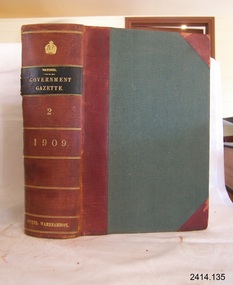
Book - Reference/Colonial Government Notification Gazette, James Kemp, The Victorian Government Gazette 1909 Vol 2 /138, 1909
... Proclamations and Orders in Council; appointments, promotions, and resignations of public officials; land sales, transfers, and Crown land notices; company registrations, and insolvency and bankruptcy notices; regulations under various colonial Acts; and notices from local councils and government departments as well as all manner of colonial documents from all government departments. ...Proclamations and Orders in Council; appointments, promotions, and resignations of public officials; land sales, transfers, and Crown land notices; company registrations, and insolvency and bankruptcy notices; regulations under various colonial Acts; and notices from local councils and government departments as well as all manner of colonial documents from all government departments. ...The Victoria Government Gazette and other government documents from 1887 were printed and published by Robert S. Brain, Government Printer, Melbourne. Brain held the position of Victorian Government Printer through the 1890s and into the early 1900s. The same imprint appears on other official Victorian publications from that era, such as the annual reports of the Board for the Protection of the Aborigines and the colony's Statistical Register. There wasn't really an editor in the modern sense the Gazette was compiled and issued under the authority of the colonial government, via the Chief Secretary's Department, with Brain's printing office producing and publishing it. In May 1906, James Kemp succeeded him, serving as Government Printer from May 1906 to August 1912, with the title of Acting Government Printer right at the very start of his tenure he was stepping into the role Brain had just vacated, and by later in December 1906 he was signing gazettes in that capacity, apparently before his appointment was made permanent. Then in 1913 Albert James Mullett took over the role starting from January 1913.Hard cover book. The Victorian Government Gazette 1909 Vol 2 /138 Printer: James Kemp Publisher: James Kemp Publisher: Authority of The Colonial Government Date: 1909 Further Information: Textured hard cover bound book leather burgundy colour spine with gilt lettering, covers embossed blue cloth & reinforced corners to front and back cover. non-fictionThe Victoria Government Gazette and other government documents from 1887 were printed and published by Robert S. Brain, Government Printer, Melbourne. Brain held the position of Victorian Government Printer through the 1890s and into the early 1900s. The same imprint appears on other official Victorian publications from that era, such as the annual reports of the Board for the Protection of the Aborigines and the colony's Statistical Register. There wasn't really an editor in the modern sense the Gazette was compiled and issued under the authority of the colonial government, via the Chief Secretary's Department, with Brain's printing office producing and publishing it. In May 1906, James Kemp succeeded him, serving as Government Printer from May 1906 to August 1912, with the title of Acting Government Printer right at the very start of his tenure he was stepping into the role Brain had just vacated, and by later in December 1906 he was signing gazettes in that capacity, apparently before his appointment was made permanent. Then in 1913 Albert James Mullett took over the role starting from January 1913. flagstaff hill, warrnambool, shipwrecked-coast, flagstaff-hill, flagstaff-hill-maritime-museum, maritime-museum, shipwreck-coast, flagstaff-hill-maritime-village, book, the victoria government gazette 1906 2 vol 129, the victoria government gazette 1906, the victoria government gazette -
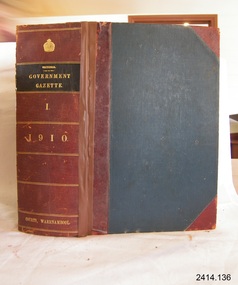 Flagstaff Hill Maritime Museum and Village
Book - Reference/Colonial Government Notification Gazette, James Kemp, The Victorian Government Gazette 1910 Vol 1 /140, 1910
... Proclamations and Orders in Council; appointments, promotions, and resignations of public officials; land sales, transfers, and Crown land notices; company registrations, and insolvency and bankruptcy notices; regulations under various colonial Acts; and notices from local councils and government departments as well as all manner of colonial documents from all government departments. ...Proclamations and Orders in Council; appointments, promotions, and resignations of public officials; land sales, transfers, and Crown land notices; company registrations, and insolvency and bankruptcy notices; regulations under various colonial Acts; and notices from local councils and government departments as well as all manner of colonial documents from all government departments. ...The Victoria Government Gazette and other government documents from 1887 were printed and published by Robert S. Brain, Government Printer, Melbourne. Brain held the position of Victorian Government Printer through the 1890s and into the early 1900s. The same imprint appears on other official Victorian publications from that era, such as the annual reports of the Board for the Protection of the Aborigines and the colony's Statistical Register. There wasn't really an editor in the modern sense the Gazette was compiled and issued under the authority of the colonial government, via the Chief Secretary's Department, with Brain's printing office producing and publishing it. In May 1906, James Kemp succeeded him, serving as Government Printer from May 1906 to August 1912, with the title of Acting Government Printer right at the very start of his tenure he was stepping into the role Brain had just vacated, and by later in December 1906 he was signing gazettes in that capacity, apparently before his appointment was made permanent. Then in 1913 Albert James Mullett took over the role starting from January 1913.Hard cover book. The Victorian Government Gazette 1910 Vol 1 /140 Printer: James Kemp Publisher: James Kemp Publisher: Authority of The Colonial Government Date: 1910 Further Information: Textured hard cover bound book leather burgundy colour spine with gilt lettering, covers embossed blue cloth & reinforced corners to front and back cover. non-fictionThe Victoria Government Gazette and other government documents from 1887 were printed and published by Robert S. Brain, Government Printer, Melbourne. Brain held the position of Victorian Government Printer through the 1890s and into the early 1900s. The same imprint appears on other official Victorian publications from that era, such as the annual reports of the Board for the Protection of the Aborigines and the colony's Statistical Register. There wasn't really an editor in the modern sense the Gazette was compiled and issued under the authority of the colonial government, via the Chief Secretary's Department, with Brain's printing office producing and publishing it. In May 1906, James Kemp succeeded him, serving as Government Printer from May 1906 to August 1912, with the title of Acting Government Printer right at the very start of his tenure he was stepping into the role Brain had just vacated, and by later in December 1906 he was signing gazettes in that capacity, apparently before his appointment was made permanent. Then in 1913 Albert James Mullett took over the role starting from January 1913. flagstaff hill, warrnambool, shipwrecked-coast, flagstaff-hill, flagstaff-hill-maritime-museum, maritime-museum, shipwreck-coast, flagstaff-hill-maritime-village, book, the victoria government gazette 1906 2 vol 129, the victoria government gazette 1906, the victoria government gazette -
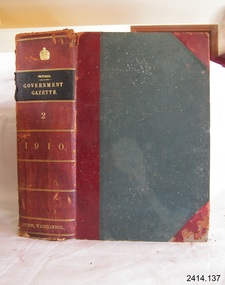 Flagstaff Hill Maritime Museum and Village
Book - Reference/Colonial Government Notification Gazette, James Kemp, The Victorian Government Gazette 1910 Vol 2 /141, 1910
... Proclamations and Orders in Council; appointments, promotions, and resignations of public officials; land sales, transfers, and Crown land notices; company registrations, and insolvency and bankruptcy notices; regulations under various colonial Acts; and notices from local councils and government departments as well as all manner of colonial documents from all government departments. ...Proclamations and Orders in Council; appointments, promotions, and resignations of public officials; land sales, transfers, and Crown land notices; company registrations, and insolvency and bankruptcy notices; regulations under various colonial Acts; and notices from local councils and government departments as well as all manner of colonial documents from all government departments. ...The Victoria Government Gazette and other government documents from 1887 were printed and published by Robert S. Brain, Government Printer, Melbourne. Brain held the position of Victorian Government Printer through the 1890s and into the early 1900s. The same imprint appears on other official Victorian publications from that era, such as the annual reports of the Board for the Protection of the Aborigines and the colony's Statistical Register. There wasn't really an editor in the modern sense the Gazette was compiled and issued under the authority of the colonial government, via the Chief Secretary's Department, with Brain's printing office producing and publishing it. In May 1906, James Kemp succeeded him, serving as Government Printer from May 1906 to August 1912, with the title of Acting Government Printer right at the very start of his tenure he was stepping into the role Brain had just vacated, and by later in December 1906 he was signing gazettes in that capacity, apparently before his appointment was made permanent. Then in 1913 Albert James Mullett took over the role starting from January 1913.Hard cover book. The Victorian Government Gazette 1910 Vol 2 /141 Printer: James Kemp Publisher: James Kemp Publisher: Authority of The Colonial Government Date: 1910 Further Information: Textured hard cover bound book leather burgundy colour spine with gilt lettering, covers embossed blue cloth & reinforced corners to front and back cover. non-fictionThe Victoria Government Gazette and other government documents from 1887 were printed and published by Robert S. Brain, Government Printer, Melbourne. Brain held the position of Victorian Government Printer through the 1890s and into the early 1900s. The same imprint appears on other official Victorian publications from that era, such as the annual reports of the Board for the Protection of the Aborigines and the colony's Statistical Register. There wasn't really an editor in the modern sense the Gazette was compiled and issued under the authority of the colonial government, via the Chief Secretary's Department, with Brain's printing office producing and publishing it. In May 1906, James Kemp succeeded him, serving as Government Printer from May 1906 to August 1912, with the title of Acting Government Printer right at the very start of his tenure he was stepping into the role Brain had just vacated, and by later in December 1906 he was signing gazettes in that capacity, apparently before his appointment was made permanent. Then in 1913 Albert James Mullett took over the role starting from January 1913. flagstaff hill, warrnambool, shipwrecked-coast, flagstaff-hill, flagstaff-hill-maritime-museum, maritime-museum, shipwreck-coast, flagstaff-hill-maritime-village, book, the victoria government gazette 1906 2 vol 129, the victoria government gazette 1906, the victoria government gazette -
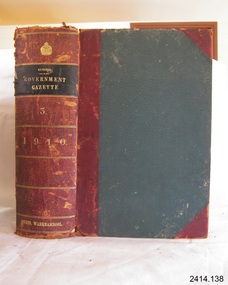 Flagstaff Hill Maritime Museum and Village
Book - Reference/Colonial Government Notification Gazette, James Kemp, The Victorian Government Gazette 1910 Vol 3 /142, 1910
... Proclamations and Orders in Council; appointments, promotions, and resignations of public officials; land sales, transfers, and Crown land notices; company registrations, and insolvency and bankruptcy notices; regulations under various colonial Acts; and notices from local councils and government departments as well as all manner of colonial documents from all government departments. ...Proclamations and Orders in Council; appointments, promotions, and resignations of public officials; land sales, transfers, and Crown land notices; company registrations, and insolvency and bankruptcy notices; regulations under various colonial Acts; and notices from local councils and government departments as well as all manner of colonial documents from all government departments. ...The Victoria Government Gazette and other government documents from 1887 were printed and published by Robert S. Brain, Government Printer, Melbourne. Brain held the position of Victorian Government Printer through the 1890s and into the early 1900s. The same imprint appears on other official Victorian publications from that era, such as the annual reports of the Board for the Protection of the Aborigines and the colony's Statistical Register. There wasn't really an editor in the modern sense the Gazette was compiled and issued under the authority of the colonial government, via the Chief Secretary's Department, with Brain's printing office producing and publishing it. In May 1906, James Kemp succeeded him, serving as Government Printer from May 1906 to August 1912, with the title of Acting Government Printer right at the very start of his tenure he was stepping into the role Brain had just vacated, and by later in December 1906 he was signing gazettes in that capacity, apparently before his appointment was made permanent. Then in 1913 Albert James Mullett took over the role starting from January 1913.Hard cover book. The Victorian Government Gazette 1910 Vol 3 /142 Printer: James Kemp Publisher: James Kemp Publisher: Authority of The Colonial Government Date: 1910 Further Information: Textured hard cover bound book leather burgundy colour spine with gilt lettering, covers embossed blue cloth & reinforced corners to front and back cover. non-fictionThe Victoria Government Gazette and other government documents from 1887 were printed and published by Robert S. Brain, Government Printer, Melbourne. Brain held the position of Victorian Government Printer through the 1890s and into the early 1900s. The same imprint appears on other official Victorian publications from that era, such as the annual reports of the Board for the Protection of the Aborigines and the colony's Statistical Register. There wasn't really an editor in the modern sense the Gazette was compiled and issued under the authority of the colonial government, via the Chief Secretary's Department, with Brain's printing office producing and publishing it. In May 1906, James Kemp succeeded him, serving as Government Printer from May 1906 to August 1912, with the title of Acting Government Printer right at the very start of his tenure he was stepping into the role Brain had just vacated, and by later in December 1906 he was signing gazettes in that capacity, apparently before his appointment was made permanent. Then in 1913 Albert James Mullett took over the role starting from January 1913. flagstaff hill, warrnambool, shipwrecked-coast, flagstaff-hill, flagstaff-hill-maritime-museum, maritime-museum, shipwreck-coast, flagstaff-hill-maritime-village, book, the victoria government gazette 1906 2 vol 129, the victoria government gazette 1906, the victoria government gazette -
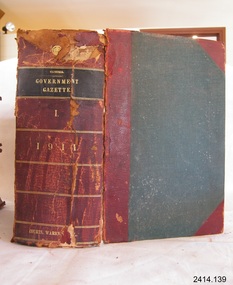 Flagstaff Hill Maritime Museum and Village
Book - Reference/Colonial Government Notification Gazette, James Kemp, The Victorian Government Gazette 1911 Vol 1 /143, 1911
... Proclamations and Orders in Council; appointments, promotions, and resignations of public officials; land sales, transfers, and Crown land notices; company registrations, and insolvency and bankruptcy notices; regulations under various colonial Acts; and notices from local councils and government departments as well as all manner of colonial documents from all government departments. ...Proclamations and Orders in Council; appointments, promotions, and resignations of public officials; land sales, transfers, and Crown land notices; company registrations, and insolvency and bankruptcy notices; regulations under various colonial Acts; and notices from local councils and government departments as well as all manner of colonial documents from all government departments. ...The Victoria Government Gazette and other government documents from 1887 were printed and published by Robert S. Brain, Government Printer, Melbourne. Brain held the position of Victorian Government Printer through the 1890s and into the early 1900s. The same imprint appears on other official Victorian publications from that era, such as the annual reports of the Board for the Protection of the Aborigines and the colony's Statistical Register. There wasn't really an editor in the modern sense the Gazette was compiled and issued under the authority of the colonial government, via the Chief Secretary's Department, with Brain's printing office producing and publishing it. In May 1906, James Kemp succeeded him, serving as Government Printer from May 1906 to August 1912, with the title of Acting Government Printer right at the very start of his tenure he was stepping into the role Brain had just vacated, and by later in December 1906 he was signing gazettes in that capacity, apparently before his appointment was made permanent. Then in 1913 Albert James Mullett took over the role starting from January 1913.Hard cover book. The Victorian Government Gazette 1911 Vol 1 /143 Printer: James Kemp Publisher: James Kemp Publisher: Authority of The Colonial Government Date: 1911 Further Information: Textured hard cover bound book leather burgundy colour spine with gilt lettering, covers embossed blue cloth & reinforced corners to front and back cover. non-fictionThe Victoria Government Gazette and other government documents from 1887 were printed and published by Robert S. Brain, Government Printer, Melbourne. Brain held the position of Victorian Government Printer through the 1890s and into the early 1900s. The same imprint appears on other official Victorian publications from that era, such as the annual reports of the Board for the Protection of the Aborigines and the colony's Statistical Register. There wasn't really an editor in the modern sense the Gazette was compiled and issued under the authority of the colonial government, via the Chief Secretary's Department, with Brain's printing office producing and publishing it. In May 1906, James Kemp succeeded him, serving as Government Printer from May 1906 to August 1912, with the title of Acting Government Printer right at the very start of his tenure he was stepping into the role Brain had just vacated, and by later in December 1906 he was signing gazettes in that capacity, apparently before his appointment was made permanent. Then in 1913 Albert James Mullett took over the role starting from January 1913. flagstaff hill, warrnambool, shipwrecked-coast, flagstaff-hill, flagstaff-hill-maritime-museum, maritime-museum, shipwreck-coast, flagstaff-hill-maritime-village, book, the victoria government gazette 1906 2 vol 129, the victoria government gazette 1906, the victoria government gazette -
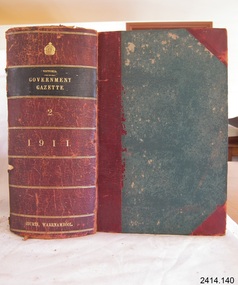 Flagstaff Hill Maritime Museum and Village
Book - Reference/Colonial Government Notification Gazette, James Kemp, The Victorian Government Gazette 1911 Vol 2 /144, 1911
... Proclamations and Orders in Council; appointments, promotions, and resignations of public officials; land sales, transfers, and Crown land notices; company registrations, and insolvency and bankruptcy notices; regulations under various colonial Acts; and notices from local councils and government departments as well as all manner of colonial documents from all government departments. ...Proclamations and Orders in Council; appointments, promotions, and resignations of public officials; land sales, transfers, and Crown land notices; company registrations, and insolvency and bankruptcy notices; regulations under various colonial Acts; and notices from local councils and government departments as well as all manner of colonial documents from all government departments. ...The Victoria Government Gazette and other government documents from 1887 were printed and published by Robert S. Brain, Government Printer, Melbourne. Brain held the position of Victorian Government Printer through the 1890s and into the early 1900s. The same imprint appears on other official Victorian publications from that era, such as the annual reports of the Board for the Protection of the Aborigines and the colony's Statistical Register. There wasn't really an editor in the modern sense the Gazette was compiled and issued under the authority of the colonial government, via the Chief Secretary's Department, with Brain's printing office producing and publishing it. In May 1906, James Kemp succeeded him, serving as Government Printer from May 1906 to August 1912, with the title of Acting Government Printer right at the very start of his tenure he was stepping into the role Brain had just vacated, and by later in December 1906 he was signing gazettes in that capacity, apparently before his appointment was made permanent. Then in 1913 Albert James Mullett took over the role starting from January 1913.Hard cover book. The Victorian Government Gazette 1911 Vol 2 /144 Printer: James Kemp Publisher: James Kemp Publisher: Authority of The Colonial Government Date: 1911 Further Information: Textured hard cover bound book leather burgundy colour spine with gilt lettering, covers embossed blue cloth & reinforced corners to front and back cover. non-fictionThe Victoria Government Gazette and other government documents from 1887 were printed and published by Robert S. Brain, Government Printer, Melbourne. Brain held the position of Victorian Government Printer through the 1890s and into the early 1900s. The same imprint appears on other official Victorian publications from that era, such as the annual reports of the Board for the Protection of the Aborigines and the colony's Statistical Register. There wasn't really an editor in the modern sense the Gazette was compiled and issued under the authority of the colonial government, via the Chief Secretary's Department, with Brain's printing office producing and publishing it. In May 1906, James Kemp succeeded him, serving as Government Printer from May 1906 to August 1912, with the title of Acting Government Printer right at the very start of his tenure he was stepping into the role Brain had just vacated, and by later in December 1906 he was signing gazettes in that capacity, apparently before his appointment was made permanent. Then in 1913 Albert James Mullett took over the role starting from January 1913. flagstaff hill, warrnambool, shipwrecked-coast, flagstaff-hill, flagstaff-hill-maritime-museum, maritime-museum, shipwreck-coast, flagstaff-hill-maritime-village, book, the victoria government gazette 1906 2 vol 129, the victoria government gazette 1906, the victoria government gazette
