
Showing 29 items matching "victoria conservation trust"
-
 Phillip Island and District Historical Society Inc.
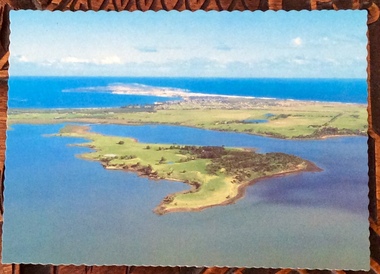
Photographs, Victoria Conservation Trust, Churchill Island, 1980s
... Postcards say Churchill Island, Victoria. Victoria Conservation Trust...Victoria Conservation Trust...Churchill Island Photographs Victoria Conservation Trust ...3 coloured postcards and 8 coloured photographs of scenes on Churchill Island including an aerial view, homestead, outbuildings, vegetation, views, cairn and coastal scenes.Postcards say Churchill Island, Victoria. Victoria Conservation Trustchurchill island, churchill island heritage farm, churchill island - homestead, samuel amess -
 Phillip Island and District Historical Society Inc.
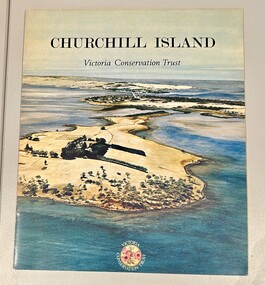
Booklet, PIZZEY, Graham, Churchill Island, 1976
... ...Victoria Conservation Trust......Victoria Conservation Trust...Historical victoria churchill island Graham Pizzey Robert Ingpen Victoria Conservation Trust moonah trees Samuel Amess Margaret Campbell Churchill Island Cannon Coloured booklet with original drawings by Robert Ingpen Churchill Island Booklet PIZZEY, Graham Robert INGPEN Victoria Conservation Trust ...HistoricalColoured booklet with original drawings by Robert Ingpenvictoria churchill island, graham pizzey, robert ingpen, victoria conservation trust, moonah trees, samuel amess, margaret campbell, churchill island cannon -
 Kiewa Valley Historical Society
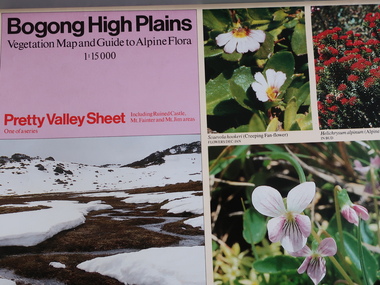
Posters - 5 in series - Published by the Victorian Conservation Trust 1980
... ...Victoria Conservation Trust...The Spion Kopje Sheet is not included. The Victoria Conservation Trust published the posters in 1980...There are 4 sheets - Hotham not photographed. The Victoria Conservation Trust published this series of the Bogong High Plains in 1980. ...The Spion Kopje Sheet is not included. The Victoria Conservation Trust published the posters in 1980 Bogong High Plains Flora and Fauna Bogong High Plains Victoria Conservation Trust There are 4 sheets - Hotham not photographed. ...Series of five includes: Bogong High Plains - Pretty Valley Sheet, Rocky Valley Sheet and Bogong Sheet. The Hotham Sheet is in the tube but not photographed. The Spion Kopje Sheet is not included. The Victoria Conservation Trust published the posters in 1980Bogong High PlainsThere are 4 sheets - Hotham not photographed. The Victoria Conservation Trust published this series of the Bogong High Plains in 1980. All coloured, glossy and two sided.flora and fauna, bogong high plains, victoria conservation trust -
 Whitehorse Historical Society Inc.
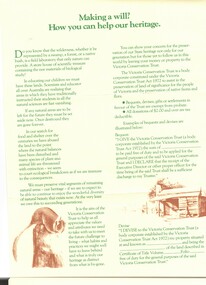
Pamphlet, Where there's a will there's a way, n.d
... ...victoria conservation trust...Pamphlet from the Victoria Conservation Trust asking for bequests to continue their work of conservation....environment victoria conservation trust Pamphlet from the Victoria Conservation Trust asking for bequests Pamphlet from the Victoria Conservation Trust asking for bequests to continue their work of conservation. ...Pamphlet from the Victoria Conservation Trust asking for bequestsPamphlet from the Victoria Conservation Trust asking for bequests to continue their work of conservation.Pamphlet from the Victoria Conservation Trust asking for bequestsenvironment, victoria conservation trust -
 Bendigo Historical Society Inc.
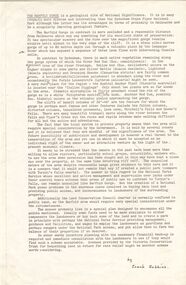
Document - PETER ELLIS COLLECTION: INFORMATION ON THE BARFOLD GORGE
... ...Victoria Conservation Trust...PLACE Land barfold gorge Peter Ellis Collection Barfold Gorge Sydenham Organ Pipes National Park Campaspe River Mitchell's Falls Queen's Falls Piper's Creek Turpin's Falls Land Conservation Council Victoria Conservation Trust Frank Robbins Foolscap page of information on the Barfold Gorge, by Frank Robbins. ...Foolscap page of information on the Barfold Gorge, by Frank Robbins. Barfold Gorge is compared with the Sydenham Organ Pipes National Park. There is a description of the Gorge. Native vegetation growing there is also mentioned. Turning it into a National Park is mentioned but it is in private ownership and this would require buy back of the land and create access problems as it is a farming area.place, land, barfold gorge, peter ellis collection, barfold gorge, sydenham organ pipes national park, campaspe river, mitchell's falls, queen's falls, piper's creek, turpin's falls, land conservation council, victoria conservation trust, frank robbins -
 Returned Nurses RSL Sub-branch
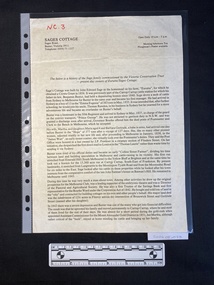
Document - Printed document, Victorian Conservation Trust, Sages Cottage : The below is a history of the Sage fanily commisioned by the Victoria Conservathin Trust - present day owners of Eurutta/Sages Cottage, [2004]
... Information page detailing the history of Sages Cottage from building in 1853/56 as a homestead, to being purchased in 1976 by the Victoria Conservation Trust. John Edward Sage built the cottage as the homestead for his farm "Eurutta" in 1856. ...Information page detailing the history of Sages Cottage from building in 1853/56 as a homestead, to being purchased in 1976 by the Victoria Conservation Trust. John Edward Sage built the cottage as the homestead for his farm "Eurutta" in 1856. ...Information page detailing the history of Sages Cottage from building in 1853/56 as a homestead, to being purchased in 1976 by the Victoria Conservation Trust. John Edward Sage built the cottage as the homestead for his farm "Eurutta" in 1856. John lived in the cottage with his wife and children up until his death in 1908 with his wife, Maria Sage (nee Baxter) continuing to live there until her death in 1927. Their youngest son, Thomas Holden Sage, and three daughters, Fanny Martha, Annie Agususta and Ellen Amynta continued to live there until their deaths. Thomas died in 1960 but gifted the remaining block of land with the cottage to his [niece?] Annie Moriah Sage a year before his death. Annie was Matron of the Australian Military Forces (AMF) in WW2. [Annie was born in 1895 as the fifth child to Edward Arthur and Mary Anne Sage. She trained in nursing, obtaining her nursing certificate in 1926. 1940 saw Annie join the Australian Army Nursing Service (AANS), Australian Imperial Force (AIF). During WWII Annie served as matron for the 2nd/2nd Australian General Hospital in the Middle East. She was made matron-in-chief, AIF (Middle East) in 1940, and was appointed a member of the Red Cross in 1942. Returning to Australia in 1942, she was elevated to deputy matron-in-chief, AMF in February 1943, and sub-sequentially promoted to colonel in March. Her duties included organising the AANS for duty in the South-West Pacific Area and oversaw the training scheme for the Australian Army Medical Women's Service (AAMWS). In September 1945 Annie flew to Sumatra to assist with the repatriation of the twenty four Australian nurses imprisoned by the Japanese. For her war service she was awarded the Florence Nightingale medal (1947) by the International Red Cross. In 1951 she was appointed Commander of the Most Excellent Order of the British Empire (CBE).] After Annie's death in 1969 the cottage and land went to a nephew and two nieces, before being purchased in 1976 by the Victoria Conservation Trust as an example of early settlement history.A printed information document in black ink on white paper, with an address in the upper left and opening times and refreshments available in the upper right. Below and over the page is full width text.'NC.3' [red ink top left hand corner of front page] '059 7111 3577 [?] Alastair Herbert / & / [?] Camilla [Hapfor]' [blue ink, top if second page]wwii, world war 2 -
 Glen Eira Historical Society
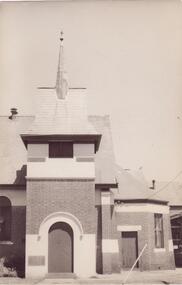
Letter - Carnegie Methodist Church, Neerim Rd, 252- 254, Carnegie
... Conservation Study – Andrew Ward 1995 with photos. Photocopy of extract from the study. Two Black and White photographs of the Carnegie Methodist Church 1) 90mm x 135mm 2) 80mm x 115mm. Sats unknown. Handwritten research note on the Carnegie Methodist Church. Undated and unacknowledged. Letter, National Trust of Australia (Victoria...Conservation Study – Andrew Ward 1995 with photos. Photocopy of extract from the study. Two Black and White photographs of the Carnegie Methodist Church 1) 90mm x 135mm 2) 80mm x 115mm. Sats unknown. Handwritten research note on the Carnegie Methodist Church. Undated and unacknowledged. Letter, National Trust of Australia (Victoria ...Caulfield Conservation Study – Andrew Ward 1995 with photos. Photocopy of extract from the study. Two Black and White photographs of the Carnegie Methodist Church 1) 90mm x 135mm 2) 80mm x 115mm. Sats unknown. Handwritten research note on the Carnegie Methodist Church. Undated and unacknowledged. Letter, National Trust of Australia (Victoria) notifying inclusion of the Carnegie Methodist on the Register – 25/09/1990carnegie, rosstown state school, rosstown, neerim road, carnegie state school, coles a. phipps, schools, oakleigh circuit, ward andrew, toolambool road, methodist circuit, carnegie methodist church, broadbent l. c., snell j. f., reid g., rosstown theatrical company, methodist church, uniting church, architectural styles, architectural features, frederick h. w. rev., californian bungalow, sunday schools, towers. -
 Glen Eira Historical Society
Document - Hopetoun, Hopetoun Street, 2, Elsternwick
... Two items about the inclusion of this property on the National Trust's Register: 1/1 copy of one page of typed correspondence and six page enclosure from T Chandler for Ian Wight, Assistant Administrator (Conservation) of the National Trust of Australia (Victoria), dated 19/07/1991 to the Chief Executive Officer, City of Caulfield, outlining that the Hopetoun Private Hospital has been classified in the National Trust’s Register and also noting a cc for Caulfield Historical Society. ...Two items about the inclusion of this property on the National Trust's Register: 1/1 copy of one page of typed correspondence and six page enclosure from T Chandler for Ian Wight, Assistant Administrator (Conservation) of the National Trust of Australia (Victoria), dated 19/07/1991 to the Chief Executive Officer, City of Caulfield, outlining that the Hopetoun Private Hospital has been classified in the National Trust’s Register and also noting a cc for Caulfield Historical Society. ...Two items about the inclusion of this property on the National Trust's Register: 1/1 copy of one page of typed correspondence and six page enclosure from T Chandler for Ian Wight, Assistant Administrator (Conservation) of the National Trust of Australia (Victoria), dated 19/07/1991 to the Chief Executive Officer, City of Caulfield, outlining that the Hopetoun Private Hospital has been classified in the National Trust’s Register and also noting a cc for Caulfield Historical Society. The enclosure is a six page typed classification report on Hopetoun by the National Trust and includes a reference list. 2/1 copy of one page of typed correspondence and six page enclosure from T Chandler for Ian Wight, Assistant Administrator (Conservation) of the National Trust of Australia (Victoria), dated 19/07/1991 to Kopat P/L, outlining that the Hopetoun Private Hospital has been classified in the National Trust’s Register. The enclosure is the same six page typed classification report on Hopetoun by the National Trust which includes a reference list.hopetoun private hospital, hospitals, elsternwick, charles webb and son, melrose, italianate style, architectural features, glenhuntly road, korong road, duffy frank gavan, geoghegan hanbury c, cutts joseph e, hopetoun street, koorong road, caulfield, mansions, caulfield historical society, city of caulfield, webb charles, architectural styles, hopetoun lord, webb alfred william, webb florence mabel, cordner florence mabel, o’brien annie may, reeve charles frederick, haines edith faith, thomas albert edward, kopat pty ltd, cordner l -
 Eltham District Historical Society Inc
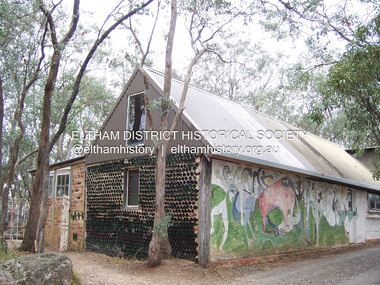
Photograph - Digital Photograph, Marguerite Marshall, Art Gallery at Clifton Pugh's Artists' Colony, Dunmoochin, Barreenong Road, Cottles Bridge, 5 February 2008
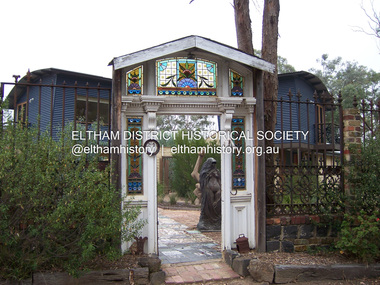
... Conservation Trust now the Trust for Nature. Pugh’s gift to the Australian people – of around 14 hectares of bushland and buildings and about 550 art works – is run by a voluntary board of directors, headed by one of his sons, Shane Pugh. La Trobe University in Victoria...Conservation Trust now the Trust for Nature. Pugh’s gift to the Australian people – of around 14 hectares of bushland and buildings and about 550 art works – is run by a voluntary board of directors, headed by one of his sons, Shane Pugh. La Trobe University in Victoria ...Art Gallery with mural painted by Clifton Pugh (1924-1990) at his Artists' Colony, Dunmoochin, Barreenong Road, Cottles Bridge. Following military service in the second world war, Clifton Pugh studied under artist Sir William Dargie at the National Gallery School in Melbourne as well as Justus Jorgensen, founder of Montsalvat. For a while he lived on the dole but also worked packing eggs for the Belot family saving sufficient to purchase six acres (2.4 ha) of land at Barreenong Road, Cottles Bridge. He accumulated more land and persuaded several other artists and friends to buy land nearby, resulting in a property of approximately 200 acres, stablishing it as one of the first artistic communes in Australia alongside Montsalvat in Eltham. It was around 1951 that Pugh felt he had '"done moochin' around" and so the name of the property evolved. He bought timber from Alistair Knox to build his house on the crest of a hill. Inspired by local goldminer's huts, it was a one room wattle-and-daub structure with dirt floor. Over the years it expanded with thick adobe walls made from local clay, high ceilings and stone floors. All materials other than the local earth were sourced from second hand materials, most found at wreckers' yards. Artists from across the nation were drawn to Dunmoochin, with several setting up houses and shacks on the property, maintaining their independence but sharing their artistic zeal. Artists who worked or resided at Dunmoochin included Mirka Mora, John Perceval, Albert Tucker, Fred Williams, Charles Blackman, Arthur Boyd and John Olsen. In 2002, Pugh's house along with its treasure trove of art and a library of some 20,000 books was destroyed by fire. Traces of Pugh's home remain with the presence of the Victorian doorframe archway with leadlight of intricate design, procured from a demolished Melbourne mansion; and two bronze life-sized female statues created by Pugh and cast by Matcham Skipper. In place of Pugh's house rose two double-storey mud-brick artists' studios topped with corrugated iron rooves curved like the wings of a bird with accommodation for seven. The original studios, gallery and other buildings survived the fire. Covered under Heritage Overlay, Nillumbik Planning Scheme. Published: Nillumbik Now and Then / Marguerite Marshall 2008; photographs Alan King with Marguerite Marshall.; p153 It’s not surprising that artist Clifton Pugh was drawn to Cottles Bridge to establish his artists’ colony Dunmoochin. Undisturbed by the clamour of modern life at Barreenong Road, Pugh was surrounded by the Australian bush he loved, and where his ashes were later scattered. The 200 acres (81ha) of bushland, broken by glimpses of rolling hills, has more than 50 species of orchids and Pugh shared his property with native animals including kangaroos, emus, phascogales, wombats, and diverse bird life. Pugh encouraged these creatures to join him in the bush by creating, with Monash University, a holding station where the animals were raised. Dunmoochin inspired Pugh for such paintings as in a book on orchids and the Death of a Wombat series.1 But his love for the bush was accompanied by the fear that Europeans were destroying it and much of his painting illustrated this fear and his plea for its conservation.2 However it was his house rather than the surrounding bush that was to be destroyed. Tragically in 2002 Pugh’s house, with its treasure of art and library of 20,000 art books, was destroyed by fire. Traces of the beauty of Pugh’s home still remain, however, in the magnificent Victorian doorframe archway with leadlight of intricate design procured from a demolished Melbourne mansion; and two bronze life-sized female statues created by Pugh and cast by Matcham Skipper. Now in place of Pugh’s house, are two double-storey mud-brick artists’ studios topped with corrugated roofs curved like birds’ wings, with accommodation for seven. The original studios, gallery and other buildings remain.3 Pugh grew up on his parents’ hobby farm at Briar Hill and attended the Briar Hill Primary School, then Eltham High School and later Ivanhoe Grammar. At 15 he became a copy boy for the Radio Times newspaper, then worked as a junior in a drafting office. Pugh was to have three wives and two sons. After serving in World War Two in New Guinea and Japan, Pugh studied under artist Sir William Dargie, at the National Gallery School in Melbourne.4 Another of his teachers was Justus Jörgensen, founder of Montsalvat the Eltham Artists’ Colony. Pugh lived on the dole for a while and paid for his first six acres (2.4ha) at Barreenong Road by working as an egg packer for the Belot family. Pugh accumulated more land and persuaded several other artists and friends to buy land nearby, resulting in the 200 acre property. They, too, purchased their land from the Belot family by working with their chickens. Around 1951 Pugh felt he had ‘Done moochin’ around’ and so the name of his property was born. Pugh bought some used timber from architect Alistair Knox to build his house on the crest of a hill. Inspired by local goldminers’ huts it was a one-room wattle-and-daub structure with a dirt floor. It was so small that the only room he could find for his telephone was on the fork of a tree nearby.5 Over the years the mud-brick house grew to 120 squares in the style now synonymous with Eltham. It had thick adobe walls (sun-dried bricks) made from local clay, high ceilings and stone floors with the entire structure made of second-hand materials – most found at wreckers’ yards. Pugh’s first major show in Melbourne in 1957, established him as a distinctive new painter, breaking away from the European tradition ‘yet not closely allied to any particular school of Australian painting’.6 Pugh became internationally known and was awarded the Order of Australia. He won the Archibald Prize for portraiture three times, although he preferred painting the bush and native animals. In 1990 not long before he died, Pugh was named the Australian War Memorial’s official artist at the 75th anniversary of the landing at Gallipoli. Today one of Pugh’s legacies is the Dunmoochin Foundation, which gives seven individual artists or couples and environmental researchers the chance to work in beautiful and peaceful surroundings, usually for a year. By November 2007, more than 80 people had taken part, and the first disabled artist had been chosen to reside in a new studio with disabled access.1 In 1989, not long before Pugh died in 1990 of a heart attack at age 65, he established the Foundation with La Trobe University and the Victorian Conservation Trust now the Trust for Nature. Pugh’s gift to the Australian people – of around 14 hectares of bushland and buildings and about 550 art works – is run by a voluntary board of directors, headed by one of his sons, Shane Pugh. La Trobe University in Victoria stores and curates the art collection and organises its exhibition around Australia.2 The Foundation aims to protect and foster the natural environment and to provide residences, studios and community art facilities at a minimal cost for artists and environmental researchers. They reside at the non-profit organisation for a year at minimal cost. The buildings, some decorated with murals painted by Pugh and including a gallery, were constructed by Pugh, family and friends, with recycled as well as new materials and mud-bricks. The Foundation is inspired by the tradition begun by the Dunmoochin Artists’ Cooperative which formed in the late 1950s as one of the first artistic communes in Australia. Members bought the land collaboratively and built the seven dwellings so that none could overlook another. But, in the late 1960s, the land was split into private land holdings, which ended the cooperative. Dunmoochin attracted visits from the famous artists of the day including guitarists John Williams and Segovia; singer and comedian Rolf Harris; comedian Barry Humphries; and artists Charles Blackman, Arthur Boyd and Mirka Mora. A potters’ community, started by Peter and Helen Laycock with Alma Shanahan, held monthly exhibitions in the 1960s, attracting local, interstate and international visitors – with up to 500 attending at a time.3 Most artists sold their properties and moved away. But two of the original artists remained into the new millennium as did relative newcomer Heja Chong who built on Pugh’s property (now owned by the Dunmoochin Foundation). In 1984 Chong brought the 1000-year-old Japanese Bizan pottery method to Dunmoochin. She helped build (with potters from all over Australia) the distinctive Bizan-style kiln, which fires pottery from eight to 14 days in pine timber, to produce the Bizan unglazed and simple subdued style. The kiln, which is rare in Australia, is very large with adjoining interconnected ovens of different sizes, providing different temperatures and firing conditions. Frank Werther, who befriended Pugh as a fellow student at the National Gallery Art School in Melbourne, built his house off Barreenong Road in 1954. Werther is a painter of the abstract and colourist style and taught art for about 30 years. Like so many in the post-war years in Eltham Shire, as it was called then, Werther built his home in stages using mud-brick and second-hand materials. The L-shaped house is single-storey but two-storey in parts with a corrugated-iron pitched roof. The waterhole used by the Werthers for their water supply is thought to be a former goldmining shaft.4 Alma Shanahan at Barreenong Road was the first to join Pugh around 1953. They also met at the National Gallery Art School and Shanahan at first visited each weekend to work, mainly making mud-bricks. She shared Pugh’s love for the bush, but when their love affair ended, she designed and built her own house a few hundred yards (metres) away. The mud-brick and timber residence, made in stages with local materials, is rectangular, single-storey with a corrugated-iron roof. As a potter, Shanahan did not originally qualify as an official Cooperative member.This collection of almost 130 photos about places and people within the Shire of Nillumbik, an urban and rural municipality in Melbourne's north, contributes to an understanding of the history of the Shire. Published in 2008 immediately prior to the Black Saturday bushfires of February 7, 2009, it documents sites that were impacted, and in some cases destroyed by the fires. It includes photographs taken especially for the publication, creating a unique time capsule representing the Shire in the early 21st century. It remains the most recent comprehenesive publication devoted to the Shire's history connecting local residents to the past. nillumbik now and then (marshall-king) collection, art gallery, clifton pugh, dunmoochin, cottlesbridge, cottles bridge, barreenong road -
 Eltham District Historical Society Inc
Photograph - Digital Photograph, Marguerite Marshall, Doorway of Clifton Pugh's former house at Dunmoochin, Barreenong Road, Cottles Bridge, 5 February 2008
... Conservation Trust now the Trust for Nature. Pugh’s gift to the Australian people – of around 14 hectares of bushland and buildings and about 550 art works – is run by a voluntary board of directors, headed by one of his sons, Shane Pugh. La Trobe University in Victoria...Conservation Trust now the Trust for Nature. Pugh’s gift to the Australian people – of around 14 hectares of bushland and buildings and about 550 art works – is run by a voluntary board of directors, headed by one of his sons, Shane Pugh. La Trobe University in Victoria ...Following military service in the second world war, Clifton Pugh studied under artist Sir William Dargie at the National Gallery School in Melbourne as well as Justus Jorgensen, founder of Montsalvat. For a while he lived on the dole but also worked packing eggs for the Belot family saving sufficient to purchase six acres (2.4 ha) of land at Barreenong Road, Cottles Bridge. He accumulated more land and persuaded several other artists and friends to buy land nearby, resulting in a property of approximately 200 acres, stablishing it as one of the first artistic communes in Australia alongside Montsalvat in Eltham. It was around 1951 that Pugh felt he had '"done moochin' around" and so the name of the property evolved. He bought timber from Alistair Knox to build his house on the crest of a hill. Inspired by local goldminer's huts, it was a one room wattle-and-daub structure with dirt floor. Over the years it expanded with thick adobe walls made from local clay, high ceilings and stone floors. All materials other than the local earth were sourced from second hand materials, most found at wreckers' yards. Artists from across the nation were drawn to Dunmoochin, with several setting up houses and shacks on the property, maintaining their independence but sharing their artistic zeal. Artists who worked or resided at Dunmoochin included Mirka Mora, John Perceval, Albert Tucker, Fred Williams, Charles Blackman, Arthur Boyd and John Olsen. In 2002, Pugh's house along with its treasure trove of art and a library of some 20,000 books was destroyed by fire. Traces of Pugh's home remain with the presence of the Victorian doorframe archway with leadlight of intricate design, procured from a demolished Melbourne mansion; and two bronze life-sized female statues created by Pugh and cast by Matcham Skipper. In place of Pugh's house rose two double-storey mud-brick artists' studios topped with corrugated iron rooves curved like the wings of a bird with accommodation for seven. The original studios, gallery and other buildings survived the fire. Covered under Heritage Overlay, Nillumbik Planning Scheme. Published: Nillumbik Now and Then / Marguerite Marshall 2008; photographs Alan King with Marguerite Marshall.; p155 It’s not surprising that artist Clifton Pugh was drawn to Cottles Bridge to establish his artists’ colony Dunmoochin. Undisturbed by the clamour of modern life at Barreenong Road, Pugh was surrounded by the Australian bush he loved, and where his ashes were later scattered. The 200 acres (81ha) of bushland, broken by glimpses of rolling hills, has more than 50 species of orchids and Pugh shared his property with native animals including kangaroos, emus, phascogales, wombats, and diverse bird life. Pugh encouraged these creatures to join him in the bush by creating, with Monash University, a holding station where the animals were raised. Dunmoochin inspired Pugh for such paintings as in a book on orchids and the Death of a Wombat series.1 But his love for the bush was accompanied by the fear that Europeans were destroying it and much of his painting illustrated this fear and his plea for its conservation.2 However it was his house rather than the surrounding bush that was to be destroyed. Tragically in 2002 Pugh’s house, with its treasure of art and library of 20,000 art books, was destroyed by fire. Traces of the beauty of Pugh’s home still remain, however, in the magnificent Victorian doorframe archway with leadlight of intricate design procured from a demolished Melbourne mansion; and two bronze life-sized female statues created by Pugh and cast by Matcham Skipper. Now in place of Pugh’s house, are two double-storey mud-brick artists’ studios topped with corrugated roofs curved like birds’ wings, with accommodation for seven. The original studios, gallery and other buildings remain.3 Pugh grew up on his parents’ hobby farm at Briar Hill and attended the Briar Hill Primary School, then Eltham High School and later Ivanhoe Grammar. At 15 he became a copy boy for the Radio Times newspaper, then worked as a junior in a drafting office. Pugh was to have three wives and two sons. After serving in World War Two in New Guinea and Japan, Pugh studied under artist Sir William Dargie, at the National Gallery School in Melbourne.4 Another of his teachers was Justus Jörgensen, founder of Montsalvat the Eltham Artists’ Colony. Pugh lived on the dole for a while and paid for his first six acres (2.4ha) at Barreenong Road by working as an egg packer for the Belot family. Pugh accumulated more land and persuaded several other artists and friends to buy land nearby, resulting in the 200 acre property. They, too, purchased their land from the Belot family by working with their chickens. Around 1951 Pugh felt he had ‘Done moochin’ around’ and so the name of his property was born. Pugh bought some used timber from architect Alistair Knox to build his house on the crest of a hill. Inspired by local goldminers’ huts it was a one-room wattle-and-daub structure with a dirt floor. It was so small that the only room he could find for his telephone was on the fork of a tree nearby.5 Over the years the mud-brick house grew to 120 squares in the style now synonymous with Eltham. It had thick adobe walls (sun-dried bricks) made from local clay, high ceilings and stone floors with the entire structure made of second-hand materials – most found at wreckers’ yards. Pugh’s first major show in Melbourne in 1957, established him as a distinctive new painter, breaking away from the European tradition ‘yet not closely allied to any particular school of Australian painting’.6 Pugh became internationally known and was awarded the Order of Australia. He won the Archibald Prize for portraiture three times, although he preferred painting the bush and native animals. In 1990 not long before he died, Pugh was named the Australian War Memorial’s official artist at the 75th anniversary of the landing at Gallipoli. Today one of Pugh’s legacies is the Dunmoochin Foundation, which gives seven individual artists or couples and environmental researchers the chance to work in beautiful and peaceful surroundings, usually for a year. By November 2007, more than 80 people had taken part, and the first disabled artist had been chosen to reside in a new studio with disabled access.1 In 1989, not long before Pugh died in 1990 of a heart attack at age 65, he established the Foundation with La Trobe University and the Victorian Conservation Trust now the Trust for Nature. Pugh’s gift to the Australian people – of around 14 hectares of bushland and buildings and about 550 art works – is run by a voluntary board of directors, headed by one of his sons, Shane Pugh. La Trobe University in Victoria stores and curates the art collection and organises its exhibition around Australia.2 The Foundation aims to protect and foster the natural environment and to provide residences, studios and community art facilities at a minimal cost for artists and environmental researchers. They reside at the non-profit organisation for a year at minimal cost. The buildings, some decorated with murals painted by Pugh and including a gallery, were constructed by Pugh, family and friends, with recycled as well as new materials and mud-bricks. The Foundation is inspired by the tradition begun by the Dunmoochin Artists’ Cooperative which formed in the late 1950s as one of the first artistic communes in Australia. Members bought the land collaboratively and built the seven dwellings so that none could overlook another. But, in the late 1960s, the land was split into private land holdings, which ended the cooperative. Dunmoochin attracted visits from the famous artists of the day including guitarists John Williams and Segovia; singer and comedian Rolf Harris; comedian Barry Humphries; and artists Charles Blackman, Arthur Boyd and Mirka Mora. A potters’ community, started by Peter and Helen Laycock with Alma Shanahan, held monthly exhibitions in the 1960s, attracting local, interstate and international visitors – with up to 500 attending at a time.3 Most artists sold their properties and moved away. But two of the original artists remained into the new millennium as did relative newcomer Heja Chong who built on Pugh’s property (now owned by the Dunmoochin Foundation). In 1984 Chong brought the 1000-year-old Japanese Bizan pottery method to Dunmoochin. She helped build (with potters from all over Australia) the distinctive Bizan-style kiln, which fires pottery from eight to 14 days in pine timber, to produce the Bizan unglazed and simple subdued style. The kiln, which is rare in Australia, is very large with adjoining interconnected ovens of different sizes, providing different temperatures and firing conditions. Frank Werther, who befriended Pugh as a fellow student at the National Gallery Art School in Melbourne, built his house off Barreenong Road in 1954. Werther is a painter of the abstract and colourist style and taught art for about 30 years. Like so many in the post-war years in Eltham Shire, as it was called then, Werther built his home in stages using mud-brick and second-hand materials. The L-shaped house is single-storey but two-storey in parts with a corrugated-iron pitched roof. The waterhole used by the Werthers for their water supply is thought to be a former goldmining shaft.4 Alma Shanahan at Barreenong Road was the first to join Pugh around 1953. They also met at the National Gallery Art School and Shanahan at first visited each weekend to work, mainly making mud-bricks. She shared Pugh’s love for the bush, but when their love affair ended, she designed and built her own house a few hundred yards (metres) away. The mud-brick and timber residence, made in stages with local materials, is rectangular, single-storey with a corrugated-iron roof. As a potter, Shanahan did not originally qualify as an official Cooperative member.This collection of almost 130 photos about places and people within the Shire of Nillumbik, an urban and rural municipality in Melbourne's north, contributes to an understanding of the history of the Shire. Published in 2008 immediately prior to the Black Saturday bushfires of February 7, 2009, it documents sites that were impacted, and in some cases destroyed by the fires. It includes photographs taken especially for the publication, creating a unique time capsule representing the Shire in the early 21st century. It remains the most recent comprehenesive publication devoted to the Shire's history connecting local residents to the past. nillumbik now and then (marshall-king) collection, art gallery, clifton pugh, dunmoochin, cottlesbridge, cottles bridge, barreenong road -
Glen Eira Historical Society
Article - Grand Union Tramway Junction, Balaclava Road and Hawthorn Road
... A letter from the Conservation Manager of the National Trust of Australia (Victoria) to the manager of the Planning Section for the City of Glen Eira, dated 15/06/2001 and attached to a six-page Classification Report. ...A letter from the Conservation Manager of the National Trust of Australia (Victoria) to the manager of the Planning Section for the City of Glen Eira, dated 15/06/2001 and attached to a six-page Classification Report. ...This file contains three items. 1. A three-page Caulfield Conservation Study of the Balaclava Road/Hawthorn Road Tramway Crossing, undertake by Andrew Ward and dated September 1994. Study includes a brief history of the junction and a statement of significance. Study also includes Four black and white photographs of the junction and of architectural details of the tram tracks. 2. A letter from the Conservation Manager of the National Trust of Australia (Victoria) to the manager of the Planning Section for the City of Glen Eira, dated 15/06/2001 and attached to a six-page Classification Report. The letter informs of the Classification of the Grand Union Junction at the intersection of Balaclava and Hawthorn Road by the national trust, signed by Conservation Manager Ian Pausacker. Classification Report includes details such as the date of construction, a statement of significance, history of the junction, physical description of the junction and the condition of the junction at the time of writing. Report also includes a map of the Melbourne Tram Network drafted by Keith Kings and dated 01/005/1956, with illustration of the layout of fifteen tram depots, and updated aerial illustration of the Grand Union Junction, and a further map of Melbourne Tramways developed by North Melbourne Electric Tramways and Lighting Co. and Prahran and Malvern Tramways Trust, drafted by Keith Kings and dated January 1914 with illustrations of three tram depots. 3. Two articles from the Caulfield Leader written by Aaron Langmaid and dated 13/02/2007 and the Melbourne Bayside Weekly dated 21/02/2007 written by Joanne Sim, both concerning the Grand Union Junction. The article from the Caulfield Leader includes a picture of Executive Officer of the council of Tramway Museum of Australia Craig Tooke in front of the intersection. The article from the Bayside Weekly includes a picture of a tram passing through the junction and a brief history of the junction and tram network in Caulfield. The article also refers to twp local tram shelters at the intersection of Dandenong Road and Alma Road and also Orrong Road and Balaclava Road.caulfield, caulfield conservation, study, balaclava road, hawthorn road, grand union junction, ward andrew, tramway crossings, transport, acland street, caulfield racecourse, tram tracks, race events, event, tram routes, thorough fares, melbourne and metropolitan tramways board, prahran and malvern tramway trust, prahran and malvern district tramways, caulfield electric tramways, caulfield city council, architectural detail, city of glen eira, balaclava road and hawthorn road intersection, balaclava road and hawthorn road junction, dandenong road, glenhuntly road, four-way tram junctions, access covers darling road, cast metal access covers, hadfields patent, caulfield park, tram systems, tram networks, heritage, tramway heritage, kings keith, tram depots, glenhuntly depot, maps, glen eira, melbourne electric tramways, north melbourne electric tramways and lighting co., prahran and malvern tramways trust, caulfield leader, bayside weekly, tooke craig, tourist attractions, grand union tramways junction, caulfield junction, cable car tramways, tram shelters, building, sheds, alma road, orrong road, caulfield electric line, balaclava junction, elsternwick railway station, caulfield station, caulfield station loop, tram services, transport establishments, thoroughfares, buildings, structures, establishments, parts of buildings or structures, documents, commercial industry, sites, historic sites, melbourne bayside weekly -
 Kiewa Valley Historical Society
Collection - Ian Roper
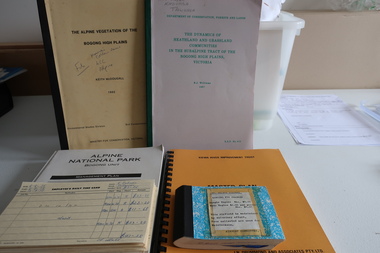
... Victoria. 1. Kiewa River Improvement Trust- Master Plan 1984. 2. Guidelines Conservation Mountain Pygmy Possum -Management Strategy 1989. 3. ...Victoria. 1. Kiewa River Improvement Trust- Master Plan 1984. 2. Guidelines Conservation Mountain Pygmy Possum -Management Strategy 1989. 3. ...Various reports and studies ordered by the Victorian Government and the Alpine shire.History of the Kiewa Valley and North East Victoria including the airport at Mount BeautyA collection of publications and Items significant to the Kiewa Valley Including Kiewa Valley and Surrounds, the Kiewa River, and Pygmy Possums. Also items and reports relating to the North East of Victoria. 1. Kiewa River Improvement Trust- Master Plan 1984. 2. Guidelines Conservation Mountain Pygmy Possum -Management Strategy 1989. 3. Proposed Interim Management Plan -Bogong National Park 1983. 4. The Dynamics of Heathland and Grassland Communities in the Subalpine Tract - Bogong High Plains 1987. 5. Alpine National Park Bogong Unit -Management Plan 1992.6. Alpine Vegetation of the Bogong High Plains - Bogong High Plains 1982. 7. Early 1970s onwards, records of banking, receipts, landing fees, letters, photos, key, minutes, visitor book, record of landings (book), postcards, SEC Victoria's Kiewa Valley Brochure - Mt Beauty Airport History 1`977+ian roper, mount beauty airport, pygmy possums, vegetation -
 Conservation Volunteers
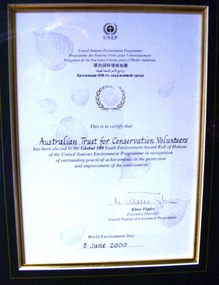
Award: Honour Roll, United Nations Environment Program (UNEP) - 1 June 2000 - The UNEP announced that the Australian Trust of Conservation Volunteers of Australia (ATCV), has been elected to the prestigious ranks of its Global 500 Roll of Honour for outstanding contributions to the protection of the environment, Award:United Nations Environment Program (UNEP) - 1 June 2000 - UNEP announced today that the ATCV has been elected to the prestigious ranks of its Global 500 Roll of Honour for outstanding contributions to the protection of the environment
... CVA Conservation Volunteers Conservation Volunteers Australia Conservation Volunteers New Zealand Colin Jackson Better Earth Environmental Conservation Volunteers Volunteering Corporate volunteering Education – Environmental Carbon footprint Climate change Ballarat Safety Training Partnerships Victoria Vic NSW Queensland ACT Australian Capital Territory NT Northern Territory Western Australia WA South Australia SA Tasmania New Zealand California Conservation Corps ATCV UNEP UNEP Honour Roll United Nations Environment Program Certificate Award:United Nations Environment Program (UNEP) - 1 June 2000 - UNEP announced today that the ATCV has been elected to the prestigious ranks of its Global 500 Roll of Honour for outstanding contributions to the protection of the environment. Award: Honour Roll, United Nations Environment Program (UNEP) - 1 June 2000 - The UNEP announced that the Australian Trust ...THE AUSTRALIAN TRUST OF CONSERVATION VOLUNTEERS, ONE OF 14 INDIVIDUALS AND ORGANIZATIONS, TO RECEIVE UNITED NATIONS ENVIRONMENT AWARD NAIROBI, 1 June 2000 - The United Nations Environment Programme (UNEP) announced today that the Australian Trust of Conservation Volunteers of Australia (ATCV), has been elected to the prestigious ranks of its Global 500 Roll of Honour for outstanding contributions to the protection of the environment. ATCV is one of 14 individuals and organizations to receive this honour in 2000. Founded in 1982, ATCV is a national, not-for-profit community organization, whose mission is to attract and manage a force of volunteers in practical conservation projects for the betterment of the Australian environment. ATCV completes more than 4000 week-long conservation projects in urban, regional and remote areas of Australia each year. Activities range from bush regeneration, tree planting, seed collection, endangered species protection, weed control, flora and fauna surveys, walking trail construction, fencing, environmental monitoring and the protection of world heritage areas. ATCV community participation has resulted in more than 1.8 million trees being planted in 1999, and in more than 7.3 million trees planted over the past 10 years. Community involvement totalled 200,000 project days in 1999 and more than 700,000 days since 1989. To encourage the involvement of young people, ATCV developed and manages the federal government-funded programme Green Corps. Green Corps is a six-month traineeship for 17 to 20 year-olds, which incorporates conservation projects and accredited training. Since 1997, more than 4,000 trainees have completed the Green Corps programme. ATCV is a founding member of the International Conservation Alliance, which brings together organizations working in conservation volunteering, and is a member of the World Conservation Union (IUCN). " The award will be presented in Adelaide, Australia, at the World Environment Day ceremonies on 4 June 2000. World Environment Day, which is celebrated in some 120 countries around the world on 5 June, was established by the United Nations General Assembly in 1972 to focus global attention and action on environmental issues. Some 701 individuals and organizations, in both the adult and youth categories, have been honoured since UNEP launched the Global 500 award in 1987. Among prominent past winners are: French Marine explorer Jacques Cousteau; Sir David Attenborough, producer of environmental television programmes; Gro Harlem Brundtland, former Prime Minister of Norway; Anil Aggarwal, the prominent environmentalist from India; Ken Saro-Wiwa, the environmental and human rights activist from Nigeria who was executed for leading the resistance of the Ogoni People against the pollution of their Delta homeland; the World Wide Fund for Nature (WWF), Jimmy Carter, former President of the United States; Jane Goodall of the United Kingdom whose research on wild chimpanzees and olive baboons provided insight into the lives of non-human primates; and the late Chico Mendes, the Brazilian rubber tapper who was murdered during his fight to save the Amazon forest. To forge global links and to implement ideas, which can contribute to a more sustainable future, a network of all Global 500 laureates has been formed. Information about this unique network can be obtained at http://www.global500.org. The winners of UNEP's Global 500 Roll of Honour are members of a broad and growing environmental movement that is flourishing around the world. They have taken the path that most of us hesitate to take for want of time or caring," says UNEP's Executive Director, Klaus Toepfer. "In honouring the Global 500 laureates, UNEP hopes that others will be inspired by their extraordinary deeds."Certificatecva, conservation volunteers, conservation volunteers australia, conservation volunteers new zealand, colin jackson, better earth, environmental conservation, volunteers, volunteering, corporate volunteering, education – environmental, carbon footprint, climate change, ballarat, safety, training, partnerships, victoria, vic, nsw, queensland, act, australian capital territory, nt, northern territory, western australia, wa, south australia, sa, tasmania, new zealand, california conservation corps, atcv, unep, unep honour roll, united nations environment program -
 Bendigo Historical Society Inc.
Document - National Trust Collection: Union Hotel, Bendigo
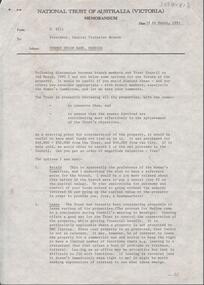
... National Trust Collection: Former Union Bank, View Street, Bendigo 3084.81a 18 March 1991 National Trust of Australia (Victoria), two-page memorandum setting out four options for the future of the property (1. retain, 2. lease, 3. sell - invest. 5. sell - purchase) 3084.81c 21 August 1991 ten-page letter from Trevor Westmore B. Arch. Design and Conservation...historic building Former Union Bank (Later A N Z View Street Branch) National Trust Collection: Former Union Bank, View Street, Bendigo 3084.81a 18 March 1991 National Trust of Australia (Victoria), two-page memorandum setting out four options for the future of the property (1. retain, 2. lease, 3. sell - invest. 5. sell - purchase) 3084.81c 21 August 1991 ten-page letter from Trevor Westmore B. Arch. Design and Conservation ...historic buildingNational Trust Collection: Former Union Bank, View Street, Bendigo 3084.81a 18 March 1991 National Trust of Australia (Victoria), two-page memorandum setting out four options for the future of the property (1. retain, 2. lease, 3. sell - invest. 5. sell - purchase) 3084.81c 21 August 1991 ten-page letter from Trevor Westmore B. Arch. Design and Conservation Consultant to Bendigo Branch, National Trust of Australia (Victoria) setting out two aspects of the building: 1 general comments on the main building fronting View Street (the Banking Chamber) 2 a more detailed schedule of required works for the building at the rear (The residences and Smelting Room) The letter includes a sketch of the floor plan of the building of the building at the rear of the banking chamber (3084.81k)former union bank (later a n z view street branch) -
 Bendigo Historical Society Inc.
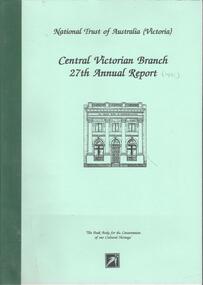
Book - NATIONAL TRUST COLLECTION: CENTRAL VICTORIAN BRANCH 27TH ANNUAL REPORT
... Trust of Australia (Victoria) Central Victorian Branch 27th Annual Report for the year 1991. Fourteen pages booklet included are: Financial Performance Report, President's Report, Women's Committee Report, Report of Conservation Sub-Committee, Report of Properties Sub-Committee, Report of Education and Promotion Sub-Committee....Trust of Australia (Victoria) Central Victorian Branch 27th Annual Report for the year 1991. Fourteen pages booklet included are: Financial Performance Report, President's Report, Women's Committee Report, Report of Conservation Sub-Committee, Report of Properties Sub-Committee, Report of Education and Promotion Sub-Committee. ...National Trust of Australia (Victoria) Central Victorian Branch 27th Annual Report for the year 1991. Fourteen pages booklet included are: Financial Performance Report, President's Report, Women's Committee Report, Report of Conservation Sub-Committee, Report of Properties Sub-Committee, Report of Education and Promotion Sub-Committee.national trust, properties, annual report -
 Glen Eira Historical Society
Document - PRAHRAN AND MALVERN TRAMWAYS TRUST
... Conservation Study Report by Andrew Ward dated January 1995 of 6-8 Rusden Street, Elsternwick being former Prahran and Malvern Tramways Trust substation. Report includes image, existing registrations, description of substation building and condition. 2/Original photograph (black and white) of tram shelter at corner of Balaclava Road and Orrong Road, Caulfield North, outside Grimwade House (school), description written on back of photo. 3/Original copy of magazine of the Tramway Museum Society of Victoria Ltd. ...Conservation Study Report by Andrew Ward dated January 1995 of 6-8 Rusden Street, Elsternwick being former Prahran and Malvern Tramways Trust substation. Report includes image, existing registrations, description of substation building and condition. 2/Original photograph (black and white) of tram shelter at corner of Balaclava Road and Orrong Road, Caulfield North, outside Grimwade House (school), description written on back of photo. 3/Original copy of magazine of the Tramway Museum Society of Victoria Ltd. ...This file has 3 items. 1/Photocopy of Caulfield Conservation Study Report by Andrew Ward dated January 1995 of 6-8 Rusden Street, Elsternwick being former Prahran and Malvern Tramways Trust substation. Report includes image, existing registrations, description of substation building and condition. 2/Original photograph (black and white) of tram shelter at corner of Balaclava Road and Orrong Road, Caulfield North, outside Grimwade House (school), description written on back of photo. 3/Original copy of magazine of the Tramway Museum Society of Victoria Ltd. ‘Running Journal’ Vol 7 No. 3 dated June 1970. Article (pages 3-7) entitled ‘Feeding & Filling, The Story of the Prahran & Malvern Tramways Trust’ written by Graeme Breydon. Article written for the 60th anniversary of the trust which opened for business on 30/05/1910 and describes the establishment and development of Tramways between suburbs of Malvern & Prahran including Elsternwick, Caulfield & Glen Huntly. Article includes 4 images plus map and diagram. Included: Photograph 3: Opening ceremony of tramway extension from Balaclava junction to Elsternwick railway station on Glen Huntly Road dated 13/11/1913. Diagram of various tramway routes including Prahran & Malvern Tramways Trust routes.prahran and malvern tramways trust, p+mtt, tram companies, land transport, public transport, substation, tram shelter, powerhouse, parapet, brick, stuccoed, roof lanterns, historic buildings register, national estate register, national trust register, rusden street, balaclava road, orrong road, hawthorn road, dandenong road, glen huntly road, grange road, elsternwick, elsternwick railway station, caulfield, caulfield north, caulfield railway station, point ormond, grimwade house, breydon graeme, tramcar, edwardian, transport, trams, tram depot -
Glen Eira Historical Society
Document - Historic Conservation Areas Project
... Conservation Areas Project Niven Barbara... Newsletters... Town Planning... Historic Buildings... Heritage Studies... Housing... Royal Historical Society of Victoria (RHSV)... Read Michael... Plans... Local Government... Historical Societies... Committee for Urban Action (CUA)... National Trust...Historic Conservation Areas Project Niven Barbara Newsletters Town Planning Historic Buildings Heritage Studies Housing Royal Historical Society of Victoria (RHSV) Read Michael Plans Local Government Historical Societies Committee for Urban Action (CUA) National Trust Hopkins Sherry Ms. ...Contains 4 items relating to historic conservation: 1/Five newsletters (one page each newsletter, dated 07/1975, 08/1975, 09/1975, 10/1975 and the final one 12/1975) describing how the project evolved, project funds, progress, study method, project 1 report, project 2 report and summary as no further funds available. Project was to include all of Melbourne but funding did not allow this. Note: newsletters stamped with Caulfield Historical Society. 2/Letter (one page on official city of Caulfield letterhead) from Andrew Rodda (manager planning) to Hazal Ford (dated 13/11/1989) describing ‘council resolved on 18/07/1989 to proceed with preliminary conservation survey’ and mentions that a copy is included. 3/Preliminary conservation survey for the City of Caulfield (nine pages) describing background, study area, budget, purpose, study outline, timeframe, report format, ownership, tasks and background information (mentions number and types of houses and properties as at 1986 and 1988) and a map of City of Caulfield. 4/Booklet (28 pages) titled ‘Heritage Area – Caulfield North Draft Heritage Guidelines July 1999 – City of Glen Eira’, containing Caulfield North Heritage Area, cultural heritage, Heritage Overlay Area, architectural description, common architectural forms and features, development guidelines, key design checklist. It includes a map of the Caulfield North Heritage Overlay Area, two illustrations about the development envelope and many black-and-white photographs of houses and architectural features.historic conservation areas project niven barbara, newsletters, town planning, historic buildings, heritage studies, housing, royal historical society of victoria (rhsv), read michael, plans, local government, historical societies, committee for urban action (cua), national trust, hopkins sherry ms., ford hazel, preliminary conservation survey, town planning, heritage studies, rodda andrew, city of caulfield, housing estates, victoria national estate grants program, australia icomos, burra charter, buildings structures and establishments, land surveys, suburbs, historic buildings, architectural significance, ‘caulfield’s heritage study’, soloman geulah dr., caulfield library, dandenong road, nepean highway, hotham street, iknerman road, orrong road, north road, poath road, ‘plan of the city of caulfield’, north ward, east ward, south ward, west ward, kooyong road, neerim road, bambra road, balaclava road, shire of caulfield, railways, world war 1914-1918, depression 1929-1939, rippon lea, labassa, parks, mansions, community services, ‘caulfield north draft heritage guidelines july 1999’, city of glen eira, caulfield north heritage area, glen eira heritage management plan, mayfield grove, normanby avenue, carnarvon street, glenferrie street, arthur street, malakoff street, normanby road, heritage advisory service, construction materials, victorian style, mediterranean style, spanish mission style, californian bungalow style, federation style, architectural style, architectural features, heritage conservation design, building construction, building regulations, aboriginal peoples, carnarvon road -
Glen Eira Historical Society
Letter - St. Mary’s Church, Caulfield
... Mary’s Anglican Church from Ian Wight, Conservation Manager of the National Trust of Australia, Victoria, dated 21/05/1996, that their pipe organ has been classified and included in the register....Mary’s Anglican Church from Ian Wight, Conservation Manager of the National Trust of Australia, Victoria, dated 21/05/1996, that their pipe organ has been classified and included in the register. ...St. Mary’s Anglican Church, photocopied document of the history of the music. Includes details of various organs the church has had from 1867 to 1982. List of organists and details of the choices of music played and types of choirs. Dated August 1985, compiled by C.G.T. Weickhardt. Original printed leaflet on the new organ to be installed in St. Mary’s in 1933. Letter of notification to Vicar B. Green, St. Mary’s Anglican Church from Ian Wight, Conservation Manager of the National Trust of Australia, Victoria, dated 21/05/1996, that their pipe organ has been classified and included in the register.woodward mrs., weickhardt c.g.t., glasson w.s., taylor h. mrs., hardiman j.j., stephen miss, hart mr., kaye s., dixon miss, dumergue charles, rooksby h.a., wright j.d., dixon f., fethers mr., knight mr., hardy lance, hardy daniel henry, dickson h.s., spiers mr., smithers welsford mr., tuckwell c., nutting foster -
Glen Eira Historical Society
Letter - St. Mary’s Church, Caulfield
... Mary’s Jubilee School by the National Trust of Australia (Victoria). Caulfield Conservation Study by Andrew Ward in 1994 for Shelford, St. ...Mary’s Jubilee School by the National Trust of Australia (Victoria). Caulfield Conservation Study by Andrew Ward in 1994 for Shelford, St. ...Two documents about St. Mary’s Jubilee School. Roneoed correspondence to W.S. Feltham from S.R. Birch dated 22/03/1973 giving notification classification of St. Mary’s Jubilee School by the National Trust of Australia (Victoria). Caulfield Conservation Study by Andrew Ward in 1994 for Shelford, St. Mary’s Jubilee School. He describes the architecture and gives a brief history. The photocopied document includes a poorly reproduced photo.st. mary’s jubilee school, schools, glen eira road, hood crescent, caulfield, feltham w.s., webb charles, birch s. r., architectural features, gothic style, porches, plaques, tudor style, shelford c.e.g.g.s., st. mary’s church -
Glen Eira Historical Society
Letter - Trinity Congregational Church, Glen Huntly
... Trust, Victoria, to the Congregational Union of Victoria. The correspondence gives notification that the church has been placed in the classified List and should be preserved. Dated 20/03/1973. Correspondence from Department of Planning Victoria, advising the Caulfield Historical Society, that the H. B. Council has chosen not to recommend the building for addition to the Historic Buildings Register Dated 08/10/1982. Extracted From Caulfield Conservation...Trust, Victoria, to the Congregational Union of Victoria. The correspondence gives notification that the church has been placed in the classified List and should be preserved. Dated 20/03/1973. Correspondence from Department of Planning Victoria, advising the Caulfield Historical Society, that the H. B. Council has chosen not to recommend the building for addition to the Historic Buildings Register Dated 08/10/1982. Extracted From Caulfield Conservation ...Roneod letter from the National Trust, Victoria, to the Congregational Union of Victoria. The correspondence gives notification that the church has been placed in the classified List and should be preserved. Dated 20/03/1973. Correspondence from Department of Planning Victoria, advising the Caulfield Historical Society, that the H. B. Council has chosen not to recommend the building for addition to the Historic Buildings Register Dated 08/10/1982. Extracted From Caulfield Conservation Study By Andrew Ward Dated January 1995 Describing Trinity Congregational Church. Includes Brief History Of The Church And Description Of Architectural Features.trinity congregational church., moran b., preston joane, grange road, caulfield., historic buildings council, glen huntly, hart trevor, grey karen, timber houses, filbert street, old calendar greek, primitive methodists, caulfield south, orthodox church, el nido grove, lyons street, porches, market gardens., gothic style, congregationalists, ward andrew, architectural features, architectural styles -
 Glen Eira Historical Society
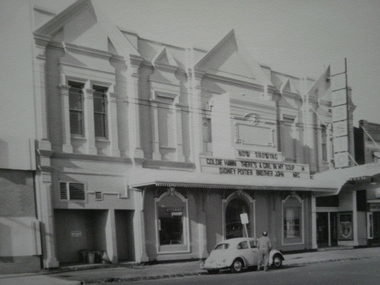
Article - ELSTERNWICK CLASSIC CINEMA
... Photographers unknown. 3/National Trust of Australia (Victoria) Classification Report on Elsternwick Theatre with attached cover letter addressed to the Manager of the Planning Section, City of Glen Eira Council, from Ian Pausacker from the National Trust dated 04/10/2000. The report includes a statement of significance, history, description, context and floor plans of the theatre. 4/1 newspaper article written by Alex Njoo from the Caulfield/Port Philip Leader, 31/01/2012, congratulating the Tamir family on their conservation of the Elsternwick Classic Cinema. ...Photographers unknown. 3/National Trust of Australia (Victoria) Classification Report on Elsternwick Theatre with attached cover letter addressed to the Manager of the Planning Section, City of Glen Eira Council, from Ian Pausacker from the National Trust dated 04/10/2000. The report includes a statement of significance, history, description, context and floor plans of the theatre. 4/1 newspaper article written by Alex Njoo from the Caulfield/Port Philip Leader, 31/01/2012, congratulating the Tamir family on their conservation of the Elsternwick Classic Cinema. ...This file contains 4 items relating to the Elsternwick Classic Cinema: 1/1 original black and white photograph of the Elsternwick Classic Cinema, 9 Gordon Street Elsternwick. Date and photographer unknown. 2/ 2 photocopied photos of the Elsternwick Classic Theatre in its various stages of operation. One photo is of it as the Dorchester Dance Hall between 1938 and 1946 and the other is of the Classic Cinema in 1994. Photographers unknown. 3/National Trust of Australia (Victoria) Classification Report on Elsternwick Theatre with attached cover letter addressed to the Manager of the Planning Section, City of Glen Eira Council, from Ian Pausacker from the National Trust dated 04/10/2000. The report includes a statement of significance, history, description, context and floor plans of the theatre. 4/1 newspaper article written by Alex Njoo from the Caulfield/Port Philip Leader, 31/01/2012, congratulating the Tamir family on their conservation of the Elsternwick Classic Cinema. Includes a colour photo of the Tamirs, photographer unknown.elsternwick classic cinema, gordon street, elsternwick, dorchester dance hall, national trust of australia, national trust register, elsternwick theatre, pausacker ian, classic cinema, entertainment, cinemas, theatres, victorian style, elsternwick public hall, skating rink company limited, selwyn street, victorian permanent building society, community centres, films, shows and exhibitions, film projectors, amalgamate picture company ltd., richardson frank g., architecture, stairs, associated theatres limited, ballantyne and hared, balconies, architectural features, entrances, depression 1929-1939, astor, dancehalls, esquire theatre, prentice george, plottel joseph, architects, cowper murphy and associates, sharon cinema, tamir eddie, readings, free classical style, plans, business people, njoo alex, tamir family -
 Bendigo Historical Society Inc.
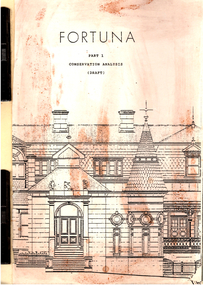
Administrative record - Ex-Fortuna Survey Association Collection: Department of Administrative Services Construction Report: Parts 1 and 2 Conservation Analysis (Drafts), Dec 1987 - Jan 1988
... conservation. The property was owned by the Commonwealth of Australia, managed by the Department of Defence, and occupied by the Army Survey Corps. The study primarily addresses key structures on the site, including the former house, laundry, quartz mill, coach house, stables, swimming bath, summerhouse, fountain, and arbor. Fortuna is listed on the Register of the National Estate, classified by the National Trust of Australia (Victoria...conservation. The property was owned by the Commonwealth of Australia, managed by the Department of Defence, and occupied by the Army Survey Corps. The study primarily addresses key structures on the site, including the former house, laundry, quartz mill, coach house, stables, swimming bath, summerhouse, fountain, and arbor. Fortuna is listed on the Register of the National Estate, classified by the National Trust of Australia (Victoria ...This plan was commissioned by the Department of Administrative Services to outline the heritage qualities of Fortuna and provide guidelines for its future conservation. The property was owned by the Commonwealth of Australia, managed by the Department of Defence, and occupied by the Army Survey Corps. The study primarily addresses key structures on the site, including the former house, laundry, quartz mill, coach house, stables, swimming bath, summerhouse, fountain, and arbor. Fortuna is listed on the Register of the National Estate, classified by the National Trust of Australia (Victoria), and designated as a significant building in the City of Bendigo Planning Scheme. The site was originally part of the Ravenswood or Mount Alexander squatting run, licensed in 1840. Gold was discovered in the area in 1851, leading to the establishment of government camps and the development of Bendigo as a major gold mining center. The Victoria reef, located near the site, was one of the principal gold-bearing reefs in Bendigo, with mining activity beginning in the mid-1850s. The evolution of mining technology and the formation of mining companies played a significant role in the area's development. Fortuna is recognized for its historical, architectural, and environmental value, with conservation efforts focused on the estate as it existed around 1907 under the Lansells' ownership. Key structures to be conserved include the main house, shadehouse, stables, coach house, swimming bath, battery, retort room, Pompeii fountain, summerhouse, arbour, garage, laundry, and tunnel The plan includes detailed documentation of the site's existing structures, site plans, building plans, elevations, and features. Early photographs, drawings, and chronological development plans are used to support the analysis. The document assesses the historical, architectural, and environmental significance of the site.It provides a statement of cultural significance and recommendations for conservation priorities. This plan serves as a foundational document for understanding Fortuna's heritage value and guiding its preservation.Fortuna Villa Department of Administrative Services Construction Report: Part 1 Conservation Analysis (Draft) Dec 1987 by consultants John and Thurley O'Connor Pty Ltd, Architects, 10 Sefton Place, Camberwell, Vic, 3124 This Document Contains the following Items: PART 1 11231.2a This conservation management plan provides a comprehensive analysis of the Fortuna site in Bendigo, focusing on its historical, architectural, and cultural significance. The first have pages are copied here. 11231.2b Front Cover It appears that this is a black and white copy of an original coloured copy. The Document consists of approximately 200 pages typed with historical notes, photographs (Black and White), sketches (of various items including furniture and fittings; plans, and copies of legal documents. It is stapled together with a rear manila cover; and further held with metal holders. There is no binder. PART 2 11231.2c Front Cover 11231.2d This document outlines the management and conservation plan for the Fortuna Bendigo estate, focusing on heritage preservation, user requirements, and development guidelines. The first five pages are copied here. It appears that this is a black and white copy of an original coloured copy. The Document consists of approximately 90 pages typed with historical notes, mostle plans of the rooms and outbuidings. It is stapled together with a rear manila cover; and further held with metal holders. There is no binder. bendigo, fortuna villa, history, army survey regiment -
 Villa Alba Museum
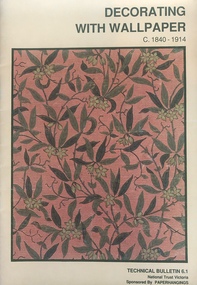
Book, Decorating with wallpaper c.1840–1914 : a guide to assist in the conservation and restoration of buildings, 1987
... wallpapers - history interior decoration - history wall coverings - history Decorating with wallpaper c.1840–1914 : a guide to assist in the conservation and restoration of buildings. National Trust of Australia (Victoria, 1987. ...Decorating with wallpaper c.1840–1914 : a guide to assist in the conservation and restoration of buildings. National Trust of Australia (Victoria, 1987. Chapters: 1. Introduction; 2. Mid-nineteenth century; 3. Halls, stairs and passages; 4. 1870s period; 5. 1880s period; 6. 1890s period; 7. Early Twentieth Century; 8. Towards World War I; 9. Ceilings; 10. Colour notes; 11. Conservation notesnon-fictionDecorating with wallpaper c.1840–1914 : a guide to assist in the conservation and restoration of buildings. National Trust of Australia (Victoria, 1987. Chapters: 1. Introduction; 2. Mid-nineteenth century; 3. Halls, stairs and passages; 4. 1870s period; 5. 1880s period; 6. 1890s period; 7. Early Twentieth Century; 8. Towards World War I; 9. Ceilings; 10. Colour notes; 11. Conservation noteswallpapers - history, interior decoration - history, wall coverings - history -
 Old Colonists' Association of Ballarat Inc.
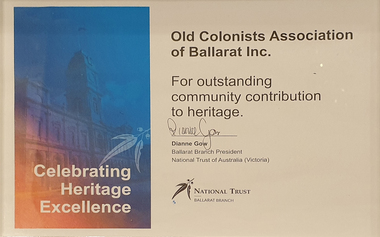
Certificate - Award, National Trust of Victoria (Ballarat Branch), Ballarat Heritage Award for Outstanding Community Contribution to Heritage, 2023
... Ballarat Heritage Award Old Colonists' Association of Ballarat Inc Award National Trust of Victoria Ballarat Branch Old Colonists' Hall Framed certificate awarding the Old Colonists' Association of Ballarat Inc Award for Outstanding Community Contribution to Heritage. The award recognised development of a conservation ...Framed certificate awarding the Old Colonists' Association of Ballarat Inc Award for Outstanding Community Contribution to Heritage. The award recognised development of a conservation management plan for the Old Colonists' Hall in Lydiard Street North, Ballarat.ballarat heritage award, old colonists' association of ballarat inc, award, national trust of victoria ballarat branch, old colonists' hall -
 Kew Historical Society Inc
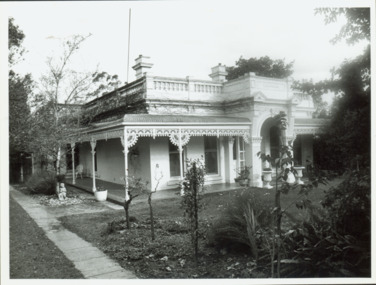
Photograph - Lalla Rookh : 41 Fellows Street, Progress Press, 1978
... The National Trust (Victoria) citation on the Heritage Victoria Database describes Lalla Rookh as charming and rare example of a substantial domestic building from the depths of the depression of the 1890s. It was Classified by the Trust on 22/04/1971. The first Kew Urban Conservation...The National Trust (Victoria) citation on the Heritage Victoria Database describes Lalla Rookh as charming and rare example of a substantial domestic building from the depths of the depression of the 1890s. It was Classified by the Trust on 22/04/1971. The first Kew Urban Conservation ...The National Trust (Victoria) citation on the Heritage Victoria Database describes Lalla Rookh as charming and rare example of a substantial domestic building from the depths of the depression of the 1890s. It was Classified by the Trust on 22/04/1971. The first Kew Urban Conservation Study established that the house was built in 1897 for John Duncan, civil servant. By 1910 William Robert Frayne, chemist, had purchased the property. When the building was listed by the National Estate the building was described as: '... Single-storied, the symmetrical, stuccoed house features a central porch with an arched opening and pedimented consoles and a bull-nose verandah which returns down both sides and is constructed with cast iron columns and friezes. A balustraded parapet crowns the main walls of the house. The encaustic tiled verandah is distinctive.'"Lalla Rookh", 41 Fellows Street, Kew, is of architectural interest as a representative example of a villa house of the period and also forms pan of the townscape of Kew. In a late version of Boom Style Classicism, the basically modest and conventionally planned house is proportioned to emphasise the porch and heavy balustrade, contrasting with the verandah and plain wall surfaces. The parapet may have had urns originally. The encaustic tiled verandah is of note. ... Of local significance.'Photographic print positive of the facade of Lalla Rookh at 41 Fellows Street, Kew.lalla rookh, houses -- fellows street -- kew (vic.), boom style architecture, architecture -- melbourne -- 1890s -
University of Melbourne, Burnley Campus Archives
Document, Buildings - General, 1983-1988
... Conservation Trust property in the Dandenongs 1989.2. Victorian College of Agriculture and Horticulture Burnley Concept Proposal December 1984. Prepared by VCAH and Public Works Department of Victoria...conservation trust buildings File 17/16. 1. Includes : Setting up of an Archive in the Main Building 1983. Discussion about Conservation Trust property in the Dandenongs 1989.2. Victorian College of Agriculture and Horticulture Burnley Concept Proposal December 1984. Prepared by VCAH and Public Works Department of Victoria ...archive, victorian college of agriculture and horticulture burnley, conservation trust, buildings -
 Kew Historical Society Inc
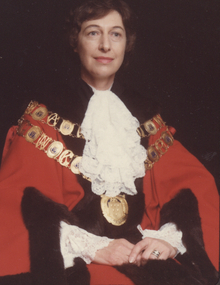
Photograph - Cr Jill O'Brien, Mayor of Kew 1983-84
... From her work in the 1960s with the Family Planning Association of Victoria, of which she was a founding member, through to the 1990s as a member of the Ethics Committee of the Department of Health, she supported efforts to improve women’s health and reproductive rights. At the local level she was most active on committees that worked to save the natural and built environment. The Power-line Action Group, the Studley Park Conservation Society, and the Yarra Bend Park Trust...From her work in the 1960s with the Family Planning Association of Victoria, of which she was a founding member, through to the 1990s as a member of the Ethics Committee of the Department of Health, she supported efforts to improve women’s health and reproductive rights. At the local level she was most active on committees that worked to save the natural and built environment. The Power-line Action Group, the Studley Park Conservation Society, and the Yarra Bend Park Trust ...Born in Bendigo and trained as a nurse in the 1950s, Sonia Jill O’Brien devoted a lifetime to social and environmental issues at both the state and local level. From her work in the 1960s with the Family Planning Association of Victoria, of which she was a founding member, through to the 1990s as a member of the Ethics Committee of the Department of Health, she supported efforts to improve women’s health and reproductive rights. At the local level she was most active on committees that worked to save the natural and built environment. The Power-line Action Group, the Studley Park Conservation Society, and the Yarra Bend Park Trust all benefitted from her indefatigable endeavours as well her vision. In 1980, Jill O’Brien successfully stood for the Kew City Council and served as Mayor in 1983 and 1984. With an eye to preserving the past as well as guarding the future, she had the Mayoral robes restored and in 1980 and 1981 was president of the Kew Historical Society. The preservation and restoration of Villa Alba in Walmer Street owes much to her determined efforts throughout the 1980s. On Council, she chaired a number of committees involved in the saving of the Kew River Parklands from the proposed transmission line of the SEC. To this end, she was the Council representative on the Merri Yarra Municipal Protection Committee.Rare colour photograph, used as the official mayoral portrait of Cr Jill O'Brien.Formal civic portrait of Cr Jill O'Brien in red mayoral robes wearing lace jabot and cuffs. The portrait is part of the larger Jill O'Brien Collection donated by her daughters.cr jill o'brien, city of kew -- mayors, mayoral portraits -- city of kew -
 Working Heritage Crown Land Collection
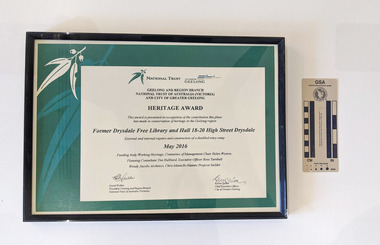
Award - former Drysdale Free Library Heritage Award, Former Drysdale Free Library and Hall 18-20 High Street Drysdale
... National Trust, City of Greater Geelong, Geelong and Regional Branch National Trust of Australia (Victoria) and City of Greater Geelong, Heritage Award, This award is presented in recognition of the contribution this place has made to conservation of heritage in the Geelong region, Former Drysdale Free Library and Hall 18-20 High Street Drysdale, External and internal repairs and construction of a disabled entry ramp, May 2016m Funding body Working Heritage, Committee of Management Chair Helen Weston, Planning Construction Consultant Tim Hubbard, Executive Officer Ross Turnbull, Wendy Jacobs Architect, Chris Mantello Mantec Projects builder ...National Trust, City of Greater Geelong, Geelong and Regional Branch National Trust of Australia (Victoria) and City of Greater Geelong, Heritage Award, This award is presented in recognition of the contribution this place has made to conservation of heritage in the Geelong region, Former Drysdale Free Library and Hall 18-20 High Street Drysdale, External and internal repairs and construction of a disabled entry ramp, May 2016m Funding body Working Heritage, Committee of Management Chair Helen Weston, Planning Construction Consultant Tim Hubbard, Executive Officer Ross Turnbull, Wendy Jacobs Architect, Chris Mantello Mantec Projects builder Framed Award Former Drysdale Free Library and Hall 18-20 High Street Drysdale Award former Drysdale Free Library Heritage Award ...Framed AwardNational Trust, City of Greater Geelong, Geelong and Regional Branch National Trust of Australia (Victoria) and City of Greater Geelong, Heritage Award, This award is presented in recognition of the contribution this place has made to conservation of heritage in the Geelong region, Former Drysdale Free Library and Hall 18-20 High Street Drysdale, External and internal repairs and construction of a disabled entry ramp, May 2016m Funding body Working Heritage, Committee of Management Chair Helen Weston, Planning Construction Consultant Tim Hubbard, Executive Officer Ross Turnbull, Wendy Jacobs Architect, Chris Mantello Mantec Projects builder -
Emerald Museum & Nobelius Heritage Park
Plan - Conservation Plan, Leane, E.A. ( Councillor, Shire of Ferntree Gully), ca.1960?
... trust. Prepared for the Society for the Preservation of the Dandenong Ranges. Dandenong Ranges Victoria Australia conservation of natural resources Shire of Ferntree Gully Victoria Australia E.A. ...Both documents undated, refer to various authorities having responsibility for the Dandenong Ranges and the need for a single authority or trust to have over-riding responsibility. The main proposal is to establish a preservation and development trust. Prepared for the Society for the Preservation of the Dandenong Ranges.(1) 2-page foolscap typescript. (2) 3-page foolscap typescript, both headed A Plan for the Preservation and Development of the Dandenong Ranges.Paperdandenong ranges, victoria, australia, conservation of natural resources, shire of ferntree gully victoria australia, e.a. leane, society for the preservation of the dandenong ranges
