
Showing 32 items matching "victorian students union"
-
 Federation University Historical Collection
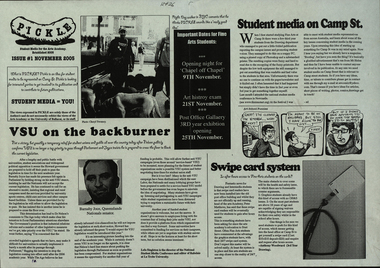
Newsletter, Pickle: Student Media for the Arts Academy, Issue 1, November 2005, 11/2005
... ...victorian students union...The Arts Academy is the Camp Street campus of Federation University Australia, and was established in 2005 arts academy camp street barnaby joyce victorian students union student media art school funnies swipe card system post office gallery exhibition anthony woodward lefa singleton A3 newsletter covering items of interest to the newly established Arts Academy, Camp Street Campus. ...The Arts Academy is the Camp Street campus of Federation University Australia, and was established in 2005A3 newsletter covering items of interest to the newly established Arts Academy, Camp Street Campus. arts academy, camp street, barnaby joyce, victorian students union, student media, art school funnies, swipe card system, post office gallery exhibition, anthony woodward, lefa singleton -
 Federation University Historical Collection
Programme, Programme for the Official Opening of the Mt Helen Campus, 10/1970
... student amenities. Over the next two years a further four buildings, costing about $2,500,000, will be erected, and a further major portion of the Institute will move to Mt Helen. these buildings, in addition to one for direct teaching work, will include a Library, a Union and the first stage of a Hall of Residence." university of ballarat ballarat school of mines biae mount helen mt helen campus mb john jack barker e.j. barker rolly parfenovics parfenovics nigel bown campus. victorian institute of colleges m.b. john White, folded, paper programme printed on the occasion of the official opening of the Ballarat Institute of Advanced Education (BIAE) Mount Helen Campus on the occasion of the centenary of the Ballarat School of Mines Programme for the Official Opening of the Mt Helen Campus Programme Waller and Chester ...The first building at the Mt Helen Campus was opened in October 1970. Students first starting using the campus in the same year. The programme includes the following historical information: "On 26th October, 1870, Sir Redmond Barry officially opened the first venture into formal technical education in Australia - the Ballarat School of Mines. Over the preceding year a small group of Ballarat citizens interested in mining had conceived and brought into being the idea of creating such a school. They leased a derelict Court House next to the Ballarat Gaol in Lydiard St., at a nominal rental for15 years, and started classes with 4 students and an honorary lecturer. The School developed its courses beyond the initially intended range of studies related to mining, increased in enrolments, took over neighbouring properties and buildings and developed three levels of education - tertiary, trade and secondary. From the latter part of the 19th Century, even though remaining under the control of its own autonomous Council, it developed close links with the State Education Department. From the earliest times the School achieved widespread recognition and a particularly high reputation, and its graduates spread across Australia and the world. For several years it was affiliated with Melbourne University. In the last decade its scope has been further broadened by the introduction of new tertiary courses. During 1965 the State Government created the Victoria Institute of Colleges - a non-teaching body empowered to award degrees and directed towards the task of co-ordinating and developing tertiary education in Victorian in institutions other than universities. the tertiary division of the School became affiliated with the V.I.C. at the end of that same year. Subsequently the Council of the School decided that, whilst retaining for the whole establishment the time honoured title - The School of Mines and Industries, Ballarat - it should more distinctly sub-title the three divisions. the tertiary division then became known as the Ballarat Institute of Advanced Education. On receipt of substantial Commonwealth-State Grants, made to it as a college of advanced education, the Council was enabled at the start of 1967, to purchase for the Institute the 20 acre campus at Mt Helen. A master plan has been produced to develop this beautiful and spacious site as a tertiary institution enrolling, in due course, some 3000 full time students. the first sod was turned, to initiate this development, by the then Governor General of Australia, The Right Honourable Lord Casey, on 19th October, 1967. The first building group, now completed and occupied, has involved an expenditure approaching $1,000,000. It contains the departments of Mechanical, Civil and Mining Engineering, Metallurgy and Geology. it also contains the Computer Centre, a temporary Library and temporary student amenities. Over the next two years a further four buildings, costing about $2,500,000, will be erected, and a further major portion of the Institute will move to Mt Helen. these buildings, in addition to one for direct teaching work, will include a Library, a Union and the first stage of a Hall of Residence."White, folded, paper programme printed on the occasion of the official opening of the Ballarat Institute of Advanced Education (BIAE) Mount Helen Campus on the occasion of the centenary of the Ballarat School of Minesuniversity of ballarat, ballarat school of mines, biae, mount helen, mt helen campus, mb john, jack barker, e.j. barker, rolly parfenovics, parfenovics, nigel bown, campus. victorian institute of colleges, m.b. john -
 Federation University Historical Collection
Book, Victoria Education Gazette and Teachers' Aid, 1900-1910, 1900-1910
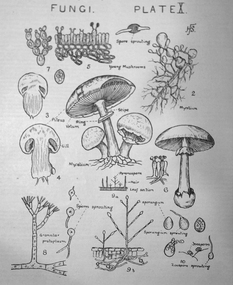
... The gazettes include Education Department appointments, transfers, resignations and retirements, notices, queries, notices of books, examination papers, original articles, lesson plans, suggestions for lessons, drawing, obituaries, notes on nature study, mathematics, music, sloyd woodwork, English grammar, Victorian State School Swimming Clubs, Geography, penmanship, science, History, Latin, Geography; The School Garden - Shean's Creek .1) Arbour Day (pg 135) Images: Melbourne Teachers' College 1888 Building (p.8); Union Jack (p. 80); Gasometer (p. 132) .2) Plant Life lesson plans, The Antarctic in 1910, Model Nature Lesson - what plants live on , Superannuation Fund, Saluting the Flag, A.N.A. School Children's Competitions, school garden awards, Teacher Training College, Nature Study - A page from a Teacher's Diary, A Mushroom, Mrs Bush's Kindergarten Christmas Images: Dookie Agricultural College, George R. Button, training college students...The gazettes include Education Department appointments, transfers, resignations and retirements, notices, queries, notices of books, examination papers, original articles, lesson plans, suggestions for lessons, drawing, obituaries, notes on nature study, mathematics, music, sloyd woodwork, English grammar, Victorian State School Swimming Clubs, Geography, penmanship, science, History, Latin, Geography; The School Garden - Shean's Creek .1) Arbour Day (pg 135) Images: Melbourne Teachers' College 1888 Building (p.8); Union Jack (p. 80); Gasometer (p. 132) .2) Plant Life lesson plans, The Antarctic in 1910, Model Nature Lesson - what plants live on , Superannuation Fund, Saluting the Flag, A.N.A. School Children's Competitions, school garden awards, Teacher Training College, Nature Study - A page from a Teacher's Diary, A Mushroom, Mrs Bush's Kindergarten Christmas Images: Dookie Agricultural College, George R. Button, training college students ...The Federation University Historical Collection holds a full range of Victoria Education Gazette and Teachers' Aid from 1900-1968.Ten black hard covered volumes with red tape spine, covering 1900 to 1910. The gazettes include Education Department appointments, transfers, resignations and retirements, notices, queries, notices of books, examination papers, original articles, lesson plans, suggestions for lessons, drawing, obituaries, notes on nature study, mathematics, music, sloyd woodwork, English grammar, Victorian State School Swimming Clubs, Geography, penmanship, science, History, Latin, Geography; The School Garden - Shean's Creek .1) Arbour Day (pg 135) Images: Melbourne Teachers' College 1888 Building (p.8); Union Jack (p. 80); Gasometer (p. 132) .2) Plant Life lesson plans, The Antarctic in 1910, Model Nature Lesson - what plants live on , Superannuation Fund, Saluting the Flag, A.N.A. School Children's Competitions, school garden awards, Teacher Training College, Nature Study - A page from a Teacher's Diary, A Mushroom, Mrs Bush's Kindergarten Christmas Images: Dookie Agricultural College, George R. Button, training college students attending the university, Sloyd teachers, Staff at the Summer School, Outside Wilson Hall, Watt's River Weir, Fungi .3) Images: Walhalla State School; Francis W. Parker (p. 18); Freearm Drawing- Sale State School (p.71) .5) Images: Map of Australia (p.33); Formalin lamps for disinfecting rooms (p. 80); Melbourne Teachers Training College (p. 167) .6) Werribee Gorge Supplement (p. 3, 4, 11, 12, 13) .7) First Exhibition of Women's Work (p. 7, 73-76) .8) Images: Franco-British Exhibition; Memorial to William H. Nichols (p. 191) .9) Temperance Teaching; Birds native to Australia (p.4) Images: Royal Agricultural Show State Schools Exhibit (p. 5-18); Leonard's Hill School; Visit of the American Fleet .10) Funeral of Edward VII Images: Portsea Quarantine Station (p. 33-35)w.o. ryan, f. thomas, a.a. tipping, t.n. considine, w.c. fordyce, e.e. bull, h.w. byrne, j.t. flynn, r.t. smith, a.w. steane, james bagge, theo fink, frank tate, siede, nature, garden, education, school, teacher, teaching, arbor day, arbour day -
Federation University Historical Collection
Booklet, Ballarat College of Advanced Education Annual Report, 1978, 1978
... student residences...union building...partridge report...post-secondary education commission...david alexander...e.j. tippett...peter fryar...lindsay hillman...george pell...john vernon...norman baggaley...barry fitzgerald...derek woolley...robert morell...e.j. barker...peter sargeant...w.j. hitchens...henry moritz...ian hemingway...pat hope...e.r, henzen...frank hurley...ken clements...geoff hendy...debra garton...paramedical...awards...victorian...A government grant and college funds, (the proceeds of the Ballarat School of Mines Centenary Appeal, were earmarked for the construction of the Art Building and Great Hall (later know as 1870 Founders Theatre) ballarat college of advanced education annual report m.b. john college logo ian gordon arthur nicholson physical education complex art building great hall 1870 founders theatre art acquisition committee computer centre medical services student residences union building partridge report post-secondary education commission david alexander e.j. tippett peter fryar lindsay hillman george pell john vernon norman baggaley barry fitzgerald derek woolley robert morell e.j. barker peter sargeant w.j. hitchens henry moritz ian hemingway pat hope e.r, henzen frank hurley ken clements geoff hendy debra garton paramedical awards victorian institute of colleges A4 black covered booklet - The Ballarat College of Advanced Education Annual Report Ballarat College of Advanced Education Annual Report, 1978 Booklet Booklet ...The following new buildings were completed: Physical Education Complex Union Building (later named the Albert Coates Complex) The Education building (T Building ) was nearing completion and would be the largest single building on the Mount Helen Campus. A government grant and college funds, (the proceeds of the Ballarat School of Mines Centenary Appeal, were earmarked for the construction of the Art Building and Great Hall (later know as 1870 Founders Theatre) A4 black covered booklet - The Ballarat College of Advanced Education Annual Reportballarat college of advanced education, annual report, m.b. john, college logo, ian gordon, arthur nicholson, physical education complex, art building, great hall, 1870 founders theatre, art acquisition committee, computer centre, medical services, student residences, union building, partridge report, post-secondary education commission, david alexander, e.j. tippett, peter fryar, lindsay hillman, george pell, john vernon, norman baggaley, barry fitzgerald, derek woolley, robert morell, e.j. barker, peter sargeant, w.j. hitchens, henry moritz, ian hemingway, pat hope, e.r, henzen, frank hurley, ken clements, geoff hendy, debra garton, paramedical, awards, victorian institute of colleges -
 Federation University Historical Collection
Photograph - Photograph - Black and White, Ballarat Technical School - Sports winners
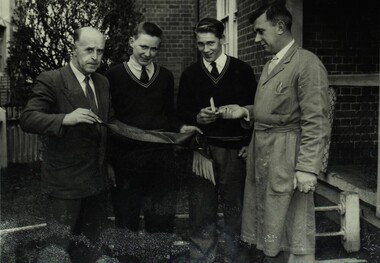
... He is an Alumni of Federation University. sport clubs rifle club photography club cadet team bugle band athletics carnival victorian technical schools sports union house system wireless club alumni ray bilney australian junior road champion australian senior road champion silver medal olympic games commonwealth games cyclist-of-the-year sir hubert opperman trophy sportsman-of-the-year victorian cycling hall-of-fame Ballarat Junior Technical School Student's Association Black and white photograph of two students and two teachers looking at a sash and medal won by the students. ...Organised sport and clubs began in 1919 with the formation of the Junior Technical School Students' Association. Clubs included the Rifle Club, Wireless Club, Senior Cadet team, Photography Club and Bugle Band. Sport was the Associations main concern. The House system was developed and boys competed within this structure. In 1926 the North Central Junior Technical School Sports Association was formed. Students from the district competed against each other in football, cricket and tennis. The number of schools increased and more sports were introduced. Ballarat Junior Technical School was a strong competitor. Many ex-students made a mark in sport out of the Ballarat area. The photograph shows Ray Bilney - second from the left. Born 2 November 1945, Ray began cycling aged 10. In 1963 he was Australian Junior Road Champion. From 1964 to 1966 he was Australian Senior Road Champion. He was in the Australian team at the 1964 Tokyo Olympics and came 4th in the race, aged 18 years. In 1966 he went to the Commonwealth Games in Jamaica and won a Silver Medal at the Commonwealth Games in Edinburgh in 1970. Ray was Ballarat Sportsman's Club Sportsman-of-the-Year 1965/66 and inducted into their Hall of Fame. In 1965 Ray was Cyclist-of-the-Year and won the coveted Sir Hubert Opperman Trophy. In May 2013, Ray was inducted into the Victorian Cycling Hall-of-Fame. During his time at the Junior Technical School, he sporting abilities were evident and in 1961 he was Top Sportsman of the school. The same year he was one of eight boys chosen to be Prefects of the school. He is an Alumni of Federation University. Black and white photograph of two students and two teachers looking at a sash and medal won by the students. Second from the left is Ray Bilney.sport, clubs, rifle club, photography club, cadet team, bugle band, athletics carnival, victorian technical schools sports union, house system, wireless club, alumni, ray bilney, australian junior road champion, australian senior road champion, silver medal, olympic games, commonwealth games, cyclist-of-the-year, sir hubert opperman, trophy, sportsman-of-the-year, victorian cycling hall-of-fame, ballarat junior technical school student's association -
Federation University Historical Collection
Document - Document - Letter, Ballarat Junior Technical School: Letter from The Metropolitan Technical Men's Branch of the V.T.U. re class sizes, 1952
... Letter from the Secretary of the Metropolitan Technical Men's Branch of the Victorian Teachers' Union, Findlay Masson, outlining the problem of class sizes in Technical Schools. Classes of 48 students...Letter from the Secretary of the Metropolitan Technical Men's Branch of the Victorian Teachers' Union, Findlay Masson, outlining the problem of class sizes in Technical Schools. Classes of 48 students are regular in English, Mathematics and Social Studies. ...Letter from the Secretary of the Metropolitan Technical Men's Branch of the Victorian Teachers' Union, Findlay Masson, outlining the problem of class sizes in Technical Schools. Classes of 48 students are regular in English, Mathematics and Social Studies. In practical classes the size has been set. Asking Technical Schools to submit details of extra accommodation required to allow for reduction of class size to 40 students or less. These needs to be incorporated into a proposed plan to be submitted to the Education Department through the V.T.U. Cream sheet of paper, typed Headmaster Ballarat Junior hand written in red pen Answered 23/10 in pencil Signature of Findlay C Masson, Secretary in red penballarat junior technical school, headmaster, l garner, victorian teachers' union, v.t.u., findlay masson, secretary, metropolitan technical men's branch, class sizes, reduction in number, extra accommodation, proposed plan, education department -
 Federation University Historical Collection
Book - Annual Report, Ballarat School of Mines Annual Report, 1973, 1873
... Union building...mt helen campus...Ballarat SChool of Mines...annual report...M.G Beanland...M.B. John...J.V. Robertson...R.j. dobell...r.h. hollioake...h.a. patterson...w.j.c. north...j.j. smail...a.e. stohr...j.k. sutton...e.j. tippett...arthur nicholson...ken C. Webb...K.j. Neerhut...Campus development...Mount Helen Campus development...E Building...Electrical Engineering building...Applied science building...Student residences Stage 2...Great Hall architect...Founders Hall...H.J. Trudinger retirement...L.F.J. Hillman Retirement...E. Phillips...Derek Woolley...Victorian...Union building mt helen campus Ballarat SChool of Mines annual report M.G Beanland M.B. John J.V. Robertson R.j. dobell r.h. hollioake h.a. patterson w.j.c. north j.j. smail a.e. stohr j.k. sutton e.j. tippett arthur nicholson ken C. Webb K.j. Neerhut Campus development Mount Helen Campus development E Building Electrical Engineering building Applied science building Student residences Stage 2 Great Hall architect Founders Hall H.J. Trudinger retirement L.F.J. Hillman Retirement E. Phillips Derek Woolley Victorian ...Stapled yellow covered annual report. Includes a list f students who graduated in 1973. Includes information on the Union Building on the Mt Helen Campusunion building, mt helen campus, ballarat school of mines, annual report, m.g beanland, m.b. john, j.v. robertson, r.j. dobell, r.h. hollioake, h.a. patterson, w.j.c. north, j.j. smail, a.e. stohr, j.k. sutton, e.j. tippett, arthur nicholson, ken c. webb, k.j. neerhut, campus development, mount helen campus development, e building, electrical engineering building, applied science building, student residences stage 2, great hall architect, founders hall, h.j. trudinger retirement, l.f.j. hillman retirement, e. phillips, derek woolley, victorian institute of colleges, b.r. granger, edith lawn retirement, j. finkelstein, w.s. carthew, g. strickland, b. white, d.e. madden, s.m. scott, k. sturmfels, d. miller, t. davison, a.j.morgan, b.m. lees, alan bethune, i.j. pratt, j.l. smyth, n.w. grose, r.o. jelleff, g.b. love, helen burgess, i.f.c. richardson, n. worswick, j.a. cue, e. notaras, j. van dreven, g. beattie, e. bowers, b.a. byrne, g.r. harbridge, d.j. kingdom, c. murray, j. vagg, l. vickery, w.c. davis, j.c. hannah, m.a. hyde, e. jeffery, n.w. rowe, g. braybrook, l. braybrook, l. brayshaw, v. bunting, e. hanrahan, v. allan, a. williams, craftmanship awards, mt helen library, student residences, fourth university -
Federation University Historical Collection
Book - Book - Scrapbook, Ballarat Institute of Advanced Education: Scrapbook of newspaper cutting, Book 5, August 1971 to December 1971
... student protest backed...ballarat trades and labor council support...prahran college of technology seeks supporters...role of colleges threatened...teacher training...new regional office - education dept...clay pit plans...equipment for biae...art display by smb students...teachers to conduct assessment experiment...undermining our sold foundation...pioneer experiment at biae...national diploma controls needed...f r hornby...colleges and students - 1972...helping hand for overseas students...gordon smith...teachers' colleges...accommodation at technical schools...victorian teachers' union...The cuttings cover the period from 19 August 1971 to 1 December 1971. ballarat institute of advanced education biae employment advertisements application for enrolment outline of courses smb finances concern mildura visitors testing new wind tunnel derek vine zig placina excellent year for association jack barker biae art show woman on a bike letters to the editor re art show 1500 trees planted biae students call strike new courses approved new physics equipment apartheid history explained derek viner talk student protest backed ballarat trades and labor council support prahran college of technology seeks supporters role of colleges threatened teacher training new regional office - education dept clay pit plans equipment for biae art display by smb students teachers to conduct assessment experiment undermining our sold foundation pioneer experiment at biae national diploma controls needed f r hornby colleges and students - 1972 helping hand for overseas students gordon smith teachers' colleges accommodation at technical schools victorian teachers' union concerns exceptions in an imperfect world student housing local degree courses on secondary studentships problem for school leavers $250000 for biae union building death of harry arblaster - former smb principal model of building project engineers' seminar at ballarat Book with orange cover, front. ...Newspaper cuttings relating to Ballarat Institute of Advanced Education. These are from various newspapers and include The Age, Ballarat Courier, The Australian, The Herald. The cuttings cover the period from 19 August 1971 to 1 December 1971. Book with orange cover, front. Spiral bound. Large tear back cover.ballarat institute of advanced education, biae, employment advertisements, application for enrolment, outline of courses, smb finances concern, mildura visitors, testing new wind tunnel, derek vine, zig placina, excellent year for association, jack barker, biae art show, woman on a bike, letters to the editor re art show, 1500 trees planted, biae students call strike, new courses approved, new physics equipment, apartheid history explained, derek viner talk, student protest backed, ballarat trades and labor council support, prahran college of technology seeks supporters, role of colleges threatened, teacher training, new regional office - education dept, clay pit plans, equipment for biae, art display by smb students, teachers to conduct assessment experiment, undermining our sold foundation, pioneer experiment at biae, national diploma controls needed, f r hornby, colleges and students - 1972, helping hand for overseas students, gordon smith, teachers' colleges, accommodation at technical schools, victorian teachers' union concerns, exceptions in an imperfect world, student housing, local degree courses on secondary studentships, problem for school leavers, $250000 for biae union building, death of harry arblaster - former smb principal, model of building project, engineers' seminar at ballarat -
Federation University Historical Collection
Book - Book - Scrapbook, Ballarat College of Advanced Education: Scrapbook of newspaper cutting, Book 17; February 1986 to June 1986
... ...victorian student union...Mention of the Solutions Data Bank developed within the VIOSH program conducted at Ballarat College of Advanced Education. . employment advertisements application for enrolment outline of courses ballarat college of advanced education bcae dr ray watson psychologist moneghetti for world events musical cultural exchange annie begonia queen "cool burn" may save animals wombat state forest trainees at queen elizabeth centre course will benefit sport council president to national organisation dr don watts engineering study awards ricky calvert barry walker indian brewer returns n c mohan ram metallurgy medal to ian mckee political desert images geoff bonney jack coman garry kinnane lecturer biography of george johnston mayor crebbins graduates education for the nation degrees for dad and daughter paul hotchin a busy man robert morrow mining engineer the flab kids speech problems rife brett sinclair wins $1000 roderick ramsay top geology student pro david klein revisits merit for geologist filipino academic at bcae method to assess skills student nurses meet patients schools compete for environment awards students set to join vsu victorian student union first for local sculpture students adrian thomas head of perfoming arts key role in inventions head questions government plans saga of survival on the ice dick richards dr jim thyer physics lecturer old u s defence 'secret' safety solutions data bank dennis else Book with beige cover, front. ...Newspaper cuttings relating to Ballarat College of Advanced Education. These are from various newspapers and include The Age, Ballarat Courier, The Australian, The Herald. The cuttings cover the period from 15 February 1986 to 28 June 1986. Mention of the Solutions Data Bank developed within the VIOSH program conducted at Ballarat College of Advanced Education. . Book with beige cover, front. Spiral bound.employment advertisements, application for enrolment, outline of courses, ballarat college of advanced education, bcae, dr ray watson psychologist, moneghetti for world events, musical cultural exchange, annie begonia queen, "cool burn" may save animals, wombat state forest, trainees at queen elizabeth centre, course will benefit sport, council president to national organisation, dr don watts, engineering study awards, ricky calvert, barry walker, indian brewer returns, n c mohan ram, metallurgy medal to ian mckee, political desert images, geoff bonney, jack coman, garry kinnane lecturer, biography of george johnston, mayor crebbins graduates, education for the nation, degrees for dad and daughter, paul hotchin a busy man, robert morrow mining engineer, the flab kids, speech problems rife, brett sinclair wins $1000, roderick ramsay top geology student, pro david klein revisits, merit for geologist, filipino academic at bcae, method to assess skills, student nurses meet patients, schools compete for environment awards, students set to join vsu, victorian student union, first for local sculpture students, adrian thomas, head of perfoming arts, key role in inventions, head questions government plans, saga of survival on the ice, dick richards, dr jim thyer physics lecturer, old u s defence 'secret', safety solutions data bank, dennis else -
 Federation University Historical Collection
Letter - Correspondence, Inwards correspondence to the Ballarat School of Mines, 1908, 07/01908
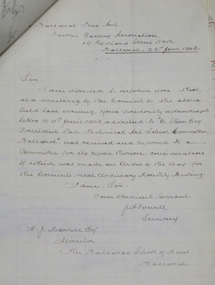
... victorian railways...telegraph...land surveying...j. brittain...g. fitzgerald...hamilton...cochran and co...wynne-grant antimony reduction company...mt egerton and gordons mining co...e. hogan...e.c. connell...a.d. galoway...metallurgy...h.b. silberberg...Specific Gravity Balance and Weights...Union Bank of Australia (Ballarat)...Bullarto...Bush Inn, Bullarto...W. Harrington...Prospective student...It is a predecessor institution of Federation University Australia. ballarat school of mines frederick martell ballarat fine art gallery j.a. powell art gallery of ballarat gallery association charles j. morris ballarat fine art public gallery association telegram c.h. clark l. ditchburn alumni examinations w.g. taylor london bank of australia limited bealiba thomas r. lyle jessie chalmers signor steffani arundel orchard w.f. coltman e.e. hobson j.t. mooney queanbeyan p.e. marmion willaim m. robertson assay e.e. brook lloyd copper mines h.b. silberberg & co. education department melbourne c. james w. west haddon warragul bakers reef gold mning company letterhead victorian portland cement works d. mitchell electric lighting and traction co. australia ltd austral otis engineering comapny ltd melbourne glass bottle works company cuming, smith & co. pty ltd excursions metropolitan gas company jaques bros manufacturing engineers victoria iron works a. victor leggo co leggo's metallurgical works melbourne hydraulic power company limited mount lyell mining and railway coy ltd victorian railways telegraph land surveying j. brittain g. fitzgerald hamilton cochran and co wynne-grant antimony reduction company mt egerton and gordons mining co e. hogan e.c. connell a.d. galoway metallurgy h.b. silberberg Specific Gravity Balance and Weights Union Bank of Australia (Ballarat) Bullarto Bush Inn, Bullarto W. Harrington Prospective student ...The Ballarat School of Mines was the first school of Mines in Australasia, and was established in 1870. It is a predecessor institution of Federation University Australia.Correspondence to the Ballarat School of Mines for the month of July 1908. Letter 162 Ballarat Fine Art Public Gallery Association 19 Lydiard Street North Ballarat, 26th June 1908 Sir, I am directed to inform you that at a meeting of the Council of the above held last evening, your previously acknowledged letter of 11th June 1908, addressted to "E. [Stoer?] Esq, President Late Technical Art School Committee", was received and referred to a committee for its report thereon, cousi directions of which was made are the Order of the Day for the Councils next Ordinary Monthly Meeting. I am, Sir, Your Obedient Servant, J.A. Powell Secretary F.J. Martell Esq Director The Ballarat School of Mines Ballarat ballarat school of mines, frederick martell, ballarat fine art gallery, j.a. powell, art gallery of ballarat, gallery association, charles j. morris, ballarat fine art public gallery association, telegram, c.h. clark, l. ditchburn, alumni, examinations, w.g. taylor, london bank of australia limited, bealiba, thomas r. lyle, jessie chalmers, signor steffani, arundel orchard, w.f. coltman, e.e. hobson, j.t. mooney, queanbeyan, p.e. marmion, willaim m. robertson, assay, e.e. brook, lloyd copper mines, h.b. silberberg & co., education department melbourne, c. james, w. west, haddon, warragul, bakers reef gold mning company, letterhead, victorian portland cement works, d. mitchell, electric lighting and traction co. australia ltd, austral otis engineering comapny ltd, melbourne glass bottle works company, cuming, smith & co. pty ltd, excursions, metropolitan gas company, jaques bros manufacturing engineers, victoria iron works, a. victor leggo co, leggo's metallurgical works, melbourne hydraulic power company limited, mount lyell mining and railway coy ltd, victorian railways, telegraph, land surveying, j. brittain, g. fitzgerald, hamilton, cochran and co, wynne-grant antimony reduction company, mt egerton and gordons mining co, e. hogan, e.c. connell, a.d. galoway, metallurgy, h.b. silberberg, specific gravity balance and weights, union bank of australia (ballarat), bullarto, bush inn, bullarto, w. harrington, prospective student, book donaton from smithsonian institution, e. la t. armstrong, department of mines and forests, melbourne, snake valley, r. hall-jones, c. calaby, clementston, thomas ramsay, w.d. thompson, longmans, green and co, selwyn chase, missionary exhibition, aboriginal court of the missionary exhibition, examination results, leslie coulter, hnery j. saw, thomas ramsay, virgil tucker, leslie c. blick, thomas r. williams, oliver w. williams, thomas r. williams, leo m. seward, david w. bonar, louis w.g. buchner, leo m. seward, albert j. robin, james a. chambers, james d. brokenshire, william kingston, edgar c. hurdsfield, virgil tucker, oliver w. williams, william g. sides, herbert hawkesworth, colin c. corrie, henry j. saw, thomas h. trengrove, thomas r. prigdeon, harold b. herbert, viola p. jackson, lionel s. davies, stanley w. tompkins, arthur m. lilburne -
 Federation University Historical Collection
Photograph - Black and White, Ballarat Teachers' College: Victorian Teachers' Union Representatives, 1969, 1969
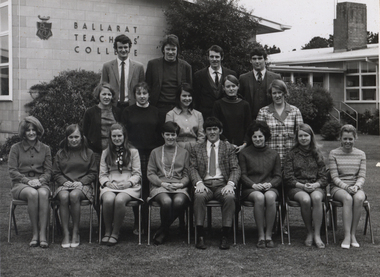
... Professional photograph of students posed sitting and standing. ballarat teachers' college victorian teachers' union Black and white photograph mounted on heavy card Ballarat Teachers' College: Victorian Teachers' Union Representatives, 1969 Photograph - Black and White ...Professional photograph of students posed sitting and standing.Black and white photograph mounted on heavy cardballarat teachers' college, victorian teachers' union -
 NMIT (Northern Melbourne Institute of TAFE)
Trophy: Collingwood Technical School 1933, Boomerang Plate, Silver trophy from Victorian Technical Schools Sports Union 1933
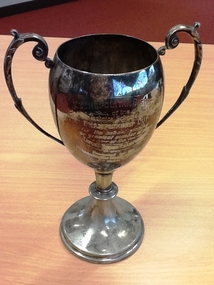
... Collingwood Technical School Trophies Boxing Championship trophy 1933 Students NMIT METROPOLITAN DISTRICT / of the / Victorian Technical Schools Sports Union / CHAMPIONSHIP CUP / for the school winning the greatest number of events / at the / ANNUAL BOXING CHAMPIONSHIPS / Presented by the Victorian Amateur Boxing & Wrestling Assn / 1933’ On back is a list of winners from 1933 to 1950 includes Brighton, Prahran, South Melbourne, Essendon, Oakleigh, Brunswick. ...Silver cup trophy from the Victorian Amateur Boxing & Wrestling Association for the Annual Boxing Championships won by Collingwood Technical School in 1933. Also won by Collingwood in 1934, 1939, 1942, 1943, 1944, 1945, 1946, 1947. METROPOLITAN DISTRICT / of the / Victorian Technical Schools Sports Union / CHAMPIONSHIP CUP / for the school winning the greatest number of events / at the / ANNUAL BOXING CHAMPIONSHIPS / Presented by the Victorian Amateur Boxing & Wrestling Assn / 1933’ On back is a list of winners from 1933 to 1950 includes Brighton, Prahran, South Melbourne, Essendon, Oakleigh, Brunswick. collingwood technical school, trophies, boxing championship trophy 1933, students, nmit, -
 Australian Queer Archives
Poster, Equal Love (Melbourne), Rally for marriage equality, Sat 24 November, State Library, 2012
... Endorsed by Victorian Trades Hall Council, National Union of Students."...Endorsed by Victorian Trades Hall Council, National Union of Students." Image of a megaphone and two placards reading 'Equal love' and 'Love knows no gender'. ...Image of a megaphone and two placards reading 'Equal love' and 'Love knows no gender'. Additional text: "1 pm Sat 24 November State Library cnr Latrobe & Swanston. Endorsed by Victorian Trades Hall Council, National Union of Students."marriage, marriage equality -
Glen Eira Historical Society
Article - Caulfield Institute of Technology
... Victorian Amateur Turf Club... Student Union...Caulfield Institute of Technology Logan Brian Benn Anthony Booth Laura Dandenong Road Caulfield East Caulfield Students Education Parking Country Roads Board Education Department Victorian Amateur Turf Club Student Union School of Community and Access Education Education Program for Older Adults History Technical Colleges Caulfield Council Tertiary Education Road construction and maintenance Caulfield racetrack Caulfield Racecourse Article Caulfield Institute of Technology ...Two items from newspaper cuttings relating to this Institute: 1/Article from Chadstone Progress 19/03/1980 on parking problems. The local council suggested public transport instead. Titled 'Parking Problem at CIT' in 2 columns. School of Community and Access Education at C.I.T. stated in an article from the Caulfield Contact 26/03/1981 that they were running classes for older adults on local history of Caulfield and seeking interested participants. Titled 'Reflections of Life in Caulfield' in one column.c.i.t., caulfield institute of technology, logan brian, benn anthony, booth laura, dandenong road, caulfield east, caulfield, students, education, parking, country roads board, education department, victorian amateur turf club, student union, school of community and access education, education program for older adults, history, technical colleges, caulfield council, tertiary education, road construction and maintenance, caulfield racetrack, caulfield racecourse -
 Chiltern Athenaeum Trust
Painting - Oil painting on gumleaf by Alfred William Eustace, circa 1851 to 1907
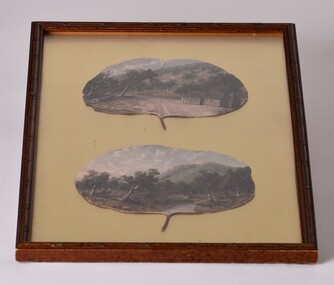
... student of nature only, despising the works of men. Unfortunately his drawings were on eucalyptus leaves, the largest and roundest he could find and not on canvas, and no doubt have all perished long ago." How wrong he was. In 1876 the Melbourne Age newspaper reported, 'Eustace’s celebrated paintings on gum leaves are again attracting attention,…Mr Eustace is an elegant artist…he seems without effort to catch the colour and spirit of Australian scenery…' In 1864 A.W. Eustace held an Art Union in Albury, and again in 1884 in Ballarat. He exhibited at the Victorian...student of nature only, despising the works of men. Unfortunately his drawings were on eucalyptus leaves, the largest and roundest he could find and not on canvas, and no doubt have all perished long ago." How wrong he was. In 1876 the Melbourne Age newspaper reported, 'Eustace’s celebrated paintings on gum leaves are again attracting attention,…Mr Eustace is an elegant artist…he seems without effort to catch the colour and spirit of Australian scenery…' In 1864 A.W. Eustace held an Art Union in Albury, and again in 1884 in Ballarat. He exhibited at the Victorian ...This gum leaf painting is one of a pair displayed on foil in the same frame. It is typical of many paintings by the self-taught Australian artist Alfred William Eustace (1820-1907). A.W. Eustace, a well-known Australian artist, was born in Berkshire, England, where he was an assistant gamekeeper to the Earl of Craven at Ashdown Park. He migrated to Australia with his wife and children in 1851 and camped on the Ullina and Eldorado Runs on the Black Dog Creek at Chiltern, which was in excess of 50,000 acres of grazing land. A.W. Eustace was employed as a shepherd by Jason Withers and while tending his flocks in the solitude of the bush, Eustace turned his attention to painting and music to while away the long and weary hours. He endeavoured to capture the spirit of the bush painting on board, canvas or tin plate, but as these materials were not always readily available he then started painting on large round eucalyptus leaves from the White and Red Box trees that grew around about him. About 1856 he painted a small picture of the famous Woolshed goldrush and during the next few years became well known in North-East Victoria. John Sadlier, a police officer stationed at Beechworth said that Eustace painted "some really exquisite scenes. He was of an easy-going dreamy temperament, a student of nature only, despising the works of men. Unfortunately his drawings were on eucalyptus leaves, the largest and roundest he could find and not on canvas, and no doubt have all perished long ago." How wrong he was. In 1876 the Melbourne Age newspaper reported, 'Eustace’s celebrated paintings on gum leaves are again attracting attention,…Mr Eustace is an elegant artist…he seems without effort to catch the colour and spirit of Australian scenery…' In 1864 A.W. Eustace held an Art Union in Albury, and again in 1884 in Ballarat. He exhibited at the Victorian Academy of Arts in 1877 and also held an exhibition of gum leaf paintings at Stevens Gallery, Melbourne in 1893. By 1896 he was receiving orders from heads of states in Europe, with his works acknowledged by Queen Victoria, Emperor Frederick of Germany and the Czar of Russia, as well as the Governors of New South Wales and Victoria. His paintings reflected his ability to paint the sky in his realistic style which is still noted by art critics of the day. A.W. Eustace was also a skillful taxidermist. The collection of birds and animals that can be seen at the Beechworth Museum are examples of his taxidermy skill. When not doing his work, painting or taxidermy, he regularly contributed letters and verse to the Chiltern newspaper, The Federal Standard. A book of verse in his hand writing was presented to The Athenaeum Trust by the Boadle family. In the 1870’s he became interested in spiritualism often being involved in lively debate at lectures and séances. Alfred William Eustace died in 1907 and is buried in the Chiltern New Cemetery with his wife Sarah and one of his daughters, Elizabeth.An oil painting on gum leaf by the well-known Australian artist Alfred William Eustace. He was a self-taught artist during the 19th and early 20th century and a prominent resident of Chiltern. Oil painting on gum leaf by Alfred William Eustace. A scene of a log cabin on Black Dog Creek Road, Chiltern, with Skeleton Hill in the background. The canvas is a juvenile Red Box (Eucalyptus polyanthemos) leaf. It is one of a pair of Eustace gum leaf paintings mounted on gold foil, under glass in a brown frame. Inscription on back. Labels on back: Rehoused by The Centre for Cultural Materials/ Conservation, University of Melbourne "Oil on Gum Leaf"/ by Alfred William Eustace/ Donor:- Cam & Connie Boadle/ Wales U.K. Crescent/ MUSEUM/ GRADE/ 24 OCT 1998/ CONSERVATION BOARD ALBURY/ PICTURE FRAMERS/ Shop 15 & 16/ AMP Lane,/ Albury, 2640/ Ph: 02 6021 7088black dog creek, chiltern, alfred eustace, skeleton hill, gum leaf, painting, eustace -
 Chiltern Athenaeum Trust
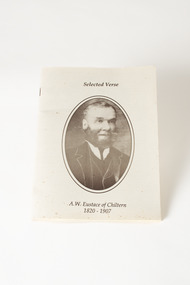
Booklet - Booklet of Selected Verse by A.W. Eustace published 1992, Selected Verse/ A.W. Eustace of Chiltern/1820-1907
... student of nature only, despising the works of men. Unfortunately his drawings were on eucalyptus leaves, the largest and roundest he could find and not on canvas, and no doubt have all perished long ago." How wrong he was. In 1876 the Melbourne Age newspaper reported, 'Eustace’s celebrated paintings on gum leaves are again attracting attention,…Mr Eustace is an elegant artist…he seems without effort to catch the colour and spirit of Australian scenery…' In 1864 A.W. Eustace held an Art Union in Albury, and again in 1884 in Ballarat. He exhibited at the Victorian...student of nature only, despising the works of men. Unfortunately his drawings were on eucalyptus leaves, the largest and roundest he could find and not on canvas, and no doubt have all perished long ago." How wrong he was. In 1876 the Melbourne Age newspaper reported, 'Eustace’s celebrated paintings on gum leaves are again attracting attention,…Mr Eustace is an elegant artist…he seems without effort to catch the colour and spirit of Australian scenery…' In 1864 A.W. Eustace held an Art Union in Albury, and again in 1884 in Ballarat. He exhibited at the Victorian ...Alfred William Eustace was a well-known self-taught Australian artist who spent his spare time painting the local landscapes in the Chiltern area. When not doing his work or painting, Eustace regularly contributed letters and verse to the Chiltern newspaper "The Federal Standard". A collection of A. W Eustace's verse and other writings, written between 1845 and 1899, was presented to The Chiltern Athenaeum Trust by Cam Boadle, a grandson of A.W. Eustace, and his wife Connie. The Chiltern Athenaeum Trust created a booklet of some of his poetry which was published in 1992. Copyright for the booklet is held by Chiltern Athenaeum Museum 1992. In the 1870’s he became interested in spiritualism often being involved in lively debate at lectures and séances. A.W.Eustace was born in Berkshire, England, where he was an assistant gamekeeper to the Earl of Craven at Ashdown Park. He migrated to Australia with his wife and children in 1851 and worked on the Ullina and Eldorado Runs on the Black Dog Creek at Chiltern, which was in excess of 50,000 acres of grazing land. A.W. Eustace was employed as a shepherd by Jason Withers and while tending his flocks in the solitude of the bush, Eustace turned his attention to painting and music to while away the long and weary hours. He endeavoured to capture the spirit of the bush painting on board, canvas or tin plate, but as these materials were not always readily available he then started painting on large round eucalyptus leaves from the White and Red Box trees that grew around about him. About 1856 he painted a small picture of the famous Woolshed goldrush and during the next few years became well known in North-East Victoria. John Sadlier, a police officer stationed at Beechworth said that Eustace painted "some really exquisite scenes. He was of an easy-going dreamy temperament, a student of nature only, despising the works of men. Unfortunately his drawings were on eucalyptus leaves, the largest and roundest he could find and not on canvas, and no doubt have all perished long ago." How wrong he was. In 1876 the Melbourne Age newspaper reported, 'Eustace’s celebrated paintings on gum leaves are again attracting attention,…Mr Eustace is an elegant artist…he seems without effort to catch the colour and spirit of Australian scenery…' In 1864 A.W. Eustace held an Art Union in Albury, and again in 1884 in Ballarat. He exhibited at the Victorian Academy of Arts in 1877 and also held an exhibition of gum leaf paintings at Stevens Gallery, Melbourne in 1893. By 1896 he was receiving orders from heads of states in Europe, with his works acknowledged by Queen Victoria, Emperor Frederich of Germany and the Czar of Russia, as well as the Governors of New South Wales and Victoria. His paintings reflected his ability to paint the sky in his realistic style which is still noted by art critics of the day. A.W. Eustace was also a skilful taxidermist. The collection of birds and animals that can be seen at the Beechworth Museum are examples of his taxidermy skill. Alfred William Eustace died in 1907 and is buried in the Chiltern New Cemetery with his wife Sarah and one of his daughters, Elizabeth. Alfred William Eustace made a valuable contribution to the culture of 19th century Chiltern and his booklet of Selected Verse gives us an insight into life during that time.22 page booklet of Selected Verse/ A.W. Eustace of Chiltern/ 1820-1907. Printed on thick cream paper with a copy of an oval photograph of the author.a. w. eustace, selected verse, chiltern -
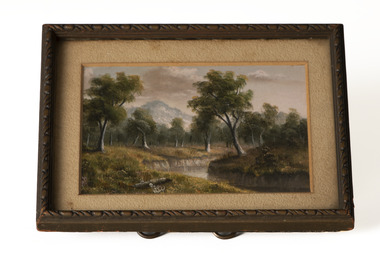 Chiltern Athenaeum Trust
Painting - Oil Painting, Alfred Eustace
... student of nature only, despising the works of men. Unfortunately his drawings were on eucalyptus leaves, the largest and roundest he could find and not on canvas, and no doubt have all perished long ago." How wrong he was. In 1876 the Melbourne Age newspaper reported, 'Eustace’s celebrated paintings on gum leaves are again attracting attention,…Mr Eustace is an elegant artist…he seems without effort to catch the colour and spirit of Australian scenery…' In 1864 A.W. Eustace held an Art Union in Albury, and again in 1884 in Ballarat. He exhibited at the Victorian...student of nature only, despising the works of men. Unfortunately his drawings were on eucalyptus leaves, the largest and roundest he could find and not on canvas, and no doubt have all perished long ago." How wrong he was. In 1876 the Melbourne Age newspaper reported, 'Eustace’s celebrated paintings on gum leaves are again attracting attention,…Mr Eustace is an elegant artist…he seems without effort to catch the colour and spirit of Australian scenery…' In 1864 A.W. Eustace held an Art Union in Albury, and again in 1884 in Ballarat. He exhibited at the Victorian ...This is one of a set of 3 miniature oil paintings by the self-taught artist Alfred William Eustace (1820-1907). A.W. Eustace, an Australian artist, was born in Berkshire, England, where he was an assistant gamekeeper to the Earl of Craven at Ashdown Park. He migrated to Australia with his wife and children in 1851 and worked on the Ullina and Eldorado Runs on the Black Dog Creek at Chiltern, which was in excess of 50,000 acres of grazing land. A.W. Eustace was employed as a shepherd by Jason Withers and while tending his flocks in the solitude of the bush, Eustace turned his attention to painting and music to while away the long and weary hours. He endeavoured to capture the spirit of the bush and painted on board, canvas or tin plate, but as these materials were not always readily available he then started painting on large round eucalyptus leaves from the White and Red Box trees that grew around about him. He became known as the "Bush Artist." About 1856 he painted a small picture of the famous Woolshed goldrush and during the next few years became well known in North-East Victoria. John Sadlier, a police officer stationed at Beechworth said that Eustace painted "some really exquisite scenes. He was of an easy-going dreamy temperament, a student of nature only, despising the works of men. Unfortunately his drawings were on eucalyptus leaves, the largest and roundest he could find and not on canvas, and no doubt have all perished long ago." How wrong he was. In 1876 the Melbourne Age newspaper reported, 'Eustace’s celebrated paintings on gum leaves are again attracting attention,…Mr Eustace is an elegant artist…he seems without effort to catch the colour and spirit of Australian scenery…' In 1864 A.W. Eustace held an Art Union in Albury, and again in 1884 in Ballarat. He exhibited at the Victorian Academy of Arts in 1877 and also held an exhibition of gum leaf paintings at Stevens Gallery, Melbourne in 1893. By 1896 he was receiving orders from heads of states in Europe, with his works acknowledged by Queen Victoria, Emperor Frederick of Germany and the Czar of Russia, as well as the Governors of New South Wales and Victoria. His paintings reflected his ability to paint the sky in his realistic style which is still noted by art critics of the day. A.W. Eustace was also a skilful taxidermist. The collection of birds and animals that can be seen at the Beechworth Museum are examples of his taxidermy skill. When not doing his work, painting or taxidermy, he regularly contributed letters and verse to the Chiltern newspaper, The Federal Standard. A book of verse in his hand writing was presented to The Athenaeum Trust by the Boadle family. In the 1870’s he became interested in spiritualism often being involved in lively debate at lectures and séances. Alfred William Eustace died in 1907 and is buried in the Chiltern New Cemetery with his wife Sarah and one of his daughters, Elizabeth. Miniature oil painting of a landscape, with creek in foreground and bush and hill behind, by A.W. Eustace, under glass, in original timber frame with beige matte and a twist wire stand. One of 3 miniatures. No signature visiblealfred eustace, chiltern, oil painting, landscape -
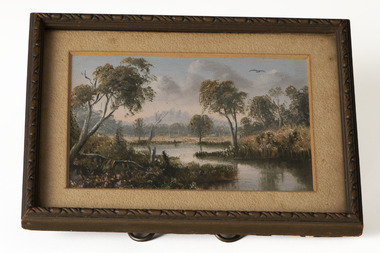 Chiltern Athenaeum Trust
Painting - Oil painting, Alfred Eustace
... student of nature only, despising the works of men. Unfortunately his drawings were on eucalyptus leaves, the largest and roundest he could find and not on canvas, and no doubt have all perished long ago." How wrong he was. In 1876 the Melbourne Age newspaper reported, 'Eustace’s celebrated paintings on gum leaves are again attracting attention,…Mr Eustace is an elegant artist…he seems without effort to catch the colour and spirit of Australian scenery…' In 1864 A.W. Eustace held an Art Union in Albury, and again in 1884 in Ballarat. He exhibited at the Victorian...student of nature only, despising the works of men. Unfortunately his drawings were on eucalyptus leaves, the largest and roundest he could find and not on canvas, and no doubt have all perished long ago." How wrong he was. In 1876 the Melbourne Age newspaper reported, 'Eustace’s celebrated paintings on gum leaves are again attracting attention,…Mr Eustace is an elegant artist…he seems without effort to catch the colour and spirit of Australian scenery…' In 1864 A.W. Eustace held an Art Union in Albury, and again in 1884 in Ballarat. He exhibited at the Victorian ...This is one of a set of 3 miniature oil paintings by the self-taught artist Alfred William Eustace (1820-1907). A.W. Eustace, an Australian artist and taxidermist, was born in Berkshire, England, where he was an assistant gamekeeper to the Earl of Craven at Ashdown Park. He migrated to Australia with his wife and children in 1851 and worked on the Ullina and Eldorado Runs on the Black Dog Creek at Chiltern, which was in excess of 50,000 acres of grazing land. A.W. Eustace was employed as a shepherd by Jason Withers and while tending his flocks in the solitude of the bush, Eustace turned his attention to painting and music to while away the long and weary hours. He endeavoured to capture the spirit of the bush painting on board, canvas or tin plate, but as these materials were not always readily available he then started painting on large round eucalyptus leaves from the White and Red Box trees that grew around about him. About 1856 he painted a small picture of the famous Woolshed goldrush and during the next few years became well known in North-East Victoria. John Sadlier, a police officer stationed at Beechworth said that Eustace painted "some really exquisite scenes. He was of an easy-going dreamy temperament, a student of nature only, despising the works of men. Unfortunately his drawings were on eucalyptus leaves, the largest and roundest he could find and not on canvas, and no doubt have all perished long ago." How wrong he was. In 1876 the Melbourne Age newspaper reported, 'Eustace’s celebrated paintings on gum leaves are again attracting attention,…Mr Eustace is an elegant artist…he seems without effort to catch the colour and spirit of Australian scenery…' In 1864 A.W. Eustace held an Art Union in Albury, and again in 1884 in Ballarat. He exhibited at the Victorian Academy of Arts in 1877 and also held an exhibition of gum leaf paintings at Stevens Gallery, Melbourne in 1893. By 1896 he was receiving orders from heads of states in Europe, with his works acknowledged by Queen Victoria, Emperor Frederick of Germany and the Czar of Russia, as well as the Governors of New South Wales and Victoria. His paintings reflected his ability to paint the sky in his realistic style which is still noted by art critics of the day. A.W. Eustace was also a skilful taxidermist. The collection of birds and animals that can be seen at the Beechworth Museum are examples of his taxidermy skill. When not doing his work, painting or taxidermy, he regularly contributed letters and verse to the Chiltern newspaper, The Federal Standard. A book of verse in his hand writing was presented to The Athenaeum Trust by the Boadle family. In the 1870’s he became interested in spiritualism often being involved in lively debate at lectures and séances. Alfred William Eustace died in 1907 and is buried in the Chiltern New Cemetery with his wife Sarah and one of his daughters, Elizabeth.Miniature oil painting of a landscape, with creek and grassland in foreground surrounded by bushland and hill in distance, by A.W. Eustace, under glass in original timber frame with beige matte and a twist wire stand. One of 3 miniatures. No signature visiblealfred eustace, oil painting, landscape, chiltern -
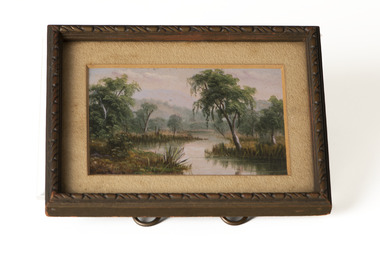 Chiltern Athenaeum Trust
Painting - Oil Painting, Alfred Eustace
... student of nature only, despising the works of men. Unfortunately his drawings were on eucalyptus leaves, the largest and roundest he could find and not on canvas, and no doubt have all perished long ago." How wrong he was. In 1876 the Melbourne Age newspaper reported, 'Eustace’s celebrated paintings on gum leaves are again attracting attention,…Mr Eustace is an elegant artist…he seems without effort to catch the colour and spirit of Australian scenery…' In 1864 A.W. Eustace held an Art Union in Albury, and again in 1884 in Ballarat. He exhibited at the Victorian...student of nature only, despising the works of men. Unfortunately his drawings were on eucalyptus leaves, the largest and roundest he could find and not on canvas, and no doubt have all perished long ago." How wrong he was. In 1876 the Melbourne Age newspaper reported, 'Eustace’s celebrated paintings on gum leaves are again attracting attention,…Mr Eustace is an elegant artist…he seems without effort to catch the colour and spirit of Australian scenery…' In 1864 A.W. Eustace held an Art Union in Albury, and again in 1884 in Ballarat. He exhibited at the Victorian ...This is one of a set of 3 miniature oil paintings by the self-taught artist Alfred William Eustace (1820-1907). A.W. Eustace, an Australian artist, was born in Berkshire, England, where he was an assistant gamekeeper to the Earl of Craven at Ashdown Park. He migrated to Australia with his wife and children in 1851 and worked on the Ullina and Eldorado Runs on the Black Dog Creek at Chiltern, which was in excess of 50,000 acres of grazing land. A.W. Eustace was employed as a shepherd by Jason Withers and while tending his flocks in the solitude of the bush, Eustace turned his attention to painting and music to while away the long and weary hours. He endeavoured to capture the spirit of the bush painting on board, canvas or tin plate, but as these materials were not always readily available he then started painting on large round eucalyptus leaves from the White and Red Box trees that grew around about him. About 1856 he painted a small picture of the famous Woolshed goldrush and during the next few years became well known in North-East Victoria. John Sadlier, a police officer stationed at Beechworth said that Eustace painted "some really exquisite scenes. He was of an easy-going dreamy temperament, a student of nature only, despising the works of men. Unfortunately his drawings were on eucalyptus leaves, the largest and roundest he could find and not on canvas, and no doubt have all perished long ago." How wrong he was. In 1876 the Melbourne Age newspaper reported, 'Eustace’s celebrated paintings on gum leaves are again attracting attention,…Mr Eustace is an elegant artist…he seems without effort to catch the colour and spirit of Australian scenery…' In 1864 A.W. Eustace held an Art Union in Albury, and again in 1884 in Ballarat. He exhibited at the Victorian Academy of Arts in 1877 and also held an exhibition of gum leaf paintings at Stevens Gallery, Melbourne in 1893. By 1896 he was receiving orders from heads of states in Europe, with his works acknowledged by Queen Victoria, Emperor Frederick of Germany and the Czar of Russia, as well as the Governors of New South Wales and Victoria. His paintings reflected his ability to paint the sky in his realistic style which is still noted by art critics of the day. A.W. Eustace was also a skilful taxidermist. The collection of birds and animals that can be seen at the Beechworth Museum are examples of his taxidermy skill. When not doing his work, painting or taxidermy, he regularly contributed letters and verse to the Chiltern newspaper, The Federal Standard. A book of verse in his hand writing was presented to The Athenaeum Trust by the Boadle family. In the 1870’s he became interested in spiritualism often being involved in lively debate at lectures and séances. Alfred William Eustace died in 1907 and is buried in the Chiltern New Cemetery with his wife Sarah and one of his daughters, Elizabeth.Miniature oil painting of a landscape with creek and surrounding trees by A.W. Eustace, under glass, in original dark brown timber frame with beige matte and a twist wire stand. One of 3 miniatures. Sticker on back: 188 (original Registration number)alfred eustace, chiltern, oil, landscape -
 Chiltern Athenaeum Trust
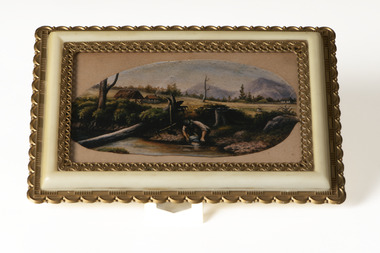
Photograph - Gum Leaf, Alfred Eustace
... student of nature only, despising the works of men. Unfortunately his drawings were on eucalyptus leaves, the largest and roundest he could find and not on canvas, and no doubt have all perished long ago." How wrong he was. In 1876 the Melbourne Age newspaper reported, 'Eustace’s celebrated paintings on gum leaves are again attracting attention,…Mr Eustace is an elegant artist…he seems without effort to catch the colour and spirit of Australian scenery…' In 1864 A.W. Eustace held an Art Union in Albury, and again in 1884 in Ballarat. He exhibited at the Victorian...student of nature only, despising the works of men. Unfortunately his drawings were on eucalyptus leaves, the largest and roundest he could find and not on canvas, and no doubt have all perished long ago." How wrong he was. In 1876 the Melbourne Age newspaper reported, 'Eustace’s celebrated paintings on gum leaves are again attracting attention,…Mr Eustace is an elegant artist…he seems without effort to catch the colour and spirit of Australian scenery…' In 1864 A.W. Eustace held an Art Union in Albury, and again in 1884 in Ballarat. He exhibited at the Victorian ...This is a colour photograph of a gum leaf painting that is one of many done by the well-known self-taught Australian artist Alfred William Eustace (1820-1907). A.W. Eustace, an Australian artist, was born in Berkshire, England, where he was an assistant gamekeeper to the Earl of Craven at Ashdown Park. He migrated to Australia with his wife and children in 1851 and worked on the Ullina and Eldorado Runs on the Black Dog Creek at Chiltern, which was in excess of 50,000 acres of grazing land. A.W. Eustace was employed as a shepherd by Jason Withers and while tending his flocks in the solitude of the bush, Eustace turned his attention to painting and music to while away the long and weary hours. He endeavoured to capture the spirit of the bush painting on board, canvas or tin plate, but as these materials were not always readily available he then started painting on large round eucalyptus leaves from the White and Red Box trees that grew around about him. About 1856 he painted a small picture of the famous Woolshed goldrush and during the next few years became well known in North-East Victoria. John Sadlier, a police officer stationed at Beechworth said that Eustace painted "some really exquisite scenes. He was of an easy-going dreamy temperament, a student of nature only, despising the works of men. Unfortunately his drawings were on eucalyptus leaves, the largest and roundest he could find and not on canvas, and no doubt have all perished long ago." How wrong he was. In 1876 the Melbourne Age newspaper reported, 'Eustace’s celebrated paintings on gum leaves are again attracting attention,…Mr Eustace is an elegant artist…he seems without effort to catch the colour and spirit of Australian scenery…' In 1864 A.W. Eustace held an Art Union in Albury, and again in 1884 in Ballarat. He exhibited at the Victorian Academy of Arts in 1877 and also held an exhibition of gum leaf paintings at Stevens Gallery, Melbourne in 1893. By 1896 he was receiving orders from heads of states in Europe, with his works acknowledged by Queen Victoria, Emperor Frederick of Germany and the Czar of Russia, as well as the Governors of New South Wales and Victoria. His paintings reflected his ability to paint the sky in his realistic style which is still noted by art critics of the day. A.W. Eustace was also a skilful taxidermist. The collection of birds and animals that can be seen at the Beechworth Museum are examples of his taxidermy skill. When not doing his work, painting or taxidermy, he regularly contributed letters and verse to the Chiltern newspaper, The Federal Standard. A book of verse in his hand writing was presented to The Athenaeum Trust by the Boadle family. In the 1870’s he became interested in spiritualism often being involved in lively debate at lectures and séances. Alfred William Eustace died in 1907 and is buried in the Chiltern New Cemetery with his wife Sarah and one of his daughters, Elizabeth.Colour photograph of an oil painting on gum leaf by A.W. Eustace. A man is panning for gold in a stream with a house and hills in the background. Under glass in a decorative gilt and cream coloured plastic frame.Hand writing on tape at back of frame: COPY OIL ON GUM LEAF 10" x 5" A W EUSTACE owned by Betty & Alf Brownlie 2260alfred eustace, gum leaf painting, chiltern, gold panning, gold -
 Chiltern Athenaeum Trust
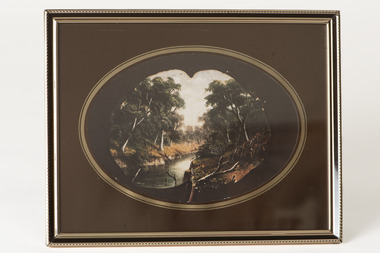
Photograph - Gum Leaf, Alfred Eustace
... student of nature only, despising the works of men. Unfortunately his drawings were on eucalyptus leaves, the largest and roundest he could find and not on canvas, and no doubt have all perished long ago." How wrong he was. In 1876 the Melbourne Age newspaper reported, 'Eustace’s celebrated paintings on gum leaves are again attracting attention,…Mr Eustace is an elegant artist…he seems without effort to catch the colour and spirit of Australian scenery…' In 1864 A.W. Eustace held an Art Union in Albury, and again in 1884 in Ballarat. He exhibited at the Victorian...student of nature only, despising the works of men. Unfortunately his drawings were on eucalyptus leaves, the largest and roundest he could find and not on canvas, and no doubt have all perished long ago." How wrong he was. In 1876 the Melbourne Age newspaper reported, 'Eustace’s celebrated paintings on gum leaves are again attracting attention,…Mr Eustace is an elegant artist…he seems without effort to catch the colour and spirit of Australian scenery…' In 1864 A.W. Eustace held an Art Union in Albury, and again in 1884 in Ballarat. He exhibited at the Victorian ...This colour photograph of a gum leaf painting shows one of the many landscapes done by the well-known self-taught Australian artist Alfred William Eustace (1820-1907). A.W. Eustace, an Australian artist and taxidermist, was born in Berkshire, England, where he was an assistant gamekeeper to the Earl of Craven at Ashdown Park. He migrated to Australia with his wife and children in 1851 and worked on the Ullina and Eldorado Runs on the Black Dog Creek at Chiltern, which was in excess of 50,000 acres of grazing land. A.W. Eustace was employed as a shepherd by Jason Withers and while tending his flocks in the solitude of the bush, Eustace turned his attention to painting and music to while away the long and weary hours. He endeavoured to capture the spirit of the bush painting on board, canvas or tin plate, but as these materials were not always readily available he then started painting on large round eucalyptus leaves from the White and Red Box trees that grew around about him. About 1856 he painted a small picture of the famous Woolshed goldrush and during the next few years became well known in North-East Victoria. John Sadlier, a police officer stationed at Beechworth said that Eustace painted "some really exquisite scenes. He was of an easy-going dreamy temperament, a student of nature only, despising the works of men. Unfortunately his drawings were on eucalyptus leaves, the largest and roundest he could find and not on canvas, and no doubt have all perished long ago." How wrong he was. In 1876 the Melbourne Age newspaper reported, 'Eustace’s celebrated paintings on gum leaves are again attracting attention,…Mr Eustace is an elegant artist…he seems without effort to catch the colour and spirit of Australian scenery…' In 1864 A.W. Eustace held an Art Union in Albury, and again in 1884 in Ballarat. He exhibited at the Victorian Academy of Arts in 1877 and also held an exhibition of gum leaf paintings at Stevens Gallery, Melbourne in 1893. By 1896 he was receiving orders from heads of states in Europe, with his works acknowledged by Queen Victoria, Emperor Frederick of Germany and the Czar of Russia, as well as the Governors of New South Wales and Victoria. His paintings reflected his ability to paint the sky in his realistic style which is still noted by art critics of the day. A.W. Eustace was also a skilful taxidermist. The collection of birds and animals that can be seen at the Beechworth Museum are examples of his taxidermy skill. When not doing his work, painting or taxidermy, he regularly contributed letters and verse to the Chiltern newspaper, The Federal Standard. A book of verse in his hand writing was presented to The Athenaeum Trust by the Boadle family. In the 1870’s he became interested in spiritualism often being involved in lively debate at lectures and séances. Alfred William Eustace died in 1907 and is buried in the Chiltern New Cemetery with his wife Sarah and one of his daughters, Elizabeth.Colour photograph of an oil painting on gum leaf by Alfred Eustace. Landscape featuring a deep creek surrounded by thick bushland displayed against dark brown backing paper which has a gilt oval surround to highlight the painting. Under glass, in a gold and dark brown metal frame.Sticker on back: 189. (the original registration number)alfred eustace, gum leaf painting, landscape -
 Chiltern Athenaeum Trust
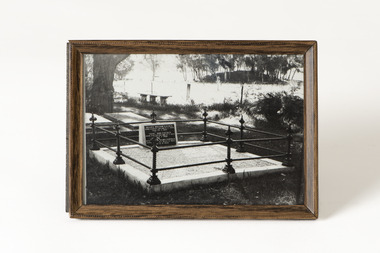
Photograph
... student of nature only, despising the works of men. Unfortunately his drawings were on eucalyptus leaves, the largest and roundest he could find and not on canvas, and no doubt have all perished long ago." How wrong he was. In 1876 the Melbourne Age newspaper reported, 'Eustace’s celebrated paintings on gum leaves are again attracting attention,…Mr Eustace is an elegant artist…he seems without effort to catch the colour and spirit of Australian scenery…' In 1864 A.W. Eustace held an Art Union in Albury, and again in 1884 in Ballarat. He exhibited at the Victorian...student of nature only, despising the works of men. Unfortunately his drawings were on eucalyptus leaves, the largest and roundest he could find and not on canvas, and no doubt have all perished long ago." How wrong he was. In 1876 the Melbourne Age newspaper reported, 'Eustace’s celebrated paintings on gum leaves are again attracting attention,…Mr Eustace is an elegant artist…he seems without effort to catch the colour and spirit of Australian scenery…' In 1864 A.W. Eustace held an Art Union in Albury, and again in 1884 in Ballarat. He exhibited at the Victorian ...This black and white photograph of the grave of A.W. Eustace is believed to have been taken in September 1987 at the Chiltern New Cemetery. Alfred William Eustace, an Australian artist, was born in the small village of Ashbury, Berkshire, England, the son of John Eustace, Head Game-keeper to the Earl of Craven at the beautiful Ashdown Park. He migrated to Australia with his wife and children in 1851 and camped next to the Ullina and Eldorado Runs on the Black Dog Creek at Chiltern, which was owned by the Withers family and was in excess of 55,000 acres of grazing land. A.W. Eustace was employed as a shepherd by Jason Withers and while tending his flocks in the solitude of the bush, Eustace turned his attention to painting and music to while away the long and weary hours. He endeavoured to capture the spirit of the bush painting on board, canvas or tin plate, but as these materials were not always readily available he then started painting on large round eucalyptus leaves from the White and Red Box trees that grew around about him. About 1856 he painted a small picture of the famous Woolshed goldrush and during the next few years became well known in North-East Victoria. John Sadlier, a police officer stationed at Beechworth said that Eustace painted "some really exquisite scenes. He was of an easy-going dreamy temperament, a student of nature only, despising the works of men. Unfortunately his drawings were on eucalyptus leaves, the largest and roundest he could find and not on canvas, and no doubt have all perished long ago." How wrong he was. In 1876 the Melbourne Age newspaper reported, 'Eustace’s celebrated paintings on gum leaves are again attracting attention,…Mr Eustace is an elegant artist…he seems without effort to catch the colour and spirit of Australian scenery…' In 1864 A.W. Eustace held an Art Union in Albury, and again in 1884 in Ballarat. He exhibited at the Victorian Academy of Arts in 1877 and also held an exhibition of gum leaf paintings at Stevens Gallery, Melbourne in 1893. By 1896 he was receiving orders from heads of states in Europe, with his works acknowledged by Queen Victoria, Emperor Frederick of Germany and the Czar of Russia, as well as the Governors of New South Wales and Victoria. His paintings reflected his ability to paint the sky in his realistic style which is still noted by art critics of the day. A.W. Eustace was also a skillful taxidermist. The collection of birds and animals that are in the Beechworth Museum collection are examples of his taxidermy skill. When not doing his work, painting or taxidermy, he regularly contributed letters and verse to the Chiltern newspaper, The Federal Standard. A book of verse in his hand writing was presented to The Athenaeum Trust by his relatives from the Boadle family. In the 1870’s he became interested in spiritualism often being involved in lively debate at lectures and séances. Alfred William Eustace died in 1907 and is buried in the Chiltern New Cemetery with his wife Sarah and one of his daughters, Elizabeth.A. W. Eustace, as well as being a well-known Australian artist, was a significant member of the Chiltern community.Black and white photograph of the grave of A.W. Eustace, under glass, in a metal frame.Sticker on back: 184 (original Registration number)a. w. eustace, grave, chiltern new cemetery -
 Chiltern Athenaeum Trust
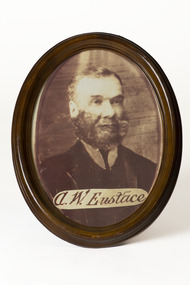
Photograph
... student of nature only, despising the works of men. Unfortunately his drawings were on eucalyptus leaves, the largest and roundest he could find and not on canvas, and no doubt have all perished long ago." How wrong he was. In 1876 the Melbourne Age newspaper reported, 'Eustace’s celebrated paintings on gum leaves are again attracting attention,…Mr Eustace is an elegant artist…he seems without effort to catch the colour and spirit of Australian scenery…' In 1864 A.W. Eustace held an Art Union in Albury, and again in 1884 in Ballarat. He exhibited at the Victorian...student of nature only, despising the works of men. Unfortunately his drawings were on eucalyptus leaves, the largest and roundest he could find and not on canvas, and no doubt have all perished long ago." How wrong he was. In 1876 the Melbourne Age newspaper reported, 'Eustace’s celebrated paintings on gum leaves are again attracting attention,…Mr Eustace is an elegant artist…he seems without effort to catch the colour and spirit of Australian scenery…' In 1864 A.W. Eustace held an Art Union in Albury, and again in 1884 in Ballarat. He exhibited at the Victorian ...Alfred William Eustace (1820-1907), an Australian artist, was born in Berkshire, England, where he was an assistant gamekeeper to the Earl of Craven at Ashdown Park. He migrated to Australia with his wife and children in 1851 and camped beside the Ullina and Eldorado Runs on the Black Dog Creek at Chiltern, which was in excess of 50,000 acres of grazing land. A.W. Eustace was employed as a shepherd by Jason Withers and while tending his flocks in the solitude of the bush, Eustace turned his attention to painting and music to while away the long and weary hours. He endeavoured to capture the spirit of the bush and painted on board, canvas or tin plate, but as these materials were not always readily available he then started painting on large round eucalyptus leaves from the White and Red Box trees that grew around about him. He became known as the "Bush Artist." About 1856 he painted a small picture of the famous Woolshed goldrush and during the next few years became well known in North-East Victoria. John Sadlier, a police officer stationed at Beechworth said that Eustace painted "some really exquisite scenes. He was of an easy-going dreamy temperament, a student of nature only, despising the works of men. Unfortunately his drawings were on eucalyptus leaves, the largest and roundest he could find and not on canvas, and no doubt have all perished long ago." How wrong he was. In 1876 the Melbourne Age newspaper reported, 'Eustace’s celebrated paintings on gum leaves are again attracting attention,…Mr Eustace is an elegant artist…he seems without effort to catch the colour and spirit of Australian scenery…' In 1864 A.W. Eustace held an Art Union in Albury, and again in 1884 in Ballarat. He exhibited at the Victorian Academy of Arts in 1877 and also held an exhibition of gum leaf paintings at Stevens Gallery, Melbourne in 1893. By 1896 he was receiving orders from heads of states in Europe, with his works acknowledged by Queen Victoria, Emperor Frederick of Germany and the Czar of Russia, as well as the Governors of New South Wales and Victoria. His paintings reflected his ability to paint the sky in his realistic style which is still noted by art critics of the day. A.W. Eustace was also a skilful taxidermist. The collection of birds and animals that can be seen at the Beechworth Museum are examples of his taxidermy skill. When not doing his work, painting or taxidermy, he regularly contributed letters and verse to the Chiltern newspaper, The Federal Standard. A book of verse in his hand writing was presented to The Athenaeum Trust by the Boadle family. In the 1870’s he became interested in spiritualism often being involved in lively debate at lectures and séances. Alfred William Eustace died in 1907 and is buried in the Chiltern New Cemetery with his wife Sarah and one of his daughters, Elizabeth. A.W. Eustace was a significant member of the Chiltern community during the 19th century and his artwork was displayed widely, even in European royal homes.Copy of sepia photograph of A.W. Eustace in a brown wooden oval frame with a copy of A.W. Eustace's signature across the bottom of the photograph.Sticker on back: 194 Sticker on back: MADE IN/ CHINA/ FABRIQUE 'AU/CHINEa.w.eustace, photograph, chiltern -
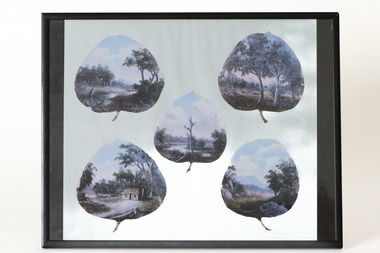 Chiltern Athenaeum Trust
Photograph - Reproduction
... student of nature only, despising the works of men. Unfortunately his drawings were on eucalyptus leaves, the largest and roundest he could find and not on canvas, and no doubt have all perished long ago." How wrong he was. In 1876 the Melbourne Age newspaper reported, 'Eustace’s celebrated paintings on gum leaves are again attracting attention,…Mr Eustace is an elegant artist…he seems without effort to catch the colour and spirit of Australian scenery…' In 1864 A.W. Eustace held an Art Union in Albury, and again in 1884 in Ballarat. He exhibited at the Victorian...student of nature only, despising the works of men. Unfortunately his drawings were on eucalyptus leaves, the largest and roundest he could find and not on canvas, and no doubt have all perished long ago." How wrong he was. In 1876 the Melbourne Age newspaper reported, 'Eustace’s celebrated paintings on gum leaves are again attracting attention,…Mr Eustace is an elegant artist…he seems without effort to catch the colour and spirit of Australian scenery…' In 1864 A.W. Eustace held an Art Union in Albury, and again in 1884 in Ballarat. He exhibited at the Victorian ...These copies of five oil on gum leaf paintings by Alfred William Eustace (1820-1907) display the subjects and detail of his small gum leaf paintings. A.W. Eustace, a well-known Australian artist, was born in Berkshire, England, where he was an assistant gamekeeper to the Earl of Craven at Ashdown Park. He migrated to Australia with his wife and children in 1851 and worked on the Ullina and Eldorado Runs on the Black Dog Creek at Chiltern, which was in excess of 50,000 acres of grazing land. A.W. Eustace was employed as a shepherd by Jason Withers and while tending his flocks in the solitude of the bush, Eustace turned his attention to painting and music to while away the long and weary hours. He endeavoured to capture the spirit of the bush and painted on board, canvas or tin plate, but as these materials were not always readily available he then started painting on large round eucalyptus leaves from the White and Red Box trees that grew around about him. He became known as the "Bush Artist." About 1856 he painted a small picture of the famous Woolshed goldrush and during the next few years became well known in North-East Victoria. John Sadlier, a police officer stationed at Beechworth said that Eustace painted "some really exquisite scenes. He was of an easy-going dreamy temperament, a student of nature only, despising the works of men. Unfortunately his drawings were on eucalyptus leaves, the largest and roundest he could find and not on canvas, and no doubt have all perished long ago." How wrong he was. In 1876 the Melbourne Age newspaper reported, 'Eustace’s celebrated paintings on gum leaves are again attracting attention,…Mr Eustace is an elegant artist…he seems without effort to catch the colour and spirit of Australian scenery…' In 1864 A.W. Eustace held an Art Union in Albury, and again in 1884 in Ballarat. He exhibited at the Victorian Academy of Arts in 1877 and also held an exhibition of gum leaf paintings at Stevens Gallery, Melbourne in 1893. By 1896 he was receiving orders from heads of states in Europe, with his works acknowledged by Queen Victoria, Emperor Frederick of Germany and the Czar of Russia, as well as the Governors of New South Wales and Victoria. His paintings reflected his ability to paint the sky in his realistic style which is still noted by art critics of the day. A.W. Eustace was also a skillful taxidermist. The collection of birds and animals that can be seen at the Beechworth Museum are examples of his taxidermy skill. When not doing his work, painting or taxidermy, he regularly contributed letters and verse to the Chiltern newspaper, The Federal Standard. A book of verse in his hand writing was presented to The Athenaeum Trust by the Boadle family. In the 1870’s he became interested in spiritualism often being involved in lively debate at lectures and séances. Alfred William Eustace died in 1907 and is buried in the Chiltern New Cemetery with his wife Sarah and one of his daughters, Elizabeth.Alfred William Eustace was a well-known self-taught Australian artist who was known worldwide for her unique oil on gum leaf paintings. He was also a prominent Chiltern citizen.Copies of five A.W.Eustace oil paintings on gum leaf, under glass, displayed on blue paper in a black metal frame.alfred eustace, gum leaf painting, chiltern -
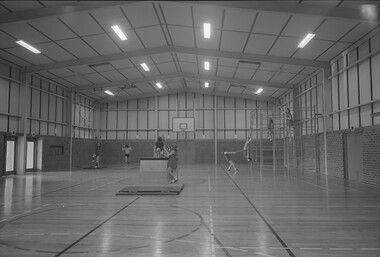 Sunshine and District Historical Society Incorporated
Photograph - Maribyrnong High School Gymnasium Photographs
... student body and union activism in the 1970s. This included the 1971 teacher’s “Control of Entry” strike of 11 weeks, one of the most important industrial actions in Victorian education history that helped to establish the principle that all students must be taught by qualified teachers. ...student body and union activism in the 1970s. This included the 1971 teacher’s “Control of Entry” strike of 11 weeks, one of the most important industrial actions in Victorian education history that helped to establish the principle that all students must be taught by qualified teachers. ...Maribyrnong High School opened in 1958. The school served in the rapidly growing Maidstone and Maribyrnong districts. During the post war and migration era’s (1950s–1970s), the school became increasingly multicultural due to the nearby Maribyrnong Migrant Hostel (opened 1949) with many European, Middle Eastern, and later Asian migrant students. The school became known for its multicultural student body and union activism in the 1970s. This included the 1971 teacher’s “Control of Entry” strike of 11 weeks, one of the most important industrial actions in Victorian education history that helped to establish the principle that all students must be taught by qualified teachers. The school was later renamed to the Maribyrnong Secondary College and then Maribyrnong College. The school is now well known for its sports academy program. maribyrnong high school, river street, maribyrong, maidstone -
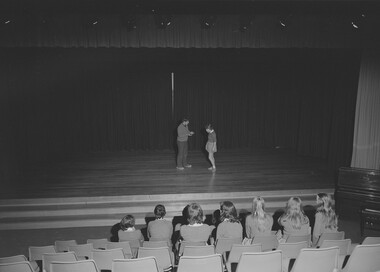 Sunshine and District Historical Society Incorporated
Photograph - Maribyrnong High School Drama Class Photograph
... student body and union activism in the 1970s. This included the 1971 teacher’s “Control of Entry” strike of 11 weeks, one of the most important industrial actions in Victorian education history that helped to establish the principle that all students must be taught by qualified teachers. ...student body and union activism in the 1970s. This included the 1971 teacher’s “Control of Entry” strike of 11 weeks, one of the most important industrial actions in Victorian education history that helped to establish the principle that all students must be taught by qualified teachers. ...Maribyrnong High School opened in 1958. The school served in the rapidly growing Maidstone and Maribyrnong districts. During the post war and migration era’s (1950s–1970s), the school became increasingly multicultural due to the nearby Maribyrnong Migrant Hostel (opened 1949) with many European, Middle Eastern, and later Asian migrant students. The school became known for its multicultural student body and union activism in the 1970s. This included the 1971 teacher’s “Control of Entry” strike of 11 weeks, one of the most important industrial actions in Victorian education history that helped to establish the principle that all students must be taught by qualified teachers. The school was later renamed to the Maribyrnong Secondary College and then Maribyrnong College. The school is now well known for its sports academy program. maribyrnong high school, river street, maribyrong, maidstone -
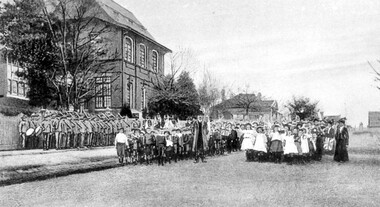 Surrey Hills Historical Society Collection
Photograph, Staff and students of Surrey Hills Primary School, Empire Day celebrations, 1911
... Union Jack flags. The cadet corps of the school stands in line on the path against the picket fence of the school carrying drums and 'rifles'. The male students are assembled in line at the edge of the road and the female students are assembled in the middle of the road. There are a number of adults in the background, presumably teachers and parents; two are identified. Centre is headmaster, Mr George Bennett and at the right is teacher, Miss Amy Wise. The photo is taken in Beatrice Avenue looking towards Canterbury Road. An Edwardian or Victorian...Union Jack flags. The cadet corps of the school stands in line on the path against the picket fence of the school carrying drums and 'rifles'. The male students are assembled in line at the edge of the road and the female students are assembled in the middle of the road. There are a number of adults in the background, presumably teachers and parents; two are identified. Centre is headmaster, Mr George Bennett and at the right is teacher, Miss Amy Wise. The photo is taken in Beatrice Avenue looking towards Canterbury Road. An Edwardian or Victorian ...Date is approximate; early Empire Day celebrations were held in May each year between 1906 and 1911 to commemorate Queen Victoria's birthday. Headmaster, George Bennett was later headmaster at Balwyn State School, which his son Gordon (later General Gordon Bennett) attended. Miss Amy Wise was a teacher at Surrey Hills State School for her entire career. (There is information in filing cabinet re Amy Wise). Note (undated) from John Reaburn states that an issue of SHNN claimed Major General Bennett was a pupil at SHPS. He stated: "I very much doubt this, as he was 19 years of age when his father was headmaster in 1906. Before that the whole family attended Balwyn State School. The statement should be substantiated or corrected".Black and white photo copied from a postcard of staff and students assembled outside Surrey Hills Primary School for Empire Day celebrations. Some children carry Union Jack flags. The cadet corps of the school stands in line on the path against the picket fence of the school carrying drums and 'rifles'. The male students are assembled in line at the edge of the road and the female students are assembled in the middle of the road. There are a number of adults in the background, presumably teachers and parents; two are identified. Centre is headmaster, Mr George Bennett and at the right is teacher, Miss Amy Wise. The photo is taken in Beatrice Avenue looking towards Canterbury Road. An Edwardian or Victorian style house can be seen on the corner of Beatrice Avenue and Canterbury Road.Within the original image: State School, Surrey Hillssurrey hills primary school, empire day celebrations, education, primary education, schools, cadets, beatrice avenue, post card, mr george bennett, miss amy wise, mr john reaburn -
 Vision Australia
Audio - Sound recording, Interview with Ted Petersen by Judith Buckrich, 16/6/2004
... students and staff recall their days at RVIB, the impact of what they learned and experienced there, and how the attitudes to blindness and low vision changed over the years. Royal Victorian Institute for the Blind Oral history Judith Buckrich Michele Prentice E.E. (Ted) Petersen Frank Turley Bill Casey Rehabilitation Association for the Blind Esme Dunnell RVIB Burwood School Cathryn McKenzie Neil Westh Terry Davidson Harold Fawell Blind Workers Union Employment Fundraising Alfred Hospital David Blyth S.W. ...Oral history interview of Ted Petersen by Judith Buckrich, with Michele Prentice. Recorded as part of 'Lighthouse on the Boulevard'. Former students and staff recall their days at RVIB, the impact of what they learned and experienced there, and how the attitudes to blindness and low vision changed over the years. 2 audio recordings of recollections from former RVIB attendeesroyal victorian institute for the blind, oral history, judith buckrich, michele prentice, e.e. (ted) petersen, frank turley, bill casey, rehabilitation, association for the blind, esme dunnell, rvib burwood school, cathryn mckenzie, neil westh, terry davidson, harold fawell, blind workers union, employment, fundraising, alfred hospital, david blyth, s.w. hedger, dr charles bennett, charles douglas, jamie kelly, peter evans -
Vision Australia
Audio - Sound recording, A Tribute to Stan Hedger by the Blind Workers Union of Victoria, 1975?
... students at the school. In their testimonies they discuss how he began improving domestic and school conditions upon arrival, to helping establish the Trojan club, introducing dancing, physical conditioning and socialising to the children, being available to oversee the resolving of complaints and changing the nature from an asylum to an institution. Royal Victorian Institute for the Blind Oral history Jim Smith Norm Rees Charlie Bradley Reuben Ryan Ethel Sutcliffe Dick Sutcliffe S.W. Hedger Radio shows 1 audio recording of recollections on Stan Hedger A Tribute to Stan Hedger by the Blind Workers Union ...Norm Rees, Jim Smith, Charlie Bradley, Reuben Ryan and Ethel and Dick Sutcliffe reflect upon the work that Stan Hedger, late superintendent of the RVIB, undertook during his tenure and how this affected the students at the school. In their testimonies they discuss how he began improving domestic and school conditions upon arrival, to helping establish the Trojan club, introducing dancing, physical conditioning and socialising to the children, being available to oversee the resolving of complaints and changing the nature from an asylum to an institution.1 audio recording of recollections on Stan Hedgerroyal victorian institute for the blind, oral history, jim smith, norm rees, charlie bradley, reuben ryan, ethel sutcliffe, dick sutcliffe, s.w. hedger, radio shows -
Unions Ballarat
Part of the furniture : moments in the history of the Federated Furniture Trades Society of Victoria, Lynn Beaton (dec), 2007
... Lynn Beaton narrrates the social history of the Victorian Branch of the Federated Furnishing Trades Society from 1856 to 2001. Relevant to the history of the trade union movement in Victoria. The author, Lynn Beaton, was a PhD student ...Lynn Beaton narrrates the social history of the Victorian Branch of the Federated Furnishing Trades Society from 1856 to 2001.Relevant to the history of the trade union movement in Victoria. The author, Lynn Beaton, was a PhD student at Federation University, Ballarat. Her thesis topic was the history of Trades Hall, Ballarat. Sadly, Lynn passed away before completing her thesis. Paper; hardcover. Front cover: hardcover with dustjacketp; brown and white cover; white and grey lettering.Front cover: author's name and title.btlc, ballarat trades and labour council, ballarat trades hall, furniture trade, trade unions, federated furnishing trades society, trade unions - history, social history
