
Showing 26 items matching "visual signals"
-
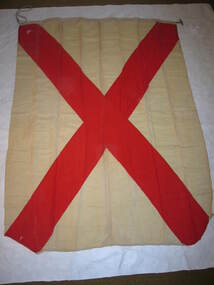 Parks Victoria - Cape Nelson Lightstation
Functional object - Flag set, navigational
... Knowledge of visual signaling was mandatory for all lightkeepers and all stations maintained a set of these flags. ...Cape Nelson Lightstation’s complete set of 41 alphabetic and numeric visual signaling flags (including substitute and answering pennants) are made of bunting, a coarse fabric of worsted (open yarn wool) in various colour combinations, and some of the fabric is hand sewn and bears inscriptions. ...Knowledge of visual signaling was mandatory for all lightkeepers and all stations maintained a set of these flags. ...The flags were used for communicating messages to passing ships. Knowledge of visual signaling was mandatory for all lightkeepers and all stations maintained a set of these flags. Although used for centuries, visual flag signaling formally developed in the nineteenth century and was published internationally as a system in 1857. By the early twentieth century it had developed into an effective means of conveying all kinds of short range visual messages.The Cape Nelson Lightstation is architecturally and scientifically (technologically) important as the most intact complex of lightstation buildings in Victoria. The octagonal signal station is a unique feature which is all the more important for its complete set of signal flags’. Cape Nelson Lightstation’s complete set of 41 alphabetic and numeric visual signaling flags (including substitute and answering pennants) are made of bunting, a coarse fabric of worsted (open yarn wool) in various colour combinations, and some of the fabric is hand sewn and bears inscriptions. Attachments include handmade wooden toggles, brass clips and hemp rope. -
 Moorabbin Air Museum
Booklet - North American P-51 Mustang, Formation Manual for the Mustang
... ...Visual signals...North American P-51 Mustang Rules Briefings Visual signals Launching Join up Level flight Combat modes for shows Recovery Instructions for formation flying in P-51 Mustang fighter, circa 1983/87 Formation Manual for the Mustang Booklet North American P-51 Mustang ...Instructions for formation flying in P-51 Mustang fighter, circa 1983/87non-fictionInstructions for formation flying in P-51 Mustang fighter, circa 1983/87rules, briefings, visual signals, launching, join up, level flight, combat modes for shows, recovery -
Moorabbin Air Museum
Book - Aerial navigation, Bennett's Complete Air Navigator
... ...Signals...Visual...Aerial navigation Mathematics & form of the Earth Map & chart projections Magnetism & compasses Instruments Meteorology Tides Signals Visual observations Radio & radar observations Astronomical observations Dead reckoning Textbook for Flight Navigator's licence, circa 1961 Bennett's Complete Air Navigator Book Aerial navigation ...Textbook for Flight Navigator's licence, circa 1961non-fictionTextbook for Flight Navigator's licence, circa 1961mathematics & form of the earth, map & chart projections, magnetism & compasses, instruments, meteorology, tides, signals, visual observations, radio & radar observations, astronomical observations, dead reckoning -
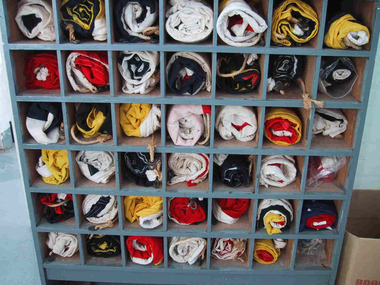 Parks Victoria - Wilsons Promontory Lightstation
Flags, Navigational
... Knowledge of visual signalling was mandatory for all lightkeepers and all stations maintained a set of flags. ...Knowledge of visual signalling was mandatory for all lightkeepers and all stations maintained a set of flags. ...The forty-two navigational flags appear to be a complete set. Their purpose-built, grey painted wooden locker is divided into forty-two pigeonholes, each holding one of the rolled up flags. It is simply built and stands on short legs and was originally open-fronted, but has since been covered with a protective clear Perspex panel. The set of alphabetic and numeric visual signalling flags (including substitute and answering pennants) are made of wool in various colour combination designs, with canvas sewn to one end that is threaded with hemp rope. Some of the flags have metal clips attached to the rope. The flags were used for communicating messages to passing ships. Knowledge of visual signalling was mandatory for all lightkeepers and all stations maintained a set of flags. Although used for centuries, visual flag signalling formally developed in the nineteenth century and was published internationally as a system in 1857. By the early twentieth century it had developed into an effective means of conveying all kinds of short range visual messages. Most flags are in good condition and their first level significance is enhanced by their completeness and integrity as a set still housed in their original locker, and by the signal charts that remain in the museum collection which offer further insights into visual signalling.1 - 42. Navigational flag set of 42 individual flags. Coloured linen with canvas sewn to one end which has hemp rope threaded through it. Some flags have metal clips attached to the ends of the hemp rope. 43. Wooden cupboard divided into sections with wooden divides. Used to house the 42 flags. • 1. navy & white. 2. navy & yellow. 3. navy & white. 4. white. 5. red & yellow. 6. yellow & navy. 7. yellow & navy. 8.red. 9.red & white. 10. white & navy. 11. red & navy & white. 12.yellow & navy & & red. 13.navy & white. 14. navy & white. 14. navy & white. 15.navy & white. 16. navy & yellow. 17. yellow & white. 18. white & red. 19. white & red. 20. yellow & red. 21. white & navy. 22. yellow & navy. 23. navy & white. 24. white & navy. 25.red & white. 26. navy & white. 27.red & white. 28.red & white. 29. red & navy. 30. white & navy. 31. yellow. 32.red 7 navy. 33. red. 34 navy,white,red & yellow.35. red & blue. 36. white & red. 37. navy & yellow. 38.red, yellow & white. 39. white. 40. white & red. 41. yellow & red. 42.navy. 43.custom built wooden open cupboard divided into sections to house flags.Yes -
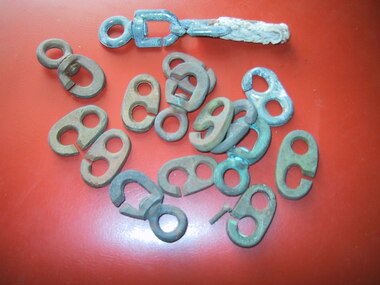 Parks Victoria - Cape Nelson Lightstation
Equipment - Flag clips
... They were used for hoisting visual signalling flags and relate to the use of the forty‐one flags (CNLS 0004.41), which were used to convey messages to passing ships and which are included in the Victorian Heritage Register listing for the lightstation (VHR H1773) . ...They were used for hoisting visual signalling flags and relate to the use of the forty‐one flags (CNLS 0004.41), which were used to convey messages to passing ships and which are included in the Victorian Heritage Register listing for the lightstation (VHR H1773) . ...The items include one intact brass clip and sections of others. They were used for hoisting visual signalling flags and relate to the use of the forty‐one flags (CNLS 0004.41), which were used to convey messages to passing ships and which are included in the Victorian Heritage Register listing for the lightstation (VHR H1773) . They have second level contributory significance for their provenance to the lightstation and association with its set of navigational flags (CNLS 0004.41), which were a major part of the communications system formerly used at the lightstation.Twenty one flag clips, some are intact others partial. One intact brass clip. -
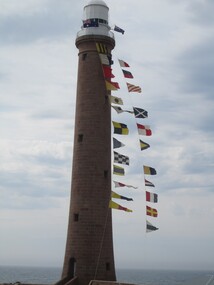 Parks Victoria - Gabo Island Lightstation
Flags & Pennants, navigational, signal
... The 41 alphabetic and numeric visual signalling flags (including substitute and answering pennants) have either square or pointed ends. ...The 41 alphabetic and numeric visual signalling flags (including substitute and answering pennants) have either square or pointed ends. ...The 41 alphabetic and numeric visual signalling flags (including substitute and answering pennants) have either square or pointed ends. They are made of bunting, a coarse fabric of worsted (open yarn wool) in various colour combinations. Some of the flags are marked with inscriptions, for example “B”. Attachments to the flags include hemp rope and metal clips. Each flag has its own galvanised canister and lid, each of which is painted grey and marked with a letter, number or word. The flags were used for communicating messages to passing ships. Knowledge of visual signalling was mandatory for all lightkeepers and all lightstations maintained a set of flags. Although used for centuries, visual flag signalling formally developed in the nineteenth century and was published internationally as a system in 1857. By the early twentieth century it had developed into an effective means of conveying all kinds of short range visual messages. The signal flags and canisters at Gabo Island form a complete set and are not historically linked to the lightstation and their provenance is unknown. It is known however that they originate from a lightstation in Victoria and for some years were on loan from AMSA to the Queenscliff Maritime Museum, where they were held in storage and not displayed. Three of the six lightstations that Parks Victoria manages have sets of signal flags in their collections. Forty navigational signal alphabet flags & numeral pennants. Flags are made of wool. -
 Parks Victoria - Gabo Island Lightstation
Flag canisters
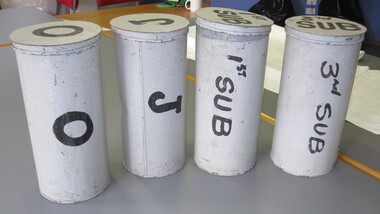
... The 41 alphabetic and numeric visual signalling flags (including substitute and answering pennants) have either square or pointed ends. ...The 41 alphabetic and numeric visual signalling flags (including substitute and answering pennants) have either square or pointed ends. ...The 41 alphabetic and numeric visual signalling flags (including substitute and answering pennants) have either square or pointed ends. They are made of bunting, a coarse fabric of worsted (open yarn wool) in various colour combinations. Some of the flags are marked with inscriptions, for example “B”. Attachments to the flags include hemp rope and metal clips. Each flag has its own galvanised canister and lid, each of which is painted grey and marked with a letter, number or word. The flags were used for communicating messages to passing ships. Knowledge of visual signalling was mandatory for all lightkeepers and all lightstations maintained a set of flags. Although used for centuries, visual flag signalling formally developed in the nineteenth century and was published internationally as a system in 1857. By the early twentieth century it had developed into an effective means of conveying all kinds of short range visual messages. The signal flags and canisters at Gabo Island form a complete set and are not historically linked to the lightstation and their provenance is unknown. It is known however that they originate from a lightstation in Victoria and for some years were on loan from AMSA to the Queenscliff Maritime Museum, where they were held in storage and not displayed. In three of the six lightstations that Parks Victoria manages have sets of signal flags in their collections. Forty-one galvanised canisters with separate lids. The canisters are painted a grey/white colour and have either numbers, letters or words painted on the lid and on the cannister in black paint. There are variations in the style of canister and in the style of the inscriptions. -
 Parks Victoria - Wilsons Promontory Lightstation
Telescope
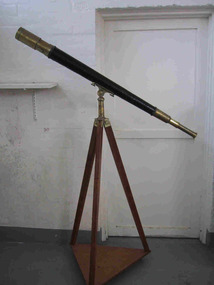
... The device magnifies images of distant objects through its curved interior mirrors, and lightkeepers used this telescope to monitor and record the names of ships, the time they passed, and their direction, as well as read meanings of flags and other visual signals communicated by vessels. The telescope is similar to Cape Nelson’s two metre long telescope, which is included in the VHR registration for the Cape Nelson Lightstation. ...The device magnifies images of distant objects through its curved interior mirrors, and lightkeepers used this telescope to monitor and record the names of ships, the time they passed, and their direction, as well as read meanings of flags and other visual signals communicated by vessels. The telescope is similar to Cape Nelson’s two metre long telescope, which is included in the VHR registration for the Cape Nelson Lightstation. ...The telescope is original to the Wilsons Promontory Lightstation and was provided by the Department of Shipping and Transport in about 1900. The device magnifies images of distant objects through its curved interior mirrors, and lightkeepers used this telescope to monitor and record the names of ships, the time they passed, and their direction, as well as read meanings of flags and other visual signals communicated by vessels. The telescope is similar to Cape Nelson’s two metre long telescope, which is included in the VHR registration for the Cape Nelson Lightstation. It is particularly important for its good condition, completeness and confirmed provenance and has first level contributory significance to the cultural heritage values of the lightstation..1 Brass telescope, cylindrical tube shape with mobile interfolding sections. Middle section of tube has been covered with textile or leather and painted black. Narrow plaited rope fixed as a border to this section is also painted black. .2. The telescope is attached by a brass fitting to a wooden tripod on a three legged triangular ply wood base with three castors. -
 Flagstaff Hill Maritime Museum and Village
Book, His Majesty's Stationery Office, The 1931 International Code of Signals : Volume 1 for Visual and Sound Signalling, 1932
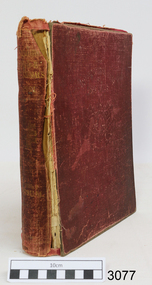
... The 1931 International Code of Signals : Volume 1 for Visual and Sound Signalling. Published and printed in London by His Majesty's Stationery Office, 1932. ...warrnambool flagstaff hill maritime museum shipwreck coast book 1931 international code of signals the 1931 international code of signals : volume 1 for visual and sound signalling communication navigation maritime signals The 1931 International Code of Signals : Volume 1 for Visual and Sound Signalling. ...The 1931 International Code of Signals : Volume 1 for Visual and Sound Signalling. Published and printed in London by His Majesty's Stationery Office, 1932. Hard cover, burgundy coloured. Price printed on fly page "15s 0d"warrnambool, flagstaff hill maritime museum, shipwreck coast, book, 1931 international code of signals, the 1931 international code of signals : volume 1 for visual and sound signalling, communication, navigation, maritime signals -
 Parks Victoria - Wilsons Promontory Lightstation
Lamp, Aldis
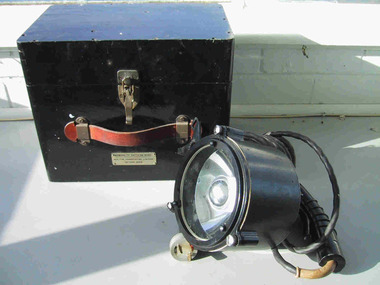
... The Aldis lamp is portable, hand held visual signalling lamp with trigger mechanism and inner reflective disk used for optical communication via Morse code. ...The Aldis lamp is portable, hand held visual signalling lamp with trigger mechanism and inner reflective disk used for optical communication via Morse code. ...The lamps were pioneered by the British Navy in the late nineteenth century and introduced by the Royal Australian Navy after 1918, and continue to be used to the present day. Manufactured in 1960, the Wilsons Promontory lamp was provided to the lighthouse by the Department of Shipping for signalling ships but was also used for communicating with Cliffy Island, 18 nautical miles away. This type of lamp was renowned for its brilliant light, and lightkeepers from the two lightstations ‘used to practice their signalling with each other, as its effective use was reliant on precise positioning of the scope which is located on top of the lamp’. The inside of the case is imprinted with ‘RAN (Royal Australian Navy), and details on the lamp include a serial number, the date of 1960 and the initials of the Department of Transport, which at that time incorporated the Commonwealth Lighthouse Service. Another Aldis lamp and case with a date of 1960 is held at Cape Nelson and third lamp and case is at Point Hicks; (date unconfirmed but possibly 1943). A fourth lamp and case formerly at Cape Schanck disappeared from the collection sometime between 1995 and 2003.Aldis lamp and case (WPLS 0003.2; likely provenance) The lamps are not rare in museum collections however the Wilsons Promontory example has a confirmed provenance to the lightation and has first level contributory significance as a fine example of the Aldis lamps that were distributed to lightstations throughout Victoria and Australia.1. Handheld black signaling lantern with trigger mechanism. Glass front with inner reflective disc. Black electrical cord is attached with a two pronged plug at the end. 2. Black painted wooden box for transporting lantern. brass catch, leather handle. Grey electrical cord inside plus transformer. Hinged lid. The Aldis lamp is portable, hand held visual signalling lamp with trigger mechanism and inner reflective disk used for optical communication via Morse code. The concave mirror is tilted to focus the light into pulse signals. Larger versions of the lamp are fixed on ships or pedestals and have shutters in front of the device that are opened and closed to transmit signals. Wilsons Promontory’s black metal Aldis lamp and attached electrical cord has a black painted wooden carrying case with metal clasp and leather hand grip.1. On trigger;"AP16413" Around V shaped protrusion attached to lamp "AP197873 / AEI .LTD 59" Beneath screw on face;"AD16415" Inside lamp, under glass;"ADMIRALTY PATTERN 16409 / 5 INCH HAND SIGNALING LANTERN SERIAL No. 212 Year 1960 / AEI PTY LTD SYDNEY" •2. Box. On brass plate below handle."ADMIRALTY PATTERN 16409 / BOX FOR TRANSPORTING LANTERN / PATTERN 16409" Inside box on side of metal insert attached to inside of box;"EXTRA LOW VOLTAGE TRANSFORMER / MADE BY / M.Brodribb, Melbourne/ cat & APP / No v/QR / 1811A / 50 / 60 va / CONT. 55 c / RATIO 240, 12 V TAPS " Top of metal box on sticker;"C of A / D.O.T 143076 / 12 V 5A" On Bakelite plug on metal box;"EXTRA LOW VOLTAGE" -
 Parks Victoria - Point Hicks Lightstation
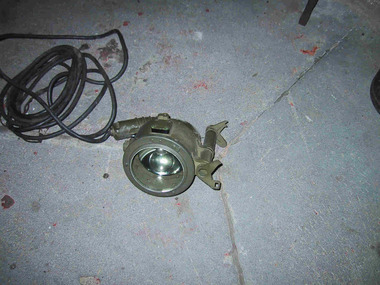
Lamp, Aldis
... This portable, hand held visual signalling lamp was used for optical communication via Morse code. ...This portable, hand held visual signalling lamp was used for optical communication via Morse code. ...This portable, hand held visual signalling lamp was used for optical communication via Morse code. It comprises the metal encased Aldis lamp with electrical cord and its associated green-painted, hinged wooden carrying case, which has a metal clasp and leather hand grip. Larger versions of these lamps are fixed on ships or pedestals and have shutters on the front that are opened and closed to transmit signals. Smaller hand held versions like the Point Hicks example have a concave mirror that is tilted to focus the light into pulse signals via a trigger. The lamps were pioneered by the British navy in the late nineteenth century and continue to be used to the present day.317 Details on the Point Hicks lamp include a serial number and other information. Another Aldis lamp and case remaining at Cape Nelson Lightstation dates to 1960 and has the initials of the Department of Transport, which at that time incorporated the Commonwealth Lighthouse Service. Wilsons Promontory also has an Aldis lamp and case that dates from around the same year. A lamp formerly at Cape Schanck has disappeared. The Aldis lamp and associated case at Point Hicks has first level contributory significance for its historic values and provenance to the lightstation. PHLS0007.1 Hand held signal light. Painted metal trigger with attached black electrical leads with battery terminals at end. Inscriptions on metal of lantern. PHLS0007.2 Hinged lid, wooden box painted army green to house signal light. Metal plate with inscription on front of box.PHLS0007.1 "D^D / LANTERN PORTABLE SIGNALLING / ADMIRALITY No 5110D / SERIAL No 5482 YEAR 943 / AMALGAMATED WIRELESS / A ASA LTD / 9792-100" •PHLS0007.2 "20 K4 transporting lantern / admirality pattern no 91108" -
 Parks Victoria - Cape Nelson Lightstation
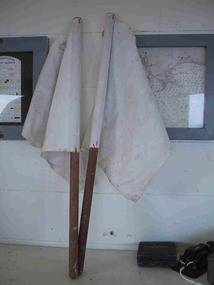
Functional object - Flags, semaphore
... The two semaphore flags were used as a pair for visual signaling by hand. The semaphore system is an alphabet signaling system based on the waving of a pair of handheld flags in a particular pattern to compose words to be communicated to passing ships. ...The two semaphore flags were used as a pair for visual signaling by hand. The semaphore system is an alphabet signaling system based on the waving of a pair of handheld flags in a particular pattern to compose words to be communicated to passing ships. ...The two semaphore flags were used as a pair for visual signaling by hand. The semaphore system is an alphabet signaling system based on the waving of a pair of handheld flags in a particular pattern to compose words to be communicated to passing ships. The system was introduced by the Royal Navy in 1880 and was later adopted in Australia, with the first School of Signaling opening in Williamstown in 1890. The system was superseded in the 1970s by more sophisticated methods of communication. Information on the Cape Nelson flags indicates that they were made by Evan Evans P/L, Flag makers, 690 Elizabeth Street, Melbourne. Evan Evans (d.1927) started a tent‐making business in 1877 and by 1920 Evan Evans P/L maker of canvas goods, was located at 680 Elizabeth Street, Melbourne. In 1924 it acquired land at 632 Bourke Street and built a new factory. His son Ivor continued the business after 1927 and in 1938 opened a bulk store in Carlton.271 In 2016 the firm was located at 673 Spencer Street, Melbourne. Another pair of white semaphore flags made by Evan & Evans is held at Gabo Island, and Wilsons Promontory also has a pair. Cape Nelson’s white semaphore flags have second level contributory significance. They have historical importance as flags formerly used at the lightstation for visual signaling, a system that is now rarely used in navigation, and contribute to the importance of the lightstation’s large collection of flags.A pair of white flags made of white canvas/heavy cotton, the square flags are attached to dowel poles with staples. -
 Parks Victoria - Cape Nelson Lightstation
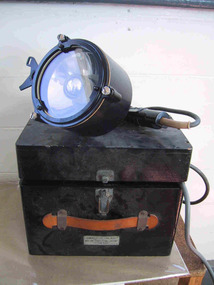
Instrument - Lamp, Aldis
... This portable, hand held visual signaling lamp, with trigger mechanism and inner reflective disk, was used for optical communication via Morse code, with the concave mirror tilted to focus the light into pulse signals. ...This portable, hand held visual signaling lamp, with trigger mechanism and inner reflective disk, was used for optical communication via Morse code, with the concave mirror tilted to focus the light into pulse signals. ...This portable, hand held visual signaling lamp, with trigger mechanism and inner reflective disk, was used for optical communication via Morse code, with the concave mirror tilted to focus the light into pulse signals. Larger versions of these lamps are fixed on ships or pedestals and have shutters in front of the light that are opened and closed to transmit signals. Smaller hand held versions like the Cape Nelson example have a concave mirror that is tilted to focus the light into pulse signals, and despite their size the lamps were renowned for their brilliant light. Invented by Arthur C W Aldis (1878‐1953) and pioneered by the British navy in the late nineteenth century, they continue to be used to the present day. Details on the Cape Nelson lamp include a serial number, a date of 1960 and the initials of the Department of Transport, which at that time incorporated the Commonwealth Lighthouse Service. Another lamp of the same date which is held at Wilsons Promontory was provided to the lighthouse by the Department of Shipping for signaling ships but was also used for communicating with Cliffy Island, 18 nautical miles away. Point Hicks also has an Aldis lamp and an associated case, which is painted an army green colour. A fourth lamp and case formerly at Cape Schanck disappeared from the collection sometime between 1995 and 2003. These types of lamps are not rare in museum collections.These types of lamps are not rare in museum collections however the Cape Nelson example has a reliable provenance to the lightstation and has first level contributory significance as a fine example of the Aldis lamps that were distributed to lightstations throughout Victoria and Australia.This object is comprised of a black metal encased Aldis lamp with electrical cord and associated wooden carrying case with metal clasp and red leather hand grip. yes -
 Bendigo Military Museum
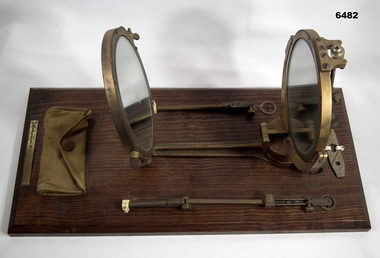
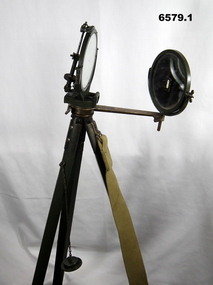
Instrument - Heliograph Mk V Training Aid - circa 1912, 1912
... It was primarily used for visual signaling by reflecting sunlight with a mirror to send coded messages over long distances. ...It was primarily used for visual signaling by reflecting sunlight with a mirror to send coded messages over long distances. ...The Heliograph MkV is a fascinating piece of historical surveying and communications equipment. It was primarily used for visual signaling by reflecting sunlight with a mirror to send coded messages over long distances. This method was primarily useful in remote areas where other forms of communication were not available. The MkV model, specifically, was widely used by the British Army and other military forces from around 1906 until the mid 1960s. It remained in use with the Australian Army Survey Corps until the mid 1980s. The device typically included a 5 - inch mirror and was often mounted on a tripod for stability. Initially the instrument was used to communicate between survey stations using Morse code to coordinate their activities. Later when better forms of communication were available they were used for precise angle alignment where the sunlight reflection from the mirror was targeted between the survey stations to give very accurate results. The MkV was relatively light weight and portable, making it ideal for use in the field. It could be setup and adjusted quickly. The heliograph had an adjustable mirror that could be tilted to reflect sunlight towards a distant receiver. Surveyors could align the mirror using a sighting device. Whilst it was primarily used by the Military it was also used in civil surveying particularly in the remote areas of Australia. This instrument was used as a training aid to help teach surveyors at the Royal Australian Survey Corps School of Military Survey. Catalog item No 2009 is a tripod that was used to mount the Heliograph whilst being used for surveying.A Heliograph containing two mirrors with brass surrounds mounted on a wooden board as a Training Aid. Item has additional parts attached to the base board."Heliograph Mk V Training Aid"royal australian survey corps, rasvy, fortuna, army survey regiment, army svy regt, asr -
 Bendigo Military Museum
Instrument - Duplex Heliograph Mk V - 1940 with Tripod, LUCO Art Metal Coy Ltd, London, 1940
... It was primarily used for visual signaling by reflecting sunlight with a mirror to send coded messages over long distances. ...It was primarily used for visual signaling by reflecting sunlight with a mirror to send coded messages over long distances. ...The Heliograph MkV is a fascinating piece of historical surveying and communications equipment. It was primarily used for visual signaling by reflecting sunlight with a mirror to send coded messages over long distances. This method was primarily useful in remote areas where other forms of communication were not available. The MkV model, specifically, was widely used by the British Army and other military forces from around 1906 until the mid 1960s. It remained in use with the Australian Army Survey Corps until the mid 1980s. The device typically included a 5 - inch mirror and was often mounted on a tripod for stability. Initially the instrument was used to communicate between survey stations using Morse code to coordinate their activities. Later when better forms of communication were available, they were used for precise angle alignment where the sunlight reflection from the mirror was targeted between the survey stations to give very accurate results. The MkV was relatively light weight and portable, making it ideal for use in the field. It could be setup and adjusted quickly. The heliograph had an adjustable mirror that could be tilted to reflect sunlight towards a distant receiver. Surveyors could align the mirror using a sighting device. Whilst it was primarily used by the Military it was also used in civil surveying particularly in the remote areas of Australia. The British Army Mark V version uses a flat round mirror with a small unsilvered spot in the centre. The sender aligned the heliograph to the target by looking at the reflected target in the mirror and moving their head until the target was hidden by the unsilvered spot. Keeping their head still, they then adjusted the aiming rod so its cross wires bisected the target, they then turned up the sighting vane, which covered the cross wires with a diagram of a cross, and aligned the mirror with the tangent and elevation screws, so the small shadow that was a reflection of the unsilvered spot hole was on the cross target. This indicated that the sunbeam was pointing at the target. If the sun was in front of the sender, its rays were reflected directly from this mirror to the receiving station. If the sun was behind the sender, the sighting rod was replaced by a second mirror, to capture the sunlight and direct it onto the main mirror to reflect it to the receiving station.. 1 Brish Army "Mance" Mk V A253 Heliograph has two 125mm diameter mirrors on a brass arm with targeting attachments. The Instrument is mounted on a three-legged tripod of brass and mahogany with spiked feet, approximately 1.2 metres high. The instrument was made by LUCO Art Metal Co Ltd, London in 1940. .2 A military green metal carrying safety storage case with khaki shoulder strap.A253 stamped on instrumentroyal australian survey corps, rasvy, fortuna, army survey regiment, army svy regt, asr -
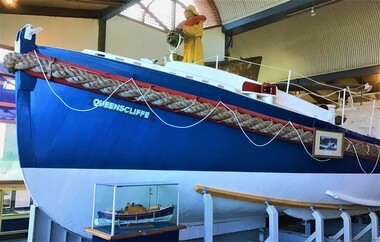 Queenscliffe Maritime Museum
Vehicle - Lifeboat, A McFarlane and Sons, Lifeboat Queenscliffe, 1926
... The equipment carried aboard included a VHF Radio Telephone, HF radio transceiver, visual signals, life rafts, hand rocket gun, flare gun, generator, search light and first aid supplies. ...The equipment carried aboard included a VHF Radio Telephone, HF radio transceiver, visual signals, life rafts, hand rocket gun, flare gun, generator, search light and first aid supplies. ...QUEENSCLIFFE was built in 1926 to a Royal National Lifeboat Institution (RNLI) design called the Watson Class. The double-diagonal planked vessel was built by A McFarlane and Sons in Port Adelaide SA, commissioned on the 6th of March 1926, and then officially named and launched on the 9th of April 1926. The original Wayburn petrol engine was replaced with a Gardner diesel. This gave QUEENSCLIFFE a top speed of 7.5 knots with a range of 350 miles. The equipment carried aboard included a VHF Radio Telephone, HF radio transceiver, visual signals, life rafts, hand rocket gun, flare gun, generator, search light and first aid supplies. In the tradition of many shore based lifeboats, QUEENSCLIFFE had its own shed and slipway and was always ready for launching when required to go to sea in response to an emergency call. Its area of operation included 'the Rip' at Port Phillip Heads and the Bass Strait seas immediately offshore. She was taken out of service in 1976 by the Marine Board of Victoria and subsequently offered to the Borough of Queenscliffe for care and display. The Lifeboat is listed on the Australian Register of Historic Vessels (ARHV). During her 50 years of service the Queenscliffe attended many calls for assistance both inside and outside the Heads. Some of the vessels and calls for help the lifeboat attended were: 1960 - Army Commandos lost in the Rip 1967 - The search for the late Prime Minister Harold Holt 1974 - The last attendance to a vessel was to the Brisbane Trader which was on fire The shed which housed the lifeboat is located on the Queenscliff 'New' or 'Steamer' Pier (built in 1884). This shed includes the internal section of the slipway used to launch and retrieve the lifeboat. The external slipway and some other structures associated with the lifeboat shed have been removed. Originally fitted with two masts, the stern mast being removed in the 1960's. A retractable centre plate was used when under sail. Delivered with an 80 hp Wayburn petrol motor which was later replaced by a 72 hp Gardiner diesel. Top speed of 7.5 knots and a range of 350 miles.QUEENSCLIFFE is a wooden lifeboat built in 1926 in South Australia. It has a long association with the Victorian port of Queenscliff. It was manned voluntarily by their local fishermen and is therefore closely attached to families of the Queenscliff community. It is a rare surviving example of the coastal shore-based lifeboats that were based around the Australian coastline.The lifeboat 'Queenscliffe' a Watson Class LifeboatQueenscliffelifeboat, rescue, watson class boat -
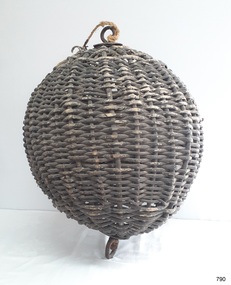 Flagstaff Hill Maritime Museum and Village
Equipment - Distant Signal, 1897-1931
... Its primary use was to display visual signals that could convey messages between land and sea. ...Its primary use was to display visual signals that could convey messages between land and sea. ...This three-dimensional Distant Signal is part of a Flagstaff Signal set of ball, cone and drum shapes. It has been woven and then fabricated with strong metal swivel fittings and loops for suspending from a high point on a flagstaff at a signal station or on a ship’s masthead. The cane signal was constructed to withstand all weather and to be visible from a long distance. The gaps between the woven cane allow air to pass through, minimising possible swaying. Similar sets were made from rope or fabric. Warrnambool's Flagstaff was erected in 1854. Its primary use was to display visual signals that could convey messages between land and sea. It was also used to notify the local population of the approach of ships. One of the popular signalling codes in use in the early-to-mid 1800s was the Marryat’s Code but there were others in use as well; there was no one standard code. In 1857 the International Marine Conference adopted an International Code of Signals as a standard communications system for all vessels that could be understood in many different languages. The Normanby Advertiser reported on June 5th 1857 a query from the Post Master General as to whether the request of the Chief Harbour Master would be carried out, in that Warrnambool would receive a new flagstaff and a set of Marryatt’s signal flags. The Table of Codes was published, showing how to use combinations of these flags to send messages. The Code was revised in 1887 to cover situations where distance, light, wind and weather conditions affected the visibility of the flags and prevented clear communication. The first report of the International Code of Signals Committee of 1897 warned signalmen not to rely on ordinary semaphore flags and introduced a Distant Signal Code using either particular semaphore flags or the three-dimensional shapes of a ball, cone and drum that aligned with the semaphore flag shapes of a circle, pennant and square. International Code of Signals In 1931, after World War I’s experiences in using signal codes, the International Code of Signals conference in Washington revised and published the rules for the conduct of signalling. One of the changes was that “the use of the Distant Signals and of fixed semaphore was abandoned”. It is of interest to know that modern marine law in many countries insists that a set of Day Shapes must be carried onboard vessels of a certain size. These highly visible geometric shapes are used at sea in daylight to communicate messages between vessels. They are used in a similar way to the Distant Signals, in that different combinations of shapes represent different messages. The set of shapes includes a ball, cylinder, cone and diamond. The shapes are hung between the top of the vessel’s foremast and the front of the vessel. They are only coloured black and are about 1.5 metres high. The vertical line of shapes can mean messages such as Boat not under command, Fishing, and Under sail and power.Distant Signals were an important means of marine communication from the late 1880s to the early 1930s, including during World War I. They were an advancement to the International Shipping Codes and safety. The cane signals’ shapes appear to be the same from whatever direction they are viewed, removing confusion about the message they convey. The same shapes continue to be used today for the sets of Day Shapes used as marine navigational signals that are mandatory on certain-sized vessels.Distant Signal Ball, part of a Flagstaff signal set. A round woven cane ball, painted black, with a metal rod passing through the centre. The rod has a loop at each end, then a concave, octagonal metal plate that rests on the outside surface of the ball, serving as a washer. The rod has swivels at each end.flagstaff hill, flagstaff hill maritime museum and village, warrnambool, maritime museum, maritime village, great ocean road, shipwreck coast, distant signal, signal, maritime signal, ball signal, signal shape, flagstaff signal, signal station, masthead signal, communications, marine technology, signals, marine signals, flaghoists, international marine conference, international code of signals, signal codes, marine safety, signal flags, day shape, daymark, day symbol, navigation, warrnambool flagstaff, 1854, 1857 1931, 1887, 1897 -
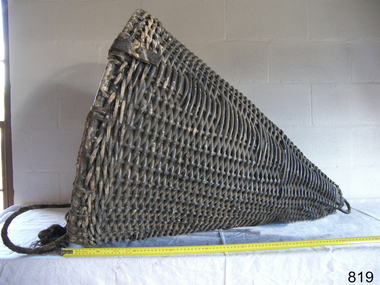 Flagstaff Hill Maritime Museum and Village
Equipment - Distant Signal, 1897-1931
... Its primary use was to display visual signals that could convey messages between land and sea. ...Its primary use was to display visual signals that could convey messages between land and sea. ...This three-dimensional Distant Signal is part of a Flagstaff Signal set of ball, cone and drum shapes. It has been woven and then fabricated with strong metal swivel fittings and loops for suspending from a high point on a flagstaff at a signal station or on a ship’s masthead. The cane signal was constructed to withstand all weather and to be visible from a long distance. The gaps between the woven cane allow air to pass through, minimising possible swaying. Similar sets were made from rope or fabric. Warrnambool's Flagstaff was erected in 1854. Its primary use was to display visual signals that could convey messages between land and sea. It was also used to notify the local population of the approach of ships. One of the popular signalling codes in use in the early-to-mid 1800s was the Marryat’s Code but there were others in use as well; there was no one standard code. In 1857 the International Marine Conference adopted an International Code of Signals as a standard communications system for all vessels that could be understood in many different languages. The Normanby Advertiser reported on June 5th 1857 a query from the Post Master General as to whether the request of the Chief Harbour Master would be carried out, in that Warrnambool would receive a new flagstaff and a set of Marryatt’s signal flags. The Table of Codes was published, showing how to use combinations of these flags to send messages. The Code was revised in 1887 to cover situations where distance, light, wind and weather conditions affected the visibility of the flags and prevented clear communication. The first report of the International Code of Signals Committee of 1897 warned signalmen not to rely on ordinary semaphore flags and introduced a Distant Signal Code using either particular semaphore flags or the three-dimensional shapes of a ball, cone and drum that aligned with the semaphore flag shapes of a circle, pennant and square. International Code of Signals In 1931, after World War I’s experiences in using signal codes, the International Code of Signals conference in Washington revised and published the rules for the conduct of signalling. One of the changes was that “the use of the Distant Signals and of fixed semaphore was abandoned”. It is of interest to know that modern marine law in many countries insists that a set of Day Shapes must be carried onboard vessels of a certain size. These highly visible geometric shapes are used at sea in daylight to communicate messages between vessels. They are used in a similar way to the Distant Signals, in that different combinations of shapes represent different messages. The set of shapes includes a ball, cylinder, cone and diamond. The shapes are hung between the top of the vessel’s foremast and the front of the vessel. They are only coloured black and are about 1.5 metres high. The vertical line of shapes can mean messages such as Boat not under command, Fishing, and Under sail and power.Distant Signals were an important means of marine communication from the late 1880s to the early 1930s, including during World War I. They were an advancement to the International Shipping Codes and safety. The cane signals’ shapes appear to be the same from whatever direction they are viewed, removing confusion about the message they convey. The same shapes continue to be used today for the sets of Day Shapes used as marine navigational signals that are mandatory on certain-sized vessels.Distant Signal Cone, part of a Flagstaff signal set. A woven cane cone, painted black, with a metal rod passing through the centre and two crossed metal bars at the base. The central rod has a loop at the top and passes through the bars at the base, finishing in a metal loop. The rod has swivels at each end.flagstaff hill, warrnambool, flagstaff hill maritime museum and village, shipwreck coast, marine navigation, marine communications, communication signal, lifesaving, ship at sea, day shape, masthead signal, day signal, day mark signals, marine technology, safety equipment, navigation equipment, marine day shape, day marker, cane day shape, signal cone, day signal cone, cone signal, cone day shape, distant signal, flagstaff signal, signal station, communications, signals, marine signals, flaghoists, international marine conference, international code of signals, signal codes, marine safety, signal flags, daymark, day symbol, navigation, warrnambool flagstaff, 1854, 1857 1931, 1887, 1897 -
 Flagstaff Hill Maritime Museum and Village
Equipment - Distant Signal, 1897-1931
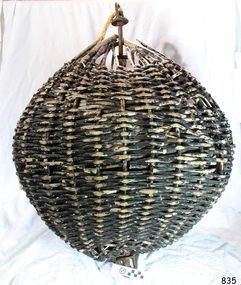
... Its primary use was to display visual signals that could convey messages between land and sea. ...Its primary use was to display visual signals that could convey messages between land and sea. ...This three-dimensional Distant Signal is part of a Flagstaff Signal set of ball, cone and drum shapes. It has been woven and then fabricated with strong metal swivel fittings and loops for suspending from a high point on a flagstaff at a signal station or on a ship’s masthead. The cane signal was constructed to withstand all weather and to be visible from a long distance. The gaps between the woven cane allow air to pass through, minimising possible swaying. Similar sets were made from rope or fabric. Warrnambool's Flagstaff was erected in 1854. Its primary use was to display visual signals that could convey messages between land and sea. It was also used to notify the local population of the approach of ships. One of the popular signalling codes in use in the early-to-mid 1800s was the Marryat’s Code but there were others in use as well; there was no one standard code. In 1857 the International Marine Conference adopted an International Code of Signals as a standard communications system for all vessels that could be understood in many different languages. The Normanby Advertiser reported on June 5th 1857 a query from the Post Master General as to whether the request of the Chief Harbour Master would be carried out, in that Warrnambool would receive a new flagstaff and a set of Marryatt’s signal flags. The Table of Codes was published, showing how to use combinations of these flags to send messages. The Code was revised in 1887 to cover situations where distance, light, wind and weather conditions affected the visibility of the flags and prevented clear communication. The first report of the International Code of Signals Committee of 1897 warned signalmen not to rely on ordinary semaphore flags and introduced a Distant Signal Code using either particular semaphore flags or the three-dimensional shapes of a ball, cone and drum that aligned with the semaphore flag shapes of a circle, pennant and square. International Code of Signals In 1931, after World War I’s experiences in using signal codes, the International Code of Signals conference in Washington revised and published the rules for the conduct of signalling. One of the changes was that “the use of the Distant Signals and of fixed semaphore was abandoned”. It is of interest to know that modern marine law in many countries insists that a set of Day Shapes must be carried onboard vessels of a certain size. These highly visible geometric shapes are used at sea in daylight to communicate messages between vessels. They are used in a similar way to the Distant Signals, in that different combinations of shapes represent different messages. The set of shapes includes a ball, cylinder, cone and diamond. The shapes are hung between the top of the vessel’s foremast and the front of the vessel. They are only coloured black and are about 1.5 metres high. The vertical line of shapes can mean messages such as Boat not under command, Fishing, and Under sail and power.Distant Signals were an important means of marine communication from the late 1880s to the early 1930s, including during World War I. They were an advancement to the International Shipping Codes and safety. The cane signals’ shapes appear to be the same from whatever direction they are viewed, removing confusion about the message they convey. The same shapes continue to be used today for the sets of Day Shapes used as marine navigational signals that are mandatory on certain-sized vessels.Distant Signal Ball, part of a Flagstaff signal set. A round woven cane ball, painted black, with a metal rod passing through the centre. The rod has a loop at each end, then a concave, octagonal metal plate that rests on the outside surface of the ball, serving as a washer. The rod has swivels at each end.flagstaff hill, warrnambool, flagstaff hill maritime museum and village, shipwreck coast, marine navigation, marine communications, communication signal, lifesaving, ship at sea, day shape, masthead signal, day signal, day mark signals, marine technology, safety equipment, navigation equipment, marine day shape, day marker, cane day shape, signal ball, day signal ball, ball signal, ball day shape, distant signal, flagstaff signal, signal station, communications, signals, marine signals, flaghoists, international marine conference, international code of signals, signal codes, marine safety, signal flags, daymark, day symbol, navigation, warrnambool flagstaff, 1854, 1857 1931, 1887, 1897 -
 Flagstaff Hill Maritime Museum and Village
Equipment - Distant Signal, 1897-1931
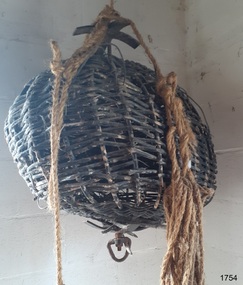
... Its primary use was to display visual signals that could convey messages between land and sea. ...Its primary use was to display visual signals that could convey messages between land and sea. ...This three-dimensional Distant Signal is part of a Flagstaff Signal set of ball, cone and drum shapes. It has been woven and then fabricated with strong metal swivel fittings and loops for suspending from a high point on a flagstaff at a signal station or on a ship’s masthead. The cane signal was constructed to withstand all weather and to be visible from a long distance. The gaps between the woven cane allow air to pass through, minimising possible swaying. Similar sets were made from rope or fabric. Warrnambool's Flagstaff was erected in 1854. Its primary use was to display visual signals that could convey messages between land and sea. It was also used to notify the local population of the approach of ships. One of the popular signalling codes in use in the early-to-mid 1800s was the Marryat’s Code but there were others in use as well; there was no one standard code. In 1857 the International Marine Conference adopted an International Code of Signals as a standard communications system for all vessels that could be understood in many different languages. The Normanby Advertiser reported on June 5th 1857 a query from the Post Master General as to whether the request of the Chief Harbour Master would be carried out, in that Warrnambool would receive a new flagstaff and a set of Marryatt’s signal flags. The Table of Codes was published, showing how to use combinations of these flags to send messages. The Code was revised in 1887 to cover situations where distance, light, wind and weather conditions affected the visibility of the flags and prevented clear communication. The first report of the International Code of Signals Committee of 1897 warned signalmen not to rely on ordinary semaphore flags and introduced a Distant Signal Code using either particular semaphore flags or the three-dimensional shapes of a ball, cone and drum that aligned with the semaphore flag shapes of a circle, pennant and square. International Code of Signals In 1931, after World War I’s experiences in using signal codes, the International Code of Signals conference in Washington revised and published the rules for the conduct of signalling. One of the changes was that “the use of the Distant Signals and of fixed semaphore was abandoned”. It is of interest to know that modern marine law in many countries insists that a set of Day Shapes must be carried onboard vessels of a certain size. These highly visible geometric shapes are used at sea in daylight to communicate messages between vessels. They are used in a similar way to the Distant Signals, in that different combinations of shapes represent different messages. The set of shapes includes a ball, cylinder, cone and diamond. The shapes are hung between the top of the vessel’s foremast and the front of the vessel. They are only coloured black and are about 1.5 metres high. The vertical line of shapes can mean messages such as Boat not under command, Fishing, and Under sail and power.Distant Signals were an important means of marine communication from the late 1880s to the early 1930s, including during World War I. They were an advancement to the International Shipping Codes and safety. The cane signals’ shapes appear to be the same from whatever direction they are viewed, removing confusion about the message they convey. The same shapes continue to be used today for the sets of Day Shapes used as marine navigational signals that are mandatory on certain-sized vessels.Distant Signal Ball, part of a Flagstaff signal set. A round woven cane ball, painted black, with a metal rod passing through the centre. The rod has a loop at each end, then a concave, octagonal metal plate that rests on the outside surface of the ball, serving as a washer. The rod has swivels at each end.distant signal, flagstaff signal, signal station, masthead signal, communications, marine technology, signals, marine signals, flaghoists, international marine conference, international code of signals, signal codes, marine safety, signal flags, day shape, daymark, day symbol, navigation, warrnambool flagstaff, 1854, 1857 1931, 1887, 1897 -
 Flagstaff Hill Maritime Museum and Village
Equipment - Distant Signal, 1897-1931
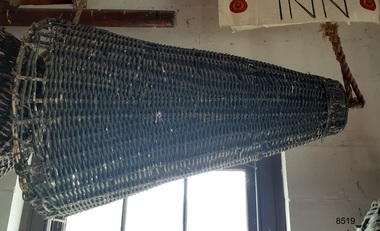
... Its primary use was to display visual signals that could convey messages between land and sea. ...Its primary use was to display visual signals that could convey messages between land and sea. ...This three-dimensional Distant Signal is part of a Flagstaff Signal set of ball, cone and drum shapes. It has been woven and then fabricated with strong metal swivel fittings and loops for suspending from a high point on a flagstaff at a signal station or on a ship’s masthead. The cane signal was constructed to withstand all weather and to be visible from a long distance. The gaps between the woven cane allow air to pass through, minimising possible swaying. Similar sets were made from rope or fabric. Warrnambool's Flagstaff was erected in 1854. Its primary use was to display visual signals that could convey messages between land and sea. It was also used to notify the local population of the approach of ships. One of the popular signalling codes in use in the early-to-mid 1800s was the Marryat’s Code but there were others in use as well; there was no one standard code. In 1857 the International Marine Conference adopted an International Code of Signals as a standard communications system for all vessels that could be understood in many different languages. The Normanby Advertiser reported on June 5th 1857 a query from the Post Master General as to whether the request of the Chief Harbour Master would be carried out, in that Warrnambool would receive a new flagstaff and a set of Marryatt’s signal flags. The Table of Codes was published, showing how to use combinations of these flags to send messages. The Code was revised in 1887 to cover situations where distance, light, wind and weather conditions affected the visibility of the flags and prevented clear communication. The first report of the International Code of Signals Committee of 1897 warned signalmen not to rely on ordinary semaphore flags and introduced a Distant Signal Code using either particular semaphore flags or the three-dimensional shapes of a ball, cone and drum that aligned with the semaphore flag shapes of a circle, pennant and square. International Code of Signals In 1931, after World War I’s experiences in using signal codes, the International Code of Signals conference in Washington revised and published the rules for the conduct of signalling. One of the changes was that “the use of the Distant Signals and of fixed semaphore was abandoned”. It is of interest to know that modern marine law in many countries insists that a set of Day Shapes must be carried onboard vessels of a certain size. These highly visible geometric shapes are used at sea in daylight to communicate messages between vessels. They are used in a similar way to the Distant Signals, in that different combinations of shapes represent different messages. The set of shapes includes a ball, cylinder, cone and diamond. The shapes are hung between the top of the vessel’s foremast and the front of the vessel. They are only coloured black and are about 1.5 metres high. The vertical line of shapes can mean messages such as Boat not under command, Fishing, and Under sail and power.Distant Signals were an important means of marine communication from the late 1880s to the early 1930s, including during World War I. They were an advancement to the International Shipping Codes and safety. The cane signals’ shapes appear to be the same from whatever direction they are viewed, removing confusion about the message they convey. The same shapes continue to be used today for the sets of Day Shapes used as marine navigational signals that are mandatory on certain-sized vessels.Distant Signal Cone, part of a Flagstaff signal set. A woven cane cone, painted black, with a metal rod passing through the centre and two crossed metal bars at the base. The central rod has a loop at the top and passes through the bars at the base, finishing in a metal loop. The rod has swivels at each end.flagstaff hill, warrnambool, flagstaff hill maritime museum and village, shipwreck coast, marine navigation, marine communications, communication signal, lifesaving, ship at sea, day shape, masthead signal, day signal, day mark signals, marine technology, safety equipment, navigation equipment, marine day shape, day marker, cane day shape, signal cone, day signal cone, cone signal, cone day shape, distant signal, flagstaff signal, signal station, communications, signals, marine signals, flaghoists, international marine conference, international code of signals, signal codes, marine safety, signal flags, daymark, day symbol, navigation, warrnambool flagstaff, 1854, 1857 1931, 1887, 1897 -
 Flagstaff Hill Maritime Museum and Village
Instrument - Foghorn, Late 19th century
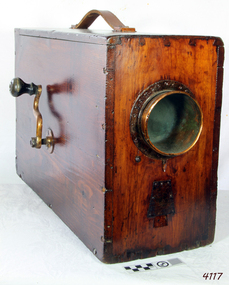
... When visual navigation aids such as lighthouses are obscured, foghorns provide an audible warning of rocky outcrops, shoals, headlands, or other dangers to shipping. An early form of fog signal...When visual navigation aids such as lighthouses are obscured, foghorns provide an audible warning of rocky outcrops, shoals, headlands, or other dangers to shipping. An early form of fog signal ...A foghorn is a device that uses sound to warn of navigational hazards like rocky coastlines, or boats of the presence of other vessels, in foggy conditions. The term is most often used with marine transport. When visual navigation aids such as lighthouses are obscured, foghorns provide an audible warning of rocky outcrops, shoals, headlands, or other dangers to shipping. An early form of fog signal was to use a bell, gong, explosive signal or firing a cannon to alert shipping. From the early 20th century an improved device called the diaphone was used in place of these other devices, The diaphone horn was based directly on the organ stop of the same name invented by Robert Hope-Jones, creator of the Wurlitzer organ. Hope-Jones' design was based on a piston that was closed only at its bottom end and had slots, perpendicular to its axis, cut through its sides, the slotted piston moved within a similarly slotted cylinder. Outside of the cylinder was a reservoir of high-pressure air. Initially, this air would be admitted behind the piston, pushing it forward. When the slots of the piston aligned with those of the cylinder, air passed into the piston, making a sound and pushing the piston back to its starting position, whence the cycle would be repeated. This method of producing a low audible sound was further developed as a fog signal by John Northey of Toronto and these diaphones were powered by compressed air produced by an electric motor or other mechanical means that admitted extremely powerful low-frequency notes. The example in the Flagstaff collection is an early cased and portable diaphone used on pleasure or sailing craft. By manually turning the crank handle air is produced and fed into valves that direct air across vibrating metal reeds to produce the required sound. in foggy weather, fog horns are used to pinpoint a vessels position and to indicate how the vessel is sailing in foggy conditions. One blast, when sailing on starboard tack and two blasts, when sailing on a port tack and three dots, when with wind is behind the vessel. Since the automation of lighthouses became common in the 1960s and 1970s, most older foghorn marine installations have been removed to avoid the need to run the complex machinery associated with them, and have been replaced with an electrically powered diaphragm or compressed air horns. The example in the collection is significant as it was used in the early 19th century for sailing vessels was important but these portable crank fog horns have also been superseded by modern electric varieties. Therefore the item has a historical connection with sailing and maritime pursuits from our past.English Rotary Norwegian Pattern nautical foghorn within a boxed pine varnished case with exposed corner dovetailing, original leather carrying strap, brass side crank, and original copper trumped horn. Card accessory with Directions for Use in both English and French.Noneflagstaff hill, warrnambool, shipwrecked coast, flagstaff hill maritime museum, maritime museum, shipwreck coast, flagstaff hill maritime village, great ocean road, foghorn, maritime technology, maritime communication, marine warning signal, portable foghorn, bellows foghorn, crank handle, robert hope-jones, john northey -
 4th/19th Prince of Wales's Light Horse Regiment Unit History Room
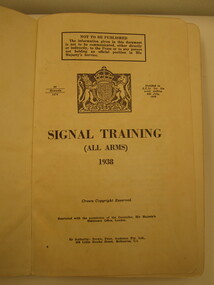
Book, Signal Training (All Arms) 1938, at 1938
... manual signals training 26 Manuals 1875 Hard covered book detailing Phonetic Alphabet, Morse and Semaphore Codes, Visual Instruments, Field Cables, Wireless Sets etc Signal Training (All Arms) 1938 Book Book Brown, Prior, Anderson Pty Ltd ...Hard covered book detailing Phonetic Alphabet, Morse and Semaphore Codes, Visual Instruments, Field Cables, Wireless Sets etc26 Manuals 1875manual, signals training -
4th/19th Prince of Wales's Light Horse Regiment Unit History Room
Book, Brown, Prior, Anderson Pty Ltd, Signal Training (All Arms) 1938, Reprint 1940
... Hard covered book covering all aspects of signals including voice, line, visual, codes, sets and procedures...Signal training world war 2 Hard covered book covering all aspects of signals including voice, line, visual, codes, sets and procedures Signal Training (All Arms) 1938 Book Brown, Prior, Anderson Pty Ltd ...Hard covered book covering all aspects of signals including voice, line, visual, codes, sets and proceduressignal training, world war 2 -
 Sunshine and District Historical Society Incorporated
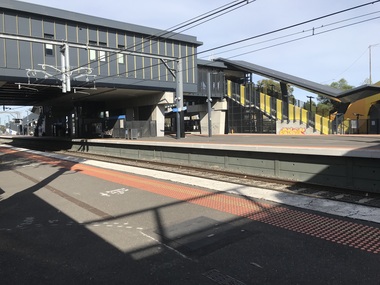
Photograph - Sunshine Photographs 2022 Part 3, John Alchin, 2022
... visual record of Sunshine 2022. Sunshine Sunshine Railway Station Sunshine Presbyterian Church Sunshine Library Sunshine Road Wright Street Sunshine Secondary College Derby Road Graham Street Western Avenue 5629.01 - Sunshine Railway Station 2022 Photo 01.JPG 5629.02 - Sunshine Railway Station 2022 Photo 02.JPG 5629.03 - Sunshine Railway Station Gardens 2022 Photo 01.JPG 5629.04 - Sunshine Railway Station Signal Box 2022 Photo 02.JPG 5629.05 - Sunshine Railway Station Signal Box 2022 Photo 03.JPG 5629.06 - Sunshine Railway Station Subway 2022 Photo 01.JPG 5629.07 - Sunshine Presbyterian Church 2022 Photo 01.JPG 5629.08 - Sunshine Presbyterian Church 2022 Photo 02.JPG 5629.09 - Sunshine Harvester Sunshine Library 2022.JPG 5629.10 - Sunshine Rd 295 Sunshine - Thirsty Camel 2022 Photo 01.JPG 5629.11 - Wright St 65 Sunshine - Sunshine Kitchen 2022 Photo 01.JPG 5629.12 - Sunshine College Entrance Sign Graham St 2022 Photo 01.JPG 5629.13 - Sunshine Secondary College 2022 Photo 08.JPG 5629.14 - Sunshine Secondary College 2022 Photo 01.JPG 5629.15 - Sunshine Secondary College 2022 Photo 03.JPG 5629.16 - Sunshine Secondary College 2022 Photo 05.JPG 5629.17 - Sunshine Secondary College 2022 Photo 06.JPG 5629.18 - Western Ave 23 Sunshine - Fundere Fine Art Foundry 2022 Photo 02.JPG 5629.19 - Wright St 2 Sunshine - Sunshine Silos 2020 Photo 01.JPG 5629.20 - Wright St 2 Sunshine - Sunshine Silos 2020 Photo 02.JPG 5629.21 - Wright St 2 Sunshine - Sunshine Silos 2020 Photo 04.JPG 5629.22 - Wright St 2 Sunshine - Sunshine Silos 2020 Photo 07.JPG 5629.23 - Wright St 2 Sunshine - Sunshine Silos 2020 Photo 08.JPG 5629.24 - Wright St 9 Sunshine - Mixed Commercial Businesses 2022 Photo 01.JPG Large collection of digital photographs that have be split over three identification numbers. ...These photographs provide a visual record of assorted buildings, street views, and notable locations throughout Sunshine in 2022.This collection of photographs preserves a visual record of Sunshine 2022.5629.01 - Sunshine Railway Station 2022 Photo 01.JPG 5629.02 - Sunshine Railway Station 2022 Photo 02.JPG 5629.03 - Sunshine Railway Station Gardens 2022 Photo 01.JPG 5629.04 - Sunshine Railway Station Signal Box 2022 Photo 02.JPG 5629.05 - Sunshine Railway Station Signal Box 2022 Photo 03.JPG 5629.06 - Sunshine Railway Station Subway 2022 Photo 01.JPG 5629.07 - Sunshine Presbyterian Church 2022 Photo 01.JPG 5629.08 - Sunshine Presbyterian Church 2022 Photo 02.JPG 5629.09 - Sunshine Harvester Sunshine Library 2022.JPG 5629.10 - Sunshine Rd 295 Sunshine - Thirsty Camel 2022 Photo 01.JPG 5629.11 - Wright St 65 Sunshine - Sunshine Kitchen 2022 Photo 01.JPG 5629.12 - Sunshine College Entrance Sign Graham St 2022 Photo 01.JPG 5629.13 - Sunshine Secondary College 2022 Photo 08.JPG 5629.14 - Sunshine Secondary College 2022 Photo 01.JPG 5629.15 - Sunshine Secondary College 2022 Photo 03.JPG 5629.16 - Sunshine Secondary College 2022 Photo 05.JPG 5629.17 - Sunshine Secondary College 2022 Photo 06.JPG 5629.18 - Western Ave 23 Sunshine - Fundere Fine Art Foundry 2022 Photo 02.JPG 5629.19 - Wright St 2 Sunshine - Sunshine Silos 2020 Photo 01.JPG 5629.20 - Wright St 2 Sunshine - Sunshine Silos 2020 Photo 02.JPG 5629.21 - Wright St 2 Sunshine - Sunshine Silos 2020 Photo 04.JPG 5629.22 - Wright St 2 Sunshine - Sunshine Silos 2020 Photo 07.JPG 5629.23 - Wright St 2 Sunshine - Sunshine Silos 2020 Photo 08.JPG 5629.24 - Wright St 9 Sunshine - Mixed Commercial Businesses 2022 Photo 01.JPG sunshine, sunshine railway station, sunshine presbyterian church, sunshine library, sunshine road, wright street, sunshine secondary college, derby road, graham street, western avenue -
 Parks Victoria - Gabo Island Lightstation
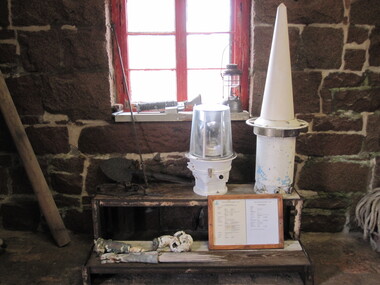
Light & object
... They have at least second level significance for their probable provenance and association with the theme of visual signalling and the use of navigation equipment for maintaining safe routes for shipping. ...Further information on the unidentified object has not been available during preparation of this report, but it may be a buoy light, or perhaps even a solar powered rotating light made by Pharos Marine, New Zealand. Portable beacon lights were made with a plastic lens and an aluminium base and it is known that one of these was installed in the Gabo Island Lighthouse in February 1992. It was replaced in May 2006 and the lights are now no longer used within the AMSA network. The unidentified item, which can be described as a white painted conical object, appears to be associated with signalling, but more information is needed to confirm this. These items of equipment are presumed to relate to core lightstation functions and look to be in good condition. They have at least second level significance for their probable provenance and association with the theme of visual signalling and the use of navigation equipment for maintaining safe routes for shipping.Beacon and unidentified object (GILS 0095) The portable beacon is a small rotating light containing a lens and prism. The other item can be described as a white painted conical object.
