
Showing 222 items matching "walls> - (mrs)"
-
 Box Hill Historical Society
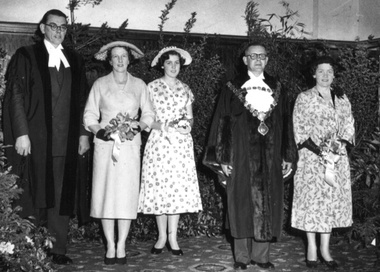
Photograph - Box Hill Town Hall, 1957
... ...Walls> - (Mrs)...Town Clerk, Andrew Walls, in his robes left, with his wife Mrs Walls, (middle lady unknown) and Mayor Cr. ...Town Clerk, Andrew Walls, in his robes left, with his wife Mrs Walls, (middle lady unknown) and Mayor Cr. ...Photo taken in the north west corner of the Main Hall, Box Hill Town Hall. Town Clerk, Andrew Walls, in his robes left, with his wife Mrs Walls, (middle lady unknown) and Mayor Cr. Jim Proudfoot in robes right, and Mayoress (Mrs Proudfoot) far right. The two women centre, dressed in hats and gloves, carrying a posy of flowers. Cr Proudfoot was mayor in 1956/7. Event was the Mayoress's Luncheon.B&w photowomen's groups, mayoral functions, mayoress functions, box hill town hall, walls> andrew, proudfoot> james> cr., clothing and dress, mayoral robes, walls> - (mrs), proudfoot> - (mrs) -
 Box Hill Historical Society
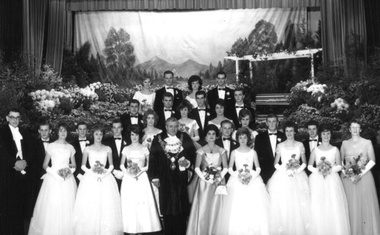
Photograph - Debutantes, 1962
... ...Walls> Mrs...Debutantes Mayoral balls Clothing and dress Box Hill Town Hall Walls> Andrew Walls> Mrs McIntyre> Kenneth (Cr.) McIntyre> Betty (Mrs.) ...Group of debutantes and partners, Mayor, Cr. Kenneth McIntyre in robes and Mayoress Centre, Town Clerk, Andrew Walls in robes on left and his wife on right, Mayoral Ball 1962.B&w photodebutantes, mayoral balls, clothing and dress, box hill town hall, walls> andrew, walls> mrs, mcintyre> kenneth (cr.), mcintyre> betty (mrs.) -
 Box Hill Historical Society
Photograph - Debutantes, 1966
... ...Dewar> Marie (Mrs.)...Walls...Mr Walls, Town Clerk is pictured far righthand side and Mrs Walls left hand side. ...Mr Walls, Town Clerk is pictured far righthand side and Mrs Walls left hand side. ...A 1966 debutante set pictured with their partners, and hosts, the Mayor Cr. Stan Dewar and Marie Dewar. Mr Walls, Town Clerk is pictured far righthand side and Mrs Walls left hand side. The stage is decorated with flowers and shrubs. Debutantes identified. List of 1966 debs from Dewar donation.B&w photodebutantes, mayoral balls, dewar> stanley g., dewar> marie (mrs.), walls> andrew n., walls> margaret, town clerks, mayors, ball> lynette, butterfield> wendy, fort> carol, green> denise, heath> glenys, johns> lorna, marsh> judith, mills> suzanne, sweres> astrid, blake> patricia, tubb> lorraine, frater> ann, oglesby> elizabeth, dewar> margaret, clothing and dress, festive decorations, dances and balls, 1966 -
 Box Hill Historical Society
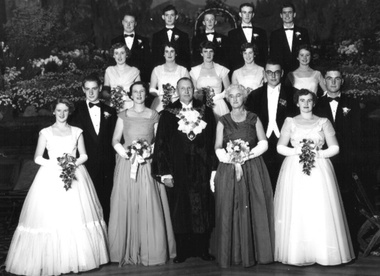
Photograph - Mayoral Balls, 1956
... Mrs....Walls> Andrew N....Walls to the right of the Mayoress. The stage is decorated with an arch and floral decorations. The backdrop features a mountain and a river. Mayoral balls Mayors Town clerks Sparks> Reginald H.L. (Cr.) Sparks> Mrs ...Mayoral Ball 1956 - Group of debutantes and their partners form a group on the stairs leading to the stage with the Mayor, Cr. R.H.L. Sparks and his wife in the front (centre) and Town Clerk, Mr. Andrew Walls to the right of the Mayoress. The stage is decorated with an arch and floral decorations. The backdrop features a mountain and a river.B&w photomayoral balls, mayors, town clerks, sparks> reginald h.l. (cr.), sparks> mrs., walls> andrew n., mayoral robes, dances and balls, clothing and dress, festive decorations, debutantes, forster> wendy, roberts> lynette, smith> majorie, sweetland> valma, thatcher> rosemary, ward> lynette, woodyard> lynette -
 Box Hill Historical Society
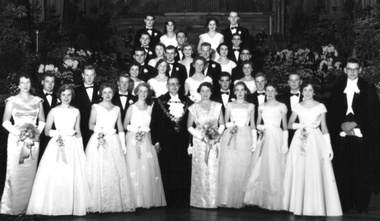
Photograph - Mayoral Ball, 1957
... ...Proudfoot> - (Mrs.)...Walls...Mrs. Proudfoot, with the debutantes and their partners, standing in front of a decorated stage. Town Clerk, Mr. Andrew Walls...(Cr.) Proudfoot> - (Mrs.) Walls> Andrew N. Debutantes Box Hill Town Hall Dances and balls Mayoral robes Clothing and dress B&w photo Photograph Mayoral Ball ...Mayoral Ball of 1957, showing the Mayor, Cr. James K. Proudfoot and the Mayoress, Mrs. Proudfoot, with the debutantes and their partners, standing in front of a decorated stage. Town Clerk, Mr. Andrew Walls, is standing on the right hand side.B&w photomayoral balls, mayors, town clerks, proudfoot> james k. (cr.), proudfoot> - (mrs.), walls> andrew n., debutantes, box hill town hall, dances and balls, mayoral robes, clothing and dress -
 Linton and District Historical Society Inc
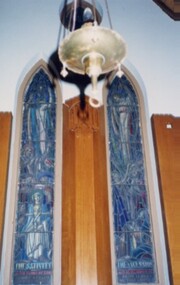
Photograph, Stained glass windows at St Paul's Church of England, Linton, 1990
... The East windows of St Paul's Church of England at Linton, designed by Christian Waller (Mrs Napier Waller). Given to the church by the Lewers family, in memory of Samuel and Annie Lewers and other pioneers of the church. ...The East windows of St Paul's Church of England at Linton, designed by Christian Waller (Mrs Napier Waller). Given to the church by the Lewers family, in memory of Samuel and Annie Lewers and other pioneers of the church. ...The East windows of St Paul's Church of England at Linton, designed by Christian Waller (Mrs Napier Waller). Given to the church by the Lewers family, in memory of Samuel and Annie Lewers and other pioneers of the church. Dedicated on 3.08.1938. Photograph taken in 1990.Colour photograph of two stained glass windows: "The Nativity", "The Ascension"."Perpetual Light Church of England Linton".st paul's church of england linton, mrs napier waller, christian waller, lewers family, 'the nativity' [stained glass window], 'the ascension' [stained glass window] -
 Box Hill Historical Society
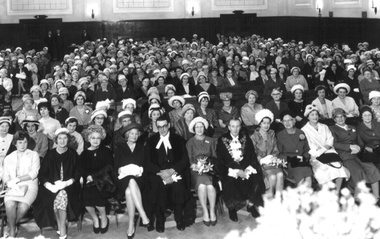
Photograph - Box Hill Council, 1962-63
... Mostly women in the audience, resplendent in their hats and gloves.Front row: 5th person from left Andrew Walls, Mrs. Walls(?), Mayor Cr. Sam Murphy, Mayoress Mrs. ...Mostly women in the audience, resplendent in their hats and gloves.Front row: 5th person from left Andrew Walls, Mrs. Walls(?), Mayor Cr. Sam Murphy, Mayoress Mrs. ...Mayoress Luncheon at Box Hill Town Hall. Mostly women in the audience, resplendent in their hats and gloves.Front row: 5th person from left Andrew Walls, Mrs. Walls(?), Mayor Cr. Sam Murphy, Mayoress Mrs. Kathleen Murphy. Cr Murphy was in 1962/63.B&w photobox hill town hall, mayoress luncheons, murphy> kathleen, murphy> sam (cr.), mayors, walls> andrew, town clerks, clothing and dress, 1963 -
 Glenelg Shire Council Cultural Collection
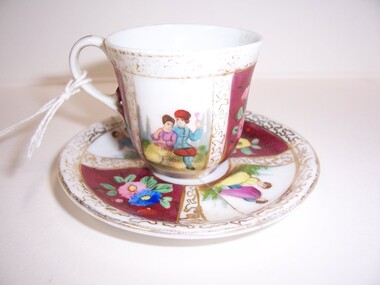
Domestic object - Teacup and Saucer, 1884
... Displayed in History House (Cabinet, South wall) Owned by Mrs. . Keiller?...Displayed in History House (Cabinet, South wall) Owned by Mrs. . Keiller? Front: Base, 4198.2: Worchester/Gift/1884 (blue pen, hand-written) Tea cup and saucer with paintings of flowers and vignettes of a couple. ...Displayed in History House (Cabinet, South wall) Owned by Mrs. . Keiller?Tea cup and saucer with paintings of flowers and vignettes of a couple.Front: Base, 4198.2: Worchester/Gift/1884 (blue pen, hand-written) -
 Glenelg Shire Council Cultural Collection
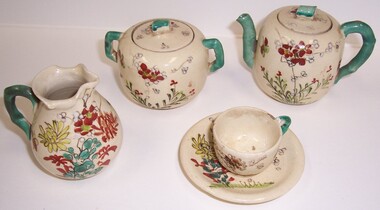
Decorative object - Ornamental Tea Set, 1884
... Displayed in History House (cabinet, North wall). Owned by Mrs. C. Keiller? (from scrap of paper in pot)....Displayed in History House (cabinet, North wall). Owned by Mrs. C. Keiller? (from scrap of paper in pot). ...Displayed in History House (cabinet, North wall). Owned by Mrs. C. Keiller? (from scrap of paper in pot).Ornamental tea-set in cream and green glaze with pattern of flowers in red, white, black and green glaze. Red chinese charcters down side. 4193.1 - Sugar bowl. H: 5.0 x DIA: 6.3 (8.5 with handle) 4193.2 - Tea-cup. 2.9 x 4.2 x 5.3 (with handle 4193.3 - Lid to sugar bowl 4.0 x 1.0 4193.4 - Tea-pot 7.0 x 9.6 4193.5 - Saucer 1.2 x DIA: 8.0 4193.6 - Milk jug 6.5 x DIA: 6.7 4193.7 - Lid to teapot 3.7 x 1.0Front: Base of saucer (4193.5): Gift from/China 1884 (blue pen on sticker) Back: 1884 (blue pen scratched into glaze) -
 National Wool Museum
Quilt
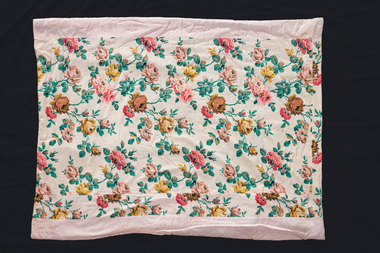
... Previously owned by Mrs Wall of Grovedale....Previously owned by Mrs Wall of Grovedale. quilt wagga quilting - history Machined cotton and wool wagga, filled with woollen pullovers and other woollens. ...Purchased by Ruth Lee around 1993 from an Opportunity Shop in Grovedale. Previously owned by Mrs Wall of Grovedale.Machined cotton and wool wagga, filled with woollen pullovers and other woollens. Purchased for a gold coin donation at an opportunity shop in Grovedale.quilt, wagga, quilting - history -
 City of Warrnambool Rowing Club
Photograph, Ladies Rowing Club 1935 - 1936
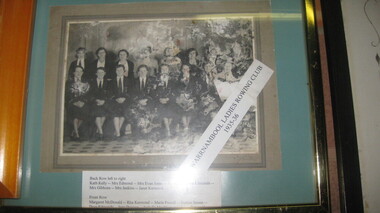
... kath kelly – mrs edmond – mrs evan jones – sis wall – edna edmonds – mrs gibbons – mrs jenkins – janet kermond....Back Row left to right Kath Kelly – Mrs Edmond – Mrs Evan Jones – Sis Wall – Edna Edmonds – Mrs Gibbons – Mrs Jenkins – Janet Kermond. ...margaret mcdonald – rita kermond – marie powell – eunice jessen – doss edmonds – jean duggan – isabella macnamara – mars edmond. kath kelly – mrs edmond – mrs evan jones – sis wall – edna edmonds – mrs gibbons – mrs jenkins – janet kermond. ladies rowing ladies rowing warrnambool ladies rowing club hopkins river warrnambool rowing club warrnambool ladies rowing club city of warrnambool rowing club warrnambool rowing club Back Row left to right Kath Kelly – Mrs Edmond – Mrs Evan Jones – Sis Wall – Edna Edmonds – Mrs Gibbons – Mrs Jenkins – Janet Kermond. ...Black and white photograph of 16 ladies, posed in knee length skirts and woolen club blazers.Back Row left to right Kath Kelly – Mrs Edmond – Mrs Evan Jones – Sis Wall – Edna Edmonds – Mrs Gibbons – Mrs Jenkins – Janet Kermond. Front Row margaret mcdonald – rita kermond – marie powell – eunice jessen – doss edmonds – jean duggan – isabella macnamara – mars edmond., kath kelly – mrs edmond – mrs evan jones – sis wall – edna edmonds – mrs gibbons – mrs jenkins – janet kermond., ladies rowing, ladies rowing warrnambool, ladies rowing club, hopkins river, warrnambool rowing club, warrnambool ladies rowing club, city of warrnambool rowing club, warrnambool rowing club -
 Buninyong & District Historical Society
Photograph - Original Photograph, C J Brooks, Individual Sandstone block, awaiting incorporation into reconstruction of wall, for Mr. H & Mrs. D Westbrooke, 1995, at 405 Learmonth St. Buninyong, July 1995
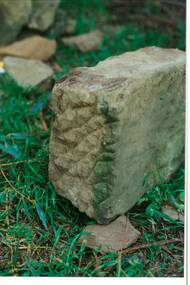
... Individual Sandstone block, awaiting incorporation into reconstruction of wall, for Mr. H & Mrs. D Westbrooke, 1995, at 405 Learmonth St. ...Colour photo, Individual Sandstone block, awaiting incorporation into reconstruction of wall, for Mr. H & Mrs. D Westbrooke, 1995, at 405 Learmonth St. ...Buninyong Jamieson Sparling Buninyong Inn wall sandstone Colour photo, Individual Sandstone block, awaiting incorporation into reconstruction of wall, for Mr. H & Mrs. D Westbrooke, 1995, at 405 Learmonth St. ...Stone of which wall is constructed is believed to have been used in the construction of Jamieson's Buninyong Inn, built for Margaret Jamieson starting about 1853. She owned the earlier Buninyong Inn which impinged on they surveyed Learmonth St. and was demolished. Margaret died in 1854 before the building was completed by her son, who built the third Buninyong Inn on the corner of Learmonth and Warrenheip. The two story hotel was tenented for a while, then bought by Dr. Sparling who demolished it.Colour photo, Individual Sandstone block, awaiting incorporation into reconstruction of wall, for Mr. H & Mrs. D Westbrooke, 1995, at 405 Learmonth St. Buninyongbuninyong, jamieson, sparling, buninyong inn, wall, sandstone -
 Uniting Church Archives - Synod of Victoria
Photograph, Lorraine Wall and Frank Wyley, 1986
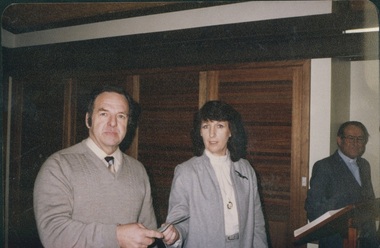
... Lorraine Wall presents a cheque for $12,474 to Frank Wyley as representative of the Cockatoo Uniting Church for rebuilding of the church after the Ash Wednesday bushfires. Mrs...Lorraine Wall presents a cheque for $12,474 to Frank Wyley as representative of the Cockatoo Uniting Church for rebuilding of the church after the Ash Wednesday bushfires. Mrs ...Lorraine Wall presents a cheque for $12,474 to Frank Wyley as representative of the Cockatoo Uniting Church for rebuilding of the church after the Ash Wednesday bushfires. Mrs. Wall, her parents Olga and John Rowe and Russell were organisers of poster sales.Colour photograph of Lorraine Wall and Frank Wyley."Lorraine Wall Frank Wyley C&N 25/9/85 p 14"wall, lorraine, wyley, frank, cockatoo uniting church, ash wednesday bushfires -
 Harcourt Valley Heritage & Tourist Centre
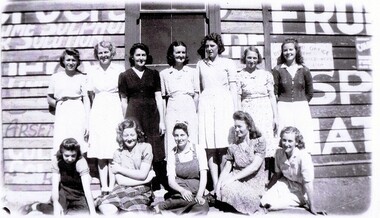
photograph, Fruit Packers, 1946
... The registered office sign is on the wall behind Mrs I. Gibbons. There is other sign writing on the wall weather boards of the building. ...The registered office sign is on the wall behind Mrs I. Gibbons. There is other sign writing on the wall weather boards of the building. ...Apple packers were employed on piece work to pack fruit from the sizing graders into wooden boxes, following prescriptive packing charts that ensured a box of even sized fruit. Depicts women’s occupations in horticultural district. Photo depicting 12 women standing outside the Harcourt Fruit Growers Association packing shed on the loading dock. The registered office sign is on the wall behind Mrs I. Gibbons. There is other sign writing on the wall weather boards of the building. The weather boards to the left of the window appear to be second hand as the writing is partly covered up. It also appears to be warmer weather as all the women are in light clothing. -
 Stawell Historical Society Inc
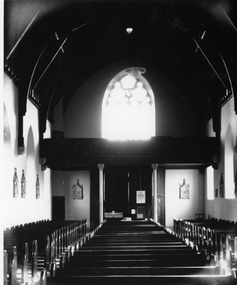
Photograph, St. Patrick’s Church Interior before the marble altar presented by Mr Angus McLennan
... Other information - Features on the walls a donation from Mrs Kinsella...Other information - Features on the walls a donation from Mrs Kinsella stawell religion Black and white photograph of the interior of a church. ...St. Patrick’s Church interior before the marble altar presented by Mr Angus McLennan. The stations of the Cross can be seen on the walls. Other information - Features on the walls a donation from Mrs KinsellaBlack and white photograph of the interior of a church. Showing the seating in the nave.stawell religion -
 Box Hill Historical Society
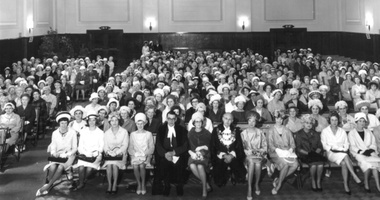
Photograph - Women seated at Box Hill Town Hall for Mayoress luncheon, c. 1970s
... Andrew Walls in his robes and his wife, Mrs. Walls, Mayor, Cr. Stan Dewar in his robes and Lady Mayoress, Marie Dewar for the Mayoress Luncheon...Andrew Walls in his robes and his wife, Mrs. Walls, Mayor, Cr. Stan Dewar in his robes and Lady Mayoress, Marie Dewar for the Mayoress Luncheon Women's groups Mayoral functions Mayoress luncheons Town halls Box Hill Town Hall Walls> Andrew Dewar> Stan (Cr.) ...Large group of women, seated in the main hall of the Box Hill Town Hall. Centre front (L to R) - Town Clerk, Mr. Andrew Walls in his robes and his wife, Mrs. Walls, Mayor, Cr. Stan Dewar in his robes and Lady Mayoress, Marie Dewar for the Mayoress LuncheonB&w photowomen's groups, mayoral functions, mayoress luncheons, town halls, box hill town hall, walls> andrew, dewar> stan (cr.) -
 Port Fairy Historical Society Museum and Archives
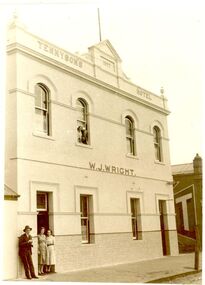
Photograph
... Wall then became the new licensee of the Farmers Inn. In 1876 his wife Bridget made an application for the license to be transferred to her as “her husband suffered from rheumatism, and there were certain other reasons why the license should be transferred to her hands”. The Bench wondered about creating a precedence of granting a license to a married woman, who was living with her husband, (licenses were only granted to the widows of licensees at that time), so the application was postponed for 14 days, but eventually Mrs Wall won her case. ...Wall then became the new licensee of the Farmers Inn. In 1876 his wife Bridget made an application for the license to be transferred to her as “her husband suffered from rheumatism, and there were certain other reasons why the license should be transferred to her hands”. The Bench wondered about creating a precedence of granting a license to a married woman, who was living with her husband, (licenses were only granted to the widows of licensees at that time), so the application was postponed for 14 days, but eventually Mrs Wall won her case. ...The small building on the left is the Farmers Inn, and was built about 1849, when James Brown became the first licensee. In 1854 John Walwyn Taylor moved from the Sally Ann to take over, and remained there until 1857, when he moved to his new hotel The Star of the West built on the old Sally Ann site. John Wall then became the new licensee of the Farmers Inn. In 1876 his wife Bridget made an application for the license to be transferred to her as “her husband suffered from rheumatism, and there were certain other reasons why the license should be transferred to her hands”. The Bench wondered about creating a precedence of granting a license to a married woman, who was living with her husband, (licenses were only granted to the widows of licensees at that time), so the application was postponed for 14 days, but eventually Mrs Wall won her case. In 1882 Patrick Tennyson took over the lease of the Farmer’s Inn and applied to change the name to Tennyson’s Hotel. In 1885 he bought the freehold in the Great Land Sale for £780. 12s. 8d., and in December, carried out extensive renovations. The local press reported that “the rooms were quite tasteful, the Billiard room commodious and well ventilated, and that the old hotel had not looked so good for years”. The double storied part of the hotel was added in 1893. Patrick Tennyson had a colourful career. He was born in Charlemont, County Armagh in 1846. When he was 21, he served as a papal guard at the Vatican for 2 years and then entered the Marist Brothers novitiate in Beauchamps. In 1872 he was one of three brothers to accompany Brother Ludovic to Sydney; he was then aged 23. After 5 years he withdrew from the Congregation and moved to Victoria, where he took up teaching, first at Rosedale near Sale, then at Crossley, by which time he was married to Anne White. They had eight children, three dying in infancy. Eight months after he took over the Farmers’ Inn, he was elected to the Borough Council, and served as Mayor in 1897. His great interest was sport, was Secretary of the Race Club for 20 years and supported the local Football Club by donating a silver cup for local competitions. Patrick Tennyson died in 1904. The hotel continued under various licensees until it burned down in 1977 under the name of “The Fishermen’s Arms”. Well known main street hotel no longer exists Sepia photograph of 2 story building with tiled wainscoting male and 2 females in doorway and 2 females in window upstairshotel, building, sackville street, patrick tennyson, w.j.wright -
 Flagstaff Hill Maritime Museum and Village
Furniture - Credence Table, c. 1944
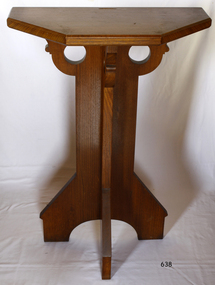
... Mrs F Clark donated this Credence Table to the original St Nicholas Seamen's Church, Williamstown, Victoria, operated by the Missions to Seamen organisation. The oak table is decorated with Gothic trefoils and shaped to fit against the Sanctuary wall. ...Mrs F Clark donated this Credence Table to the original St Nicholas Seamen's Church, Williamstown, Victoria, operated by the Missions to Seamen organisation. The oak table is decorated with Gothic trefoils and shaped to fit against the Sanctuary wall. ...Mrs F Clark donated this Credence Table to the original St Nicholas Seamen's Church, Williamstown, Victoria, operated by the Missions to Seamen organisation. The oak table is decorated with Gothic trefoils and shaped to fit against the Sanctuary wall. Its purpose is to hold the Eucarist plate and chalice for the Holy Communion service of the Anglican Church. THE MISSIONS TO SEAMEN (Brief History): - The Missions to Seamen was an Anglican charity in Great Britain that has served the world's seafarers since 1856. Its symbol is a Flying Angel, inspired by a Bible verse. Today, there are centres in over 200 ports worldwide where seamen of all backgrounds are offered a warm welcome and provided with a wide range of facilities. In Victoria, the organisation began in Williamstown in 1857 as a Sailors’ Church, also known as ‘Bethel’ or the ‘Floating Church’ in an old hulk floating in Hobson’s Bay, Port of Melbourne. It soon became part of the Missions to Seamen, Victoria. In the year 2000, the organisation, now named Mission to Seafarers, still operated locally in Melbourne, Portland, Geelong and Hastings. The Ladies’ Harbour Lights Guild was formed in 1906 to support the Missions to Seamen in Melbourne and other centres, such as Williamstown. Two of the most significant ladies of the Guild were founder Ethel Augusta Godfrey and foundation member Alice Sibthorpe Tracy (who established a branch of the Guild in Warrnambool in 1920). The Guild continued its work until the 1960s. In 1943, a former Williamstown bank was purchased for the Missions to Seaman Club. The chapel was named St Nicholas’ Seamen’s Church and was supported by the Ladies’ Harbour Lights Guild, the Williamstown Lightkeepers’ Auxiliary and the League of Soldiers’ and Sailors’ Friends. It ceased operation in 1966. A Missions to Seamen Chapel and Recreation Room was a significant feature of ports during the late 1800s and into the 1900s. It seemed appropriate for Flagstaff Hill to include such a representation within the new Maritime Village, so the Melbourne Board of Management of Missions to Seamen Victoria gave its permission on 21st May 1979 for the entire furnishings of the Williamstown chapel to be transferred to Flagstaff Hill. The St Nicholas Seamen’s Church was officially opened on October 11, 1981, and closely resembles the Williamstown chapel. This Chrdence table is historically significant for its origin in the St Nicholas Mission to Seamen's Church in Williamstown, established in 1857 to cater for seafarers’ physical, social, and spiritual needs. The organisation originated in Bristol, England, when a Seamen's Mission was formed in 1837. It is also significant for its connection with the church Eucharist service still being performed in the Anglican church as part of its traditional worship.Credence table; traditional design in timber. The solid oak pedestal is shaped like half an octagon with the long side fitting against a flat, vertical surface. The column support has decorative Gothic trefoil cut-away holes. This item is part of the St. Nicholas Seamen's Church Collection. flagstaff hill, warrnambool, religious service, missions to seamen victoria, church furniture, religious worship, pedestal, book rest, book stand, bible rest, church service, shipwrecked coast, flagstaff hill maritime museum, maritime museum, shipwreck coast, flagstaff hill maritime village, great ocean road, credence table, pentagonal table, half-table, eucarist, holy communion, anglican church, communion service, tradition, ritual, worship, mrs f clark, ecclesiastical furniture, side table, small table -
 Federation University Historical Collection
Photograph - Black and White, Visitors to the home of George Olver, South Shields, 1934, Sept 1934
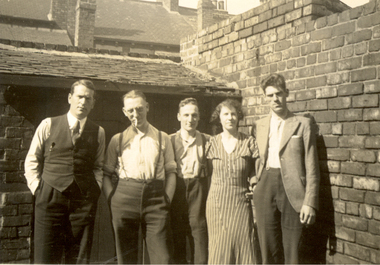
... wall of a house. The roof with several chimneys extend to the top of the photo. The people are from left to right Frank Wright, Geo Oliver, Bill Clegg, Mrs Oliver and Bill Oughton. ...Mrs Oliver, Bill Oughton at the home of Geo Oliver, South Shields. Sept 1934 Black and white photograph of a group of four men and one woman standing in front of a brick wall of a house. ...Frank Wright was a renown resident of Smeaton, where he was born. He lived at Laura Villa, and attended Smeaton State School. His father William was a gold miner and his mother's name was Sarah. Their family won many singing and instrumental awards. Frank was tutored by Percy Code and was awarded a gold medal for the highest marks in the ALCM examinations in the British Colonies at the age of seventeen years. He became the Australian Open Cornet Champion by the age of eighteen. A year later, Frank conducted the City of Ballarat Band, and later the Ballarat Soldiers’ Memorial Band. He formed the Frank Wright Frisco Band and Frank Wright and his Coliseum Orchestra. These bands won many South Street awards, and Frank as conductor won many awards in the Australian Band Championship contest. In 1933 Frank Wright sailed to England to conduct the famous St Hilda’s Band and was later appointed Musical Director of the London County Council, where he organized many amazing concerts in parks, in and around the London district. He was made Professor of Brass and Military Band Scoring and conducted at the Guildhall of Music and Drama. Frank was often invited to adjudicate Brass Band Championships around Europe, in Australia, including South Street and in New Zealand. The Frank Wright Medal at the Royal South Street competition is awarded to an individual recognized as making an outstanding contribution to brass music in Australia.Black and white photograph of a group of four men and one woman standing in front of a brick wall of a house. The roof with several chimneys extend to the top of the photo. The people are from left to right Frank Wright, Geo Oliver, Bill Clegg, Mrs Oliver and Bill Oughton. The place is South Shields, England.Written in pencil of back - Frank Wright (left), Geo Oliver, Bill Clegg, Mrs Oliver, Bill Oughton at the home of Geo Oliver, South Shields. Sept 1934frank wright, george olver, bill clegg, mrs olver, bill oughton, south shields -
 Mission to Seafarers Victoria
Photograph - Photograph, Black and white, Reverend John Reginald Weller, The Chaplain's Quarters: Sitting Room, c. 1925
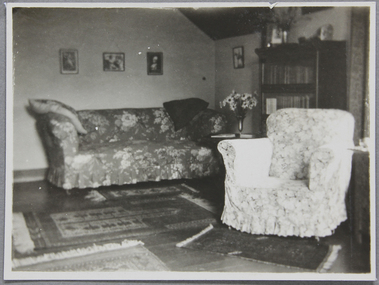
... The photograph taken by either Reverend or Mrs Weller depicts the interior of the Manse: sofas, rugs, artworks on the walls, and a barrister stacking bookshelf....The photograph taken by either Reverend or Mrs Weller depicts the interior of the Manse: sofas, rugs, artworks on the walls, and a barrister stacking bookshelf. chaplain manse sofa bookshelves rugs wood floor reverend john reginald weller (1880-1969) weller album The Chaplain's Quarters: Sitting Room Photograph Photograph, Black and white Reverend John Reginald Weller ...The photograph taken by either Reverend or Mrs Weller depicts the interior of the Manse: sofas, rugs, artworks on the walls, and a barrister stacking bookshelf.chaplain, manse, sofa, bookshelves, rugs, wood floor, reverend john reginald weller (1880-1969), weller album -
 Mission to Seafarers Victoria
Photograph - Photograph, Black and white, Mrs Weller, A Sunday lunch group in the Chaplaincy garden, Dec. 1925, December 1925
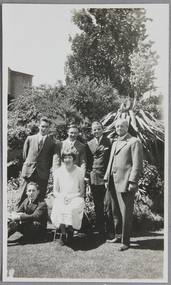
... They are photographed outdoor probably in the mission's garden (in the background we can see the letters E-EX on a building wall, thought to be from the Extension Bond and Free Stores located next to the mission at the time) A Sunday lunch group in the Chaplaincy garden, Dec. 1925 Photograph Photograph, Black and white Mrs Weller ...Dora Walker (married 1928 taking the name Simpson) had a long association with the Mission as a member of the Ladies Harbour light guild. This image is similar to another image in the collection which depicts the garden of the Walker family where many fund-raising events and hosting of seafarers took place. Rev Weller dates the image to around mid to late 1920s. In the 1960s and 70s Dora was president of the LHLG which later merged with the Flying Angels. She was awarded the MBE for her services to the community in the 1970s. Dora's son David Simpson is a volunteer still iat MTS n the 21stC. The Walker and Simpson families are examples of long association and commitment supporting the Mission to Seafarers. As they are researched it is clear the stories of these families document not only support for the Mission but are also shown to have been significant contributors, leaders and donors to the broader Melbourne and Victorian community from the 19th Century and up to the present day. The photograph shows the garden in its early years.Group portrait depicting 4 men in suits standing (reverend Weller on the right), a man sitting on the grass, next to a woman in white summer dress (Dora Walker), sitting on a chair in front of the men. They are photographed outdoor probably in the mission's garden (in the background we can see the letters E-EX on a building wall, thought to be from the Extension Bond and Free Stores located next to the mission at the time)dora walker, reverend reginald weller, picnic, cadets, officers, lhlg, amy dora walker, dora simpson, mission's garden, flinders street, mission to seafarers, seamen's mission, mission to seamen, ladies harbour lights guild, melbourne, lawn, grass, trees, plants, peppercorn tree, weller album, dora simpson nee walker -
 Federation University Historical Collection
Photograph - Photograph - Black and White, Ballarat Ladies Highland Pipe Band Photographs and Newspaper Article
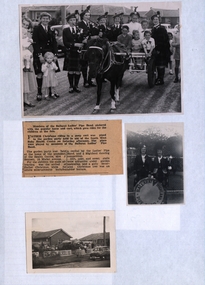
... Waller Avenue B3 - Ballarat City Oval. Drum Major Margaret Bennett nee Reynolds. C1 - Copyright The Ballarat Courier Proprietary Limited C2 - Mrs Zilles, Lew Zilles, and Margaret Bennett. ...Waller Avenue B3 - Ballarat City Oval. Drum Major Margaret Bennett nee Reynolds. C1 - Copyright The Ballarat Courier Proprietary Limited C2 - Mrs Zilles, Lew Zilles, and Margaret Bennett. ..."After the war Pipe-Major Duncan McLennan, moved to Ballarat and took up a position as cadet instructor and leader of the Ballarat Highland Pipe Band and the Ballarat Ladies Pipe Band. " (Victorian Historical Journal Vol. 85, No. 1, June 2014)A1 - Black and white photograph of band members with children in horse and cart. A2 - Newspaper article relating to the above mentioned photograph. A3 - Black and White photograph of Drum major and member of band. A4 - Black and White photograph of Ballarat Ladies Highland Pipe Band Bazaar B1 - Black and White photograph of piper in uniform B2 - Black and White photograph of Drum Major in uniform B3 - Black and White photograph of Drum Major in uniform on stairs B4 - List of Members. C1 - Black and White photograph of pipe band marching. C2 - Black and white photograph of Ladies Drum Major with Lew Zilles and Mrs Zilles C3 - Black and white photograph of Mr & Mrs Zilles, Mr and Mrs Bennett and Joan Bolden Gift of Margaret Bennett, 2019A1 - Outside 19 Waller Avenue where the ladies pipe band held a fair to raise money for new drums. The horse and cart was hired to give children rides around the "island". Trevor in the cart - striped shirt. M. Bennett. Ballarat Courier Press Photograph. A3 - Ballarat - Margaret Smith - Base drummer and Margaret Bennett - Drum Major, outside I & R Morley Doveton Street. A4 - Ballarat Ladies Highland Pipe Band Bazaar 1959. 19 Waller Ave, Ballarat B1 - 183 B2 - Margaret Bennett the Drum Major of Ballarat Ladies Pipe Band. Taken on front porch of 19 Waller Avenue B3 - Ballarat City Oval. Drum Major Margaret Bennett nee Reynolds. C1 - Copyright The Ballarat Courier Proprietary Limited C2 - Mrs Zilles, Lew Zilles, and Margaret Bennett. Progress Photos, Midway Arcade, 256 Collins St, Melbourne C3 - Mr & Mrs Zilles, Margaret and John Bennett, Joan Bolden (Parker) ladies pipe band, members, members list, ladies highland pipe band, photograph, black and white photograph -
 Federation University Historical Collection
Magazine - Booklet, Ballarat School of Mines Students' Magazine, 1941, 1941
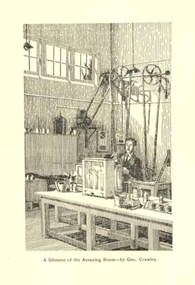
... List of Full Course Students' 1941, Editorial, Honour Roll, The Literary Society, Fumes from the Lab, Arts & Crafts Gossip, Sport, Commercial Notes, The Junior Techs ballarat school of mines magazine r. spence i. grant isabel boustead kenneth palmer eric marshman a. stevens margaret dark john r. elliott joy martin gilbert t. myers marian peirce john p.l. gibbs winsome hender peggy wells geoffrey mounter p. martin john h. calaby dr pound mr mein lorraine siemering j. lockhead herb christensen max coward ernest gribble stan laurie jim martin jack nott bill walters adrian ward fred badenhope eddie gilpin john hassell frank jelbart bob monteith george lugg dick menhennett j. r. pound william r. burrow w. e. hender mavis heinz a. j. henderson eric goon donald eltringham k. richards leslie f. evans ian d. mclachlan philip c. kempe maxwell w. lawrence g. hale william rowe murray linklater alan s. fisher james w. mcclure norman m. murray william h. wray mackay gleeson john g. wilson edward t. mann keith s. waller kenneth g. gingell joan banes patricia goldsmith coralie clogan miss rollan mrs mcilvena elva davies maurice collins betty davison a. pilven j. hucker m. beaumont k. mclachlan r. harbour d. browning a. grieve a. white h. bantz j. waddington r. leigh b. holloway k. fletcher l. lehmann r. dunstone s. wallis e. n. thompson mr hosie loris hopwood dawn austin f.g. procter gladstone procter Signed on front cover by "H. ...List of Full Course Students' 1941, Editorial, Honour Roll, The Literary Society, Fumes from the Lab, Arts & Crafts Gossip, Sport, Commercial Notes, The Junior Techs Black, green and gold soft covered magazine of 56 pages including advertisements. Artwork Mr Allsop - By Margaret Taylor Mr Lambert - By Isabel Boustead Mr Mein - By Margaret Taylor Gaffer - By Margaret Taylor Bickarts Lino Cut Competition Section A - 1st place - By Winsome Hender Barney - By Margaret Taylor Tony - By Isabel Boustead Jack - By Margaret Taylor Lake Wendouree - By Mavis Heinz Issie - By Margaret Taylor Smoking Man - By Margaret Taylor Beryl - By Margaret Taylor Joyce - By Margaret Taylor Pat - By Isabel Boustead Bickarts Lino Cut Competition Section A - 2nd place - By John Henderson Albert - By Isabel Boustead Chick - By Isabel Boustead Leila - By Margaret Taylor Scottie - By Margaret Taylor Mary - By Margaret Taylor Margaret - By Isabel Boustead Bickarts Lino Cut Competition Section B - 1st place - By Maurice Collins Gladys - By Isabel Boustead Squizzy - By Margaret Taylor & Joyce Thompson Spence - By Margaret Taylor Pop-eye - By Margaret Taylor Haymes - By Margaret Taylor and Joyce Thompson Hucker - By Margaret Taylor Minnie - By Margaret Taylor & Joyce Thompson Ian - By Isabel Boustead Keep quiet or I'll slap you - By Isabel Boustead Joe-Joe - By Isabel Boustead Jean - By Isabel Boustead Elva - Isabel Boustead Bickarts Lino Cut Competition Section B - 2nd place - By John Henderson Blondie - By Maurice Collins Wilk - By Isabel Boustead Gladys - By Isabel Boustead Dawn - By Isabel Boustead Signed on front cover by "H. Darby" Has Receipt for Miss Darby for the amount of two shillings from activities and extraneous accounts , signed by W. Hinderballarat school of mines, magazine, r. spence, i. grant, isabel boustead, kenneth palmer, eric marshman, a. stevens, margaret dark, john r. elliott, joy martin, gilbert t. myers, marian peirce, john p.l. gibbs, winsome hender, peggy wells, geoffrey mounter, p. martin, john h. calaby, dr pound, mr mein, lorraine siemering, j. lockhead, herb christensen, max coward, ernest gribble, stan laurie, jim martin, jack nott, bill walters, adrian ward, fred badenhope, eddie gilpin, john hassell, frank jelbart, bob monteith, george lugg, dick menhennett, j. r. pound, william r. burrow, w. e. hender, mavis heinz, a. j. henderson, eric goon, donald eltringham, k. richards, leslie f. evans, ian d. mclachlan, philip c. kempe, maxwell w. lawrence, g. hale, william rowe, murray linklater, alan s. fisher, james w. mcclure, norman m. murray, william h. wray, mackay gleeson, john g. wilson, edward t. mann, keith s. waller, kenneth g. gingell, joan banes, patricia goldsmith, coralie clogan, miss rollan, mrs mcilvena, elva davies, maurice collins, betty davison, a. pilven, j. hucker, m. beaumont, k. mclachlan, r. harbour, d. browning, a. grieve, a. white, h. bantz, j. waddington, r. leigh, b. holloway, k. fletcher, l. lehmann, r. dunstone, s. wallis, e. n. thompson, mr hosie, loris hopwood, dawn austin, f.g. procter, gladstone procter -
 Federation University Historical Collection
Booklet, J.A. Hoskin & Son, Ballarat School of Mines Students' Magazine, 1945 & 1946, 1946
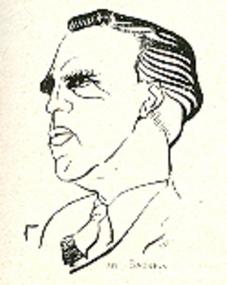
... List of Full Course Students' 1946, Editorial, Editor's Notes, News and Notes, Obituary, The Head of School, Staff 1946, The Literary Society, Science Section, Art Section, Sports, Commercial Notes, Preparatory Girls', Junior Technical School Section, Junior Technical School Ballarat Students' 1946 ballarat school of mines magazine joan walter kevin j. whiter kingsley bremmer d. spence neville reeve p. banfield r. sudholz n. lumsden john g. procter peter j. wilson john w. jolly stanley s. parker john a. mckenzie beatrice e. burgess p. maloney f. daykin margaret mcleod dr pound peter h. marxsen f. g. procter c. fairbank dawn williams c. hoffman t. trengrove n. t. bunning d. t. kellock a. f. heseltine dr h. hirst w. s. stuckey e. j. mcconnon ron cairns gwen spiers f. l. collins a. w. bridson j. j. hanrahan h. brew g. w. cornell j. t. collins r. w. whitla s. mayo n. bunning l. o. brown g. v. bergin r. r. watson t. kellock a. j. murdock r. w. richards a. c. miller a. v. gilpin t. r. gordon r. p. flower h. yates d. mullins w. wilkinson l. hillman alison johnson a. jones m. fogarty hester darby j. allsop w. paterson a. lambert h. goldsmith m. mctaggett c. king m. harland g. g. procter n. w. penrose r. r. calder s. williams c. g. jeffery d. i. johnston j. sutherland r. h. lonie f. e. ferguson b. law j. lochhead david coburn jack scala douglas dean alan wilson doris pengalley roma sudholz ken palmer winnie beckwith tonie hilton jean waller david hobson william rowe robert allen mrs smail betty young william blackie alfred mckenzie peggy crosbie lloyd lehman d. judd rex h. holliocke david j. jelbart ian d. mclachlan frederick g. savage john m. blainey b. hewitt roy e. mawby maxwell f. murray g. sewell lindsay g. pattenden neville morton william h. wray john e. ambrosio ronald d. cairns kenneth s. lindsay graeme w. scarfe john middlin william hewett victor m. mcgrath john s. spittle alfred e. temby d. young willis brown b. sherrit r. jillet nola hornbuckle jean sewell maureen walsh margery ross m. james n. sewell winifred m. beckwith olive whitworth winifred stevens j. waller mavis connell r. gladman n. pitcher heather duncan patricia gleeson margaret stevens edna stevens reita rowe rosemary gillett roy mawby kevin whiter robert morgan laurie krausgrill don lucas gilbert j. troplis j. hanrahan w. sutherland b. bowman l. clifton w. coad i. james k. eberhart g. jukes k. dean k. george ronald healey r. montgomery t. aggett r. hocking m. grinham m. lawless k. cartledge g. clifton d. halson g. hindson w. hon howard mcwilliam w. haire r. sargent m. mccarthy c. sadoe a. spicer w. nunn m. tweedale l. weir r. watson l. wilson k. spalding k. east w. holdsworth e. jackson j. anderson t. shaw w. whittle d. morris w. fisher g. toplis a. hughes w. coles f. atchinson f. gallagher t. hewitt a. ward r. lambert w. brogden r. farquhar j. james l. keen s. h. jones max coward esme atkins maxwell d. berlyn shirley campbell dorothy a. casey patricia j. coates shirley m.j. cook patricia a. fitzsimmons denise l. gilbert maurine o. grose barbara c. hanrahan louis c. huisman rosemary hullick kevin a. mcphee dorothy p. parker lois m. pedrazzi jean m. rizzoli shirley m. ross william e. ross shirley m. roepcke robert w. tantau w. howard tozer john b. vernon delores weatherill 1945 - Maroon cover with green, yellow and blue lettering, soft covered magazine of 74 pages. 1946 -White and yellow cover with, blue and green lettering, soft covered magazine of 94 pages including advertisements. .6 - Green soft cover , with purple writing, 56 pages including advertisements Artwork Mr Bunning - Probably By Joan Walter Hoch Mon - By Kenneth Palmer Shorty - Probably By Joan Walter Chub - Probably By Joan Walter Dorise - Probably By Joan Walter Hank - By Kenneth Palmer Roma - By Kenneth Palmer Shirt - Probably By Joan Walter Fat - By Kenneth Palmer Pug - By Kenneth Palmer Bill - By Kenneth Palmer Gig - Probably By Joan Walter Mid - By Kenneth Palmer SMB's Roving Reporter - By Kenneth Palmer Staffie - By Kenneth Palmer Oh Frankie - By Kenneth Palmer Sketch - By William Rowe Hector - Probably By Joan Walter Elwyn - By Kenneth Palmer Clive - By Kenneth Palmer Happy - Probably By Joan Walter Max - By Kenneth Palmer Socks - By Kenneth Palmer Yvonne - By Kenneth Palmer June - By Kenneth Palmer Babbling Betty - By Kenneth Palmer Betty - By Kenneth Palmer Bake - Probably By Joan Walter Sherry - Probably By Joan Walter Janice - By Kenneth Palmer Joan - By Kenneth Palmer Lynette - By Kenneth Palmer Dot - By Kenneth Palmer Margo - Probably By Joan Walter Shirley - By Kenneth Palmer Joan - By Kenneth Palmer New Entry School - Know your bends and hitches - By Max Coward Eyres - Probably By Joan Walter Dean - Probably By Joan Walter Simpkin - Probably By Joan Walter Ron - By Kenneth Palmer Siv - By Kenneth Palmer Doc - By Kenneth Palmer Hindson - By Kenneth Palmer Bandy - By Kenneth Palmer Sharpy - By Kenneth Palmer Clifton - Probably By Joan Walter Cocky - Probably By Joan Walter George - By Kenneth Palmer Topple - Probably By Joan Walter Jukes - Probably By Joan Walter .6 Artwork Mr Barker - Possibly By Maxwell D. ...List of Full Course Students' 1946, Editorial, Editor's Notes, News and Notes, Obituary, The Head of School, Staff 1946, The Literary Society, Science Section, Art Section, Sports, Commercial Notes, Preparatory Girls', Junior Technical School Section, Junior Technical School Ballarat Students' 19461945 - Maroon cover with green, yellow and blue lettering, soft covered magazine of 74 pages. 1946 -White and yellow cover with, blue and green lettering, soft covered magazine of 94 pages including advertisements. .6 - Green soft cover , with purple writing, 56 pages including advertisements Artwork Mr Bunning - Probably By Joan Walter Hoch Mon - By Kenneth Palmer Shorty - Probably By Joan Walter Chub - Probably By Joan Walter Dorise - Probably By Joan Walter Hank - By Kenneth Palmer Roma - By Kenneth Palmer Shirt - Probably By Joan Walter Fat - By Kenneth Palmer Pug - By Kenneth Palmer Bill - By Kenneth Palmer Gig - Probably By Joan Walter Mid - By Kenneth Palmer SMB's Roving Reporter - By Kenneth Palmer Staffie - By Kenneth Palmer Oh Frankie - By Kenneth Palmer Sketch - By William Rowe Hector - Probably By Joan Walter Elwyn - By Kenneth Palmer Clive - By Kenneth Palmer Happy - Probably By Joan Walter Max - By Kenneth Palmer Socks - By Kenneth Palmer Yvonne - By Kenneth Palmer June - By Kenneth Palmer Babbling Betty - By Kenneth Palmer Betty - By Kenneth Palmer Bake - Probably By Joan Walter Sherry - Probably By Joan Walter Janice - By Kenneth Palmer Joan - By Kenneth Palmer Lynette - By Kenneth Palmer Dot - By Kenneth Palmer Margo - Probably By Joan Walter Shirley - By Kenneth Palmer Joan - By Kenneth Palmer New Entry School - Know your bends and hitches - By Max Coward Eyres - Probably By Joan Walter Dean - Probably By Joan Walter Simpkin - Probably By Joan Walter Ron - By Kenneth Palmer Siv - By Kenneth Palmer Doc - By Kenneth Palmer Hindson - By Kenneth Palmer Bandy - By Kenneth Palmer Sharpy - By Kenneth Palmer Clifton - Probably By Joan Walter Cocky - Probably By Joan Walter George - By Kenneth Palmer Topple - Probably By Joan Walter Jukes - Probably By Joan Walter .6 Artwork Mr Barker - Possibly By Maxwell D. Berlyn Mr Aston - By Shirley M. Ross John - Possibly By Maxwell D. Berlyn Chris - By Shirley M. Ross Rus - By Shirley M. Ross Pimp - By Robert Tantau Phonso - By Robert Tantau The Stud Room - By Robert Tantau Auntie Shirl - Possibly By Maxwell D. Berlyn Miss Morgan - By Rosemary Hullick Hand Grenade - By Shirley M. Ross Plane - By William E. Ross Potty - Possibly By Maxwell D. Berlyn Beverley - By Shirley M. Ross Beth - By Rosemary Hullick Gwen - By Rosemary Hullick Sadie - By Shirley Ross M. Cutter - Possibly By Maxwell D. Berlyn Dingdong - By Robert Tantau Blue - By Shirley M. Ross Hoffy - By Shirley M. Ross ballarat school of mines, magazine, joan walter, kevin j. whiter, kingsley bremmer, d. spence, neville reeve, p. banfield, r. sudholz, n. lumsden, john g. procter, peter j. wilson, john w. jolly, stanley s. parker, john a. mckenzie, beatrice e. burgess, p. maloney, f. daykin, margaret mcleod, dr pound, peter h. marxsen, f. g. procter, c. fairbank, dawn williams, c. hoffman, t. trengrove, n. t. bunning, d. t. kellock, a. f. heseltine, dr h. hirst, w. s. stuckey, e. j. mcconnon, ron cairns, gwen spiers, f. l. collins, a. w. bridson, j. j. hanrahan, h. brew, g. w. cornell, j. t. collins, r. w. whitla, s. mayo, n. bunning, l. o. brown, g. v. bergin, r. r. watson, t. kellock, a. j. murdock, r. w. richards, a. c. miller, a. v. gilpin, t. r. gordon, r. p. flower, h. yates, d. mullins, w. wilkinson, l. hillman, alison johnson, a. jones, m. fogarty, hester darby, j. allsop, w. paterson, a. lambert, h. goldsmith, m. mctaggett, c. king, m. harland, g. g. procter, n. w. penrose, r. r. calder, s. williams, c. g. jeffery, d. i. johnston, j. sutherland, r. h. lonie, f. e. ferguson, b. law, j. lochhead, david coburn, jack scala, douglas dean, alan wilson, doris pengalley, roma sudholz, ken palmer, winnie beckwith, tonie hilton, jean waller, david hobson, william rowe, robert allen, mrs smail, betty young, william blackie, alfred mckenzie, peggy crosbie, lloyd lehman, d. judd, rex h. holliocke, david j. jelbart, ian d. mclachlan, frederick g. savage, john m. blainey, b. hewitt, roy e. mawby, maxwell f. murray, g. sewell, lindsay g. pattenden, neville morton, william h. wray, john e. ambrosio, ronald d. cairns, kenneth s. lindsay, graeme w. scarfe, john middlin, william hewett, victor m. mcgrath, john s. spittle, alfred e. temby, d. young, willis brown, b. sherrit, r. jillet, nola hornbuckle, jean sewell, maureen walsh, margery ross, m. james, n. sewell, winifred m. beckwith, olive whitworth, winifred stevens, j. waller, mavis connell, r. gladman, n. pitcher, heather duncan, patricia gleeson, margaret stevens, edna stevens, reita rowe, rosemary gillett, roy mawby, kevin whiter, robert morgan, laurie krausgrill, don lucas, gilbert j. troplis, j. hanrahan, w. sutherland, b. bowman, l. clifton, w. coad, i. james, k. eberhart, g. jukes, k. dean, k. george, ronald healey, r. montgomery, t. aggett, r. hocking, m. grinham, m. lawless, k. cartledge, g. clifton, d. halson, g. hindson, w. hon, howard mcwilliam, w. haire, r. sargent, m. mccarthy, c. sadoe, a. spicer, w. nunn, m. tweedale, l. weir, r. watson, l. wilson, k. spalding, k. east, w. holdsworth, e. jackson, j. anderson, t. shaw, w. whittle, d. morris, w. fisher, g. toplis, a. hughes, w. coles, f. atchinson, f. gallagher, t. hewitt, a. ward, r. lambert, w. brogden, r. farquhar, j. james, l. keen, s. h. jones, max coward, esme atkins, maxwell d. berlyn, shirley campbell, dorothy a. casey, patricia j. coates, shirley m.j. cook, patricia a. fitzsimmons, denise l. gilbert, maurine o. grose, barbara c. hanrahan, louis c. huisman, rosemary hullick, kevin a. mcphee, dorothy p. parker, lois m. pedrazzi, jean m. rizzoli, shirley m. ross, william e. ross, shirley m. roepcke, robert w. tantau, w. howard tozer, john b. vernon, delores weatherill -
Federation University Historical Collection
Booklet, J.A. Hoskin & Son, Ballarat School of Mines Students' Magazine, 1946, 1946
... Sports Committee 1946, Senior Sport, Commercial Notes, Preparatory Girls, Junior Technical School Section, Junior Technical School Ballarat Students' 1946, ballarat school of mines magazine j. walter k. whiter k. bremner d. spence n. reave p. banfield r. sudholz n. lumsden j. procter p. wilson j. jolly s. parker j. mckenzie b. burgess p. maloney f. daykin m. mcleod dr. j. r. pound p. marxsen f. g. procter c. fairbank d. williams c. hoffman t. trengrove n. t. bunning d. t. kellock a. f. heseltine cr. h. l. coburn gwen spiers max berlyn dr. h. hirst w. s. stuckey e. j. mcconnon f. l. collins a. w. bridson j. j. hanrahan h. brew g. w. cornell j. t. collins r. w. whitla s. mayo n. bunning l. o. brown g. v. bergin r. r. watson t. kellock a. j. murdoch r. w. richards a. c. miller a. v. gilpin t. r. gordon r. p. flower h. yates d. mullins w. wilkinson l. hillman a. johnson a. jones m. fogarty h. darby j. allsop w. paterson a. lambert h. goldsmith m. mctaggett c. king m. harland n. w. penrose r. r. calder s. williams c. f. jeffrey d. i. johnston j. sutherland r. h. lonie f. e. ferguson b. law j. lochhead david coburn peter marxsen jack scala kingsley bremner douglas dean alan wison doris pengalley roma sudholz ken palmer winnie beckwith tonie hilton jean waller david hobson w. rowe john procter neville reeve joan walter robert allen mrs smail betty young william blackie alfred mckenzie peggy crosbie dawn williams lloyd lehmann j. waller p. crosbie w. beckwith w. stevens o. whitworth d. harper d. judd j. blainey d. coburn r. mawby m. connell i. mclachlan d. dean r. holliocke d. jelbart f. savage b. hewitt m. murray g. sewell l. pattenden n. morton w. wray b. sherritt r. jillet n. hornbuckle j. sewell m. walsh m. ross m. james n. sewell r. gladman n. pitcher h. duncan p. gleeson edna stevens reita rowe rosemary gillett roy mawby kevin whiter robert morgan don lucas laurie krausgrill j. hanrahan w. sutherland b. bowman l. clifton w. coad i. james k. eberhart g. jukes k. dean k. george r. montgomery t. aggett r. hocking m. grinham m. lawless k. cartledge g. clifton d. halson g. hindson w. haire r. sargent m. mccarthy a. spicer w. nunn m. tweedale ronald healey howard mcwilliam l. weir r. watson gilbert j. troplis l. wilson k. spalding k. east w. holdsworth e. jackson j. anderson t. shaw w. whittle d. morris w. fisher g. toplis a. hughes w. coles f. atchison f. gallagher t. hewitt a. ward w. hon r. lambert w. brogden r. farquhar j. james l. keen i. wilson s. h. jones White and yellow front soft covered magazine with green and blue font. 92 pages including advertisements. ...Ballarat School pf Mines Council, Members of Staff, List of Full Course Students' 1946, Magazine Committee, Editorial, Editor's Notes, News and Notes, Obituary - W. S. Stuckey, The Head - A. F. Heseltine, Staff 1946, The Literary Society, Science Section, Art Section, S.M.B. Sports Committee 1946, Senior Sport, Commercial Notes, Preparatory Girls, Junior Technical School Section, Junior Technical School Ballarat Students' 1946,White and yellow front soft covered magazine with green and blue font. 92 pages including advertisements.ballarat school of mines, magazine, j. walter, k. whiter, k. bremner, d. spence, n. reave, p. banfield, r. sudholz, n. lumsden, j. procter, p. wilson, j. jolly, s. parker, j. mckenzie, b. burgess, p. maloney, f. daykin, m. mcleod, dr. j. r. pound, p. marxsen, f. g. procter, c. fairbank, d. williams, c. hoffman, t. trengrove, n. t. bunning, d. t. kellock, a. f. heseltine, cr. h. l. coburn, gwen spiers, max berlyn, dr. h. hirst, w. s. stuckey, e. j. mcconnon, f. l. collins, a. w. bridson, j. j. hanrahan, h. brew, g. w. cornell, j. t. collins, r. w. whitla, s. mayo, n. bunning, l. o. brown, g. v. bergin, r. r. watson, t. kellock, a. j. murdoch, r. w. richards, a. c. miller, a. v. gilpin, t. r. gordon, r. p. flower, h. yates, d. mullins, w. wilkinson, l. hillman, a. johnson, a. jones, m. fogarty, h. darby, j. allsop, w. paterson, a. lambert, h. goldsmith, m. mctaggett, c. king, m. harland, n. w. penrose, r. r. calder, s. williams, c. f. jeffrey, d. i. johnston, j. sutherland, r. h. lonie, f. e. ferguson, b. law, j. lochhead, david coburn, peter marxsen, jack scala, kingsley bremner, douglas dean, alan wison, doris pengalley, roma sudholz, ken palmer, winnie beckwith, tonie hilton, jean waller, david hobson, w. rowe, john procter, neville reeve, joan walter, robert allen, mrs smail, betty young, william blackie, alfred mckenzie, peggy crosbie, dawn williams, lloyd lehmann, j. waller, p. crosbie, w. beckwith, w. stevens, o. whitworth, d. harper, d. judd, j. blainey, d. coburn, r. mawby, m. connell, i. mclachlan, d. dean, r. holliocke, d. jelbart, f. savage, b. hewitt, m. murray, g. sewell, l. pattenden, n. morton, w. wray, b. sherritt, r. jillet, n. hornbuckle, j. sewell, m. walsh, m. ross, m. james, n. sewell, r. gladman, n. pitcher, h. duncan, p. gleeson, edna stevens, reita rowe, rosemary gillett, roy mawby, kevin whiter, robert morgan, don lucas, laurie krausgrill, j. hanrahan, w. sutherland, b. bowman, l. clifton, w. coad, i. james, k. eberhart, g. jukes, k. dean, k. george, r. montgomery, t. aggett, r. hocking, m. grinham, m. lawless, k. cartledge, g. clifton, d. halson, g. hindson, w. haire, r. sargent, m. mccarthy, a. spicer, w. nunn, m. tweedale, ronald healey, howard mcwilliam, l. weir, r. watson, gilbert j. troplis, l. wilson, k. spalding, k. east, w. holdsworth, e. jackson, j. anderson, t. shaw, w. whittle, d. morris, w. fisher, g. toplis, a. hughes, w. coles, f. atchison, f. gallagher, t. hewitt, a. ward, w. hon, r. lambert, w. brogden, r. farquhar, j. james, l. keen, i. wilson, s. h. jones -
Glenelg Shire Council Cultural Collection
Photograph - Photograph - Historic Building with Mr and Mrs Vivian, n.d
... Mrs. Vivian and 2 children standing in front of building, 4 horse collars leaning against front wall....Mrs. Vivian and 2 children standing in front of building, 4 horse collars leaning against front wall. ...Black and white photo. Timber single storey building, facade extends above roof. Single door, 4 pane window, extension on left; with garden in front. Mr. and Mrs. Vivian and 2 children standing in front of building, 4 horse collars leaning against front wall.Back: 'Grandfather Vivian's 2nd shop Rosebery' - handwritten, blue biro -
 Orbost & District Historical Society
black and white photograph, W C RICE, C 1914 -1918
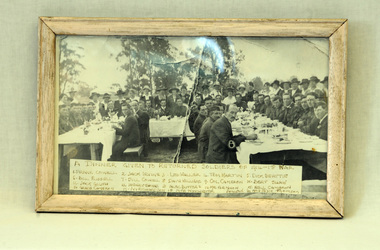
... Those in the photograph are: Frank Cowell; Jack Irving; Les Waller; Tom Martin; Dick Beattie; Bill Russell; Bill Cowell; Dave Williams; Col Cameron; Bert Shaw; Jack Gluth; Henry Thomas; Alec Butters; Mrs A. ...Those in the photograph are: Frank Cowell; Jack Irving; Les Waller; Tom Martin; Dick Beattie; Bill Russell; Bill Cowell; Dave Williams; Col Cameron; Bert Shaw; Jack Gluth; Henry Thomas; Alec Butters; Mrs A. ...This photograph shows a group of WW1 returned soldiers at a special dinner which was held at the old show ground. Those in the photograph are: Frank Cowell; Jack Irving; Les Waller; Tom Martin; Dick Beattie; Bill Russell; Bill Cowell; Dave Williams; Col Cameron; Bert Shaw; Jack Gluth; Henry Thomas; Alec Butters; Mrs A. G. Nixon; Nell Cameron; Grace Cameron; Ivy Richrdson; Nita WinchesterThis is a contemporary pictorial record of a significant event in Orbost. This item, associated with WW1 is a reminder of the involvement of the Orbost men who served in that conflict and the appreciation of their efforts by the Orbost communityA long black / white photograph of a large group of men sitting at tables having a meal . There are some women standing behind them. They are outdoors. The photo is in a light pink wooden frame under glass. 1010.2 is a copy.at front on paper label - "A DINNER GIVEN TO RETURNED SOLDIERS OF 1914 - 1918 WAR" and a list of names.armed-services ww1 orbost-soldiers -
 Orbost & District Historical Society
black and white photograph, late 19th century - early 20th century
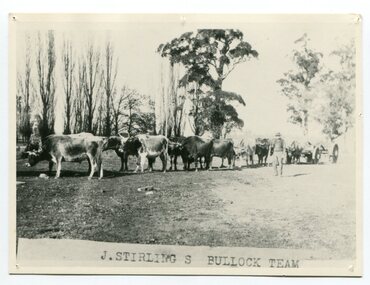
... walls, earthen floors and a shingle roof. By 1884, this structure had expanded to a 9 roomed accommodation house and in 1886 became the Marlo Hotel when a liquor license was granted. (more information from “Snowy River Mail”, Wednesday, April 13th 1977: MEMORIES OF MARLO by Mrs...walls, earthen floors and a shingle roof. By 1884, this structure had expanded to a 9 roomed accommodation house and in 1886 became the Marlo Hotel when a liquor license was granted. (more information from “Snowy River Mail”, Wednesday, April 13th 1977: MEMORIES OF MARLO by Mrs ...Aged 19 James Stirling arrived in Melbourne on January 26, 1842 with his family - parents, three sisters and two brothers. James Stirling moved around a lot to Whittlesea, Ballarat goldfields, Cunninghame, (now Lakes Entrance), then to the Old Station about 36 miles to the east along the coast near the mouth of the Snowy River and for a time settled there with his wife also from Wigton, Scotland, and their family four sons two daughters (James, John, William, George, Margaret and Polly). The first settler to occupy the Marlo township area was James Stirling around the year 1875. He built a bark hut on the bluff that had two rooms, bark walls, earthen floors and a shingle roof. By 1884, this structure had expanded to a 9 roomed accommodation house and in 1886 became the Marlo Hotel when a liquor license was granted. (more information from “Snowy River Mail”, Wednesday, April 13th 1977: MEMORIES OF MARLO by Mrs Elsbeth Conlon (nee Stirling ) During the 19th century bullock teams were the most effective means of transporting people and goods inland, as the roads were badly made and in poor condition. The better roads were closer to the towns, and the further away from the town, the worse the conditions of the roads. Bullock teams drew heavily laden carts full of provisions, equipment and people from town to town and into the countryside to isolated homes. This item is associated with that era. It is also associated with James Sterling a very early settler of Marlo.A black / white photograph of a bullock team with a man standing beside it.on front - J STIRLING S BULLOCK TEAMstirling-james marlo-history bullock-team transport -
 Orbost & District Historical Society
black and white photograph, late 19th century - early 20th century
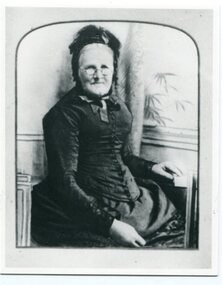
... This item is associated with the Ingram family early settlers in the Bonang district. ingram-bonang on back - Mr & Mrs Robt Ingram were the first settlers at Bonang at Bonang House. A small black / white photograph of an elderly lady, wearing a dark dress, sitting against a wall. ...Robert Ingram and his family were very early settlers in Bonang - possibly the first at Bonang House.This item is associated with the Ingram family early settlers in the Bonang district.A small black / white photograph of an elderly lady, wearing a dark dress, sitting against a wall. She is wearing a bonnet and has glasses.on back - Mr & Mrs Robt Ingram were the first settlers at Bonang at Bonang House.ingram-bonang -
 Orbost & District Historical Society
advertisement, 1902
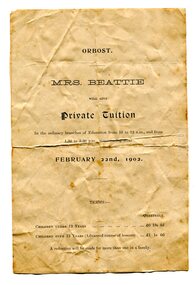
... Mrs Arthurena Dora Beattie (nee Morrison), had been teaching privately at Rosedale and came to Orbost with her husband and family in 1890. In 1892 she opened a private school in Salisbury Street (about the site of the Countryman Motor Inn) which she conducted for about 10 to 12 years. Her husband, John Wilson Beattie, a retired State School teacher, had been head teacher at the Rosedale School from July 1870 to August 1884. After coming to Orbost he selected land on Wall...Mrs Arthurena Dora Beattie (nee Morrison), had been teaching privately at Rosedale and came to Orbost with her husband and family in 1890. In 1892 she opened a private school in Salisbury Street (about the site of the Countryman Motor Inn) which she conducted for about 10 to 12 years. Her husband, John Wilson Beattie, a retired State School teacher, had been head teacher at the Rosedale School from July 1870 to August 1884. After coming to Orbost he selected land on Wall ...Mrs Arthurena Dora Beattie (nee Morrison), had been teaching privately at Rosedale and came to Orbost with her husband and family in 1890. In 1892 she opened a private school in Salisbury Street (about the site of the Countryman Motor Inn) which she conducted for about 10 to 12 years. Her husband, John Wilson Beattie, a retired State School teacher, had been head teacher at the Rosedale School from July 1870 to August 1884. After coming to Orbost he selected land on Wall Creek. He was a widower with 7 of 11 surviving children when he married Arthurena in 1885. His fist wife, Georgina (nee KELLY) died at Rosedale in 1883 when the youngest child was just 5 weeks old. John and Arthurena had a further 8 children (5 born at Orbost), and after John's death she married George McCARLIE in 1916 at Sale and moved Mirboo North. (references:BEATTIE, Arthurena Dora Music teacher, Orbost - 1903 Electoral Roll. BEATTIE, Arthurena Dora Teacher, Orbost - 1912 Electoral Roll.) There was at least one other private school much earlier, in 1884. It was thought to be the first school in the district and conducted by William Ballantyne. It was located on the flat on the Newmerella side of the Snowy River near where the first railway crossing used to be. Wm Ballantyne had previously taught school at Sarsfield from June 1873 to November 1879. (information from John Phillips) This advertisement was for educational tuition by Mrs Beattie. Tuition would be from 10.00am - 12.00 and from 1.30pm - 3.30pm. Costs were thirteen shillings per quarter for children under the age of 12 years and one guinea for those over 12 years. A reduction would be given for more than one child in the same family. The 1872 legislation required all children aged 6-15 years to attend school unless they had a reasonable excuse. Parents who did not send their children to school were liable for fines up to five shillings for a first offence, with the penalty increasing to 20 shillings for each repeat offence. The Orbost State School had opened on 19th of March 1886 and this "private school" appears to have been a small private enterprise school. This is a useful research item associated with education in Orbost.A white A5 size paper advertisement which has black print. It is an advertisement for private educational tuition. Details of costs and hours are included.beattie education school advertising
