
Showing 747 items matching "warmer"
-
 Greensborough Historical Society
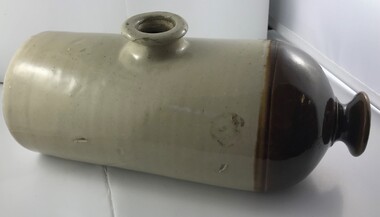
Domestic object - Foot warmer, Hoffman Australia, Stoneware foot warmer, 1930c
... Stoneware foot warmer...Used to warm feet: ancestor of the hot water bottle....Stoneware foot warmer, treacle and off-white glaze...Used to warm feet: ancestor of the hot water bottle. foot warmers hot water bottle Stoneware foot warmer, treacle and off-white glaze Stoneware foot warmer Domestic object Foot warmer Hoffman Australia ...Used to warm feet: ancestor of the hot water bottle.Stoneware foot warmer, treacle and off-white glazefoot warmers, hot water bottle -
 Kew Historical Society Inc
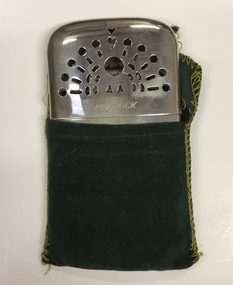
Functional object, Yamato Shokai Ltd, Refillable Metal Hand Warmer, 1946-1960
... Refillable Metal Hand Warmer...They manufactured the Peacock brand pocket-warmer and sold it internationally. ...Steel hand warmer in velvet pouch made in Japan for the export market....They manufactured the Peacock brand pocket-warmer and sold it internationally. pocket warmers hand warmers personal accessories peacock hand warmer PEACOCK Steel hand warmer in velvet pouch made in Japan for the export market. ...The Japanese company Yamato Shokai Ltd was founded in 1923 in the city of Osaka. Destroyed during air raids in 1945, the factory was rebuilt in 1946. They manufactured the Peacock brand pocket-warmer and sold it internationally. Steel hand warmer in velvet pouch made in Japan for the export market.PEACOCKpocket warmers, hand warmers, personal accessories, peacock hand warmer -
 University of Melbourne, Burnley Campus Archives
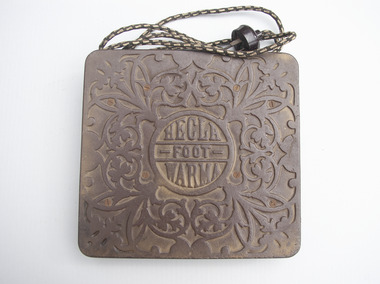
Accessory - Foot Warmer (electric), Hecla Australia, Foot Warmer, Undated
... Foot Warmer ...Brown iron and tin electric foot warmer with art nouveau decorative design surrounding branding inscription 'Hecla Foot Warma,' in centre. ...Electric cord and plug attached. Foot Warmer Accessory Foot Warmer (electric) Hecla Australia ...Probably used by staff in the PavilionBrown iron and tin electric foot warmer with art nouveau decorative design surrounding branding inscription 'Hecla Foot Warma,' in centre. Electric cord and plug attached."Hecla Foot Warma" on front. "230/250 volts, 80 watts, cat. no. F28. Hecla Australia" on back.hecla, foot warmer, footwarmer, hecla foot warma, artifact -
 Birregurra Historical Society
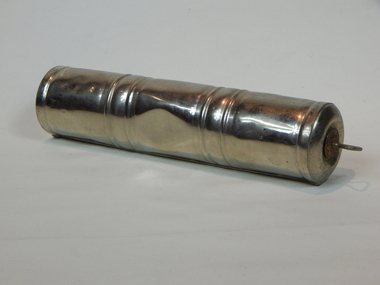
Domestic object - Can, Bed warmer
... Bed warmer...Used in 1950s as hot water bottle to warm bed in cold Western District homes....Used in 1950s as hot water bottle to warm bed in cold Western District homes. Household object in 1950s can water bottle hot water bottle stainless steel bed warmer PAT APPN 6368/42 Sunrise stainless steel Melbourne Silver plated metal cylinder with metal screw top stopper Bed warmer Domestic object Can ...Donated to collection. Used in 1950s as hot water bottle to warm bed in cold Western District homes.Household object in 1950sSilver plated metal cylinder with metal screw top stopperPAT APPN 6368/42 Sunrise stainless steel Melbournecan, water bottle, hot water bottle, stainless steel, bed warmer -
 Kew Historical Society Inc
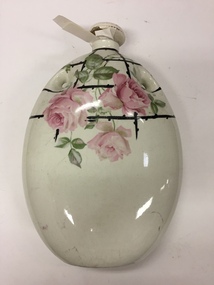
Functional object - The Mecca Foot Warmer, 1900-1914
... As well as filling hot water containers to warm your bed, you could buy earthenware bottles to use as foot warmers or hand warmers too. ...Ceramic foot warmer glazed in cream with a decoration of lattice and pink roses....No. 571373 / No sharp corners / Warming Pan / Stone-Trent England...As well as filling hot water containers to warm your bed, you could buy earthenware bottles to use as foot warmers or hand warmers too. ...Ceramic hot water bottles were common in the 19th and early 20th centuries. As well as filling hot water containers to warm your bed, you could buy earthenware bottles to use as foot warmers or hand warmers too. Earlier foot warmers used to hold hot coals, or glowing wood, not warm water. In the same way, traditional bed warmers filled with embers were once more usual than hot water bottles.Ceramic foot warmer glazed in cream with a decoration of lattice and pink roses.Maker stamp on base: "The Mecca Foot Warmer / Made in finest English Ivory Ware / Reg. No. 571373 / No sharp corners / Warming Pan / Stone-Trent Englandfoot warmer, household item, bedroom item -
 Bellarine Historical Society Museum
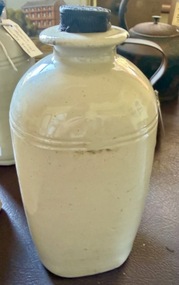
Domestic object - Bed Warmer with metal bung, Bendigo Potteris, Bed Warmer, early 20th century
... Bed Warmer...However, the jar shape is more consistent with a flat bottomed foot warmer than a beverage demijohn. Either this is a rare example of that product being made by Sharpe Brothers or the bung has been later added, possibly as a replacement for a lost original stopper....Flat bottom Bed Warmer Domestic object Bed Warmer with metal bung Bendigo Potteris National Trust Victoria ...Sharpe Brothers were founded in Dunedin, NZ in 1903 by John Sharpe. They manufactured non-alcoholic beverages transported in demijohn jars for home delivery. They established branches in Adelaide, Sydney and Melbourne and in most larger regional cities in NSW and Victoria. After his death in 1926, his sons carried on the business. It was sold to Tarax in 1962 which was taken over by Cadbury Schwepps Australia in 1972. However, the jar shape is more consistent with a flat bottomed foot warmer than a beverage demijohn. Either this is a rare example of that product being made by Sharpe Brothers or the bung has been later added, possibly as a replacement for a lost original stopper.Sharpe Brothers were a significant metropolitan and regional beverage manufacturer in the 20th century producing home delivered cordials, ginger beer and dandelion ale throughout southern Australia. The significance of their jar stopper being attached to a bed warmer needs investigation.Cream stoneware container, circular with slightly flattened sides. Flat bottomSharpe Brothers, Australia and New Zealand on top bung -
 Whitehorse Historical Society Inc.
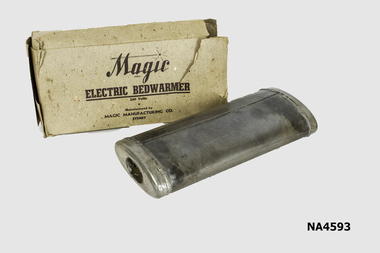
Domestic object - Bed Warmer, 1930s - 1940s
... Bed Warmer, Electric, with Hot Water. Bed warmer was filled with hot water to keep bed warm. ...Magic Electric Bed Warmer...Bed warmer was filled with hot water to keep bed warm. ...Collected by DonorBed Warmer, Electric, with Hot Water. Bed warmer was filled with hot water to keep bed warm. It was also covered with material or a sock. Cardboard box.Magic Electric Bed Warmerdomestic items, heating -
 National Wool Museum
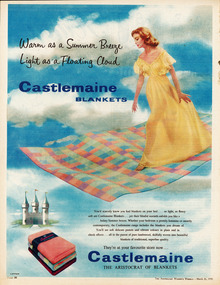
Archive - Advertisement, Castlemaine Woollen Mill, 1958
... Advertisement Castlemaine blankets "Warm as a summer breeze"...Warm as a Summer Breeze/Light as a Floating Cloud/Castlemaine Blankets/Castlemaine-the Aristocrat of Blankets...Wool Blanket Blanket fever Advertisement Castlemaine Australian Women's Weekly Warm as a Summer Breeze/Light as a Floating Cloud/Castlemaine Blankets/Castlemaine-the Aristocrat of Blankets Advertisement Castlemaine blankets "Warm as a summer breeze" Archive Advertisement Australia Victoria Castlemaine Castlemaine Woollen Mill ...Note from collector- "For more than 100 years blankets were made all over Australia in over 100 woollen mills. My aim, is to preserve 100 examples of these wonderful pieces of history. Ten years ago I started collecting the iconic Onkaparinga travel rugs, so that on movie nights at home there would be plenty to go around. Everyone had their favourite; even the cat had his own – a small red tartan one. Keeping an eye out for those travel rugs at op-shops and markets, collectable stores and bazaars, led to noticing vintage blankets. I'd never really thought about them before or paid much attention though of course I had grown up with them at my grandmother's. When I discovered my first Laconia cream blanket with blue stripes, my eyes just went gaga. Well that was it, I was hooked and since then over 500 blankets have passed through my hands. These common, everyday items, found in all households for so many decades, were traditional engagement gifts. Pairs were prized wedding presents turning into family heirlooms. They were fashionable dressers of beds, givers of warmth, bestowers of security and reliability. The comfort found in these objects resonates with almost all of us; we grew up with them ourselves or fondly recall them in a grandparent’s home. There is no modern replacement with the integrity of these old blankets, many of them now older than most of us. They are romantic, sensible, special, familiar, nostalgic and nothing else feels so appropriate in so many situations. No offense to the great Aussie doona, but from hippie to hipster, at a music festival, picnic, campsite or couch, a vintage blanket is something coveted by all. This industry that employed tens of thousands and must have been such a huge contributor to the economy is almost completely lost now. Blanket Fever is an ode to everything that came before: the land, the sheep, the shearers, the hands, the mills, the weavers, the designers, the distributors, the department stores. To the grandparents that gave them, the people that received them, the families that kept them; thank you. I’m passionate about my collection of Australian blankets manufactured in mostly Victoria, South Australia and Tasmania from the 1930s to the end of the 1960s. The collection has blankets from each of these four decades representing the styles and fashions of their time and includes dated advertisements which help determine the eras the blankets are from." Advertisement Castlemaine blankets "Warm as a summer breeze"Warm as a Summer Breeze/Light as a Floating Cloud/Castlemaine Blankets/Castlemaine-the Aristocrat of Blanketswool, blanket, blanket fever, advertisement, castlemaine, australian women's weekly -
 National Wool Museum
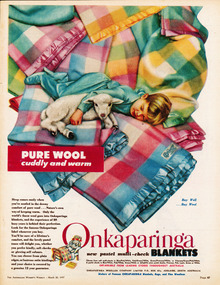
Archive - Advertisement, Onkaparinga Woollen Mill Company, 1957
... Pure wool, cuddly and warm (boy asleep with lamb)...Pure Wool cuddly and warm/Buy Well…Buy Wool/Onkaparinga new pastel multi-check blankets...Blanket Blanket fever Wool Onkaparinga Advertisement Australian Women's Weekly Pure Wool cuddly and warm/Buy Well…Buy Wool/Onkaparinga new pastel multi-check blankets Pure wool, cuddly and warm (boy asleep with lamb) Archive Advertisement Australia South Australia Lobethal Onkaparinga Woollen Mill Company ...Note from collector- "For more than 100 years blankets were made all over Australia in over 100 woollen mills. My aim, is to preserve 100 examples of these wonderful pieces of history. Ten years ago I started collecting the iconic Onkaparinga travel rugs, so that on movie nights at home there would be plenty to go around. Everyone had their favourite; even the cat had his own – a small red tartan one. Keeping an eye out for those travel rugs at op-shops and markets, collectable stores and bazaars, led to noticing vintage blankets. I'd never really thought about them before or paid much attention though of course I had grown up with them at my grandmother's. When I discovered my first Laconia cream blanket with blue stripes, my eyes just went gaga. Well that was it, I was hooked and since then over 500 blankets have passed through my hands. These common, everyday items, found in all households for so many decades, were traditional engagement gifts. Pairs were prized wedding presents turning into family heirlooms. They were fashionable dressers of beds, givers of warmth, bestowers of security and reliability. The comfort found in these objects resonates with almost all of us; we grew up with them ourselves or fondly recall them in a grandparent’s home. There is no modern replacement with the integrity of these old blankets, many of them now older than most of us. They are romantic, sensible, special, familiar, nostalgic and nothing else feels so appropriate in so many situations. No offense to the great Aussie doona, but from hippie to hipster, at a music festival, picnic, campsite or couch, a vintage blanket is something coveted by all. This industry that employed tens of thousands and must have been such a huge contributor to the economy is almost completely lost now. Blanket Fever is an ode to everything that came before: the land, the sheep, the shearers, the hands, the mills, the weavers, the designers, the distributors, the department stores. To the grandparents that gave them, the people that received them, the families that kept them; thank you. I’m passionate about my collection of Australian blankets manufactured in mostly Victoria, South Australia and Tasmania from the 1930s to the end of the 1960s. The collection has blankets from each of these four decades representing the styles and fashions of their time and includes dated advertisements which help determine the eras the blankets are from." Pure wool, cuddly and warm (boy asleep with lamb)Pure Wool cuddly and warm/Buy Well…Buy Wool/Onkaparinga new pastel multi-check blanketsblanket, blanket fever, wool, onkaparinga, advertisement, australian women's weekly -
 Bendigo Historical Society Inc.
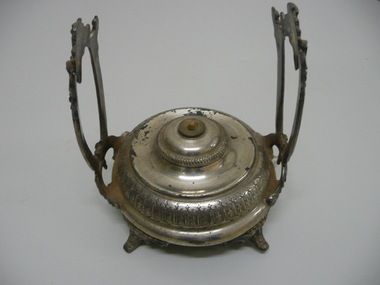
Domestic Object - WARMER BASE
... ...warmer...Warmer base for tea pot or kettle, Brittania metal stand with spirit burner insert on four small legs with 2 upright side arms embossed pattern around base....Domestic Object WARMER BASE ...Warmer base for tea pot or kettle, Brittania metal stand with spirit burner insert on four small legs with 2 upright side arms embossed pattern around base.domestic equipment, food storage & preservation, warmer -
 National Wool Museum
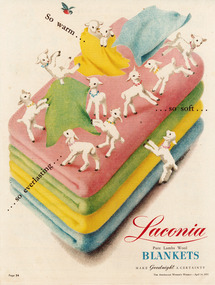
Archive - Advertisement, Laconia Woollen Mills, 1951
... 'So warm, so soft, so everlasting (lambs frolicking on a pile of blankets)...So warm, so soft, so everlasting/Laconia Pure Lambs Wool Blankets/Make Goodnight a Certainty ...Blankets Blanket fever Wool Laconia Advertisement Australian Women's Weekly So warm, so soft, so everlasting/Laconia Pure Lambs Wool Blankets/Make Goodnight a Certainty 'So warm, so soft, so everlasting (lambs frolicking on a pile of blankets) Archive Advertisement Australia Victoria Melbourne Laconia Woollen Mills ...Note from collector- "For more than 100 years blankets were made all over Australia in over 100 woollen mills. My aim, is to preserve 100 examples of these wonderful pieces of history. Ten years ago I started collecting the iconic Onkaparinga travel rugs, so that on movie nights at home there would be plenty to go around. Everyone had their favourite; even the cat had his own – a small red tartan one. Keeping an eye out for those travel rugs at op-shops and markets, collectable stores and bazaars, led to noticing vintage blankets. I'd never really thought about them before or paid much attention though of course I had grown up with them at my grandmother's. When I discovered my first Laconia cream blanket with blue stripes, my eyes just went gaga. Well that was it, I was hooked and since then over 500 blankets have passed through my hands. These common, everyday items, found in all households for so many decades, were traditional engagement gifts. Pairs were prized wedding presents turning into family heirlooms. They were fashionable dressers of beds, givers of warmth, bestowers of security and reliability. The comfort found in these objects resonates with almost all of us; we grew up with them ourselves or fondly recall them in a grandparent’s home. There is no modern replacement with the integrity of these old blankets, many of them now older than most of us. They are romantic, sensible, special, familiar, nostalgic and nothing else feels so appropriate in so many situations. No offense to the great Aussie doona, but from hippie to hipster, at a music festival, picnic, campsite or couch, a vintage blanket is something coveted by all. This industry that employed tens of thousands and must have been such a huge contributor to the economy is almost completely lost now. Blanket Fever is an ode to everything that came before: the land, the sheep, the shearers, the hands, the mills, the weavers, the designers, the distributors, the department stores. To the grandparents that gave them, the people that received them, the families that kept them; thank you. I’m passionate about my collection of Australian blankets manufactured in mostly Victoria, South Australia and Tasmania from the 1930s to the end of the 1960s. The collection has blankets from each of these four decades representing the styles and fashions of their time and includes dated advertisements which help determine the eras the blankets are from." 'So warm, so soft, so everlasting (lambs frolicking on a pile of blankets)So warm, so soft, so everlasting/Laconia Pure Lambs Wool Blankets/Make Goodnight a Certainty blankets, blanket fever, wool, laconia, advertisement, australian women's weekly -
 Millewa Community Pioneer Forest & Historical Society
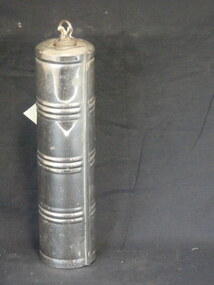
Hot Water Bottle, Sunrise Stainless
... Used as a bed warmer by the Boston Family...Stainless steel hot water bottle for bed warming, screw in stopper...Used as a bed warmer by the Boston Family Representative of bed warmers used by pioneers on frosty Millewa nights Boston Hot water bottle Millewa warming Sunrise Stainless Steel CO MELB PAT APPN 6368/42 Stainless steel hot water bottle for bed warming, screw in stopper Hot Water Bottle Sunrise Stainless ...Used as a bed warmer by the Boston Family Representative of bed warmers used by pioneers on frosty Millewa nightsStainless steel hot water bottle for bed warming, screw in stopperSunrise Stainless Steel CO MELB PAT APPN 6368/42boston, hot water bottle, millewa, warming -
 National Wool Museum
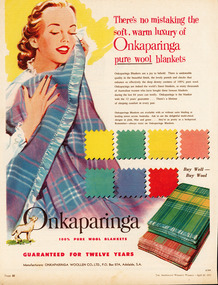
Archive - Advertisement, Onkaparinga Woollen Mill Company, 1955
... 'There's no mistaking the soft, warm luxury' (range of blankets and colours)...There's no mistaking the soft, warm luxury of Onkaparinga pure wool blankets/Buy Well-Buy Wool/Onkaparinga 100% Pure Wool Blankets/Guaranteed for Twelve Years...Blanket Blanket Fever wool Onkaparinga Advertisement Australian Women's Weekly There's no mistaking the soft, warm luxury of Onkaparinga pure wool blankets/Buy Well-Buy Wool/Onkaparinga 100% Pure Wool Blankets/Guaranteed for Twelve Years 'There's no mistaking the soft, warm luxury' (range of blankets and colours) Archive Advertisement Australia South Australia Lobethal Onkaparinga Woollen Mill Company ...Note from collector- "For more than 100 years blankets were made all over Australia in over 100 woollen mills. My aim, is to preserve 100 examples of these wonderful pieces of history. Ten years ago I started collecting the iconic Onkaparinga travel rugs, so that on movie nights at home there would be plenty to go around. Everyone had their favourite; even the cat had his own – a small red tartan one. Keeping an eye out for those travel rugs at op-shops and markets, collectable stores and bazaars, led to noticing vintage blankets. I'd never really thought about them before or paid much attention though of course I had grown up with them at my grandmother's. When I discovered my first Laconia cream blanket with blue stripes, my eyes just went gaga. Well that was it, I was hooked and since then over 500 blankets have passed through my hands. These common, everyday items, found in all households for so many decades, were traditional engagement gifts. Pairs were prized wedding presents turning into family heirlooms. They were fashionable dressers of beds, givers of warmth, bestowers of security and reliability. The comfort found in these objects resonates with almost all of us; we grew up with them ourselves or fondly recall them in a grandparent’s home. There is no modern replacement with the integrity of these old blankets, many of them now older than most of us. They are romantic, sensible, special, familiar, nostalgic and nothing else feels so appropriate in so many situations. No offense to the great Aussie doona, but from hippie to hipster, at a music festival, picnic, campsite or couch, a vintage blanket is something coveted by all. This industry that employed tens of thousands and must have been such a huge contributor to the economy is almost completely lost now. Blanket Fever is an ode to everything that came before: the land, the sheep, the shearers, the hands, the mills, the weavers, the designers, the distributors, the department stores. To the grandparents that gave them, the people that received them, the families that kept them; thank you. I’m passionate about my collection of Australian blankets manufactured in mostly Victoria, South Australia and Tasmania from the 1930s to the end of the 1960s. The collection has blankets from each of these four decades representing the styles and fashions of their time and includes dated advertisements which help determine the eras the blankets are from." 'There's no mistaking the soft, warm luxury' (range of blankets and colours)There's no mistaking the soft, warm luxury of Onkaparinga pure wool blankets/Buy Well-Buy Wool/Onkaparinga 100% Pure Wool Blankets/Guaranteed for Twelve Yearsblanket, blanket fever, wool, onkaparinga, advertisement, australian women's weekly -
 Lakes Entrance Historical Society
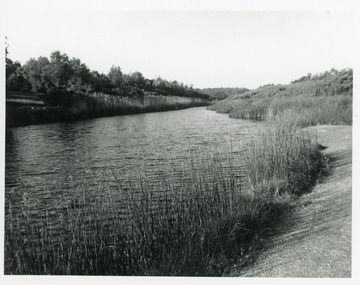
Photograph - Warm Holes, Lakes Entrance, Victoria. 1993, Lakes Post Newspaper, 1993
... The Warm Holes are the remnants of Reeves River, the original waterway of the natural entrance to the Gippsland Lakes....Black and white photograph of the fourth warm hole, looking eastward, Lakes Entrance, Victoria....Photograph Warm Holes, Lakes Entrance, Victoria. 1993 Lakes Post Newspaper ...The Warm Holes are the remnants of Reeves River, the original waterway of the natural entrance to the Gippsland Lakes.Black and white photograph of the fourth warm hole, looking eastward, Lakes Entrance, Victoria. waterways, vegetation -
 Mont De Lancey
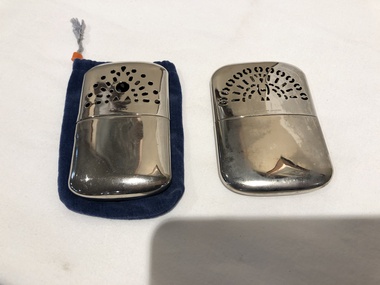
Hand Warmers, 1923
... Used for warming hands, the warmth would last for 24 hours. ...2 x Silver metal Hand warmers with ornamentation and one with a blue velvet pouch....Hand Warmers ...Used for warming hands, the warmth would last for 24 hours. They used methylated spirits or lighter fluid.2 x Silver metal Hand warmers with ornamentation and one with a blue velvet pouch.heating equipment -
 Flagstaff Hill Maritime Museum and Village
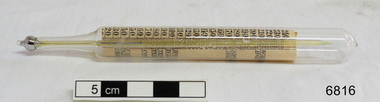
Instrument - Thermometer, 20th century
... "Freezing" up to "Warm Boil" ..."Freezing" up to "Warm Boil" ..."Freezing" up to "Warm Boil" Instrument Thermometer ...Thermometer made to the specifications of Dr. Forbes. Used to measuring temperatures from freezing to boiling. It was donated to Flagstaff Hill Maritime Village by the family of Doctor William Roy Angus, Surgeon and Oculist. It is part of the “W.R. Angus Collection” that includes historical medical equipment, surgical instruments and material once belonging to Dr Edward Ryan and Dr Thomas Francis Ryan, (both of Nhill, Victoria) as well as Dr Angus’ own belongings. The Collection’s history spans the medical practices of the two Doctors Ryan, from 1885-1926 plus that of Dr Angus, up until 1969. ABOUT THE “W.R.ANGUS COLLECTION” Doctor William Roy Angus M.B., B.S., Adel., 1923, F.R.C.S. Edin.,1928 (also known as Dr Roy Angus) was born in Murrumbeena, Victoria in 1901 and lived until 1970. He qualified as a doctor in 1923 at University of Adelaide, was Resident Medical Officer at the Royal Adelaide Hospital in 1924 and for a period was house surgeon to Sir (then Mr.) Henry Simpson Newland. Dr Angus was briefly an Assistant to Dr Riddell of Kapunda, then commenced private practice at Curramulka, Yorke Peninsula, SA, where he was physician, surgeon and chemist. In 1926, he was appointed as new Medical Assistant to Dr Thomas Francis Ryan (T.F. Ryan, or Tom), in Nhill, Victoria, where his experiences included radiology and pharmacy. In 1927 he was Acting House Surgeon in Dr Tom Ryan’s absence. Dr Angus had become engaged to Gladys Forsyth and they decided he would take time to further his studies overseas in the UK in 1927. He studied at London University College Hospital and at Edinburgh Royal Infirmary and in 1928, was awarded FRCS (Fellow from the Royal College of Surgeons), Edinburgh. He worked his passage back to Australia as a Ship’s Surgeon on the on the Australian Commonwealth Line’s T.S.S. Largs Bay. Dr Angus married Gladys in 1929, in Ballarat. (They went on to have one son (Graham 1932, born in SA) and two daughters (Helen (died 12/07/1996) and Berenice (Berry), both born at Mira, Nhill ) Dr Angus was a ‘flying doctor’ for the A.I.M. (Australian Inland Ministry) Aerial Medical Service in 1928 . The organisation began in South Australia through the Presbyterian Church in that year, with its first station being in the remote town of Oodnadatta, where Dr Angus was stationed. He was locum tenens there on North-South Railway at 21 Mile Camp. He took up this ‘flying doctor’ position in response to a call from Dr John Flynn; the organisation was later known as the Flying Doctor Service, then the Royal Flying Doctor Service. A lot of his work during this time involved dental surgery also. Between 1928-1932 he was surgeon at the Curramulka Hospital, Yorke Peninsula, South Australia. In 1933 Dr Angus returned to Nhill where he’d previously worked as Medical Assistant and purchased a share of the Nelson Street practice and Mira hospital from Dr Les Middleton one of the Middleton Brothers, the current owners of what was once Dr Tom Ryan’s practice. Dr L Middleton was House Surgeon to the Nhill Hospital 1926-1933, when he resigned. [Dr Tom Ryan’s practice had originally belonged to his older brother Dr Edward Ryan, who came to Nhill in 1885. Dr Edward saw patients at his rooms, firstly in Victoria Street and in 1886 in Nelson Street, until 1901. The Nelson Street practice also had a 2 bed ward, called Mira Private Hospital ). Dr Edward Ryan was House Surgeon at the Nhill Hospital 1884-1902 . He also had occasions where he successfully performed veterinary surgery for the local farmers too. Dr Tom Ryan then purchased the practice from his brother in 1901. Both Dr Edward and Dr Tom Ryan work as surgeons included eye surgery. Dr Tom Ryan performed many of his operations in the Mira private hospital on his premises. He too was House Surgeon at the Nhill Hospital 1902-1926. Dr Tom Ryan had one of the only two pieces of radiology equipment in Victoria during his practicing years – The Royal Melbourne Hospital had the other one. Over the years Dr Tom Ryan gradually set up what was effectively a training school for country general-practitioner-surgeons. Each patient was carefully examined, including using the X-ray machine, and any surgery was discussed and planned with Dr Ryan’s assistants several days in advance. Dr Angus gained experience in using the X-ray machine there during his time as assistant to Dr Ryan. Dr Tom Ryan moved from Nhill in 1926. He became a Fellow of the Royal Australasian College of Surgeons in 1927, soon after its formation, a rare accolade for a doctor outside any of the major cities. He remained a bachelor and died suddenly on 7th Dec 1955, aged 91, at his home in Ararat. Scholarships and prizes are still awarded to medical students in the honour of Dr T.F. Ryan and his father, Dr Michael Ryan, and brother, John Patrick Ryan. ] When Dr Angus bought into the Nelson Street premises in Nhill he was also appointed as the Nhill Hospital’s Honorary House Surgeon 1933-1938. His practitioner’s plate from his Nhill surgery states “HOURS Daily, except Tuesdays, Fridays and Saturday afternoons, 9-10am, 2-4pm, 7-8pm. Sundays by appointment”. This plate is now mounted on the doorway to the Port Medical Office at Flagstaff Hill Maritime Village, Warrnambool. Dr Edward Ryan and Dr Tom Ryan had an extensive collection of historical medical equipment and materials spanning 1884-1926 and when Dr Angus took up practice in their old premises he obtained this collection, a large part of which is now on display at the Port Medical Office at Flagstaff Hill Maritime Village in Warrnambool. During his time in Nhill Dr Angus was involved in the merging of the Mira Hospital and Nhill Public Hospital into one public hospital and the property titles passed on to Nhill Hospital in 1939. In 1939 Dr Angus and his family moved to Warrnambool where he purchased “Birchwood,” the 1852 home and medical practice of Dr John Hunter Henderson, at 214 Koroit Street. (This property was sold in1965 to the State Government and is now the site of the Warrnambool Police Station. ). The Angus family was able to afford gardeners, cooks and maids; their home was a popular place for visiting dignitaries to stay whilst visiting Warrnambool. Dr Angus had his own silk worm farm at home in a Mulberry tree. His young daughter used his centrifuge for spinning the silk. Dr Angus was appointed on a part-time basis as Port Medical Officer (Health Officer) in Warrnambool and held this position until the 1940’s when the government no longer required the service of a Port Medical Officer in Warrnambool; he was thus Warrnambool’s last serving Port Medical Officer. (The duties of a Port Medical Officer were outlined by the Colonial Secretary on 21st June, 1839 under the terms of the Quarantine Act. Masters of immigrant ships arriving in port reported incidents of diseases, illness and death and the Port Medical Officer made a decision on whether the ship required Quarantine and for how long, in this way preventing contagious illness from spreading from new immigrants to the residents already in the colony.) Dr Angus was a member of the Australian Medical Association, for 35 years and surgeon at the Warrnambool Base Hospital 1939-1942, He served as a Surgeon Captain during WWII1942-45, in Ballarat, Victoria, and in Bonegilla, N.S.W., completing his service just before the end of the war due to suffering from a heart attack. During his convalescence he carved an intricate and ‘most artistic’ chess set from the material that dentures were made from. He then studied ophthalmology at the Royal Melbourne Eye and Ear Hospital and created cosmetically superior artificial eyes by pioneering using the intrascleral cartilage. Angus received accolades from the Ophthalmological Society of Australasia for this work. He returned to Warrnambool to commence practice as an ophthalmologist, pioneering in artificial eye improvements. He was Honorary Consultant Ophthalmologist to Warrnambool Base Hospital for 31 years. He made monthly visits to Portland as a visiting surgeon, to perform eye surgery. He represented the Victorian South-West subdivision of the Australian Medical Association as its secretary between 1949 and 1956 and as chairman from 1956 to 1958. In 1968 Dr Angus was elected member of Spain’s Barraquer Institute of Barcelona after his research work in Intrasclearal cartilage grafting, becoming one of the few Australian ophthalmologists to receive this honour, and in the following year presented his final paper on Living Intrasclearal Cartilage Implants at the Inaugural Meeting of the Australian College of Ophthalmologists in Melbourne In his personal life Dr Angus was a Presbyterian and treated Sunday as a Sabbath, a day of rest. He would visit 3 or 4 country patients on a Sunday, taking his children along ‘for the ride’ and to visit with him. Sunday evenings he would play the pianola and sing Scottish songs to his family. One of Dr Angus’ patients was Margaret MacKenzie, author of a book on local shipwrecks that she’d seen as an eye witness from the late 1880’s in Peterborough, Victoria. In the early 1950’s Dr Angus, painted a picture of a shipwreck for the cover jacket of Margaret’s book, Shipwrecks and More Shipwrecks. She was blind in later life and her daughter wrote the actual book for her. Dr Angus and his wife Gladys were very involved in Warrnambool’s society with a strong interest in civic affairs. Their interests included organisations such as Red Cross, Rostrum, Warrnambool and District Historical Society (founding members), Wine and Food Society, Steering Committee for Tertiary Education in Warrnambool, Local National Trust, Good Neighbour Council, Housing Commission Advisory Board, United Services Institute, Legion of Ex-Servicemen, Olympic Pool Committee, Food for Britain Organisation, Warrnambool Hospital, Anti-Cancer Council, Boys’ Club, Charitable Council, National Fitness Council and Air Raid Precautions Group. He was also a member of the Steam Preservation Society and derived much pleasure from a steam traction engine on his farm. He had an interest in people and the community He and his wife Gladys were both involved in the creation of Flagstaff Hill, including the layout of the gardens. After his death (28th March 1970) his family requested his practitioner’s plate, medical instruments and some personal belongings be displayed in the Port Medical Office surgery at Flagstaff Hill Maritime Village, and be called the “W. R. Angus Collection”. The W.R. Angus Collection is significant for still being located at the site it is connected with, Doctor Angus being the last Port Medical Officer in Warrnambool. The collection of medical instruments and other equipment is culturally significant, being an historical example of medicine from late 19th to mid-20th century. Dr Angus assisted Dr Tom Ryan, a pioneer in the use of X-rays and in ocular surgery. Thermometer, glass, part of the W.R. Angus Collection. Scale 15 - 240, "Dr Forbes Specifications." Made in Germany. "Freezing" up to "Warm Boil" Paper label inside thermometer has "Dr Forbes Specifications." Made in Germany. "Freezing" up to "Warm Boil" flagstaff hill, warrnambool, shipwrecked coast, flagstaff hill maritime museum, maritime museum, shipwreck coast, flagstaff hill maritime village, great ocean road, dr w r angus, dr ryan, surgical instrument, t.s.s. largs bay, warrnambool base hospital, nhill base hospital, mira hospital, flying doctor, medical treatment, scientific instrument, medical instrument, thermometer, heat measurement, dr forbes specifications, german made thermometer -
 Lakes Entrance Historical Society
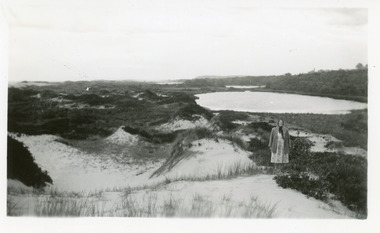
Photograph - The Warm Holes, Lakes Entrance Victoria 1950's, 1950c
... The Warm Holes are the remnant of Reeves River, the original waterway from the Gippsland lakes to the natural entrance. ...Black and white photograph of the Warm Holes, from the sand hummocks looking west. ...Photograph The Warm Holes, Lakes Entrance Victoria 1950's ...The Warm Holes are the remnant of Reeves River, the original waterway from the Gippsland lakes to the natural entrance. Lady with shawl in foreground. Lakes Entrance Victoria. Also enlargement 15x25cmBlack and white photograph of the Warm Holes, from the sand hummocks looking west. waterways, topography -
 Whitehorse Historical Society Inc.
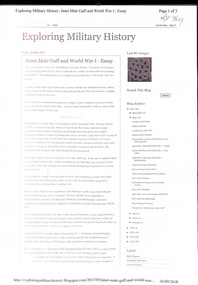
Document, Exploring Military History - Amazing Women of Whitehorse and Manningham, 2017
... including an urgent appeal for rabbit skins to be used in lining warm clothing for the troops....History of the life of Janet Muir Gaff - including an urgent appeal for rabbit skins to be used in lining warm clothing for the troops....including an urgent appeal for rabbit skins to be used in lining warm clothing for the troops. gaff janet muir world war 1914 - 1918 nurses nursing shire of nunawading rabbit skins History of the life of Janet Muir Gaff . ...History of the life of Janet Muir Gaff .History of the life of Janet Muir Gaff - including an urgent appeal for rabbit skins to be used in lining warm clothing for the troops.History of the life of Janet Muir Gaff .gaff, janet muir, world war 1914 - 1918, nurses, nursing, shire of nunawading, rabbit skins -
 Falls Creek Historical Society
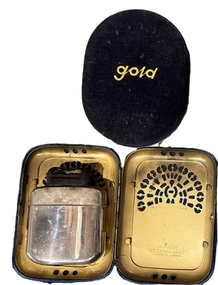
Functional object - Peacock Hand Warmers
... These mid-1960s Peacock and Gold brand lighter fuel hand warmers were used in Falls Creek to keep out the cold. ...The pocket warmer is a small, relatively flat device with a tank at the bottom and a burner mechanism a t the top. ...Peacock Hand Warmers Functional object Peacock Hand Warmers ...These mid-1960s Peacock and Gold brand lighter fuel hand warmers were used in Falls Creek to keep out the cold. The concept behind the hand warmer is that through combustion (ignition) of lighter fluid (light petrol distillate) it becomes a catalytic heater, relying on a catalysed chemical reaction to break down molecules and create heat. The devices could get quite hot, not hot enough to set paper on fire, but hot enough to give a nasty burn if sustained contact against your skin occurred. The construction of the device is very simple. There is very fine rolled wire mesh which fits on top of the reservoir body. After you fill the reservoir with lighter fluid, vapor pressure builds up. The device ignites by heating the grill with a match or lighter until it glows red. There is no open flame. The hand warmer also had a velvet bag to place it in after igniting to prevent direct skin contact. They were able to generate heat for up to a whole day. The Japanese company Yamato Shokai Ltd was founded in 1923 in the city of Osaka. Destroyed during air raids in 1945, the factory was rebuilt in 1946. They manufactured the Peacock brand pocket-warmer and sold it internationally.These items are significant because they were commonly used at Falls Creek.The pocket warmer is a small, relatively flat device with a tank at the bottom and a burner mechanism a t the top. "PEACOCK/MADE IN JAPAN" is engraved near the burner. The warmer fits into a metal case which features a series of ventilation holes in the shape of a peacock's tail. JAPANESE PAT. 237413.483177 MADE IN JAPANhand warmers, ski equipment 1960s -
 Mont De Lancey
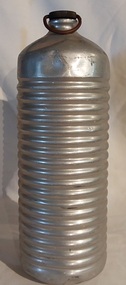
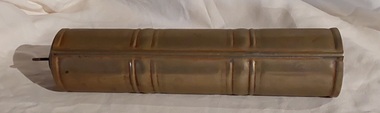
Domestic object - Bed Warmer, 1030's - 1950's
... 1930's to 1950's an aluminium bed warmer, foot warmer, thermos bottle. It is a bed warmer with a very small opening, but the bottle works effectively on the principle of a thermos bottle. ...A medium sized vintage aluminium, cylindrical bed or foot warmer, with a removable brass screw stopper which has a wire looped handle on top. ...1930's to 1950's an aluminium bed warmer, foot warmer, thermos bottle. It is a bed warmer with a very small opening, but the bottle works effectively on the principle of a thermos bottle. ...1930's to 1950's an aluminium bed warmer, foot warmer, thermos bottle. It is a bed warmer with a very small opening, but the bottle works effectively on the principle of a thermos bottle. Holds water without leaking.A medium sized vintage aluminium, cylindrical bed or foot warmer, with a removable brass screw stopper which has a wire looped handle on top. It has an overall pattern of decorative lined bands around it. It would be filled with hot water, sealed with the stopper and wrapped in a towel or cloth to stop it burning your feet.bed warmers, hot water bottles -
 Mont De Lancey
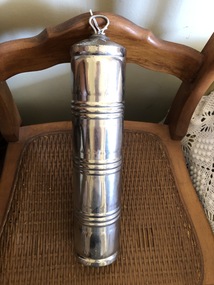
Domestic object - Bed Warmer, Schrade, 1030's - 1950's
... 1930's to 1950's Schrade 1.2 litre aluminium bed warmer, foot warmer, thermos bottle. It is a bed warmer with a very small opening, but the bottle works effectively on the principle of a thermos bottle. ...A long vintage gold painted aluminium, cylindrical bed or foot warmer, with a removable brass screw stopper which has a looped handle on top. ...1930's to 1950's Schrade 1.2 litre aluminium bed warmer, foot warmer, thermos bottle. It is a bed warmer with a very small opening, but the bottle works effectively on the principle of a thermos bottle. ...1930's to 1950's Schrade 1.2 litre aluminium bed warmer, foot warmer, thermos bottle. It is a bed warmer with a very small opening, but the bottle works effectively on the principle of a thermos bottle. Holds water without leaking.A long vintage gold painted aluminium, cylindrical bed or foot warmer, with a removable brass screw stopper which has a looped handle on top. It has a pattern of four decorative bands around it. It would be filled with hot water, sealed with the stopper and wrapped in a towel or cloth to stop it burning your feet. Patent marks around the screw stopper: 'Schrade Trade Mark Regd Made in Gt. B'bed warmers, hot water bottles -
 Mont De Lancey
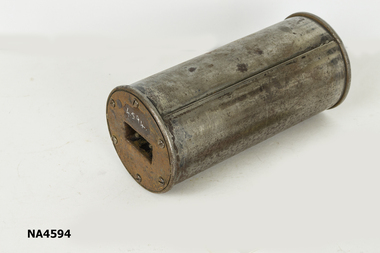
Domestic object - Bed Warmer, Sunrise Stainless Steel Co, 1930's - 1950's
... Melbourne Pat Appn 6368/42 1.2 litre stainless steel bed warmer, foot warmer, thermos bottle. Bed warmer with very small opening, but the bottle works effectively on the principle of a thermos bottle. ...A stainless steel, cylindrical bed warmer, with a removable screw stopper which has a looped handle on top. ...Melbourne Pat Appn 6368/42 1.2 litre stainless steel bed warmer, foot warmer, thermos bottle. Bed warmer with very small opening, but the bottle works effectively on the principle of a thermos bottle. ...1930's to 1950's Sunrise Stainless Steel Co. Melbourne Pat Appn 6368/42 1.2 litre stainless steel bed warmer, foot warmer, thermos bottle. Bed warmer with very small opening, but the bottle works effectively on the principle of a thermos bottle. Holds water without leaking. Russell SebireA stainless steel, cylindrical bed warmer, with a removable screw stopper which has a looped handle on top. It has a pattern of three bands of three lines around it. It would be filled with hot water, sealed with the stopper and wrapped in a towel or cloth to stop it burning your feet.'Sunrise Stainless Steel Co Pat App 6368/42' Patent marks around the stopper.bed warmers, hot water bottles -
 Whitehorse Historical Society Inc.
Functional object - Bed Warmer, 1930s - 1940s
... Bed Warmer (with hot water). Bed Warmer was filled with water. ...DOMESTIC ITEMS Heating Bed Warmer (with hot water). Bed Warmer was filled with water. ...Collected by Donor.Bed Warmer (with hot water). Bed Warmer was filled with water. To keep bed warmer, it was covered with fabric. Cylindrical shape, with electric plug at one end.domestic items, heating -
 Kiewa Valley Historical Society
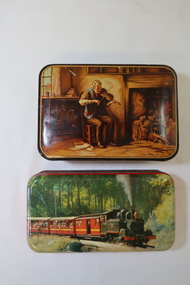
Pocket Stove and Fuel Sticks - 5 packets stored in two tins
... Each packet has dry fuel sticks which are solid white powder sticks used for warming and cooking. There are several sticks (or tablets) in each packet. ..."Solid Fuel Hot Pocket Warmer" and "Esbit Pocket-Sized Stove" on packets stored in 'Sweetacres" embossed on the base of the tin. ...Each packet has dry fuel sticks which are solid white powder sticks used for warming and cooking. There are several sticks (or tablets) in each packet. ...Ron White used these dry fuel sticks for cooking when camping. He was involved in the Mt Beauty Youth Club.Ron White assisted with the Mt Beauty Youth Group. See KVHS 1282Each packet has dry fuel sticks which are solid white powder sticks used for warming and cooking. There are several sticks (or tablets) in each packet. There are two packets in a hinged brown and gold tin box with the photo of a man playing a violin on the lid and three packets n a coloured tin with a red base and the photo of a steam train on the detached lid."Solid Fuel Hot Pocket Warmer" and "Esbit Pocket-Sized Stove" on packets stored in 'Sweetacres" embossed on the base of the tin. "Solid Fuel Sticks for Hot Pocket Warmer" and x2 "Esbit Dry Fuel" on packets in "Griffiths Sweets Pty Ltd Melbourne" embossed on the base of the 'train tin'. ron white, fuel sticks, camping, cooking -
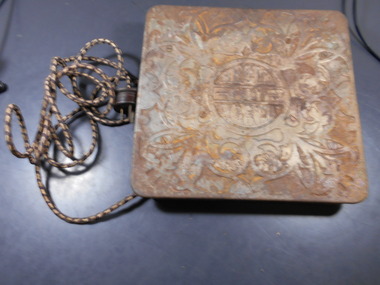 Bendigo Historical Society Inc.
Tool - DONEY COLLECTION: HECLA FOOT WARMER
... Hecla Foot Warmer, used by Doney to warm developing liquids Sloping (40-60mm) foot plate marked HECLA FOOT WARMER Produced by Hecla electric company Equipment in poor condition - rusted...Allan Doney collection Hecla Hecla electric company Hecla Foot Warmer, used by Doney to warm developing liquids Sloping (40-60mm) foot plate marked HECLA FOOT WARMER Produced by Hecla electric company Equipment in poor condition - rusted Tool DONEY COLLECTION: HECLA FOOT WARMER ...Hecla Foot Warmer, used by Doney to warm developing liquids Sloping (40-60mm) foot plate marked HECLA FOOT WARMER Produced by Hecla electric company Equipment in poor condition - rustedHecla electric companyallan doney collection, hecla -
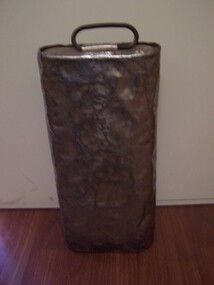 Puffing Billy Railway
Equipment - Victorian Railways Carriage Foot Warmer
... There was a whole infrastructure of special furnaces set up at stations for the daily heating of foot warmers. By 1914 the Victorian railways had 4,000 foot warmers in service and by 1935 there were 33 furnaces at principal stations to heat them. ...There is a handle at one end for carrying and shaking. Inside the foot warmer are two baffle plates and three trays to contain the sodium acetate. ...Equipment Victorian Railways Carriage Foot Warmer Victorian Railways - Newport Workshop ...During prestige, long distance train journeys some carriages had air-conditioning, and the majority of passengers had to brave unheated carriages. To offer some comfort during the winter months, the non-air-conditioned carriages were provided with footwarmers. These were metal containers roughly 100 mm thick and 300 mm wide, and about 750 mm long, which were filled with salt crystals (concentrated crystalline hydrated sodium acetate). The footwarmers were covered by sleeves of thick canvas, and two footwarmers were usually placed in each compartment of non-air-conditioned carriages. To activate the chemicals, the footwarmers were heated almost to boiling point. This was done by removing the canvas sleeves and placing the footwarmers in a large bath of very hot water. After they had been heated, they were removed from the bath and the sleeves refitted. They were then ready to be placed in the carriages. The McLaren patent foot warmer was used on railways in New South Wales, Queensland, Victoria and South Australia as well as South Africa and New Zealand. It was during the 1901 royal visit by the Duke and Duchess of Cornwall that these foot warmers were first used in New Zealand in the royal carriage. Before railway carriage heating was introduced, McLaren patent foot warmers were placed on the floor of New South Wales government railway carriages from 1891 to provide a little passenger comfort. The rectangular steel container worked a bit like a hot water bottle but instead of water contained six and a half kilograms of loosely-packed salt crystals, (concentrated crystalline hydrated sodium acetate). This was permanently sealed inside the container with a soldered cap. After the foot warmer was heated in vat of boiling water for about one and a quarter hours the crystals became a hot liquid. (The melting point for sodium acetate is 58 degrees). There was a whole infrastructure of special furnaces set up at stations for the daily heating of foot warmers. By 1914 the Victorian railways had 4,000 foot warmers in service and by 1935 there were 33 furnaces at principal stations to heat them. After about 10 hours the container was picked up by the handle and given a good vertical shake which helped the cooled liquid reform into a solid mass of hot crystals. Staff or sometimes passengers shook them en route when the foot warmers began to get cold. However, as they were heavy this was only possible by fit and agile passengers. At the end of the journey the containers were boiled again for reuse on the next trip. Sodium acetate railway foot warmers were introduced in Victoria in 1889, Adelaide to Melbourne express in 1899. "Shaking up" on this service took place at Murray Bridge and Stawell on the tip to Melbourne and at Ballarat and Serviceton on the trip to Adelaide. The use of foot warmers began to decline in New South Wales from the 1930s with the first trial of carriage air-conditioning in 1936, steam heating from 1948 ad LP gas heating from 1961. By the early 1960s the main services using foot warmers were the overnight mail trains. info from : http://www.powerhousemuseum.com/collection/database/?irn=67564#ixzz4UBNzVf6t Under Creative Commons License: Attribution Non-Commercial There was a whole infrastructure set up at stations for the daily heating of foot warmers in special furnaces. In Victoria alone in 1935 there were 33 heating works.Historic - Victorian Railways - Carriage Heater - Foot warmerA rectangular-shaped stainless steel casing with a welded seam down the back and welded ends. There is a handle at one end for carrying and shaking. Inside the foot warmer are two baffle plates and three trays to contain the sodium acetate. There was a cast-iron ball in each internal compartment. puffing billy, victorian railways, carriage haeter, foot warmer, passenger comfort, station furnace, railway ephemera, early heating methods -
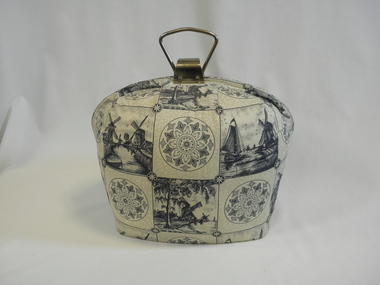 Dutch Australian Heritage Centre Victoria
Tea Cosy (Lined), mid 20th century
... It took pride of place on the tea trolley and took the place of, or was an alternative to, the tea lights which also served to keep the teapot warm. It held a large teapot and although it was very effective in keeping the tea warm, after a couple of hours the tea became rather bitter and tasted "stewed". ...Half rounded cotton padded teapot warmer (Dutch "theemuts" = tea bonnet) with inserted plywood base. ...It took pride of place on the tea trolley and took the place of, or was an alternative to, the tea lights which also served to keep the teapot warm. It held a large teapot and although it was very effective in keeping the tea warm, after a couple of hours the tea became rather bitter and tasted "stewed". ...This kind of tea cosy was found in just about every Dutch home in the 1950's. It took pride of place on the tea trolley and took the place of, or was an alternative to, the tea lights which also served to keep the teapot warm. It held a large teapot and although it was very effective in keeping the tea warm, after a couple of hours the tea became rather bitter and tasted "stewed". Since the Dutch are not in the habit of adding milk to their tea, the late afternoon cuppa was not always a favourite.A symbol of what the Dutch prize above all, namely "gezelligheid", which means homely cosiness. The afternoon tea ritual ("thee-uurtje") was a very important time of the day as children came home from school to a cosily lit home with their mother presiding over pouring out the tea and distributing biscuits (one at a time!) Half rounded cotton padded teapot warmer (Dutch "theemuts" = tea bonnet) with inserted plywood base. White outside with grey-blue Delft tile motifs, lined with navy blue taffeta and padded with kapok. Metal carrying handle under which there is a clasp which opens and closes the cosy.noneteapot, dutch family life, dutch, immigration, household items -
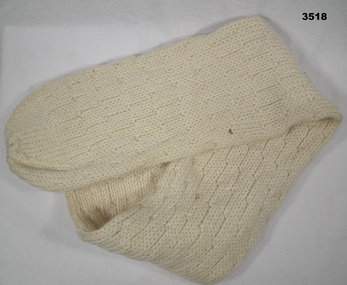 Bendigo Military Museum
Accessory - LEG WARMER, c.WWII
... Cream, hand knitted, woolen leg warmer....Accessory military RAAF Cream, hand knitted, woolen leg warmer. Accessory LEG WARMER ...Item re Frederick Gardner DAVEY DFC No 410533 RAAF. Refer Reg No 3536P for his service details.Cream, hand knitted, woolen leg warmer.accessory, military, raaf -
 Cinema and Theatre Historical Society of Australia Inc.
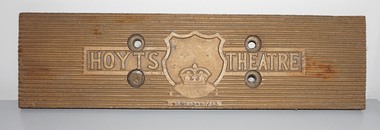
Cinema Foot Warmer
... A metal foot warmer from a Hoyts Theatre...HOYTS A metal foot warmer from a Hoyts Theatre Cinema Foot Warmer ...A metal foot warmer from a Hoyts TheatreHOYTS -
 National Wool Museum
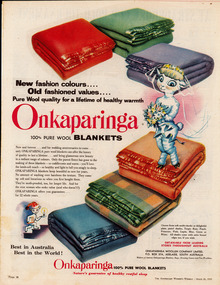
Archive - Advertisement, Onkaparinga Woollen Mill Company, 1958
... Pure wool, cuddly and warm (boy asleep with lamb) ...Pure wool, cuddly and warm (boy asleep with lamb) Archive Advertisement Australia South Australia Lobethal Onkaparinga Woollen Mill Company ...Note from collector- "For more than 100 years blankets were made all over Australia in over 100 woollen mills. My aim, is to preserve 100 examples of these wonderful pieces of history. Ten years ago I started collecting the iconic Onkaparinga travel rugs, so that on movie nights at home there would be plenty to go around. Everyone had their favourite; even the cat had his own – a small red tartan one. Keeping an eye out for those travel rugs at op-shops and markets, collectable stores and bazaars, led to noticing vintage blankets. I'd never really thought about them before or paid much attention though of course I had grown up with them at my grandmother's. When I discovered my first Laconia cream blanket with blue stripes, my eyes just went gaga. Well that was it, I was hooked and since then over 500 blankets have passed through my hands. These common, everyday items, found in all households for so many decades, were traditional engagement gifts. Pairs were prized wedding presents turning into family heirlooms. They were fashionable dressers of beds, givers of warmth, bestowers of security and reliability. The comfort found in these objects resonates with almost all of us; we grew up with them ourselves or fondly recall them in a grandparent’s home. There is no modern replacement with the integrity of these old blankets, many of them now older than most of us. They are romantic, sensible, special, familiar, nostalgic and nothing else feels so appropriate in so many situations. No offense to the great Aussie doona, but from hippie to hipster, at a music festival, picnic, campsite or couch, a vintage blanket is something coveted by all. This industry that employed tens of thousands and must have been such a huge contributor to the economy is almost completely lost now. Blanket Fever is an ode to everything that came before: the land, the sheep, the shearers, the hands, the mills, the weavers, the designers, the distributors, the department stores. To the grandparents that gave them, the people that received them, the families that kept them; thank you. I’m passionate about my collection of Australian blankets manufactured in mostly Victoria, South Australia and Tasmania from the 1930s to the end of the 1960s. The collection has blankets from each of these four decades representing the styles and fashions of their time and includes dated advertisements which help determine the eras the blankets are from." Pure wool, cuddly and warm (boy asleep with lamb) New fashion colours…Old fashioned values…./Pure Wool quality for a lifetime of healthy warmth/Onkaparinga 100% Pure Wool Blankets/Best in Australia, Best in the World!blanket, blanket fever, wool, onkaparinga, advertisement, australian women's weekly
