
Showing 102 items matching "william knight"
-
 Bendigo Historical Society Inc.
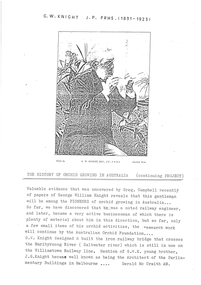
Document - George William Knight, Australian Orchid Foundation, 16.10.2003
... George William Knight...George William Knight...Four page photocopied document, includes letter from Australian Orchid Foundation (16/10/2003) addressed to the Bendigo Historical Society re George William Knight, seeking a copy of a portrait of Knight; one page article on Knight and his role as a pioneer of orchid growing in Australia (by Gerald McCraith, AM) and a two page article titled 'George W. ...Document George William Knight Australian Orchid Foundation ...George Knight was born in London in 1831. He qualified as an architect and practised as a civil engineer before coming to Australia with a younger brother in 1854. He was appointed Government Engineer shortly after arriving in Victoria, and supervised the construction of a railway line to Williamstown and the Sunbury section of the main railway line to Bendigo. Subsequently, he established a vineyard at Sunbury but soon sold it and moved to Bendigo, where he held the position of City Surveyor until retiring in 1886. During that period, he established nurseries, vineyards and orchards on four different sites in and around Bendigo, trading as the Knight Brothers. The Rosenberg nursery at Back Creek was established on former gold diggings - only after turning over the whole site to unearth the fertile soil and bury the clay and gravel that the miners had brought to the surface. One of the noteworthy plants at the nursery was a rose 'bush' measuring 19 metres long, 13 metres wide and 4 metres high. Another was the 'Grand Centennial' grape vine, bred from a Waltham cross, that yielded grapes measuring 35 mm long and 28 mm in diameter. It won a silver medal for the 'newest and finest grape variety raised in the colony' at the Melbourne Centennial Exhibition in 1895.Four page photocopied document, includes letter from Australian Orchid Foundation (16/10/2003) addressed to the Bendigo Historical Society re George William Knight, seeking a copy of a portrait of Knight; one page article on Knight and his role as a pioneer of orchid growing in Australia (by Gerald McCraith, AM) and a two page article titled 'George W. Knight, one of Victoria's earliest orchid growers, by Greg Campbell, Gerald McCraith AM and Brian Milligan.george william knight, bendigo, nursery, rosenberg nursery, back creek, grapes, roses, orchids -
 Bendigo Historical Society Inc.
Book - GEORGE WILLIAM KNIGHT AND FAMILY
... GEORGE WILLIAM KNIGHT AND FAMILY...George William Knight and Family by (Carole Winter 9 nee Knight), green soft cover contains 108 pages of information on the Knight family history with black and white & some coloured photographs....Book GEORGE WILLIAM KNIGHT AND FAMILY ...George William Knight and Family by (Carole Winter 9 nee Knight), green soft cover contains 108 pages of information on the Knight family history with black and white & some coloured photographs.Carole Wintergenealogy, family, knight -
 Linton and District Historical Society Inc
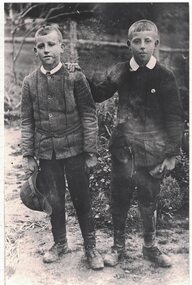
Photograph, George and William Knight
... George and William Knight...Knight... William (Bill) Knight..."George Knight 7/9/1905 and William (Bill) 2/5/1903."...George Knight William (Bill) Knight "George Knight 7/9/1905 and William (Bill) 2/5/1903." ...Black and white copy of original photograph of two boys each wearing long pants and a thick Jacket, hats in hand and boy on right has his hand resting on the other boys' shoulder."George Knight 7/9/1905 and William (Bill) 2/5/1903."george knight, william (bill) knight -
 Bendigo Historical Society Inc.
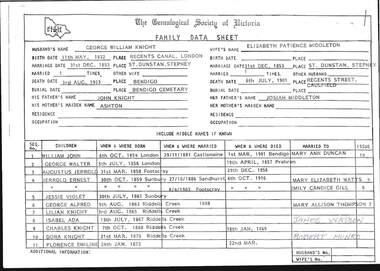
Document - GEORGE WILLIAM KNIGHT BIOGRAPHY
... GEORGE WILLIAM KNIGHT BIOGRAPHY...Eight page Photocopy of George William Knight [1832-1923] of Bendigo brief biography once probably delivered as address to BHS. ...Document GEORGE WILLIAM KNIGHT BIOGRAPHY ...Eight page Photocopy of George William Knight [1832-1923] of Bendigo brief biography once probably delivered as address to BHS. Horticulturist once owning nurseries at Epsom, Back Creek, and Williamson Street as well as Florist business in Hargreaves Street Bendigo. Genealogical data sheet showing family history. Five Photocopied photos of nurseries and giant rose bush named 'Cloth of Gold'. Catalogued by Rob Upson 2/3/ 2010 and donated by Carole Winter descendant.bendigo, history, autobiography -
 Bendigo Military Museum
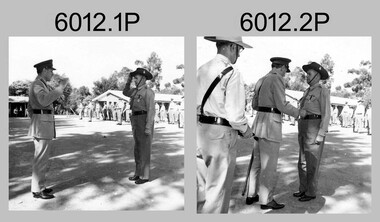
Photograph - Army Survey Regiment GOC Parade Medal Presentations, 1969
... GOC Southern Command MAJ GEN Robert William Knights CB, CBE formally presented the Defence Force Service Medal to personnel in recognition of 15 years of efficient remunerated service, or the Clasp for each further 5 year period of service. ...MAJ GEN Robert William Knights CB, CBE, unidentified. .7) - Photo, black & white, 1969. ...MAJ GEN Robert William Knights CB, CBE, unidentified. .7) - Photo, black & white, 1969. ...These photographs were taken at a GOC Parade at the Army Headquarters (AHQ) Survey Regiment in 1969. GOC Southern Command MAJ GEN Robert William Knights CB, CBE formally presented the Defence Force Service Medal to personnel in recognition of 15 years of efficient remunerated service, or the Clasp for each further 5 year period of service. These 25 black and white photographs were taken at a GOC Parade Medal Presentation in 1969 at the Army Headquarters (AHQ) Survey Regiment, Bendigo. 25 photographs are on negative film. 13 of photographs are printed on photographic paper. and scanned at 600 dpi. are part of the Army Survey Regiment’s Collection. .1) - Photo, black & white, 1969. L to R: MAJ GEN Robert William Knights CB, CBE, unidentified. .2) & .3)- Photo, black & white, 1969. L to R: MAJ GEN Robert William Knights CB, CBE, SGT Keith Harris. .4) to .6) - Photo, black & white, 1969. MAJ GEN Robert William Knights CB, CBE, unidentified. .7) - Photo, black & white, 1969. L to R: unidentified, MAJ GEN Robert William Knights CB, CBE. .8) - Photo, black & white, 1969. L to R: MAJ GEN Robert William Knights CB, CBE, SGT Ben Williams. .9) - Photo, black & white, 1969. L to R: ex SGT Alan Pollard, MAJ GEN Robert William Knights CB, CBE. .10) - Photo, black & white, 1969. L to R: WO1 Bill Miller, MAJ GEN Robert William Knights CB, CBE. .11) & .12) - Photo, black & white, 1969. WO1 Steve McConnachie, MAJ GEN Robert William Knights CB, CBE, unidentified. .13) - Photo, black & white, 1969. L to R: unidentified, MAJ GEN Robert William Knights CB, CBE. .14) to .15) - Photo, black & white, 1969. L to R:MAJ GEN Robert William Knights CB, CBE, unidentified. .16) - Photo, black & white, 1969. L to R: unidentified, MAJ GEN Robert William Knights CB, CBE, unidentified. .17) - Photo, black & white, 1969. AHQ Survey Regiment standing at ease on the parade ground. .18) - Photo, black & white, 1969. L to R: unidentified, MAJ GEN Robert William Knights CB, CBE, CO LTCOL Lionel Sprenger MBE, MID. .19) & .20) - Photo, black & white, 1969. MAJ GEN Robert William Knights CB, CBE and family. .21) - Photo, black & white, 1969. L to R: Alan Pollard, MAJ GEN Robert William Knights CB, CBE, Bet and Ben Williams. .22) - Photo, black & white, 1969. Ex SGT Alan Pollard and Mrs Pollard. .23) - Photo, black & white, 1969. WO2 Steve MeConnachie and Family. .24) - Photo, black & white, 1969. Unidentified recipient and Family. .25) - Photo, black & white, 1969. WO2 Jack Williams and Family..9) Photo - SGT Alan Pollard identified on back .10) Photo - WO1 Bill Miller identified on back .11) Photo - WO1 Steve McConnachie identified on back royal australian survey corps, rasvy, fortuna, army survey regiment, army svy regt, asr -
 Frankston RSL Sub Branch
Photograph
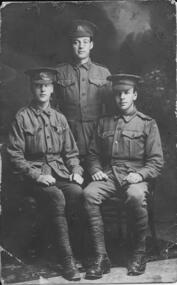
... There is a note on the rear of the postcard "George Laidlaw left William Knight centre and A Kettlewell Original 15 Battalion Queensland 1914 to 1918 War". ...The rear of this postcard has the photographers name, "P MATHEWSON & SONS PETRIE BIGHT BRISBANE" and the handwritten note "George Laidlaw left William Knight centre and A Kettlewell Original 15 Battalion Queensland 1914 to 1918 War"....There is a note on the rear of the postcard "George Laidlaw left William Knight centre and A Kettlewell Original 15 Battalion Queensland 1914 to 1918 War". ...Postcard size photograph of three Australian Army servicemen taken during World War 1. There is a note on the rear of the postcard "George Laidlaw left William Knight centre and A Kettlewell Original 15 Battalion Queensland 1914 to 1918 War". The rear of this postcard has the photographers name, "P MATHEWSON & SONS PETRIE BIGHT BRISBANE" and the handwritten note "George Laidlaw left William Knight centre and A Kettlewell Original 15 Battalion Queensland 1914 to 1918 War".ww1, world war 1, 15th battalion, 15th btn, queensland, australia, australian, army -
 Bendigo Military Museum
Photograph - Royal Australian Survey Corps Formal Dinner, 1966
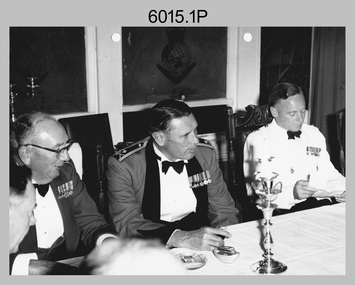
... Known personnel in the photographs were GOC Southern Command MAJ GEN Robert William Knights CB, CBE, COL Don Macdonald MID, Director of the Survey Corps and LTCOL Frank Buckland OBE, MID who was the CO of the Army Headquarters Survey Regiment. ...The photographs were scanned at 300 dpi. .1) - Photo, black & white, 1966, L to R: COL Donald Macdonald MID, MAJ GEN Robert William Knights CB, CBE, LTCOL Buckland OBE, MID. .2) - Photo, black & white, 1966, 50th year Jubilee Dinner Bowl. .3) - Photo, black & white, 1966, L to R: COL Donald Macdonald MID, MAJ GEN Robert William Knights CB, CBE, LTCOL Buckland OBE, MID, unidentified. .4) - Photo, black & white, 1966, L to R: COL Donald Macdonald MID, MAJ GEN Robert William Knights CB, CBE. .5) & .6) - Photo, black & white, 1966, L to R: LTCOL Buckland OBE, MID, unidentified. ...The photographs were scanned at 300 dpi. .1) - Photo, black & white, 1966, L to R: COL Donald Macdonald MID, MAJ GEN Robert William Knights CB, CBE, LTCOL Buckland OBE, MID. .2) - Photo, black & white, 1966, 50th year Jubilee Dinner Bowl. .3) - Photo, black & white, 1966, L to R: COL Donald Macdonald MID, MAJ GEN Robert William Knights CB, CBE, LTCOL Buckland OBE, MID, unidentified. .4) - Photo, black & white, 1966, L to R: COL Donald Macdonald MID, MAJ GEN Robert William Knights CB, CBE. .5) & .6) - Photo, black & white, 1966, L to R: LTCOL Buckland OBE, MID, unidentified. ...These photographs were taken at a RASVY Corps Formal Dinner at the Army Headquarters Survey Regiment in 1966. The formal dinner commemorated the 50th Year Jubilee anniversary of the Royal Australian Survey Corps’ formation. Known personnel in the photographs were GOC Southern Command MAJ GEN Robert William Knights CB, CBE, COL Don Macdonald MID, Director of the Survey Corps and LTCOL Frank Buckland OBE, MID who was the CO of the Army Headquarters Survey Regiment. The 50th year Jubilee Dinner silver bowl often appeared as a centrepiece in Officer’s Mess functions.These six black and white photographs were taken at a RASVY Corps Formal Dinner at the Army Headquarters Survey Regiment in 1966. The photographs were printed on photographic paper and are part of the Army Survey Regiment’s Collection. The photographs were scanned at 300 dpi. .1) - Photo, black & white, 1966, L to R: COL Donald Macdonald MID, MAJ GEN Robert William Knights CB, CBE, LTCOL Buckland OBE, MID. .2) - Photo, black & white, 1966, 50th year Jubilee Dinner Bowl. .3) - Photo, black & white, 1966, L to R: COL Donald Macdonald MID, MAJ GEN Robert William Knights CB, CBE, LTCOL Buckland OBE, MID, unidentified. .4) - Photo, black & white, 1966, L to R: COL Donald Macdonald MID, MAJ GEN Robert William Knights CB, CBE. .5) & .6) - Photo, black & white, 1966, L to R: LTCOL Buckland OBE, MID, unidentified. There are no annotationsroyal australian survey corps, rasvy, fortuna, army survey regiment, army svy regt, asr -
 Port Melbourne Historical & Preservation Society
Book - Borough of Port Melbourne, cash book, 1888 - 1906
... Borough of Port Melbourne - Cash book No 2 Pages 1 to 28 - Statement of all money received by William Knight as Closes Inspector, February 1888 to February 1889. ...Pages 36 to 143 - Statements of all money received by William Knight and James Harrop as Inspectors of weights and measures from 1893 to 1906. ...Borough of Port Melbourne - Cash book No 2 Pages 1 to 28 - Statement of all money received by William Knight as Closes Inspector, February 1888 to February 1889. Pages 36 to 143 - Statements of all money received by William Knight and James Harrop as Inspectors of weights and measures from 1893 to 1906.local government - borough of port melbourne -
 Bendigo Historical Society Inc.
Legal record - Power of Attorney, 18/02/1862
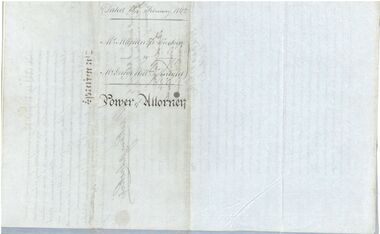
... For more information about George William Knight see https://trove.nla.gov.au/newspaper/article/227853797?...Document appointing George William Knight of Sunbury or elsewhere in the Colony of Victoria as a lawful attorney to act for Mackenzie Luckie of 15 Tredegar Square, Bow in the County of Middlesex (now London), Master Mariner. ...For more information about George William Knight see https://trove.nla.gov.au/newspaper/article/227853797? ...Captain Mackenzie Luckie was born in 1821. From 1853 he commanded eight ships. He died on board the Michael Angelo off the coast of New Zealand in February 1875. After the ship arrived in Nelson, The Argus (Melbourne) reported on 12 February 1875 that Captain Luckie was found dead in his cabin, from heart disease. His appointed Attorney Mr George William Knight selected land in Sunbury in 1860 and then arrived in Bendigo on 2 April 1870. For more information about George William Knight see https://trove.nla.gov.au/newspaper/article/227853797?searchTerm=george%20william%20knightCaptain McKenzie Luckie a. Document appointing George William Knight of Sunbury or elsewhere in the Colony of Victoria as a lawful attorney to act for Mackenzie Luckie of 15 Tredegar Square, Bow in the County of Middlesex (now London), Master Mariner. Dated 18 February 1862. Witnessed by William Charles White. Five page document - two blue flimsy sheets, one light card sheet and two grey flimsy sheets. b. Transcript from The Age (Melbourne) 27 November 1937. The letter from H. Daniel, Monte Video, South America, is responding to an earlier letter from the grand daughter of Captain Mackenzie Luckie. It includes a record of the career of Captain Luckie from 1853. captain mackenzie luckie, master mariner -
Federation University Historical Collection
Booklet - Register, Record of War Service Old Boys of Junior Technical School Ballarat
... ...william knight...Dunstan f.m. hassell robert kneeshaw william knight maxwell little francis j. longhurst norman w. ludbrook ronald j. ludbrook roy martin albert francis mayne leonard a. moy albert edward phillipsharold l. pittard j.p. rodgers ian rands noel george sandland john w. scott francis spilvogel Handwritten names. ...This listing was probably made after World War One around 1919The information includes rank, service (AIF, RAAF etc) and if Killed in Action.Cream foolscap black lined 36 double sided pages with alphabet tags cut in at the side being an alphabetical listing of Ballarat Junior Technical School Old Boys War War Two Service. Six holes are punched in the left hand side with three brass fastenings. Handwritten names. ABC ... Z, incomplete data, cannot trace, at right hand side. world war two, ballarat junior technical school, jtsb, bjts, war service, old boys, ballarat, soldiers, airman, honour roll, ww2, wwii, aif, raaf, airforce, avy, norman barnett, francis capuano, leslie coad, robert (stewart) sunstan, stanley dunstan, clifford l. dunstan, ran, james g. dunstan, f.m. hassell, robert kneeshaw, william knight, maxwell little, francis j. longhurst, norman w. ludbrook, ronald j. ludbrook, roy martin, albert francis mayne, leonard a. moy, albert edward phillipsharold l. pittard, j.p. rodgers, ian rands, noel george sandland, john w. scott, francis spilvogel -
Federation University Historical Collection
Book - Book - Scrapbook, Ballarat School of MInes: Scrapbook of Newspaper Cuttings, Book 21, July 1984 to September 1984
... ...william knight of usa at smb...The papers concerned are The Courier, Ballarat, The Australian, The Age over the period of 12 July 1984 to 19 September 1984. teaching positions advertised pre-employment courses courses available ballarat ladies art association rotary exchange students val inguanez ontario canada sam bourne nevada usa roger mcfarlane pilot of the year a-grade automobile engineers certificate neale goad wayne harbour mark white smb trained william knight of usa at smb u s teachers visit ballarat smb chief urges employer support increase in smb apprentices e j tippett elected patron of smb 50 years service apprentices to show their skills robyn sedgwick dance workshop l f j hillman recreation building - smb work skills contest peter brown winner of carpentary section richard siebert competing in electrical wiring section smb students with val d'angri make piece as work experience venture george helon - a dream to publish digger's dugout sign smb's self-help effort opened by l f j hillman thoroughly modern typist apprenticeship safety seminar laying pipes the modern way v f l medal count at ballarat smb wins welding prizes leigh gillette - oxy welding william kerr - electric welding ballarat may get pilot youth scheme david davies - ballarat's gifted son nursing aide students - smb presentation secretaries - dispel the "office housewife" stereotype portrait for smb geoff mainwaring painter apprentice of the year - daryl edwards tertiary campus built from scratch do more for womens' education thomas walsh farm apprentice award Book with beige cover, front, spiral bound. ...Collection of newspaper articles related to Ballarat School Of Mines.They cover activities and advertisements for staff. The papers concerned are The Courier, Ballarat, The Australian, The Age over the period of 12 July 1984 to 19 September 1984.Book with beige cover, front, spiral bound. teaching positions advertised, pre-employment courses, courses available, ballarat ladies art association, rotary exchange students, val inguanez ontario canada, sam bourne nevada usa, roger mcfarlane pilot of the year, a-grade automobile engineers certificate, neale goad, wayne harbour, mark white, smb trained, william knight of usa at smb, u s teachers visit ballarat, smb chief urges employer support, increase in smb apprentices, e j tippett elected patron of smb, 50 years service, apprentices to show their skills, robyn sedgwick dance workshop, l f j hillman recreation building - smb, work skills contest, peter brown winner of carpentary section, richard siebert competing in electrical wiring section, smb students with val d'angri make piece as work experience venture, george helon - a dream to publish, digger's dugout sign, smb's self-help effort opened by l f j hillman, thoroughly modern typist, apprenticeship safety seminar, laying pipes the modern way, v f l medal count at ballarat, smb wins welding prizes, leigh gillette - oxy welding, william kerr - electric welding, ballarat may get pilot youth scheme, david davies - ballarat's gifted son, nursing aide students - smb presentation, secretaries - dispel the "office housewife" stereotype, portrait for smb, geoff mainwaring painter, apprentice of the year - daryl edwards, tertiary campus built from scratch, do more for womens' education, thomas walsh farm apprentice award -
 Bendigo Historical Society Inc.
Document - INFORMATION: JOSEPH HENRY KNIGHT
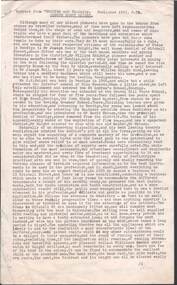
... ... Mr William Knight...PERSON Individual Joseph Henry Knight Dentist Mitchelll Street Mr William Knight Pass by Claim Mr Joseph Bell St Andrews School Miss Howards Gravel Hill State School Mr John Slack Mr David Watson Great Extended Victoria Gold Mining Company St Andrews Constitution Bendigo Lodge Worshipful Master Bendigo Jocky Club Ramblers Club Information re dentist Joseph Henry Knight (typewriten extract from 'Bendigo and Vicinity' 1895, p.79. ...Information re dentist Joseph Henry Knight (typewriten extract from 'Bendigo and Vicinity' 1895, p.79.person, individual, joseph henry knight, dentist, mitchelll street, mr william knight, pass by claim, mr joseph bell, st andrews school, miss howards, gravel hill state school, mr john slack, mr david watson, great extended victoria gold mining company, st andrews constitution, bendigo lodge, worshipful master, bendigo jocky club, ramblers club -
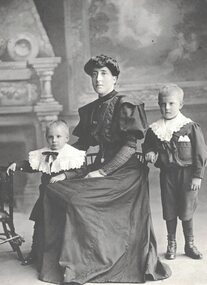 Linton and District Historical Society Inc
Photograph, Harriet Knight with Sons George and William
... Harriet Knight with Sons George and William...Knight... William (Bill) Knight...A daughter of Henry Francis and his wife Mary (née Hepbuirn or Hepburn), Harriet married George Knight of Spring Vale (now Pittong) in 1900. Harriet is shown in this photograph with her two sons - William, born 1903, and George, born 1905. ...George Knight) with sons George and William....George Knight) with sons George and William. Harriet Knight with Sons George and William Photograph ...A daughter of Henry Francis and his wife Mary (née Hepbuirn or Hepburn), Harriet married George Knight of Spring Vale (now Pittong) in 1900. Harriet is shown in this photograph with her two sons - William, born 1903, and George, born 1905. Harriet and George Knight also had a daughter, Victoria May, born 1901, who died in 1904. Harriet's husband George died in 1907. After she was widowed Harriet continued to run their farming enterprise. As part of this she ran a butchery, providing meat to people living in the Pittong district. Alice Knight (Harriet's granddaughter) commented in 2018 that the photo shows Harriet having quite muscular arms, which she thought was a result of hard physical labour on the farm.Black and white portrait of a woman wearing a dark dress with high collar, sitting in a chair with a small boy on either side, both boys wearing large white lace collars. Harriet Knight (Mrs. George Knight) with sons George and William.harriet knight (née francis), george knight, william (bill) knight -
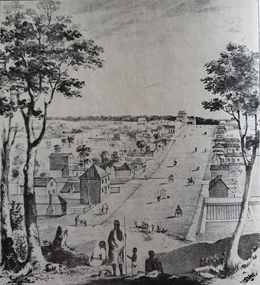 Ballarat Heritage Services
Photograph - Image, Collins Street, Melbourne in 1840, 1840
... Image of Collins Street Melbourne in 1840, looking west towards Russell Street, from a drawing by Elisha Noyce and William Knight, August 1840. The original worko is held by the State Library of Victoria. ...collins street melbourne melbourne aborigines Image of Collins Street Melbourne in 1840, looking west towards Russell Street, from a drawing by Elisha Noyce and William Knight, August 1840. The original worko is held by the State Library of Victoria. ...Image of Collins Street Melbourne in 1840, looking west towards Russell Street, from a drawing by Elisha Noyce and William Knight, August 1840. The original worko is held by the State Library of Victoria. A group of Aborigines stand in the foreground. From the State Library of Victoria's Pictures Collection. collins street melbourne, melbourne, aborigines -
Eltham District Historical Society Inc
Folder, William and Caroline Knights, 1851
... Folder of information on William and Caroline Knights, Little Eltham, 1851...William Knights Caroline Knights Folder of information on William and Caroline Knights, Little Eltham, 1851 William and Caroline Knights Folder ...Folder of information on William and Caroline Knights, Little Eltham, 1851william knights, caroline knights -
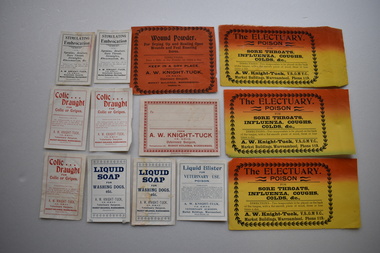 Warrnambool and District Historical Society Inc.
Labels, Knight Tuck, Early 20th century
... Arthur William Knight Tuck (1871-1942) took over from Veterinary Surgeon Desmond in Warrnambool in 1897 and was a prominent vet in Warrnambool for a great number of years....Arthur William Knight Tuck (1871-1942) took over from Veterinary Surgeon Desmond in Warrnambool in 1897 and was a prominent vet in Warrnambool for a great number of years. ...Arthur William Knight Tuck (1871-1942) took over from Veterinary Surgeon Desmond in Warrnambool in 1897 and was a prominent vet in Warrnambool for a great number of years.These labels are of great interest as they show the variety of medicines used by veterinary surgeons in the early 20th century- Wound Powder, The Electuary Poison for sore throats, Liquid Blister, Colic Draught, Liquid Soap for dogs, Stimulating Embrocation for sprains, bruises etc. .1,.2,.3 Yellow and orange rectangular labels with black text and a decorative border paper. All are slightly damaged. .4 Ochre coloured rectangular label with black text and a decorative border. It is damaged. .5 White rectangular label with red text and a decorative border. It has horizontal lines on which to write. It is discoloured. .6 White rectangular label with dark blue text and a plain border. .7, White rectangular label with dark blue text and decorative border top and bottom.It is damaged. .8 White rectangular label with black text and plain border. .9 White rectangular label with red text and plain border. . . .1,.2,.3 The ELECTUARY POISON FOR SORE THROATS, INFLUENZA, COUGHS, COLDS &C Directions- Two teaspoonfuls to be placed on the back of the tongue with a flat smooth piece of wood, three or four times a day A.W. Knight -Tuck , V,S., G.M. V.C., Market Buildings, Warrnambool Phone 119. .4 Wound Powder For Drying Up and Healing Open Wounds and Foul Running Sores DIRECTIONS Dust a little of the Powder on twice a day. KEEP IN A DRY PLACE. A.W. KNIGHT-TUCK, V.S.,G.M.V.C. Veterinary Surgeon MARKET BUILDINGS, WARRNAMBOOL Telephone 119 .5 To...... FROM A.W. KNIGHT - TUCK.V.S.,G.M.V.C. Veterinary Surgeon, Telephone 119 MARKET BUILDINGS,WARRNAMBOOL Modern Print Warrnambool .6 Liquid Blister FOR VETERINARY USE. POISON DIRECTIONS (Detailed in fine print) A.W. KNIGHT-TUCK ( as above for profession and location ) .7 . LIQUID SOAP FOR WASHING DOGS etc. (as above for profession and location) .8 STIMULATING Embrocation FOR Sprains, Bruises, Sore Throat, Strangles, Rheumatism, &c .DIRECTIONS ( detailed in fine print) A. W KNIGHT - TUCK (as above for profession and location) .9 Colic Draught FOR Colic or Gripes DIRECTIONS FOR USE ( detailed in fine print) A.W KNIGHT -TUCK (as above for profession and location) a.w. knight -tuck -
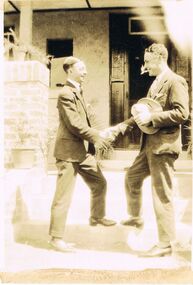 Bendigo Historical Society Inc.
Photograph - BASIL WATSON COLLECTION: BASIL WATSON AND ROBERT KEITH MUNRO, C1916
... Robert Munro and Basil Watson are cousins, sharing the same maternal grandfather, George William Knight. R.K. Munro put together the Basil Watson collection and donated it to the Bendigo Historical Society....Robert Munro and Basil Watson are cousins, sharing the same maternal grandfather, George William Knight. R.K. Munro put together the Basil Watson collection and donated it to the Bendigo Historical Society. ...Sepia ( or very faded black and white ) photograph: photo shows Robert Keith Munro shaking hands with Basil Watson. Men are standing near steps at front of house. Brick pillar on LH side. Photo was donated by Dorothy Wigney, (nee Stilwell) a niece of Robert Munro. Robert Munro and Basil Watson are cousins, sharing the same maternal grandfather, George William Knight. R.K. Munro put together the Basil Watson collection and donated it to the Bendigo Historical Society.aviation, civilian, basil watson -
 Supreme Court of Victoria Library
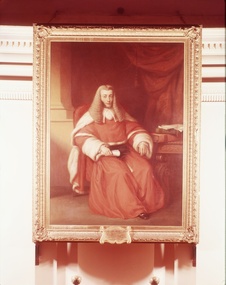
Portrait, Sir William a'Beckett
... Plaque identifying subject : Sir William a'Beckett, Knight, resident judge of the Supreme Court of New South Wales for the district of Port Phillip from 1846 to 1852, First Chief Justice of the Supreme Court of Victoria from Jan.1852 to Feb 1857....The portrait is of historic signifcance because of its subject Sir William a'Beckett and its long association with the Court. judges william a beckett supreme court Plaque identifying subject : Sir William a'Beckett, Knight, resident judge of the Supreme Court of New South Wales for the district of Port Phillip from 1846 to 1852, First Chief Justice of the Supreme Court of Victoria from Jan.1852 to Feb 1857. ...Correspondence held by the library has John Denniston Wood (1829-1914), a barrister and politician, presenting the portrait to the Library Committee in 1867. Wood hopes that the painting will "hang there [in the Court] in like manner as the portraits of many of the sages of the law are held in the Courts at Guildhall". Wood also provides information about the painter, Mr Mosely "now deceased", but who was "selected by Sir WIlliam himself" to undertake the commission. Early accounts have the painting hanging in a prominent position in the 'old' Court house at La Trobe and Russell Streets; the portrait was moved down to the library in 1884, when the portraits of Barry, Stawell and Molesworth were also commissioned. Sir William a'Beckett was the first chief justice of the colony of Victoria, having previously had a busy career at the Sydney bar. The portrait is of historic signifcance because of its subject Sir William a'Beckett and its long association with the Court. A full length portrait of Sir William a'Beckett, seated and dressed in his judicial robes. With ornate gold frame with acorn motif.Plaque identifying subject : Sir William a'Beckett, Knight, resident judge of the Supreme Court of New South Wales for the district of Port Phillip from 1846 to 1852, First Chief Justice of the Supreme Court of Victoria from Jan.1852 to Feb 1857.judges, william a beckett, supreme court -
 Flagstaff Hill Maritime Museum and Village
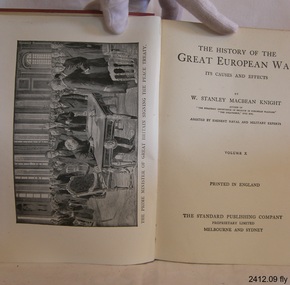
Book - Reference/History, W Stanley Macbean Knight, The History of the Great European War Set 1 Vol 10, 1914-1920
... Born in Marylebone, son of William Richard Irwin Knight, he studied at Oxford, was admitted as a solicitor in 1893, and became a tutor at New College, Oxford. ...Born in Marylebone, son of William Richard Irwin Knight, he studied at Oxford, was admitted as a solicitor in 1893, and became a tutor at New College, Oxford. ...This set is a contemporary and popular narrative history of WWI, written and published while the war was still happening; the preface is dated 1914, but volumes were issued serially as the war progressed, meaning later volumes covering 1917–18 and the peace were released several years after the first. This is a common format for the period — compare rival serials like The Great War (Hammerton & Wilson) or Collier's The Story of the Great War — publishers issued 'instant history' in subscription parts to a public hungry for authoritative-sounding accounts. The volumes in this set cover the following topics during the First World War: Vol. I — Causes and Effects (1914): Its aims are to explain the political and diplomatic background to the war — the alliance system and the July Crisis — with the outbreak of hostilities in August 1914. Vol. II: Continues into the opening campaigns of 1914 (per Internet Archive, 'Vol 2 of 10', contemporary account). Vol. III: Descriptions note it as continuing the story of the campaign of the Allies and their mid-war campaigns. Vol. IV: Covers 1916 and the ongoing 1915–16 campaigns; this volume contains a fold-out colour map of the Serbian Retreat and one of the Italian front, featuring the Balkan and Italian theatres of war. Vols. V–VI: Continue the general campaign narrative through 1916–17. Vols. VII–VIII: Cover the later war years, focusing on 1917–18. Vols. IX–X: These volumes cover the war's final phase and the Armistice. Publication of the last volumes continued into the early 1920s, covering the peace settlement at Versailles and its aftermath.Hard Cover Book. History of The Great European War Set 1 Vol 10 Author: W Stanley Macbean Knight Publisher: The Caxton Publishing Company Ltd Clune House, 161 Surrey St, London W.C. Printer: The Standard Publishing Co. 100 Flinders St, Melbourne. Date: Various Volume Subscription Releases 1914 to 1920 Further Information: Red pictorial cloth gilt-lettered boards, each volume illustrated with a coloured frontispiece, black-and-white photographic plates, and fold-out colour maps of various fronts depending on volume(e.g. the Serbian Retreat, the Italian front etc.). Note there are two sets of this publication in the Flagstaff book collection.non-fictionThis set is a contemporary and popular narrative history of WWI, written and published while the war was still happening; the preface is dated 1914, but volumes were issued serially as the war progressed, meaning later volumes covering 1917–18 and the peace were released several years after the first. This is a common format for the period — compare rival serials like The Great War (Hammerton & Wilson) or Collier's The Story of the Great War — publishers issued 'instant history' in subscription parts to a public hungry for authoritative-sounding accounts. The volumes in this set cover the following topics during the First World War: Vol. I — Causes and Effects (1914): Its aims are to explain the political and diplomatic background to the war — the alliance system and the July Crisis — with the outbreak of hostilities in August 1914. Vol. II: Continues into the opening campaigns of 1914 (per Internet Archive, 'Vol 2 of 10', contemporary account). Vol. III: Descriptions note it as continuing the story of the campaign of the Allies and their mid-war campaigns. Vol. IV: Covers 1916 and the ongoing 1915–16 campaigns; this volume contains a fold-out colour map of the Serbian Retreat and one of the Italian front, featuring the Balkan and Italian theatres of war. Vols. V–VI: Continue the general campaign narrative through 1916–17. Vols. VII–VIII: Cover the later war years, focusing on 1917–18. Vols. IX–X: These volumes cover the war's final phase and the Armistice. Publication of the last volumes continued into the early 1920s, covering the peace settlement at Versailles and its aftermath.flagstaff hill, warrnambool, shipwrecked-coast, flagstaff-hill, flagstaff-hill-maritime-museum, maritime-museum, shipwreck-coast, flagstaff-hill-maritime-village, book, the history of the great european war vol 1 set 1, the history of the great european war, caxton printers -
 Flagstaff Hill Maritime Museum and Village
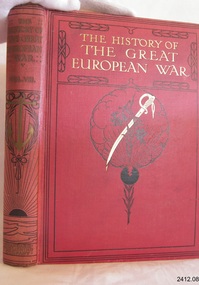
Book - Reference/History, W Stanley Macbean Knight, The History of the Great European War Set 1 Vol 8, 1914-1920
... Born in Marylebone, son of William Richard Irwin Knight, he studied at Oxford, was admitted as a solicitor in 1893, and became a tutor at New College, Oxford. ...Born in Marylebone, son of William Richard Irwin Knight, he studied at Oxford, was admitted as a solicitor in 1893, and became a tutor at New College, Oxford. ...This set is a contemporary and popular narrative history of WWI, written and published while the war was still happening; the preface is dated 1914, but volumes were issued serially as the war progressed, meaning later volumes covering 1917–18 and the peace were released several years after the first. This is a common format for the period — compare rival serials like The Great War (Hammerton & Wilson) or Collier's The Story of the Great War — publishers issued 'instant history' in subscription parts to a public hungry for authoritative-sounding accounts. The volumes in this set cover the following topics during the First World War: Vol. I — Causes and Effects (1914): Its aims are to explain the political and diplomatic background to the war — the alliance system and the July Crisis — with the outbreak of hostilities in August 1914. Vol. II: Continues into the opening campaigns of 1914 (per Internet Archive, 'Vol 2 of 10', contemporary account). Vol. III: Descriptions note it as continuing the story of the campaign of the Allies and their mid-war campaigns. Vol. IV: Covers 1916 and the ongoing 1915–16 campaigns; this volume contains a fold-out colour map of the Serbian Retreat and one of the Italian front, featuring the Balkan and Italian theatres of war. Vols. V–VI: Continue the general campaign narrative through 1916–17. Vols. VII–VIII: Cover the later war years, focusing on 1917–18. Vols. IX–X: These volumes cover the war's final phase and the Armistice. Publication of the last volumes continued into the early 1920s, covering the peace settlement at Versailles and its aftermath.Hard Cover Book. History of The Great European War Set 1 Vol 8 Author: W Stanley Macbean Knight Publisher: The Caxton Publishing Company Ltd Clune House, 161 Surrey St, London W.C. Printer: The Standard Publishing Co. 100 Flinders St, Melbourne. Date: Various Volume Subscription Releases 1914 to 1920 Further Information: Red pictorial cloth gilt-lettered boards, each volume illustrated with a coloured frontispiece, black-and-white photographic plates, and fold-out colour maps of various fronts depending on volume(e.g. the Serbian Retreat, the Italian front etc.). Note there are two sets of this publication in the Flagstaff book collection.non-fictionThis set is a contemporary and popular narrative history of WWI, written and published while the war was still happening; the preface is dated 1914, but volumes were issued serially as the war progressed, meaning later volumes covering 1917–18 and the peace were released several years after the first. This is a common format for the period — compare rival serials like The Great War (Hammerton & Wilson) or Collier's The Story of the Great War — publishers issued 'instant history' in subscription parts to a public hungry for authoritative-sounding accounts. The volumes in this set cover the following topics during the First World War: Vol. I — Causes and Effects (1914): Its aims are to explain the political and diplomatic background to the war — the alliance system and the July Crisis — with the outbreak of hostilities in August 1914. Vol. II: Continues into the opening campaigns of 1914 (per Internet Archive, 'Vol 2 of 10', contemporary account). Vol. III: Descriptions note it as continuing the story of the campaign of the Allies and their mid-war campaigns. Vol. IV: Covers 1916 and the ongoing 1915–16 campaigns; this volume contains a fold-out colour map of the Serbian Retreat and one of the Italian front, featuring the Balkan and Italian theatres of war. Vols. V–VI: Continue the general campaign narrative through 1916–17. Vols. VII–VIII: Cover the later war years, focusing on 1917–18. Vols. IX–X: These volumes cover the war's final phase and the Armistice. Publication of the last volumes continued into the early 1920s, covering the peace settlement at Versailles and its aftermath.flagstaff hill, warrnambool, shipwrecked-coast, flagstaff-hill, flagstaff-hill-maritime-museum, maritime-museum, shipwreck-coast, flagstaff-hill-maritime-village, book, the history of the great european war vol 1 set 1, the history of the great european war, caxton printers -
 Flagstaff Hill Maritime Museum and Village
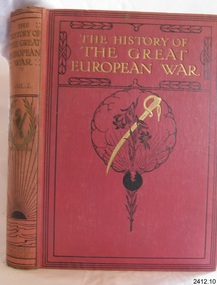
Book - Reference/History, W Stanley Macbean Knight, The History of the Great European War Set 2 Vol 1, 1914-1920
... Born in Marylebone, son of William Richard Irwin Knight, he studied at Oxford, was admitted as a solicitor in 1893, and became a tutor at New College, Oxford. ...Born in Marylebone, son of William Richard Irwin Knight, he studied at Oxford, was admitted as a solicitor in 1893, and became a tutor at New College, Oxford. ...This set is a contemporary and popular narrative history of WWI, written and published while the war was still happening; the preface is dated 1914, but volumes were issued serially as the war progressed, meaning later volumes covering 1917–18 and the peace were released several years after the first. This is a common format for the period — compare rival serials like The Great War (Hammerton & Wilson) or Collier's The Story of the Great War — publishers issued 'instant history' in subscription parts to a public hungry for authoritative-sounding accounts. The volumes in this set cover the following topics during the First World War: Vol. I — Causes and Effects (1914): Its aims are to explain the political and diplomatic background to the war — the alliance system and the July Crisis — with the outbreak of hostilities in August 1914. Vol. II: Continues into the opening campaigns of 1914 (per Internet Archive, 'Vol 2 of 10', contemporary account). Vol. III: Descriptions note it as continuing the story of the campaign of the Allies and their mid-war campaigns. Vol. IV: Covers 1916 and the ongoing 1915–16 campaigns; this volume contains a fold-out colour map of the Serbian Retreat and one of the Italian front, featuring the Balkan and Italian theatres of war. Vols. V–VI: Continue the general campaign narrative through 1916–17. Vols. VII–VIII: Cover the later war years, focusing on 1917–18. Vols. IX–X: These volumes cover the war's final phase and the Armistice. Publication of the last volumes continued into the early 1920s, covering the peace settlement at Versailles and its aftermath.Hard Cover Book. History of The Great European War Set 2 Vol 1 Author: W Stanley Macbean Knight Publisher: The Caxton Publishing Company Ltd Clune House, 161 Surrey St, London W.C. Printer: The Standard Publishing Co. 100 Flinders St, Melbourne. Date: Various Volume Subscription Releases 1914 to 1920 Further Information: Red pictorial cloth gilt-lettered boards, each volume illustrated with a coloured frontispiece, black-and-white photographic plates, and fold-out colour maps of various fronts depending on volume(e.g. the Serbian Retreat, the Italian front etc.). Note there are two sets of this publication in the Flagstaff book collection.non-fictionThis set is a contemporary and popular narrative history of WWI, written and published while the war was still happening; the preface is dated 1914, but volumes were issued serially as the war progressed, meaning later volumes covering 1917–18 and the peace were released several years after the first. This is a common format for the period — compare rival serials like The Great War (Hammerton & Wilson) or Collier's The Story of the Great War — publishers issued 'instant history' in subscription parts to a public hungry for authoritative-sounding accounts. The volumes in this set cover the following topics during the First World War: Vol. I — Causes and Effects (1914): Its aims are to explain the political and diplomatic background to the war — the alliance system and the July Crisis — with the outbreak of hostilities in August 1914. Vol. II: Continues into the opening campaigns of 1914 (per Internet Archive, 'Vol 2 of 10', contemporary account). Vol. III: Descriptions note it as continuing the story of the campaign of the Allies and their mid-war campaigns. Vol. IV: Covers 1916 and the ongoing 1915–16 campaigns; this volume contains a fold-out colour map of the Serbian Retreat and one of the Italian front, featuring the Balkan and Italian theatres of war. Vols. V–VI: Continue the general campaign narrative through 1916–17. Vols. VII–VIII: Cover the later war years, focusing on 1917–18. Vols. IX–X: These volumes cover the war's final phase and the Armistice. Publication of the last volumes continued into the early 1920s, covering the peace settlement at Versailles and its aftermath.flagstaff hill, warrnambool, shipwrecked-coast, flagstaff-hill, flagstaff-hill-maritime-museum, maritime-museum, shipwreck-coast, flagstaff-hill-maritime-village, book, the history of the great european war vol 1 set 1, the history of the great european war, caxton printers -
 Flagstaff Hill Maritime Museum and Village
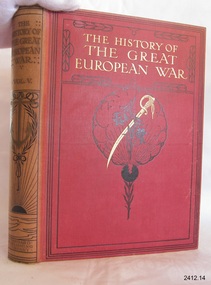
Book - Reference/History, W Stanley Macbean Knight, The History of the Great European War Set 2 Vol 5, 1914-1920
... Born in Marylebone, son of William Richard Irwin Knight, he studied at Oxford, was admitted as a solicitor in 1893, and became a tutor at New College, Oxford. ...Born in Marylebone, son of William Richard Irwin Knight, he studied at Oxford, was admitted as a solicitor in 1893, and became a tutor at New College, Oxford. ...This set is a contemporary and popular narrative history of WWI, written and published while the war was still happening; the preface is dated 1914, but volumes were issued serially as the war progressed, meaning later volumes covering 1917–18 and the peace were released several years after the first. This is a common format for the period — compare rival serials like The Great War (Hammerton & Wilson) or Collier's The Story of the Great War — publishers issued 'instant history' in subscription parts to a public hungry for authoritative-sounding accounts. The volumes in this set cover the following topics during the First World War: Vol. I — Causes and Effects (1914): Its aims are to explain the political and diplomatic background to the war — the alliance system and the July Crisis — with the outbreak of hostilities in August 1914. Vol. II: Continues into the opening campaigns of 1914 (per Internet Archive, 'Vol 2 of 10', contemporary account). Vol. III: Descriptions note it as continuing the story of the campaign of the Allies and their mid-war campaigns. Vol. IV: Covers 1916 and the ongoing 1915–16 campaigns; this volume contains a fold-out colour map of the Serbian Retreat and one of the Italian front, featuring the Balkan and Italian theatres of war. Vols. V–VI: Continue the general campaign narrative through 1916–17. Vols. VII–VIII: Cover the later war years, focusing on 1917–18. Vols. IX–X: These volumes cover the war's final phase and the Armistice. Publication of the last volumes continued into the early 1920s, covering the peace settlement at Versailles and its aftermath.Hard Cover Book. History of The Great European War Set 2 Vol 5 Author: W Stanley Macbean Knight Publisher: The Caxton Publishing Company Ltd Clune House, 161 Surrey St, London W.C. Printer: The Standard Publishing Co. 100 Flinders St, Melbourne. Date: Various Volume Subscription Releases 1914 to 1920 Further Information: Red pictorial cloth gilt-lettered boards, each volume illustrated with a coloured frontispiece, black-and-white photographic plates, and fold-out colour maps of various fronts depending on volume(e.g. the Serbian Retreat, the Italian front etc.). Note there are two sets of this publication in the Flagstaff book collection.non-fictionThis set is a contemporary and popular narrative history of WWI, written and published while the war was still happening; the preface is dated 1914, but volumes were issued serially as the war progressed, meaning later volumes covering 1917–18 and the peace were released several years after the first. This is a common format for the period — compare rival serials like The Great War (Hammerton & Wilson) or Collier's The Story of the Great War — publishers issued 'instant history' in subscription parts to a public hungry for authoritative-sounding accounts. The volumes in this set cover the following topics during the First World War: Vol. I — Causes and Effects (1914): Its aims are to explain the political and diplomatic background to the war — the alliance system and the July Crisis — with the outbreak of hostilities in August 1914. Vol. II: Continues into the opening campaigns of 1914 (per Internet Archive, 'Vol 2 of 10', contemporary account). Vol. III: Descriptions note it as continuing the story of the campaign of the Allies and their mid-war campaigns. Vol. IV: Covers 1916 and the ongoing 1915–16 campaigns; this volume contains a fold-out colour map of the Serbian Retreat and one of the Italian front, featuring the Balkan and Italian theatres of war. Vols. V–VI: Continue the general campaign narrative through 1916–17. Vols. VII–VIII: Cover the later war years, focusing on 1917–18. Vols. IX–X: These volumes cover the war's final phase and the Armistice. Publication of the last volumes continued into the early 1920s, covering the peace settlement at Versailles and its aftermath.flagstaff hill, warrnambool, shipwrecked-coast, flagstaff-hill, flagstaff-hill-maritime-museum, maritime-museum, shipwreck-coast, flagstaff-hill-maritime-village, book, the history of the great european war vol 1 set 1, the history of the great european war, caxton printers -
 Flagstaff Hill Maritime Museum and Village
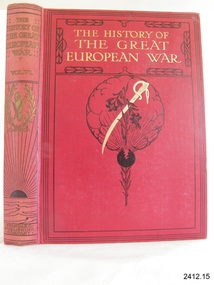
Book - Reference/History, W Stanley Macbean Knight, The History of the Great European War Set 2 Vol 6, 1914-1920
... Born in Marylebone, son of William Richard Irwin Knight, he studied at Oxford, was admitted as a solicitor in 1893, and became a tutor at New College, Oxford. ...Born in Marylebone, son of William Richard Irwin Knight, he studied at Oxford, was admitted as a solicitor in 1893, and became a tutor at New College, Oxford. ...This set is a contemporary and popular narrative history of WWI, written and published while the war was still happening; the preface is dated 1914, but volumes were issued serially as the war progressed, meaning later volumes covering 1917–18 and the peace were released several years after the first. This is a common format for the period — compare rival serials like The Great War (Hammerton & Wilson) or Collier's The Story of the Great War — publishers issued 'instant history' in subscription parts to a public hungry for authoritative-sounding accounts. The volumes in this set cover the following topics during the First World War: Vol. I — Causes and Effects (1914): Its aims are to explain the political and diplomatic background to the war — the alliance system and the July Crisis — with the outbreak of hostilities in August 1914. Vol. II: Continues into the opening campaigns of 1914 (per Internet Archive, 'Vol 2 of 10', contemporary account). Vol. III: Descriptions note it as continuing the story of the campaign of the Allies and their mid-war campaigns. Vol. IV: Covers 1916 and the ongoing 1915–16 campaigns; this volume contains a fold-out colour map of the Serbian Retreat and one of the Italian front, featuring the Balkan and Italian theatres of war. Vols. V–VI: Continue the general campaign narrative through 1916–17. Vols. VII–VIII: Cover the later war years, focusing on 1917–18. Vols. IX–X: These volumes cover the war's final phase and the Armistice. Publication of the last volumes continued into the early 1920s, covering the peace settlement at Versailles and its aftermath.Hard Cover Book. History of The Great European War Set 2 Vol 6 Author: W Stanley Macbean Knight Publisher: The Caxton Publishing Company Ltd Clune House, 161 Surrey St, London W.C. Printer: The Standard Publishing Co. 100 Flinders St, Melbourne. Date: Various Volume Subscription Releases 1914 to 1920 Further Information: Red pictorial cloth gilt-lettered boards, each volume illustrated with a coloured frontispiece, black-and-white photographic plates, and fold-out colour maps of various fronts depending on volume(e.g. the Serbian Retreat, the Italian front etc.). Note there are two sets of this publication in the Flagstaff book collection.non-fictionThis set is a contemporary and popular narrative history of WWI, written and published while the war was still happening; the preface is dated 1914, but volumes were issued serially as the war progressed, meaning later volumes covering 1917–18 and the peace were released several years after the first. This is a common format for the period — compare rival serials like The Great War (Hammerton & Wilson) or Collier's The Story of the Great War — publishers issued 'instant history' in subscription parts to a public hungry for authoritative-sounding accounts. The volumes in this set cover the following topics during the First World War: Vol. I — Causes and Effects (1914): Its aims are to explain the political and diplomatic background to the war — the alliance system and the July Crisis — with the outbreak of hostilities in August 1914. Vol. II: Continues into the opening campaigns of 1914 (per Internet Archive, 'Vol 2 of 10', contemporary account). Vol. III: Descriptions note it as continuing the story of the campaign of the Allies and their mid-war campaigns. Vol. IV: Covers 1916 and the ongoing 1915–16 campaigns; this volume contains a fold-out colour map of the Serbian Retreat and one of the Italian front, featuring the Balkan and Italian theatres of war. Vols. V–VI: Continue the general campaign narrative through 1916–17. Vols. VII–VIII: Cover the later war years, focusing on 1917–18. Vols. IX–X: These volumes cover the war's final phase and the Armistice. Publication of the last volumes continued into the early 1920s, covering the peace settlement at Versailles and its aftermath.flagstaff hill, warrnambool, shipwrecked-coast, flagstaff-hill, flagstaff-hill-maritime-museum, maritime-museum, shipwreck-coast, flagstaff-hill-maritime-village, book, the history of the great european war vol 1 set 1, the history of the great european war, caxton printers -
 Flagstaff Hill Maritime Museum and Village
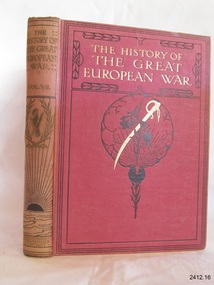
Book - Reference/History, W Stanley Macbean Knight, The History of the Great European War Set 2 Vol 7, 1914-1920
... Born in Marylebone, son of William Richard Irwin Knight, he studied at Oxford, was admitted as a solicitor in 1893, and became a tutor at New College, Oxford. ...Born in Marylebone, son of William Richard Irwin Knight, he studied at Oxford, was admitted as a solicitor in 1893, and became a tutor at New College, Oxford. ...This set is a contemporary and popular narrative history of WWI, written and published while the war was still happening; the preface is dated 1914, but volumes were issued serially as the war progressed, meaning later volumes covering 1917–18 and the peace were released several years after the first. This is a common format for the period — compare rival serials like The Great War (Hammerton & Wilson) or Collier's The Story of the Great War — publishers issued 'instant history' in subscription parts to a public hungry for authoritative-sounding accounts. The volumes in this set cover the following topics during the First World War: Vol. I — Causes and Effects (1914): Its aims are to explain the political and diplomatic background to the war — the alliance system and the July Crisis — with the outbreak of hostilities in August 1914. Vol. II: Continues into the opening campaigns of 1914 (per Internet Archive, 'Vol 2 of 10', contemporary account). Vol. III: Descriptions note it as continuing the story of the campaign of the Allies and their mid-war campaigns. Vol. IV: Covers 1916 and the ongoing 1915–16 campaigns; this volume contains a fold-out colour map of the Serbian Retreat and one of the Italian front, featuring the Balkan and Italian theatres of war. Vols. V–VI: Continue the general campaign narrative through 1916–17. Vols. VII–VIII: Cover the later war years, focusing on 1917–18. Vols. IX–X: These volumes cover the war's final phase and the Armistice. Publication of the last volumes continued into the early 1920s, covering the peace settlement at Versailles and its aftermath.Hard Cover Book. History of The Great European War Set 2 Vol 7 Author: W Stanley Macbean Knight Publisher: The Caxton Publishing Company Ltd Clune House, 161 Surrey St, London W.C. Printer: The Standard Publishing Co. 100 Flinders St, Melbourne. Date: Various Volume Subscription Releases 1914 to 1920 Further Information: Red pictorial cloth gilt-lettered boards, each volume illustrated with a coloured frontispiece, black-and-white photographic plates, and fold-out colour maps of various fronts depending on volume(e.g. the Serbian Retreat, the Italian front etc.). Note there are two sets of this publication in the Flagstaff book collection.non-fictionThis set is a contemporary and popular narrative history of WWI, written and published while the war was still happening; the preface is dated 1914, but volumes were issued serially as the war progressed, meaning later volumes covering 1917–18 and the peace were released several years after the first. This is a common format for the period — compare rival serials like The Great War (Hammerton & Wilson) or Collier's The Story of the Great War — publishers issued 'instant history' in subscription parts to a public hungry for authoritative-sounding accounts. The volumes in this set cover the following topics during the First World War: Vol. I — Causes and Effects (1914): Its aims are to explain the political and diplomatic background to the war — the alliance system and the July Crisis — with the outbreak of hostilities in August 1914. Vol. II: Continues into the opening campaigns of 1914 (per Internet Archive, 'Vol 2 of 10', contemporary account). Vol. III: Descriptions note it as continuing the story of the campaign of the Allies and their mid-war campaigns. Vol. IV: Covers 1916 and the ongoing 1915–16 campaigns; this volume contains a fold-out colour map of the Serbian Retreat and one of the Italian front, featuring the Balkan and Italian theatres of war. Vols. V–VI: Continue the general campaign narrative through 1916–17. Vols. VII–VIII: Cover the later war years, focusing on 1917–18. Vols. IX–X: These volumes cover the war's final phase and the Armistice. Publication of the last volumes continued into the early 1920s, covering the peace settlement at Versailles and its aftermath.flagstaff hill, warrnambool, shipwrecked-coast, flagstaff-hill, flagstaff-hill-maritime-museum, maritime-museum, shipwreck-coast, flagstaff-hill-maritime-village, book, the history of the great european war vol 1 set 1, the history of the great european war, caxton printers -
 Flagstaff Hill Maritime Museum and Village
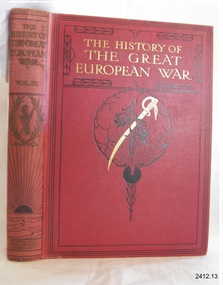
Book - Reference/History, W Stanley Macbean Knight, The History of the Great European War Set 2 Vol 4, 1914-1920
... Born in Marylebone, son of William Richard Irwin Knight, he studied at Oxford, was admitted as a solicitor in 1893, and became a tutor at New College, Oxford. ...Born in Marylebone, son of William Richard Irwin Knight, he studied at Oxford, was admitted as a solicitor in 1893, and became a tutor at New College, Oxford. ...This set is a contemporary and popular narrative history of WWI, written and published while the war was still happening; the preface is dated 1914, but volumes were issued serially as the war progressed, meaning later volumes covering 1917–18 and the peace were released several years after the first. This is a common format for the period — compare rival serials like The Great War (Hammerton & Wilson) or Collier's The Story of the Great War — publishers issued 'instant history' in subscription parts to a public hungry for authoritative-sounding accounts. The volumes in this set cover the following topics during the First World War: Vol. I — Causes and Effects (1914): Its aims are to explain the political and diplomatic background to the war — the alliance system and the July Crisis — with the outbreak of hostilities in August 1914. Vol. II: Continues into the opening campaigns of 1914 (per Internet Archive, 'Vol 2 of 10', contemporary account). Vol. III: Descriptions note it as continuing the story of the campaign of the Allies and their mid-war campaigns. Vol. IV: Covers 1916 and the ongoing 1915–16 campaigns; this volume contains a fold-out colour map of the Serbian Retreat and one of the Italian front, featuring the Balkan and Italian theatres of war. Vols. V–VI: Continue the general campaign narrative through 1916–17. Vols. VII–VIII: Cover the later war years, focusing on 1917–18. Vols. IX–X: These volumes cover the war's final phase and the Armistice. Publication of the last volumes continued into the early 1920s, covering the peace settlement at Versailles and its aftermath.Hard Cover Book. History of The Great European War Set 2 Vol 4 Author: W Stanley Macbean Knight Publisher: The Caxton Publishing Company Ltd Clune House, 161 Surrey St, London W.C. Printer: The Standard Publishing Co. 100 Flinders St, Melbourne. Date: Various Volume Subscription Releases 1914 to 1920 Further Information: Red pictorial cloth gilt-lettered boards, each volume illustrated with a coloured frontispiece, black-and-white photographic plates, and fold-out colour maps of various fronts depending on volume(e.g. the Serbian Retreat, the Italian front etc.). Note there are two sets of this publication in the Flagstaff book collection.non-fictionThis set is a contemporary and popular narrative history of WWI, written and published while the war was still happening; the preface is dated 1914, but volumes were issued serially as the war progressed, meaning later volumes covering 1917–18 and the peace were released several years after the first. This is a common format for the period — compare rival serials like The Great War (Hammerton & Wilson) or Collier's The Story of the Great War — publishers issued 'instant history' in subscription parts to a public hungry for authoritative-sounding accounts. The volumes in this set cover the following topics during the First World War: Vol. I — Causes and Effects (1914): Its aims are to explain the political and diplomatic background to the war — the alliance system and the July Crisis — with the outbreak of hostilities in August 1914. Vol. II: Continues into the opening campaigns of 1914 (per Internet Archive, 'Vol 2 of 10', contemporary account). Vol. III: Descriptions note it as continuing the story of the campaign of the Allies and their mid-war campaigns. Vol. IV: Covers 1916 and the ongoing 1915–16 campaigns; this volume contains a fold-out colour map of the Serbian Retreat and one of the Italian front, featuring the Balkan and Italian theatres of war. Vols. V–VI: Continue the general campaign narrative through 1916–17. Vols. VII–VIII: Cover the later war years, focusing on 1917–18. Vols. IX–X: These volumes cover the war's final phase and the Armistice. Publication of the last volumes continued into the early 1920s, covering the peace settlement at Versailles and its aftermath.flagstaff hill, warrnambool, shipwrecked-coast, flagstaff-hill, flagstaff-hill-maritime-museum, maritime-museum, shipwreck-coast, flagstaff-hill-maritime-village, book, the history of the great european war vol 1 set 1, the history of the great european war, caxton printers -
 Flagstaff Hill Maritime Museum and Village
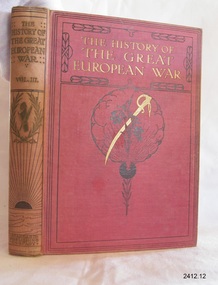
Book - Reference/History, W Stanley Macbean Knight, The History of the Great European War Set 2 Vol 3, 1914-1920
... Born in Marylebone, son of William Richard Irwin Knight, he studied at Oxford, was admitted as a solicitor in 1893, and became a tutor at New College, Oxford. ...Born in Marylebone, son of William Richard Irwin Knight, he studied at Oxford, was admitted as a solicitor in 1893, and became a tutor at New College, Oxford. ...This set is a contemporary and popular narrative history of WWI, written and published while the war was still happening; the preface is dated 1914, but volumes were issued serially as the war progressed, meaning later volumes covering 1917–18 and the peace were released several years after the first. This is a common format for the period — compare rival serials like The Great War (Hammerton & Wilson) or Collier's The Story of the Great War — publishers issued 'instant history' in subscription parts to a public hungry for authoritative-sounding accounts. The volumes in this set cover the following topics during the First World War: Vol. I — Causes and Effects (1914): Its aims are to explain the political and diplomatic background to the war — the alliance system and the July Crisis — with the outbreak of hostilities in August 1914. Vol. II: Continues into the opening campaigns of 1914 (per Internet Archive, 'Vol 2 of 10', contemporary account). Vol. III: Descriptions note it as continuing the story of the campaign of the Allies and their mid-war campaigns. Vol. IV: Covers 1916 and the ongoing 1915–16 campaigns; this volume contains a fold-out colour map of the Serbian Retreat and one of the Italian front, featuring the Balkan and Italian theatres of war. Vols. V–VI: Continue the general campaign narrative through 1916–17. Vols. VII–VIII: Cover the later war years, focusing on 1917–18. Vols. IX–X: These volumes cover the war's final phase and the Armistice. Publication of the last volumes continued into the early 1920s, covering the peace settlement at Versailles and its aftermath.Hard Cover Book. History of The Great European War Set 2 Vol 3 Author: W Stanley Macbean Knight Publisher: The Caxton Publishing Company Ltd Clune House, 161 Surrey St, London W.C. Printer: The Standard Publishing Co. 100 Flinders St, Melbourne. Date: Various Volume Subscription Releases 1914 to 1920 Further Information: Red pictorial cloth gilt-lettered boards, each volume illustrated with a coloured frontispiece, black-and-white photographic plates, and fold-out colour maps of various fronts depending on volume(e.g. the Serbian Retreat, the Italian front etc.). Note there are two sets of this publication in the Flagstaff book collection.non-fictionThis set is a contemporary and popular narrative history of WWI, written and published while the war was still happening; the preface is dated 1914, but volumes were issued serially as the war progressed, meaning later volumes covering 1917–18 and the peace were released several years after the first. This is a common format for the period — compare rival serials like The Great War (Hammerton & Wilson) or Collier's The Story of the Great War — publishers issued 'instant history' in subscription parts to a public hungry for authoritative-sounding accounts. The volumes in this set cover the following topics during the First World War: Vol. I — Causes and Effects (1914): Its aims are to explain the political and diplomatic background to the war — the alliance system and the July Crisis — with the outbreak of hostilities in August 1914. Vol. II: Continues into the opening campaigns of 1914 (per Internet Archive, 'Vol 2 of 10', contemporary account). Vol. III: Descriptions note it as continuing the story of the campaign of the Allies and their mid-war campaigns. Vol. IV: Covers 1916 and the ongoing 1915–16 campaigns; this volume contains a fold-out colour map of the Serbian Retreat and one of the Italian front, featuring the Balkan and Italian theatres of war. Vols. V–VI: Continue the general campaign narrative through 1916–17. Vols. VII–VIII: Cover the later war years, focusing on 1917–18. Vols. IX–X: These volumes cover the war's final phase and the Armistice. Publication of the last volumes continued into the early 1920s, covering the peace settlement at Versailles and its aftermath.flagstaff hill, warrnambool, shipwrecked-coast, flagstaff-hill, flagstaff-hill-maritime-museum, maritime-museum, shipwreck-coast, flagstaff-hill-maritime-village, book, the history of the great european war vol 1 set 1, the history of the great european war, caxton printers -
 Flagstaff Hill Maritime Museum and Village
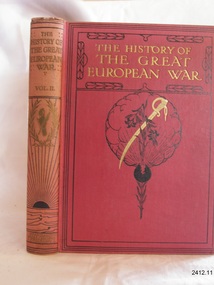
Book - Reference/History, W Stanley Macbean Knight, The History of the Great European War Set 2 Vol 2, 1914-1920
... Born in Marylebone, son of William Richard Irwin Knight, he studied at Oxford, was admitted as a solicitor in 1893, and became a tutor at New College, Oxford. ...Born in Marylebone, son of William Richard Irwin Knight, he studied at Oxford, was admitted as a solicitor in 1893, and became a tutor at New College, Oxford. ...This set is a contemporary and popular narrative history of WWI, written and published while the war was still happening; the preface is dated 1914, but volumes were issued serially as the war progressed, meaning later volumes covering 1917–18 and the peace were released several years after the first. This is a common format for the period — compare rival serials like The Great War (Hammerton & Wilson) or Collier's The Story of the Great War — publishers issued 'instant history' in subscription parts to a public hungry for authoritative-sounding accounts. The volumes in this set cover the following topics during the First World War: Vol. I — Causes and Effects (1914): Its aims are to explain the political and diplomatic background to the war — the alliance system and the July Crisis — with the outbreak of hostilities in August 1914. Vol. II: Continues into the opening campaigns of 1914 (per Internet Archive, 'Vol 2 of 10', contemporary account). Vol. III: Descriptions note it as continuing the story of the campaign of the Allies and their mid-war campaigns. Vol. IV: Covers 1916 and the ongoing 1915–16 campaigns; this volume contains a fold-out colour map of the Serbian Retreat and one of the Italian front, featuring the Balkan and Italian theatres of war. Vols. V–VI: Continue the general campaign narrative through 1916–17. Vols. VII–VIII: Cover the later war years, focusing on 1917–18. Vols. IX–X: These volumes cover the war's final phase and the Armistice. Publication of the last volumes continued into the early 1920s, covering the peace settlement at Versailles and its aftermath.Hard Cover Book. History of The Great European War Set 2 Vol 2 Author: W Stanley Macbean Knight Publisher: The Caxton Publishing Company Ltd Clune House, 161 Surrey St, London W.C. Printer: The Standard Publishing Co. 100 Flinders St, Melbourne. Date: Various Volume Subscription Releases 1914 to 1920 Further Information: Red pictorial cloth gilt-lettered boards, each volume illustrated with a coloured frontispiece, black-and-white photographic plates, and fold-out colour maps of various fronts depending on volume(e.g. the Serbian Retreat, the Italian front etc.). Note there are two sets of this publication in the Flagstaff book collection.non-fictionThis set is a contemporary and popular narrative history of WWI, written and published while the war was still happening; the preface is dated 1914, but volumes were issued serially as the war progressed, meaning later volumes covering 1917–18 and the peace were released several years after the first. This is a common format for the period — compare rival serials like The Great War (Hammerton & Wilson) or Collier's The Story of the Great War — publishers issued 'instant history' in subscription parts to a public hungry for authoritative-sounding accounts. The volumes in this set cover the following topics during the First World War: Vol. I — Causes and Effects (1914): Its aims are to explain the political and diplomatic background to the war — the alliance system and the July Crisis — with the outbreak of hostilities in August 1914. Vol. II: Continues into the opening campaigns of 1914 (per Internet Archive, 'Vol 2 of 10', contemporary account). Vol. III: Descriptions note it as continuing the story of the campaign of the Allies and their mid-war campaigns. Vol. IV: Covers 1916 and the ongoing 1915–16 campaigns; this volume contains a fold-out colour map of the Serbian Retreat and one of the Italian front, featuring the Balkan and Italian theatres of war. Vols. V–VI: Continue the general campaign narrative through 1916–17. Vols. VII–VIII: Cover the later war years, focusing on 1917–18. Vols. IX–X: These volumes cover the war's final phase and the Armistice. Publication of the last volumes continued into the early 1920s, covering the peace settlement at Versailles and its aftermath.flagstaff hill, warrnambool, shipwrecked-coast, flagstaff-hill, flagstaff-hill-maritime-museum, maritime-museum, shipwreck-coast, flagstaff-hill-maritime-village, book, the history of the great european war vol 1 set 1, the history of the great european war, caxton printers -
 Flagstaff Hill Maritime Museum and Village
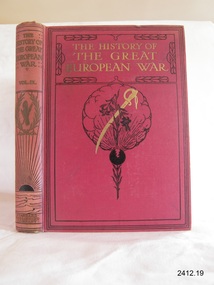
Book - Reference/History, W Stanley Macbean Knight, The History of the Great European War Vol 9 set 2-2, 1914-1920
... Born in Marylebone, son of William Richard Irwin Knight, he studied at Oxford, was admitted as a solicitor in 1893, and became a tutor at New College, Oxford. ...Born in Marylebone, son of William Richard Irwin Knight, he studied at Oxford, was admitted as a solicitor in 1893, and became a tutor at New College, Oxford. ...This set is a contemporary and popular narrative history of WWI, written and published while the war was still happening; the preface is dated 1914, but volumes were issued serially as the war progressed, meaning later volumes covering 1917–18 and the peace were released several years after the first. This is a common format for the period — compare rival serials like The Great War (Hammerton & Wilson) or Collier's The Story of the Great War — publishers issued 'instant history' in subscription parts to a public hungry for authoritative-sounding accounts. The volumes in this set cover the following topics during the First World War: Vol. I — Causes and Effects (1914): Its aims are to explain the political and diplomatic background to the war — the alliance system and the July Crisis — with the outbreak of hostilities in August 1914. Vol. II: Continues into the opening campaigns of 1914 (per Internet Archive, 'Vol 2 of 10', contemporary account). Vol. III: Descriptions note it as continuing the story of the campaign of the Allies and their mid-war campaigns. Vol. IV: Covers 1916 and the ongoing 1915–16 campaigns; this volume contains a fold-out colour map of the Serbian Retreat and one of the Italian front, featuring the Balkan and Italian theatres of war. Vols. V–VI: Continue the general campaign narrative through 1916–17. Vols. VII–VIII: Cover the later war years, focusing on 1917–18. Vols. IX–X: These volumes cover the war's final phase and the Armistice. Publication of the last volumes continued into the early 1920s, covering the peace settlement at Versailles and its aftermath.Hard Cover Book. History of The Great European War Vol 9 set 2-2 Author: W Stanley Macbean Knight Publisher: The Caxton Publishing Company Ltd Clune House, 161 Surrey St, London W.C. Printer: The Standard Publishing Co. 100 Flinders St, Melbourne. Date: Various Volume Subscription Releases 1914 to 1920 Further Information: Red pictorial cloth gilt-lettered boards, each volume illustrated with a coloured frontispiece, black-and-white photographic plates, and fold-out colour maps of various fronts depending on volume(e.g. the Serbian Retreat, the Italian front etc.). Note there are two sets of this publication in the Flagstaff book collection.non-fictionThis set is a contemporary and popular narrative history of WWI, written and published while the war was still happening; the preface is dated 1914, but volumes were issued serially as the war progressed, meaning later volumes covering 1917–18 and the peace were released several years after the first. This is a common format for the period — compare rival serials like The Great War (Hammerton & Wilson) or Collier's The Story of the Great War — publishers issued 'instant history' in subscription parts to a public hungry for authoritative-sounding accounts. The volumes in this set cover the following topics during the First World War: Vol. I — Causes and Effects (1914): Its aims are to explain the political and diplomatic background to the war — the alliance system and the July Crisis — with the outbreak of hostilities in August 1914. Vol. II: Continues into the opening campaigns of 1914 (per Internet Archive, 'Vol 2 of 10', contemporary account). Vol. III: Descriptions note it as continuing the story of the campaign of the Allies and their mid-war campaigns. Vol. IV: Covers 1916 and the ongoing 1915–16 campaigns; this volume contains a fold-out colour map of the Serbian Retreat and one of the Italian front, featuring the Balkan and Italian theatres of war. Vols. V–VI: Continue the general campaign narrative through 1916–17. Vols. VII–VIII: Cover the later war years, focusing on 1917–18. Vols. IX–X: These volumes cover the war's final phase and the Armistice. Publication of the last volumes continued into the early 1920s, covering the peace settlement at Versailles and its aftermath.flagstaff hill, warrnambool, shipwrecked-coast, flagstaff-hill, flagstaff-hill-maritime-museum, maritime-museum, shipwreck-coast, flagstaff-hill-maritime-village, book, the history of the great european war vol 1 set 1, the history of the great european war, caxton printers -
 Flagstaff Hill Maritime Museum and Village
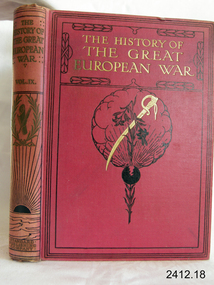
Book - Reference/History, W Stanley Macbean Knight, The History of the Great European War Set 2 Vol 9, 1914-1920
... Born in Marylebone, son of William Richard Irwin Knight, he studied at Oxford, was admitted as a solicitor in 1893, and became a tutor at New College, Oxford. ...Born in Marylebone, son of William Richard Irwin Knight, he studied at Oxford, was admitted as a solicitor in 1893, and became a tutor at New College, Oxford. ...This set is a contemporary and popular narrative history of WWI, written and published while the war was still happening; the preface is dated 1914, but volumes were issued serially as the war progressed, meaning later volumes covering 1917–18 and the peace were released several years after the first. This is a common format for the period — compare rival serials like The Great War (Hammerton & Wilson) or Collier's The Story of the Great War — publishers issued 'instant history' in subscription parts to a public hungry for authoritative-sounding accounts. The volumes in this set cover the following topics during the First World War: Vol. I — Causes and Effects (1914): Its aims are to explain the political and diplomatic background to the war — the alliance system and the July Crisis — with the outbreak of hostilities in August 1914. Vol. II: Continues into the opening campaigns of 1914 (per Internet Archive, 'Vol 2 of 10', contemporary account). Vol. III: Descriptions note it as continuing the story of the campaign of the Allies and their mid-war campaigns. Vol. IV: Covers 1916 and the ongoing 1915–16 campaigns; this volume contains a fold-out colour map of the Serbian Retreat and one of the Italian front, featuring the Balkan and Italian theatres of war. Vols. V–VI: Continue the general campaign narrative through 1916–17. Vols. VII–VIII: Cover the later war years, focusing on 1917–18. Vols. IX–X: These volumes cover the war's final phase and the Armistice. Publication of the last volumes continued into the early 1920s, covering the peace settlement at Versailles and its aftermath.Hard Cover Book. History of The Great European War Set 2 Vol 9 Author: W Stanley Macbean Knight Publisher: The Caxton Publishing Company Ltd Clune House, 161 Surrey St, London W.C. Printer: The Standard Publishing Co. 100 Flinders St, Melbourne. Date: Various Volume Subscription Releases 1914 to 1920 Further Information: Red pictorial cloth gilt-lettered boards, each volume illustrated with a coloured frontispiece, black-and-white photographic plates, and fold-out colour maps of various fronts depending on volume(e.g. the Serbian Retreat, the Italian front etc.). Note there are two sets of this publication in the Flagstaff book collection.non-fictionThis set is a contemporary and popular narrative history of WWI, written and published while the war was still happening; the preface is dated 1914, but volumes were issued serially as the war progressed, meaning later volumes covering 1917–18 and the peace were released several years after the first. This is a common format for the period — compare rival serials like The Great War (Hammerton & Wilson) or Collier's The Story of the Great War — publishers issued 'instant history' in subscription parts to a public hungry for authoritative-sounding accounts. The volumes in this set cover the following topics during the First World War: Vol. I — Causes and Effects (1914): Its aims are to explain the political and diplomatic background to the war — the alliance system and the July Crisis — with the outbreak of hostilities in August 1914. Vol. II: Continues into the opening campaigns of 1914 (per Internet Archive, 'Vol 2 of 10', contemporary account). Vol. III: Descriptions note it as continuing the story of the campaign of the Allies and their mid-war campaigns. Vol. IV: Covers 1916 and the ongoing 1915–16 campaigns; this volume contains a fold-out colour map of the Serbian Retreat and one of the Italian front, featuring the Balkan and Italian theatres of war. Vols. V–VI: Continue the general campaign narrative through 1916–17. Vols. VII–VIII: Cover the later war years, focusing on 1917–18. Vols. IX–X: These volumes cover the war's final phase and the Armistice. Publication of the last volumes continued into the early 1920s, covering the peace settlement at Versailles and its aftermath.flagstaff hill, warrnambool, shipwrecked-coast, flagstaff-hill, flagstaff-hill-maritime-museum, maritime-museum, shipwreck-coast, flagstaff-hill-maritime-village, book, the history of the great european war vol 1 set 1, the history of the great european war, caxton printers -
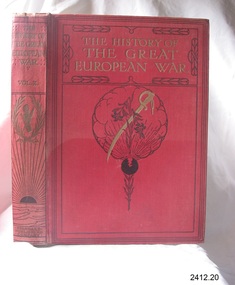 Flagstaff Hill Maritime Museum and Village
Book - Reference/History, W Stanley Macbean Knight, The History of the Great European War Set 2 Vol 10, 1914-1920
... Born in Marylebone, son of William Richard Irwin Knight, he studied at Oxford, was admitted as a solicitor in 1893, and became a tutor at New College, Oxford. ...Born in Marylebone, son of William Richard Irwin Knight, he studied at Oxford, was admitted as a solicitor in 1893, and became a tutor at New College, Oxford. ...This set is a contemporary and popular narrative history of WWI, written and published while the war was still happening; the preface is dated 1914, but volumes were issued serially as the war progressed, meaning later volumes covering 1917–18 and the peace were released several years after the first. This is a common format for the period — compare rival serials like The Great War (Hammerton & Wilson) or Collier's The Story of the Great War — publishers issued 'instant history' in subscription parts to a public hungry for authoritative-sounding accounts. The volumes in this set cover the following topics during the First World War: Vol. I — Causes and Effects (1914): Its aims are to explain the political and diplomatic background to the war — the alliance system and the July Crisis — with the outbreak of hostilities in August 1914. Vol. II: Continues into the opening campaigns of 1914 (per Internet Archive, 'Vol 2 of 10', contemporary account). Vol. III: Descriptions note it as continuing the story of the campaign of the Allies and their mid-war campaigns. Vol. IV: Covers 1916 and the ongoing 1915–16 campaigns; this volume contains a fold-out colour map of the Serbian Retreat and one of the Italian front, featuring the Balkan and Italian theatres of war. Vols. V–VI: Continue the general campaign narrative through 1916–17. Vols. VII–VIII: Cover the later war years, focusing on 1917–18. Vols. IX–X: These volumes cover the war's final phase and the Armistice. Publication of the last volumes continued into the early 1920s, covering the peace settlement at Versailles and its aftermath.Hard Cover Book. History of The Great European War Set 2 Vol 10 Author: W Stanley Macbean Knight Publisher: The Caxton Publishing Company Ltd Clune House, 161 Surrey St, London W.C. Printer: The Standard Publishing Co. 100 Flinders St, Melbourne. Date: Various Volume Subscription Releases 1914 to 1920 Further Information: Red pictorial cloth gilt-lettered boards, each volume illustrated with a coloured frontispiece, black-and-white photographic plates, and fold-out colour maps of various fronts depending on volume(e.g. the Serbian Retreat, the Italian front etc.). Note there are two sets of this publication in the Flagstaff book collection.non-fictionThis set is a contemporary and popular narrative history of WWI, written and published while the war was still happening; the preface is dated 1914, but volumes were issued serially as the war progressed, meaning later volumes covering 1917–18 and the peace were released several years after the first. This is a common format for the period — compare rival serials like The Great War (Hammerton & Wilson) or Collier's The Story of the Great War — publishers issued 'instant history' in subscription parts to a public hungry for authoritative-sounding accounts. The volumes in this set cover the following topics during the First World War: Vol. I — Causes and Effects (1914): Its aims are to explain the political and diplomatic background to the war — the alliance system and the July Crisis — with the outbreak of hostilities in August 1914. Vol. II: Continues into the opening campaigns of 1914 (per Internet Archive, 'Vol 2 of 10', contemporary account). Vol. III: Descriptions note it as continuing the story of the campaign of the Allies and their mid-war campaigns. Vol. IV: Covers 1916 and the ongoing 1915–16 campaigns; this volume contains a fold-out colour map of the Serbian Retreat and one of the Italian front, featuring the Balkan and Italian theatres of war. Vols. V–VI: Continue the general campaign narrative through 1916–17. Vols. VII–VIII: Cover the later war years, focusing on 1917–18. Vols. IX–X: These volumes cover the war's final phase and the Armistice. Publication of the last volumes continued into the early 1920s, covering the peace settlement at Versailles and its aftermath.flagstaff hill, warrnambool, shipwrecked-coast, flagstaff-hill, flagstaff-hill-maritime-museum, maritime-museum, shipwreck-coast, flagstaff-hill-maritime-village, book, the history of the great european war vol 1 set 1, the history of the great european war, caxton printers
