
Showing 48 items matching "wodonga band"
-
 Wodonga & District Historical Society Inc
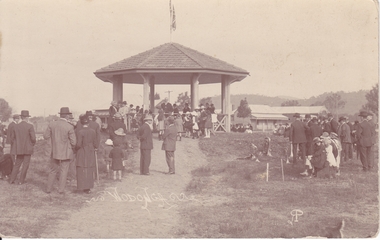
Photograph - Opening of Wodonga Band Rotunda, 1920
... Opening of Wodonga Band Rotunda...Opening of Wodonga Band Rotunda...Wodonga Band Rotunda...The Band Rotunda was officially opened on Sunday 5th September 1920 at the naming of the triangular reserve as Woodland Grove at the corner of High and Hovell Streets. The Wodonga Band gave a public performance on this occasion. ...Two black and white images showing people gathered for the opening of the new band rotunda in Wodonga in 1920....Opening of Wodonga Band Rotunda Photograph Opening of Wodonga Band Rotunda ...The Band Rotunda was officially opened on Sunday 5th September 1920 at the naming of the triangular reserve as Woodland Grove at the corner of High and Hovell Streets. The Wodonga Band gave a public performance on this occasion. The tri-coloured ribbon, which stretched across the entrance to the Rotunda was cut by Mrs R. H. Murphy, daughter of Mr John Woodland, Secretary of the Wodonga Shire Council for 35 years, after whom the area was named. The rotunda has since been moved to Martin Park, Wodonga. This image is one of a collection of photos taken by Robert Prentice. The images are clearly identified as he inscribed in the glass a back-to-front capital R (Я) on to which was joined a capital P creating his mark ЯР.These images are significant as they record an important event in the history of Wodonga.Two black and white images showing people gathered for the opening of the new band rotunda in Wodonga in 1920.On photos Wodonga Initials ЯР wodonga band rotunda, wodonga band, robert prentice -
 Wodonga & District Historical Society Inc
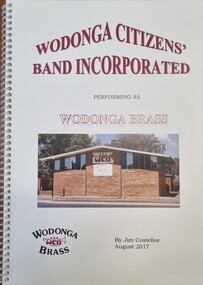
Book - Wodonga Citizens' Band Incorporated, Jim Costelloe, 2017
... Wodonga Citizens' Band Incorporated...Wodonga Citizens' Band Incorporated...Wodonga Citizens' Band Incorporated...This book is significant because it documents the history of an important Wodonga community organisation. Wodonga Citizens' Band Incorporated Wodonga Brass Band Jim Costelloe A history of the Wodonga Citizens' Band from its early days in 1886 until 2017. ...A history of the Wodonga Citizens' Band from its early days in 1886 until 2017. It includes a detailed timeline as well as information about key events and performances, competition achievements, personalities and anecdotes. The publication was compiled by Jim Costelloe who was a Life Member of the Wodonga Brass Band.A spiral bound booklet of 102 pages including text and imagesA history of the Wodonga Citizens' Band from its early days in 1886 until 2017. It includes a detailed timeline as well as information about key events and performances, competition achievements, personalities and anecdotes. The publication was compiled by Jim Costelloe who was a Life Member of the Wodonga Brass Band.wodonga citizens' band incorporated, wodonga brass band, jim costelloe -
 Wodonga & District Historical Society Inc
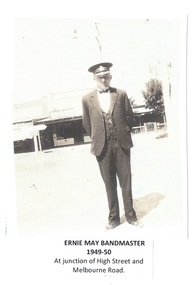
Photograph - Ernie May - Wodonga Bandmaster
... ...Wodonga Band...At that time the Wodonga Band had 30 members. Ernie also conducted his own dance band. ...At that time the Wodonga Band had 30 members. Ernie also conducted his own dance band. ...Born in Hammersmith, London, England in 1903, Ernie May migrated to Australia at the age of 19 years old. A printer by trade, Ernie worked on the land at Woodburn, near Wonthaggi, then near Smithton, Tasmania. He then returned to his trade at the Launceston Daily Telegraph and then with the Rainbow Argus in the Victorian Mallee. Arriving in Wodonga in 1927, Ernie was employed by Mr Charles Ryan who at the time owned the "Wodonga Sentinel" newspaper. He quickly became involved in community activities. Ernie was President of the Border and Northeast Band Association, Secretary of Wodonga Rifle Club for 20 years and Secretary of the Public Library for 15 years. When Ernie May was Wodonga Bandmaster, the Wodonga Band played at Saturday afternoon football matches as well as other public appearances. At that time the Wodonga Band had 30 members. Ernie also conducted his own dance band. In 1952, Mr May and his wife moved to Sale, gaining employment firstly with the Enterprise Press, then the Gippsland Times. In 1957 he started up a monthly paper at Phillip Island. Not content with so many years as Bandmaster at Wodonga, Ernie May became Bandmaster for Phillip Island's brass band. After 50 years in the printing business Ernie and his wife Cicely retired in Cowes, Phillip Island where he passed away on 29th December 1977.These images are significant because they depict a former member of the community who made an important contribution to Wodonga over a period of 25 years.A collection of black and white images of Ernie May, Wodonga Bandmasterernie may, wodonga band, wodonga sentinel -
 Wodonga & District Historical Society Inc
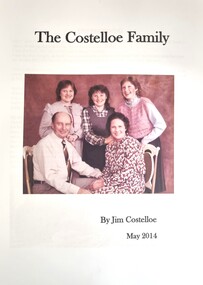
Book - The Costelloe Family, 2014
... ...Wodonga Band...It includes an extensive section on the Wodonga Citizens' Band and the Wodonga Brass Band which Jim joined at 12 years of age in 1948. ...This autobiographical work documents the life of Jim Costelloe and his family. It follows his early life and includes information about his future wife Edna McGuire and their family. Jim discusses his working life with the railways and the Army. It includes an extensive section on the Wodonga Citizens' Band and the Wodonga Brass Band which Jim joined at 12 years of age in 1948. He was Wodonga Brass Band secretary for 37 years and was named Rural City of Wodonga Citizen of the Year for 1989. In 2016 a small park in Wodonga was named the Jim Costelloe Park. He passed away in Wodonga in 2023.A spiral bound publication relating the story of the Costelloe Family of Wodonga featuring text and coloured photos.non-fictionThis autobiographical work documents the life of Jim Costelloe and his family. It follows his early life and includes information about his future wife Edna McGuire and their family. Jim discusses his working life with the railways and the Army. It includes an extensive section on the Wodonga Citizens' Band and the Wodonga Brass Band which Jim joined at 12 years of age in 1948. He was Wodonga Brass Band secretary for 37 years and was named Rural City of Wodonga Citizen of the Year for 1989. In 2016 a small park in Wodonga was named the Jim Costelloe Park. He passed away in Wodonga in 2023.jim costelloe, wodonga band -
 Wodonga & District Historical Society Inc
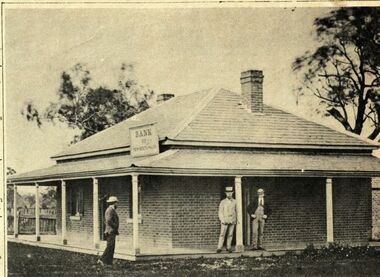
Photograph - Bank of New South Wales, Wodonga
... Organisations banking at the branch included Wodonga Building Society, 1873; Wodonga Mechanics Institute 1875; Wodonga Band Fund 1882; Talgarno Athenaeum, 1888; Talgarno Butter & Cheese Factory 1892; Wodonga Federation League 1893; Wodonga Brass Band 1895; Wodonga Benevolent Society 1895; Wodonga Fire Brigade 1897; Wodonga Rifle Club and Wodonga Racing Club in 1899 and Kiewa Polo Club in 1900. ...Organisations banking at the branch included Wodonga Building Society, 1873; Wodonga Mechanics Institute 1875; Wodonga Band Fund 1882; Talgarno Athenaeum, 1888; Talgarno Butter & Cheese Factory 1892; Wodonga Federation League 1893; Wodonga Brass Band 1895; Wodonga Benevolent Society 1895; Wodonga Fire Brigade 1897; Wodonga Rifle Club and Wodonga Racing Club in 1899 and Kiewa Polo Club in 1900. ...The first Bank of New South Wales building in Wodonga was located in a small cottage. The branch opened on 7 May 1872. At first it was conducted as an agency of the Beechworth branch. In October 1872 premises in Sydney road were purchased from Mr P. L. M. S. Chauncy for £650. When the bank commenced in the cottage the first account was opened in the name of Hillerman & Co, storekeepers, Wodonga. Another early account was in the name of William Huon, squatter of de Kerilleau, Wodonga. On 9 July 1873, the agency was converted into full branch under the management of Mr. Joseph Belcher. Other early accounts included Cronin & Callaghan, storekeepers; John Bassett Jnr, shoemaker; John Jennings, contractor; Ah Soon, tobacco grower, Kergunyah; John de Corney Ireland, collector of customs; Andrew Kyle, fellmonger; Rowan Lockhead, accountant; Alexander McKay, publican; George Pollard, farmer; Thomas Street, farmer; and Edmund Uren, gentleman, Buninyong. Organisations banking at the branch included Wodonga Building Society, 1873; Wodonga Mechanics Institute 1875; Wodonga Band Fund 1882; Talgarno Athenaeum, 1888; Talgarno Butter & Cheese Factory 1892; Wodonga Federation League 1893; Wodonga Brass Band 1895; Wodonga Benevolent Society 1895; Wodonga Fire Brigade 1897; Wodonga Rifle Club and Wodonga Racing Club in 1899 and Kiewa Polo Club in 1900. There were also numerous lodge and church accounts. The cottage was later renovated with a porch added in 1889 and an extension to the residence in 1898. The original house was eventually demolished to make way for a new bank and manager’s residence in Sydney Road in 1906. That building was again remodelled in 1969. It became a branch of the WESTPAC bank when the Bank of NSW and CBA Bank joined to become the Westpac Banking Corporation in 1982. After the building ceased operation as a bank, it has been the home to several businesses including a video store, a travel agency and a clothing store.These images have local significance as they record changes to a building which filled an important role in the commercial life of Wodonga.A series of photos both black and white and coloured which document changes in the former Bank of New South Wales building in Wodonga over time.Photo 1: On sign above verandah "BANK of NEW SOUTH WALES" Photo 2: On sides of building and above door: "BANK OF NEW SOUTH WALES" Photo 3: Above door: "HIRE/ VIDEO MADNESS/ SALES" Photo 4: Above door: "WODONGA TRAVEL"wodonga businesses, banking wodonga, bank nsw wodonga, businesses high street wodonga -
 Wodonga & District Historical Society Inc
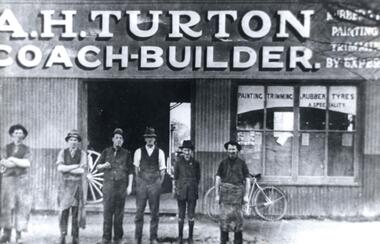
Photograph - Turtons, Wodonga, c1920
... In his earlier years he was actively involved in the fire brigade, including as Secretary, and on the committee of the Wodonga Brass Band. Mr. Turton also served as secretary of the local branch of the Australian Natives Association. ...In his earlier years he was actively involved in the fire brigade, including as Secretary, and on the committee of the Wodonga Brass Band. Mr. Turton also served as secretary of the local branch of the Australian Natives Association. ...Abel Hoyle Turton was born in 1877 and married Hannah Richardson of Barnawartha, Victoria in 1902. He established a wheelwright and coach making business. Mr. Turton also operated a blacksmith business as a side trade. In his earlier years he was actively involved in the fire brigade, including as Secretary, and on the committee of the Wodonga Brass Band. Mr. Turton also served as secretary of the local branch of the Australian Natives Association. In 1912, despite having received a long service medal for the Wodonga Fire Brigade, Turton resigned for the brigade under a cloud after having been accused of insubordination at a fire. The brigade captain Mr. Twomey also resigned. They were both later reinstated. He died in Wodonga on 24 December 1932. After his death, the premises were taken over by George McFarlane who commenced business as a shoeing smith and general blacksmith.This image records the premises of an early 20th century Wodonga business.A black and white photograph of the premises of A. H. Turton, Coach builder of Wodonga as well as 2 newspaper advertisements for this business.Above the store: A. H. TURTON / COACH BUILDER On windows: PAINTING/ TRIMMING/ RUBBER TYRES A SPECIALITYwodonga businesses, a. h. turton, turton wheelwright wodonga -
 Wodonga & District Historical Society Inc
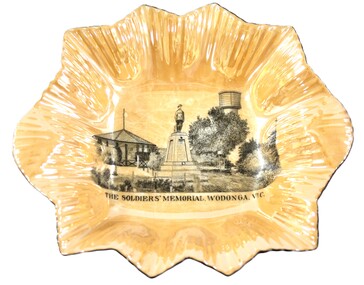
Memorabilia - Woodland Grove Souvenir dish c1920, RKG, c. 1921 - 1938
... ROTUNDA was officially opened on Sunday 5th September 1920 at the naming of the triangular reserve at the corner of High and Hovell Streets as Woodland Grove. The Wodonga Band gave a public performance on this occasion. ... ROTUNDA was officially opened on Sunday 5th September 1920 at the naming of the triangular reserve at the corner of High and Hovell Streets as Woodland Grove. The Wodonga Band gave a public performance on this occasion. ...A wide range of souvenirs have been produced to commemorate Wodonga and its landmarks over time. These items document key changes in Wodonga and its heritage. The producers mark on the plate was used by the company RKG Czechoslovakia between 1921 and 1938 This plate depicts three key landmarks in Wodonga. THE SOLDIERS' MEMORIAL in Wodonga was unveiled on Tuesday 18th November 1924. It was designed by Messrs. Hosken & Co., of Hawthorn, Victoria. The monument is all of Australian workmanship. The pedestal is made of Harcourt granite, 9ft x 9ft at the base, and rising in seven courses to a height of 10ft 2in. The emblems (rising sun and wreath) are of bronze, and the lettering of the inscription and names of fallen soldiers are in raised lead letters. Originally the Memorial was completed with a full life size, 6ft in height, sculpture of an Australian soldier in Sicilian marble. The memorial bore the inscriptions: ERECTED BY THE RESIDENTS OF WODONGA AND DISTRICT IN MEMORY of the Men of this Town and District who fell in the Great War, 1914-1919, Also in grateful recognition of the men who served and returned. “Lest We Forget.” In 1982, due to frequent vandalism and high cost of materials to repair, the soldier statue was removed and later installed at the RSL Rooms. THE WATER TOWER is a major landmark of High Street, Wodonga. It began operation from 1924 until it ceased operation in 1959. It stood unused for a decade until the lower section was modified and put to use as “ The Tower’s Cobbler’s Inn” in 1962. In 1972 Wodonga City Council proposed to demolish the Tower. Their suggestion received an unfavorable response from the city’s citizens, so the Tower still stands today. THE BAND ROTUNDA was officially opened on Sunday 5th September 1920 at the naming of the triangular reserve at the corner of High and Hovell Streets as Woodland Grove. The Wodonga Band gave a public performance on this occasion. The tri-coloured ribbon, which stretched across the entrance to the Rotunda was cut by Mrs R.H Murphy, daughter of Mr. John Woodland, secretary of the Wodonga Shire Council for 35 years, after whom the area was named. The rotunda has since been moved to Martin Park, Wodonga. Small china pieces carrying scenic views of holiday destinations were a popular kind of souvenir during much of the 20th century. These items have local and social significance as they reflect the landmarks or local features valued by the community over time. An apricot irregular shaped dish made from lustre ware with a drawing of the Wodonga Soldiers Memorial, Water Tower and Rotunda. The manufacturer's mark is imprinted on the base. Text under the image says 'THE SOLDIERS' MEMORIAL. WODONGA. VICManufacturer's trademark printed on base, in orange paint, in a circular formation 'ROYAL SYDNEY CHINA / MADE IN / CZECHOSLOVAKIA', within circular formation '(crown) / RK / G' ('RK / G' within circle with handles).porcelain, wodonga, royal sydney china, soldier memorial, wodonga souvenirs -
 Wodonga & District Historical Society Inc
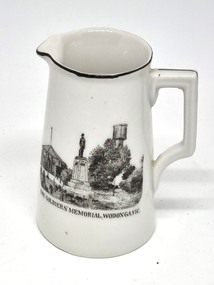
Souvenir - Souvenir Cream Jug - Soldiers' Memorial, Wodonga
... ROTUNDA was officially opened on Sunday 5th September 1920 at the naming of the triangular reserve at the corner of High and Hovell Streets as Woodland Grove. The Wodonga Band gave a public performance on this occasion. ... ROTUNDA was officially opened on Sunday 5th September 1920 at the naming of the triangular reserve at the corner of High and Hovell Streets as Woodland Grove. The Wodonga Band gave a public performance on this occasion. ...This item is from a collection donated by descendants of John Francis Turner of Wodonga. A wide range of small china pieces carrying scenic views of holiday destinations or key locations were a popular kind of souvenir during much of the 20th century. Several different items have been produced to commemorate Wodonga and its landmarks over time. These items document key changes in Wodonga and its heritage. This plate depicts three key landmarks in Wodonga. THE SOLDIERS' MEMORIAL in Wodonga was unveiled on Tuesday 18th November 1924. It was designed by Messrs. Hosken & Co., of Hawthorn, Victoria. The monument is all of Australian workmanship. The pedestal is made of Harcourt granite, 9ft x 9ft at the base, and rising in seven courses to a height of 10ft 2in. The emblems (rising sun and wreath) are of bronze, and the lettering of the inscription and names of fallen soldiers are in raised lead letters. Originally the Memorial was completed with a full life size, 6ft in height, sculpture of an Australian soldier in Sicilian marble. The memorial bore the inscriptions: ERECTED BY THE RESIDENTS OF WODONGA AND DISTRICT IN MEMORY of the Men of this Town and District who fell in the Great War, 1914-1919, Also in grateful recognition of the men who served and returned. “Lest We Forget.” In 1982, due to frequent vandalism and high cost of materials to repair, the soldier statue was removed and later installed at the RSL Rooms. THE WATER TOWER is a major landmark of High Street, Wodonga. It began operation from January 1924 until it ceased operation in 1959. It stood unused for a decade until the lower section was modified and put to use as “ The Tower’s Cobbler’s Inn” in 1962. In 1972 Wodonga City Council proposed to demolish the Tower. Their suggestion received an unfavorable response from the city’s citizens, so the Tower still stands today. THE BAND ROTUNDA was officially opened on Sunday 5th September 1920 at the naming of the triangular reserve at the corner of High and Hovell Streets as Woodland Grove. The Wodonga Band gave a public performance on this occasion. The tri-coloured ribbon, which stretched across the entrance to the Rotunda was cut by Mrs R.H Murphy, daughter of Mr. John Woodland, secretary of the Wodonga Shire Council for 35 years, after whom the area was named. The rotunda has since been moved to Martin Park, Wodonga.This item comes from a collection used by a prominent citizen of Wodonga. It is also an excellent example of souvenir items created featuring landmarks to represent the city of Wodonga.White glazed porcelain cream jug with grooved square handle. The base is unglazed. The rim and outer face of the handle are outlined in black paint. On one side of the jug is a black transfer print of a the Wodonga Soldiers' Memorial. Text underneath the scene reads "THE SOLDIERS' MEMORIAL, WODONGA, VIC."'. The manufacturer's trademark is printed on the base of the jug. RKG stood for Rudolf Kampf of Grunlas. The mark with the initials under the crown was used from 1921 to 1938.Beneath the image: 'THE SOLDIERS' MEMORIAL WODONGA VIC" Under the jug Manufacturer's trademark printed in orange paint, in a circular formation '(crown) / RK / G' ('RK / G' within circle with handles) above the words "Made in Czechoslovakia"domestic items, souvenir wodonga, woodland grove wodonga -
 Wodonga & District Historical Society Inc
Souvenir - China Souvenir Plate Soldiers' Memorial. Wodonga, Victoria China, c1924 - 1939
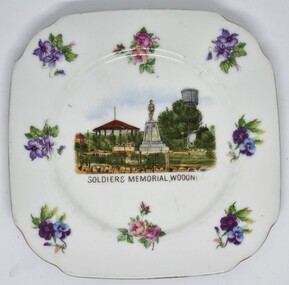
... ROTUNDA was officially opened on Sunday 5th September 1920 at the naming of the triangular reserve at the corner of High and Hovell Streets as Woodland Grove. The Wodonga Band gave a public performance on this occasion. ... ROTUNDA was officially opened on Sunday 5th September 1920 at the naming of the triangular reserve at the corner of High and Hovell Streets as Woodland Grove. The Wodonga Band gave a public performance on this occasion. ...This item is from a collection donated by descendants of John Francis Turner of Wodonga. A wide range of small china pieces carrying scenic views of holiday destinations or key locations were a popular kind of souvenir during much of the 20th century. Several different items have been produced to commemorate Wodonga and its landmarks over time. These items document key changes in Wodonga and its heritage. This plate depicts three key landmarks in Wodonga. THE SOLDIERS' MEMORIAL in Wodonga was unveiled on Tuesday 18th November 1924. It was designed by Messrs. Hosken & Co., of Hawthorn, Victoria. The monument is all of Australian workmanship. The pedestal is made of Harcourt granite, 9ft x 9ft at the base, and rising in seven courses to a height of 10ft 2in. The emblems (rising sun and wreath) are of bronze, and the lettering of the inscription and names of fallen soldiers are in raised lead letters. Originally the Memorial was completed with a full life size, 6ft in height, sculpture of an Australian soldier in Sicilian marble. The memorial bore the inscriptions: ERECTED BY THE RESIDENTS OF WODONGA AND DISTRICT IN MEMORY of the Men of this Town and District who fell in the Great War, 1914-1919, Also in grateful recognition of the men who served and returned. “Lest We Forget.” In 1982, due to frequent vandalism and high cost of materials to repair, the soldier statue was removed and later installed at the RSL Rooms. THE WATER TOWER is a major landmark of High Street, Wodonga. It began operation from January 1924 until it ceased operation in 1959. It stood unused for a decade until the lower section was modified and put to use as “ The Tower’s Cobbler’s Inn” in 1962. In 1972 Wodonga City Council proposed to demolish the Tower. Their suggestion received an unfavorable response from the city’s citizens, so the Tower still stands today. THE BAND ROTUNDA was officially opened on Sunday 5th September 1920 at the naming of the triangular reserve at the corner of High and Hovell Streets as Woodland Grove. The Wodonga Band gave a public performance on this occasion. The tri-coloured ribbon, which stretched across the entrance to the Rotunda was cut by Mrs R.H Murphy, daughter of Mr. John Woodland, secretary of the Wodonga Shire Council for 35 years, after whom the area was named. The rotunda has since been moved to Martin Park, Wodonga.This item comes from a collection used by a prominent citizen of Wodonga. It is also an excellent example of souvenir items created featuring landmarks to represent the city of Wodonga.A china plate depicting the Soldiers' Memorial Wodonga. The central coloured image is surrounded by a 8 representations of a variety of flowers and a silver edge trim. The makers mark underneath the dish was used between 1918 - 1939 so assists in establishing provenance of the irem.Beneath image: "SOLDIERS' MEMORIAL WODONGA On back of dish, Beneath a crown " VICTORIA CHINA CZECHOSLAVAKIA"victoria china, souvenir wodonga, wodonga soldiers memorial, woodland grove wodonga -
 Wodonga & District Historical Society Inc
Memorabilia - China Souvenir Cup Woodland Grove Wodonga, c. 1925 - 1940
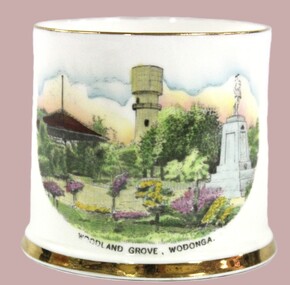
... ROTUNDA was officially opened on Sunday 5th September 1920 at the naming of the triangular reserve at the corner of High and Hovell Streets as Woodland Grove. The Wodonga Band gave a public performance on this occasion. ... ROTUNDA was officially opened on Sunday 5th September 1920 at the naming of the triangular reserve at the corner of High and Hovell Streets as Woodland Grove. The Wodonga Band gave a public performance on this occasion. ...A wide range of small china pieces carrying scenic views of holiday destinations or key locations were a popular kind of souvenir during much of the 20th century. Several different items have been produced to commemorate Wodonga and its landmarks over time. These items document key changes in Wodonga and its heritage. This cup depicts three key landmarks in Wodonga. THE SOLDIERS' MEMORIAL in Wodonga was unveiled on Tuesday 18th November 1924. It was designed by Messrs. Hosken & Co., of Hawthorn, Victoria. The monument is all of Australian workmanship. The pedestal is made of Harcourt granite, 9ft x 9ft at the base, and rising in seven courses to a height of 10ft 2in. The emblems (rising sun and wreath) are of bronze, and the lettering of the inscription and names of fallen soldiers are in raised lead letters. Originally the Memorial was completed with a full life size, 6ft in height, sculpture of an Australian soldier in Sicilian marble. The memorial bore the inscriptions: ERECTED BY THE RESIDENTS OF WODONGA AND DISTRICT IN MEMORY of the Men of this Town and District who fell in the Great War, 1914-1919, Also in grateful recognition of the men who served and returned. “Lest We Forget.” In 1982, due to frequent vandalism and high cost of materials to repair, the soldier statue was removed and later installed at the RSL Rooms. THE WATER TOWER is a major landmark of High Street, Wodonga. It began operation from 1924 until it ceased operation in 1959. It stood unused for a decade until the lower section was modified and put to use as “ The Tower’s Cobbler’s Inn” in 1962. In 1972 Wodonga City Council proposed to demolish the Tower. Their suggestion received an unfavorable response from the city’s citizens, so the Tower still stands today. THE BAND ROTUNDA was officially opened on Sunday 5th September 1920 at the naming of the triangular reserve at the corner of High and Hovell Streets as Woodland Grove. The Wodonga Band gave a public performance on this occasion. The tri-coloured ribbon, which stretched across the entrance to the Rotunda was cut by Mrs R.H Murphy, daughter of Mr. John Woodland, secretary of the Wodonga Shire Council for 35 years, after whom the area was named. The rotunda has since been moved to Martin Park, Wodonga. This item has local historic and social significance as it depicts which features of the city the community valued in the past. It has artistic significance as an example of the kinds of souvenirs used widely across Australia to represent communities and the landscape.A white souvenir cup made from china with a water colour image of Woodland Grove, Wodonga which incorporates the Soldier Memorial, Water Tower and the Rotunda."WOODLAND GROVE, WODONGA."souvenirs, wodonga, woodland grove, soldiers memorial, wodonga landmarks -
 Wodonga & District Historical Society Inc
Memorabilia - China Souvenir Bowl Woodland Grove Wodonga, c. 1920 - 1940
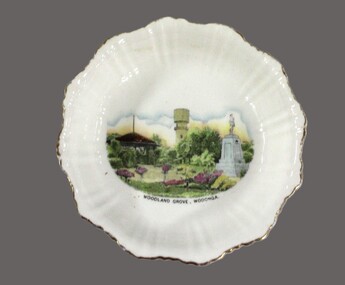
... ROTUNDA was officially opened on Sunday 5th September 1920 at the naming of the triangular reserve at the corner of High and Hovell Streets as Woodland Grove. The Wodonga Band gave a public performance on this occasion. ... ROTUNDA was officially opened on Sunday 5th September 1920 at the naming of the triangular reserve at the corner of High and Hovell Streets as Woodland Grove. The Wodonga Band gave a public performance on this occasion. ...A wide range of small china pieces carrying scenic views of holiday destinations or key locations were a popular kind of souvenir during much of the 20th century. Several different items have been produced to commemorate Wodonga and its landmarks over time. These items document key changes in Wodonga and its heritage. This plate depicts three key landmarks in Wodonga. THE SOLDIERS' MEMORIAL in Wodonga was unveiled on Tuesday 18th November 1924. It was designed by Messrs. Hosken & Co., of Hawthorn, Victoria. The monument is all of Australian workmanship. The pedestal is made of Harcourt granite, 9ft x 9ft at the base, and rising in seven courses to a height of 10ft 2in. The emblems (rising sun and wreath) are of bronze, and the lettering of the inscription and names of fallen soldiers are in raised lead letters. Originally the Memorial was completed with a full life size, 6ft in height, sculpture of an Australian soldier in Sicilian marble. The memorial bore the inscriptions: ERECTED BY THE RESIDENTS OF WODONGA AND DISTRICT IN MEMORY of the Men of this Town and District who fell in the Great War, 1914-1919, Also in grateful recognition of the men who served and returned. “Lest We Forget.” In 1982, due to frequent vandalism and high cost of materials to repair, the soldier statue was removed and later installed at the RSL Rooms. THE WATER TOWER is a major landmark of High Street, Wodonga. It began operation from 1924 until it ceased operation in 1959. It stood unused for a decade until the lower section was modified and put to use as “ The Tower’s Cobbler’s Inn” in 1962. In 1972 Wodonga City Council proposed to demolish the Tower. Their suggestion received an unfavorable response from the city’s citizens, so the Tower still stands today. THE BAND ROTUNDA was officially opened on Sunday 5th September 1920 at the naming of the triangular reserve at the corner of High and Hovell Streets as Woodland Grove. The Wodonga Band gave a public performance on this occasion. The tri-coloured ribbon, which stretched across the entrance to the Rotunda was cut by Mrs R.H Murphy, daughter of Mr. John Woodland, secretary of the Wodonga Shire Council for 35 years, after whom the area was named. The rotunda has since been moved to Martin Park, Wodonga. This item has local historic and social significance as it depicts which features of the city the community valued in the past. It has artistic significance as an example of the kinds of souvenirs used widely across Australia to represent communities and the landscape.A white glazed china souvenir bowl. Frilled edge. Includes a painted representation of Woodland Grove, Wodonga, VictoriaBeneath the painted central image "WOODLAND GROVE, WODONGAwodonga, souvenirs, woodland grove, ceramics -
 Wodonga & District Historical Society Inc
Memorabilia - Souvenir Plate Woodland Grove, Wodonga, Victoria, Royal Stafford China
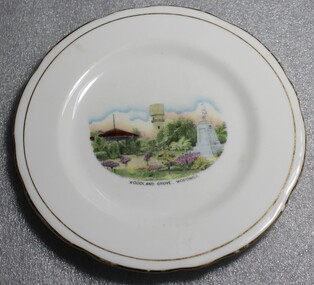
... ROTUNDA was officially opened on Sunday 5th September 1920 at the naming of the triangular reserve at the corner of High and Hovell Streets as Woodland Grove. The Wodonga Band gave a public performance on this occasion. ... ROTUNDA was officially opened on Sunday 5th September 1920 at the naming of the triangular reserve at the corner of High and Hovell Streets as Woodland Grove. The Wodonga Band gave a public performance on this occasion. ...A wide range of small china pieces carrying scenic views of holiday destinations or key locations were a popular kind of souvenir during much of the 20th century. Several different items have been produced to commemorate Wodonga and its landmarks over time. These items document key changes in Wodonga and its heritage. This plate depicts three key landmarks in Wodonga. THE SOLDIERS' MEMORIAL in Wodonga was unveiled on Tuesday 18th November 1924. It was designed by Messrs. Hosken & Co., of Hawthorn, Victoria. The monument is all of Australian workmanship. The pedestal is made of Harcourt granite, 9ft x 9ft at the base, and rising in seven courses to a height of 10ft 2in. The emblems (rising sun and wreath) are of bronze, and the lettering of the inscription and names of fallen soldiers are in raised lead letters. Originally the Memorial was completed with a full life size, 6ft in height, sculpture of an Australian soldier in Sicilian marble. The memorial bore the inscriptions: ERECTED BY THE RESIDENTS OF WODONGA AND DISTRICT IN MEMORY of the Men of this Town and District who fell in the Great War, 1914-1919, Also in grateful recognition of the men who served and returned. “Lest We Forget.” In 1982, due to frequent vandalism and high cost of materials to repair, the soldier statue was removed and later installed at the RSL Rooms. THE WATER TOWER is a major landmark of High Street, Wodonga. It began operation from 1924 until it ceased operation in 1959. It stood unused for a decade until the lower section was modified and put to use as “ The Tower’s Cobbler’s Inn” in 1962. In 1972 Wodonga City Council proposed to demolish the Tower. Their suggestion received an unfavorable response from the city’s citizens, so the Tower still stands today. THE BAND ROTUNDA was officially opened on Sunday 5th September 1920 at the naming of the triangular reserve at the corner of High and Hovell Streets as Woodland Grove. The Wodonga Band gave a public performance on this occasion. The tri-coloured ribbon, which stretched across the entrance to the Rotunda was cut by Mrs R.H Murphy, daughter of Mr. John Woodland, secretary of the Wodonga Shire Council for 35 years, after whom the area was named. The rotunda has since been moved to Martin Park, Wodonga. This bone china plate features an image of Woodland Grove. Wodonga, Victoria. The image incorporates landmarks in Woodland Grove, including the Soldiers' Memorial, the Rotunda and the Water Tower. There is a makers' mark imprinted on the underside of the plate."ROYAL STAFFORD/BONE CHINA/ MADE IN ENGLAND/ 423" . A crown is in the centre of the textmemorabilia, woodland grove, wodonga victoria -
 Wodonga & District Historical Society Inc
Souvenir - Souvenir Cup and Saucer Woodland Grove, Wodonga, Victoria, Royal Stafford China, c1940s
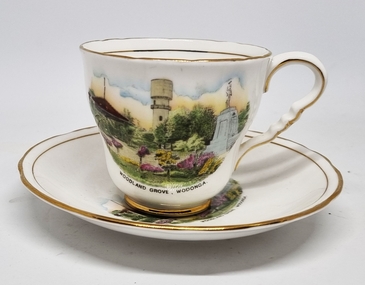
... ROTUNDA was officially opened on Sunday 5th September 1920 at the naming of the triangular reserve at the corner of High and Hovell Streets as Woodland Grove. The Wodonga Band gave a public performance on this occasion. ... ROTUNDA was officially opened on Sunday 5th September 1920 at the naming of the triangular reserve at the corner of High and Hovell Streets as Woodland Grove. The Wodonga Band gave a public performance on this occasion. ...This item is from a collection donated by descendants of John Francis Turner of Wodonga. Mr Turner was born on 6 June 1885. He completed all of his schooling at Scots Boarding School in Albury, New South Wales. On leaving school, he was employed at Dalgety’s, Albury as an auctioneer. In 1924 John was promoted to Manager of the Wodonga Branch of Dalgety’s. On 15/03/1900 he married Beatrice Neal (born 7/12/1887 and died 7/2/1953) from Collingwood, Victoria. They had four daughters – Frances (Nancy), Heather, Jessie and Mary. In 1920, the family moved from Albury to Wodonga, purchasing their family home “Locherbie” at 169 High Street, Wodonga. "Locherbie" still stands in Wodonga in 2022. The collection contains items used by the Turner family during their life in Wodonga. A wide range of small china pieces carrying scenic views of holiday destinations or key locations were a popular kind of souvenir during much of the 20th century. Several different items have been produced to commemorate Wodonga and its landmarks over time. These items document key changes in Wodonga and its heritage. This plate depicts three key landmarks in Wodonga. THE SOLDIERS' MEMORIAL in Wodonga was unveiled on Tuesday 18th November 1924. It was designed by Messrs. Hosken & Co., of Hawthorn, Victoria. The monument is all of Australian workmanship. The pedestal is made of Harcourt granite, 9ft x 9ft at the base, and rising in seven courses to a height of 10ft 2in. The emblems (rising sun and wreath) are of bronze, and the lettering of the inscription and names of fallen soldiers are in raised lead letters. Originally the Memorial was completed with a full life size, 6ft in height, sculpture of an Australian soldier in Sicilian marble. The memorial bore the inscriptions: ERECTED BY THE RESIDENTS OF WODONGA AND DISTRICT IN MEMORY of the Men of this Town and District who fell in the Great War, 1914-1919, Also in grateful recognition of the men who served and returned. “Lest We Forget.” In 1982, due to frequent vandalism and high cost of materials to repair, the soldier statue was removed and later installed at the RSL Rooms. THE WATER TOWER is a major landmark of High Street, Wodonga. It began operation from January 1924 until it ceased operation in 1959. It stood unused for a decade until the lower section was modified and put to use as “ The Tower’s Cobbler’s Inn” in 1962. In 1972 Wodonga City Council proposed to demolish the Tower. Their suggestion received an unfavorable response from the city’s citizens, so the Tower still stands today. THE BAND ROTUNDA was officially opened on Sunday 5th September 1920 at the naming of the triangular reserve at the corner of High and Hovell Streets as Woodland Grove. The Wodonga Band gave a public performance on this occasion. The tri-coloured ribbon, which stretched across the entrance to the Rotunda was cut by Mrs R.H Murphy, daughter of Mr. John Woodland, secretary of the Wodonga Shire Council for 35 years, after whom the area was named. The rotunda has since been moved to Martin Park, Wodonga. This item comes from a collection used by a prominent citizen of Wodonga. It is also representative of a domestic item common in the 1940s and features significant landmarks used in many forms to represent the city of Wodonga.This bone china cup and saucer set features an image of Woodland Grove. Wodonga, Victoria. The image incorporates landmarks in Woodland Grove, including the Soldiers' Memorial, the Rotunda and the Water Tower. There is a makers' mark imprinted on the underside of the plate."ROYAL STAFFORD/BONE CHINA/ MADE IN ENGLAND/ 423" . A crown is in the centre of the textmemorabilia, woodland grove, wodonga victoria -
 Kiewa Valley Historical Society
Photographs – Set of 25 colour photographs of the street parade to celebrate the first Official Hoppet race run at Falls Creek in 1991, 1991
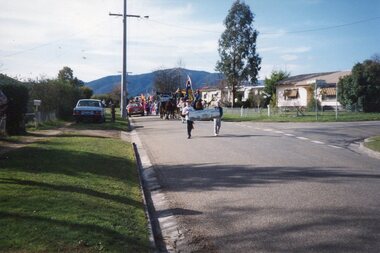
... Photos are taken near the corner of Maddison St 1&2 – Horseman & accordion player leading the parade Sign reads ‘Falls Creek The Happy Mountain’ 3-4 Birkbeioner Nordic Ski Club with Chinese Nordic ski representatives 5 & 6- Girl Guides & Brownies 7, 8 & 9- Mt Beauty Primary School & Netball team 10 & 11- UKV Calisthenics Club 12- Lawn Bowls Club 13- Junior Football Club 14- Mt Beauty High School Band (on Wodonga Timber & Hardware truck) 15, 16 17 & 18- Mt Beauty Kindergarten 19,20, 21 & 22- Local Community Vehicles including Community Transport and Fire Brigade 23 & 24- Mt Beauty High School Band 25- Fiat 500 Topolino Vintage Car ...Photos are taken near the corner of Maddison St 1&2 – Horseman & accordion player leading the parade Sign reads ‘Falls Creek The Happy Mountain’ 3-4 Birkbeioner Nordic Ski Club with Chinese Nordic ski representatives 5 & 6- Girl Guides & Brownies 7, 8 & 9- Mt Beauty Primary School & Netball team 10 & 11- UKV Calisthenics Club 12- Lawn Bowls Club 13- Junior Football Club 14- Mt Beauty High School Band (on Wodonga Timber & Hardware truck) 15, 16 17 & 18- Mt Beauty Kindergarten 19,20, 21 & 22- Local Community Vehicles including Community Transport and Fire Brigade 23 & 24- Mt Beauty High School Band 25- Fiat 500 Topolino Vintage Car Photographs – Set of 25 colour photographs of the street parade to celebrate the first Official Hoppet race run at Falls Creek in 1991 ...In 1977 a group of Mount Beauty cross country skiers formed the Birkebeiner Nordic Ski Club. In 1979, a version of the famous Birkebeiner race, the first Australian Birkebeiner was held at Falls Creek. In June 1990 representatives from Australia put their case for a southern hemisphere race in the series. Following a trial event in 1990. Australia became the 12th member of Worldloppet in the winter of 1991, with the first Kangaroo Hoppet. In 1991 a parade and commemorative torch lighting ceremony were organised in Mt Beauty as part of the celebrations to mark the first official Kangaroo Hoppett with participation from local community groups and commercial organisations, the Chamber of Commerce, local government representatives and individuals.Kangaroo Hoppet caters to diverse interests by offering a 42km and 21km event. It also offers a 7km event that attracts skiers, ranging from elite juniors to parents, grandparents, babies and first time skiers. It is recognised on the world cross country ski race calendar. It brings large numbers of participants and spectators to the area which support tourism, local businesses and employment. The 2018 event will be the 28th Kangaroo Hoppet, with cross country skiers travelling from across the country and overseas to compete.PHYSICAL: Set of 22 colour photographs of the street parade to celebrate the first Official Hoppet race run at Falls Creek in 1991. Participants from a range of local community groups are traveling along Kiewa Cres. Photos are taken near the corner of Maddison St 1&2 – Horseman & accordion player leading the parade Sign reads ‘Falls Creek The Happy Mountain’ 3-4 Birkbeioner Nordic Ski Club with Chinese Nordic ski representatives 5 & 6- Girl Guides & Brownies 7, 8 & 9- Mt Beauty Primary School & Netball team 10 & 11- UKV Calisthenics Club 12- Lawn Bowls Club 13- Junior Football Club 14- Mt Beauty High School Band (on Wodonga Timber & Hardware truck) 15, 16 17 & 18- Mt Beauty Kindergarten 19,20, 21 & 22- Local Community Vehicles including Community Transport and Fire Brigade 23 & 24- Mt Beauty High School Band 25- Fiat 500 Topolino Vintage Car No markingskangaroo hoppet; cross country skiing; ski race; bogong high plains, mt beauty, parade -
 Wodonga & District Historical Society Inc
Memorabilia - Flag - Princess Alexandra's visit to Wodonga, 1959
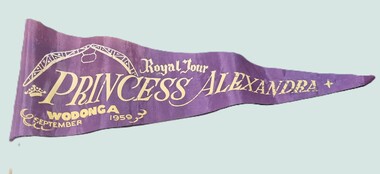
... Wodonga Shire President, Cr J. S. Hore, saying: "I must give you this, otherwise it might be unlucky." The halfpenny "gift" stems from an old English superstition that a "sharp" gift such as a knife or scissors must be dulled with copper or else a friendship will be lost. After cutting the ribbon and declaring the Pollard Arch, named in honour of Councillor Charles Pollard M.B.E., she was presented with a bouquet by 10-year-old Leslie McLeod. Princess Alexandra, led by a pipe band...Wodonga Shire President, Cr J. S. Hore, saying: "I must give you this, otherwise it might be unlucky." The halfpenny "gift" stems from an old English superstition that a "sharp" gift such as a knife or scissors must be dulled with copper or else a friendship will be lost. After cutting the ribbon and declaring the Pollard Arch, named in honour of Councillor Charles Pollard M.B.E., she was presented with a bouquet by 10-year-old Leslie McLeod. Princess Alexandra, led by a pipe band ...This flag is a memento produced for Princess Alexandra of Kent's visit to Wodonga in 1959. Princess Alexandra visited Australia as the representative of Queen Elizabeth II for the Queensland Centenary Celebrations. Her six-week visit began with her arrival in Canberra on 14th August and she departed from Canberra on 26th September. Time spent in Australia included three weeks in Queensland. Her Royal Highness' visits to New South Wales and Victoria were comparatively brief and informal. In New South Wales she made two country visits including to Albury and a night spent at Bungowannah Park near Jindera. Her visit to Victoria began in Wodonga where she officially opened the Pollard Archway over the Causeway. She received an enthusiastic welcome as she approached the Archway accompanied by a motorcycle escort. As Princess Alexander stepped forward to take the scissors from a red plush case, her Lady-in-Waiting, Lady Moyra Hamilton, tugged at the Princess' sleeve, whispered, and gave her a coin. The Princess handed the coin (a halfpenny) to the Wodonga Shire President, Cr J. S. Hore, saying: "I must give you this, otherwise it might be unlucky." The halfpenny "gift" stems from an old English superstition that a "sharp" gift such as a knife or scissors must be dulled with copper or else a friendship will be lost. After cutting the ribbon and declaring the Pollard Arch, named in honour of Councillor Charles Pollard M.B.E., she was presented with a bouquet by 10-year-old Leslie McLeod. Princess Alexandra, led by a pipe band was driven along the Hume Highway and High Street which were lined by thousands of people including school children. After a short trip along High Street and Elgin Street to the Railway Station she departed from protocol to speak to the many children who had crossed the barricade. Princess Alexandra then boarded the Royal Train for her journey to Melbourne.This item is significant because it represents the visit to Wodonga of Princess Alexandra in 1959.A small purple flag with gold lettering and a symbol of the Pollard Arch in Wodonga. It is triangular in shape and attached to a thin wooden stick.Royal Tour Princess Alexandra Wodonga September 1959princess alexandra, royal visit 1959 wodonga -
 Wodonga & District Historical Society Inc
Souvenir - Mug for Coronation of Queen Elizabeth II, 1953
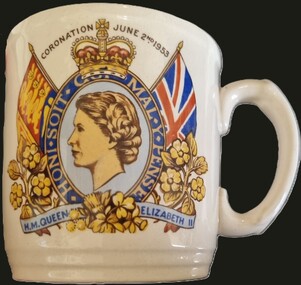
... Wodonga residents. Queen Elizabeth became the official head of the Government of Australia at that time. Coronation of Queen Elizabeth II British Royal Family At Top CORONATION JUNE 2nd 1953 The Latin wording HONI SOIT QUI MAL Y PENSE, contained in the dark blue oval band is the motto of the British chivalric Order of the Garter which means "shamed be whoever thinks ill of it" Beneath the image - H.M QUEEN ELIZABETH II The base of the mug shows a makers mark of the DESIGN mark. ...Queen Elizabeth II ascended the throne, at the age of 25, on the death of her father King George VI on the 6th February 1952. Elizabeth was crowned as the Queen of the United Kingdom and the other Commonwealth realms on June 2nd 1953 at Westminster Abbey. Preparations for the coronation took over a year, it was the first British coronation to be fully televised when cameras were allowed inside the Abbey for the first time and the event was estimated to have cost £1.57 million. The British Pottery Manufacturers Federation was founded in 1919 and continued to trade until early 1995 when the company was dissolved as a result of its activities becoming fully incorporated within the British Ceramic Confederation. The design for this mug was approved by The British Pottery Manufacturers Federation and then circulated to approved Potters. This item is significant because it records an important event in the British Royal Family, a vital part of the hereditary of many Wodonga residents. Queen Elizabeth became the official head of the Government of Australia at that time.Cream handled China mug with coloured transfer. The image includes a central oval image of a golden profile of the queen (without a crown) against a light blue background. It is surrounded by a dark blue band with gold edging. To the left is the Royal Standard and to the right is the Union Jack and English roses below. Above the central image is the royal crown and above this wording. At Top CORONATION JUNE 2nd 1953 The Latin wording HONI SOIT QUI MAL Y PENSE, contained in the dark blue oval band is the motto of the British chivalric Order of the Garter which means "shamed be whoever thinks ill of it" Beneath the image - H.M QUEEN ELIZABETH II The base of the mug shows a makers mark of the DESIGN mark.coronation of queen elizabeth ii, british royal family -
 8th/13th Victorian Mounted Rifles Regimental Collection
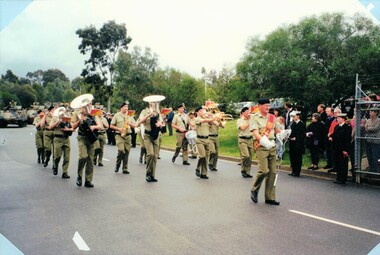
Photograph - March in 105
... Wodonga. At Building 105, the Area Commander, Colonel Chris Anstey, welcomed the regiment and handed over the building to Lieutenant Colonel Michael Annett, Commanding Officer 4th/19th Prince of Wales's Light Horse. annett anstey bandiana langford 4th/19th vmr band Colour photograph of 4th/19th Prince of Wales's Light Horse regimental band entering the gate to Building 105 North Bandiana. ...On Saturday 13 May 2000, Victorian Mounted Rifles Squadron, 4th/19th Prince of Wales's Light Horse Regiment departed Buna Barracks Albury and relocated to its new depot at Building 105 North Bandiana. The occasion was marked by a parade through the main streets of Albury and Wodonga. The mayor of Albury, Councillor Les Langford, farewelled the regiment and the mayor of Wodonga, Councillor Graham Crapp, welcomed the regiment to Wodonga. At Building 105, the Area Commander, Colonel Chris Anstey, welcomed the regiment and handed over the building to Lieutenant Colonel Michael Annett, Commanding Officer 4th/19th Prince of Wales's Light Horse. Colour photograph of 4th/19th Prince of Wales's Light Horse regimental band entering the gate to Building 105 North Bandiana.annett, anstey, bandiana, langford, 4th/19th, vmr, band -
 8th/13th Victorian Mounted Rifles Regimental Collection
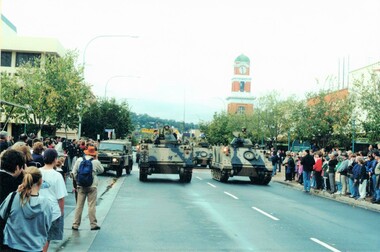
Photograph - March in 105
... Wodonga. At Building 105, the Area Commander, Colonel Chris Anstey, welcomed the regiment and handed over the building to Lieutenant Colonel Michael Annett, Commanding Officer 4th/19th Prince of Wales's Light Horse. annett anstey bandiana langford 4th/19th vmr band Albury Colour photograph of M113 Light Reconnaissance Vehicles (LRV) of Victorian Mounted Rifles Squadron, 4th/19th Prince of Wales's Light Horse regiment parading through Dean Street Albury. ...On Saturday 13 May 2000, Victorian Mounted Rifles Squadron, 4th/19th Prince of Wales's Light Horse Regiment departed Buna Barracks Albury and relocated to its new depot at Building 105 North Bandiana. The occasion was marked by a parade through the main streets of Albury and Wodonga. The mayor of Albury, Councillor Les Langford, farewelled the regiment and the mayor of Wodonga, Councillor Graham Crapp, welcomed the regiment to Wodonga. At Building 105, the Area Commander, Colonel Chris Anstey, welcomed the regiment and handed over the building to Lieutenant Colonel Michael Annett, Commanding Officer 4th/19th Prince of Wales's Light Horse. Colour photograph of M113 Light Reconnaissance Vehicles (LRV) of Victorian Mounted Rifles Squadron, 4th/19th Prince of Wales's Light Horse regiment parading through Dean Street Albury.annett, anstey, bandiana, langford, 4th/19th, vmr, band, albury -
 8th/13th Victorian Mounted Rifles Regimental Collection
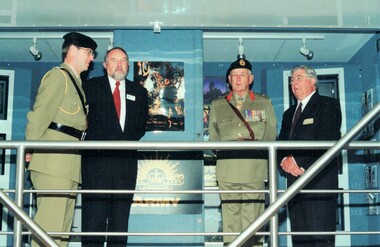
Photograph - March in 105
... Wodonga. At Building 105, the Area Commander, Colonel Chris Anstey, welcomed the regiment and handed over the building to Lieutenant Colonel Michael Annett, Commanding Officer 4th/19th Prince of Wales's Light Horse. Major General David McLachlan was Honorary Colonel of 4/19 Prince of Wales's Light Horse. annett anstey bandiana langford 4th/19th vmr band albury Colour photograph of Lieutenant Colonel M Annett, Councillor G Crapp, Major General McLachlan and Councillor L Langford on dais just prior to the march past of Victorian Mounted Rifles Squadron, 4th/19th Prince of Wales's Light Horse regiment parading through Dean Street Albury 13 May 2000. ...On Saturday 13 May 2000, Victorian Mounted Rifles Squadron, 4th/19th Prince of Wales's Light Horse Regiment departed Buna Barracks Albury and relocated to its new depot at Building 105 North Bandiana. The occasion was marked by a parade through the main streets of Albury and Wodonga. The mayor of Albury, Councillor Les Langford, farewelled the regiment and the mayor of Wodonga, Councillor Graham Crapp, welcomed the regiment to Wodonga. At Building 105, the Area Commander, Colonel Chris Anstey, welcomed the regiment and handed over the building to Lieutenant Colonel Michael Annett, Commanding Officer 4th/19th Prince of Wales's Light Horse. Major General David McLachlan was Honorary Colonel of 4/19 Prince of Wales's Light Horse.Colour photograph of Lieutenant Colonel M Annett, Councillor G Crapp, Major General McLachlan and Councillor L Langford on dais just prior to the march past of Victorian Mounted Rifles Squadron, 4th/19th Prince of Wales's Light Horse regiment parading through Dean Street Albury 13 May 2000.annett, anstey, bandiana, langford, 4th/19th, vmr, band, albury -
 8th/13th Victorian Mounted Rifles Regimental Collection
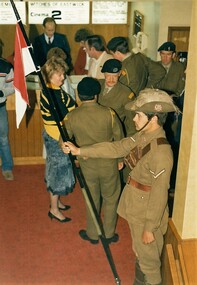
Photograph
... The official party included the Area Commander Albury-Wodonga Military Area, Honorary Colonel 8/13 VMR and Officer Commanding ‘a’ Squadron 8/13 VMR. The VMR Heritage Troop mounted a Lance-Guard in the theatre foyer and the Albury City Band played prior to the screening. ...The official party included the Area Commander Albury-Wodonga Military Area, Honorary Colonel 8/13 VMR and Officer Commanding ‘a’ Squadron 8/13 VMR. The VMR Heritage Troop mounted a Lance-Guard in the theatre foyer and the Albury City Band played prior to the screening. ...‘A’ Squadron 8/13 Victorian mounted Rifles hosted a special screening of the movie “The Lighthorsemen” at the Regent Theatre Albury on 11 September 1987. The official party included the Area Commander Albury-Wodonga Military Area, Honorary Colonel 8/13 VMR and Officer Commanding ‘a’ Squadron 8/13 VMR. The VMR Heritage Troop mounted a Lance-Guard in the theatre foyer and the Albury City Band played prior to the screening. Proceeds from the function were donated to Legacy.Colour photograph of Corporal Shane Walch, a member of the 8/13 Victorian Mounted Rifles Heritage Toop which mounted a Lance - Guard at the film screening at Albury 11 September 1987. -
 8th/13th Victorian Mounted Rifles Regimental Collection
Photograph
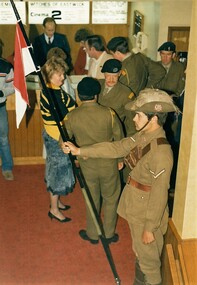
... The official party included the Area Commander Albury-Wodonga Military Area, Honorary Colonel 8/13 VMR and Officer Commanding ‘a’ Squadron 8/13 VMR. The VMR Heritage Troop mounted a Lance-Guard in the theatre foyer and the Albury City Band played prior to the screening. ...The official party included the Area Commander Albury-Wodonga Military Area, Honorary Colonel 8/13 VMR and Officer Commanding ‘a’ Squadron 8/13 VMR. The VMR Heritage Troop mounted a Lance-Guard in the theatre foyer and the Albury City Band played prior to the screening. ...A’ Squadron 8/13 Victorian mounted Rifles hosted a special screening of the movie “The Lighthorsemen” at the Regent Theatre Albury on 11 September 1987. The official party included the Area Commander Albury-Wodonga Military Area, Honorary Colonel 8/13 VMR and Officer Commanding ‘a’ Squadron 8/13 VMR. The VMR Heritage Troop mounted a Lance-Guard in the theatre foyer and the Albury City Band played prior to the screening. Proceeds from the function were donated to Legacy.Colour photograph of group in foyer prior to screening of film. Member of 8/13 Victorian Mounted Rifles Heritage Troop Lance Guard in foreground. -
 8th/13th Victorian Mounted Rifles Regimental Collection
Photograph
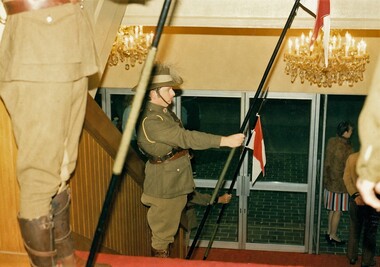
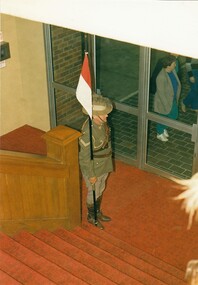
... The official party included the Area Commander Albury-Wodonga Military Area, Honorary Colonel 8/13 VMR and Officer Commanding ‘a’ Squadron 8/13 VMR. The VMR Heritage Troop mounted a Lance-Guard in the theatre foyer and the Albury City Band played prior to the screening. ...The official party included the Area Commander Albury-Wodonga Military Area, Honorary Colonel 8/13 VMR and Officer Commanding ‘a’ Squadron 8/13 VMR. The VMR Heritage Troop mounted a Lance-Guard in the theatre foyer and the Albury City Band played prior to the screening. ...A’ Squadron 8/13 Victorian mounted Rifles hosted a special screening of the movie “The Lighthorsemen” at the Regent Theatre Albury on 11 September 1987. The official party included the Area Commander Albury-Wodonga Military Area, Honorary Colonel 8/13 VMR and Officer Commanding ‘a’ Squadron 8/13 VMR. The VMR Heritage Troop mounted a Lance-Guard in the theatre foyer and the Albury City Band played prior to the screening. Proceeds from the function were donated to Legacy.Two colour photographs of Trooper R.J. Walsh a member of 8/13 Victorian Mounted Rifles Heritage Troop mounting the Lance - Guard at special screening of film 11 September 1987. -
 8th/13th Victorian Mounted Rifles Regimental Collection
Photograph
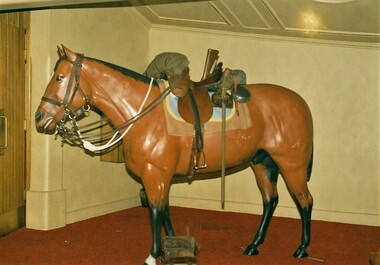
... The official party included the Area Commander Albury-Wodonga Military Area, Honorary Colonel 8/13 VMR and Officer Commanding ‘a’ Squadron 8/13 VMR. The VMR Heritage Troop mounted a Lance-Guard in the theatre foyer and the Albury City Band played prior to the screening. ...The official party included the Area Commander Albury-Wodonga Military Area, Honorary Colonel 8/13 VMR and Officer Commanding ‘a’ Squadron 8/13 VMR. The VMR Heritage Troop mounted a Lance-Guard in the theatre foyer and the Albury City Band played prior to the screening. ...‘A’ Squadron 8/13 Victorian mounted Rifles hosted a special screening of the movie “The Lighthorsemen” at the Regent Theatre Albury on 11 September 1987. The official party included the Area Commander Albury-Wodonga Military Area, Honorary Colonel 8/13 VMR and Officer Commanding ‘a’ Squadron 8/13 VMR. The VMR Heritage Troop mounted a Lance-Guard in the theatre foyer and the Albury City Band played prior to the screening. Proceeds from the function were donated to Legacy.Colour photograph of a horse with Light Horse saddlry and equipment. It was part of a static display at special screening of film " The Lighthorsemen " at Albury 11 September 1987. -
 8th/13th Victorian Mounted Rifles Regimental Collection
Photograph
... The official party included the Area Commander Albury-Wodonga Military Area, Honorary Colonel 8/13 VMR and Officer Commanding ‘a’ Squadron 8/13 VMR. The VMR Heritage Troop mounted a Lance-Guard in the theatre foyer and the Albury City Band played prior to the screening. ...The official party included the Area Commander Albury-Wodonga Military Area, Honorary Colonel 8/13 VMR and Officer Commanding ‘a’ Squadron 8/13 VMR. The VMR Heritage Troop mounted a Lance-Guard in the theatre foyer and the Albury City Band played prior to the screening. ...‘A’ Squadron 8/13 Victorian mounted Rifles hosted a special screening of the movie “The Lighthorsemen” at the Regent Theatre Albury on 11 September 1987. The official party included the Area Commander Albury-Wodonga Military Area, Honorary Colonel 8/13 VMR and Officer Commanding ‘a’ Squadron 8/13 VMR. The VMR Heritage Troop mounted a Lance-Guard in the theatre foyer and the Albury City Band played prior to the screening. Proceeds from the function were donated to Legacy.Colour photograph of Corporal Nigel Morris, a member of 8/13 Victorian Mounted Rifles Heritage Troop which mounted a Lance - Guard at the film screening at Albury 11 September 1987 -
 8th/13th Victorian Mounted Rifles Regimental Collection
Photograph
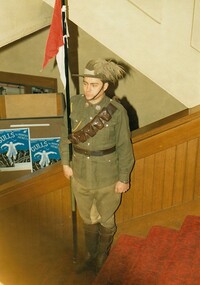
... The official party included the Area Commander Albury-Wodonga Military Area, Honorary Colonel 8/13 VMR and Officer Commanding ‘a’ Squadron 8/13 VMR. The VMR Heritage Troop mounted a Lance-Guard in the theatre foyer and the Albury City Band played prior to the screening. ...The official party included the Area Commander Albury-Wodonga Military Area, Honorary Colonel 8/13 VMR and Officer Commanding ‘a’ Squadron 8/13 VMR. The VMR Heritage Troop mounted a Lance-Guard in the theatre foyer and the Albury City Band played prior to the screening. ...A’ Squadron 8/13 Victorian mounted Rifles hosted a special screening of the movie “The Lighthorsemen” at the Regent Theatre Albury on 11 September 1987. The official party included the Area Commander Albury-Wodonga Military Area, Honorary Colonel 8/13 VMR and Officer Commanding ‘a’ Squadron 8/13 VMR. The VMR Heritage Troop mounted a Lance-Guard in the theatre foyer and the Albury City Band played prior to the screening. Proceeds from the function were donated to Legacy.Colour photograph of Trooper Chris Ellison, a member of the 8/13 Victorian Mounted Rifles Heritage Troop which mounted a Lance - Guard at the film screening at Albury 11 September 1987. -
 8th/13th Victorian Mounted Rifles Regimental Collection
Photograph
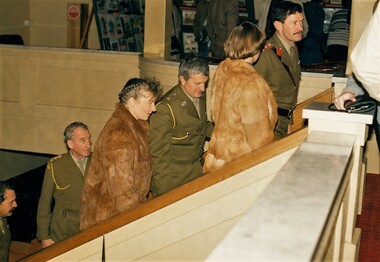
... The official party included the Area Commander Albury-Wodonga Military Area, Honorary Colonel 8/13 VMR and Officer Commanding ‘a’ Squadron 8/13 VMR. The VMR Heritage Troop mounted a Lance-Guard in the theatre foyer and the Albury City Band played prior to the screening. ...The official party included the Area Commander Albury-Wodonga Military Area, Honorary Colonel 8/13 VMR and Officer Commanding ‘a’ Squadron 8/13 VMR. The VMR Heritage Troop mounted a Lance-Guard in the theatre foyer and the Albury City Band played prior to the screening. ...‘A’ Squadron 8/13 Victorian mounted Rifles hosted a special screening of the movie “The Lighthorsemen” at the Regent Theatre Albury on 11 September 1987. The official party included the Area Commander Albury-Wodonga Military Area, Honorary Colonel 8/13 VMR and Officer Commanding ‘a’ Squadron 8/13 VMR. The VMR Heritage Troop mounted a Lance-Guard in the theatre foyer and the Albury City Band played prior to the screening. Proceeds from the function were donated to Legacy.Colour photograph of a group ascending stairs at Regent Theatre Albury. From left: Capt R. Morrison, Colonel J. Neale, Mrs. D. Morrison, major J. Gay, Mrs. C. brewer, Colonel C. Brewer. -
 8th/13th Victorian Mounted Rifles Regimental Collection
Artwork, other - Display board
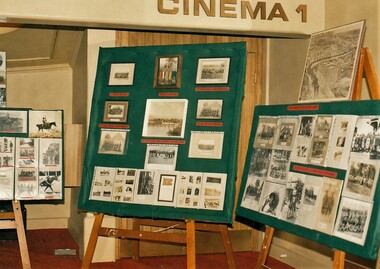
... The official party included the Area Commander Albury-Wodonga Military Area, Honorary Colonel 8/13 VMR and Officer Commanding ‘a’ Squadron 8/13 VMR. The VMR Heritage Troop mounted a Lance-Guard in the theatre foyer and the Albury City Band played prior to the screening. ...The official party included the Area Commander Albury-Wodonga Military Area, Honorary Colonel 8/13 VMR and Officer Commanding ‘a’ Squadron 8/13 VMR. The VMR Heritage Troop mounted a Lance-Guard in the theatre foyer and the Albury City Band played prior to the screening. ...A’ Squadron 8/13 Victorian mounted Rifles hosted a special screening of the movie “The Lighthorsemen” at the Regent Theatre Albury on 11 September 1987. The official party included the Area Commander Albury-Wodonga Military Area, Honorary Colonel 8/13 VMR and Officer Commanding ‘a’ Squadron 8/13 VMR. The VMR Heritage Troop mounted a Lance-Guard in the theatre foyer and the Albury City Band played prior to the screening. Proceeds from the function were donated to Legacy.Colour photograph of display in foyer of Theatre at special screening of " The Lighthorsemen " 11 September 1987.military, cinema, light horse, film, legacy -
 8th/13th Victorian Mounted Rifles Regimental Collection
Photograph - Two officers a movie theatre
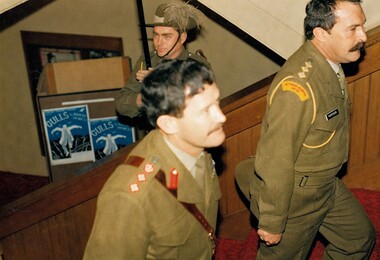
... The official party included the Area Commander Albury-Wodonga Military Area, Honorary Colonel 8/13 VMR and Officer Commanding ‘a’ Squadron 8/13 VMR. The VMR Heritage Troop mounted a Lance-Guard in the theatre foyer and the Albury City Band played prior to the screening. ...The official party included the Area Commander Albury-Wodonga Military Area, Honorary Colonel 8/13 VMR and Officer Commanding ‘a’ Squadron 8/13 VMR. The VMR Heritage Troop mounted a Lance-Guard in the theatre foyer and the Albury City Band played prior to the screening. ...‘A’ Squadron 8/13 Victorian mounted Rifles hosted a special screening of the movie “The Lighthorsemen” at the Regent Theatre Albury on 11 September 1987. The official party included the Area Commander Albury-Wodonga Military Area, Honorary Colonel 8/13 VMR and Officer Commanding ‘a’ Squadron 8/13 VMR. The VMR Heritage Troop mounted a Lance-Guard in the theatre foyer and the Albury City Band played prior to the screening. Proceeds from the function were donated to Legacy.Colour photograph of CDolonel C. Brewer, Commander AWMA with Captain Robert Morrison arriving at the special screening of the " Lighthorsemen " at Albury. Lance - Guard Trooper Chris Ellison in backgroundmilitary, vmr, movie, lighthorsemen, theatre -
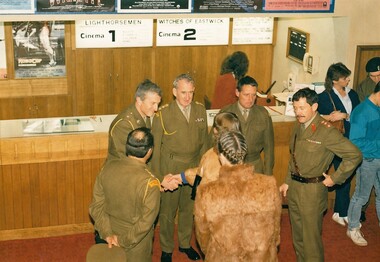 8th/13th Victorian Mounted Rifles Regimental Collection
Photograph
... The official party included the Area Commander Albury-Wodonga Military Area, Honorary Colonel 8/13 VMR and Officer Commanding ‘a’ Squadron 8/13 VMR. The VMR Heritage Troop mounted a Lance-Guard in the theatre foyer and the Albury City Band played prior to the screening. ...The official party included the Area Commander Albury-Wodonga Military Area, Honorary Colonel 8/13 VMR and Officer Commanding ‘a’ Squadron 8/13 VMR. The VMR Heritage Troop mounted a Lance-Guard in the theatre foyer and the Albury City Band played prior to the screening. ...‘A’ Squadron 8/13 Victorian mounted Rifles hosted a special screening of the movie “The Lighthorsemen” at the Regent Theatre Albury on 11 September 1987. The official party included the Area Commander Albury-Wodonga Military Area, Honorary Colonel 8/13 VMR and Officer Commanding ‘a’ Squadron 8/13 VMR. The VMR Heritage Troop mounted a Lance-Guard in the theatre foyer and the Albury City Band played prior to the screening. Proceeds from the function were donated to Legacy.Colour photograph of gathering in theatre foyer prior tto screening of " The Lighthorsemen ". Facing camera from left: Major J. Gay, Colonel J.A. Neale, Squadron Sergeant Major Clarke and Colonel C. Brewer. -
 8th/13th Victorian Mounted Rifles Regimental Collection
Document
... The official party included the Area Commander Albury-Wodonga Military Area, Honorary Colonel 8/13 VMR and Officer Commanding ‘a’ Squadron 8/13 VMR. The VMR Heritage Troop mounted a Lance-Guard in the theatre foyer and the Albury City Band played prior to the screening. ...The official party included the Area Commander Albury-Wodonga Military Area, Honorary Colonel 8/13 VMR and Officer Commanding ‘a’ Squadron 8/13 VMR. The VMR Heritage Troop mounted a Lance-Guard in the theatre foyer and the Albury City Band played prior to the screening. ...‘A’ Squadron 8/13 Victorian mounted Rifles hosted a special screening of the movie “The Lighthorsemen” at the Regent Theatre Albury on 11 September 1987. The official party included the Area Commander Albury-Wodonga Military Area, Honorary Colonel 8/13 VMR and Officer Commanding ‘a’ Squadron 8/13 VMR. The VMR Heritage Troop mounted a Lance-Guard in the theatre foyer and the Albury City Band played prior to the screening. Proceeds from the function were donated to Legacy.Typed letter on Legacy Club Albury letterhead advising members of the special screening of the " Lighthorsemen in partnership with 8/13 Victorian Mounted Rifles . 11 September 1987.
