
Showing 74 items matching "women prisoners"
-
 Mrs Aeneas Gunn Memorial Library
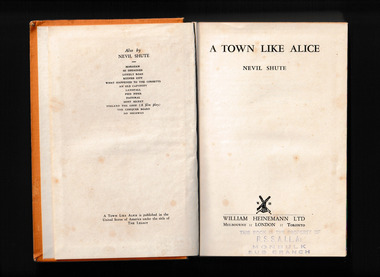
Book, William Heinemann, A town like Alice, 1950
... ...Women prisoners - Fiction...Australia - Fiction Women prisoners - Fiction A novel told partly in flashbacks about a girl's search for the Australian she met in Malaya during World War II. ...A novel told partly in flashbacks about a girl's search for the Australian she met in Malaya during World War II. A young woman who miraculously survived a Japanese "death march" in World War II, and an Australian soldier, also a prisoner of war, who offered to help her--even at the cost of his life.p.332.fictionA novel told partly in flashbacks about a girl's search for the Australian she met in Malaya during World War II. A young woman who miraculously survived a Japanese "death march" in World War II, and an Australian soldier, also a prisoner of war, who offered to help her--even at the cost of his life.australia - fiction, women prisoners - fiction -
 Returned Nurses RSL Sub-branch
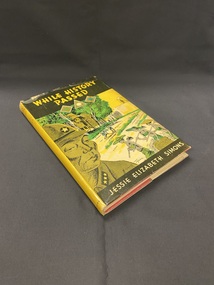
Book - Hardcover book, Jessie Elizabeth Simons, While history passed: the story of the Australian Nurses who were prisoners of the Japanese for three and a half years, 1954
... Women prisoners...'Of historical importance' [taken from back cover] Women prisoners Prisoners of War Australian Nurses World War 2 World War II WWII WW2 Japanese Vyner Brooke Sister Jessie Elizabeth Simons Sister Jessie Elizabeth Simons tells the story of the sixty-five members of the Australian Army Nursing Service who were evacuated from Singapore just before the arrival of the Japanese, their ship was bombed and sunk and they were captured by the Japanese soldiers and held in prison camps until the day of liberation. ...Sister Jessie Elizabeth Simons tells the story of the sixty-five members of the Australian Army Nursing Service who were evacuated from Singapore just before the arrival of the Japanese, their ship was bombed and sunk and they were captured by the Japanese soldiers and held in prison camps until the day of liberation.Hardcover book with a dustjacket firmly attached. There is a black panel across the top with the title in yellow print and another thinner black panel across the bottom with the author's name in cream coloured print. The front cover shows an illustration of a Japanese soldier in the foreground and behind him are eight women working in a field, they are being watched by an armed soldier stationed at a lookout on a wall behind them. The image is in black, green and yellow.non-fictionSister Jessie Elizabeth Simons tells the story of the sixty-five members of the Australian Army Nursing Service who were evacuated from Singapore just before the arrival of the Japanese, their ship was bombed and sunk and they were captured by the Japanese soldiers and held in prison camps until the day of liberation.women prisoners, prisoners of war, australian nurses, world war 2, world war ii, wwii, ww2, japanese, vyner brooke, sister jessie elizabeth simons -
 Returned Nurses RSL Sub-branch
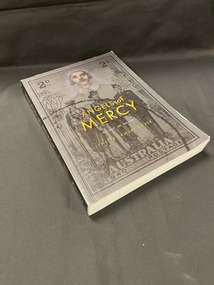
Book - Illustrated paperback book, Lynette Ramsay Silver, Angels of Mercy: Far West Far East, 2019
... ...Women Prisoners of War...Australian Nurses Nursing in warfare World War Two WWII WW2 Marjorie Silver Pat Darling Women Prisoners of War Rural nursing Angels of Mercy follows the gripping stories of two different Australian nursing sisters, Marjorie Silver and Pat Darling, who overcame the challenging adversities of two very different circumstances. ...Angels of Mercy follows the gripping stories of two different Australian nursing sisters, Marjorie Silver and Pat Darling, who overcame the challenging adversities of two very different circumstances. These two remarkable, highly resilient women may not be remembered as great Australians, but they will be remembered for making Australia great. “Angels of Mercy follows the gripping stories of two different Australian nursing sisters, who overcame the challenging adversities of two very different circumstances. In the 1930s Marjorie Silver, the outback flying sister, fought almost singlehandedly against the isolation, poverty, heat and dust of the far west of New South Wales to bring vital medical assistance to her far flung patients. Sister Pat Gunther, who served in the Far East on the battlefields of Malaya and Singapore, then fought a desperate battle for survival in the prison camps of Sumatra.”--Back cover.Black paperback book with title and author printed in gold text and the image of a 1940 postage stamp in the background.non-fiction Angels of Mercy follows the gripping stories of two different Australian nursing sisters, Marjorie Silver and Pat Darling, who overcame the challenging adversities of two very different circumstances. These two remarkable, highly resilient women may not be remembered as great Australians, but they will be remembered for making Australia great. “Angels of Mercy follows the gripping stories of two different Australian nursing sisters, who overcame the challenging adversities of two very different circumstances. In the 1930s Marjorie Silver, the outback flying sister, fought almost singlehandedly against the isolation, poverty, heat and dust of the far west of New South Wales to bring vital medical assistance to her far flung patients. Sister Pat Gunther, who served in the Far East on the battlefields of Malaya and Singapore, then fought a desperate battle for survival in the prison camps of Sumatra.”--Back cover. australian nurses, nursing in warfare, world war two, wwii, ww2, marjorie silver, pat darling, women prisoners of war, rural nursing -
 Returned Nurses RSL Sub-branch
Book - Hardcover book, Jessie Elizabeth Simons, While history passed: the story of the Australian Nurses who were prisoners of the Japanese for three and a half years, 1954
... Women prisoners...Women prisoners Prisoners of War Australian Nurses World War 2 World War II WWII WW2 Japanese Vyner Brooke Sister Jessie Elizabeth Simons Sister Jessie Elizabeth Simons tells the story of the sixty-five members of the Australian Army Nursing Service who were evacuated from Singapore just before the arrival of the Japanese, their ship was bombed and sunk and they were captured by the Japanese soldiers and held in prison camps until the day of liberation. ...Sister Jessie Elizabeth Simons tells the story of the sixty-five members of the Australian Army Nursing Service who were evacuated from Singapore just before the arrival of the Japanese, their ship was bombed and sunk and they were captured by the Japanese soldiers and held in prison camps until the day of liberation.Faded red hard covered, cloth-bound book with gold title on the spine and a white sticker at the bottom of the spine with B38 in red texta.non-fictionSister Jessie Elizabeth Simons tells the story of the sixty-five members of the Australian Army Nursing Service who were evacuated from Singapore just before the arrival of the Japanese, their ship was bombed and sunk and they were captured by the Japanese soldiers and held in prison camps until the day of liberation.women prisoners, prisoners of war, australian nurses, world war 2, world war ii, wwii, ww2, japanese, vyner brooke, sister jessie elizabeth simons -
 Returned Nurses RSL Sub-branch
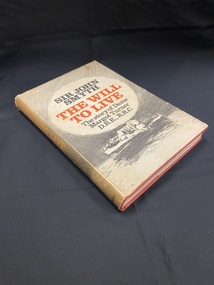
Book - Hardcover book, John Smyth, The will to live: the story of Dame Margot Turner D.B.E., R.R.C, 1970
... ...women prisoners of war...Margot Turner Japanese POW women prisoners of war Army Nurses Margot Turner joined Queen Alexandra's Imperial Military Nursing Service in 1937. ...Margot Turner joined Queen Alexandra's Imperial Military Nursing Service in 1937. In 1941 she was sent to Singapore. When Singapore surrendered to the Japanese she managed to escape, she spent four days alone on a raft before being captured as a prisoner of war. She survived three and a half years in the Japanese camp and later went on to become Matron-in-chief and Director of the Army Nursing Service.Red hard-cover book with a dust-jacket. The dust-jacket shows a grey and white pencil sketch on the front cover and spine of a nurse floating on a raft. The title and author are printed in the centre in black and red text. On the back cover is a black and white photograph of Margot Turner in uniform.non-fictionMargot Turner joined Queen Alexandra's Imperial Military Nursing Service in 1937. In 1941 she was sent to Singapore. When Singapore surrendered to the Japanese she managed to escape, she spent four days alone on a raft before being captured as a prisoner of war. She survived three and a half years in the Japanese camp and later went on to become Matron-in-chief and Director of the Army Nursing Service.margot turner, japanese pow, women prisoners of war, army nurses -
 Flagstaff Hill Maritime Museum and Village
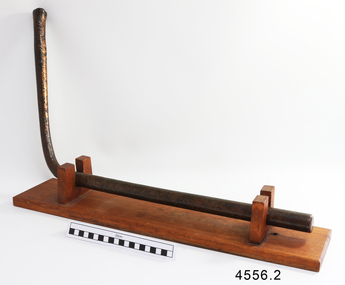
Nail, circa 1810
... women and children. Firearms were used to help quell the panic of the convicts below decks and some were killed by the shots. Many convicts, including the sick, were drowned. In all, 133 lives were lost including 5 of the crew, guards and their families. It was the third worst shipping disaster in Tasmanian waters. A monument in honour of the prisoners...women and children. Firearms were used to help quell the panic of the convicts below decks and some were killed by the shots. Many convicts, including the sick, were drowned. In all, 133 lives were lost including 5 of the crew, guards and their families. It was the third worst shipping disaster in Tasmanian waters. A monument in honour of the prisoners ...This copper nail, sometimes known as a ‘Dumpy Bolt’ or spike, was salvaged from the hull of the wreck of the “George III”. It dates back to at least 1810. It was found by an abalone diver on the south east coast of Tasmania. The nail would have been used to hold the layers of the ship’s keel frame and the planking together. The nail has been passed from the abalone diver to an interested business man on a trip to the south of Hobart, on again to the business man’s close friend who then donated it to Flagstaff Hill Maritime Village. The metal of nails such as this one, after being in the sea for a long time, become affected by the natural reaction of the sea water, causing it to degenerate and thin, and the stress from the force of the sea over the years alters its shape. Iron nails had been used on ships previously, but they quickly corroded in the salt; ships needed regular, costly and time-consuming maintenance to replace the iron nails. Towards the end of the 18th century the British Navy trialled the use of copper nails, finding them to be very successful. Merchant ships began to adopt this process in the early 19th century, although it made ship building very expensive and was more often used for ships such as the “George III” that sailed on long voyages. The three masted sailing ship “George III” was a convict transport ship built in Deptford, England, in 1810. On 14th December 1834 she left Woolwich, England, bound for Hobart Town, Van Diemen’s Land (Tasmania), under Captain William Hall Moxey. She was carrying 220 male convicts plus crew, guards and their families, totalling 294 persons (another 2 were during the voyage). Amongst the cargo were military stores including several copper drums of gun powder. On 27th January 1835 the “George III” was near the Equator, about half way into her journey. A fire broke out and the gun powder was in danger of explosion, threatening the whole ship. Two convicts braved the heat and smoke, entered the store and seized the gun powder drums, suffering burns for their efforts but saving a probable disaster. The fire destroyed some of the provisions and food was scarce. Many became ill with scurvy and some died during the journey. Nearing the end of their journey on 10th April 1835 the “George III” was headed through the D'Entrecasteaux Channel, south east Tasmania, between the mainland and Bruny Island. She was sailing in the moonlit night to hasten her arrival in port due to the great number of sick on board. She struck uncharted rocks, known only to the local whalers, between Actaeon Reef and Southport Lagoon and within hours began to break up. The ship’s boats were used to first rescue the women and children. Firearms were used to help quell the panic of the convicts below decks and some were killed by the shots. Many convicts, including the sick, were drowned. In all, 133 lives were lost including 5 of the crew, guards and their families. It was the third worst shipping disaster in Tasmanian waters. A monument in honour of the prisoners who perished in the “George III” has been erected, noting the date of the wreck as “Friday 10th April 1835.” (NOTE: there are a few differences between sources regarding dates of the shipwreck, some saying March and others April 1835. There are also differences in the figures of those on board and the number of lives lost.) The copper nail is significant as an example of sailing ship construction; fasteners used in the early 19th century on ships carrying convicts to Australia. The nail is also significant for its association with the ship “George III”. The “George III” is registered on the Australian National Shipwreck Database, ID 7195 as an Historic Shipwreck. She is the third worst shipwreck in Tasmanian waters. She is also associated with Early Australian History and the transportation of convicts to Australia. The incident of the fire on board and the bravery of the convicts in making the gun powder safe is an example of the social character of the people in early Tasmanian colonisation. Copper nail (also called a Dumpy bolt or spike) from the convict ship George III, wrecked in 1835. Nail is long, bent in an ‘L’ shape about 3/5ths along, tapering from both ends to the bend. Both ends are flat and do not taper to a point, nor have a thread. The shorter end has been polished, showing bright copper. There is pitting along the nail and virdigris is evident on the longer, unpolished end. The nail is displayed with the longer section resting on a wooden board between two ‘U’ shaped uprights, the shorter section upright. flagstaff hill, warrnambool, shipwrecked coast, flagstaff hill maritime museum, maritime museum, shipwreck coast, flagstaff hill maritime village, great ocean road, george iii, ship construction, ship nail, 1835 shipwreck, 19th century shipwreck, william moxey, d'entrecasteaux channel, convict transportation, copper nail, dumpy bolt, spike, keel nail -
 Flagstaff Hill Maritime Museum and Village
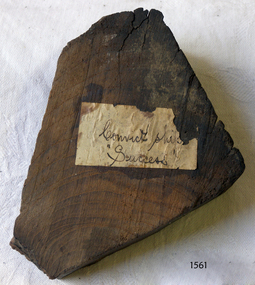
Wood Sample, 1840
... women and boys, as a storage vessel for ammunition, a reformatory, and as a floating museum sent around the world to tell the tale of the convict era. During the time “Success” was used as a museum, pamphlets were distributed to paying customers advertising erroneously, that the “Success” was the oldest ship in the world. The “Success” sank and was re-floated twice: the first in Sydney in 1885, the second in the USA in 1918, before it was finally burned and sank July 4, 1946 in Lake Erie, near Sandusky, Ohio in 1946. Although the “Success” was home to prisoners...women and boys, as a storage vessel for ammunition, a reformatory, and as a floating museum sent around the world to tell the tale of the convict era. During the time “Success” was used as a museum, pamphlets were distributed to paying customers advertising erroneously, that the “Success” was the oldest ship in the world. The “Success” sank and was re-floated twice: the first in Sydney in 1885, the second in the USA in 1918, before it was finally burned and sank July 4, 1946 in Lake Erie, near Sandusky, Ohio in 1946. Although the “Success” was home to prisoners ...This shipwreck artefact is a section of wood from the vessel “Success, a former immigrant ship, and later a convict hulk at Melbourne. The sailing ship “Success” was a teakwood vessel built in Natmoo (Natmaw), Tenasserim, Burma (now Myanmar) in 1840 for Cockerell & Co., Calcutta. Over its lifetime of 106 years, it was used to trade in the Indian subcontinent, to transport free emigrants to Australia, as a prison hulk in the Port of Melbourne for both hardened criminals, and later for women and boys, as a storage vessel for ammunition, a reformatory, and as a floating museum sent around the world to tell the tale of the convict era. During the time “Success” was used as a museum, pamphlets were distributed to paying customers advertising erroneously, that the “Success” was the oldest ship in the world. The “Success” sank and was re-floated twice: the first in Sydney in 1885, the second in the USA in 1918, before it was finally burned and sank July 4, 1946 in Lake Erie, near Sandusky, Ohio in 1946. Although the “Success” was home to prisoners while berthed in the Port of Melbourne, it was not used as convict transport. There has been speculation that Ned Kelly’s infamous armour was displayed on the “Success”, but this cannot be verified. Another link to Ned Kelly is Henry Johnson, an Irish prisoner on the Success, who was implicated in the murder of the ship’s warder, and later Johnson was supposedly a bushranger with Ned Kelly. It is also rumoured that Ned Kelly’s father John was a passenger on the Success, but this is also unverified. There are over 16 other ships named “Success”, although one in particular causes some confusion when researching “Success” in Australia. This other ship – the “HMS Success” was a 28 gun frigate built in1823, which was broken up in 1849. It also sailed to Australia. Statement of Significance: This piece of wood from the “Success” is connected to the ship Success, built in Burma in 1840. The “Success” is connected to the history of Australia because she was used as a merchant ship to transport immigrants to Australia, as a prison ship in Melbourne, a storage vessel, and as a floating “convict” museum, which travelled the world. Section of wood from ship “Success”. Wood appears to have been partially burnt, saw marks faintly visible on wood, remnant of a label with handwriting in black inklabel marked in script handwriting “Convict ship / “Success””flagstaff hill, warrnambool, shipwrecked-coast, flagstaff-hill, flagstaff-hill-maritime-museum, maritime-museum, shipwreck-coast, flagstaff-hill-maritime-village, sailing vessel success, wood sample of sailing ship success, cockerell & co. calcutta -
 The Beechworth Burke Museum
Audio - Oral History, Jennifer Williams, Barry Pope, 26/6/2000
... Women's Prison in Melbourne. He then returned to Beechworth to work in the prison system. In his story Mr Pope discusses many aspects of prison life for both prisoners and prison officers, from the food and daily routine, attitudes to discipline and rehabilitation, industries and opportunities available to prisoners and how prisoners were viewed in society after their period in prison was finished. ...Women's Prison in Melbourne. He then returned to Beechworth to work in the prison system. In his story Mr Pope discusses many aspects of prison life for both prisoners and prison officers, from the food and daily routine, attitudes to discipline and rehabilitation, industries and opportunities available to prisoners and how prisoners were viewed in society after their period in prison was finished. ...Barry Pope left Melbourne at the intentions of travelling around Australia, met a local girl in Beechworth and decided to stay. He worked firstly in logging operations at the mill in Stanley, had some bartending jobs at Beechworth hotels, then got a job as a kitchen-hand at the Mayday Hill Hospital. Taking up new opportunities to advance his career and earning potential, he trained as a prison officer, working for several months at Pentridge Prison and Fairlea Women's Prison in Melbourne. He then returned to Beechworth to work in the prison system. In his story Mr Pope discusses many aspects of prison life for both prisoners and prison officers, from the food and daily routine, attitudes to discipline and rehabilitation, industries and opportunities available to prisoners and how prisoners were viewed in society after their period in prison was finished. This oral history recording was part of a project conducted by Jennifer Williams in the year 2000 to capture the everyday life and struggles in Beechworth during the twentieth century. This project involved recording seventy oral histories on cassette tapes of local Beechworth residents which were then published in a book titled: Listen to what they say: voices of twentieth century Beechworth. These cassette tapes were digitised in July 2021 with funds made available by the Friends of the Burke.Barry Pope's account of his career is historically and socially significant as it details practices within the prison industry in the Twentieth Century as well as the operations of regional hospitals. This oral history account is socially and historically significant as it is a part of a broader collection of interviews conducted by Jennifer Williams which were published in the book 'Listen to what they say: voices of twentieth-century Beechworth.' While the township of Beechworth is known for its history as a gold rush town, these accounts provide a unique insight into the day-to-day life of the town's residents during the 20th century, many of which will have now been lost if they had not been preserved.This is a digital copy of a recording that was originally captured on a cassette tape. The cassette tape is black with a horizontal white strip and is currently stored in a clear flat plastic rectangular container. It holds up 40 minutes of recordings on each side.Barry Pope /beechworth, 1960s, 1970s, 1980s, stanley mill, logging, hotel wentworth, oral history, hospital garden, mayday hill hospital, met hospital, social welfare department, loyola, lyolla, pentridge prison, fairlea women's prison, prison officer training, drug crimes, prison daily life, prison farm, prison wood workshop, prison industry, prison escapes, beechworth prison, prison suicides, prison violence, prisoner attitudes to crime, mental health, isolation cells, walking dog scheme, guide dogs, prison concerts, prison plays, george smee, prison food, prison officer accommodation -
 Lara RSL Sub Branch
Photograph Album, To Allan Groves, 1917
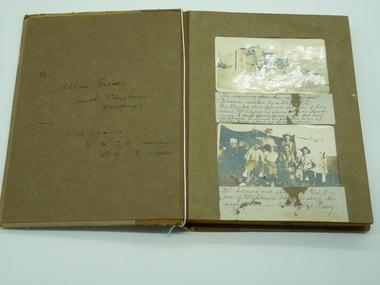
... In general the photos are of Will Adams experience in Egypt The Rafa Raid Prisoners of war, Beni Selah women waiting for water. Women making bricks, 53rd Casualty Clearing Station destroyed by a bomb, Royal Scots Fusilier Pipe Band after church parade, The Sultan Hasser Mosque ...In general the photos are of Will Adams experience in Egypt The Rafa Raid Prisoners of war, Beni Selah women waiting for water. Women making bricks, 53rd Casualty Clearing Station destroyed by a bomb, Royal Scots Fusilier Pipe Band after church parade, The Sultan Hasser Mosque Cardboard Album Khaki coloured 8 leaves with photos and written descriptions To Allan Groves Photograph Album ...Cardboard Album Khaki coloured 8 leaves with photos and written descriptionsFront sleeve To Allan Groves With Christmas greetings from Will Adams YMCA Secretary with A.L.H. Brigade There are explanations under each couple of photos too much to write in this space. In general the photos are of Will Adams experience in Egypt The Rafa Raid Prisoners of war, Beni Selah women waiting for water. Women making bricks, 53rd Casualty Clearing Station destroyed by a bomb, Royal Scots Fusilier Pipe Band after church parade, The Sultan Hasser Mosque photograph, album, egyp, ww1, allan groves, will adams, rafa raid, 53rd casualty clearing station -
 Lara RSL Sub Branch
Book, Australia in the War of 1939-1945 MEDICAL SERVICES of the RAN and RAAF Author Allan.S. Walker MD. Ch.M F.R.A.C.P, First published in 1961
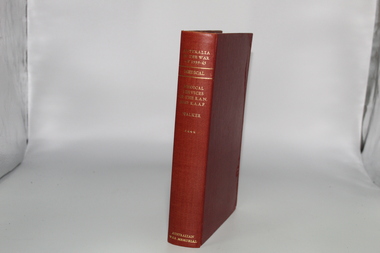
... Women in the Medical Services ran raaf medical building the naval medical service medical stores and eqipment living conditions in ships prisoners of war burns infectious diseases diseases of the skin affections of the ear, nose and throat dental branch medical units in base areas and in the field milne bay to noemfoor morotai to philippines and borneo aviation medical medical aspects of survival raaf nursing service physiotherapists occupational therapists the australian army medical women's service Australian War Memorial Australia in the War of 1939-1945 - Medical Services of the RAN and RAAF Australia in the War of 1939-1945 MEDICAL SERVICES of the RAN and RAAF Author Allan.S. ...Part One - Medical services of the RAN Part 2 - Medical Services of the RAAF. Part 3 - Women in the Army Medical Services.Women in the Medical ServicesAustralia in the War of 1939-1945 - Medical Services of the RAN and RAAFAustralian War Memorialran raaf medical, building the naval medical service, medical stores and eqipment, living conditions in ships, prisoners of war, burns, infectious diseases, diseases of the skin, affections of the ear, nose and throat, dental branch, medical units in base areas and in the field, milne bay to noemfoor, morotai to philippines and borneo, aviation medical, medical aspects of survival, raaf nursing service, physiotherapists, occupational therapists, the australian army medical women's service -
 Orbost & District Historical Society
Red Cross Box, 1939
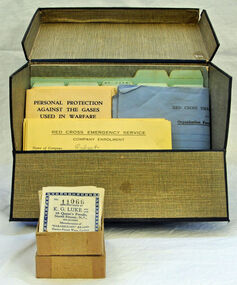
... Women produced millions of pounds worth of in-kind support through volunteer labour and goods, sending an astonishing volume of goods overseas to servicemen and prisoners of war. ...This box was donated by Mary Gilbert who was the Orbost Red Cross Superintendent. Australian women's efforts on the home front to support the nation during WWI and WWII were monumental. They worked tirelessly for Red Cross in response to the national emergency, serving the humanitarian needs of the nation. Women produced millions of pounds worth of in-kind support through volunteer labour and goods, sending an astonishing volume of goods overseas to servicemen and prisoners of war. They knitted and sewed socks, towels and vests for soldiers.A black Red Cross box containing training cards, forms and badges. The box is made of card and covered in black fabric.red-cross gilbert-mary world-war-11 -
 Flagstaff Hill Maritime Museum and Village
Equipment - Ship's Wheel, 1840
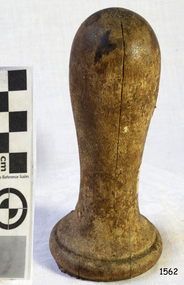
... women and boys, as a storage vessel for ammunition, a reformatory, and as a floating museum sent around the world to tell the tale of the convict era. During the time “Success” was used as a museum, pamphlets were distributed to paying customers advertising erroneously, that the “Success” was the oldest ship in the world. The “Success” sank and was re-floated twice: the first in Sydney in 1885, the second in the USA in 1918, before it was finally burned and sank on July 4, 1946 in Lake Erie, near Sandusky, Ohio, in 1946. Although the “Success” was home to prisoners...women and boys, as a storage vessel for ammunition, a reformatory, and as a floating museum sent around the world to tell the tale of the convict era. During the time “Success” was used as a museum, pamphlets were distributed to paying customers advertising erroneously, that the “Success” was the oldest ship in the world. The “Success” sank and was re-floated twice: the first in Sydney in 1885, the second in the USA in 1918, before it was finally burned and sank on July 4, 1946 in Lake Erie, near Sandusky, Ohio, in 1946. Although the “Success” was home to prisoners ...This wooden spoke handle is from the wheel of the sailing ship “Success”, a former immigrant ship and later a convict hulk at Melbourne. The sailing ship “Success” was a teakwood vessel built in Natmoo (Natmaw), Tenasserim, Burma (now Myanmar) in 1840 for Cockerell & Co., Calcutta. Over its lifetime of 106 years, it was used to trade in the Indian subcontinent, to transport free emigrants to Australia, as a prison hulk in the Port of Melbourne for both hardened criminals, and later for women and boys, as a storage vessel for ammunition, a reformatory, and as a floating museum sent around the world to tell the tale of the convict era. During the time “Success” was used as a museum, pamphlets were distributed to paying customers advertising erroneously, that the “Success” was the oldest ship in the world. The “Success” sank and was re-floated twice: the first in Sydney in 1885, the second in the USA in 1918, before it was finally burned and sank on July 4, 1946 in Lake Erie, near Sandusky, Ohio, in 1946. Although the “Success” was home to prisoners while berthed in the Port of Melbourne, it was not used as convict transport. There has been speculation that Ned Kelly’s infamous armour was displayed on the “Success”, but this cannot be verified. Another link to Ned Kelly is Henry Johnson, an Irish prisoner on the vessel Success, who was implicated in the murder of the ship’s warder. and later, Johnson was supposedly a bushranger with Ned Kelly. It is also rumoured that Ned Kelly’s father John was a passenger on the Success, but this is also unverified. There are over 16 other ships named “Success”, although one in particular causes some confusion when researching “Success” in Australia. This other ship – the “HMS Success” - was a 28 gun frigate built in1823, which was broken up in 1849. It also sailed to Australia.Thiswooden ship's wheel handle was once part of the ship’s wheel of the sailing ship “Success” , which was, built in Burma in 1840. The “Success” is connected to the history of Australia because she was used as a merchant ship to transport immigrants to Australia, and was also used as a prison ship in Melbourne, a storage vessel, and as a floating “convict” museum, which travelled the world. Ship's wheel handle. Hndle from the wheel of sailing ship, the “Success”. The shaped handle is domed at one end, becoming narrower towards the other end, then flattened out into a beveled circle. The handle has an inscription written in pencil."Success"flagstaff hill maritime museum, maritime museum, sailing ship success, ship's wheel spoke, ship's steering wheel, prison ship, prison hulks, convict ship, spoke handle, ship's wheel, navigation equipment, steering wheel -
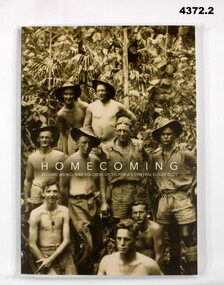 Bendigo Military Museum
Book - WORLD WAR 2 SOLDIERS, Michael GRANT (author), Homecoming, August 2018
... Women of Victoria’s Central Goldfields who served and made the supreme sacrifice in our name”. Books military Histroy Biography WW2 On Title page printed in red ink on adhesive label, “Central Goldfields/Art/Gallery”, in black ink, With Compliments” .1) .2) Books, soft cover, front illustrated sepia tone photograph of group of Soldiers with Jungle vegetation in back ground, 7th Infantry Bn Darwin vicinity, back cover sepia tone photo of Soldiers marching a column of Japanese Naval prisoners. ...Book Dedication, “ And to all the men and Women of Victoria’s Central Goldfields who served and made the supreme sacrifice in our name”..1) .2) Books, soft cover, front illustrated sepia tone photograph of group of Soldiers with Jungle vegetation in back ground, 7th Infantry Bn Darwin vicinity, back cover sepia tone photo of Soldiers marching a column of Japanese Naval prisoners.On Title page printed in red ink on adhesive label, “Central Goldfields/Art/Gallery”, in black ink, With Compliments”books military, histroy, biography ww2 -
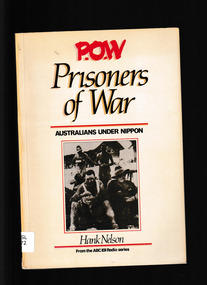 Monbulk RSL Sub Branch
Book, Australian Broadcasting Corporation, P.O.W. : prisoners of war, 1985
... prisoners had died. That is, nearly half of the deaths suffered by Australians in the war in the Pacific were among men and women who had surrendered. ...Within three months of the Japanese entering World War II on December 8, 1941 over 22 000 Australians had become prisoners-of-war. They went into camps in Timor, Ambon, New Britain, Java, Sumatra, Borneo, Singapore and Malaya, and a few were scattered to other points in what was briefly part of the Japanese empire. Later most of the prisoners were to be shifted further north into South-east Asia, Formosa, Korea, Manchuria and Japan itself. They were captives within lands and cultures and to experiences alien to those known to all other Australians. At the end of the war in August 1945, 14315 servicemen and thirty service women were alive to put on new, loose-fitting uniforms and go home. One in three of the prisoners had died. That is, nearly half of the deaths suffered by Australians in the war in the Pacific were among men and women who had surrendered. Another 8174 Australians had been captured in the fighting in Europe, the Middle East and North Africa: but of these men only 265 died as a result of wounds, disease or execution.By any quantitative measure the imprisonment of so many Australians is a major event in Australian history. For many soldiers it was living --and dying --in captivity which made World War II different from that of World War I. But the prisoners have received no permanent place in Australian history. Their story is not immediately recalled on celebratory occasions. In a general history of the nation in which a chapter is given to the war the prisoners might be mentioned in a sentence, or part of a sentence. Where the horror, stoicism and gallantry of Gallipoli have become part of a common tradition shared by all Australians, the ex-prisoners are granted just the horror. The public may be sympathetic; but the horror is for the prisoners alone. To make another comparison: in five months of fighting on the Kokoda Trail in 1942 the Australians lost 625 dead, less than the number who died on Ambon. Yet the events on Ambon are unknown to most Australians. There were no reporters or cameramen on Ambon and, for the 309 who defended Ambon's Laha airfield, no survivors. How many of them died in battle or died as prisoners will never be known. But there are more than just practical reasons why the record of the prisoners of war is so slight and uneven in the general knowledge of Australians. They have not tried to find out. No historian has written a book to cover the range of camps and experiences, and only in specialist medical publications has anyone investigated the impact of prison life on subsequent physical and mental health. The complexity of the experience and its impact on particular lives have not been expressed in a way to give them significance for other Australians.Index, bib, ill, maps, p.224.Within three months of the Japanese entering World War II on December 8, 1941 over 22 000 Australians had become prisoners-of-war. They went into camps in Timor, Ambon, New Britain, Java, Sumatra, Borneo, Singapore and Malaya, and a few were scattered to other points in what was briefly part of the Japanese empire. Later most of the prisoners were to be shifted further north into South-east Asia, Formosa, Korea, Manchuria and Japan itself. They were captives within lands and cultures and to experiences alien to those known to all other Australians. At the end of the war in August 1945, 14315 servicemen and thirty service women were alive to put on new, loose-fitting uniforms and go home. One in three of the prisoners had died. That is, nearly half of the deaths suffered by Australians in the war in the Pacific were among men and women who had surrendered. Another 8174 Australians had been captured in the fighting in Europe, the Middle East and North Africa: but of these men only 265 died as a result of wounds, disease or execution.By any quantitative measure the imprisonment of so many Australians is a major event in Australian history. For many soldiers it was living --and dying --in captivity which made World War II different from that of World War I. But the prisoners have received no permanent place in Australian history. Their story is not immediately recalled on celebratory occasions. In a general history of the nation in which a chapter is given to the war the prisoners might be mentioned in a sentence, or part of a sentence. Where the horror, stoicism and gallantry of Gallipoli have become part of a common tradition shared by all Australians, the ex-prisoners are granted just the horror. The public may be sympathetic; but the horror is for the prisoners alone. To make another comparison: in five months of fighting on the Kokoda Trail in 1942 the Australians lost 625 dead, less than the number who died on Ambon. Yet the events on Ambon are unknown to most Australians. There were no reporters or cameramen on Ambon and, for the 309 who defended Ambon's Laha airfield, no survivors. How many of them died in battle or died as prisoners will never be known. But there are more than just practical reasons why the record of the prisoners of war is so slight and uneven in the general knowledge of Australians. They have not tried to find out. No historian has written a book to cover the range of camps and experiences, and only in specialist medical publications has anyone investigated the impact of prison life on subsequent physical and mental health. The complexity of the experience and its impact on particular lives have not been expressed in a way to give them significance for other Australians.world war 1939 – 1945 - prisons and prisoners – japanese, world war 1939-1945 - personal narrativies - australia -
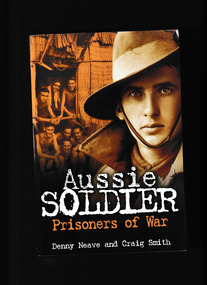 Monbulk RSL Sub Branch
Book, Big Sky Publishing et al, Aussie soldier prisoners of war, 2009
... AUSSIE SOLDIER: PRISONERS OF WAR is about the men and women who found themselves on the wrong side of the wire. ...Almost 35,000 Australian service personnel were taken prisoner during the Boer War, World War I, World War II and the Korean War. Living as a POW demanded extremes of courage, defiance and mateship from our servicemen and women. Some lived to tell their tales about extreme suffering and hardship and many would carry with them forever the memories of those who died. AUSSIE SOLDIER: PRISONERS OF WAR is about the men and women who found themselves on the wrong side of the wire. The heartfelt stories will transport you on their very personal journeys. You will relive the capture, living conditions, escape attempts, punishments, humour, strength and morale -- and for some -- the eventual taste of freedom.Index, ill, bib, maps, p.308.non-fictionAlmost 35,000 Australian service personnel were taken prisoner during the Boer War, World War I, World War II and the Korean War. Living as a POW demanded extremes of courage, defiance and mateship from our servicemen and women. Some lived to tell their tales about extreme suffering and hardship and many would carry with them forever the memories of those who died. AUSSIE SOLDIER: PRISONERS OF WAR is about the men and women who found themselves on the wrong side of the wire. The heartfelt stories will transport you on their very personal journeys. You will relive the capture, living conditions, escape attempts, punishments, humour, strength and morale -- and for some -- the eventual taste of freedom.prisoners of war - australia, prisoners of war - australia - pictorial works -
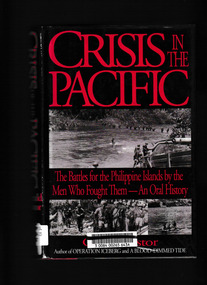 Monbulk RSL Sub Branch
Book, Fine books, Crisis in the Pacific, 1996
... Ranging from the diplomatic and nursing corps' experience of the Japanese conquest and occupation of the islands, to the Bataan death march and first-hand accounts of war crimes inflicted by the Japanese on prisoners of war, to the final push for the hills of Mindanao, Crisis in the Pacific is the first complete history, told in the words of the men and women who were there, of one of the most crucial battlegrounds of World War II. ...In Crisis in the Pacific acclaimed historian Gerald Astor draws on the raw experiences of marines, sailors, soldiers and airmen under fire - from generals and admirals to correspondents, line officers and enlisted men on both sides of the battle lines - to present a view of the critical struggle for the Philippines, the keystone to Japanese domination of the Pacific and to ultimate Allied victory. These accounts, many published here for the first time, are dramatic and graphic, brutal and awe-inspiring. Ranging from the diplomatic and nursing corps' experience of the Japanese conquest and occupation of the islands, to the Bataan death march and first-hand accounts of war crimes inflicted by the Japanese on prisoners of war, to the final push for the hills of Mindanao, Crisis in the Pacific is the first complete history, told in the words of the men and women who were there, of one of the most crucial battlegrounds of World War II.Index, bibliography, ill, p.478.non-fictionIn Crisis in the Pacific acclaimed historian Gerald Astor draws on the raw experiences of marines, sailors, soldiers and airmen under fire - from generals and admirals to correspondents, line officers and enlisted men on both sides of the battle lines - to present a view of the critical struggle for the Philippines, the keystone to Japanese domination of the Pacific and to ultimate Allied victory. These accounts, many published here for the first time, are dramatic and graphic, brutal and awe-inspiring. Ranging from the diplomatic and nursing corps' experience of the Japanese conquest and occupation of the islands, to the Bataan death march and first-hand accounts of war crimes inflicted by the Japanese on prisoners of war, to the final push for the hills of Mindanao, Crisis in the Pacific is the first complete history, told in the words of the men and women who were there, of one of the most crucial battlegrounds of World War II.world war 1939 – 1945 – campaigns – phillipines, world war 1939 – 1945 – personal narratives -
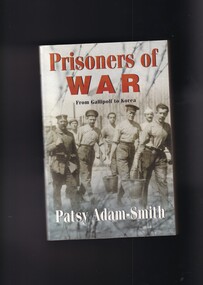 Monbulk RSL Sub Branch
Book, Ken Fin, Prisoners of war: From Gallipoli to Korea
... australia - military history australia - prisoners of war In 'Prisoners of War' dozens of interviews with former POWs are used to show the strength and courage of Australians taken prisoner in World War I, World War II and the Korean War. This book was written for those who know little of the experiences of these men and women; their courage, endurance and pain. ...In 'Prisoners of War' dozens of interviews with former POWs are used to show the strength and courage of Australians taken prisoner in World War I, World War II and the Korean War. This book was written for those who know little of the experiences of these men and women; their courage, endurance and pain.Index, ill (B/W plates), p.726.non-fictionIn 'Prisoners of War' dozens of interviews with former POWs are used to show the strength and courage of Australians taken prisoner in World War I, World War II and the Korean War. This book was written for those who know little of the experiences of these men and women; their courage, endurance and pain.australia - military history, australia - prisoners of war -
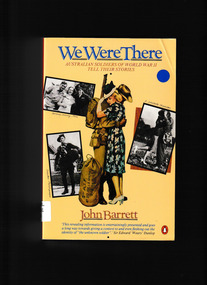 Monbulk RSL Sub Branch
Penguin, We were there : Australian soldiers of World War II tell their stories, 1988
... World war 1939 – 1945 – Personal narratives – Australia World war 1939 – 1945 – Campaigns – Australia Aborigines and army service - Australian women's Army - Burma-Thailand railway - Prisoners of war (POW's). ...Aborigines and army service - Australian women's Army - Burma-Thailand railway - Prisoners of war (POW's).Index, ill, p.470.non-fictionAborigines and army service - Australian women's Army - Burma-Thailand railway - Prisoners of war (POW's).world war 1939 – 1945 – personal narratives – australia, world war 1939 – 1945 – campaigns – australia -
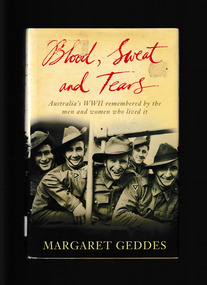 Monbulk RSL Sub Branch
Book, Viking, Blood, sweat and tears : Australia's WWII remembered by the men and women who lived it, 2004
... Prisoners of war, airmen, nurses, landgirls, internees, schoolchildren, soldiers, sailors and volunteers of every description share their memories of a time of horror, tragedy, love and excitement. B Index, ill, p.403. Blood, sweat and tears : Australia's WWII remembered by the men and women ...Blood, Sweat and Tears brings together the first-hand accounts of more than seventy-five ordinary Australians who did extraordinary things during World War II. Prisoners of war, airmen, nurses, landgirls, internees, schoolchildren, soldiers, sailors and volunteers of every description share their memories of a time of horror, tragedy, love and excitement. BIndex, ill, p.403.non-fictionBlood, Sweat and Tears brings together the first-hand accounts of more than seventy-five ordinary Australians who did extraordinary things during World War II. Prisoners of war, airmen, nurses, landgirls, internees, schoolchildren, soldiers, sailors and volunteers of every description share their memories of a time of horror, tragedy, love and excitement. Bworld war 1939-1945 - australia - history, australia 1939-1945 - social conditions -
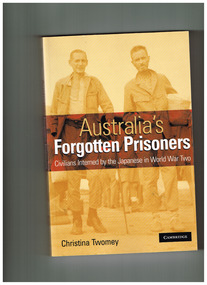 Monbulk RSL Sub Branch
Book, Cambridge, Australia's forgotten prisoners: Civilians interred by the Japanese in World War Two, 2007
... prisoners of war - japan The Japanese captured 1500 Australian civilians during World War II. They spent the war interned in harsh, prison-like camps throughout the Asia-Pacific region. Civilian internees - though not members of the armed forces - endured hardship, privation and even death at the hands of the enemy." "This book tells the stories of Australian civilians interned by the Japanese in World War II. By re-creating the daily lives and dramas within internment camps, it explores how captivity posed different dilemmas for the men, women ...The Japanese captured 1500 Australian civilians during World War II. They spent the war interned in harsh, prison-like camps throughout the Asia-Pacific region. Civilian internees - though not members of the armed forces - endured hardship, privation and even death at the hands of the enemy." "This book tells the stories of Australian civilians interned by the Japanese in World War II. By re-creating the daily lives and dramas within internment camps, it explores how captivity posed different dilemmas for the men, women and children held there.Ill, bib, index, notes, p.207.non-fictionThe Japanese captured 1500 Australian civilians during World War II. They spent the war interned in harsh, prison-like camps throughout the Asia-Pacific region. Civilian internees - though not members of the armed forces - endured hardship, privation and even death at the hands of the enemy." "This book tells the stories of Australian civilians interned by the Japanese in World War II. By re-creating the daily lives and dramas within internment camps, it explores how captivity posed different dilemmas for the men, women and children held there.japan - prisons and prisoners of war, world war 1939-1945 - prisoners of war - japan -
 Alfred Hospital Nurses League - Nursing History Collection
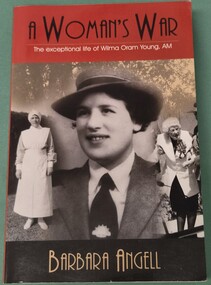
Book - Illustrated book, Barbara Angell 1935, A woman's war; the exceptional life of Wilma Oram Young, AM, 2003
... Wilma Oram Young Nurses-Australia-Biography World Ward 1939-1945-prisoners and prisons-Japaneses This is the story of one of Australia's most remarkable women. ...This is the story of one of Australia's most remarkable women. As a prisoner of war for three and a half years during World War II, Wilma Oram, a young Australian nurse experienced the very worst of human brutality: starvation, deprivation and degradation. Yet, through the comradeship of her fellow prisoners, she also experienced humankind at its best. Following her return to Australia, Wilma was inspired to help her fellow ex-POWs and war veterans through her tireless work with the RSL.Illustrated book, with three black and white photographs of Wilma Oram Young (as student nurse, in army uniform and in older age). There is a mid-brown band above this photo on which the title is printed in black and white, below the photos there is a black band on which the author's name is printed in light brown. Spine has mid brown background with title printed in black, author's name in light brown, and publisher's mark in white. The back cover has a summary of the book printed in black ink on a light brown background.non-fictionThis is the story of one of Australia's most remarkable women. As a prisoner of war for three and a half years during World War II, Wilma Oram, a young Australian nurse experienced the very worst of human brutality: starvation, deprivation and degradation. Yet, through the comradeship of her fellow prisoners, she also experienced humankind at its best. Following her return to Australia, Wilma was inspired to help her fellow ex-POWs and war veterans through her tireless work with the RSL.wilma oram young, nurses-australia-biography, world ward 1939-1945-prisoners and prisons-japaneses -
 Alfred Hospital Nurses League - Nursing History Collection
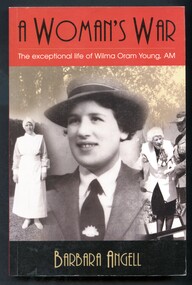
Book - Illustrated book, Barbara Angell 1935, A woman's war; the exceptional life of Wilma Oram Young, AM, 2003
... Wilma Oram Young Nurses-Australia-Biography World Ward 1939-1945-prisoners and prisons-Japaneses This is the story of one of Australia's most remarkable women. ...This is the story of one of Australia's most remarkable women. As a prisoner of war for three and a half years during World War II, Wilma Oram, a young Australian nurse experienced the very worst of human brutality: starvation, deprivation and degradation. Yet, through the comradeship of her fellow prisoners, she also experienced humankind at its best. Following her return to Australia, Wilma was inspired to help her fellow ex-POWs and war veterans through her tireless work with the RSL.Illustrated book, with three black and white photographs of Wilma Oram Young (as student nurse, in army uniform and in older age). There is a mid-brown band above this photo on which the title is printed in black and white, below the photos there is a black band on which the author's name is printed in light brown. Spine has mid brown background with title printed in black, author's name in light brown, and publisher's mark in white. The back cover has a summary of the book printed in black ink on a light brown background.non-fictionThis is the story of one of Australia's most remarkable women. As a prisoner of war for three and a half years during World War II, Wilma Oram, a young Australian nurse experienced the very worst of human brutality: starvation, deprivation and degradation. Yet, through the comradeship of her fellow prisoners, she also experienced humankind at its best. Following her return to Australia, Wilma was inspired to help her fellow ex-POWs and war veterans through her tireless work with the RSL.wilma oram young, nurses-australia-biography, world ward 1939-1945-prisoners and prisons-japaneses -
 Alfred Hospital Nurses League - Nursing History Collection
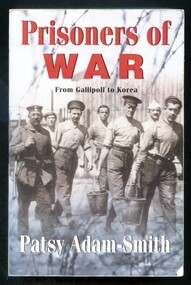
Book - Illustrated book, Patsy Adam-Smith 1924-2001, Prisoners of war: from Gallipoli to Korea, 1998
... Back cover has a black and white photograph of a group of women (Australian nurses, (civilian and army) after being held POW for almost three and a half years by the Japanese). Under this photograph is a summary of the book and information about the author. Prisoners ...This book has not been written for ex-prisoners: they know the homesickness of exile, the tyranny of bondage; it was written for those people of today who know little of the experiences of these men and women, of their courage, endurance and pain. It has been written for the generations to come.Illustrated book. The front cover and spine have the same black and white photograph of six men walking ("the guards were old, the soldiers young. Bertie Giles is third from left) Front cover has full title in red and black print, authors name in white print. Spine has abbreviated title in red print, authors name in black and white print and publishers name in black print. Back cover has a black and white photograph of a group of women (Australian nurses, (civilian and army) after being held POW for almost three and a half years by the Japanese). Under this photograph is a summary of the book and information about the author.non-fictionThis book has not been written for ex-prisoners: they know the homesickness of exile, the tyranny of bondage; it was written for those people of today who know little of the experiences of these men and women, of their courage, endurance and pain. It has been written for the generations to come.prisoners of war-australia, world war 1914-1918-prisoners and prisons, world war 1939-1945-prisoners and prisons, korean war 1950-1953 - prisoners and prisons -
 Warrnambool and District Historical Society Inc.
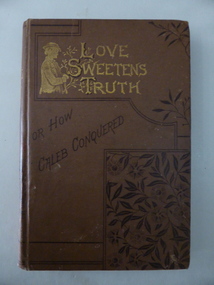
Book, Love sweetens truth, 1880s
... He established many institutions for the less fortunate, including the Prisoners’ Aid Society, the Children’s Hospital, lending libraries, cottages for widows, shelters for homeless men and women, a society for the protection of animals and the Collingwood Free Medical Dispensary. ...He established many institutions for the less fortunate, including the Prisoners’ Aid Society, the Children’s Hospital, lending libraries, cottages for widows, shelters for homeless men and women, a society for the protection of animals and the Collingwood Free Medical Dispensary. ...This book was a prize awarded to Miss Middleton, a pupil at Ormiston House College, East Melbourne in 1887. The Principals of the school were the Misses Singleton and their father, Dr John Singleton was a practising doctor in Warrnambool from 1860 to 1865. He had an important influence on Warrnambool, establishing several Total Abstinence Societies and campaigning for improved health conditions for pastoral workers in the district and the aborigines at Framlingham. In Melbourne Dr Singleton and his wife worked tirelessly for the underprivileged. He established many institutions for the less fortunate, including the Prisoners’ Aid Society, the Children’s Hospital, lending libraries, cottages for widows, shelters for homeless men and women, a society for the protection of animals and the Collingwood Free Medical Dispensary. He died in 1891 at Ormiston House, his daughters’ school and home. It is not known which of the Singleton daughters ran the school and no information has been found on Miss Middleton. This book is of considerable interest as it has a close connection to Dr John Singleton, important not only in the social history of Melbourne but also in the history of Warrnambool. This is a hard cover book of 160 pages with 16 pages at the back of the book of advertisements for other books published by the Religious Tract Society. The cover is brown with a sketch of a young man and lettering in gold and an ornamental floral pattern on the front cover. The gold lettering and the ornamental floral pattern are also on the spine. The book has 13 chapters with ornamental scrolls and initials at the beginning and end of each chapter. There are also some full page black and white sketches in the book, with the one at the front of the book covered by a piece of tissue paper. The book plate at the front of the book is white with a gold border pasted onto the page and handwritten details have been added in black ink. The book is a little scuffed at the edges of the cover. ‘Ormiston House College, East Melbourne, Principals, The Misses Singleton, Prize for Writing and Maps in Upper Third Class Awarded to Miss Middleton, Christmas 1887.’ dr john singleton, ormiston house, history of warrnambool -
 Stawell Historical Society Inc
Photograph, Salvation Army Donation Tin -- 2 Photos
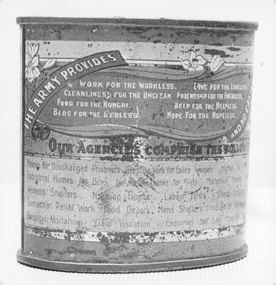
... Homes for Discharged Prisoners. Rescue Work for fallen Women. Industrial Homes for Boys. ...Homes for Discharged Prisoners. Rescue Work for fallen Women. Industrial Homes for Boys. ...Salvation Army Donation Tin. Two photographs possible the front and back of one tin. Inscriptions reflect the role of the Salvation Army and their work during this period.Black & white photographs of Donation tin enlarged. Front of tin what is readable "The Salvation Army Society RESCUE AND PRISON GATE WORK broken hearts and blighted hopes slaves of Sin and Degradation. Blood and Fire. The Salvation Army. THE TOTAL number of Homes is now over Six--- Providing Daily Accommodation for 3,000 Persons AND COSTING over --1,200 PER WEEK for MAINTENANCE PLEASE HELP by placing a COIN in the box" On the back of the tin "THE ARMY PROVIDES work for the workless. Love for the Loveless. Cleanliness for the Unclean. Friendship for the Friendless. Food for the Hungry. Help for the Helpless. Beds for the Bedless. Hope for the Hopeless. Our Agencies Comprise the Following. Homes for Discharged Prisoners. Rescue Work for fallen Women. Industrial Homes for Boys. Industrial Homes for Girls. Maternity Bags. Women Shelters, Nursing Homes, Labour Tards. Samaritan Relief Work. Food Depots. Mens Shelters. Industrial Hospital Visitations. Gaol Visitation. Enquiries for Lost F" In Pencil written on the back "Larger than actual Size"stawell religion -
 Tatura Irrigation & Wartime Camps Museum
Photograph - copy, 1989 copy
... Three prisoners with guard, building stone gateway to quarters of Australian Women's Army service. ...Three prisoners with guard, building stone gateway to quarters of Australian Women's Army service. ...Copy of original black and white photograph of AWAS personnel on admin staff of POW camp.Copy of black and white photograph. Three prisoners with guard, building stone gateway to quarters of Australian Women's Army service. Quarters in background.camp 13, murchison victoria, internment camps, awas personnel, awas personnel quarters -
Box Hill Historical Society
Book, Wooldridge, Michael,McCoy, Eleanor, ed, Searchlight on World War II: Chisholm remembers, 1995
... The personal accounts of enlisted servicemen and women, prisoners of war, people in reserved occupations, women and families commemorate and recognise all who were touched by this war. 186p, Photos. ...The people of Chisholm electorate have combined to remember the events of World War II and express their thanks and appreciation for the sacrifices made by others on their behalf. The personal accounts of enlisted servicemen and women, prisoners of war, people in reserved occupations, women and families commemorate and recognise all who were touched by this war.186p, Photos.The people of Chisholm electorate have combined to remember the events of World War II and express their thanks and appreciation for the sacrifices made by others on their behalf. The personal accounts of enlisted servicemen and women, prisoners of war, people in reserved occupations, women and families commemorate and recognise all who were touched by this war. world war, 1939-1945, oral history, wooldridge> michael (dr.), mccoy> eleanor, armed forces, families, chisholm, essex heights primary school, surrey hills nursing home, williams> michelle, james> rebecca, hullin> mavis, carra> christopher, box hill high school, mount waverley secondary college, presbyterian ladies college, young> janet, o'donnell> margaret, green> roslyn, reed> eva, campbell> morfydd, sewell> keith, chisholm electorate oral history project for australia remembers 1945-1995, st. clare's catholic primary school, irwin> amanda -
 Jewish Museum of Australia
Diary of Alfred Broch, 10/7/1940 - 17/12/1940
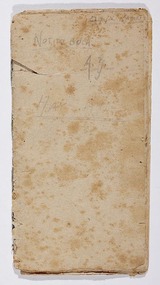
... prisoners of war. Never mind. Corrected. Continuing further bad treatment. Boarding the ship assisted by rifle butts. Robbed as soon as we reached the deck. Impression of a death ship. Complete helplessness. No sleeping facilities. All sleep on the floor, on tables etc. Intended accommodation taken up by luggage cases. (barbed wire). Food good but only spoons. Next day: robbery from the cases. Own people steal. Purloined objects even include toothbrushes and toothpaste. Much to eat. Small convoy with one cruiser. In the same convoy a women’s...prisoners of war. Never mind. Corrected. Continuing further bad treatment. Boarding the ship assisted by rifle butts. Robbed as soon as we reached the deck. Impression of a death ship. Complete helplessness. No sleeping facilities. All sleep on the floor, on tables etc. Intended accommodation taken up by luggage cases. (barbed wire). Food good but only spoons. Next day: robbery from the cases. Own people steal. Purloined objects even include toothbrushes and toothpaste. Much to eat. Small convoy with one cruiser. In the same convoy a women’s ...This diary was handwritten by Alfred Broch over the course of four months in 1940. It was kept while Alfred Broch was travelling on the HMT Dunera and then during his detainment in the Hay internment camp.Bound with cotton and handwritten in pencil. Bound with cotton and handwritten in pencil.[selected passage translation from German, further translation available] : “Dunera” 10.VII – 6.IX.1940 First impression very depressing. Fears. Confusion with prisoners of war. Never mind. Corrected. Continuing further bad treatment. Boarding the ship assisted by rifle butts. Robbed as soon as we reached the deck. Impression of a death ship. Complete helplessness. No sleeping facilities. All sleep on the floor, on tables etc. Intended accommodation taken up by luggage cases. (barbed wire). Food good but only spoons. Next day: robbery from the cases. Own people steal. Purloined objects even include toothbrushes and toothpaste. Much to eat. Small convoy with one cruiser. In the same convoy a women’s transport which soon leaves us as it is bound for Canada and we are quite surprised. The English soldiers and officers have another side. While in the danger zone they only had a webbing belt and slippers. In case of torpedoes – expecting certain death. Bad air as all vents are closed. Other Inscriptions: Front page, upper right, underlined: "Alfred Broch" Front page, upper, underlined: "Notitz Buch" Front page, centre, underlined: "Hay 1941" Page 1, upper right: "Mittwoch 10. VII." Page 3, upper right: "10. VII. - 6. IX. 1940 Page 4, centre: "[...] ARANDORA STAR" Page 11, upper, underlined: "Von Liverpool Nach Hay / Mittwoch 10 VII" dunera, wwii, internment, jewish history & people -
 City of Ballarat
Artwork, other - Public Artwork, Ex-Prisoners of War Memorial by Peter Blizzard, 2004
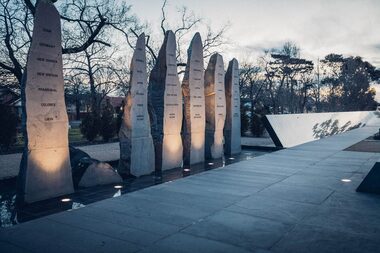
... This memorial designed by Peter Blizzard is dedicated to more than 36,000 Australian men and women were held captive as prisoners by the enemy during the Boer War, World War 1, World War 2 and the Korean War. ...Inscribed with the names of 36,000 Australian men and women were held captive as prisoners by the enemy during the Boer War, World War 1, World War 2 and the Korean War. ...The memorial is of historical and aesthetic importance to the people of Ballarat prisoners of war boer war world war 1 world war 2 korean war lest we forget peter blizzard Inscribed with the names of 36,000 Australian men and women were held captive as prisoners by the enemy during the Boer War, World War 1, World War 2 and the Korean War. ...This memorial designed by Peter Blizzard is dedicated to more than 36,000 Australian men and women were held captive as prisoners by the enemy during the Boer War, World War 1, World War 2 and the Korean War. This memorial honours and names them, the names are etched into the black granite wall adjacent to the pathway. Water springs from beneath the 'Lest We Forget' stone then flows down the wall into the narrow watercourse in front of the first group of names and into the reflective pool, then continues past the second group of names. Finally it disappears under the pathway, returning to its source under the 'Lest We Forget' stone to start the journey again. Water symbolizes the essential nature of man, sacrifice, suffering, spirituality, healing, cleansing, birth and re-birth. The memorial is created from natural materials and is designed to be in harmony with the Ballarat Botanical Gardens, and to create a sense of timeless, dignity and respect. The long pathway of the monument is designed to create a visual perspective of the large distances that Australians travelled to the various conflicts. The paving is shaped like railway sleepers in recognition of the role that railways and railway journeys were relevant to many prisoners of war. The Memorial was declared the first military memorial of national significance located outside Canberra in 2008. Dedication services are held at the memorial on the Sunday closest to 6th of February, ANZAC day and on Remembrance Day. The memorial is of historical and aesthetic importance to the people of BallaratMonument made from carved bluestone, water feature and flagsInscribed with the names of 36,000 Australian men and women were held captive as prisoners by the enemy during the Boer War, World War 1, World War 2 and the Korean War. The listing is by surname and initials and shown by war.prisoners of war, boer war, world war 1, world war 2, korean war, lest we forget, peter blizzard -
 Vision Australia
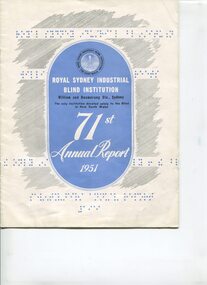
Administrative record - Text, Royal Sydney Industrial Blind Institution: Seventy-First Report 1951, 1951
... prisoners producing Braille has resulted in 83 being created, a profile on the late Jean Currie and appointment of Coral Cook in that position, awarding of an MBE to R.W. Kippax (who has occupied many positions at the Institution), thanks to A.F Toll for the free transport of Braille volumes and the Black and White Committee on another outstanding Ball, and the success of the NSW Blind Cricket Club and the young women at Helen Keller hostel forming the Amazons Blind Girls Sports Club....prisoners producing Braille has resulted in 83 being created, a profile on the late Jean Currie and appointment of Coral Cook in that position, awarding of an MBE to R.W. Kippax (who has occupied many positions at the Institution), thanks to A.F Toll for the free transport of Braille volumes and the Black and White Committee on another outstanding Ball, and the success of the NSW Blind Cricket Club and the young women at Helen Keller hostel forming the Amazons Blind Girls Sports Club. ...Articles in the annual report include: opening of the only nursery for blind babies and children at Victor Maxwell House, a new Braille shorthand class, the erection of an Occupational Therapy Department building, the development of a new switchboard operation course, a trial of long-term prisoners producing Braille has resulted in 83 being created, a profile on the late Jean Currie and appointment of Coral Cook in that position, awarding of an MBE to R.W. Kippax (who has occupied many positions at the Institution), thanks to A.F Toll for the free transport of Braille volumes and the Black and White Committee on another outstanding Ball, and the success of the NSW Blind Cricket Club and the young women at Helen Keller hostel forming the Amazons Blind Girls Sports Club.1 volume of text and imagescorporation records, royal sydney industrial blind institution, jean currie, black and white committee, nsw blind cricket, coral cook, victor maxwell kindergarten, cricket, braille writers association of new south wales, a.f. toll pty ltd, roy kippax, graeme dark, sandra dark, parramatta gaol
