
Showing 59 items matching "women prisoners of war"
-
 Returned Nurses RSL Sub-branch
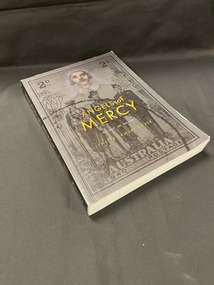
Book - Illustrated paperback book, Lynette Ramsay Silver, Angels of Mercy: Far West Far East, 2019
... ...Women Prisoners of War...Australian Nurses Nursing in warfare World War Two WWII WW2 Marjorie Silver Pat Darling Women Prisoners of War Rural nursing Angels of Mercy follows the gripping stories of two different Australian nursing sisters, Marjorie Silver and Pat Darling, who overcame the challenging adversities of two very different circumstances. ...Angels of Mercy follows the gripping stories of two different Australian nursing sisters, Marjorie Silver and Pat Darling, who overcame the challenging adversities of two very different circumstances. These two remarkable, highly resilient women may not be remembered as great Australians, but they will be remembered for making Australia great. “Angels of Mercy follows the gripping stories of two different Australian nursing sisters, who overcame the challenging adversities of two very different circumstances. In the 1930s Marjorie Silver, the outback flying sister, fought almost singlehandedly against the isolation, poverty, heat and dust of the far west of New South Wales to bring vital medical assistance to her far flung patients. Sister Pat Gunther, who served in the Far East on the battlefields of Malaya and Singapore, then fought a desperate battle for survival in the prison camps of Sumatra.”--Back cover.Black paperback book with title and author printed in gold text and the image of a 1940 postage stamp in the background.non-fiction Angels of Mercy follows the gripping stories of two different Australian nursing sisters, Marjorie Silver and Pat Darling, who overcame the challenging adversities of two very different circumstances. These two remarkable, highly resilient women may not be remembered as great Australians, but they will be remembered for making Australia great. “Angels of Mercy follows the gripping stories of two different Australian nursing sisters, who overcame the challenging adversities of two very different circumstances. In the 1930s Marjorie Silver, the outback flying sister, fought almost singlehandedly against the isolation, poverty, heat and dust of the far west of New South Wales to bring vital medical assistance to her far flung patients. Sister Pat Gunther, who served in the Far East on the battlefields of Malaya and Singapore, then fought a desperate battle for survival in the prison camps of Sumatra.”--Back cover. australian nurses, nursing in warfare, world war two, wwii, ww2, marjorie silver, pat darling, women prisoners of war, rural nursing -
 Returned Nurses RSL Sub-branch
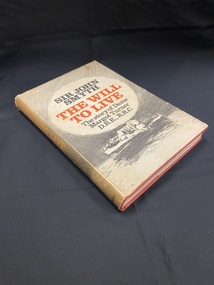
Book - Hardcover book, John Smyth, The will to live: the story of Dame Margot Turner D.B.E., R.R.C, 1970
... ...women prisoners of war...Margot Turner Japanese POW women prisoners of war Army Nurses Margot Turner joined Queen Alexandra's Imperial Military Nursing Service in 1937. ...Margot Turner joined Queen Alexandra's Imperial Military Nursing Service in 1937. In 1941 she was sent to Singapore. When Singapore surrendered to the Japanese she managed to escape, she spent four days alone on a raft before being captured as a prisoner of war. She survived three and a half years in the Japanese camp and later went on to become Matron-in-chief and Director of the Army Nursing Service.Red hard-cover book with a dust-jacket. The dust-jacket shows a grey and white pencil sketch on the front cover and spine of a nurse floating on a raft. The title and author are printed in the centre in black and red text. On the back cover is a black and white photograph of Margot Turner in uniform.non-fictionMargot Turner joined Queen Alexandra's Imperial Military Nursing Service in 1937. In 1941 she was sent to Singapore. When Singapore surrendered to the Japanese she managed to escape, she spent four days alone on a raft before being captured as a prisoner of war. She survived three and a half years in the Japanese camp and later went on to become Matron-in-chief and Director of the Army Nursing Service.margot turner, japanese pow, women prisoners of war, army nurses -
 Returned Nurses RSL Sub-branch
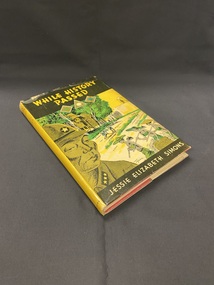
Book - Hardcover book, Jessie Elizabeth Simons, While history passed: the story of the Australian Nurses who were prisoners of the Japanese for three and a half years, 1954
... Women prisoners...Prisoners of War...'Of historical importance' [taken from back cover] Women prisoners Prisoners of War Australian Nurses World War 2 World War II WWII WW2 Japanese Vyner Brooke Sister Jessie Elizabeth Simons Sister Jessie Elizabeth Simons tells the story of the sixty-five members of the Australian Army Nursing Service who were evacuated from Singapore just before the arrival of the Japanese, their ship was bombed and sunk and they were captured by the Japanese soldiers and held in prison camps until the day of liberation. ...Sister Jessie Elizabeth Simons tells the story of the sixty-five members of the Australian Army Nursing Service who were evacuated from Singapore just before the arrival of the Japanese, their ship was bombed and sunk and they were captured by the Japanese soldiers and held in prison camps until the day of liberation.Hardcover book with a dustjacket firmly attached. There is a black panel across the top with the title in yellow print and another thinner black panel across the bottom with the author's name in cream coloured print. The front cover shows an illustration of a Japanese soldier in the foreground and behind him are eight women working in a field, they are being watched by an armed soldier stationed at a lookout on a wall behind them. The image is in black, green and yellow.non-fictionSister Jessie Elizabeth Simons tells the story of the sixty-five members of the Australian Army Nursing Service who were evacuated from Singapore just before the arrival of the Japanese, their ship was bombed and sunk and they were captured by the Japanese soldiers and held in prison camps until the day of liberation.women prisoners, prisoners of war, australian nurses, world war 2, world war ii, wwii, ww2, japanese, vyner brooke, sister jessie elizabeth simons -
 Returned Nurses RSL Sub-branch
Book - Hardcover book, Jessie Elizabeth Simons, While history passed: the story of the Australian Nurses who were prisoners of the Japanese for three and a half years, 1954
... Women prisoners...Prisoners of War...Women prisoners Prisoners of War Australian Nurses World War 2 World War II WWII WW2 Japanese Vyner Brooke Sister Jessie Elizabeth Simons Sister Jessie Elizabeth Simons tells the story of the sixty-five members of the Australian Army Nursing Service who were evacuated from Singapore just before the arrival of the Japanese, their ship was bombed and sunk and they were captured by the Japanese soldiers and held in prison camps until the day of liberation. ...Sister Jessie Elizabeth Simons tells the story of the sixty-five members of the Australian Army Nursing Service who were evacuated from Singapore just before the arrival of the Japanese, their ship was bombed and sunk and they were captured by the Japanese soldiers and held in prison camps until the day of liberation.Faded red hard covered, cloth-bound book with gold title on the spine and a white sticker at the bottom of the spine with B38 in red texta.non-fictionSister Jessie Elizabeth Simons tells the story of the sixty-five members of the Australian Army Nursing Service who were evacuated from Singapore just before the arrival of the Japanese, their ship was bombed and sunk and they were captured by the Japanese soldiers and held in prison camps until the day of liberation.women prisoners, prisoners of war, australian nurses, world war 2, world war ii, wwii, ww2, japanese, vyner brooke, sister jessie elizabeth simons -
 Lara RSL Sub Branch
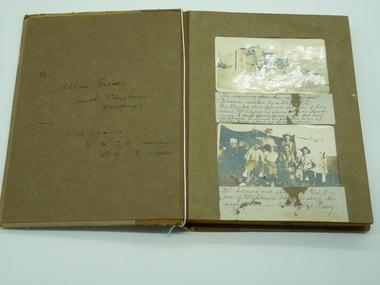
Photograph Album, To Allan Groves, 1917
... In general the photos are of Will Adams experience in Egypt The Rafa Raid Prisoners of war, Beni Selah women waiting for water. Women making bricks, 53rd Casualty Clearing Station destroyed by a bomb, Royal Scots Fusilier Pipe Band after church parade, The Sultan Hasser Mosque ...In general the photos are of Will Adams experience in Egypt The Rafa Raid Prisoners of war, Beni Selah women waiting for water. Women making bricks, 53rd Casualty Clearing Station destroyed by a bomb, Royal Scots Fusilier Pipe Band after church parade, The Sultan Hasser Mosque Cardboard Album Khaki coloured 8 leaves with photos and written descriptions To Allan Groves Photograph Album ...Cardboard Album Khaki coloured 8 leaves with photos and written descriptionsFront sleeve To Allan Groves With Christmas greetings from Will Adams YMCA Secretary with A.L.H. Brigade There are explanations under each couple of photos too much to write in this space. In general the photos are of Will Adams experience in Egypt The Rafa Raid Prisoners of war, Beni Selah women waiting for water. Women making bricks, 53rd Casualty Clearing Station destroyed by a bomb, Royal Scots Fusilier Pipe Band after church parade, The Sultan Hasser Mosque photograph, album, egyp, ww1, allan groves, will adams, rafa raid, 53rd casualty clearing station -
 Lara RSL Sub Branch
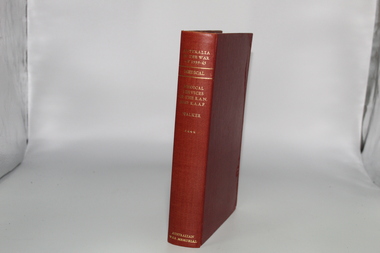
Book, Australia in the War of 1939-1945 MEDICAL SERVICES of the RAN and RAAF Author Allan.S. Walker MD. Ch.M F.R.A.C.P, First published in 1961
... Women in the Medical Services ran raaf medical building the naval medical service medical stores and eqipment living conditions in ships prisoners of war burns infectious diseases diseases of the skin affections of the ear, nose and throat dental branch medical units in base areas and in the field milne bay to noemfoor morotai to philippines and borneo aviation medical medical aspects of survival raaf nursing service physiotherapists occupational therapists the australian army medical women's service Australian War Memorial Australia in the War of 1939-1945 - Medical Services of the RAN and RAAF Australia in the War of 1939-1945 MEDICAL SERVICES of the RAN and RAAF Author Allan.S. ...Part One - Medical services of the RAN Part 2 - Medical Services of the RAAF. Part 3 - Women in the Army Medical Services.Women in the Medical ServicesAustralia in the War of 1939-1945 - Medical Services of the RAN and RAAFAustralian War Memorialran raaf medical, building the naval medical service, medical stores and eqipment, living conditions in ships, prisoners of war, burns, infectious diseases, diseases of the skin, affections of the ear, nose and throat, dental branch, medical units in base areas and in the field, milne bay to noemfoor, morotai to philippines and borneo, aviation medical, medical aspects of survival, raaf nursing service, physiotherapists, occupational therapists, the australian army medical women's service -
 Orbost & District Historical Society
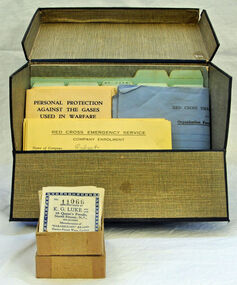
Red Cross Box, 1939
... Women produced millions of pounds worth of in-kind support through volunteer labour and goods, sending an astonishing volume of goods overseas to servicemen and prisoners of war. ...This box was donated by Mary Gilbert who was the Orbost Red Cross Superintendent. Australian women's efforts on the home front to support the nation during WWI and WWII were monumental. They worked tirelessly for Red Cross in response to the national emergency, serving the humanitarian needs of the nation. Women produced millions of pounds worth of in-kind support through volunteer labour and goods, sending an astonishing volume of goods overseas to servicemen and prisoners of war. They knitted and sewed socks, towels and vests for soldiers.A black Red Cross box containing training cards, forms and badges. The box is made of card and covered in black fabric.red-cross gilbert-mary world-war-11 -
 Bendigo Military Museum
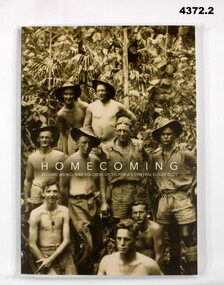
Book - WORLD WAR 2 SOLDIERS, Michael GRANT (author), Homecoming, August 2018
... Women of Victoria’s Central Goldfields who served and made the supreme sacrifice in our name”. Books military Histroy Biography WW2 On Title page printed in red ink on adhesive label, “Central Goldfields/Art/Gallery”, in black ink, With Compliments” .1) .2) Books, soft cover, front illustrated sepia tone photograph of group of Soldiers with Jungle vegetation in back ground, 7th Infantry Bn Darwin vicinity, back cover sepia tone photo of Soldiers marching a column of Japanese Naval prisoners. Homecoming Book WORLD WAR ...Book Dedication, “ And to all the men and Women of Victoria’s Central Goldfields who served and made the supreme sacrifice in our name”..1) .2) Books, soft cover, front illustrated sepia tone photograph of group of Soldiers with Jungle vegetation in back ground, 7th Infantry Bn Darwin vicinity, back cover sepia tone photo of Soldiers marching a column of Japanese Naval prisoners.On Title page printed in red ink on adhesive label, “Central Goldfields/Art/Gallery”, in black ink, With Compliments”books military, histroy, biography ww2 -
 Monbulk RSL Sub Branch
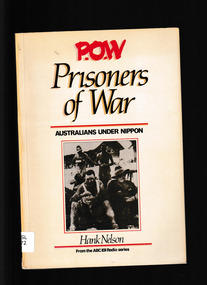
Book, Australian Broadcasting Corporation, P.O.W. : prisoners of war, 1985
... prisoners had died. That is, nearly half of the deaths suffered by Australians in the war in the Pacific were among men and women who had surrendered. ...Within three months of the Japanese entering World War II on December 8, 1941 over 22 000 Australians had become prisoners-of-war. They went into camps in Timor, Ambon, New Britain, Java, Sumatra, Borneo, Singapore and Malaya, and a few were scattered to other points in what was briefly part of the Japanese empire. Later most of the prisoners were to be shifted further north into South-east Asia, Formosa, Korea, Manchuria and Japan itself. They were captives within lands and cultures and to experiences alien to those known to all other Australians. At the end of the war in August 1945, 14315 servicemen and thirty service women were alive to put on new, loose-fitting uniforms and go home. One in three of the prisoners had died. That is, nearly half of the deaths suffered by Australians in the war in the Pacific were among men and women who had surrendered. Another 8174 Australians had been captured in the fighting in Europe, the Middle East and North Africa: but of these men only 265 died as a result of wounds, disease or execution.By any quantitative measure the imprisonment of so many Australians is a major event in Australian history. For many soldiers it was living --and dying --in captivity which made World War II different from that of World War I. But the prisoners have received no permanent place in Australian history. Their story is not immediately recalled on celebratory occasions. In a general history of the nation in which a chapter is given to the war the prisoners might be mentioned in a sentence, or part of a sentence. Where the horror, stoicism and gallantry of Gallipoli have become part of a common tradition shared by all Australians, the ex-prisoners are granted just the horror. The public may be sympathetic; but the horror is for the prisoners alone. To make another comparison: in five months of fighting on the Kokoda Trail in 1942 the Australians lost 625 dead, less than the number who died on Ambon. Yet the events on Ambon are unknown to most Australians. There were no reporters or cameramen on Ambon and, for the 309 who defended Ambon's Laha airfield, no survivors. How many of them died in battle or died as prisoners will never be known. But there are more than just practical reasons why the record of the prisoners of war is so slight and uneven in the general knowledge of Australians. They have not tried to find out. No historian has written a book to cover the range of camps and experiences, and only in specialist medical publications has anyone investigated the impact of prison life on subsequent physical and mental health. The complexity of the experience and its impact on particular lives have not been expressed in a way to give them significance for other Australians.Index, bib, ill, maps, p.224.Within three months of the Japanese entering World War II on December 8, 1941 over 22 000 Australians had become prisoners-of-war. They went into camps in Timor, Ambon, New Britain, Java, Sumatra, Borneo, Singapore and Malaya, and a few were scattered to other points in what was briefly part of the Japanese empire. Later most of the prisoners were to be shifted further north into South-east Asia, Formosa, Korea, Manchuria and Japan itself. They were captives within lands and cultures and to experiences alien to those known to all other Australians. At the end of the war in August 1945, 14315 servicemen and thirty service women were alive to put on new, loose-fitting uniforms and go home. One in three of the prisoners had died. That is, nearly half of the deaths suffered by Australians in the war in the Pacific were among men and women who had surrendered. Another 8174 Australians had been captured in the fighting in Europe, the Middle East and North Africa: but of these men only 265 died as a result of wounds, disease or execution.By any quantitative measure the imprisonment of so many Australians is a major event in Australian history. For many soldiers it was living --and dying --in captivity which made World War II different from that of World War I. But the prisoners have received no permanent place in Australian history. Their story is not immediately recalled on celebratory occasions. In a general history of the nation in which a chapter is given to the war the prisoners might be mentioned in a sentence, or part of a sentence. Where the horror, stoicism and gallantry of Gallipoli have become part of a common tradition shared by all Australians, the ex-prisoners are granted just the horror. The public may be sympathetic; but the horror is for the prisoners alone. To make another comparison: in five months of fighting on the Kokoda Trail in 1942 the Australians lost 625 dead, less than the number who died on Ambon. Yet the events on Ambon are unknown to most Australians. There were no reporters or cameramen on Ambon and, for the 309 who defended Ambon's Laha airfield, no survivors. How many of them died in battle or died as prisoners will never be known. But there are more than just practical reasons why the record of the prisoners of war is so slight and uneven in the general knowledge of Australians. They have not tried to find out. No historian has written a book to cover the range of camps and experiences, and only in specialist medical publications has anyone investigated the impact of prison life on subsequent physical and mental health. The complexity of the experience and its impact on particular lives have not been expressed in a way to give them significance for other Australians.world war 1939 – 1945 - prisons and prisoners – japanese, world war 1939-1945 - personal narrativies - australia -
 Monbulk RSL Sub Branch
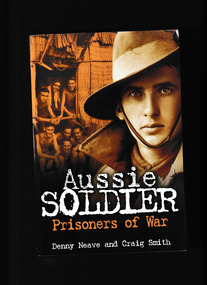
Book, Big Sky Publishing et al, Aussie soldier prisoners of war, 2009
... AUSSIE SOLDIER: PRISONERS OF WAR is about the men and women who found themselves on the wrong side of the wire. ...Almost 35,000 Australian service personnel were taken prisoner during the Boer War, World War I, World War II and the Korean War. Living as a POW demanded extremes of courage, defiance and mateship from our servicemen and women. Some lived to tell their tales about extreme suffering and hardship and many would carry with them forever the memories of those who died. AUSSIE SOLDIER: PRISONERS OF WAR is about the men and women who found themselves on the wrong side of the wire. The heartfelt stories will transport you on their very personal journeys. You will relive the capture, living conditions, escape attempts, punishments, humour, strength and morale -- and for some -- the eventual taste of freedom.Index, ill, bib, maps, p.308.non-fictionAlmost 35,000 Australian service personnel were taken prisoner during the Boer War, World War I, World War II and the Korean War. Living as a POW demanded extremes of courage, defiance and mateship from our servicemen and women. Some lived to tell their tales about extreme suffering and hardship and many would carry with them forever the memories of those who died. AUSSIE SOLDIER: PRISONERS OF WAR is about the men and women who found themselves on the wrong side of the wire. The heartfelt stories will transport you on their very personal journeys. You will relive the capture, living conditions, escape attempts, punishments, humour, strength and morale -- and for some -- the eventual taste of freedom.prisoners of war - australia, prisoners of war - australia - pictorial works -
 Monbulk RSL Sub Branch
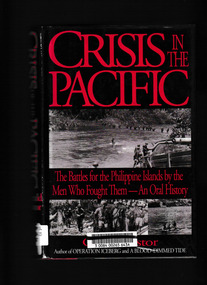
Book, Fine books, Crisis in the Pacific, 1996
... Ranging from the diplomatic and nursing corps' experience of the Japanese conquest and occupation of the islands, to the Bataan death march and first-hand accounts of war crimes inflicted by the Japanese on prisoners of war, to the final push for the hills of Mindanao, Crisis in the Pacific is the first complete history, told in the words of the men and women who were there, of one of the most crucial battlegrounds of World War II. ...In Crisis in the Pacific acclaimed historian Gerald Astor draws on the raw experiences of marines, sailors, soldiers and airmen under fire - from generals and admirals to correspondents, line officers and enlisted men on both sides of the battle lines - to present a view of the critical struggle for the Philippines, the keystone to Japanese domination of the Pacific and to ultimate Allied victory. These accounts, many published here for the first time, are dramatic and graphic, brutal and awe-inspiring. Ranging from the diplomatic and nursing corps' experience of the Japanese conquest and occupation of the islands, to the Bataan death march and first-hand accounts of war crimes inflicted by the Japanese on prisoners of war, to the final push for the hills of Mindanao, Crisis in the Pacific is the first complete history, told in the words of the men and women who were there, of one of the most crucial battlegrounds of World War II.Index, bibliography, ill, p.478.non-fictionIn Crisis in the Pacific acclaimed historian Gerald Astor draws on the raw experiences of marines, sailors, soldiers and airmen under fire - from generals and admirals to correspondents, line officers and enlisted men on both sides of the battle lines - to present a view of the critical struggle for the Philippines, the keystone to Japanese domination of the Pacific and to ultimate Allied victory. These accounts, many published here for the first time, are dramatic and graphic, brutal and awe-inspiring. Ranging from the diplomatic and nursing corps' experience of the Japanese conquest and occupation of the islands, to the Bataan death march and first-hand accounts of war crimes inflicted by the Japanese on prisoners of war, to the final push for the hills of Mindanao, Crisis in the Pacific is the first complete history, told in the words of the men and women who were there, of one of the most crucial battlegrounds of World War II.world war 1939 – 1945 – campaigns – phillipines, world war 1939 – 1945 – personal narratives -
 Monbulk RSL Sub Branch
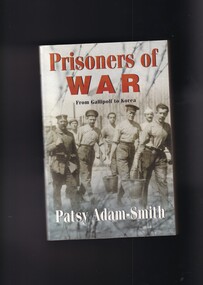
Book, Ken Fin, Prisoners of war: From Gallipoli to Korea
... australia - military history australia - prisoners of war In 'Prisoners of War' dozens of interviews with former POWs are used to show the strength and courage of Australians taken prisoner in World War I, World War II and the Korean War. This book was written for those who know little of the experiences of these men and women ...In 'Prisoners of War' dozens of interviews with former POWs are used to show the strength and courage of Australians taken prisoner in World War I, World War II and the Korean War. This book was written for those who know little of the experiences of these men and women; their courage, endurance and pain.Index, ill (B/W plates), p.726.non-fictionIn 'Prisoners of War' dozens of interviews with former POWs are used to show the strength and courage of Australians taken prisoner in World War I, World War II and the Korean War. This book was written for those who know little of the experiences of these men and women; their courage, endurance and pain.australia - military history, australia - prisoners of war -
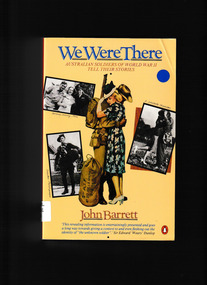 Monbulk RSL Sub Branch
Penguin, We were there : Australian soldiers of World War II tell their stories, 1988
... World war 1939 – 1945 – Personal narratives – Australia World war 1939 – 1945 – Campaigns – Australia Aborigines and army service - Australian women's Army - Burma-Thailand railway - Prisoners of war (POW's). ...Aborigines and army service - Australian women's Army - Burma-Thailand railway - Prisoners of war (POW's).Index, ill, p.470.non-fictionAborigines and army service - Australian women's Army - Burma-Thailand railway - Prisoners of war (POW's).world war 1939 – 1945 – personal narratives – australia, world war 1939 – 1945 – campaigns – australia -
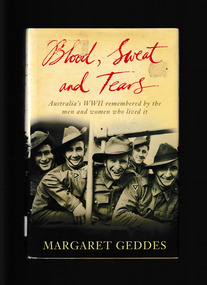 Monbulk RSL Sub Branch
Book, Viking, Blood, sweat and tears : Australia's WWII remembered by the men and women who lived it, 2004
... Prisoners of war, airmen, nurses, landgirls, internees, schoolchildren, soldiers, sailors and volunteers of every description share their memories of a time of horror, tragedy, love and excitement. B Index, ill, p.403. Blood, sweat and tears : Australia's WWII remembered by the men and women ...Blood, Sweat and Tears brings together the first-hand accounts of more than seventy-five ordinary Australians who did extraordinary things during World War II. Prisoners of war, airmen, nurses, landgirls, internees, schoolchildren, soldiers, sailors and volunteers of every description share their memories of a time of horror, tragedy, love and excitement. BIndex, ill, p.403.non-fictionBlood, Sweat and Tears brings together the first-hand accounts of more than seventy-five ordinary Australians who did extraordinary things during World War II. Prisoners of war, airmen, nurses, landgirls, internees, schoolchildren, soldiers, sailors and volunteers of every description share their memories of a time of horror, tragedy, love and excitement. Bworld war 1939-1945 - australia - history, australia 1939-1945 - social conditions -
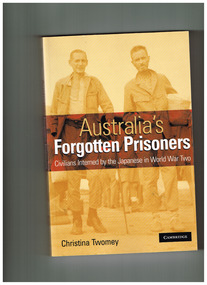 Monbulk RSL Sub Branch
Book, Cambridge, Australia's forgotten prisoners: Civilians interred by the Japanese in World War Two, 2007
... prisoners of war world war 1939-1945 - prisoners of war - japan The Japanese captured 1500 Australian civilians during World War II. They spent the war interned in harsh, prison-like camps throughout the Asia-Pacific region. Civilian internees - though not members of the armed forces - endured hardship, privation and even death at the hands of the enemy." "This book tells the stories of Australian civilians interned by the Japanese in World War II. By re-creating the daily lives and dramas within internment camps, it explores how captivity posed different dilemmas for the men, women ...The Japanese captured 1500 Australian civilians during World War II. They spent the war interned in harsh, prison-like camps throughout the Asia-Pacific region. Civilian internees - though not members of the armed forces - endured hardship, privation and even death at the hands of the enemy." "This book tells the stories of Australian civilians interned by the Japanese in World War II. By re-creating the daily lives and dramas within internment camps, it explores how captivity posed different dilemmas for the men, women and children held there.Ill, bib, index, notes, p.207.non-fictionThe Japanese captured 1500 Australian civilians during World War II. They spent the war interned in harsh, prison-like camps throughout the Asia-Pacific region. Civilian internees - though not members of the armed forces - endured hardship, privation and even death at the hands of the enemy." "This book tells the stories of Australian civilians interned by the Japanese in World War II. By re-creating the daily lives and dramas within internment camps, it explores how captivity posed different dilemmas for the men, women and children held there.japan - prisons and prisoners of war, world war 1939-1945 - prisoners of war - japan -
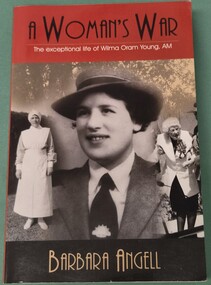 Alfred Hospital Nurses League - Nursing History Collection
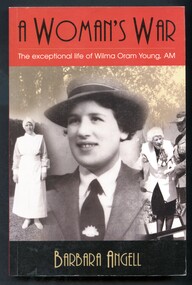
Book - Illustrated book, Barbara Angell 1935, A woman's war; the exceptional life of Wilma Oram Young, AM, 2003
... Wilma Oram Young Nurses-Australia-Biography World Ward 1939-1945-prisoners and prisons-Japaneses This is the story of one of Australia's most remarkable women. As a prisoner of war for three and a half years during World War II, Wilma Oram, a young Australian nurse experienced the very worst of human brutality: starvation, deprivation and degradation. ...This is the story of one of Australia's most remarkable women. As a prisoner of war for three and a half years during World War II, Wilma Oram, a young Australian nurse experienced the very worst of human brutality: starvation, deprivation and degradation. Yet, through the comradeship of her fellow prisoners, she also experienced humankind at its best. Following her return to Australia, Wilma was inspired to help her fellow ex-POWs and war veterans through her tireless work with the RSL.Illustrated book, with three black and white photographs of Wilma Oram Young (as student nurse, in army uniform and in older age). There is a mid-brown band above this photo on which the title is printed in black and white, below the photos there is a black band on which the author's name is printed in light brown. Spine has mid brown background with title printed in black, author's name in light brown, and publisher's mark in white. The back cover has a summary of the book printed in black ink on a light brown background.non-fictionThis is the story of one of Australia's most remarkable women. As a prisoner of war for three and a half years during World War II, Wilma Oram, a young Australian nurse experienced the very worst of human brutality: starvation, deprivation and degradation. Yet, through the comradeship of her fellow prisoners, she also experienced humankind at its best. Following her return to Australia, Wilma was inspired to help her fellow ex-POWs and war veterans through her tireless work with the RSL.wilma oram young, nurses-australia-biography, world ward 1939-1945-prisoners and prisons-japaneses -
 Alfred Hospital Nurses League - Nursing History Collection
Book - Illustrated book, Barbara Angell 1935, A woman's war; the exceptional life of Wilma Oram Young, AM, 2003
... Wilma Oram Young Nurses-Australia-Biography World Ward 1939-1945-prisoners and prisons-Japaneses This is the story of one of Australia's most remarkable women. As a prisoner of war for three and a half years during World War II, Wilma Oram, a young Australian nurse experienced the very worst of human brutality: starvation, deprivation and degradation. ...This is the story of one of Australia's most remarkable women. As a prisoner of war for three and a half years during World War II, Wilma Oram, a young Australian nurse experienced the very worst of human brutality: starvation, deprivation and degradation. Yet, through the comradeship of her fellow prisoners, she also experienced humankind at its best. Following her return to Australia, Wilma was inspired to help her fellow ex-POWs and war veterans through her tireless work with the RSL.Illustrated book, with three black and white photographs of Wilma Oram Young (as student nurse, in army uniform and in older age). There is a mid-brown band above this photo on which the title is printed in black and white, below the photos there is a black band on which the author's name is printed in light brown. Spine has mid brown background with title printed in black, author's name in light brown, and publisher's mark in white. The back cover has a summary of the book printed in black ink on a light brown background.non-fictionThis is the story of one of Australia's most remarkable women. As a prisoner of war for three and a half years during World War II, Wilma Oram, a young Australian nurse experienced the very worst of human brutality: starvation, deprivation and degradation. Yet, through the comradeship of her fellow prisoners, she also experienced humankind at its best. Following her return to Australia, Wilma was inspired to help her fellow ex-POWs and war veterans through her tireless work with the RSL.wilma oram young, nurses-australia-biography, world ward 1939-1945-prisoners and prisons-japaneses -
 Alfred Hospital Nurses League - Nursing History Collection
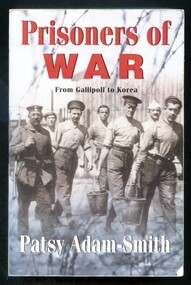
Book - Illustrated book, Patsy Adam-Smith 1924-2001, Prisoners of war: from Gallipoli to Korea, 1998
... prisoner in World War I, World War II and the Korean War. Of significance to the AHNL as it contains information about nurses who were prisoners of war. Prisoners of war-Australia World War 1914-1918-prisoners and prisons World War 1939-1945-prisoners and prisons Korean War 1950-1953 - prisoners and prisons This book has not been written for ex-prisoners: they know the homesickness of exile, the tyranny of bondage; it was written for those people of today who know little of the experiences of these men and women, of their courage, endurance and pain. ...This book has not been written for ex-prisoners: they know the homesickness of exile, the tyranny of bondage; it was written for those people of today who know little of the experiences of these men and women, of their courage, endurance and pain. It has been written for the generations to come.Illustrated book. The front cover and spine have the same black and white photograph of six men walking ("the guards were old, the soldiers young. Bertie Giles is third from left) Front cover has full title in red and black print, authors name in white print. Spine has abbreviated title in red print, authors name in black and white print and publishers name in black print. Back cover has a black and white photograph of a group of women (Australian nurses, (civilian and army) after being held POW for almost three and a half years by the Japanese). Under this photograph is a summary of the book and information about the author.non-fictionThis book has not been written for ex-prisoners: they know the homesickness of exile, the tyranny of bondage; it was written for those people of today who know little of the experiences of these men and women, of their courage, endurance and pain. It has been written for the generations to come.prisoners of war-australia, world war 1914-1918-prisoners and prisons, world war 1939-1945-prisoners and prisons, korean war 1950-1953 - prisoners and prisons -
 Box Hill Historical Society
Book, Wooldridge, Michael,McCoy, Eleanor, ed, Searchlight on World War II: Chisholm remembers, 1995
... The personal accounts of enlisted servicemen and women, prisoners of war, people in reserved occupations, women and families commemorate and recognise all who were touched by this war. 186p, Photos. ...The people of Chisholm electorate have combined to remember the events of World War II and express their thanks and appreciation for the sacrifices made by others on their behalf. The personal accounts of enlisted servicemen and women, prisoners of war, people in reserved occupations, women and families commemorate and recognise all who were touched by this war.186p, Photos.The people of Chisholm electorate have combined to remember the events of World War II and express their thanks and appreciation for the sacrifices made by others on their behalf. The personal accounts of enlisted servicemen and women, prisoners of war, people in reserved occupations, women and families commemorate and recognise all who were touched by this war. world war, 1939-1945, oral history, wooldridge> michael (dr.), mccoy> eleanor, armed forces, families, chisholm, essex heights primary school, surrey hills nursing home, williams> michelle, james> rebecca, hullin> mavis, carra> christopher, box hill high school, mount waverley secondary college, presbyterian ladies college, young> janet, o'donnell> margaret, green> roslyn, reed> eva, campbell> morfydd, sewell> keith, chisholm electorate oral history project for australia remembers 1945-1995, st. clare's catholic primary school, irwin> amanda -
 Jewish Museum of Australia
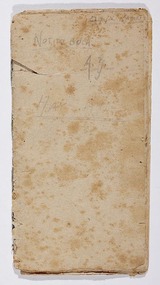
Diary of Alfred Broch, 10/7/1940 - 17/12/1940
... prisoners of war. Never mind. Corrected. Continuing further bad treatment. Boarding the ship assisted by rifle butts. Robbed as soon as we reached the deck. Impression of a death ship. Complete helplessness. No sleeping facilities. All sleep on the floor, on tables etc. Intended accommodation taken up by luggage cases. (barbed wire). Food good but only spoons. Next day: robbery from the cases. Own people steal. Purloined objects even include toothbrushes and toothpaste. Much to eat. Small convoy with one cruiser. In the same convoy a women’s...prisoners of war. Never mind. Corrected. Continuing further bad treatment. Boarding the ship assisted by rifle butts. Robbed as soon as we reached the deck. Impression of a death ship. Complete helplessness. No sleeping facilities. All sleep on the floor, on tables etc. Intended accommodation taken up by luggage cases. (barbed wire). Food good but only spoons. Next day: robbery from the cases. Own people steal. Purloined objects even include toothbrushes and toothpaste. Much to eat. Small convoy with one cruiser. In the same convoy a women’s ...This diary was handwritten by Alfred Broch over the course of four months in 1940. It was kept while Alfred Broch was travelling on the HMT Dunera and then during his detainment in the Hay internment camp.Bound with cotton and handwritten in pencil. Bound with cotton and handwritten in pencil.[selected passage translation from German, further translation available] : “Dunera” 10.VII – 6.IX.1940 First impression very depressing. Fears. Confusion with prisoners of war. Never mind. Corrected. Continuing further bad treatment. Boarding the ship assisted by rifle butts. Robbed as soon as we reached the deck. Impression of a death ship. Complete helplessness. No sleeping facilities. All sleep on the floor, on tables etc. Intended accommodation taken up by luggage cases. (barbed wire). Food good but only spoons. Next day: robbery from the cases. Own people steal. Purloined objects even include toothbrushes and toothpaste. Much to eat. Small convoy with one cruiser. In the same convoy a women’s transport which soon leaves us as it is bound for Canada and we are quite surprised. The English soldiers and officers have another side. While in the danger zone they only had a webbing belt and slippers. In case of torpedoes – expecting certain death. Bad air as all vents are closed. Other Inscriptions: Front page, upper right, underlined: "Alfred Broch" Front page, upper, underlined: "Notitz Buch" Front page, centre, underlined: "Hay 1941" Page 1, upper right: "Mittwoch 10. VII." Page 3, upper right: "10. VII. - 6. IX. 1940 Page 4, centre: "[...] ARANDORA STAR" Page 11, upper, underlined: "Von Liverpool Nach Hay / Mittwoch 10 VII" dunera, wwii, internment, jewish history & people -
 City of Ballarat
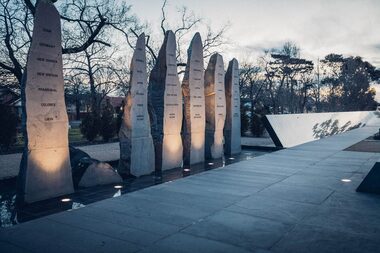
Artwork, other - Public Artwork, Ex-Prisoners of War Memorial by Peter Blizzard, 2004
... This memorial designed by Peter Blizzard is dedicated to more than 36,000 Australian men and women were held captive as prisoners by the enemy during the Boer War, World War 1, World War 2 and the Korean War. ...Inscribed with the names of 36,000 Australian men and women were held captive as prisoners by the enemy during the Boer War, World War 1, World War 2 and the Korean War. ...prisoners of war. The Memorial was declared the first military memorial of national significance located outside Canberra in 2008. Dedication services are held at the memorial on the Sunday closest to 6th of February, ANZAC day and on Remembrance Day. The memorial is of historical and aesthetic importance to the people of Ballarat prisoners of war boer war world war 1 world war 2 korean war lest we forget peter blizzard Inscribed with the names of 36,000 Australian men and women were held captive as prisoners by the enemy during the Boer War, World War 1, World War 2 and the Korean War. ...This memorial designed by Peter Blizzard is dedicated to more than 36,000 Australian men and women were held captive as prisoners by the enemy during the Boer War, World War 1, World War 2 and the Korean War. This memorial honours and names them, the names are etched into the black granite wall adjacent to the pathway. Water springs from beneath the 'Lest We Forget' stone then flows down the wall into the narrow watercourse in front of the first group of names and into the reflective pool, then continues past the second group of names. Finally it disappears under the pathway, returning to its source under the 'Lest We Forget' stone to start the journey again. Water symbolizes the essential nature of man, sacrifice, suffering, spirituality, healing, cleansing, birth and re-birth. The memorial is created from natural materials and is designed to be in harmony with the Ballarat Botanical Gardens, and to create a sense of timeless, dignity and respect. The long pathway of the monument is designed to create a visual perspective of the large distances that Australians travelled to the various conflicts. The paving is shaped like railway sleepers in recognition of the role that railways and railway journeys were relevant to many prisoners of war. The Memorial was declared the first military memorial of national significance located outside Canberra in 2008. Dedication services are held at the memorial on the Sunday closest to 6th of February, ANZAC day and on Remembrance Day. The memorial is of historical and aesthetic importance to the people of BallaratMonument made from carved bluestone, water feature and flagsInscribed with the names of 36,000 Australian men and women were held captive as prisoners by the enemy during the Boer War, World War 1, World War 2 and the Korean War. The listing is by surname and initials and shown by war.prisoners of war, boer war, world war 1, world war 2, korean war, lest we forget, peter blizzard -
 Dandenong/Cranbourne RSL Sub Branch
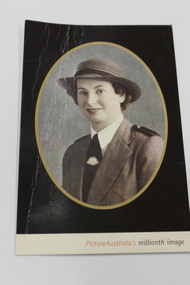
Photograph - Sepia photograph/postcard, Unknown
... Vivian Bullwinkel, a Second World War army nursing sister, is best known as the sole survivor of the infamous Banka Island massacre, in which 21 of her colleagues were killed by Japanese troops. Her courage while a prisoner of the Japanese for over three and a half years exemplified the bravery of Australian women in war, and her distinguished postwar career was marked by many humanitarian achievements....WWII historical significance Vivian Bullwinkel, a Second World War army nursing sister, is best known as the sole survivor of the infamous Banka Island massacre, in which 21 of her colleagues were killed by Japanese troops. Her courage while a prisoner of the Japanese for over three and a half years exemplified the bravery of Australian women in war, and her distinguished postwar career was marked by many humanitarian achievements. ...WWII historical significancePortrait of Vivian Bullwinkel AO, MBE (1915 - 2000)Vivian Bullwinkel, a Second World War army nursing sister, is best known as the sole survivor of the infamous Banka Island massacre, in which 21 of her colleagues were killed by Japanese troops. Her courage while a prisoner of the Japanese for over three and a half years exemplified the bravery of Australian women in war, and her distinguished postwar career was marked by many humanitarian achievements. -
 Ballarat Heritage Services
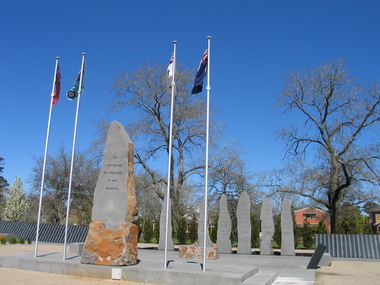
Photograph, L.J. Gervasoni, Australian Ex-Prisoner of War Memorial, Ballarat, 2014, 04/11/2014
... Prisoners of War during their capture and the scars that many continued to endure upon their repatriation to Australia. Heritage Victoria describes the memorial in the following way" "A JOURNEY OF HONOUR, REMEMBRANCE AND HEALING - The Australian Ex-Prisoners of War Memorial is a dramatic and highly symbolic tribute to the sacrifice made by more than 35,000 young Australian service men and women in four theatres of war. ...Prisoners of War during their capture and the scars that many continued to endure upon their repatriation to Australia. Heritage Victoria describes the memorial in the following way" "A JOURNEY OF HONOUR, REMEMBRANCE AND HEALING - The Australian Ex-Prisoners of War Memorial is a dramatic and highly symbolic tribute to the sacrifice made by more than 35,000 young Australian service men and women in four theatres of war. ...The Trustees of the Australian Ex-Prisoners of War Memorial have defined a Prisoner of War to be a person who was captured by a common enemy and/or interned in a neutral or non-combatant country. To be defined an Australian Prisoner of War, the person needs to be either an Australian Born person serving in the Uniform of an Australian Service; or in the Uniform of a friendly country, or Born Elsewhere and serving in the Uniform of an Australian Service. A Prisoner is a person who has lost personal privileges, suffers deprivation of liberty or is unable to return home or dies in captivity.Colour photograph of a War Memorial designed by Peter Blizzard. The granite wall of the Australian Ex-Prisoners of War Memorial features a listing the names of Australian Prisoners and was opened on the 6th February 2004 by General Peter Cosgrove AM MC to recognise and remember over 36,000 Australians who became Prisoners of War during the Wars of the 20th Century. In 2008 the Memorial became the First Military Memorial of National Significance outside Canberra. The Memorial which was designed by Peter Blizzard OAM, symbolises that all Australian prisoners embarked on a journey to serve away from their homeland and acknowledges the hardship, deprivation, brutality, starvation and disease endured by Prisoners of War during their capture and the scars that many continued to endure upon their repatriation to Australia. Heritage Victoria describes the memorial in the following way" "A JOURNEY OF HONOUR, REMEMBRANCE AND HEALING - The Australian Ex-Prisoners of War Memorial is a dramatic and highly symbolic tribute to the sacrifice made by more than 35,000 young Australian service men and women in four theatres of war. At the heart of the monument is a stark, 130 metre long, highly polished black granite wall, engraved with the names of all Australian prisoners of war. The names on this 'honour roll' are listed in historical order from the Boer War in 1899, through to the Korean War in 1953. It is a testament to the contribution made by so many. Standing sentinel at the centre of the Memorial are six huge basalt obelisks, etched with the names of all the countries where Australians were held prisoner of war. The obelisks stand in a large reflective pool, set back from the central pathway, symbolising the distance that separated Australia's prisoners of war from their homes and their loved ones. Opposite the pool is a larger obelisk flanked by flagpoles and a ceremonial stone on which to lay wreaths. The central pathway is itself symbolic, with each of the paving stones cut in the shape of a railway sleeper. The pathway defines 'the journey' taken by the prisoners of war and the journey visitors take around the monument. At the end of the granite wall where the pathway ends, visitors face a large stone engraved simply 'Lest We Forget'. Water flows from beneath the stone, along the base of the granite wall and into the reflection pool in which the obelisks stand. This cycle of flowing water, symbolising spirituality, healing, cleansing, birth and rebirth, guides visitors on their journey through the Memorial." ballarat, ballarat botanical gardens, peter blizzard, ballarat north gardens, war memorial, prisoner of war, prisoners of war -
 Ballarat Heritage Services
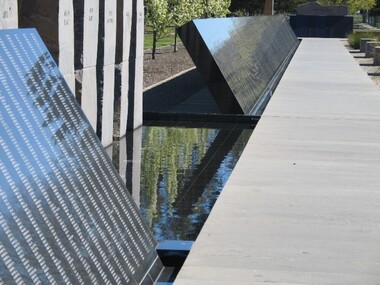
Photograph, Australian Ex-Prisoner of War Memorial, Ballarat, 04/11/2014
... Prisoners of War during their capture and the scars that many continued to endure upon their repatriation to Australia. Heritage Victoria describes the memorial in the following way" "A JOURNEY OF HONOUR, REMEMBRANCE AND HEALING - The Australian Ex-Prisoners of War Memorial is a dramatic and highly symbolic tribute to the sacrifice made by more than 35,000 young Australian service men and women in four theatres of war. ...Prisoners of War during their capture and the scars that many continued to endure upon their repatriation to Australia. Heritage Victoria describes the memorial in the following way" "A JOURNEY OF HONOUR, REMEMBRANCE AND HEALING - The Australian Ex-Prisoners of War Memorial is a dramatic and highly symbolic tribute to the sacrifice made by more than 35,000 young Australian service men and women in four theatres of war. ...DESCRIPTIONColour photograph of a War Memorial designed by Peter Blizzard. The granite wall of the Australian Ex-Prisoners of War Memorial features a listing the names of Australian Prisoners and was opened on the 6th February 2004 by General Peter Cosgrove AM MC to recognise and remember over 36,000 Australians who became Prisoners of War during the Wars of the 20th Century. In 2008 the Memorial became the First Military Memorial of National Significance outside Canberra. The Memorial which was designed by Peter Blizzard OAM, symbolises that all Australian prisoners embarked on a journey to serve away from their homeland and acknowledges the hardship, deprivation, brutality, starvation and disease endured by Prisoners of War during their capture and the scars that many continued to endure upon their repatriation to Australia. Heritage Victoria describes the memorial in the following way" "A JOURNEY OF HONOUR, REMEMBRANCE AND HEALING - The Australian Ex-Prisoners of War Memorial is a dramatic and highly symbolic tribute to the sacrifice made by more than 35,000 young Australian service men and women in four theatres of war. At the heart of the monument is a stark, 130 metre long, highly polished black granite wall, engraved with the names of all Australian prisoners of war. The names on this 'honour roll' are listed in historical order from the Boer War in 1899, through to the Korean War in 1953. It is a testament to the contribution made by so many. Standing sentinel at the centre of the Memorial are six huge basalt obelisks, etched with the names of all the countries where Australians were held prisoner of war. The obelisks stand in a large reflective pool, set back from the central pathway, symbolising the distance that separated Australia's prisoners of war from their homes and their loved ones. Opposite the pool is a larger obelisk flanked by flagpoles and a ceremonial stone on which to lay wreaths. The central pathway is itself symbolic, with each of the paving stones cut in the shape of a railway sleeper. The pathway defines 'the journey' taken by the prisoners of war and the journey visitors take around the monument. At the end of the granite wall where the pathway ends, visitors face a large stone engraved simply 'Lest We Forget'. Water flows from beneath the stone, along the base of the granite wall and into the reflection pool in which the obelisks stand. This cycle of flowing water, symbolising spirituality, healing, cleansing, birth and rebirth, guides visitors on their journey through the Memorial."australian ex-prisoner of war memorial, peter blizzard, prisoner of war, ballarat north gardens -
 Ballarat Heritage Services
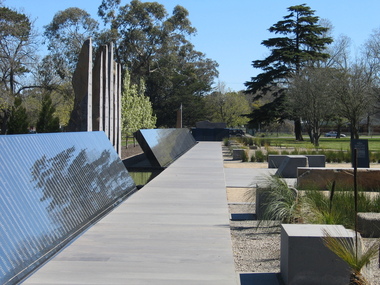
Photograph, Australian Ex-Prisoner of War Memorial, Ballarat, 2014, 04/11/2014
... Prisoners of War during their capture and the scars that many continued to endure upon their repatriation to Australia. Heritage Victoria describes the memorial in the following way" "A JOURNEY OF HONOUR, REMEMBRANCE AND HEALING - The Australian Ex-Prisoners of War Memorial is a dramatic and highly symbolic tribute to the sacrifice made by more than 35,000 young Australian service men and women in four theatres of war. ...Prisoners of War during their capture and the scars that many continued to endure upon their repatriation to Australia. Heritage Victoria describes the memorial in the following way" "A JOURNEY OF HONOUR, REMEMBRANCE AND HEALING - The Australian Ex-Prisoners of War Memorial is a dramatic and highly symbolic tribute to the sacrifice made by more than 35,000 young Australian service men and women in four theatres of war. ...DESCRIPTIONColour photograph of a War Memorial designed by Peter Blizzard. The granite wall of the Australian Ex-Prisoners of War Memorial features a listing the names of Australian Prisoners and was opened on the 6th February 2004 by General Peter Cosgrove AM MC to recognise and remember over 36,000 Australians who became Prisoners of War during the Wars of the 20th Century. In 2008 the Memorial became the First Military Memorial of National Significance outside Canberra. The Memorial which was designed by Peter Blizzard OAM, symbolises that all Australian prisoners embarked on a journey to serve away from their homeland and acknowledges the hardship, deprivation, brutality, starvation and disease endured by Prisoners of War during their capture and the scars that many continued to endure upon their repatriation to Australia. Heritage Victoria describes the memorial in the following way" "A JOURNEY OF HONOUR, REMEMBRANCE AND HEALING - The Australian Ex-Prisoners of War Memorial is a dramatic and highly symbolic tribute to the sacrifice made by more than 35,000 young Australian service men and women in four theatres of war. At the heart of the monument is a stark, 130 metre long, highly polished black granite wall, engraved with the names of all Australian prisoners of war. The names on this 'honour roll' are listed in historical order from the Boer War in 1899, through to the Korean War in 1953. It is a testament to the contribution made by so many. Standing sentinel at the centre of the Memorial are six huge basalt obelisks, etched with the names of all the countries where Australians were held prisoner of war. The obelisks stand in a large reflective pool, set back from the central pathway, symbolising the distance that separated Australia's prisoners of war from their homes and their loved ones. Opposite the pool is a larger obelisk flanked by flagpoles and a ceremonial stone on which to lay wreaths. The central pathway is itself symbolic, with each of the paving stones cut in the shape of a railway sleeper. The pathway defines 'the journey' taken by the prisoners of war and the journey visitors take around the monument. At the end of the granite wall where the pathway ends, visitors face a large stone engraved simply 'Lest We Forget'. Water flows from beneath the stone, along the base of the granite wall and into the reflection pool in which the obelisks stand. This cycle of flowing water, symbolising spirituality, healing, cleansing, birth and rebirth, guides visitors on their journey through the Memorial."australian ex-prisoner of war memorial, prisoner of war, ballarat north gardens, peter blizzard -
 Clayton RSL Sub Branch
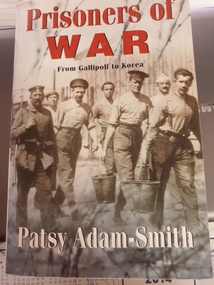
soft cover non-fiction book, Prisoners of War From Gallipoli to Korea, 1992
... prisoner of war is that of an emaciated, diseased and ill-treated figure humiliated by incarceration. Prisoners of War challenges this image. Using dozens of interviews with former POWs, Patsy Adam-Smith shows the strength and courage of Australians taken prisoner in World War I, World War II and the Korean War. Says Patsy: 'This book has not been written for ex-prisoners: they know the homesickness of exile, the tyranny of bondage; it was written for those people of today who know little of the experiences of these men and women...prisoner of war is that of an emaciated, diseased and ill-treated figure humiliated by incarceration. Prisoners of War challenges this image. Using dozens of interviews with former POWs, Patsy Adam-Smith shows the strength and courage of Australians taken prisoner in World War I, World War II and the Korean War. Says Patsy: 'This book has not been written for ex-prisoners: they know the homesickness of exile, the tyranny of bondage; it was written for those people of today who know little of the experiences of these men and women ...The traditional image of a prisoner of war is that of an emaciated, diseased and ill-treated figure humiliated by incarceration. Prisoners of War challenges this image. Using dozens of interviews with former POWs, Patsy Adam-Smith shows the strength and courage of Australians taken prisoner in World War I, World War II and the Korean War. Says Patsy: 'This book has not been written for ex-prisoners: they know the homesickness of exile, the tyranny of bondage; it was written for those people of today who know little of the experiences of these men and women, of their courage, endurance and pain. It has been written for the generations to come.soft cover non-fiction book -
 Ballarat RSL Sub-Branch Inc.
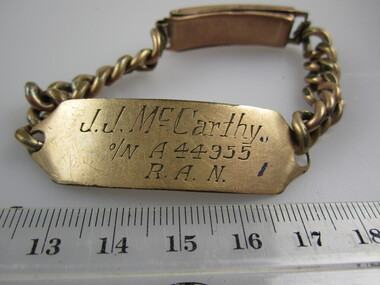
ID Bracelet
... Ivy Grace served in the Army (VF507143) enlisting on, 22/02/1943 in Kew, VIC before being discharged from duties with the AUST ARMY MEDICAL WOMENS SERVICES as a Army Non-Commissioned Corporal / Bombardier (CPL/LBDR) on 26/04/1946. Ivy Grace HALLANDAL was not a prisoner of war. ...Ivy Grace served in the Army (VF507143) enlisting on, 22/02/1943 in Kew, VIC before being discharged from duties with the AUST ARMY MEDICAL WOMENS SERVICES as a Army Non-Commissioned Corporal / Bombardier (CPL/LBDR) on 26/04/1946. Ivy Grace HALLANDAL was not a prisoner of war. ...This object relates to Ivy Grace HALLANDAL. She was born on 27/11/1903 in Ballarat, VIC. Ivy Grace served in the Army (VF507143) enlisting on, 22/02/1943 in Kew, VIC before being discharged from duties with the AUST ARMY MEDICAL WOMENS SERVICES as a Army Non-Commissioned Corporal / Bombardier (CPL/LBDR) on 26/04/1946. Ivy Grace HALLANDAL was not a prisoner of war. Her next of kin is Ernest HALLANDAL. Ivy Grace Hallandal was awarded the Australia Service Medal 1939-1946 and the War Medal 1939-1945.Engraved - "J J McCarthy o/N A44955 R.A.N."personal items, ballarat rsl, ballarat -
 Ballarat RSL Sub-Branch Inc.
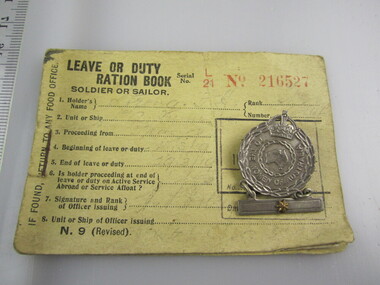
Memorabilia - Badge, Female Relatives, Amor Pty Ltd, c. 1940
... prisoner of war. His next of kin is Caroline STRONG. souvenirs ballarat rsl ballarat badges women home front wwii second world war world war two "To the Women of Australia" No. ...This object relates to Fred Harold STRONG. He was born on 1/04/1890 in Chewton, VIC. Fred Harold served in the AIF (6844) enlisting on, 12/09/1916 in Chewton, VIC before being discharged from duties with the 1 TUN COY as a Army Non-Commissioned Sapper (SPR) on 03/08/1920. Fred Harold STRONG was not a prisoner of war. His next of kin is Caroline STRONG.No. A101217"To the Women of Australia"souvenirs, ballarat rsl, ballarat, badges, women, home front, wwii, second world war, world war two -
 Ballarat RSL Sub-Branch Inc.
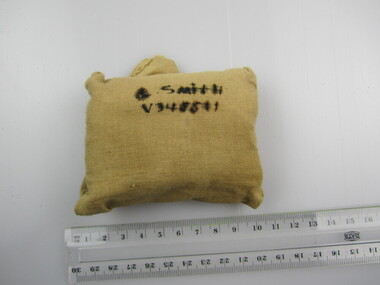
Field Dressing
... Lillian Ruby served in the Army (VF345511) enlisting on, 24/06/1942 in Sebastopol, VIC before being discharged from duties with the AUST WOMENS ARMY SERV as a Army Non-Commissioned Corporal / Bombardier (CPL/LBDR) on 14/01/1946. Lillian Ruby SMITH was not a prisoner of war. ...Lillian Ruby served in the Army (VF345511) enlisting on, 24/06/1942 in Sebastopol, VIC before being discharged from duties with the AUST WOMENS ARMY SERV as a Army Non-Commissioned Corporal / Bombardier (CPL/LBDR) on 14/01/1946. Lillian Ruby SMITH was not a prisoner of war. ...This object relates to Lillian Ruby SMITH. She was born on 17/09/1920 in Sebastopol, VIC. Lillian Ruby served in the Army (VF345511) enlisting on, 24/06/1942 in Sebastopol, VIC before being discharged from duties with the AUST WOMENS ARMY SERV as a Army Non-Commissioned Corporal / Bombardier (CPL/LBDR) on 14/01/1946. Lillian Ruby SMITH was not a prisoner of war. His next of kin is Ruby SMITH.second world war (ww2), 1939 - 1945, medical, ballarat rsl, ballarat -
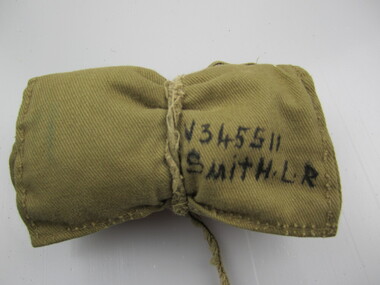 Ballarat RSL Sub-Branch Inc.
Sewing Kit
... Lillian Ruby served in the Army (VF345511) enlisting on, 24/06/1942 in Sebastopol, VIC before being discharged from duties with the AUST WOMENS ARMY SERV as a Army Non-Commissioned Corporal / Bombardier (CPL/LBDR) on 14/01/1946. Lillian Ruby SMITH was not a prisoner of war. ...Lillian Ruby served in the Army (VF345511) enlisting on, 24/06/1942 in Sebastopol, VIC before being discharged from duties with the AUST WOMENS ARMY SERV as a Army Non-Commissioned Corporal / Bombardier (CPL/LBDR) on 14/01/1946. Lillian Ruby SMITH was not a prisoner of war. ...This object relates to Lillian Ruby SMITH. She was born on 17/09/1920 in Sebastopol, VIC. Lillian Ruby served in the Army (VF345511) enlisting on, 24/06/1942 in Sebastopol, VIC before being discharged from duties with the AUST WOMENS ARMY SERV as a Army Non-Commissioned Corporal / Bombardier (CPL/LBDR) on 14/01/1946. Lillian Ruby SMITH was not a prisoner of war. His next of kin is Ruby SMITH.equipment/gear, ballarat rsl, ballarat
