
Showing 214 items matching "womens jacket"
-
 Bright & District Historical Society operating the Bright Museum
Jacket, Female
... womens jacket...Belonged to Mrs Weston of Porepunkah. womens jacket beads lace boned lined taffeta ladies apparel Female jacket. ...Belonged to Mrs Weston of Porepunkah.Female jacket. Short black taffeta jacket. Long sleeves trimmed with lace and beading at cuff. Collar trimmed in lace and beading. Black jet buttons in front, boned and lined. Hand stitched. womens jacket, beads, lace, boned, lined, taffeta, ladies apparel -
 National Wool Museum
Uniform - Jacket, Mambo, Sydney 2000 Olympic Games Australian Team Opening Ceremony Jacket, 2000
... Australian womens jacket from the opening ceremony of the Sydney 2000 Olympic Games. ...Australian womens jacket from the opening ceremony of the Sydney 2000 Olympic Games. ...Australian womens jacket from the opening ceremony of the Sydney 2000 Olympic Games. Designed by Mambo Graphics.Ochre coloured jacket lined with Mambo illustrated material. Left proper base pocket features embroidered Australian Coat of Arms above Olympic rings and the words "SYDNEY 2000". Jacket features zipped cuffs, and four buttons. Inside left features a decorative garment label with Stars of the Southern Cross and the words "AUSTRALIA / MADE IN AUSTRALIA / MAMBO".SYDNEY 2000 AUSTRALIA / MADE IN AUSTRALIA / MAMBOfashion, woolmark company mambo graphics, sport, the woolmark company 2000 australian olympic display - exhibition (21/12/2001 - 24/05/2002) -
National Wool Museum
Jacket
... Australian womens jacket from the formal uniform for the Sydney 2000 Olympic Games. ...Australian womens jacket from the formal uniform for the Sydney 2000 Olympic Games. ...Australian womens jacket from the formal uniform for the Sydney 2000 Olympic Games. Manufactured by Saba Pty Ltd with wool from Macquarie Textiles.fashion, woolmark company saba pty ltd, sport, the woolmark company 2000 australian olympic display - exhibition (21/12/2001 - 24/05/2002) -
 Kew Historical Society Inc
Clothing - Dark Navy Wool Jacket, Vivienne Westwood, 1980s
... Dark navy women's jacket with fine pale stripes. The silk lined jacket has three external pockets with flaps and one breast pocket. ...The collection is also significant in that it includes the work of a large number of Melbourne designers from the 1960s to the 1990s. vivienne westwood fashion designers international fashion -- british designers -- vivienne westwood fashion -- 1980s Label: Vivienne Westwood Dark navy women's jacket with fine pale stripes. The silk lined jacket has three external pockets with flaps and one breast pocket. ...This Item was owned, worn and donated by Annie McIntyre, a resident of Kew. It is one of a number of items owned by Annie McIntyre that were designed by Vivienne Westwood and donated to the collection.The McIntyre Collection of clothing and clothing accessories forms one of the largest single donations to our Fashion & Design collection. It includes clothing and clothing accessories worn by four women in the Cohen and McIntyre families across three generations. The items worn by Melbourne architect, and Kew resident, Dione McIntyre date from the 1960s and 1970s, and include evening wear, day wear, hats and shoes. As Dione McIntyre often accompanied her husband, fellow architect Peter McIntyre, to formal events, there are a number of pieces of evening wear among the items. The McIntyre Collection also includes items worn by women of an earlier generation: by Lilian Cohen, Dione McIntyre's mother, and by her mother-in-law, the wife of the architect Robert McIntyre. At the other end of the chronological spectrum are a number of outfits belonging to, worn and donated by Annie McIntyre. These include outfits created by notable late 20th century Australian and/or international fashion designers. The McIntyre Collection is significant historically and artistically as it includes examples of design that demonstrate changing tastes in fashion over an 80-year period. The collection is also significant in that it includes the work of a large number of Melbourne designers from the 1960s to the 1990s. Dark navy women's jacket with fine pale stripes. The silk lined jacket has three external pockets with flaps and one breast pocket. The metal buttons on a pocket and for fastening at the front are a gold colourLabel: Vivienne Westwoodvivienne westwood, fashion designers, international fashion -- british designers -- vivienne westwood, fashion -- 1980s -
 National Wool Museum
Book, Knitting, Patons Knitting Book no. 236
... It was produced by Patons and Baldwins and contains knitting patterns for womens jackets and cardigans....It was produced by Patons and Baldwins and contains knitting patterns for womens jackets and cardigans. knitting handicrafts - history patons and baldwins (australia) ltd knitting handicrafts - history Patons / KNITTING BOOK / NO. 236 / "PAVEMENT" / See page 8 / "FLAGSTONE" / See page 9 / 7d. ...This book was owned by the late Dr Elizabeth Kerr and was donated to the Museum by the executor of her estate, Margaret Cameron. It was produced by Patons and Baldwins and contains knitting patterns for womens jackets and cardigans.Patons / KNITTING BOOK / NO. 236 / "PAVEMENT" / See page 8 / "FLAGSTONE" / See page 9 / 7d.knitting handicrafts - history, patons and baldwins (australia) ltd, knitting, handicrafts - history -
 National Wool Museum
Book, Knitting, Woolworths no. 18 Economy Knit Book
... This book was produced by Woolworths and contains knitting patterns baby clothes and for womens bed jackets, under clothes etc....This book was produced by Woolworths and contains knitting patterns baby clothes and for womens bed jackets, under clothes etc. Knitting Handicrafts - history Woolworths Ltd Knitting Handicrafts - history WOOLWORTHS' / "Economy" / KNIT BOOK / No. 18 / UNDERWEAR / BED JACKETS / BABY WEAR / DESIGN No. 2461 / Instructions on Page 3 / 7D / NEW DESIGNS, ECONOMICAL AND EASY TO KNIT Woolworths no. 18 Economy Knit Book Book, Knitting ...This book was produced by Woolworths and contains knitting patterns baby clothes and for womens bed jackets, under clothes etc.WOOLWORTHS' / "Economy" / KNIT BOOK / No. 18 / UNDERWEAR / BED JACKETS / BABY WEAR / DESIGN No. 2461 / Instructions on Page 3 / 7D / NEW DESIGNS, ECONOMICAL AND EASY TO KNITknitting handicrafts - history, woolworths ltd, knitting, handicrafts - history -
 National Wool Museum
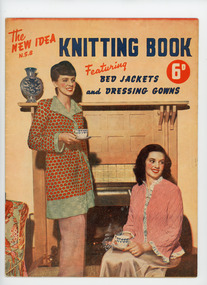
Book, Knitting, The New Idea Knitting Book featuring bed jackets and dressing gowns
... This knitting pattern book was published by The New Idea magazine and contains knitting patterns for womens bed jackets and dressing gowns....This knitting pattern book was published by The New Idea magazine and contains knitting patterns for womens bed jackets and dressing gowns. Knitting Handicrafts - history The New Idea Knitting Handicrafts - history The / NEW IDEA / N.S.8 / KNITTING BOOK / Featuring / BED JACKETS / and DRESSING GOWNS / 6D The New Idea Knitting Book featuring bed jackets and dressing gowns Book, Knitting ...This knitting pattern book was published by The New Idea magazine and contains knitting patterns for womens bed jackets and dressing gowns.The / NEW IDEA / N.S.8 / KNITTING BOOK / Featuring / BED JACKETS / and DRESSING GOWNS / 6Dknitting handicrafts - history, the new idea, knitting, handicrafts - history -
National Wool Museum
Book, Knitting, Woolworths no. 22 Economy Knit Book
... This book was produced by Woolworths and contains knitting patterns for baby and children's clothes and for womens bed jackets, under clothes etc....This book was produced by Woolworths and contains knitting patterns for baby and children's clothes and for womens bed jackets, under clothes etc. Knitting Handicrafts - history Woolworths Ltd Knitting Handicrafts - history WOOLWORTHS' / KNIT BOOK / "Economy" / Number 22 / UNDERWEAR, / BED JACKETS, / BABY & / CHILDREN'S / WEAR / DESIGN No. 2962 / Instructions on Page 5 / 7d. / NEW DESIGNS, ECONOMICAL AND EASY TO KNIT Woolworths no. 22 Economy Knit Book Book, Knitting ...This book was produced by Woolworths and contains knitting patterns for baby and children's clothes and for womens bed jackets, under clothes etc.WOOLWORTHS' / KNIT BOOK / "Economy" / Number 22 / UNDERWEAR, / BED JACKETS, / BABY & / CHILDREN'S / WEAR / DESIGN No. 2962 / Instructions on Page 5 / 7d. / NEW DESIGNS, ECONOMICAL AND EASY TO KNITknitting handicrafts - history, woolworths ltd, knitting, handicrafts - history -
 National Wool Museum
Book, Knitting, Sun-glo Knitting Book series 109
... It was produced by the Alexandria Mills in Sydney and contains knitting patterns for womens bed jackets and undergarments....It was produced by the Alexandria Mills in Sydney and contains knitting patterns for womens bed jackets and undergarments. knitting handicrafts - history alexandria spinning mills pty ltd f.w. hughes pty ltd knitting handicrafts - history Sun-glo / Knitting / Book / Design No. / 3561 / Page 5 / Series 109 / 6d. ...This book was owned by the late Dr Elizabeth Kerr and was donated to the Museum by the executor of her estate, Margaret Cameron. It was produced by the Alexandria Mills in Sydney and contains knitting patterns for womens bed jackets and undergarments.Sun-glo / Knitting / Book / Design No. / 3561 / Page 5 / Series 109 / 6d.knitting handicrafts - history, alexandria spinning mills pty ltd f.w. hughes pty ltd, knitting, handicrafts - history -
 National Wool Museum
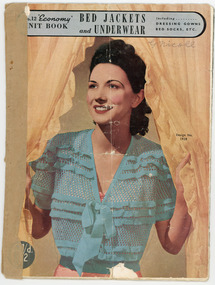
Book, Knitting, Woolworths no. 12 Economy Knit Book
... This book was produced by Woolworths and contains knitting patterns for womens bed jackets, under clothes etc....This book was produced by Woolworths and contains knitting patterns for womens bed jackets, under clothes etc. knitting handicrafts - history woolworths ltd knitting handicrafts - history No. 12 "Economy" / KNIT BOOK / BED JACKETS / and UNDERWEAR / including ... / DRESSING GOWNS / BED SOCKS, ETC. / Design No. / 1928 / 6 1/2d. ...This book was owned by the late Dr Elizabeth Kerr and was donated to the Museum by the executor of her estate, Margaret Cameron. This book was produced by Woolworths and contains knitting patterns for womens bed jackets, under clothes etc.No. 12 "Economy" / KNIT BOOK / BED JACKETS / and UNDERWEAR / including ... / DRESSING GOWNS / BED SOCKS, ETC. / Design No. / 1928 / 6 1/2d.knitting handicrafts - history, woolworths ltd, knitting, handicrafts - history -
 National Wool Museum
Book, Knitting, Sun-glo Knitting Book series 71
... It was produced by the Alexandria Spinning Mills, Sydney, during WWII and contains knitting patterns for womens bed jackets and under garments....It was produced by the Alexandria Spinning Mills, Sydney, during WWII and contains knitting patterns for womens bed jackets and under garments. knitting handicrafts - history alexandria spinning mills pty ltd knitting handicrafts - history Series 71 / 7d. / Sun-glo / Knitting Book / DESIGN No. 2933 / PAGE 3 Sun-glo Knitting Book series 71 Book, Knitting ...This book was owned by the late Dr Elizabeth Kerr and was donated to the Museum by the executor of her estate, Margaret Cameron. It was produced by the Alexandria Spinning Mills, Sydney, during WWII and contains knitting patterns for womens bed jackets and under garments.Series 71 / 7d. / Sun-glo / Knitting Book / DESIGN No. 2933 / PAGE 3knitting handicrafts - history, alexandria spinning mills pty ltd, knitting, handicrafts - history -
 Friends of Westgarthtown
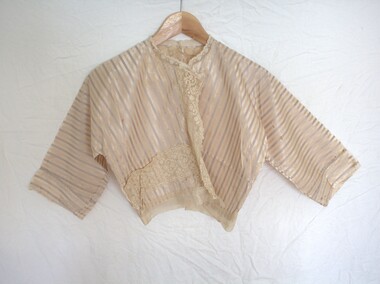
Clothing - Silk Jacket
... Women's lightweight jacket made from silk, lace and cotton with an organza lining. ...Women's lightweight jacket made from silk, lace and cotton with an organza lining. ...Women's lightweight jacket made from silk, lace and cotton with an organza lining. Designed as a decorative outer garment, the jacket features delicate textile embellishments and fine construction typical of women's dresswear. Passed down to Janet Hubbard by her grandmother, Annie Ziebell, and later donated to Ziebell's Farmhouse Museum -
 Embroiderers Guild, Victoria
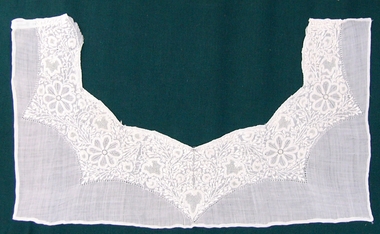
Clothing - 19th C Whitework on Muslin Bodice/Habit Shirt, c. 1900
... Habit Shirts - Worn to cover the neck, shoulders and chest beneath an outer garment, the habit shirt developed from the shirts formerly worn by women under the jackets of their riding habits....Habit Shirts - Worn to cover the neck, shoulders and chest beneath an outer garment, the habit shirt developed from the shirts formerly worn by women under the jackets of their riding habits. Embroidery Garments Whitework Late 19th century India Embroidered neck section from a habit shirt. ...Habit Shirts - Worn to cover the neck, shoulders and chest beneath an outer garment, the habit shirt developed from the shirts formerly worn by women under the jackets of their riding habits.Embroidered neck section from a habit shirt. Fine white muslin with a shaped band of white embroidery in a design of flowers and leaves and edged with a row of spoke-stitching.embroidery, garments, whitework, late 19th century, india -
 Embroiderers Guild, Victoria
Clothing - Chemisette (Habit shirt), 19th century
... Worn to cover the neck, shoulders and chest beneath an outer garment, the habit shirt developed from the shirts formerly worn by women under the jackets of their riding habits. Based on the shirts of men....Worn to cover the neck, shoulders and chest beneath an outer garment, the habit shirt developed from the shirts formerly worn by women under the jackets of their riding habits. Based on the shirts of men. ...Worn to cover the neck, shoulders and chest beneath an outer garment, the habit shirt developed from the shirts formerly worn by women under the jackets of their riding habits. Based on the shirts of men.Made of muslin, the garment (chemisette or Habit shirt) has a decorative top with a complex design, flowers, ferns and leaves in profusion worked in satin stitch. The neck has a trimming of handmade lace and the shoulder has a fastening with pearl buttons.C.E. Hyndman in marking ink.embroidery, 19th century, scotland, whitework, 18th century -
 National Wool Museum
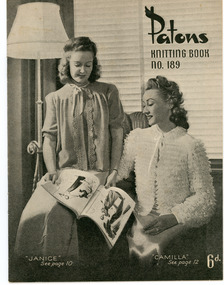
Book, Knitting, Patons Knitting Book no. 189
... This book was produced by Patons and Baldwins and contains knitting patterns for womens dressing gowns, bed jackets and under garments....This book was produced by Patons and Baldwins and contains knitting patterns for womens dressing gowns, bed jackets and under garments. knitting handicrafts - history patons and baldwins (australia) ltd knitting handicrafts - history Patons / KNITTING BOOK / NO. 189 / "JANICE" / See page 10 / "CAMILLA" / See page 12 / 6d. ...This book was owned by the late Dr Elizabeth Kerr and was donated to the Museum by the executor of her estate, Margaret Cameron. This book was produced by Patons and Baldwins and contains knitting patterns for womens dressing gowns, bed jackets and under garments.Patons / KNITTING BOOK / NO. 189 / "JANICE" / See page 10 / "CAMILLA" / See page 12 / 6d.knitting handicrafts - history, patons and baldwins (australia) ltd, knitting, handicrafts - history -
 Phillip Island and District Historical Society Inc.
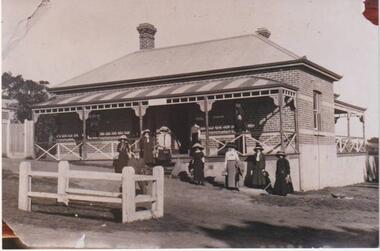
Photograph, 1920
... Ten figures on verandah and in front with hats, bags and jackets. Women with long skirts and dresses. In foreground a small fenced area....Ten figures on verandah and in front with hats, bags and jackets. Women with long skirts and dresses. In foreground a small fenced area. local history photographs buildings - historic post office black & white photograph mary robb 9 women and 1 man, elegantly dressed, standing outside a brick building with 2 verandahs. ..."Waiting to meet the Boat". Cowes Post Office, corner Main Street and The Esplanade. A brick building with corrugated iron roof, two brick chimneys, a porch extending across front verandah, wooden posts, awning roof striped. Fencing across with free access above four steps. Ten figures on verandah and in front with hats, bags and jackets. Women with long skirts and dresses. In foreground a small fenced area.9 women and 1 man, elegantly dressed, standing outside a brick building with 2 verandahs. This is the first Cowes Post Office, on the corner of the Esplanade and Thompson Ave, Cowes.local history, photographs, buildings - historic, post office, black & white photograph, mary robb -
 Bendigo Historical Society Inc.
Photograph - LA TROBE UNIVERSITY BENDIGO COLLECTION: BENDIGO TEACHERS' COLLEGE STUDENTS 1946
... The men are dressed in suits with ties and the women are in suits, skirts with twin sets or dresses with jackets. The women are all wearing stockings or socks. ...The men are dressed in suits with ties and the women are in suits, skirts with twin sets or dresses with jackets. The women are all wearing stockings or socks. ...A black and white photograph of unnamed Bendigo Teachers' College students in 1946. The men are dressed in suits with ties and the women are in suits, skirts with twin sets or dresses with jackets. The women are all wearing stockings or socks. See 3320.100bendigo, education, bendigo teachers' college students, la trobe university bendigo collection, collection, bendigo, education, tertiary education, teacher training, students, bendigo teachers' college, costume, fashion, attire, clothing, photo, photographs, photograph, photography, ms. j.c. burnett, mr. geoff pryor -
 South Gippsland Shire Council
Photograph, Framed, Woorayl Shire Councillors 1991/1992, 1991
... Standing and sitting in two rows behind a large council desk the 17 men and women are dressed in jackets, suits and ties. Text panel atop and bottom features the names of each councillor. ...Standing and sitting in two rows behind a large council desk the 17 men and women are dressed in jackets, suits and ties. Text panel atop and bottom features the names of each councillor. ...Framed colour photograph featuring the Woorayl Shire Councillors 1991-1992. Standing and sitting in two rows behind a large council desk the 17 men and women are dressed in jackets, suits and ties. Text panel atop and bottom features the names of each councillor. Brown timber frame with gold edging. Light brown card window mount. -
 Embroiderers Guild, Victoria
Clothing - Kurti Style Blouse, 20 th C
... Historically, it served as a versatile tunic, often worn as a blouse or jacket by women. Ancient Origins: The kurti is believed to have roots in the ancient Indian subcontinent, descending from the tunics of the Shunga period (2nd century B.C.). ...Historically, it served as a versatile tunic, often worn as a blouse or jacket by women. Ancient Origins: The kurti is believed to have roots in the ancient Indian subcontinent, descending from the tunics of the Shunga period (2nd century B.C.). ...The kurti, a shorter version of the traditional kurta, has evolved over centuries from ancient Indian, Central Asian, and Mughal influences, originally designed for practical comfort. Historically, it served as a versatile tunic, often worn as a blouse or jacket by women. Ancient Origins: The kurti is believed to have roots in the ancient Indian subcontinent, descending from the tunics of the Shunga period (2nd century B.C.). Mughal Influence: The Mughal empire introduced variations, including the salwar kameez and Anarkali, which influenced the looser, comfortable style of the modern kurti.Kurta style top/blouse (from the Indian sub-continent) in shot purple/blue silk. Ari (Tambour) embroidery embellished with beads, rayon and metallic threads. -
 Embroiderers Guild, Victoria
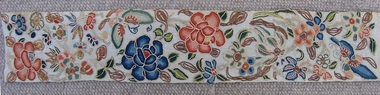
Clothing - Chinese Floral Sleeve Band, Late 19th Century
... These detachable, decorated bands were added to women's informal jackets and robes, often featuring symbolic motifs like landscapes, flowers, and auspicious symbols. ...These detachable, decorated bands were added to women's informal jackets and robes, often featuring symbolic motifs like landscapes, flowers, and auspicious symbols. ...Chinese sleeve embroidery bands, or wanxiu became popular in the late 19th century during the Qing Dynasty, evolving from the traditional Han cuff embroidery and Manchu styles. These detachable, decorated bands were added to women's informal jackets and robes, often featuring symbolic motifs like landscapes, flowers, and auspicious symbols. They served both a decorative function, displaying artistic skill and personal wishes, and a practical one by covering the sleeves when hands were folded at the waist. History and evolution: Origins: The practice of embroidering cuffs on robes existed during the previous Ming Dynasty for Han women, and this was adopted by the Manchu rulers who founded the Qing Dynasty. Qing Dynasty (1644-1911): The practice was popularized and elaborated upon during this era, with detachable bands becoming a fashionable element for informal wear. Symbolism: The embroidery included a complex visual vocabulary of wishes for a long life, many offspring, and a happy marriage, derived from nature, mythology, and classical literature. Functionality: Women would fold their arms, often with their hands inside the sleeves, so the embroidered bands, which were sewn to hang down the back of the jacket, would be displayed prominently down the front. 19th century peak: The late 19th century was the peak of their popularity, with intricate designs becoming fashionable and even influenced by court tastes, such as those favoured by the Empress Dowager Cixi. Later developments: The late 19th century saw the introduction of chemical 'aniline' dyes from Europe, leading to brighter, bolder colours in embroidery. Motifs and their Meanings: Auspicious symbols: Designs often included symbols for good fortune, wealth, and longevity. Natural imagery: Birds, flowers, and landscapes were common motifs that could represent natural beauty or convey specific symbolic meanings. Figurative scenes: Bands could also feature narrative scenes from classical stories or legends. The choice of motifs allowed women to express personal desires, cultural values, and aesthetic preferences, reflecting a more personal and informal style than official court attire.Sleeve band of grey brocade silk, embroidered design of peonies, and butterflies in coloured silk thread in Pekin knot stitch. Flowers are outlined in cream crinkle cord. china, late 19th century, silk, sleeve band, flower, peony, butterfly -
 Embroiderers Guild, Victoria
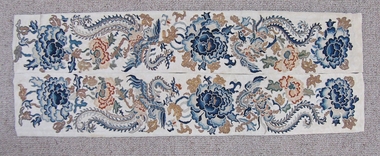
Accessory - Pair of Chinese Embroidered Sleeve Bands
... These detachable, decorated bands were added to women's informal jackets and robes, often featuring symbolic motifs like landscapes, flowers, and auspicious symbols. ...These detachable, decorated bands were added to women's informal jackets and robes, often featuring symbolic motifs like landscapes, flowers, and auspicious symbols. ...Chinese sleeve embroidery bands, or wanxiu became popular in the late 19th century during the Qing Dynasty, evolving from the traditional Han cuff embroidery and Manchu styles. These detachable, decorated bands were added to women's informal jackets and robes, often featuring symbolic motifs like landscapes, flowers, and auspicious symbols. They served both a decorative function, displaying artistic skill and personal wishes, and a practical one by covering the sleeves when hands were folded at the waist. History and evolution: Origins: The practice of embroidering cuffs on robes existed during the previous Ming Dynasty for Han women, and this was adopted by the Manchu rulers who founded the Qing Dynasty. Qing Dynasty (1644-1911): The practice was popularized and elaborated upon during this era, with detachable bands becoming a fashionable element for informal wear. Symbolism: The embroidery included a complex visual vocabulary of wishes for a long life, many offspring, and a happy marriage, derived from nature, mythology, and classical literature. Functionality: Women would fold their arms, often with their hands inside the sleeves, so the embroidered bands, which were sewn to hang down the back of the jacket, would be displayed prominently down the front. 19th century peak: The late 19th century was the peak of their popularity, with intricate designs becoming fashionable and even influenced by court tastes, such as those favoured by the Empress Dowager Cixi. Later developments: The late 19th century saw the introduction of chemical 'aniline' dyes from Europe, leading to brighter, bolder colours in embroidery. Motifs and their Meanings: Auspicious symbols: Designs often included symbols for good fortune, wealth, and longevity. Natural imagery: Birds, flowers, and landscapes were common motifs that could represent natural beauty or convey specific symbolic meanings. Figurative scenes: Bands could also feature narrative scenes from classical stories or legends. The choice of motifs allowed women to express personal desires, cultural values, and aesthetic preferences, reflecting a more personal and informal style than official court attire.Pale green brocade with Pekin knot stitch in blue, green, cream and brown. Large heads and the phoenix used in the design. Gold thread couched with cream thread.embroidery, garments, silk embroidery, oriental, china -
 Embroiderers Guild, Victoria
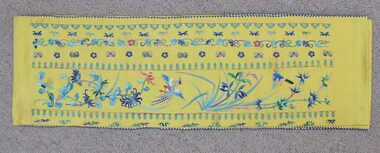
Accessory - Pair of Chinese Sleeve Bands, Late 19th Century
... These detachable, decorated bands were added to women's informal jackets and robes, often featuring symbolic motifs like landscapes, flowers, and auspicious symbols. ...These detachable, decorated bands were added to women's informal jackets and robes, often featuring symbolic motifs like landscapes, flowers, and auspicious symbols. ...Chinese sleeve embroidery bands, or wanxiu became popular in the late 19th century during the Qing Dynasty, evolving from the traditional Han cuff embroidery and Manchu styles. These detachable, decorated bands were added to women's informal jackets and robes, often featuring symbolic motifs like landscapes, flowers, and auspicious symbols. They served both a decorative function, displaying artistic skill and personal wishes, and a practical one by covering the sleeves when hands were folded at the waist. History and evolution: Origins: The practice of embroidering cuffs on robes existed during the previous Ming Dynasty for Han women, and this was adopted by the Manchu rulers who founded the Qing Dynasty. Qing Dynasty (1644-1911): The practice was popularized and elaborated upon during this era, with detachable bands becoming a fashionable element for informal wear. Symbolism: The embroidery included a complex visual vocabulary of wishes for a long life, many offspring, and a happy marriage, derived from nature, mythology, and classical literature. Functionality: Women would fold their arms, often with their hands inside the sleeves, so the embroidered bands, which were sewn to hang down the back of the jacket, would be displayed prominently down the front. 19th century peak: The late 19th century was the peak of their popularity, with intricate designs becoming fashionable and even influenced by court tastes, such as those favoured by the Empress Dowager Cixi. Later developments: The late 19th century saw the introduction of chemical 'aniline' dyes from Europe, leading to brighter, bolder colours in embroidery. Motifs and their Meanings: Auspicious symbols: Designs often included symbols for good fortune, wealth, and longevity. Natural imagery: Birds, flowers, and landscapes were common motifs that could represent natural beauty or convey specific symbolic meanings. Figurative scenes: Bands could also feature narrative scenes from classical stories or legends. The choice of motifs allowed women to express personal desires, cultural values, and aesthetic preferences, reflecting a more personal and informal style than official court attire.Yellow silk satin, silk embroidery depicting birds and flowers in bright blues, greens, mauve, orange and pinks.embroidery, garments, silk embroidery, china, late 19th century, flowers, garden, bird -
 Embroiderers Guild, Victoria
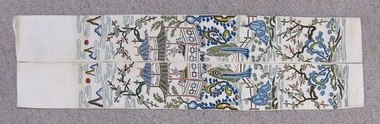
Accessory - Pair of Chinese Embroidered Sleeve Bands, 19 th C
... These detachable, decorated bands were added to women's informal jackets and robes, often featuring symbolic motifs like landscapes, flowers, and auspicious symbols. ...These detachable, decorated bands were added to women's informal jackets and robes, often featuring symbolic motifs like landscapes, flowers, and auspicious symbols. ...Chinese sleeve embroidery bands, or wanxiu became popular in the late 19th century during the Qing Dynasty, evolving from the traditional Han cuff embroidery and Manchu styles. These detachable, decorated bands were added to women's informal jackets and robes, often featuring symbolic motifs like landscapes, flowers, and auspicious symbols. They served both a decorative function, displaying artistic skill and personal wishes, and a practical one by covering the sleeves when hands were folded at the waist. History and evolution: Origins: The practice of embroidering cuffs on robes existed during the previous Ming Dynasty for Han women, and this was adopted by the Manchu rulers who founded the Qing Dynasty. Qing Dynasty (1644-1911): The practice was popularized and elaborated upon during this era, with detachable bands becoming a fashionable element for informal wear. Symbolism: The embroidery included a complex visual vocabulary of wishes for a long life, many offspring, and a happy marriage, derived from nature, mythology, and classical literature. Functionality: Women would fold their arms, often with their hands inside the sleeves, so the embroidered bands, which were sewn to hang down the back of the jacket, would be displayed prominently down the front. 19th century peak: The late 19th century was the peak of their popularity, with intricate designs becoming fashionable and even influenced by court tastes, such as those favoured by the Empress Dowager Cixi. Later developments: The late 19th century saw the introduction of chemical 'aniline' dyes from Europe, leading to brighter, bolder colours in embroidery. Motifs and their Meanings: Auspicious symbols: Designs often included symbols for good fortune, wealth, and longevity. Natural imagery: Birds, flowers, and landscapes were common motifs that could represent natural beauty or convey specific symbolic meanings. Figurative scenes: Bands could also feature narrative scenes from classical stories or legends. The choice of motifs allowed women to express personal desires, cultural values, and aesthetic preferences, reflecting a more personal and informal style than official court attire.Cream satin, silk embroidery in Pekin knot stitch. Fine couched cord. Rural setting with figures, trees and pagoda.embroidery, garments, silk embroidery, china, garden, figures, lanscape -
 Embroiderers Guild, Victoria
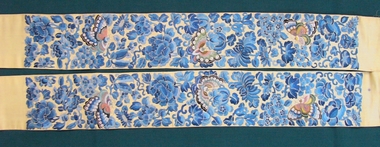
Accessory - Pair of Chinese Sleeve Bands, Mid 19th Century
... These detachable, decorated bands were added to women's informal jackets and robes, often featuring symbolic motifs like landscapes, flowers, and auspicious symbols. ...These detachable, decorated bands were added to women's informal jackets and robes, often featuring symbolic motifs like landscapes, flowers, and auspicious symbols. ...Chinese sleeve embroidery bands, or wanxiu became popular in the late 19th century during the Qing Dynasty, evolving from the traditional Han cuff embroidery and Manchu styles. These detachable, decorated bands were added to women's informal jackets and robes, often featuring symbolic motifs like landscapes, flowers, and auspicious symbols. They served both a decorative function, displaying artistic skill and personal wishes, and a practical one by covering the sleeves when hands were folded at the waist. History and evolution: Origins: The practice of embroidering cuffs on robes existed during the previous Ming Dynasty for Han women, and this was adopted by the Manchu rulers who founded the Qing Dynasty. Qing Dynasty (1644-1911): The practice was popularized and elaborated upon during this era, with detachable bands becoming a fashionable element for informal wear. Symbolism: The embroidery included a complex visual vocabulary of wishes for a long life, many offspring, and a happy marriage, derived from nature, mythology, and classical literature. Functionality: Women would fold their arms, often with their hands inside the sleeves, so the embroidered bands, which were sewn to hang down the back of the jacket, would be displayed prominently down the front. 19th century peak: The late 19th century was the peak of their popularity, with intricate designs becoming fashionable and even influenced by court tastes, such as those favoured by the Empress Dowager Cixi. Later developments: The late 19th century saw the introduction of chemical 'aniline' dyes from Europe, leading to brighter, bolder colours in embroidery. Motifs and their Meanings: Auspicious symbols: Designs often included symbols for good fortune, wealth, and longevity. Natural imagery: Birds, flowers, and landscapes were common motifs that could represent natural beauty or convey specific symbolic meanings. Figurative scenes: Bands could also feature narrative scenes from classical stories or legends. The choice of motifs allowed women to express personal desires, cultural values, and aesthetic preferences, reflecting a more personal and informal style than official court attire.Pale gold satin. Design of peonies embroidered in shades of blue satin stitch with coloured butterflies..embroidery, garments, silk embroidery, mid 19th century, china, oriental -
 Embroiderers Guild, Victoria
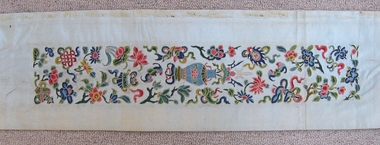
Accessory - Chinese Floral Sleeve Band
... These detachable, decorated bands were added to women's informal jackets and robes, often featuring symbolic motifs like landscapes, flowers, and auspicious symbols. ...These detachable, decorated bands were added to women's informal jackets and robes, often featuring symbolic motifs like landscapes, flowers, and auspicious symbols. ...Chinese sleeve embroidery bands, or wanxiu became popular in the late 19th century during the Qing Dynasty, evolving from the traditional Han cuff embroidery and Manchu styles. These detachable, decorated bands were added to women's informal jackets and robes, often featuring symbolic motifs like landscapes, flowers, and auspicious symbols. They served both a decorative function, displaying artistic skill and personal wishes, and a practical one by covering the sleeves when hands were folded at the waist. History and evolution: Origins: The practice of embroidering cuffs on robes existed during the previous Ming Dynasty for Han women, and this was adopted by the Manchu rulers who founded the Qing Dynasty. Qing Dynasty (1644-1911): The practice was popularized and elaborated upon during this era, with detachable bands becoming a fashionable element for informal wear. Symbolism: The embroidery included a complex visual vocabulary of wishes for a long life, many offspring, and a happy marriage, derived from nature, mythology, and classical literature. Functionality: Women would fold their arms, often with their hands inside the sleeves, so the embroidered bands, which were sewn to hang down the back of the jacket, would be displayed prominently down the front. 19th century peak: The late 19th century was the peak of their popularity, with intricate designs becoming fashionable and even influenced by court tastes, such as those favoured by the Empress Dowager Cixi. Later developments: The late 19th century saw the introduction of chemical 'aniline' dyes from Europe, leading to brighter, bolder colours in embroidery. Motifs and their Meanings: Auspicious symbols: Designs often included symbols for good fortune, wealth, and longevity. Natural imagery: Birds, flowers, and landscapes were common motifs that could represent natural beauty or convey specific symbolic meanings. Figurative scenes: Bands could also feature narrative scenes from classical stories or legends. The choice of motifs allowed women to express personal desires, cultural values, and aesthetic preferences, reflecting a more personal and informal style than official court attire.Classical Chinese design, a wide band of pale green satin is partly decorated with a band of embroidery. Pekin knot stitch outlined with a very fine white cord is worked in shades of pink, blue, yellow and green. Subjects chosen are flower vase, bats, sea creatures and peony flowers.On reverse 438/4103embroidery, garments, china, silk embroidery, poeny, flower, vase, bat, animals -
 Embroiderers Guild, Victoria
Accessory - Pair of Chinese Sleeve Bands, Mid 19th Century
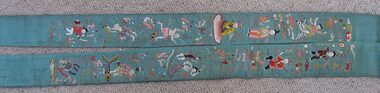
... These detachable, decorated bands were added to women's informal jackets and robes, often featuring symbolic motifs like landscapes, flowers, and auspicious symbols. ...These detachable, decorated bands were added to women's informal jackets and robes, often featuring symbolic motifs like landscapes, flowers, and auspicious symbols. ...Chinese sleeve embroidery bands, or wanxiu became popular in the late 19th century during the Qing Dynasty, evolving from the traditional Han cuff embroidery and Manchu styles. These detachable, decorated bands were added to women's informal jackets and robes, often featuring symbolic motifs like landscapes, flowers, and auspicious symbols. They served both a decorative function, displaying artistic skill and personal wishes, and a practical one by covering the sleeves when hands were folded at the waist. History and evolution: Origins: The practice of embroidering cuffs on robes existed during the previous Ming Dynasty for Han women, and this was adopted by the Manchu rulers who founded the Qing Dynasty. Qing Dynasty (1644-1911): The practice was popularized and elaborated upon during this era, with detachable bands becoming a fashionable element for informal wear. Symbolism: The embroidery included a complex visual vocabulary of wishes for a long life, many offspring, and a happy marriage, derived from nature, mythology, and classical literature. Functionality: Women would fold their arms, often with their hands inside the sleeves, so the embroidered bands, which were sewn to hang down the back of the jacket, would be displayed prominently down the front. 19th century peak: The late 19th century was the peak of their popularity, with intricate designs becoming fashionable and even influenced by court tastes, such as those favoured by the Empress Dowager Cixi. Later developments: The late 19th century saw the introduction of chemical 'aniline' dyes from Europe, leading to brighter, bolder colours in embroidery. Motifs and their Meanings: Auspicious symbols: Designs often included symbols for good fortune, wealth, and longevity. Natural imagery: Birds, flowers, and landscapes were common motifs that could represent natural beauty or convey specific symbolic meanings. Figurative scenes: Bands could also feature narrative scenes from classical stories or legends. The choice of motifs allowed women to express personal desires, cultural values, and aesthetic preferences, reflecting a more personal and informal style than official court attire.Mid green silk embroidered with a variety of coloured silk threads and some metal thread.embroidery, garments, china, mid 19th century, figures, fish, turtle, sea -
 Embroiderers Guild, Victoria
Clothing - Chinese Embroidered Band, 1900
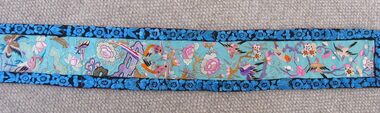
... These detachable, decorated bands were added to women's informal jackets and robes, often featuring symbolic motifs like landscapes, flowers, and auspicious symbols. ...These detachable, decorated bands were added to women's informal jackets and robes, often featuring symbolic motifs like landscapes, flowers, and auspicious symbols. ...Sleeve band is believed to have been brought from China by a sea captain. Chinese sleeve embroidery bands, or wanxiu became popular in the late 19th century during the Qing Dynasty, evolving from the traditional Han cuff embroidery and Manchu styles. These detachable, decorated bands were added to women's informal jackets and robes, often featuring symbolic motifs like landscapes, flowers, and auspicious symbols. They served both a decorative function, displaying artistic skill and personal wishes, and a practical one by covering the sleeves when hands were folded at the waist. History and evolution: Origins: The practice of embroidering cuffs on robes existed during the previous Ming Dynasty for Han women, and this was adopted by the Manchu rulers who founded the Qing Dynasty. Qing Dynasty (1644-1911): The practice was popularized and elaborated upon during this era, with detachable bands becoming a fashionable element for informal wear. Symbolism: The embroidery included a complex visual vocabulary of wishes for a long life, many offspring, and a happy marriage, derived from nature, mythology, and classical literature. Functionality: Women would fold their arms, often with their hands inside the sleeves, so the embroidered bands, which were sewn to hang down the back of the jacket, would be displayed prominently down the front. 19th century peak: The late 19th century was the peak of their popularity, with intricate designs becoming fashionable and even influenced by court tastes, such as those favoured by the Empress Dowager Cixi. Later developments: The late 19th century saw the introduction of chemical 'aniline' dyes from Europe, leading to brighter, bolder colours in embroidery. Motifs and their Meanings: Auspicious symbols: Designs often included symbols for good fortune, wealth, and longevity. Natural imagery: Birds, flowers, and landscapes were common motifs that could represent natural beauty or convey specific symbolic meanings. Figurative scenes: Bands could also feature narrative scenes from classical stories or legends. The choice of motifs allowed women to express personal desires, cultural values, and aesthetic preferences, reflecting a more personal and informal style than official court attire.Turquoise blue silk band embroidered in a delicate design of flowers, birds, butterflies and insects in classical Chinese style. The edge is bound with black silk worked with a bright blue design and the lining is a magenta brocade. garments, 1900-20, china, silk embroidery, flowers, birds, butterfly -
 Embroiderers Guild, Victoria
Textile - Chinese Silk Panel, c 1900
... These detachable, decorated bands were added to women's informal jackets and robes, often featuring symbolic motifs like landscapes, flowers, and auspicious symbols. ...These detachable, decorated bands were added to women's informal jackets and robes, often featuring symbolic motifs like landscapes, flowers, and auspicious symbols. ...Chinese sleeve embroidery bands, or wanxiu became popular in the late 19th century during the Qing Dynasty, evolving from the traditional Han cuff embroidery and Manchu styles. These detachable, decorated bands were added to women's informal jackets and robes, often featuring symbolic motifs like landscapes, flowers, and auspicious symbols. They served both a decorative function, displaying artistic skill and personal wishes, and a practical one by covering the sleeves when hands were folded at the waist. History and evolution: Origins: The practice of embroidering cuffs on robes existed during the previous Ming Dynasty for Han women, and this was adopted by the Manchu rulers who founded the Qing Dynasty. Qing Dynasty (1644-1911): The practice was popularized and elaborated upon during this era, with detachable bands becoming a fashionable element for informal wear. Symbolism: The embroidery included a complex visual vocabulary of wishes for a long life, many offspring, and a happy marriage, derived from nature, mythology, and classical literature. Functionality: Women would fold their arms, often with their hands inside the sleeves, so the embroidered bands, which were sewn to hang down the back of the jacket, would be displayed prominently down the front. 19th century peak: The late 19th century was the peak of their popularity, with intricate designs becoming fashionable and even influenced by court tastes, such as those favoured by the Empress Dowager Cixi. Later developments: The late 19th century saw the introduction of chemical 'aniline' dyes from Europe, leading to brighter, bolder colours in embroidery. Motifs and their Meanings: Auspicious symbols: Designs often included symbols for good fortune, wealth, and longevity. Natural imagery: Birds, flowers, and landscapes were common motifs that could represent natural beauty or convey specific symbolic meanings. Figurative scenes: Bands could also feature narrative scenes from classical stories or legends. The choice of motifs allowed women to express personal desires, cultural values, and aesthetic preferences, reflecting a more personal and informal style than official court attire.Cream silk panel with floral design - four circles surrounded by floral border. Blues, greens, pinks and cream silk in Pekin stitch bordered with fine couched gold passing thread. Traditional Chinese embroidered panel - possibly a sleeve band. -
 Embroiderers Guild, Victoria
Clothing - Pair of Chinese Embroidered Sleeve Bands, 19 th C
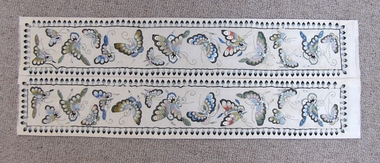
... These detachable, decorated bands were added to women's informal jackets and robes, often featuring symbolic motifs like landscapes, flowers, and auspicious symbols. ...These detachable, decorated bands were added to women's informal jackets and robes, often featuring symbolic motifs like landscapes, flowers, and auspicious symbols. ...Chinese sleeve embroidery bands, or wanxiu became popular in the late 19th century during the Qing Dynasty, evolving from the traditional Han cuff embroidery and Manchu styles. These detachable, decorated bands were added to women's informal jackets and robes, often featuring symbolic motifs like landscapes, flowers, and auspicious symbols. They served both a decorative function, displaying artistic skill and personal wishes, and a practical one by covering the sleeves when hands were folded at the waist. History and evolution: Origins: The practice of embroidering cuffs on robes existed during the previous Ming Dynasty for Han women, and this was adopted by the Manchu rulers who founded the Qing Dynasty. Qing Dynasty (1644-1911): The practice was popularized and elaborated upon during this era, with detachable bands becoming a fashionable element for informal wear. Symbolism: The embroidery included a complex visual vocabulary of wishes for a long life, many offspring, and a happy marriage, derived from nature, mythology, and classical literature. Functionality: Women would fold their arms, often with their hands inside the sleeves, so the embroidered bands, which were sewn to hang down the back of the jacket, would be displayed prominently down the front. 19th century peak: The late 19th century was the peak of their popularity, with intricate designs becoming fashionable and even influenced by court tastes, such as those favoured by the Empress Dowager Cixi. Later developments: The late 19th century saw the introduction of chemical 'aniline' dyes from Europe, leading to brighter, bolder colours in embroidery. Motifs and their Meanings: Auspicious symbols: Designs often included symbols for good fortune, wealth, and longevity. Natural imagery: Birds, flowers, and landscapes were common motifs that could represent natural beauty or convey specific symbolic meanings. Figurative scenes: Bands could also feature narrative scenes from classical stories or legends. The choice of motifs allowed women to express personal desires, cultural values, and aesthetic preferences, reflecting a more personal and informal style than official court attire.Pair of sleeve bands with embroidered butterflies worked in satin stitch. Ivory satin background and embroidered in silk thread silk embroidery, china, butterflies, sleeve band -
 Embroiderers Guild, Victoria
Accessory - Pair of Chinese Sleeve Bands
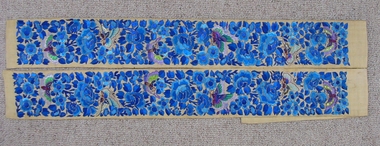
... These detachable, decorated bands were added to women's informal jackets and robes, often featuring symbolic motifs like landscapes, flowers, and auspicious symbols. ...These detachable, decorated bands were added to women's informal jackets and robes, often featuring symbolic motifs like landscapes, flowers, and auspicious symbols. ...Butterfly is a symbol of happiness and conjugal bliss. Peonies - flowers of happiness. Chinese sleeve embroidery bands, or wanxiu became popular in the late 19th century during the Qing Dynasty, evolving from the traditional Han cuff embroidery and Manchu styles. These detachable, decorated bands were added to women's informal jackets and robes, often featuring symbolic motifs like landscapes, flowers, and auspicious symbols. They served both a decorative function, displaying artistic skill and personal wishes, and a practical one by covering the sleeves when hands were folded at the waist. History and evolution: Origins: The practice of embroidering cuffs on robes existed during the previous Ming Dynasty for Han women, and this was adopted by the Manchu rulers who founded the Qing Dynasty. Qing Dynasty (1644-1911): The practice was popularized and elaborated upon during this era, with detachable bands becoming a fashionable element for informal wear. Symbolism: The embroidery included a complex visual vocabulary of wishes for a long life, many offspring, and a happy marriage, derived from nature, mythology, and classical literature. Functionality: Women would fold their arms, often with their hands inside the sleeves, so the embroidered bands, which were sewn to hang down the back of the jacket, would be displayed prominently down the front. 19th century peak: The late 19th century was the peak of their popularity, with intricate designs becoming fashionable and even influenced by court tastes, such as those favoured by the Empress Dowager Cixi. Later developments: The late 19th century saw the introduction of chemical 'aniline' dyes from Europe, leading to brighter, bolder colours in embroidery. Motifs and their Meanings: Auspicious symbols: Designs often included symbols for good fortune, wealth, and longevity. Natural imagery: Birds, flowers, and landscapes were common motifs that could represent natural beauty or convey specific symbolic meanings. Figurative scenes: Bands could also feature narrative scenes from classical stories or legends. The choice of motifs allowed women to express personal desires, cultural values, and aesthetic preferences, reflecting a more personal and informal style than official court attire.Old gold satin embroidered with blue flowers and leaves in silks. Butterflies worked in mauve, green, blue, cream, burgundy and aquamarine.embroidery, garments, silk embroidery, china, oriental, butterflies, flowers
