
Showing 867 items matching "work in the west"
-
 Sunshine and District Historical Society Incorporated
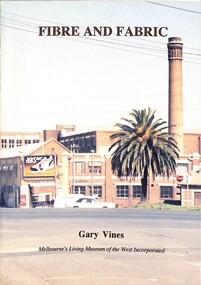
Book - Fibre and Fabric, Melbourne's Living Museum of the West, 1993
... ...work in the west...Fibre Fabric work in the west wool cotton and textile industries in Melbourne's west employment The book covers the history of wool, cotton, textile and allied industries in Australia and Melbourne's west Fibre and Fabric - The wool, cotton, textile and allied industries in Melbourne's west Slim A5 book, well-illustrated. ...The book covers the history of wool, cotton, textile and allied industries in Australia and Melbourne's westSlim A5 book, well-illustrated. The picture on the front cover is the Former Bradford Cotton Mill 'Bradmills'.non-fictionThe book covers the history of wool, cotton, textile and allied industries in Australia and Melbourne's westfibre, fabric, work in the west, wool, cotton and textile industries in melbourne's west, employment -
 Uniting Church Archives - Synod of Victoria
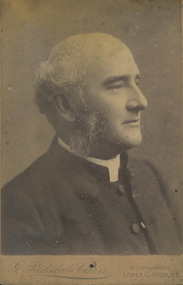
Photograph, C. 1880
... He promtoed the work of the London West Central Mission....He promtoed the work of the London West Central Mission. Pearse, M. ...Rev. Mark Guy Pearce (1842-1930) wrote a good deal of hymns and was a prolific writer. He was well known for his book titled Thoughts on Holiness. He promtoed the work of the London West Central Mission.Semi-gloss, sepia, head and shoulders studio portrait of Rev. Mark Guy Pearce.pearse, m. g., methodist, london west central mission -
 Greensborough Historical Society
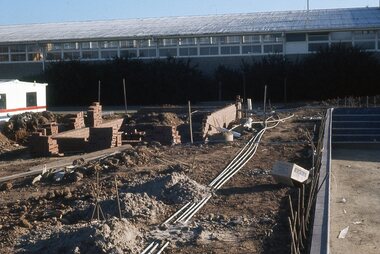
Photograph - Digital Image, Watsonia High School Pool, Construction 1976. West end looking North, 12/12/1976
... This photo shows brick work and ground work and is noted as "West end looking North"....This photo shows brick work and ground work and is noted as "West end looking North". While the school has gone, the pool remains in 2019, operating as Yarra Swim School, Liat Way Greensborough watsonia high school swimming pools greensborough yarra swim school "West end looking North" written on slide. ...The swimming pool at Watsonia High School was commenced in 1976 and opened in 1977. This photo shows brick work and ground work and is noted as "West end looking North".While the school has gone, the pool remains in 2019, operating as Yarra Swim School, Liat Way GreensboroughDigital copy of colour photograph, scanned from slide. Slide set at Item 6513."West end looking North" written on slide.watsonia high school, swimming pools greensborough, yarra swim school -
 Melbourne Tram Museum
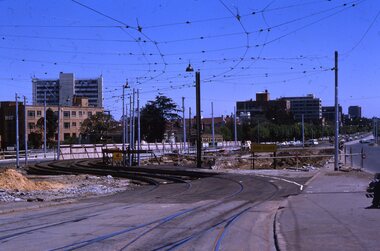
Slide - Set of 2, Keith Kings, 24/12/1967 12:00:00 AM
... Keith Kings stamp and number "15-1" and "15-5"", with details of exposure. .1 - SW6 car on temporary track at St Kilda Junction looking north from turnout during freeway work .2 - Dandenong Road west from Hornsby St with section of straight track ready to replace curves onto new b.v.w. track to Chapel St - 907 coming off soon to be abandoned street track....Trams tramways St Kilda Junction Trackwork Road Works Dandenong Road Queensway tram 907 Keith Kings stamp and number "15-1" and "15-5"", with details of exposure. .1 - SW6 car on temporary track at St Kilda Junction looking north from turnout during freeway work .2 - Dandenong Road west from Hornsby St with section of straight track ready to replace curves onto new b.v.w. track to Chapel St - 907 coming off soon to be abandoned street track. ...Set of two 35mm Kodak white cardboard colour slide by Keith Kings of 24/12/1967 - .1 - St Kilda Junction, looking north along St Kilda Road, showing the nature of the diversion from the junction for Wellington St. .2 - Dandenong Road, showing the track diversion work for Dandenong Road/Queensway, Windsor.Keith Kings stamp and number "15-1" and "15-5"", with details of exposure. .1 - SW6 car on temporary track at St Kilda Junction looking north from turnout during freeway work .2 - Dandenong Road west from Hornsby St with section of straight track ready to replace curves onto new b.v.w. track to Chapel St - 907 coming off soon to be abandoned street track.trams, tramways, st kilda junction, trackwork, road works, dandenong road, queensway, tram 907 -
 Hymettus Cottage & Garden Ballarat
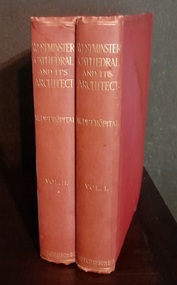
Work on paper - Book, Westminster Cathedral and its Architect
... This volume also features an illustration of the final work on the great west stained glass chancel window of Bentley's, executed by Clayton and Bell for the Ballarat Cathedral and installed in 1889....This volume also features an illustration of the final work on the great west stained glass chancel window of Bentley's, executed by Clayton and Bell for the Ballarat Cathedral and installed in 1889. ...Two volumes written by the daughter of the British architect John Francis BentleyTwo volumes in cloth hardcover with attractive sheen to covers and one simple blind rule around edges.non-fictionTwo volumes written by the daughter of the British architect John Francis Bentleyballarat, catholic, james francis bentley, architecture, art, australia, westminster, stained glass -
 Melbourne Tram Museum
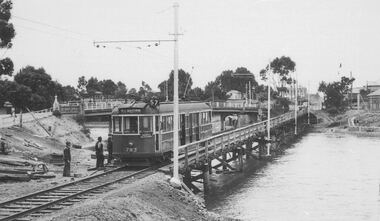
Photograph - One of the first trams across Maribyrnong River bridge, The Age, 23/12/1940
... Work is still being undertaken on the bridge that was built by the Country Roads Board for the MMTB as part of the World War II project to provide better transport to the Munitions work at West Maribyrnong. ...Work is still being undertaken on the bridge that was built by the Country Roads Board for the MMTB as part of the World War II project to provide better transport to the Munitions work at West Maribyrnong. ...The photograph shows one of the first trams, W5 class 783, route 57 across the Maribyrnong River bridge on 23-12-1940. This photo appeared in The Age on 24-12-1940. Work is still being undertaken on the bridge that was built by the Country Roads Board for the MMTB as part of the World War II project to provide better transport to the Munitions work at West Maribyrnong. It was built as a single-track bridge and then duplicated on 1/4/1942.Yields information about the construction of the Maribyrnong River bridge late Dec. 1940.Digital image of a photograph and newspaper cutting.maribyrnong river bridge, bridges, route 57, w5 class, tram 783 -
 Eltham District Historical Society Inc
Document - Folder, Reeves, Michael
... Outline of Michael Reeves' work with Somalian refugees in West Heidelberg....Outline of Michael Reeves' work with Somalian refugees in West Heidelberg. Michael Reeves Somalian refugees West Heidelberg North West Migrant Resourve Centre Newspaper clippings, A4 photocopies, etc Reeves, Michael Document Folder ...Eltham resident Police Sergeant Michael Reeves won the 1996 Ethnic Communities Police Annual Award for his work with Somalian refugees. Contents Newspaper article: "Award for work among refugees", Diamond Valley News, 23 October 1996. Outline of Michael Reeves' work with Somalian refugees in West Heidelberg.Newspaper clippings, A4 photocopies, etcmichael reeves, somalian refugees, west heidelberg, north west migrant resourve centre -
 Mission to Seafarers Victoria
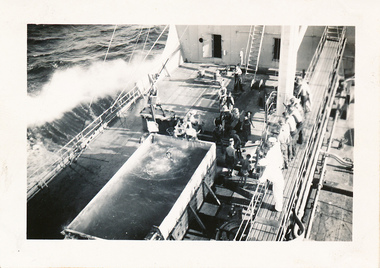
Photograph - Photograph, Black and white, Allan Charles Quinn, Crossing the line on the Ariston, 10 September 1946
... Ariston during 1946 and worked between Sweden, Central America, North West Indies and South America....Ariston during 1946 and worked between Sweden, Central America, North West Indies and South America. ...This photograph depicts the ritual of "crossing the line" which marks the point at which a sailor first crosses the equator. Allan worked aboard the M.T. Ariston during 1946 and worked between Sweden, Central America, North West Indies and South America.This photograph is from the Allan Charles Quinn collection which is a collection of letters and photographs depicting life at sea for a young man in the period immediately following World War II.Black and white photograph of the "crossing the line" ceremony aboard the Ariston.Black ink on reverse: Crossing the equator on Ariston/ 10.9.46allan-charles-quinn, crossing-the-line, sweden, central-america, north-west-indies, south-america, equator, ariston -
 Whitehorse Historical Society Inc.
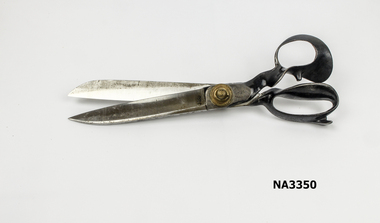
Functional object - Tailor's cutting shears, c 1900
... Travelled to England and worked for a tailor in the West End, London for a year. ...Travelled to England and worked for a tailor in the West End, London for a year. ...Cutting shears used in 1907 by William Cox. Travelled to England and worked for a tailor in the West End, London for a year. Returned to Australia, married in 1908 and opened a tailoring shop in 1910. Bernard Arthur Hooke, husband of donor, Phyllis Hooke, was Chairman of Advisory Committee 1973 - 1996Heavy steel, black handled cutting shears; 36 cm longWilkinsons Makes|Sheffieldtrades, tailoring -
Broadmeadows Historical Society & Museum
Book - Community History, Elaine V Brogan OAM, Fifty years 1969-2019: History of the Western Metropolitan group of Historical Societies, 2019
... Together, they form a collective portrait of community-driven heritage work in Melbourne’s west—an enduring legacy of dedication, memory, and pride....Together, they form a collective portrait of community-driven heritage work in Melbourne’s west—an enduring legacy of dedication, memory, and pride. ...Fifty Years of the WMGHS, from 196948-page white book with stapled card coversnon-fictionFifty Years of the WMGHS, from 1969western metropolitan group of historical societies, 1969, 2019, elaine v. brogan oam -
 Federation University Art Collection
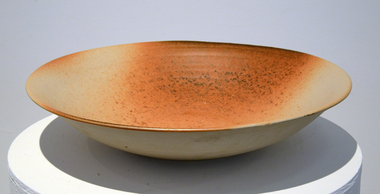
Ceramic, Roswitha Wulff, Woodfired Bowl by Roswitha Wulff, 1986, 1986
... From 1969-70, she worked in North-West Pakistan as a research scholar for the Smithonian Institute and the University of NSW. ...From 1969-70, she worked in North-West Pakistan as a research scholar for the Smithonian Institute and the University of NSW. ..."I am an Australian of German parents born in Persia. I was taught by Peter Rushforth, with a very strong Japanese influence. My work attempts to incorporate these four elements of my history. For form, my influence comes from Art Nouveau, or Jugendstil as it is called in Germany. Techniques are informed by pottery from Japan, China, Korea and Germany. My colours are inspired by the Australian landscape. Using the language of woodfiring, I create a personal vocabulary with new subjects, grammar and syntax, which make each pot a one-off object containing all my diverse influences." (Roswitha Wulff)Roswitha WULFF (1941- ) Born Tabrize, Iran. Arrived Austrqalia c1949 Roswitha Wulff spent her early childhood with her mother, potter Helma Klett, in Germany. In 1964, she obtained a ceramics certificate from the East Sydney Technical College. From 1964-65, she worked with Robin Welch and Ian Sprague at Sprague's Mungeribar Pottery in Upper Beaconsfield, VIC. In 1966 she worked at the Sturt Pottery in Mittagong, NSW under Les Blakebrough. Between 1967 and 1969 Roswitha Wulff travelled overseas, spending 6 monthe with Robin Welch after his return to England and 9 months as a full-time thrower at Briglin Pottery, London, as well as working in potteries in Denmark and Germany. From 1969-70, she worked in North-West Pakistan as a research scholar for the Smithonian Institute and the University of NSW. Returning to Australia in 1970, she set up a workshop in Paddington, NSW, with the help of an Australia Council grant and taught part-time at the East Sydney Technical College and the Willoughby Workshop Art Centre. Since then she has been a lecturer and Head of Ceramics in many institutions, including the National Art School. In the 1990s she moved her studio to Botany Bay, NSW.. While working with the vessel form, she sees her pots as abstract landscapes. Recently she has also been working with wall tiles. During a residency at the Canberra School of Art in 2002, she developed tiles that looked like woodfired pillows with soft rounded rims. In 2007, she used such tiles to create a mural commemorating the Sesquicentenary of St Vincent's Hospital in Paddington. Woodfired stoneware bowl with flay ashSigned on baseroswitha wulff, jan feder, jan feder memorial ceramics collection, woodfire, ceramics, gippsland campus, botany bay studio pottery -
 Mission to Seafarers Victoria
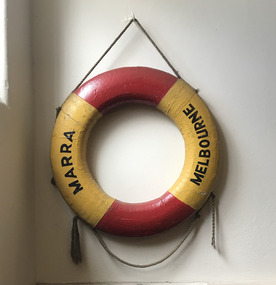
Equipment - Lifebuoy, Marra Melbourne, 1955-1984
... In September 1974, it was sold to unknown buyers however prior to that sale, she worked the West Australian coast being used on the Ord River Project under 'Stateships' perhaps under lease. ...In September 1974, it was sold to unknown buyers however prior to that sale, she worked the West Australian coast being used on the Ord River Project under 'Stateships' perhaps under lease. ...Marra was a refrigerated cargo ship built by Ardrossan Dry Dock & Ship Building Co. in 1955. The first owner was the Adelaide Steamship Co. Ltd., Melbourne . 1,396 gross tons. Lbd: 233'2" x 37'8" x 14'9". in May 1965 it was sold to the Australian Army and renamed AS3051 (John Monash) and provided a shuttle service from Australia to Vietnam transporting cargo for the Australian Task Force. In September 1974, it was sold to unknown buyers however prior to that sale, she worked the West Australian coast being used on the Ord River Project under 'Stateships' perhaps under lease. The Clydebuilt shipsite states she was renamed Asian Queen in 1976 , Arabian Victory in 1980 and finally Sea Rose in 1981. The ship was scrapped in May 1984 at Gadani Beach, Pakistan. Lifebuoys are an essential piece of equipment on a ship. Because the name of the ships it belongs to is written on it is often the only memorabilia left from the ship when it is sent to scrapyard.Round buoy decorated in red and yellow sections with the word "Marra Melbourne" painted on the front. There is a rope that is strung through sections of the exterior.In black paint on the front of the buoy: "MARRA MELBOURNE"safety wheel, lifebelt, water wheely, ring buoy, lifering, lifesaver, life donut, life preserver, perry buoy, lifebuoy, lifesaving equipment, rescue, drowning, vietnam war, adelaide steamship, john monash, australian army, life buoy -
 Whitehorse Historical Society Inc.
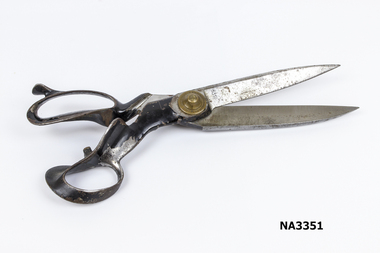
Functional object - Tailor's cutting shears, c 1900
... Travelled to England and worked for a tailor in the West End, London for a year. ...Travelled to England and worked for a tailor in the West End, London for a year. ...Cutting shears used in 1907 by William Cox. Travelled to England and worked for a tailor in the West End, London for a year. Returned to Australia, married in 1908 and opened a shop in Elizabeth Street, Melbourne. Mrs Hooke's husband, Bernard Arthur was born at Wandinong, Canterbury Road, Blackburn and was Chairman of the Advisory Committee 1973 - 1996Long tailor's cutting shears, 35 cm. in lengthR. Henish Inventor, U.S.A.trades, tailoring -
 Whitehorse Historical Society Inc.
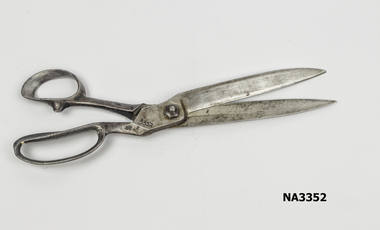
Functional object - Tailor's cutting shears
... Travelled to England and worked for a tailor in the West End, London for a year. ...Travelled to England and worked for a tailor in the West End, London for a year. ...Cutting shears used in 1907 by William Cox. Travelled to England and worked for a tailor in the West End, London for a year. Returned to Australia, married in 1908. Opened a shop in Elizabeth Street, Melbourne. Mrs Hooke's husband, Bernard Arthur was born at Wandinong, Canterbury Road, Blackburn and was Chairman of the Advisory Committee 1973 - 1996Tailor's cutting shears, 34 cm longtrades, tailoring -
 Federation University Historical Collection
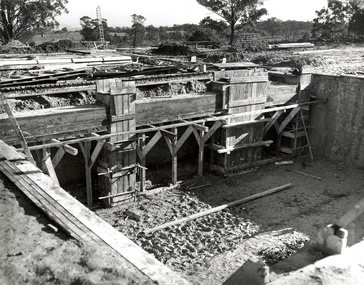
Photograph, N.l. Harvey & Son, Mount Helen Campus, 1968, 1969
... Seven photographs of the Mt Helen Campus Stage one development. .1) Aerial view of foundation work, from west, towards Green Hill .2) Aerial View from South. ...The Federation University campus at Mount Helen was first used by students in 1970. federation university federation university australia feduni university of ballarat ballarat college of advanced education ballarat institute of advanced education building earthworks foundation early development soil testing laboratory Seven photographs of the Mt Helen Campus Stage one development. .1) Aerial view of foundation work, from west, towards Green Hill .2) Aerial View from South. ...The Federation University campus at Mount Helen was first used by students in 1970.Seven photographs of the Mt Helen Campus Stage one development. .1) Aerial view of foundation work, from west, towards Green Hill .2) Aerial View from South. Earthworks and foundations .3) Aerial View from south west. Earthworks, general view .4) Aerial View from above the South West corner of E building. .5) Aerial View from North East. Gear Avenue in background .6) Aerial View from North West. Earthworks extend from Gear Avenue .7) Ground level view. First columns of E building. .13) Mt Helen development Stage One, Engineering Diploma Buildings. This image shows the wall beam and pier construction to the East Wall of the Fluid Mechanics Laboratory adjacent to the pump chamber, 17 June 1968. .18) Flume Pit and Pump Chamber, 15 July 1968. .28) East Wing Pit Looking North, 26 August 1968 .40) Construction as of 04 November 1968federation university, federation university australia, feduni, university of ballarat, ballarat college of advanced education, ballarat institute of advanced education, building, earthworks, foundation, early development, soil testing laboratory -
 Sunshine and District Historical Society Incorporated
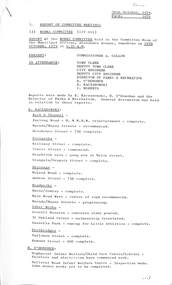
Administrative record - City of Sunshine - Commissioner Mr Alexander Alex George Gillon Collection 1976 - 1982 - Report of Committee Meetings 30th October 1979, City of Sunshine, 30th October 1979
... Albans Centre of Road Recommenced Roadwork Mernda Street & Mayne Street Sunshine West Progressing Other Work Scovell Reserve Concrete Slab Poured Other Work 31 Oakland Street Naturestrip Reinstated Other Work Sassella Park Run up for Deer Park Little Athletics Centre Completed Footbridge Yallourn Street Completed Footbridge Esmond Street 90% Complete Highpoint West Infant Welfare Child Care Centre Painting and Electrical Work Commenced Highpoint West Library Painting and Electrical Work Commenced Ballarat Road Infant Welfare Centre Inspection Completed Some Minor Works Outstanding Depot Amenities Block Work Nearing Completion Public Toilets Deer Park Letter of Approval Received from Health Department Tree Maintenance Talmage Street Albion Progressing Report of the Finance Committee Meeting Report of the Town Clerk Outstanding Rates Estimates 1979/80 Sunshine View Estate Stage 2 Drainage Report of the City Engineer & Planner Staff Reclassifications Rates, Sanitary & Interest Statement as at 30th September 1979 Rates, Sanitary & Interest Statement as at 30th September 1979 Analysis of Accounts Outstanding Rates, Sanitary & Interest Statement as at 30th September 1979 Progressive Analysis Accounts Outstanding...Albans Centre of Road Recommenced Roadwork Mernda Street & Mayne Street Sunshine West Progressing Other Work Scovell Reserve Concrete Slab Poured Other Work 31 Oakland Street Naturestrip Reinstated Other Work Sassella Park Run up for Deer Park Little Athletics Centre Completed Footbridge Yallourn Street Completed Footbridge Esmond Street 90% Complete Highpoint West Infant Welfare Child Care Centre Painting and Electrical Work Commenced Highpoint West Library Painting and Electrical Work Commenced Ballarat Road Infant Welfare Centre Inspection Completed Some Minor Works Outstanding Depot Amenities Block Work Nearing Completion Public Toilets Deer Park Letter of Approval Received from Health Department Tree Maintenance Talmage Street Albion Progressing Report of the Finance Committee Meeting Report of the Town Clerk Outstanding Rates Estimates 1979/80 Sunshine View Estate Stage 2 Drainage Report of the City Engineer & Planner Staff Reclassifications Rates, Sanitary & Interest Statement as at 30th September 1979 Rates, Sanitary & Interest Statement as at 30th September 1979 Analysis of Accounts Outstanding Rates, Sanitary & Interest Statement as at 30th September 1979 Progressive Analysis Accounts Outstanding Foolscap sized document. ...Report of Committee Meetings 30th October 1979 Report of the Works Committee Meeting Kerb & Channel Furlong Road Sunshine North Reinstatement Completed Kerb & Channel Mernda Street & Mayne Street Sunshine West Recommenced Kerb & Channel Holehouse Street Sunshine North 75% Complete Footpath Kellaway Street Maidstone Completed Footpath Yewers Street Sunshine Commence Footpath Braybrook Area Gang now in Melon Street Footpath Glengala Road / Gregory Street Completed Drainage McLeod Road St. Albans Completed Drainage Andrew Street Sunshine Completed Roadwork Burns Street / Sonley Street Completed Roadwork Main Road West St. Albans Centre of Road Recommenced Roadwork Mernda Street & Mayne Street Sunshine West Progressing Other Work Scovell Reserve Concrete Slab Poured Other Work 31 Oakland Street Naturestrip Reinstated Other Work Sassella Park Run up for Deer Park Little Athletics Centre Completed Footbridge Yallourn Street Completed Footbridge Esmond Street 90% Complete Highpoint West Infant Welfare Child Care Centre Painting and Electrical Work Commenced Highpoint West Library Painting and Electrical Work Commenced Ballarat Road Infant Welfare Centre Inspection Completed Some Minor Works Outstanding Depot Amenities Block Work Nearing Completion Public Toilets Deer Park Letter of Approval Received from Health Department Tree Maintenance Talmage Street Albion Progressing Report of the Finance Committee Meeting Report of the Town Clerk Outstanding Rates Estimates 1979/80 Sunshine View Estate Stage 2 Drainage Report of the City Engineer & Planner Staff Reclassifications Rates, Sanitary & Interest Statement as at 30th September 1979 Rates, Sanitary & Interest Statement as at 30th September 1979 Analysis of Accounts Outstanding Rates, Sanitary & Interest Statement as at 30th September 1979 Progressive Analysis Accounts Outstandingfurlong road, sunshine north, mernda street, mayne street, sunshine west, holehouse street, kellaway street, yewers street, melon street, braybrook, glengala road, gregory street, mcleod road, st. albans, andrew street, burns street, sonley street, maidstone, main road west, scovell reserve, scovell crescent, oakland street, maribyrnong, deer park little athletics centre, sassella park, deer park, station road, yallourn street, esmond street, ardeer, highpoint west infant welfare child care centre, highpoint west library, rosamond road, ballarat road infant welfare centre -
 Uniting Church Archives - Synod of Victoria
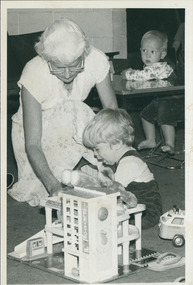
Photograph, Bernice McLeod - article "Raking Memory's Coals", 1984
... The photo appears in an article titled "Raking memory's coals", about a visit by Roger Mitchell to Exmouth in 1983, where UC National Mission is at work on the frontier in the West. "In the car and over a meal we meet National Mission's community worker Bernice McLeod, self-effacing to the point of frustration, shrugging off a role in the oddly-mixed US base town which some say makes her saintly; others a pillar of the community."...The photo appears in an article titled "Raking memory's coals", about a visit by Roger Mitchell to Exmouth in 1983, where UC National Mission is at work on the frontier in the West. "In the car and over a meal we meet National Mission's community worker Bernice McLeod, self-effacing to the point of frustration, shrugging off a role in the oddly-mixed US base town which some say makes her saintly; others a pillar of the community." mcleod, bernice exmouth uc national mission C&N 13/6/84 p. 3, p. 19. ...The photo appears in an article titled "Raking memory's coals", about a visit by Roger Mitchell to Exmouth in 1983, where UC National Mission is at work on the frontier in the West. "In the car and over a meal we meet National Mission's community worker Bernice McLeod, self-effacing to the point of frustration, shrugging off a role in the oddly-mixed US base town which some say makes her saintly; others a pillar of the community."Bernice McLeod is shown playing with a small child.C&N 13/6/84 p. 3, p. 19.mcleod, bernice, exmouth, uc national mission -
 Sunshine and District Historical Society Incorporated
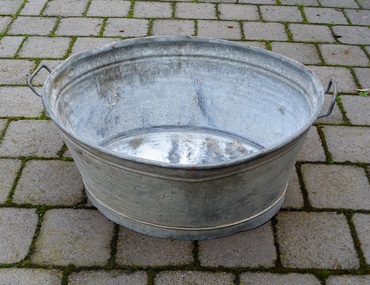
Domestic object - Joseph 'Joe' Wlodarczyk Collection - Galvanised Wash Tub, Probably Circa 1940's
... Stanislaw Pierzak worked at Steelweld in Ashley Street, Braybrook travelling there on his bicycle, while Teodozja Pierzak found work at Smorgon in West Footscray. Stanislaw and Teodozja Pierzak lived in North Sunshine for the rest of their lives, and Mrs Pierzak always said that Sunshine was the best place in the world....Stanislaw Pierzak worked at Steelweld in Ashley Street, Braybrook travelling there on his bicycle, while Teodozja Pierzak found work at Smorgon in West Footscray. Stanislaw and Teodozja Pierzak lived in North Sunshine for the rest of their lives, and Mrs Pierzak always said that Sunshine was the best place in the world. ...Many displaced people who migrated to Australia after World War 2 brought similar tubs with them as part of their luggage. The tubs were valued by the migrants because they were used for washing clothes and other laundry items, and for bathing children and even adults. The tub in our possession was brought out to Australia in 1950 by the Pierzak family who eventually settled in North Sunshine, Victoria. The following story about the Pierzak family has been provided by the daughter Halina Wlodarczyk (nee Pierzak). The father Stanislaw Pierzak was born on the 26th of July 1916 in Zbrza, and the mother Teodozja (Teodozia) Szalas on the 5th of March 1919 in Goleciny, both villages in the Kielce district of Poland. In 1940 they were both taken by the German Army to work as slave labour on farms in Germany. Stanislaw worked in the Saxonia area and Teodozja near Dillingen. The work was hard, and when Teodozja contracted pneumonia she was told that she would not be given any food if she did not work. After the war the displaced persons, as they were called, were settled in various barracks and camps organised by the United States Army. Stanislaw and Teodozja married in Gablingen, Bavaria, Germany, and Halina was born in the camp at Gablingen in 1949. The displaced people were given the choice of several countries if they wanted to migrate from war torn Germany, and so the Pierzak family chose Australia. The Pierzak family set sail from Naples, Italy aboard the ship General M. B. Stewart and arrived in Sydney on the 17th of April 1950. The men and women had to stay in separate quarters, and many passengers were so sick that they did not think they would survive the journey. In Australia they lived in migrant camps in NSW at Bathurst, Orange, Parkes and Cowra. To pay off their fares to Australia migrants were required to work under contract for 2 years. Stanislaw Pierzak worked in Broken Hill NSW returning to visit his family every 3 to 4 months. The son John was born in the Red Cross building at the Parkes camp in 1952. In 1953 the whole family moved to Melbourne and lived in a converted garage in Victor Street, North Sunshine. In 1954 the family bought a bungalow on a block of land in Compton Parade, North Sunshine, where eventually they built a house. Stanislaw Pierzak worked at Steelweld in Ashley Street, Braybrook travelling there on his bicycle, while Teodozja Pierzak found work at Smorgon in West Footscray. Stanislaw and Teodozja Pierzak lived in North Sunshine for the rest of their lives, and Mrs Pierzak always said that Sunshine was the best place in the world.Tubs like this which belonged to displaced people were highly valued possessions and are of historic significance. They were brought out to Australia after World War 2 by many migrating displaced families. The tubs were used for washing activities in the camps in Germany, and the migrant camps in Australia, and also when people lived in bungalows in Australia before they built houses with laundries and bathrooms.Oval shaped galvanised iron tub with two rigid handles, one at each end. The top of the tub is larger than the base. The galvanising is deteriorating in some parts which show a whitish appearance. There are some small dents, and a few chips in the galvanising where surface rust has appeared.The number 70 is stamped on both sides.washing tub, galvanised tub, laundry, bath, displaced persons, immigration, general m. b. stewart, galvanized tub, pierzak, galvanised wash tub, joseph 'joe' wlodarczyk -
 Federation University Art Collection
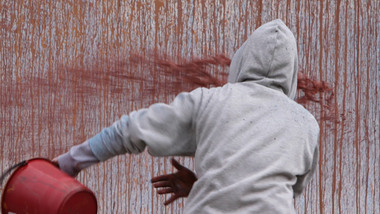
Artwork, other - Artwork, "West Park Proposition' by Ash Keating, 2013
... Selecting one winner from such a show in which each of these artists has in some way transformed my thinking about the world was the excruciating part. Ash Keating's work West Park Proposition, 2012 kept drawing me back in the several hours I spent viewing the works. ...As a work combining performance, collaboration and hope, Keating's West Park Proposition is a work of immense and compelling poetry." ...Ash KEATING Among fifteen finalists this artwork won the 2012 Guirguis New Art Prize, a prestigious national acquisitive biennial art prize administered by Federation University Australia. The Guirguis New Art Prize (GNAP) is a national acquisitive $20,000 contemporary art prize which presents a selection of Australia's most exciting contemporary artists with works that explore and embrace new ways of artistic expression, utilising existing mediums and new technologies in innovative ways. Initiated and generously supported by local Ballarat surgeon Mr Mark Guirguis, this prestigious art prize is administered by the Federation University Australia (FedUni). As a local philanthropist and art collector, in developing the Prize, Mark Guirguis' aims were to celebrate the significance of the arts to communities and to Ballarat, emphasising contemporary art and 'living' culture, and to highlight FedUni's Arts Academy. Artist Ash Keating works across a conceptual, site-responsive and often collaborative art practice that incorporates painting, sculpture, installation, video, performance and public interventions, and has referenced a wide range of social and environmental issues within his art. Frequently working beyond the gallery, and often harnessing community narrative and energy, his work also draws upon myth, ritual and ceremony. 'West Park Proposition', 2012, is a three channel and screen video installation, utilising multiple camera video documentation of an endurance painting intervention undertaken on the morning of 01 September 2012 on the east facing wall of a newly built tilt-slab industrial building, situated on the direct edge of the current urban and rural boundary in Truganina, Victoria. The multi-screen work documents an endurance guerilla-style action painting intervention and ritualised painting performance in which a symbolic violence is enacted against a storehouse of commodity production and consumption. Upon winning the award artists Ash Keating said; “The work was made near Ballarat on the Deer Park bypass. It is an aesthetic comment about the way these new tilt-slab industrial buildings spring up without caring for the environment." The work, which took eight hours to create, was about reclaiming the space from “cost-effective architecture” without any aesthetics. The inaugural judge for the Prize, Jason Smith, Director, Heide Museum of Modern Art (MoMA) said, "Selecting the winner of this inaugural GNAP was exhilarating and excruciating: exhilarating because the seriousness of each artist's enterprise, and their uncompromising resolution of concepts, has created an inaugural exhibition of exceptional power. This first GNAP is a survey of some of the most poetic and provocative imaginations working in Australia today. Selecting one winner from such a show in which each of these artists has in some way transformed my thinking about the world was the excruciating part. Ash Keating's work West Park Proposition, 2012 kept drawing me back in the several hours I spent viewing the works. It simultaneously affirms the political and critical role of the artist as a key agent of change and action, and someone who reminds us of the beauty and resilience of humanity and nature in the face of unrelenting change. As a work combining performance, collaboration and hope, Keating's West Park Proposition is a work of immense and compelling poetry."artist, artwork, keating, ash keating, guirguis, guirguis new art prize, gnap, gnap13 -
 Melbourne Tram Museum
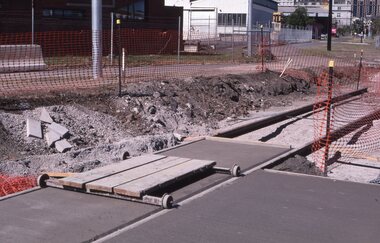
Album - Robert Thomson Slide Collection, "13.11.2001 to 19.11.2001 October 2003 512-537"
... Number Brief Description RT149 Docklands - track work RT150 "2" track work at Glenferrie Rd RT151 Box Hill terminus - tram 3029 - "Port Melbourne" route 109 - at Elgar Rd stop RT152 Docklands RT153 East Brighton terminus - tram 112 - "University" - route 64 RT154 "4" - track work excavators at Malvern & Glenferrie Rds RT155 Box Hill terminus - tram 3035 - "via City" route 109 RT156 Docklands - track work RT157 "1" New Junction Malvern - Glenferrie RT158 "3" track work at Malvern & Glenferrie Rds RT159 Docklands - La Trobe St - tram 2073 - "Bundoora RMIT" - route 86 & tram 2003 - "Bundoora RMIT" - route 86 RT160 Docklands RT161 Docklands - Collins St extension RT162 Docklands - track work RT163 Collins St -tram 124 - "West Preston" - route 112 - at Town Hall stop RT164 Port Melb terminus - tram 278 - "Mont Albert" - route 109 RT165 Swanston St - tram 67 - "University" - route 6 RT166 Port Melb terminus - "Mont Albert" - route 109 RT167 Camberwell Depot - tram 971 - "City" - route 55, tram 881 - "Camberwell" RT168 Victoria Pde - tram 3004 -"Mont Albert" - route 109 RT169 Victoria Pde - tram 175 - "St Kilda Fitzroy St" - route 112 & "Mont Albert" - route 109 RT170 Spencer St - tram 957 - "City Circle" route 0 & tram 195 - "West Preston" - route 12 RT171 Domain Road Interchange - tram 134 "West Coburg" - route 55 7 tram 22 - "Camberwell" - route 72 RT172 St Kilda Rd - tram 96 - "University" - route 67 RT173 Swanston St - tram 24 - at Collins St RT174 West Coburg - tram 130 - "Doman & St Kilda Rds" - route 55...Number Brief Description RT149 Docklands - track work RT150 "2" track work at Glenferrie Rd RT151 Box Hill terminus - tram 3029 - "Port Melbourne" route 109 - at Elgar Rd stop RT152 Docklands RT153 East Brighton terminus - tram 112 - "University" - route 64 RT154 "4" - track work excavators at Malvern & Glenferrie Rds RT155 Box Hill terminus - tram 3035 - "via City" route 109 RT156 Docklands - track work RT157 "1" New Junction Malvern - Glenferrie RT158 "3" track work at Malvern & Glenferrie Rds RT159 Docklands - La Trobe St - tram 2073 - "Bundoora RMIT" - route 86 & tram 2003 - "Bundoora RMIT" - route 86 RT160 Docklands RT161 Docklands - Collins St extension RT162 Docklands - track work RT163 Collins St -tram 124 - "West Preston" - route 112 - at Town Hall stop RT164 Port Melb terminus - tram 278 - "Mont Albert" - route 109 RT165 Swanston St - tram 67 - "University" - route 6 RT166 Port Melb terminus - "Mont Albert" - route 109 RT167 Camberwell Depot - tram 971 - "City" - route 55, tram 881 - "Camberwell" RT168 Victoria Pde - tram 3004 -"Mont Albert" - route 109 RT169 Victoria Pde - tram 175 - "St Kilda Fitzroy St" - route 112 & "Mont Albert" - route 109 RT170 Spencer St - tram 957 - "City Circle" route 0 & tram 195 - "West Preston" - route 12 RT171 Domain Road Interchange - tram 134 "West Coburg" - route 55 7 tram 22 - "Camberwell" - route 72 RT172 St Kilda Rd - tram 96 - "University" - route 67 RT173 Swanston St - tram 24 - at Collins St RT174 West Coburg - tram 130 - "Doman & St Kilda Rds" - route 55 Demonstrates the work of Robert Thomson in photography, collection and/or production of slides Melbourne tramways trams Track Construction Assembled album in a black presentation folder of 26 colour slides, collected or produced by Robert Thomson. ...Photo - see pdf file for further information. Number Brief Description RT149 Docklands - track work RT150 "2" track work at Glenferrie Rd RT151 Box Hill terminus - tram 3029 - "Port Melbourne" route 109 - at Elgar Rd stop RT152 Docklands RT153 East Brighton terminus - tram 112 - "University" - route 64 RT154 "4" - track work excavators at Malvern & Glenferrie Rds RT155 Box Hill terminus - tram 3035 - "via City" route 109 RT156 Docklands - track work RT157 "1" New Junction Malvern - Glenferrie RT158 "3" track work at Malvern & Glenferrie Rds RT159 Docklands - La Trobe St - tram 2073 - "Bundoora RMIT" - route 86 & tram 2003 - "Bundoora RMIT" - route 86 RT160 Docklands RT161 Docklands - Collins St extension RT162 Docklands - track work RT163 Collins St -tram 124 - "West Preston" - route 112 - at Town Hall stop RT164 Port Melb terminus - tram 278 - "Mont Albert" - route 109 RT165 Swanston St - tram 67 - "University" - route 6 RT166 Port Melb terminus - "Mont Albert" - route 109 RT167 Camberwell Depot - tram 971 - "City" - route 55, tram 881 - "Camberwell" RT168 Victoria Pde - tram 3004 -"Mont Albert" - route 109 RT169 Victoria Pde - tram 175 - "St Kilda Fitzroy St" - route 112 & "Mont Albert" - route 109 RT170 Spencer St - tram 957 - "City Circle" route 0 & tram 195 - "West Preston" - route 12 RT171 Domain Road Interchange - tram 134 "West Coburg" - route 55 7 tram 22 - "Camberwell" - route 72 RT172 St Kilda Rd - tram 96 - "University" - route 67 RT173 Swanston St - tram 24 - at Collins St RT174 West Coburg - tram 130 - "Doman & St Kilda Rds" - route 55Demonstrates the work of Robert Thomson in photography, collection and/or production of slidesAssembled album in a black presentation folder of 26 colour slides, collected or produced by Robert Thomson. All photographs have been scanned and placed on the Museum's G drive. A list of all photographs with details has been compiled. melbourne, tramways, trams, track construction -
 Sunshine and District Historical Society Incorporated
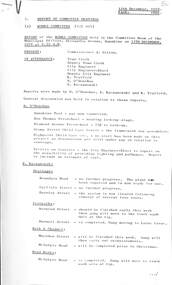
Administrative record - City of Sunshine - Commissioner Mr Alexander Alex George Gillon Collection 1976 - 1982 - Report of committee meetings 12th December 1978, City of Sunshine, 12th December 1978
... Report of Committee Meetings 12th December 1978 Report of the Works Committee Sunshine Swimming Pool Gas now connected Bon Thomas Reserve Pre-School Nearing lock up stage Diamond Avenue Pre-School 95% to lock up stage Orama Street Child Care Centre The frame work is now assembled Highpoint West Child Care Centre No Start Toilets on Reserves City Engineer to report on the possibility of providing lighting and pathways Drainage Boundary Road No further progress, the plant has been repaired Drainage Carlisle Street No further progress Drainage Darnley Street The system is now clear following removal of several tree roots Footpath Norwood Street Should be finished early this week Footpath Burnett Street Completed, gang moving to Lorne Crescent Kerb & Channel Macedon Street Will be finished this week Kerb & Channel McIntyre Road Will be completed prior to Christmas Road Works McIntyre Road Competed, gang to move to truck wash up area at Sunshine Tip Dempster Park Cricket wicket nets will be completed this week Dempster Park Tennis courts fence to be relocated and car park to be established Dempster Park Sealing ot the aprons around building will be completed before Christmas Castley Reserve Reconstruction has commenced Report of the Finance Committee Financial Report for the Period Ended 20th November 1978 Report of the City Engineer Berkshire Road Loan Transfer of Balance to McIntyre Road / Sunshine Avenue Acquisition of Property 88 Station Road Deer Park Damaged to Crawler Dozer Massey Ferguson (Aust) Ltd Purchase of Tandem Trailer Parks & Recreation Matters Arising from the Agenda & Forward Planning Committee Meeting Held on 11th December 1978 Report of the Town Clerk Lease 2 - 4 Burton Crescent Translation Secretariat for the Western Region Request for Financial Assistance Proposed Subdivision of Land Fairbairn Road Report of the Co-Ordinator of Welfare Service Handicapped Persons' Parking Report of the Chief Health Inspector Infant Welfare Herbicides 2-4-D & 2-45-T Report of the Municipal Recreation Officer Sunshine Indoor Heated Swimming Pool Report of the City Engineer Proposed Rezoning of Land Laurel Street Planning Permit National Bank of Australia Extension 248 Hampshire Road Planning Permit Application Hairdressing Salon Lot 66 Hampshire Road Planning Permit Application Factory Lot 22 Cromer Avenue Planning Permit Community Health Centre Andrea Street (Temporary Child Minding Centre) Planning Permit Community Health Centre Andrea Street (Full Day Care Centre) Planning Permit Application Factory Lot 208 Cromer Avenue Planning Permit Educational Establishment Navigator Street Planning Permit Additions to Existing Church Ballarat Road Deer Park Planning Permit Entertainment Complex (Malibu grand Prix) Ballarat Road and Geelong Road Planning Permit Place of Assembly Hutchinson Street Construction of Justin Road Purchase of Mini Bus Clearing Vacant Land 8 Corio Street Sunshine Construction of Laneway Rear of Sydney Street between King Edward Avenue and Ridley Street Extraordinary Business Planning Permit Flats Warrs Road and Fabian Court Stages 1 & 4 only Neale Road Construction Stage 2...Albans Hampshire Road Sunshine Cromer Avenue Sunshine North Andrea Street Navigator Street Ballarat Road Deer Park Geelong Road Braybrook Brooklyn Hutchinson Street Albion Justin Road Sydney Street King Edward Avenue Warrs Road Fabian Court Tottenham Bon Thomas Reserve Pre-School Quinn Street Diamond Avenue Pre-School Diamond Avenue Albanvale Orama Street Child Care Centre Orama Street Highpoint West Child Care Centre Rosamond Road Boundary Road Carlisle Street Maidstone Darnley Street Norwood Street Burnett Street Lorne Crescent Macedon Street McIntyre Road Sunshine Tip Dempster Park Phoenix Street Castley Reserve Simmie Street Sunshine Avenue Station Road Sunshine Indoor Heated Swimming Pool Service Street Corio Street Neale Road Report of Committee Meetings 12th December 1978 Report of the Works Committee Sunshine Swimming Pool Gas now connected Bon Thomas Reserve Pre-School Nearing lock up stage Diamond Avenue Pre-School 95% to lock up stage Orama Street Child Care Centre The frame work is now assembled Highpoint West Child Care Centre No Start Toilets on Reserves City Engineer to report on the possibility of providing lighting and pathways Drainage Boundary Road No further progress, the plant has been repaired Drainage Carlisle Street No further progress Drainage Darnley Street The system is now clear following removal of several tree roots Footpath Norwood Street Should be finished early this week Footpath Burnett Street Completed, gang moving to Lorne Crescent Kerb & Channel Macedon Street Will be finished this week Kerb & Channel McIntyre Road Will be completed prior to Christmas Road Works McIntyre Road Competed, gang to move to truck wash up area at Sunshine Tip Dempster Park Cricket wicket nets will be completed this week Dempster Park Tennis courts fence to be relocated and car park to be established Dempster Park Sealing ot the aprons around building will be completed before Christmas Castley Reserve Reconstruction has commenced Report of the Finance Committee Financial Report for the Period Ended 20th November 1978 Report of the City Engineer Berkshire Road Loan Transfer of Balance to McIntyre Road / Sunshine Avenue Acquisition of Property 88 Station Road Deer Park Damaged to Crawler Dozer Massey Ferguson (Aust) Ltd Purchase of Tandem Trailer Parks & Recreation Matters Arising from the Agenda & Forward Planning Committee Meeting Held on 11th December 1978 Report of the Town Clerk Lease 2 - 4 Burton Crescent Translation Secretariat for the Western Region Request for Financial Assistance Proposed Subdivision of Land Fairbairn Road Report of the Co-Ordinator of Welfare Service Handicapped Persons' Parking Report of the Chief Health Inspector Infant Welfare Herbicides 2-4-D & 2-45-T Report of the Municipal Recreation Officer Sunshine Indoor Heated Swimming Pool Report of the City Engineer Proposed Rezoning of Land Laurel Street Planning Permit National Bank of Australia Extension 248 Hampshire Road Planning Permit Application Hairdressing Salon Lot 66 Hampshire Road Planning Permit Application Factory Lot 22 Cromer Avenue Planning Permit Community Health Centre Andrea Street (Temporary Child Minding Centre) Planning Permit Community Health Centre Andrea Street (Full Day Care Centre) Planning Permit Application Factory Lot 208 Cromer Avenue Planning Permit Educational Establishment Navigator Street Planning Permit Additions to Existing Church Ballarat Road Deer Park Planning Permit Entertainment Complex (Malibu grand Prix) Ballarat Road and Geelong Road Planning Permit Place of Assembly Hutchinson Street Construction of Justin Road Purchase of Mini Bus Clearing Vacant Land 8 Corio Street Sunshine Construction of Laneway Rear of Sydney Street between King Edward Avenue and Ridley Street Extraordinary Business Planning Permit Flats Warrs Road and Fabian Court Stages 1 & 4 only Neale Road Construction Stage 2 Foolscap sized document. ...Report of Committee Meetings 12th December 1978 Report of the Works Committee Sunshine Swimming Pool Gas now connected Bon Thomas Reserve Pre-School Nearing lock up stage Diamond Avenue Pre-School 95% to lock up stage Orama Street Child Care Centre The frame work is now assembled Highpoint West Child Care Centre No Start Toilets on Reserves City Engineer to report on the possibility of providing lighting and pathways Drainage Boundary Road No further progress, the plant has been repaired Drainage Carlisle Street No further progress Drainage Darnley Street The system is now clear following removal of several tree roots Footpath Norwood Street Should be finished early this week Footpath Burnett Street Completed, gang moving to Lorne Crescent Kerb & Channel Macedon Street Will be finished this week Kerb & Channel McIntyre Road Will be completed prior to Christmas Road Works McIntyre Road Competed, gang to move to truck wash up area at Sunshine Tip Dempster Park Cricket wicket nets will be completed this week Dempster Park Tennis courts fence to be relocated and car park to be established Dempster Park Sealing ot the aprons around building will be completed before Christmas Castley Reserve Reconstruction has commenced Report of the Finance Committee Financial Report for the Period Ended 20th November 1978 Report of the City Engineer Berkshire Road Loan Transfer of Balance to McIntyre Road / Sunshine Avenue Acquisition of Property 88 Station Road Deer Park Damaged to Crawler Dozer Massey Ferguson (Aust) Ltd Purchase of Tandem Trailer Parks & Recreation Matters Arising from the Agenda & Forward Planning Committee Meeting Held on 11th December 1978 Report of the Town Clerk Lease 2 - 4 Burton Crescent Translation Secretariat for the Western Region Request for Financial Assistance Proposed Subdivision of Land Fairbairn Road Report of the Co-Ordinator of Welfare Service Handicapped Persons' Parking Report of the Chief Health Inspector Infant Welfare Herbicides 2-4-D & 2-45-T Report of the Municipal Recreation Officer Sunshine Indoor Heated Swimming Pool Report of the City Engineer Proposed Rezoning of Land Laurel Street Planning Permit National Bank of Australia Extension 248 Hampshire Road Planning Permit Application Hairdressing Salon Lot 66 Hampshire Road Planning Permit Application Factory Lot 22 Cromer Avenue Planning Permit Community Health Centre Andrea Street (Temporary Child Minding Centre) Planning Permit Community Health Centre Andrea Street (Full Day Care Centre) Planning Permit Application Factory Lot 208 Cromer Avenue Planning Permit Educational Establishment Navigator Street Planning Permit Additions to Existing Church Ballarat Road Deer Park Planning Permit Entertainment Complex (Malibu grand Prix) Ballarat Road and Geelong Road Planning Permit Place of Assembly Hutchinson Street Construction of Justin Road Purchase of Mini Bus Clearing Vacant Land 8 Corio Street Sunshine Construction of Laneway Rear of Sydney Street between King Edward Avenue and Ridley Street Extraordinary Business Planning Permit Flats Warrs Road and Fabian Court Stages 1 & 4 only Neale Road Construction Stage 2 city of sunshine, alexander "alex" george gillon, burton crescent, maribyrnong, fairbairn road, sunshine west, laurel street, st. albans, hampshire road, sunshine, cromer avenue, sunshine north, andrea street, navigator street, ballarat road, deer park, geelong road, braybrook, brooklyn, hutchinson street, albion, justin road, sydney street, king edward avenue, warrs road, fabian court, tottenham, bon thomas reserve pre-school, quinn street, diamond avenue pre-school, diamond avenue, albanvale, orama street child care centre, orama street, highpoint west child care centre, rosamond road, boundary road, carlisle street, maidstone, darnley street, norwood street, burnett street, lorne crescent, macedon street, mcintyre road, sunshine tip, dempster park, phoenix street, castley reserve, simmie street, sunshine avenue, station road, sunshine indoor heated swimming pool, service street, corio street, neale road -
 Flagstaff Hill Maritime Museum and Village
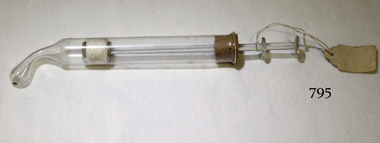
Equipment - Syringe
... work. He returned to Warrnambool to commence practice as an ophthalmologist, pioneering in artificial eye improvements. He was Honorary Consultant Ophthalmologist to Warrnambool Base Hospital for 31 years. He made monthly visits to Portland as a visiting surgeon, to perform eye surgery. He represented the Victorian South-West...work. He returned to Warrnambool to commence practice as an ophthalmologist, pioneering in artificial eye improvements. He was Honorary Consultant Ophthalmologist to Warrnambool Base Hospital for 31 years. He made monthly visits to Portland as a visiting surgeon, to perform eye surgery. He represented the Victorian South-West ...In 1821 the French otologist Jean Marc Itard irrigated the ear canal to remove hard wax, by using a syringe prototype designed for enemas which was made from tin and brass. This glass and cork ear syringe was manufactured by the Ambson Company in the United Kingdom, about eighty years afterwards. Its lightweight properties would have been ideal for application to the sensitive regions of the ear canal. https://www.racgp.org.au/the-racgp/history/the-racgp-museum-collection/syringes/ambson-ear-syringe Otology is a branch of medicine which studies normal and pathological anatomy and physiology of the ear (hearing and vestibular sensory systems and related structures and functions) as well as their diseases, diagnosis and treatment. Otologic surgery generally refers to surgery of the middle ear and mastoid related to chronic otitis media, such as tympanoplasty, or ear drum surgery, ossiculoplasty, or surgery of the hearing bones, and mastoidectomy. Otology also includes surgical treatment of conductive hearing loss, such as stapedectomy surgery for otosclerosis. https://en.wikipedia.org/wiki/Otology The ear syringe was donated to Flagstaff Hill Maritime Village by the family of Doctor William Roy Angus, Surgeon and Oculist. It is part of the “W.R. Angus Collection” includes historical medical equipment, surgical instruments and material once belonging to Dr Edward Ryan and Dr Thomas Francis Ryan, (both of Nhill, Victoria) as well as Dr Angus’ own belongings. The Collection’s history spans the medical practices of the two Doctors Ryan, from 1885-1926 plus that of Dr Angus, up until 1969. ABOUT THE “W.R.ANGUS COLLECTION” Doctor William Roy Angus M.B., B.S., Adel., 1923, F.R.C.S. Edin.,1928 (also known as Dr Roy Angus) was born in Murrumbeena, Victoria in 1901 and lived until 1970. He qualified as a doctor in 1923 at University of Adelaide, was Resident Medical Officer at the Royal Adelaide Hospital in 1924 and for a period was house surgeon to Sir (then Mr.) Henry Simpson Newland. Dr Angus was briefly an Assistant to Dr Riddell of Kapunda, then commenced private practice at Curramulka, Yorke Peninsula, SA, where he was physician, surgeon and chemist. In 1926, he was appointed as new Medical Assistant to Dr Thomas Francis Ryan (T.F. Ryan, or Tom), in Nhill, Victoria, where his experiences included radiology and pharmacy. In 1927 he was Acting House Surgeon in Dr Tom Ryan’s absence. Dr Angus had become engaged to Gladys Forsyth and they decided he further his studies overseas in the UK in 1927. He studied at London University College Hospital and at Edinburgh Royal Infirmary and in 1928, was awarded FRCS (Fellow from the Royal College of Surgeons), Edinburgh. He worked his passage back to Australia as a Ship’s Surgeon on the on the Australian Commonwealth Line’s T.S.S. Largs Bay. Dr Angus married Gladys in 1929, in Ballarat. (They went on to have one son (Graham 1932, born in SA) and two daughters (Helen (died 12/07/1996) and Berenice (Berry), both born at Mira, Nhill ) According to Berry, her mother Gladys made a lot of their clothes. She was very talented and did some lovely embroidery including lingerie for her trousseau and beautifully handmade baby clothes. Dr Angus was a ‘flying doctor’ for the A.I.M. (Australian Inland Ministry) Aerial Medical Service in 1928 . Its first station was in the remote town of Oodnadatta, where Dr Angus was stationed. He was locum tenens there on North-South Railway at 21 Mile Camp. He took up this ‘flying doctor’ position in response to a call from Dr John Flynn; the organisation was later known as the Flying Doctor Service, then the Royal Flying Doctor Service. A lot of his work during this time involved dental surgery also. Between 1928-1932 he was surgeon at the Curramulka Hospital, Yorke Peninsula, South Australia. In 1933 Dr Angus returned to Nhill and purchased a share of the Nelson Street practice and Mira hospital (a 2 bed ward at the Nelson Street Practice) from Dr Les Middleton one of the Middleton Brothers, the current owners of what previously once Dr Tom Ryan’s practice. Dr Tom and his brother had worked as surgeons included eye surgery. Dr Tom Ryan performed many of his operations in the Mira private hospital on his premises. He had been House Surgeon at the Nhill Hospital 1902-1926. Dr Tom Ryan had one of the only two pieces of radiology equipment in Victoria during his practicing years – The Royal Melbourne Hospital had the other one. Over the years Dr Tom Ryan had gradually set up what was effectively a training school for country general-practitioner-surgeons. Each patient was carefully examined, including using the X-ray machine, and any surgery was discussed and planned with Dr Ryan’s assistants several days in advance. Dr Angus gained experience in using the X-ray machine there during his time as assistant to Dr Ryan. When Dr Angus bought into the Nelson Street premises in Nhill he was also appointed as the Nhill Hospital’s Honorary House Surgeon 1933-1938. His practitioner’s plate from his Nhill surgery is now mounted on the doorway to the Port Medical Office at Flagstaff Hill Maritime Village, Warrnambool. When Dr Angus took up practice in the Dr Edward and Dr Tom Ryan’s old premises he obtained their extensive collection of historical medical equipment and materials spanning 1884-1926. A large part of this collection is now on display at the Port Medical Office at Flagstaff Hill Maritime Village in Warrnambool. In 1939 Dr Angus and his family moved to Warrnambool where he purchased “Birchwood,” the 1852 home and medical practice of Dr John Hunter Henderson, at 214 Koroit Street. (This property was sold in1965 to the State Government and is now the site of the Warrnambool Police Station. and an ALDI sore is on the land that was once their tennis court). The Angus family was able to afford gardeners, cooks and maids; their home was a popular place for visiting dignitaries to stay whilst visiting Warrnambool. Dr Angus had his own silk worm farm at home in a Mulberry tree. His young daughter used his centrifuge for spinning the silk. Dr Angus was appointed on a part-time basis as Port Medical Officer (Health Officer) in Warrnambool and held this position until the 1940’s when the government no longer required the service of a Port Medical Officer in Warrnambool; he was thus Warrnambool’s last serving Port Medical Officer. (Masters of immigrant ships arriving in port reported incidents of diseases, illness and death and the Port Medical Officer made a decision on whether the ship required Quarantine and for how long, in this way preventing contagious illness from spreading from new immigrants to the residents already in the colony.) Dr Angus was a member of the Australian Medical Association, for 35 years and surgeon at the Warrnambool Base Hospital 1939-1942, He served with the Australian Department of Defence as a Surgeon Captain during WWII 1942-45, in Ballarat, Victoria, and in Bonegilla, N.S.W., completing his service just before the end of the war due to suffering from a heart attack. During his convalescence he carved an intricate and ‘most artistic’ chess set from the material that dentures were made from. He then studied ophthalmology at the Royal Melbourne Eye and Ear Hospital and created cosmetically superior artificial eyes by pioneering using the intrascleral cartilage. Angus received accolades from the Ophthalmological Society of Australasia for this work. He returned to Warrnambool to commence practice as an ophthalmologist, pioneering in artificial eye improvements. He was Honorary Consultant Ophthalmologist to Warrnambool Base Hospital for 31 years. He made monthly visits to Portland as a visiting surgeon, to perform eye surgery. He represented the Victorian South-West subdivision of the Australian Medical Association as its secretary between 1949 and 1956 and as chairman from 1956 to 1958. In 1968 Dr Angus was elected member of Spain’s Barraquer Institute of Barcelona after his research work in Intrasclearal cartilage grafting, becoming one of the few Australian ophthalmologists to receive this honour, and in the following year presented his final paper on Living Intrasclearal Cartilage Implants at the Inaugural Meeting of the Australian College of Ophthalmologists in Melbourne In his personal life Dr Angus was a Presbyterian and treated Sunday as a Sabbath, a day of rest. He would visit 3 or 4 country patients on a Sunday, taking his children along ‘for the ride’ and to visit with him. Sunday evenings he would play the pianola and sing Scottish songs to his family. One of Dr Angus’ patients was Margaret MacKenzie, author of a book on local shipwrecks that she’d seen as an eye witness from the late 1880’s in Peterborough, Victoria. In the early 1950’s Dr Angus, painted a picture of a shipwreck for the cover jacket of Margaret’s book, Shipwrecks and More Shipwrecks. She was blind in later life and her daughter wrote the actual book for her. Dr Angus and his wife Gladys were very involved in Warrnambool’s society with a strong interest in civic affairs. He had an interest in people and the community They were both involved in the creation of Flagstaff Hill, including the layout of the gardens. After his death (28th March 1970) his family requested his practitioner’s plate, medical instruments and some personal belongings be displayed in the Port Medical Office surgery at Flagstaff Hill Maritime Village, and be called the “W. R. Angus Collection”.The W.R. Angus Collection is significant for still being located at the site it is connected with, Doctor Angus being the last Port Medical Officer in Warrnambool. The collection of medical instruments and other equipment is culturally significant, being an historical example of medicine from late 19th to mid-20th century. Dr Angus assisted Dr Tom Ryan, a pioneer in the use of X-rays and in ocular surgery.Glass ear syringe. Has cork stopper at top and cotton wrapped at base of plunger. Has a curved end.None.flagstaff hill, warrnambool, shipwrecked-coast, flagstaff-hill, flagstaff-hill-maritime-museum, maritime-museum, shipwreck-coast, flagstaff-hill-maritime-village, otology, ears, ear syringe, deafness, ear wax -
 Flagstaff Hill Maritime Museum and Village
Equipment - Sharpening Stone, ca 1878
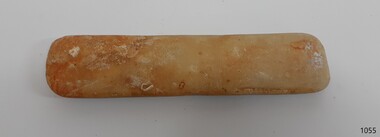
... work it has done on board the ship was for larger tools, rather than on surgical or shaving blades. Its rounded or spherical shaping may also be related to the ‘tumbling’ action of the sea on the ocean floor. History of the Loch Ard wreck: The Loch Ard got its name from ”Loch Ard” a loch that lies to the west...work it has done on board the ship was for larger tools, rather than on surgical or shaving blades. Its rounded or spherical shaping may also be related to the ‘tumbling’ action of the sea on the ocean floor. History of the Loch Ard wreck: The Loch Ard got its name from ”Loch Ard” a loch that lies to the west ...The sharpening stone can also be referred to as a whetstone, oil stone or honing stone. It is a well-worn double-sided sharpening stone retrieved from the wreck site of the Loch Ard. It is used to grind and hone the edges of metal blades and tools. ‘Natural’ sharpening stones like this one are quarried from ancient sedimentary rock that has metamorphosed from clay and volcanic ash to produce garnet crystals. Most modern stones are artificially produced, or ‘bonded’, abrasive stones, made by fusing clay and metal powder under heat and pressure. The softer yellow Corticule stone is found in thin vertical veins running through the more plentiful Belgian Blue rock. Coticule is a fine-grained and dense material that ‘cuts’ metal slowly but to a superior standard of sharpness and finish. The relatively coarser Belgian Blue is stronger and ‘cuts’ more quickly, but with a less polished finish. A double-sided whetstone is therefore valued for its increased durability (the harder BBW ‘backs’, or supports, the softer Coticule), and additional utility (the fine ‘grit’ of Coticule complements the coarser BBW to meet a range of sharpening needs). The blue-grey base of this stone is thinner than the remaining yellow Coticule on top. This suggests that the majority of grinding and honing work it has done on board the ship was for larger tools, rather than on surgical or shaving blades. Its rounded or spherical shaping may also be related to the ‘tumbling’ action of the sea on the ocean floor. History of the Loch Ard wreck: The Loch Ard got its name from ”Loch Ard” a loch that lies to the west of Aberfoyle, and the east of Loch Lomond. It means "high lake" in Scottish Gaelic. The vessel belonged to the famous Loch Line which sailed many vessels from England to Australia. The Loch Ard was built in Glasgow by Barclay, Curle & Co. in 1873, the vessel was a three-masted square-rigged iron sailing ship that measured 79.87 meters in length, 11.58 m in width, and 7 m in depth with a gross tonnage of 1693 tons with a mainmast that measured a massive 45.7 m in height. Loch Ard made three trips to Australia and one trip to Calcutta before its fateful voyage. Loch Ard left England on March 2, 1878, under the command of 29-year-old Captain Gibbs, who was newly married. The ship was bound for Melbourne with a crew of 37, plus 17 passengers. The general cargo reflected the affluence of Melbourne at the time. Onboard were straw hats, umbrellas, perfumes, clay pipes, pianos, clocks, confectionery, linen and candles, as well as a heavier load of railway irons, cement, lead and copper. There were other items included that were intended for display in the Melbourne International Exhibition of 1880. The voyage to Port Phillip was long but uneventful. Then at 3 am on June 1, 1878, Captain Gibbs was expecting to see land. But the Loch Ard was running into a fog which greatly reduced visibility. Captain Gibbs was becoming anxious as there was no sign of land or the Cape Otway lighthouse. At 4 am the fog lifted and a lookout aloft announced that he could see breakers. The sheer cliffs of Victoria's west coast came into view, and Captain Gibbs realised that the ship was much closer to them than expected. He ordered as much sail to be set as time would permit and then attempted to steer the vessel out to sea. On coming head-on into the wind, the ship lost momentum, the sails fell limp and Loch Ard's bow swung back towards land. Gibbs then ordered the anchors to be released in an attempt to hold their position. The anchors sank some 50 fathoms - but did not hold. By this time the ship was among the breakers and the tall cliffs of Mutton Bird Island rose behind. Just half a mile from the coast, the ship's bow was suddenly pulled around by the anchor. The captain tried to tack out to sea, but the ship struck a reef at the base of Mutton Bird Island, near Port Campbell. Waves subsequently broke over the ship and the top deck became loosened from the hull. The masts and rigging came crashing down knocking passengers and crew overboard. When a lifeboat was finally launched, it crashed into the side of Loch Ard and capsized. Tom Pearce, who had launched the boat, managed to cling to its overturned hull and shelter beneath it. He drifted out to sea and then on the flood tide came into what is now known as Lochard Gorge. He swam to shore, bruised and dazed, and found a cave in which to shelter. Some of the crew stayed below deck to shelter from the falling rigging but drowned when the ship slipped off the reef into deeper water. Eva Carmichael a passenger had raced onto the deck to find out what was happening only to be confronted by towering cliffs looming above the stricken ship. In all the chaos, Captain Gibbs grabbed Eva and said, "If you are saved Eva, let my dear wife know that I died like a sailor". That was the last Eva Carmichael saw of the captain. She was swept off the ship by a huge wave. Eva saw Tom Pearce on a small rocky beach and yelled to attract his attention. He dived in and swam to the exhausted woman and dragged her to shore. He took her to the cave and broke the open case of brandy which had washed up on the beach. He opened a bottle to revive the unconscious woman. A few hours later Tom scaled a cliff in search of help. He followed hoof prints and came by chance upon two men from nearby Glenample Station three and a half miles away. In a complete state of exhaustion, he told the men of the tragedy. Tom then returned to the gorge while the two men rode back to the station to get help. By the time they reached Loch Ard Gorge, it was cold and dark. The two shipwreck survivors were taken to Glenample Station to recover. Eva stayed at the station for six weeks before returning to Ireland by steamship. In Melbourne, Tom Pearce received a hero's welcome. He was presented with the first gold medal of the Royal Humane Society of Victoria and a £1000 cheque from the Victorian Government. Concerts were performed to honour the young man's bravery and to raise money for those who lost family in the disaster. Of the 54 crew members and passengers on board, only two survived: the apprentice, Tom Pearce and the young woman passenger, Eva Carmichael, who lost her family in the tragedy. Ten days after the Lochard tragedy, salvage rights to the wreck were sold at auction for £2,120. Cargo valued at £3,000 was salvaged and placed on the beach, but most washed back into the sea when another storm developed. The wreck of Lochard still lies at the base of Mutton Bird Island. Much of the cargo has now been salvaged and some items were washed up into Lochard Gorge. Cargo and artefacts have also been illegally salvaged over many years before protective legislation was introduced in March 1982. One of the most unlikely pieces of cargo to have survived the shipwreck was a Minton majolica peacock- one of only nine in the world. The peacock was destined for the Melbourne 1880 International Exhibition. It had been well packed, which gave it adequate protection during the violent storm. Today the Minton peacock can be seen at the Flagstaff Hill Maritime Museum in Warrnambool. From Australia's most dramatic shipwreck, it has now become Australia's most valuable shipwreck artifact and is one of very few 'objects' on the Victorian State Heritage Register. The shipwreck of the Loch Ard is of significance for Victoria and is registered on the Victorian Heritage Register ( S 417). Flagstaff Hill has a varied collection of artefacts from Loch Ard and its collection is significant for being one of the largest accumulation of artefacts from this notable Victorian shipwreck of which the subject items are a small part. The collections objects give us a snapshot of how we can interpret the story of this tragic event. The collection is also archaeologically significant as it represents aspects of Victoria's shipping history that allows us to interpret Victoria's social and historical themes of the time. Through is associated with the worst and best-known shipwreck in Victoria's history. A sharpening stone is also called a whetstone, oil, or honing stone. The stone is a worn double-sided rectangular block with rounded corners. There is a clear delineation between its coarser Belgian Blue base (grey colour) and its finer Belgian Coticule face (yellow colour). It bears sedimentary encrustation over one-third of its surface. flagstaff hill, warrnambool, shipwrecked coast, flagstaff hill maritime museum, maritime museum, shipwreck coast, flagstaff hill maritime village, great ocean road, loch line, loch ard, captain gibbs, eva carmichael, tom pearce, glenample station, mutton bird island, loch ard gorge, sharpening stone, whetstone, oilstone, double-sided stone, belgian coticule, belgian blue whetstone, oil stone, honing stone -
 Flagstaff Hill Maritime Museum and Village
Gauze Bandage
... work. He returned to Warrnambool to commence practice as an ophthalmologist, pioneering in artificial eye improvements. He was Honorary Consultant Ophthalmologist to Warrnambool Base Hospital for 31 years. He made monthly visits to Portland as a visiting surgeon, to perform eye surgery. He represented the Victorian South-West...work. He returned to Warrnambool to commence practice as an ophthalmologist, pioneering in artificial eye improvements. He was Honorary Consultant Ophthalmologist to Warrnambool Base Hospital for 31 years. He made monthly visits to Portland as a visiting surgeon, to perform eye surgery. He represented the Victorian South-West ...This gauze bandage was donated to Flagstaff Hill Maritime Village by the family of Doctor William Roy Angus, Surgeon and Oculist. It is part of the “W.R. Angus Collection” that includes historical medical equipment, surgical instruments and material once belonging to Dr Edward Ryan and Dr Thomas Francis Ryan, (both of Nhill, Victoria) as well as Dr Angus’ own belongings. The Collection’s history spans the medical practices of the two Doctors Ryan, from 1885-1926 plus that of Dr Angus, up until 1969. ABOUT THE “W.R.ANGUS COLLECTION” Doctor William Roy Angus M.B., B.S., Adel., 1923, F.R.C.S. Edin.,1928 (also known as Dr Roy Angus) was born in Murrumbeena, Victoria in 1901 and lived until 1970. He qualified as a doctor in 1923 at University of Adelaide, was Resident Medical Officer at the Royal Adelaide Hospital in 1924 and for a period was house surgeon to Sir (then Mr.) Henry Simpson Newland. Dr Angus was briefly an Assistant to Dr Riddell of Kapunda, then commenced private practice at Curramulka, Yorke Peninsula, SA, where he was physician, surgeon and chemist. In 1926, he was appointed as new Medical Assistant to Dr Thomas Francis Ryan (T.F. Ryan, or Tom), in Nhill, Victoria, where his experiences included radiology and pharmacy. In 1927 he was Acting House Surgeon in Dr Tom Ryan’s absence. Dr Angus had become engaged to Gladys Forsyth and they decided he would take time to further his studies overseas in the UK in 1927. He studied at London University College Hospital and at Edinburgh Royal Infirmary and in 1928, was awarded FRCS (Fellow from the Royal College of Surgeons), Edinburgh. He worked his passage back to Australia as a Ship’s Surgeon on the on the Australian Commonwealth Line’s T.S.S. Largs Bay. Dr Angus married Gladys in 1929, in Ballarat. (They went on to have one son (Graham 1932, born in SA) and two daughters (Helen (died 12/07/1996) and Berenice (Berry), both born at Mira, Nhill ) Dr Angus was a ‘flying doctor’ for the A.I.M. (Australian Inland Ministry) Aerial Medical Service in 1928 . The organisation began in South Australia through the Presbyterian Church in that year, with its first station being in the remote town of Oodnadatta, where Dr Angus was stationed. He was locum tenens there on North-South Railway at 21 Mile Camp. He took up this ‘flying doctor’ position in response to a call from Dr John Flynn; the organisation was later known as the Flying Doctor Service, then the Royal Flying Doctor Service. A lot of his work during this time involved dental surgery also. Between 1928-1932 he was surgeon at the Curramulka Hospital, Yorke Peninsula, South Australia. In 1933 Dr Angus returned to Nhill where he’d previously worked as Medical Assistant and purchased a share of the Nelson Street practice and Mira hospital from Dr Les Middleton one of the Middleton Brothers, the current owners of what was once Dr Tom Ryan’s practice. Dr L Middleton was House Surgeon to the Nhill Hospital 1926-1933, when he resigned. [Dr Tom Ryan’s practice had originally belonged to his older brother Dr Edward Ryan, who came to Nhill in 1885. Dr Edward saw patients at his rooms, firstly in Victoria Street and in 1886 in Nelson Street, until 1901. The Nelson Street practice also had a 2 bed ward, called Mira Private Hospital ). Dr Edward Ryan was House Surgeon at the Nhill Hospital 1884-1902 . He also had occasions where he successfully performed veterinary surgery for the local farmers too. Dr Tom Ryan then purchased the practice from his brother in 1901. Both Dr Edward and Dr Tom Ryan work as surgeons included eye surgery. Dr Tom Ryan performed many of his operations in the Mira private hospital on his premises. He too was House Surgeon at the Nhill Hospital 1902-1926. Dr Tom Ryan had one of the only two pieces of radiology equipment in Victoria during his practicing years – The Royal Melbourne Hospital had the other one. Over the years Dr Tom Ryan gradually set up what was effectively a training school for country general-practitioner-surgeons. Each patient was carefully examined, including using the X-ray machine, and any surgery was discussed and planned with Dr Ryan’s assistants several days in advance. Dr Angus gained experience in using the X-ray machine there during his time as assistant to Dr Ryan. Dr Tom Ryan moved from Nhill in 1926. He became a Fellow of the Royal Australasian College of Surgeons in 1927, soon after its formation, a rare accolade for a doctor outside any of the major cities. He remained a bachelor and died suddenly on 7th Dec 1955, aged 91, at his home in Ararat. Scholarships and prizes are still awarded to medical students in the honour of Dr T.F. Ryan and his father, Dr Michael Ryan, and brother, John Patrick Ryan. ] When Dr Angus bought into the Nelson Street premises in Nhill he was also appointed as the Nhill Hospital’s Honorary House Surgeon 1933-1938. His practitioner’s plate from his Nhill surgery states “HOURS Daily, except Tuesdays, Fridays and Saturday afternoons, 9-10am, 2-4pm, 7-8pm. Sundays by appointment”. This plate is now mounted on the doorway to the Port Medical Office at Flagstaff Hill Maritime Village, Warrnambool. Dr Edward Ryan and Dr Tom Ryan had an extensive collection of historical medical equipment and materials spanning 1884-1926 and when Dr Angus took up practice in their old premises he obtained this collection, a large part of which is now on display at the Port Medical Office at Flagstaff Hill Maritime Village in Warrnambool. During his time in Nhill Dr Angus was involved in the merging of the Mira Hospital and Nhill Public Hospital into one public hospital and the property titles passed on to Nhill Hospital in 1939. In 1939 Dr Angus and his family moved to Warrnambool where he purchased “Birchwood,” the 1852 home and medical practice of Dr John Hunter Henderson, at 214 Koroit Street. (This property was sold in1965 to the State Government and is now the site of the Warrnambool Police Station. ). The Angus family was able to afford gardeners, cooks and maids; their home was a popular place for visiting dignitaries to stay whilst visiting Warrnambool. Dr Angus had his own silk worm farm at home in a Mulberry tree. His young daughter used his centrifuge for spinning the silk. Dr Angus was appointed on a part-time basis as Port Medical Officer (Health Officer) in Warrnambool and held this position until the 1940’s when the government no longer required the service of a Port Medical Officer in Warrnambool; he was thus Warrnambool’s last serving Port Medical Officer. (The duties of a Port Medical Officer were outlined by the Colonial Secretary on 21st June, 1839 under the terms of the Quarantine Act. Masters of immigrant ships arriving in port reported incidents of diseases, illness and death and the Port Medical Officer made a decision on whether the ship required Quarantine and for how long, in this way preventing contagious illness from spreading from new immigrants to the residents already in the colony.) Dr Angus was a member of the Australian Medical Association, for 35 years and surgeon at the Warrnambool Base Hospital 1939-1942, He served as a Surgeon Captain during WWII1942-45, in Ballarat, Victoria, and in Bonegilla, N.S.W., completing his service just before the end of the war due to suffering from a heart attack. During his convalescence he carved an intricate and ‘most artistic’ chess set from the material that dentures were made from. He then studied ophthalmology at the Royal Melbourne Eye and Ear Hospital and created cosmetically superior artificial eyes by pioneering using the intrascleral cartilage. Angus received accolades from the Ophthalmological Society of Australasia for this work. He returned to Warrnambool to commence practice as an ophthalmologist, pioneering in artificial eye improvements. He was Honorary Consultant Ophthalmologist to Warrnambool Base Hospital for 31 years. He made monthly visits to Portland as a visiting surgeon, to perform eye surgery. He represented the Victorian South-West subdivision of the Australian Medical Association as its secretary between 1949 and 1956 and as chairman from 1956 to 1958. In 1968 Dr Angus was elected member of Spain’s Barraquer Institute of Barcelona after his research work in Intrasclearal cartilage grafting, becoming one of the few Australian ophthalmologists to receive this honour, and in the following year presented his final paper on Living Intrasclearal Cartilage Implants at the Inaugural Meeting of the Australian College of Ophthalmologists in Melbourne In his personal life Dr Angus was a Presbyterian and treated Sunday as a Sabbath, a day of rest. He would visit 3 or 4 country patients on a Sunday, taking his children along ‘for the ride’ and to visit with him. Sunday evenings he would play the pianola and sing Scottish songs to his family. One of Dr Angus’ patients was Margaret MacKenzie, author of a book on local shipwrecks that she’d seen as an eye witness from the late 1880’s in Peterborough, Victoria. In the early 1950’s Dr Angus, painted a picture of a shipwreck for the cover jacket of Margaret’s book, Shipwrecks and More Shipwrecks. She was blind in later life and her daughter wrote the actual book for her. Dr Angus and his wife Gladys were very involved in Warrnambool’s society with a strong interest in civic affairs. Their interests included organisations such as Red Cross, Rostrum, Warrnambool and District Historical Society (founding members), Wine and Food Society, Steering Committee for Tertiary Education in Warrnambool, Local National Trust, Good Neighbour Council, Housing Commission Advisory Board, United Services Institute, Legion of Ex-Servicemen, Olympic Pool Committee, Food for Britain Organisation, Warrnambool Hospital, Anti-Cancer Council, Boys’ Club, Charitable Council, National Fitness Council and Air Raid Precautions Group. He was also a member of the Steam Preservation Society and derived much pleasure from a steam traction engine on his farm. He had an interest in people and the community He and his wife Gladys were both involved in the creation of Flagstaff Hill, including the layout of the gardens. After his death (28th March 1970) his family requested his practitioner’s plate, medical instruments and some personal belongings be displayed in the Port Medical Office surgery at Flagstaff Hill Maritime Village, and be called the “W. R. Angus Collection”. The W.R. Angus Collection is significant for still being located at the site it is connected with, Doctor Angus being the last Port Medical Officer in Warrnambool. The collection of medical instruments and other equipment is culturally significant, being an historical example of medicine from late 19th to mid-20th century. Dr Angus assisted Dr Tom Ryan, a pioneer in the use of X-rays and in ocular surgery. Gauze bandage, four inch, part of the W.R. Angus Collection. Hand written on end of bandage "W.R. Angus" Hand written on end of bandage "W.R. Angus" flagstaff hill, warrnambool, shipwrecked-coast, flagstaff-hill, flagstaff-hill-maritime-museum, maritime-museum, shipwreck-coast, flagstaff-hill-maritime-village, gauze bandage, w.r.angus -
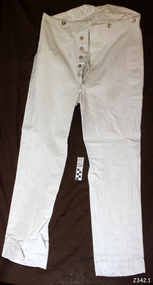 Flagstaff Hill Maritime Museum and Village
Trousers, Paislyo Ltd
... work. He returned to Warrnambool to commence practice as an ophthalmologist, pioneering in artificial eye improvements. He was Honorary Consultant Ophthalmologist to Warrnambool Base Hospital for 31 years. He made monthly visits to Portland as a visiting surgeon, to perform eye surgery. He represented the Victorian South-West...work. He returned to Warrnambool to commence practice as an ophthalmologist, pioneering in artificial eye improvements. He was Honorary Consultant Ophthalmologist to Warrnambool Base Hospital for 31 years. He made monthly visits to Portland as a visiting surgeon, to perform eye surgery. He represented the Victorian South-West ...This uniform, consisting of 3 pairs of trousers and 1 jacket, was owned by Dr W.R. Angus. Due to the manufacturer's label saying the uniform was made in Glasgow, it is likely that Dr Angus acquired the uniform around the time of his studies in Edinburgh. His name on the uniform suggests that it was part of his usual clothing and it was most likely worn on his homeward passage to Australia in 1928, during which time he worked as a Ship's Surgeon on T.S.S. LARGS BAY.. This uniform was donated to Flagstaff Hill Maritime Village by the family of Doctor William Roy Angus, Surgeon and Oculist. It is part of the “W.R. Angus Collection” that includes historical medical equipment, surgical instruments and material once belonging to Dr Edward Ryan and Dr Thomas Francis Ryan, (both of Nhill, Victoria) as well as Dr Angus’ own belongings. The Collection’s history spans the medical practices of the two Doctors Ryan, from 1885-1926 plus that of Dr Angus, up until 1969. ABOUT THE “W.R.ANGUS COLLECTION” Doctor William Roy Angus M.B., B.S., Adel., 1923, F.R.C.S. Edin.,1928 (also known as Dr Roy Angus) was born in Murrumbeena, Victoria in 1901 and lived until 1970. He qualified as a doctor in 1923 at University of Adelaide, was Resident Medical Officer at the Royal Adelaide Hospital in 1924 and for a period was house surgeon to Sir (then Mr.) Henry Simpson Newland. Dr Angus was briefly an Assistant to Dr Riddell of Kapunda, then commenced private practice at Curramulka, Yorke Peninsula, SA, where he was physician, surgeon and chemist. In 1926, he was appointed as new Medical Assistant to Dr Thomas Francis Ryan (T.F. Ryan, or Tom), in Nhill, Victoria, where his experiences included radiology and pharmacy. In 1927 he was Acting House Surgeon in Dr Tom Ryan’s absence. Dr Angus had become engaged to Gladys Forsyth and they decided he would take time to further his studies overseas in the UK in 1927. He studied at London University College Hospital and at Edinburgh Royal Infirmary and in 1928, was awarded FRCS (Fellow from the Royal College of Surgeons), Edinburgh. He worked his passage back to Australia as a Ship’s Surgeon on the on the Australian Commonwealth Line’s T.S.S. Largs Bay. Dr Angus married Gladys in 1929, in Ballarat. (They went on to have one son (Graham 1932, born in SA) and two daughters (Helen (died 12/07/1996) and Berenice (Berry), both born at Mira, Nhill ) Dr Angus was a ‘flying doctor’ for the A.I.M. (Australian Inland Ministry) Aerial Medical Service in 1928 . The organisation began in South Australia through the Presbyterian Church in that year, with its first station being in the remote town of Oodnadatta, where Dr Angus was stationed. He was locum tenens there on North-South Railway at 21 Mile Camp. He took up this ‘flying doctor’ position in response to a call from Dr John Flynn; the organisation was later known as the Flying Doctor Service, then the Royal Flying Doctor Service. A lot of his work during this time involved dental surgery also. Between 1928-1932 he was surgeon at the Curramulka Hospital, Yorke Peninsula, South Australia. In 1933 Dr Angus returned to Nhill where he’d previously worked as Medical Assistant and purchased a share of the Nelson Street practice and Mira hospital from Dr Les Middleton one of the Middleton Brothers, the current owners of what was once Dr Tom Ryan’s practice. Dr L Middleton was House Surgeon to the Nhill Hospital 1926-1933, when he resigned. [Dr Tom Ryan’s practice had originally belonged to his older brother Dr Edward Ryan, who came to Nhill in 1885. Dr Edward saw patients at his rooms, firstly in Victoria Street and in 1886 in Nelson Street, until 1901. The Nelson Street practice also had a 2 bed ward, called Mira Private Hospital ). Dr Edward Ryan was House Surgeon at the Nhill Hospital 1884-1902 . He also had occasions where he successfully performed veterinary surgery for the local farmers too. Dr Tom Ryan then purchased the practice from his brother in 1901. Both Dr Edward and Dr Tom Ryan work as surgeons included eye surgery. Dr Tom Ryan performed many of his operations in the Mira private hospital on his premises. He too was House Surgeon at the Nhill Hospital 1902-1926. Dr Tom Ryan had one of the only two pieces of radiology equipment in Victoria during his practicing years – The Royal Melbourne Hospital had the other one. Over the years Dr Tom Ryan gradually set up what was effectively a training school for country general-practitioner-surgeons. Each patient was carefully examined, including using the X-ray machine, and any surgery was discussed and planned with Dr Ryan’s assistants several days in advance. Dr Angus gained experience in using the X-ray machine there during his time as assistant to Dr Ryan. Dr Tom Ryan moved from Nhill in 1926. He became a Fellow of the Royal Australasian College of Surgeons in 1927, soon after its formation, a rare accolade for a doctor outside any of the major cities. He remained a bachelor and died suddenly on 7th Dec 1955, aged 91, at his home in Ararat. Scholarships and prizes are still awarded to medical students in the honour of Dr T.F. Ryan and his father, Dr Michael Ryan, and brother, John Patrick Ryan. ] When Dr Angus bought into the Nelson Street premises in Nhill he was also appointed as the Nhill Hospital’s Honorary House Surgeon 1933-1938. His practitioner’s plate from his Nhill surgery states “HOURS Daily, except Tuesdays, Fridays and Saturday afternoons, 9-10am, 2-4pm, 7-8pm. Sundays by appointment”. This plate is now mounted on the doorway to the Port Medical Office at Flagstaff Hill Maritime Village, Warrnambool. Dr Edward Ryan and Dr Tom Ryan had an extensive collection of historical medical equipment and materials spanning 1884-1926 and when Dr Angus took up practice in their old premises he obtained this collection, a large part of which is now on display at the Port Medical Office at Flagstaff Hill Maritime Village in Warrnambool. During his time in Nhill Dr Angus was involved in the merging of the Mira Hospital and Nhill Public Hospital into one public hospital and the property titles passed on to Nhill Hospital in 1939. In 1939 Dr Angus and his family moved to Warrnambool where he purchased “Birchwood,” the 1852 home and medical practice of Dr John Hunter Henderson, at 214 Koroit Street. (This property was sold in1965 to the State Government and is now the site of the Warrnambool Police Station. ). The Angus family was able to afford gardeners, cooks and maids; their home was a popular place for visiting dignitaries to stay whilst visiting Warrnambool. Dr Angus had his own silk worm farm at home in a Mulberry tree. His young daughter used his centrifuge for spinning the silk. Dr Angus was appointed on a part-time basis as Port Medical Officer (Health Officer) in Warrnambool and held this position until the 1940’s when the government no longer required the service of a Port Medical Officer in Warrnambool; he was thus Warrnambool’s last serving Port Medical Officer. (The duties of a Port Medical Officer were outlined by the Colonial Secretary on 21st June, 1839 under the terms of the Quarantine Act. Masters of immigrant ships arriving in port reported incidents of diseases, illness and death and the Port Medical Officer made a decision on whether the ship required Quarantine and for how long, in this way preventing contagious illness from spreading from new immigrants to the residents already in the colony.) Dr Angus was a member of the Australian Medical Association, for 35 years and surgeon at the Warrnambool Base Hospital 1939-1942, He served as a Surgeon Captain during WWII1942-45, in Ballarat, Victoria, and in Bonegilla, N.S.W., completing his service just before the end of the war due to suffering from a heart attack. During his convalescence he carved an intricate and ‘most artistic’ chess set from the material that dentures were made from. He then studied ophthalmology at the Royal Melbourne Eye and Ear Hospital and created cosmetically superior artificial eyes by pioneering using the intrascleral cartilage. Angus received accolades from the Ophthalmological Society of Australasia for this work. He returned to Warrnambool to commence practice as an ophthalmologist, pioneering in artificial eye improvements. He was Honorary Consultant Ophthalmologist to Warrnambool Base Hospital for 31 years. He made monthly visits to Portland as a visiting surgeon, to perform eye surgery. He represented the Victorian South-West subdivision of the Australian Medical Association as its secretary between 1949 and 1956 and as chairman from 1956 to 1958. In 1968 Dr Angus was elected member of Spain’s Barraquer Institute of Barcelona after his research work in Intrasclearal cartilage grafting, becoming one of the few Australian ophthalmologists to receive this honour, and in the following year presented his final paper on Living Intrasclearal Cartilage Implants at the Inaugural Meeting of the Australian College of Ophthalmologists in Melbourne In his personal life Dr Angus was a Presbyterian and treated Sunday as a Sabbath, a day of rest. He would visit 3 or 4 country patients on a Sunday, taking his children along ‘for the ride’ and to visit with him. Sunday evenings he would play the pianola and sing Scottish songs to his family. One of Dr Angus’ patients was Margaret MacKenzie, author of a book on local shipwrecks that she’d seen as an eye witness from the late 1880’s in Peterborough, Victoria. In the early 1950’s Dr Angus, painted a picture of a shipwreck for the cover jacket of Margaret’s book, Shipwrecks and More Shipwrecks. She was blind in later life and her daughter wrote the actual book for her. Dr Angus and his wife Gladys were very involved in Warrnambool’s society with a strong interest in civic affairs. Their interests included organisations such as Red Cross, Rostrum, Warrnambool and District Historical Society (founding members), Wine and Food Society, Steering Committee for Tertiary Education in Warrnambool, Local National Trust, Good Neighbour Council, Housing Commission Advisory Board, United Services Institute, Legion of Ex-Servicemen, Olympic Pool Committee, Food for Britain Organisation, Warrnambool Hospital, Anti-Cancer Council, Boys’ Club, Charitable Council, National Fitness Council and Air Raid Precautions Group. He was also a member of the Steam Preservation Society and derived much pleasure from a steam traction engine on his farm. He had an interest in people and the community He and his wife Gladys were both involved in the creation of Flagstaff Hill, including the layout of the gardens. After his death (28th March 1970) his family requested his practitioner’s plate, medical instruments and some personal belongings be displayed in the Port Medical Office surgery at Flagstaff Hill Maritime Village, and be called the “W. R. Angus Collection”. The W.R. Angus Collection is significant for still being located at the site it is connected with, Doctor Angus being the last Port Medical Officer in Warrnambool. The collection of medical instruments and other equipment is culturally significant, being an historical example of medicine from late 19th to mid-20th century. Dr Angus assisted Dr Tom Ryan, a pioneer in the use of X-rays and in ocular surgery. Trousers (3) white uniform with silver buttons, buttons inscribed "V.Falzon Malta". On inside - W R Angus, R Poore. Tailored in Glasgow, Scotland 1900s by Paislyo Ltd Glasgow. (said to be a Cadet naval officer's uniform)Inscribed on buttons "V.Falson Malta". Marked on fabric "W R Angus, R Poore" and "Paislyo Ltd Glasgow"flagstaff hill, warrnambool, shipwrecked-coast, flagstaff-hill, flagstaff-hill-maritime-museum, maritime-museum, shipwreck-coast, flagstaff-hill-maritime-village, uniform trousers, silver button trousers, v.falzon malta, w r angus, paislyo ltd -
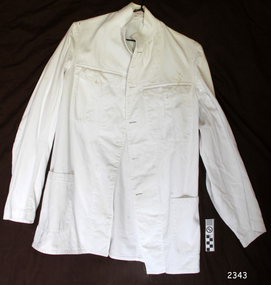 Flagstaff Hill Maritime Museum and Village
Coat, 1900's
... work. He returned to Warrnambool to commence practice as an ophthalmologist, pioneering in artificial eye improvements. He was Honorary Consultant Ophthalmologist to Warrnambool Base Hospital for 31 years. He made monthly visits to Portland as a visiting surgeon, to perform eye surgery. He represented the Victorian South-West...work. He returned to Warrnambool to commence practice as an ophthalmologist, pioneering in artificial eye improvements. He was Honorary Consultant Ophthalmologist to Warrnambool Base Hospital for 31 years. He made monthly visits to Portland as a visiting surgeon, to perform eye surgery. He represented the Victorian South-West ...This uniform, consisting of 3 pairs of trousers and 1 jacket, was owned by Dr W.R. Angus. Due to the manufacturer's label saying the uniform was made in Glasgow, it is likely that Dr Angus acquired the uniform around the time of his studies in Edinburgh. His name on the uniform suggests that it was part of his usual clothing and it was most likely worn on his homeward passage to Australia in 1928, during which time he worked as a Ship's Surgeon on T.S.S. LARGS BAY.. This object was donated to Flagstaff Hill Maritime Village by the family of Doctor William Roy Angus, Surgeon and Oculist. It is part of the “W.R. Angus Collection” that includes historical medical equipment, surgical instruments and material once belonging to Dr Edward Ryan and Dr Thomas Francis Ryan, (both of Nhill, Victoria) as well as Dr Angus’ own belongings. The Collection’s history spans the medical practices of the two Doctors Ryan, from 1885-1926 plus that of Dr Angus, up until 1969. ABOUT THE “W.R.ANGUS COLLECTION” Doctor William Roy Angus M.B., B.S., Adel., 1923, F.R.C.S. Edin.,1928 (also known as Dr Roy Angus) was born in Murrumbeena, Victoria in 1901 and lived until 1970. He qualified as a doctor in 1923 at University of Adelaide, was Resident Medical Officer at the Royal Adelaide Hospital in 1924 and for a period was house surgeon to Sir (then Mr.) Henry Simpson Newland. Dr Angus was briefly an Assistant to Dr Riddell of Kapunda, then commenced private practice at Curramulka, Yorke Peninsula, SA, where he was physician, surgeon and chemist. In 1926, he was appointed as new Medical Assistant to Dr Thomas Francis Ryan (T.F. Ryan, or Tom), in Nhill, Victoria, where his experiences included radiology and pharmacy. In 1927 he was Acting House Surgeon in Dr Tom Ryan’s absence. Dr Angus had become engaged to Gladys Forsyth and they decided he would take time to further his studies overseas in the UK in 1927. He studied at London University College Hospital and at Edinburgh Royal Infirmary and in 1928, was awarded FRCS (Fellow from the Royal College of Surgeons), Edinburgh. He worked his passage back to Australia as a Ship’s Surgeon on the on the Australian Commonwealth Line’s T.S.S. Largs Bay. Dr Angus married Gladys in 1929, in Ballarat. (They went on to have one son (Graham 1932, born in SA) and two daughters (Helen (died 12/07/1996) and Berenice (Berry), both born at Mira, Nhill ) Dr Angus was a ‘flying doctor’ for the A.I.M. (Australian Inland Ministry) Aerial Medical Service in 1928 . The organisation began in South Australia through the Presbyterian Church in that year, with its first station being in the remote town of Oodnadatta, where Dr Angus was stationed. He was locum tenens there on North-South Railway at 21 Mile Camp. He took up this ‘flying doctor’ position in response to a call from Dr John Flynn; the organisation was later known as the Flying Doctor Service, then the Royal Flying Doctor Service. A lot of his work during this time involved dental surgery also. Between 1928-1932 he was surgeon at the Curramulka Hospital, Yorke Peninsula, South Australia. In 1933 Dr Angus returned to Nhill where he’d previously worked as Medical Assistant and purchased a share of the Nelson Street practice and Mira hospital from Dr Les Middleton one of the Middleton Brothers, the current owners of what was once Dr Tom Ryan’s practice. Dr L Middleton was House Surgeon to the Nhill Hospital 1926-1933, when he resigned. [Dr Tom Ryan’s practice had originally belonged to his older brother Dr Edward Ryan, who came to Nhill in 1885. Dr Edward saw patients at his rooms, firstly in Victoria Street and in 1886 in Nelson Street, until 1901. The Nelson Street practice also had a 2 bed ward, called Mira Private Hospital ). Dr Edward Ryan was House Surgeon at the Nhill Hospital 1884-1902 . He also had occasions where he successfully performed veterinary surgery for the local farmers too. Dr Tom Ryan then purchased the practice from his brother in 1901. Both Dr Edward and Dr Tom Ryan work as surgeons included eye surgery. Dr Tom Ryan performed many of his operations in the Mira private hospital on his premises. He too was House Surgeon at the Nhill Hospital 1902-1926. Dr Tom Ryan had one of the only two pieces of radiology equipment in Victoria during his practicing years – The Royal Melbourne Hospital had the other one. Over the years Dr Tom Ryan gradually set up what was effectively a training school for country general-practitioner-surgeons. Each patient was carefully examined, including using the X-ray machine, and any surgery was discussed and planned with Dr Ryan’s assistants several days in advance. Dr Angus gained experience in using the X-ray machine there during his time as assistant to Dr Ryan. Dr Tom Ryan moved from Nhill in 1926. He became a Fellow of the Royal Australasian College of Surgeons in 1927, soon after its formation, a rare accolade for a doctor outside any of the major cities. He remained a bachelor and died suddenly on 7th Dec 1955, aged 91, at his home in Ararat. Scholarships and prizes are still awarded to medical students in the honour of Dr T.F. Ryan and his father, Dr Michael Ryan, and brother, John Patrick Ryan. ] When Dr Angus bought into the Nelson Street premises in Nhill he was also appointed as the Nhill Hospital’s Honorary House Surgeon 1933-1938. His practitioner’s plate from his Nhill surgery states “HOURS Daily, except Tuesdays, Fridays and Saturday afternoons, 9-10am, 2-4pm, 7-8pm. Sundays by appointment”. This plate is now mounted on the doorway to the Port Medical Office at Flagstaff Hill Maritime Village, Warrnambool. Dr Edward Ryan and Dr Tom Ryan had an extensive collection of historical medical equipment and materials spanning 1884-1926 and when Dr Angus took up practice in their old premises he obtained this collection, a large part of which is now on display at the Port Medical Office at Flagstaff Hill Maritime Village in Warrnambool. During his time in Nhill Dr Angus was involved in the merging of the Mira Hospital and Nhill Public Hospital into one public hospital and the property titles passed on to Nhill Hospital in 1939. In 1939 Dr Angus and his family moved to Warrnambool where he purchased “Birchwood,” the 1852 home and medical practice of Dr John Hunter Henderson, at 214 Koroit Street. (This property was sold in1965 to the State Government and is now the site of the Warrnambool Police Station. ). The Angus family was able to afford gardeners, cooks and maids; their home was a popular place for visiting dignitaries to stay whilst visiting Warrnambool. Dr Angus had his own silk worm farm at home in a Mulberry tree. His young daughter used his centrifuge for spinning the silk. Dr Angus was appointed on a part-time basis as Port Medical Officer (Health Officer) in Warrnambool and held this position until the 1940’s when the government no longer required the service of a Port Medical Officer in Warrnambool; he was thus Warrnambool’s last serving Port Medical Officer. (The duties of a Port Medical Officer were outlined by the Colonial Secretary on 21st June, 1839 under the terms of the Quarantine Act. Masters of immigrant ships arriving in port reported incidents of diseases, illness and death and the Port Medical Officer made a decision on whether the ship required Quarantine and for how long, in this way preventing contagious illness from spreading from new immigrants to the residents already in the colony.) Dr Angus was a member of the Australian Medical Association, for 35 years and surgeon at the Warrnambool Base Hospital 1939-1942, He served as a Surgeon Captain during WWII1942-45, in Ballarat, Victoria, and in Bonegilla, N.S.W., completing his service just before the end of the war due to suffering from a heart attack. During his convalescence he carved an intricate and ‘most artistic’ chess set from the material that dentures were made from. He then studied ophthalmology at the Royal Melbourne Eye and Ear Hospital and created cosmetically superior artificial eyes by pioneering using the intrascleral cartilage. Angus received accolades from the Ophthalmological Society of Australasia for this work. He returned to Warrnambool to commence practice as an ophthalmologist, pioneering in artificial eye improvements. He was Honorary Consultant Ophthalmologist to Warrnambool Base Hospital for 31 years. He made monthly visits to Portland as a visiting surgeon, to perform eye surgery. He represented the Victorian South-West subdivision of the Australian Medical Association as its secretary between 1949 and 1956 and as chairman from 1956 to 1958. In 1968 Dr Angus was elected member of Spain’s Barraquer Institute of Barcelona after his research work in Intrasclearal cartilage grafting, becoming one of the few Australian ophthalmologists to receive this honour, and in the following year presented his final paper on Living Intrasclearal Cartilage Implants at the Inaugural Meeting of the Australian College of Ophthalmologists in Melbourne In his personal life Dr Angus was a Presbyterian and treated Sunday as a Sabbath, a day of rest. He would visit 3 or 4 country patients on a Sunday, taking his children along ‘for the ride’ and to visit with him. Sunday evenings he would play the pianola and sing Scottish songs to his family. One of Dr Angus’ patients was Margaret MacKenzie, author of a book on local shipwrecks that she’d seen as an eye witness from the late 1880’s in Peterborough, Victoria. In the early 1950’s Dr Angus, painted a picture of a shipwreck for the cover jacket of Margaret’s book, Shipwrecks and More Shipwrecks. She was blind in later life and her daughter wrote the actual book for her. Dr Angus and his wife Gladys were very involved in Warrnambool’s society with a strong interest in civic affairs. Their interests included organisations such as Red Cross, Rostrum, Warrnambool and District Historical Society (founding members), Wine and Food Society, Steering Committee for Tertiary Education in Warrnambool, Local National Trust, Good Neighbour Council, Housing Commission Advisory Board, United Services Institute, Legion of Ex-Servicemen, Olympic Pool Committee, Food for Britain Organisation, Warrnambool Hospital, Anti-Cancer Council, Boys’ Club, Charitable Council, National Fitness Council and Air Raid Precautions Group. He was also a member of the Steam Preservation Society and derived much pleasure from a steam traction engine on his farm. He had an interest in people and the community He and his wife Gladys were both involved in the creation of Flagstaff Hill, including the layout of the gardens. After his death (28th March 1970) his family requested his practitioner’s plate, medical instruments and some personal belongings be displayed in the Port Medical Office surgery at Flagstaff Hill Maritime Village, and be called the “W. R. Angus Collection”. The W.R. Angus Collection is significant for still being located at the site it is connected with, Doctor Angus being the last Port Medical Officer in Warrnambool. The collection of medical instruments and other equipment is culturally significant, being an historical example of medicine from late 19th to mid-20th century. Dr Angus assisted Dr Tom Ryan, a pioneer in the use of X-rays and in ocular surgery. Coat, white linen jacket, brass buttons, epaulets and collar badges have been removed, holes remain. Tailored in Glasgow, Scotland 1900s by Paislyo Ltd Glasgow. (said to be the uniform of a Cadet naval officer).flagstaff hill, warrnambool, shipwrecked-coast, flagstaff-hill, flagstaff-hill-maritime-museum, maritime-museum, shipwreck-coast, flagstaff-hill-maritime-village, dr w r angus, t.s.s. largs bay, uniform jacket, ship's surgeon -
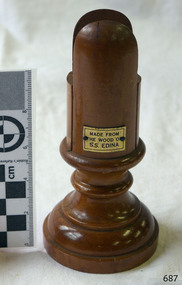 Flagstaff Hill Maritime Museum and Village
Domestic object - Card Holder, c. 1854 - 1957
... Owners Leith, Hull & Hamburg Steam Packet Co. sold the SS Edina in March 1863 at Port Phillip Bay, Melbourne, to Stephen Henty of Portland, Victoria; Edina was perfect for working the West Coast cargo and passenger run between Melbourne and Portland, via the Port of Warrnambool, and Port Fairy. It first visited Warrnambool on April 4, 1863. SS Edina briefly worked...Owners Leith, Hull & Hamburg Steam Packet Co. sold the SS Edina in March 1863 at Port Phillip Bay, Melbourne, to Stephen Henty of Portland, Victoria; Edina was perfect for working the West Coast cargo and passenger run between Melbourne and Portland, via the Port of Warrnambool, and Port Fairy. It first visited Warrnambool on April 4, 1863. SS Edina briefly worked ...This wooden cardholder was made from the wood of the screw steamer S.S. Edina, most probably after she was broken up in 1957, but could have been made after one of several renovations during her lifetime. The slotted design of the cardholder allows a card to stand vertically, and the base is made wider to stabilise the holder. It could be used for holding items such as place cards, menus, and table numbers. ABOUT THE SS EDINA: - The three-masted, iron-hulled screw steamer SS Edina was built in Glasgow, Scotland, in 1854 by Barclay and Curle and launched on the Clyde on May 4th, 1854. The 322-ton, three-masted ship was 171 feet long, 23 feet 6 inches broad, and 12 feet 7 inches deep (52.12 L x 7.16 B x 3.84 D metres). The traditional figurehead of Edina, the ‘fair maid of Judea’, adorned its bow. The Edina later became famous worldwide for being the longest-serving screw steamer. (The term screw steamer comes from being driven by a single propeller, sometimes called a screw, driven by a steam engine.) During its long working life, SS Edina had its accommodation enlarged for war service, was completely overhauled and serviced several times; boilers were replaced, masts were reduced to one, and later added then reduced, a Poop Deck, Forecastle and additional accommodation were added, the hull was gutted completely, new decks and bulwarks, saloon was redecorated and upgraded, and several changes of commander. The busy vessel also survived several mishaps at sea. SS Edina’s interesting history includes English Channel runs, carrying stores and horses to the Black Sea in the Crimean War as HMS Edina 1864-55. The vessel then sailed to Europe and the UK before being sold and used for further service in 1861 as a blockade runner in the American Civil War. The vessel later served as a coastal trader in the western district of Victoria and Queensland, then carried gold, currency, and gold prospectors from Australia to New Zealand. SS Edina was an escort vessel to H.R.H. the Duke of Edinburgh during his visit to Australia in 1867. SOME EVENTS in the life of SS EDINA: - The SS Edina had voyaged to Australia under sail. Owners Leith, Hull & Hamburg Steam Packet Co. sold the SS Edina in March 1863 at Port Phillip Bay, Melbourne, to Stephen Henty of Portland, Victoria; Edina was perfect for working the West Coast cargo and passenger run between Melbourne and Portland, via the Port of Warrnambool, and Port Fairy. It first visited Warrnambool on April 4, 1863. SS Edina briefly worked the run from Australia to New Zealand, then returned to the West Coast run; the cargo included bales of wool produced in the western district of Victoria. In 1867-68, Stephen Henty sold SS Edina to the Warrnambool Steam Packet Company to continue trading along the coast of western Victoria. Captain John Thompson was the commander, and John Davies was the Chief Engineer. In 1870, SS Edina was in Lady Bay, Warrnambool, when a gale sprang up and caused a collision with the iron screw steamer SS Dandenong. SS Edina’s figurehead was broken into pieces and was never replaced. The Edina was refitted that year for use as a coastal trader in Queensland for a period, named R.M.S. Edina. It then went to Melbourne and carried cargo and passengers between there and Geelong from 1880 to 1938, with modifications in 1917; the ship was extensively overhauled, radically changing its appearance. It returned to having two masts, and the funnel, bridge, engines, and promenade deck were upgraded, and the saloon reupholstered. By 1924, Edina had made over 12,000 journeys, carrying over one million travellers between Melbourne and Geelong. In 1937, Australian Steamships Pty Ltd advertised in The Argus its Bay Excursions on the SS Edina from Portarlington and Geelong; it promoted, “Splendid Beaches, Excellent Bathing Facilities, and Light Refreshments available on board”. After several collisions, the SS Edina was taken out of service in 1938 and sold by its owner, Howard Smith Ltd., to a Williamstown shipbreaker, Mr George Burton. The Melbourne Harbour Trust permitted Burton to strip the hull and sell all parts at auction. The fittings were sold by auctioneers J.W. Styles & Son, c. 1938, on site at the Port of Melbourne and became widely dispersed. Victorian Lighterage Pty Ltd. purchased the hull, removed the engine and superstructure, and repurposed it as a ‘lighter’ named Dinah. It was loaded with wool and general cargo, then towed behind small tugs around the bay between Melbourne and Geelong. In 1957, after 104 years of activity, the SS Edina was broken up on the banks of the Maribyrnong River, Footscray, Melbourne, and used as landfill. A piece of the hull with Victorian Heritage significance is buried in the river. This card holder is made from wood from the SS Edina and is significant for its association with that vessel. The SS Edina is heritage listed on the Victorian Heritage Database VHR S199. She had endeared herself to the people of Port Phillip Bay as a passenger ferry, part of their history and culture. She played a significant role in the Crimean War, the American Civil War and the gold rush in New Zealand. She also served Western Victoria for many years in her cargo and passenger runs. The SS Edina is famous for being the longest-serving screw steamer in the world. After spending her first nine years overseas, she arrived in Melbourne, and her work included running the essential service of transporting cargo and passengers between Melbourne and the western Victoria ports of Warrnambool, Port Fairy and Portland. The SS Edina was purchased in the late 1860s by local Warrnambool business, the Warrnambool Steam Packet Co. and continued trading from there as part of the local business community. The SS Edina’s original ‘fair maid of Judea’ figurehead was broken to pieces in a collision with another vessel (the SS Dandenong) in a gale off Warrnambool, Victoria, in 1870. Card holder, made from the wood from the SS Edina (screw steamer ship). Holder is cylindrical shape, wider turned wood base. Top is divided with a space in the centre tor inserting a card. Rectangular metal plaque, gold-coloured, has a printed inscription within black border. Made c. 1854 - 1957.Printed on plaque "MADE FROM / THE WOOD OF / S.S. EDINA"warrnambool, shipwrecked coast, flagstaff hill, flagstaff hill maritime museum, maritime museum, shipwreck coast, flagstaff hill maritime village, shipwrecked artefact, barclay & curle, figurehead 'fair maid of judea', centenary maritime exhibition 1934, a brief review of steam navigation in victoria, pleasure steamer edina, trade and travel late 19th and early 20th century, trade melbourne to geelong, screw steamer edina, coastal trader edina, lighter dinah, cargo carrying for cremean war, cargo carrying for american civil war, passenger and trade in western district of victoria, export gold and currency and gold diggers to new zealand, export vessel to h r h the duke of edinburgh, melbourne - warrnambool - port fairy - portland cargo run, warrnambool steam packet company, stephen henty, captain john thompson, chief engineer john davies, lady bay warrnambool, lighter edina, shipping victoria, port phillip bay steamers, steamship great britain, edina, vhr s199 victorian heritage database, card holder, menu holder, table number holder, souvenir of the ss edina -
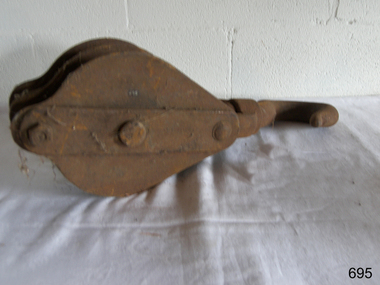 Flagstaff Hill Maritime Museum and Village
Equipment - Block, Tangyes engineering, Early 20th century
... work on the Forth Road Bridge in Scotland. The firm underwent several name changes over the years, including James Tangye and Brothers (1857), Tangye Brothers and Price (1859), Tangye Brothers (1860), Tangye Brothers & Holman (1876), Tangye Brothers (by 1878), Tangye Ltd. (1881), and then simply Tangye. Its machinery and equipment were exported worldwide. In 1884, a branch with showrooms, offices, and a warehouse was opened in Melbourne at Cornwall House, Collins Street West...work on the Forth Road Bridge in Scotland. The firm underwent several name changes over the years, including James Tangye and Brothers (1857), Tangye Brothers and Price (1859), Tangye Brothers (1860), Tangye Brothers & Holman (1876), Tangye Brothers (by 1878), Tangye Ltd. (1881), and then simply Tangye. Its machinery and equipment were exported worldwide. In 1884, a branch with showrooms, offices, and a warehouse was opened in Melbourne at Cornwall House, Collins Street West ...This metal block may have been used as part of a boat or ship's rigging or winch. The becket is the loop or ring where a shackle could be attached to use as a pulley. The two-sheaved block has a mechanical advantage over a single-sheave block, using less power to lift a load. The block was made by Tangyes, established in Birmingham, UK, in 1857, and renowned for producing high-quality, reliable machines, equipment, and tools in the late 19th and early 20th centuries. Richard Tangye (1833–1906) and four of his brothers—James, Joseph, Edward, and George—were the sons of Joseph Tangye, a Quaker Cornish miner. In 1857, they founded the engineering firm Richard Tangye & Brothers in Birmingham, UK. In 1860, the firm became Tangye Brothers and moved to Cornwall Works in Birmingham. The business encouraged inventors to join the company and develop their patents there, as happened with Weston’s differential pulley block, invented by the Englishman Thomas Aldridge Weston in 1854. Tangye bought the patent in 1858, giving the firm the sole right to manufacture it. The design received a medal for “original application, practical utility and success” at the 1862 International Exhibition in London. Also in 1858, the Tangye firm was commissioned by Brunel’s shipping company to manufacture hydraulic lifting jacks, or rams, to launch the steamship SS Great Eastern. The success of this project brought favourable attention to the firm, and it became involved in other notable projects, including the erection of Cleopatra’s Needle in London in 1878 and work on the Forth Road Bridge in Scotland. The firm underwent several name changes over the years, including James Tangye and Brothers (1857), Tangye Brothers and Price (1859), Tangye Brothers (1860), Tangye Brothers & Holman (1876), Tangye Brothers (by 1878), Tangye Ltd. (1881), and then simply Tangye. Its machinery and equipment were exported worldwide. In 1884, a branch with showrooms, offices, and a warehouse was opened in Melbourne at Cornwall House, Collins Street West. The firm was well known for producing high-quality machinery for agriculture and industry. Even today, new Tangye machinery is available for a subsidiary of Allspeeds. An extensive account of the firm’s history, names, inventions, and further references is available in Grace’s Guide, which also includes references to and diagrams of the Tangye horizontal steam engine. The block is significant for its connection to the renowned and innovative Tangye machine makers, respected for their high quality and standards. The block's maker,, Tangyes, also manufactured an 1880s steam engine, sold by a Melbourne merchant, and locally significant for its use in a late-19th century cheese factory. The block also represents the many blocks used in many industries, including the marine concerns, for rigging and lifting. Flagstaff Hill has a wide variety of these simple but very important pieces of equipment.Becket block: a metal block with two sheaves, a hook, a becket attachment point, and straps. Inscription embossed. Made by Tangyes."TANGYES"warrnambool, flagstaff hill maritime museum and village, maritime museum, maritime village, great ocean road, shipwreck coast, block, metal block, two sheave block, marine technology, rigging, tangye, ship rigging, block with hook and becket, becket block, sailing block, cargo block, tangyes block, vintage, nautical pulley, rigging equipment, pulley system, functional machine, machine, lifting equipment, marine equipment, richard tangye & brothers, james tangye and brothers, tangye brothers and price, tangye brothers, tangye brothers & holman, tangyes ltd., cornwall works -
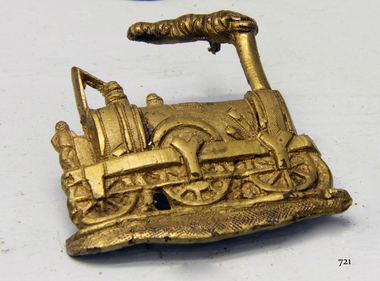 Flagstaff Hill Maritime Museum and Village
Accessory - Badge, Before 1855
... West Drayton. It was withdrawn in 1843 but was rebuilt as a 2-2-2T tank locomotive and returned to service in 1846, running in this form until 1868. It survived for two more years at Reading as a stationary boiler. It is named after the workshops where it was built, which themselves were named after the Roman god of fire. (Although a supposition, it is possible that the owner was a passenger on the ill-fated Schomberg and that they worked...West Drayton. It was withdrawn in 1843 but was rebuilt as a 2-2-2T tank locomotive and returned to service in 1846, running in this form until 1868. It survived for two more years at Reading as a stationary boiler. It is named after the workshops where it was built, which themselves were named after the Roman god of fire. (Although a supposition, it is possible that the owner was a passenger on the ill-fated Schomberg and that they worked ...The badge recovered from the Schomberg wreck is believed to depict one of the first steam engines. The engine's design by Charles Tayleur & Co. was to be produced for the Great Western Railway in England. The first nineteen of these locomotives were ordered by Isambard Kingdom Brunel for the Great Western Railway including six 2-2-2 Charles Tayleur locomotives. They were built by Charles Tayleur and Company, which later the Vulcan Foundry. The locomotives were unsuccessful and were rapidly supplemented by the Star Class locomotives ordered by Daniel Gooch once he had been appointed as the Locomotive Engineer. As built, they comprised two groups of three, the first group, was delivered in 1837. This locomotive was the first to run on the Great Western Railway when it was tested on 28 December 1837 from its shed at West Drayton. It was withdrawn in 1843 but was rebuilt as a 2-2-2T tank locomotive and returned to service in 1846, running in this form until 1868. It survived for two more years at Reading as a stationary boiler. It is named after the workshops where it was built, which themselves were named after the Roman god of fire. (Although a supposition, it is possible that the owner was a passenger on the ill-fated Schomberg and that they worked either for the Great Western Railway or the Vulcan Foundry that made the engine in the 1830s.) Wreck of the Schomberg: Schomberg was a large three-masted full-ship rigged wooden ship built in 1855 by Alexander Hall and Co in Aberdeen, Scotland for James Baines' famous Black Ball Line at £43,103. The vessel was 288 feet (88 meters) in length, with a beam of 45 feet (14 meters), a depth of 29.5 feet (8.99 meters) of 2,284 tons. The mainmast was 210 feet (64 meters) high and she carried 3.3 acres of sail. The vessel was constructed with three skins. One planked fore and aft, and two diagonally planked, fastened together with screw-threaded trunnels (wooden rails). The Schomberg is one of only three clipper wrecks in Victorian waters that operated the England to Australia run. While the other two, Empress of the Sea and Lightning, were built by the famous American shipbuilder, Donald Mac Kay. Schomberg was an attempt to build a faster ship than Mac Kay and a vessel fast enough to break the sailing record to Australia. The Schomberg sailed on her maiden voyage from Liverpool on 6 October 1855, under the command of Captain James Forbes, on its maiden voyage to Australia with a general cargo, jewellery, spirits, machinery, and 2,000 tons of iron rails and equipment intended to build the Melbourne to Geelong Railway and a bridge over the Yarra from Melbourne to Hawthorn. She also carried a cow for fresh milk, pens for fowls and pigs, plus 90,000 gallons of water for washing and drinking. She also carried 17,000 letters and 31,800 newspapers. There were approximately 473 passengers and a crew of 105. It was hoped that Schomberg would make Melbourne in sixty days, setting a record for the voyage, but light winds at the equator dashed those expectations. The ship sighted Moonlight Head in southwest Victoria on Christmas Day but through a deadly combination of wind, currents, and unmarked sand spits, the vessel gently ran aground on 26 December 1855 on a spit that juts into Newfield Bay, just east of Curdies Inlet, and the present town of Peterborough. Fortunately, the SS Queen was nearby and managed to save all passengers and crew. The steamers Keera and Maitland were dispatched to salvage the passenger's baggage and the more valuable cargo. Other salvage attempts were made, but deteriorating weather made the work impossible, and within two weeks the Schomberg's hull was broken up and the vessel abandoned. The wrecking of the Schomberg caused quite a public stir, particularly in light of the fact the vessel was supposed to be, the most perfect clipper ship ever built. Captain Forbes was charged in the Supreme Court under suspicion that he was playing cards with two female passengers below decks when his ship ran aground. Despite a protest meeting, two inquiries, and the court proceedings, he was found not guilty and cleared of all charges. In 1975, divers from Flagstaff Hill, including Peter Ronald, found an ornate communion set at the wreck. The set comprised a jug, two chalices, a plate, and a lid. The lid did not fit any of the other objects and in 1978 a piece of the lid broke off, revealing a glint of gold. As museum staff carefully examined the lid and removed marine growth, they found a diamond ring, which is currently on display in the Great Circle Gallery at the Flagstaff Hill Maritime Museum that also displays ship fittings and equipment, and personal effects. Most of the artefacts were salvaged from the wreck by Peter Ronald, former director of Flagstaff Hill.The Schomberg has historical significance as one of the first luxurious ships built to bring emigrants to Australia to cash in on the gold rush era. And is included on the Victorian Heritage Register (VHR S612). The collection of Schomberg artefacts held at Flagstaff Hill Museum is primarily significant because of the relationship between these recovered items having a high potential to interpret the story of the Schomberg and its foundering during a storm. The shipwreck is of additional historical significance for representing aspects of Victoria’s shipping history and for its association with the first passenger ship, which was designed not only to be the fastest and most luxurious of its day but foundered on its maiden voyage to Australia.Gold coloured brass badge depicting an 1840's steam engine or locomotive with the figure of a fireman standing on the back. Smoke is coming from the smokestack. The reverse has three holes, possible where a mounting pin or fastener was attached. The badge was recovered from the wreck of the Schomberg.warrnambool, flagstaff-hill, flagstaff-hill-maritime-museum, shipwreck-coast, flagstaff-hill-maritime-village, schomberg, shipwrecked-artefact, clipper ship, black ball line, 1855 shipwreck, captain forbes, ss queen, badge, charles tayleur, great western railway, vulcan foundry, isambard kingdom brunel, locomoive, brooch -
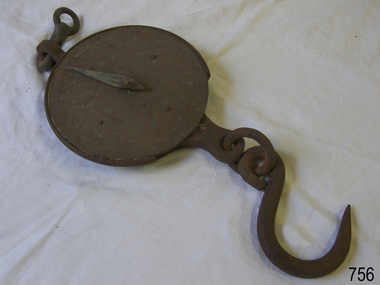 Flagstaff Hill Maritime Museum and Village
Equipment - Spring Balance Scale, George Salter & Co, 1920s
... work on a different principle from steelyard balances. By 1825 his nephew George had taken over the company, which became known as George Salter & Co. George later established a manufacturing site in the town of West...work on a different principle from steelyard balances. By 1825 his nephew George had taken over the company, which became known as George Salter & Co. George later established a manufacturing site in the town of West ...Scales such as the subject item were used to measure commercial quantities, possibly grains and farm produce for quite large amounts of product. Bags of grain etc would have been hooked up and weighed. Salter has been a name long associated with weights and measures. The firm began life in the late 1760s in the village of Bilston, England when Richard Salter, a spring maker, began making the first spring scales in Britain. He called these scales "pocket steelyards", though they work on a different principle from steelyard balances. By 1825 his nephew George had taken over the company, which became known as George Salter & Co. George later established a manufacturing site in the town of West Bromwich, about 4 miles (7 km) from Bilston. West Bromwich Albion football club was formed from workers at this works site. From here the company produced a wide variety of scales including the UK's first bathroom scales. Other items were added to the range, including irons, mincers, potato chippers, coin-operated machines and the first typewriters made in the UK. The business thrived throughout the 1900s, and by 1950 it employed over 2000 people, still in the same area and owned by the same family.Salter is a British housewares brand developing products that span a wide range of core product categories, including scales, electrical, cookware. It is a market leader in kitchen and bathroom scales and one of the UK’s oldest consumer brands. Established in 1760, Salter has been developing precision products for over 260 years. It was acquired by Manchester-based consumer goods giant Ultimate Products in 2021 after they had previously licensed the brand for cookware and kitchen electrical since 2011.Balance scale Salters Spring Balance consisting of a circular, bronze face engraved with measurements in pounds, with an iron hand, weighing mechanism and hanging loop. Engraved on the face: "Class III Salter's Spring Balance Silvester's Patent To Weigh 300lbs".flagstaff hill, warrnambool, flagstaff-hill-maritime-museum, maritime-museum, shipwreck-coast, flagstaff-hill-maritime-village, salter balance scale, weight measuring scale, weighing dry goods
