
Showing 86 items matching "world record club"
-
 RMIT Design Archives
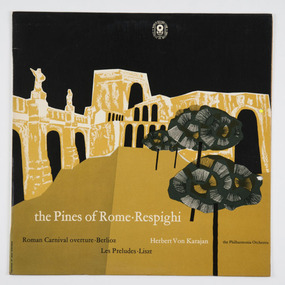
Record sleeve, The Pines of Rome - Respighi
... world record club...He produced a number of striking record covers for the World Record Club in the late 1950s and early 1960s. ...The World Record Club Pty. Ltd....He produced a number of striking record covers for the World Record Club in the late 1950s and early 1960s. ...Max Robinson (1934-2018) designed this record sleeve for the World Record Club in 1961. Robinson studied for a year at the Melbourne Technical College (RMIT University), and in his early career worked for Peter Clemenger and the graphic designer, Max Forbes. He produced a number of striking record covers for the World Record Club in the late 1950s and early 1960s. Robinson’s work is familiar to many Australians – he designed the new $10 note in 1993, which featured Banjo Paterson and Dame Mary Gilmore. The World Record Club’s operated in Melbourne from 1957 until 1976; it was a mail order service, and its art director, Geoff Digby commissioned young designers and artist to design the record sleeves. It is regarded now as one of most representative collection of Australian designers’ work of its period, and highlights the years of transition from ‘commercial art’ to ‘graphic design’. The album cover was donated to the Archive by the World Record Club’s art director, Geoff Digby. Ann Carew, 2020This record sleeve is historically significant for its association with Max Robinson, who was inducted into the Australian Graphic Design Association’s (AGDA) Hall of Fame in recognition for his work as graphic artist, but also his tireless advocacy for graphic design in Australia. It is aesthetically significant as an early example of the design work of Max Robinson. It is historically significant for its association with the World Record Club, an organisation that produced a representative collection of Australian graphic designers’ work from 1957 until 1976. the Pines of Rome . Respighi / Roman Carnival overture . Berlioz / Herbert Von Karajan / the Philharmonia Orchestra / Les Preludes . Lisztworld record club, max robinson, rmit university, rmit design archives, geoff digby, record sleeve design, graphic design -
 Robin Boyd Foundation
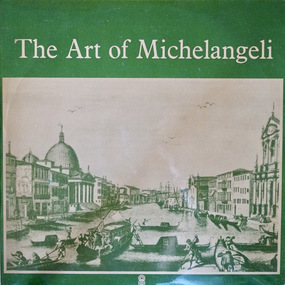
Audio - Recording, Decca, released in Australia exclusively by World Record Club
... LP 33RPM vinyl, Catalogue Number: World Record Club W.R.C. S/4831, Record cover, plastic sleeve, 1 vinyl disc, cover notes (no author listed). ...Decca, released in Australia exclusively by World Record Club...Audio Recording Decca, released in Australia exclusively by World Record Club ...The Boyds purchased their record player and sound system from Thomas’s in Melbourne. Patricia Boyd (later Davies) was very interested in opera and was later appointed to the Board of the Australian Opera.The Art of Michelangeli. LP 33RPM vinyl, Catalogue Number: World Record Club W.R.C. S/4831, Record cover, plastic sleeve, 1 vinyl disc, cover notes (no author listed). Beethoven, Galuppi, Scarlatti.lp, sound recording -
 Robin Boyd Foundation
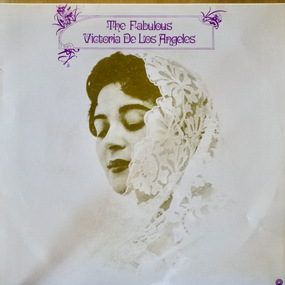
Audio - Recording, HMV. World Record Club recording
... HMV. World Record Club recording...Audio Recording HMV. World Record Club recording ...The Boyds purchased their record player and sound system from Thomas’s in Melbourne. Patricia Boyd (later Davies) was very interested in opera and was later appointed to the Board of the Australian Opera.The fabulous Victoria de los Angeles. LP 33RPM vinyl, Catalogue Number: WRC S/4838, Record cover, Plastic sleeve, 1 vinyl disk, paper Lyric pamphlet. Cover notes, J.D. Bicknell. Victoria de los Angeles Piano: Gerald Moore.lp, sound recording -
 Robin Boyd Foundation
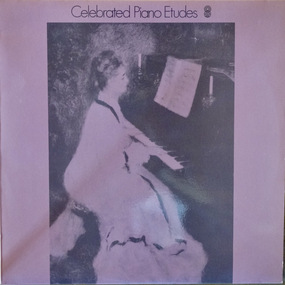
Audio - Recording, World Record Club
... World Record Club...Audio Recording World Record Club ...The Boyds purchased their record player and sound system from Thomas’s in Melbourne. Patricia Boyd (later Davies) was very interested in opera and was later appointed to the Board of the Australian Opera.Celebrated Piano Etudes. LP 33RPM vinyl, Catalogue Number: W.R.C. - S/4845, Record cover, plastic sleeve, back cover notes by Jean Hamon of the Academie du Disque Francais. Bernard Ringreissen (pianoforte).lp, sound recording -
 Robin Boyd Foundation
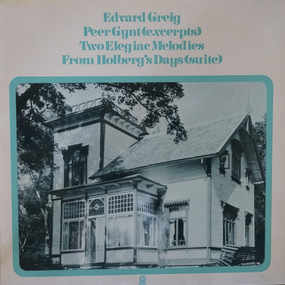
Audio - Recording, HRM World Record Club
... HRM World Record Club...Audio Recording HRM World Record Club ...The Boyds purchased their record player and sound system from Thomas’s in Melbourne. Patricia Boyd (later Davies) was very interested in opera and was later appointed to the Board of the Australian Opera.Edvard Grieg. Peer Gynt (excerpts) Two Elegiac Melodies from Holberg's Days (suite). LP 33RPM vinyl, Catalogue Number: S/4797, Record cover, no sleeve, 1 vinyl disk. Cover notes, no author listed. South German Chamber Orchestra. Conductor: Friedrich Tilegant.lp, sound recording -
 Robin Boyd Foundation
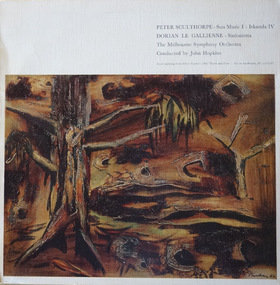
Audio - Recording, World Record Club
... World Record Club...Audio Recording World Record Club ...The Boyds purchased their record player and sound system from Thomas’s in Melbourne. Patricia Boyd (later Davies) was very interested in opera and was later appointed to the Board of the Australian Opera.Peter Sculthorpe - Sun Music I - Irkanda IV; Dorian Le Gallienne - Sinfonietta. LP 33RPM Vinyl, Catalogue Number: S/FRAM 1, Paper packaging/cover, opens like a book, Plastic Sleeve, 1 Vinyl disc, cover notes by Roger Covell. The Melbourne Symphony Orchestra, Conductor John Hopkins.lp, sound recording -
 Flagstaff Hill Maritime Museum and Village
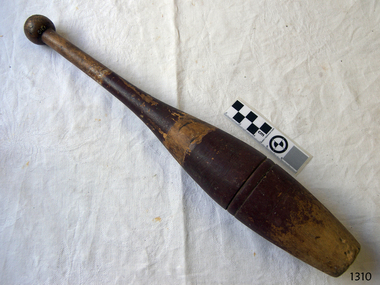
Equipment - Juggling Club, late 19th to early 20th century
... clubs can be seen in the collection of Nobelius Heritage Park and Emerald Museum, Emerald, Victoria. JUGGLING Jugglers entertain audiences with their tricks and routines at events such as circuses, amusement parks, parties, shows on television or theatre, schools and parties. Juggles also compete at International Championships to obtain world records...clubs can be seen in the collection of Nobelius Heritage Park and Emerald Museum, Emerald, Victoria. JUGGLING Jugglers entertain audiences with their tricks and routines at events such as circuses, amusement parks, parties, shows on television or theatre, schools and parties. Juggles also compete at International Championships to obtain world records ...This wooden juggling club or exercise club may also be referred to as a juggling pin. It is very similar in shape to a bowling pin or an Indian club. It dates approximately to the early 20th century. It may have been used as one of a pair for gymnastics or exercise, or part of a larger set used by a juggler for entertainment in a circus or carnival. At some time it may have been used with a ball or disc as part of a Skittles or bowling game set. The historical collection of Federation University Australia, Victoria, includes a very similar but slightly shorter club, labelled ‘timber skittle”, as can be seen in their photograph. Another example of very similar-shaped, same-sized clubs can be seen in the collection of Nobelius Heritage Park and Emerald Museum, Emerald, Victoria. JUGGLING Jugglers entertain audiences with their tricks and routines at events such as circuses, amusement parks, parties, shows on television or theatre, schools and parties. Juggles also compete at International Championships to obtain world records, performing as individuals or in groups or teams. Contemporary champion juggler David Cain performs a Juggling History Show that both entertains and educates his audience. His routines date from the early 1600s to the 20th century. He uses a wide variety of equipment in his acts including juggling clubs. EXERCISE Exercise clubs or Indian clubs were used in 19th century Victorian times as part of exercise or strengthening programs when they were swung in certain patterns and movements. Even in the early 20th century workplace a few minutes of Indian club swinging was common practice for the relief of tension. A video clip of an American school room in 1904 shows a group of boys and girls skilfully wielding clubs in an exercise sequence (see ‘Links” section). The 1904 and 1932 Olympic Games had an event called Club Swinging. Rhythmic gymnastics was added to the Olympic Program at the L.A. Games in 1984 where competitors use apparatus such as rope, hoop, ball, ribbon and clubs. The clubs come in a variety of weights and heights and have been used from the mid-1800s until around the 1930s in schools and military institutions. They are decorated in a variety of patterns and colours and some have feature lines or scored rings on them. This juggling club is significant for its association with education, entertainment and sport in the late 19th and early 20th century.Wooden juggling club (or pin, skittle or Indian club). Vintage, bottle-shaped club with a flat, slightly concave, base. Its turned, solid timber body tapers out from the base then in again to a very narrow handle with a round knob joined onto the top. Two concentric feature lines are scored into the wider part of club. It was possibly used in exercise, gymnastics or as a skittle. Sections of the club have two brown painted stripes; paint on the lower strip has been worn off at the base . There are remnants of white paint in two areas, possibly the remains of a maker’s name or decoration. There also appears to be an inscription stamped into the wooden handle but this is illegible. Late 19th to early 20th century.Remnants of what appears to be stamped lettering and painted labelling.flagstaff hill, warrnambool, shipwrecked coast, flagstaff hill maritime museum, maritime museum, shipwreck coast, flagstaff hill maritime village, great ocean road, wooden skittle, entertainment, bowling skittle, wooden juggling pin, wooden juggling club, wooden exercise club, indian club, exercise club, club swinging, rhythmic gymnastics, sport equipment, juggling equipment, wooden club -
 Shepparton RSL Sub Branch
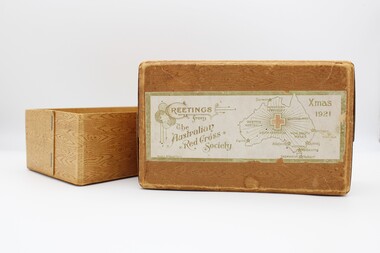
Case, c. 1920s
... records mean this fact is not confirmed. The item has interpretive potential, to discuss matters of equipment, emigration, use of horses during war and possibly leisure activities if the crest is taken as a reference to polo. case horseshoe cardiff england united kingdom second world war elizabeth thomas world war ii world war 2 1940s emigration Stamps read "L THOMAS" along an upturned horse shoe, underneath which are possibly clubs and an up-facing arrow. ...This case belonged to Leonard Thomas (VX21070) who was born on 23 Aug 1900 in Cardiff England. By the Second World War, Thomas had emigrated to Australia and was residing in Elwood when he enlisted in Caulfield in 1940. Thomas served during the war as a Private and was discharged on 31 May 1949 from the AIF Mov and Control Group. His full service records are not currently available via the National Archives Australia and so it is unclear whether this case was part of the equipment of his role or a personal item.This case contains a number of inscriptions which may aid researchers to understand the life and movements of the owner, Leonard Thomas. The apparent crest is of special interest, suggesting that Leonard Thomas was connected to equine activities though the unavailability of his service records mean this fact is not confirmed. The item has interpretive potential, to discuss matters of equipment, emigration, use of horses during war and possibly leisure activities if the crest is taken as a reference to polo.Horse shoe shaped case in brown leather constructed of a lid and base. Used for storing shirt collars. Lid and base respectively constructed of two pieces of leather (one top and one edge) which are stitched to heavy card interior lining, mustard yellow in colour. The lid and base are held together by a sewn on leather strip and fastened at the top with a metal buckle; the holed strap through which the buckle attaches has broken. This strap in turn passes vertically down the back of the case and underneath (forming the strip which joins the two halves). Exterior base carries handwritten inscriptions, as does the interior lid. Black ink stamps throughout.Stamps read "L THOMAS" along an upturned horse shoe, underneath which are possibly clubs and an up-facing arrow. Service number written on side of case reads "VX21070". Handwritten inscription reads "Leonard Thomas/33 [illegible three words]/Cardiff/April 20th 1921." Interior of lid reads "LEONARD THOMAS 5-2-20" with a striped triangle below.case, horseshoe, cardiff, england, united kingdom, second world war, elizabeth thomas, world war ii, world war 2, 1940s, emigration -
 Federation University Historical Collection
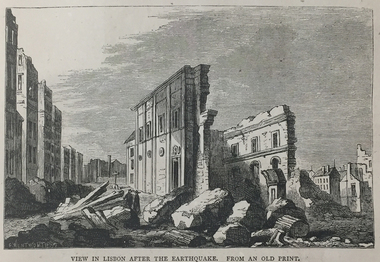
Book, Cassell, Petter, and Galpin, The World of Wonders: A Record of Things in Nature, Science and Art, c1874, x1874
... club samuel greville aye-aye dinornis horizontorium "Brookeville Rounder's Club.FOUNDER'S PRIZE 1874.WON BY SAMUEL GREVILLE 18th. July 1874." Master Samuel Greville with the best wishes donor J. Edwards [missing] 18 July 18 [missing] 1874 Hardcovered illustrated book of 414 pages. Between pages 286-287 letterhead for " Don" Mig. Co furniture manufacturers. Between pages 56-57 cardboard sight piece The World of Wonders: A Record ...Hardcovered illustrated book of 414 pages. Between pages 286-287 letterhead for " Don" Mig. Co furniture manufacturers. Between pages 56-57 cardboard sight piece"Brookeville Rounder's Club.FOUNDER'S PRIZE 1874.WON BY SAMUEL GREVILLE 18th. July 1874." Master Samuel Greville with the best wishes donor J. Edwards [missing] 18 July 18 [missing] 1874brookeville founder's club, samuel greville, aye-aye, dinornis, horizontorium -
 Greensborough Historical Society
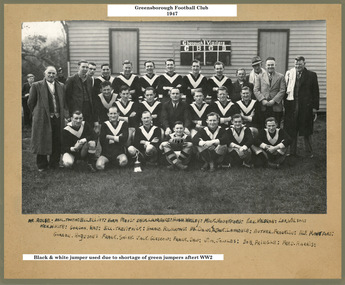
Photograph - Digital Image, Greensborough Football Club. Team photograph 1947, 1947_
... Club 1947. This photograph was displayed at the GFC Hall of Fame in 2016. Black and white jumpers were in use due to a shortage of green jumpers after World Ward 2. This photograph is a record ...Team photograph, Greensborough Football Club 1947. This photograph was displayed at the GFC Hall of Fame in 2016. Black and white jumpers were in use due to a shortage of green jumpers after World Ward 2. This photograph is a record of the team - players and support staff - involved in the 1900 season.Group photograph of football team, players and support staff. Players are identified on mount of photogreensborough football club, diamond valley football league -
 City of Moorabbin Historical Society (Operating the Box Cottage Museum)
Newsletter, City of Moorabbin Historical Society No 5. Vol. 8 June / July 1968, City of Moorabbin Historical Society Newsletter No. 5 Vol. 8 June / July 1968, 1968
... Topic ; Kennedy Cottage; Frankston HS ; Cheltenham Walking Club c1916; Mentone SS; The Aims of the CMHS are ‘to record the history of the City, and register something of the Australian Atmosphere, which the necessary speed-up in post-world-war two (WW11) immigration has caused to be lost; to produce a magazine at regular intervals, featuring the work of pioneers and the changing Australian scene; to work constantly with a long range view towards building a hall where records and exhibits can be housed’ (1961) The Original Newsletters reflect the history and heritage of the former City of Moorabbin — derived from Mooroobin, ‘a resting place’ in the Bunurrung spoken language. ...Topic ; Kennedy Cottage; Frankston HS ; Cheltenham Walking Club c1916; Mentone SS; The Aims of the CMHS are ‘to record the history of the City, and register something of the Australian Atmosphere, which the necessary speed-up in post-world-war two (WW11) immigration has caused to be lost; to produce a magazine at regular intervals, featuring the work of pioneers and the changing Australian scene; to work constantly with a long range view towards building a hall where records and exhibits can be housed’ (1961) The Original Newsletters reflect the history and heritage of the former City of Moorabbin — derived from Mooroobin, ‘a resting place’ in the Bunurrung spoken language. ...Topic ; Kennedy Cottage; Frankston HS ; Cheltenham Walking Club c1916; Mentone SS; The Aims of the CMHS are ‘to record the history of the City, and register something of the Australian Atmosphere, which the necessary speed-up in post-world-war two (WW11) immigration has caused to be lost; to produce a magazine at regular intervals, featuring the work of pioneers and the changing Australian scene; to work constantly with a long range view towards building a hall where records and exhibits can be housed’ (1961) The Original Newsletters reflect the history and heritage of the former City of Moorabbin — derived from Mooroobin, ‘a resting place’ in the Bunurrung spoken language. In 1994, the City of Moorabbin was integrated into the Cities of Bayside, Glen Eira, Kingston and Monash. This is Newsletter No. 5 Vol. 8 of the CMHS June / July 1968 CMHS obtained a Kingston City Council Community Grant 2016 for the digitization and preservation of these Original CMHS Newsletters commenced in 1961 2 x L 26cm x W 21cm page 1 printed both sides CITY OF MOORABBIN HISTORICAL SOCIETY / AFFILIATED WITH THE ROYAL HISTORICAL SOCIETY OF / VICTORIA AND THE CHELTENHAM ARTS AND CRAFTS SOCIETY/ President Mrs N. Blackman…. Secretary Mrs F.Neville..... / Volume 8 No.5 NEWSLETTER JUNE-JULY 1968 city of moorabbin historical society 1961, sheehy t.a., newsletters, kennedy james; -
City of Moorabbin Historical Society (Operating the Box Cottage Museum)
Newsletter, City of Moorabbin Historical Society No. 3 Vol. 10 September 1970, City of Moorabbin Historical Society Newsletter No. 3 Vol. 10 September 1970, 1970
... Topic ; Telephone; Cheltenham Football Club ; SEHA; The Aims of the CMHS are ‘to record the history of the City, and register something of the Australian Atmosphere, which the necessary speed-up in post-world-war two (WW11) immigration has caused to be lost; to produce a magazine at regular intervals, featuring the work of pioneers and the changing Australian scene; to work constantly with a long range view towards building a hall where records and exhibits can be housed’ (1961) The Original Newsletters reflect the history and heritage of the former City of Moorabbin — derived from Mooroobin, ‘a resting place’ in the Bunurrung spoken language. ...Topic ; Telephone; Cheltenham Football Club ; SEHA; The Aims of the CMHS are ‘to record the history of the City, and register something of the Australian Atmosphere, which the necessary speed-up in post-world-war two (WW11) immigration has caused to be lost; to produce a magazine at regular intervals, featuring the work of pioneers and the changing Australian scene; to work constantly with a long range view towards building a hall where records and exhibits can be housed’ (1961) The Original Newsletters reflect the history and heritage of the former City of Moorabbin — derived from Mooroobin, ‘a resting place’ in the Bunurrung spoken language. ...Topic ; Telephone; Cheltenham Football Club ; SEHA; The Aims of the CMHS are ‘to record the history of the City, and register something of the Australian Atmosphere, which the necessary speed-up in post-world-war two (WW11) immigration has caused to be lost; to produce a magazine at regular intervals, featuring the work of pioneers and the changing Australian scene; to work constantly with a long range view towards building a hall where records and exhibits can be housed’ (1961) The Original Newsletters reflect the history and heritage of the former City of Moorabbin — derived from Mooroobin, ‘a resting place’ in the Bunurrung spoken language. In 1994, the City of Moorabbin was integrated into the Cities of Bayside, Glen Eira, Kingston and Monash. This is Newsletter No. 3 Vol. 10 of the CMHS September 1970 CMHS obtained a Kingston City Council Community Grant 2016 for the digitization and preservation of these Original CMHS Newsletters commenced in 1961 1 x L 26cm x W 21cm printed both sides CITY OF MOORABBIN HISTORICAL / SOCIETY / (Affiliated with the Royal Historical Society of Victoria ). / President / Mrs C Whitehead Secretary Mrs P. Brodie / NEWSLETTER / Volume 10 No 3 September 1970 city of moorabbin historical society 1961, sheehy t.a., newsletters, -
City of Moorabbin Historical Society (Operating the Box Cottage Museum)
Newsletter, City of Moorabbin Historical Society No. 2 Vol. 11 June 1971, City of Moorabbin Historical Society Newsletter No. 2 Vol. 11 June 1971, 1971
... Topic ; Cheltenham Tennis Club 1880; Youth Expo; The Aims of the CMHS are ‘to record the history of the City, and register something of the Australian Atmosphere, which the necessary speed-up in post-world-war two (WW11) immigration has caused to be lost; to produce a magazine at regular intervals, featuring the work of pioneers and the changing Australian scene; to work constantly with a long range view towards building a hall where records and exhibits can be housed’ (1961) The Original Newsletters reflect the history and heritage of the former City of Moorabbin — derived from Mooroobin, ‘a resting place’ in the Bunurrung spoken language. ...Topic ; Cheltenham Tennis Club 1880; Youth Expo; The Aims of the CMHS are ‘to record the history of the City, and register something of the Australian Atmosphere, which the necessary speed-up in post-world-war two (WW11) immigration has caused to be lost; to produce a magazine at regular intervals, featuring the work of pioneers and the changing Australian scene; to work constantly with a long range view towards building a hall where records and exhibits can be housed’ (1961) The Original Newsletters reflect the history and heritage of the former City of Moorabbin — derived from Mooroobin, ‘a resting place’ in the Bunurrung spoken language. ...Topic ; Cheltenham Tennis Club 1880; Youth Expo; The Aims of the CMHS are ‘to record the history of the City, and register something of the Australian Atmosphere, which the necessary speed-up in post-world-war two (WW11) immigration has caused to be lost; to produce a magazine at regular intervals, featuring the work of pioneers and the changing Australian scene; to work constantly with a long range view towards building a hall where records and exhibits can be housed’ (1961) The Original Newsletters reflect the history and heritage of the former City of Moorabbin — derived from Mooroobin, ‘a resting place’ in the Bunurrung spoken language. In 1994, the City of Moorabbin was integrated into the Cities of Bayside, Glen Eira, Kingston and Monash. This is Newsletter No. 2 Vol. 11 of the CMHS June 1971 CMHS obtained a Kingston City Council Community Grant 2016 for the digitization and preservation of these Original CMHS Newsletters commenced in 1961 1 x L 26cm x W 21cm printed both sides CITY OF MOORABBIN HISTORICAL / SOCIETY / President / Mrs C Whitehead Secretary Mrs P. Brodie / NEWSLETTER / Volume 11 No 2 June 1971city of moorabbin historical society 1961, sheehy t.a., newsletters, -
 City of Moorabbin Historical Society (Operating the Box Cottage Museum)
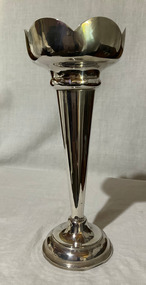
Domestic object - Silver Plated Vase, Paramount - K. G. Luke Pty Ltd
... World War 2 production was again stepped up and Luke became an honorary adviser to the Department of Supply and Shipping. Luke went on to achieve many major public roles. In 1938-55 he was president of the Carlton Football Club. A delegate (from 1935) to the Victorian Football League, he was its vice president (1946-55) and president (1956-71). With post-war growth generating record ...Manufactured by K. G. Luke Pty Ltd.In 1921 Kenneth Luke became a partner in a small metal-spinning and silverware business at Carlton. By 1925 he was its proprietor and an employer of seven. These employees were still with him thirty years later, with 650 others, making an ever-increasing range of products: silverware, stainless steel surgical equipment, plated goods and glass-washing machines. In 1929 he bought a larger factory in Queen's Parade, Fitzroy (since redeveloped), doubled his staff and introduced new lines. At the outbreak of World War 2 production was again stepped up and Luke became an honorary adviser to the Department of Supply and Shipping. Luke went on to achieve many major public roles. In 1938-55 he was president of the Carlton Football Club. A delegate (from 1935) to the Victorian Football League, he was its vice president (1946-55) and president (1956-71). With post-war growth generating record crowds, he consolidated central administration and professionalised the game for players.A Silver Plated Vase manufactured by K.G. Luke Pty Ltd.A1 - Paramount Plate - Best EPNS Quality Plate 4001-0paramount, k. g. luke pty ltd -
 Orbost & District Historical Society
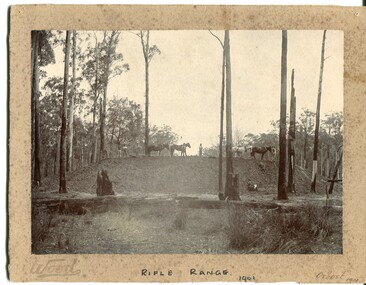
black and white photograph, Wood, 1901
... Club existed in the early 20th century. (There are records from 1900). It folded in the late 1970's. Target shooting is one of the oldest organised sports in Australia. Records date back to the British Marines at Sydney Cove in 1788. The Victorian Rifle Association (VRA) was formed in 1860. After Federation in 1901, rifle clubs came under army control, but in 1921 they were reconstituted as a civilian organisation, which they have remained ever since. After World ...This photograph appears to have been taken during the construction of the rifle range just north of the Orbost township. "The photo shows the range stop butt being formed by the scoops being pulled by the horses. It appears that the rear of the mound there is a wall of logs lining it, most likely to help with being eroded or washed away. They haven’t yet formed the mantlet and target machines." ( Info, from Victorian Rifle Association) The Orbost Rifle Club existed in the early 20th century. (There are records from 1900). It folded in the late 1970's.Target shooting is one of the oldest organised sports in Australia. Records date back to the British Marines at Sydney Cove in 1788. The Victorian Rifle Association (VRA) was formed in 1860. After Federation in 1901, rifle clubs came under army control, but in 1921 they were reconstituted as a civilian organisation, which they have remained ever since. After World War I a system of national training was embodied in the Defence Act and the rifle clubs reverted to their purely sporting role. A black / white photograph of four men and four horses standing an a soil bank with another man, a lady and a small girl at the base of the hill. It is in a clearing in forest. It appears to have a row of targets set at the edge of the bank. The photograph is mounted on a very mouldy cream coloured buff card.on front - "Wood" ; "Rifle Range - 1901" ; "Orbost 1901"sport-shooting orbost-rifle-range -
 Orbost & District Historical Society
black and white photograph, 16.7.1956
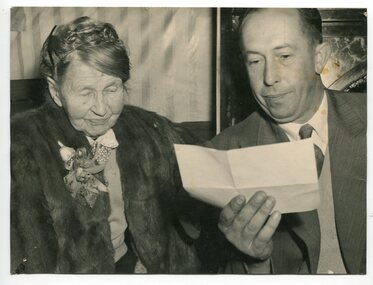
... World War II. He was a Life member of the Snowy Rovers Football Club. He joined the Orbost Fire Brigade on 1-5-1946. He died 1.2.2015. His son, Peter continues the painting business in Orbost. (info. from John Phillips) This is a pictorial record ...This photograph shows Nelson Burn reading a telegram from the queen to his grandmother, Mrs Paul Hocking, on her 100th birthday. Her husband, James Hocking, was the first watchmaker in Orbost. He had been a lay preacher at Wangaratta and Yan Yean before coming to Orbost. He was an 1891 Rechabite and an Orbost Shire Councillor. Eliza Ann Hocking (nee Eddy) was born on 16.7.1856 at Blackwater Hall in England, She had arrived in Australia on the sailing boat "Poocia" on 8-7-1880. The voyage following the Cape route took about 7 weeks. For a time, with her husband, she lived at Chewton, on the gold fields, before coming to Orbost. She was a foundation member of the Methodist Ladies’ Guild in 1912. She lived in Salisbury Street, Orbost. She died on 9.4.1957. Colin Nelson Burn, born 7.7.1921, was her grandson, son of Robert Alfred Burn and Edith Jane Hocking. He began Sta-Brite' Painting and Decorating Services in Salisbury Street, Orbost. He served in the forces during World War II. He was a Life member of the Snowy Rovers Football Club. He joined the Orbost Fire Brigade on 1-5-1946. He died 1.2.2015. His son, Peter continues the painting business in Orbost. (info. from John Phillips)This is a pictorial record of an Orbost resident reaching 100 years. A 100 year birthday is a significant milestone. The Hocking / Burn family have been associated with the Orbost district since 1889.A large black / white photograph of an elderly lady standing beside a younger man who is holding a letter and reading to her.hocking-mrs burn-nelson telegram-queen-100th-birthday -
Glen Eira Historical Society
Pamphlet - Melbourne Aerodrome, Grange Road, Glen Huntly
... records he set and 3 black and white photographs plus 1 sepia. Contact details included for Chris Hawker plus a Facebook page still current at 13/11/2017. Double-sided. Hawker Harry George Aviators Aviation Pilots Aircraft Sopwith Aviation Company Hawker Stanley Herbert Hawker George Hawker Mary Hawker Maude Hawker Ruby St John's Caulfield North Engineer Caulfield Army and Navy Club (RSL) Caulfield Repatriation Hospital Duke Street Caulfield South New Street Elsternwick Caulfield Racecourse Millen Senator Minister for Defence World War 1914-1918 "Death Spin" Sopwith Aircraft Co. ...Three documents about the history of Harry G. Hawker who flew from this and other places: 1/A Pamphlet On Harry George Hawker 1889 – 1921 Published on 12 February 1989 For The Unveiling By Weston Bate of St Kilda Commemorative Plaque At 31 Gourlay Street East St Kilda, The Hawker Family Home. The Pamphlet Gives Biographical Information Based on Hawker’s Entry In The Australian Dictionary of Biography. Double- (CMHS) Newsletter of March 2015 on brothers Harry and Herbert Hawker. 3/Pamphlett "Harry Hawkder In Austrlaia 1914" announcing 2014 as the year to commemorate the centenary of his return to Austrlai in 1914. This includes a short history of Harry Hawker, records he set and 3 black and white photographs plus 1 sepia. Contact details included for Chris Hawker plus a Facebook page still current at 13/11/2017. Double-sided.hawker harry george, aviators, aviation, pilots, aircraft, sopwith aviation company, hawker stanley herbert, hawker george, hawker mary, hawker maude, hawker ruby, st john's caulfield north, engineer, caulfield army and navy club (rsl), caulfield repatriation hospital, duke street, caulfield south, new street, elsternwick, caulfield racecourse, millen senator minister for defence, world war 1914-1918, "death spin", sopwith aircraft co. -
 Eltham District Historical Society Inc
Photograph - Digital Photograph, Alan King, Rob Roy Hill Climb, 24 November 2007
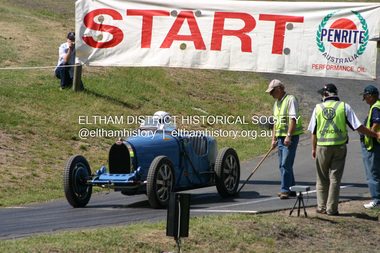
... record to 29.72 seconds in an MG Hudson. Throughout World War Two the Rob Roy Hillclimbs were suspended, but were resumed in 1947. The hillclimbs consistently attracted crowds averaging 500 to 600 people, peaking at 2000, until the hillclimb was destroyed by the 1962 bushfires. The meetings included nine Australian Hillclimb Championships, with the first in 1938 won by Peter Whitehead in his ERA. Eight of the Outright and Class record holders were Australian Grand Prix winners including Jack Brabham, who became a triple F1 World Champion. The Light Car Club...record to 29.72 seconds in an MG Hudson. Throughout World War Two the Rob Roy Hillclimbs were suspended, but were resumed in 1947. The hillclimbs consistently attracted crowds averaging 500 to 600 people, peaking at 2000, until the hillclimb was destroyed by the 1962 bushfires. The meetings included nine Australian Hillclimb Championships, with the first in 1938 won by Peter Whitehead in his ERA. Eight of the Outright and Class record holders were Australian Grand Prix winners including Jack Brabham, who became a triple F1 World Champion. The Light Car Club ...The Rob Roy Hill Climb originated in 1935 on the property of former Heidelberg Mayor, William Clinton, where he reared the Rob Roy breed of miniature ponies. He established Pleasure Grounds on part of the property attracting groups of Sunday visitors from Melbourne's inner suburbs. Visitors enjoyed a picnic area, pony rides, a dance hall and a tap room. Young men would ride their BSA or Harley Davidson motorcycles to the property which led to regular club-organised hillclimb meetings between 1930 and 1936. In 1935 Clinton offered the use of his property to the Light Car Club of Australia for their hillclimbs. The track was sealed that same year and the hillclimb at Clintons Road was one of only three specially designed bitumen surface hillclimbs in the world, the others being Shelsey Walsh and Prescott Hillclimbs in the UK. The first Light Car Club of Australia hillclimb was held at Rob Roy in February 1937. Covered under Heritage Overlay, Nillumbik Planning Scheme. Published: Nillumbik Now and Then / Marguerite Marshall 2008; photographs Alan King with Marguerite Marshall.; p133 About six times a year the unlikely sound of car engines emerges from deep in the heart of Christmas Hills.* Usually a quiet retreat, the Hills are home to one of the world’s oldest purpose-built motor sport venues - the Rob Roy Hillclimb. When sealed in 1939, the hillclimb at Clintons Road was one of only three specially designed bitumen surface hillclimbs in the world, the others being Shelsley Walsh and Prescott Hillclimbs in the UK.1 The Rob Roy Hillclimb originated in 1935 on the property of former Heidelberg mayor, William Clinton, where he reared the Rob Roy breed of miniature ponies. Rob Roy was the Scottish folk hero and outlaw. On part of his property Clinton established Pleasure Grounds, attracting Sunday parties from Melbourne’s inner suburbs. Visitors enjoyed a picnic area, pony rides, a dance hall and a tap room.2 Young men riding on their BSA or Harley Davidson bikes led to club-organised regular hillclimb meetings, between 1930 and 1936. In 1935 Clinton offered his property to the Light Car Club of Australia for their hillclimbs. In February 1937, the first Light Car Club of Australia hillclimb meeting was held at Rob Roy. Jack Day achieved the fastest time that day for the 760 yard (695m) track at 36 seconds in a Ford V8 engined Bugatti Special. At first the climb was just a dusty gravel track, but in 1939 it was up-graded and bituminised. Today the 695 metre track begins on a slight incline, proceeds through a sharp right turn, which formerly passed a rusty iron shed, now remembered by the name Tin Shed Corner. The track continues down a slight incline to a level stretch along the top of an embankment holding back a half-acre (0.2ha) dam, then up to a one-in-three gradient. The track then winds uphill through several left turns to the finish line. In 1939 Frank Kleinig reduced the record to 29.72 seconds in an MG Hudson. Throughout World War Two the Rob Roy Hillclimbs were suspended, but were resumed in 1947. The hillclimbs consistently attracted crowds averaging 500 to 600 people, peaking at 2000, until the hillclimb was destroyed by the 1962 bushfires. The meetings included nine Australian Hillclimb Championships, with the first in 1938 won by Peter Whitehead in his ERA. Eight of the Outright and Class record holders were Australian Grand Prix winners including Jack Brabham, who became a triple F1 World Champion. The Light Car Club of Australia held 61 meetings at Rob Roy. Events usually included Touring, Gran Turismo, Production, Sports, Racing and Vintage cars and in the latter years Go-carts. These meets suddenly stopped after the 1962 bushfire destroyed the access bridge on the property leading to the track area, although fortunately Clinton saved his home. The club then established the Lakeland Hillclimb venue close to Lilydale.3 From 1979 to 1987 the MG Car Club ran hill climbs at the Templestowe Hillclimb until the land was to be sub-divided. In 1991 the MGCC approached the Shire of Nillumbik about using the derelict Rob Roy venue. In 1992, after much lobbying, the club signed a ten-year lease from Melbourne Water, which has been renewed. The original track was faithfully reconstructed. Access roads were improved and guard rails were installed on the causeway. Permanent structures were rebuilt and tonnes of rubbish removed. This was made possible by an immense amount of voluntary work by MGCC members and financial support from the newly formed Friends of Rob Roy. In February 1993 the first Return to Rob Roy Historic Meeting was run with a huge spectator attendance of around 1000 enthusiasts. In September 2007, the Nillumbik Shire Council gave the hillclimb heritage protection. This acknowledged the property’s significant contribution to early Australian motor sport with its social connection to William Clinton and the local community.4 *Christmas Hills was named after emancipated convict and shepherd David Christmas, lost in these hills.This collection of almost 130 photos about places and people within the Shire of Nillumbik, an urban and rural municipality in Melbourne's north, contributes to an understanding of the history of the Shire. Published in 2008 immediately prior to the Black Saturday bushfires of February 7, 2009, it documents sites that were impacted, and in some cases destroyed by the fires. It includes photographs taken especially for the publication, creating a unique time capsule representing the Shire in the early 21st century. It remains the most recent comprehenesive publication devoted to the Shire's history connecting local residents to the past. nillumbik now and then (marshall-king) collection, rob roy hill climb, clintons road, light car club of australia, william clinton -
 Kiewa Valley Historical Society
Royal Antediluvian Order of Buffaloes Member's Case
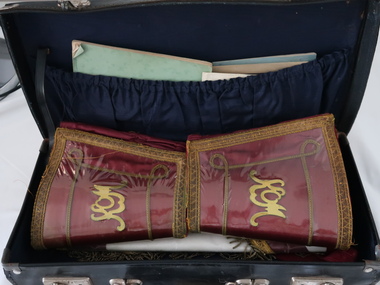
... world record of 78 new members initiated and a world record of over 100 pounds was raised. Another branch, No. 150 was opened in Mt Beauty. The Bogong and Mt Beauty lodges combined in 1948 and organised a Christmas treat for all children of the State Electricity Commission of Victoria working on the Kiewa Hydro Electric Scheme. Historical: The Bogong R.A.O.B. was formed circa Sept. 1946 and the Mt Beauty R.A.O.B. in 1948. It was a popular organisation in Bogong and then in Mt Beauty during the construction of the K.H.E.S. This club ...Originated in the United Kingdom in 1822 with a motto "No man Is At All Times Wise" and a maxim of "Justice, Truth and Philanthropy". A branch of the Royal Antediluvian Order of Buffaloes was formed at Bogong by Grand Lodge Officers from Melbourne and other members. The ceremony was held at Lewis Camp Mess (Kiewa Hydro Electric Scheme) with a world record of 78 new members initiated and a world record of over 100 pounds was raised. Another branch, No. 150 was opened in Mt Beauty. The Bogong and Mt Beauty lodges combined in 1948 and organised a Christmas treat for all children of the State Electricity Commission of Victoria working on the Kiewa Hydro Electric Scheme.Historical: The Bogong R.A.O.B. was formed circa Sept. 1946 and the Mt Beauty R.A.O.B. in 1948. It was a popular organisation in Bogong and then in Mt Beauty during the construction of the K.H.E.S. This club shows how important social clubs were in making up part of the community thus making it socially historic as well. It was a voluntary charitable organisation with a complicated ceremonial tradition and enjoyed by its participants. The donor, Brian William John Bourke was a cook at the pub and other places around the town. He had lived in the area since the 1950s and passed away 2019 and is buried at Tawonga Cemetery.Small brown leather case with attached handle and sliding clips on each side. The corners are reinforced with steel.The hinge appears to be stitched on and is held by an attached leather strap on the right side. Inside: the lid has a material open gathered pocket holding 4 small books and 4 thin booklets / papers. The case holds 2 large leather red and gold cuffs, 1 red with gold decoration apron, 1 red ribboned necklace with a personal badge and 1 of the lodge and 2 short ribbons (one green and 1 blue) with badges attached including the Mt Beauty badge on horns. 1 cardboard roll with B W J Bourke / Mt Beauty on the outside and 4 certificates rolled inside. These are dated 1964, 1970, 1974, 1974 . See also KVHS 0084, KVHS 0945, KVHS 1441 Brian William John Bourkeroyal antediluvian order of buffaloes, bogong, mt beauty, charitable organisation, lewis camp mess, r.a.o.b. -
 Kiewa Valley Historical Society
R.A.O.B. Members' Board
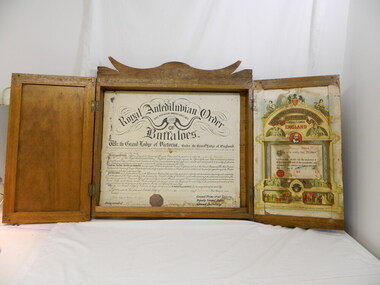
... world record of over 100 pounds was raised. Another branch, No. 150, was opened in Mt Beauty. The Bogong and Mt Beauty lodges combined in 1948 and organised a Christmas treat for all children of the State Electricity Commission of Victoria working on the Kiewa Hydro Electric Scheme. Historical: The Bogong R.A.O.B. was formed circa Sept. 1946 and the Mt Beauty R.A.O.B. in 1948. The Members Board, the 78 members initiated and the money raise indicate that it was a popular organisation in Bogong and then in Mt Beauty during the construction of the Kiewa Hydro Electric Scheme. This club ...Originated in the United Kingdom in 1822 with a motto "No Man Is At All Times Wise" and a maxim of "Justice, Truth and Philanthropy". A branch of the Royal Antediluvian Order of Buffaloes was formed at Bogong by Grand Lodge Officers from Melbourne and other members. The ceremony was held at Lewis Camp Mess (Kiewa Hydro Electric Scheme) with a world record of 78 new members initiated and a world record of over 100 pounds was raised. Another branch, No. 150, was opened in Mt Beauty. The Bogong and Mt Beauty lodges combined in 1948 and organised a Christmas treat for all children of the State Electricity Commission of Victoria working on the Kiewa Hydro Electric Scheme.Historical: The Bogong R.A.O.B. was formed circa Sept. 1946 and the Mt Beauty R.A.O.B. in 1948. The Members Board, the 78 members initiated and the money raise indicate that it was a popular organisation in Bogong and then in Mt Beauty during the construction of the Kiewa Hydro Electric Scheme. This club also shows how important social clubs were in making up part of the community thus making it socially historic as well. This board has good interpretive capacity as it tells the story of this club which was important to the community at the time. Large hollow wooden box with 2 wooden doors at the front that open out the from centre to a hollow box. Attached to the front of the box, at the top, is a wooden decoration with curved edges along the top. In the centre of this are the letters R.A.O.B.- the letters having been carved out of the wood and then filled with a different wood. Both doors have steel attachments and a locked padlock hangs on the door on the left. Inside the box is a white paper sign with black writing backed onto masonite. Inside the right hand side door a coloured paper sign is attached."R.A.O.B." top centre of box. "Royal Antediluvian Order of Buffaloes" etc. on black and white sign inside box. "Mt Beauty Lodge No. 150. This is to certify that Brother (blank) initiated into ...on 19th March 1949 ....signed by Chas / Chris A. Angus, Secretary" on coloured paper inside right hand side door.royal antediluvian order of buffaloes. bogong. mt beauty. charitable organisation. kiewa hydro electric scheme. lewis camp mess, clubs, societies -
 Bendigo Historical Society Inc.
Document - CZECH PHILHARMONIC ORCHESTRA
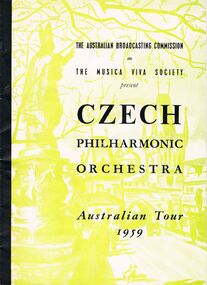
... Clubs, 12'' LP Beethoven etc. Alfred Nott Pty. Ltd. H S Harvey, E Goetz, Opticians. Georges, shoes. Ernest Hiller, tailored suits. Philips Magnalux Television. TAA the nation's jet line. Cyclax, make-up and beauty preparations. Grutzner & Cartly Pty. Ltd. Furs. BNS Nylon - British Nylon Spinners (Australia) Pty. Ltd. Carinia Records - Czech Philharmonic Orchestra with World...Clubs, 12'' LP Beethoven etc. Alfred Nott Pty. Ltd. H S Harvey, E Goetz, Opticians. Georges, shoes. Ernest Hiller, tailored suits. Philips Magnalux Television. TAA the nation's jet line. Cyclax, make-up and beauty preparations. Grutzner & Cartly Pty. Ltd. Furs. BNS Nylon - British Nylon Spinners (Australia) Pty. Ltd. Carinia Records - Czech Philharmonic Orchestra with World ...Czech Philharmonic Orchestra, Melbourne Town Hall. Australian Tour 1959. The first overseas symphony orchestra to visit this country. The Czech Philharmonic is one of the world's leading orchestras. It has s 60-year-old history which is backed by the rich musical traditions of its country. The Australian Broadcasting Commission in conjunction with the Musica Viva Society of Australia proudly presents the Czech Philharmonic Orchestra. Conductor: Ladislav Slovak Concertmaster: Bretislav Ludvik. Saturday, October 3, Monday, October 5. Czech Philharmonic Orchestra, article giving history of Orchestra from 1896 in Prague, photo of orchestra included. Ladislav Slovak, small article describing his work history, includes photograph. Programme. Analytical Notes. Musica Viva Society of Australia. Registered Office: 26 Paling's Building, Ash St., Sydney. President: Hon. Mr. Justice B P Macfarlan, Hon. Secretary: C J Berg, Hon. Treasurer: J B Elder, Manager: Regina Ridge. Victoria Branch: Registered Office: 5th Floor, 300 Lt. Collins St., Melbourne, C.1. President: F G Nicholls, Hon. Secretary: I G Spira, Hon. Treasurer: A Teague. Australian Broadcasting Commission. Chairman: Sir Richard Boyer, K.B.E., M.A. Vice-Chairman: E R Dawes, ESQ., C.M.G. Sir John Medley, KT., D.C.L., M.A. The Hon. Dame Enid Lyons, G.B.E. Mrs. G L Byth, O.B.E., B.A. A G Lowndes, M.Sc. H B Halvorsen, F.C.A., F.C.I.S. General Manager: Charles Moses, C.B.E. Manager for Victoria: Ewart Chapple. Concert Manager for Victoria: Ray Humphrey. Advertisements: AWA - Amalgamated Wireless (Australasia) Limited. Stereophonic Radiolagram. Philips Electrical Industries Pty Ltd. Fontana - Karel Ancerl recordings. The Ace of Clubs, 12'' LP Beethoven etc. Alfred Nott Pty. Ltd. H S Harvey, E Goetz, Opticians. Georges, shoes. Ernest Hiller, tailored suits. Philips Magnalux Television. TAA the nation's jet line. Cyclax, make-up and beauty preparations. Grutzner & Cartly Pty. Ltd. Furs. BNS Nylon - British Nylon Spinners (Australia) Pty. Ltd. Carinia Records - Czech Philharmonic Orchestra with World Famous Soloists now for the first time in Australia on High Fidelity Recordings. Suttons Pty. Ltd. 'The House of Music', you are cordially invited to inspect the fine Petrof pianos. RCA Records - recordings of Jan Peerce. Scala Record Import Co. Czech recordings. Boosey & Hawks (Australia) Pty. Ltd., Music and Books on Music. GMH - General Motors - Holden's Limited. Country Club Tailored by Buckwalter - Quiet Tone Sports Shirts. Allan's, Fine Pianos.entertainment, music, classical -
Bendigo Historical Society Inc.
Document - History of the Eaglehawk Croquet Club 1909 to 2003
... Club. There are no records for the years 1910-1942, but the clubhouse was unlined with no electricity or water. During World...Club. There are no records for the years 1910-1942, but the clubhouse was unlined with no electricity or water. During World ...The Eaglehawk Croquet Club was founded in 1909, in premises vacated by the Eaglehawk Bowling Club. There are no records for the years 1910-1942, but the clubhouse was unlined with no electricity or water. During World War II memberships dropped to just 7 members, however between 1943/46 membership increased to 23. Electricity was connected to the Clubhouse in 1947. During the years 1955-58 the club rooms were rebuilt and enlarged. 1959/63 Life Memberships were presented and the club celebrated its 50th birthday with sister clubs and past members. Golf Croquet was introduced in 1975 and was played on Wednesdays (as is still the case today). The club celebrated its 90th birthday with the oldest member at that time - Nell Mitchell- cutting the cake and a stained glass window was also unveiled. We play Association, Golf Croquet and Golf Croquet Pennant and golf croquet membership is increasing.History of the Eaglehawk Croquet Club 1909 to 2003 - 51 pages of printed history. Includes office bearers, referees and officials, and extensive notes.history, bendigo, chinese, eaglehawk croquet club -
 Warrnambool and District Historical Society Inc.
Booklet, The Dennington Factory Looking back, 1907-2005, September 2005
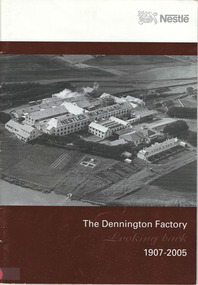
... records in brief the history of the Nestles Factory at Dennington, Victoria from its opening in 1911 to its sale in 2005 to Fonterra Milk, Australia and the closing of the Nestles association with the Warrnambool district. The factory initially produced Sweetened Condensed Milk and by 1918 was the largest Milk Condensery in the world. In later years there were productions of cheese, Sunshine Powdered Milk and Nescafe Instant Coffee. Six two-storey residences were built for employees and there were twice-daily trains from Warrnambool to the factory and back for many years. The Nestanglo Social and Sports Club...records in brief the history of the Nestles Factory at Dennington, Victoria from its opening in 1911 to its sale in 2005 to Fonterra Milk, Australia and the closing of the Nestles association with the Warrnambool district. The factory initially produced Sweetened Condensed Milk and by 1918 was the largest Milk Condensery in the world. In later years there were productions of cheese, Sunshine Powdered Milk and Nescafe Instant Coffee. Six two-storey residences were built for employees and there were twice-daily trains from Warrnambool to the factory and back for many years. The Nestanglo Social and Sports Club ...This booklet records in brief the history of the Nestles Factory at Dennington, Victoria from its opening in 1911 to its sale in 2005 to Fonterra Milk, Australia and the closing of the Nestles association with the Warrnambool district. The factory initially produced Sweetened Condensed Milk and by 1918 was the largest Milk Condensery in the world. In later years there were productions of cheese, Sunshine Powdered Milk and Nescafe Instant Coffee. Six two-storey residences were built for employees and there were twice-daily trains from Warrnambool to the factory and back for many years. The Nestanglo Social and Sports Club, established in 1923, was important in the community life of Dennington and beyond. This booklet will be of great use as it gives a very good summary of the history of Nestles Factory at Dennington and reveals how important the factory was to the Warrnambool region and to Australia.This is a paperback booklet of 37 pages. The cover is white with a black and white photograph of the Nestles Factory (Alex Wilkins photograph) set in a brown background. The pages contain printed material and photographs and blank pages at the back for autographs. The pages are stapled.Front cover: Nestle (with logo), The Dennington Factory, Looking Back, 1907-2005 Back cover: Nestle (with logo) dennington nestles factory,, dennington, milk condensery, sweetened condensed milk manufacturing -
 Bendigo Historical Society Inc.
Book - LYDIA CHANCELLOR COLLECTION: AUSTRALIAN COMFORTS FUND RECORD OF ATTENDANCE, 1944-46
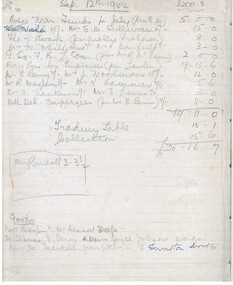
... ORGANIZATION Club/society aust. comfort fund Lydia Chancellor collection Australian Comforts Fund Golden Square Branch World War 11 War Lydia Chancellor Blue and green hard covered book. Contains handwritten entries on records ...Blue and green hard covered book. Contains handwritten entries on records of attendance at meetings of Australian Comforts Fund (Victorian Division) in years 1944 - 1946. Also in printed form a leaflet containing an address by H.H. Krohn, Hon. Administrator, Australian Comforts Fund )Victorian Division), at Annual Meeting 27/3/45 plus miscellaneous paper jottings.Lydia Chancellororganization, club/society, aust. comfort fund, lydia chancellor, collection, australian comforts fund golden square branch, world war 11, war -
 Bendigo Historical Society Inc.
Document - LYDIA CHANCELLOR COLLECTION: RECORD OF ATTENDANCE, 1941 - 1946
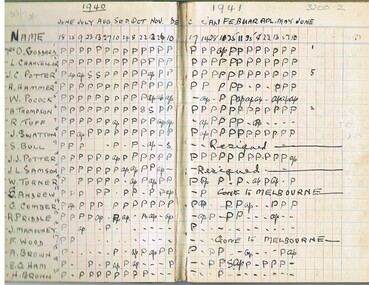
... Club/society australian comfort fund Australian Comfort Fund (? ) Lydia Chancellor Collection Bendigo World War 2 Lydia Chancellor Document: blue hard cover book with buff spine, contains entries of record of attendance at meetings. ( Australian Comfort Fund ? ...Document: blue hard cover book with buff spine, contains entries of record of attendance at meetings. ( Australian Comfort Fund ? )Lydia Chancellororganization, club/society, australian comfort fund, australian comfort fund (? ) lydia chancellor collection, bendigo, world war 2 -
Ithacan Historical Society
Administrative record, IPS Minute Book, July 1944 - April 1955
... The minutes recorded provide an insight into the decisions of the Executive Committee and philanthropic activities of the club and its activities within the Ithacan community in Melbourne during the closing years of World War II and the immediate post-war years. ithaca ww2 A foolscap size bound minute book with leather binding on the spine and brown leather corners. ...The minute book is a record of the meetings of the Executive Committee of the Ithacan Philanthropic Society from July 1944 to April 1955. The minutes are written in Greek. The minutes recorded provide an insight into the decisions of the Executive Committee and philanthropic activities of the club and its activities within the Ithacan community in Melbourne during the closing years of World War II and the immediate post-war years. A foolscap size bound minute book with leather binding on the spine and brown leather corners. There is green cloth on the covers with blue marbled paper on the inside covers and white cotton tape reinforcing the inside of the cover. The pages on the outside edges are red. Number 3 has been written in black on the front and there are two white labels stuck on the front cover. ithaca, ww2 -
 Australian Gliding Museum
Machine - Glider – Sailplane, 1963
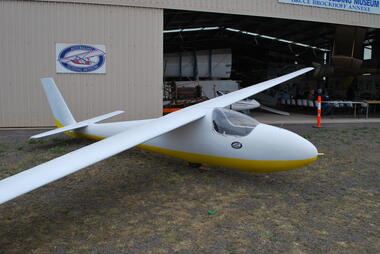
... recorded. From May 1999 until transfer to the Australian Gliding Museum in May 2011 it apparently was not flown. Aggregate airtime hours for the glider stand at 2702 hours 53 minutes. It has been launched 4569 times. A good example of a Schneider ES59 sailplane from the 1960s. This type is of note because it was the first Australian designed and built sailplane to be used in a world gliding competition (Jack Iggulden in Argentina in 1963). australian gliding glider sailplane schneider es59 arrow darling downs soaring club wollongong gliding club ron geake Plate in cockpit with details of manufacturer states; manufactured by E. ...This aircraft is one of 9 single seat ES 59 advanced club sailplanes manufactured by Edmund Schneider Pty Ltd in the 1960s. It was first flown in August 1963 and delivered to the Darling Downs Soaring Club at Toowoomba Queensland. At that Club it had 2603 flights and recorded a total airtime of 1475 hours. In addition to many local circuits and soaring and cross country flying, it was used at gliding competitions, including Nationals at Benalla in December 1964, State Championships at Oakey in April 1965, at Warwick in April 1966, and at (Inverell?) in March 1967. On at least 15 occasions flight times in excess of 5 hours duration were achieved. On 5 October 1970, the glider had a new life when it was relocated to Wollongong in New South Wales. It recorded 1927 flights with a total airtime of 1179 hours at the club between October 1970 and June 1988. Competition appearances included the State Championships held at Forbes in January 1972. Places away from Wollongong where the glider was launched include Cootamundra, Wagga, Temora, Marulon, Narromine, Leeton, Nowra, Goulburn, Horsham, Greenthorpe. On 15 June 1988 it was transferred to Ron Geake who transported it to Warrego in Northern Territory (flown once at Alice Springs), and then to Gympie in Queensland where it was flown about 20 times by the end of 1995. It was also flown on a small number of occasions at Forbes in New South Wales in 1996 and 1997. During 1998 and 1999 the glider was sparsely used (9 flights) at locations that have not been recorded. From May 1999 until transfer to the Australian Gliding Museum in May 2011 it apparently was not flown. Aggregate airtime hours for the glider stand at 2702 hours 53 minutes. It has been launched 4569 times. A good example of a Schneider ES59 sailplane from the 1960s. This type is of note because it was the first Australian designed and built sailplane to be used in a world gliding competition (Jack Iggulden in Argentina in 1963). This Schneider ES59 Arrow is a single seat wooden sailplane with one piece wing. The instruments are not present except for altimeter. Fin and rudder are of swept back design. Colour scheme is white with lemon yellow fuselage underbelly. The aircraft came to the museum on an open trailer that had been designed to carry the one piece wing. Plate in cockpit with details of manufacturer states; manufactured by E. Schneider Ltd, Adelaide SA; Type ES 59; Serial Number 62; Date August 1963.australian gliding, glider, sailplane, schneider, es59, arrow, darling downs soaring club, wollongong gliding club, ron geake -
 Australian Gliding Museum
Machine - Glider – Sailplane, 1963
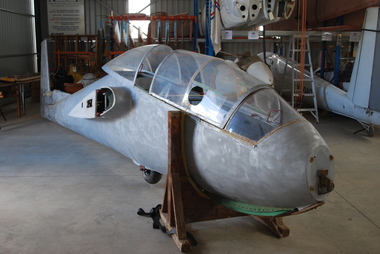
... world gliding records were set in the 1950s and 1960s in Bocian gliders. The Museum’s example is a type D test flown in Poland on 3 and 4 April 1963. It was imported into Australia in September 1963 by Austerserve Pty Ltd. The first owner was the Alice Springs Gliding Club...world gliding records were set in the 1950s and 1960s in Bocian gliders. The Museum’s example is a type D test flown in Poland on 3 and 4 April 1963. It was imported into Australia in September 1963 by Austerserve Pty Ltd. The first owner was the Alice Springs Gliding Club ...The Bocian is a versatile training sailplane that first flew in 1952. The type has been modified in several respects over the course of production by SZD (tailplane and rudder in particular). About 600 have been built; many for export to 27 countries (including Australia). The aerobatic capability and fine performance (best glide ratio of 26) has enabled the Bocian to be used to train competition pilots as well as those of lesser experience. Many world gliding records were set in the 1950s and 1960s in Bocian gliders. The Museum’s example is a type D test flown in Poland on 3 and 4 April 1963. It was imported into Australia in September 1963 by Austerserve Pty Ltd. The first owner was the Alice Springs Gliding Club and the glider had name “Cumulus” painted on the side of the fuselage (since removed). The glider had recorded 726 hours 46 minutes flying time from 2138 launches as at July 1967 when it was transferred to the Darwin Gliding Club. It appears that the glider was damaged in June 1968. The substantial repairs to the fuselage, both wings and tailplane and other minor repairs were completed on 13 October 1968. The glider continued flying with the Darwin Gliding Club until August 1969 at which time the service to that club amounted to 59 hours 7 minutes flying time from 348 flights. Between August 1969 and August 1976 no flights are recorded in the logbook. It is understood that on its last flight at Bachelor, south of Darwin in the Northern Territory (August 1969) it was severely damaged when it crashed after spinning while being auto-tow launched (although this is not expressly mentioned in the logbook). Reg Hancock purchased the damaged glider and rebuilt the port wing and restored it to airworthy condition (September 1976). It was then transferred to Colac, Victoria, and used by the Colac Gliding Group at the Yeo airfield until February 1981, adding another 153 hours from 403 flights to the glider’s record. After airworthy inspection in September 1982 the glider was used by the Geelong Gliding Club until 1983 (logbook details not held). The 20 year survey was then due and the glider fell out of service. In the course of the most recent restoration attempt it was discovered that the glue used in construction had deteriorated and that it was no longer feasible to bring it back to an airworthy condition. Subject to restoration, this exhibit may be representative of the 1950s - 1960s Bocian two seat sailplane typeThis exhibit is a large two seat glider /sailplane of wood and fabric construction. All components are present with the exception of instruments. However, at the time that the aircraft was transferred to the Museum it had been taken apart for major restoration work. As received it is stripped of the top coats of paint and a number of components (including, amongst others, tip fairings, nose cone and cockpit elements) that were removed for facilitating the repair process. The glider, serial number 803, was registered as VH-GNLaustralian gliding, glider, sailplane, bocian, cumulus, alice springs gliding club, darwin gliding club, colac gliding group, geelong gliding club, hancock -
 Sunshine and District Historical Society Incorporated
Memorabilia - Sunshine Ladies Bowling Club Pennants
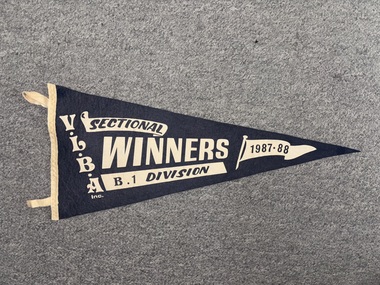
... Club was a key part of Sunshine’s community sporting life, founded to give local women their own space in the traditionally male-dominated world of bowls. It operated alongside the Sunshine Bowling Club and other local associations, reflecting the growth of women’s sport in Victoria during the mid‑20th century. The club was successful in winning many pennants throughout the years. The club was formed in 1926 and folded in the early 1990's, and these pennants were donated alongside with many of the club's business records...Club was a key part of Sunshine’s community sporting life, founded to give local women their own space in the traditionally male-dominated world of bowls. It operated alongside the Sunshine Bowling Club and other local associations, reflecting the growth of women’s sport in Victoria during the mid‑20th century. The club was successful in winning many pennants throughout the years. The club was formed in 1926 and folded in the early 1990's, and these pennants were donated alongside with many of the club's business records ...The Sunshine Ladies Bowling Club was a key part of Sunshine’s community sporting life, founded to give local women their own space in the traditionally male-dominated world of bowls. It operated alongside the Sunshine Bowling Club and other local associations, reflecting the growth of women’s sport in Victoria during the mid‑20th century. The club was successful in winning many pennants throughout the years. The club was formed in 1926 and folded in the early 1990's, and these pennants were donated alongside with many of the club's business records to the Sunshine and District Historical Society.Collection of pennants won by the Sunshine Ladies Bowling Club1735.01 - Sunshine Ladies Bowling Club - Sectional Winners Division B1 1987 - 88 Pennant.jpg 1735.02 - Sunshine Ladies Bowling Club - Sectional Winners Division B1 1985 - 86 Pennant.jpg 1735.03 - Sunshine Ladies Bowling Club - Section Winner Division 4 1987 - 88 Pennant.jpg 1735.04 - Sunshine Ladies Bowling Club - Section Winner Division 5 1987 - 88 Pennant.jpg 1735.05 - Sunshine Ladies Bowling Club - Section Runner Up Division 5 1987 - 88 Pennant.jpg 1735.06 - Sunshine Ladies Bowling Club - Section Winner Division 6 1984 - 85 Pennant.jpg 1735.07 - Sunshine Ladies Bowling Club - Section Runner Up Division 5 1984 - 85 Pennant.jpg 1735.08 - Sunshine Ladies Bowling Club - Section Winner Division B7 1978 - 79 Pennant.jpg 1735.09 - Sunshine Ladies Bowling Club - Section Winner Division B1 1978 - 79 Pennant.jpg 1735.10 - Sunshine Ladies Bowling Club - Runners Up B1 Division 1978 - 79 Pennant.jpg 1735.11 - Sunshine Ladies Bowling Club - Section Winner Division 8 1981 - 82 Pennant.jpg 1735.12 - Sunshine Ladies Bowling Club - Section Winner Division C2 1982 - 83 Pennant.jpg 1735.13 - Sunshine Ladies Bowling Club - Section Winner Division 2 1981 - 82 Pennant.jpg 1735.14 - Sunshine Ladies Bowling Club - Section Winner Division C1 1957 - 58 Pennant.jpg 1735.15 - Sunshine Ladies Bowling Club - Section Winner Division D1 1960 - 61 Pennant.jpg 1735.16 - Sunshine Ladies Bowling Club - Section Winner Division 7 1953 - 54 Pennant.jpg 1735.17 - Sunshine Ladies Bowling Club - Section Winner Division 3 1954 - 55 Pennant.jpg 1735.18 - Sunshine Ladies Bowling Club - Section Winner Division B3 1955 - 56 Pennant.jpg sunshine ladies bowling club, lawn bowls -
 Sunshine and District Historical Society Incorporated
Memorabilia - Sunshine Ladies Bowling Club Banners
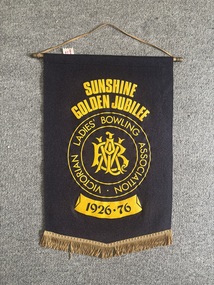
... Club was a key part of Sunshine’s community sporting life, founded to give local women their own space in the traditionally male-dominated world of bowls. It operated alongside the Sunshine Bowling Club and other local associations, reflecting the growth of women’s sport in Victoria during the mid‑20th century. The club was formed in 1926 and folded in the early 1990's, and these banners were donated alongside with many of the club's business records...Club was a key part of Sunshine’s community sporting life, founded to give local women their own space in the traditionally male-dominated world of bowls. It operated alongside the Sunshine Bowling Club and other local associations, reflecting the growth of women’s sport in Victoria during the mid‑20th century. The club was formed in 1926 and folded in the early 1990's, and these banners were donated alongside with many of the club's business records ...The Sunshine Ladies Bowling Club was a key part of Sunshine’s community sporting life, founded to give local women their own space in the traditionally male-dominated world of bowls. It operated alongside the Sunshine Bowling Club and other local associations, reflecting the growth of women’s sport in Victoria during the mid‑20th century. The club was formed in 1926 and folded in the early 1990's, and these banners were donated alongside with many of the club's business records to the Sunshine and District Historical Society.Collection of banners from the Sunshine Ladies Bowling Club1729.01 - Victorian Ladies' Bowling Association Banners - Sunshine Golden Jubilee 1926 - 76.jpg 1729.02 - Victorian Ladies' Bowling Association Banners - Sunshine Diamond Jubilee 1926 - 86.jpg 1729.03 - Victorian Ladies' Bowling Association Banners - Victorian Ladies' Bowling Association Official Visit 1956 - 57.jpg 1729.04 - Victorian Ladies' Bowling Association Banners - Victorian Ladies' Bowling Association Official Visit 1962 - 63.jpg 1729.05 - Victorian Ladies' Bowling Association Banners - Victorian Ladies' Bowling Association Official Visit 1969 - 70.jpg sunshine ladies bowling club, lawn bowls
