
Showing 32 items matching "world war two queensland"
-
 Returned Nurses RSL Sub-branch
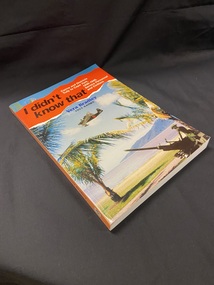
Book - Illustrated paperback book, Vera Bradley, I didn't know that: Cairns and Districts, Tully to Cape York, 1939-1946, Service Personnel and Civilians, 1995
... World War Two Queensland...World War Two Queensland World War Two Pacific Area WW@ WWII Vera Bradley This compilation of material relating to the history of North Queensland during WWII focuses in particular on the years 1941-43. ...This compilation of material relating to the history of North Queensland during WWII focuses in particular on the years 1941-43. Includes a wide range of oral histories and contemporary documents. Lavishly illustrated. Includes references and an index. [State Library Queensland]Large colourful paperback book with an image of two soldiers manning a weapon on a beach under palm trees, in the blue sky above is a Japanese military plane. There is a red panel across the top that has been made to look like a torn piece of paper with the title printed across it in black and white text.non-fictionThis compilation of material relating to the history of North Queensland during WWII focuses in particular on the years 1941-43. Includes a wide range of oral histories and contemporary documents. Lavishly illustrated. Includes references and an index. [State Library Queensland]world war two queensland, world war two pacific area, ww@, wwii, vera bradley -
 Federation University Historical Collection
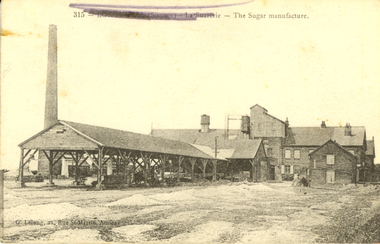
Postcard, G. Lelong, The Sugar Manufacture, Somme, France, c1917, c1917
... Queensland enterprise. In the meantime he would visit his married daughter and [his] two sons, who had previously settled in Queensland. With him on board was his widowed sister Mrs Coghill who had also accepted an invitation to go north. News of the shipwreck, means of communication being slow, did not reach Korumburra for nearly a week. By then all hope had been abandoned for the missing. Relations and friends thronged the Melbourne shipping office, but the answer was always the same - All passengers unaccounted for were presumed drowned. somme la suererie chatham family collection amiens france World War ...This postcard was sent from France during World War One WW1 to Violet Holmes [mother and aunty of other WW1 soldiers], by the son of a neighbouring Ascot Tourello District Family, the Wrigley Family. Violet inherited "Sauchieburn" an Ascot property on the death of her husband William Holmes in 1914. On her death this property was to be left to their 4 children and administered by a relative till the youngest child turned 27. As young boys, Violet's husband William, and his brother Henry, lived with their Aunt Catherine Coghill and Uncle William Coghill at ‘Sauchieburn’ Ascot. The Coghills had no children of their own. He and his brother Edward started a stock and station business at Clunes. Henry and Violet Holmes subsequently inherited "Sauchieburn" from Catherine (nee Holmes) and William Coghill, direct descendants of the Coghills Creek, Ascot, Tourello pioneer settler Captain William Coghill [Jane Dyer, May 2024] Catherine and her brother Edward Carter Holmes drowned at sea.This is an extract from the Korumburra Times, Wednesday June 6, 1956: The fated travellers wrecked off N.S.W. ‘On May 29th, 1886 in bright moonlight the Ly-e-Moon, the pride of the Australian coastal fleet, broke her back on the treacherous rocks of Green Cape, off the NSW coast. Eighty souls perished within range of the beacon rays of the lighthouse, including representatives of the earliest families ever to settle in Poowong. The passengers. On the main deck, Mr Edward Holmes, a Poowong grazier and former owner of ‘Wombalano’. He had sold this property with the object of going to Queensland and settling there. The proceeds of sale amounting to 1,200 pounds in gold sovereigns were under lock and key in the Purser's Office. Mr Holmes, although advanced in years, had unformed plans to invest his money in some Queensland enterprise. In the meantime he would visit his married daughter and [his] two sons, who had previously settled in Queensland. With him on board was his widowed sister Mrs Coghill who had also accepted an invitation to go north. News of the shipwreck, means of communication being slow, did not reach Korumburra for nearly a week. By then all hope had been abandoned for the missing. Relations and friends thronged the Melbourne shipping office, but the answer was always the same - All passengers unaccounted for were presumed drowned. Black and white postcard of a sugar refinery in The Somme, France. The name of the town has been scrubbed out in purple pencil by a censor during World War One. The back of the card is written on in pencil,Written on back of card: Dear Violet, received photos and letters and thank you for forwarding same. Are we having lovely spell of weather. This morning is quite warm and pleasant. The photo of you all standing in front of your house is a good one and you all look to be getting enough to eat. Mother looks as if she it getting stronger after her severe illness. Your concert party will be broken up through the Vale girls leaving but you should have no difficulty in finding volunteers to fill the ranks. By all of your letters you are all looking forward to the day we return 9as we are). I wouldn't like to bet too much that we would be home by this time next year [ ? ] by the way fritz is fighting lately he would very much like to get [peace?] I think we will give him all he wants this summer. J. Waller was here last night is looking well. With best wished to you all. I am sincerely. [W.Wrigbee? Wrigley]somme, la suererie, chatham family collection, amiens, france, world war 1, postcard, ly-ee-moon, william coghill junior, ascot victoria, pioneers of ascot, shipwreck -
 Flagstaff Hill Maritime Museum and Village
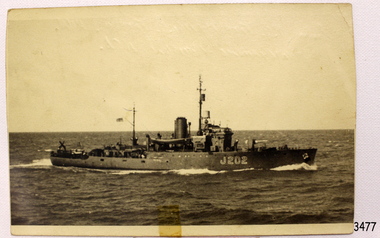
Photograph - Vessel, Steam Ship, H.M.A.S. Warrnambool J202, Between 1941-1947
... World War II, the ship was at Timor. It performed mine clearance work around the Solomon Islands and New Guinea after the war. On 13th September 1947 the ship was sent to lead a flotilla at the Great Barrier Reef, off the Queensland coast. The mission was to clear the defensive British mines that were laid during1941-43 to protect Australia’s boarders. The HMAS Warrnambool hit a mine near Cockburn Reef, exploded and sank shortly afterwards. One of the 70 or so men on board was killed at the time and thirty-two...World War II, the ship was at Timor. It performed mine clearance work around the Solomon Islands and New Guinea after the war. On 13th September 1947 the ship was sent to lead a flotilla at the Great Barrier Reef, off the Queensland coast. The mission was to clear the defensive British mines that were laid during1941-43 to protect Australia’s boarders. The HMAS Warrnambool hit a mine near Cockburn Reef, exploded and sank shortly afterwards. One of the 70 or so men on board was killed at the time and thirty-two ...This photograph is connected to the first HMAS Warrnambool (J202), which was one of 60 Bathurst class corvette vessels built during World War II by Mort's Dock & Engineering Co Ltd of Sydney under the commission of the Royal Australian Navy (RAN). It was the namesake of the City of Warrnambool in Victoria. The armed minesweeper was 57 metres long and could had a complement of 85 personnel. Its armament included 1 × 4 inch Mk XIX gun, 1 × 40 mm Bofors AA gun (installed later), 3 × 20 mm Oerlikon guns (1 later removed), machine guns and depth charge chutes and throwers. It was launched in Sydney in May, 1941. The HMAS Warrnambool began service with patrols off Bass Strait in 1941. In December the ship docked in Warrnambool Harbour and the crew marched in a parade along Timor Street. The ship’s crew received a donation of 110 books from the Warrnambool Patriotic Fund, and a plaque of the City of Warrnambool’s Coat of Arms presented by the Mayor, Cr. John R Astbury. In September 1942 a Dutch East Indies family, Samuel and Annie Jacob and seven of their eight children, was rescued by the HMAS Warrnambool and evacuated to Darwin. The family settled in Melbourne, then in 1944 Samuel tragically died. After the war ended the family was threatened with deportation under Australia’s Immigration Restriction Act 1901 (known also as the White Australia policy). Annie married her landlord, John O’Keefe but was still issued a deportation order in 1949. The family appealed to the High Court and the case became famous for being the first successful legal challenge to the Act. The HMAS Warrnambool was in Darwin during the time it was bombed, attacked by the Japanese while rescuing 73 crew from a merchant vessel that had also been attacked. The ship was involved in several other rescues and carried troops to New Guinea. Other events included escort and patrol duties on Australia's east coast, then at Fremantle and back to Darwin. When the Japanese surrendered on September 11, 1945, at the end of World War II, the ship was at Timor. It performed mine clearance work around the Solomon Islands and New Guinea after the war. On 13th September 1947 the ship was sent to lead a flotilla at the Great Barrier Reef, off the Queensland coast. The mission was to clear the defensive British mines that were laid during1941-43 to protect Australia’s boarders. The HMAS Warrnambool hit a mine near Cockburn Reef, exploded and sank shortly afterwards. One of the 70 or so men on board was killed at the time and thirty-two men were badly injured; three of these also lost their lives. The four deceased were Victorian seamen. The wounded men were transferred by boats to the nearby HMAS Swan II, where the Swan’s and the Warrnambool’s doctors cared for them. The HMAS Swan II took the survivors to Cairns, and from there the men were flown by RAAF to either Brisbane or Sydney hospitals. The HMAS Warrnambool was the only RAN ship to be sunk by a mine, and the four who lost their livers were the last naval casualties from World War II. The ship’s wartime service was recognised by three honours. In May 1948 a number of items were recovered by Navy divers from the wreck of HMAS Warrnambool. The items included the ship’s bell (inscribed HMAS Warrnambool 1941) and the round plaque with the Seal of the Warrnambool City Council. In 1949 the plaque was returned to the Council, and the bell was donated to the Australian War Memorial. Further objects were recovered by the new owners of the wreck, Southern Cross Diving and Salvage, in 1972-75. A memorial plaque, honouring the memories of all those who served on the HMAS Warrnambool until is sunk on September 13 1947, was erected in Warrnambool on September 13, 1995. NOTE: (1)- The second HMAS Warrnambool (FCPB204), also the namesake of the City of Warrnambool, was built in 1980 in Cairns, one of fifteen Fremantle Class Patrol Boats ordered by the RAN. It was just over 41 metres long with a compliment of 22 personnel. It patrolled Australia’s northern waters for illegal fishing vessels. This vessel was decommissioned in 2005. (2)- There was also a steam and sail ship named the S.S. Warrnambool, built in 1892 in London and broken up in 1926.This photograph is significant for its association with Royal Australian Navy and its vessel, HMAS Warrnambool (j202). The HMAS Warrnambool played a nationally significant role in overturning Australia’s Immigration Restriction Act 1901 (colloquially known as the White Australia policy). The ship rescued, and brought to Australia, Samuel and Annie Jacob and their family after they evacuated Dutch East India. The family was threatened with deportation and made the first successful appeal to High Court regarding that Act. The HMAS Warrnambool has - Local significance for being the namesake of the City of Warrnambool - Local significance, having docked in Warrnambool Harbour - Local significance, the crew having paraded in Timor Street, Warrnambool - State significance for its first patrol being in Bass Strait. - National significance, being present in Timor at the Japanese surrender - National significance as part of Australia’s defence force history, being one of only four Bathurst class corvettes lost while in Australian service, the only Bathurst class corvette lost after World War II, the only RAN vessel to be sunk by a mine, and associated with the last four Navy deaths of WWIIBlack and white photograph of vessel H.M.A.S. Warrnambool J202 on an open sea. The identifying number is painted on the hull. The ship is flying a white ensign. A lifeboat is suspended near the centre of the ship. Figures can be seen on deck. Hand written inscription on the reverse side. On ship's hull "J202" On reverse of photo "From P.O. FRED MATTHEWS. 23378. R.A.N." "MARIBYRNONG MAIDSTON RSL" "H.M.A.S. WARRNAMBOOL"flagstaff hill, warrnambool, shipwrecked-coast, flagstaff-hill, flagstaff-hill-maritime-museum, maritime-museum, shipwreck-coast, flagstaff-hill-maritime-village, photograph, h.m.a.s. warrnambool, maritime village, maritime museum, shipwreck coast, mort's dock & engineering co ltd, hmas warrnambool, hmas warrnambool i, hmas warrnambool j202, hmas swan ii, j202, world war ii, bathurst class corvette, royal australian navy, ran, sydney built ship, bass strait patrol, sea mine patrol, mine sweeper, mine clearance, navy divers, great barrier reef, cockburn reef, southern cross diving and salvage, warrnambool city council, cr j r astbury, mayor j r astbury, warrnambool patriotic fund, seal, coat of arms, ship’s bell, hmas warrnambool 1941, shipwreck by sea mine 1947, sea rescue, life saving, lifesaving, sinking ship, sunk ship, immigration restrictions act 1901, white australia policy, samuel and annie jacob, john o'keere, minesweeper -
 Australian Commando Association - Victoria
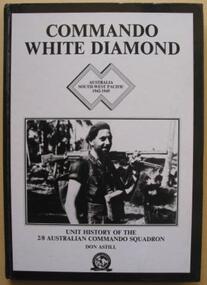
Book, Commando White Diamond: Unt History of the 2/8th Australian Commando Squadron
... World War II. Plastic protective cover over the book. The 2/8th Independent Company was formed at Wilson’s Promontory, Victoria, in July 1942 and travelled to Yandina, in Queensland, in September. While the other seven independent companies saw action in the islands off Australian and in New Guinea, the 2/8th spent most of the next two years based at Adelaide River, in the Northern Territory. ...The detailed history of the No.8 Independent Commando Company during World War II. Plastic protective cover over the book. The 2/8th Independent Company was formed at Wilson’s Promontory, Victoria, in July 1942 and travelled to Yandina, in Queensland, in September. While the other seven independent companies saw action in the islands off Australian and in New Guinea, the 2/8th spent most of the next two years based at Adelaide River, in the Northern Territory. While it was in the Territory, the independent companies underwent a series of reorganisations and the name of the 2/8th was changed from the 2/8th Independent Company to the 2/8th Cavalry (Commando) Squadron. This name was later simplified to just commando squadron. In July 1944, after years of waiting, the squadron left the Territory and sailed from Townsville to Lae, via Milne Bay. While at Lae, the squadron received an intake of 70 men from the 2/8th from the 2/3rd, 2/5th and 2/6th Cavalry (Commando) Squadrons, many of whom were veterans of the earlier New Guinea campaigns. Their experience was no doubt a useful reserve that would have been called upon during the 2/8th’s subsequent campaign in Bougainville. Others though, were able to implement some of their commando training when a small group from the 2/8th they made a secret landing on New Britain. Towards the end of the 1944 the 5th Division was preparing to make a landing at Jacquinot Bay in New Britain. Part of these preparations included landing a small group of officers from the division at Jacquinot Bay to make a secret reconnaissance of the potential landing site. As Jacquinot Bay was still in Japanese controlled territory, ‘C’ Troop from the 2/8th provided the protection for the reconnaissance party by establishing a position on the beach and by patrolling the surrounding country. Everything went well and the 5th Division later landed at Jacquinot Bay in November. The squadron too was on the move, and in October it sailed to Torokina, the main Australian base on Bougainville, where it joined the II Australian Corps. The campaign on Bougainville was dived into three areas, the Central, Northern and Southern Sectors. The 2/8th served in the latter two areas. The 2/8th made the first move of the Australian campaign in the Northern Sector, by patrolling from Torokina to Kuraio Mission and Amun once a week. The squadron did this from the second week of November unit the second week of December. The 2/8th was then transferred to the Southern Sector. The main battle for Bougainville was fought in the Southern Sector, as the 3rd Division advanced towards Buin – the main Japanese base on the island. As the division’s infantry brigades advanced along the coast, the 2/8th’s task was to protect their flank by conducting forward reconnaissance patrols, harassing the Japanese with raids and ambushes and conducting a form of guerrilla warfare. The squadron had a long campaign. For nine months, from the end of December until August 1945, the troopers were in action the whole time. After securing the Jaba River, they moved inland, first to Sovele Mission, then the villages of Opai, Nihero and Morokaimoro. They had reached Kilipaijino by the end of the war. Each village taken became a patrol base. Patrols were usually limited to two sections, although up to six sections could be operating at a time. Patrols generally lasted four to six days, but nine-day patrols were not unknown. The squadron collected and collated track information, terrain reports and located the enemy. Once patrols had gathered information, they were free to make a ‘strike’ against the Japanese by setting an ambush or taking a prisoner. These raids were very effective, as they forced the Japanese to deploy troops to their rear areas, removing men from the front created by the infantry. Following Japan’s surrender and the end of the war, the ranks of the squadron thinned quickly as men were discharged or were transferred to other units. For those who were left, the squadron returned to Australia at the end of December. In mid January 1946, at Liverpool, the 2/8th Commando Squadron was disbanded.non-fictionThe detailed history of the No.8 Independent Commando Company during World War II. Plastic protective cover over the book. The 2/8th Independent Company was formed at Wilson’s Promontory, Victoria, in July 1942 and travelled to Yandina, in Queensland, in September. While the other seven independent companies saw action in the islands off Australian and in New Guinea, the 2/8th spent most of the next two years based at Adelaide River, in the Northern Territory. While it was in the Territory, the independent companies underwent a series of reorganisations and the name of the 2/8th was changed from the 2/8th Independent Company to the 2/8th Cavalry (Commando) Squadron. This name was later simplified to just commando squadron. In July 1944, after years of waiting, the squadron left the Territory and sailed from Townsville to Lae, via Milne Bay. While at Lae, the squadron received an intake of 70 men from the 2/8th from the 2/3rd, 2/5th and 2/6th Cavalry (Commando) Squadrons, many of whom were veterans of the earlier New Guinea campaigns. Their experience was no doubt a useful reserve that would have been called upon during the 2/8th’s subsequent campaign in Bougainville. Others though, were able to implement some of their commando training when a small group from the 2/8th they made a secret landing on New Britain. Towards the end of the 1944 the 5th Division was preparing to make a landing at Jacquinot Bay in New Britain. Part of these preparations included landing a small group of officers from the division at Jacquinot Bay to make a secret reconnaissance of the potential landing site. As Jacquinot Bay was still in Japanese controlled territory, ‘C’ Troop from the 2/8th provided the protection for the reconnaissance party by establishing a position on the beach and by patrolling the surrounding country. Everything went well and the 5th Division later landed at Jacquinot Bay in November. The squadron too was on the move, and in October it sailed to Torokina, the main Australian base on Bougainville, where it joined the II Australian Corps. The campaign on Bougainville was dived into three areas, the Central, Northern and Southern Sectors. The 2/8th served in the latter two areas. The 2/8th made the first move of the Australian campaign in the Northern Sector, by patrolling from Torokina to Kuraio Mission and Amun once a week. The squadron did this from the second week of November unit the second week of December. The 2/8th was then transferred to the Southern Sector. The main battle for Bougainville was fought in the Southern Sector, as the 3rd Division advanced towards Buin – the main Japanese base on the island. As the division’s infantry brigades advanced along the coast, the 2/8th’s task was to protect their flank by conducting forward reconnaissance patrols, harassing the Japanese with raids and ambushes and conducting a form of guerrilla warfare. The squadron had a long campaign. For nine months, from the end of December until August 1945, the troopers were in action the whole time. After securing the Jaba River, they moved inland, first to Sovele Mission, then the villages of Opai, Nihero and Morokaimoro. They had reached Kilipaijino by the end of the war. Each village taken became a patrol base. Patrols were usually limited to two sections, although up to six sections could be operating at a time. Patrols generally lasted four to six days, but nine-day patrols were not unknown. The squadron collected and collated track information, terrain reports and located the enemy. Once patrols had gathered information, they were free to make a ‘strike’ against the Japanese by setting an ambush or taking a prisoner. These raids were very effective, as they forced the Japanese to deploy troops to their rear areas, removing men from the front created by the infantry. Following Japan’s surrender and the end of the war, the ranks of the squadron thinned quickly as men were discharged or were transferred to other units. For those who were left, the squadron returned to Australia at the end of December. In mid January 1946, at Liverpool, the 2/8th Commando Squadron was disbanded. -
 Bendigo Military Museum
Photograph - AUSTRALIAN CHINESE SERVICEMEN, WW1 & WW2, Bendigo & District RSL Club, WW1 & WW2
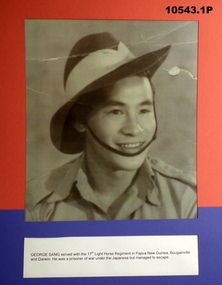
... World War 2 he served in the Air Training Corps. 3. “COLLIN YOUNG” shown here with his brother ELLIS, joined up in 1842 when he was seventeen and a half. He served in an artillery unit as an anti-tank gunner. With another artillery unit, he toured Queensland and New South Wales, then was posted to an anti-aircraft gun station in Darwin. 1.2.3. Photographs on photographic paper, enlarged black and white portrait. Mount - red and blue colour cardboard, double mount with top area containing the photograph, lower area printed information. 1. Serviceman in uniform, portrait. 2. Serviceman in uniform, portrait. 3. Two ...Australian Chinese Servicemen from WW1 & WW2 photographs. Exhibition held at the Bendigo & District RSL, post 2010.1.2.3. Photographs on photographic paper, enlarged black and white portrait. Mount - red and blue colour cardboard, double mount with top area containing the photograph, lower area printed information. 1. Serviceman in uniform, portrait. 2. Serviceman in uniform, portrait. 3. Two Servicemen in uniform, full length informal portrait, WW1.Printed information - black ink print. 1. “GEORGE SANG” - served with the 17th Light Horse Regiment in Papua New Guinea, Bougainville and Darwin. He was a prisoner of war under the Japanese but managed to escape. 2. “SAM TONGWAY”enlisted on the 6th June 1917. He tried to enlist in 1916, but was rejected in medical grounds (regulations against those of a Chinese background). He embarked with Reinforcements to A.M.C. on the 6th May 1918. As an Army Signaller he transferred in Egypt to the Division Signalling Company in France in France with his brother Hedley. During World War 2 he served in the Air Training Corps. 3. “COLLIN YOUNG” shown here with his brother ELLIS, joined up in 1842 when he was seventeen and a half. He served in an artillery unit as an anti-tank gunner. With another artillery unit, he toured Queensland and New South Wales, then was posted to an anti-aircraft gun station in Darwin. photographs, australian/chinese, ww1, ww2 -
 Warrnambool and District Historical Society Inc.
Flag, HAMS Warrnambool, 2005
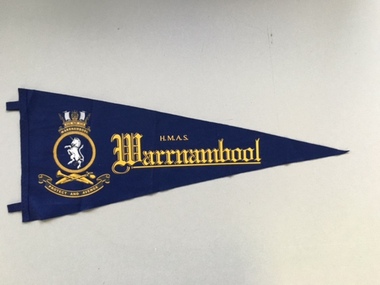
... World War Two. The mines had been laid by the Australian Government during the war to protect Australian waters. In 1947 the first H.M.A.S. Warrnambool was sunk by one of these mines and lies on the ocean floor off Cockburn Reef in northern Queensland. ...World War Two. The mines had been laid by the Australian Government during the war to protect Australian waters. In 1947 the first H.M.A.S. Warrnambool was sunk by one of these mines and lies on the ocean floor off Cockburn Reef in northern Queensland. ...This is a souvenir pennant of the H.M.A.S. Warrnambool, named after the City of Warrnambool in Victoria. This ship was the second of that name. The first H. M.A.S. Warrnambool, launched in 1941, was one of 60 Bathurst-class corvettes commissioned by the Australian Government. It was involved in mine clearance work in the Great Barrier Reef after World War Two. The mines had been laid by the Australian Government during the war to protect Australian waters. In 1947 the first H.M.A.S. Warrnambool was sunk by one of these mines and lies on the ocean floor off Cockburn Reef in northern Queensland. The second H.M.A.S. Warrnambool was commissioned in 1981 and was a Fremantle-class patrol boat assisting in capturing illegal fishing boats and participating in military exercises in Australian waters. In 2005 the second H.M.A.S. Warrnambool was decommissioned after 24 years’ service. This pennant is important as a souvenir of the H.M.A.S Warrnambool, a ship that had obvious links with the City of Warrnambool. In 2005 the Mayor of Warrnambool, Glenys Phillpot, attended the decommissioning of this ship at Darwin and brought back several souvenirs of the ship. This is a triangular-shaped pennant made of dark blue felt material. It has stitching at the straight edge with two tabs for attaching the pennant to a pole or post. The pennant has a badge of yellow, black and white tonings printed or stamped on to the felt. The badge includes a white unicorn, a stylized ship and crown, a boomerang and two other implements and the motto, ‘Protect and Avenge’. The words, ‘H.M.A.S. Warrnambool’ are printed on the pennant in yellow. ‘H.M.A.S. Warrnambool’h.m.a.s. warrnambool, history of warrnambool -
 Alfred Hospital Nurses League - Nursing History Collection
Book - Illustrated book, Rupert Goodwin 1915, Queensland nurses: Boer War to Vietnam, 1985
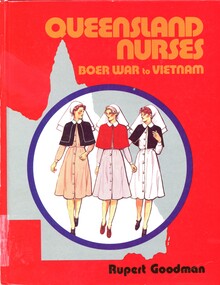
... World War Two, where he became acquainted with the problems and conditions of nursing. Of significance to the AHNL as it the book gives insight into nurses experiences of war. Royal Australian Army Nursing Corps-History Military nursing-Queensland ...A history of the development and practice of military nursing by Queensland nurses from the Boer War to Vietnam. Includes casualty list and list of decorations awarded to Queensland nurses.Illustrated book with red cover. The front cover has an outline of Queensland on which is printed an illustration of three women in the uniforms of the three military nursing services within a blue circle. Also on the front cover is the title printed in orange and authors name printed in black. Title in orange, author's surname and publishers mark in black are also printed on the spine. On the back cover in black print on a yellow rectangle the AANS pledge of service. Above this is an illustration of the Australian Commonwealth Military Forces badge, and below is the badge of the Royal Australian Army Nursing Corps.non-fictionA history of the development and practice of military nursing by Queensland nurses from the Boer War to Vietnam. Includes casualty list and list of decorations awarded to Queensland nurses.royal australian army nursing corps-history, military nursing-queensland-history, nurses-queensland-history, medicine-military-history-australia -
 Bendigo Historical Society Inc.
Financial record - INVOICE COLLECTION: Foggitt Jones Pty. Ltd
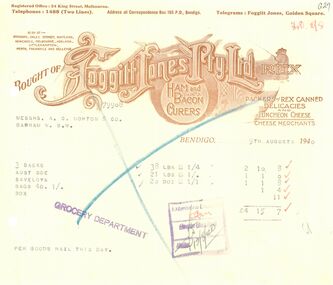
... Two of his sons served on the western front in the First World War, and his third son in the Second World War earning a Distinguished Service Cross and Mentioned in Despatches. His brother-in-law was William Bertram, the long-time Labor member and speaker of the Queensland...Two of his sons served on the western front in the First World War, and his third son in the Second World War earning a Distinguished Service Cross and Mentioned in Despatches. His brother-in-law was William Bertram, the long-time Labor member and speaker of the Queensland ...https://historyoutthere.com/2015/09/14/ham-and-cheese-please/ The company was founded in 1904 when Charles Emanuel Foggitt and Thomas Llewellyn Jones left food manufacturer J.C.Hutton. Together they took over the floundering Oxley factory. Within five years their trade in ham, bacon, cheese, and related foodstuffs, was worth over £1,000,000 a year. They paid over-award wages, premises were scrupulously clean, and their products filled banquet halls and kitchens across the country. Foggitt ran the processing. He was born to a farming family in Yorkshire, England, in 1865. Two of his sons served on the western front in the First World War, and his third son in the Second World War earning a Distinguished Service Cross and Mentioned in Despatches. His brother-in-law was William Bertram, the long-time Labor member and speaker of the Queensland Legislative Assembly. Foggitt didn’t live to witness the crowning glory however. He died in 1926, the year before his company with partner Thomas Jones as chairman of directors, took over his old employer J.C.Hutton. Jones himself passed away in 1946. With the founders gone, after a while so too was the passion. The holding company United Provisions Ltd changed its name to Huttons, eventually selling its operations, and delisting from the stock exchange. Jones ran the business. He was born to a radical family in Welshpool, Wales, in 1872. His father was a strong radical before the labor movement was founded, and his grandfather was a militant chartist who narrowly escaped transportation. Jones was elected as a Labor member to the Queensland Legislative Assembly in 1915, defeating the then premier. He was subsequently appointed to the Legislative Council. In his spare time he served as commodore of Royal Queensland Yacht Club.All printed in tan ink on thick cream paper. Each with two holes punched in the left side of the page. 10934.31a - receipt number G27 or 79908 Receipt dated: 9th August 1940 The receipt header reads "Bought of Foggitt Jones Pty. Ltd. Rex" in capital letters. The header also reads: ham and bacon curers. Packers of rex Canned Delicacies and Luncheon Cheese - Cheese merchants. Above the company name, it lists the company's: Locations - "Also at: - Brisbane, Oxley, Sydney, Maitland, Newcastle, Melbourne, Adelaide, Littlehampton, Perth, Fremantle and Bellevue." This receipt is from their Bendigo location. Addresses - registered office: 34 King Street, Melbourne. Contact Info - Phone 1488 Telegrams: Foggitt Jones, Golden Square. Correspondence to P.O. Box 195, Bendigo. receipt items typed in black ink. For the purchase of 3 backs, Aust Sge, Saveloys etc. Purchased for the price of: 4 pounds, 15 shillings and 7 pence. 10934.31b - receipt number G9 or 79565 Receipt dated: 5th August 1940 The receipt header reads "Bought of Foggitt Jones Pty. Ltd. Rex" in capital letters. The header also reads: ham and bacon curers. Packers of rex Canned Delicacies and Luncheon Cheese - Cheese merchants. Above the company name, it lists the company's: Locations - "Also at: - Brisbane, Oxley, Sydney, Maitland, Newcastle, Melbourne, Adelaide, Littlehampton, Perth, Fremantle and Bellevue." This receipt is from their Bendigo location. Addresses - registered office: 34 King Street, Melbourne. Contact Info - Phone 1488 Telegrams: Foggitt Jones, Golden Square. Correspondence to P.O. Box 195, Bendigo. receipt items typed in black ink. For the purchase of 6 backs bacon, saveloys etc. Purchased for the price of: 5 pounds, 14 shillings and 4 pence. 10934.31c - receipt number G38 or 80159 Receipt dated: 13th August 1940 The receipt header reads "Bought of Foggitt Jones Pty. Ltd. Rex" in capital letters. The header also reads: ham and bacon curers. Packers of rex Canned Delicacies and Luncheon Cheese - Cheese merchants. Above the company name, it lists the company's: Locations - "Also at: - Brisbane, Oxley, Sydney, Maitland, Newcastle, Melbourne, Adelaide, Littlehampton, Perth, Fremantle and Bellevue." This receipt is from their Bendigo location. Addresses - registered office: 34 King Street, Melbourne. Contact Info - Phone 1488 Telegrams: Foggitt Jones, Golden Square. Correspondence to P.O. Box 195, Bendigo. receipt items typed in black ink. For the purchase of 2 backs bacon, Saveloys etc. Purchased for the price of: 2 pounds, 7 shillings and 6 pence. 10934.31d - receipt number G70 or 79420 Receipt dated: 2nd August 1940 The receipt header reads "Bought of Foggitt Jones Pty. Ltd. Rex" in capital letters. The header also reads: ham and bacon curers. Packers of rex Canned Delicacies and Luncheon Cheese - Cheese merchants. Above the company name, it lists the company's: Locations - "Also at: - Brisbane, Oxley, Sydney, Maitland, Newcastle, Melbourne, Adelaide, Littlehampton, Perth, Fremantle and Bellevue." This receipt is from their Bendigo location. Addresses - registered office: 34 King Street, Melbourne. Contact Info - Phone 1488 Telegrams: Foggitt Jones, Golden Square. Correspondence to P.O. Box 195, Bendigo. receipt items typed in black ink. For the purchase of 2 backs bacon, Aust Sge, Saveloys etc. Purchased for the price of: 3 pounds, 8 shillings and 4 pence.bendigo, morton's stores, foggitt jones pty ltd -
 Geelong Naval and Maritime Museum
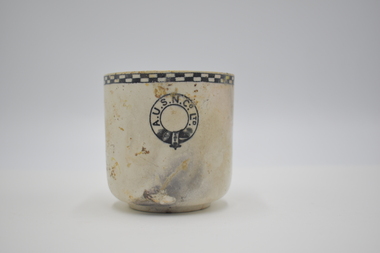
Teacup
... World War One. To meet demand for passenger berths, the Fezara (5826 tons) along with its sister ship the Famaka (5856 tons, renamed Ormiston), were chartered by the Australasian United Steam Navigation Company Ltd (A.U.S.N.Co.) in 1927. Both the A.U.S.N.Co and the Khedival Mail Steamship Co. were part of the P&O Group. The Orungal operated in this role as an interstate passenger and mail steamer between 1927 and 1940, being used mainly on the Melbourne to Queensland and Western Australian runs, with 240 single class berths. Following the outbreak of World War Two...World War One. To meet demand for passenger berths, the Fezara (5826 tons) along with its sister ship the Famaka (5856 tons, renamed Ormiston), were chartered by the Australasian United Steam Navigation Company Ltd (A.U.S.N.Co.) in 1927. Both the A.U.S.N.Co and the Khedival Mail Steamship Co. were part of the P&O Group. The Orungal operated in this role as an interstate passenger and mail steamer between 1927 and 1940, being used mainly on the Melbourne to Queensland and Western Australian runs, with 240 single class berths. Following the outbreak of World War Two ...The Orungal was originally built in Glasgow in 1923 for the Khedival Mail Steamship & Graving Dock Company of Egypt and named the S.S. Fezara. Due to the effects on steamship companies of the Great Depression including the steep costs of building new ships and increases in running costs and port charges, no new passenger ships had been ordered in Australia since before World War One. To meet demand for passenger berths, the Fezara (5826 tons) along with its sister ship the Famaka (5856 tons, renamed Ormiston), were chartered by the Australasian United Steam Navigation Company Ltd (A.U.S.N.Co.) in 1927. Both the A.U.S.N.Co and the Khedival Mail Steamship Co. were part of the P&O Group. The Orungal operated in this role as an interstate passenger and mail steamer between 1927 and 1940, being used mainly on the Melbourne to Queensland and Western Australian runs, with 240 single class berths. Following the outbreak of World War Two six of the nine large passenger liners servicing mainland Australian passenger and mail trades were requisitioned by the Government to ferry equipment, troops and supplies. Some of them were converted to armed merchant cruisers and used for patrol work and escort duties in the Indian and Pacific Oceans. The Orungal had originally been requisitioned by the government along with the Zealandia on 25 June 1940, to transport troops to Darwin, but was returned to commercial service because "of her unsuitability", perhaps too slow for the demands of the work. Despite being rejected for patrol and convoy duties the Orungal still had a vital role as one of only three passenger liners left to service the mainland Australian trade. Following its requisitioning by the Government shortly after war broke out, it had been fitted out with defensive armament. On its final voyage arriving at Port Phillip Heads from Sydney, Captain Gilling was attempting to enter the Heads ahead of a worsening south-westerly storm and, with a minefield known to have been laid in the area, had been warned by the Navy not to deviate from the swept channel. The captain and crew held fears that in the stormy seas a mine may have been carried away. In the worsening weather a blur of lights at Barwon Heads was mistaken for Port Lonsdale, and the Orungal steamed ashore onto Formby Reef, just east of the entrance of the Barwon River - instead of passing safely through the middle of the Rip. At the Marine Board Inquiry Capt. Gilling - who had been master of the Orungal since 1926 - stated that after becoming uneasy about his position and changing course to starboard one point: " At 10.21 pm I ordered the engine room to stand by and gave instructions for the patent log to be hauled in and for the sounding-gear to be got ready. Approximately two minutes later, in a flash of lightning, I saw land off the port beam. I immediately recognised it as Barwon Heads, and ordered the helm to be put hard to starboard, but the vessel struck before she had time to answer the helm" Barwon Heads and Ocean Grove residents were startled to hear the shrill blast of the ship's whistle, followed by the bright flares and explosions of signal rockets. The Queenscliff lifeboat crew, who had responded to the tragic collision between the Goorangai and another passenger liner the Duntroon in Port Phillip Bay less than 24 hours earlier, were later praised for their efforts in safely taking off all the passengers and crew. Most of the passengers were asleep at the time of the wreck, and were woken up by the commotion, the ship shaking "from stem to stern" and stewards ordering them to lifeboat stations in driving rain. It was a dramatic time with the ship siren wailing and distress rockets being fired. It was reported that "When it was found the ship was safe, the passengers all went to the music room. There they sang and danced for several hours. The ship's orchestra played merrily, and amateur performers among the passengers clowned, danced and sang to keep the laughter going. In the early hours of the morning passengers went to their cabins, most of them to sleep soundly while the keel grated on the rocks". At dawn the Queenscliff lifeboat arrived at the scene having been launched at 2.30am, and cautiously approached the ship which was being "battered by mountainous seas". By 5am oil from a burst oil line was helping to calm seas around the Orungal sufficiently enough for the lifeboat to approach, and all the passengers and crew were taken off in several trips by the lifeboat. A Court of Inquiry later found that the wreck was caused by an abnormal set of current to the north-west and cleared the officers and crew of neglect of duty. The sight of a huge liner almost on the beach saw an unprecedented amount of traffic as people drove an estimated 10,000 cars, using some 60,000 gallons of fuel in a time of strict petrol rationing, to see the spectacle. Salvage operations began in an attempt to refloat the vessel, scheduled for the high tide on 15 December 1940. However, during these operations, at 2.30 am on 13 December 1940, a major fire broke out, believed to have been caused by spontaneous combustion in the boiler room. The ship was soon ablaze, with smoke pouring from its hatches and ventilators, and at mid-morning the magazine exploded fiercely. Of the 60 men working aboard the vessel two were severely burned and had to be taken to Geelong Hospital. The gathered spectators witnessed the eerie sight of the ship's hull glowing red when night fell. The well-known building demolition contractor Whelan the Wrecker bought the salvage rights, and methodically proceeded to dismantle the ship and its fittings. The drama was not yet over for the wreckers when - without warning - the burnt-out hulk was 'attacked' by RAAF for strafing practice. Salvage rights were transferred to another private owner in 1963. By 1945 the combined effects of the exposed location, fire and salvage had seen what was left of the wreck disappear beneath the waves. The site today is marked by two of the four Scotch type boilers sitting upright and exposed at low tide, just north-east of the small boats channel at the entrance to Barwon Heads. Large sections of steel hull plating and framing, and impressively large pieces of ships structure and machinery including masts, booms, deck winches, propeller shaft, flywheel, and a thrust block lie scattered about and make the site an interesting shallow dive. It is interesting to compare the site of the Orungal with the intact remains of similar large passenger ships scuttled in deep water in the Ships' Graveyard, such as the Milora and Malaita. The site is subject to waves and surge, and is best dived on flat calm days The teacup originated from the SS Orungal and was likely used heavily in the ship's life as a passenger, mail and cargo carrier around Australia. The teacup is significant for its connections to SS Orungal and of this ships connected story of being sunk in extraordinary circumstances in the local region. A.U.S.N. Co. Ltd. Teacup salvaged from SS Orungal ss orungal, fezara, world war two, barwon heads, ocean grove -
 Wangaratta RSL Sub Branch
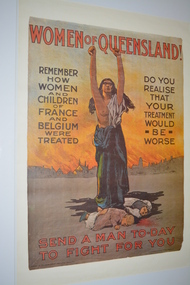
Poster, Women of Queensland!: Send a man today to fight for you, c1914-1918
... World War, governments needed to convince their citizens to contribute to the war effort. In the absence of radio and film, the poster was the most effective method of mass communication poster ww1 women of queensland Full poster text: 'Women of Queensland! Remember how women and children of France and Belgium were treated. Do you realise that your treatment would be worse? Send a man today to fight for you' Depicts a woman with arms raised, her clothing torn and right breast exposed. Two ...An excellent example of Australian First World War recruiting posters aimed at women, rather than potential soldiers. The poster suggests that in helping defeat Germany, women were really defending themselves.During the First World War, governments needed to convince their citizens to contribute to the war effort. In the absence of radio and film, the poster was the most effective method of mass communicationDepicts a woman with arms raised, her clothing torn and right breast exposed. Two children lie dead on the round at her feet, while the town behind her burns. Full poster text: 'Women of Queensland! Remember how women and children of France and Belgium were treated. Do you realise that your treatment would be worse? Send a man today to fight for you'poster, ww1, women of queensland -
 8th/13th Victorian Mounted Rifles Regimental Collection
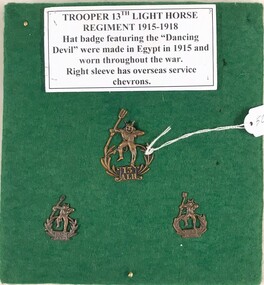
Badge - Dancing devils
... It trained in Victoria and Queensland but as the Japanese threat to the mainland declined, was disbanded in October 1943 with men going to other units. World War One WWI 13th light horse badge Devil Fabric covered board with Dancing Devil hat badge and two lapel badges attached, also a paper label. ...The 13th Light Horse Regiment considered themselves to be the 'Devil's Own' owing to their number 13 designation, consequently when in Egypt in 1915 they commissioned local metal workers to produce unofficial hat and lapel badges. The 13th Light Horse Regiment (AIF) was raised at Broadmeadows Victoria in March 1915. Following service at Gallipoli the regiment was broken up with squadrons going to France as Divisional Cavalry Squadrons of 2nd, 4th and 5th Divisions. The regiment was reformed as firstly 1st Anzac Corps Mounted Troops and later Australian Corps Mounted Troops. The regiment was raised as 13th Light Horse (Gippsland), a Citizen Forces unit. following WWI, and trained as a cavalry regiment till August 1940, when it converted from horse to mechanised initially as 13th Motor Regiment then 13th Armoured Regiment. It trained in Victoria and Queensland but as the Japanese threat to the mainland declined, it was disbanded in October 1943 with men going to other units. The 10th Light Horse was raised in 1903 from Victorian Mounted Rifles companies in Gippsland. In 1912 the regiment was renumbered 13th Light Horse. In 1920 the regiment had the territorial title Gippsland Light Horse added. The regiment was raised as 13th Light Horse (Gippsland), a Citizen Forces unit. In 1940 the regiment converted from horse to mechanised, initially as 13th Motor Regiment then 13th Armoured Regiment. It trained in Victoria and Queensland but as the Japanese threat to the mainland declined, was disbanded in October 1943 with men going to other units. Fabric covered board with Dancing Devil hat badge and two lapel badges attached, also a paper label. The attached label relates to a previous display when the badges were displayed alongside a uniform.world war one, wwi, 13th, light horse, badge, devil -
 Vision Australia
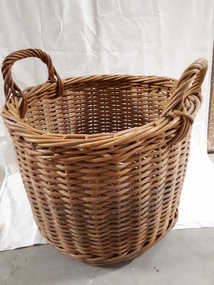
Functional object - Object, Cane basket with handles and reinforced base
... Queensland. A diverse range products could be produced with cane, such as cane chairs, cots, washing baskets and trolleys, and the Institution sought to highlight these in the annual report. Over time the demand for, and supply of, cane changed - particularly during World War 2 when Asian sources were under attack or destroyed. At home, other materials such as plastics as well as the ability to import cheaper pre-produced products further reduced the demand for workshop pieces. This cane basket was used for storage as well as transporting heavier items. The base has been reinforced with two...Queensland. A diverse range products could be produced with cane, such as cane chairs, cots, washing baskets and trolleys, and the Institution sought to highlight these in the annual report. Over time the demand for, and supply of, cane changed - particularly during World War 2 when Asian sources were under attack or destroyed. At home, other materials such as plastics as well as the ability to import cheaper pre-produced products further reduced the demand for workshop pieces. This cane basket was used for storage as well as transporting heavier items. The base has been reinforced with two ...Basket weaving and brush making was a source of income for those who worked in the workshops at RVIB and other institutions in New South Wales and Queensland. A diverse range products could be produced with cane, such as cane chairs, cots, washing baskets and trolleys, and the Institution sought to highlight these in the annual report. Over time the demand for, and supply of, cane changed - particularly during World War 2 when Asian sources were under attack or destroyed. At home, other materials such as plastics as well as the ability to import cheaper pre-produced products further reduced the demand for workshop pieces. This cane basket was used for storage as well as transporting heavier items. The base has been reinforced with two thick boards that allow the basket to hold more weight than regular baskets, and this also allows it to sit higher and the contents slightly above ground level.1 deep cane basket with two side handlesemployment, royal victorian institute for the blind -
 Kew Historical Society Inc
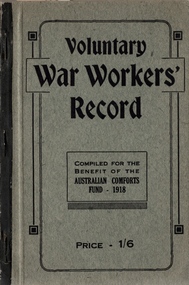
Booklet, Australian Comforts Fund (Victorian Divsion), Voluntary War Workers Record, 1918
... World War I. Mainly run by women, they provided and distributed free comforts to the Australian 'fit' fighting men in all the battle zones. They became divisions of the Australian Comforts Fund. The Council of the Fund comprised two delegates from New South Wales, Victoria and Queensland...World War I. Mainly run by women, they provided and distributed free comforts to the Australian 'fit' fighting men in all the battle zones. They became divisions of the Australian Comforts Fund. The Council of the Fund comprised two delegates from New South Wales, Victoria and Queensland ...The Australian Comforts Fund was established in August 1916 to co-ordinate the activities of the state based patriotic funds, which were established earlier in World War I. Mainly run by women, they provided and distributed free comforts to the Australian 'fit' fighting men in all the battle zones. They became divisions of the Australian Comforts Fund. The Council of the Fund comprised two delegates from New South Wales, Victoria and Queensland and one from the states of Western Australia, South Australia and Tasmania. The Executive headquarters was located in Sydney. It ceased operation on 10 April 1920 and was reconstituted in World War II in June 1940 and ceased operation again on 27 June 1946. The state bodies in World War I were: New South Wales: the 'Citizens' 'War Chest' Fund; Queensland Patriotic Fund; South Australia: League of Loyal Women; Tasmania: 'On Active Service Fund'; Australian Comforts Fund, Victorian Division; Victoria League of Western Australia. During World War II the state bodies were called : The Lord Mayor's Patriotic and War Fund of New South Wales; the Australian Comforts Fund, Victorian Division; the Australian Comforts Fund, Queensland Division; the Australian Comforts Fund, Tasmanian Division; the Fighting Forces Comforts Fund SA Inc; the Victoria League Camp Comforts Fund ( W A ) Australian Comforts Fund commissioners conducted its activities in the field, holding honorary rank as officers of the Army or Air Force.World War 1 publication for the home front with Kew listingsVoluntary War Workers Record, compiled for the benefit of the Australian Comforts Fund - 1918. Price - 1/6. the publication includes sections on Kew.australian comforts fund, australian comforts fund (victoria) -
 Returned Nurses RSL Sub-branch
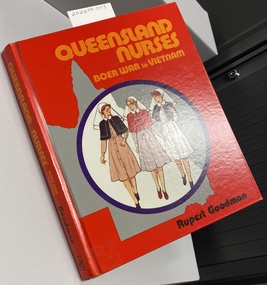
Book, Queensland Nurses Boer War to Vietnam, 1985
... Military nursing history Nurses Boer war World war one World War Two Vietnam Military nursing, Queensland. history Author's signature p iii Hardcover with grey, scarlet picture of three nurses. ...Military nursing, Queensland. historyHardcover with grey, scarlet picture of three nurses.non-fictionMilitary nursing, Queensland. historynurses, boer war, world war one, world war two, vietnam -
 Returned Nurses RSL Sub-branch
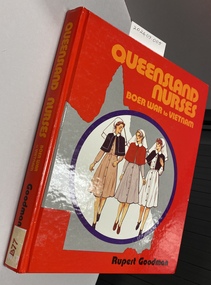
Book, Queensland Nurses Boer War to Vietnam, 1985
... Military nursing history Nurses Boer war World war one World War Two Vietnam Military nursing, Queensland. history Inside front cover 'Presented to the returned Nurses Club in memory of QFX Captain E.W. ...Military nursing, Queensland. historyHardcover with grey, scarlet picture of three nurses.non-fictionMilitary nursing, Queensland. historynurses, boer war, world war one, world war two, vietnam -
 Returned Nurses RSL Sub-branch
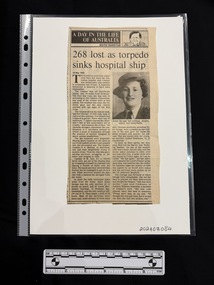
Newspaper - Newspaper clipping, [Age], A day in the life of Australia : 268 lost as torpedo sinks hospital ship, [circa 1980 to 1991]
... Queensland. Photograph of Ellen Savage the only nurse to survive the sinking, article features information about the sinking and the courage displayed by Sister Savage. Ellen Savage AHS Centaur Australian hospital ship Centaur WWII World War 2 World War Two ...Reprint of an article from 18 May 1943 [The Age] about the sinking of the Australian hospital ship Centaur off Stradbroke Island in Queensland. Photograph of Ellen Savage the only nurse to survive the sinking, article features information about the sinking and the courage displayed by Sister Savage.Newspaper clipping with column title, drawing of column author, article title, two columns of text and a photo embedded in one of the text columns.ellen savage, ahs centaur, australian hospital ship centaur, wwii, world war 2, world war two, wwll -
 Returned Nurses RSL Sub-branch
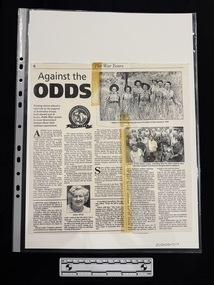
Document - Photocopies of newspaper clipping, John Hay, Against the odds, [1995]
... war years' liftout, part of the 'Australia Remembers 1945 - 1995' campaign. Article and photographs related to interview with Queensland nurses who served in WWII about their wartime experiences. WWII World War 2 World War Two ...From 'The war years' liftout, part of the 'Australia Remembers 1945 - 1995' campaign. Article and photographs related to interview with Queensland nurses who served in WWII about their wartime experiences.Photocopy of article over two pieces of paper held together by sticky tape. Article has five columns and two photos of women who are identified as women who were nurses during WWII. There is also a small article and photo about a different matter.wwii, world war 2, world war two, wwll, australian army nursing service, aans, bangka island, ss vyner brooke, margaret hamilton, jessie ellen ridge, nell ridge, nell holmes, jessie ellen holmes, florence elizabeth syer, florence elizabeth trotter, flo trotter -
 Department of Energy, Environment and Climate Action
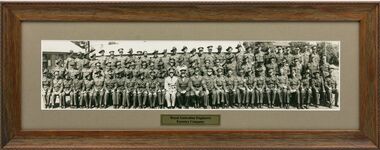
Photo - Royal Australian Engineers - Forestry Company
... Soon after the outbreak of World War Two, the British Government requested experienced forestry soldiers from Australia, New Zealand and Canada to be deployed in France as part of the British Expeditionary Force. The first Forestry Company (2/1) was based in Sydney with men from NSW, Queensland...Soon after the outbreak of World War Two, the British Government requested experienced forestry soldiers from Australia, New Zealand and Canada to be deployed in France as part of the British Expeditionary Force. The first Forestry Company (2/1) was based in Sydney with men from NSW, Queensland ...Soon after the outbreak of World War Two, the British Government requested experienced forestry soldiers from Australia, New Zealand and Canada to be deployed in France as part of the British Expeditionary Force. The first Forestry Company (2/1) was based in Sydney with men from NSW, Queensland and South Australia, led by Captain Cyril Richard Cole, a professional forester from the Australian Capital Territory. The second Forestry Company (2/2) included many Forests Commission staff, local sawmillers and experienced bushmen from Victoria, WA and Tasmania including veterans of the First World War. They were led by Captain Andrew Leonard (Ben) Benallack, a graduate from the Victorian School of Forestry in 1922. Both Forestry Companies sailed from Fremantle on the Stratheden in late May 1940 and landed in England not long after the evacuation of Dunkirk. The foresters were recalled to Australia at the insistence of Prime Minister John Curtin in late 1943 because of the War in the Pacific. After reequipping and some refresher training in jungle warfare at Kapooka the 2/2 Forestry Company was deployed to Lae in Papua New Guinea in May 1944. This photograph was probably taken in Australia before deployment to PNG.Photo in wooden frame of Royal Australian Engineers Forestry Company -
 Returned Nurses RSL Sub-branch
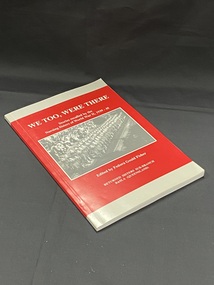
Book - Paperback book, Fedora Gould Fisher, We too, were there: stories recalled by the Nursing Sisters of World War II, 1939-45, 1995
... WWII World War II 1939-1945 Nurses Queensland WWII medical care Australian Army Nurses The stories of the nurses of the Australian Army Nursing Service (AANS) during World War Two. ...The stories of the nurses of the Australian Army Nursing Service (AANS) during World War Two. They served in all theatres of war where Australian soldiers fought.Red cover with a grey strip across the top and bottom. There is a black and white image of nurses in uniform marching along a street lined with crowds of people, in the centre. The title and editor details are printed in white text.non-fictionThe stories of the nurses of the Australian Army Nursing Service (AANS) during World War Two. They served in all theatres of war where Australian soldiers fought. wwii, world war ii 1939-1945, nurses queensland, wwii medical care, australian army nurses -
 Returned Nurses RSL Sub-branch
Book - Paperback book, Fedora Gould Fisher, We too, were there: stories recalled by the Nursing Sisters of World War II, 1939-45, 1995
... WWII World War II 1939-1945 Nurses Queensland WWII medical care Australian Army Nurses The stories of the nurses of the Australian Army Nursing Service (AANS) during World War Two. ...The stories of the nurses of the Australian Army Nursing Service (AANS) during World War Two. They served in all theatres of war where Australian soldiers fought.Red cover with a grey strip across the top and bottom. There is a black and white image of nurses in uniform marching along a street lined with crowds of people, in the centre. The title and editor details are printed in white text.non-fictionThe stories of the nurses of the Australian Army Nursing Service (AANS) during World War Two. They served in all theatres of war where Australian soldiers fought. wwii, world war ii 1939-1945, nurses queensland, wwii medical care, australian army nurses -
 Returned Nurses RSL Sub-branch
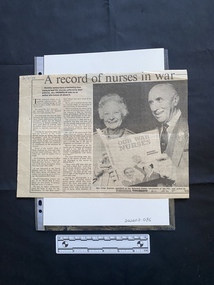
Newspaper - Newspaper clipping, A record of nurses in war, [30/5/88]
... World War One...WW2...WWII...World War Two...Tobruk...Brisbane...Western Australia...Bicentenary...Universary of Queensland...World War 1. "There were 600 men and not one with a whole face," wrote Sister Gertrude Moberly. "some of them had had 13 operations." As soon as she was out of sight of the hospital she sat down and cried. WW1 WWI World War One WW2 WWII World War Two Tobruk Brisbane Western Australia Bicentenary Universary of Queensland ...Dr Rupert Goodman was in Perth to launch his book 'Our war nurses - The history of the Royal Australian Army Nursing Corps 1902 - 1988'. It was launched at the Naval Military and Air Forces Club of WA where about 150 for war nurses attended. In his book, Rupert calls out Major-General Gordon Bennett to accept some blame for the terrible fate that befell the nurses in the fall of Singapore in February 1942. Bennett had refused to let tje nurses to pm January 20 because he said it was bad for civilian morale in Singapore, a decision that "undoubtedly cost many lives later'. Perhaps the most harrowing experience of an army nurse belongs to the nurses of World War 1. "There were 600 men and not one with a whole face," wrote Sister Gertrude Moberly. "some of them had had 13 operations." As soon as she was out of sight of the hospital she sat down and cried.A large newspaper clipping consisting of two columns of text and a large black and white photo of and old woman and man holding and book open between them.'30/5/88' [blue ink, top left corner]ww1, wwi, world war one, ww2, wwii, world war two, tobruk, brisbane, western australia, bicentenary, universary of queensland, 2/4 australian general hospital, boer war, vivian statham, vivian bullwinkel -
 Returned Nurses RSL Sub-branch
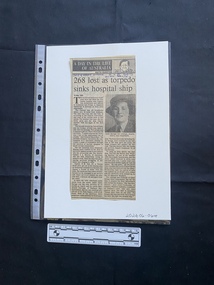
Newspaper - Newspaper clipping, [Age], A day in the life of Australia : 268 lost as torpedo sinks hospital ship, [circa 1980 to 1991]
... Queensland. Photograph of Ellen Savage the only nurse to survive the sinking, article features information about the sinking and the courage displayed by Sister Savage. Ellen Savage AHS Centaur Australian hospital ship Centaur WWII World War 2 World War Two ...Reprint of an article from 18 May 1943 [The Age] about the sinking of the Australian hospital ship Centaur off Stradbroke Island in Queensland. Photograph of Ellen Savage the only nurse to survive the sinking, article features information about the sinking and the courage displayed by Sister Savage.Newspaper clipping with column title, drawing of column author, article title, two columns of text and a photo embedded in one of the text columns. The photo is a black and white headshot of a young woman in nurse's uniform.'Died of HEART ATTACK. 25.4.85. Sydney / ANZAC SERVICE . ' [blue ink, along top above title]ellen savage, ahs centaur, australian hospital ship centaur, wwii, world war 2, world war two, wwll -
 Returned Nurses RSL Sub-branch
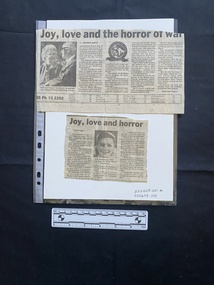
Newspaper - Newspaper clippings, Amanda Smith, Joy, love and the horror of war, [1995]
... In the build up to Brisbane's World War II commemorations, "Australia Remembers", ex-servicewoman Win Goodman remembers watching the matron of the Redbank Hospital sliding down the banisters whooping with joy the day the war ended. Win, (then Win Ruthning) worked as a radiographer in war hospitals in queensland during the war. WWII WW2 World War Two ...In the build up to Brisbane's World War II commemorations, "Australia Remembers", ex-servicewoman Win Goodman remembers watching the matron of the Redbank Hospital sliding down the banisters whooping with joy the day the war ended. Win, (then Win Ruthning) worked as a radiographer in war hospitals in queensland during the war.Two newspaper clippings, one story continued over two pages. The larger clipping has a large title with four columns of text and two embedded black and white images. The larger image on the left is a photo of an older couple looking at each other. The smaller image is an Anzac memorial pin design for 1945 - 1995. The smaller clipping has a title above three columns of text with a centred, embedded black and white image. The image is a photo headshot of a young woman.wwii, ww2, world war two, world war 2, veteran affairs minister, con sciacca, pacific, rupert goodman, australian medical women's army service, vp day, middle east, tobruk, jerusalem, ceylon, borneo, pow, st lucia, kokoda track, the centaur, centaur, moreton bay -
 Returned Nurses RSL Sub-branch
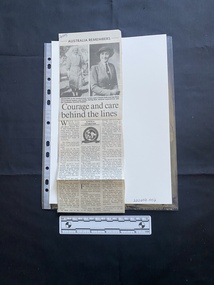
Newspaper - Newspaper clipping, Natalia Cuthbertson, Courage and care behind the lines, [24/8/95]
... World War Two...Stonnington...Moratai...TobrukRats...Palestine...German...Jerusalem...Syrian...Queensland...Prisoners of War Army Nurses WW2 WWII World War Two Stonnington Moratai TobrukRats Palestine German Jerusalem Syrian Queensland New Guinea Borneo Labuan Island Japan Singapore Alexandria Nazareth India 3UZ Baby Health Centre '24/8/95.' ...When talking about World War II, Sisters Gay Mole and Jean Crameri both recall tent hospitals, epidemics, bombs and nursing without hot water and electricity. They also recall hard work, comradeship and bravery. The two women were among the3000 nurses who formed the Australian General Hospital (AGH) during the war. Sister Jean Crameri was working at the Royal Women's Hospital when she volunteered and joined the 2/9th unit of the AGH. She served in the Middle East, nursed survivors of the Kokoda Trail and saw the Commander-in-Chief if the Australian Army, Field Marshall Blamey declare peace in the South West Pacific. Sister Gay Mole was in the Nurses Army Reserve in 1939 in the 2/9th unit, with her war service starting her in Puckapunyal then on to the Middle East. After a several months on Ceylon she was back in Australia before sailing to the Pacific, where she was among the first medical staff into Changi Prison. A newspaper clipping with three columns of text and a title underneath two black and white photos, both of young women in nurse's uniforms.'24/8/95.' [black ink, top left corner]prisoners of war, army nurses, ww2, wwii, world war two, stonnington, moratai, tobrukrats, palestine, german, jerusalem, syrian, queensland, new guinea, borneo, labuan island, japan, singapore, alexandria, nazareth, india, 3uz baby health centre -
 Returned Nurses RSL Sub-branch
Photograph - 5.5x4 coloured photograph, 1996
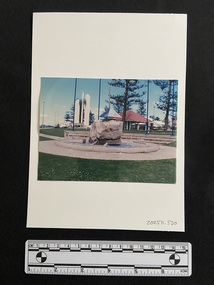
... World War Two. It is planned to place a marker in the ground adjacent to the pyramid; this marker and the point of the pyramid will align with the site of the sinking. [Taken from ANZAC Square record] AHS Centaur Memorial Centaur War memorials Tweed Heads Queensland war memorials 'Centaur / Memorial. / Danger Pond / Tweed Heads' [Handwritten in blue ink on the back of the photograph] 'SEP 96 05633 M8NAA' [Printed on the back of the photograph] Coloured photograph of a stone memorial set in a pond with a concrete edge and surrounded by small stones. ...Centaur Memorial in Tweed Heads In Queensland. 'Memorial information: Description- A steel pyramid supported by a 15 tonne pink granite stone from Turallin near Millmerran on the Darling Downs. The bolder symbolises the ecology, the pyramid represents the spirit of those who died in the Centaur sinking and the whole effect is of flotation. The tip of the pyramid can be removed to expose an oil fuelled lamp which burns on the night of the anniversary of the sinking. Scrolls containing the names of those on board are also contained in the pyramid. A Walk of Remembrance leads from the memorial to the cliff top. The Centaur Memorial along with theUnited States Destroyer, USS Mugford Memorial were unveiled on 14 May 1993, the 50th anniversary of the sinking of the Australian Hospital Ship. The Walk of Remembrance is dedicated to the memorial of the men and women who lost their lives in the forty-one Allied and Australian Naval and Merchant ships sunk along Australia's coastline during World War Two. It is planned to place a marker in the ground adjacent to the pyramid; this marker and the point of the pyramid will align with the site of the sinking. [Taken from ANZAC Square record] Coloured photograph of a stone memorial set in a pond with a concrete edge and surrounded by small stones. The pond is on flat grassy land and behind it are stone steps for seating. In the background are trees and a pavillion.'Centaur / Memorial. / Danger Pond / Tweed Heads' [Handwritten in blue ink on the back of the photograph] 'SEP 96 05633 M8NAA' [Printed on the back of the photograph]ahs centaur memorial, centaur, war memorials, tweed heads, queensland war memorials -
 Returned Nurses RSL Sub-branch
Magazine - Photocopy of a magazine/newspaper clipping, The Mercury, Tom remembers Centaur's tale, 19860514
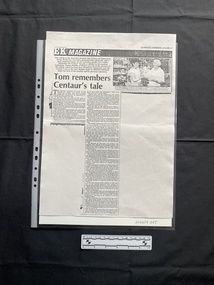
... Queensland is interviewed. He speaks about the facts of the incident and his personal experience of it. Mention is made of Ellen Savage as the only female nursing survivor and her subsequent award of the George Medal. WWII WW2 World War Two ...An article where Thomas Hobden, a survivor of the sinking of the Australian Hospital Ship Centaur off the coast of Queensland is interviewed. He speaks about the facts of the incident and his personal experience of it. Mention is made of Ellen Savage as the only female nursing survivor and her subsequent award of the George Medal.A large photocopy of a magazine/newspaper article with two columns of text and a small black and white photo in the top right corner of a woman and an older man holding an object. wwii, ww2, world war two, centaur, australian hospital ship centaur -
 Returned Nurses RSL Sub-branch
Book - Illustrated paperback book, Bob Goodwin et al, Medics and memories : further recollections of the 2/10th Field Regiment, 2000
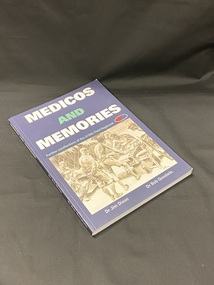
... 2/10th Australian Army Field Regiment 2/10th WWII prisoners WW2 Prisoners World War Two Prisoners This book is an extension of the history of the 2/10th Field Regiment which was formed in Brisbane more than sixty years ago. Its members came from all parts of Queensland ...This book is an extension of the history of the 2/10th Field Regiment which was formed in Brisbane more than sixty years ago. Its members came from all parts of Queensland. After Singapore and Changi many of its members were dispersed to Burma, Thailand, Borneo and Japan. - from TroveDark blue softcover book. Title and author printed along spine in white print. Front cover has white and green print and a black and white image of Prisoner Of War medical personnel operating on a patient, watched over by soldiers.non-fictionThis book is an extension of the history of the 2/10th Field Regiment which was formed in Brisbane more than sixty years ago. Its members came from all parts of Queensland. After Singapore and Changi many of its members were dispersed to Burma, Thailand, Borneo and Japan. - from Trove 2/10th australian army field regiment, 2/10th, wwii prisoners, ww2 prisoners, world war two prisoners -
 Returned Nurses RSL Sub-branch
Newspaper - Newspaper clipping, [Campaspe News], War-time sweethearts' love survives long, lonely years, [c1995]
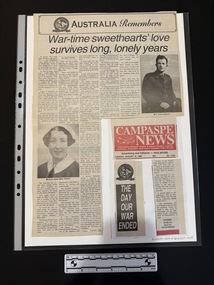
... war. Several weeks after Lance's departure, Mary's unit returned to Australia on the Strathallen, where they nursed in hospitals in Queensland. Lance became a POW of the Japanese, one of the lucky 72 out of 257 Australians in his group to survive the war. Mary and Lance were married in November 1946 and now have three children and eight grandchildren. WWII WW2 World War Two ...Mary Everard met Lance Gibson met in South Australia when Lance and a mate rang the local hospital to see if there were any off duty nurses who would go to the pictures with them. After several other outings the pair both ended up travelling on the Queen Elizabeth I to Egypt, Mary as nurse in the Australian Army Nursing Service and Lance as a lieutenant in the 2/3rd Australian Machine Gun Battalion. After spending much of the three week journey together, they continued to spend what free time they had together. When Lance found out he was to ship out to Indonesia in January 1942 the couple came to an understanding that they would marry after war. Several weeks after Lance's departure, Mary's unit returned to Australia on the Strathallen, where they nursed in hospitals in Queensland. Lance became a POW of the Japanese, one of the lucky 72 out of 257 Australians in his group to survive the war. Mary and Lance were married in November 1946 and now have three children and eight grandchildren.A large newspaper clipping featuring a large title, five columns of text and two black and white photos. One photo is of the face of a nurse in uniform, while the other photo is of a man in uniform.wwii, ww2, world war two, prisoner of war, mary gibson, gaza, middle east, sydney, concorde army hospital, brisbane, hughenden, darwin, atherton tablelands, java, dutch, cycle camp, singapore, japan, formosa, taiwan, nagasaki, american, korean, manchuria, ransom camp, govenor of singapore, russian, manila, red cross, vatican, nanneella -
 Returned Nurses RSL Sub-branch
Newspaper - Newspaper clipping, [Campaspe News], War-time sweethearts' love survives long, lonely years, [c1995]
... war. Several weeks after Lance's departure, Mary's unit returned to Australia on the Strathallen, where they nursed in hospitals in Queensland. Lance became a POW of the Japanese, one of the lucky 72 out of 257 Australians in his group to survive the war. Mary and Lance were married in November 1946 and now have three children and eight grandchildren. WWII WW2 World War Two ...Mary Everard met Lance Gibson met in South Australia when Lance and a mate rang the local hospital to see if there were any off duty nurses who would go to the pictures with them. After several other outings the pair both ended up travelling on the Queen Elizabeth I to Egypt, Mary as nurse in the Australian Army Nursing Service and Lance as a lieutenant in the 2/3rd Australian Machine Gun Battalion. After spending much of the three week journey together, they continued to spend what free time they had together. When Lance found out he was to ship out to Indonesia in January 1942 the couple came to an understanding that they would marry after war. Several weeks after Lance's departure, Mary's unit returned to Australia on the Strathallen, where they nursed in hospitals in Queensland. Lance became a POW of the Japanese, one of the lucky 72 out of 257 Australians in his group to survive the war. Mary and Lance were married in November 1946 and now have three children and eight grandchildren.A large newspaper clipping featuring a large title, five columns of text and two black and white photos. One photo is of the face of a nurse in uniform, while the other photo is of a man in uniform.wwii, ww2, world war two, prisoner of war, mary gibson, gaza, middle east, sydney, concorde army hospital, brisbane, hughenden, darwin, atherton tablelands, java, dutch, cycle camp, singapore, japan, formosa, taiwan, nagasaki, american, korean, manchuria, ransom camp, govenor of singapore, russian, manila, red cross, vatican, nanneella -
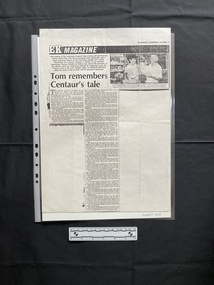 Returned Nurses RSL Sub-branch
Document - Photocopy of a magazine/newspaper clipping, The Mercury, Tom remembers Centaur's tale, [19860514 - origina]
... Queensland is interviewed. He speaks about the facts of the incident and his personal experience of it. Mention is made of Ellen Savage as the only female nursing survivor and her subsequent award of the George Medal. WWII WW2 World War Two ...An article where Thomas Hobden, a survivor of the sinking of the Australian Hospital Ship Centaur off the coast of Queensland is interviewed. He speaks about the facts of the incident and his personal experience of it. Mention is made of Ellen Savage as the only female nursing survivor and her subsequent award of the George Medal.A large photocopy of an article with a small black and white photo in the top right corner, of a woman and an older man holding an object, and two columns of text'CENTAUR TALE.' [blue ink, reverse side, lower left side]wwii, ww2, world war two, centaur, australian hospital ship centaur
