
Showing 341 items matching "ww2 australian soldiers"
-
 Bendigo Military Museum
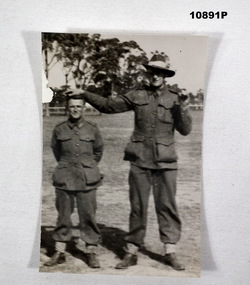
Photograph - AUSTRALIAN SOLDIERS, WW2 ERA, Unknown
... AUSTRALIAN SOLDIERS, WW2 ERA...Black and white photograph of two Australian soldiers in WW2 era uniform. Soldier on right is much taller than the other. ...Photograph AUSTRALIAN SOLDIERS, WW2 ERA ...Part of the Meade Collection. See Cat No. 10785P for details of service for "Ernest James Meade" No. 2112.Black and white photograph of two Australian soldiers in WW2 era uniform. Soldier on right is much taller than the other. He has placed his arm on the head of the short man. Both soldiers unknown.meade collection, ernest james meade, photograph, ary, uniform, ww2 -
 Tatura Irrigation & Wartime Camps Museum
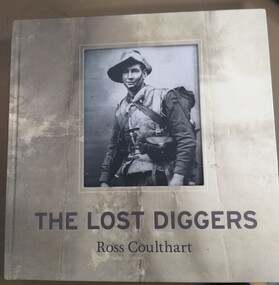
Book, Ross Coulthart, The Lost Diggers, 2012
... ...ww2 australian soldiers...Stories and photographs of Australian soldiers during WW2. Discusses WW1 campaigns and the stories of the soldiers who were involved. ...Stories and photographs of Australian soldiers during WW2. Discusses WW1 campaigns and the stories of the soldiers who were involved. ww1 campaigns ww2 australian soldiers australian diggers previous inscription inside has been whited out. ...Stories and photographs of Australian soldiers during WW2. Discusses WW1 campaigns and the stories of the soldiers who were involved. Light brown and cream coloured cover with cut out in front centre showing a picture of an Australian soldier. Title and authors name printed below cut out on front page and on spine. Back page has a short inscription on it. 399 pages. previous inscription inside has been whited out.ww1 campaigns, ww2 australian soldiers, australian diggers -
 Ringwood RSL Sub-Branch
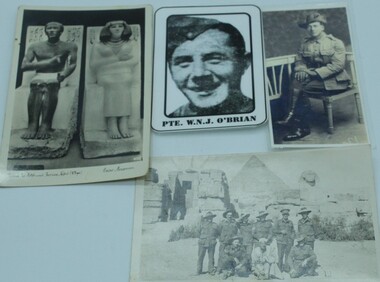
Photographs, Assorted WW2 photographs
... 25 Postcards of Egypt bought home by Australian soldier WW2...Assorted 25 Postcards of Egypt bought home by Australian soldier WW2 Assorted WW2 photographs Photographs ...25 Postcards of Egypt bought home by Australian soldier WW2Assorted -
 Tatura Irrigation & Wartime Camps Museum
Accessory - Gaters, 1940's
... Item of issue by Australian Army WW2 to Australian soldiers. These were issued to James Trevaskis of Tatura....Item of issue by Australian Army WW2 to Australian soldiers. These were issued to James Trevaskis of Tatura. crawford j australian army tatura ww2 gaters soldiers uniform James Trevaskis V X 81655 Pair of canvas gaters with leather trim. ...Item of issue by Australian Army WW2 to Australian soldiers. These were issued to James Trevaskis of Tatura.Pair of canvas gaters with leather trim. Leather straps and metal buckles top and bottom.V X 81655crawford j, australian army, tatura, ww2, gaters, soldiers uniform, james trevaskis -
 Bendigo Military Museum
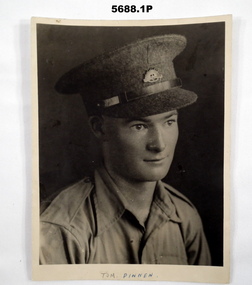
Photograph - WW2 INFANTRY SOLDIER, c1939- 1945
... Australian Soldier with a peaked cap. He has a Rising Sun badge on his cap. The portrait is black and white. 2. Black and white photo - group of five Australian soldiers WW2. ...Black and white photo - group of five Australian soldiers WW2. They are positioned in front of a simple weatherboard wall. ...These refer to the service of "Dinnen, Thomas Michael" NX17247, Born Annandale, NSW. Enlisted 24 May 1940. Discharged 29 Oct 1945, Rank L/Sgt in 2/17 Aust Inf. Btn.1. portrait of an Australian Soldier with a peaked cap. He has a Rising Sun badge on his cap. The portrait is black and white. 2. Black and white photo - group of five Australian soldiers WW2. They are positioned in front of a simple weatherboard wall. A ladder is on the ground behind them. A cross in blue ink marks one soldier. Written on top of photo is - Tom Dinnen. 3. Postcard in form of a Palestinian Pound in black and white. It has three images in circles. A woman and two male soldiers. It has two written languages, Hebrew and Arabic. It is unposted.1. On the back is "To Thelma with Best Regards from Tom". On the front bottom is written Tom Dinnen. 2. Written on back is Tom Dinnen, 23 Dec 1940. 3. On the rear is written "Bell, Jim & Tom".ww2, photos, soldiers -
 Mission to Seafarers Victoria
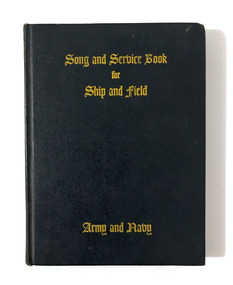
Book - Prayer Book, Ivan Loveridge Bennett, Song and Service Book for Ship and Field - Army and Navy, 1942
... Australian at War Film Archive in 2003. He served on these ships: SS Corinda SS Macumba SS Mildura SS Nellor SS Ormiston SS Reynella anne rennie collection wal harbord merchant navy seamen seafarers ww2 battle of the atlantic walter harbord navigation prayers army navy soldiers balikpapan borneo indonesia battle of balikpapan lt d. bacon Inscription and signatures in black ink on pages 2, 3 and 4. ...Small book with black cover; 195 pagesnon-fictionanne rennie collection, wal harbord, merchant navy, seamen, seafarers, ww2, battle of the atlantic, walter harbord, navigation, prayers, army, navy, soldiers, balikpapan, borneo, indonesia, battle of balikpapan, lt d. bacon -
 Frankston RSL Sub Branch
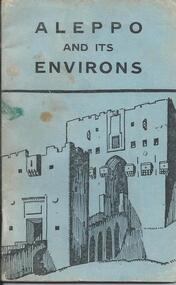
Souvenir Guidebook, Aleppo and its Environs
... souvenir ww2 world war 2 syria aleppo blundell printed title "Aleppo and its Environs" A pocket size booklet with a series of articles about Aleppo, Syria. This booklet was sent to an Australian family by a local citizen befriended by an Australia soldier serving in Syria during World War 2. ...A pocket size booklet with a series of articles about Aleppo, Syria. This booklet was sent to an Australian family by a local citizen befriended by an Australia soldier serving in Syria during World War 2. The book inner cover is marked "To Val with best wishes from Bert?? Aleppo 1-2-47". The Foreword explains that during the period 1943-44 large numbers of servicemen were visiting the area hence the need for this document.printed title "Aleppo and its Environs"souvenir, ww2, world war 2, syria, aleppo, blundell -
 Frankston RSL Sub Branch
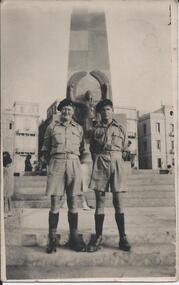
Photograph
... middle east australia army aif ww2 world war 2 Postcard with a black and white photograph of two Australian Army soldiers in summer uniform. ...Postcard with a black and white photograph of two Australian Army soldiers in summer uniform. The soldier to the left in the photograph is Noel Blundell, the other soldier is unknown. The photograph was sent home to family by Noel Blundell who served in the Middle East during World War 2.middle east, australia, army, aif, ww2, world war 2 -
 Frankston RSL Sub Branch
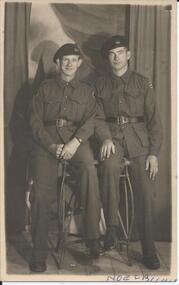
Photograph
... australia...army...aif...ww2...world war 2...soldier...middle east 2nd aif australia army aif ww2 world war 2 soldier Black and white photograph of two Australian Army soldiers in winter uniform. ...Black and white photograph of two Australian Army soldiers in winter uniform. The soldier to the left in the photograph is Noel Blundell, the other soldier is unknown. The photograph was sent home to family by Noel Blundell who served in the Middle East during World War 2. middle east, 2nd aif, australia, army, aif, ww2, world war 2, soldier -
 Frankston RSL Sub Branch
Card
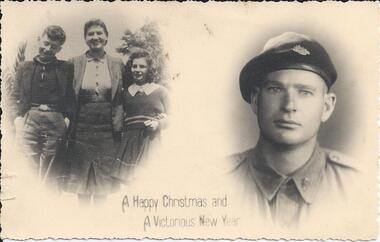
... postcard christmas middle east 2nd aif australia army aif ww2 world war 2 The card is inscribed "A Happy Christmas and A Victorious New Year" Christmas postcard with two black and white photographs on the front. To the right is a portrait image of Noel Blundell, an Australian Army soldier ...Christmas postcard with two black and white photographs on the front. To the right is a portrait image of Noel Blundell, an Australian Army soldier in summer uniform. To the left is a woman with two children in an outdoor setting. To the woman's right is a teenage boy and to the woman's left is a younger teenage girl. The photograph was sent home to family by Noel Blundell who served in the Middle East during World War 2. The card is inscribed "A Happy Christmas and A Victorious New Year"postcard, christmas, middle east, 2nd aif, australia, army, aif, ww2, world war 2 -
 Frankston RSL Sub Branch
Photograph
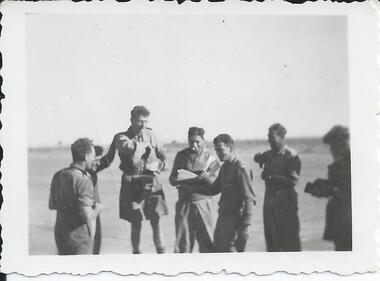
... australia...army...aif...ww2...world war 2...soldier...2nd aif australia army aif ww2 world war 2 soldier syria Inscibed on the reverse of the photograph are the hand written words; "Noel Blundell taking bets in the desert in Syria 1940's" Small black and white photograph of a group of seven Australian Army soldiers. ...Small black and white photograph of a group of seven Australian Army soldiers. The soldiers in the photograph include Noel Blundell who is apparently "taking bets", the other soldiers are unknown. The photograph was sent home to family by Noel Blundell who served in the Middle East during World War 2. Inscibed on the reverse of the photograph are the hand written words; "Noel Blundell taking bets in the desert in Syria 1940's"2nd aif, australia, army, aif, ww2, world war 2, soldier, syria -
 Federation University Historical Collection
Newspaper - Twenty page issue December 1941 No. 93, Societe Orientale de Publicite, The A.I.F. News Special Christmas Issue 1941, December 1941
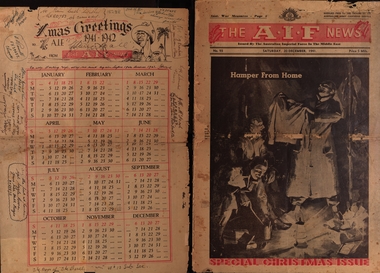
... soldiers: The real Rat of Tobruk - a rat trained by L/Cpl Jack Kneeshaw which he named "Goebbels"; poems and cartoons. Page 19 "Women of War" - photos of women at work filling in for men who have gone to war. Page 20 Xmas Greetings 1942-1942 - a 1942 Calendar signed by 14 members of the AIF, some with messages and including their Army Number. The A.I.F. News Christmas Edition 1941 Australian Imperial Force World War 2 Australian Army Canteens Service General Blamey World War 2 - Pacific War World War 2 - Phillipine Islands General D Macarthur Emergency Plans WW2 ...The A.I.F.= The Australian Imperial Force and this newspaper was supplied free to the troops of the Australian Army Canteens Service. This issue is dated Saturday 22nd December 1941. It includes advertisments for businesses in Cairo and Alexandria; Egypt, Palestine and Syria. Page 2 includes a poem titled "This Holy Night" by Pte C.M. Walker; two sonnets by Rupert Brooke; a poem, "Waiting Dreams" by Pilot Officer J.A. Henderson RAAF and a poem by Lieut. David McNicoll AIF Abroad Air Mail - Palestine. Page 3 includes a message from General Sir Thomas Blamey, an article on the part women would increasingly play as a consequence of the emergency war policy; an advertisment for tobacco specially packed for overseas forces. Page 4 includes an article on Australian coastal cities being ready for raids. Page 5 includes an article about the Commonwealth of the Philippines and their defense which until 1946 lay with America. General D Macarthur was the Commander In Chief in the Philippines. Germany's "secret Weapon" legend. Page 6 includes "Dancing Dan's Christmas"; "Bluey and Curley" comic strip. Page 7 includes article "Rommel's Armoured Might Lies Strewn Over Libyan Sands" Page 8 includes an article: "All In Fun" - a revue - has begun a tour of Australian camps in Palestine and Syria. Page 9 includes articles "War Will Revolutionise Air Services In Australia"; a list - Greek Awards To AIF Officers and a cartoon by George Aria titled 'Jonah '. Pages 10&11 "Christmas 1941" - messages from prominent people: Mr Winston Churchill; The Govenor General (Lord Gorrie); The Prime Minister (Mr Curtin); Mininster for the Army (Mr Forde). Also photos of army operations and traditional family Christmas time. Page 12 &13 Articles regarding sport under the heading 'Australian Sporting Digest'. Page 14 A story - "The Gift of the Magi" - an O Henry Christmas Story. Also a greeting from Myer's of Melbourne and Adelaide to all Myer Men in the AIF Page 15 An article where General Blamey reassures Australia about its capability of defence. Page 16 A description of a battle by Australian sloop "Parramatta" with HMAS "Auckland" against enemy planes whilst they were escorting a merchant ship with a cargo of petrol during the Battle of Tobruk Page 17 & 18 Pages under the title 'ACK-I-FOOFS' (Articles submitted by soldiers: The real Rat of Tobruk - a rat trained by L/Cpl Jack Kneeshaw which he named "Goebbels"; poems and cartoons. Page 19 "Women of War" - photos of women at work filling in for men who have gone to war. Page 20 Xmas Greetings 1942-1942 - a 1942 Calendar signed by 14 members of the AIF, some with messages and including their Army Number. Twenty pages of news supplied free to the troops by the Australian Army Canteens Service.The last page is a calendar for 1942 with personal inscriptions and greetings of servicemen. Some inscriptions have I.D. Numbers ( VX35435 W. Johnston; QX20753 of Carmody ; VX40449 ; VX39637 N. Powell; VX32054 Blue Ernistson?; N?X23234 W.Cummins; VXthe a.i.f. news christmas edition 1941, australian imperial force, world war 2, australian army canteens service, general blamey, world war 2 - pacific war, world war 2 - phillipine islands, general d macarthur, emergency plans ww2 australia, secret weapons ww2, western desert ww2, australian imperial force - western desert ww2, civil aviation post ww2, air services australia, lord gowrie, governor general lord gowrie, prime minister john curtain, minister for the army - mr forde, cartoons 1941, women-in ww2, xmas greetings calendar 1941-1942, cairo 1941, palestine 1941, western desert 1941, advertisements 1941, middle east 1941 -
Lara RSL Sub Branch
Metal badge, RSL Badge: Life Subscriber
... Australian Royal Navy. Born 5th August 1921, he enlisted on the 7th March 1939, and served on the HMAS Kuttabul II. He was discharged in 1948. The LS badge stands for Life Subscriber, and is affixed to the badge upon registration as such. Forms part of a collection of Ronald Leslie's belongings that were donated to the Lara RSL in 2006. world war 2 world war two ww2 wwii life subscriber rsl On front: "LS" "Returned Sailors, Soldiers, and Airmens" "Imperial Australia League" REVERSE: "J17213" "Amor Sydney" An RSL membership badge. ...Ronald Leslie Gregory (R/22961) served in the Australian Royal Navy. Born 5th August 1921, he enlisted on the 7th March 1939, and served on the HMAS Kuttabul II. He was discharged in 1948. The LS badge stands for Life Subscriber, and is affixed to the badge upon registration as such. Forms part of a collection of Ronald Leslie's belongings that were donated to the Lara RSL in 2006.An RSL membership badge. It is pre-1960 (because it has 3 x men in the image). A white background, red ribbon, gold image of 3 x returned servce men with a blue background which says: Returned Sailors Soldiers and Airmens". There is a red crown atop the badge which says LS within which is separate and has been affixed. On front: "LS" "Returned Sailors, Soldiers, and Airmens" "Imperial Australia League" REVERSE: "J17213" "Amor Sydney"world war 2, world war two, ww2, wwii, life subscriber, rsl -
 Lara RSL Sub Branch
Photograph, Set 4 photographs. and others for Torquay Light Horse camp, 1940
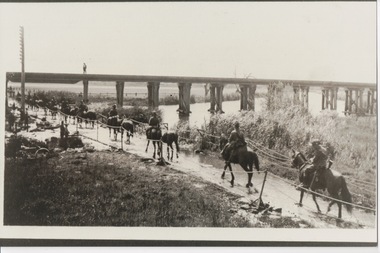
... Australian Light Horse units were mounted on wheels and tracks and the horses were retired. Six men enlisted at the Torquay camp and another 57 men and women enlisted at Torquay for service in WW2. Those who served in the Militia provided valuable Officers and NCOs and men for the armed services during the war. Each infantry division of the 2nd AIF had a Light Horse regiment attached to it. But the day of the Australian mounted soldier...Australian Light Horse units were mounted on wheels and tracks and the horses were retired. Six men enlisted at the Torquay camp and another 57 men and women enlisted at Torquay for service in WW2. Those who served in the Militia provided valuable Officers and NCOs and men for the armed services during the war. Each infantry division of the 2nd AIF had a Light Horse regiment attached to it. But the day of the Australian mounted soldier ...These images capture for all time Light Horsemen travelling through Geelong on their way to camp at Torquay for the last Group meeting in Australia . information following - details obtained from .........https://torquayhistory.com/light-horse-brigade/ On Australia Day, 1997, Sir John Young unveiled this plaque on Point Danger, Torquay. Torquay history, Light Horse Training Camp, WW2 Plaque at Pt. Danger Note----- (See images to view plaque) The plaque identifies a significant event in Torquay’s history and the sentiments of ‘change’ for the Light Horse Brigade – from horses to machines. In 1940 the four Light Horse Regiments (4th, 8th, 13th and 20th), some 5000 Light Horse and 2000 horses camped and trained at Torquay. Three other regiments, formerly mounted on horses, were also at Torquay ‘mounted’ on privately owned trucks and cars. Division troops included Artillery, Engineers, Signals, Field Ambulance and other branches of the Army necessary to enable a Division to function. It wasn’t just the sheer numbers of men coming to this little town that made the event significant, it was also the fact that the men of the Light Horse were dramatic, almost glamorous figures and it is easy to see their exploits as some splendid adventure. Horses have played a special role in the story of Australia. They were the only means of transport across this huge country, so it was necessary for everyone to have the ability to ride a horse. When war broke out in 1899 between Britain and the Boers of South Africa (“Boer” was Dutch for “farmer”) Australia sent troops to fight. At first Britain was wary of using untried, unprofessional colonial cavalrymen but soon saw that the slouch-hatted Australian “bushmen” were a match for the fast-moving and unconventional mounted commandos of the Boers. The Australians proved themselves to be expert rough-riding horsemen and good shots. Bush life had hardened them to go for long periods with little food and water. They also showed remarkable ability to find their way in a strange country and use its features for cover, in both attack and defence. By 1914, when Australia joined the war against Germany, there were 23 Light Horse regiments of militia volunteers. Many men from these units joined the Light Horse regiments of the Australian Imperial Force (AIF). Men were given remounts (if not using their own horses) – army horses bought by Commonwealth purchasing officers from graziers and breeders. These were called “walers” because they were a New South Wales stockhorse type – strong, great-hearted animals with the strains of the thoroughbred and semi-draught to give them speed, strength and stamina. On 1st November, 1914, Australia’s First Infantry Division and the first four Light Horse regiments sailed for England in a fleet of transport ships. The first of the Light Horse arrived at Gallipoli in May without their horses. Back with their horses after Gallipoli, they were formidable combatants across the Sinai and Palestine. Some British commanders observed that the light horseman moved with a “lazy, slouching gait, like that of a sleepy tiger” but described how the promise of battle “changes that careless gait, into a live athletic swing that takes him over the ground much quicker than other troops”. They had Light Horse, Torquay, training campdeveloped a reputation as formidable infantrymen. The Turks called them “the White Ghurkas” – a reference to their deadly skill with the bayonet. The Arabs called them “The Kings of the Feathers”. The plume had originally been a battle honour of the Queensland Mounted Infantry for their work in the shearer’s strike of 1891. During WW1 it was adopted by almost all the Light Horse Regiments. It was the proud badge of the light horseman. The most famous of their battles was the attack on Beersheba- the charge of the 4th Light Horse Brigade. Mounted infantrymen and their superb walers had carried out one of the most successful cavalry charges in history – against what seemed impossible odds. They surprised the Turks by charging cavalry-style, when they would normally have ridden close to an objective then dismounted to fight. The fall of Beersheba swung the battle tide against the Turks in Palestine; and changed the history of the Middle East. While 19 men from the Surf Coast Shire served with the 4th Light Horse over the course of WW1, only four were involved in the charge of Beersheba- John GAYLARD, Philip QUINN.(Winchelsea); Wallace FINDLAY (Anglesea); Harry TRIGG (Bambra). After the war, Light Horse units played a key role in the Australian Government’s compulsory military training programme. The Citizen Military Forces (C.M.F.) thrived on the glamour of the wartime Light Horse tradition, ignoring the possibility that motor vehicles would soon replace the horses. When training was no longer compulsory, the C.M.F. regiments declined and horses became more of a luxury during the 1930s depression years of poverty and unemployment. Some regiments were motorised. Then, in 1939, Australia joined Britain in another world war. Training was increased for the militia at both home bases and regional training camps. The camp at Torquay in 1940, commanded by Major General Rankin, was at Divisional strength. By the end of the camp some felt that the Division was ready for active service. Gradually, over the next four years, the Australian Light Horse units were mounted on wheels and tracks and the horses were retired. Six men enlisted at the Torquay camp and another 57 men and women enlisted at Torquay for service in WW2. Those who served in the Militia provided valuable Officers and NCOs and men for the armed services during the war. Each infantry division of the 2nd AIF had a Light Horse regiment attached to it. But the day of the Australian mounted soldier hadn’t quite passed. During World War II, Australia’s 6th Cavalry Regiment formed a mounted unit they called “The Kelly Gang” which did valuable scouting work. In New Guinea, a mounted Light Horse Troop did patrol duty and helped carry supplies. Some fully equipped walers were flown into Borneo for reconnaissance in rugged mountain country. But by the end of the war, in 1945, the horse had disappeared from the Australian Army. References: Australian Light Horse Association www.lighthorse.org.au National Australia Archives Australian War Memorial Surf Coast Shire WW1 memorials www.togethertheyserved.com The Light horse- a Cavalry under Canvas Light Horse, Training Camp, Torquay, WW2 Late in 1939 it was decided to set up a Lighthorse training camp in Torquay to train both men and horses for the battles of the Second World War. Horses, men and equipment came on special trains from all over Victoria and NSW, and as you would expect horseman came from areas such as Omeo and Sale, the Wimmera and the Western District. They arrived at the Geelong racecourse for watering in the Barwon River and then were ridden across the ford at the breakwater and began their 11 mile trek to Torquay. Light Horse, Training Camp, Torquay, WW2 Tent city By the end of January 1940 the camp at Torquay accommodated some 5000 men and 2500 horses of the Second Cavalry Division. The rows of horses, tents and huts near Blackgate Road were quite a sight. While the cavalrymen engaged in exercises on the land and on the beaches, many of the troops took over the Torquay School for special training of men and officers. Mr Bob Pettit local farmer and Councillor for the Barrabool Shire, wrote about the Light horse in the Surf Coast Community News in 1985 saying “They used to travel about the district riding four abreast in one long convoy. To my annoyance they went through my property and shut all the gates behind them. I had certain gates open to let stock in to the water holes and it would take me three -quarters of an hour to follow the horsemen up and put all the gates right again” he continued “the men from the Light Horse were here when the fire went through in March 1940. He recalled an incident when early one morning, as some one blew the bugle, a soldier putting a white sheet on the line frightened the horses. They panicked and ran off in all directions. Six went over the cliff near Bird Rock, five were never found, and the rest were gathered up after nearly a fortnight in the bush around Addiscott and Anglesea" Light Horse, Training Camp, Torquay, WW2, Geelong Parade Geelong parade The training camp culminated in a parade through the streets of Geelong on March 12th 1940. The salute was given at the Town Hall and the troops continued on a route to the You Yang’s for a training exercise. Note-----(see media section for photograph) The Camp was abandoned in mid 1940 as it was deemed unsuitable for training during winter and the cost of a permanent camp could not be justified if it could not be used all year. Historic.......Rare,,,Interpretive.Sepia photographs.set of four ....post card size ....Horses &LighthorsemenNo 1, Lighthorsemen Regiment Geelong 1940......No 2 Light Horse at Breakwater Geelong 1938 to 1940....No 3 Light Horse at Breakwater Geelong 1938 to 1940.....No 4 Light Horse crossing Breakwater camped at Geelong Showgrounds. These markings are on reverse of photographs.light horsemengeelong 1940., world war 2 -
 Lara RSL Sub Branch
Service Gear, Puttee
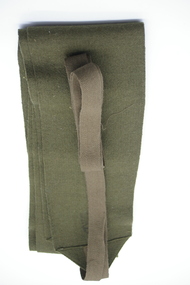
... Australian soldiers developed a painful medical condition during their service on the Western Front called trench foot. The primary causes were wet feet and unsanitary conditions but puttees were also partly to blame as they limited circulation to the lower leg and foot. These puttees are a collectors item, they are the real thing, used in WW1 and made a short return in WW2...Australian soldiers developed a painful medical condition during their service on the Western Front called trench foot. The primary causes were wet feet and unsanitary conditions but puttees were also partly to blame as they limited circulation to the lower leg and foot. These puttees are a collectors item, they are the real thing, used in WW1 and made a short return in WW2 ...A puttee is a cloth band that was wound round a soldier’s leg from their ankle to their knee. They were designed to provide support when walking and protect against harsh weather conditions. Many Australian soldiers developed a painful medical condition during their service on the Western Front called trench foot. The primary causes were wet feet and unsanitary conditions but puttees were also partly to blame as they limited circulation to the lower leg and foot. These puttees are a collectors item, they are the real thing, used in WW1 and made a short return in WW2 and were used as ceremonial dress in Malaysia in the 1960s, these ones are WW2 issue. Used as military dress in world war one, briefly in world war II and ceremonial dress in Malaysia in the 1960'sOlive green wrapping wool mix wrapping 106cm long and q2cm wide with tape 103 cm long 1.5 cm wideNilputtee, leggings world ww1 1 ww2 malaysia cloth bans -
 Lara RSL Sub Branch
Service Gear, Army Dilly Bag, WW 2 World War 2
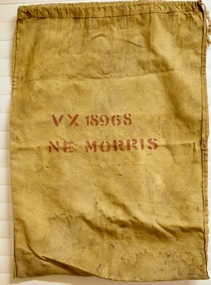
... He served in Tobruk and Milne Bay Bag used carry Personal belongings by World War 2 Australian infantry soldier dilly bag canvas khaki morris vx 18968 ww2 VX 18968 NE Morris Khaki coloured canvas bag complete with cotton draw string on one end. ...Used by Driver NE Morris to carry personal belongings. He served in Tobruk and Milne BayBag used carry Personal belongings by World War 2 Australian infantry soldier Khaki coloured canvas bag complete with cotton draw string on one end. Army number and name stenciled in red on one sideVX 18968 NE Morris dilly bag canvas khaki morris vx 18968 ww2 -
 Lara RSL Sub Branch
Book, Khaki and Green, 1943
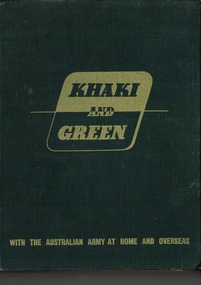
... Australian soldiers since last they related their experiences, in book form. To their homeland. It speaks of desert and jungle epitomising the two major regions of the campaign in which Australians have participated since October 1942 - the overthrow of Rommel's forces at El Alamein and the smashing of the Chinese in Papua. Collection of servicemen recounts, poems and cartoons from World War 2 blaney aif 6th and 7th division poetry middle east south west pacific darwin nassau bay kokoda rats of moresby bullybeef night patrol jungle fighters prisoners of war World War 2 WW2 To the memory of fallen comrades ‘They gave their lives. ...Khaki and Green is a summary of the scope of the activities of the Australian soldiers since last they related their experiences, in book form. To their homeland. It speaks of desert and jungle epitomising the two major regions of the campaign in which Australians have participated since October 1942 - the overthrow of Rommel's forces at El Alamein and the smashing of the Chinese in Papua.Collection of servicemen recounts, poems and cartoons from World War 2Faded light green hardcover front and back with title in centre symmetrical green and back lettering (shadowed) With the Australian Army at home and overseas. Text is repeated on spine of book. Front and back inside pages has an illustrations of a kit bag and it's contents and text - Palestine, United Kingdom, Egypt, Libya, Greece, Crete, Eritrea, Cyprus, Syria, Siam, Malaya, Java, Ambon, Ceylon, China, New Britain, Ocean islands, Nauru, New Caledonia, New Guinea, Solomon's, Papua, Timor, Dutch New Guinea. Photos, illustrations, cartoons, poems. There are three copies held at the Lara RSL Sub Branch.To the memory of fallen comrades ‘They gave their lives. For the public gift they received a praise which never ages and a tomb most glorious – not so much the tomb in which they lie, but that in which their fame survives, to be remembered forever when occasion comes for word or dead…. ‘ blaney, aif, 6th and 7th division, poetry, middle east, south west pacific, darwin, nassau bay, kokoda, rats of moresby, bullybeef, night patrol, jungle fighters, prisoners of war, world war 2, ww2 -
 Lara RSL Sub Branch
Booklet, The Australian Soldiers' Pocket Book, January 1943
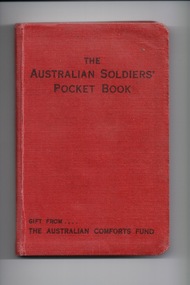
... Issued to Service personnel during WW2 The Australian Soldiers Pocket Book was distributed to Army personnel during WW2. ...Issued to Service personnel during WW2The Australian Soldiers Pocket Book was distributed to Army personnel during WW2. It belonged to SGT John Branch 419022, Aircrew in the Royal Australian Air Force.Red cardboard cover with paper pagesFront Cover - 'The Soldiers' Pocket Book' at top and at bottom 'Gift from ... The Australian Comforts Fundaustralian soldiers pocket book, ww2, australian comforts fund, john branch, 419022, lauriston house lara -
 Lara RSL Sub Branch
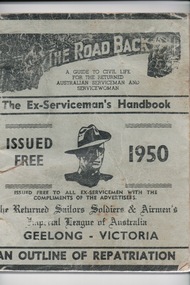
Handbook, W.A.Cooney, The Road Back, 1947/1950
... This booklet for returned service personnel from World War 2 living in the Geelong Region is og local district significance as a part of the history of Geelong. the road back the ex-serviceman's handbook world war 2 ww2 australian aif australian serviceman australian servicewoman rss&aila army navy air force returned sailor's, soldier's and airmen's imperial league of australia rsl The Road Back The Ex-Serviceman's Handbook Geelong. ...The handbook was distributed to all ex-servicemen on return from WW2 in the Geelong area and was a guide to civil life.This booklet for returned service personnel from World War 2 living in the Geelong Region is og local district significance as a part of the history of Geelong.The Road Back -two of The Ex-Serviceman's Handbooks,1947/ 1950 Geelong Issued Free.One is Light green in colour with black writingThe Road Back The Ex-Serviceman's Handbook Geelong.the road back, the ex-serviceman's handbook, world war 2, ww2, australian aif, australian serviceman, australian servicewoman, rss&aila, army, navy, air force, returned sailor's, soldier's and airmen's imperial league of australia, rsl -
 Flagstaff Hill Maritime Museum and Village
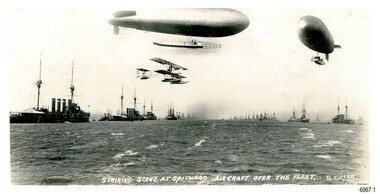
Postcard - Ships Collection, Stephen Cribb, circa 1914-1945
... Australian alliance with Britain, particularly during World War I. Two of the postcards are specifically addressed to a ‘Master Jack de Little’ at Caramut House, in the local township of Caramut which was a Pioneer Settlement and a Soldier Settlement area after World War I. Flagstaff Hill Maritime Village Maritime Museum Postcard World War II WW2 ...The postcards and photograph in this Ships Collection were found by the donor. Two of the cards are addressed to a local person "Master Jack de Little, Caramut House, Caramut, Victoria, Australia". Another has a message written in a different language. The remainder have no personal messages on them. The details of the postcards are- Published by Stephen Cribb, Southsea: 6967.1 Striking scene at Spithead; Aircraft over the fleet, including airships 6967.2 The King’s Ships; Fleet of ships. Aircraft overhead. 6967.3 HMS HIBERNIA; King Edward Class ship 6967.4 For Docking; Super Dreadnaughts, largest floating dock in the world, in Portsmouth Harbour 6967.5 HMS COLLINGWOOD; Dreadnaught, on which His Majesty’s son is serving. 6967.6 HMS BRITANNICA; Pre-Dreadnaught, 16,350 tons. Inscription “b1” or “61” written on the sea on the front of the postcard. 6967.7 HMS IRON DUKE; Fleet Flagship 6967.8 HMS Submarine D8. Ship numbered “78” 6967.9 HMS IRON DUKE, Fleet Flagship 6967.10 HMS SOUTHAMPTON 6967.11 SHAMROCK IV (Ketch rigged), leaving for America July 18, 14 (1914’) to fetch home the American to Gosport 6967.12 HMS CONQUEROR, June 1913 6967.13 Portsmouth Harbour, The Entrance (from Gosport Hard) 6967.14 Seaplane rising; 20th Century Marvel. Naval air defence. Types of airships, Seaplanes, Monoplanes in The Solent review 6967.15 HMS AUDACIOUS 6967.16 HMS DREADNAUGHT, pioneer of the all-big-gun warship ”Marcus Ward Series, McCaw Stevenson & Oms Ltd” 6967.17 HMS TERRIBLE, textured paper on front with aqua lower border, remnants of blue paper on the back. Published by Stephen Cribb, Southsea 6967.18 “In time of peace, prepare for war” Hoisting guns and torpedo heads on board a warship 6967.19 HMS LORD NELSON 6967.20 HMS HINDUSTAN 6967.21 Spitbank Fort, Spithead, on Solvent Sea 6967.22 HMS GARLAND of Netley Photographer Edgar Ward. “A halfpenny stamp for inland, one penny for foreign” 6967.23 Entrance to the Cambor, from Portsmouth Harbour. “312, copyright Edgar Ward” 6967.24 Royal yacht alongside Portsmouth Dockyard, “305” J. Welch & Sons, English Photography 6967.25 The Royal Yacht, Victoria & Albert “50” 6967.26 The VICTORY, firing a Royal Salute “21” Published by E.A. Schwerdtfeger & Co. London E.C. Printed at their works in Berline. Trade Mark E.A.S. 6967.27 The Hard and Viaduct, Portsea, Portsmouth 6967.28 SS MACEDONIA, P&O, 15212 tons, 1500 h.p., Coloured drawing. On reverse “Master Jack de Little, Caramut House, Caramut, Victoria, Australia” Published by Union Postale Universelle, Gibralta. 6967.29 HMS KING EDWARD VII leaving Dock N.3 GIBRALTAR – 11/3/05 (1905). Printer V.B. Cumbo, Gibraltar. Drawing. Handwritten “Oroton 28/5/06”. “Master Jack De Little Caramut, Victoria, Australia” 6967.30 7274 BARBARA, Hamburg. Imprinted “ ---O WEDDE ----- VORSETZEN 35/37” inscription, six lines of handwritten text in another language on the back. Published by the Valentine & Sons Co. Publishing Ltd., Melbourne, Sydney and Brisbane. Branches Sydney. London, Dundee, Cape Town, Montreal, Toronto. 6967.31 SS MOLDAVIA, the first dining saloon, Valentine Series M.4059. Valentines Real Photo Series Postcard. Postcard made in U.S.A. Agfa ANSCO 6967.32 Port McNicoll, Ont. DSR.. 6967.33 Orient Line SS ORONSAY, 20,000 tons. On board the Orient Line. Tuck’s Post Card, Carte Postale. ‘Our Navy’ Series II, Raphael Tuck & Sons. “Photogravure” Postcard Nu. 4305. Art publishers to their Majesties the King and Queen. 6967.34 HMS QUEEN MARY, HMS Queen Mary, Battle Cruiser, launched 1912, completed 1913, 27,000 tons, 75,000 S.H.P., 28 knots per hour, 8 13.5-inch guns, 16 4-inch guns, 2 torpedoes. Commissioned September 1913. Printed in England. 6967.35 HMS SUPERB 6967.36 HMS TEMERAIRE 6967.37 HMS MONARCH Small photograph, not a postcard, H 6 x W 9 cm 6967.38 PHOTOGRAPH NESTOR? Small sepia photograph, ship at dock. Stamped “Kodak print” “549”. Handwritten on back is “NESTOR?“ The Ships Collection of postcards and a small photograph depict maritime vessels connected to our Australian alliance with Britain, particularly during World War I. Two of the postcards are specifically addressed to a ‘Master Jack de Little’ at Caramut House, in the local township of Caramut which was a Pioneer Settlement and a Soldier Settlement area after World War I. Collection of thirty-eight postcards from various photographers. They depict shipping, harbours and naval vessels from the Great War to the Second War War. Most of the cards have a title, generally handwritten, on the front of the postcard. A few of the postcards have inscriptions.6967.6 Handwritten on the sea in the photograph “b1” or “61” 6967.28 Handwritten on reverse “Master Jack de Little, Caramut House, Caramut, Victoria, Australia” 6967.29 Handwritten “Oroton 28/5/06”. “Master Jack De Little Caramut, Victoria, Australia” 6967.30 Imprinted Stamp “ ---O WEDDE ----- VORSETZEN 35/37” (a location in Germany). Handwritten, six lines of text in another language, possibly German. 6967.38 Handwritten on the back is “NESTOR?“flagstaff hill, maritime village, maritime museum, postcard, world war ii, ww2, royal navy, british merchant navy, portsmouth, the great war, ship, world war i, wwi, british, 1914-1918, jack de little, caramut, caramut house, vorsetzen, spithead, sea fort, fort, spithead fort, aircraft, fleet, airship, the king’s ships, hms hibernia, king edward class ship, super dreadnaught, floating dock, portsmouth harbour, hms collingwood, dreadnaught, hms britannica, hms iron duke, fleet flagship, hms submarine d8, hms southampton, shamrock iv, hms conqueror, the entrance, gosport head, seaplane, naval air defence, monoplane, the solvent, hms audacious, hms dreadnaught, warship, marcus ward series, mccaw stevenson & oms ltd, s cribb, southsea, hms terrible, hms hindustan, hms garland, edgar ward, cambor, portsmouth dockyard, j. welch & sons, the royal yacht, victoria & albert “50”, victory, royal salute “21”, e.a. schwerdtfeger & co, e.a.s., the hard and viaduct, ss macedonia, p&o, master jack de little, hms king edward vii, dock n.3 gibraltar, v.b. cumbo, gibraltar, union postale universelle, 7274 barbara, ss moldavia, valentine series, valentine & sons co, port mcnicoll, agfa ansco, ss oronsay, orient line, raphael tuck & sons, hms queen mary, hms superb, hms temeraire, hms monarch, nestor, stephen cribb, stephen cribb photography, hms lord nelson -
 City of Moorabbin Historical Society (Operating the Box Cottage Museum)
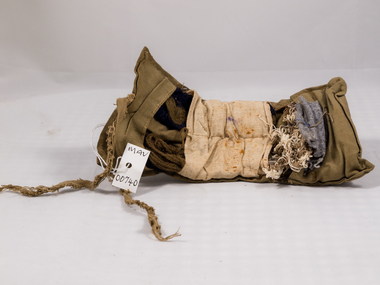
WW11 1939-1945 Australian Army Soldiers Sewing Kit, c1939
... Standard issue sewing kit for Australian Soldiers serving in WW2 1939-45 in New Guinea and tropical areas world war 11 1939-1945, cotton, khaki, soldier field kit, sewing kit, new guinea, army supply department, australian army, moorabbin, bentleigh, cheltenham, A rectangular khaki cotton pouch containing wool and cotton threads, needles, metal buttons, folding stainless steel scissors that rolls up and is tied by two cotton bands. ...1939 - 1945 Australian Army Sewing Kit. This kit is just one of many different brands of sewing kit - issued to Australian troops during the Second World War. Containing the standard requirements for uniform/clothing repair in the field. Items include:- assorted sewing needles,spare metal (quad hole) buttons and spare cotton/wool thread. Originally the "hold-all" (or pouch) was manufactured using leather, which was in plentiful supply in Australia and is quite durable. The major problem with leather however, especially in tropical or damp conditions - is it's susceptibility to moisture. This will then have an adverse affect upon the metal items contained within the kit, obviously resulting in corrosion to the metal sewing needles and buttons. This sewing kit hold-alls was manufactured from a khaki cotton or similar material. The metal thimble is missing.Standard issue sewing kit for Australian Soldiers serving in WW2 1939-45 in New Guinea and tropical areasA rectangular khaki cotton pouch containing wool and cotton threads, needles, metal buttons, folding stainless steel scissors that rolls up and is tied by two cotton bands.world war 11 1939-1945, cotton, khaki, soldier field kit, sewing kit, new guinea, army supply department, australian army, moorabbin, bentleigh, cheltenham, -
 City of Moorabbin Historical Society (Operating the Box Cottage Museum)
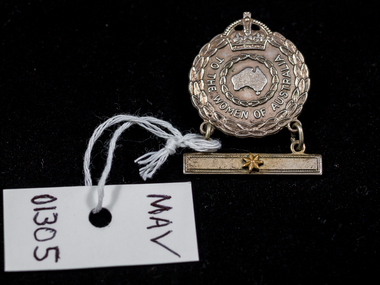
WW2 Medal for Women relatives of serving soldiers, 1942
... Emma Olymphia Roper of Balaclava/ Ripponlea would also have received a medal like this with 4 four stars because her 4 sons were serving in the Australian Army 1939-45 This Military Medal was given to the wives and mothers of Australian Soldiers serving during World War 2 1939-1945 world war 1939-1945, military medals, roper alfred william , roper veronica, moore joan catherine, roper arthur leopold, roper emma olymphia, war memorials, bentleigh, city of moorabbin, totally and permanently invalid, returned service league, victoria barracks, department of defence australia, Around medal : For the Women of Australia Back : Issued by the / C'wealth Govt. / A 135699 / Angus & Coote / 1942 Bar : star/ asterisk Silver medal, engraved wreath of leaves, crown and map of Australia and pin clasp on back . A bar with one star is suspended WW2 ...Female Relative Badges were issued to the nearest female relative (usually wives or mothers) of those who engaged in active service overseas during the First and Second World Wars. For active service abroad during the Second World War, a single badge was issued to the nearest female relative of members of the RAN, the Australian Imperial Force (including members of the Australian Army Nursing Service), and the Royal Australian Air Force. Stars displayed on a bar suspended below the badge represented the number of relatives involved in the war effort. Authority for the issue of the badge was given under AIF Order 200,14 February 1941. This medal was given to Veronica ( White ) Roper in 1942 because her husband Alfred William Roper was a member of the Australian Army Signals Corp serving in New Guinea. Emma Olymphia Roper of Balaclava/ Ripponlea would also have received a medal like this with 4 four stars because her 4 sons were serving in the Australian Army 1939-45 This Military Medal was given to the wives and mothers of Australian Soldiers serving during World War 2 1939-1945Silver medal, engraved wreath of leaves, crown and map of Australia and pin clasp on back . A bar with one star is suspendedAround medal : For the Women of Australia Back : Issued by the / C'wealth Govt. / A 135699 / Angus & Coote / 1942 Bar : star/ asteriskworld war 1939-1945, military medals, roper alfred william , roper veronica, moore joan catherine, roper arthur leopold, roper emma olymphia, war memorials, bentleigh, city of moorabbin, totally and permanently invalid, returned service league, victoria barracks, department of defence australia, -
 City of Moorabbin Historical Society (Operating the Box Cottage Museum)
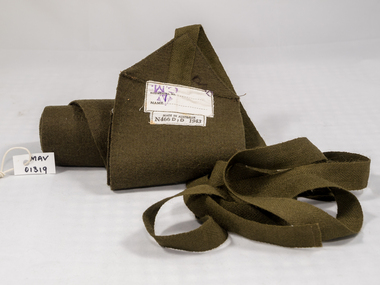
World War 2 Australian Army long woollen gaiters, 1943
... These long woollen wrap around Gaiters were issued 1943 to a serving Australian Soldier in World War 2 1939-45 This pair of Australian Army Gaiters were issued in 1943 to one of the many young men from City of Moorabbin who volunteered to serve during WW2 1939-45 australian army, world war 2 1939-45; gaiters, puttees, woollen goods, protective gear, uniforms, australian infantry forces, moorabbin, bentleigh , cheltenham MADE IN AUSTRALIA / N466 D D / REGIMENTAL NO. ......./ NAME ... ...A Gaiter or Puttee covers the lower leg and boot lacing and are a type of protective clothing for the ankles and legs below the knee.. These long woollen wrap around Gaiters were issued 1943 to a serving Australian Soldier in World War 2 1939-45 This pair of Australian Army Gaiters were issued in 1943 to one of the many young men from City of Moorabbin who volunteered to serve during WW2 1939-45 WW2 extra long wool wraps /gaiters / puttees Australian Army issue 1943 MADE IN AUSTRALIA / N466 D D / REGIMENTAL NO. ......./ NAME ... C.M / 1943australian army, world war 2 1939-45; gaiters, puttees, woollen goods, protective gear, uniforms, australian infantry forces, moorabbin, bentleigh , cheltenham -
 Geelong RSL Sub Branch
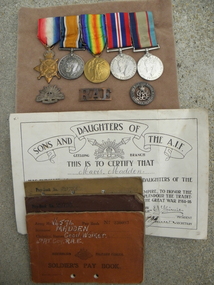
Medals & Documents, Early 20th Century
... Medals and Documents relating to Cecil Walker Madden - Served 1st AIF and 2nd AIF member of Department of Defence who served during WW1 and WW2 ww2 Medals and Documents Medals & Pay Books 1st AIF 5112 Dvr C W Madden Medals & Pay Books 2nd AIF V4574 C W Madden Sons & Daughters Certificate Mavis Madden 5 x Defence Medals Full Size, 5 x Defence Medals Miniatures, various medallions, 3 x Australian Military Forces Soldier's Pay Book's, 1 x Sons and Daughters of the AIF Certificate, The Australian Flag, a black and white photograph of Dvr C.W. ...Medals and Documents relating to Cecil Walker Madden - Served 1st AIF and 2nd AIF member of Department of Defence who served during WW1 and WW25 x Defence Medals Full Size, 5 x Defence Medals Miniatures, various medallions, 3 x Australian Military Forces Soldier's Pay Book's, 1 x Sons and Daughters of the AIF Certificate, The Australian Flag, a black and white photograph of Dvr C.W. Madden.Medals & Pay Books 1st AIF 5112 Dvr C W Madden Medals & Pay Books 2nd AIF V4574 C W Madden Sons & Daughters Certificate Mavis Maddenww2, medals and documents -
 Geelong RSL Sub Branch
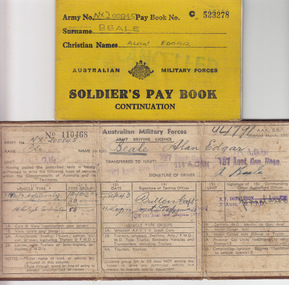
Documents NX200845 A E Beale, circa 1940
... WW2 with the AIF 101 and 114 Australia General Hospitals. The document are the originals belonging to NX 200845 A E Beale. AIF WW2 NX 200845 Pte A E Beale Driving Licence Paybook 101 AGH 114 AGH Pay Book and Driving Licence - NX 200845 Pte Alan Edgar Beale. Soldier's ...The Pay Book and the Driving Licence belong to NX 200845 A E Beale who served during WW2 with the AIF 101 and 114 Australia General Hospitals.The document are the originals belonging to NX 200845 A E Beale.Soldier's Pay Book Form WF 5(a) Revised July, 1944 - Oblong yellow covered book with grey pages, Pay Book Number C523278. AMF Army Driving Licence AAF G11, Revised March,1943 - Oblong brown covered book, folds into three, a white page pasted to the inside cover with Pte Beal's authority to drive military vehicles.Pay Book and Driving Licence - NX 200845 Pte Alan Edgar Beale.aif, ww2 nx 200845 pte a e beale, driving licence, paybook, 101 agh, 114 agh -
 Geelong RSL Sub Branch
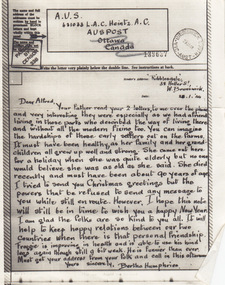
'Letters' 431003 Alfred C Heintz, There are no makers mark, Mid 20th Century
... WW2 Folder 431033 LAC A C Heintz Air Force The front of the folder has the RSL Badge embossed on the front (on two figures on the badge) and inscribed 'With Best Wishes from the Returned Sailors, Soldiers and Airmen's Imperial League of Australia'. ...431033 LAC Alfred C Heintz with the Air Force during WW2 and these letters have been sent to him from his Family.This Folder is the original that belonged to 431033 LAC Alfted C Heintz, there are photocopies of the letters inside the Folder.A series of 'Letters' to 431033 LAC Alfred C Heintz. The letters have been photocopied and are contained in a dark blue leather folder that was a gift from the RSL.The front of the folder has the RSL Badge embossed on the front (on two figures on the badge) and inscribed 'With Best Wishes from the Returned Sailors, Soldiers and Airmen's Imperial League of Australia'.ww2, folder, 431033 lac a c heintz, air force -
 Geelong RSL Sub Branch
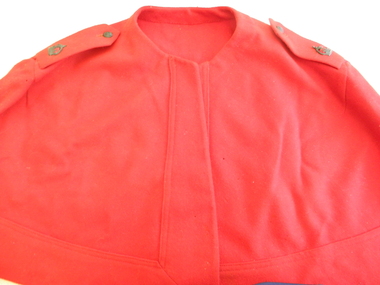
Nurses Cape V10909 Margaret A Brown, There are no makers marks, All items circa 1940
... The Soldiers Paybook and Appointment Certificate are originals belonging to V10909 Margaret A Brown. nurses cape v10909 m a brown ww2 heidelberg puckpunyal Pay Book Appointment Certificate The are no inscriptions or markings on the Cape. Pay Book No C81010, Army No. V10909, Name Brown, Christian Names Margaret Anne. A Scarlett Nurses Cape. There are two Major Badges of Rank on the epaulettes and two Australian ...The Cape belonged to V10909 Margaret Annie Brown who served with the AMF during WW2. Margaret A Brown enlisted on 17 September 1940 and was discharged with the rank of Major on 28 July 1944. Margaret Brown worked at the Heidelberg Hospital and also as Matron at Puckapunyal. Margaret Brown missed out on a posting to Hospital Ships working in the Pacific because of her age at the time - 40 - the cut off for the assignment was 40. One of Margarets co-workers at Heidelberg Vivian Bullwinkle - late 20ish at the time - gained a posting oversees.This is the original Nurses Cape that belonged to V10909 Margaret A Brown. The Soldiers Paybook and Appointment Certificate are originals belonging to V10909 Margaret A Brown.A Scarlett Nurses Cape. There are two Major Badges of Rank on the epaulettes and two Australian Military Forces buttons holding the epaulettes to the shoulders. Soldiers Pay Book, Continuation. Cardboard Cover, buff colour with paper pages. Appointment Certificate. Paper.The are no inscriptions or markings on the Cape. Pay Book No C81010, Army No. V10909, Name Brown, Christian Names Margaret Anne.nurses cape, v10909 m a brown, ww2, heidelberg, puckpunyal, pay book, appointment certificate -
 City of Moorabbin Historical Society (Operating the Box Cottage Museum)
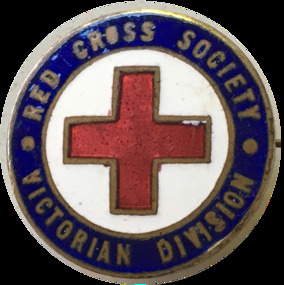
Badge - WWI Red Cross Buttons
... soldier on the Western Front. From the date of its inception until the armistice the ARCS dispatched 395,695 food parcels and 36,339 clothing parcels Between 1914 and 1918 more than £3,500,00 was collected and spent on Red Cross services to the Australian Forces and Empire Forces. During WW1 and WW2...soldier on the Western Front. From the date of its inception until the armistice the ARCS dispatched 395,695 food parcels and 36,339 clothing parcels Between 1914 and 1918 more than £3,500,00 was collected and spent on Red Cross services to the Australian Forces and Empire Forces. During WW1 and WW2 ...The International Committee of the Red Cross was formed in 1862. Initially its purpose was to try and find ways of overcoming the inadequacy of army medical services so as to alleviate the suffering of those wounded in armed conflict. Over time it has extended its work to include many forms of humanitarian aid in times of peace and war. The Australian Red Cross Society (ARCS) was formed just after the outbreak of the First World War in August 1914, originally as a branch of the British Red Cross. It is especially remembered in the provision of “comforts” for soldiers overseas. Enormous sums of money were raised, and thousands of women volunteers contributed their time by making vast quantities of clothing: socks, vests, mittens, mufflers, pyjamas and a variety of linen. Items were sent to headquarters located in the state capitals, often using government houses as depots, where, after being sorted and packed by yet more volunteers, they were sent to Britain or the front. The effect of this work for the recipients was to bring comfort in its truest sense, for a seemingly trivial gift of a bar of chocolate of a pair of dry socks could bring the most profound relief for a soldier on the Western Front. From the date of its inception until the armistice the ARCS dispatched 395,695 food parcels and 36,339 clothing parcels Between 1914 and 1918 more than £3,500,00 was collected and spent on Red Cross services to the Australian Forces and Empire Forces. During WW1 and WW2 Red Cross raised funds selling buttons.Early settlers in Moorabbin Shire held fundraising events for the support of Red Cross Victoria and made cakes and knitted socks, gloves and scarves for distribution to serving men and women Metal buttons with printing on themRed Crossred cross, fund raising buttons, wwi, wwii, french red cross, british red cross, market gardeners, early settlers, moorabbin shire, bentleigh, cheltenham, caulfield repatriation hospital -
 City of Moorabbin Historical Society (Operating the Box Cottage Museum)
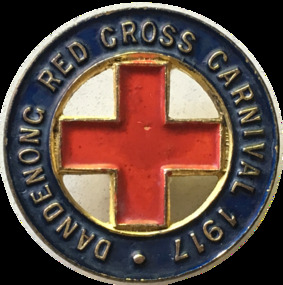
Badge - Red Cross - Springvale, 1917
... soldier on the Western Front. From the date of its inception until the armistice the ARCS dispatched 395,695 food parcels and 36,339 clothing parcels Between 1914 and 1918 more than £3,500,00 was collected and spent on Red Cross services to the Australian Forces and Empire Forces. During WW1 and WW2...soldier on the Western Front. From the date of its inception until the armistice the ARCS dispatched 395,695 food parcels and 36,339 clothing parcels Between 1914 and 1918 more than £3,500,00 was collected and spent on Red Cross services to the Australian Forces and Empire Forces. During WW1 and WW2 ...The International Committee of the Red Cross was formed in 1862. Initially its purpose was to try and find ways of overcoming the inadequacy of army medical services so as to alleviate the suffering of those wounded in armed conflict. Over time it has extended its work to include many forms of humanitarian aid in times of peace and war. The Australian Red Cross Society (ARCS) was formed just after the outbreak of the First World War in August 1914, originally as a branch of the British Red Cross. It is especially remembered in the provision of “comforts” for soldiers overseas. Enormous sums of money were raised, and thousands of women volunteers contributed their time by making vast quantities of clothing: socks, vests, mittens, mufflers, pyjamas and a variety of linen. Items were sent to headquarters located in the state capitals, often using government houses as depots, where, after being sorted and packed by yet more volunteers, they were sent to Britain or the front. The effect of this work for the recipients was to bring comfort in its truest sense, for a seemingly trivial gift of a bar of chocolate of a pair of dry socks could bring the most profound relief for a soldier on the Western Front. From the date of its inception until the armistice the ARCS dispatched 395,695 food parcels and 36,339 clothing parcels Between 1914 and 1918 more than £3,500,00 was collected and spent on Red Cross services to the Australian Forces and Empire Forces. During WW1 and WW2 Red Cross raised funds selling buttons.This Carnival was an example of the support given to Red Cross by market gardeners, early settler families and schools in Moorabbin ShireDandenong Red Cross Carnival 1917red cross, dandenong, springvale, chelsea, dingley, keysborough -
 Montmorency–Eltham RSL Sub Branch
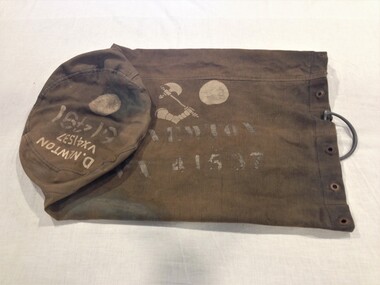
Accessory - Kitbag, Australian Army, WW2
... WW2 standard army issue kitbag. Name and serial number of soldier stenciled on bag. Details of service available on Australian WW2 Memorial Roll. ...WW2 standard army issue kitbag.Name and serial number of soldier stenciled on bag. Details of service available on Australian WW2 Memorial Roll. Donated by a family member who was a Montmorency/Eltham sub-branch member.The kitbag consists of a long, brown, canvas cylinder closed at the bottom. The top has an internal canvas flap and eight brass grommets to allow a drawstring type rope to securely close the bag. A metal D-shaped hinged clasp to enable fitting of a padlock (end of straight section of D has been broken off - see photo). The name and army serial number of the owner are stencilled in white paint on the side of the bag. Along side of bag: D.F. NEWTON VX41537 61419 Stencil of "armoured arm holding battleaxe" (see photo - a unit insignia?) On base: D. NEWTON VX31537 61491 "A white solid circle"personal accessory, carry bag
