Historical information
Self-rising flour was invented in England in 1845. The inventor, Henry Jones, sought to greatly improve the palatability of the “molar breaking” bread, hard tack, for British sailors. However, it took over 10 years of trying to convince the British command of the Navy to get behind it. In 1855, self-rising flour was finally put to use to make fresh bread for sailors during the Crimean War.Flour bags were used for bulk purchases of flour in early to mid 20th century. They would have been laundered and re-used for storage. In earlier times empty flour bags were washed and boiled and then made into tea towels or children’s bloomers, or underwear.
Physical description
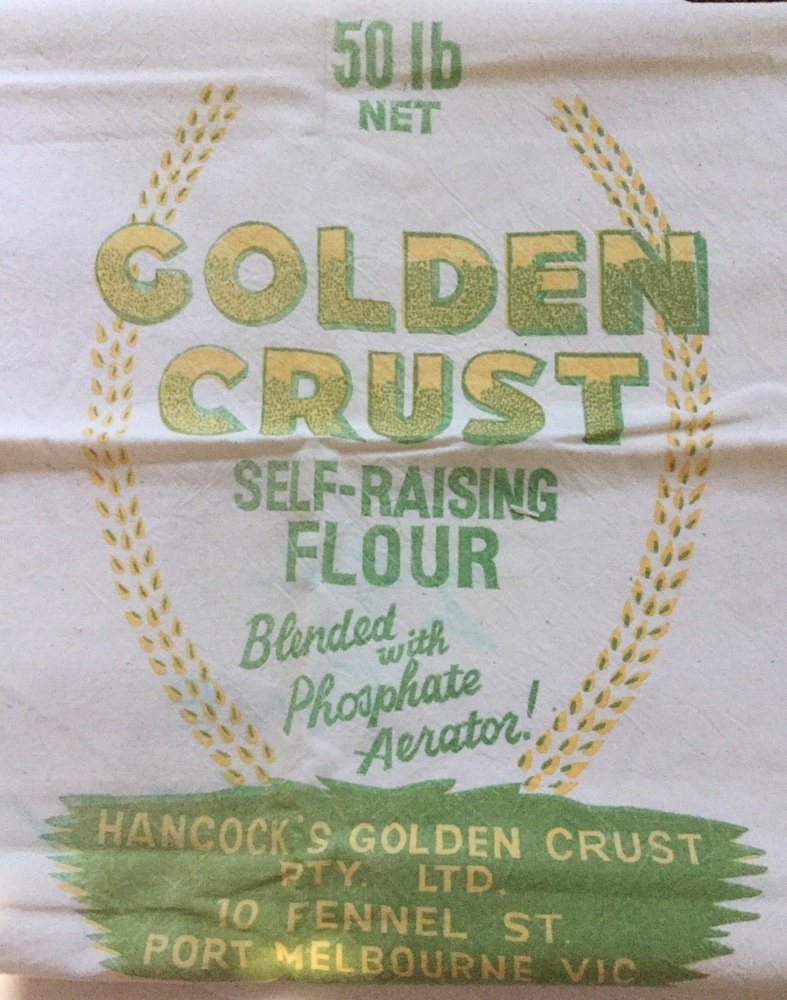
A vintage white calico flour bag with the brand Golden Crust Self-Raising Flour printed in yellow and green lettering on the front, surrounded by two curved lines of wheat stalks each side. The manufacturing details are printed at the bottom with 50 lb Net at the top.
Inscriptions & markings
'Golden Crust Self-Raising Flour 50 lb - Blended with Phosphate Aerator!' 'Hancock's Golden Crust Pty.Ltd. 10 Fennel St Port Melbourne Vic'