

Historical information
The term 'fob' traces back to the 16th-century German word fuppe, meaning 'small pocket.' Fob watches evolved in the 17th century when King Charles II introduced waistcoats. Men placed their timepieces in these pockets, securing the watch to their clothing with a short ribbon, chain, or attached ornament (the 'fob').
Physical description
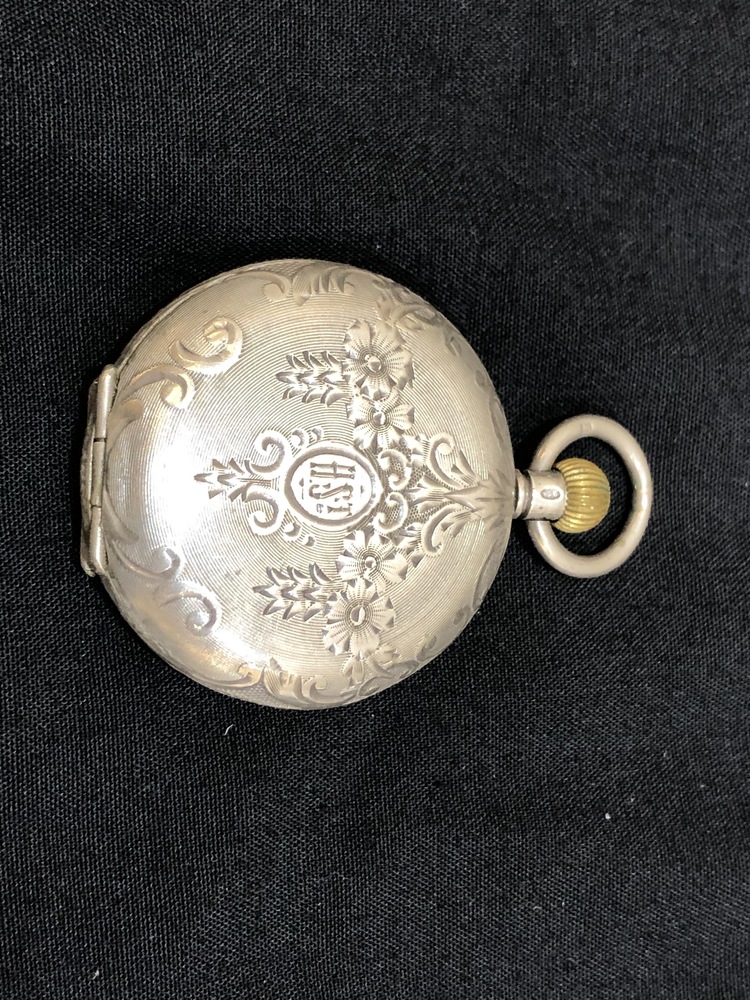
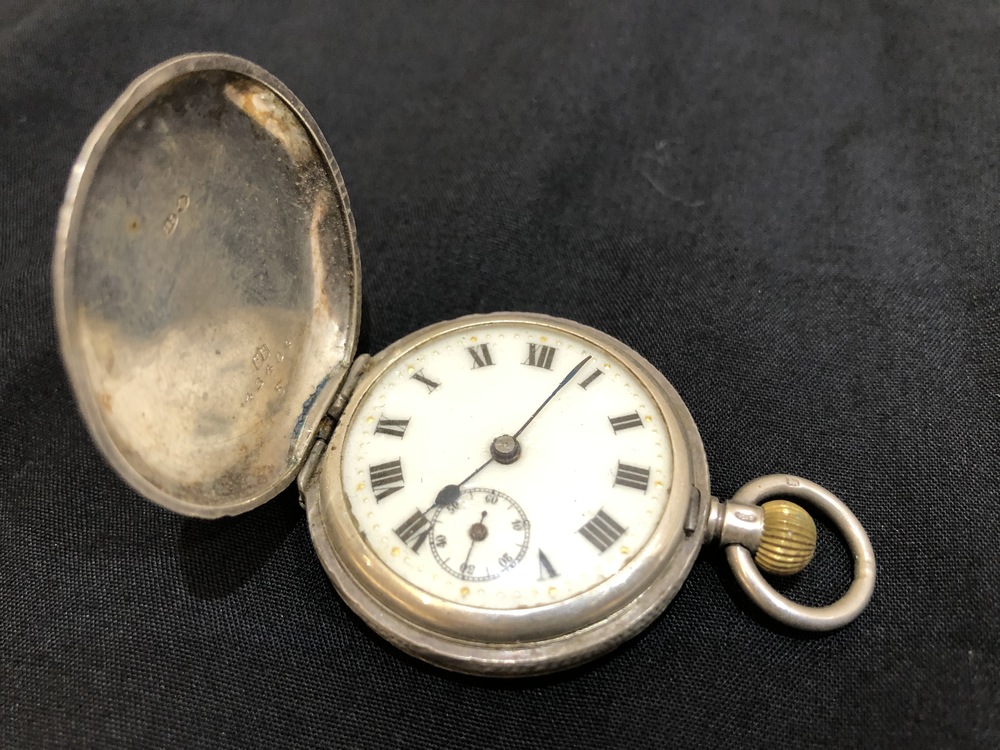
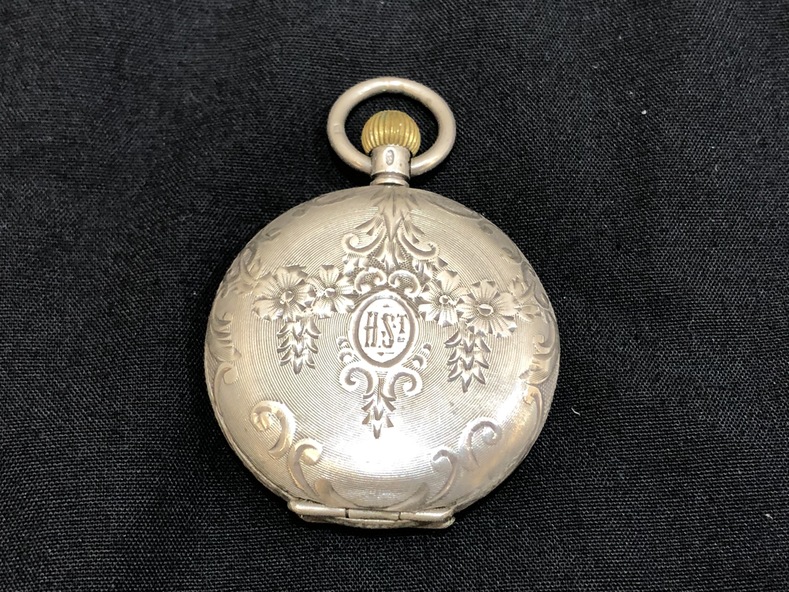
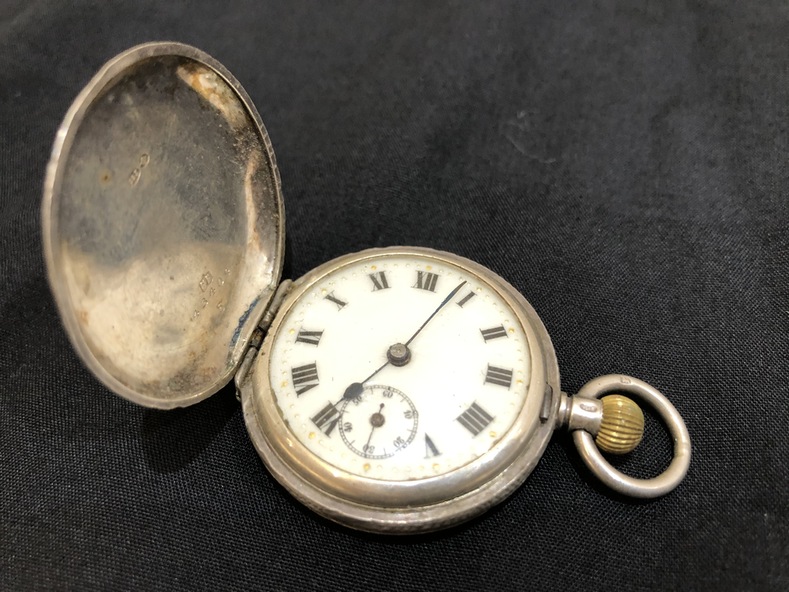
A silver pocket watch, with a white enamel dial and roman numerals. Also, a 'seconds' dial is inset into the main dial. The ornate casing designs on this fob and pocket watch features delicate, openwork metal calligraphy shaped into intricate floral designs. HST is engraved inside a small circle on the front of the casing.
Inscriptions & markings
"43404 5" inscription is on the inside of the lid casing. A floral pattern engraving is on the back and lid of the casing with the initials HST in a small circle on the front.