



Historical information
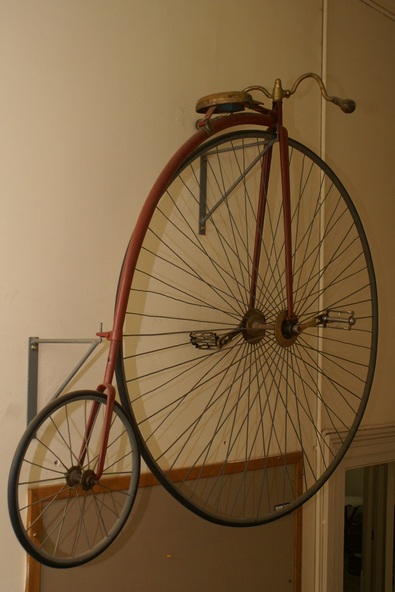
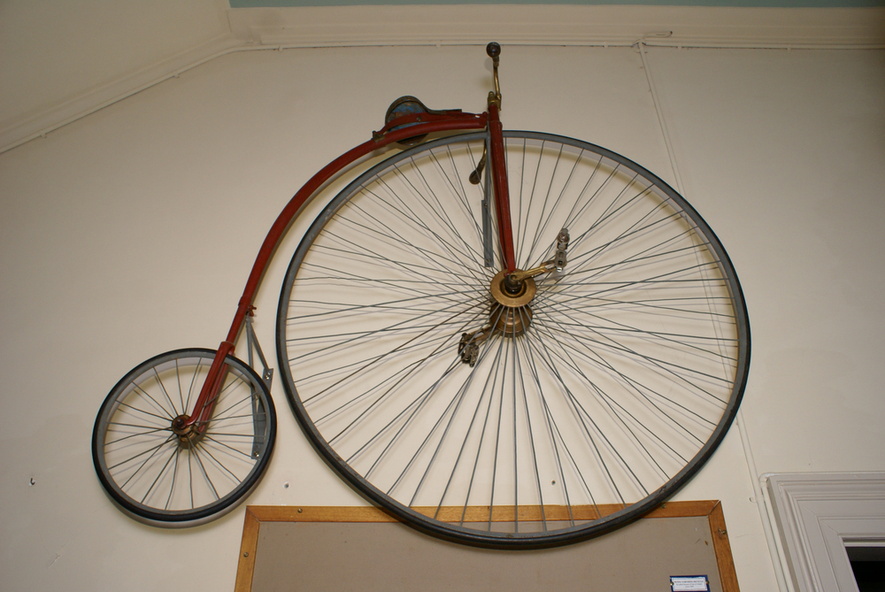
This penny-farthing was restored by council workers in the Numurkah Shire Depot in the1970s. Unknown history beforehand
The penny-farthing became obsolete in the late 1880s with the development of modern bicycles, which provided similar speed, via a chain-driven gear train, and comfort, from the use of pneumatic tires. These later bikes were marketed as "safety bicycles" because of the greater ease of mounting and dismounting, the reduced danger of falling, and the reduced height to fall, in comparison to penny-farthings. The name came from the British penny and farthing coins, the penny being much larger than the farthing, so that the side view of the bicycle resembles a larger penny (the front wheel) leading a smaller farthing (the rear wheel). Although the name "penny-farthing" is now the most common, it was probably not used until the machines had been almost superseded. The first recorded print reference is from 1891 in Bicycling News. For most of their reign they were simply known as "bicycles" and were the first machines to be so called, although they were not the first two-wheeled, pedalled vehicles. In the late 1890s, the name "ordinary" began to be used, to distinguish them from the emerging safety bicycles, and that term, along with "hi-wheel" and variants, are preferred by many modern enthusiasts.
Physical description
Red framed penny-farthing bicycle - gold painted metal seat, small wheel at back with large one at front. Has copper handle bar with wooden knobs at ends
