Physical description
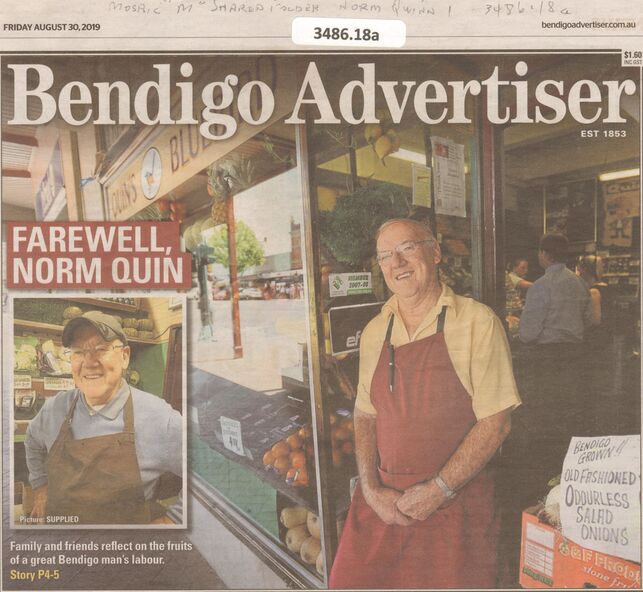
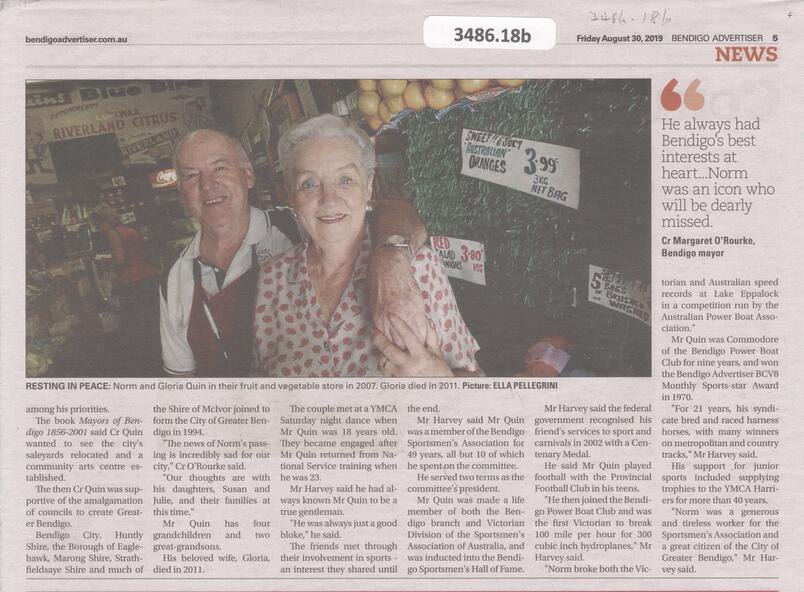
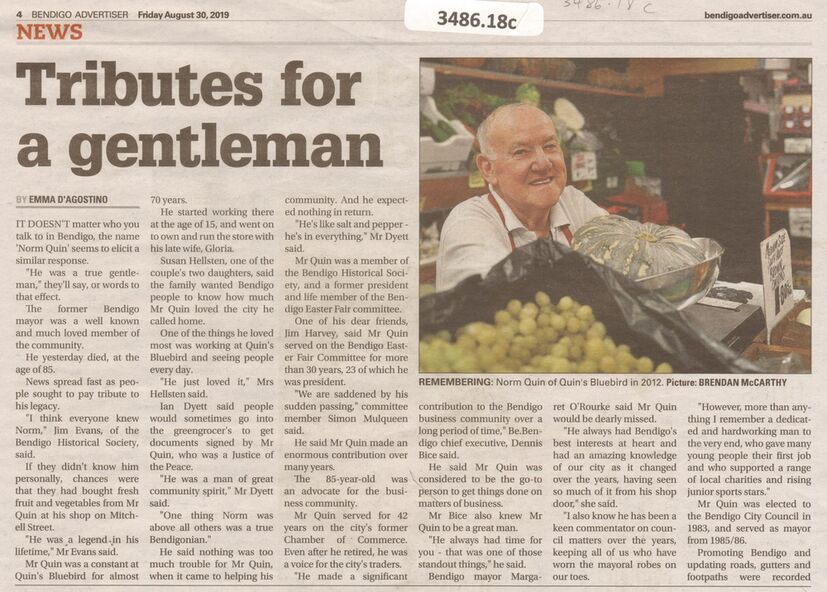
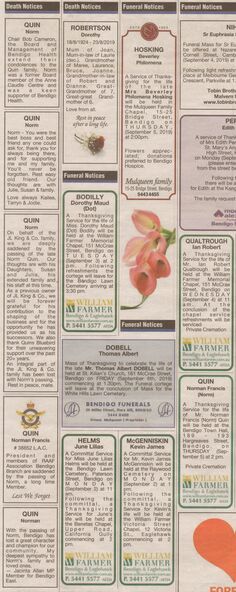
Bendigo Advertiser and Bendigo Weekly articles reporting the death of local man Norm Quin.


3486.18
Can you reuse this media without permission? No (with exceptions, see below)
All rights reserved
This media item is licensed under "All rights reserved". You cannot share (i.e. copy, distribute, transmit) or rework (i.e. alter, transform, build upon) this item, or use it for commercial purposes without the permission of the copyright owner. However, an exception can be made if your intended use meets the "fair dealing" criteria. Uses that meet this criteria include research or study; criticism or review; parody or satire; reporting news; enabling a person with a disability to access material; or professional advice by a lawyer, patent attorney, or trademark attorney.
Please acknowledge the item’s source, creator and title (where known)
Have a question? Contact Bendigo Historical Society Inc.
3486.18b
Can you reuse this media without permission? No (with exceptions, see below)
All rights reserved
This media item is licensed under "All rights reserved". You cannot share (i.e. copy, distribute, transmit) or rework (i.e. alter, transform, build upon) this item, or use it for commercial purposes without the permission of the copyright owner. However, an exception can be made if your intended use meets the "fair dealing" criteria. Uses that meet this criteria include research or study; criticism or review; parody or satire; reporting news; enabling a person with a disability to access material; or professional advice by a lawyer, patent attorney, or trademark attorney.
Please acknowledge the item’s source, creator and title (where known)
Have a question? Contact Bendigo Historical Society Inc.
3486.18c
Can you reuse this media without permission? No (with exceptions, see below)
All rights reserved
This media item is licensed under "All rights reserved". You cannot share (i.e. copy, distribute, transmit) or rework (i.e. alter, transform, build upon) this item, or use it for commercial purposes without the permission of the copyright owner. However, an exception can be made if your intended use meets the "fair dealing" criteria. Uses that meet this criteria include research or study; criticism or review; parody or satire; reporting news; enabling a person with a disability to access material; or professional advice by a lawyer, patent attorney, or trademark attorney.
Please acknowledge the item’s source, creator and title (where known)
Have a question? Contact Bendigo Historical Society Inc.

3486.18d
Can you reuse this media without permission? No (with exceptions, see below)
All rights reserved
This media item is licensed under "All rights reserved". You cannot share (i.e. copy, distribute, transmit) or rework (i.e. alter, transform, build upon) this item, or use it for commercial purposes without the permission of the copyright owner. However, an exception can be made if your intended use meets the "fair dealing" criteria. Uses that meet this criteria include research or study; criticism or review; parody or satire; reporting news; enabling a person with a disability to access material; or professional advice by a lawyer, patent attorney, or trademark attorney.
Please acknowledge the item’s source, creator and title (where known)
Have a question? Contact Bendigo Historical Society Inc.
3486.18e
Can you reuse this media without permission? No (with exceptions, see below)
All rights reserved
This media item is licensed under "All rights reserved". You cannot share (i.e. copy, distribute, transmit) or rework (i.e. alter, transform, build upon) this item, or use it for commercial purposes without the permission of the copyright owner. However, an exception can be made if your intended use meets the "fair dealing" criteria. Uses that meet this criteria include research or study; criticism or review; parody or satire; reporting news; enabling a person with a disability to access material; or professional advice by a lawyer, patent attorney, or trademark attorney.
Please acknowledge the item’s source, creator and title (where known)
Have a question? Contact Bendigo Historical Society Inc.
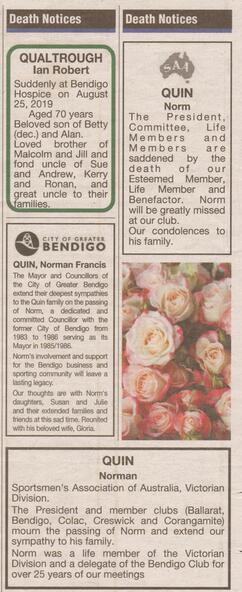
3486.18g
Can you reuse this media without permission? No (with exceptions, see below)
All rights reserved
This media item is licensed under "All rights reserved". You cannot share (i.e. copy, distribute, transmit) or rework (i.e. alter, transform, build upon) this item, or use it for commercial purposes without the permission of the copyright owner. However, an exception can be made if your intended use meets the "fair dealing" criteria. Uses that meet this criteria include research or study; criticism or review; parody or satire; reporting news; enabling a person with a disability to access material; or professional advice by a lawyer, patent attorney, or trademark attorney.
Please acknowledge the item’s source, creator and title (where known)
Have a question? Contact Bendigo Historical Society Inc.
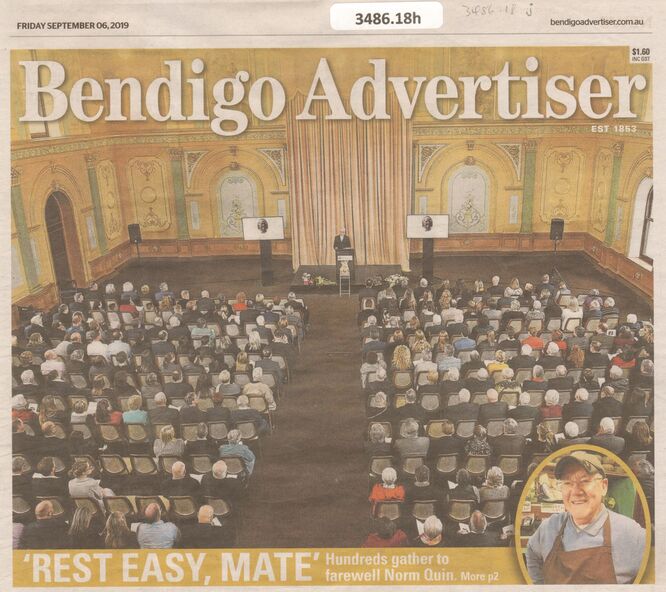
3486.18h
Can you reuse this media without permission? No (with exceptions, see below)
All rights reserved
This media item is licensed under "All rights reserved". You cannot share (i.e. copy, distribute, transmit) or rework (i.e. alter, transform, build upon) this item, or use it for commercial purposes without the permission of the copyright owner. However, an exception can be made if your intended use meets the "fair dealing" criteria. Uses that meet this criteria include research or study; criticism or review; parody or satire; reporting news; enabling a person with a disability to access material; or professional advice by a lawyer, patent attorney, or trademark attorney.
Please acknowledge the item’s source, creator and title (where known)
Have a question? Contact Bendigo Historical Society Inc.
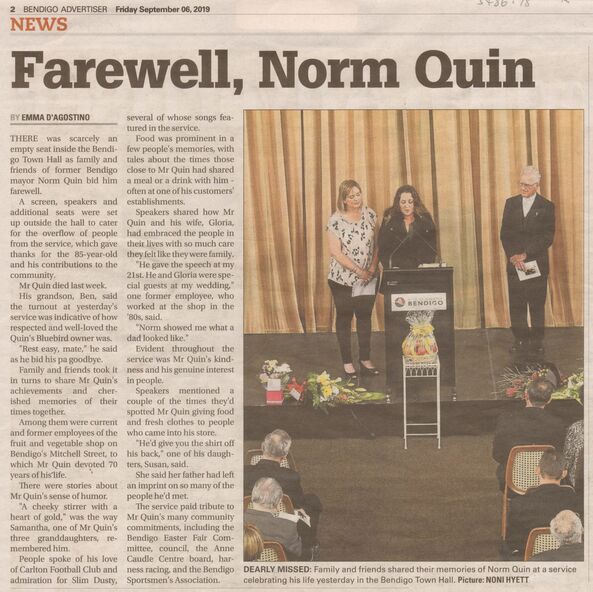
3486.18h
Can you reuse this media without permission? No (with exceptions, see below)
All rights reserved
This media item is licensed under "All rights reserved". You cannot share (i.e. copy, distribute, transmit) or rework (i.e. alter, transform, build upon) this item, or use it for commercial purposes without the permission of the copyright owner. However, an exception can be made if your intended use meets the "fair dealing" criteria. Uses that meet this criteria include research or study; criticism or review; parody or satire; reporting news; enabling a person with a disability to access material; or professional advice by a lawyer, patent attorney, or trademark attorney.
Please acknowledge the item’s source, creator and title (where known)
Have a question? Contact Bendigo Historical Society Inc.


Bendigo Advertiser and Bendigo Weekly articles reporting the death of local man Norm Quin.
Bendigo Advertiser. History of Pall Mall In the centre of Bendigo.
mining and streetscapes, pall mall bendigo
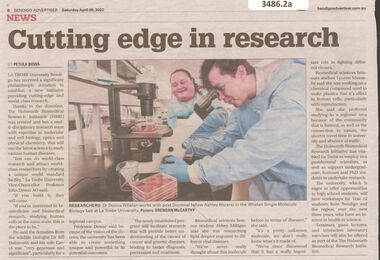
Bendigo Advertiser. Holsworth Biomedical Research initiative. Donation supports research team at Latrobe University Bendigo.
holsworth, research, latrobe university
Reproduction of all issues of the Australasian Sketcher for 1874.
australian sketcher, 1874, woodcuts
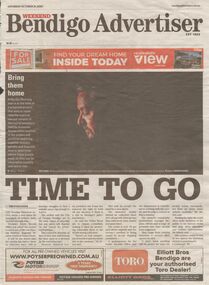
Bendigo Advertiser. Bendigo Historical Society asked to vacate the Bendigo Regional Archive Centre Bendigo. Search begins for new home for BHS Collection.
brac, prov, eviction
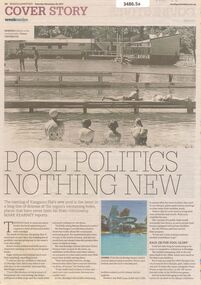
Bendigo Advertiser. Controversy about naming of new Kangaroo Flat swimming pool.
swimming pool, controversy
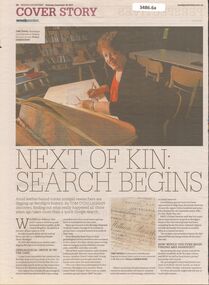
Mr Wilfred (or William) Warwick's name is listed on a war memorial in Rosendale, in the United Kingdom. He died in a prisoner of war camp in 1918. Why did he list his next of kin as one Mrs A. L. Pankhurst of Wattle Street Bendigo?
Bendigo Advertiser. Search for Relationship between Mr. Warwick and Mrs Pankhurst of Wattle Street, Bendigo. Cover story in Bendigo Advertiser dated Saturday December 16, 2017. Genealogist Judy Pearman.
controversy, william warwick, mrs pankhurst
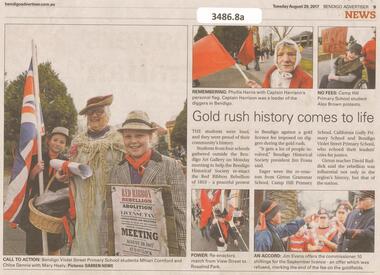
The Red Ribbon agitation was held in 1853 in opposition to the licence fee imposed on the diggers during the gold rush in Bendigo.
Bendigo Advertiser. Violet Street Primary School students join members of the Bendigo Historical Society for the re-enactment of the Red Ribbon Agitation.
red ribbon agitation, re-enactment, violet street primary school, girton
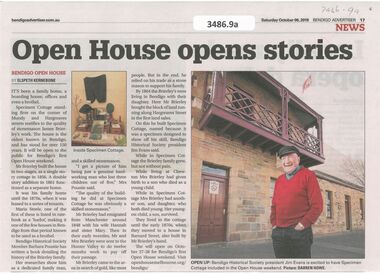
Bendigo Open House at Specimen Cottage. Bendigo Advertiser October 6 2018.
bendigo open house, specimen cottage, jim evans
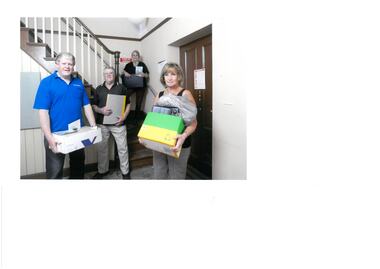
Bendigo Historical Society occupied Specimen Cottage in Hargreaves Street 2013 - 2020 as a front of House.
Members of the Bendigo Historical Society moving into Specimen Cottage. Photo taken 09/04/2013. Barbara Johnson, Kay MacGregor, Phil Wilkin, David Hall.
swimming pool, controversy
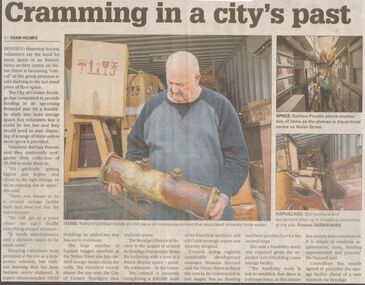
Bendigo Advertiser. Three colour photos. Main, Richard Lethlean holding an old piece of mining equipment. Smaller right top Barbara Poustie places box on shelf. Old furniture piling up in a shipping container. container. Critical shortage of space for Bendigo Historical Society Collection.
bendigo historical society, nolan street, richard lethlean, brac storage
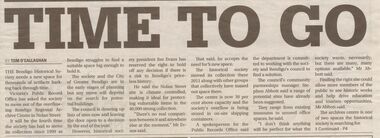
Bendigo Advertiser. Bendigo Historical Society asked by Public Records Office Victoria to vacate storage facility at Bendigo Regional Archive Centre at Nolan Street.
bendigo historical society, nolan street
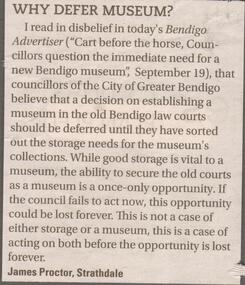
Bendigo Advertiser. Letter to the Editor. Why defer Museum?
bendigo, bendigo museum, law courts
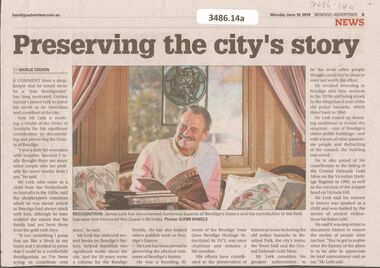
Bendigo Advertiser article: Medal of the Order of Australia awarded to Bendigo historian James Lerk.
james lerk, bendigo history
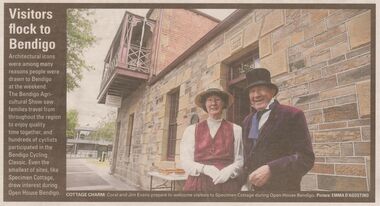
Bendigo Advertiser. a. Coral and Jim Evans standing in front of Specimen Cottage during the Bendigo Open House Weekend. October 28 2019 b. Service of BHS Volunteers recognized. December 10 2022 c. Caroline Kennedy visits Bendigo. March 4 2023
national trust open house, specimen cottage, jim evans, kay macgregor, caroline kennedy, john joseph, eureka
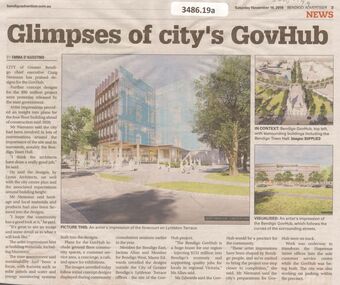
Bendigo Advertiser April 10 2021. Concept designs released for City's new GovHub building.
govhub, concept designs, city offices, cogb
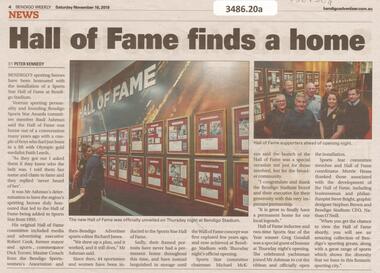
Bendigo Weekly. November 16 2019. Sporting Hall of Fame established at Bendigo Stadium.
hall of fame, sports' stars
Bendigo Advertiser 13.3.2021 Museum back from the dead? Colour photo of School of Mines building. Article discussing possibility breathing new life into Bendigo's storied past by establishing a Museum in the TAFE building.
school of mines, potential for museum
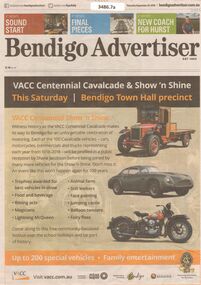
Henry Rickards and Montague Simes were founders of the Retail Motor Dealers' Association, later known as the VACC. VACC House.
Bendigo Advertiser. A Celebration of motoring, 100 Cavalcade Vehicles, cars, motorcycles, commercial and trucks representing each year 1918-2018.
hnery rickards, montague simes, vacc

The Bendigo Gas works serviced the city for more than 100 years.
Bendigo Advertiser article: 'New Start' The Australian Centre for the moving Image to operate Bendigo's future Creative Industries Hub - announcement by the State Governement
australian centre for the moving image, bendigo creative industries hub, acmi, bendigo gas works
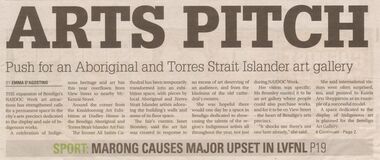
The expansion of Bendigo's NAIDOC Week art attractions has strengthened calls for a permant space in the city's arts precinct dedicated to the display of indigenous works.
Bendigo Advertiser article: ' Arts Pitch' Push for an Aboriginal and Torres Strait Islander Art Gallery.
bendigo, naidoc, indigenous arts
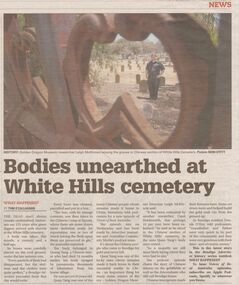
In 1867 a body belonging to a Chinaman was taken from the White Hills cemetery. Some 10% of the Chinese bodies were removed and many sent home to China.Bones were cleaned and any remaining flesh was preserved in gin.
Bendigo Advertiser: Story on bodies unearthed at the White Hills cemetery.
white hills cemetery, chinese bodies
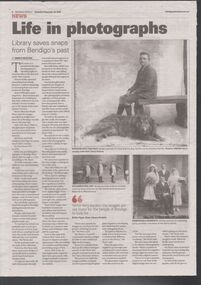
Vincent kelly (1877-1958)worked in Bendigo for pretty much half a century.
Bendigo Weekly Story 'Life in Photographs'. The work of a prominent Bendigo photogrpher sheds light on Victorian life in the first half of the 20th Century. Full page article on Vincent Kelly.
bendigo, vincent kelly, photographer
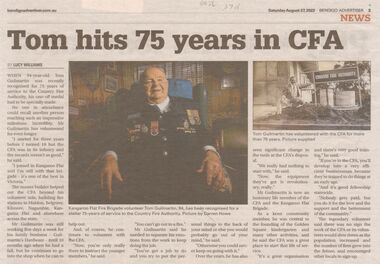
Tom Guilmartin was 94 years old when he recieved a one-off medal for his 75 years service in the Kangaroo Flat Fire Brigade.
Bendigo Advertiser: Story 'Tom hits 75 years in the CFA' Half page article with two photos.
bendigo, kangaroo flat cfa, tom guilmartin
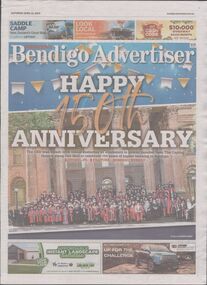
Academics paraded in gowns from the Capital theatre along Pall Pall to celebrate 150 years of learning in Bendigo.
Bendigo Advertiser front and inner page story page story with cover photo of participants on the steps of the Capital Theatre. Bendigo weekly front page story.
bendigo, 150 years of learning
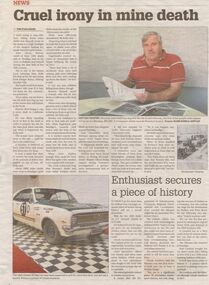
John Henry Rooney made at least 1000 shafts safe in Bendigo and as far away as Ballarat and Stawell during the first half of the 20th century.
Bendigo Advertiser: Story on Hisotrian John Kelly who research John Rooney; article entitled 'Cruel irony in mine death.
bendigo, john kelly, john rooney, mining
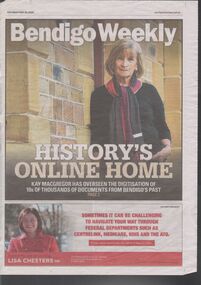
Kay and Jim are two dedicated volunteers and history lovers, They were celebrated atthe society's end of year lunch. They have a combine contribution of more than three decades.
Bendigo Weekly: Front and inner page Story entitled 'History's Online Home with photos of Kay and Jim Evans.
bendigo historical society, kaymacgregor, jim evans
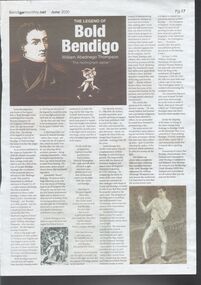
'Bold Bendigo' was the boxing champion of All-England (1839-40 and 1845-50). It is thought that Bendigo may be named after him and is discussed in this full page article.
Bendigomonthly.net: full page story entitled 'the legend of bold Bendigo, the Nottingham Jester.
bendigo, william abednego thompson
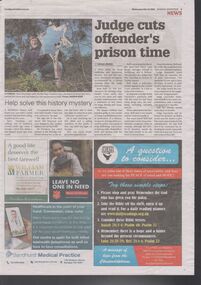
Terry Davidson found the star in plain sight in the Diamond Hill historical area near Kangaroo Flat, Golden Square and Spring Gully.
Bendigo Advertiser: Story entitled 'Help Solve this History Mystery', about a star-shaped metal sign.
bendigo mystery star, terry davidson
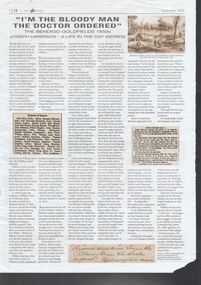
Joseph Harrison was born in York in the UK about 1810. At the age of twenty, the farm labourer appeared in the Lancaster Quarters Session and was convicted of stealing nineteen sovereigns. He was sentanced to hard labout in Van Dieman's Land in 1832. The article describes the hard life his family had on the Bendigo Goldfields, and his run-ins with the law.
Bendigo Monthly full page article entitled 'I'm the bloody man the doctor ordered' - A life in the Day (Series).
bendigo goldfields, joseph harrison
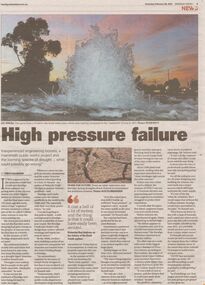
When work was being finished on the Back Creek syphon specially designed to push water uphill, metal plates on the pipelines were not strong enough to withstand the pressure. Damaged and loss of water was estimated to be 25,000 pounds. It was one of the biggest disasters in Vicotria's history.
Bendigo Advertiser: Full page article entitled 'High pressure failure'.
bendigo water supply, coliban system
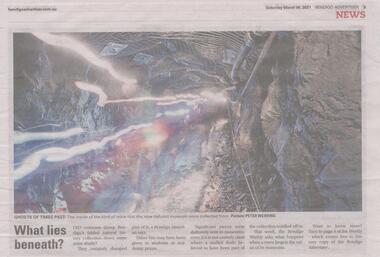
Bendigo once had an amazing natural history collection, then part of it was dumped down mine shafts.
Bendigo Weekly: Full page article entitled 'What Lies Beneath us?'
bendigo school of mines, bendigo tafe, bendigo natural history collection
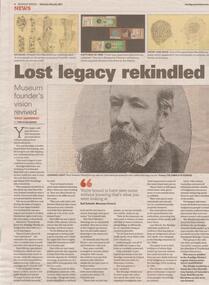
Paul Howard MacGillivray was an international scientist who called Bendigo home. Bendigo historians are buiding the case to turn the McCrae Street's heritage listed TAFE building into a museum.
Bendigo Weekly Story entitled 'Lost legacy rekindled' - one page article and four photos on the work of Paul Howard MacGillivray.
school of mines, potential for museum, bendigo tafe, paul howard macgillivray
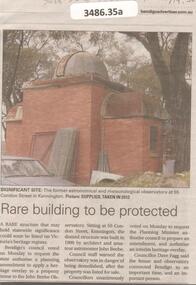
The City of Bendigo asked for a heritage overlay over the site of a private Kennington observatory. It was once used for for the City's official meteorological readings. The observatory was built by architect John Beebe and is on the storm damaged property part of "La Rocca" house. Council approved $2 million for preservation of the site which will be integrated into a contempory complex boasting seven childcare rooms for 144 children.
Bendigo Advertiser and the Herald sun: five articles on the former astronomical observatory at 55 Condon Street in Kennington.
bendigo, observatory, john beebe
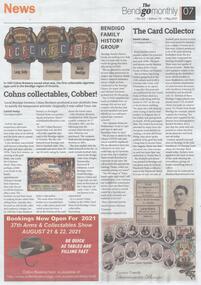
In 1907 Cohns Brewary produced the firt collectable cigarette type cards. The die-cuts featured local Bendigo and District football clubs.
Bendigo Monthly: Half page article entitled 'Cohns collectables, Cobber!'
bendigo, cohns soft drinks, cigarette cards
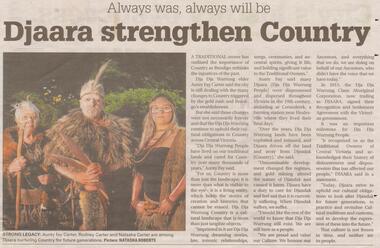
The Djaara people's importance to country was impacted by the dramatically imapcted by the development of gold mining in Bendigo. The recently redeveloped Beehive Building played a key role in the development of the Bendigo business sector.
Bendigo Advertiser: Two articles, one entitled 'City's history of success', and the other 'Djaara streghten Country'. Also attached is a pdf file of an account of the early Djaara People
bendigo, djaara country, beehive building
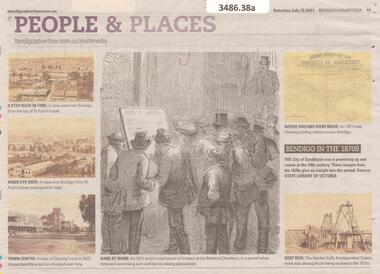
The City of Sandhurst was a promising up and comer in the 19th century. Images are from the 1870s from the state Library of Victoria.
Bendigo Advertiser Article entitled 'People and Places' - Five historical photos of views over Bendigo and an artist's impression of brokers at the Beehive chambers.
bendigo history
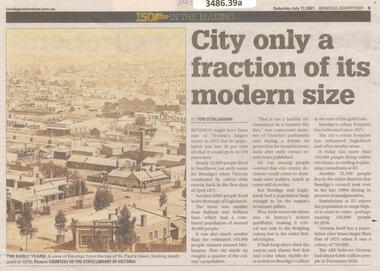
Bendigo might have been one of Victoria's largest towns in 1871 but its population was just 20 percent of what it would grow to 150 years later.
Bendigo Advertiser half page article and one black and white photo of Bendigo in 1875
bendigo, population
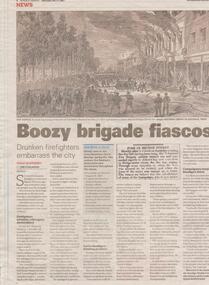
So many drunken firefighters arrived at the blazes 150 years ago that teetotalers started up their own fire brigade. Now known for their high standards on fire grounds, Bendigo's first brigades were sometimes found wanting. And that was assuming volunteers could even get their equipment to the scene of the blazes.
Bendigo Weekly: Full page article entitled 'Boozy brigade fiascos - drunken firefighters embarrass city'.
bendigo, beehive fire 1871
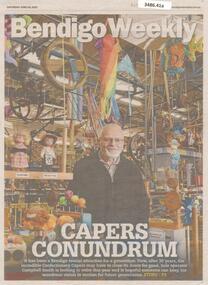
Campbell Smith had the passion to share his fascination with 18th century applied mechanic and extol the wonders of the industrial revolution. He set up Confectionary Capers in a shed on the highway at Junertoun in 1994.
Bendigo Advertiser article entitled 'Capers Conundrum' Front page and inner full-page article with colour photos.
bendigo, confectionary capers, tourist attraction, campbell smith
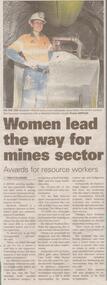
Elisabeth Viklund has been recognised by the Mineral Council of Australia's Women in resources award.
Bendigo Advertiser half page article entitled 'Women lead the way for mines sector' with coloured photo of worker in front of a loader deep below the earth's surface.
bendigo, elisabeth viklund, mandalay's gold and antimony mine at costerfield
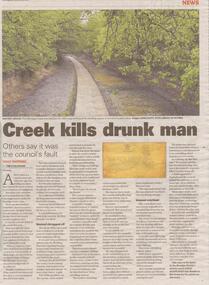
John Murphy died near Bridge Street in 1871, the second death that year. A coronial inquest determined that Murphy would have lived if the council had fenced off the creek.
Bendigo Advertiser full page article entitled 'Creek kills drunk man'. Half page photo of the creek going through Rosalind Park. Smaller photo of the town plan and the course of the creek in the 1800s.
bendigo creek, rosalind park
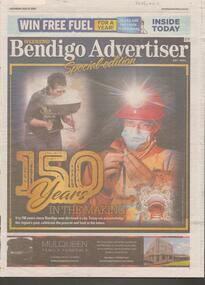
Mayor Jennifer Aiden acknowledged that Greater Bendigo has become a 'thriving', vibrant regional city. The mayor listed the achievements of the city since the discovery of gold change the landscape from that of pastoral. In the other article along with a photo of the fountain, the story relates the history since 1836 when Major Mitchell passed through the central Vicotorian region as one of the first Europeans to walk upon the Dja Dja Wurrung's land.
Bendigo Advertiser Two page of articles '150 years in the making'. The article acknowledges the region's past, celebrates the present and looks to the future.'
bendigo history
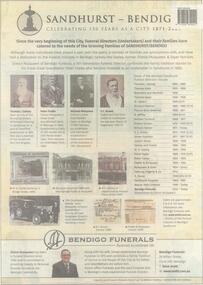
Although many individuals have played a part over the years, a number of families are synonymous with, and have had a dedication to, the funeral industry in Bendigo, namely the Oakley, Farmer, Fizelle/Mulqueen and Sayer familes.
Bendigo Advertiser: Full page Advert entitled 'Sandhurst - Bendigo celebrating 150 years as a city 1871-2021. Includes nine historcal images of undertakers and their premises.
bendigo history, undertakers
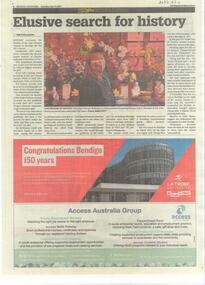
Sandhurst's 1871 population included the second largest number of Chinese nationals in the state, at 734. Some left a lasting mark including at the Joss house temple which celebrated its 150th anniversary. The history includes the mystery of the single Chinese woman recorded on the goldfields in 1871.
Bendigo Advertiser half page article with photo of volunteer Wendy Brotheras, honouring China's links to Bendigo at the Joss House as the temple celebrates 150 years.
bendigo census 1871, joss house
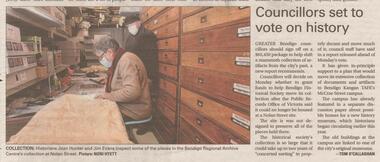
The City Councillors were asked to vote on allocation of money for the removal of the historical collection from Nolan Stret to the Bendigo TAFE campus.
Bendigo Advertiser Article entitled 'Councillors set to vote on history'
bendigo history
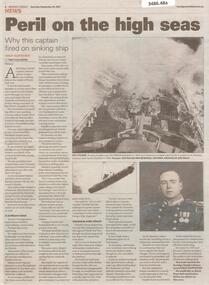
Bendigo born captain James Esdaile ordered sailors to open fire on a sinking ship at the height of World War Two.
Bendigo Advertiser full page article entitled 'Peril on the high seas' with three black and white photos of HMAS Adelaide, a midget submarine, and James Esdaile in 1935.
bendigo, hmas adelaide, japanese midget submarine, james esdaile
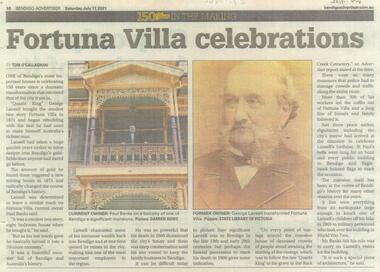
'Quartz King' George Lansell bought the modes two story Fortuna Villa in 1871 and began rebuilding with the zeal he had used to make himself Australia's richest man.
Bendigo Advertiser half page story entitled 'Fortuna Villa Celebrations' with two photos, one of Fortuna and its former owner George Lansell.
bendigo, fortuna, george lansell
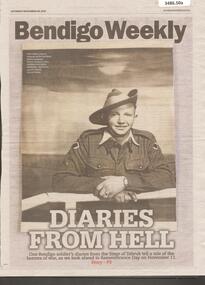
In May 1941, a Bendigo soldier, Peter Odium, came across dead bodies being whipped by a Sahara sandstorm. The Libyan town of Tobruk became the scene of a desperate siege for control because of its port, which the allies had to hold if it had any chance of disrupting German supply lines across North Africa in 1941.
Bendigo Advertiser two-page story entitled 'Diaries from Hell' - one soldier's diaries from the Siege of Tobruk tell a tale of the horrors of war, as we look ahead to Remembrance Day on November 11.
bendigo, colin odium, siege of tobruk
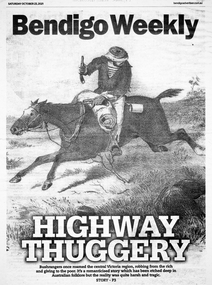
This document recounts the story of Gipsy Smith (real name William Turner), a notorious bushranger in 19th-century Australia, focusing on his involvement in violent crimes and his eventual capture. Gipsy Smith was involved in a shootout in central Victoria in 1856 that resulted in the death of Sergeant John McNally and the wounding of Constable John Moore. Smith and his accomplice escaped after the incident, which caused public outrage due to McNally's popularity. Smith was part of a group of bushrangers who terrorized travelers, merchants, and goldfields communities with armed robberies and audacious hold-ups. Notable incidents included tying up and robbing multiple victims, and high-speed horse chases with police. Bushrangers like Smith were sometimes romanticized as rebellious figures, but the document emphasizes the real violence and fear they caused. Smith, originally William Turner, was a former convict from Tasmania who became a bushranger after escaping to Victoria during the gold rush. He was known for his bravado, often displaying weapons openly among gold diggers. Smith was eventually recognized and arrested in Maryborough after the murder, narrowly avoiding a murder conviction due to a technicality with his arrest warrant. He was sentenced to 15 years of hard labor for manslaughter. After serving his sentence, Smith was trusted with responsible work, such as driving cattle and managing a farm, suggesting a degree of rehabilitation. The story is part of a historical series highlighting notable events in the region’s past.
Bendigo Advertiser story Sat Oct 23 2021 entitled "Cop-killer caught out" This item contains the following documents 3486.51a Bendigo Advertiser Page 1 Title Page - "Highway Thuggery" 3486.51b Bendigo Advertiser Page 3 article "Cop-killer caught out" the story of Gypsy Smith Bushranger
bendigo, gipsy smith bushranger
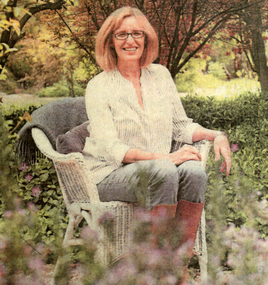
Katrina Nannestad won the 2021 ARA Historical Novel Prize in the Children and Young Adult (CYA) category for her book We Are Wolves. Nannestad, a teacher and children's author, received the prize after being shortlisted the previous month. The ARA Historical Novel Prize is a significant award, with $100,000 in total prize money; the CYA category winner receives $30,000. We Are Wolves is Nannestad's first historical novel, inspired by a tidbit she sent to her publisher. The story follows Liesl, Otto, and baby Mia Wolf as they flee East Prussia and survive as displaced war orphans. The novel explores themes of identity, family, trust, survival, and hope. The judging panel, chaired by Paul Macdonald, praised the novel for its writing, research, and appeal to both young and older readers.The book was described as simple, poetic, deeply moving, and a brilliant exploration of important issues.
Bendigo Advertiser Article - Historic win for Katrina Sat Oct 23 2021 Page 2 Bendigo weekly This item contains the following documents 3486.52a Colour photo of Sedgwick author Katrina Nannestad 3486.52b The article Historic win for Katrina
bendigo, author katrina nannestead novelist
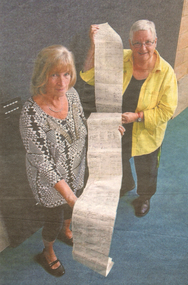
This document highlights the historical and community significance of swimming pools in Bendigo, focusing on personal stories, community efforts, and social change: Items belonging to Olympic champion Faith Leech, such as her dressing gown and Olympic torch, are displayed to honor her achievements and inspire others. Family members and local historians emphasize the determination and impact of local swimming figures. The push for modern, Olympic-size pools in Bendigo was inspired by the 1956 Olympic Games. While government grants supported pool construction, significant fundraising was done by local residents, who contributed £17,500—a major portion of the total cost. Fundraising was competitive, with community members recognized for their efforts (e.g., being crowned "Queen of the Pool"). Early advocacy for pools began in the 1880s, with Golden Square residents lobbying for their own facility. Golden Square's pool, opened in 1918, was the first in Bendigo to allow mixed-gender swimming. The Bendigo Municipal Pool only permitted mixed bathing after its late 1950s reopening, reflecting broader social changes. Even into the 1920s, women had to request dedicated swimming times for instruction. Learning to swim was vital for safety, especially due to the risk of drowning in mining dams during early settlement. Local newspapers published swimming instructions, and community members shared stories about learning to swim. The document promotes an exhibition and encourages visitors to record their own pool-related memories, which will be shared at a community event called 'Stories from the Pool.'
Article from the Bendigo Advertiser - Swimming pools in Bendigo Sat Nov 26 2017 Pictures Mark Kearney This item contains the following documents: 3486.53a Kay MacGregor and Vivien Newton hold the original petition from the Golden Square residents 3486.53b Faith Leech's dressing gown is among other belongings from the Olympic champion to go on show 3486.53c Article on swimming pools in Bendigo from the Advertiser
bendigo, swimming pools in bendigo
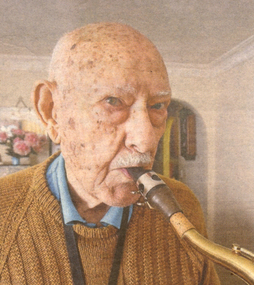
Ivan Whyte is a retired police officer who recently celebrated his 90th birthday. He was born in Shepparton and moved to Bendigo in 1958. Ivan lost his father, Charles, to pneumonia caused by WWI gas exposure, and his three brothers served in WWII. Ivan has been a member of the Evergreen Band since 1995, making him the longest-serving member with 27 years of participation. The Evergreen Band is a group of retired musicians (average age 76) that performs 25–30 concerts annually in nursing homes and retirement villages, plus weekly rehearsals. Ivan's passion for music began at age 15 with the violin, later learning cornet, clarinet, saxophone, trombone, and trumpet. He played in the police band in Melbourne, performing at Government House and various state functions. Ivan was married to Sylvie for 52 years, sharing a deep musical connection. He has three stepchildren, five grandchildren, and eight great-grandchildren. His current partner, Margaret Rennie, describes his life as revolving around music. Ivan remains active with the band and his dog, Spot, and has received recognition from politicians and public figures for his contributions.
Bendigo Advertiser Article - "Evergreen musician's milestone" story by Lucy Williams, picture by Noni Hyett This item contains the following documents 3486.54a Colour photo of retired policeman Ivan Whyte playing his saxaphone 3486.54 Bendigo Advertiser Article - "Evergreen musician's milestone"
bendigo, ian whyte police officer, evergreen band
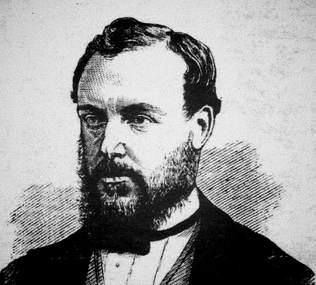
This document examines the controversial legacy of Dr. James Patrick Murray, focusing on his involvement in maritime violence and his surprising recognition by the Bendigo Council. Bendigo Council awarded Dr. Murray a bonus and a glowing reference 150 years ago, despite his alleged involvement in mass murder at sea. He received a £50 bonus (over $10,000 today) for his work during a public health crisis. Murray captained the brig Carl, which was involved in forcibly transporting islanders to work on Fiji's cotton plantations. Accounts describe extreme violence: when enslaved islanders resisted, Murray and his crew fired into the hold, drilled holes to shoot more easily, and disposed of bodies at sea—allegedly killing 70 people. Survivors were delivered to Fiji, and the crew received a large finder's fee. Murray was described as charming and confident, but also as cruel, treacherous, and deceitful by contemporary sources. He betrayed his own crew by testifying against them in exchange for immunity from prosecution. Some accounts of Murray's actions may be exaggerated or self-serving, as witnesses were also implicated in the crimes and may have sought to minimize their own roles. Murray was Irish-born, educated at Trinity College Dublin, and established as a Melbourne doctor before turning to risky ventures in the South Seas, drawn by the promise of wealth and adventure. The South Pacific at the time attracted many fugitives and outcasts seeking fortune or escape from the law. Despite his violent past, Murray returned to Victoria and maintained a respectable public image, with few aware of his connection to the notorious events in Fiji. In 1872, Bendigo faced a deadly smallpox outbreak.Dr. Murray was appointed with full authority to manage the crisis and was credited with successfully containing the outbreak, earning public gratitude and official praise. Shortly after his public health success, Murray was implicated in the slave trading of South Sea islanders, specifically through his involvement with the ship Carl. Court testimony revealed brutal methods used to capture islanders, including trickery and force. The scandal shocked the public, with widespread condemnation and questions about how Murray had been appointed to a position of trust. Victorian authorities and the press criticized Murray and those who had supported or employed him. Despite the revelations, the Bendigo council felt obligated to honor their promise of a bonus for his work during the outbreak, citing the importance of keeping their word. Murray did not return to Bendigo after the scandal broke, though he sent letters expressing gratitude and claiming to have reformed. His claims of redemption were met with skepticism and derision by the press. The ship Carl was seized, and several crew members were convicted and sentenced for their roles in the slave trading operation. Murray disappeared from public view, with reports suggesting he fled to England, leaving his family behind.
Bendigo Advertiser Article - "Council granted slave trader a healthy bonus" Sat Aug 20 2022, story by Tom O'Callaghan and images courtesy of TROVE 3486.55a Black and white etching of James Patrick Murray 3486.55b Part of the article from the Bendigo Advertiser 3486.55c Black and white etching of the seizing of a slave trader's ship 3486.55d Part of the article from the Bendigo Advertiser
bendigo, james patrick murray
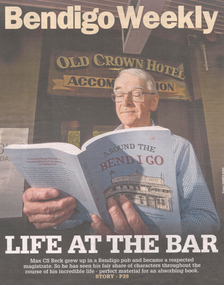
This document is a personal and nostalgic account by Max CS Beck, reflecting on his childhood and Bendigo's social history during the 1950s and 1960s. Beck's father, Reg, owned and ran The Crown Hotel, which became a central social hub in Bendigo after World War II. The hotel was known for its lively atmosphere, especially during the '6 o'clock swill' when patrons rushed to buy and consume drinks before the 6 pm closing time. Colorful anecdotes, such as the story of a severed finger prank involving a tobacco tin, illustrate the camaraderie and humor among patrons. Drinking was a standing-only affair, with heavy smoking and loud conversation common. The ritual of last drinks and the clearing of the bar at closing time were daily highlights. Sawdust was used on the bar floor to manage spills and, humorously, to recover lost coins and even a diamond ring. The influx of American soldiers during the war brought new customs and challenges to local pubs, including currency confusion and overcrowding. Beck's father previously ran the Canadian Hotel in Seymour, which was popular with American troops. Beck recounts his mischievous childhood, including borrowing his father's car underage and the influence of hotel patrons on his upbringing. The narrative touches on the loneliness of having parents who worked long hours and hints at family struggles, particularly related to alcohol. Beck expresses a sense of loss for the Bendigo of his youth, noting how much the city and its culture have changed.He emphasizes the importance of treasuring memories of the past without grieving for what is gone.
Bendigo Advertiser "Life the bar" and "the day a severed finger was in a pub" Sat Aug 08 2022 3486.56a Max C S Beck in front of the Old Crown Hotel 3486.56b Colour Photo Beck's Hotel Hargeaves St Bendigo in about 1980 3486.56c Article from the Bendigo Advertiser "Life the bar" and "the day a severed finger was in a pub"
bendigo, beck's crown hotel, max c s beck
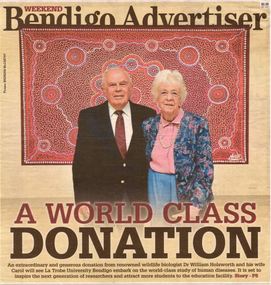
This document announces a significant philanthropic donation from Dr. William Holsworth, a renowned wildlife biologist, and his wife Carol to La Trobe University Bendigo.
Bendigo Advertiser article on Dr William Holsworth and his wife Carol - donation to Latrobe University This item contains the folowing document: 3486.57a Dr William Holsworth and his wife Carol - colour photo and article
bendigo, dr william holsworth, carol holesworth, latrobe university
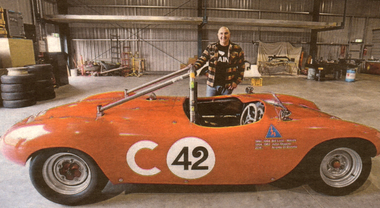
Angelo Di Donato, from Bendigo, is passionate about restoring various items, a hobby he shares with his father, who was originally a blacksmith.Restoration is a nighttime hobby for Di Donato, who works as an RACV regional sales manager. Di Donato discovered a rusted 1960s racing car chassis by chance in Numurkah, Victoria, after missing out on buying machinery at a clearance sale. He researched the car's origins and found it was built by mechanics Derek Smith and Richard Hilyear at Monaco Autos in Dandenong for Bill Lorde-Milnes, using leftover parts. It is the first of seven 'Aussie Specials.'Di Donato spent two years restoring the car, making all necessary parts himself, and ensuring it complied with historic racing rules (e.g., drum brakes, modern tires for safety). The car, known as the Monaco Motors Aljon Special, features a 272 ci V8 Ford Customline engine and a VW Beetle transaxle (which required multiple replacements due to power mismatch). The car weighs 700 kg and can reach speeds up to 230 km/h (145 mph). Di Donato participates in the Regularity class at the Historic Winton event, where drivers aim to match nominated lap times rather than race for speed. He has previously won in this category and prepares meticulously by memorizing corner speeds. The event is organized by the Austin 7 Club and features historic cars, motorcycles, and sidecars, with displays and market stalls. Di Donato involved his family in the restoration and racing activities, including his father and son. He paid tribute to a former owner, John Skipper, by showing him the restored car. The event also celebrates significant vehicle anniversaries, such as 120 years for Studebaker and Cadillac, and 100 years for Austin Seven and others.
Bendigo Advertiser Article - "Hobby rebuild revs up" by David Chapman, pictures by Noni Hyett, Sat 28 2022 This item contains the following documents 3486.58a The restored 1960 car with Angelo, colour photo 3486.58b The rusted wreck in Numurkah - colour photo 3486.58c Bendigo Advertiser Article - "Hobby rebuild revs up"
bendigo, angelo di donato, monaco motors aljon special
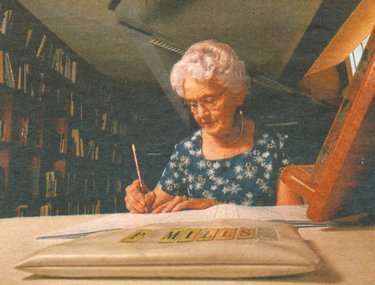
The local history movement in Bendigo is expanding, with increased community engagement and events such as the Bendigo Historical Society's first gala dinner, which raised $3000 for cataloguing equipment. There is ongoing discussion about creating a dedicated local history museum and expanding storage at the Bendigo Regional Archives Centre (BRAC). Local history is now recognized as a vital field, with both locals and visitors showing interest in Bendigo's past. Local schools are incorporating local history into their curriculum, encouraging younger generations to explore family stories. The rise of the internet and ancestry websites has made family history research more accessible, but expertise in cataloguing and archival research remains crucial. Many historical records are still in print, and there is a push for digitization to make information more easily accessible worldwide. Mistakes can occur in family history research, especially with online family trees, highlighting the need for careful verification by experts. The genealogical society has traced Mrs. Pankhurst's origins, family, and career in Bendigo, but some mysteries remain, such as her connection to a man who died overseas. Researchers suspect she may have been involved in wartime support groups, but definitive answers are still being sought.
Bendigo Advertiser Article - Interest in local history is growing, pictures by Darren Howe - Dec 16 2017 This item contains the following: 3486.59a Colour photo of Phyllis Mills doing research 3486.59b Colour photo of Judi Fisher 3486.59c Bendigo Advertiser Article - Interest in local history is growing
bendigo, mrs pankhurst, phyllis mills, judi fisher
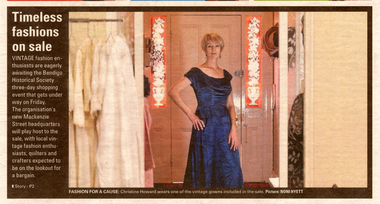
This document details a vintage fashion pop-up shop organized by the Bendigo Historical Society The pop-up shop is a three-day event for vintage fashion enthusiasts, quilters, and crafters. It is held at the Society's new headquarters on Mackenzie Street, Bendigo. The shop is open Friday to Sunday, 10:30am–4pm. Clothing and accessories dating from the 1900s to the 1960s are available. Prices range from $5 to $50.Many items are handmade or hand-finished, but lack documentation about their origins or previous owners. Some items are ready to wear, while others are better suited for repurposing by crafters or quilters. The Society holds 35,000–40,000 items and is reducing its collection to focus on pieces of significant historical value. A 2008 assessment found about 40% of the collection is of "curiosity interest" only, with no direct historic link to Bendigo. Only items without provenance or documentation are being sold; important historical pieces are retained.Experience and Appeal. The sale is designed to give shoppers space to browse and inspect items.
Bendigo Advertiser Article - Pop-up shop for fans of fashion, Thursday May 26, 2022 by Julieanne Strachan, pictures by Noni Hyett This item contains the following documents: 3486.60a Colour Photo of Christine Howard wearing one of the vintage gowns 3486.60b Bendigo Advertiser Article - Pop-up shop for fans of fashion 3486.60c Colour Photo of a woman in vintage wear and a man dancing 3486.60d Colour Photo of Christine Howard in a vintage dress
bendigo, euan mcgillivray
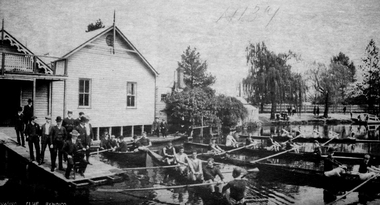
Rowing was introduced to Bendigo in 1872 by John Godfrey, who built the first wooden skiff and promoted the sport locally. The Sandhurst and Bendigo Rowing Clubs were formed in 1873, with Lake Weeroona's creation in 1879 providing a permanent home for the club. BRC members have competed nationally and internationally, including at the Commonwealth and Olympic Games. Notable achievements include women from Bendigo winning the Henley on the Maribyrnong three years in a row during the 1930s, challenging gender norms in sport. Key athletes such as Hannah Every-Hall and Neville Howell have played significant roles in the club's development and reputation. The club emphasizes inclusivity, welcoming juniors, women, men, and masters, and fostering a family-friendly, socially responsible culture.The ethos of volunteerism and community connection is central to the club's identity and future aspirations. The club has survived challenges such as droughts, wars, and the COVID-19 pandemic, consistently adapting and continuing its activities. Physical mementos and historical relics are preserved and celebrated, especially during milestone events like the 150th anniversary. 1872 the First skiff built and rowing demonstrated in Bendigo.1879: Lake Weeroona created.1927: Club officially named Bendigo Rowing Club.1969: Revitalization led by Olympic gold medallist Neville Howell.1992: Jason Day represents Australia at the Barcelona Olympics.2012: Hannah Every-Hall competes at the London Olympics.2022: 150th anniversary celebration.
Bendigo Advertiser Article - Rowing for 150 years, Sat 04 June 2022, by Anthony Pinder This item contains the following documents: 3486.61a Colour photo of current Bendigo Rowing Club President Lynda Davis and Jesse Sherwood in the club rooms 3486.61b Colour photo of four members in a kayak 3486.61c Colour photo of Livia Rosaia exercising 3486.61d Black and white photo of the Bendigo Rowers in 1905 at the old sheds which were situated at the Nolan St end of Lake Weeroona 3486.61e Bendigo Advertiser Article - Rowing for 150 years
bendigo, bendigo rowing club, john godfrey, lake weeroona
