

Historical information
Known as Karchob it is divided into 2 types of gold embroidery:
1. Key Aspects of Zardozi Embroidery:
Origin and Meaning: The term "Zardozi" comes from the Persian words "zar" (gold) and "dozi" (embroidery), literally meaning "sewing with gold".
Materials Used: Traditionally, threads were made of pure gold or silver, but modern zardozi typically uses copper wires with a gold or silver polish, often blended with silk threads, sequins, and crystals.
The Process:
Adda: The fabric is stretched tightly over a wooden frame, known as an adda, to facilitate precise, delicate work.
Aari Needle: Artisans often use a hook-ended needle, similar to a crochet needle, called an aari, to make intricate stitches.
Techniques: Specialized techniques include Dabka (coiled wire) and Kasab (twisted wire) to create raised, three-dimensional motifs.
Common Motifs: Designs often feature intricate floral patterns, leaves, paisley, and geometric shapes inspired by nature and architecture.
2. Key details about Kamdani embroidery:
Technique: It is often called a "lighter version" of Zardozi. It involves using a needle to insert flat metallic wires (badla) through the fabric, making tiny stitches that sparkle, often creating dots, paisleys, or floral patterns.
Origin: The craft originated in the Indian subcontinent, specifically developing in Lucknow, India.
Materials: Originally done with pure gold or silver threads, modern Kamdani often uses synthetic metallic threads or beads for affordability.
Application: It is commonly featured on luxurious textiles, including georgette, chiffon, and cotton, frequently worn as formal wedding wear (sarees, dupattas, and kurtas).
Types of Work: It is often referred to by related terms such as Mukaish, Badla, or Fardi work.
Physical description
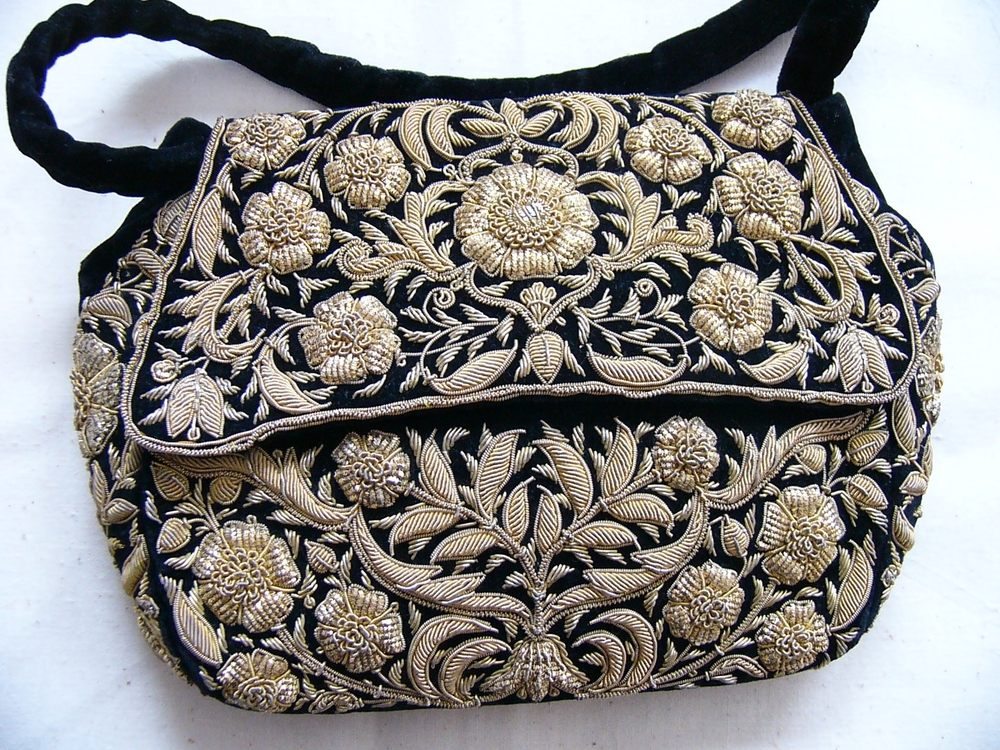
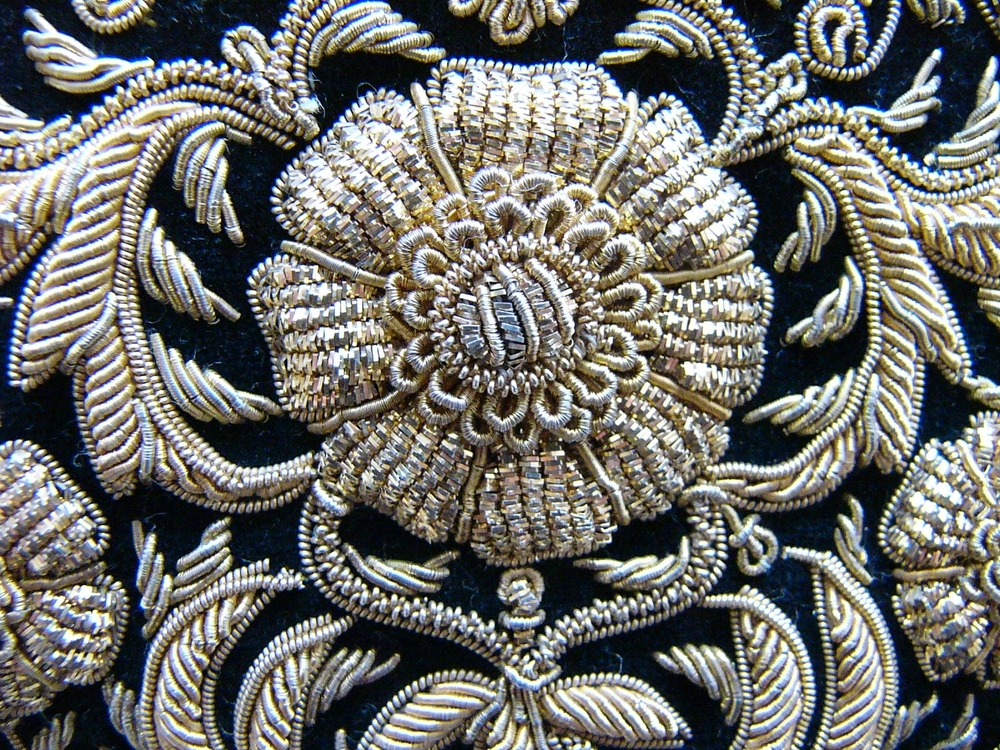
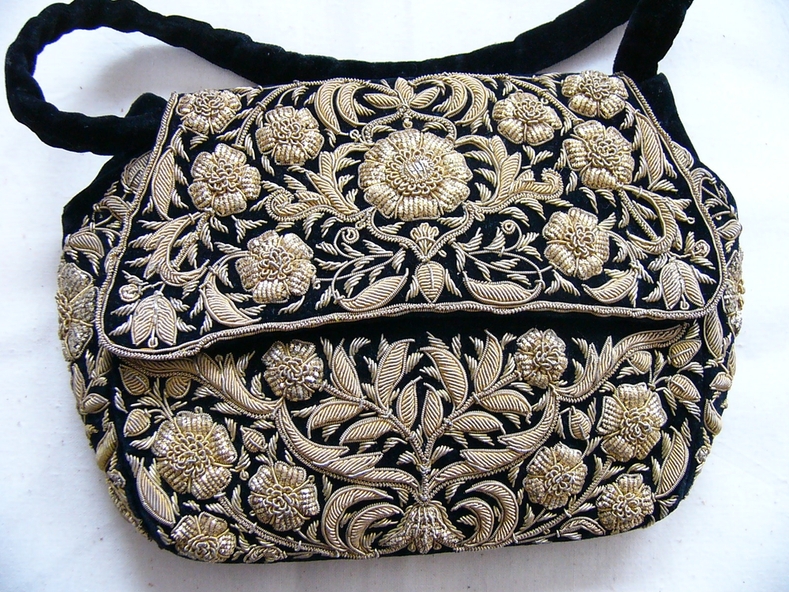
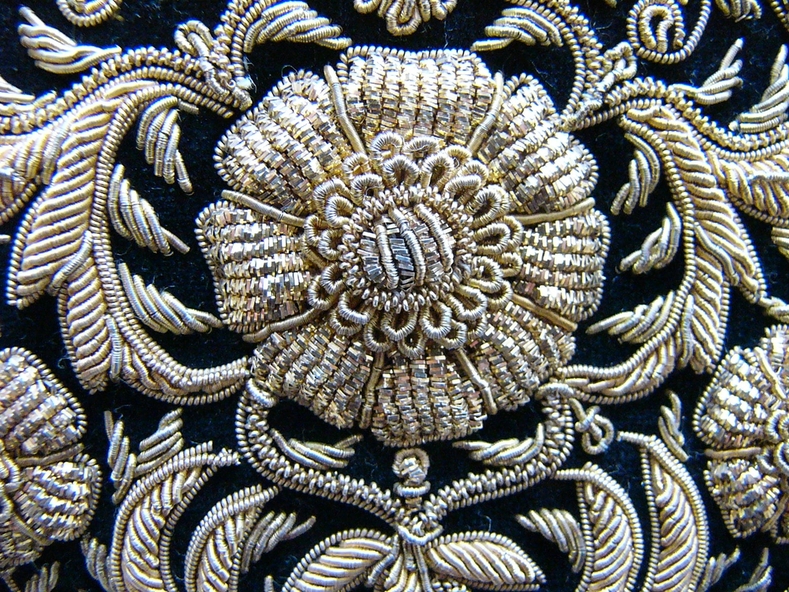
Gold embroidery all over bag except under flap. Intricate design on flowers in very typical of the variety of metal threads. Velvet handles with black silk lining with press-studs in both corners of the flap. Decorative beaded tassel at base.
Intricate design of flowers in typical design known as Karchob.