

Historical information
Traditionally worked using white thread onto a fine white muslin, Ayrshire embroidery is recognisable by stylised floral motifs with areas of filled in cutwork. Developed from Dresden embroidery (a form of pulled work) and tambour embroidery, it uses a range of stitches, including satin stitch, chain stitch, eyelets and buttonhole edging as well as a range of lace filling stitches. The technique became popular in the early nineteenth century, when the previous fashion of elaborate gowns with hooped skirts was replaced by looser, simpler white cotton muslin garments. Although the elegant simplicity was favoured, women also desired some decoration. However, looms of the time could not create complex designs, so women turned to hand stitching.Using cotton muslin woven in Ayrshire, local women and girls would complete the intricate whitework to help supplement their family income. Mainly produced at home, Ayrshire whitework garments would be initially completed by one person. However, as the technique became more popular and the industry developed, to ensure high quality work, a piece would be passed around so that each embroiderer could focus on completing the stitches they specialised in.It is believed that the designs and motifs used in Ayrshire whitework were inspired by lace filling stitches found within an inset in a French Christening robe that was bought to Scotland by Lady Mary Montgomery, who then lent it to Mrs Jamieson of Ayr. She copied the stitches used within the robe and taught them to her outworkers, and she also produced plain muslin that was stamped with a water-soluble blue ink design that made embroidering the designs neater and more efficient. Ayrshire work became popular quite quickly, and it was incorporated into collars, cuffs and caps as well as children’s clothes and bonnets. Pieces were exported across Europe and the British Empire. As the decades progressed, technology advanced, resulting in looms that could incorporate decoration into the weave of the cloth, reducing the need for hand embroidered Ayrshire whitework.
Physical description
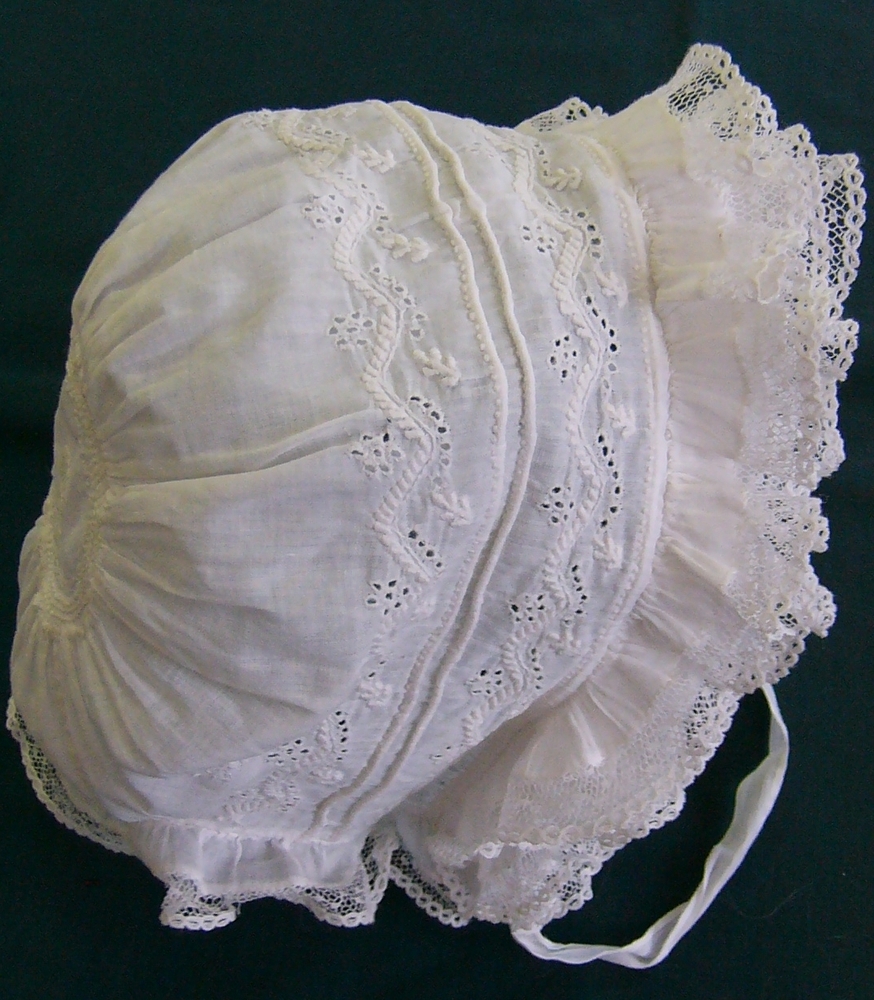
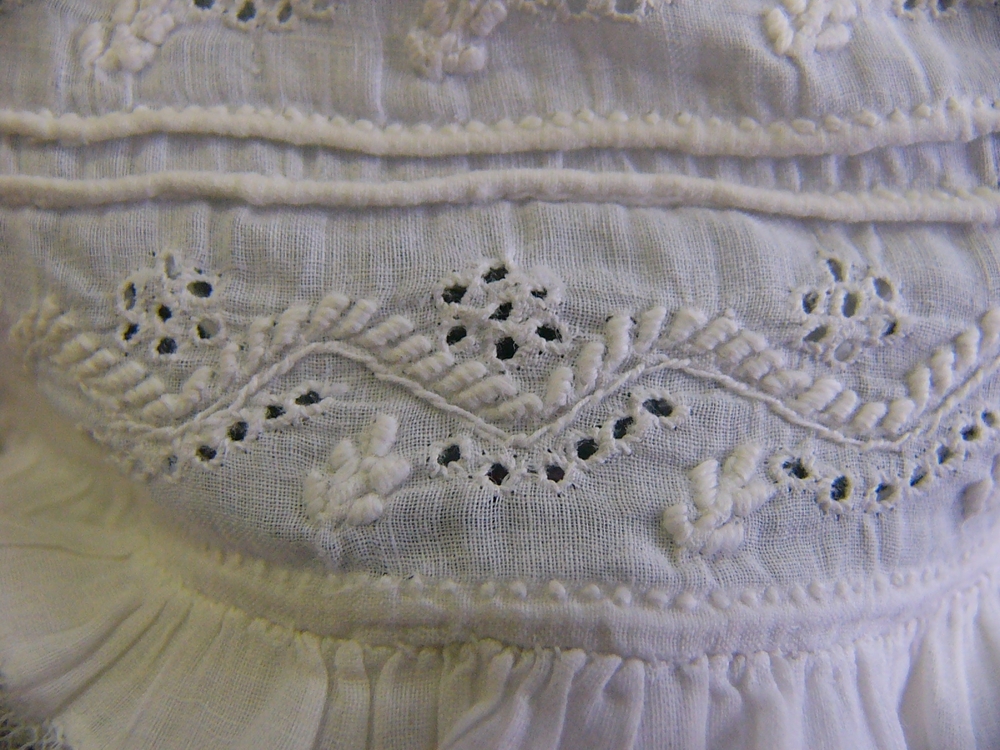
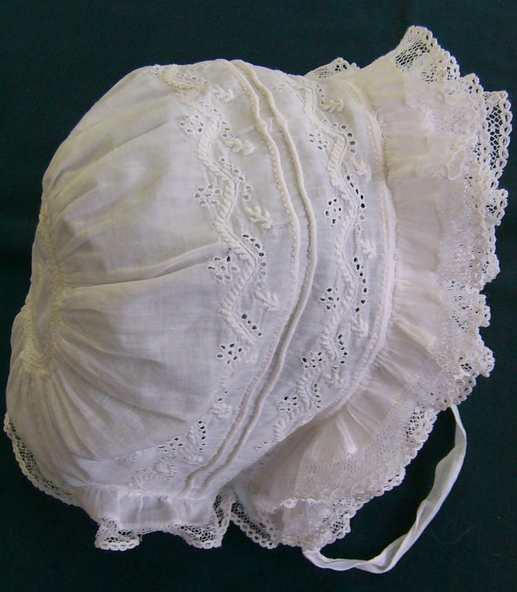
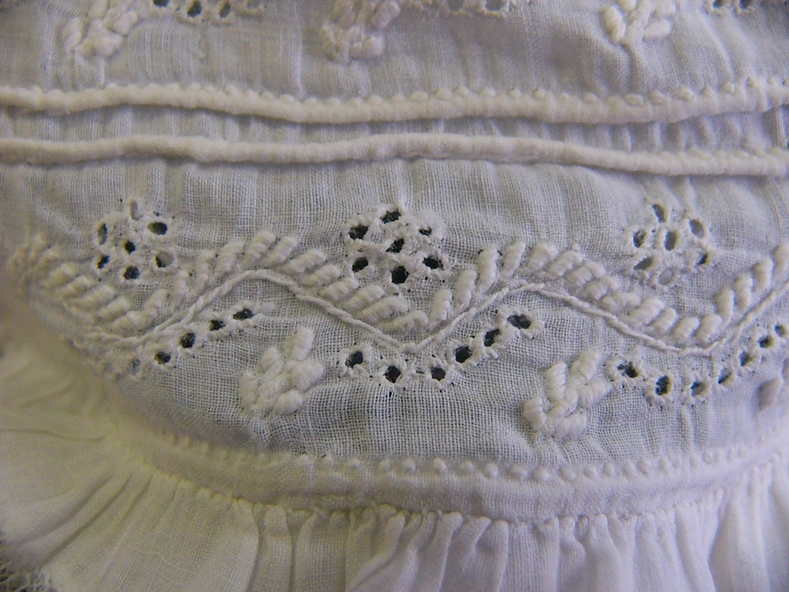
A triple frill of Buckingham lace, followed by two bands of fine embroidery - eyelets and satin stitch, and tucking, with small circle at crown.