

Historical information
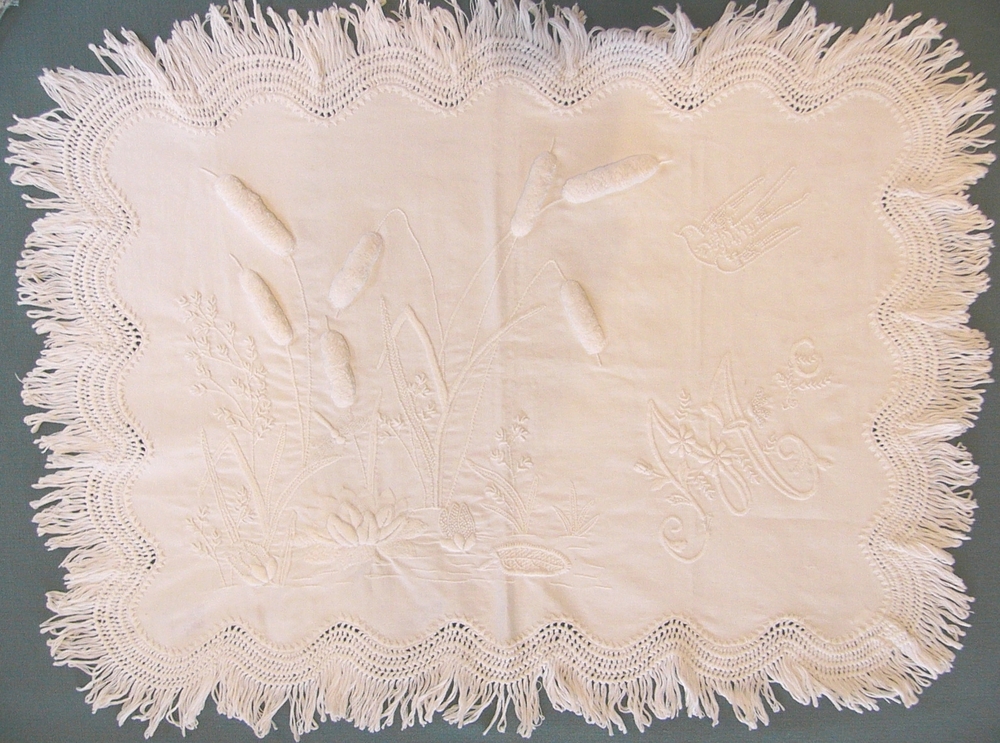
Mountmellick embroidery is a traditional, heavy white-on-white (whitework) hand embroidery style that originated around 1825 in the town of Mountmellick in County Laois, Ireland. Developed by Johanna Carter, the craft is celebrated for its deeply textured, sculptural appearance and all-Irish origins.
Strictly monochrome white-on-white (white thread on white fabric).
Traditionally worked on heavy, firm cotton satin jean, providing a sturdy, durable base for household items like bedspreads, tablecloths, and doilies.
Uses thick, matte, twistless or heavy cotton threads that do not divide, contrasting with the sheen of the cotton jean fabric.
Inspired by the local Irish flora, including blackberries, brambles, oak leaves, dog roses, ivy, ferns, and shamrocks, as well as later cultivated garden plants.
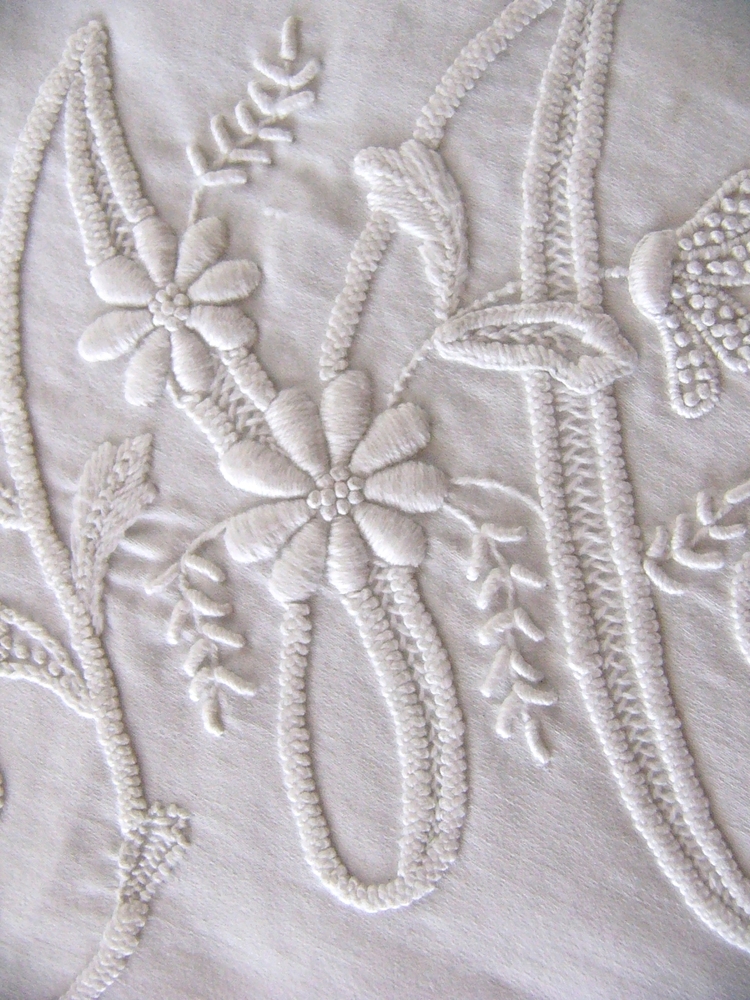
Features heavily padded and knotted stitches, such as satin stitch, French knots, stem stitch, buttonhole stitch, and the signature Mountmellick stitch (which creates a triangle-like, spiked outline effect)
Physical description
White satin jean. Design is passion-fruit flowers, leaves and brambles in a variety of stitches. The sachet is edged in long and short buttonhole stitch and the decorative fringe which usually edges this work has been cut away.