

Historical information
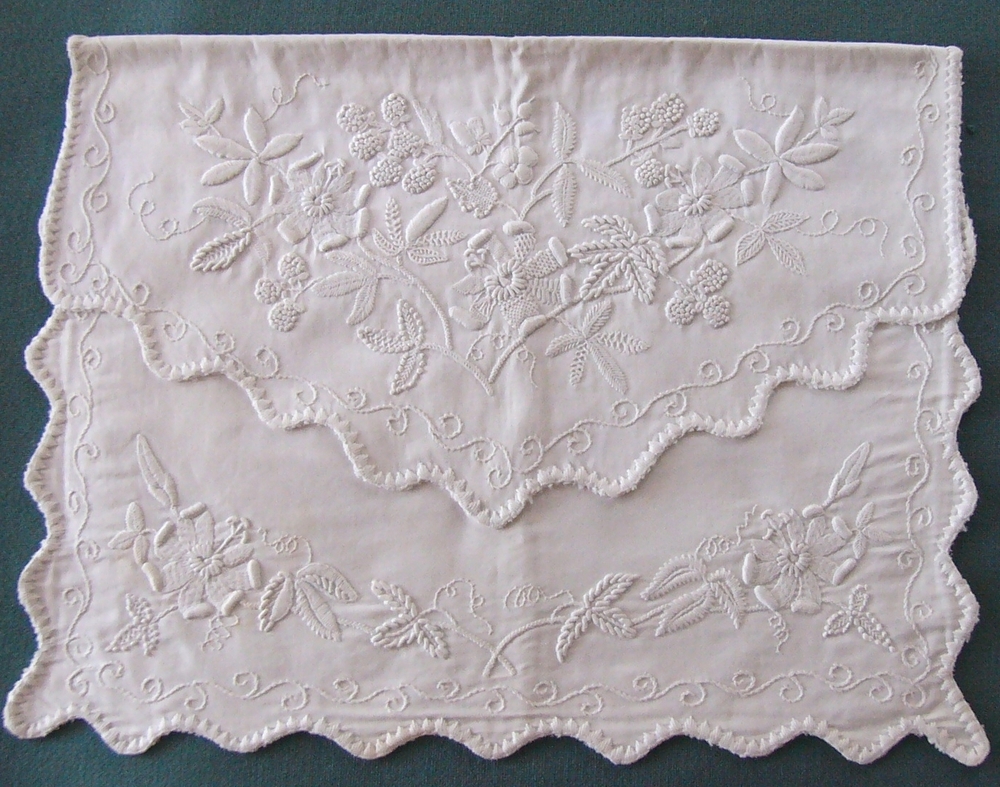
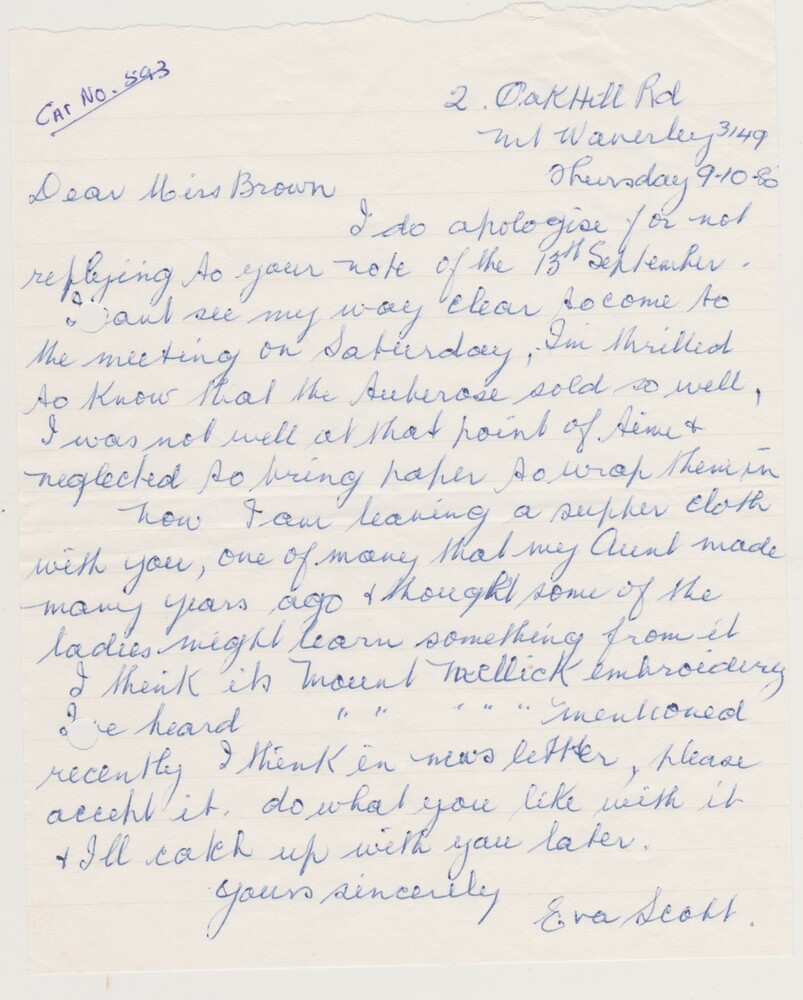
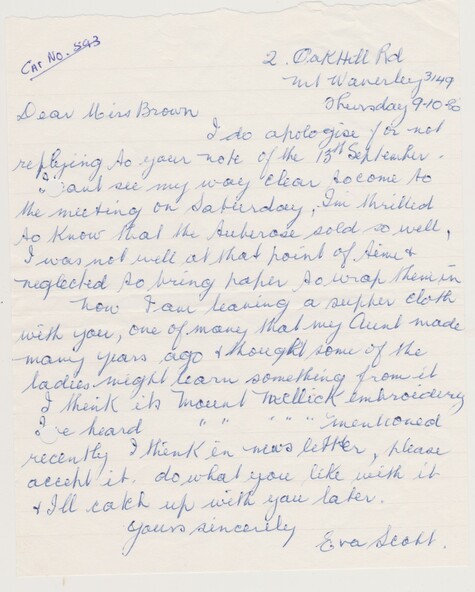
Made by aunt of donor.
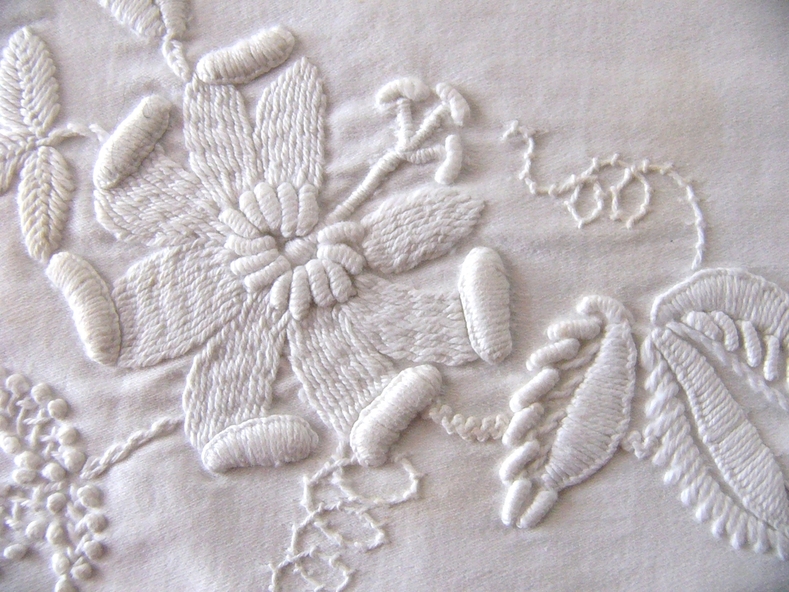
Mountmellick embroidery is a traditional, heavy white-on-white (whitework) hand embroidery style that originated around 1825 in the town of Mountmellick in County Laois, Ireland. Developed by Johanna Carter, the craft is celebrated for its deeply textured, sculptural appearance and all-Irish origins.
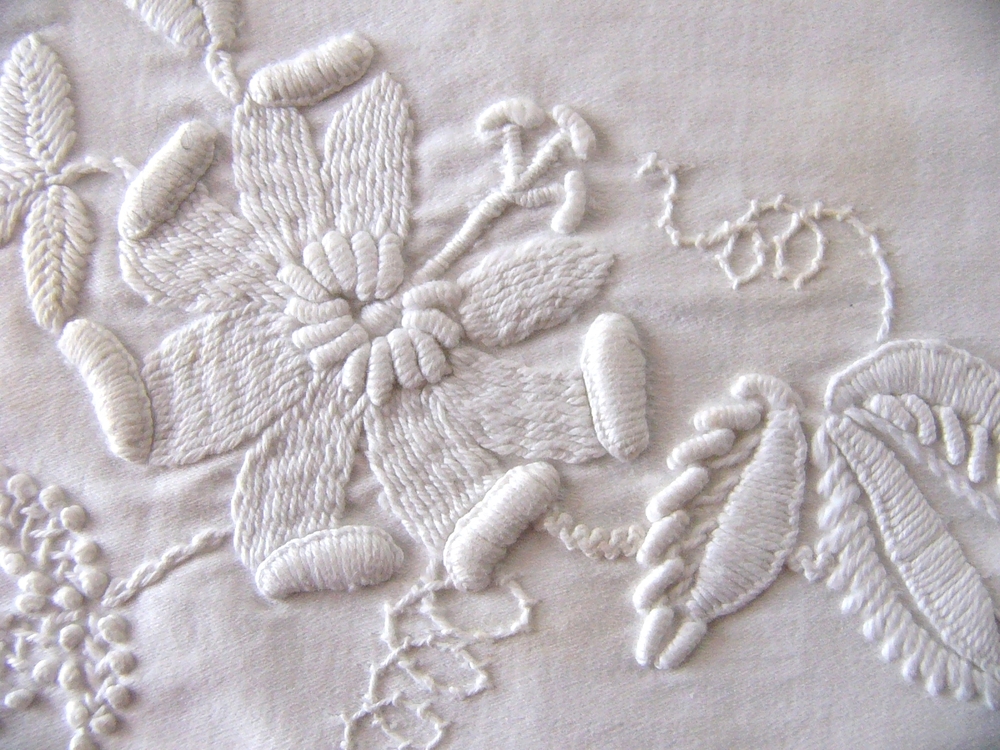
Strictly monochrome white-on-white (white thread on white fabric).
Traditionally worked on heavy, firm cotton satin jean, providing a sturdy, durable base for household items like bedspreads, tablecloths, and doilies.
Uses thick, matte, twistless or heavy cotton threads that do not divide, contrasting with the sheen of the cotton jean fabric.
Inspired by the local Irish flora, including blackberries, brambles, oak leaves, dog roses, ivy, ferns, and shamrocks, as well as later cultivated garden plants.
Features heavily padded and knotted stitches, such as satin stitch, French knots, stem stitch, buttonhole stitch, and the signature Mountmellick stitch (which creates a triangle-like, spiked outline effect)
Physical description
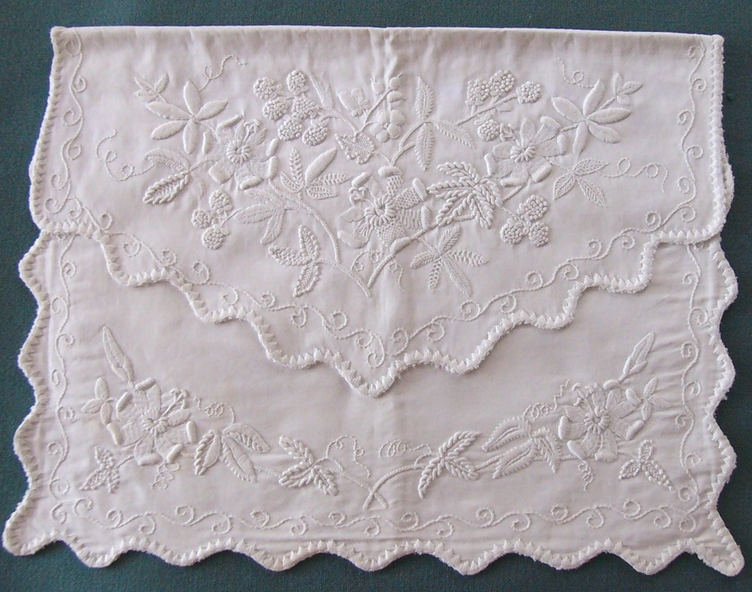
White linen with white embroidery around the turn of the century in the Mountmellick style. Large sprays of classical flowers and leaves decorate two sides of the cloth using traditional stitchery. The edge has a fine border and a scalloped finish.