

Historical information
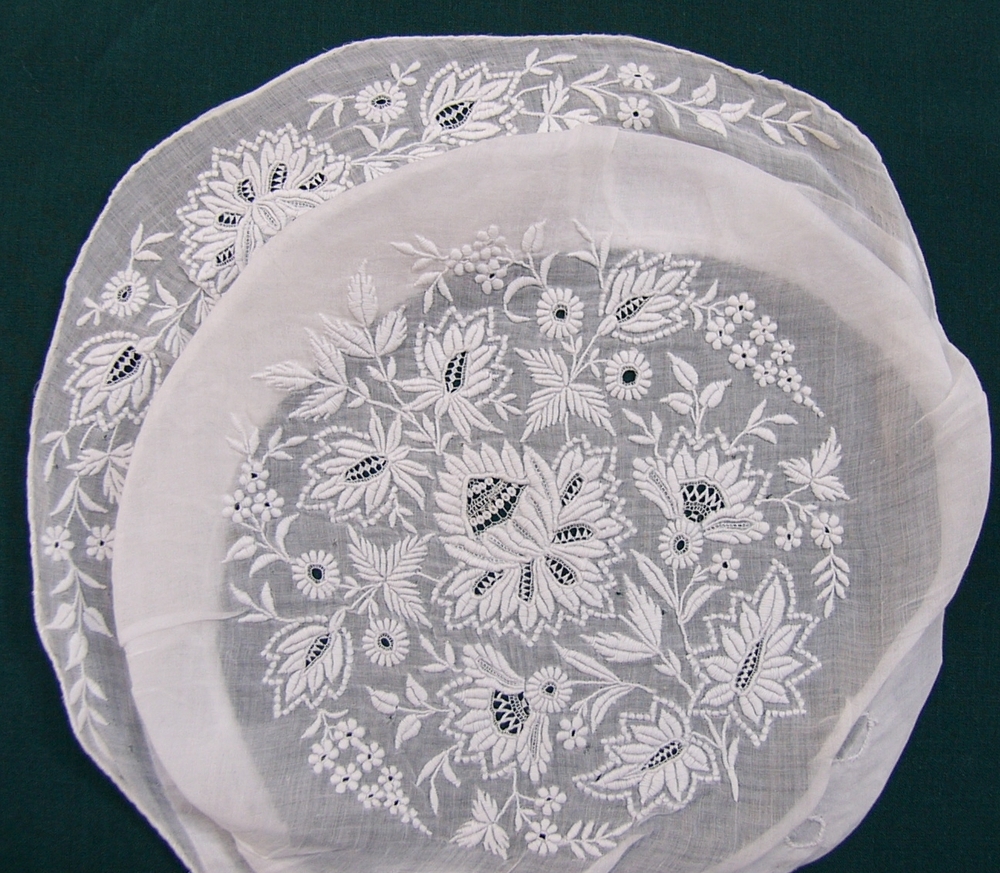
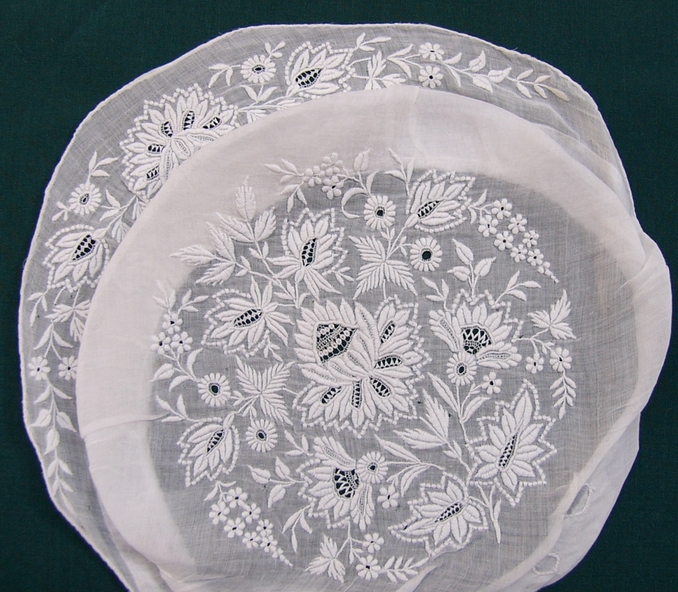
Damaged lace from brim removed at some stage. Repairs to back.
A 19th-century traditional lady's head covering from Brittany, France, is known as a coiffe rather than a standard bonnet, famous for its striking regional variations, intricate lace, and soaring heights. Key Features of the Breton Coiffe : Brittany had over 300 distinct styles of coiffes. A woman’s village, marital status, and age could often be identified just by the shape and size of her headwear. Evolution through the 19th Century: Early in the century, coiffes were smaller, softer caps fitting close to the head with small side flaps. By the late 19th century, many regional styles—most famously the Bigouden coiffe from southwestern Finistère—grew dramatically taller, sometimes reaching up to 30 or 40 centimeters high. Materials: They were crafted from fine white linen, starched cotton, organdie, or delicate lace.
Construction & Decoration: Many featured complex pleating, stiffening, and detailed whitework embroidery rather than heavy coloured ribbons. They were pinned or tied securely to the hair, which was usually parted and tucked away completely beneath the cap.
Physical description
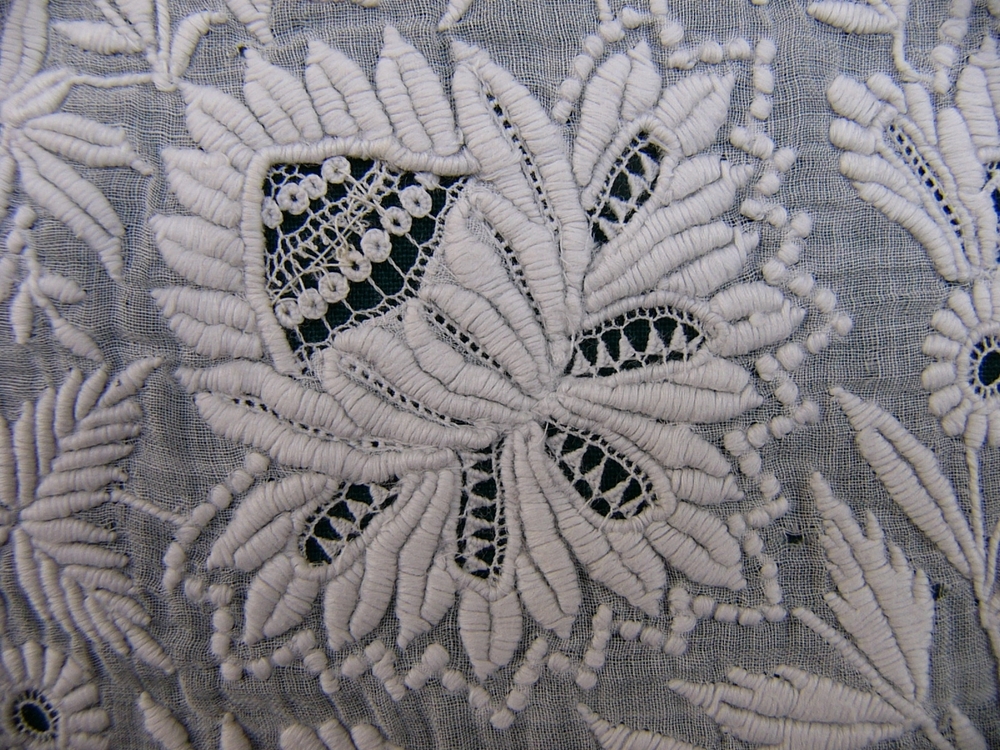
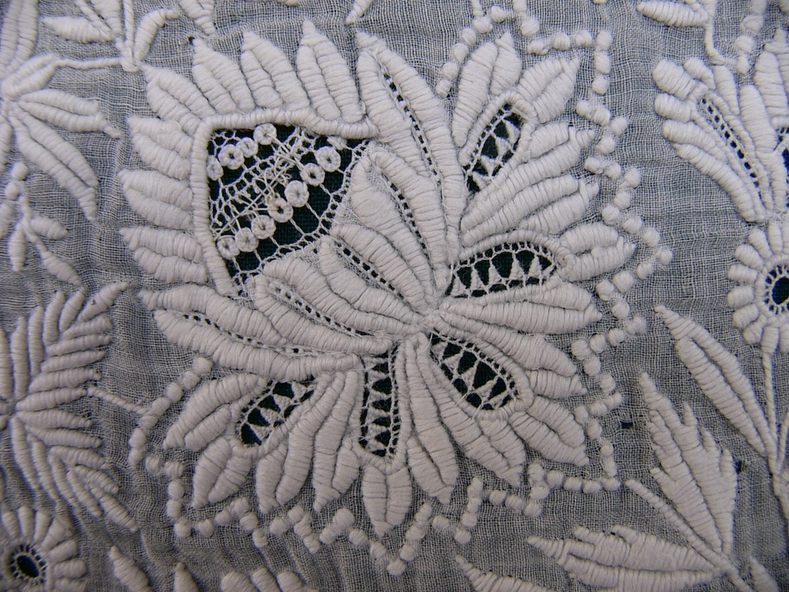
A traditional bonnet from Brittany. White organdy. The crown is worked in a floral design mainly in satin stitch and needle point fillings, the brim has a similar design.