

Historical information
Moroccan hand embroidery dates back to the earl 18th century.
The Berber tribes of Morocco, North Africa, used permanent tattoo symbols on their bodies, as a sign of cultural beauty. Later this very decoration was transferred onto pottery and then as hand embroidery, and became a big part of the country's tradition.
Many cities in the north of Morocco, like Meknes, Rabat, Salé, and Fez are all known for their unique way of embroidery style, technique, colours and fabric.
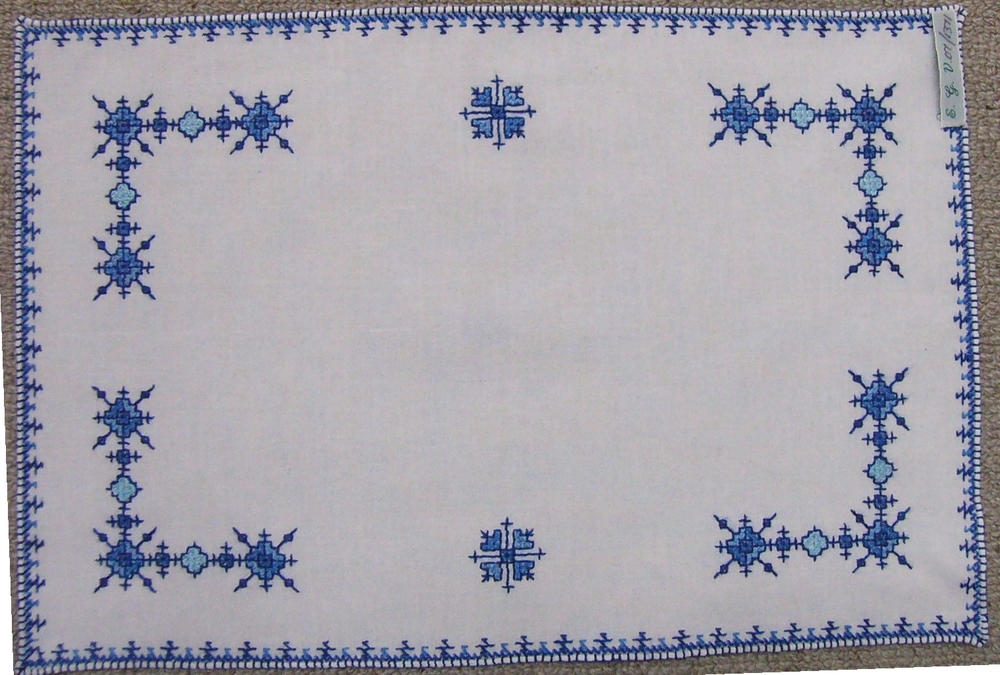
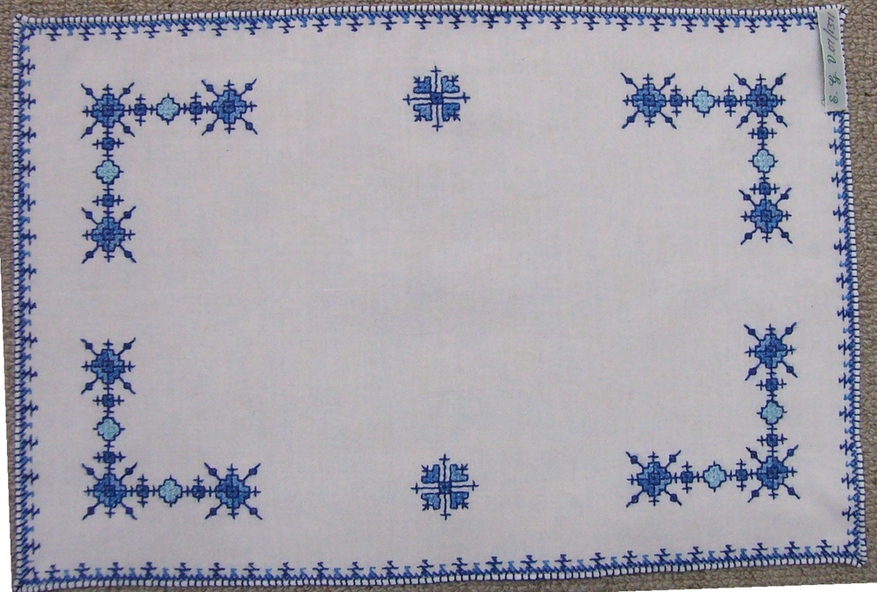
This particular piece of hand embroidery was done in Meknes in 1991. It has no pattern transferred or drawn onto the actual fabric.
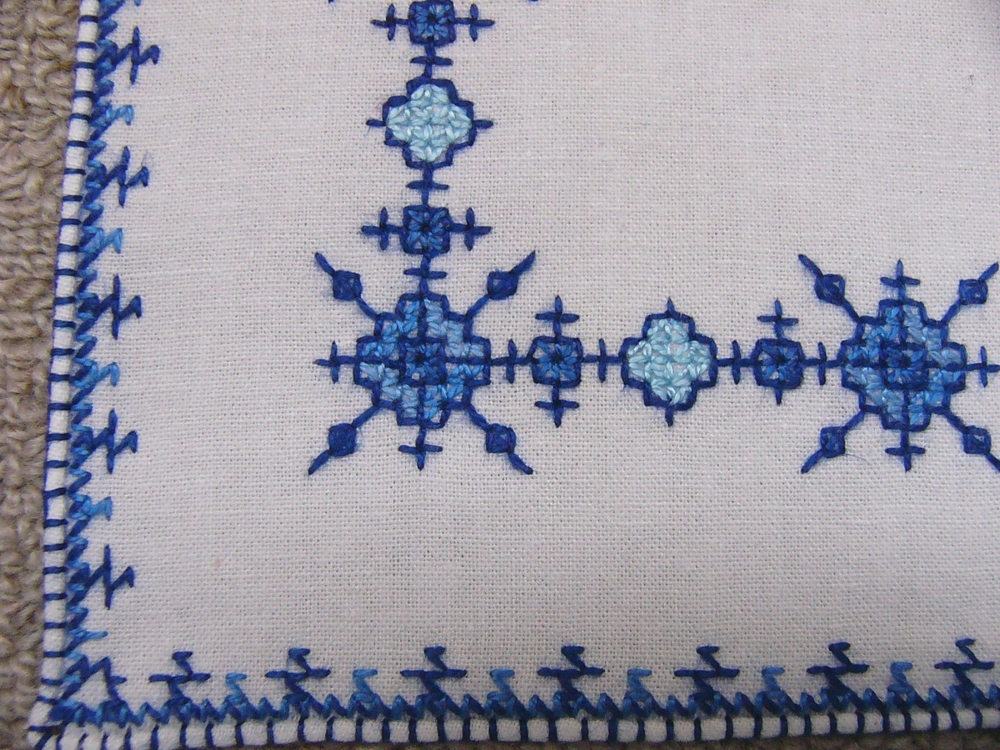
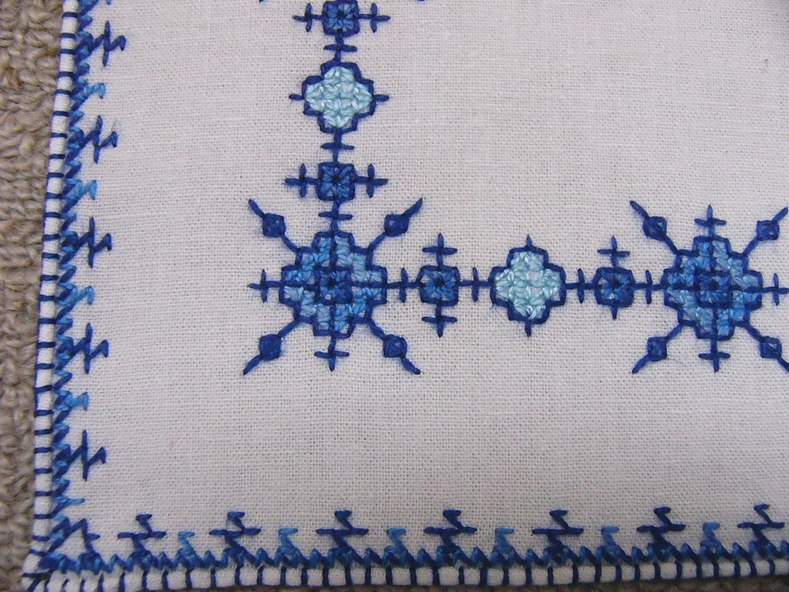
The embroiderer simply counts each thread; one stitch spans two to four threads of the fabric.
Embroidering horizontally, vertically or diagonally, leaving blanks to achieve the desired symmetrical design.
This is an extremely time-consuming technique, which requires mathematical precision and a lot of concentration and patience, There is no reverse side.
Physical description
White cotton mat decorated with counted thread and with a rolled, buttonhole stitched hem in shades of blue,