

Historical information
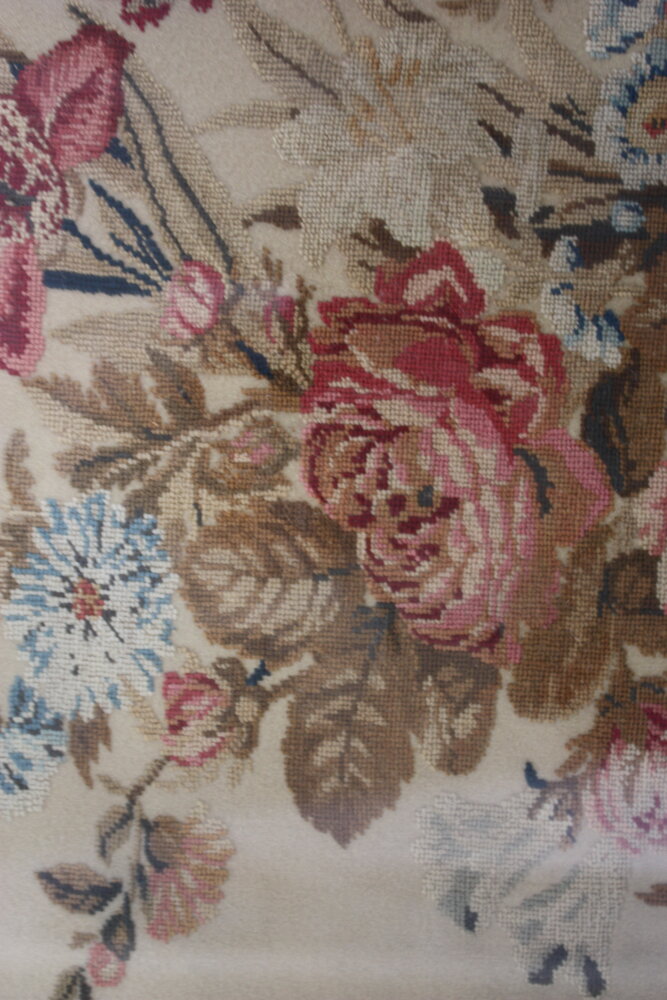
The needlepoint technique of Berlin work received its name from the German worsted wool that is an essential component in producing these pieces. Also referred to as canvas work, this form of pictorial embroidery became a craze during the mid-nineteenth century. Practiced by women of all ages, it consists of carefully arranged compositions with biblical, pastoral, or romantic scenes, floral arrangements, animals, and other pattern variations, which were largely distributed by German publishers. The tent stitch and cross-stitch were fundamental to these designs as canvas work patterns required the majority of the ground fabric to be covered with embroidery thread.
https://raynhamhallmuseum.org/thehomeneedle/the-berlin-wool-work-craze/
Apart from framed pictures, Berlin work was seen as a way to adorn everyday objects and can be found in sewing tools, upholstered furniture and articles of dress, represented here by a pair of men’s slippers. Moreover, the practice of beadwork could be adapted to canvas work patterns by using one bead for every painted square, augmenting the ornamental quality of this type of craft.
Physical description
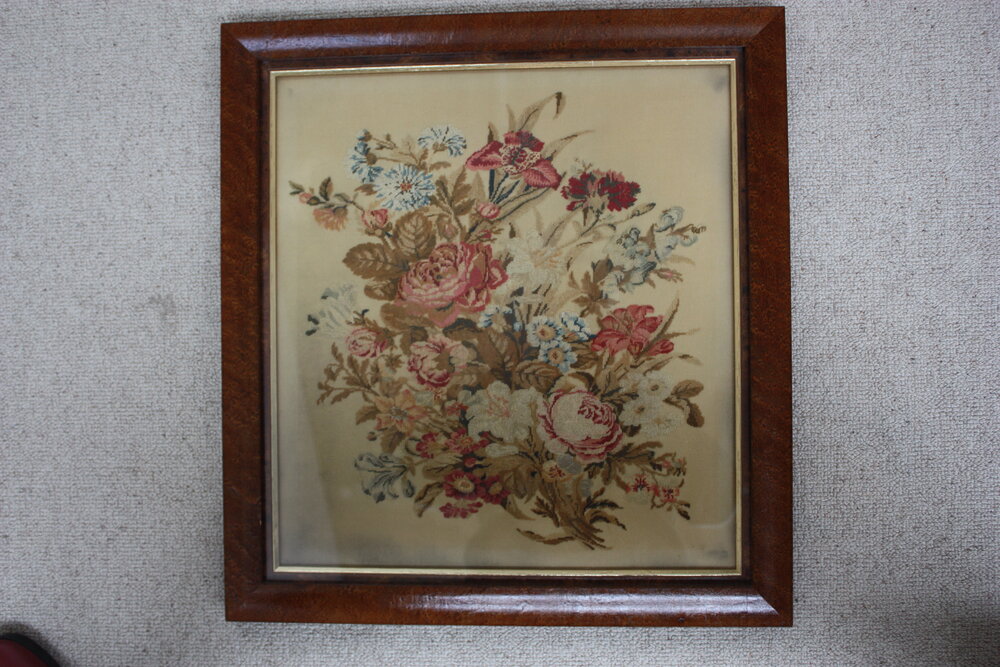
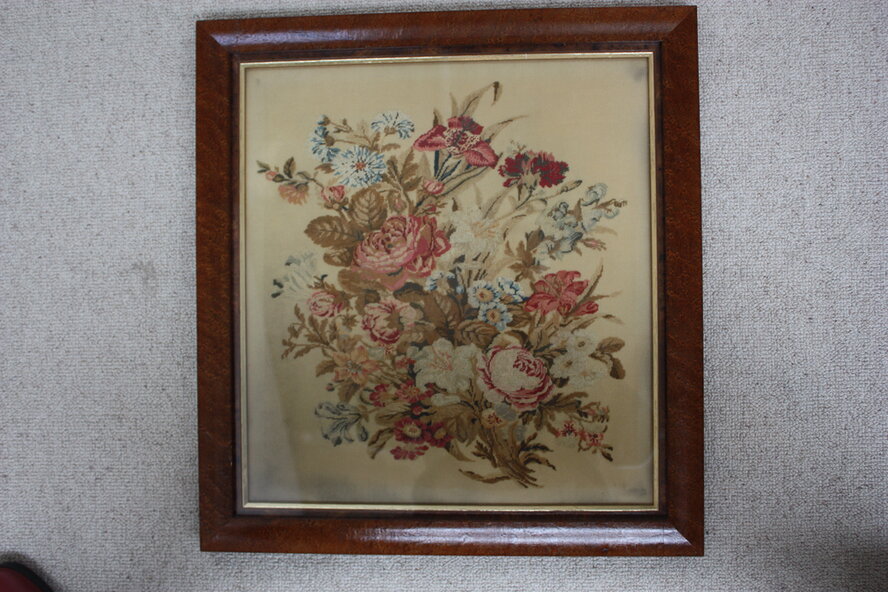
Berlin work (wool) picture of a bouquet of flowers in soft pinks, creams, fawns etc. on a background of dark cream felt or suede-like fabric.