

Historical information
Background to the story of the Apron - by Donor.
"When I was a child, during World War 2, most women that I knew wore an apron for housework or farm duties. Not only were aprons easier to wash than dresses, they protected their coupon-rationed clothing.
My mother worked hard, caring for her family and also working on our orchard in Doncaster. Mother always wore an apron. Those aprons so often carried eggs from the chook shed, fruit from the orchard or kindling for the fire. Most women made their own aprons, if not, they were readily available on stalls at church or school fetes.
The Story of the Land Army Apron.
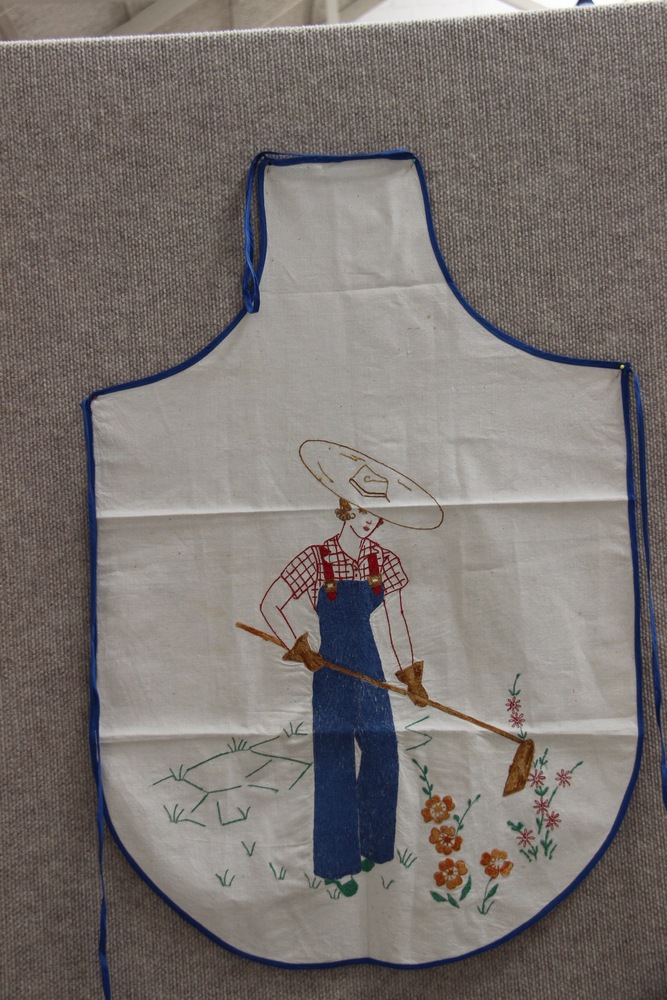
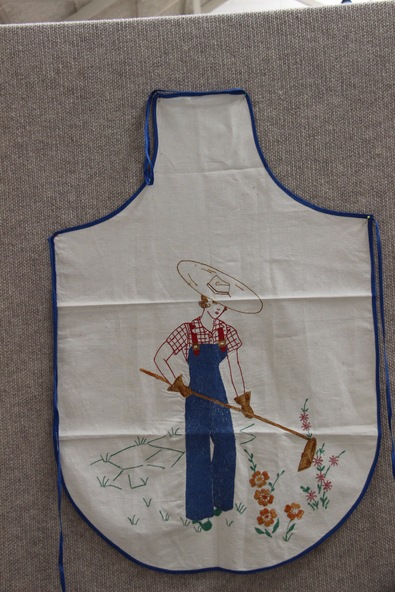
I am a collector of embroidered aprons. Some years ago my mother gave me this apron saying it reminded her of one of the Land Army girls who worked on our orchard in Doncaster; (the hoeing, however, would have been around tomato plants, not flowers). The girls wore their full Land Army uniform when leaving the property. My Mother held particularly fond memories of one girl, a city girl from Hawthorn. mother could not recall her name but said she was a really hard worker and eager to learn all she could about growing fruit and vegetables. She lived with us sleeping in one room of our two bedroom sleepout.
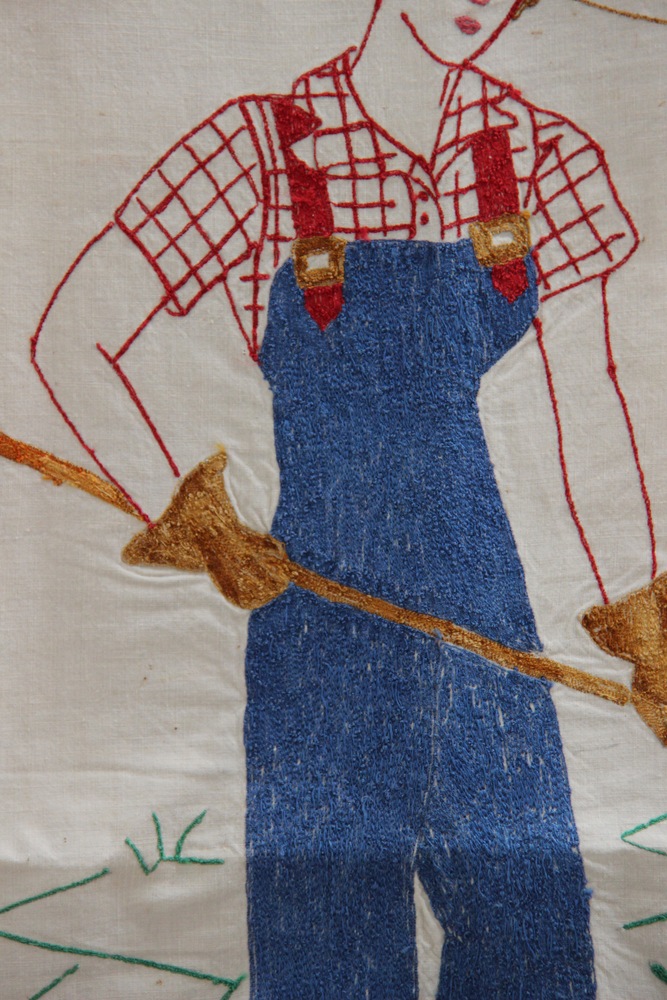
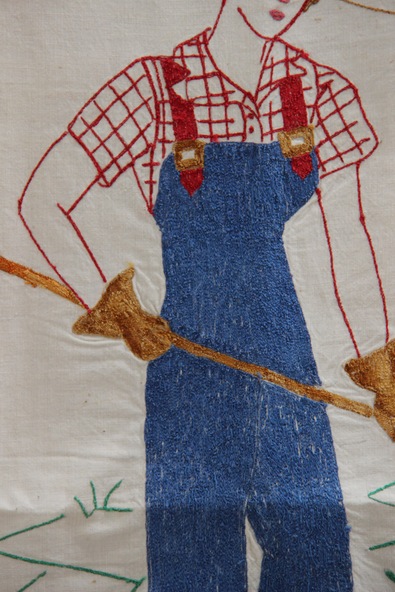
This apron is interesting for another reason - it has been embroidered using the sewing machine. Note the rows and rows of machining in the blue overalls and the way the loose bobbin thread forms tiny loops over the tight upper thread.
The story continued:
My nine year old aunt slept in the other room of the sleep out. Now 86 she also has fond memories of this girl from Hawthorn. Aunty Ness left the family farm at Torrumbarry (on the Murray, near Echuca) to help with the war effort. She worked at NASCO, a section of General Motors at Fisherman's Bend where Army Ducks and Landing Craft were in full production. Aunty Ness recalls that they had every second weekend off and made use of this time to catch up on all those necessary domestic and personal pursuits - they did their washing, washed their hair, filed their nails and wrote letters, They didn't go out during the week as there were no dances, no concerts and no films so they made their own entertainment. Aunty Ness also recalls that one day, when they had an unexpected afternoon off, she together with the Land Army girl and two friends packed a picnic lunch, caught the bus to Warrandyte and paddled in the Yarra, chatting and laughing all the while. In the telling it was obvious to me this was such a sweet memory so fondly recalled and relived in full technicolour!
Alice Clague May 2009
Physical description
The cream calico apron is bound with royal blue binding. The pattern is that of a Land Army Girl, stitched using a sewing machine and cotton thread. The large hat and overalls were typical of the work clothes worn at the time.