Historical information
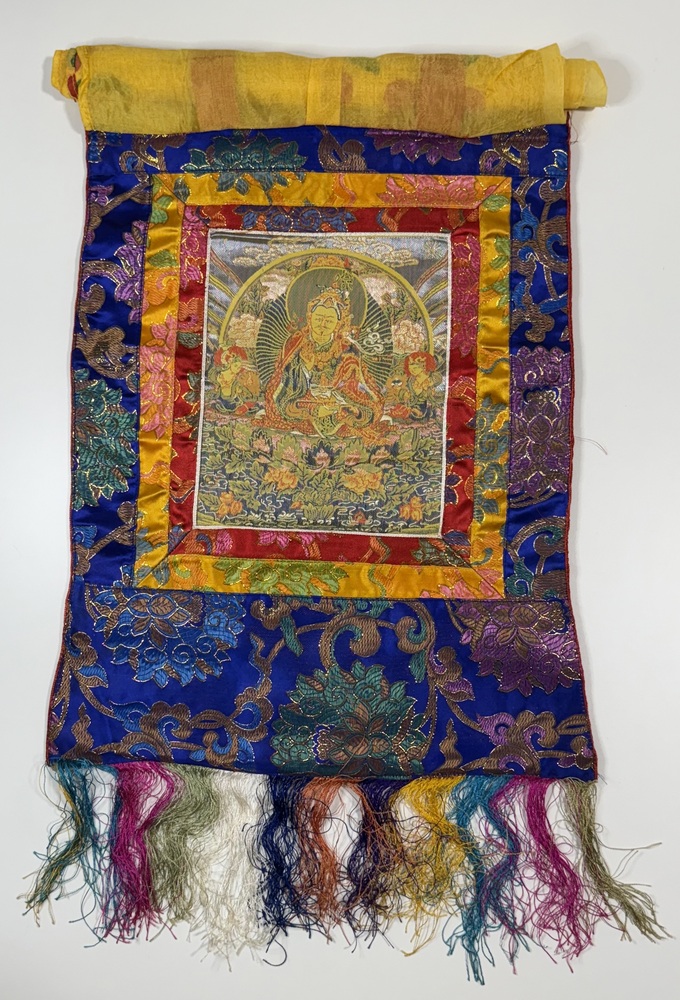
Thangkas are cloth scrolls unique to Tibetan Buddhism, depicting deities, venerated spiritual figures, or religious symbols. Intended for personal meditation or instruction of monastic students, they are invested with the spirit of a deity to whom they are consecrated. The design of a thangka allows it to be rolled up for easy transport, a feature that was essential for traveling monks and practitioners in nomadic regions.
Significance
Padmasambhava thangkas are used to invoke protection, dispel obstacles, and deepen tantric practice. His image serves as a powerful reminder of transformation, spiritual resilience, and the integration of wisdom and compassion.
Physical description
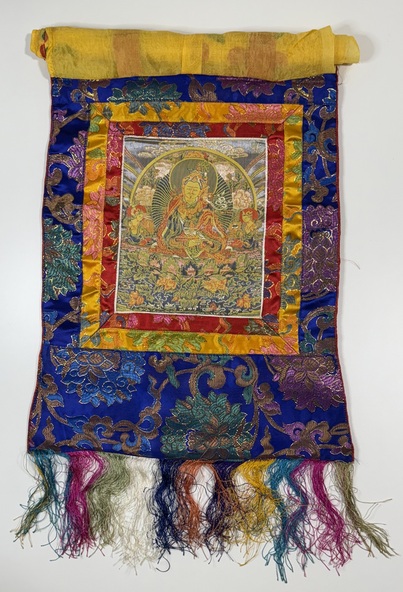
This thangka portrays Padmasambhava seated on a lotus with a red cap, the legs crossed, the right hand holding a dorje (vajra) and the left resting in his lap. Smaller deities or lineage masters appear above and below him, each enclosed in circular frames, signifying the transmission of teachings. The thangka is framed with layers of silk brocade in yellow, red, orange and blue, with floral and cloud motifs that evoke the celestial realm. A decorative fringe at the bottom adds ceremonial richness, while the yellow fabric-covered rod at the top allows the thangka to be hung for ritual or meditative use.