

Historical information
Thangkas are cloth scrolls unique to Tibetan Buddhism, depicting deities, venerated spiritual figures, or religious symbols. Intended for personal meditation or instruction of monastic students, they are invested with the spirit of a deity to whom they are consecrated. The design of a thangka allows it to be rolled up for easy transport, a feature that was essential for traveling monks and practitioners in nomadic regions.
Significance
In Tibetan Buddhism, White Tara represents maternal compassion, healing, longevity, and purity. She is a female Buddha who offers swift help to those in need, providing protection, removing obstacles, and granting long life to practitioners for the purpose of spiritual practice and enlightenment. White Tara is worshipped for her ability to heal physical and mental illnesses.
Physical description
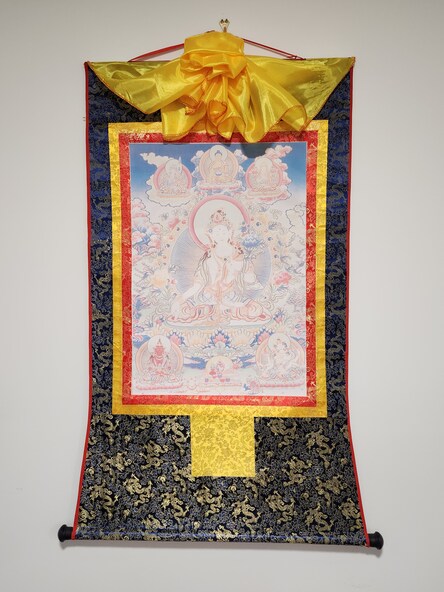
This thangka depicts White Tara seated in a meditative posture, radiating serenity and benevolence. Her white body symbolises purity and transcendent wisdom, and she is adorned with rich ornaments and flowing silks, reflecting her enlightened status.
