

Historical information
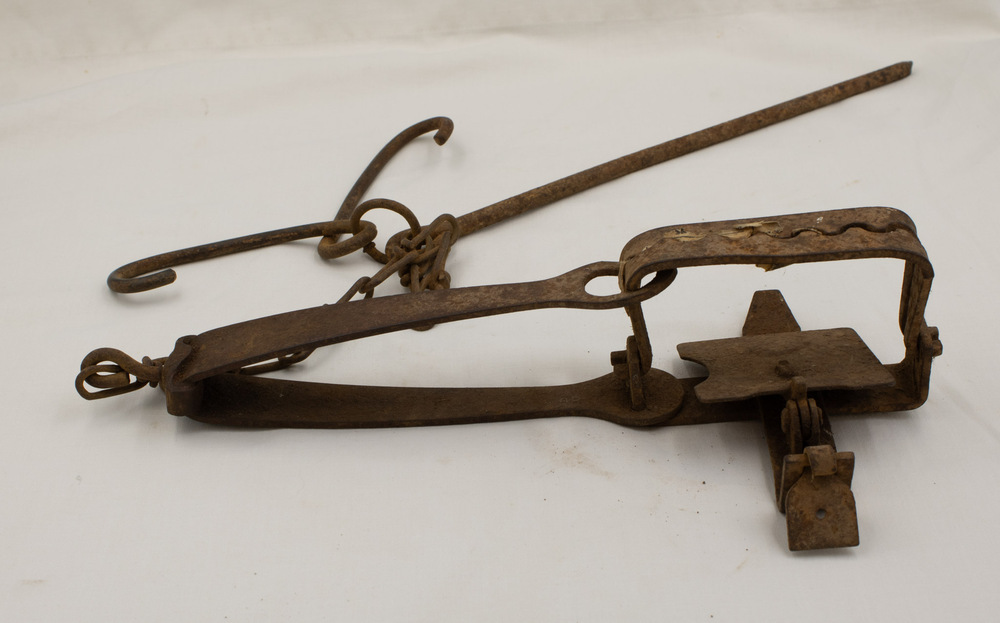
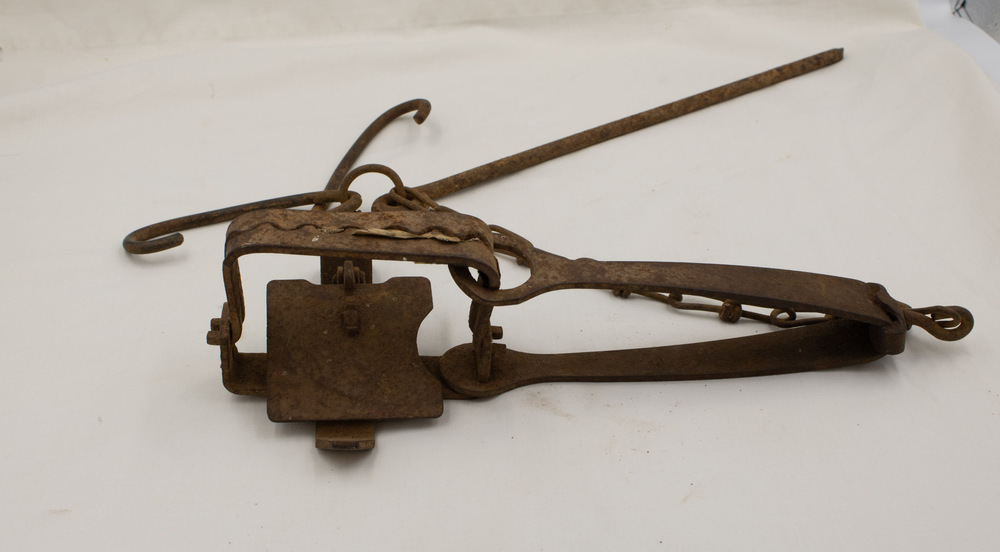
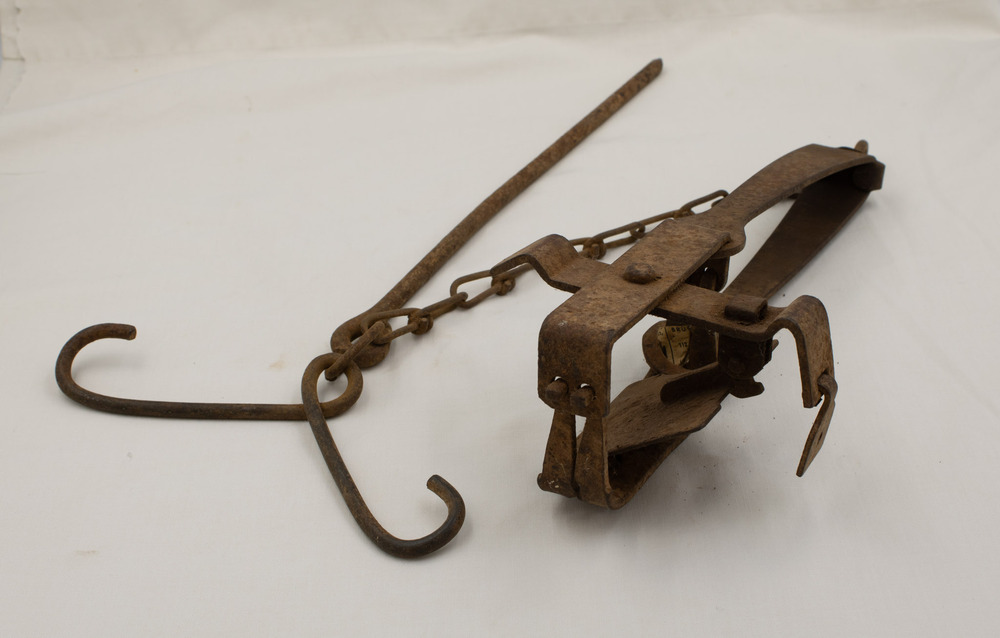
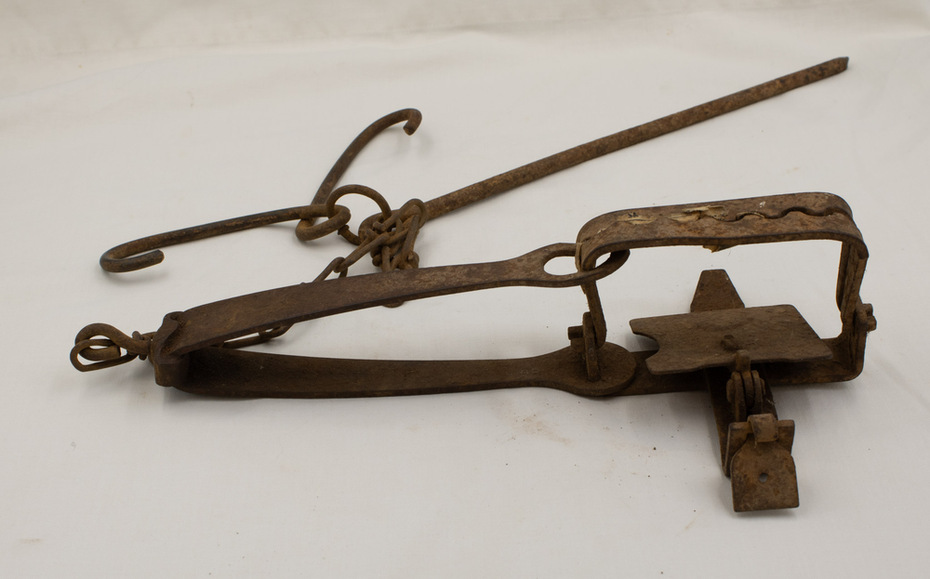
This trap is designed so that the metal jaws snap shut against each other when the trap is activated by the application of weight to the pressure plate. In use, traps are set with open jaws, buried lightly just below the surface of the earth. When an animal steps on the pressure plate, the jagged teeth of the jaws snap around the animal's leg, usually breaking bone and sinew, thus immobilising the animal.
After rabbits were released in Australia in the 1850s, they multiplied to plague proportions and the demand for traps grew. Henry Lane's 'Ace' trap was first made in 1935 and was the most commonly used rabbit trap in Australia until about 1970. Rabbits were trapped for food especially during the Great Depression. Today, rabbit trapping is considered labour intensive, inefficient and ineffective for large-scale rabbit control in Australia. It is also considered cruel.
Significance
Rabbit trapping would have been a common practice in the local Emerald area from the 19th century until more recently.
Physical description
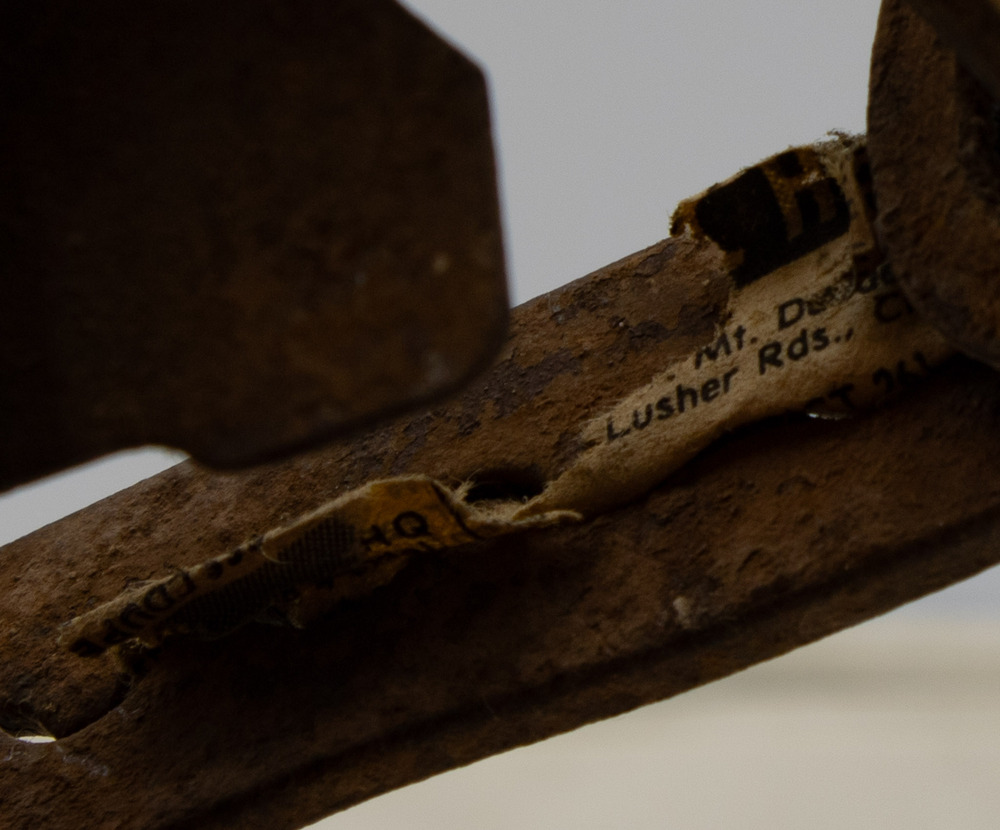
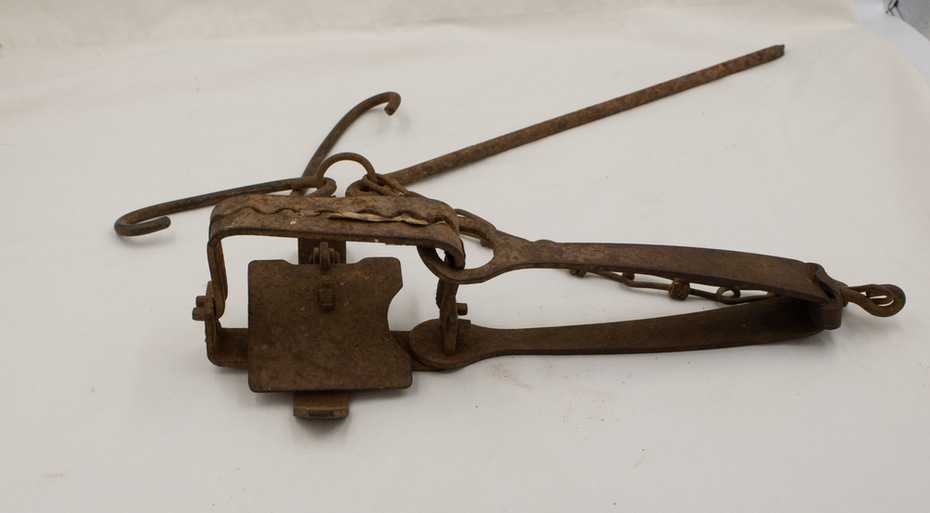
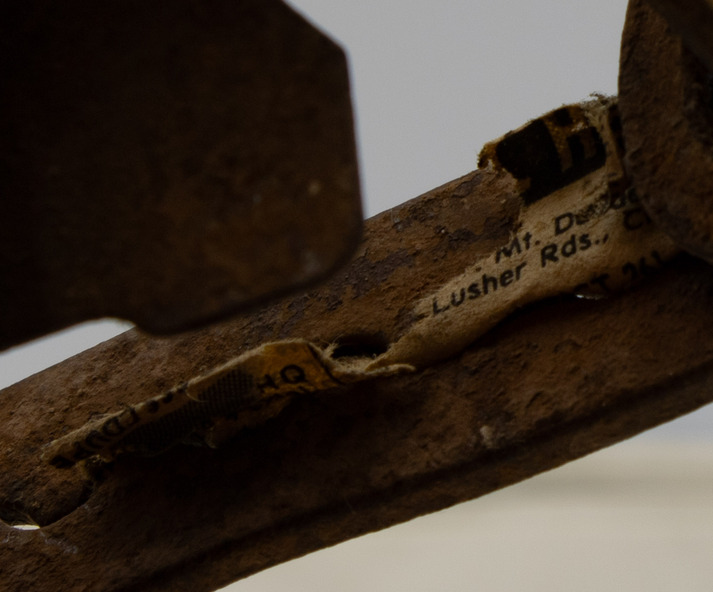
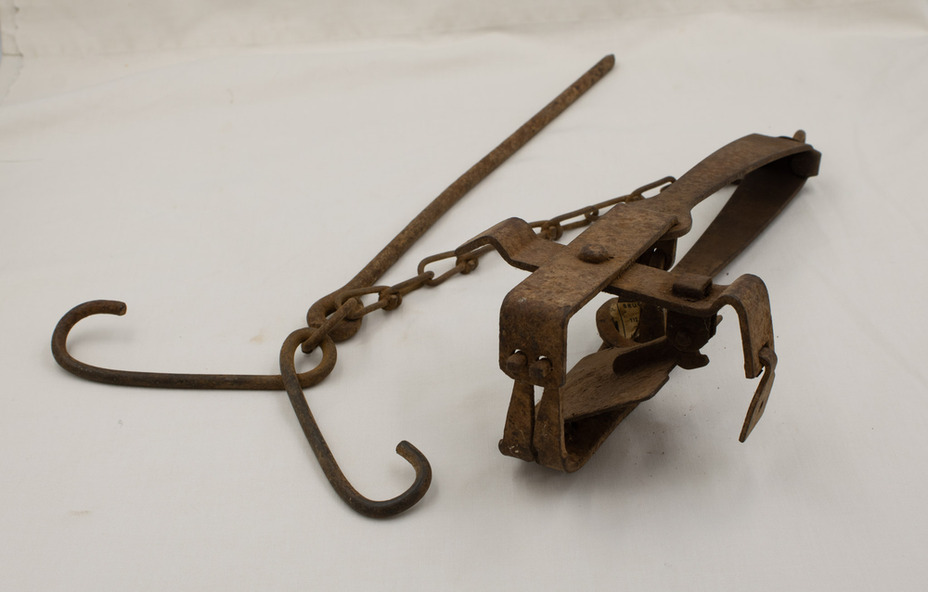
A steel-jawed trap constructed on a base consisting of a bar of steel, the stock bar, which is bent over to form a powerful bow spring. At the end of the spring is a hole, the spring eye, which encircles and closes the jaws when the trap is triggered. They close over the top of the bridge, plate and tongue mechanism that is designed to trigger the trap. An 8-link chain is attached by a hook on the bent end of the trap's spring. A long steel spike is looped over the last link of the other end of the chain together with two hooks. The jaws of the trap are flat, without ridges. Some small scraps of old newspaper are caught between the jaws.