

Historical information
While it is unclear how true this actually is, some say that Codd-neck bottles are relatively rare today because many were broken in order to retrieve the marble inside. They were used throughout the 20th century, making it unclear when and where exactly this bottle originated. The Codd-neck was invented in London by Hiram Codd in 1872, and quickly became popular across Europe and several British colonies. While it has been suggested that the term 'codswallop' derived from Codd-neck bottles (specifically, from beer ('wallop') drinkers attacking soft drinks as 'Codd's Beer'), this is widely rejected as a folk etymology.
Significance
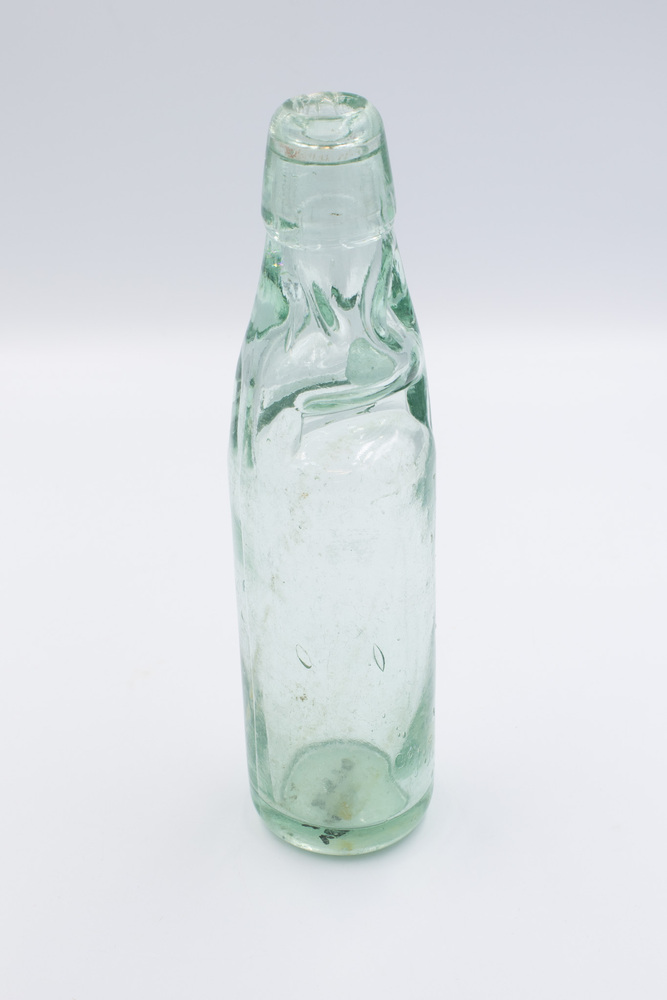
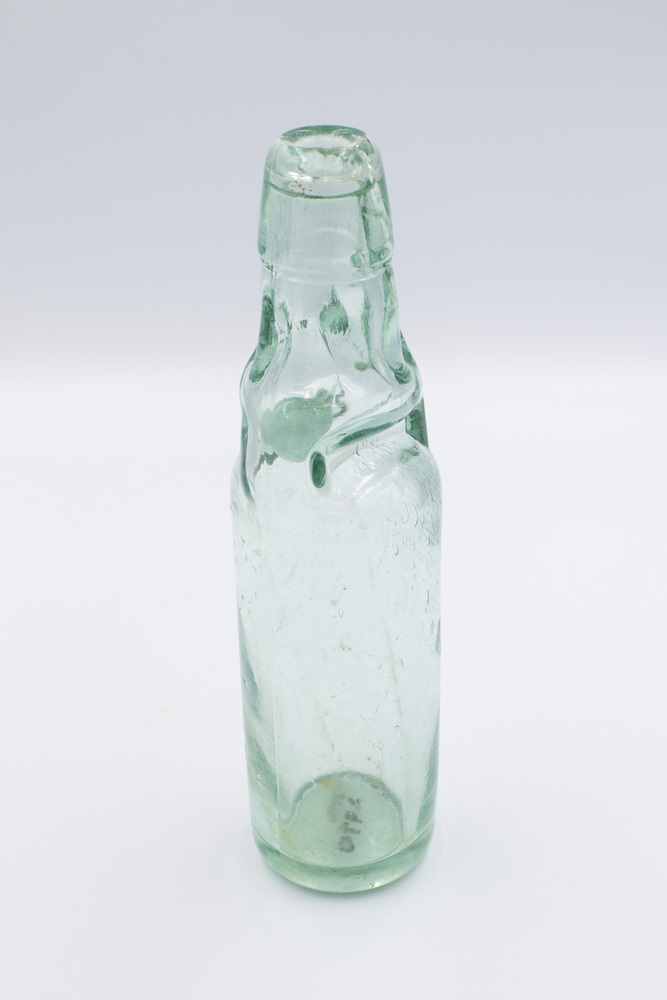
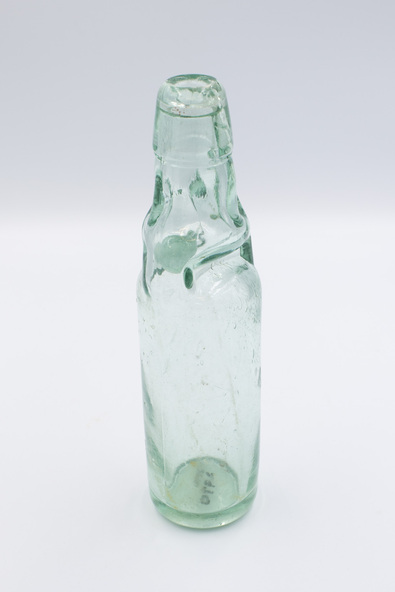
Codd-neck bottles are no longer in common use, but were once a very familiar sight across much of the world; this is a mostly intact version that has been preserved to today.
Physical description
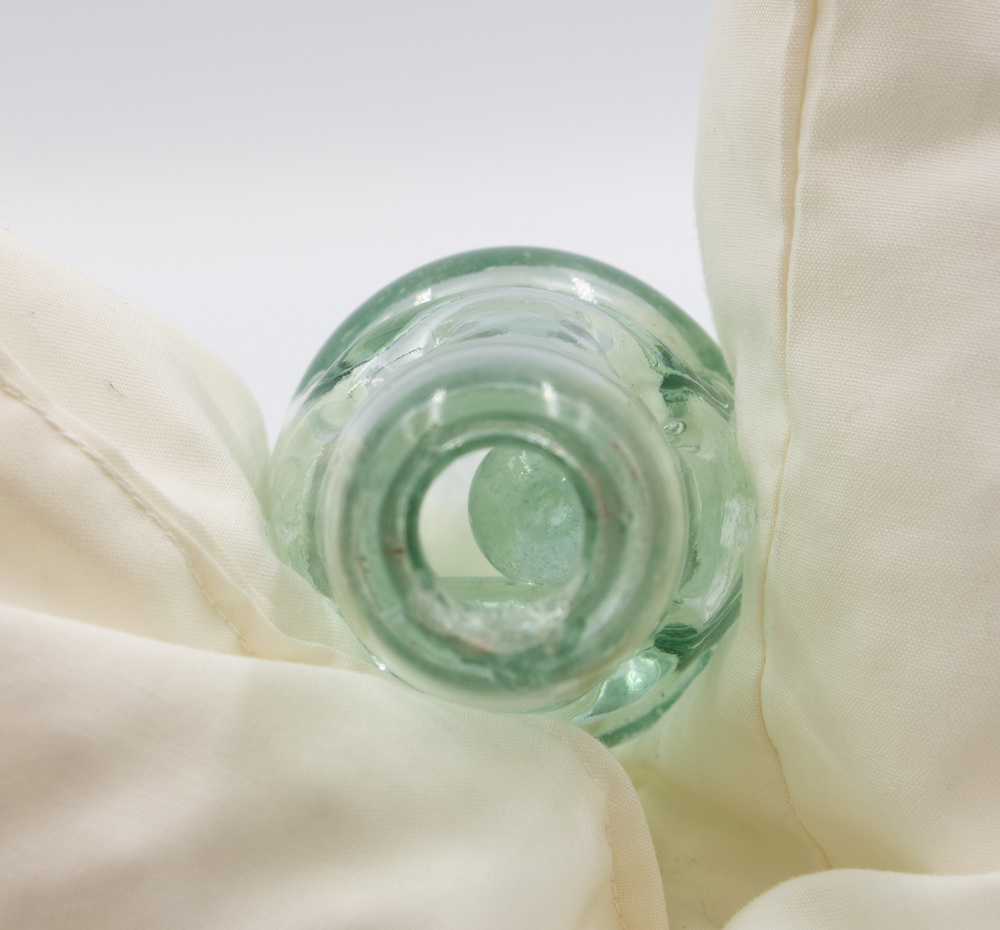
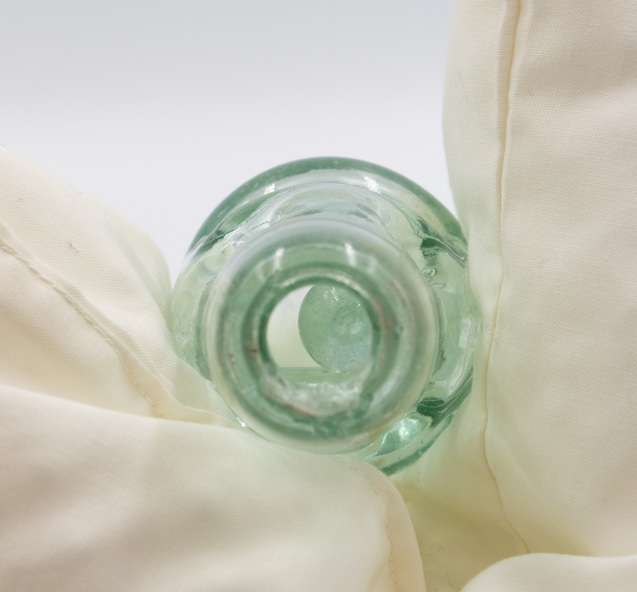
This is a specialised design of glass bottle known as a 'Codd-neck bottle' or 'Marble bottle'. Originally, there would have been a rubber washer at the top of the bottle, where the marble falls if the bottle is turned upside down - when this washer remained, the marble would seal the bottle and preserve its carbonation. The glass is crafted in such a way that the marble will not fall below the neck of the bottle and into the drink, and that tilting the bottle at an angle appropriate for drinking from it will not move the marble to block the neck. However, the pressure of gas from the sealed carbonated drink was enough to keep the marble sealed to the rubber washer, preserving carbonation until the seal was broken by pushing the marble down into the bottle. There are several bubbles in the glass, along with cracks and scratches - imperfections both from when the bottle was originally made and from its many years of life. Unlike many soft drink bottles, there are no inscriptions or markings in this bottle - no company name or name of the drink it contains is visible.
Inscriptions & markings
N/A