

Historical information
Paisley shawls were a fashionable item of women's clothing in Europe during the late eighteenth and nineteenth centuries. Many were made of intricately woven and delicate wool, as well as examples being printed onto silks, wools, and cotton. These pieces were highly decorative. Although now known as the Paisley pattern, the teardrop motif originated in Persia and India.
There are various theories about the early history of the paisley motif, and it would appear that it originated in Iran during the early first millennium AD. At this date it was a bulbous, almond shaped form, which was often flowery and without the prominent hook so common in later examples. This motif is specifically known as a buteh. The end of the 17th century saw the hooked buteh becoming a popular motif in neighbouring Mughal India (c. 1526-1857). It was used especially on the fine woollen shawls that were hand woven and sometimes embroidered in Kashmir in northern India.
The motif travelled from India to Africa, Southeast and East Asia, but in particular to Europe. In the late eighteenth century, the buteh became even more popular as it was featured on the Kashmir shawls that were being exported in vast quantities to Europe. Joséphine de Beauharnais, wife of Napoleon Bonaparte, for example, is said to have owned over 200 of these shawls.
The buteh or paisley motif is actually one of the few non-geometric design forms that can be found throughout the world. It is worn by men, women and children of all ages, literally from the cradle to the grave. Moreover, it is worn by people of many different ethnic and cultural backgrounds.
Physical description
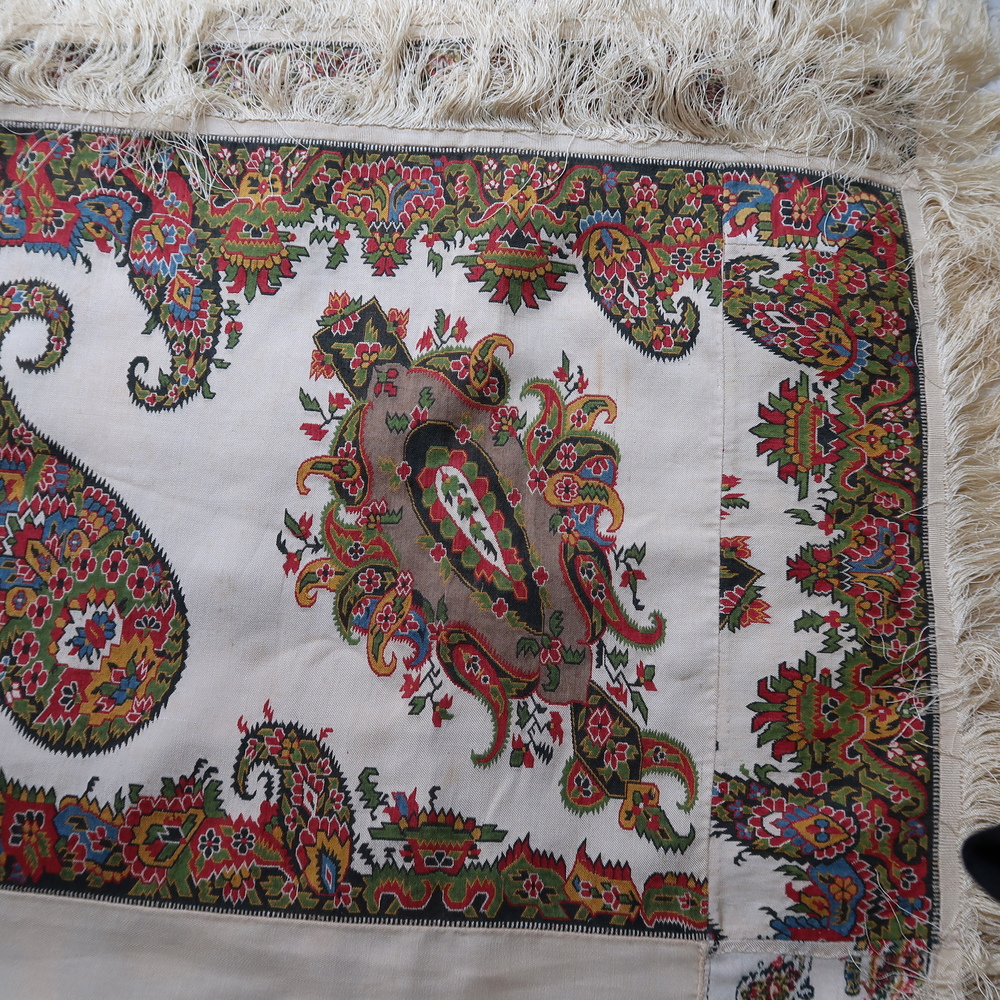
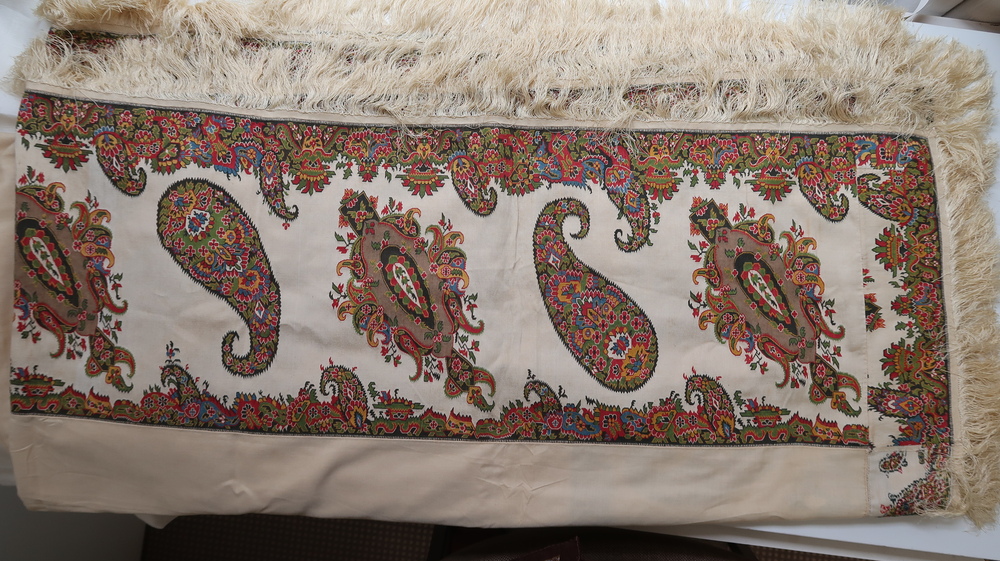
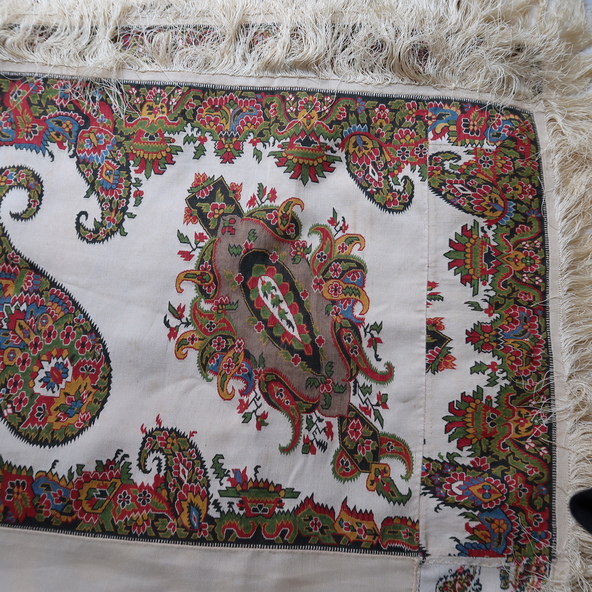
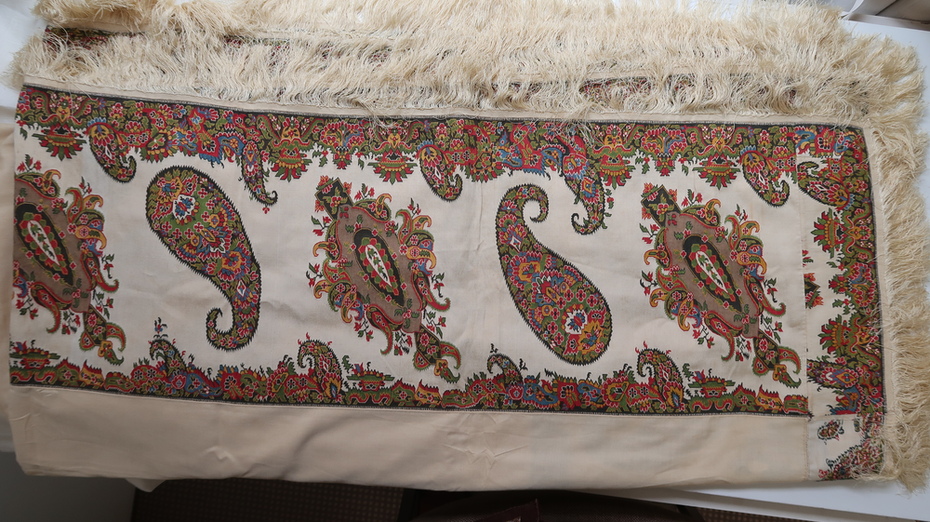
Silk/cotton paisley shawl with fringe.
Cream background, brightly coloured Paisley motifs on borders, pieced borders - ? recycled from another item.