

Historical information
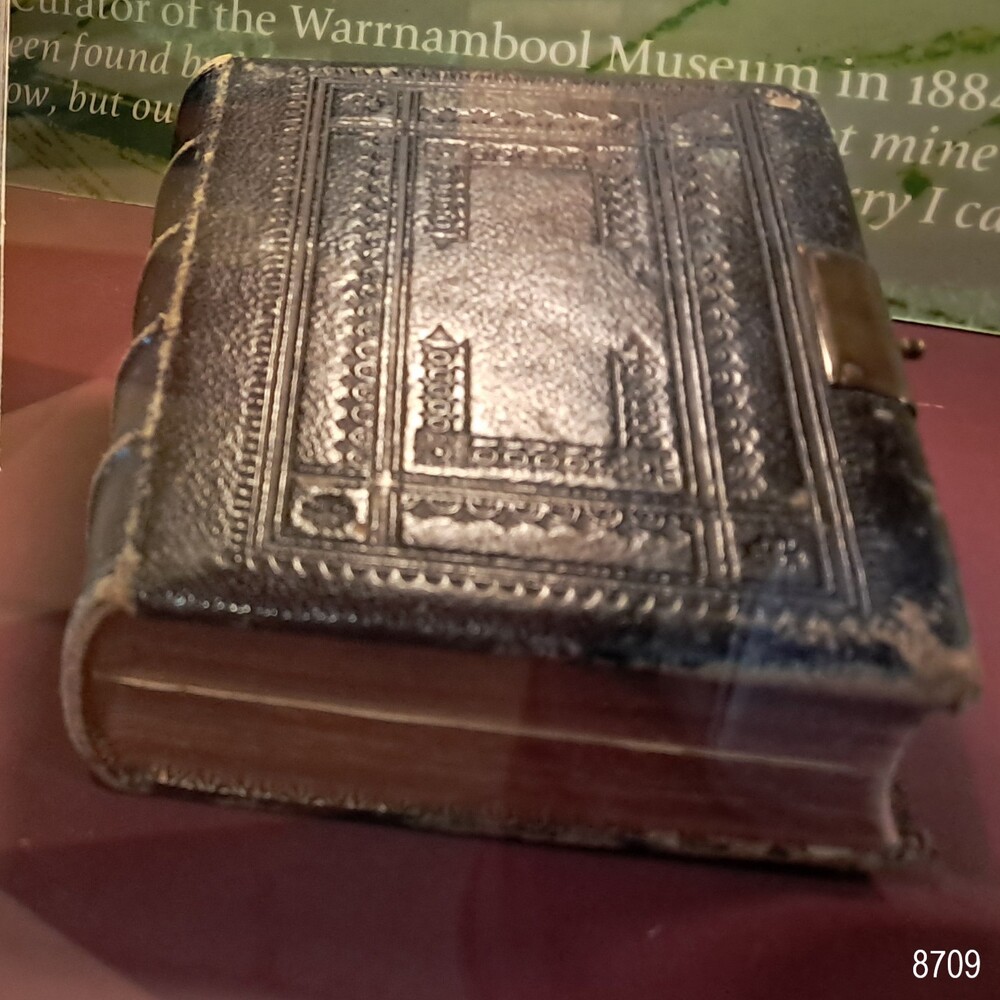
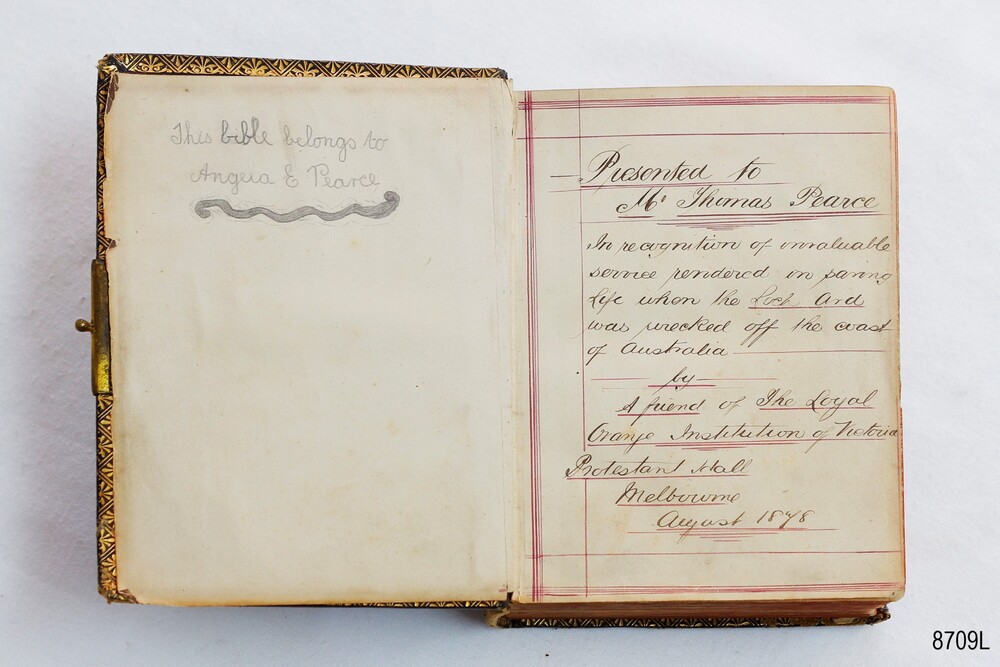
This Bible is kindly on loan from Parks Victoria. It was presented to Tom (Thomas) Pearce in August 1878 by a friend of the Loyal Orange Institution of Victoria, in recognition of invaluable service rendered in saving the life of Eva (Evelyn) Carmichael when the Loch Ard was wrecked off the coast of Victoria, near Port Campbell. Tom’s granddaughter, Angela Elizabeth Pearce, has written her name inside the front cover. She was born in England in 1925 and died at Woollahra, NSW, in 1944; she was only 19 years old.
A BRIEF HISTORY OF THE ‘LOCH ARD’ (1873-1878): -
The sailing ship Loch Ard was one of the famous Loch Line ships that sailed from England to Australia. Barclay, Curdle and Co. built the three-masted iron vessel in Glasgow in 1873. It had sailed three trips to Australia and one trip to Calcutta before its fateful voyage.
Loch Ard left England on March 2, 1878, under the command of recently married, 29-year-old Captain Gibbs. It was bound for Melbourne with a crew of 37, plus 17 passengers. The general cargo reflected the affluence of Melbourne at the time. Onboard were straw hats, umbrellas, perfumes, clay pipes, pianos, clocks, confectionery, linen and candles, and a heavier load of railway irons, cement, lead and copper. Other cargo included items intended for display at the Melbourne International Exhibition of 1880, the most famous of which was the life-size Minton Majolica peacock.
After three months at sea, the Loch Ard was close to its destination. On June 1, 1878, Captain Gibbs couldn’t see any signs of land or the Cape Otway lighthouse due to poor visibility. When the fog lifted at 4 am, the sheer cliffs of Victoria's west coast were much closer to them than Captain Gibbs expected. He failed to manage the vessel, and the ship struck a reef at the base of what is now named Mutton Bird Island, near Port Campbell. The passengers and crew were thrown overboard on impact. The lifeboat was launched by Tom Pearce but crashed into the side of Loch Ard and capsized. He clung to its overturned hull and sheltered under it as it drifted out to sea. The tide brought him back to what is now called Loch Ard Gorge. He swam to shore and found a cave for shelter.
A passenger, Eva Carmichael, had raced onto the deck and was confronted by towering cliffs above the ship. A huge wave swept her off into the cold sea. She saw Tom Pearce on a small rocky beach and yelled to attract his attention. He swam out and dragged her to the shelter of the cave. He revived her with a bottle of brandy from a case that had washed up on the beach. Tom scaled a cliff in search of help. He came across two men from Glenample Station, three and a half miles away. He told the men of the tragedy and then returned to the gorge while the two men rode back to the station to get help. The two shipwreck survivors were taken to Glenample Station to recover. Eva stayed at the station for six weeks before returning to Ireland by steamship. Sadly, Tom and Eva were the only survivors of the 54 people on board the Loch Ard.
In Melbourne, Tom Pearce received a hero's welcome. His rewards for his bravery included the Gold Medal of the Royal Humane Society, a gold watch and £1000 from the Victorian Government, a set of nautical instruments, including binoculars, from the people of Sydney and £60 from the people of Warrnambool. In August 1878, he was also presented with a Bible by a friend of the Loyal Orange Institution of Victoria, also known as the Orange Order.
Significance
The Bible is significant for its connection with Tom (Thomas) Pearce, as it was awarded to him for his rescue of the shipwrecked Eva Carmichael when the Loch Ard was wrecked. It has kindly been loaned to Flagstaff Hill, which holds one of the largest collections of items from the Loch Ard in Victoria.
The Loch Ard is now a historic shipwreck. It was one of the worst disasters and is the most well-known wreck on the Victorian Heritage Register.
Together, the artefacts have a high potential to help interpret the story of the Loch Ard. The vessel is archaeologically significant as it is the remains of a large international passenger and cargo ship.
The Loch Ard collection is important to Victoria’s history. It includes uncommon, rare or endangered aspects of Victoria’s cultural history.
Physical description
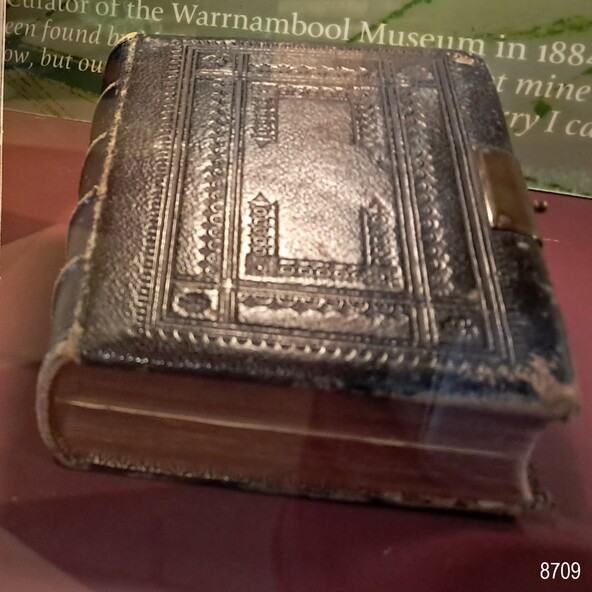
Book: The Holy Bible. A black leather-bound book with red edges on the pages, and a metal clasp at the middle front of the book. Brown paper pages are pasted inside the covers, and gold detailing is around the edges of the inside covers. Coloured lithograph pictures are on separate pages throughout the book.
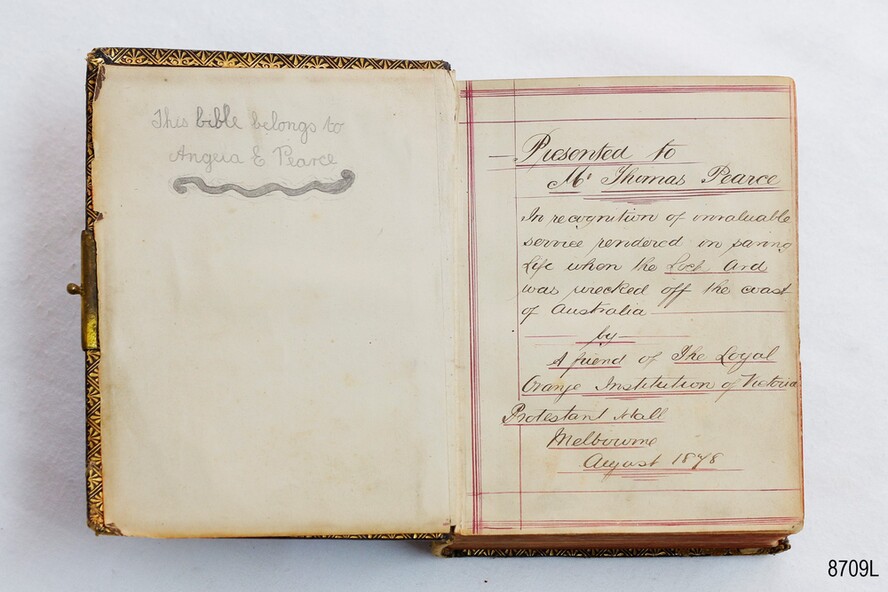
A child-like, handwritten pencil script inscription is on the left front endpaper. The facing right endpaper has lines of italic, black pen and ink script, with some lines underlined in red, and ruled red borders on three sides.
The Bible was presented to Thomas Pearce in 1878 for saving life at the Loch Ard wreck in 1878.
The Bible is kindly on loan from Parks, Victoria.
Inscriptions & markings
Pencil: “This bible belongs to / Angela E. Pearce.”
Ink: “Presented to / Mr Thomas Pearce / In recognition of invaluable / service rendered in saving / life when the Loch Ard / was wrecked of the coast / of Australia. / by / A friend of the Loyal / Orange Institution of Victoria / Protestant Hall / Melbourne / August 1878”
Subjects
- flagstaff hill maritime museum and village,
- great ocean road,
- shipwreck coast,
- flagstaff hill,
- maritime museum,
- maritime village,
- warrnambool,
- 1878,
- tom pearce,
- thomas pearce,
- evelyn carmichael,
- eva carmichael,
- eva townsend,
- angela pearce,
- thomas townsend,
- shipwreck rescue,
- hero,
- shipwreck survivor,
- port campbell,
- loch ard,
- loch ard gorge,
- mutton bird island,
- glenample homestead,
- glenample station,
- bible,
- religious book,
- award,
- loyal orange institution victoria,
- orange order,
- august 1878,
- royal humane society
References
- The Loyal Orange Society of Victoria Presented the Bible to Tom Pearce