

Historical information
George Rodd and his brother Ernest established G. & E. Rodd as a manufacturer of silver goods in the 1920s. Initially, they produced popular small accessories such as collar pins and bangles before expanding in the mid-1920s to create more complex items such as rings, broaches, and cufflinks. In the 1930s, they began to produce ornate silverware, predominantly flatware which capitalised on the High Tea elegance of the time, and children's silverware. Much of their silverware was EPNS—or electroplated nickel silver—and identified with various embossed markings. They steadily expanded over the next decades, with a slight dip in production during WWII, and merged with Platers Pty Ltd. in 1949, gaining them access to the 'Hecworth' name.
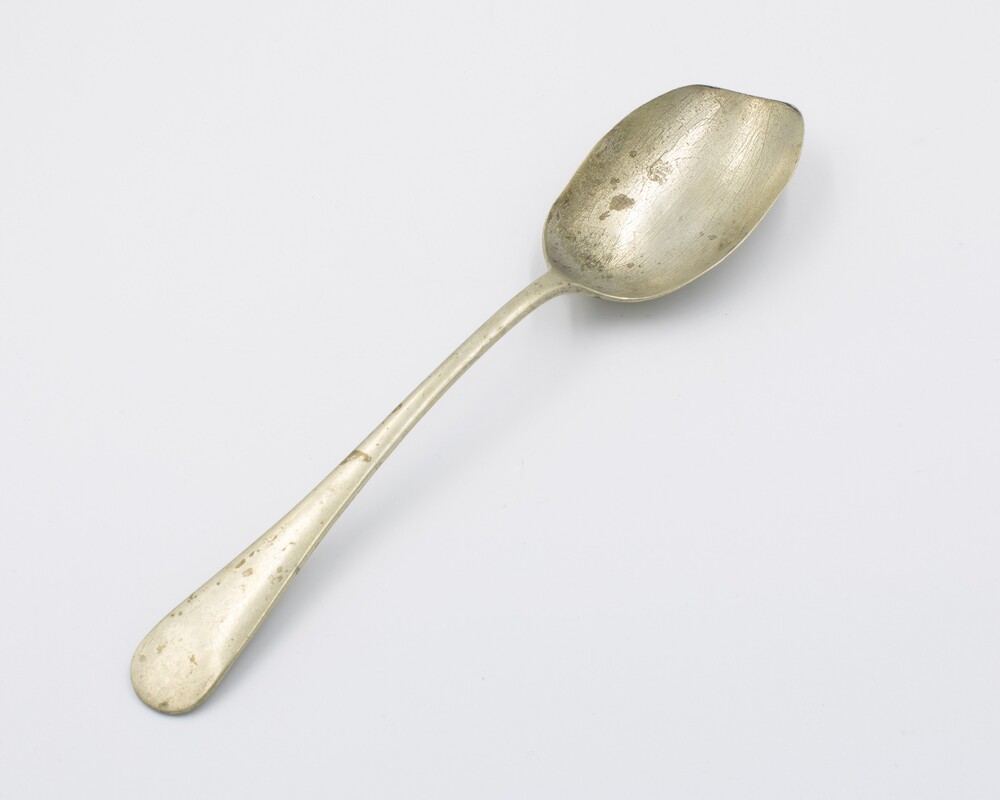
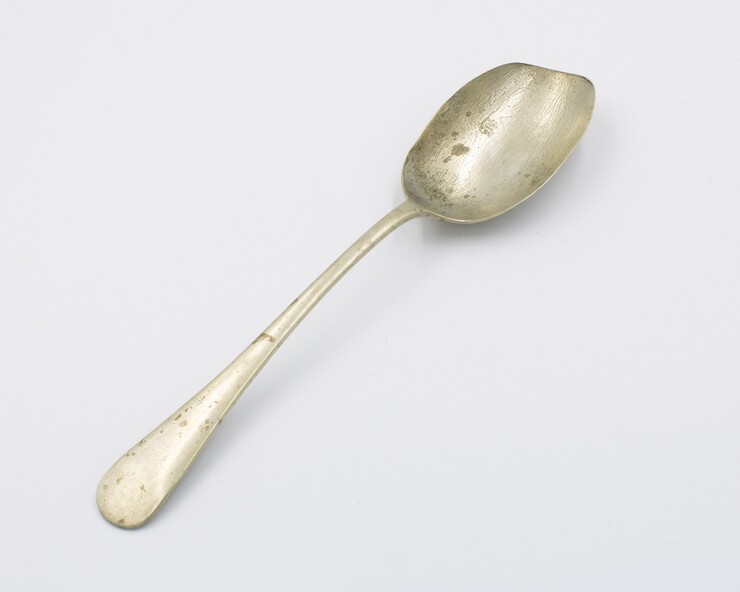
This plain serving spoon is larger than most everyday utensils as it was likely used to serve smaller portions of a communal meal. The spoon's bowl is worn away at the top-left edge, indicating that it may have been used as leverage to frequently to open sealed jars or tins. It is also missing several of the markers which would easily identify it as Rodd silverware, such as the APEX mark, or an A1 label.
Significance
This item is significant as it is an example of a well-loved and regularly-used utensil from an everyday home. Its wear is indicative of the way it was used on a regular basis, and how similar utensils may have been used in other homes around the area.
Physical description
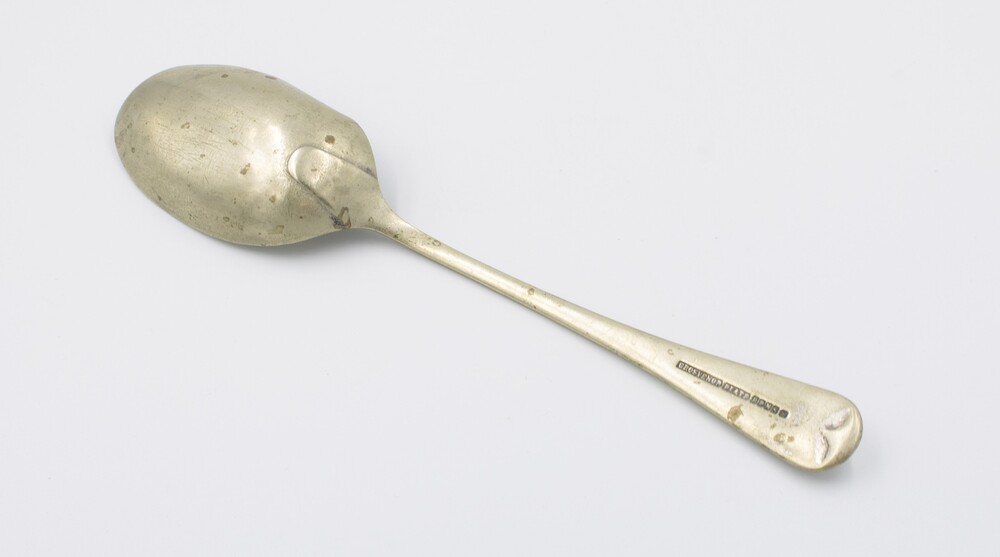
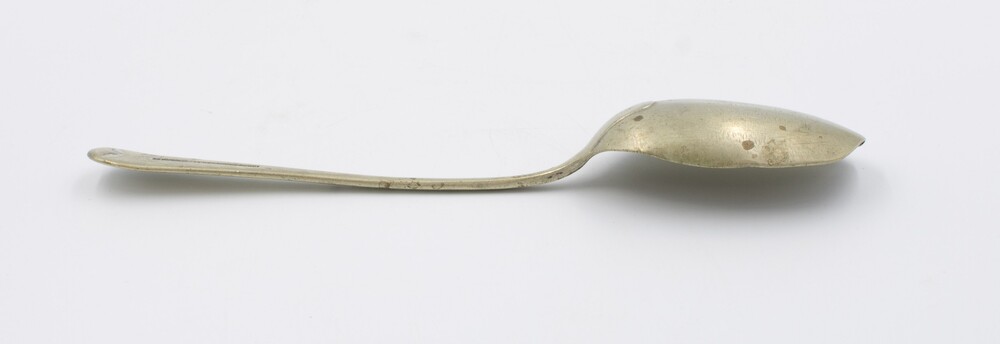
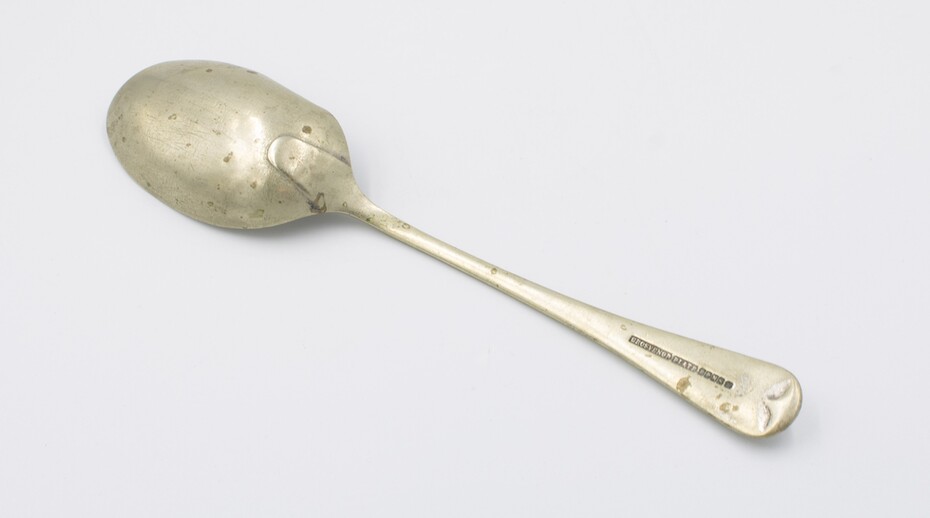
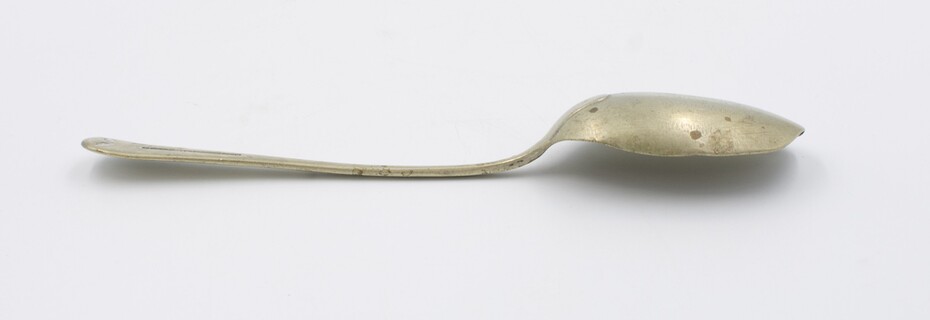
This silver spoon has a deep, slightly misshapen bowl that is tarnished by a great deal of scratches and marks. The bowl's edges are also slightly bent and warped. The handle extends slightly over the bottom of the bowl, narrowing at the neck before widening at the base of the handle. There is a small engraving on its underside.
Inscriptions & markings
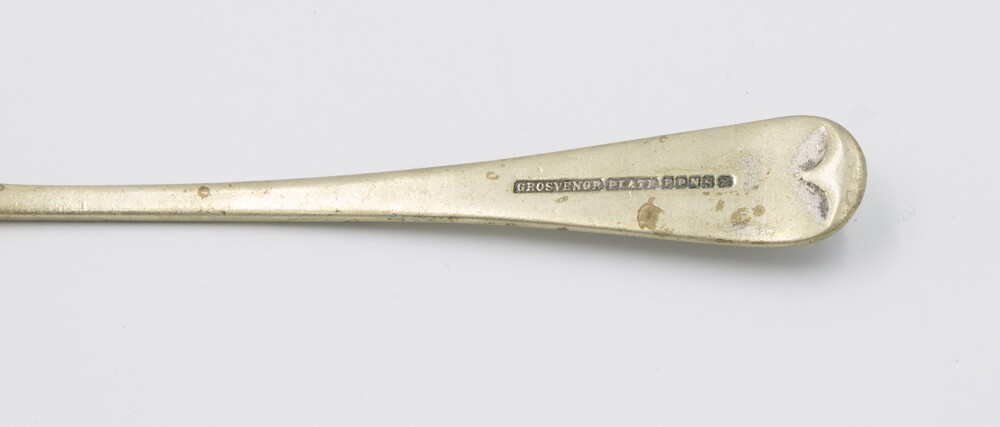
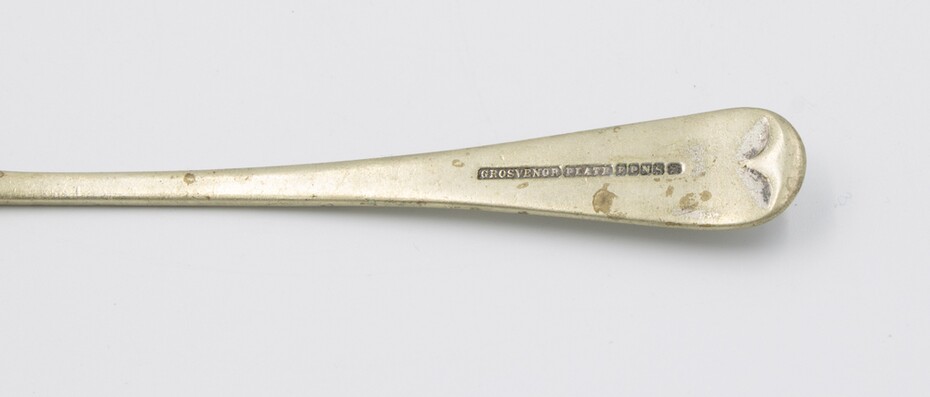
Rear, base of handle: "GROSVENOR PLATE EPNS"
Rear, base of handle, sideways: "A"