

Historical information
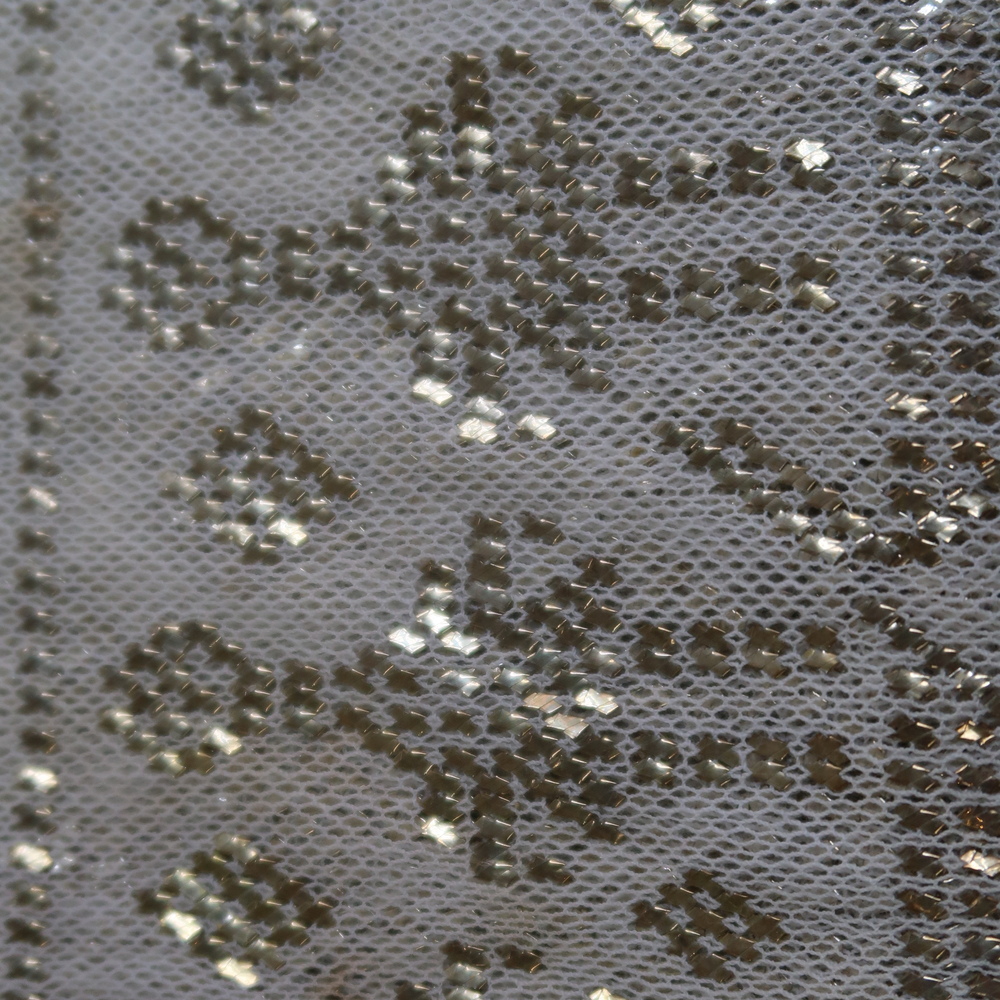
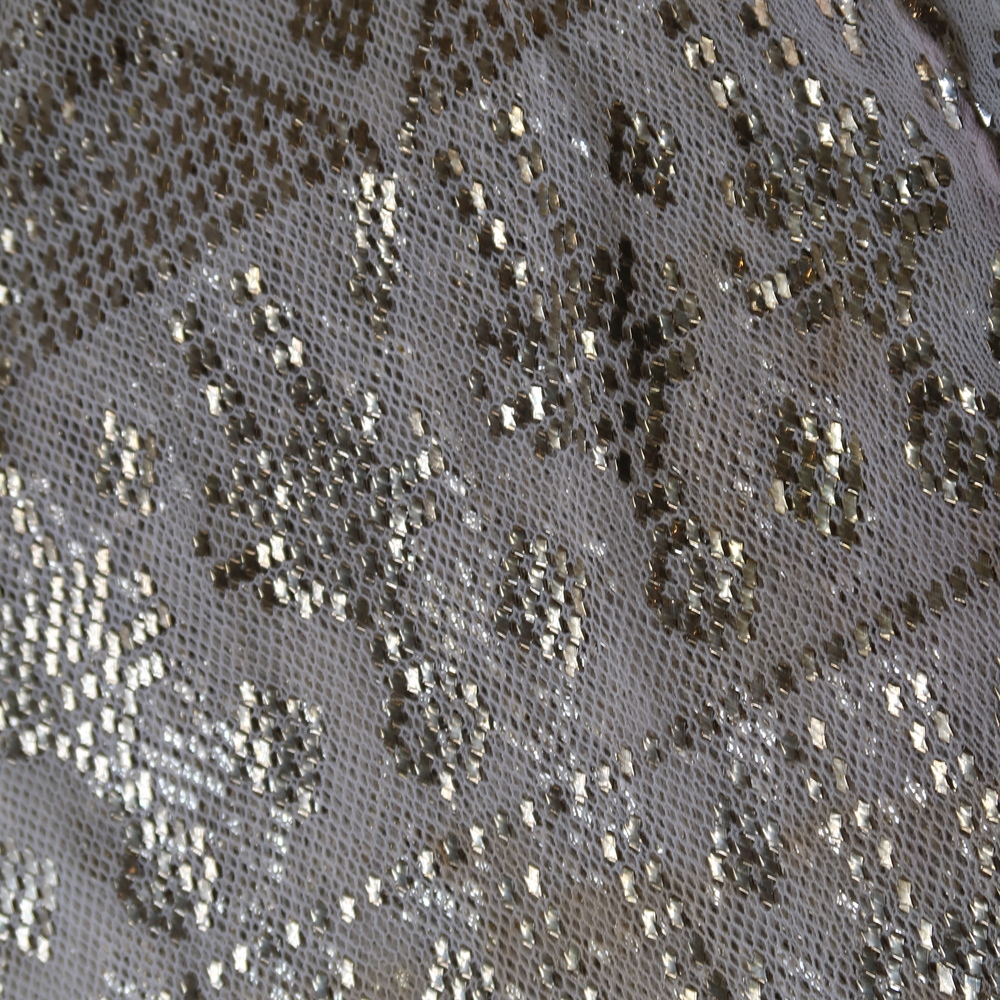
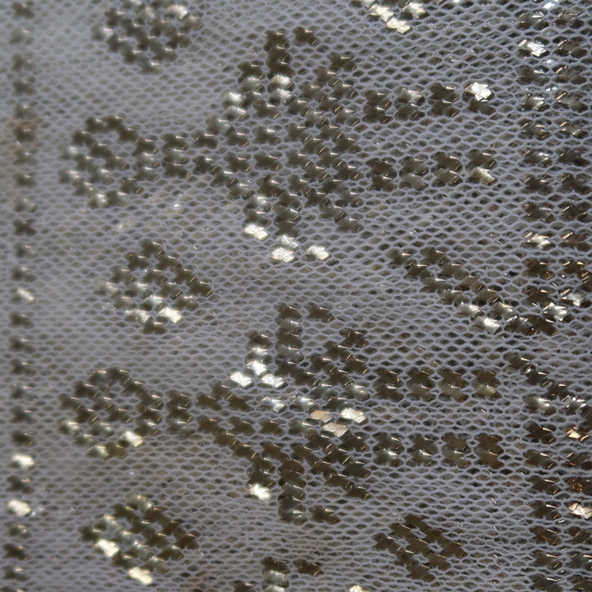
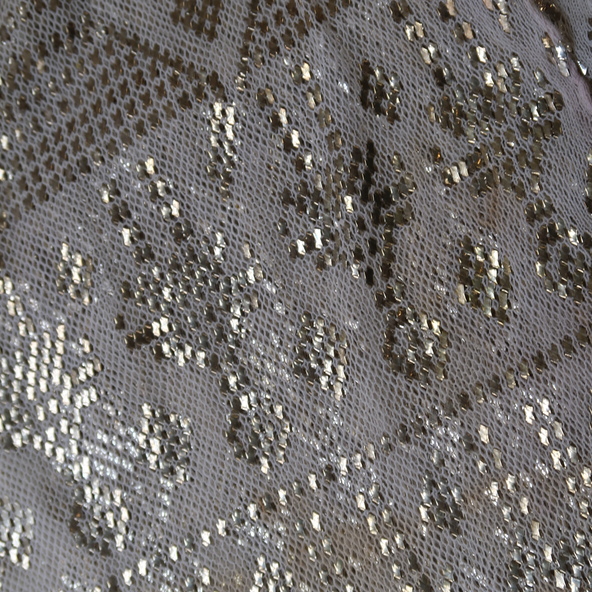
Tulle-bi-telli or Assuit shawl – a textile which marries cotton or linen with small strips of metal.
The name translates roughly as "net with metal". It is heavy, and retains heat, but is favoured for its ability to drape. The embroidery is applied by hand. Thin strips of alloy are threaded onto a flat, wide needle with a flat, wide eye. Alloy is used because pure silver would blacken with age and would be impossible to clean, and gold would be too costly. Each strip is approximately 1/8" wide and 18" to 24" long. The strips are threaded into the mesh, criss-crossed, flattened with the fingernails, and cut. The fabric is then stamped down, and when the designs are finished, the fabric is passed through a roller to flatten the metal even more. References are made to its use with Egyptian linen in the Bible and there is a 3000 year old example with gold strips in a Berlin Museum. Assuit has been used in Hollywood productions such as the 1934 Cecil B DeMille film Cleopatra. It was draped on Hedy Lamaar in Samson and Delilah in 1949; and the geometric designs were popular with the Art Deco movement, beginning around 1925
Physical description
Metal thread embroidery using silver coloured alloy metal plate on cream coloured cotton/linen net.
Creating geometric patterns and motifs of ladies, camels, birds and tree of Life.