

Historical information
The Miser’s purse originated late in the eighteenth century and was variously called misers, hookers, almoners (or aumonières), and wallets, or long, stocking, ring, and string purses. The shape of the miser’s purse originated from the medieval practice of carrying coins in the toe of a stocking. A large version—as much as a couple of feet long and perhaps used largely by men during the eighteenth century—gradually became smaller and more refined.
The miser’s purse grew in popularity on the continent and in England during the nineteenth century. During the second half of the century, it became one of the most common purses that Victorians carried. Used by both women and men, the typical nineteenth-century miser’s purse was a long tube made of “purse” or “netting” silk, often crocheted, netted, or knitted, with or without beads. Narrow in the middle and closed at both ends, miser’s purses ranged in the course of their history from 4 to 36 inches (10.2 to 91.4 cm) long. During the Victorian era, many miser’s purses were from 8 to 10 inches (20.3 to 25.4 cm) long. The “toes” of the purse, which might be of the same or different shapes, often were tasseled or fringed.
Physical description
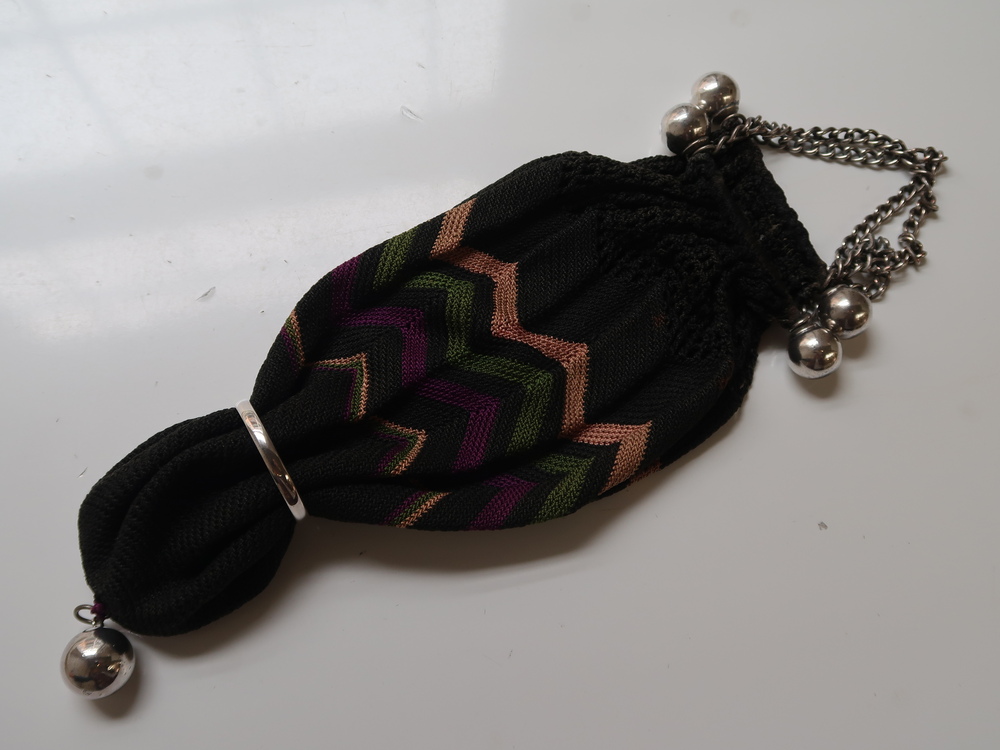
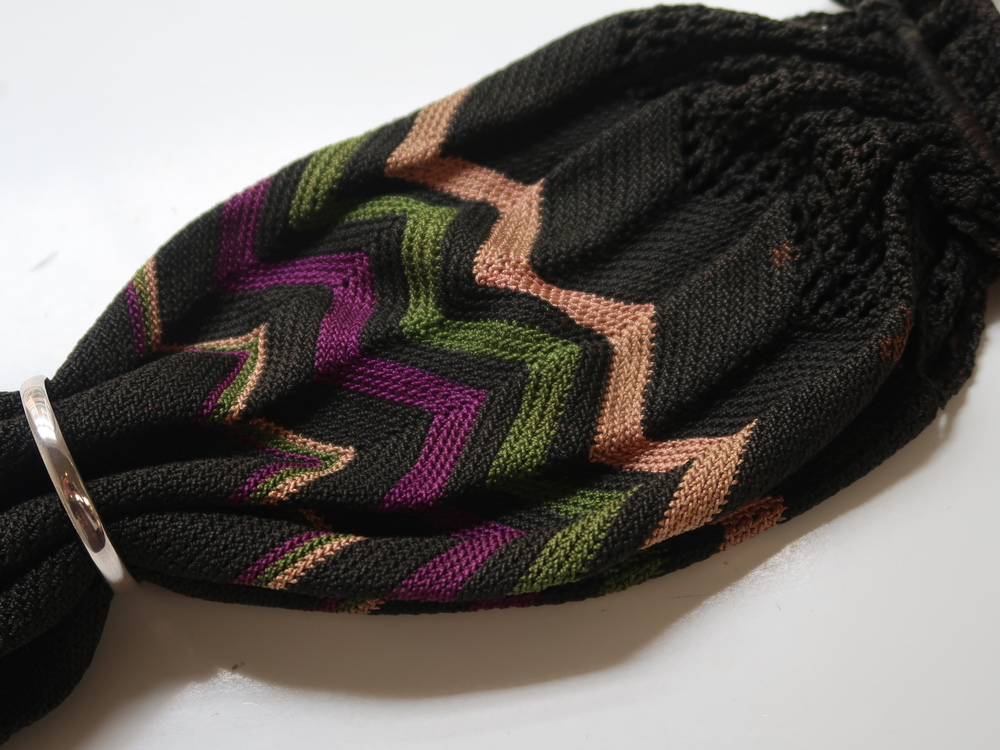
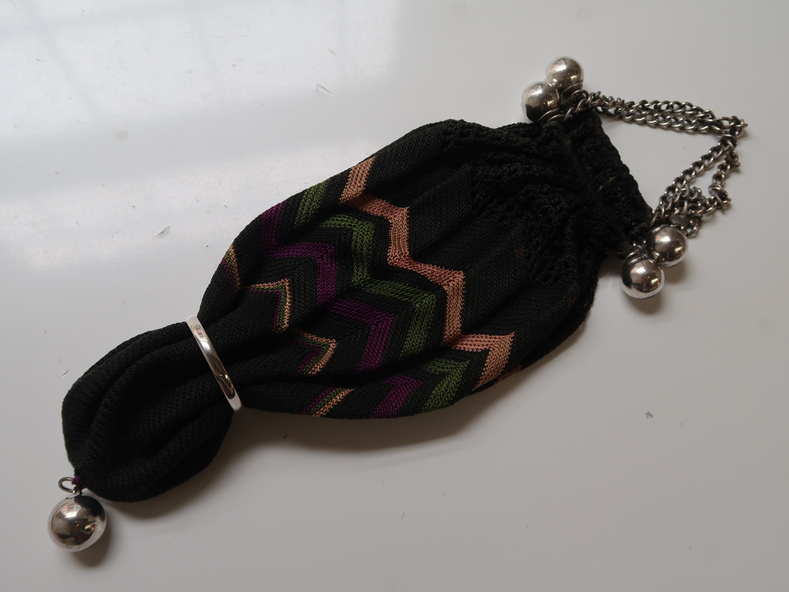
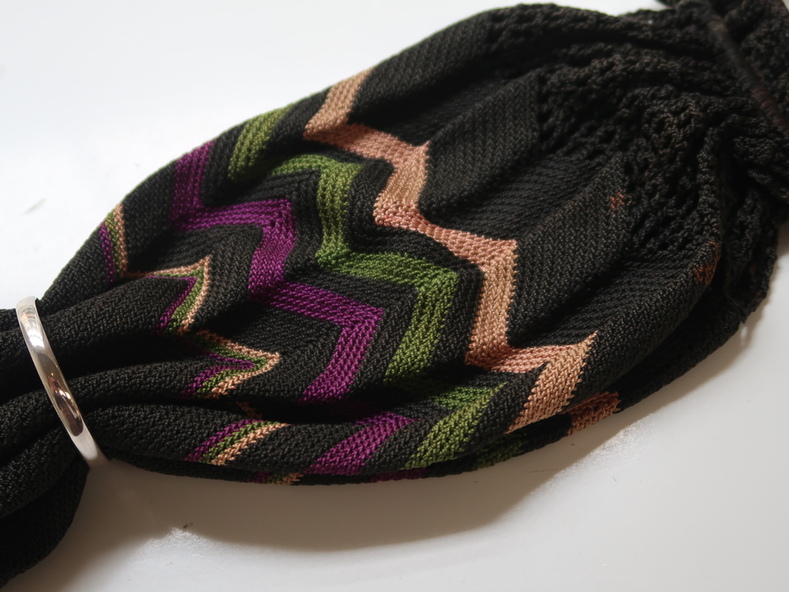
Crochet tubular reticule in black with cream, maroon and green chevron pattern.
Includes steel metal rods with balls attachment , metal chain handle and metal ball at base.